Understanding Circadian and Circannual Behavioral Cycles of Captive Giant Pandas (Ailuropoda melanoleuca) Can Help to Promote Good Welfare
by
 , , and
Kristine M. Gandia
1,*,
Elizabeth S. Herrelko
2,
Sharon E. Kessler
1,† and
Hannah M. Buchanan-Smith
1,†
1
Psychology, Faculty of Natural Sciences, University of Stirling, Stirling FK9 4LA, UK
2
Smithsonian’s National Zoo, Conservation Biology Institute, Washington, DC 20008, USA
*
Author to whom correspondence should be addressed.
†
These authors contributed equally to this work.
Animals 2023, 13(15), 2401; https://doi.org/10.3390/ani13152401
Submission received: 13 June 2023
/
Revised: 15 July 2023
/
Accepted: 19 July 2023
/
Published: 25 July 2023
(This article belongs to the Special Issue Women’s Special Issue Series: Animals Behaviour and Welfare)
Simple Summary
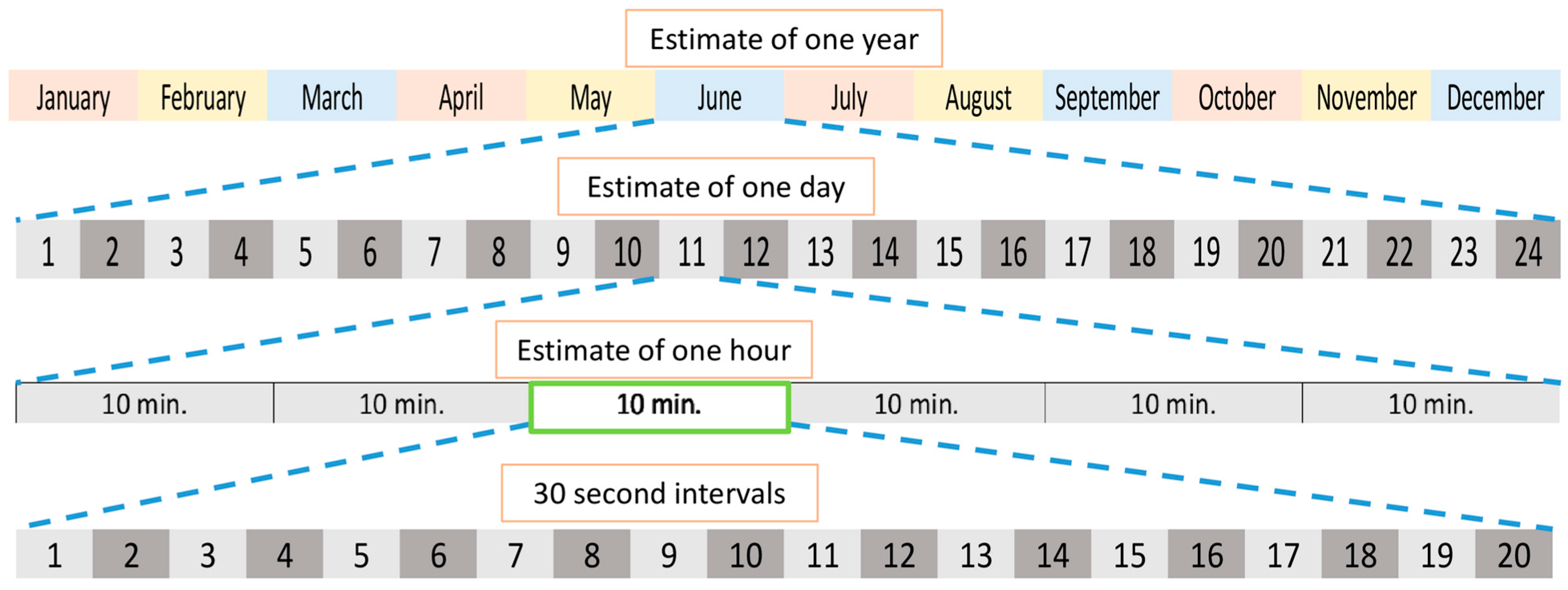
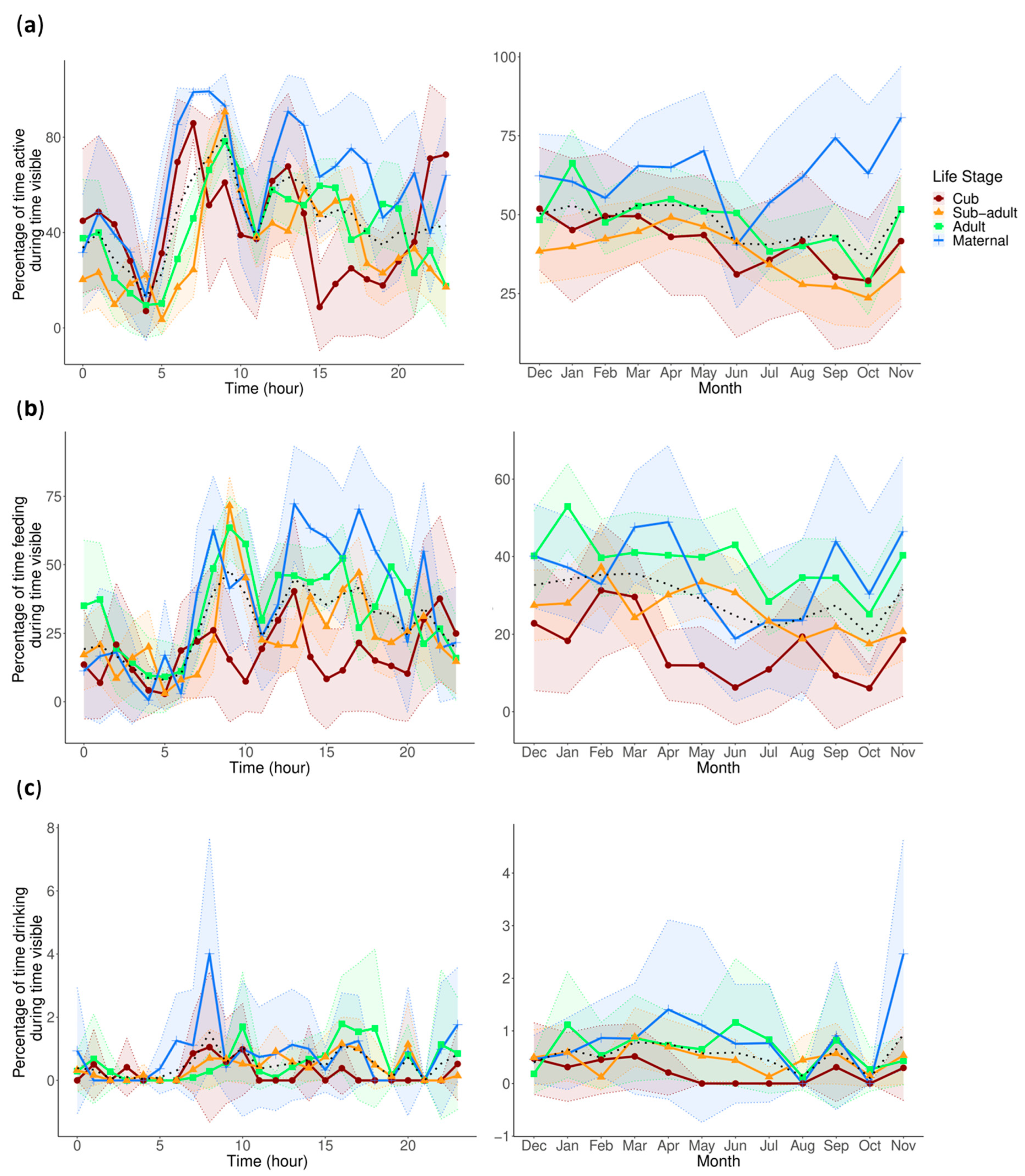
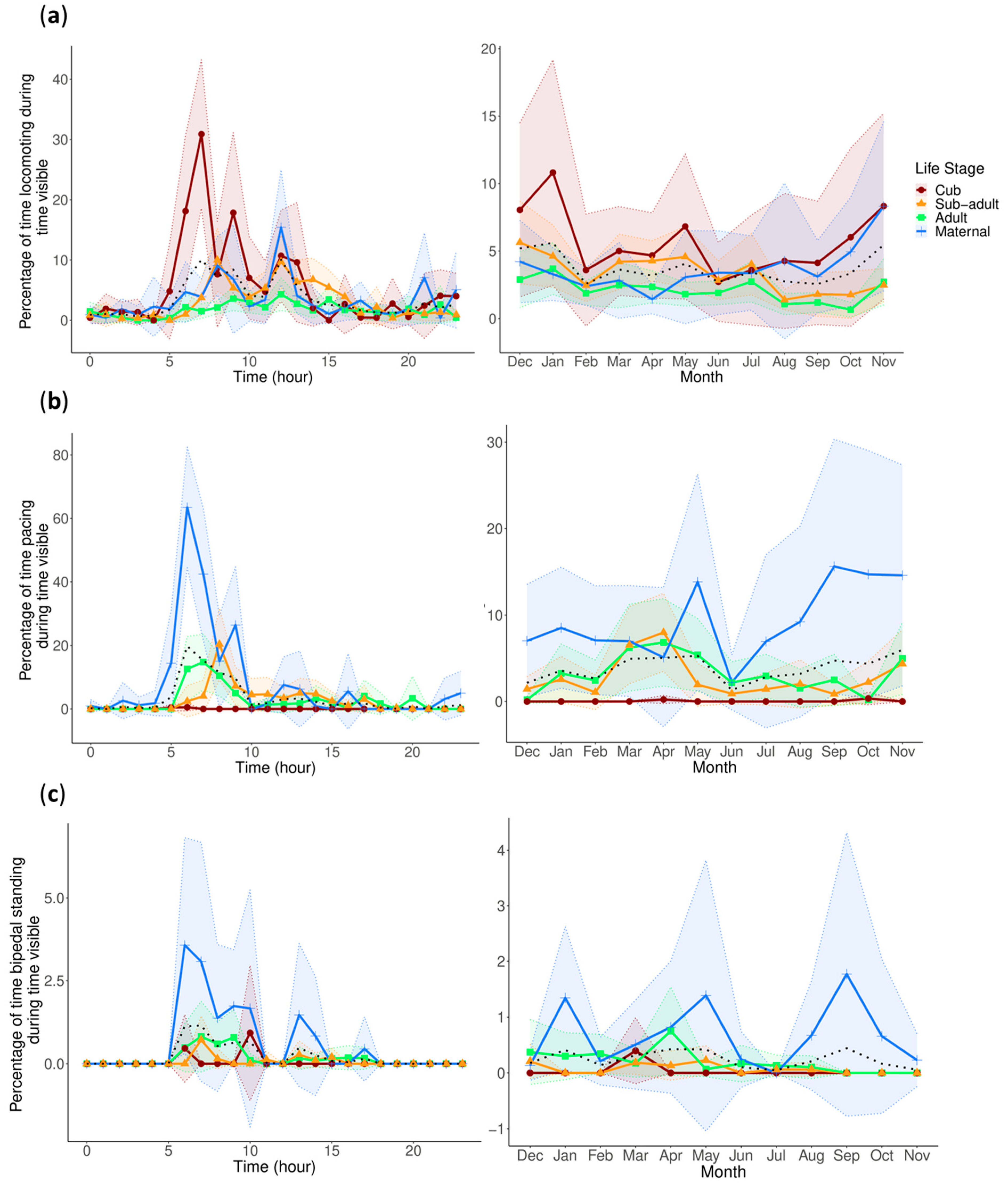
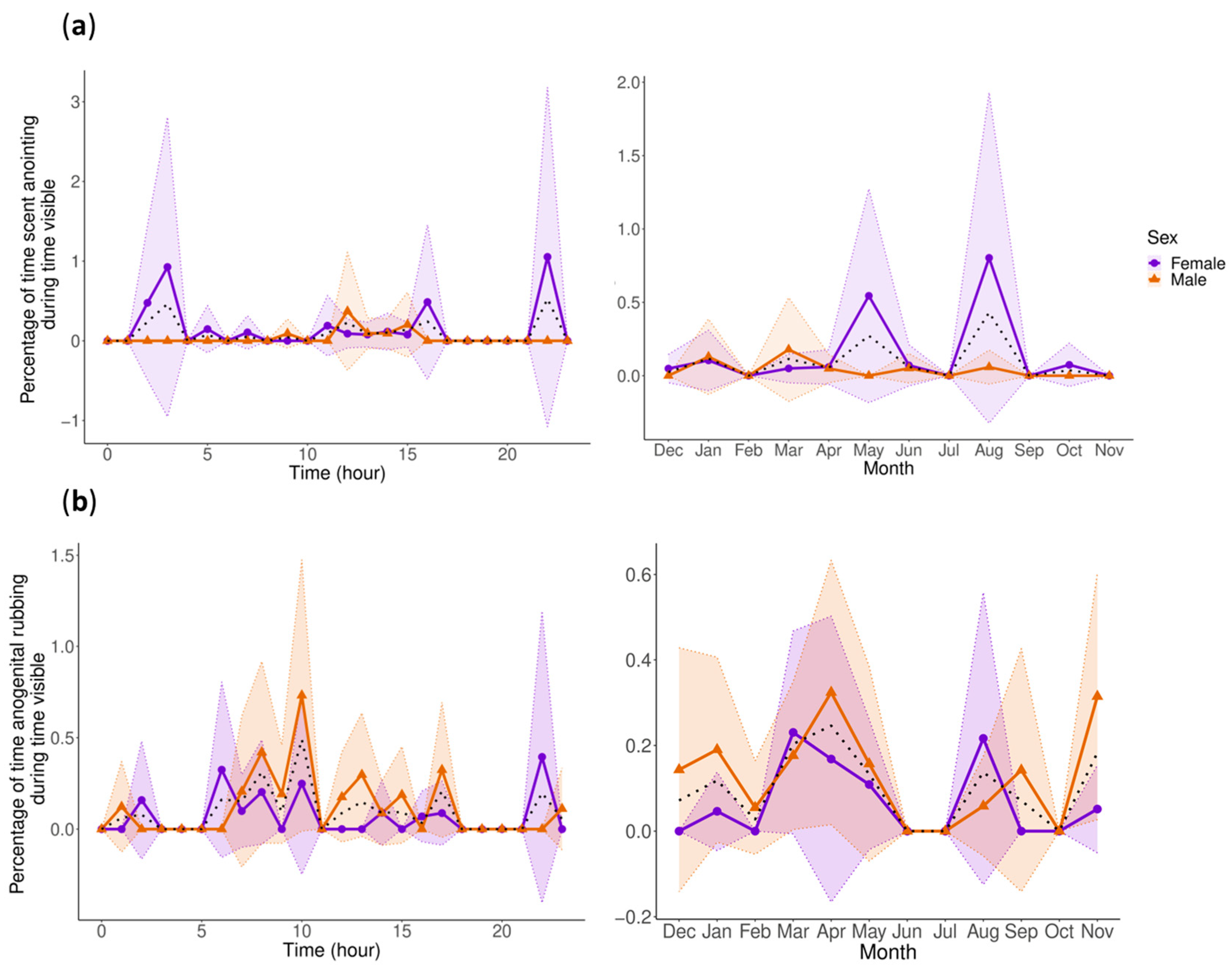
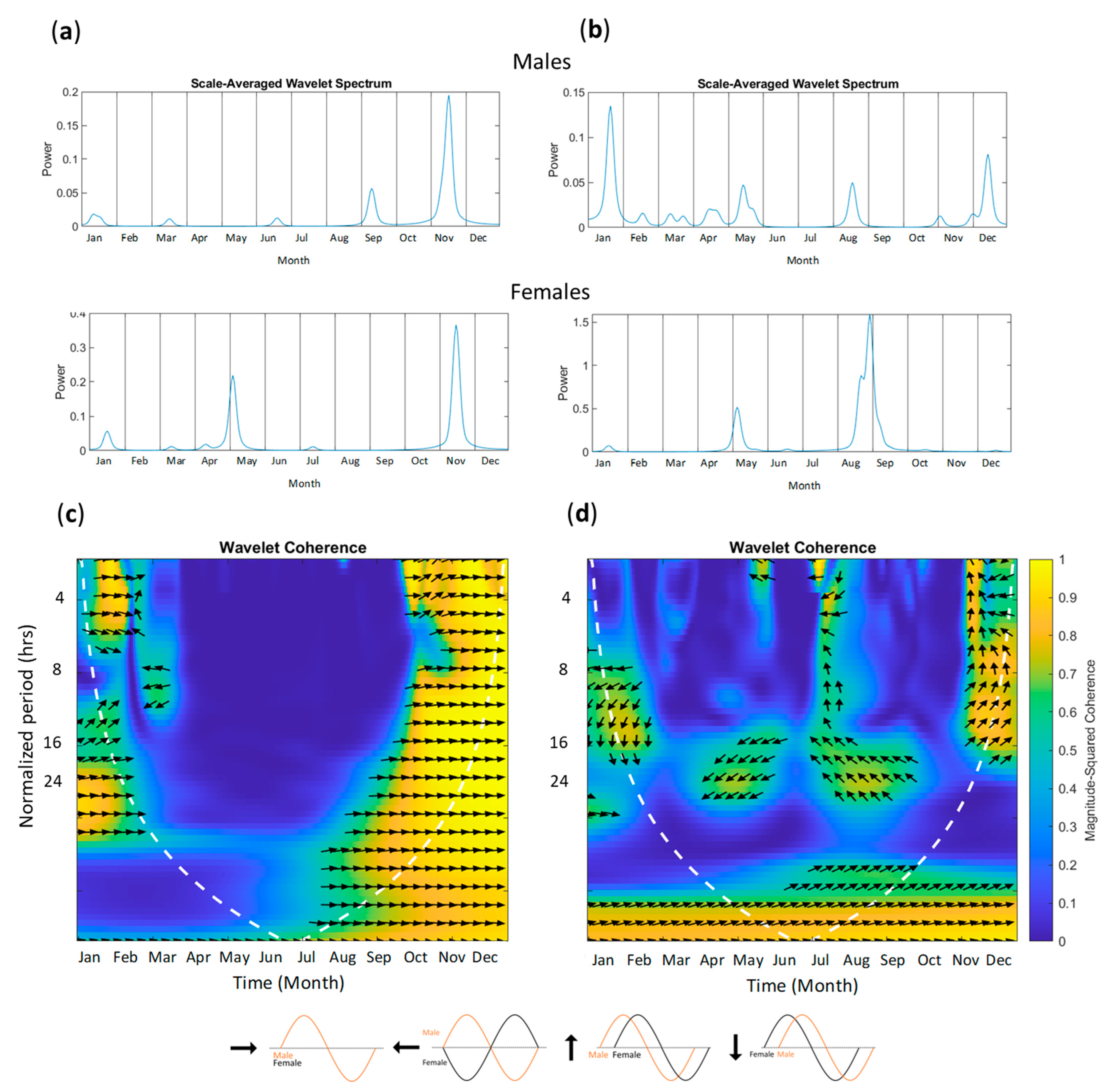
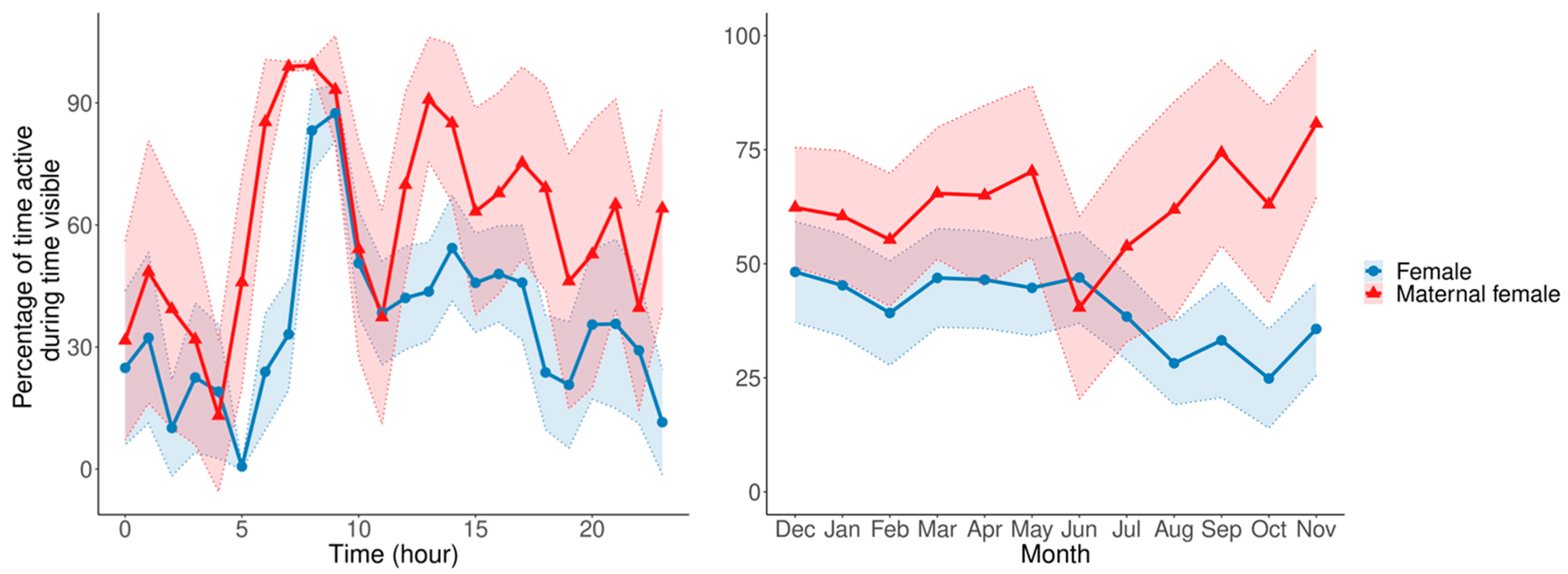
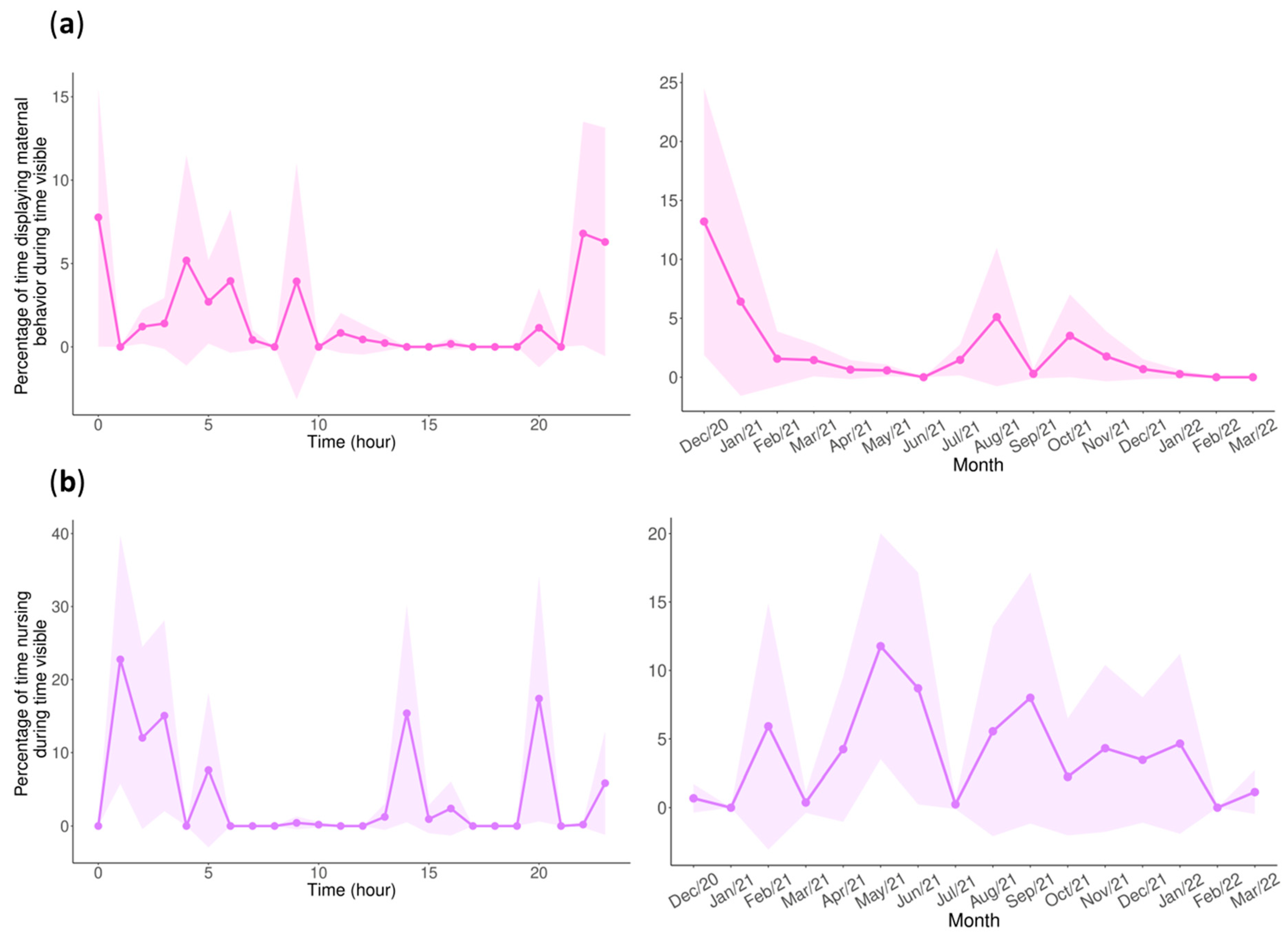
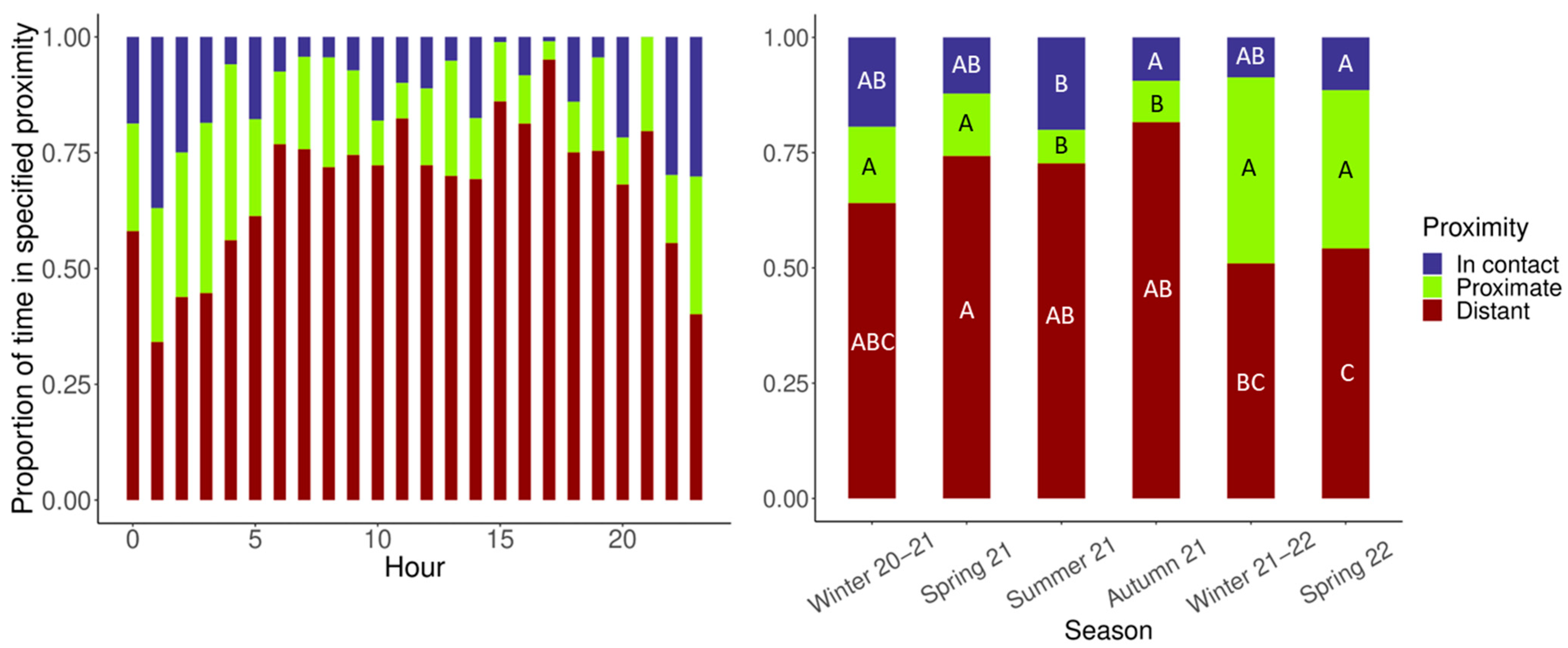
Circadian clocks are evolutionarily adaptive internal clocks that regulate cycles of activity, behavior, and physiological processes. In this study, we used the circadian (24 h) and circannual (across the year) rhythms of behavior of 13 zoo-housed giant pandas to understand their needs and assess welfare. We found that they show changes in the pattern and intensity of behavior cycles based on their life stage and sex. Their circadian activity patterns showed three peaks, like wild giant pandas, including a night-time peak. We found specific cycles of feeding anticipatory activity, sexual-related behavior, and stereotypical/abnormal behavior, which align with the timing of migration in wild giant pandas, and we therefore suggest that this may be how thwarted migration manifests itself in captivity. We also determined the cycles of maternal behaviors, including nursing, and proximity for a mother and cub, providing context to the development of a circadian rhythm in a cub and information on the way a mammalian mother’s circadian rhythm is disrupted during nursing. Overall, our study provides a holistic, evidence-based method that can be applied across captive environments so that staff can better understand the needs of their species and appropriately provide for them, promoting positive welfare and increasing the likelihood of successful breeding and conservation.
Abstract
Circadian and circannual cycles of behavior regulate many aspects of welfare including metabolism, breeding, and behavioral interactions. In this study, we aim to demonstrate how systematically determining circadian and circannual cycles can provide insight into animals’ needs and be part of an evidence-based approach to welfare assessment. We measured and analyzed the observational behavioral data of 13 zoo-housed giant pandas (Ailuropoda melanoleuca), across life stages and between sexes, each month for one year using live camera footage from six zoos across the world. Our results indicate that life stage was associated with changes in overall activity, feeding, locomotion, and pacing, and that sex influenced scent anointing and anogenital rubbing. Overall, the circadian rhythms showed three peaks of activity, including a nocturnal peak, as seen in wild giant pandas. We also found associations between sexual-related, stereotypical/abnormal, and feeding behavior, which are possibly linked to the timing of migration of wild pandas, and elucidated the relationship between a mother and cub, finding that they concentrate maternal behaviors to mainly after closing hours. Understanding these cycle patterns can aid animal care staff in predicting changing needs throughout the day, year, and life cycle and preemptively provide for those needs to best avoid welfare concerns.
Keywords:
circadian; circannual; animal welfare; captive; behavior; breeding