Relative Impact of Birth Weight and Early Growth on Neonatal Mortality in Puppies


1
NeoCare, Université de Toulouse, ENVT, 31300 Toulouse, France
2
Royal Canin Research Center, 30470 Aimargues, France
*
Author to whom correspondence should be addressed.
Animals 2023, 13(12), 1928; https://doi.org/10.3390/ani13121928
Submission received: 20 April 2023
/
Revised: 31 May 2023
/
Accepted: 5 June 2023
/
Published: 9 June 2023
(This article belongs to the Special Issue Small Animal Neonatology)
Simple Summary
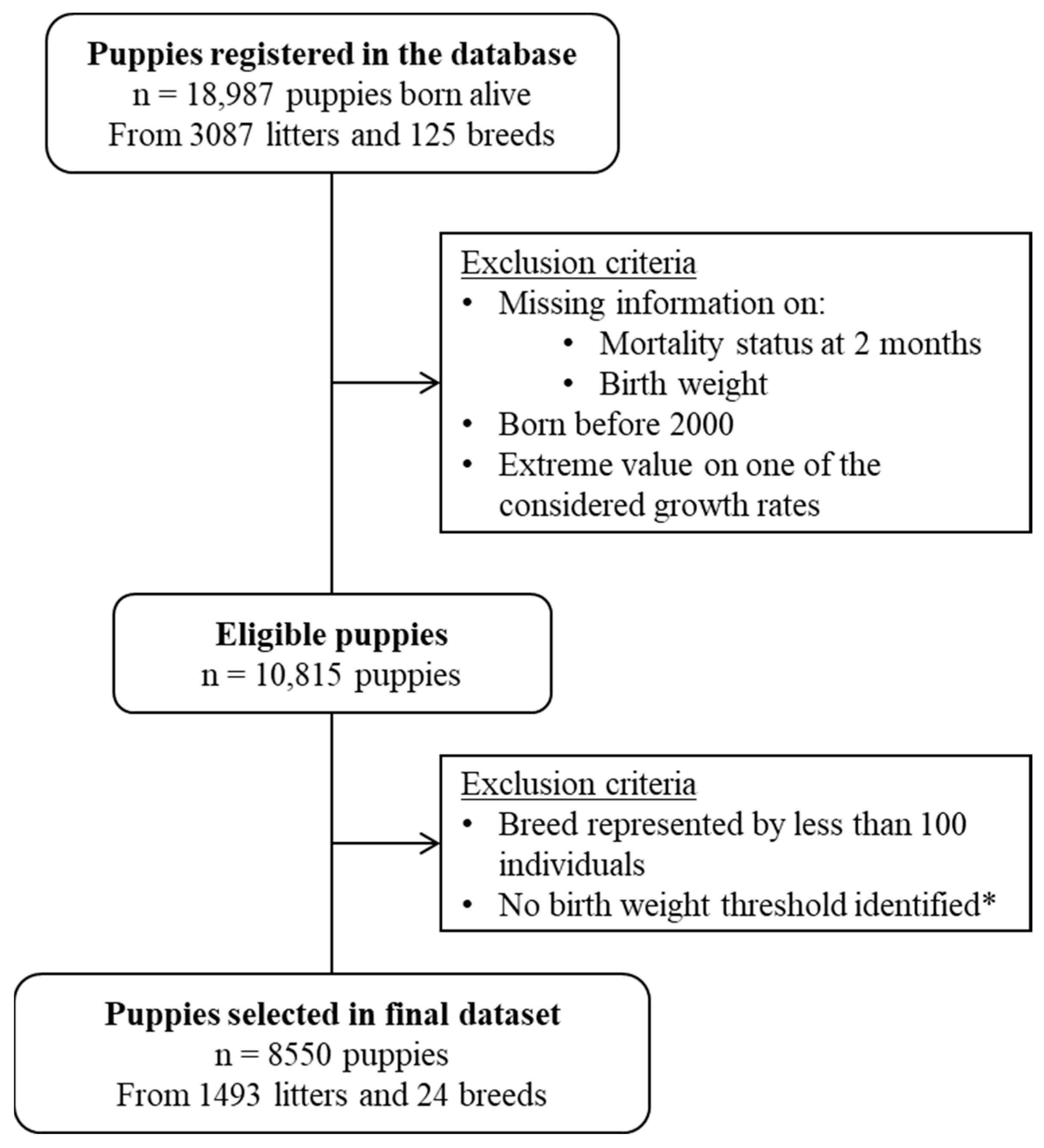
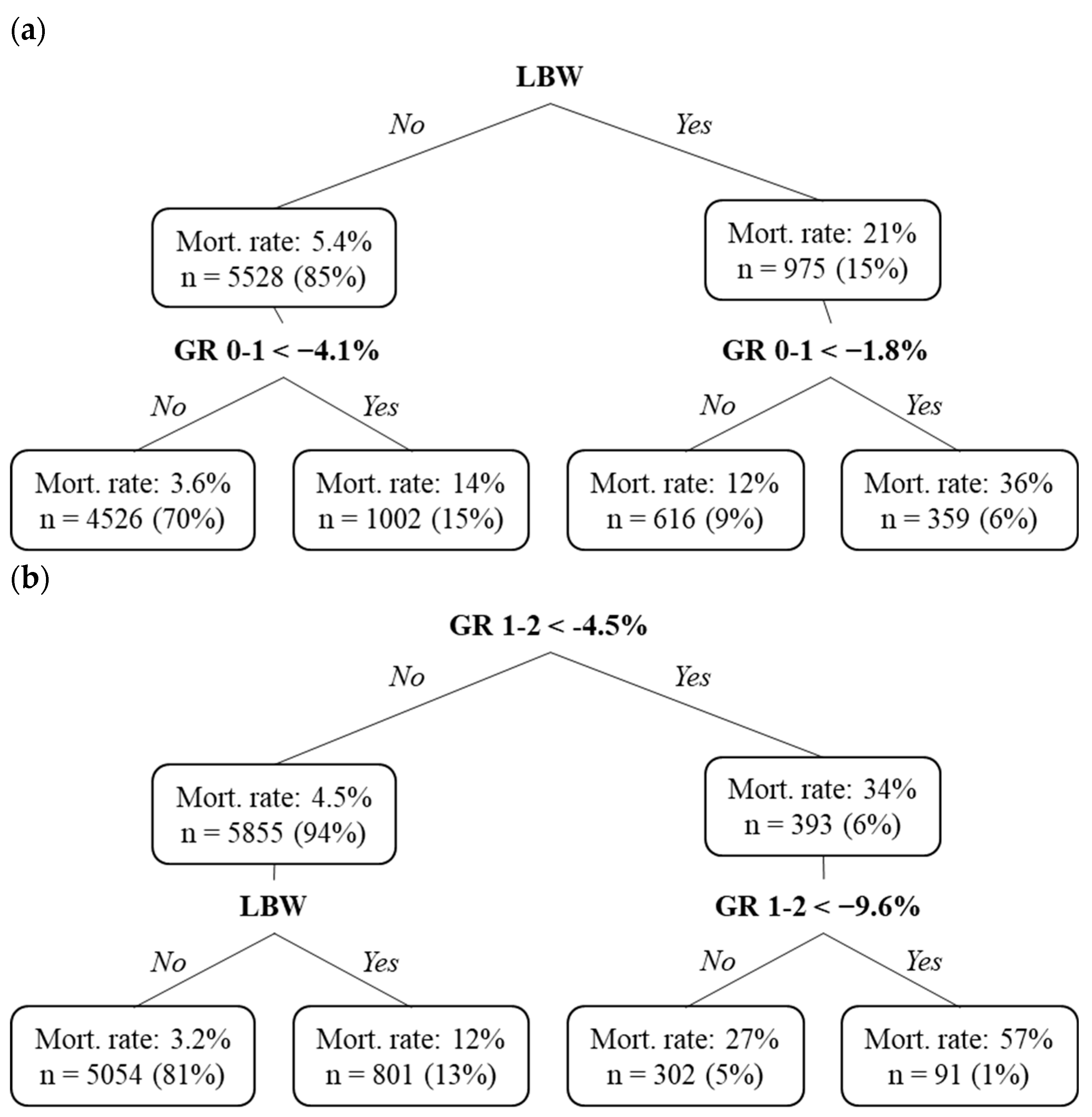
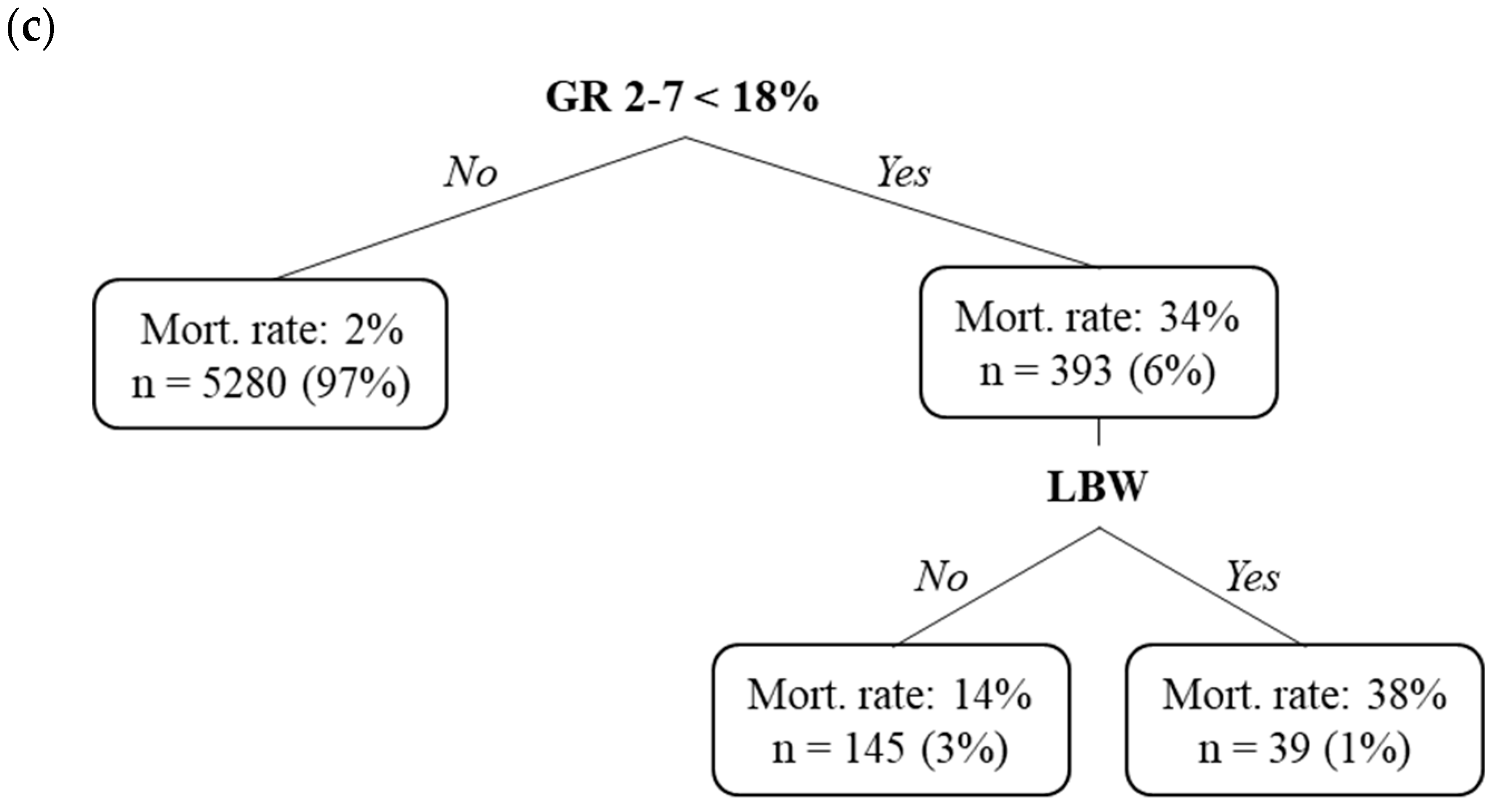
The mortality rate in the first two months of life is high in canine species, estimated at about 10% of live-born puppies, and can certainly be improved. Early identification of neonates at higher risk of mortality is required. Using data collected from 8550 puppies shared on a voluntary basis by 127 French breeding kennels, we explored the early growth of puppies as well as its interconnections with birth weight and mortality within the first two months. Low-birth-weight puppies were found to grow less than others over the first days of life but more later (compensatory growth). Thresholds for growth rates allowing the identification of puppies at higher risk of mortality during their first two months of life were established and will be useful to identify puppies with insufficient early growth to improve their chances of survival.
Abstract
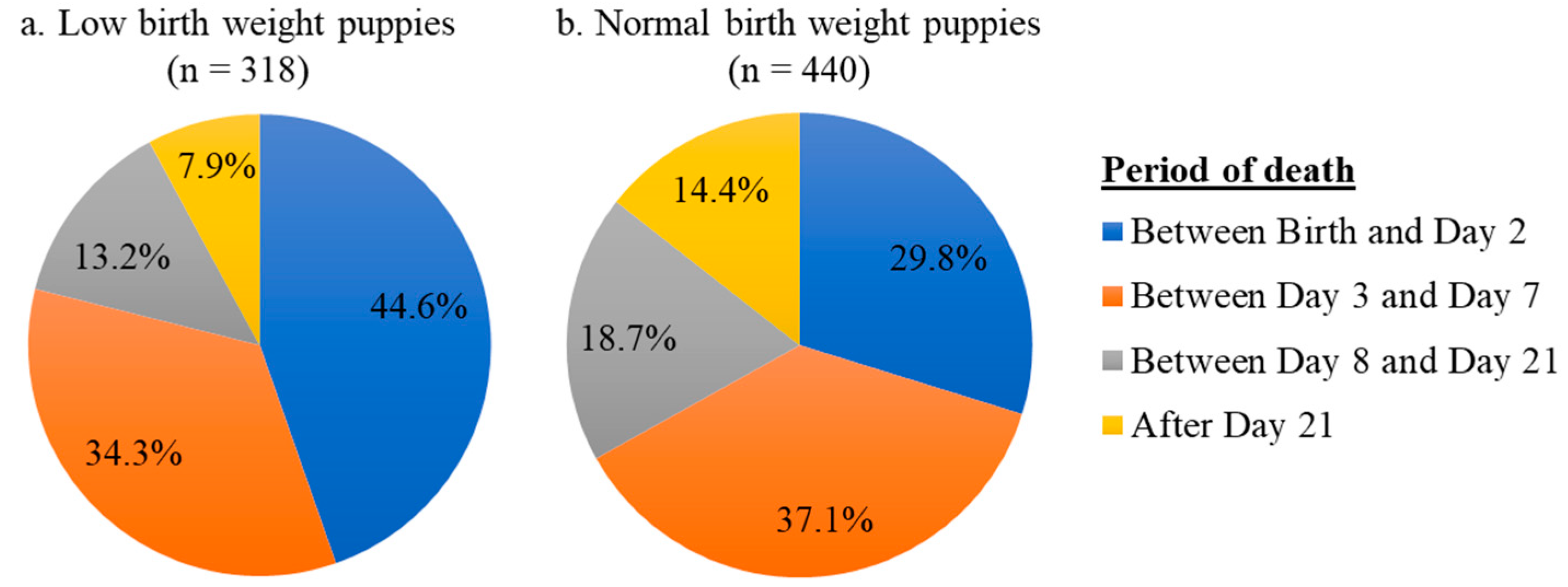
Puppy survival during their first weeks of life can be improved, and early detection of puppies with increased mortality risk is one of the keys to success. In the canine species, the few studies on this subject focused on birth weight, which reflects intrauterine growth. The present work aimed to explore the interconnections between birth weight, early growth and survival until two months of life in the canine species. In total, data from 8550 puppies born in 127 French breeding kennels were analysed. Five different growth rates were calculated to reflect the growth of puppies during their first week of life. Low-birth-weight puppies had lower growth than normal-birth-weight puppies over the first two days of life but higher growth rates thereafter. Growth-rate thresholds allowing the identification of puppies at higher risk of mortality during their first two months of life were lower for low-birth-weight puppies. These thresholds will help breeders and veterinarians to identify puppies at risk with particular needs for monitoring and nursing to improve their chances of survival.
Keywords:
puppy; low birth weight; early growth; neonate; mortality; threshold; CART