Genetic Diversity Analysis of the Red Swamp Crayfish Procambarus clarkii in Three Cultured Populations Based on Microsatellite Markers
by
 ,
,
Jiaqing Liu
1,2,3,
Yunfei Sun
1,2,3,*,
Qianqian Chen
1,2,3,
Miaomiao Wang
4,5,
Qin Li
4,5,
Wenzong Zhou
6 and
Yongxu Cheng
1,2,3 1
Centre for Research on Environmental Ecology and Fish Nutrition of the Ministry of Agriculture, Shanghai Ocean University, Shanghai 201306, China
2
Shanghai Engineering Research Center of Aquaculture, Shanghai Ocean University, Shanghai 201306, China
3
National Demonstration Centre for Experimental Fisheries Science Education, Shanghai Ocean University, Shanghai 201306, China
4
Key Laboratory of Integrated Rice-Fish Farming, Freshwater Fisheries Research Center, Chinese Academy of Fishery Sciences, Ministry of Agriculture and Rural Affairs, Wuxi 214081, China
5
Jiangsu Provincial Aquatic Technology Extension Center, Nanjing 210036, China
6
Institute of Eco-Environmental Preservation, Shanghai Agricultural Academy of Sciences, Shanghai 201403, China
*
Author to whom correspondence should be addressed.
Animals 2023, 13(11), 1881; https://doi.org/10.3390/ani13111881
Submission received: 18 April 2023
/
Revised: 26 May 2023
/
Accepted: 1 June 2023
/
Published: 5 June 2023
(This article belongs to the Special Issue Genetics and Breeding of Crustaceans)
Simple Summary
High-quality seedlings are a prerequisite for healthy aquatic animal breeding. As the scale of Procambarus clarkii farming continues to expand, the model of “breeding and catching large and keeping small” has led to serious degradation of the fry. This has restricted the development of the P. clarkii industry. Therefore, the selection and breeding of optimal breeds of P. clarkii are very important. Investigating intraspecific patterns of genetic diversity may help unravel the species’ genetic structure, evaluate the quality of the fry, and design measures for breeding and conservation. In this study, the genetic diversity of P. clarkii from three regions of China was analysed using microsatellite markers. Populations of P. clarkii showed high genetic diversity and extensive gene flow. The Xuancheng population could be used as a selective breeding population because it possesses the highest diversity. The results of this study provide a scientific basis for the conservation of germplasm resources and the genetic selection and breeding of P. clarkii.
Abstract
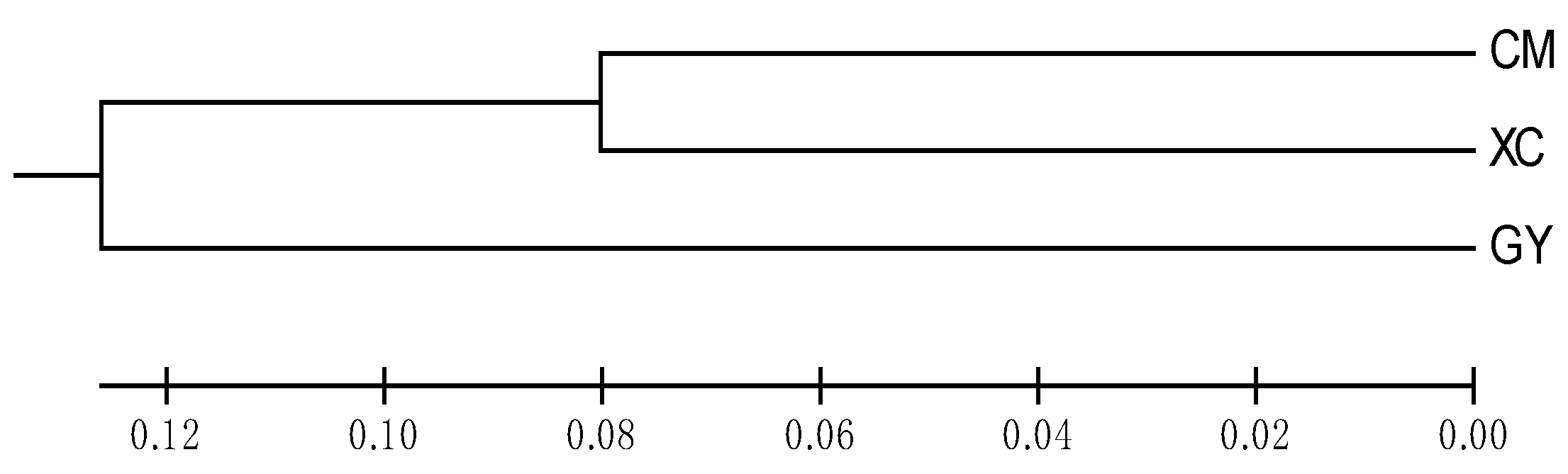
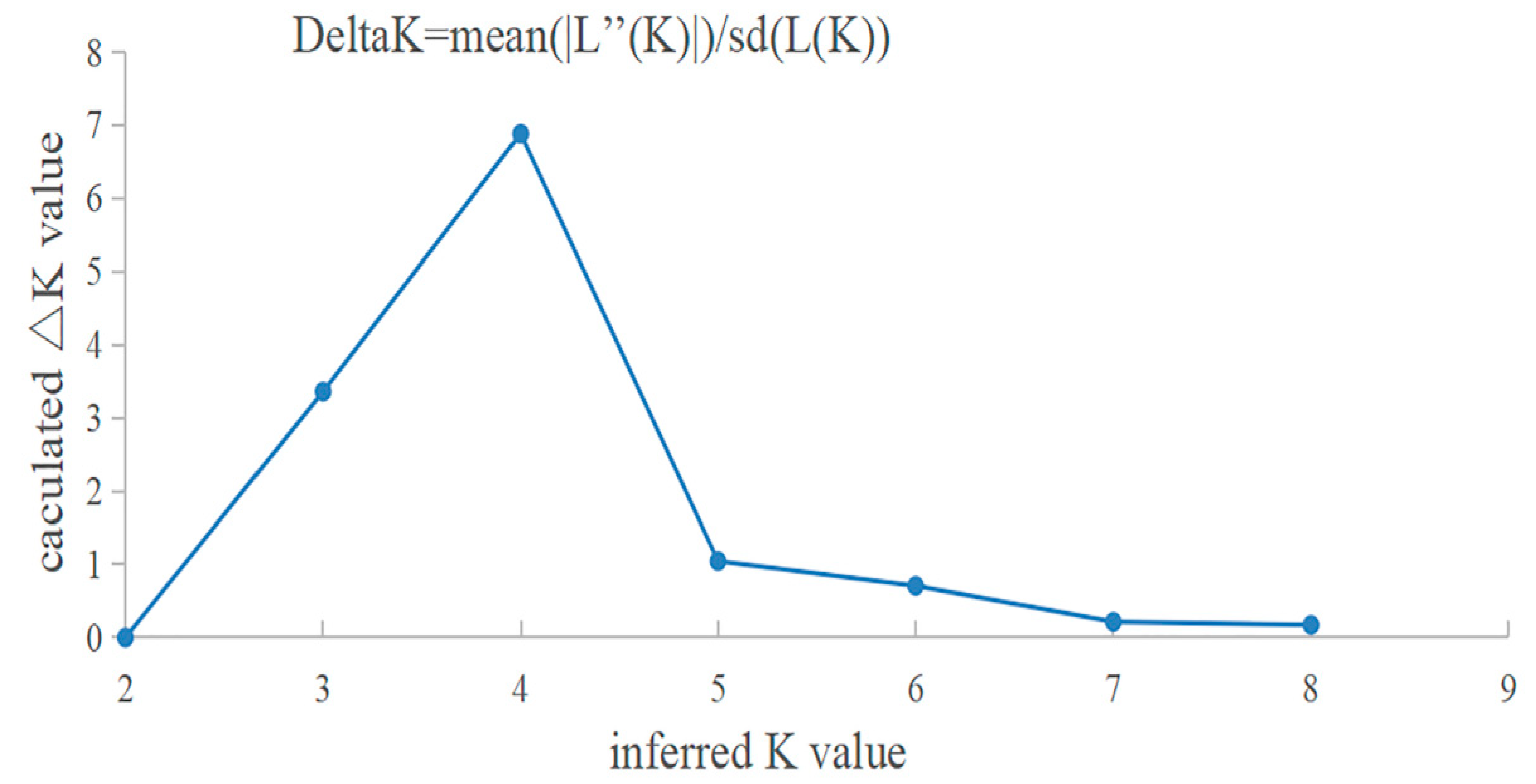
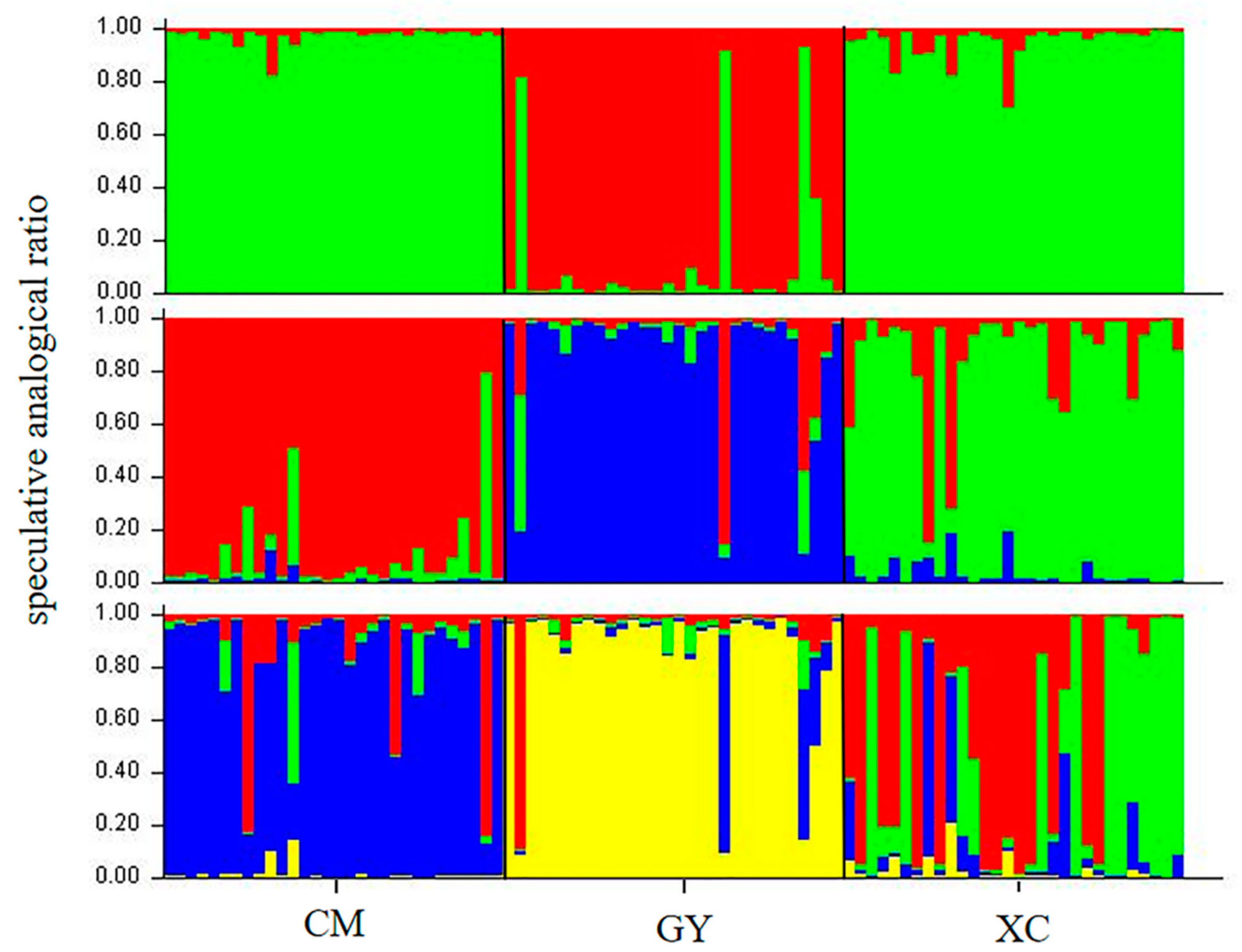
With the increasing scale of crayfish breeding, the self-propagation and “catch large and keep small” breeding patterns have led to serious degradation of the fry, so the selection and breeding of high-quality fry is very important. Selecting a population with a high genetic diversity as the base population for breeding can greatly improve the breeding efficiency. Fifteen microsatellite loci were used to understand the genetic structure and diversity of three Procambarus clarkii populations in Chongming, Shanghai; Gaoyou, Jiangsu; and Xuancheng, Anhui. The results indicated that the three populations were diverse and the number of alleles, observed heterozygosity, expected heterozygosity, Shannon information index, and polymorphic information content ranged from 4.8 to 6.2, 0.5567 to 0.6257, 0.6166 to 0.7086, 1.1292 to 1.3987, and 0.5446 to 0.6452, respectively. The Xuancheng population had the highest genetic diversity. The genetic differentiation coefficient and gene flow of the three populations were between 0.0553 and 0.1068 and 2.0908 and 4.2708, respectively, and there was extensive genetic exchange between the Chongming and Xuancheng populations. Analyses of molecular variance indicated that the genetic variation was mainly within the population (91.51%) and inter-population genetic variation accounted for 8.49%. The unweighted pair group method with an arithmetic mean clustering map was utilised based on the genetic distance between groups, and the results showed that the Gaoyou group was grouped alone, while the Chongming and Xuancheng groups were clustered together. The structural results indicated that the Chongming and Xuancheng groups had the same origin, although the Xuancheng group possessed a more complex genetic structure. This study indicated that all three populations had a high genetic diversity, with the Xuancheng population exhibiting the highest diversity. The results of the study provide a reference for the selection of base populations in breeding programs and confirm that the Xuancheng population in Anhui has a better genetic background. The selection of the Xuancheng population as one of the base populations for genetic breeding will be more efficient to accumulate superior traits.