Integrated Transcriptomic and Metabolomic Analyses Reveal Low-Temperature Tolerance Mechanism in Giant Freshwater Prawn Macrobrachium rosenbergii
by
 ,
,
Haihui Tu
1,
Xin Peng
1,
Xinyi Yao
1,
Qiongying Tang
1,*,
Zhenglong Xia
2,
Jingfen Li
1,
Guoliang Yang
1,2 and
Shaokui Yi
1,*
1
Zhejiang Provincial Key Laboratory of Aquatic Resources Conservation and Development, Key Laboratory of Aquatic Animal Genetic Breeding and Nutrition, Chinese Academy of Fishery Sciences, College of Life Sciences, Huzhou University, Huzhou 313000, China
2
Jiangsu Shufeng Prawn Breeding Co., Ltd., Gaoyou 225654, China
*
Authors to whom correspondence should be addressed.
Animals 2023, 13(10), 1605; https://doi.org/10.3390/ani13101605
Submission received: 26 March 2023
/
Revised: 28 April 2023
/
Accepted: 6 May 2023
/
Published: 11 May 2023
(This article belongs to the Special Issue Genetics and Breeding of Crustaceans)
Simple Summary
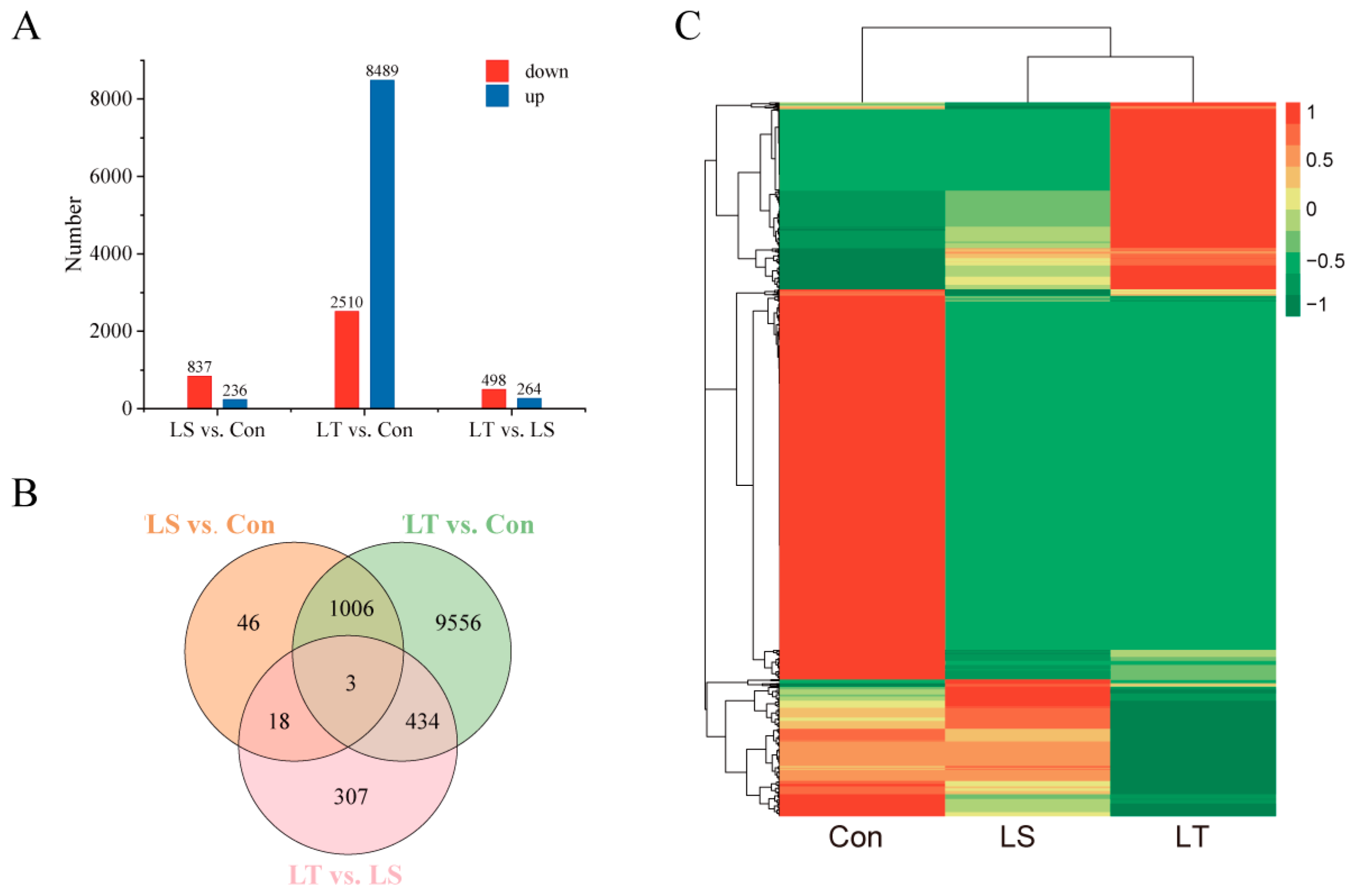
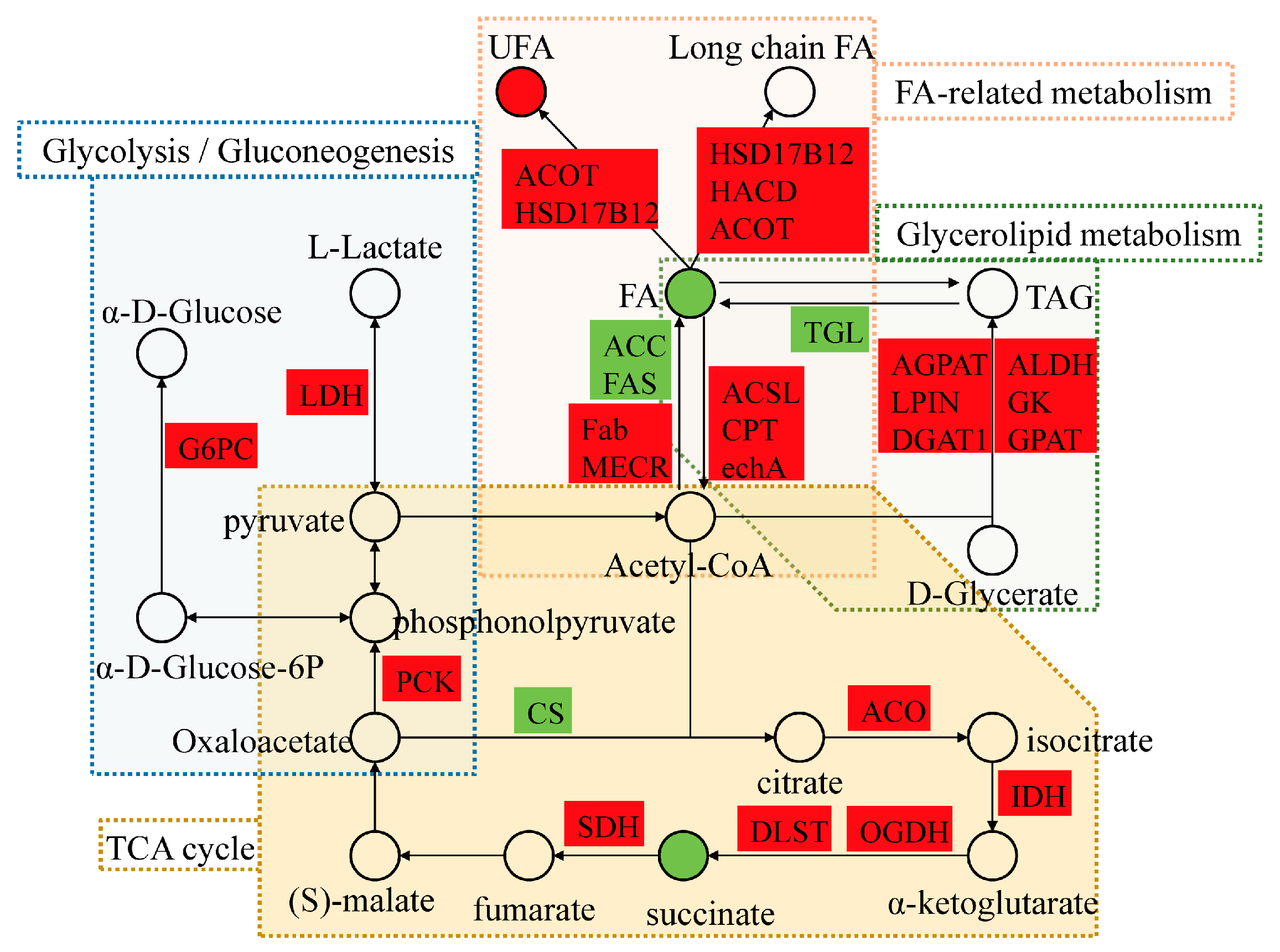
Macrobrachium rosenbergii is a kind of warm-water species, and water temperature can affect its growth, metabolism, and even survival. We investigated the gene regulation patterns and identified the differential metabolites between the low-temperature tolerant and sensitive groups using RNA-seq and metabolomic methods. We found that the genes and metabolites associated with lipid metabolism and energy metabolism play vital roles in responding to low-temperature stress. This study provides a molecular basis for the selection of a low-temperature tolerant strain of the freshwater prawn, Macrobrachium rosenbergii.
Abstract
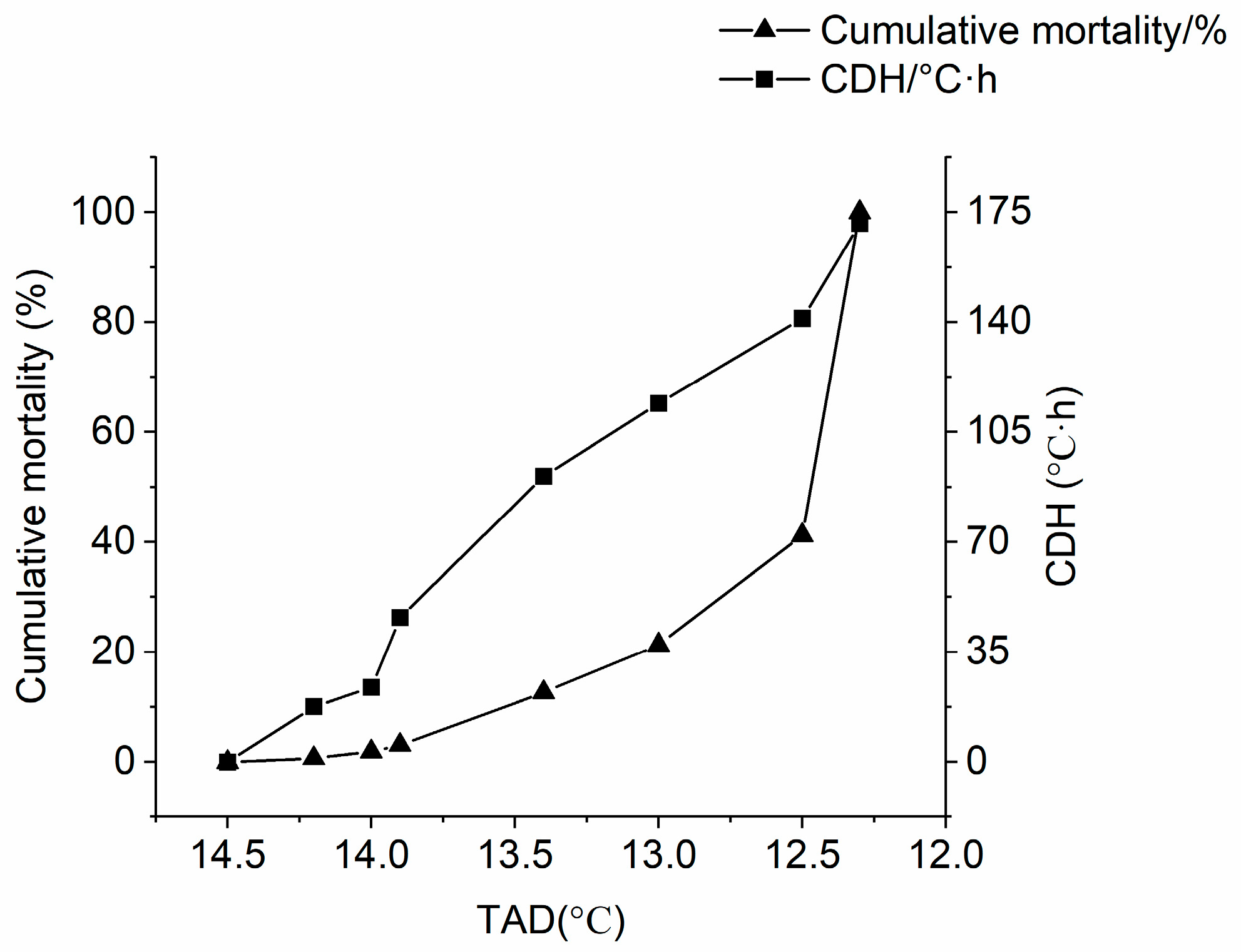
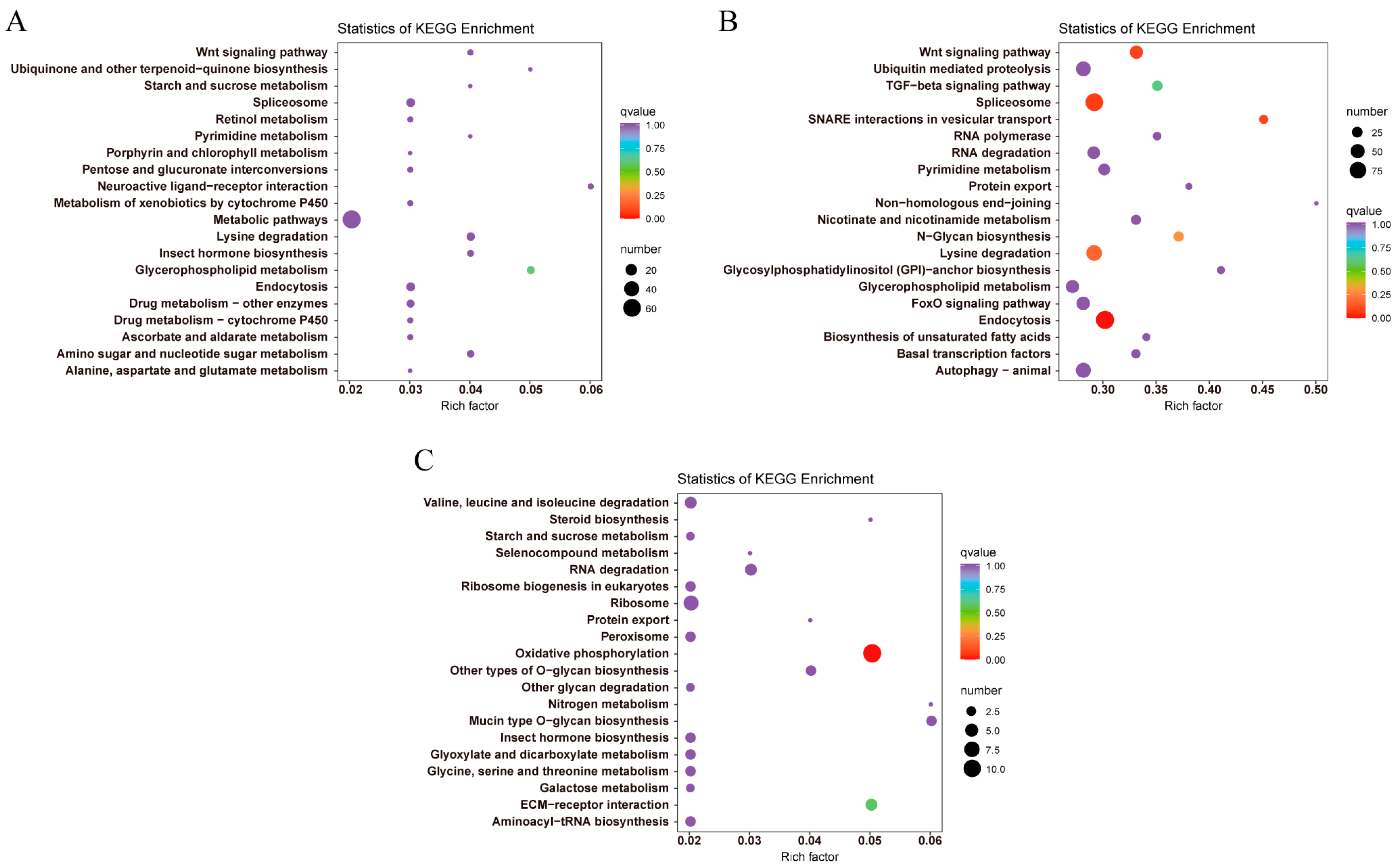
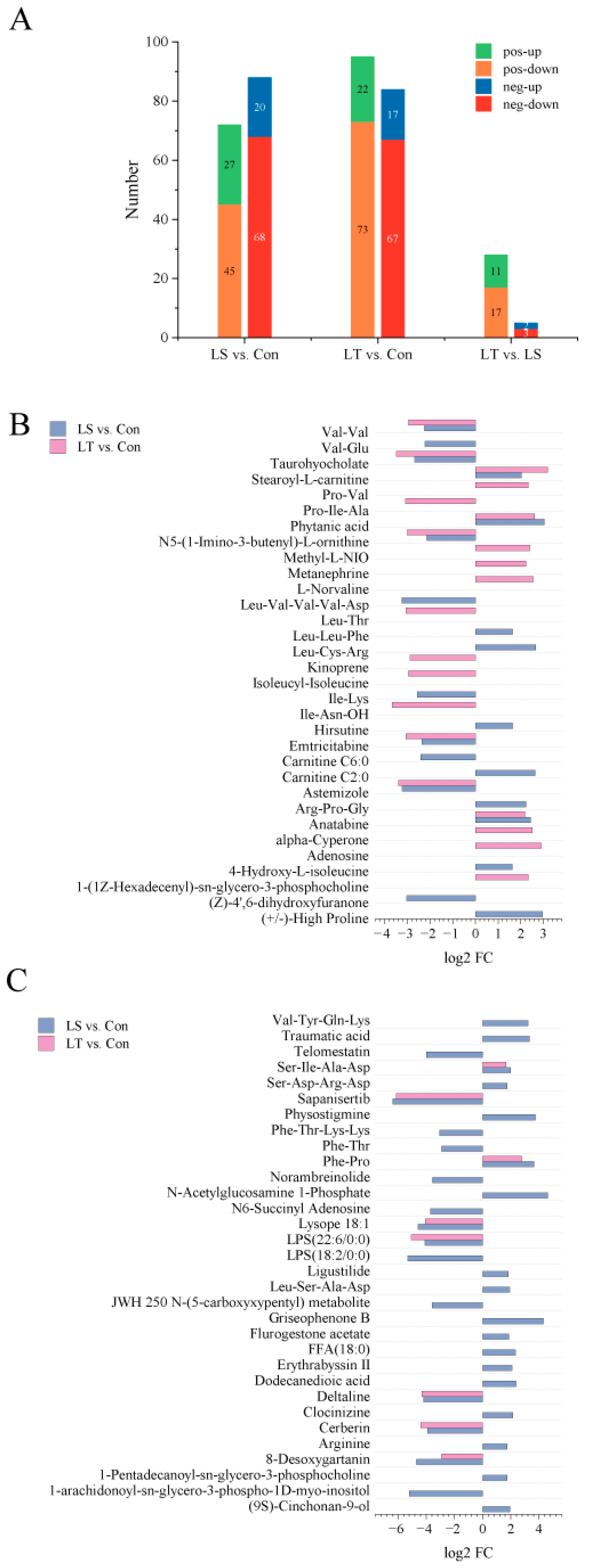
Water temperature, as an important environmental factor, affects the growth and metabolism of aquatic animals and even their survival. The giant freshwater prawn (GFP) Macrobrachium rosenbergii is a kind of warm-water species, and its survival temperature ranges from 18 °C to 34 °C. In this study, we performed transcriptomic and metabolomic analyses to clarify the potential molecular mechanism of responding to low-temperature stress in adult GFP. The treatments with low-temperature stress showed that the lowest lethal temperature of the GFP was 12.3 °C. KEGG enrichment analyses revealed that the differentially expressed genes and metabolites were both enriched in lipid and energy metabolism pathways. Some key genes, such as phosphoenolpyruvate carboxykinase and fatty acid synthase, as well as the content of the metabolites dodecanoic acid and alpha-linolenic acid, were altered under low-temperature stress. Importantly, the levels of unsaturated fatty acids were decreased in LS (low-temperature sensitive group) vs. Con (control group). In LT (low-temperature tolerant group) vs. Con, the genes related to fatty acid synthesis and degradation were upregulated to cope with low-temperature stress. It suggested that the genes and metabolites associated with lipid metabolism and energy metabolism play vital roles in responding to low-temperature stress. This study provided a molecular basis for the selection of a low-temperature tolerant strain.