Egg Rejection and Nest Sanitation in an Island Population of Barn Swallows (Hirundo rustica): Probability, Response Latency, and Sex Effects


Ministry of Education Key Laboratory for Ecology of Tropical Islands, College of Life Sciences, Hainan Normal University, Haikou 571158, China
*
Author to whom correspondence should be addressed.
Animals 2022, 12(21), 3027; https://doi.org/10.3390/ani12213027
Submission received: 7 October 2022
/
Revised: 2 November 2022
/
Accepted: 2 November 2022
/
Published: 3 November 2022
(This article belongs to the Special Issue Behavioral and Reproductive Strategies of Birds under Natural Selection and Global Changes)
Simple Summary
Most birds build nests for laying eggs and rearing their offspring. They frequently clean their nests by removing foreign objects, such as leaves, small branches, stones, and feces. Further, some birds recognize and remove foreign eggs deposited by brood parasites. Nest sanitation and egg rejection are related behaviors as both impact brood survival and involve an accept/reject decision regarding the content of the nest. Here, we examined these behaviors in barn swallows (Hirundo rustica), one of the most abundant and widespread birds in the world. The results suggest that nest sanitation may be a more ancient behavior because it occurs more frequently, and foreign objects were removed sooner upon discovery than egg rejection. Therefore, nest sanitation may constitute an evolutionary precursor to foreign egg rejection; however, nest sanitation rarely increases egg rejection regarding probability and response latency. Female and male swallows engaged in nest sanitation and egg rejection, implying that both sexes are affected by this type of natural selection.
Abstract
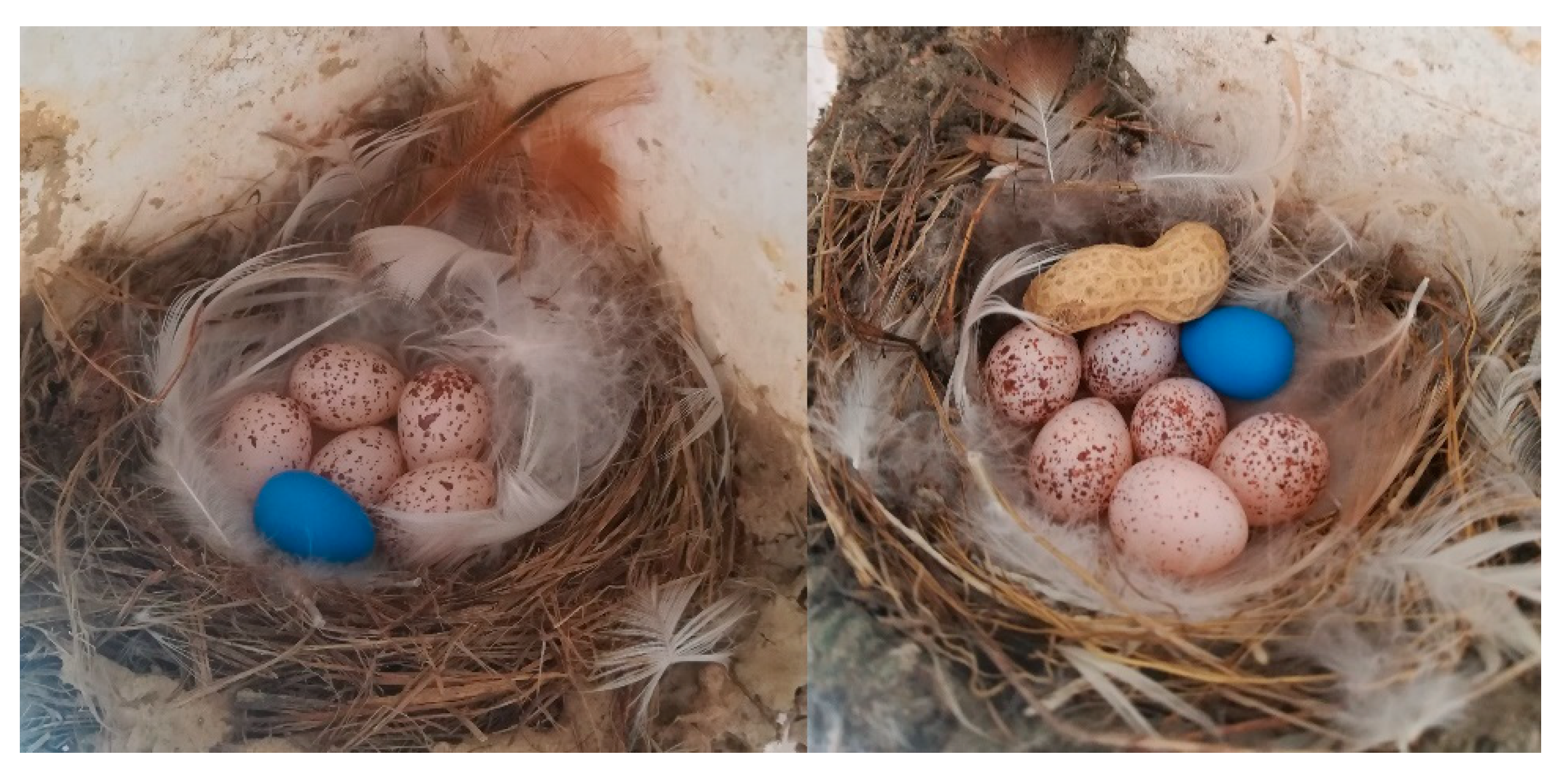
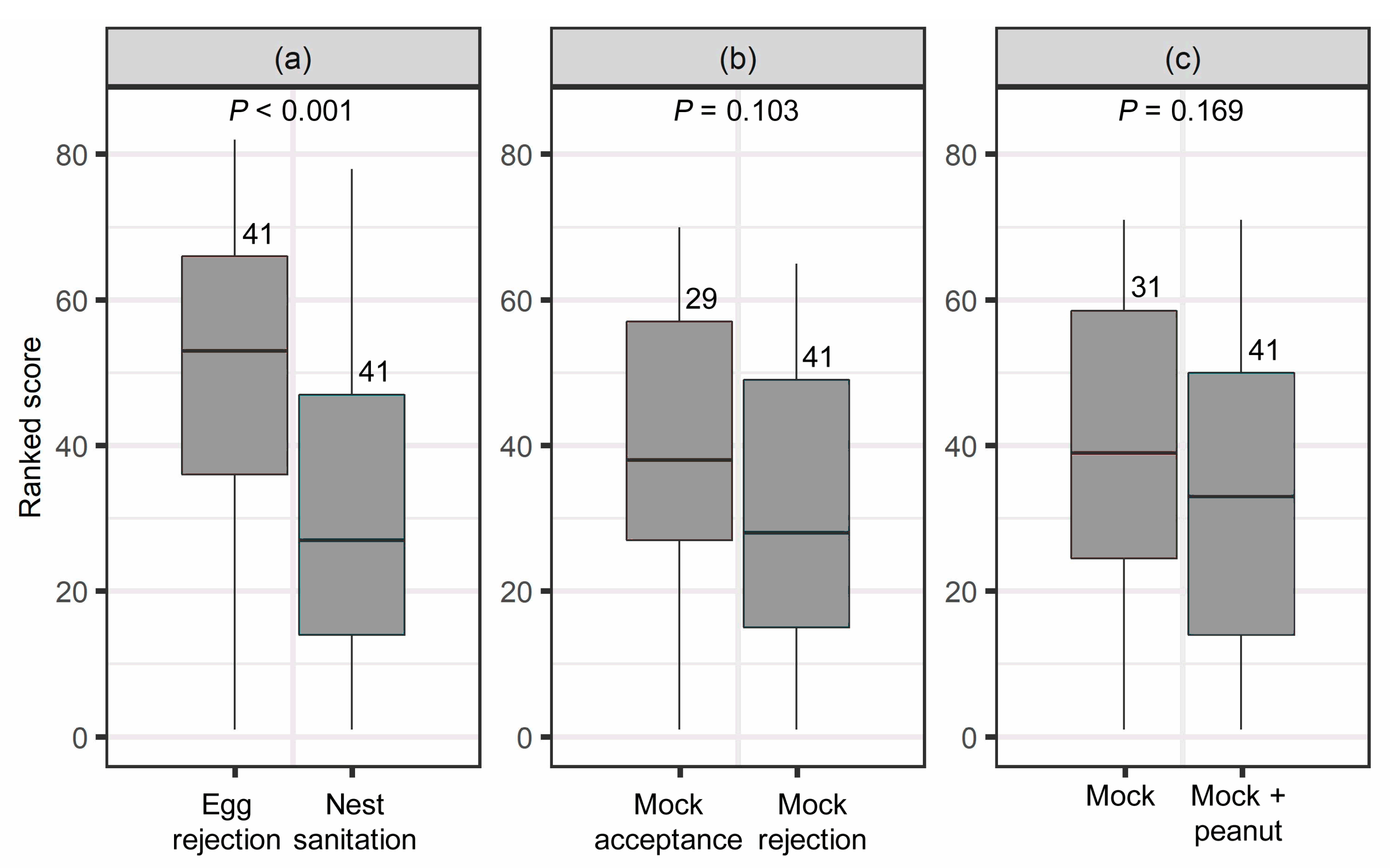
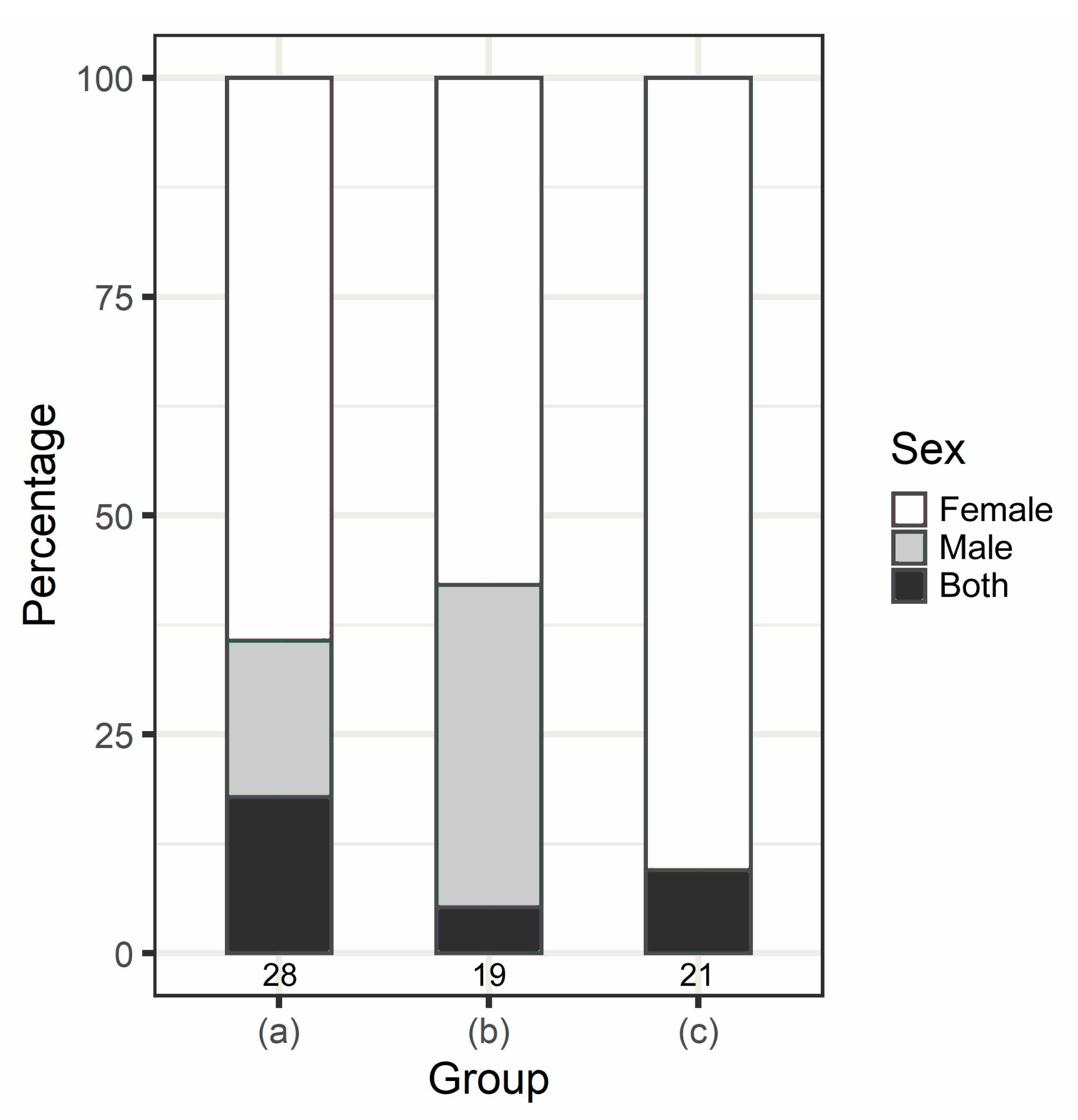
Bird nests function as vessels for eggs and nestlings, and an environment for rearing offspring. However, foreign objects falling into bird nests and nestling eggshells may be harmful. Moreover, the smell of fecal sacs increases the risk of detection by predators. Many bird species have evolved nest sanitation to prevent damage to their nests. Furthermore, egg rejection evolved in some birds to thwart brood parasites that lay eggs in their nests. We studied 133 nests of barn swallows (Hirundo rustica) in an island population through a nest content manipulation experiment to determine nest sanitation and egg rejection behaviors and their relationship. Swallows rejected non-egg foreign objects more frequently (100% vs. 58.6%) and sooner than parasite eggs, which supports the hypothesis that nest sanitation is a pre-adaptation to egg rejection. However, nest sanitation did not increase egg rejection, either in probability or latency. Furthermore, both sexes incubated the eggs, cleaned the nests, and removed parasite eggs, implying that both are confronted with natural selection related to nest sanitation and brood parasitism. However, females invested more time in these behaviors than males. This provides evidence for the evolutionary relationship of nest sanitation and egg rejection behaviors in barn swallows.