Morphometric Study of Mus musculus, Rattus norvegicus, and Rattus rattus in Qatar
by
 , , , ,
Md Mazharul Islam
1,2,* ,
,
Elmoubashar Farag
3,*, 
Ahmad Mahmoudi
4, 
Mohammad Mahmudul Hassan
5 ,
,
Muzzamil Atta
1,6, 
Ehsan Mostafavi
7,8,
Ismail Alnour Alnager
9,
Hassan Ali Farrag
10,
Gaafar El Awad Eljack
10,
Devendra Bansal
3,
Mohamed Haroun
3,
Randa Abdeen
1,
Hamad Al-Romaihi
3,
Abdul Aziz Al-Zeyara
1,
Sowaid Ali Almalki
1 and
Zilungile Mkhize-Kwitshana
11,12 1
Department of Animal Resources, Ministry of Municipality and Environment, Doha P.O. Box 35081, Qatar
2
School of Laboratory Medicine and Medical Sciences, College of Health Sciences, University of KwaZulu Natal, Durban 4000, South Africa
3
Ministry of Public Health, Doha P.O. Box 42, Qatar
4
Department of Biology, Faculty of Science, Urmia University, Urmia 5756151816, Iran
5
Faculty of Veterinary Medicine, Chattogram Veterinary and Animal Sciences University, Khulshi, Chattogram 4225, Bangladesh
6
College of Animal Production, University of Bahri, Khartoum 11111, Sudan
7
Department of Epidemiology and Biostatistics, Research Centre for Emerging and Reemerging Infectious Diseases, Pasteur Institute of Iran, Tehran 1316943551, Iran
8
National Reference Laboratory for Plague, Tularemia and Q Fever, Research Centre for Emerging and Reemerging Infectious Diseases, Pasteur Institute of Iran, Akanlu, Kabudar Ahang, Hamadan 6556153145, Iran
9
Rayan Municipality, Ministry of Municipality and Environment, Doha, Qatar
10
Qatar Pest Control Company, Doha P.O. Box 6319, Qatar
11
School of Life Sciences, College of Agriculture, Engineering & Science, University of KwaZulu Natal, Durban 4000, South Africa
12
South African Medical Research Council, Cape Town 7505, South Africa
*
Authors to whom correspondence should be addressed.
Animals 2021, 11(8), 2162; https://doi.org/10.3390/ani11082162
Submission received: 25 March 2021
/
Revised: 25 May 2021
/
Accepted: 27 May 2021
/
Published: 22 July 2021
(This article belongs to the Section Wildlife)
Simple Summary
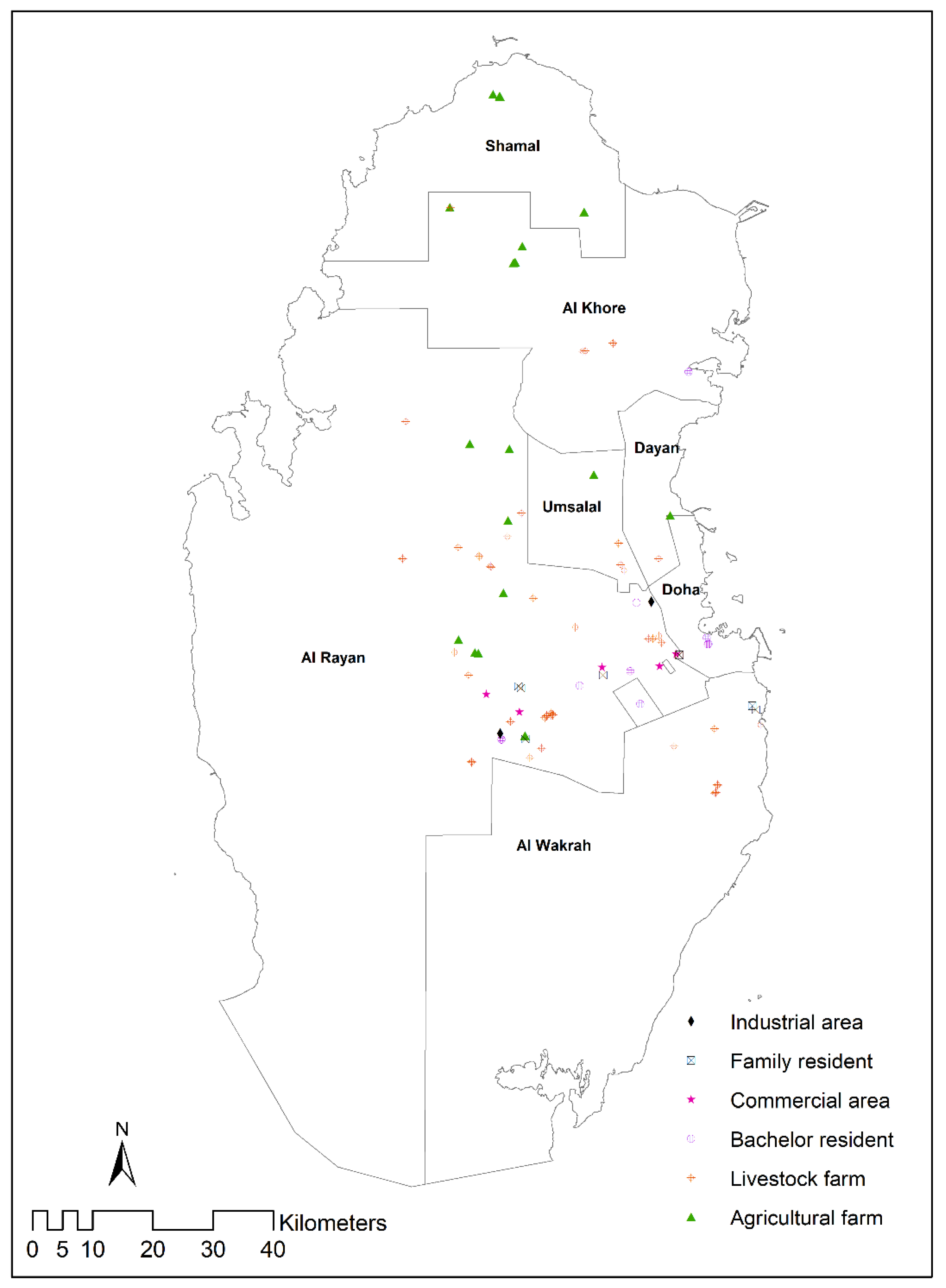
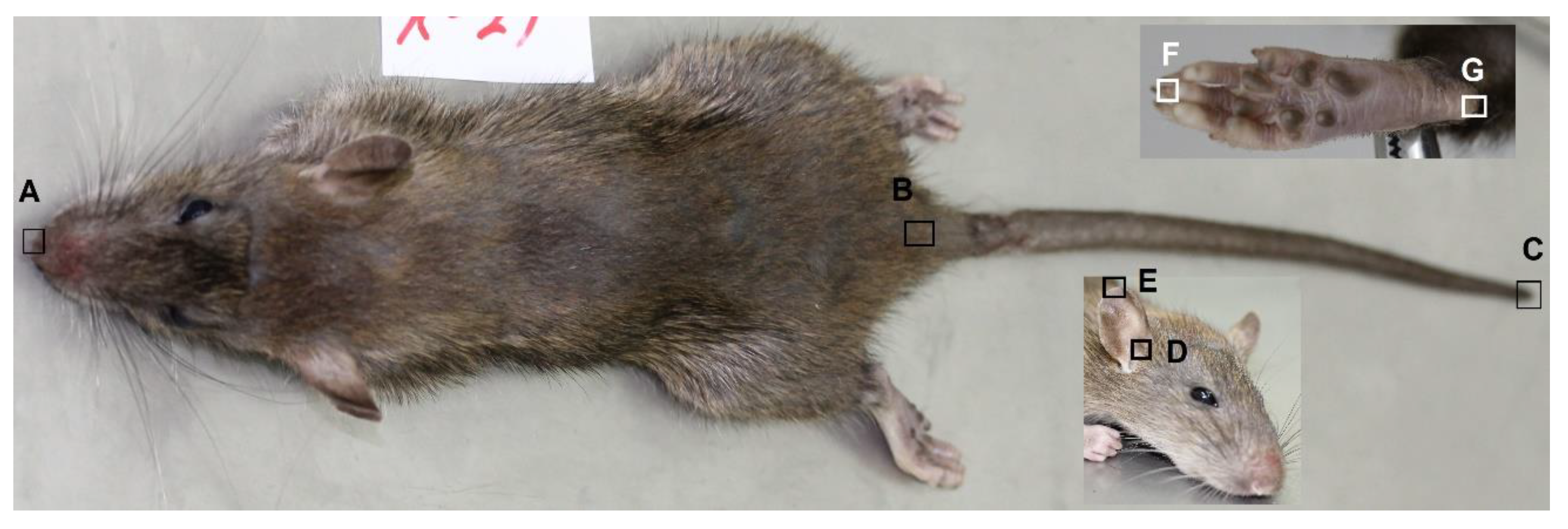
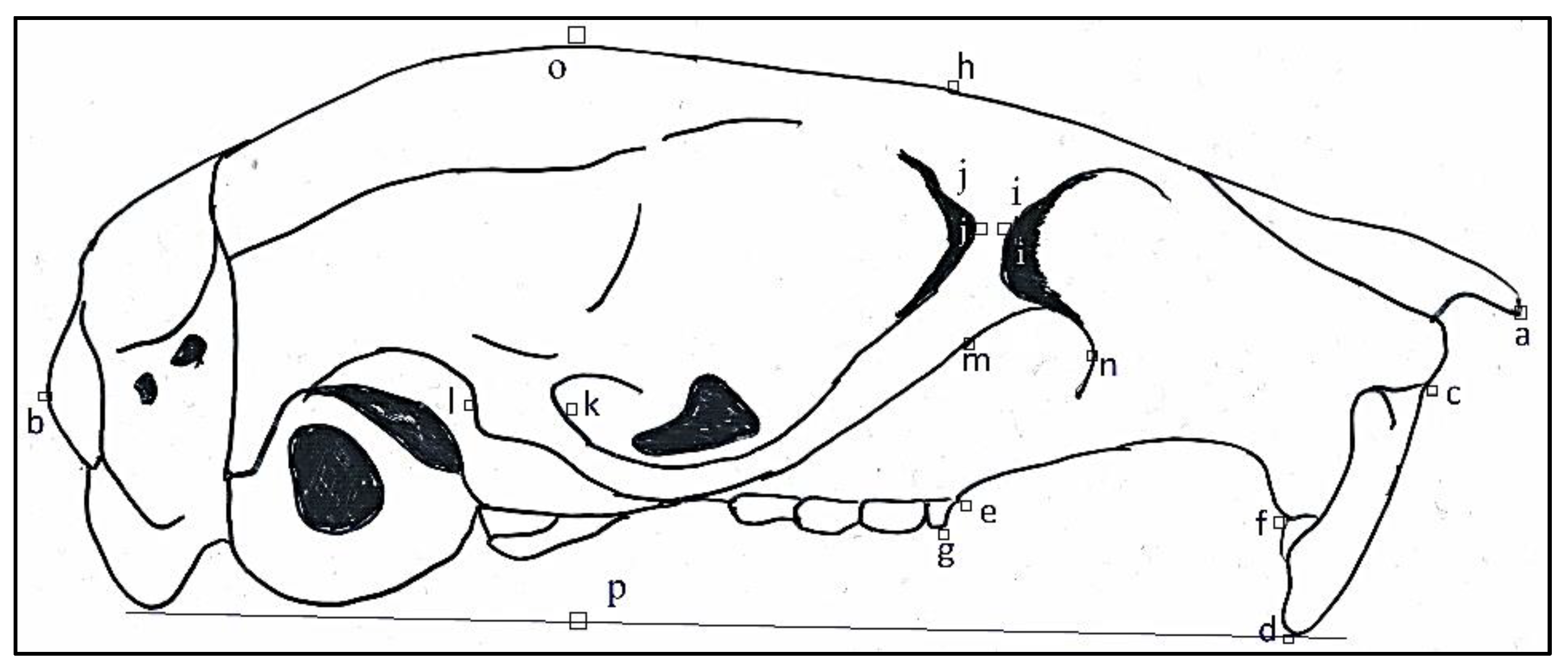
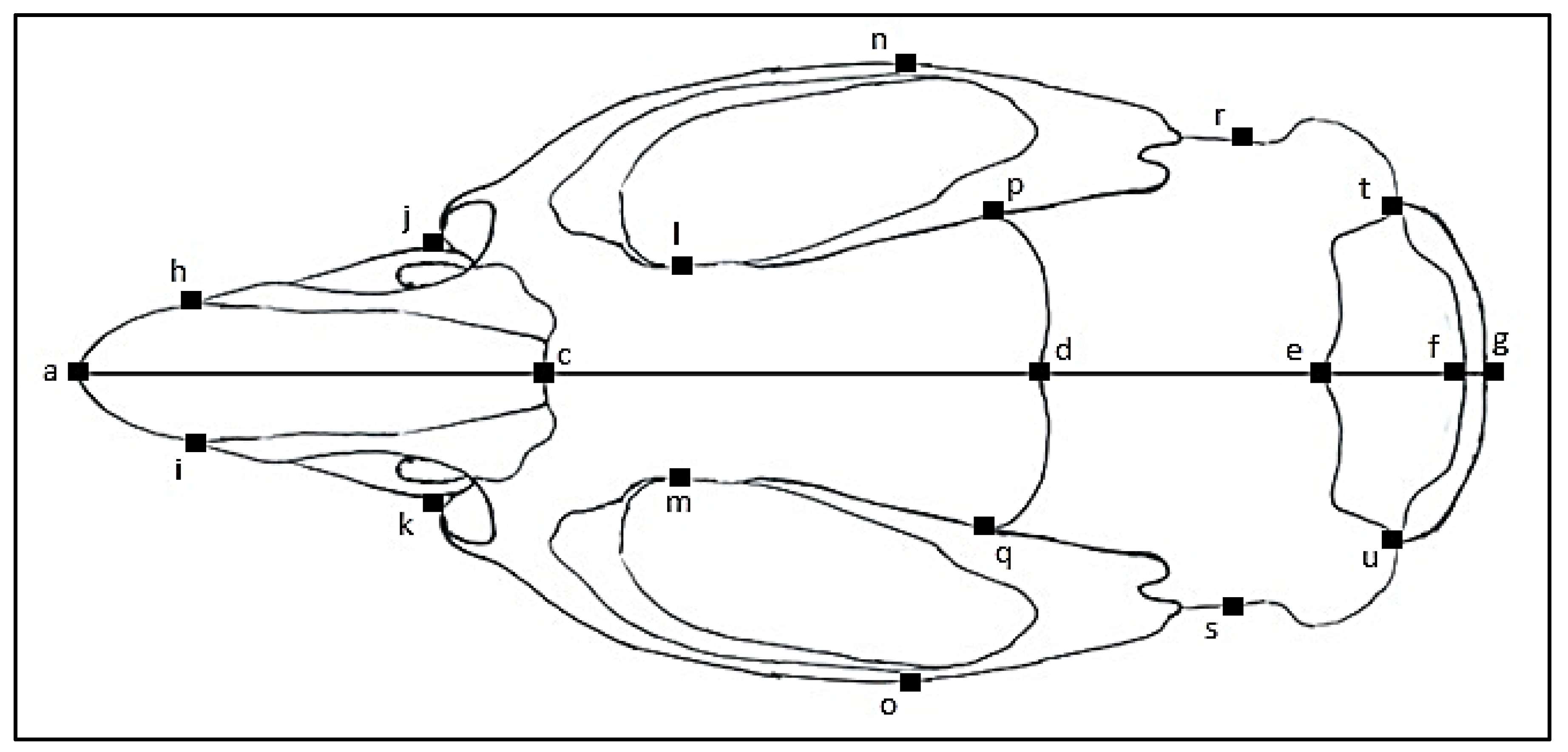
Rodents are the most abundant and diversified group of mammals. These animals show genetic and physical diversity in different ecosystems of the world, including the desert ecosystem. The current study was undertaken to check the morphometric pattern of three commensal rodent species, viz, Mus musculus, Rattus norvegicus, and Rattus rattus, in Qatar. One hundred forty-eight rodents were captured and studied for body and cranio-mandibular measurements. The study found R. norvregicus as the most prevalent rodent in Qatar. Most of the rodents were collected from Al Rayan municipality, were adults, and were from livestock farms. The rodents’ average body weights were 18.8 ± 2.2 gm, 264.3 ± 87.5 gm, and 130 ± 71.3 gm for M. musculus, R. norvegicus, and R. rattus, respectively. The average morphometric measurements of the external body and skull were normally distributed and can be used as a reference of R. norvegicus and R. rattus for Qatar.
Abstract
The current study was undertaken to estimate the morphometric pattern of three commensal rodents, i.e., Mus musculus, Rattus norvegicus, and Rattus rattus in Qatar. One hundred forty-eight rodents were captured from different facilities throughout Qatar. The captured rodents were used to identify the external body and cranio-mandibular morphometry. The study found that R. norvregicus was the most prevalent (n = 120, 81%, 95% CI: 73.83–87.05). Most of the rodents were collected from Al Rayan municipality (n = 92, 62%), were adults (n = 138, 93.2%, 95% CI: 87.92–96.71), and were from livestock farms (n = 79, 49%, 95% CI: 41.02–57.65). The rodents’ average body weights were 18.8 ± 2.2 gm, 264.3 ± 87.5 gm, and 130 ± 71.3 gm for M. musculus, R. norvegicus, and R. rattus, respectively. The research found that the studied rodents are smaller than those of other countries such as Turkey, Tunisia, and Iran. The study of morphometry is a useful tool for the traditional identification of small mammal species, including rodents. The average morphometric measurements of the external body and skull were normally distributed and can be used as a reference of R. norvegicus and R. rattus for Qatar. A further comprehensive study is required to investigate the rodent population index, eco-friendly control program, and public health importance in Qatar.
Keywords:
rodents; small mammals; commensal species; morphometry; Qatar