Methionine and Arginine Supply Alters Abundance of Amino Acid, Insulin Signaling, and Glutathione Metabolism-Related Proteins in Bovine Subcutaneous Adipose Explants Challenged with N-Acetyl-d-sphingosine
by
 , , ,
, , ,
Yusheng Liang
1 ,
,
Nana Ma
1,2,
Danielle N. Coleman
1,
Fang Liu
1,3,
Yu Li
1,4,
Hongyan Ding
1,4,
Fabiana F. Cardoso
1,
Claudia Parys
5,
Felipe C. Cardoso
1 and
Juan J. Loor
1,*
1
Department of Animal Sciences and Division of Nutritional Sciences, University of Illinois, Urbana, IL 61801, USA
2
College of Veterinary Medicine, Nanjing Agricultural University, Nanjing 210095, China
3
Department of Animal Science and Veterinary Medicine, Henan Agricultural University, Zhengzhou 450002, China
4
Department of Veterinary Medicine, College of Animal Science and Technology, Anhui Agricultural University, Hefei 230036, China
5
Evonik Operations GmbH | Nutrition & Care, 63457 Hanau, Germany
*
Author to whom correspondence should be addressed.
Animals 2021, 11(7), 2114; https://doi.org/10.3390/ani11072114
Submission received: 9 June 2021
/
Revised: 10 July 2021
/
Accepted: 13 July 2021
/
Published: 16 July 2021
(This article belongs to the Special Issue The Role of Inflammation in Farm Animals and Its Prevention by Dietary Approaches)
Simple Summary
Increased circulating concentrations of ceramides (Ce) in dairy cows contribute to subcutaneous adipose tissue (SAT) lipolysis and could enhance the risk of developing metabolic disorders. Dietary supply of methionine (Met) or arginine (Arg) alters cellular metabolism in key tissues including SAT. Whether Met or Arg directly affect SAT metabolism when Ce concentrations are elevated is unknown. We propose that Met or Arg could have a beneficial effect within adipose tissue in terms of alleviating potential inflammatory and pro-oxidant effects associated with the transition into lactation.
Abstract
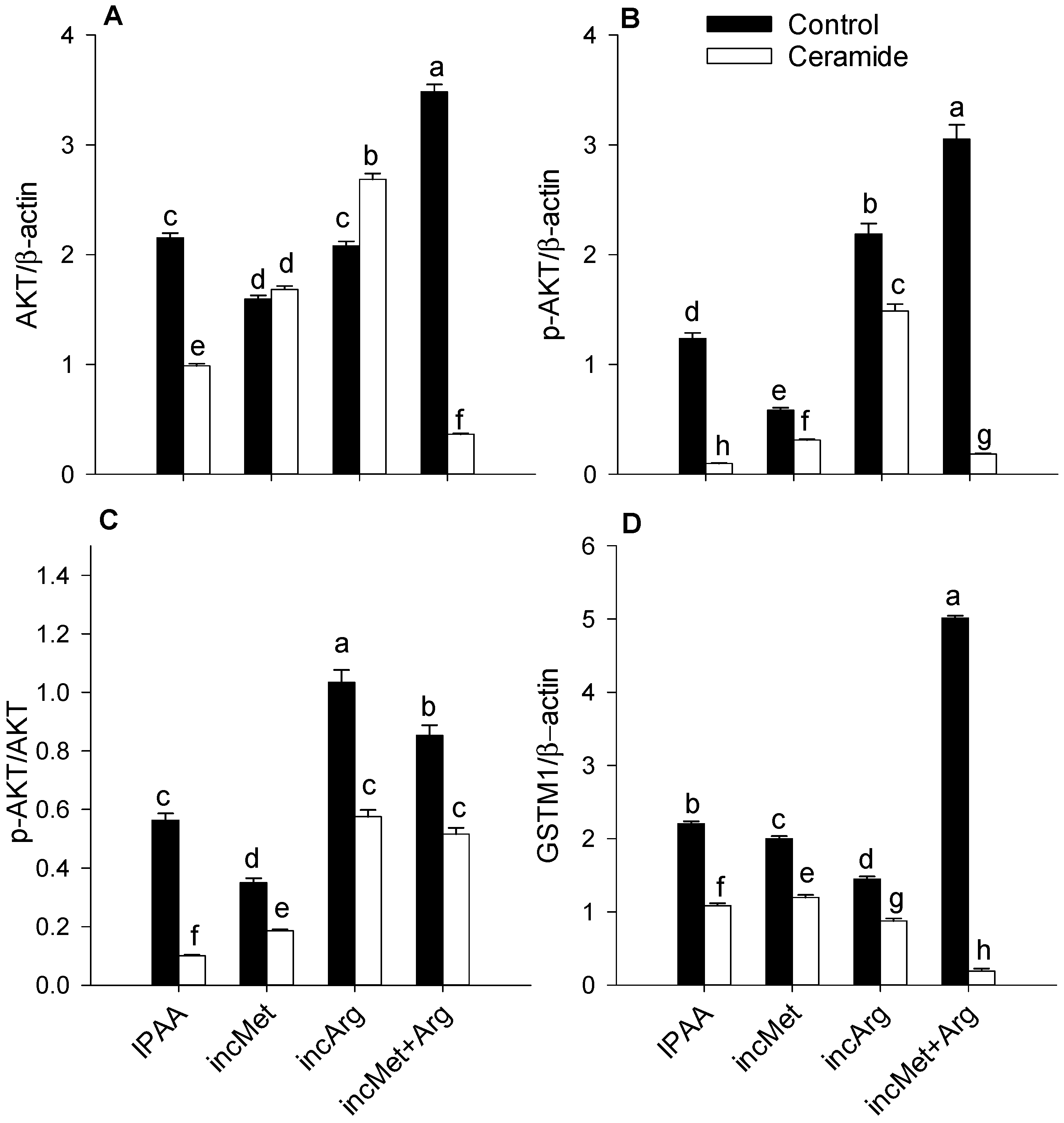
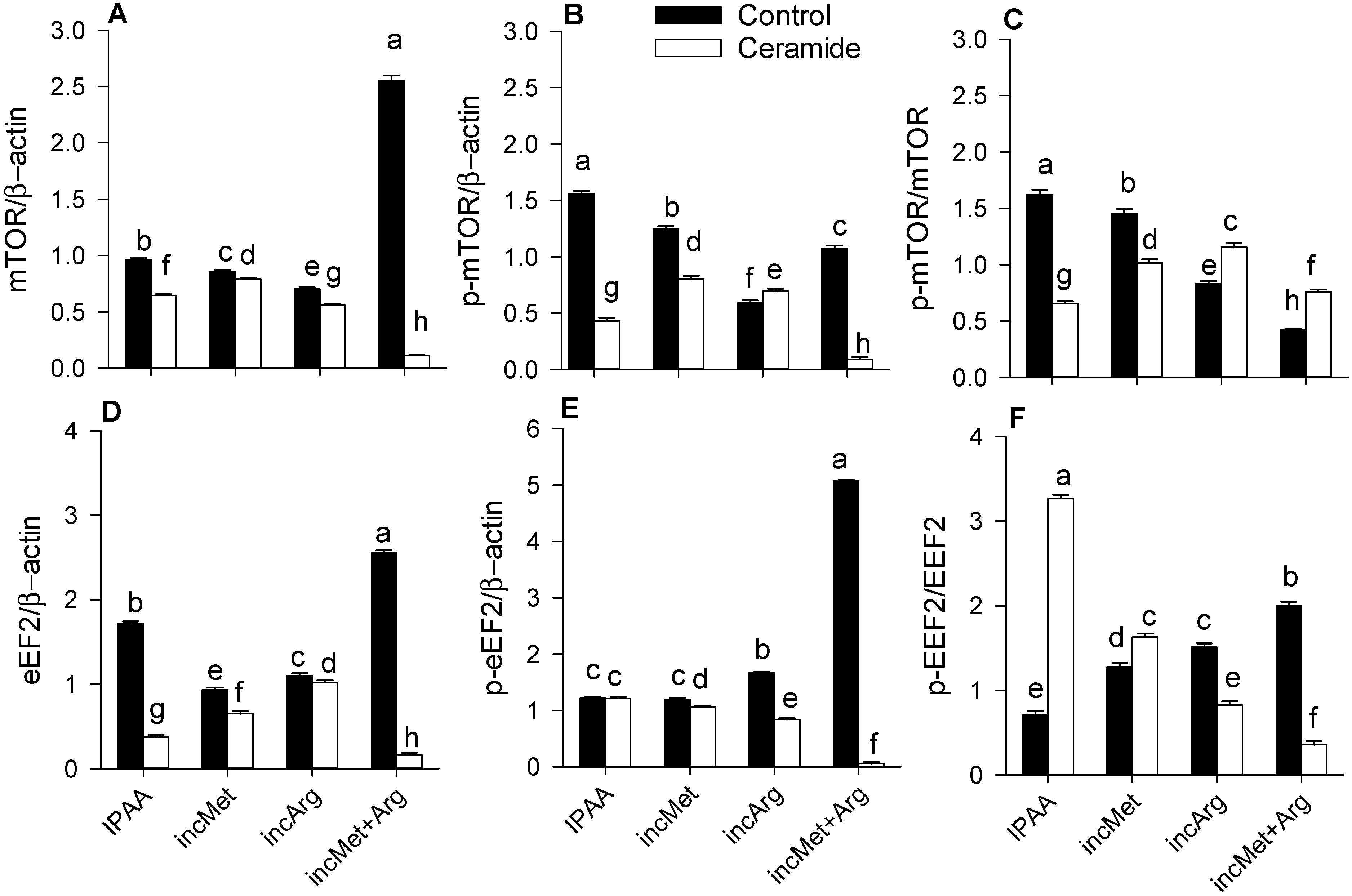
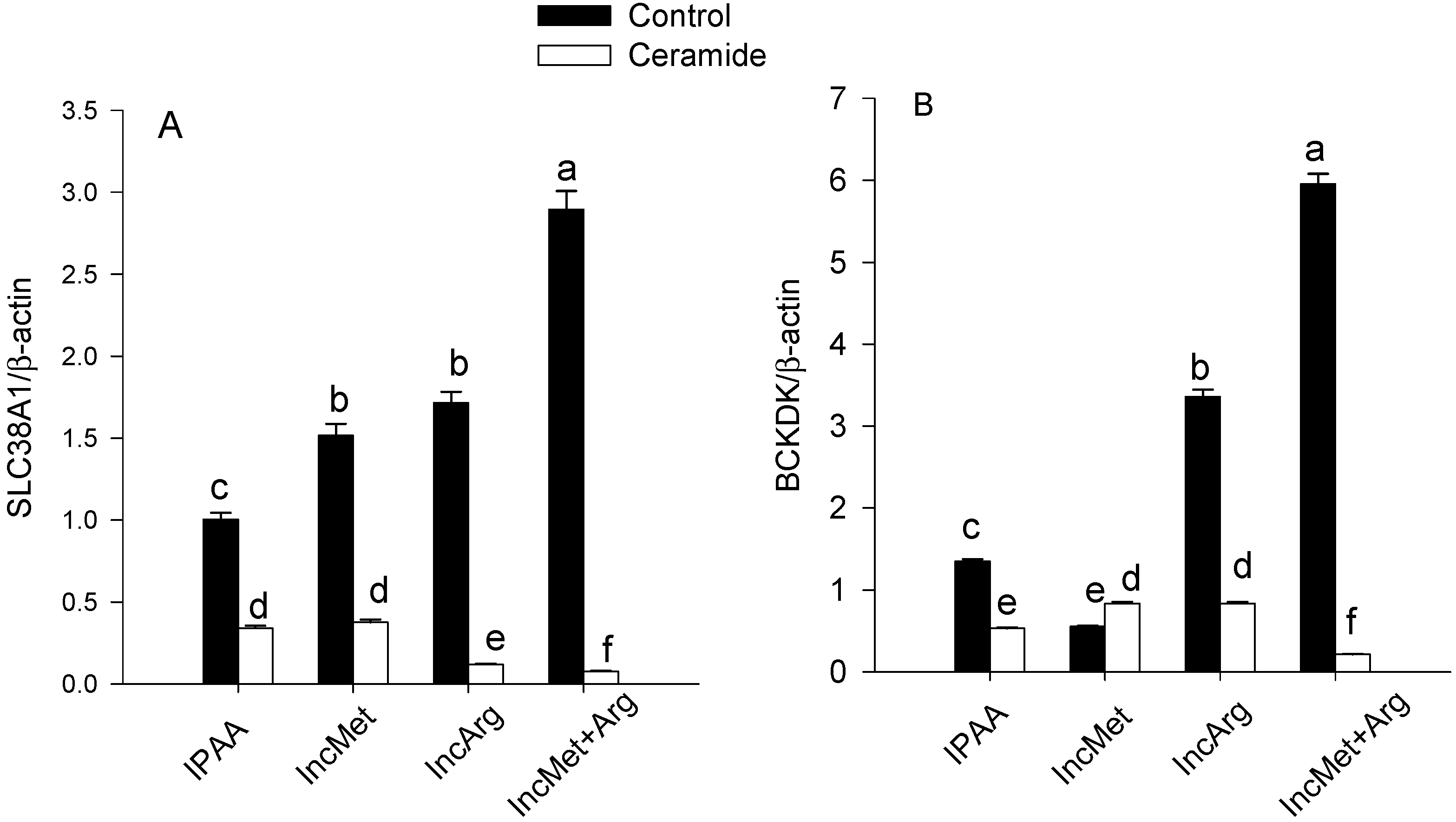
The objective was to perform a proof-of-principle study to evaluate the effects of methionine (Met) and arginine (Arg) supply on protein abundance of amino acid, insulin signaling, and glutathione metabolism-related proteins in subcutaneous adipose tissue (SAT) explants under ceramide (Ce) challenge. SAT from four lactating Holstein cows was incubated with one of the following media: ideal profile of amino acid as the control (IPAA; Lys:Met 2.9:1, Lys:Arg 2:1), increased Met (incMet; Lys:Met 2.5:1), increased Arg (incArg; Lys:Arg 1:1), or incMet plus incArg (Lys:Met 2.5:1 Lys:Arg 1:1) with or without 100 μM exogenous cell-permeable Ce (N-Acetyl-d-sphingosine). Ceramide stimulation downregulated the overall abundance of phosphorylated (p) protein kinase B (AKT), p-mechanistic target of rapamycin (mTOR), and p-eukaryotic elongation factor 2 (eEF2). Without Ce stimulation, increased Met, Arg, or Met + Arg resulted in lower p-mTOR. Compared with control SAT stimulated with Ce, increased Met, Arg, or Met + Arg resulted in greater activation of mTOR (p-mTOR/total mTOR) and AKT (p-AKT/total AKT), with a more pronounced response due to Arg. The greatest protein abundance of glutathione S-transferase Mu 1 (GSTM1) was detected in response to increased Met supply during Ce stimulation. Ceramide stimulation decreased the overall protein abundance of the Na-coupled neutral amino acid transporter SLC38A1 and branched-chain alpha-ketoacid dehydrogenase kinase (BCKDK). However, compared with controls, increased Met or Arg supply attenuated the downregulation of BCKDK induced by Ce. Circulating ceramides might affect amino acid, insulin signaling, and glutathione metabolism in dairy cow adipose tissue. Further in vivo studies are needed to confirm the role of rumen-protected amino acids in regulating bovine adipose function.
Keywords:
amino acids; inflammation; dairy cow; oxidative stress