


Nanotechnology and Reproductive Management of Farm Animals: Challenges and Advances


Simple Summary
Abstract
1. Introduction
2. Biological Stimulation Management, Male Effect
2.1. Challenges of Male Effect Applications
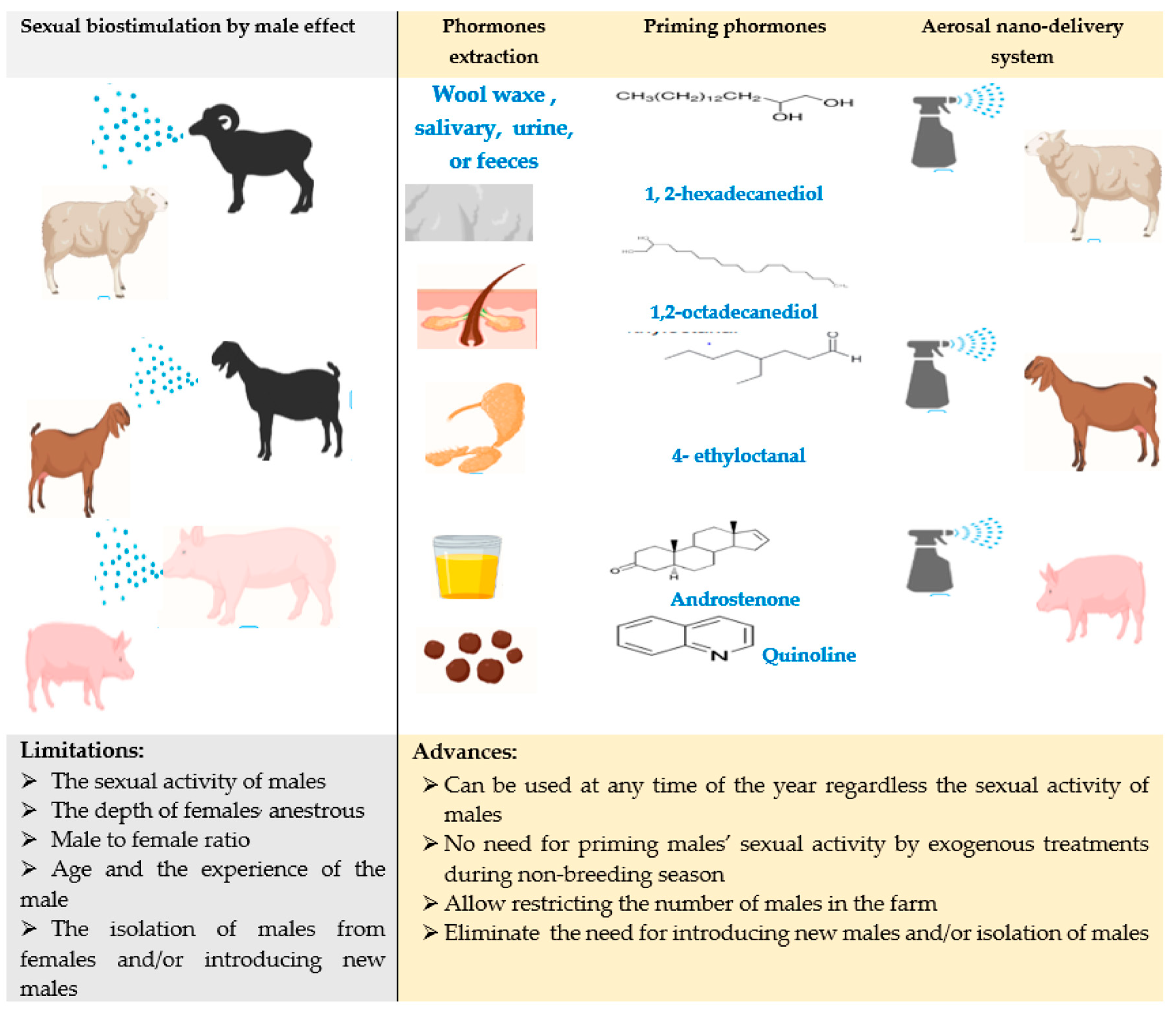
2.2. Nanotechnology Approaches for Developing Male Effect Procedure
3. Hormonal Based-Treatments
3.1. Importance and Challenges of Hormonal Based-Treatments
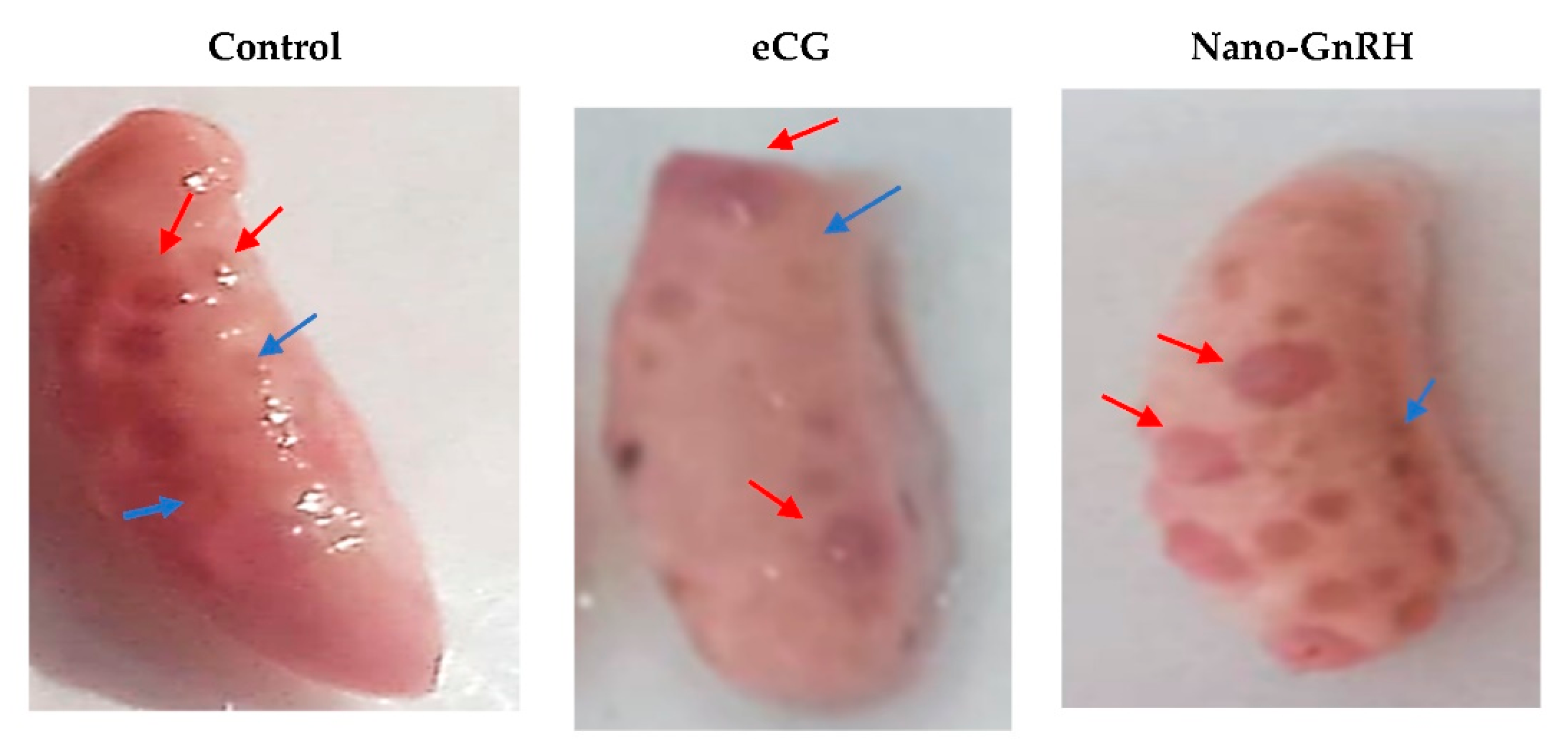
3.2. Nanotechnology Approaches for Developing Hormonal Based-Treatments
4. Nutritional Management
4.1. Importance and Challenges of Nutritional Management
4.2. Nanotechnology Approaches for Improving Nutritional Management Outputs
5. Management of Reproductive-Related Diseases
5.1. Importance and Challenges of Antibiotic Applications
5.2. Nanotechnology Approaches
6. Conclusions
Author Contributions
Funding
Institutional Review Board Statement
Informed Consent Statement
Conflicts of Interest
References
- Olynk, N.; Wolf, C. Economic analysis of reproductive management strategies on US commercial dairy farms. J. Dairy Sci. 2008, 91, 4082–4091. [Google Scholar] [CrossRef] [Scilit]
- Smith, M.F.; Geisert, R.D.; Parrish, J.J. Reproduction in domestic ruminants during the past 50 yr: Discovery to application. J. Anim. Sci. 2018, 96, 2952–2970. [Google Scholar] [CrossRef] [Scilit]
- Caraviello, D.; Weigel, K.; Fricke, P.; Wiltbank, M.; Florent, M.; Cook, N.; Nordlund, K.; Zwald, N.; Rawson, C. Survey of management practices on reproductive performance of dairy cattle on large US commercial farms. J. Dairy Sci. 2006, 89, 4723–4735. [Google Scholar] [CrossRef] [Scilit]
- Delgadillo, J.A.; Martin, G.B. Alternative methods for control of reproduction in small ruminants: A focus on the needs of grazing industries. Anim. Front. 2015, 5, 57–65. [Google Scholar] [CrossRef] [Scilit]
- Hashem, N.M.; Hassanein, E.M.; Simal-Gandara, J. Improving reproductive performance and health of mammals using honeybee products. Antioxidants 2021, 10, 336. [Google Scholar] [CrossRef] [Scilit] [PubMed]
- Hashem, N.M.; Gonzalez-Bulnes, A. State-of-the-art and prospective of nanotechnologies for smart reproductive management of farm animals. Animals 2020, 10, 840. [Google Scholar] [CrossRef] [Scilit]
- Hassanein, E.; Hashem, N.; El-Azrak, K.; Gonzalez-Bulnes, A.; Hassan, G.; Salem, M. Efficiency of GnRH–Loaded Chitosan Nanoparticles for Inducing LH Secretion and Fertile Ovulations in Protocols for Artificial Insemination in Rabbit Does. Animals 2021, 11, 440. [Google Scholar] [CrossRef] [Scilit] [PubMed]
- Tejada, L.M.; Meza-Herrera, C.A.; Rivas-Munoz, R.; Rodriguez-Martinez, R.; Carrillo, E.; Mellado, M.; Veliz-Deras, F.G. Appetitive and consummatory sexual behaviors of rams treated with exogenous testosterone and exposed to anestrus dorper ewes: Efficacy of the male effect. Arch. Sex Behav. 2017, 46, 835–842. [Google Scholar] [CrossRef] [Scilit] [PubMed]
- Ungerfeld, R. Socio-sexual signalling and gonadal function: Opportunities for reproductive management in domestic ruminants. Soc. Reprod. Fertil. Suppl. 2007, 64, 207. [Google Scholar] [CrossRef] [Scilit]
- Chasles, M.; Chesneau, D.; Moussu, C.; Delgadillo, J.A.; Chemineau, P.; Keller, M. Sexually active bucks are efficient to stimulate female ovulatory activity during the anestrous season also undertemperate latitudes. Anim. Reprod. Sci. 2016, 168, 86–91. [Google Scholar] [CrossRef] [Scilit] [PubMed]
- Izquierdo, A.C.; Gutiérrez, J.P.; Hernández, W.M.; Mancera, A.V.; Crispín, R.H. Obtención, evaluación y manipulación del semen de verraco en una unidad de producción mexicana. Rev. Vet. 2016, 26, 69–74. [Google Scholar] [CrossRef] [Scilit]
- Hashem, N.; El-Zarkouny, S. Effect of short-term supplementation with rumen-protected fat during the late luteal phase on reproduction and metabolism of ewes. J. Anim. Physiol. Anim. Nutr. 2014, 98, 65–71. [Google Scholar] [CrossRef] [Scilit]
- Yang, X.; Ouyang, W.; Sun, J.; Li, X. Post-antibiotic effect of Amoxicillin nanoparticles against main pathogenic bacteria of Bovine mastitis in vitro. J. Northwest A F Univ. Nat. Sci. Ed. 2009, 37, 1–6. [Google Scholar]
- Cerbu, C.; Kah, M.; White, J.C.; Astete, C.E.; Sabliov, C.M. Fate of biodegradable engineered nanoparticles used in veterinary medicine as delivery systems from a one health perspective. Molecules 2021, 26, 523. [Google Scholar] [CrossRef] [Scilit] [PubMed]
- Algharib, S.A.; Dawood, A.; Xie, S. Nanoparticles for treatment of bovine Staphylococcus aureus mastitis. Drug Deliv. 2020, 27, 292–308. [Google Scholar] [CrossRef] [Scilit]
- Osama, E.; El-Sheikh, S.M.; Khairy, M.H.; Galal, A.A. Nanoparticles and their potential applications in veterinary medicine. J. Adv. Vet. Res. 2020, 10, 268–273. [Google Scholar]
- Signoret, J.; Lindsay, D. The male effect in domestic mammals: Effect on LH secretion and ovulation—importance of olfactory cues. Olfaction Endocr. Regul. 1982, 63–72. [Google Scholar]
- Murata, K.; Tamogami, S.; Itou, M.; Ohkubo, Y.; Wakabayashi, Y.; Watanabe, H.; Okamura, H.; Takeuchi, Y.; Mori, Y. Identification of an olfactory signal molecule that activates the central regulator of reproduction in goats. Curr. Biol. 2014, 24, 681–686. [Google Scholar] [CrossRef] [Scilit]
- Ferreira-Silva, J.C.; Burnett, T.A.; Souto, P.F.M.P.; Filho, P.C.B.G.; Pereira, L.C.; Araujo, M.V.; Moura, M.T.; Oliveira, M.A.L. Progesterone (P4), luteinizing hormone (LH) levels and ovarian activity in postpartum Santa Inês ewes subject to a male effect. Arch. Anim. Breed. 2017, 60, 95–100. [Google Scholar] [CrossRef] [Scilit]
- Meza-Herrera, C.A.; Cano-Villegas, O.; Flores-Hernandez, A.; Veliz-Deras, F.G.; Calderon-Leyva, G.; Guillen-Munoz, J.M.; de la Pena, C.G.; Rosales-Nieto, C.A.; Macias-Cruz, U.; Avendano-Reyes, L. Reproductive outcomes of anestrous goats supplemented with spineless Opuntia megacantha Salm-Dyck protein-enriched cladodes and exposed to the male effect. Trop. Anim. Health Prod. 2017, 49, 1511–1516. [Google Scholar] [CrossRef] [Scilit] [PubMed]
- Rekwot, P.; Ogwu, D.; Oyedipe, E.; Sekoni, V. The role of pheromones and biostimulation in animal reproduction. Anim. Reprod. Sci. 2001, 65, 157–170. [Google Scholar] [CrossRef] [Scilit]
- De Santiago-Miramontes, M.; Rivas-Muñoz, R.; Muñoz-Gutiérrez, M.; Malpaux, B.; Scaramuzzi, R.; Delgadillo, J. The ovulation rate in anoestrous female goats managed under grazing conditions and exposed to the male effect is increased by nutritional supplementation. Anim. Reprod. Sci. 2008, 105, 409–416. [Google Scholar] [CrossRef] [Scilit]
- Delgadillo, J.A.; Gelez, H.; Ungerfeld, R.; Hawken, P.A.; Martin, G.B. The ‘male effect’in sheep and goats—Revisiting the dogmas. Behav. Brain Res. 2009, 200, 304–314. [Google Scholar] [CrossRef] [Scilit] [PubMed]
- Martin, G.; Milton, J.; Davidson, R.; Hunzicker, G.B.; Lindsay, D.; Blache, D. Natural methods for increasing reproductive efficiency in small ruminants. Anim. Reprod. Sci. 2004, 82, 231–245. [Google Scholar] [CrossRef] [Scilit]
- Hashem, N.; El-Zarkouny, S.; Taha, T.; Abo-Elezz, Z. Effect of season, month of parturition and lactation on estrus behavior and ovarian activity in Barki x Rahmani crossbred ewes under subtropical conditions. Theriogenology 2011, 75, 1327–1335. [Google Scholar] [CrossRef] [Scilit]
- Rosa, H.; Bryant, M. The ‘ram effect’as a way of modifying the reproductive activity in the ewe. Small Rumin. Res. 2002, 45, 1–16. [Google Scholar] [CrossRef] [Scilit]
- Zarazaga, L.; Gatica, M.; Hernández, H.; Gallego-Calvo, L.; Delgadillo, J.; Guzmán, J. The isolation of females from males to promote a later male effect is unnecessary if the bucks used are sexually active. Theriogenology 2017, 95, 42–47. [Google Scholar] [CrossRef] [Scilit]
- Zarazaga, L.; Gatica, M.; Hernández, H.; Chemineau, P.; Delgadillo, J.; Guzmán, J. Photoperiod-treated bucks are equal to melatonin-treated bucks for inducing reproductive behaviour and physiological functions via the “male effect” in Mediterranean goats. Anim. Reprod. Sci. 2019, 202, 58–64. [Google Scholar] [CrossRef] [Scilit] [PubMed]
- Zarazaga, L.A.; Gatica, M.C.; Hernandez, H.; Keller, M.; Chemineau, P.; Delgadillo, J.A.; Guzman, J.L. The reproductive response to the male effect of 7- or 10-month-old female goats is improved when photostimulated males are used. Animal 2019, 13, 1658–1665. [Google Scholar] [CrossRef] [Scilit] [PubMed]
- Ponce, J.; Velázquez, H.; Duarte, G.; Bedos, M.; Hernández, H.; Keller, M.; Chemineau, P.; Delgadillo, J. Reducing exposure to long days from 75 to 30 days of extra-light treatment does not decrease the capacity of male goats to stimulate ovulatory activity in seasonally anovulatory females. Domest. Anim. Endocrinol. 2014, 48, 119–125. [Google Scholar] [CrossRef] [Scilit]
- Knight, T.; Lynch, P. Source of ram pheromones that stimulate ovulation in the ewe. Anim. Reprod. Sci. 1980, 3, 133–136. [Google Scholar] [CrossRef] [Scilit]
- Izard, M. Pheromones and reproduction in domestic animals. Pheromones Reprod. Mamm. 1983, 253. [Google Scholar]
- McGlone, J.J.; Devaraj, S.; Garcia, A. A novel boar pheromone mixture induces sow estrus behaviors and reproductive success. Appl. Anim. Behav. Sci. 2019, 219, 104832. [Google Scholar] [CrossRef] [Scilit]
- Dugasa, H.L.; Williams, R.O., III. Nanotechnology for pulmonary and nasal drug delivery. Nanotechnol. Drug Deliv. Vol. Two Nano Eng. Strateg. Nanomed. Against Sev. Dis. 2016, 102. [Google Scholar]
- Pamungkas, F.A.; Sianturi, R.S.G.; Wina, E.; Kusumaningrum, D.A. Chitosan nanoparticle of hCG (Human Chorionic Gonadotrophin) hormone in increasing induction of dairy cattle ovulation. Indones. J. Anim. Vet. Sci. 2016, 21, 34–40. [Google Scholar]
- Kekan, P.M.; Ingole, S.D.; Sirsat, S.D.; Bharucha, S.V.; Kharde, S.D.; Nagvekar, A.S. The role of pheromones in farm animals—A review. Agric. Rev. 2017, 38. [Google Scholar] [CrossRef] [Scilit]
- Archunan, G. Reproductive enhancement in buffalo: Looking at urinary pheromones and hormones. Iran. J. Vet. Res. 2020, 21, 163. [Google Scholar]
- Higgins, H.M.; Ferguson, E.; Smith, R.F.; Green, M.J. Using hormones to manage dairy cow fertility: The clinical and ethical beliefs of veterinary practitioners. PLoS ONE 2013, 8, e62993. [Google Scholar] [CrossRef] [Scilit] [PubMed]
- Hashem, N.; El-Azrak, K.; El-Din, A.N.; Taha, T.; Salem, M. Effect of GnRH treatment on ovarian activity and reproductive performance of low-prolific Rahmani ewes. Theriogenology 2015, 83, 192–198. [Google Scholar] [CrossRef] [Scilit] [PubMed]
- Hashem, N.; El-Zarkouny, S.; Taha, T.; Abo-Elezz, Z. Oestrous response and characterization of the ovulatory wave following oestrous synchronization using PGF2α alone or combined with GnRH in ewes. Small Rumin. Res. 2015, 129, 84–87. [Google Scholar] [CrossRef] [Scilit]
- Hashem, N.; Aboul-Ezz, Z. Effects of a single administration of different gonadotropins on day 7 post-insemination on pregnancy outcomes of rabbit does. Theriogenology 2018, 105, 1–6. [Google Scholar] [CrossRef] [Scilit] [PubMed]
- Sun, T.-C.; Li, H.-Y.; Li, X.-Y.; Yu, K.; Deng, S.-L.; Tian, L. Protective effects of melatonin on male fertility preservation and reproductive system. Cryobiology 2020, 95, 1–8. [Google Scholar] [CrossRef] [Scilit] [PubMed]
- De Castro, M.V.; Cortell, C.; Mocé, E.; Marco-Jiménez, F.; Joly, T.; Vicente, J. Effect of recombinant gonadotropins on embryo quality in superovulated rabbit does and immune response after repeated treatments. Theriogenology 2009, 72, 655–662. [Google Scholar] [CrossRef] [Scilit] [PubMed]
- Forcada, F.; Ait Amer-Meziane, M.; Abecia, J.A.; Maurel, M.C.; Cebrian-Perez, J.A.; Muino-Blanco, T.; Asenjo, B.; Vazquez, M.I.; Casao, A. Repeated superovulation using a simplified FSH/eCG treatment for in vivo embryo production in sheep. Theriogenology 2011, 75, 769–776. [Google Scholar] [CrossRef] [Scilit] [PubMed]
- Herve, V.; Roy, F.; Bertin, J.; Guillou, F.; Maurel, M.C. Antiequine chorionic gonadotropin (eCG) antibodies generated in goats treated with eCG for the induction of ovulation modulate the luteinizing hormone and follicle-stimulating hormone bioactivities of eCG differently. Endocrinology 2004, 145, 294–303. [Google Scholar] [CrossRef] [Scilit] [PubMed]
- Kara, E.; Dupuy, L.; Bouillon, C.; Casteret, S.; Maurel, M.-C. Modulation of gonadotropins activity by antibodies. Front. Endocrinol. 2019, 10. [Google Scholar] [CrossRef] [Scilit] [PubMed]
- Roy, F.; Maurel, M.-C.; Combes, B.; Vaiman, D.; Cribiu, E.P.; Lantier, I.; Pobel, T.; Delétang, F.; Combarnous, Y.; Guillou, F. The negative effect of repeated equine chorionic gonadotropin treatment on subsequent fertility in Alpine goats is due to a humoral immune response involving the major histocompatibility complex. Biol. Reprod. 1999, 60, 805–813. [Google Scholar] [CrossRef] [Scilit]
- Manteca Vilanova, X.; De Briyne, N.; Beaver, B.; Turner, P.V. Horse welfare during equine Chorionic Gonadotropin (eCG) production. Animals 2019, 9, 1053. [Google Scholar] [CrossRef] [Scilit]
- Rathbone, M.J.; Burke, C.R. Controlled release intravaginal veterinary drug delivery. In Long Acting Animal Health Drug Products; Springer: New York, NY, USA, 2013; pp. 247–270. [Google Scholar]
- De Graaff, W.; Grimard, B. Progesterone-releasing devices for cattle estrus induction and synchronization: Device optimization to anticipate shorter treatment durations and new device developments. Theriogenology 2018, 112, 34–43. [Google Scholar] [CrossRef] [Scilit]
- Fernández-Serrano, P.; Casares-Crespo, L.; Viudes-de-Castro, M.P. Chitosan–dextran sulphate nanoparticles for Gn RH release in rabbit insemination extenders. Reprod. Domest. Anim. 2017, 52, 72–74. [Google Scholar] [CrossRef] [Scilit]
- Casares-Crespo, L.; Fernández-Serrano, P.; Viudes-De-Castro, M.P. Protection of GnRH analogue by chitosan-dextran sulfate nanoparticles for intravaginal application in rabbit artificial insemination. Theriogenology 2018, 116, 49–52. [Google Scholar] [CrossRef] [Scilit] [PubMed]
- Hashem, N.; Sallam, S. Reproductive performance of goats treated with free gonadorelin or nanoconjugated gonadorelin at estrus. Domest. Anim. Endocrinol. 2020, 71, 106390. [Google Scholar] [CrossRef] [Scilit] [PubMed]
- Rather, M.A.; Sharma, R.; Gupta, S.; Ferosekhan, S.; Ramya, V.; Jadhao, S.B. Chitosan-nanoconjugated hormone nanoparticles for sustained surge of gonadotropins and enhanced reproductive output in female fish. PLoS ONE 2013, 8, e57094. [Google Scholar] [CrossRef] [Scilit] [PubMed]
- Oliveira, J.E.; Medeiros, E.S.; Cardozo, L.; Voll, F.; Madureira, E.H.; Mattoso, L.H.C.; Assis, O.B.G. Development of poly (lactic acid) nanostructured membranes for the controlled delivery of progesterone to livestock animals. Mater. Sci. Eng. C 2013, 33, 844–849. [Google Scholar] [CrossRef] [Scilit]
- Helbling, I.M.; Ibarra, J.C.; Luna, J.A. The optimization of an intravaginal ring releasing progesterone using a mathematical model. Pharm. Res. 2014, 31, 795–808. [Google Scholar] [CrossRef] [Scilit]
- Fogolari, O.; Felippe, A.C.; Leimann, F.V.; Gonçalves, O.H.; Sayer, C.; Araújo, P.H.H.D. Method validation for progesterone determination in poly (Methyl methacrylate) nanoparticles synthesized via miniemulsion polymerization. Int. J. Polym. Sci. 2017, 2017. [Google Scholar] [CrossRef] [Scilit]
- Remião, M.H.; Lucas, C.G.; Domingues, W.B.; Silveira, T.; Barther, N.N.; Komninou, E.R.; Basso, A.C.; Jornada, D.S.; Beck, R.C.R.; Pohlmann, A.R. Melatonin delivery by nanocapsules during in vitro bovine oocyte maturation decreased the reactive oxygen species of oocytes and embryos. Reprod. Toxicol. 2016, 63, 70–81. [Google Scholar] [CrossRef] [Scilit]
- Li, Y.; Zhao, X.; Wang, L.; Liu, Y.; Wu, W.; Zhong, C.; Zhang, Q.; Yang, J. Preparation, characterization and in vitro evaluation of melatonin-loaded porous starch for enhanced bioavailability. Carbohydr. Polym. 2018, 202, 125–133. [Google Scholar] [CrossRef] [Scilit]
- Siahdasht, F.N.; Farhadian, N.; Karimi, M.; Hafizi, L. Enhanced delivery of melatonin loaded nanostructured lipid carriers during in vitro fertilization: NLC formulation, optimization and IVF efficacy. RSC Adv. 2020, 10, 9462–9475. [Google Scholar] [CrossRef] [Scilit]
- Helbling, I.M.; Busatto, C.A.; Fioramonti, S.A.; Pesoa, J.I.; Santiago, L.; Estenoz, D.A.; Luna, J.A. Preparation of TPP-crosslinked chitosan microparticles by spray drying for the controlled delivery of progesterone intended for estrus synchronization in cattle. Pharm. Res. 2018, 35, 1–15. [Google Scholar] [CrossRef] [Scilit]
- Combarnous, Y.; Salesse, R.; Garnier, J. Physico-chemical properties of pregnant mare serum gonadotropin. Biochim. et Biophys. Acta BBA Protein Struct. 1981, 667, 267–276. [Google Scholar] [CrossRef] [Scilit]
- STEWART, F.; Allen, W.; Moor, R.M. Pregnant mare serum gonadotrophin: Ratio of follicle-stimulating hormone and luteinizing hormone activities measured by radioreceptor assay. J. Endocrinol. 1976, 71, 371–382. [Google Scholar] [CrossRef] [Scilit]
- Santos-Jimenez, Z.; Guillen-Gargallo, S.; Encinas, T.; Berlinguer, F.; Veliz-Deras, F.G.; Martinez-Ros, P.; Gonzalez-Bulnes, A. Use of propylene-glycol as a cosolvent for gnrh in synchronization of estrus and ovulation in sheep. Animals 2020, 10, 897. [Google Scholar] [CrossRef] [Scilit] [PubMed]
- Cordova-Izquierdo, A. Best Practices in Animal Reproduction: Impact of Nutrition on Reproductive Performance Livestock. J. Adv. Dairy Res. 2016, 4, 152. [Google Scholar] [CrossRef]
- Cannas, A.; Tedeschi, L.O.; Atzori, A.S.; Lunesu, M.F. How can nutrition models increase the production efficiency of sheep and goat operations? Anim. Front. 2019, 9, 33–44. [Google Scholar] [CrossRef] [Scilit] [PubMed]
- Zhao, C.; Bai, Y.; Fu, S.; Wu, L.; Xu, C.; Xia, C. Follicular fluid proteomic profiling of dairy cows with anestrus caused by negative energy balance. Ital. J. Anim. Sci. 2021, 20, 650–663. [Google Scholar] [CrossRef] [Scilit]
- Scaramuzzi, R.; Martin, G. The importance of interactions among nutrition, seasonality and socio-sexual factors in the development of hormone-free methods for controlling fertility. Reprod. Dom. Anim. 2008, 43, 129–136. [Google Scholar] [CrossRef] [Scilit] [PubMed]
- Wu, G. Functional amino acids in growth, reproduction, and health. Adva. Nutr. 2010, 1, 31–37. [Google Scholar] [CrossRef] [Scilit] [PubMed]
- Peñagaricano, F.; Souza, A.H.; Carvalho, P.D.; Driver, A.M.; Gambra, R.; Kropp, J.; Hackbart, K.S.; Luchini, D.; Shaver, R.D.; Wiltbank, M.C. Effect of maternal methionine supplementation on the transcriptome of bovine preimplantation embryos. PLoS ONE 2013, 8, e72302. [Google Scholar] [CrossRef] [Scilit]
- Abdelnour, S.A.; Al-Gabri, N.A.; Hashem, N.M.; Gonzalez-Bulnes, A. Supplementation with proline improves haemato-biochemical and reproductive indicators in male rabbits affected by environmental heat-stress. Animals 2021, 11, 373. [Google Scholar] [CrossRef] [Scilit]
- Wiltbank, M.; Shaver, R.; Toledo, M.; Carvalho, P.; Baez, G.; Follendorf, T.; Lobos, N.; Luchini, D.; Souza, A. Potential benefits of feeding methionine on reproductive efficiency of lactating dairy cows. Four State Dairy Nutr. Manag. 2014, 4, 19–26. [Google Scholar]
- Toledo, M.Z.; Baez, G.M.; Garcia-Guerra, A.; Lobos, N.E.; Guenther, J.N.; Trevisol, E.; Luchini, D.; Shaver, R.D.; Wiltbank, M.C. Effect of feeding rumen-protected methionine on productive and reproductive performance of dairy cows. PLoS ONE 2017, 12, e0189117. [Google Scholar] [CrossRef] [Scilit]
- Thatcher, W.; Santos, J.E.; Staples, C.R. Dietary manipulations to improve embryonic survival in cattle. Theriogenology 2011, 76, 1619–1631. [Google Scholar] [CrossRef] [Scilit]
- Sturmey, R.; Reis, A.; Leese, H.; McEvoy, T. Role of fatty acids in energy provision during oocyte maturation and early embryo development. Reprod. Dom. Anim. 2009, 44, 50–58. [Google Scholar] [CrossRef] [Scilit]
- Castro, T.; Martinez, D.; Isabel, B.; Cabezas, A.; Jimeno, V. Vegetable oils rich in polyunsaturated fatty acids supplementation of dairy cows’ diets: Effects on productive and reproductive performance. Animals 2019, 9, 205. [Google Scholar] [CrossRef] [Scilit] [PubMed]
- Hosny, N.S.; Hashem, N.M.; Morsy, A.S.; Abo-Elezz, Z.R. Effects of Organic Selenium on the Physiological Response, Blood Metabolites, Redox Status, Semen Quality, and Fertility of Rabbit Bucks Kept Under Natural Heat Stress Conditions. Front. Vet. Sci. 2020, 7. [Google Scholar] [CrossRef] [Scilit]
- Zereu, G. Factors affecting feed intake and its regulation mechanisms in ruminants a review. Int. J. Livest. Res. 2016, 6, 19–40. [Google Scholar]
- Hippen, A.R.; DeFrain, J.M.; Linke, P.L. Glycerol and other energy sources for metabolism and production of transition dairy cows. In Proceedings of the Florida Ruminant Nutrition Symposium, Gainesville, FL, USA, 29–30 January 2008. [Google Scholar]
- Shin, J.; Wang, D.; Kim, S.; Adesogan, A.; Staples, C. Effects of feeding crude glycerin on performance and ruminal kinetics of lactating Holstein cows fed corn silage-or cottonseed hull-based, low-fiber diets. J. Dairy Sci. 2012, 95, 4006–4016. [Google Scholar] [CrossRef] [Scilit] [PubMed]
- El-Sherbiny, M.; Cieslak, A.; Pers-Kamczyc, E.; Szczechowiak, J.; Kowalczyk, D.; Szumacher-Strabel, M. A nanoemulsified form of oil blends positively affects the fatty acid proportion in ruminal batch cultures. J. Dairy Sci. 2016, 99, 399–407. [Google Scholar] [CrossRef] [Scilit]
- Hackmann, T.J.; Firkins, J.L. Maximizing efficiency of rumen microbial protein production. Front. Microbiol. 2015, 6, 465. [Google Scholar] [CrossRef] [Scilit]
- Hammon, D.; Holyoak, G.; Dhiman, T. Association between blood plasma urea nitrogen levels and reproductive fluid urea nitrogen and ammonia concentrations in early lactation dairy cows. Anim. Reprod. Sci. 2005, 86, 195–204. [Google Scholar] [CrossRef] [Scilit]
- Boerman, J.; Lock, A. Effect of unsaturated fatty acids and triglycerides from soybeans on milk fat synthesis and biohydrogenation intermediates in dairy cattle. J. Dairy Sci. 2014, 97, 7031–7042. [Google Scholar] [CrossRef] [Scilit]
- Gawad, R.; Fellner, V. Evaluation of glycerol encapsulated with alginate and alginate-chitosan polymers in gut environment and its resistance to rumen microbial degradation. Asian Australas. J. Anim. Sci. 2019, 32, 72. [Google Scholar] [CrossRef] [Scilit]
- Kachuee, R.; Abdi-Benemar, H.; Mansoori, Y.; Sánchez-Aparicio, P.; Seifdavati, J.; Elghandour, M.M.; Guillén, R.J.; Salem, A.Z. Effects of sodium selenite, L-selenomethionine, and selenium nanoparticles during late pregnancy on selenium, zinc, copper, and iron concentrations in Khalkhali Goats and their kids. Biol. Trace Elem. Res. 2019, 191, 389–402. [Google Scholar] [CrossRef] [Scilit]
- Jahanbin, R.; Yazdanshenas, P.; Amin Afshar, M.; Mohammadi Sangcheshmeh, A.; Varnaseri, H.; Chamani, M.; Nazaran, M.H.; Bakhtiyarizadeh, M.R. Effect of zinc nano-complex on bull semen quality after freeze-thawing process. Anim. Prod. 2015, 17, 371–380. [Google Scholar]
- Khalil, W.A.; El-Harairy, M.A.; Zeidan, A.E.; Hassan, M.A. Impact of selenium nano-particles in semen extender on bull sperm quality after cryopreservation. Theriogenology 2019, 126, 121–127. [Google Scholar] [CrossRef] [Scilit]
- Shahin, M.A.; Khalil, W.A.; Saadeldin, I.M.; Swelum, A.A.-A.; El-Harairy, M.A. Comparison between the effects of adding vitamins, trace elements, and nanoparticles to shotor extender on the cryopreservation of dromedary camel epididymal spermatozoa. Animals 2020, 10, 78. [Google Scholar] [CrossRef] [Scilit] [PubMed]
- Albuquerque, J.; Casal, S.; de Jorge Páscoa, R.N.M.; Van Dorpe, I.; Fonseca, A.J.M.; Cabrita, A.R.J.; Neves, A.R.; Reis, S. Applying nanotechnology to increase the rumen protection of amino acids in dairy cows. Sci. Rep. 2020, 10, 1–12. [Google Scholar] [CrossRef] [Scilit] [PubMed]
- Gurunathan, S.; Choi, Y.-J.; Kim, J.-H. Antibacterial efficacy of silver nanoparticles on endometritis caused by Prevotella melaninogenica and Arcanobacterum pyogenes in dairy cattle. Int. J. Mol. Sci. 2018, 19, 1210. [Google Scholar] [CrossRef] [Scilit]
- Vallejo-Timaran, D.A.; Arango-Sabogal, J.C.; Reyes-Velez, J.; Maldonado-Estrada, J.G. Postpartum uterine diseases negatively impact the time to pregnancy in grazing dairy cows from high-altitude tropical herds. Prev. Vet. Med. 2020, 185, 105202. [Google Scholar] [CrossRef] [Scilit] [PubMed]
- Sánchez-Sánchez, R.; Vázquez, P.; Ferre, I.; Ortega-Mora, L.M. Treatment of toxoplasmosis and neosporosis in farm ruminants: State of knowledge and future trends. Curr. Top. Med. Chem. 2018, 18, 1304–1323. [Google Scholar] [CrossRef] [Scilit]
- Zhou, K.; Li, C.; Chen, D.; Pan, Y.; Tao, Y.; Qu, W.; Liu, Z.; Wang, X.; Xie, S. A review on nanosystems as an effective approach against infections of Staphylococcus aureus. Int. J. Nanomed. 2018, 13, 7333–7347. [Google Scholar] [CrossRef] [Scilit]
- Olsen, J.E.; Christensen, H.; Aarestrup, F.M. Diversity and evolution of blaZ from Staphylococcus aureus and coagulase-negative staphylococci. J. Antimicrob. Chemother. 2006, 57, 450–460. [Google Scholar] [CrossRef] [Scilit] [PubMed]
- Piotr, S.; Marta, S.; Aneta, F.; Barbara, K.; Magdalena, Z. Antibiotic resistance in Staphylococcus aureus strains isolated from cows with mastitis in the eastern Poland and analysis of susceptibility of resistant strains to alternative non-antibiotic agents: Lysostaphin, nisin and polymyxin B. J. Vet. Med Sci. 2013. [Google Scholar] [CrossRef] [Scilit]
- Wang, L.; Hu, C.; Shao, L. The antimicrobial activity of nanoparticles: Present situation and prospects for the future. Int. J. Nanomed. 2017, 12, 1227. [Google Scholar] [CrossRef] [Scilit] [PubMed]
- Gholipourmalekabadi, M.; Mobaraki, M.; Ghaffari, M.; Zarebkohan, A.; Omrani, V.F.; Urbanska, A.M.; Seifalian, A. Targeted drug delivery based on gold nanoparticle derivatives. Cur. Pharmac. Des. 2017, 23, 2918–2929. [Google Scholar] [CrossRef] [Scilit] [PubMed]
- Paudel, S.; Cerbu, C.; Astete, C.E.; Louie, S.M.; Sabliov, C.; Rodrigues, D.F. Enrofloxacin-impregnated PLGA nanocarriers for efficient therapeutics and diminished generation of reactive oxygen species. ACS Appl. Nano Mat. 2019, 2, 5035–5043. [Google Scholar] [CrossRef] [Scilit]
- El-Zawawy, L.A.; El-Said, D.; Mossallam, S.F.; Ramadan, H.S.; Younis, S.S. Triclosan and triclosan-loaded liposomal nanoparticles in the treatment of acute experimental toxoplasmosis. Experime. Parasitol. 2015, 149, 54–64. [Google Scholar] [CrossRef] [Scilit] [PubMed]
- Shubar, H.M.; Lachenmaier, S.; Heimesaat, M.M.; Lohman, U.; Mauludin, R.; Mueller, R.H.; Fitzner, R.; Borner, K.; Liesenfeld, O. SDS-coated atovaquone nanosuspensions show improved therapeutic efficacy against experimental acquired and reactivated toxoplasmosis by improving passage of gastrointestinal and blood–brain barriers. J. Drug Target. 2011, 19, 114–124. [Google Scholar] [CrossRef] [Scilit]
- Wang, X.; Zhang, S.; Zhu, L.; Xie, S.; Dong, Z.; Wang, Y.; Zhou, W. Enhancement of antibacterial activity of tilmicosin against Staphylococcus aureus by solid lipid nanoparticles in vitro and in vivo. Vet. J. 2012, 191, 115–120. [Google Scholar] [CrossRef] [Scilit]
- Mozafari, M.; Torkaman, S.; Karamouzian, F.M.; Rasti, B.; Baral, B. Antimicrobial applications of nanoliposome encapsulated silver nanoparticles: A potential strategy to overcome bacterial resistance. Curr. Nanosci. 2021, 17, 26–40. [Google Scholar] [CrossRef] [Scilit]
- Garzon, S.; Laganà, A.S.; Barra, F.; Casarin, J.; Cromi, A.; Raffaelli, R.; Uccella, S.; Franchi, M.; Ghezzi, F.; Ferrero, S. Novel drug delivery methods for improving efficacy of endometriosis treatments. Expert Opin. Drug Deliv. 2020, 18, 1–13. [Google Scholar] [CrossRef] [Scilit] [PubMed]
- Singh, A.K.; Chakravarty, B.; Chaudhury, K. Nanoparticle-Assisted Combinatorial Therapy for Effective Treatment of Endometriosis. J. Biomed. Nanotechnol. 2015, 11, 789–804. [Google Scholar] [CrossRef] [Scilit]
- Rivera Aguayo, P.; Bruna Larenas, T.; Alarcon Godoy, C.; Cayupe Rivas, B.; Gonzalez-Casanova, J.; Rojas-Gomez, D.; Caro Fuentes, N. Antimicrobial and antibiofilm capacity of chitosan nanoparticles against wild type strain of Pseudomonas sp. isolated from milk of cows diagnosed with bovine mastitis. Antibiotics 2020, 9, 551. [Google Scholar] [CrossRef] [Scilit] [PubMed]
- Das, C.A.; Kumar, V.G.; Dhas, T.S.; Karthick, V.; Govindaraju, K.; Joselin, J.M.; Baalamurugan, J. Antibacterial activity of silver nanoparticles (biosynthesis): A short review on recent advances. Biocatal. Agric. Biotechnol. 2020, 101593. [Google Scholar] [CrossRef] [Scilit]
- Yuan, Y.G.; Peng, Q.L.; Gurunathan, S. Effects of Silver Nanoparticles on Multiple Drug-Resistant Strains of Staphylococcus aureus and Pseudomonas aeruginosa from Mastitis-Infected Goats: An Alternative Approach for Antimicrobial Therapy. Int. J. Mol. Sci. 2017, 18, 569. [Google Scholar] [CrossRef] [Scilit]
- Radzikowski, D.; Kalińska, A.; Ostaszewska, U.; Gołębiewski, M. Alternative solutions to antibiotics in mastitis treatment for dairy cows-a review. Anim. Sci. Pap. Rep. 2020, 38, 117–133. [Google Scholar]
- Cardozo, V.F.; Lancheros, C.A.; Narciso, A.M.; Valereto, E.C.; Kobayashi, R.K.; Seabra, A.B.; Nakazato, G. Evaluation of antibacterial activity of nitric oxide-releasing polymeric particles against Staphylococcus aureus and Escherichia coli from bovine mastitis. Int. J. Pharm. 2014, 473, 20–29. [Google Scholar] [CrossRef] [Scilit]

| Figure | Technique | Particle Characteristics | Expected Advances |
|---|---|---|---|
| GnRH-chitosan-TPP NPs [7] | Ionic-gelation | Size = 212 nm, PdI = 0.295, Zp = 8.0 mV, EE = 90% |
|
| GnRH-chitosan-TPP NPs [53] | Size = 93.91 nm, PdI = 0.302, Zp = 11.6mV, EE = 91.2% | ||
| GnRH-chitosan-dextran sulfate NPs [51] | Ionic-gelation | EE = 40−50% | |
| hCG-chitosan-TPP NPs [35] | Ionic-gelation | - | |
| P4-chitosan-TPP-Tween 80 [61] | Spray-drying | Size = 1 and 7 μm, EE = 69–75% |
|
| P4-polymethyl-methacrylate-nanospheres [57] | Miniemulsion polymerization | size = 150–200 nm, EE > 69% | |
| P4-polymethyl-methacrylate-nanocapsules [57] | size = 240–300 nm, EE > 90% | ||
| P4-polylactic acid NPs [55] | Solution blow spinning | Size = 289–441 nm | |
| Melatonin-loaded lipid-core Nps [58] | Interfacial deposition of polymer | size = 168 nm PdI = 0.08 |
|
| Melatonin loaded-lipid (olive oil) NPs [60] | Hot homogenization-ultrasonication | Size = 119nm, PdI = 0.09, EE = 94% |
|
| Formula | Technique | Particle Characteristics | Expected Advances |
|---|---|---|---|
| Zinc oxide NPs [89] | Commercial product | Size = 30.92 nm Zp = 32.16 mV |
|
| Selenium oxide NPs [89] | Commercial product | Size = 78.47 nm Zp =−20.36 mV | |
| Selenium oxide NPs [86] | Chemical reduction method using ascorbic acid and acacia gum | Size = 45.00 nm |
|
| Fish oil or soy oil -in-water NPs Soy oil-fish oil or rapeseed-fish oil-in-water NPs [81] | Nanoemulsion | - |
|
| Solid lipid-lysine NPs [90] | Ultrasonic processor | Size = 200–500 nm Zp = < −30 mV EE = 40−90% |
|
| Alginate-chitosan-glycerol NPs [85] | Ionic-gelation | Size = 3 mm EE = 78.1% |
|
| Type of Drug | Formula | Technique | Particle Characteristics | Drug Activity | Usage |
|---|---|---|---|---|---|
| Antibiotic [99] | Enrofloxacin- poly lactic-co-glycolic acid NPs | - | Size = 102 nm PdI = 0.095 Zp = −32 mV | Antimicrobial agent against Staphylococcus aureus, Escherichia coli | Endometritis and mastitis treatment |
| Antibiotic [102] | Tilmicosin-loaded hydrogenated castor oil NPs | Hot homogenization and ultrasonication | Size = 343 nm PdI = 0.33 Zp = 7.9 mV EE = 60.4% | Antimicrobial agent against Staphylococcus aureus | Mastitis treatment |
| Antibiotic [100] | Triclosan-loaded liposome NPs | Dehydration-rehydration | Size = 53.3 nm EE = 90% | Antimicrobial agent against Toxoplasma gondii | Toxoplasmosis treatment |
| Antibiotic [101] | Atovaquone-poloxamer 188 - sodium dodecyl sulfate | - | - | Antimicrobial agent against Toxoplasma gondii | Toxoplasmosis treatment |
| Nitric oxide (NO) [110] | NO-alginate-chitosan NO-chitosan-TPP | - | Size= 270–375 nm PdI=0.27–0.31 Zp = 16−17 mV | Antimicrobial agent against Staphylococcus aureus, Escherichia coli | Mastitis treatment |
| Metal [91] | Silver NPs | Biosynthesis by apigenin | Size = 10 nm | Antimicrobial agent against Prevotella melaninogenica and Arcanobacterium pyogenes | Antibiotic alternative for endometritis treatment |
| Metal [108] | Silver NPs | Biosynthesis by quercetin | Size = 20 nm Zp= 37.7mV | Antimicrobial agent against Staphylococcus aureus and Pseudomonas aeruginosa | Antibiotic alternative for mastitis treatment |
| Chitosan [106] | Chitosan-TPP Nps | Ionotropic gelation | Size = 19.1 nm PdI = 0.41 Zp = 49.9 mV Yield particle = 92.8% | Antimicrobial agent against Pseudomona sp. | Antibiotic alternative for mastitis treatment |
| Antibiotic + polyphenol [105] | Poly(lactic-co-glycolic) acid-epigallocatechin gallate- doxycycline Nps Singh et al., 2015 | Modified double emulsion solvent evaporation/extraction technique | Size = 176 to 211 nm PdI = 0.124 to 0.466 EE= 78.5 to 86.3% | Anti-inflammatory agent | Assisted-endometritis therapy |
| Essential oil 1 | Oregano oil Nps | - | - | Antimicrobial agent against Staphylococcus aureus, Escherichia coli, Streptococcus spp. | Antibiotic alternative for endometritis treatment |
Publisher’s Note: MDPI stays neutral with regard to jurisdictional claims in published maps and institutional affiliations. |
© 2021 by the authors. Licensee MDPI, Basel, Switzerland. This article is an open access article distributed under the terms and conditions of the Creative Commons Attribution (CC BY) license (https://creativecommons.org/licenses/by/4.0/).
Share and Cite
Hashem, N.M.; Gonzalez-Bulnes, A. Nanotechnology and Reproductive Management of Farm Animals: Challenges and Advances. Animals 2021, 11, 1932. https://doi.org/10.3390/ani11071932
Hashem NM, Gonzalez-Bulnes A. Nanotechnology and Reproductive Management of Farm Animals: Challenges and Advances. Animals. 2021; 11(7):1932. https://doi.org/10.3390/ani11071932
Chicago/Turabian StyleHashem, Nesrein M., and Antonio Gonzalez-Bulnes. 2021. "Nanotechnology and Reproductive Management of Farm Animals: Challenges and Advances" Animals 11, no. 7: 1932. https://doi.org/10.3390/ani11071932
APA StyleHashem, N. M., & Gonzalez-Bulnes, A. (2021). Nanotechnology and Reproductive Management of Farm Animals: Challenges and Advances. Animals, 11(7), 1932. https://doi.org/10.3390/ani11071932

