Effects of Different Fermented Feeds on Production Performance, Cecal Microorganisms, and Intestinal Immunity of Laying Hens
College of Animal Science and Technology, Northwest A&F University, Yangling 712100, China
*
Author to whom correspondence should be addressed.
Animals 2021, 11(10), 2799; https://doi.org/10.3390/ani11102799
Submission received: 4 August 2021
/
Revised: 18 September 2021
/
Accepted: 22 September 2021
/
Published: 25 September 2021
(This article belongs to the Special Issue Nutrient Digestion Kinetics in Pigs and Poultry)
Simple Summary
Fermented feed exerts beneficial effects on intestinal microorganisms, host health, and production performance. However, the effect of fermented feed on laying hens is uncertain due to the different types of inoculated probiotics, fermentation substrates, and fermentation technology. Hence, this experiment was conducted to investigate the effects of fermented feed with different compound strains on the performance and intestinal health of laying hens. Supplement fermented feed reduced the feed conversion ratio and promoted egg quality. Both dietary treatment (fermented feed A produced Bacillus subtilis, Lactobacillus, and Yeast and fermented feed B produced by C. butyricum and L. salivarius) influenced intestinal immunity and regulated cecal microbial structure. This may be because the metabolites of microorganisms in fermented feed and the reduced pH value inhibited the colonization of harmful bacteria, improved the intestinal morphology, and then had a positive impact on the production performance and albumen quality of laying hens.
Abstract
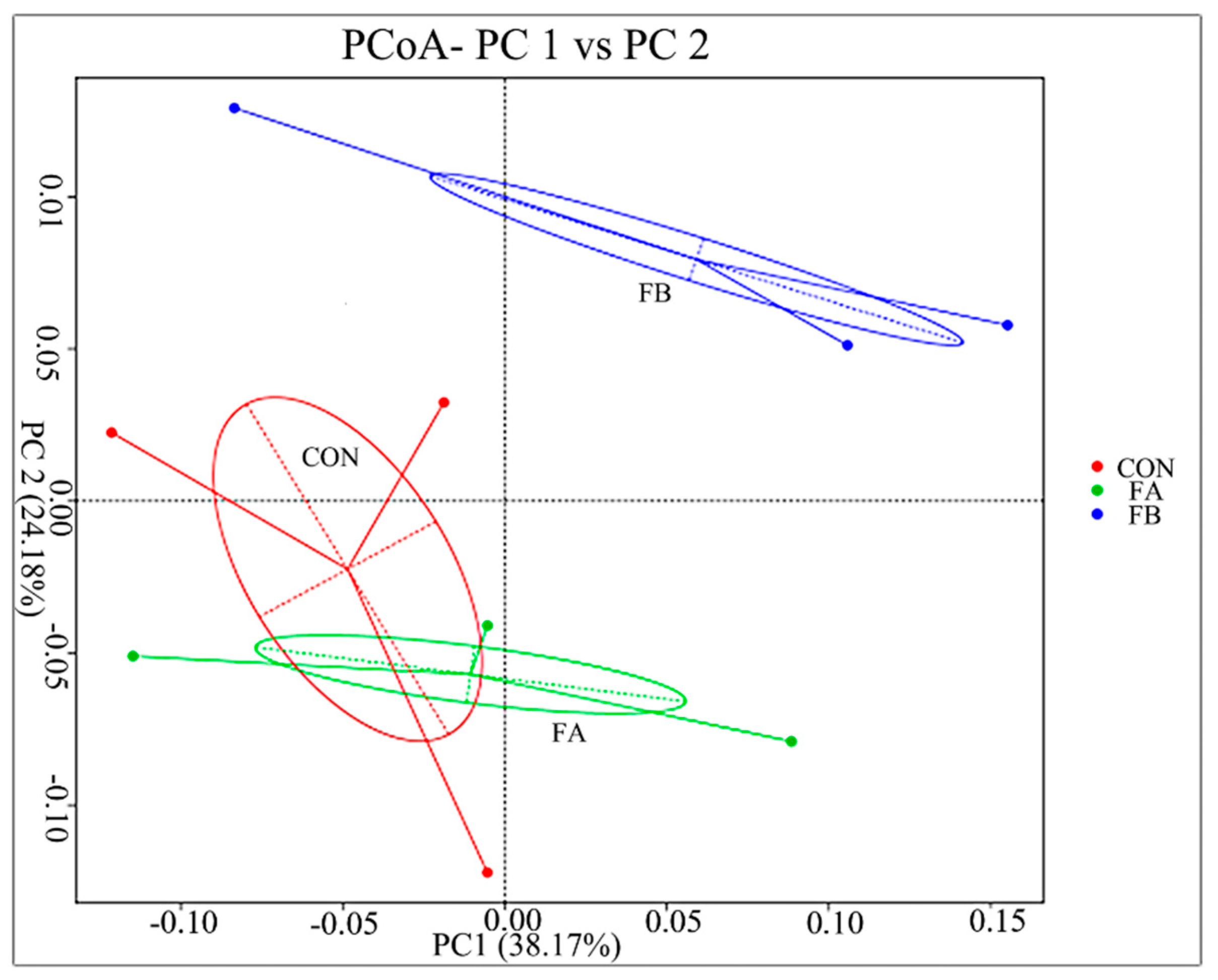
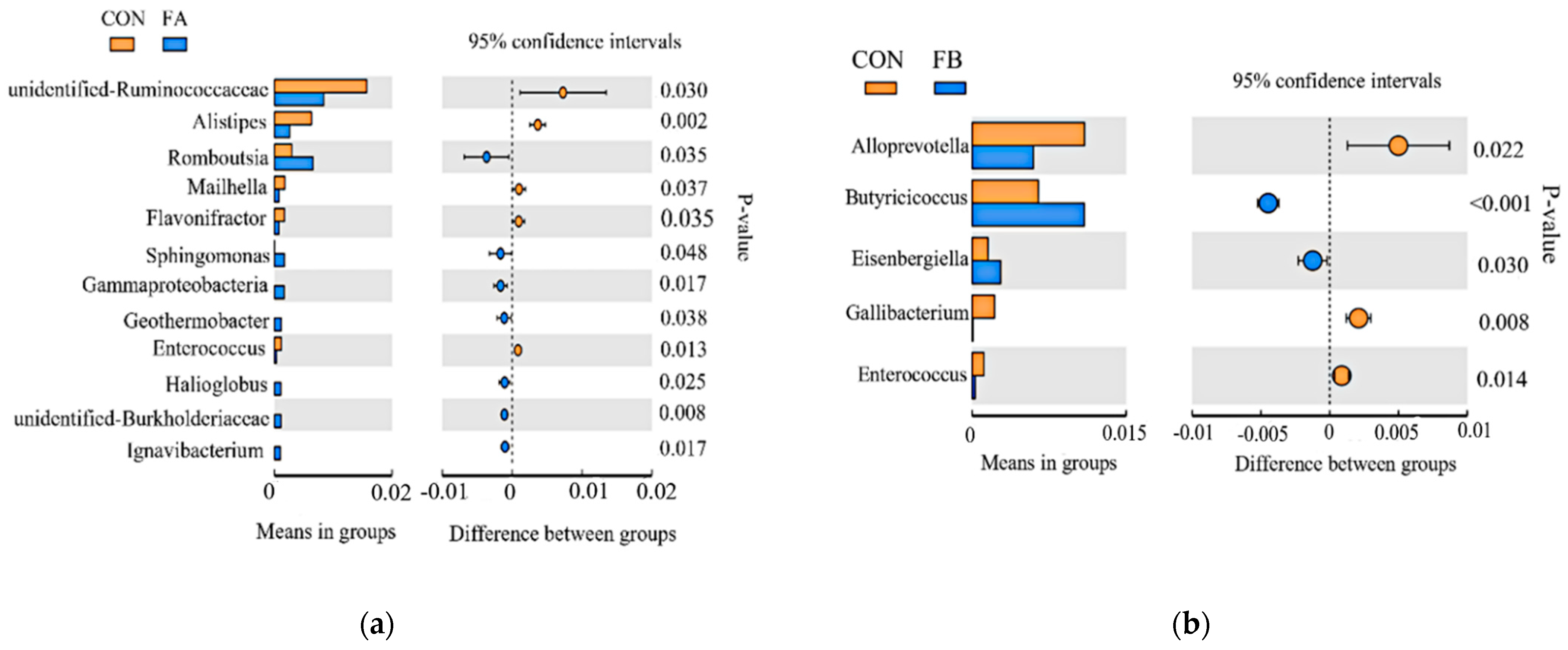
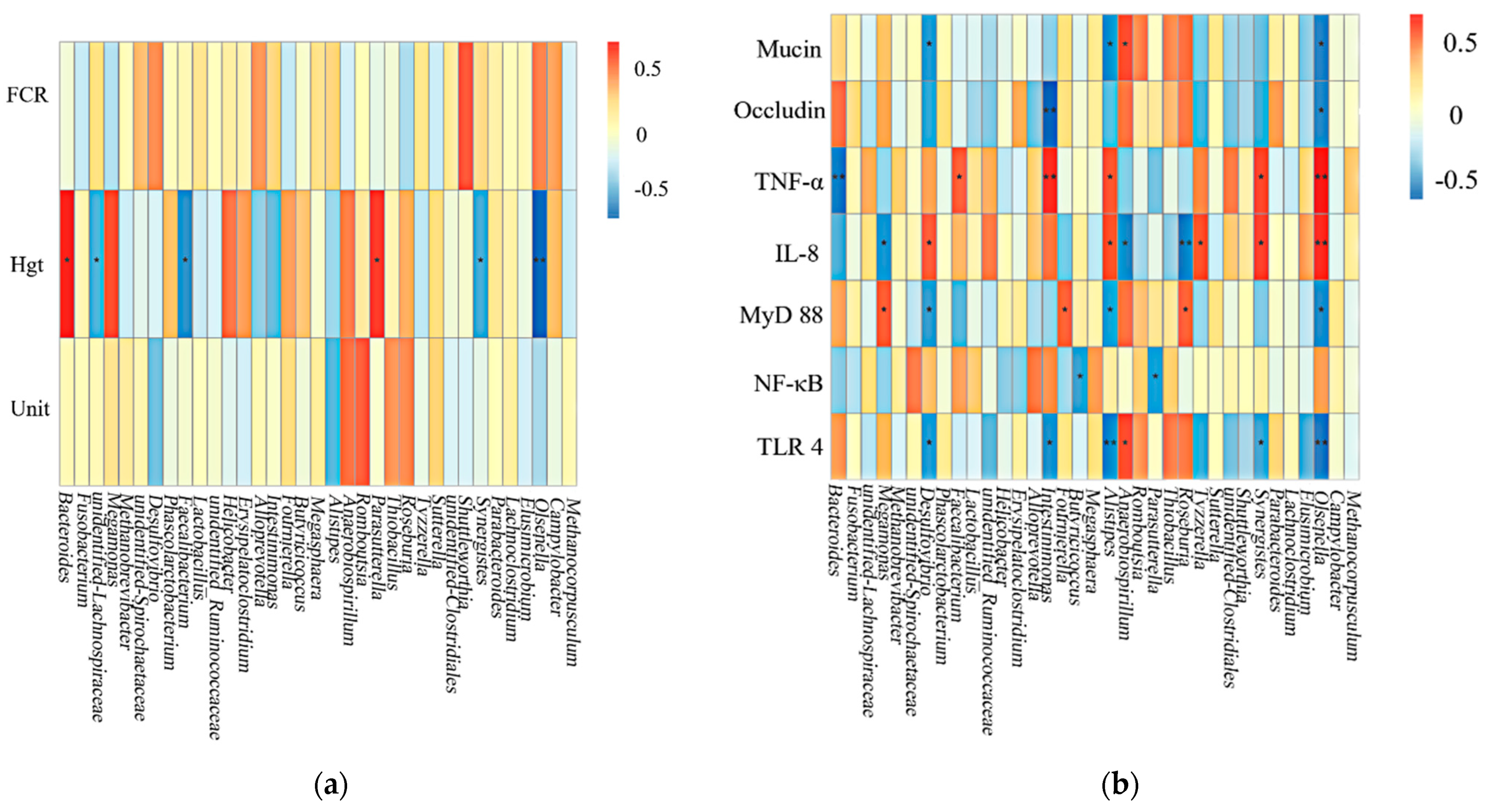
This experiment was conducted to investigate the effects of different compound probiotics on the performance, cecal microflora, and intestinal immunity of laying hens. A total of 270 Jing Fen No.6 (22-week-old) were randomly divided into 3 groups: basal diet (CON); basal diet supplemented with 6% fermented feed A by Bacillussubtilis,Lactobacillus, and Yeast (FA); and with 6% fermented feed B by C. butyricum and L. salivarius (FB). Phytic acid, trypsin inhibitor, β-glucan concentrations, and pH value in fermented feed were lower than the CON group (p < 0.05). The feed conversion ratio (FCR) in the experimental groups was decreased, while albumen height and Haugh unit were increased, compared with the CON group (p < 0.05). Fermented feed could upregulate the expression of the signal pathway (TLR4/MyD88/NF-κB) to inhibit mRNA expression of pro-inflammatory cytokines (p < 0.05). Fermented feed promoted the level of Romboutsia (in the FA group) Butyricicoccus (in the FB group), and other beneficial bacteria, and reduced opportunistic pathogens, such as Enterocooccus (p < 0.05). Spearman’s correlations showed that the above bacteria were closely related to albumen height and intestinal immunity. In summary, fermented feed can decrease the feed conversion ratio, and improve the performance and intestinal immunity of laying hens, which may be related to the improvement of the cecal microflora structure.
Keywords:
fermented feed; layer; production performance; cecal microbiomes