Estimates of Species Richness and Composition Depend on Detection Method in Assemblages of Terrestrial Mammals



Department of Conservation Biology, Estación Biológica de Doñana—CSIC, Américo Vespucio 26, 41092 Sevilla, Spain
*
Author to whom correspondence should be addressed.
Animals 2021, 11(1), 186; https://doi.org/10.3390/ani11010186
Submission received: 30 November 2020
/
Revised: 4 January 2021
/
Accepted: 11 January 2021
/
Published: 14 January 2021
(This article belongs to the Section Ecology and Conservation)
Simple Summary
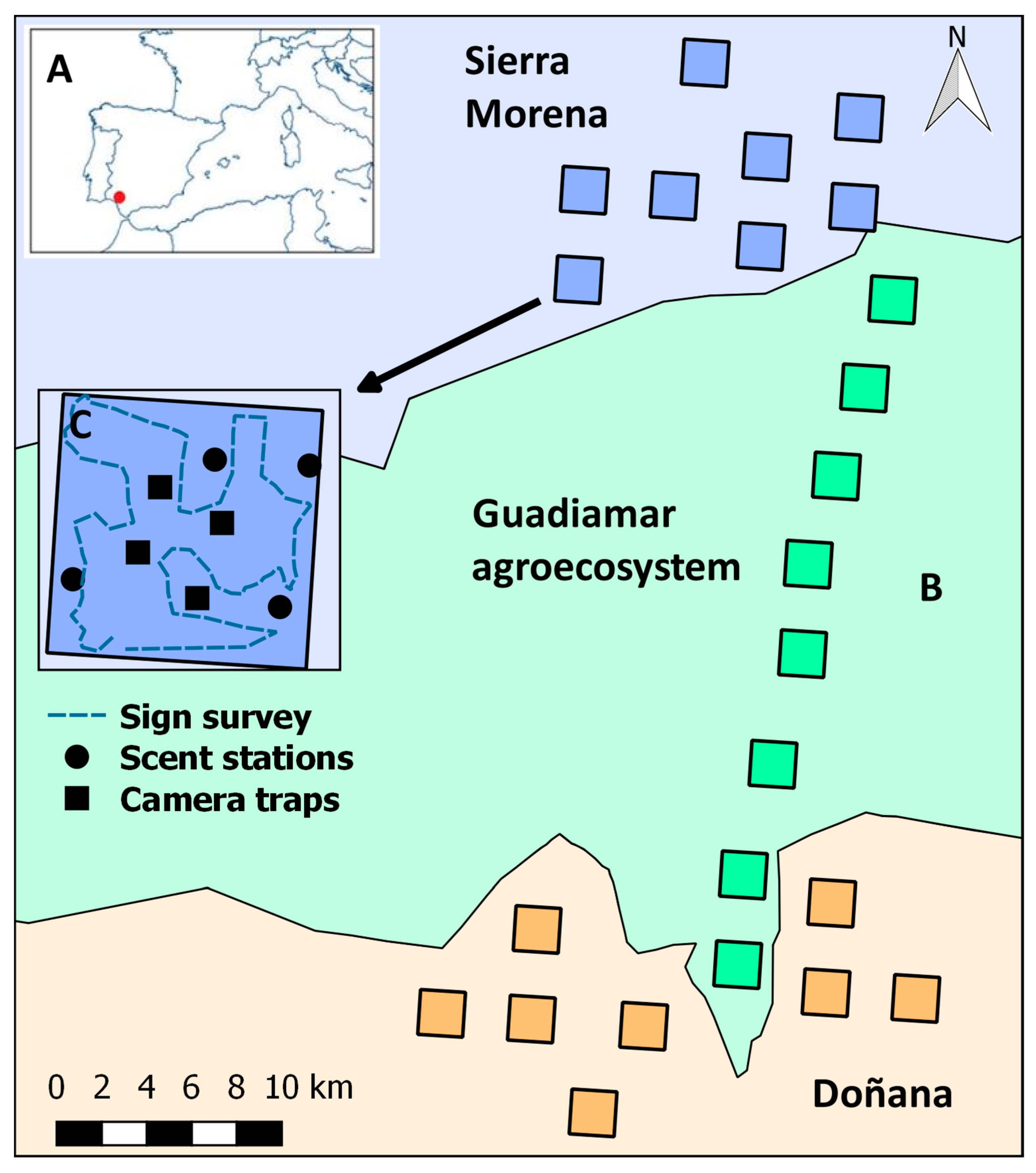
Transformation of forest into farmland and many other drivers of global change have the potential for quickly reducing or altering the set of mammal species inhabiting a particular place. To document this process, lists of species updated at regular intervals should be compared. Several detection techniques are available to make lists of medium to large mammal species during field surveys. We explore whether four field methods differ in their efficiency to describe a complete list of species and in their capacity to produce the same list, provided that species composition has not changed. Using track surveys, we detected all species present in a region encompassing three Mediterranean landscapes and obtained the most accurate description of the number of species in 24 specific localities within the region. The sampling effort needed for track surveys was also relatively low. Had we chosen camera traps, scent stations, or scat surveys as the only survey method during the same period, we would have obtained incomplete species lists. We show that the common practice of using a single detection method without previous evaluation may produce unreliable species inventories, hampering a correct assessment of the impact of human activity on wild mammals.
Abstract
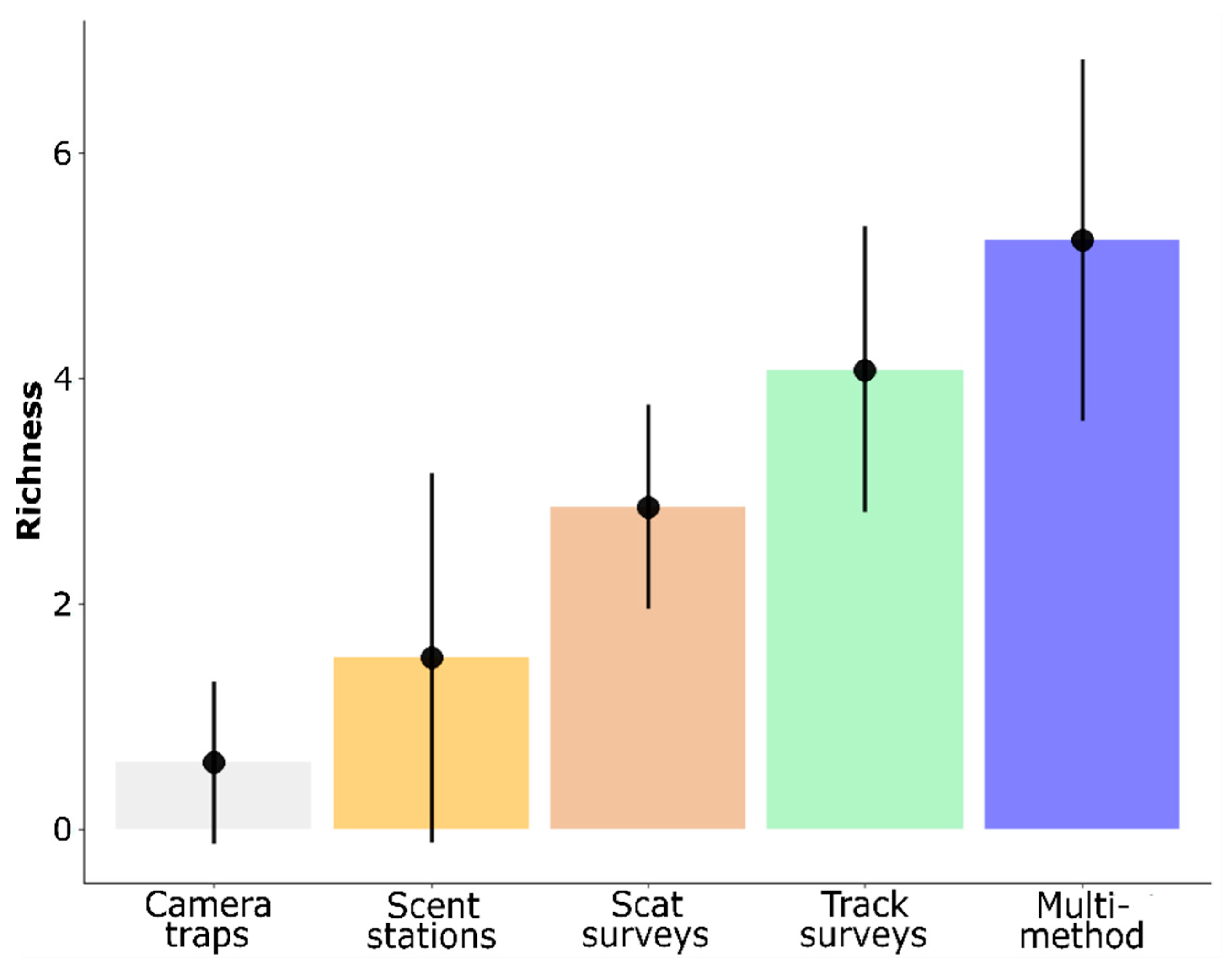
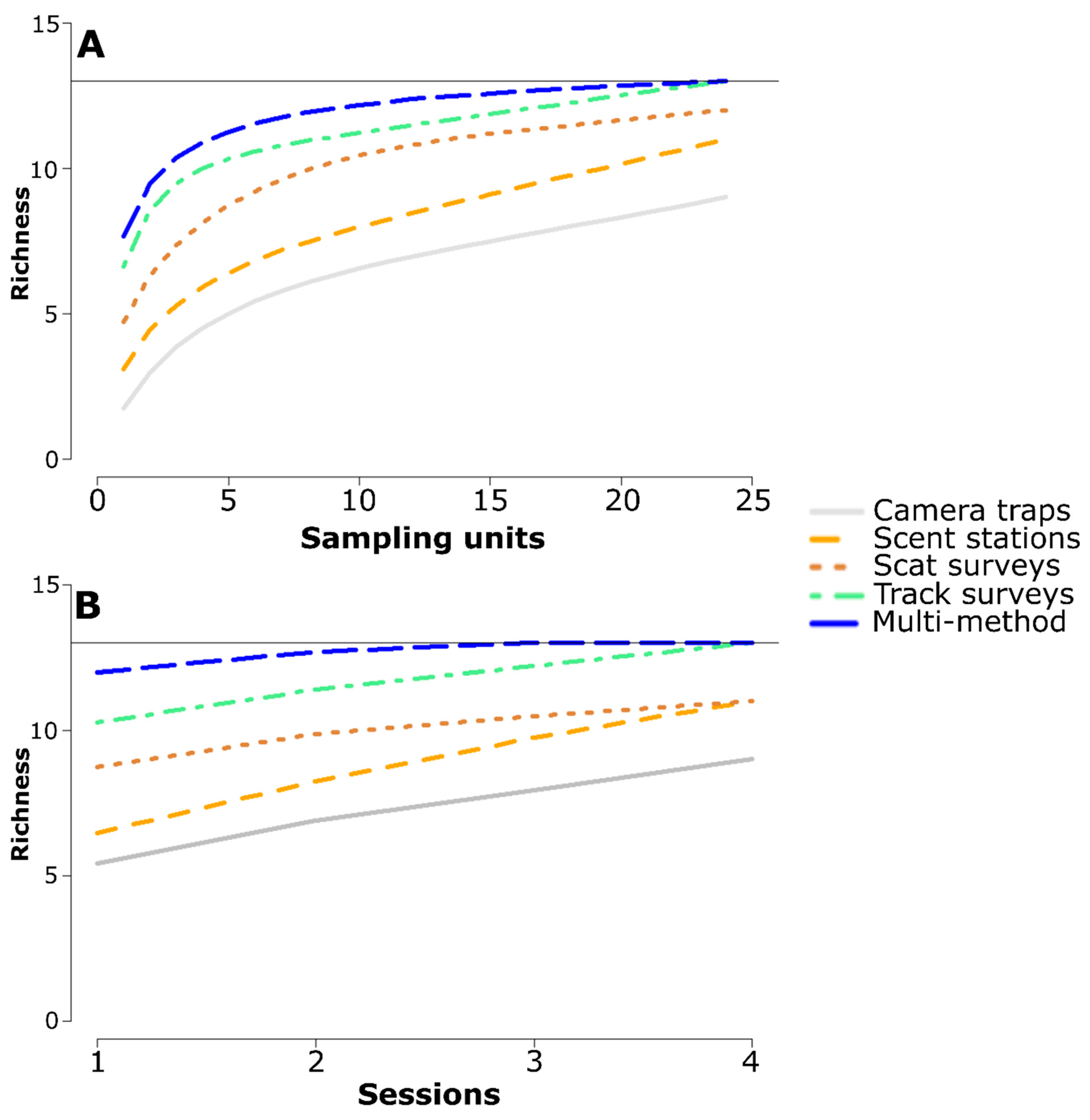
Detecting rapid changes in mammal composition at large spatial scales requires efficient detection methods. Many studies estimate species composition with a single survey method without asking whether that particular method optimises detection for all occurring species and yields reliable community-level indices. We explore the implications of between-method differences in efficiency, consistency, and sampling effort for the basic characterisation of assemblages of medium to large mammals in a region with three contrasted Mediterranean landscapes. We assessed differences between camera traps, scent stations, scat surveys, and track surveys. Using track surveys, we detected all species present in the regional pool (13) and obtained the most accurate description of local species richness and composition with the lowest sampling effort (16 sampling units and 2 survey sessions at most). Had we chosen camera traps, scent stations, or scat surveys as the only survey method, we would have underestimated species richness (9, 11, and 12 species, respectively) and misrepresented species composition in varying degrees. Preliminary studies of method performance inform whether single or multiple survey methods are needed and eventually which single method might be most appropriate. Without such a formal assessment current practices may produce unreliable and incomplete species inventories, ultimately leading to incorrect conclusions about the impact of human activity on mammal communities.
Keywords:
consistency; efficiency; large-scale; mammal communities; rapid surveys; sampling effort