Milk Replacer Supplementation with Docosahexaenoic Acid from Microalgae Does Not Affect Growth and Immune Status in Goat Kids
by
 , , , , ,
Isabel Moreno-Indias
1,2,3 ,
,
Lorenzo E. Hernández-Castellano
1,4,* ,
,
Davinia Sánchez-Macías
5,
Antonio Morales-delaNuez
6 ,
,
Alexandr Torres
7 ,
,
Anastasio Argüello
1 and
Noemí Castro
1 1
Animal Production and Biotechnology group, Institute of Animal Health and Food Safety, Universidad de Las Palmas de Gran Canaria, 35413 Arucas, Spain
2
Unidad de Gestión Clínica de Endocrinología y Nutrición, Instituto de Investigación Biomédica de Málaga (IBIMA), Hospital Universitario Virgen de la Victoria, Universidad de Málaga, 29071 Málaga, Spain
3
CIBER Fisiopatología de la Obesidad y Nutrición (CIBEROBN), 28029 Madrid, Spain
4
Department of Animal Science, Aarhus University, AU-Foulum, 8830 Tjele, Denmark
5
Animal Production and Industrialization Unit, Department of Agroindustrial Engineering, Universidad Nacional de Chimborazo, 060150 Riobamba, Ecuador
6
Agrobiotechnology Group, Instituto de Productos Naturales y Agrobiología (IPNA), Spanish Research Council (CSIC), 38206 La Laguna, Spain
7
Unit of Animal Production, Pasture, and Forage in Arid and Subtropical Areas. Canary Islands Institute for Agricultural Research, 38200 La Laguna, Spain
*
Author to whom correspondence should be addressed.
Animals 2020, 10(7), 1233; https://doi.org/10.3390/ani10071233
Submission received: 18 June 2020
/
Revised: 14 July 2020
/
Accepted: 15 July 2020
/
Published: 20 July 2020
(This article belongs to the Special Issue Plant-Based Alternatives to Antimicrobial in Animal Feed)
Simple Summary
The consumption of docosahexaenoic acid (DHA) has beneficial effects on human health. Meat from suckling goat kids is highly valuable, especially in Mediterranean countries. Based on this, several strategies have been implemented to increase the content of DHA in foodstuffs such as meat and meat products. Several studies have observed how feeding diverse sources of DHA can improve the fatty acid profile in goat kid meat. However, few studies have focused on the effect of using these DHA supplements on growth and the immune system development in these animals. Consequently, this study aimed to evaluate the effect of different levels of DHA supplementation on growth and the immune system development in newborn goat kids. The current study showed that the DHA supplementation did not affect either growth or the immune status of goat kids during the first 35 days of life.
Abstract
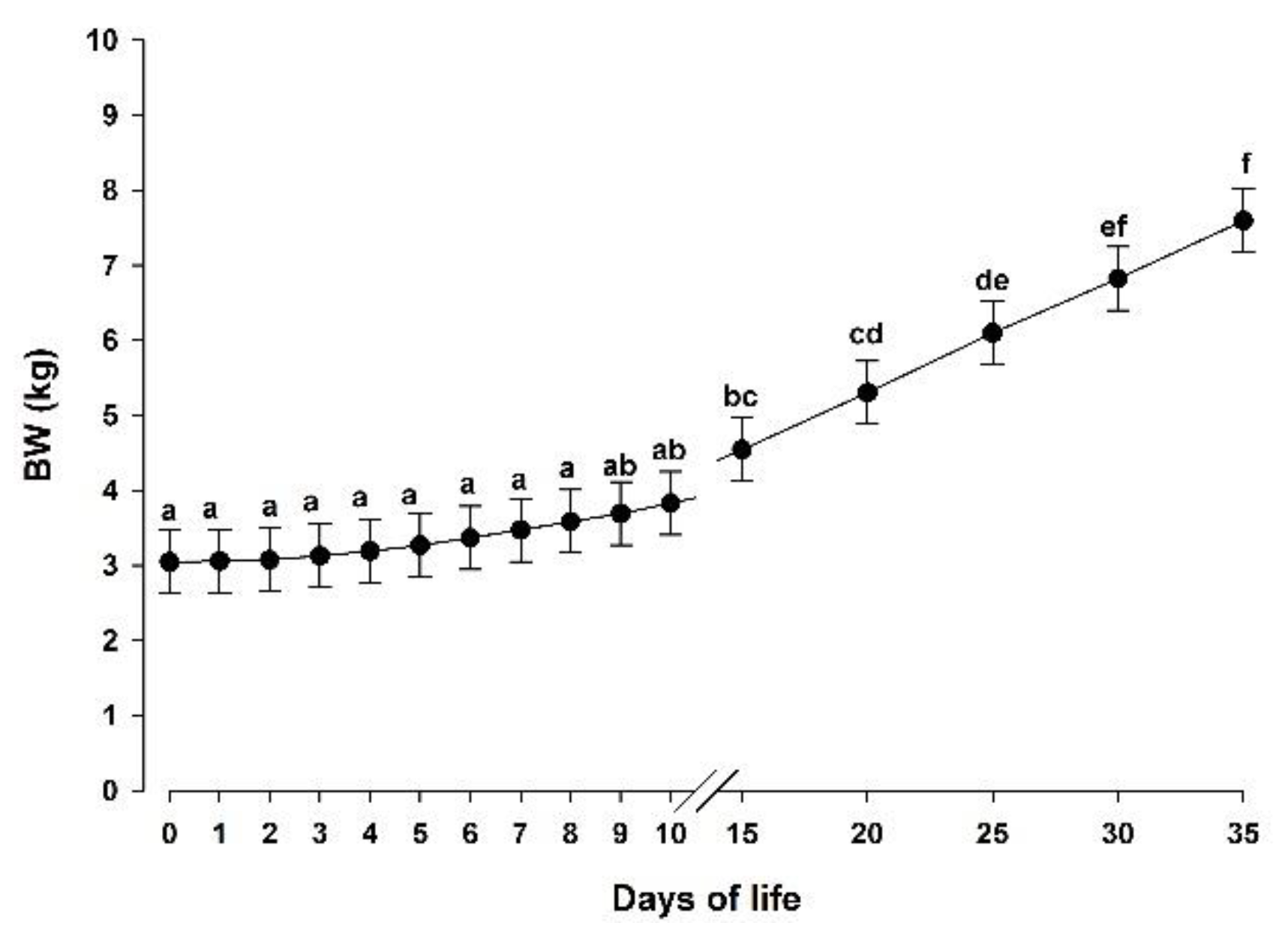
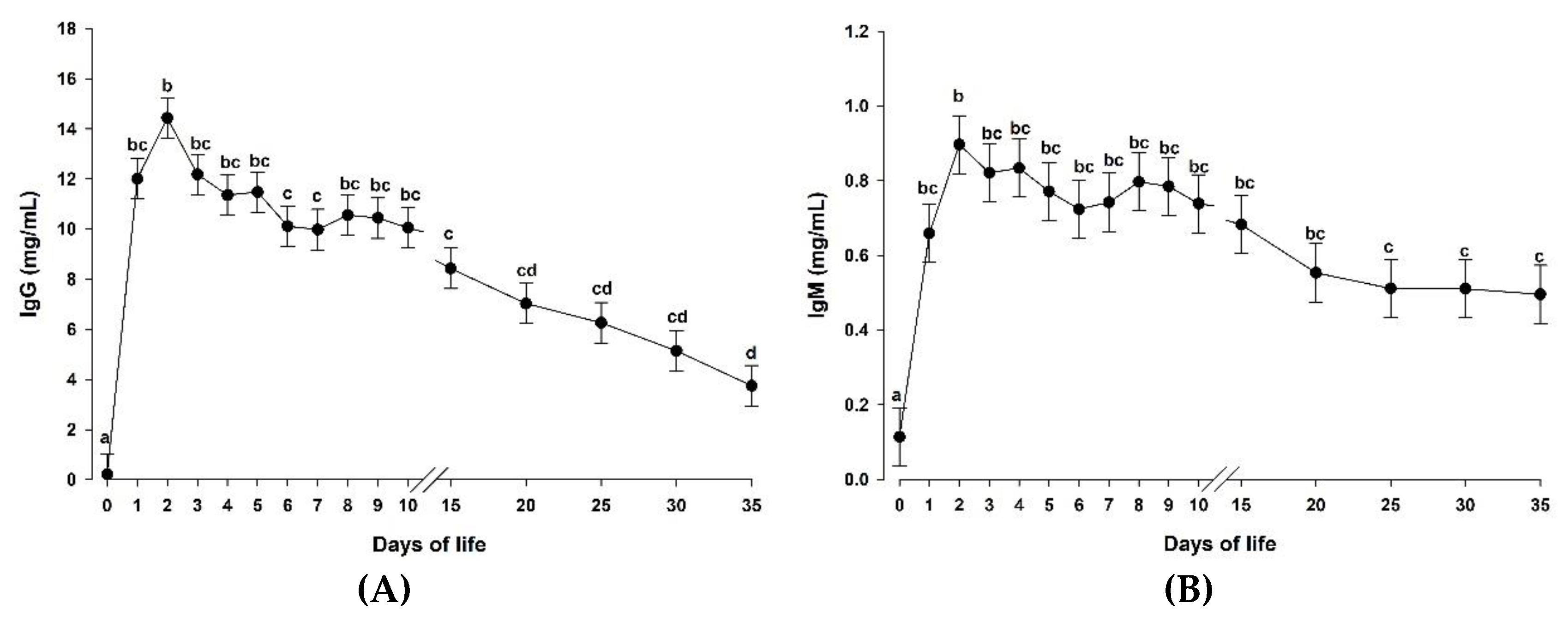
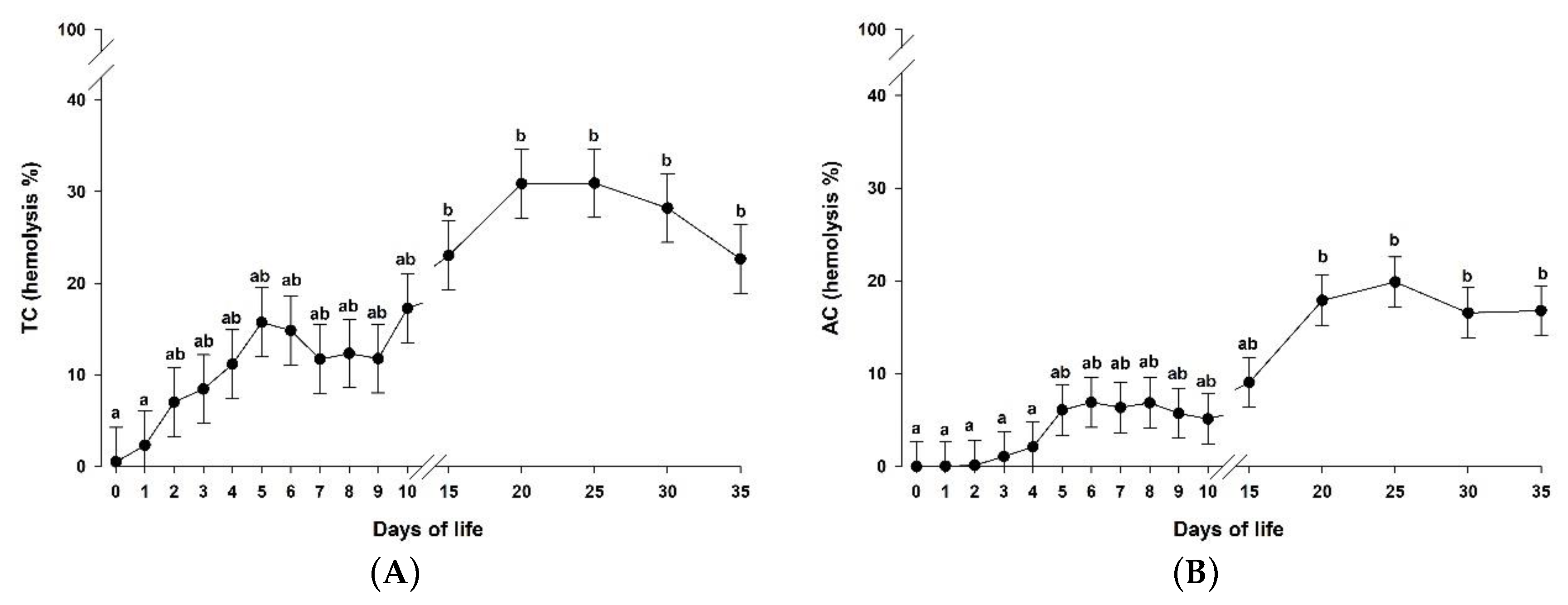
Consumption of polyunsaturated fatty acids (PUFA), especially docosahexaenoic acid (DHA), has beneficial effects for consumers’ health. Consequently, there is an increased interest in enhancing meat fatty acid profiles (i.e., PUFA and DHA content) through diverse nutritional strategies. This study aimed to investigate the effect of supplementing a microalgae-derived product rich in DHA on growth and immune system development in newborn goat kids. In this experiment, newborn goat kids were fed milk replacer (MR) supplemented with three levels of a microalgae-derived product rich in DHA (DHA-Gold®, Martek Biosciences, MD, USA). Groups were designed as follows: MR-NS (milk replacer without DHA-Gold® supplementation; n = 10), MR-DHA-9 (9 g of DHA-Gold®/L milk replacer; n = 10) and MR-DHA-18 (18 g of DHA-Gold®/L milk replacer; n = 10). The immune status of the kids was evaluated by the plasma IgG and IgM concentrations, as well as by the complement system and chitotriosidase activities. Dietary supplementation with DHA did not affect either growth or innate and humoral immunity (p > 0.05). This study concludes that supplementation with DHA does not cause negative effects on growth and immune status in newborn goat kids.
Keywords:
DHA; omega-3; goat kid; meat quality; chitotriosidase; complement activity