Efficiency of Crude Protein Utilisation in Grazing Dairy Cows: A Case Study Comparing Two Production Systems Differing in Intensification Level in New Zealand
by
 , ,
, ,
Martín Correa-Luna
1,* ,
,
Daniel Donaghy
1,
Peter Kemp
1,
Michael Schutz
2 and
Nicolas López-Villalobos
1
1
School of Agriculture and Environment, Massey University, Private Bag 11-222, Palmerston North 4410, New Zealand
2
Department of Animal Science, University of Minnesota, St. Paul, MN 55108, USA
*
Author to whom correspondence should be addressed.
Animals 2020, 10(6), 1036; https://doi.org/10.3390/ani10061036
Submission received: 24 April 2020
/
Revised: 9 June 2020
/
Accepted: 12 June 2020
/
Published: 15 June 2020
(This article belongs to the Special Issue Sustainable Animal Production 2021)
Simple Summary
Improving the dietary crude protein utilisation in dairy cows is a key aspect of agronomically and environmentally sustainable production systems. The intensification process of grazing dairy systems identified with the increase of milking cows linked with the addition of supplementary feed along with the increasing use, and particularly inefficient use, of nitrogen fertiliser, has led to increasing pressure on the environment. However, feeding solely on pasture could result in an excess of crude protein intake relative to nutritional requirements, and this could reduce the dietary crude protein utilisation. In this study, we modelled the dietary crude protein utilisation, along with nitrogen excreta partitioning of milking cows, of two contrasting spring-calving pasture-based herds differing in intensification level in New Zealand. We found that feeding diets with higher fresh pasture proportions, such as those employed in low-intensification dairy systems, led to an excess of crude protein intake with greater nitrogen partitioned towards urine, which is sensitive in terms of body water eutrophication. In the high-intensity production system, the inclusion of low-crude protein supplements resulted in better dietary crude protein utilisation, along with less urinary nitrogen losses.
Abstract
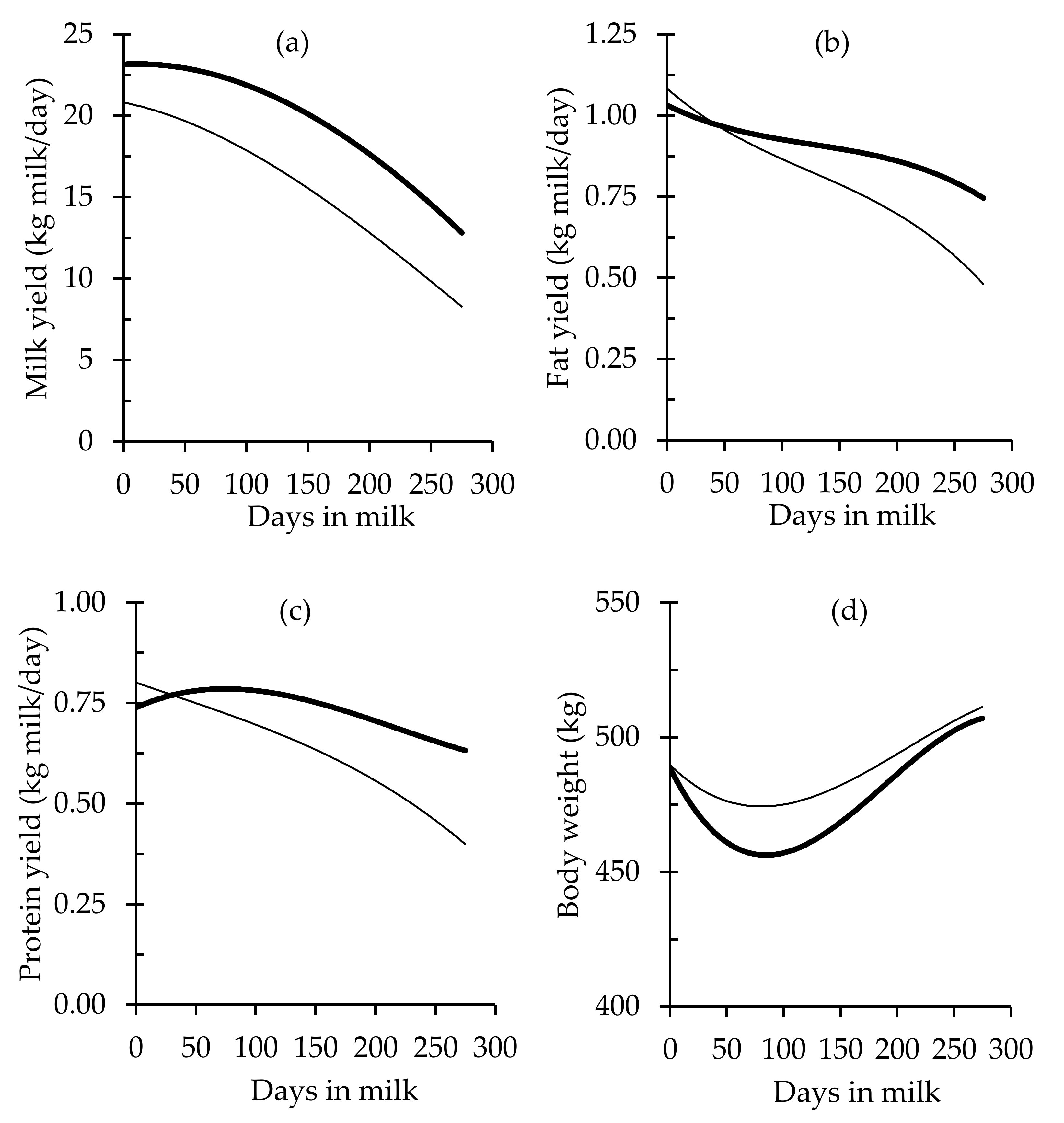
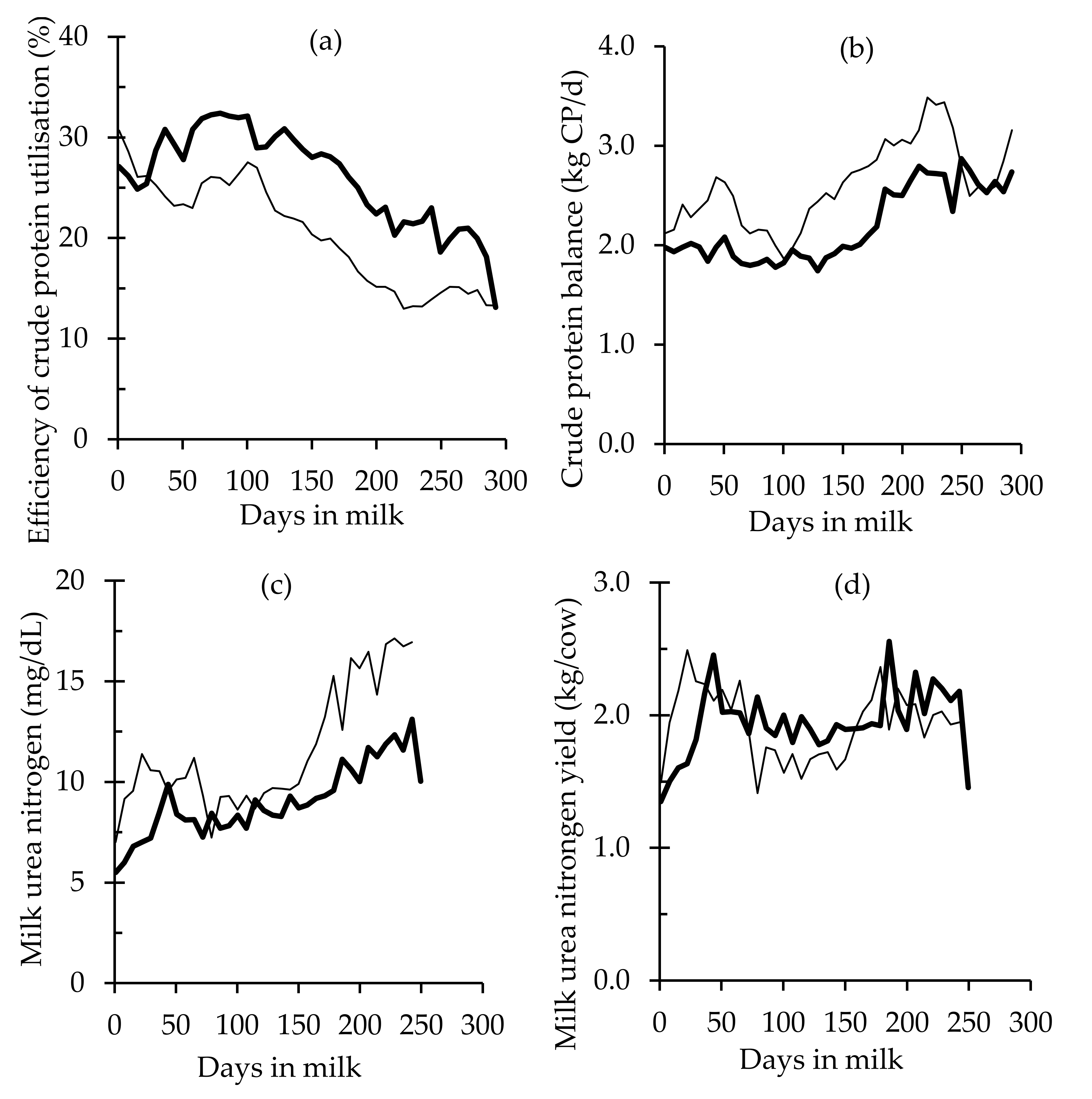
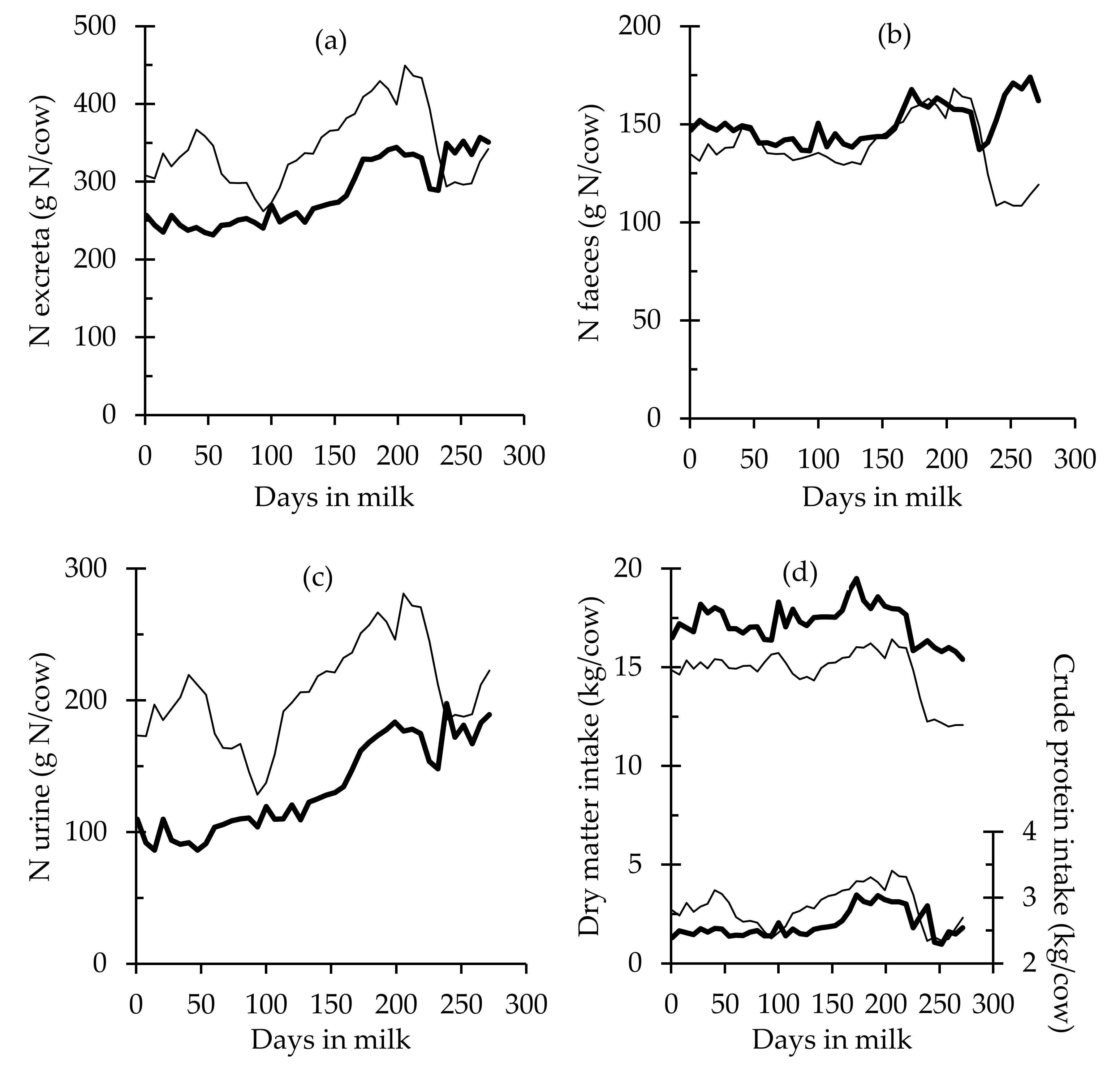
In this study, we modelled and compared lactation curves of efficiency of crude protein utilisation (ECPU) and the nitrogen (N) excreta partitioning of milking cows of two contrasting spring-calving pasture-based herds to test some aspects of farming intensification practices on cow performance and N partition. In the low-intensity production system (LIPS), 257 cows were milked once-daily and fed diets comprised of pasture with low supplementary feed inclusion during lactation (304 kg pasture silage/cow). In the high-intensity production system (HIPS), 207 cows were milked twice-daily and fed pasture with higher supplementary feed inclusion (429 kg pasture silage and 1695 kg concentrate/cow). The dietary crude protein (CP) utilisation was calculated for each cow at every herd test date as the ECPU as a proportion of protein yield (PY) from the CP intake (CPI) derived from intake assessments based on metabolisable energy requirements, and the CP balance (CPB) calculated as the difference between CPI and PY. Total N excreta partitioned to faeces (FN) and urine (UN) was estimated by back-calculating UN from FN, considering dietary N, and from N retained in body tissues, taking into account live weight change during the lactation. The higher CPI (2.7 vs. 2.5 kg CP/day), along with the reduced milk yield (1100 kg milk/cow less), of the LIPS cows led to a lower ECPU (23% vs. 31%) and to a higher CPB (2.1 vs. 1.8 kg CP/day) when compared to the HIPS cows. Mean N excreta, and particularly UN, was significantly higher in LIPS cows, and this was explained by higher dietary CP and by the reduced PY when compared to the HIPS cows. Reducing the low-CP supplementation in the “de-intensified” herd lessened the ECPU, resulting in higher UN, which is sensitive in terms of body water eutrophication.