Abstract
The most important characteristics regarding the mucosal infection and immune responses against the Acute Respiratory Syndrome coronavirus 2 (SARS-CoV-2) as well as the current vaccines against coronavirus disease 2019 (COVID-19) in development or use are revised to emphasize the opportunity for lactic acid bacteria (LAB)-based vaccines to offer a valid alternative in the fight against this disease. In addition, this article revises the knowledge on: (a) the cellular and molecular mechanisms involved in the improvement of mucosal antiviral defenses by beneficial Lactiplantibacillus plantarum strains, (b) the systems for the expression of heterologous proteins in L. plantarum and (c) the successful expressions of viral antigens in L. plantarum that were capable of inducing protective immune responses in the gut and the respiratory tract after their oral administration. The ability of L. plantarum to express viral antigens, including the spike protein of SARS-CoV-2 and its capacity to differentially modulate the innate and adaptive immune responses in both the intestinal and respiratory mucosa after its oral administration, indicates the potential of this LAB to be used in the development of a mucosal COVID-19 vaccine.
1. Introduction
Coronaviruses are positive-sense single-stranded RNA (ssRNA) viruses with a wide range of hosts. To date, seven human coronaviruses (HCoV) were identified as human-pathogens; HCoV-229E, HCoV-OC43, HCoV-NL63 and HCoV-HKU1 (responsible for non-sever common cold), the Severe Acute Respiratory Syndrome coronavirus (SARS-CoV) isolated in 2003 in China and the Middle East Respiratory Syndrome coronavirus (MERS-CoV) that emerged in Middle Eastern countries in 2012 [1]. Both SARS-CoV and MERS-CoV are highly pathogenic viruses that caused nosocomial outbreaks with high case-fatality rates. The seventh and most recently identified human coronavirus is the SARS-CoV-2, responsible for the coronavirus disease 2019 (COVID-19).
COVID-19 emerged in December 2019 in Wuhan, China, and rapidly spread worldwide in a few months due to its high transmissibility and pathogenicity. Although SARS-CoV-2 induce a milder clinical commitment than SARS-CoV or and MERS-CoV, COVID-19 has affected more than 100 million people worldwide, causing the death of 2,217,005 persons according to the WHO’s situation report on 1 February 2021 (WHO, 2021) [2].
Several transmission-mitigation strategies have been implemented in most countries, including social distancing and lockdowns. In addition, a vaccine development race started as never seen before. Currently, several COVID-19 vaccines have finished the phase III clinical testing or been granted an emergency use authorization, including BBIBP-CorV (Sinopharm) and CoronaVac (Sinovac) in China, Pfizer-BioNTech COVID-19 vaccine (Pfizer) and mRNA-1273 vaccine (Moderna) in the United States, and Sputnik-V vaccine in Russia, offering hope for controlling the SARS-CoV-2 infection and stop the pandemic in the near future [3,4,5].
Since the protective immune responses against SARS-CoV-2 are poorly understood, it is unclear which vaccine strategies will be the most successful. The majority of COVID-19 vaccines have been designed to induce anti-SARS-CoV-2 neutralizing antibodies to prevent virus entry into the target cells. In some cases, vaccines are designed to induce both humoral and cellular immunity that could help limiting viral replication in the infected host [5]. Of note, most of the vaccines are designed for parenteral use, and therefore, are capable of mainly inducing systemic immunity despite of the fact that SARS-CoV-2 infects mucosal tissues and that human-to-human transmission is mediated by respiratory droplets and the fecal-oral transmission has not been ruled out [6,7]. The need to generate not only humoral but also cellular immunity against SARS-CoV-2 and to induce protective immunity in the mucosal surfaces where this virus initiates its replication allows us to speculate that this first generation of COVID-19 vaccines should be replaced later by a new generation of vaccines that allow overcoming the aforementioned limitations.
Protective mucosal immune responses are most effectively induced by mucosal immunization through oral or nasal routes, whereas injected vaccines are generally poor inducers of mucosal immunity. However, the induction of mucosal immune responses is challenging due to the physical-chemical barriers of the mucosal surfaces and the tendency to induce tolerance [8]. Therefore, mucosal vaccine delivery systems require high doses of antigens and efficient mucosal adjuvants. Lactic acid bacteria (LAB) have been proposed as both delivery vectors and mucosal adjuvants [9,10]. In the last decades, recombinant LAB have been tested as new-generation oral vaccine vectors due to their natural resistance to gastrointestinal conditions and their ability to modulate both intestinal innate and adaptive immune responses. In this sense, Lactiplantibacillus plantarum (Basonym Lactobacillus plantarum) is a good candidate for developing oral vaccines because it survives gastrointestinal conditions transiently colonizing the intestinal tract, it beneficially modulates the mucosal immune responses not only locally (intestinal mucosa) but in distant mucosal sites as well (respiratory mucosa) and there are molecular techniques available for the manipulation of its genome.
Here, we revise relevant information about SARS-CoV-2 infection at mucosal sites, the immune response against the virus and the current COVID-19 vaccines in development, and analyze the possibility of LAB-based vaccines to offer an alternative in the fight against this disease. In addition, we review: (a) the cellular and molecular mechanisms involved in improving mucosal antiviral defenses by L. plantarum strains, (b) the heterologous proteins expression systems for L. plantarum and (c) the protective immune responses in the gut and the respiratory tract after the oral administration of recombinant L. plantarum.
2. SARS-CoV-2 Mucosal Infections
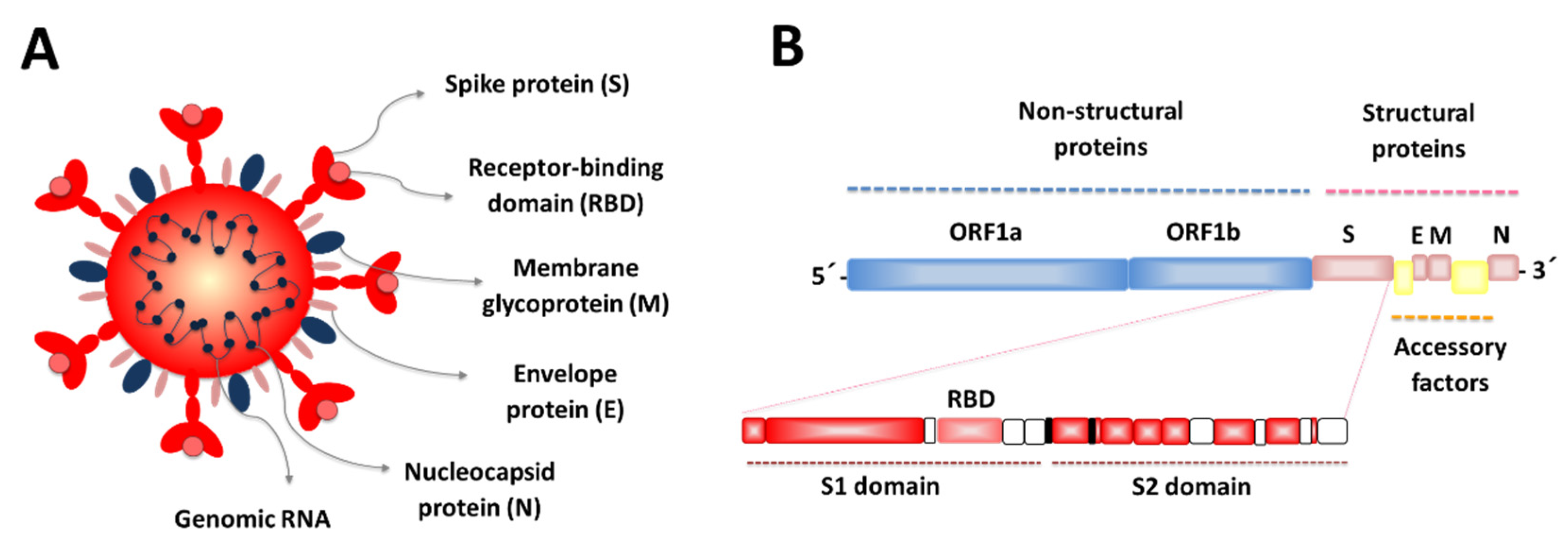
The viral 29.9 kb genome of SARS-CoV-2 encodes four structural proteins designated as spike (S), envelope (E), membrane (M) and nucleocapsid (N) proteins, respectively. The genome also encodes non-structural proteins and accessory factors (Figure 1).
Figure 1.
SARS-CoV-2 virion (A) and genome (B) structures. The virion contains a nucleocapsid composed of genomic RNA and N protein, which is enclosed inside the virus envelope consisting of S, E and M proteins. Approximately two-thirds of the RNA genome encodes a large polyprotein (ORF1a/b), while the last third proximal to the 3′-end encodes four structural proteins: spike (S), envelope (E), membrane (M) and nucleocapsid (N). The structure of the S-protein showing the S1 and S2 domains and the receptor-binding domain (RBD) are highlighted.
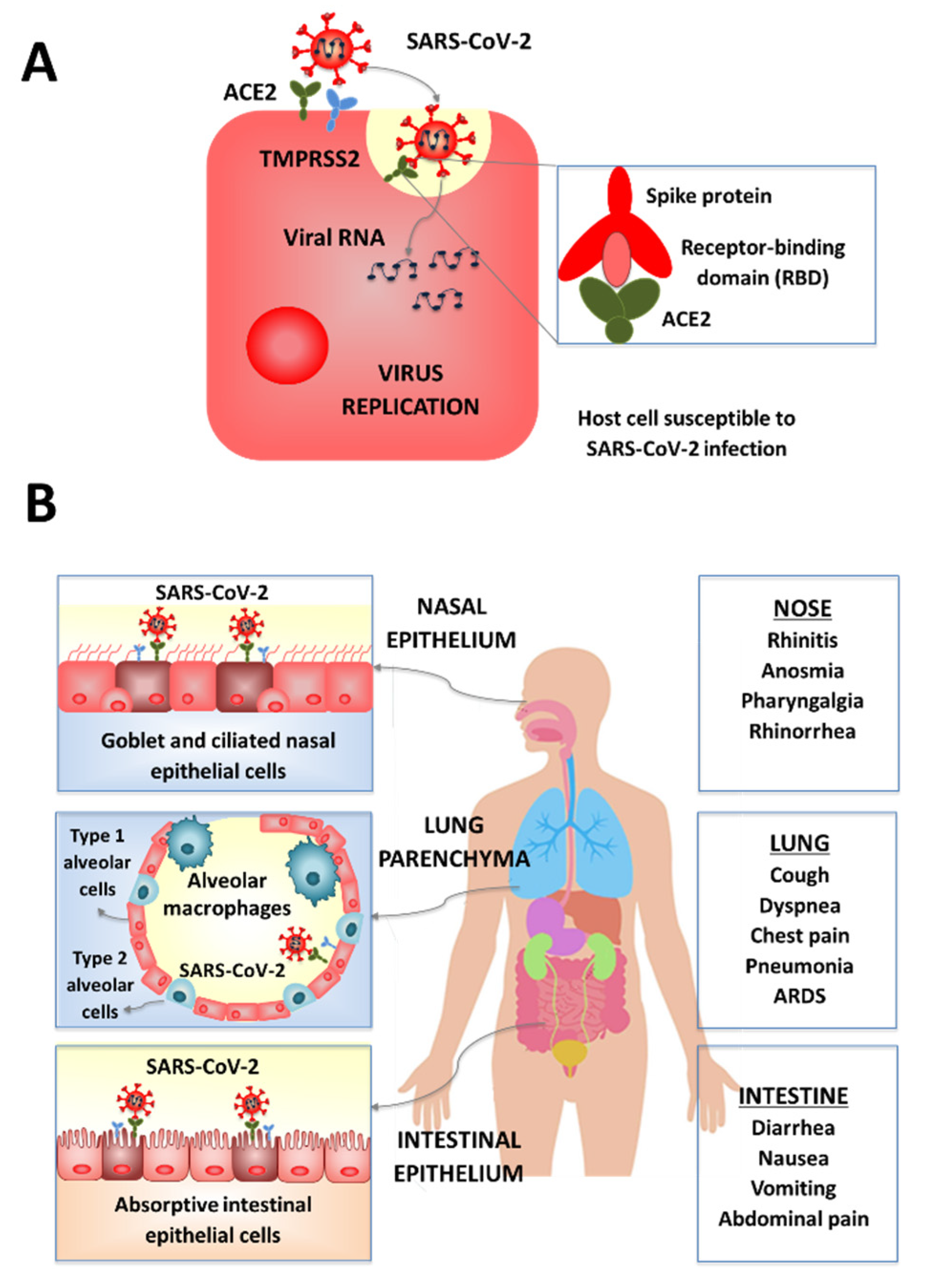
Functional and genomic studies comparing SARS-CoV and SARS-CoV-2 showed that the spike protein (or S protein) of SARS-CoV-2 acts as the entry receptor for this virus. SARS-CoV-2 receptor recognition and attachment are initiated via interactions between the receptor-binding domain (RBD) of the S protein and the human angiotensin converting enzyme 2 (ACE2) expressed in numerous cells (Figure 2). Additionally, SARS-CoV-2 entry requires the efficient priming of the S protein by serine proteases such as the TMPRSS2 enzyme [11,12]. Hence, cell populations in human tissues and organs with higher ACE2 and TMPRSS2 expression, such as the nasal and bronchial epithelium and the alveoli, are more vulnerable to SARS-CoV-2 infection. Those cells include epithelial cells of the airways, the lung parenchyma, the small intestine (Figure 2) as well as the cells in vascular endothelia, and renal, liver and cardiovascular tissues [12,13], which explains the great diversity of symptoms that COVID-19 patients develop. These symptoms vary from patient to patient; however, most symptomatic patients have signs of affection of the airways and the gastrointestinal tract. The efficiency with which the SARS-CoV-2 binds to ACE2 in mucosal tissues was proposed as a key determinant of transmissibility, as shown by the higher binding affinity of SARS-CoV-2 to ACE2 than SARS-CoV [12].
Figure 2.
Mucosal tissues susceptible to SARS-CoV-2 infection. The virus infects mucosal cells expressing the surface receptors ACE2 and TMPRSS2 (A), and the active replication cause the death of cells, inducing respiratory and intestinal alterations (B).
2.1. SARS-CoV-2 Respiratory Infection
The clinical manifestations of COVID-19 range from mild respiratory symptoms to sever acute respiratory distress syndrome (ARDS); the most common symptoms are dry cough, rhinitis, sore throat, breath shortness, chest pain, myalgia, fatigue and pneumonia [14,15,16,17]. In the severe cases often needing hospitalization, complications such as ARDS, secondary infections and cardiac alterations appear [14].
Nasal epithelial cells belong to the cell populations with the highest expression of ACE2 in the respiratory tree [18,19]. ACE2 is expressed in goblet and ciliated cells of the nasal epithelium, as corroborated by in vitro scRNA-seq studies in primary air-liquid interface nasal cell cultures. The viral replication causes cytopathic effects and stops cilia movements [20,21]. The nasal epithelium also contains olfactory sensory neurons and accessory cells (ciliated, goblet and secretory cells as well as reserve basal stem cells, which express ACE2 [22]) responsible for detecting odors. The SARS-CoV-2 infection of the support cells in the olfactory epithelia together with the local inflammation cause the anosmia often seen in COVID-19 patients [22,23].
As mentioned earlier, ACE2 and TMPRSS2 are also highly expressed in type II pneumocytes (Figure 2), allowing SARS-CoV-2 replication in the lower respiratory tract [20]. The viral lyses of type II pneumocytes impairs their function of keeping the alveolar structure, which in turn reduces the gas exchange function of the lung [21]. Lung injuries are characterized by diffuse reactive hyperplasia of type II pneumocytes, diffuse alveolar damage, edema and the presence of proteinaceous or fibrin alveolar exudates [14]. In more severe cases of lower respiratory infection, interstitial fibroblasts proliferate thickening the alveolar septa and a hyaline membrane is formed. In addition, because of inflammation, a pronounced interstitial infiltration of mononuclear cells can be observed. These infiltrations can be accompanied by deposition of neutrophils in the intra-alveolar space, especially when a secondary bacterial infection is present [14]. Of note, endothelial cells expressing high ACE2 levels in the lung vasculature are also susceptible to SARS-CoV-2 infection, and their damage alters the alveolar–capillary barrier [14,19,20].
2.2. SARS-CoV-2 Intestinal Infection
Variable levels of ACE2 and TMPRSS2 have been detected in different cell types [24,25,26,27,28,29,30,31,32] including the epithelial subtype cells of the gastrointestinal tract (Figure 2) [26,29,31,32]. The highest ACE2 expression was reported for absorptive intestinal epithelial cells of the small intestine, especially in the ileum and the jejunum [20,33,34]. Further evidence of SARS-CoV-2 replication in the intestinal mucosa were the detection of nucleocapsid protein detection in duodenal epithelial cells [35], and of SARS-CoV-2 RNA in stool [33,36,37] and rectal [7,38] samples of COVID-19 patients [7,38]. The main gastrointestinal symptoms observed in COVID-19 adult patients were nausea or vomiting (1–10%), diarrhea (2–10%) [39,40] and abdominal pain (2–6%) [41,42]. In a study following COVID-19 pediatric patients, diarrhea was the main sign, reported in 3 out of the 10 infected children [7].
The clinical and experimental evidence indicate that SARS-CoV-2 can effectively infect and replicate in the intestinal mucosa, which has important implications for the disease management, patient care and infection control [40]. For instance, fecal viral shedding can be a source of infective aerosols generated from the toilet plume, leading to fomite transmission [43]. This transmission route could be particularly relevant considering that around 50% of patients tested positive for SARS-CoV-2 RNA in intestinal samples, and some remained positive for intestinal SARS-CoV-2 shedding after showing negative in their respiratory samples. Then, it has been suggested that viral shedding from the intestinal mucosa could be abundant and may last long after the resolution of respiratory symptoms [7,38].
3. SARS-CoV-2 Immune Response and Vaccines
3.1. SARS-CoV-2 Immune Response
The pathophysiology of COVID-19 resembles that of SARS-CoV infection, characterized by aggressive inflammatory responses that damage the infected tissues. Thus, the severity of COVID-19 depends not only on the SARS-CoV-2-induced cellular injury but also on the host response. The rapid viral replication induces extensive destruction of epithelial cells, the release of pro-inflammatory cytokines/chemokines and the recruitment of inflammatory cells into the infected tissues [44]. Therefore, both the ability of the host to control SARS-CoV-2 replication and to regulate the inflammatory response determine the outcome of COVID-19 [44,45,46]. The main aspects to be considered for understanding the host response to the virus are:
(i) Type I interferon-dependent immunity. During replication, pathogen-associated molecular patterns (PAMPs) are exposed, which are recognized by pattern recognition receptors (PRRs) expressed in both immune and non-immune cells. [47,48]. The PAMPs-PRRs interactions activate signaling pathways that induce type I and II interferons (IFNs) and inflammatory cytokines. IFNs, particularly IFN-β, promote an antiviral state through the up-regulation of hundreds of interferon-stimulated genes (ISGs) on neighboring immune and non-immune cells. The proper and timely production of type I IFNs in the mucosal tissues is, therefore, crucial to suppress viral replication and dissemination at an early stage. Coronaviruses such as SARS-CoV-2 are able to evade immune detection and dampen this initial type I IFNs-mediated antiviral response [44,45,46]. The failure in the early production of type I IFNs has been associated with the development of more severe COVID-19 cases [16,45,49]. Interestingly, a clinical and genome sequencing study evaluating patients with life threatening SARS-CoV-2 respiratory infection reported the presence of mutations in the key genes TLR3, IRF7 and IFNAR1 involved in the signaling pathways leading to the antiviral effect of type I IFNs [50]. Moreover, a clinical trial evaluating the levels of type I IFNs and the SARS-CoV-2 titers in blood samples from patients with severe or critical COVID-19 reported that a lower production of type I IFNs correlated with increased viral load in the blood [51]. Moreover, the same study described that the inefficient early production of type I IFNs was associated with an exacerbation of the inflammatory response. In line with these findings, reports have observed that reduced production of type I and type III IFN in patients with COVID-19 are accompanied by elevated secretion of pro-inflammatory chemokines and cytokines, which contribute to aggravate the COVID-19 pathology [49,52]. In severe cases of COVID-19, increased numbers of inflammatory monocytes and neutrophils in blood and CD14+CD16+ monocyte-derived macrophages in the respiratory tract were detected [3].
(ii) DC activation. The proper activation and regulation of the innate antiviral immunity mechanisms are necessary not only to control infection in the early stages, but also to induce adequate adaptive responses. Similar to SARS-CoV and MERS-CoV, SARS-CoV-2 suppresses DCs activation by dampening IFN signals [53]. Furthermore, the expression of HLA-DMA, HLA-DMB, HLA-DRB1 and CD74 is significantly diminished in severe cases of COVID-19, according to a transcriptomic study [54]. Consequently, SARS-CoV-2 impairs the adaptive immune responses by affecting antigen presentation.
(iii) T-cell-mediated immunity. Numerous studies have shown remarkable alterations in adaptive immunity in the most severe cases of COVID-19. Generally, independent of the severity of COVID-19 disease, CD8+ T cells seem to be more activated than CD4+ T cells [55]. Reduced numbers of both CD4+ and CD8+ T cells in blood samples are consistently observed in patients suffering COVID-19, particularly in more severe cases [7,25,56,57]. Moreover, T cell receptor sequencing demonstrated a greater TCR clonality of blood [58] and respiratory tract T cells [59] of COVID-19 patients suffering a mild disease compared to severe cases. Furthermore, the extent of blood CD8+ T cells reduction in intensive care patients correlates with COVID-19-associated disease mortality [55]. Some qualitative changes in the CD8+ T cell population were also described in severe COVID-19 cases, including the enhanced expression of exhaustion markers [60,61] and the diminished expression of CD107a and granzyme B [61,62]. On the other hand, CD4+ T cellular functionality is also impaired in critically ill COVID-19 patients: there is a significant reduction of IFN-γ producing CD4+ T cells [56,63,64]. In contrast, robust T cell responses specific for SARS-CoV-2 proteins N, M and S were detected by IFN-γ ELISPOT in patients recovering from mild COVID-19 [65,66].
(iv) B-cell mediated immunity. The rapid detection of virus-specific antibodies of IgM, IgG and IgA types in the days following SARS-CoV-2 infection indicates the generation of a robust B cell response in COVID-19 patients [55]. The N and S proteins are the most immunogenic molecules, and therefore, most of the antibodies are directed to these antigens [67,68]. Moreover, the neutralizing antibodies directed to the RBD of the S protein block virus interactions with the entry receptor ACE2 protecting against infection [68]. High SARS-CoV-2-specific antibody titers were shown to inversely correlate with viral loads in COVID-19 patients and to directly correlate with an enhanced in vitro virus neutralization [69,70]. In addition, the B cell population is reduced in patients suffering severe forms of COVID-19 [7,25,56,57]. In children, virus specific IgM switched to IgG within 1 week suggesting that this efficient humoral immune response is responsible of the milder symptoms observed in children [71].
All in all, these data indicate that the generation of efficient specific adaptive immune responses together with the development of immunological memory can be a key tool to prevent SARS-CoV-2 infections or reduce their severity. Therefore, COVID-19 vaccines are being developed in a world race as never seen before for any other disease.
3.2. SARS-CoV-2 Vaccines
The urgent need for safe and efficacious vaccines to counter the COVID-19 pandemic has accelerated the study, characterization and development of a number of vaccine candidates. Vaccine manufacturers and academic-scientific institutions collaborated globally to develop vaccines against SARS-CoV-2 by using novel and established platforms [72,73]. Some of these experimental vaccines have already progressed into or finished the phase III clinical testing [4]. In broad terms, two components are needed in order to develop efficient vaccines: an antigen delivery system that is capable to deliver the antigens of the target pathogen to the body site in which the immune response will be generated initially and an adjuvant which provides the signal(s) to activate the host immune system [74]. The different vaccine platforms used for the development of vaccines against COVID-19 utilize different strategies as antigen delivery vectors and adjuvants. These platform technologies include the inactivation or attenuation of live SARS-CoV-2, recombinant antigens or synthetic peptides, nucleic acid based (DNA and RNA) vaccines and non-replicating and replicating viral vectors [4,5].
High titers of the infectious virus are needed for conventional inactivated vaccines. Then, this strategy requires the massive cultivation of SARS-CoV-2 in facilities with a biosafety level 3, which have major safety and logistic concerns. Of note, the incomplete inactivation of SARS-CoV-2 poses a risk for vaccine production workers and vaccinated people, particularly those in the high-risk populations such as the elderly and patients with comorbidities [4,5]. In addition, the process of virus inactivation may induce modifications in antigenic epitopes, making them different from those of the viable virus. To avoid these disadvantages, live-attenuated vaccines can be used as they are capable of inducing immune responses against different antigens (real epitopes) of the pathogen. A drawback of this kind of vaccines is the risk of recombination of the live attenuated virus with a wild-type coronavirus [4,5]. Several of COVID-19 vaccine candidates in preclinical testing or in use are based on the platforms of non-replicating adenoviral vectors [4], which have shown high efficacies. In spite of this, this kind of vaccine presents some limitations, such as the development of immune responses against the viral vector restricting boosting or future applications of the same virus. Moreover, the pre-existing immunity against the viral vector can render a vaccine ineffective [5].
All these concerns can be avoided by using subunit vaccines. In this approach, vaccines are formulated with defined recombinant proteins or synthetic peptides. Since subunit vaccines include specific viral antigenic fragments and do not contain other pathogenic components, they are generally considered highly safe [4,5,75]. Due to the low immunogenicity of subunit vaccines, the use of potent adjuvants is mandatory. Moreover, the adjuvant incorporated in the vaccine formulation should be carefully selected, since the immune responses generated with this kind of vaccine are heavily dependent on the adjuvant used. As mentioned before, the RBD of the S protein of SARS-CoV-2 plays a vital role in the infection of the target cells. Thus, antibodies directed to the S protein or RBD could efficiently protect against infection [75]. In line with this, it was previously reported that the antibodies directed to the S protein of SARS-CoV are able to neutralize the virus and prevent infection [76]. On the other hand, almost all SARS-CoV-2-infected persons produce IgM, IgG and IgA antibodies against the S protein between 1–2 weeks after the first symptoms [5]. It was suggested that neutralizing antibodies induced by SARS-CoV-2 infection, especially those directed to the epitopes present in the S protein, plays a crucial role in controlling viral infection and preventing reinfections [77] and are the principle of protection, resulting from convalescent plasma treatments [78]. Hence, the S protein constitutes a major target antigen for SARS-CoV-2 subunit vaccine candidates [5,75].
The S protein is composed of the S1 and S2 domains (Figure 1). The S1 domain is membrane distal and contains the RBD that binds to the host receptor ACE2 [3]. The S protein in different forms, including full-length S protein, S1-RBD or RBD, generates antibody responses in animal models and non-human primates and were shown to confer protection against SARS-CoV-2 infection [75]. While antibodies directed to S1-RBD or RBD block the interaction of the virus with ACE2, antibodies that target other regions of the S1 or S2 domains can inhibit the conformational changes of the S protein and block membrane fusion [75].
The evaluation of the anti-S protein IgG antibodies titers is highly variable among COVID-19 cases, ranging from undetectable to values superior to 100,000 [5]. The pathological consequences of the infection, which could limit the development of appropriate antibody responses, were suggested as a cause of the wide variation in antibody titers seen in COVID-19 patients. In addition, strong antibody responses do not necessarily correlate with mild forms of the disease. Some clinical studies reported the highest antibody titers in the patients who later developed the most severe cases of COVID-19 requiring hospitalization [5]. In contrast, people with mildly symptomatic infection generally had weaker antibody responses. High levels of neutralizing antibodies have been observed in convalescent individuals [65], which correlate with CD4+ T cell responses [79]. Of the patients recovered from COVID-19, 100% had S protein-specific CD4+ T cells and 70% had S protein-specific CD8+ T cells in blood samples [79]. Moreover, some studies reported that persons recovered from COVID-19 seem to have high levels of both neutralizing antibodies and T cells, and compared with severe cases, milder cases of COVID-19 have greater numbers of memory CD8+ T cells in the respiratory tract [59,65,79]. This evidence suggests that both antibody-mediated and T cell-mediated immunity are required for the effective protection against SARS-CoV-2 [3].
DNA and RNA vaccines contain selected genes of the SARS-CoV-2, and following cytosolic delivery, these genes are translated into viral proteins that induce a protective immune response. The nucleic acids-based vaccines have relevant advantages regarding producibility, stability and storage. Although these types of vaccines have been proved to induce both humoral and cellular immunity, the general experience and the combined emerging data of SARS-CoV-2 suggests that they may be the least capable of eliciting high titers of antibodies in comparison with the other vaccine platforms [5]. In addition, there is no clear evidence yet whether DNA or RNA vaccines would be capable of eliciting mucosal protective immunity [4,5].
All the previously mentioned vaccines are valuable tools to combat COVID-19. Still, there are no reports on the generation of mucosal immunity. Thus, there still an open path for a new generation of vaccines with the ability to impact the mucosal immune system, to avoid the mucosal replication of the virus and its dissemination.
5. L. plantarum as Platforms for Mucosal Vaccines Development
Currently, there are few approved mucosal vaccines. Most of them constitute attenuated pathogens that need a cold chain and carry the risk of reversion to virulence. Importantly, these mucosal vaccines have limited efficacy in individuals with poor mucosal health [127]. On account of these limitations, new types of mucosal vaccine vectors are necessary, such as recombinant LAB as next-generation mucosal vaccine vectors, due to their natural acid and bile resistance, stability at room temperature and their ability to beneficially modulate mucosal innate and adaptive immune responses. Moreover, the advances in the molecular biology techniques that allow the manipulation of LAB gene expression have allowed scientists to express in them a great variety of molecules with potential application in medicine including pathogens antigens. As vaccine vectors, LAB offer several advantages including simple, non-invasive mucosal administration, low cost and high safety levels. LAB tend to elicit minimal immune responses against themselves, instead inducing high levels of systemic and mucosal antibodies against the expressed foreign antigen following uptake via the mucosal immune system [128]. Furthermore, as highlighted in the previous sections, some orally administered LAB could be used to induce specific immunity not only in the intestinal mucosa but also in the respiratory tract.
LAB for use as vaccine vectors generally include Streptococcus gordonii, Lactococcus lactis and multiple Lactobacillus species. Although most of them are L. lactis-based vaccines, the immunogenicity of L. plantarum-based vaccines was reported to be significantly higher than that of L. lactis [129]. Since recombinant L. plantarum expressing heterologous antigens can induce both specific humoral and cellular immune responses against pathogens and toxin in mucosal tissues [129,130,131,132,133,134,135,136] and the oral administration of L. plantarum can effectively stimulate antiviral immune responses [87,88], during past decades, L. plantarum have been evaluated as vehicles for delivering recombinant viral antigens [131,137,138].
To date, several delivery systems based on L. plantarum were established for cell-surface expression of viral antigens (Table 1) [137,138,139]. A cell wall anchoring system for E7 mutant protein (E7mm) of human papillomavirus (HPV) type-16 was constructed by fusing the signal peptide and the first 15 amino acids of lactococcal Usp45 protein at the N terminal of the viral protein, and the cell wall anchor of L. plantarum lp_2940 protein at the C terminal [139]. The E7mm protein can be efficiently anchored and displayed on the cell wall of L. plantarum via anchor motif LPQTXE [139]. However, the display efficiency of heterologous protein on the cell surface may be affected by signal peptide, surface anchor and host cell surface structure [137,139,140]. As for L. plantarum, the heterologous antigen can be displayed on the surface of the bacteria via C-terminal or N-terminal anchors. The C-terminal anchors include sortase-mediated covalent cell wall anchors containing LPXTG or LPQTXE domains, which can be catalyzed by sortase and covalently attached to peptidoglycan on the cell wall [140]. The N-terminal anchors contain lipobox-based covalent cell membrane anchor derived from L. plantarum, lysin motif (LysM)-based non-covalent cell wall anchor derived from L. plantarum, N-terminal signal peptide-based transmembrane anchor derived from L. plantarum and anchoring poly-γ-glutamate synthase A (pgsA) from Bacillus subtilis [140,141,142].
Table 1.
Summary of viral antigens successfully expressed in Lactiplantibacillus plantarum. Human papillomavirus type-16 (HPV-16), J subgroup Avian Leukosis Virus (ALV-J), porcine epidemic diarrhea virus (PEDV), transmissible gastroenteritis virus (TGEV) and Newcastle disease virus (NDV).
The porcine IFN-λ3 was linked with C-terminal cell wall anchor and N-terminal transmembrane anchor pgsA, respectively, and it was found that both strategies anchored the porcine IFN-λ3 on the bacteria surface and stimulate strong antiviral effects against the porcine epidemic diarrhea virus (PEDV) and TGEV in IPEC-J2 cells. However, recombinant L. plantarum with the C-terminal cell wall anchor exhibited a more powerful antiviral effect than that of the recombinant L. plantarum with pgsA [143].
The cell-surface display efficiency of three surface anchors in eight different Lactobacillus were evaluated and it was found that LPXTG- and LysM-based anchors of L. plantarum exhibited higher efficiency than that of the lipoprotein anchor [137]. Notably, heterogenicity was observed in antigen display cells and cell populations. Furthermore, the comparative analysis of the surface-display of eight Lactobacillus species found that L. plantarum and L. brevis were the most promising vehicles, which could elicit significant antigen-specific mucosal IgA, IFN-γ and IL-17 [131]. In addition, we previously found that codon optimization of expression cassette can promote the expression of the heterogeneous protein in L. plantarum [144]. These results indicate that the surface display needs to be optimized for different antigens and hosts, and homologous anchors from hosts seem to be promising candidates for displaying heterologous proteins.
The strategy of targeting DCs and M cells have been shown to be effective in enhancing mucosal and adaptive immune responses. The specific deliver of heterogeneous antigens expressed in L. plantarum to DCs and M cells have been explored recently [132,133,135,144,145,146,147]. Wang and colleagues constructed a series of recombinant L. plantarum for delivering specific antigens against the Newcastle Disease Virus (NDV) [132], TGEV [133], PEDV [135], and avian influenza virus H9N2 [134] by fusing the viral antigen with DC-cell target peptide (DCpep), respectively. The results showed that the DCpep-fused antigens significantly increased the production of intestinal IgA, and stimulated proliferation and differentiation of B and T cells by directly targeting the antigen to DC cells. Furthermore, this strategy leads to a significant enhancement in cellular and humoral immune responses [132,133,134,135,144]. In addition, we also found that the porcine reproductive and respiratory syndrome virus (PRRSV) GP5 protein fused with M-cell target peptide (Mpep) and expressed in L. plantarum showed slightly higher antigenicity than the DCpep-fused GP5 protein [144].
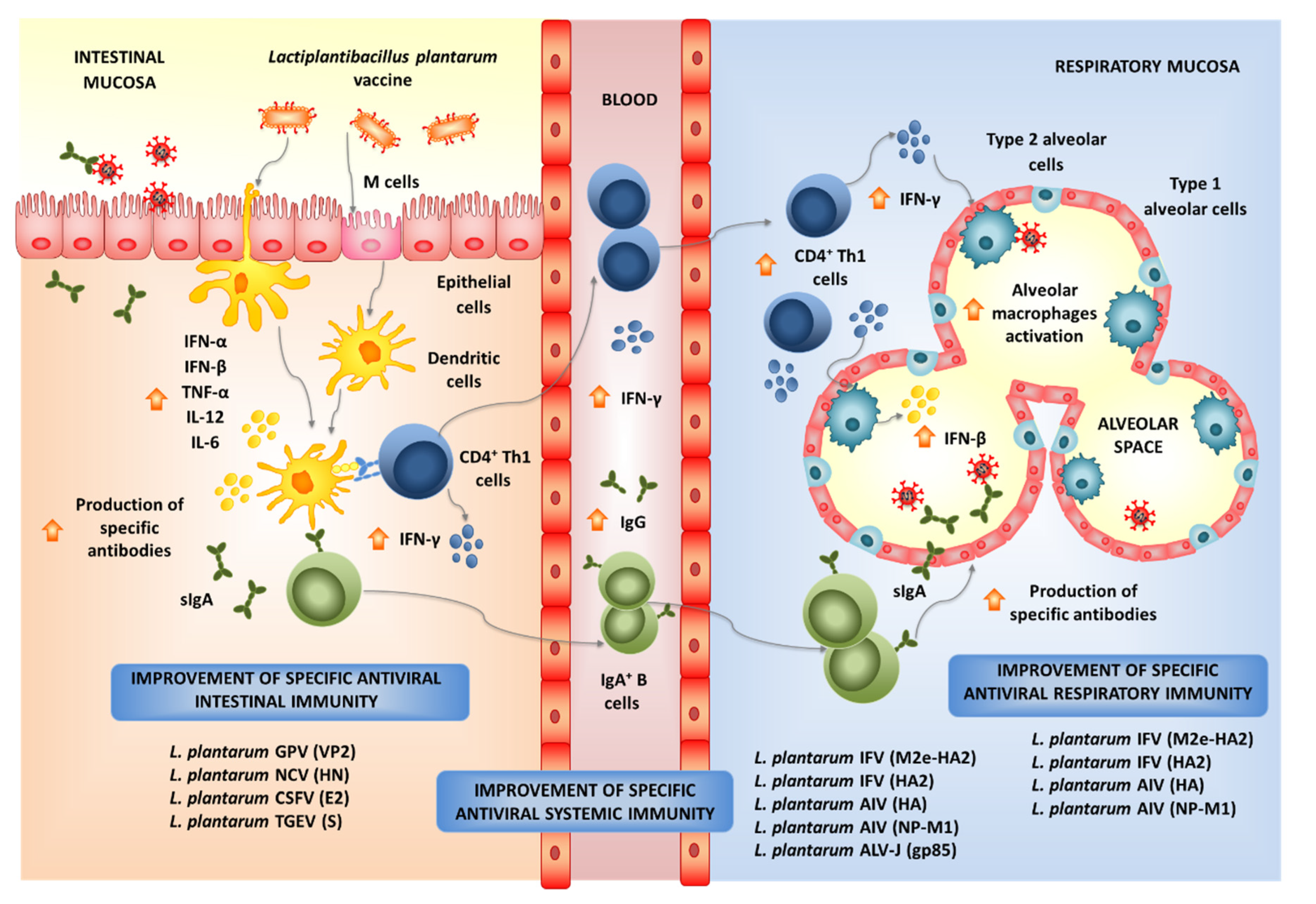
Notably, experimental L. plantarum-based vaccines have been shown to induce local as well as distal specific immunity when orally administered (Figure 5). The immunogenicity of a recombinant L. plantarum expressing the goose parvovirus (GPV) VP2 antigen was evaluated in BALB/c mice [148]. Mice were orally immunized with the recombinant lactobacilli had a remarkable production of specific IgA in the intestinal mucosa. In addition, the work also described the induction of specific cellular immunity, as demonstrated by the increased levels of TNF-α and IFN-γ by the in vitro stimulation of splenocytes with the recombinant VP2-GPV protein when compared to controls. Chickens orally immunized with the recombinant L. plantarum expressing the HN-DCpep of NDV produced both serum anti-HI antibodies and specific intestinal IgA, and had significantly higher proliferation rates of splenic T cells upon HI challenge when compared to control animals [132]. Of note, the resistance of chickens to NDV infection was improved by the immunization protocol. Similarly, the intragastric immunization of chickens with the recombinant L. plantarum strain expressing the gp85 protein of the J Avian Leukosis Virus (ALV-J) induced the production of specific serum IgG and intestinal IgA antibodies [141]. Moreover, this immunization treatment significantly reduced the ALV-J viremia when compared with the control groups. The E2 protein of the classical swine fever virus (CSFV) was expressed in L. plantarum and the recombinant bacteria was used to immunize pigs by the oral route [149]. The immunization of animals induced the production of specific serum IgG and intestinal IgA as well as specific cytotoxic responses against CSFV. Furthermore, a virus challenge experiment demonstrated the ability of L. plantarum E2-CSFV to improve the protection pigs against viral infection as demonstrated by their higher survival rates and lower severity of the symptoms.
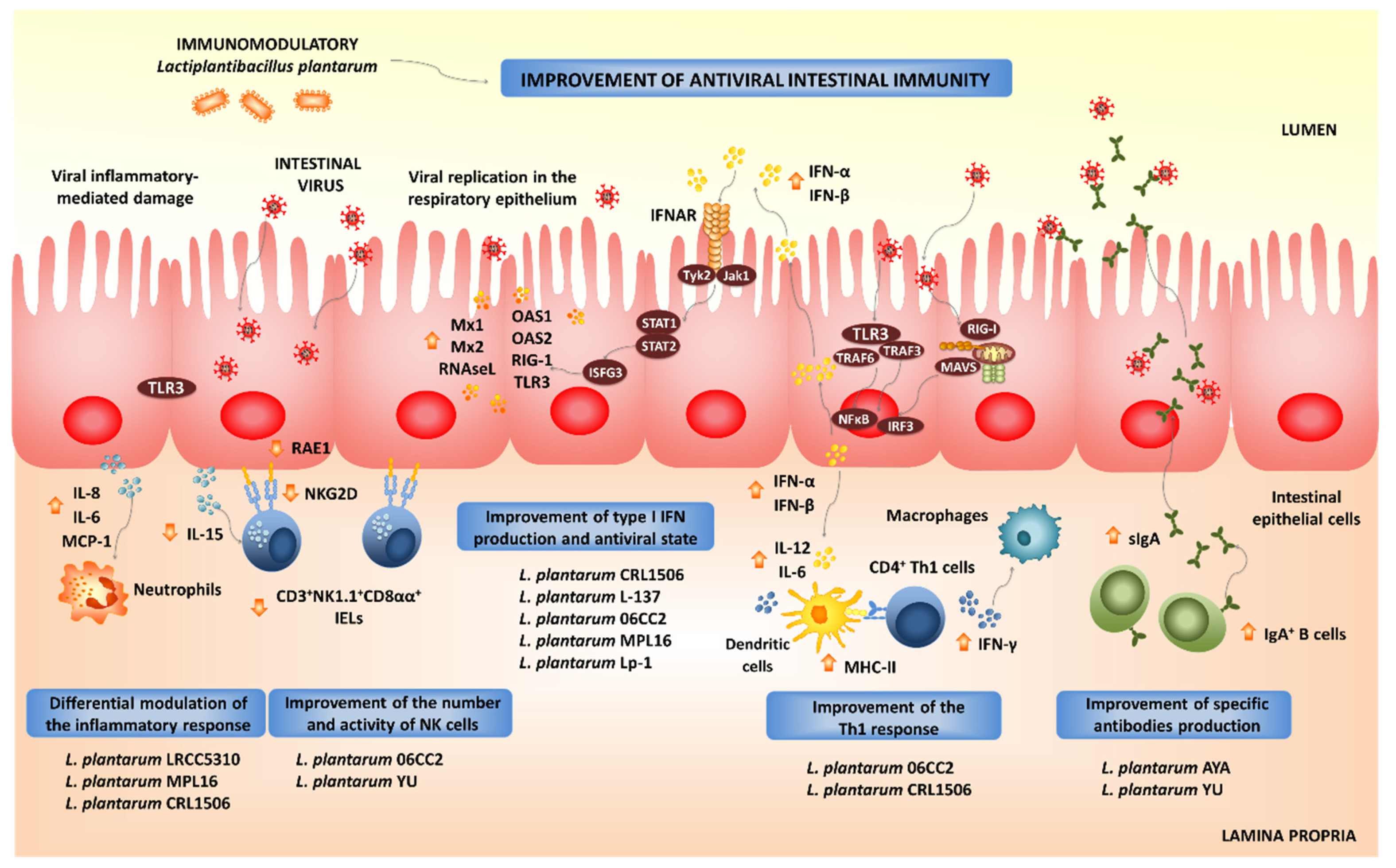
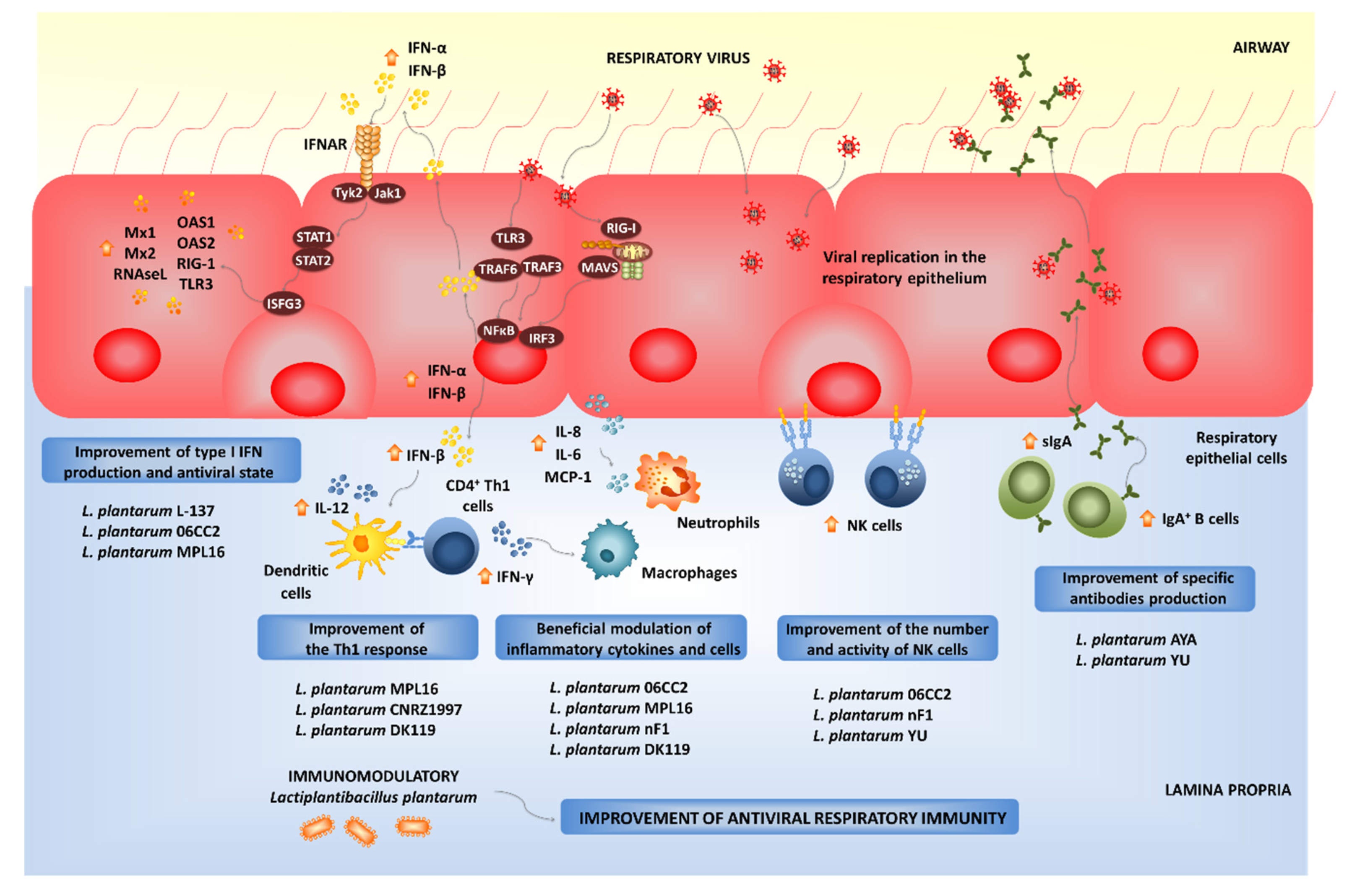
Figure 5.
Beneficial effects of orally administered recombinant Lactiplantibacillus plantarum strains on the resistance and immune responses against virus in the intestinal and respiratory tissues.
The ability of orally administered recombinant L. plantarum to improve immune responses in distal mucosal sites was studied mainly with the viral pathogen IFV (Figure 5). An L. plantarum strain expressing the hemagglutinin (HA) of the IFV was constructed and the capacity of the recombinant strain to induce specific immunity and protect against the viral infection were evaluated in BALB/c mice [150]. The oral immunization of mice induced the production of specific serum IgG as well as anti-HA IgA antibodies in both the intestinal mucosa and the respiratory tract. The induction of mucosal and systemic effective B cell responses was further demonstrated by the increased levels of FAS+PNA+B220+ B cells in Payer’s patches, mesenteric lymphoid nodes and spleen. The oral immunization with the recombinant lactobacilli generated specific cellular immune responses, as shown by the enhanced cell proliferation rates and IFN-γ production by T cells in the lymphoid nodes and spleen upon restimulation with the HA antigen. Interestingly, the orally administered L. plantarum HA-IFV significantly improved the protection of mice against the intranasal challenge with IFV. Immunized mice had lower weight loss, mortality, respiratory virus titers and lung pathology when compared to controls. Those beneficial effects were later improved by expressing a HA-DCpep in L. plantarum [151]. Similarly, a recombinant L. plantarum expressing the NP-M1-DCpep of IFV was capable of inducing specific systemic and mucosal immunity and protecting mice against the viral challenge after its oral administration [152]. In order to improve protection against different subtypes of IFV, recombinant lactobacilli expressing the fusion of two viral antigens were developed. Chickens orally immunized with a recombinant L. plantarum, expressing the fusion M2e and HA2 antigens from IFV were protected against the pathogen as shown by the decreased pulmonary virus titers and reduced lung and throat pathological damages after the infectious challenge [153]. The oral immunization of mice with L. plantarum, expressing the fusion antigen HA2 and 3M2e from IFV, stimulated mucosal and systemic specific immunity, increasing the resistance of mice to the respiratory challenge whit the viral pathogen [154].
These works showed that the oral administration of recombinant L. plantarum strains can offer protection against infection by gastrointestinal and respiratory virus by enhancing specific immunity. This strategy is extremely interesting to improve resistance against viruses that can efficiently replicate and infect both mucosal tissues (intestinal and respiratory), such as SARS-CoV-2.
The Successful Expression of SARS-CoV-2 Antigen in L. plantarum
As mentioned before, more than 180 vaccines are being developed at various stages, including inactivated vaccines, live-virus vaccines, recombinant protein vaccines, DNA or mRNA vaccines and vector-based vaccines [155]. As the S protein of the SARS-CoV-2 is the main antigen with the ability to interact with the host ACE2 initiating viral infection, the S protein has been the main antigenic target for vaccines against the virus [155,156]. As mentioned before, SARS-CoV-2 infection can induce both mucosal and systemic antibody responses, with high specific IgA in upper respiratory tract and intestinal tract of severe- and mild-COVID-19 patients [155,157], suggesting mucosal immune response plays critical role against the virus infection. Therefore, the display and presentation of the viral S protein in upper respiratory tract and the intestinal tract may induce effective mucosal immune response against SARS-CoV-2, which would be capable of reducing the severity of the disease and avoid viral dissemination.
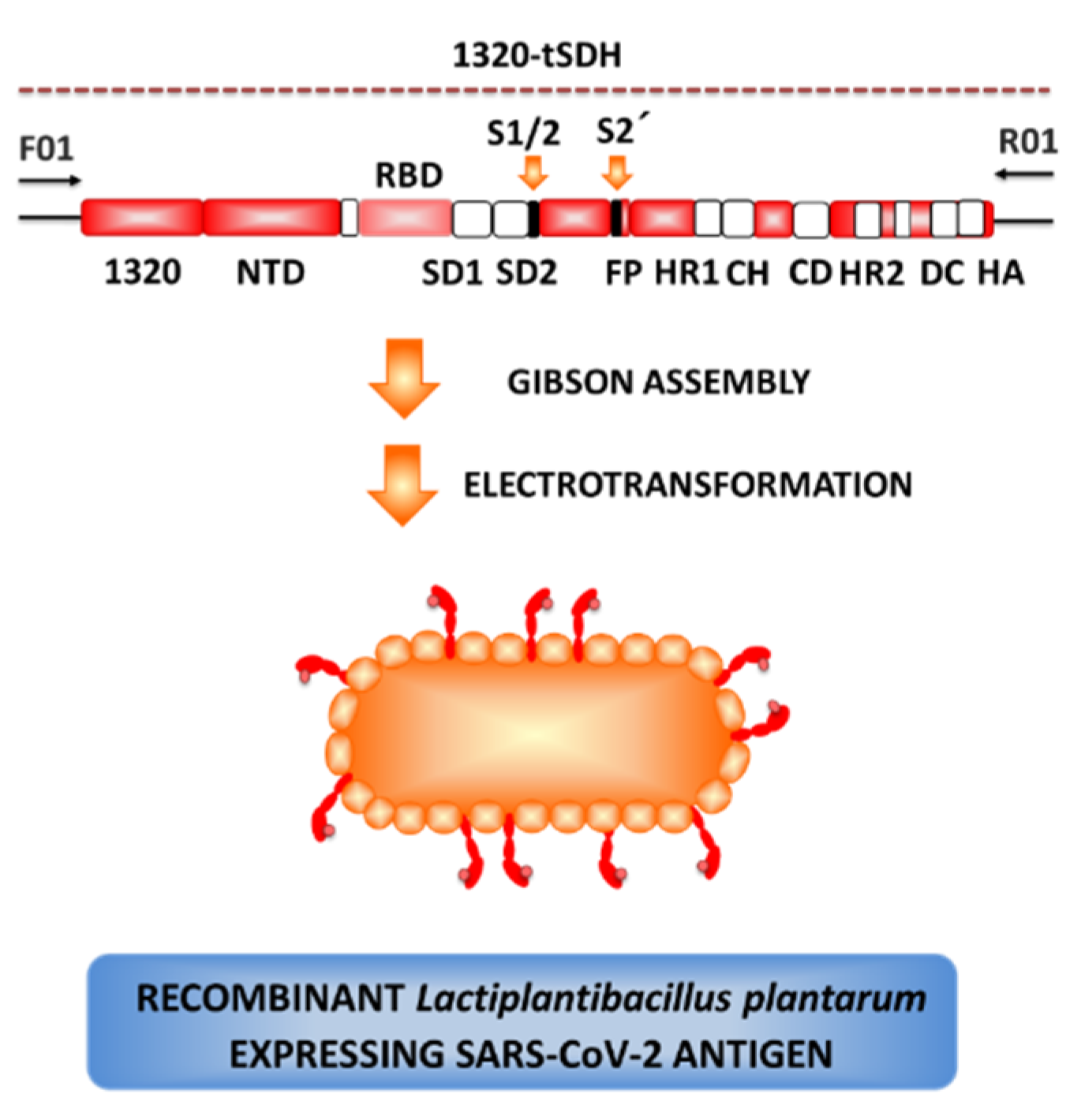
We previously demonstrated that L. plantarum LP18 (also named CGMCC 1.557) is a promising immunobiotic strain due to its high adhesion to intestinal cells and its remarkable immunoregulatory functions [138,158,159,160]. Then, a recombinant L. plantarum LP18, which can display the S protein of SARS-CoV-2 on the bacterial surface, was constructed by fusing sequences of the endogenous signal peptide at the 5′ terminus and the target peptide DCpep at the 3′ terminus of the optimized S gene (Figure 6) [161]. The in vivo evaluation of this experimental vaccine has shown that the antigen displayed by L. plantarum can significantly stimulate the mucosal immune response against SARS-CoV-2 infection (unpublished data), further emphasizing that the mucosal-targeted vaccines based on recombinant L. plantarum is a promising candidate vaccine for COVID-19. The evaluation of the effectiveness and safety of the recombinant L. plantarum is still in progress.
Figure 6.
Schematic diagram of the construction of the recombinant Lactiplantibacillus plantarum strain expressing the SARS-CoV-2 spike protein. Modified from Wang et al. [161].
6. Conclusions
Generally, systemic vaccination through the subcutaneous, intramuscular or intraperitoneal routes are not capable to induce specific mucosal immunity. Then, the host’s adaptive immune system can only fight the pathogenic microorganisms after they have gained entry into deeper tissues of the body. Thus, the development of vaccines that stimulate both the mucosal and systemic immune systems rather than only inducing a specific systemic immune response would be remarkably advantageous to control pathogens at their point of entry. With this strategy, it would be possible not only to avoid the symptoms associated with infections of the mucosal tissues but also to avoid the spread of the pathogen. These general considerations of systemic vaccines seem to apply to almost all the vaccines in development or in use intended to combat COVID-19.
The induction of mucosal immunity initiates by antigens being taken up by local antigen-presenting cells such as DCs. In the gut, antigens are processed by intestinal DCs, which then migrate to the mesenteric lymph nodes and stimulate the induction of antigen-specific T and B lymphocytes. Upon activation, antigen-specific lymphocytes undergo proliferation and differentiation and exit the mesenteric lymph node via the efferent lymph, and via the thoracic cavity, they can enter into the blood circulation. In this way, the majority of activated antigen-specific T and B lymphocytes come back to the intestinal mucosa. Interestingly, a portion of these activated immune cells is capable to reach mucosal tissues distant from the local intestinal mucosa such as the respiratory tract. The induction of effector and/or memory T and B cells in the intestinal and respiratory tracts by oral immunizations would be tremendously valuable for the protection against pathogens capable of replicating in both mucosal tissues. Although SARS-CoV-2 replicates and affects mainly the respiratory tract mucosa, clinical and experimental works have demonstrated the ability of this virus to infect the gastrointestinal tract. Reports have indicated that a notable proportion of patients with COVID-19 develop gastrointestinal symptoms, while nearly half of patients confirmed to have COVID-19 have shown detectable SARS-CoV-2 RNA in their fecal samples [162]. In addition, multiple in vitro and in vivo animal studies have provided direct evidence of intestinal infection by SARS-CoV-2 [162]. Therefore, while the investigations of the impact of the virus on the intestinal mucosa are progressing, the design of a mucosal vaccine based on immunomodulatory LAB that can induce protective immunity in both the intestinal and respiratory tracts would be of great importance to advance in the fight against SARS-CoV-2.
The hostile environment of the gastrointestinal tract, which includes the stomach extreme pH and the intestinal protease-rich environments, can severely affect the immunogenicity of ingested antigens. In addition, the gastrointestinal immune system has the propensity to respond with tolerance to oral antigens rather than inducing effector immune responses. These characteristics have made the generation of efficient oral vaccines extremely challenging, due to the difficulty of finding appropriate antigen delivery systems and adjuvants that efficiently stimulate mucosal immunity.
As reviewed here, the biotechnological and immunological research of the last decades has demonstrated the potential of L. plantarum to be used in the generation of mucosal vaccines. Nowadays, it is possible to express heterologous proteins in LAB, such as the SARS-CoV-2 spike protein in L. plantarum. Other recombinant L. plantarum strains were proven to induce protective immune responses in the gut when used in oral immunizations, highlighting the capacity of the bacterium to protect the expressed antigens from the hostile gastrointestinal environment. In addition, significant progress has been made in the understanding of the cellular and molecular mechanisms involved in the improvement of mucosal antiviral defenses by beneficial L. plantarum strains, which would allow in the near future the improvement of the recombinant lactobacillus-based vaccines design to increase their efficiency. Furthermore, studies have shown the ability of immunobiotic and recombinant L. plantarum strains to stimulate the common mucosal immune system allowing the induction of protective immunity not only in the gut but also in the respiratory tract after their oral administration. These scientific advances clearly indicate the potential of L. plantarum to be used in the development of a mucosal COVID-19 vaccine, which could be used as a complement to the current systemic vaccines, to ameliorate the symptoms associated with mucosal infections and collaborate in reducing the spread of SARS-CoV-2.
Author Contributions
Conceptualization, writing—original draft preparation, visualization and funding acquisition: J.V., C.L., M.G.V.-P., J.S., L.R. and H.K. All authors have read and agreed to the published version of the manuscript.
Funding
This work was financially supported by the National Key Research and Development Program of China (No. 2017YFD0501002), the Changchun Science and Technology Bureau emergency project [No. 2020RW002]. This work was also supported by a Grant-in-Aid for Scientific Research (A) (19H00965) from the Japan Society for the Promotion of Science (JSPS) and by grants from the project of NARO Bio-oriented Technology Research Advancement Institution (research program on the development of innovative technology, No. 01002A) to H.K., and by the Tohoku University Research Program “Frontier Research in Duo” (FRiD). This work was also supported by JSPS Core-to-Core Program, A. Advanced Research Networks entitled Establishment of international agricultural immunology research-core for a quantum improvement in food safety.
Institutional Review Board Statement
Not applicable.
Informed Consent Statement
Not applicable.
Data Availability Statement
Not applicable.
Conflicts of Interest
The authors declare no conflict of interest.
References
- de Wit, E.; van Doremalen, N.; Falzarano, D.; Munster, V.J. SARS and MERS: Recent insights into emerging coronaviruses. Nat. Rev. Microbiol. 2016, 14, 523–534. [Google Scholar] [CrossRef]
- WHO. Weekly Operational Update on COVID-19-1. February 2021. Available online: https://www.who.int/publications/m/item/weekly-operational-update-on-covid-19 (accessed on 1 February 2021).
- Jeyanathan, M.; Afkhami, S.; Smaill, F.; Miller, M.S.; Lichty, B.D.; Xing, Z. Immunological considerations for COVID-19 vaccine strategies. Nat. Rev. Immunol. 2020, 20, 615–632. [Google Scholar] [CrossRef]
- Frederiksen, L.S.F.; Zhang, Y.; Foged, C.; Thakur, A. The Long Road Toward COVID-19 Herd Immunity: Vaccine Platform Technologies and Mass Immunization Strategies. Front. Immunol. 2020, 11, 1817. [Google Scholar] [CrossRef]
- Moore, J.P.; Klasse, P.J. COVID-19 Vaccines:’’Warp Speed’’ Needs Mind Melds, Not Warped Minds. J. Virol. 2020, 94. [Google Scholar] [CrossRef]
- Wu, Y.; Guo, C.; Tang, L.; Hong, Z.; Zhou, J.; Dong, X.; Yin, H.; Xiao, Q.; Tang, Y.; Qu, X.; et al. Prolonged presence of SARS-CoV-2 viral RNA in faecal samples. Lancet Gastroenterol. Hepatol. 2020, 5, 434–435. [Google Scholar] [CrossRef]
- Xu, Y.; Li, X.; Zhu, B.; Liang, H.; Fang, C.; Gong, Y.; Guo, Q.; Sun, X.; Zhao, D.; Shen, J.; et al. Characteristics of pediatric SARS-CoV-2 infection and potential evidence for persistent fecal viral shedding. Nat. Med. 2020, 26, 502–505. [Google Scholar] [CrossRef] [PubMed]
- Li, M.; Wang, Y.; Sun, Y.; Cui, H.; Zhu, S.J.; Qiu, H.J. Mucosal vaccines: Strategies and challenges. Immunol. Lett. 2020, 217, 116–125. [Google Scholar] [CrossRef] [PubMed]
- Medina, M.; Vintini, E.; Villena, J.; Raya, R.; Alvarez, S. Lactococcus lactis as an adjuvant and delivery vehicle of antigens against pneumococcal respiratory infections. Bioeng. Bugs 2010, 1, 313–325. [Google Scholar] [CrossRef] [PubMed]
- Villena, J.; Oliveira, M.L.; Ferreira, P.C.; Salva, S.; Alvarez, S. Lactic acid bacteria in the prevention of pneumococcal respiratory infection: Future opportunities and challenges. Int. Immunopharmacol. 2011, 11, 1633–1645. [Google Scholar] [CrossRef]
- Astuti, I.; Ysrafil. Severe Acute Respiratory Syndrome Coronavirus 2 (SARS-CoV-2): An overview of viral structure and host response. Diabetes Metab. Syndr. 2020, 14, 407–412. [Google Scholar] [CrossRef]
- Wang, Q.; Zhang, Y.; Wu, L.; Niu, S.; Song, C.; Zhang, Z.; Lu, G.; Qiao, C.; Hu, Y.; Yuen, K.Y.; et al. Structural and Functional Basis of SARS-CoV-2 Entry by Using Human ACE2. Cell 2020, 181, 894–904.e899. [Google Scholar] [CrossRef]
- Hamming, I.; Timens, W.; Bulthuis, M.L.; Lely, A.T.; Navis, G.; van Goor, H. Tissue distribution of ACE2 protein, the functional receptor for SARS coronavirus. A first step in understanding SARS pathogenesis. J. Pathol. 2004, 203, 631–637. [Google Scholar] [CrossRef] [PubMed]
- Bourgonje, A.R.; Abdulle, A.E.; Timens, W.; Hillebrands, J.L.; Navis, G.J.; Gordijn, S.J.; Bolling, M.C.; Dijkstra, G.; Voors, A.A.; Osterhaus, A.D.; et al. Angiotensin-converting enzyme 2 (ACE2), SARS-CoV-2 and the pathophysiology of coronavirus disease 2019 (COVID-19). J. Pathol. 2020, 251, 228–248. [Google Scholar] [CrossRef]
- Chan, J.F.; Yuan, S.; Kok, K.H.; To, K.K.; Chu, H.; Yang, J.; Xing, F.; Liu, J.; Yip, C.C.; Poon, R.W.; et al. A familial cluster of pneumonia associated with the 2019 novel coronavirus indicating person-to-person transmission: A study of a family cluster. Lancet 2020, 395, 514–523. [Google Scholar] [CrossRef]
- Prompetchara, E.; Ketloy, C.; Palaga, T. Immune responses in COVID-19 and potential vaccines: Lessons learned from SARS and MERS epidemic. Asian Pac. J. Allergy Immunol. 2020, 38, 1–9. [Google Scholar] [CrossRef] [PubMed]
- Bertram, S.; Heurich, A.; Lavender, H.; Gierer, S.; Danisch, S.; Perin, P.; Lucas, J.M.; Nelson, P.S.; Pohlmann, S.; Soilleux, E.J. Influenza and SARS-coronavirus activating proteases TMPRSS2 and HAT are expressed at multiple sites in human respiratory and gastrointestinal tracts. PLoS ONE 2012, 7, e35876. [Google Scholar] [CrossRef] [PubMed]
- Dobbs, L.G. Pulmonary surfactant. Annu. Rev. Med. 1989, 40, 431–446. [Google Scholar] [CrossRef]
- Sungnak, W.; Huang, N.; Becavin, C.; Berg, M.; Queen, R.; Litvinukova, M.; Talavera-Lopez, C.; Maatz, H.; Reichart, D.; Sampaziotis, F.; et al. SARS-CoV-2 entry factors are highly expressed in nasal epithelial cells together with innate immune genes. Nat. Med. 2020, 26, 681–687. [Google Scholar] [CrossRef]
- Ziegler, C.G.K.; Allon, S.J.; Nyquist, S.K.; Mbano, I.M.; Miao, V.N.; Tzouanas, C.N.; Cao, Y.; Yousif, A.S.; Bals, J.; Hauser, B.M.; et al. SARS-CoV-2 Receptor ACE2 Is an Interferon-Stimulated Gene in Human Airway Epithelial Cells and Is Detected in Specific Cell Subsets across Tissues. Cell 2020, 181, 1016–1035.e1019. [Google Scholar] [CrossRef]
- Zhu, N.; Zhang, D.; Wang, W.; Li, X.; Yang, B.; Song, J.; Zhao, X.; Huang, B.; Shi, W.; Lu, R.; et al. A Novel Coronavirus from Patients with Pneumonia in China, 2019. N. Engl. J. Med. 2020, 382, 727–733. [Google Scholar] [CrossRef]
- Cooper, K.W.; Brann, D.H.; Farruggia, M.C.; Bhutani, S.; Pellegrino, R.; Tsukahara, T.; Weinreb, C.; Joseph, P.V.; Larson, E.D.; Parma, V.; et al. COVID-19 and the Chemical Senses: Supporting Players Take Center Stage. Neuron 2020, 107, 219–233. [Google Scholar] [CrossRef]
- Walsh, K.A.; Jordan, K.; Clyne, B.; Rohde, D.; Drummond, L.; Byrne, P.; Ahern, S.; Carty, P.G.; O’Brien, K.K.; O’Murchu, E.; et al. SARS-CoV-2 detection, viral load and infectivity over the course of an infection. J. Infect. 2020, 81, 357–371. [Google Scholar] [CrossRef]
- Li, Y.; Renner, D.M.; Comar, C.E.; Whelan, J.N.; Reyes, H.M.; Cardenas-Diaz, F.L.; Truitt, R.; Tan, L.H.; Dong, B.; Alysandratos, K.D.; et al. SARS-CoV-2 induces double-stranded RNA-mediated innate immune responses in respiratory epithelial derived cells and cardiomyocytes. bioRxiv 2020. [Google Scholar] [CrossRef]
- Huang, C.F.; Sun, P.T.; Tay, C.K. Bronchiolitis and Potential Pathophysiological Implications in Coronavirus Disease 2019 Acute Respiratory Distress Syndrome Patients With Near-Normal Respiratory Compliance. Crit. Care Med. 2020, 48, e993–e994. [Google Scholar] [CrossRef]
- Leung, W.K.; To, K.F.; Chan, P.K.; Chan, H.L.; Wu, A.K.; Lee, N.; Yuen, K.Y.; Sung, J.J. Enteric involvement of severe acute respiratory syndrome-associated coronavirus infection. Gastroenterology 2003, 125, 1011–1017. [Google Scholar] [CrossRef] [PubMed]
- Hung, I.F.; Cheng, V.C.; Wu, A.K.; Tang, B.S.; Chan, K.H.; Chu, C.M.; Wong, M.M.; Hui, W.T.; Poon, L.L.; Tse, D.M.; et al. Viral loads in clinical specimens and SARS manifestations. Emerg. Infect. Dis. 2004, 10, 1550–1557. [Google Scholar] [CrossRef] [PubMed]
- Lee, N.; Hui, D.; Wu, A.; Chan, P.; Cameron, P.; Joynt, G.M.; Ahuja, A.; Yung, M.Y.; Leung, C.B.; To, K.F.; et al. A major outbreak of severe acute respiratory syndrome in Hong Kong. N. Engl. J. Med. 2003, 348, 1986–1994. [Google Scholar] [CrossRef] [PubMed]
- Cheng, V.C.; Hung, I.F.; Tang, B.S.; Chu, C.M.; Wong, M.M.; Chan, K.H.; Wu, A.K.; Tse, D.M.; Chan, K.S.; Zheng, B.J.; et al. Viral replication in the nasopharynx is associated with diarrhea in patients with severe acute respiratory syndrome. Clin. Infect. Dis. 2004, 38, 467–475. [Google Scholar] [CrossRef]
- Liu, C.L.; Lu, Y.T.; Peng, M.J.; Chen, P.J.; Lin, R.L.; Wu, C.L.; Kuo, H.T. Clinical and laboratory features of severe acute respiratory syndrome vis-a-vis onset of fever. Chest 2004, 126, 509–517. [Google Scholar] [CrossRef]
- Zhou, J.; Li, C.; Zhao, G.; Chu, H.; Wang, D.; Yan, H.H.; Poon, V.K.; Wen, L.; Wong, B.H.; Zhao, X.; et al. Human intestinal tract serves as an alternative infection route for Middle East respiratory syndrome coronavirus. Sci. Adv. 2017, 3, eaao4966. [Google Scholar] [CrossRef] [PubMed]
- Chan, J.F.; Lau, S.K.; To, K.K.; Cheng, V.C.; Woo, P.C.; Yuen, K.Y. Middle East respiratory syndrome coronavirus: Another zoonotic betacoronavirus causing SARS-like disease. Clin. Microbiol. Rev. 2015, 28, 465–522. [Google Scholar] [CrossRef] [PubMed]
- Xiao, F.; Tang, M.; Zheng, X.; Liu, Y.; Li, X.; Shan, H. Evidence for Gastrointestinal Infection of SARS-CoV-2. Gastroenterology 2020, 158, 1831–1833.e1833. [Google Scholar] [CrossRef]
- Harmer, D.; Gilbert, M.; Borman, R.; Clark, K.L. Quantitative mRNA expression profiling of ACE 2, a novel homologue of angiotensin converting enzyme. Febs. Lett. 2002, 532, 107–110. [Google Scholar] [CrossRef]
- Zhao, D.; Yao, F.; Wang, L.; Zheng, L.; Gao, Y.; Ye, J.; Guo, F.; Zhao, H.; Gao, R. A Comparative Study on the Clinical Features of Coronavirus 2019 (COVID-19) Pneumonia With Other Pneumonias. Clin. Infect. Dis. 2020, 71, 756–761. [Google Scholar] [CrossRef]
- Holshue, M.L.; DeBolt, C.; Lindquist, S.; Lofy, K.H.; Wiesman, J.; Bruce, H.; Spitters, C.; Ericson, K.; Wilkerson, S.; Tural, A.; et al. First Case of 2019 Novel Coronavirus in the United States. N. Engl. J. Med. 2020, 382, 929–936. [Google Scholar] [CrossRef] [PubMed]
- Tang, A.; Tong, Z.D.; Wang, H.L.; Dai, Y.X.; Li, K.F.; Liu, J.N.; Wu, W.J.; Yuan, C.; Yu, M.L.; Li, P.; et al. Detection of Novel Coronavirus by RT-PCR in Stool Specimen from Asymptomatic Child, China. Emerg. Infect. Dis. 2020, 26, 1337–1339. [Google Scholar] [CrossRef] [PubMed]
- Zhang, W.; Du, R.H.; Li, B.; Zheng, X.S.; Yang, X.L.; Hu, B.; Wang, Y.Y.; Xiao, G.F.; Yan, B.; Shi, Z.L.; et al. Molecular and serological investigation of 2019-nCoV infected patients: Implication of multiple shedding routes. Emerg. Microbes. Infect. 2020, 9, 386–389. [Google Scholar] [CrossRef]
- Guan, W.J.; Ni, Z.Y.; Hu, Y.; Liang, W.H.; Ou, C.Q.; He, J.X.; Liu, L.; Shan, H.; Lei, C.L.; Hui, D.S.C.; et al. Clinical Characteristics of Coronavirus Disease 2019 in China. N. Engl. J. Med. 2020, 382, 1708–1720. [Google Scholar] [CrossRef]
- Wong, S.H.; Lui, R.N.; Sung, J.J. Covid-19 and the digestive system. J. Gastroenterol. Hepatol. 2020, 35, 744–748. [Google Scholar] [CrossRef]
- Wang, D.; Hu, B.; Hu, C.; Zhu, F.; Liu, X.; Zhang, J.; Wang, B.; Xiang, H.; Cheng, Z.; Xiong, Y.; et al. Clinical Characteristics of 138 Hospitalized Patients With 2019 Novel Coronavirus-Infected Pneumonia in Wuhan, China. JAMA 2020, 323, 1061–1069. [Google Scholar] [CrossRef]
- Zhang, J.J.; Dong, X.; Cao, Y.Y.; Yuan, Y.D.; Yang, Y.B.; Yan, Y.Q.; Akdis, C.A.; Gao, Y.D. Clinical characteristics of 140 patients infected with SARS-CoV-2 in Wuhan, China. Allergy 2020, 75, 1730–1741. [Google Scholar] [CrossRef]
- Yu, I.T.; Li, Y.; Wong, T.W.; Tam, W.; Chan, A.T.; Lee, J.H.; Leung, D.Y.; Ho, T. Evidence of airborne transmission of the severe acute respiratory syndrome virus. N. Engl. J. Med. 2004, 350, 1731–1739. [Google Scholar] [CrossRef] [PubMed]
- Jamilloux, Y.; Henry, T.; Belot, A.; Viel, S.; Fauter, M.; El Jammal, T.; Walzer, T.; Francois, B.; Seve, P. Should we stimulate or suppress immune responses in COVID-19? Cytokine and anti-cytokine interventions. Autoimmun. Rev. 2020, 19, 102567. [Google Scholar] [CrossRef]
- Merad, M.; Martin, J.C. Pathological inflammation in patients with COVID-19: A key role for monocytes and macrophages. Nat. Rev. Immunol. 2020, 20, 355–362. [Google Scholar] [CrossRef] [PubMed]
- Tay, M.Z.; Poh, C.M.; Renia, L.; MacAry, P.A.; Ng, L.F.P. The trinity of COVID-19: Immunity, inflammation and intervention. Nat. Rev. Immunol. 2020, 20, 363–374. [Google Scholar] [CrossRef] [PubMed]
- Neyt, K.; Lambrecht, B.N. The role of lung dendritic cell subsets in immunity to respiratory viruses. Immunol. Rev. 2013, 255, 57–67. [Google Scholar] [CrossRef] [PubMed]
- Garbi, N.; Lambrecht, B.N. Location, function, and ontogeny of pulmonary macrophages during the steady state. Pflügers Arch. 2017, 469, 561–572. [Google Scholar] [CrossRef]
- Blanco-Melo, D.; Nilsson-Payant, B.E.; Liu, W.C.; Uhl, S.; Hoagland, D.; Moller, R.; Jordan, T.X.; Oishi, K.; Panis, M.; Sachs, D.; et al. Imbalanced Host Response to SARS-CoV-2 Drives Development of COVID-19. Cell 2020, 181, 1036–1045.e1039. [Google Scholar] [CrossRef]
- Zhang, Q.; Bastard, P.; Liu, Z.; Le Pen, J.; Moncada-Velez, M.; Chen, J.; Ogishi, M.; Sabli, I.K.D.; Hodeib, S.; Korol, C.; et al. Inborn errors of type I IFN immunity in patients with life-threatening COVID-19. Science 2020, 370. [Google Scholar] [CrossRef] [PubMed]
- Hadjadj, J.; Yatim, N.; Barnabei, L.; Corneau, A.; Boussier, J.; Smith, N.; Pere, H.; Charbit, B.; Bondet, V.; Chenevier-Gobeaux, C.; et al. Impaired type I interferon activity and inflammatory responses in severe COVID-19 patients. Science 2020, 369, 718–724. [Google Scholar] [CrossRef]
- Arunachalam, P.S.; Wimmers, F.; Mok, C.K.P.; Perera, R.; Scott, M.; Hagan, T.; Sigal, N.; Feng, Y.; Bristow, L.; Tsang, O.T.-Y.; et al. Systems biological assessment of immunity to mild versus severe COVID-19 infection in humans. Science 2020, 369, 1210–1220. [Google Scholar] [CrossRef]
- Zhou, R.; To, K.K.; Wong, Y.C.; Liu, L.; Zhou, B.; Li, X.; Huang, H.; Mo, Y.; Luk, T.Y.; Lau, T.T.; et al. Acute SARS-CoV-2 Infection Impairs Dendritic Cell and T Cell Responses. Immunity 2020, 53, 864–877.e865. [Google Scholar] [CrossRef]
- Ong, E.Z.; Chan, Y.F.Z.; Leong, W.Y.; Lee, N.M.Y.; Kalimuddin, S.; Mohideen, S.M.H.; Chan, K.S.; Tan, A.T.; Bertoletti, A.; Ooi, E.E.; et al. A Dynamic Immune Response Shapes COVID-19 Progression. Cell Host Microbe 2020, 27, 879–882.e872. [Google Scholar] [CrossRef]
- Vabret, N.; Britton, G.J.; Gruber, C.; Hegde, S.; Kim, J.; Kuksin, M.; Levantovsky, R.; Malle, L.; Moreira, A.; Park, M.D.; et al. Immunology of COVID-19: Current State of the Science. Immunity 2020, 52, 910–941. [Google Scholar] [CrossRef] [PubMed]
- Qin, C.; Zhou, L.; Hu, Z.; Zhang, S.; Yang, S.; Tao, Y.; Xie, C.; Ma, K.; Shang, K.; Wang, W.; et al. Dysregulation of Immune Response in Patients With Coronavirus 2019 (COVID-19) in Wuhan, China. Clin. Infect. Dis. 2020, 71, 762–768. [Google Scholar] [CrossRef] [PubMed]
- Tan, M.; Liu, Y.; Zhou, R.; Deng, X.; Li, F.; Liang, K.; Shi, Y. Immunopathological characteristics of coronavirus disease 2019 cases in Guangzhou, China. Immunology 2020, 160, 261–268. [Google Scholar] [CrossRef] [PubMed]
- Huang, L.; Shi, Y.; Gong, B.; Jiang, L.; Liu, X.; Yang, J.; Tang, J.; You, C.; Jiang, Q.; Long, B.; et al. Blood single cell immune profiling reveals the interferon-MAPK pathway mediated adaptive immune response for COVID-19. medRxiv 2020. [Google Scholar] [CrossRef]
- Liao, M.; Liu, Y.; Yuan, J.; Wen, Y.; Xu, G.; Zhao, J.; Cheng, L.; Li, J.; Wang, X.; Wang, F.; et al. Single-cell landscape of bronchoalveolar immune cells in patients with COVID-19. Nat. Med. 2020, 26, 842–844. [Google Scholar] [CrossRef] [PubMed]
- Chen, X.; Ling, J.; Mo, P.; Zhang, Y.; Jiang, Q.; Ma, Z.; Cao, Q.; Hu, W.; Zou, S.; Chen, L.; et al. Restoration of leukomonocyte counts is associated with viral clearance in COVID-19 hospitalized patients. medRxiv 2020. [Google Scholar] [CrossRef]
- Zheng, M.; Gao, Y.; Wang, G.; Song, G.; Liu, S.; Sun, D.; Xu, Y.; Tian, Z. Functional exhaustion of antiviral lymphocytes in COVID-19 patients. Cell Mol. Immunol. 2020, 17, 533–535. [Google Scholar] [CrossRef]
- Feng, Z.; Diao, B.; Wang, R.; Wang, G.; Wang, C.; Tan, Y.; Liu, L.; Wang, C.; Liu, Y.; Liu, Y.; et al. The Novel Severe Acute Respiratory Syndrome Coronavirus 2 (SARS-CoV-2) Directly Decimates Human Spleens and Lymph Nodes. medRxiv 2020. [Google Scholar] [CrossRef]
- Liu, Q.; Wang, R.S.; Qu, G.Q.; Wang, Y.Y.; Liu, P.; Zhu, Y.Z.; Fei, G.; Ren, L.; Zhou, Y.W.; Liu, L. Gross examination report of a COVID-19 death autopsy. Fa Yi Xue Za Zhi 2020, 36, 21–23. [Google Scholar] [CrossRef]
- Pedersen, S.F.; Ho, Y.C. SARS-CoV-2: A storm is raging. J. Clin. Invest. 2020, 130, 2202–2205. [Google Scholar] [CrossRef]
- Ni, L.; Ye, F.; Cheng, M.L.; Feng, Y.; Deng, Y.Q.; Zhao, H.; Wei, P.; Ge, J.; Gou, M.; Li, X.; et al. Detection of SARS-CoV-2-Specific Humoral and Cellular Immunity in COVID-19 Convalescent Individuals. Immunity 2020, 52, 971–977.e973. [Google Scholar] [CrossRef] [PubMed]
- Zhou, Y.; Fu, B.; Zheng, X.; Wang, D.; Zhao, C.; Qi, Y.; Sun, R.; Tian, Z.; Xu, X.; Wei, H. Pathogenic T-cells and inflammatory monocytes incite inflammatory storms in severe COVID-19 patients. Natl. Sci. Rev. 2020, 7, 998–1002. [Google Scholar] [CrossRef]
- Amanat, F.; Stadlbauer, D.; Strohmeier, S.; Nguyen, T.H.O.; Chromikova, V.; McMahon, M.; Jiang, K.; Arunkumar, G.A.; Jurczyszak, D.; Polanco, J.; et al. A serological assay to detect SARS-CoV-2 seroconversion in humans. Nat. Med. 2020, 26, 1033–1036. [Google Scholar] [CrossRef] [PubMed]
- Ju, B.; Zhang, Q.; Ge, J.; Wang, R.; Sun, J.; Ge, X.; Yu, J.; Shan, S.; Zhou, B.; Song, S.; et al. Human neutralizing antibodies elicited by SARS-CoV-2 infection. Nature 2020, 584, 115–119. [Google Scholar] [CrossRef] [PubMed]
- Okba, N.M.A.; Muller, M.A.; Li, W.; Wang, C.; GeurtsvanKessel, C.H.; Corman, V.M.; Lamers, M.M.; Sikkema, R.S.; de Bruin, E.; Chandler, F.D.; et al. Severe Acute Respiratory Syndrome Coronavirus 2-Specific Antibody Responses in Coronavirus Disease Patients. Emerg. Infect. Dis. 2020, 26, 1478–1488. [Google Scholar] [CrossRef]
- Wolfel, R.; Corman, V.M.; Guggemos, W.; Seilmaier, M.; Zange, S.; Muller, M.A.; Niemeyer, D.; Jones, T.C.; Vollmar, P.; Rothe, C.; et al. Virological assessment of hospitalized patients with COVID-2019. Nature 2020, 581, 465–469. [Google Scholar] [CrossRef]
- Zhang, Y.; Xu, J.; Jia, R.; Yi, C.; Gu, W.; Liu, P.; Dong, X.; Zhou, H.; Shang, B.; Cheng, S.; et al. Protective humoral immunity in SARS-CoV-2 infected pediatric patients. Cell Mol. Immunol. 2020, 17, 768–770. [Google Scholar] [CrossRef]
- Chandrashekar, A.; Liu, J.; Martinot, A.J.; McMahan, K.; Mercado, N.B.; Peter, L.; Tostanoski, L.H.; Yu, J.; Maliga, Z.; Nekorchuk, M.; et al. SARS-CoV-2 infection protects against rechallenge in rhesus macaques. Science 2020, 369, 812–817. [Google Scholar] [CrossRef] [PubMed]
- Deng, W.; Bao, L.; Liu, J.; Xiao, C.; Liu, J.; Xue, J.; Lv, Q.; Qi, F.; Gao, H.; Yu, P.; et al. Primary exposure to SARS-CoV-2 protects against reinfection in rhesus macaques. Science 2020, 369, 818–823. [Google Scholar] [CrossRef]
- Afkhami, S.; Yao, Y.; Xing, Z. Methods and clinical development of adenovirus-vectored vaccines against mucosal pathogens. Mol. Ther. Methods Clin. Dev. 2016, 3, 16030. [Google Scholar] [CrossRef] [PubMed]
- Samrat, S.K.; Tharappel, A.M.; Li, Z.; Li, H. Prospect of SARS-CoV-2 spike protein: Potential role in vaccine and therapeutic development. Virus Res. 2020, 288, 198141. [Google Scholar] [CrossRef] [PubMed]
- Buchholz, U.J.; Bukreyev, A.; Yang, L.; Lamirande, E.W.; Murphy, B.R.; Subbarao, K.; Collins, P.L. Contributions of the structural proteins of severe acute respiratory syndrome coronavirus to protective immunity. Proc. Natl. Acad. Sci. USA 2004, 101, 9804–9809. [Google Scholar] [CrossRef]
- Jiang, S.; Hillyer, C.; Du, L. Neutralizing Antibodies against SARS-CoV-2 and Other Human Coronaviruses: (Trends in Immunology 41, 355-359; 2020). Trends Immunol. 2020, 41, 545. [Google Scholar] [CrossRef]
- Shen, C.; Wang, Z.; Zhao, F.; Yang, Y.; Li, J.; Yuan, J.; Wang, F.; Li, D.; Yang, M.; Xing, L.; et al. Treatment of 5 Critically Ill Patients With COVID-19 With Convalescent Plasma. JAMA 2020, 323, 1582–1589. [Google Scholar] [CrossRef]
- Grifoni, A.; Weiskopf, D.; Ramirez, S.I.; Mateus, J.; Dan, J.M.; Moderbacher, C.R.; Rawlings, S.A.; Sutherland, A.; Premkumar, L.; Jadi, R.S.; et al. Targets of T Cell Responses to SARS-CoV-2 Coronavirus in Humans with COVID-19 Disease and Unexposed Individuals. Cell 2020, 181, 1489–1501.e1415. [Google Scholar] [CrossRef] [PubMed]
- Ichinohe, T.; Pang, I.K.; Kumamoto, Y.; Peaper, D.R.; Ho, J.H.; Murray, T.S.; Iwasaki, A. Microbiota regulates immune defense against respiratory tract influenza A virus infection. Proc. Natl. Acad. Sci. USA 2011, 108, 5354–5359. [Google Scholar] [CrossRef]
- Abt, M.C.; Osborne, L.C.; Monticelli, L.A.; Doering, T.A.; Alenghat, T.; Sonnenberg, G.F.; Paley, M.A.; Antenus, M.; Williams, K.L.; Erikson, J.; et al. Commensal bacteria calibrate the activation threshold of innate antiviral immunity. Immunity 2012, 37, 158–170. [Google Scholar] [CrossRef] [PubMed]
- Villena, J.; Vizoso-Pinto, M.G.; Kitazawa, H. Intestinal Innate Antiviral Immunity and Immunobiotics: Beneficial Effects against Rotavirus Infection. Front. Immunol. 2016, 7, 563. [Google Scholar] [CrossRef]
- Bradley, K.C.; Finsterbusch, K.; Schnepf, D.; Crotta, S.; Llorian, M.; Davidson, S.; Fuchs, S.Y.; Staeheli, P.; Wack, A. Microbiota-Driven Tonic Interferon Signals in Lung Stromal Cells Protect from Influenza Virus Infection. Cell Rep. 2019, 28, 245–256.e244. [Google Scholar] [CrossRef]
- Zelaya, H.; Alvarez, S.; Kitazawa, H.; Villena, J. Respiratory Antiviral Immunity and Immunobiotics: Beneficial Effects on Inflammation-Coagulation Interaction during Influenza Virus Infection. Front. Immunol. 2016, 7, 633. [Google Scholar] [CrossRef]
- Villena, J.; Kitazawa, H. The Modulation of Mucosal Antiviral Immunity by Immunobiotics: Could They Offer Any Benefit in the SARS-CoV-2 Pandemic? Front. Physiol. 2020, 11, 699. [Google Scholar] [CrossRef] [PubMed]
- Mizuno, H.; Arce, L.; Tomotsune, K.; Albarracin, L.; Funabashi, R.; Vera, D.; Islam, M.A.; Vizoso-Pinto, M.G.; Takahashi, H.; Sasaki, Y.; et al. Lipoteichoic Acid Is Involved in the Ability of the Immunobiotic Strain Lactobacillus plantarum CRL1506 to Modulate the Intestinal Antiviral Innate Immunity Triggered by TLR3 Activation. Front. Immunol. 2020, 11, 571. [Google Scholar] [CrossRef] [PubMed]
- Albarracin, L.; Garcia-Castillo, V.; Masumizu, Y.; Indo, Y.; Islam, M.A.; Suda, Y.; Garcia-Cancino, A.; Aso, H.; Takahashi, H.; Kitazawa, H.; et al. Efficient Selection of New Immunobiotic Strains With Antiviral Effects in Local and Distal Mucosal Sites by Using Porcine Intestinal Epitheliocytes. Front. Immunol. 2020, 11, 543. [Google Scholar] [CrossRef] [PubMed]
- Albarracin, L.; Kobayashi, H.; Iida, H.; Sato, N.; Nochi, T.; Aso, H.; Salva, S.; Alvarez, S.; Kitazawa, H.; Villena, J. Transcriptomic Analysis of the Innate Antiviral Immune Response in Porcine Intestinal Epithelial Cells: Influence of Immunobiotic Lactobacilli. Front. Immunol. 2017, 8, 57. [Google Scholar] [CrossRef] [PubMed]
- Parashar, U.D.; Gibson, C.J.; Bresee, J.S.; Glass, R.I. Rotavirus and severe childhood diarrhea. Emerg. Infect. Dis. 2006, 12, 304–306. [Google Scholar] [CrossRef] [PubMed]
- Greenberg, H.B.; Estes, M.K. Rotaviruses: From pathogenesis to vaccination. Gastroenterology 2009, 136, 1939–1951. [Google Scholar] [CrossRef]
- Hosoya, S.; Villena, J.; Shimazu, T.; Tohno, M.; Fujie, H.; Chiba, E.; Shimosato, T.; Aso, H.; Suda, Y.; Kawai, Y.; et al. Immunobiotic lactic acid bacteria beneficially regulate immune response triggered by poly(I:C) in porcine intestinal epithelial cells. Vet. Res. 2011, 42, 111. [Google Scholar] [CrossRef]
- Ishizuka, T.; Kanmani, P.; Kobayashi, H.; Miyazaki, A.; Soma, J.; Suda, Y.; Aso, H.; Nochi, T.; Iwabuchi, N.; Xiao, J.Z.; et al. Immunobiotic Bifidobacteria Strains Modulate Rotavirus Immune Response in Porcine Intestinal Epitheliocytes via Pattern Recognition Receptor Signaling. PLoS ONE 2016, 11, e0152416. [Google Scholar] [CrossRef] [PubMed]
- Villena, J.; Chiba, E.; Vizoso-Pinto, M.G.; Tomosada, Y.; Takahashi, T.; Ishizuka, T.; Aso, H.; Salva, S.; Alvarez, S.; Kitazawa, H. Immunobiotic Lactobacillus rhamnosus strains differentially modulate antiviral immune response in porcine intestinal epithelial and antigen presenting cells. BMC Microbiol. 2014, 14, 126. [Google Scholar] [CrossRef]
- Morelli, M.; Ogden, K.M.; Patton, J.T. Silencing the alarms: Innate immune antagonism by rotavirus NSP1 and VP3. Virology 2015, 479–480, 75–84. [Google Scholar] [CrossRef] [PubMed]
- Tada, A.; Zelaya, H.; Clua, P.; Salva, S.; Alvarez, S.; Kitazawa, H.; Villena, J. Immunobiotic Lactobacillus strains reduce small intestinal injury induced by intraepithelial lymphocytes after Toll-like receptor 3 activation. Inflamm. Res. 2016, 65, 771–783. [Google Scholar] [CrossRef]
- Villena, J.; Chiba, E.; Tomosada, Y.; Salva, S.; Marranzino, G.; Kitazawa, H.; Alvarez, S. Orally administered Lactobacillus rhamnosus modulates the respiratory immune response triggered by the viral pathogen-associated molecular pattern poly(I:C). BMC Immunol. 2012, 13, 53. [Google Scholar] [CrossRef]
- Wang, K.; Ran, L.; Yan, T.; Niu, Z.; Kan, Z.; Zhang, Y.; Yang, Y.; Xie, L.; Huang, S.; Yu, Q.; et al. Anti-TGEV Miller Strain Infection Effect of Lactobacillus plantarum Supernatant Based on the JAK-STAT1 Signaling Pathway. Front. Microbiol. 2019, 10, 2540. [Google Scholar] [CrossRef]
- Allaire, J.M.; Crowley, S.M.; Law, H.T.; Chang, S.Y.; Ko, H.J.; Vallance, B.A. The Intestinal Epithelium: Central Coordinator of Mucosal Immunity. Trends Immunol. 2018, 39, 677–696. [Google Scholar] [CrossRef] [PubMed]
- Soderholm, A.T.; Pedicord, V.A. Intestinal epithelial cells: At the interface of the microbiota and mucosal immunity. Immunology 2019, 158, 267–280. [Google Scholar] [CrossRef]
- Kinoshita, N.; Hiroi, T.; Ohta, N.; Fukuyama, S.; Park, E.J.; Kiyono, H. Autocrine IL-15 mediates intestinal epithelial cell death via the activation of neighboring intraepithelial NK cells. J. Immunol. 2002, 169, 6187–6192. [Google Scholar] [CrossRef]
- Zhou, R.; Wei, H.; Sun, R.; Tian, Z. Recognition of double-stranded RNA by TLR3 induces severe small intestinal injury in mice. J. Immunol. 2007, 178, 4548–4556. [Google Scholar] [CrossRef]
- Zhou, R.; Wei, H.; Sun, R.; Zhang, J.; Tian, Z. NKG2D recognition mediates Toll-like receptor 3 signaling-induced breakdown of epithelial homeostasis in the small intestines of mice. Proc. Natl. Acad. Sci. USA 2007, 104, 7512–7515. [Google Scholar] [CrossRef]
- Kim, K.; Lee, G.; Thanh, H.D.; Kim, J.H.; Konkit, M.; Yoon, S.; Park, M.; Yang, S.; Park, E.; Kim, W. Exopolysaccharide from Lactobacillus plantarum LRCC5310 offers protection against rotavirus-induced diarrhea and regulates inflammatory response. J. Dairy Sci. 2018, 101, 5702–5712. [Google Scholar] [CrossRef] [PubMed]
- Shin, D.Y.; Yi, D.Y.; Jo, S.; Lee, Y.M.; Kim, J.H.; Kim, W.; Park, M.R.; Yoon, S.M.; Kim, Y.; Yang, S.; et al. Effect of a new Lactobacillus plantarum product, LRCC5310, on clinical symptoms and virus reduction in children with rotaviral enteritis. Medicine 2020, 99, e22192. [Google Scholar] [CrossRef] [PubMed]
- Le Bon, A.; Tough, D.F. Links between innate and adaptive immunity via type I interferon. Curr. Opin. Immunol. 2002, 14, 432–436. [Google Scholar] [CrossRef]
- Montoya, M.; Schiavoni, G.; Mattei, F.; Gresser, I.; Belardelli, F.; Borrow, P.; Tough, D.F. Type I interferons produced by dendritic cells promote their phenotypic and functional activation. Blood 2002, 99, 3263–3271. [Google Scholar] [CrossRef]
- Yoo, J.K.; Baker, D.P.; Fish, E.N. Interferon-beta modulates type 1 immunity during influenza virus infection. Antivir. Res. 2010, 88, 64–71. [Google Scholar] [CrossRef] [PubMed]
- Raya Tonetti, F.; Arce, L.; Salva, S.; Alvarez, S.; Takahashi, H.; Kitazawa, H.; Vizoso-Pinto, M.G.; Villena, J. Immunomodulatory Properties of Bacterium-Like Particles Obtained From Immunobiotic Lactobacilli: Prospects for Their Use as Mucosal Adjuvants. Front. Immunol. 2020, 11, 15. [Google Scholar] [CrossRef]
- Le Bon, A.; Schiavoni, G.; D’Agostino, G.; Gresser, I.; Belardelli, F.; Tough, D.F. Type i interferons potently enhance humoral immunity and can promote isotype switching by stimulating dendritic cells in vivo. Immunity 2001, 14, 461–470. [Google Scholar] [CrossRef]
- Takeda, S.; Takeshita, M.; Kikuchi, Y.; Dashnyam, B.; Kawahara, S.; Yoshida, H.; Watanabe, W.; Muguruma, M.; Kurokawa, M. Efficacy of oral administration of heat-killed probiotics from Mongolian dairy products against influenza infection in mice: Alleviation of influenza infection by its immunomodulatory activity through intestinal immunity. Int. Immunopharmacol. 2011, 11, 1976–1983. [Google Scholar] [CrossRef] [PubMed]
- Matsusaki, T.; Takeda, S.; Takeshita, M.; Arima, Y.; Tsend-Ayush, C.; Oyunsuren, T.; Sugita, C.; Yoshida, H.; Watanabe, W.; Kurokawa, M. Augmentation of T helper type 1 immune response through intestinal immunity in murine cutaneous herpes simplex virus type 1 infection by probiotic Lactobacillus plantarum strain 06CC2. Int. Immunopharmacol. 2016, 39, 320–327. [Google Scholar] [CrossRef]
- Lebeer, S.; Vanderleyden, J.; De Keersmaecker, S.C. Host interactions of probiotic bacterial surface molecules: Comparison with commensals and pathogens. Nat. Rev. Microbiol. 2010, 8, 171–184. [Google Scholar] [CrossRef]
- Chiba, E.; Tomosada, Y.; Vizoso-Pinto, M.G.; Salva, S.; Takahashi, T.; Tsukida, K.; Kitazawa, H.; Alvarez, S.; Villena, J. Immunobiotic Lactobacillus rhamnosus improves resistance of infant mice against respiratory syncytial virus infection. Int. Immunopharmacol. 2013, 17, 373–382. [Google Scholar] [CrossRef] [PubMed]
- Zelaya, H.; Tsukida, K.; Chiba, E.; Marranzino, G.; Alvarez, S.; Kitazawa, H.; Aguero, G.; Villena, J. Immunobiotic lactobacilli reduce viral-associated pulmonary damage through the modulation of inflammation-coagulation interactions. Int. Immunopharmacol. 2014, 19, 161–173. [Google Scholar] [CrossRef]
- Garcia-Castillo, V.; Tomokiyo, M.; Raya Tonetti, F.; Islam, M.A.; Takahashi, H.; Kitazawa, H.; Villena, J. Alveolar Macrophages Are Key Players in the Modulation of the Respiratory Antiviral Immunity Induced by Orally Administered Lacticaseibacillus rhamnosus CRL1505. Front. Immunol. 2020, 11, 568636. [Google Scholar] [CrossRef] [PubMed]
- Kechaou, N.; Chain, F.; Gratadoux, J.J.; Blugeon, S.; Bertho, N.; Chevalier, C.; Le Goffic, R.; Courau, S.; Molimard, P.; Chatel, J.M.; et al. Identification of one novel candidate probiotic Lactobacillus plantarum strain active against influenza virus infection in mice by a large-scale screening. Appl. Environ. Microbiol. 2013, 79, 1491–1499. [Google Scholar] [CrossRef] [PubMed]
- Hirose, Y.; Murosaki, S.; Yamamoto, Y.; Yoshikai, Y.; Tsuru, T. Daily intake of heat-killed Lactobacillus plantarum L-137 augments acquired immunity in healthy adults. J. Nutr. 2006, 136, 3069–3073. [Google Scholar] [CrossRef]
- Maeda, N.; Nakamura, R.; Hirose, Y.; Murosaki, S.; Yamamoto, Y.; Kase, T.; Yoshikai, Y. Oral administration of heat-killed Lactobacillus plantarum L-137 enhances protection against influenza virus infection by stimulation of type I interferon production in mice. Int. Immunopharmacol. 2009, 9, 1122–1125. [Google Scholar] [CrossRef]
- Arimori, Y.; Nakamura, R.; Hirose, Y.; Murosaki, S.; Yamamoto, Y.; Shidara, O.; Ichikawa, H.; Yoshikai, Y. Daily intake of heat-killed Lactobacillus plantarum L-137 enhances type I interferon production in healthy humans and pigs. Immunopharmacol. Immunotoxicol. 2012, 34, 937–943. [Google Scholar] [CrossRef]
- Hirose, Y.; Yamamoto, Y.; Yoshikai, Y.; Murosaki, S. Oral intake of heat-killed Lactobacillus plantarum L-137 decreases the incidence of upper respiratory tract infection in healthy subjects with high levels of psychological stress. J. Nutr. Sci. 2013, 2, e39. [Google Scholar] [CrossRef]
- Lee, A.; Lee, Y.J.; Yoo, H.J.; Kim, M.; Chang, Y.; Lee, D.S.; Lee, J.H. Consumption of Dairy Yogurt Containing Lactobacillus paracasei ssp. paracasei, Bifidobacterium animalis ssp. lactis and Heat-Treated Lactobacillus plantarum Improves Immune Function Including Natural Killer Cell Activity. Nutrients 2017, 9, 558. [Google Scholar] [CrossRef] [PubMed]
- Kim, D.H.; Chung, W.C.; Chun, S.H.; Han, J.H.; Song, M.J.; Lee, K.W. Enhancing the natural killer cell activity and anti-influenza effect of heat-treated Lactobacillus plantarum nF1-fortified yogurt in mice. J. Dairy Sci. 2018, 101, 10675–10684. [Google Scholar] [CrossRef]
- Park, S.; Kim, J.I.; Bae, J.Y.; Yoo, K.; Kim, H.; Kim, I.H.; Park, M.S.; Lee, I. Effects of heat-killed Lactobacillus plantarum against influenza viruses in mice. J. Microbiol. 2018, 56, 145–149. [Google Scholar] [CrossRef]
- Park, M.K.; Ngo, V.; Kwon, Y.M.; Lee, Y.T.; Yoo, S.; Cho, Y.H.; Hong, S.M.; Hwang, H.S.; Ko, E.J.; Jung, Y.J.; et al. Lactobacillus plantarum DK119 as a probiotic confers protection against influenza virus by modulating innate immunity. PLoS ONE 2013, 8, e75368. [Google Scholar] [CrossRef] [PubMed]
- Kawashima, T.; Hayashi, K.; Kosaka, A.; Kawashima, M.; Igarashi, T.; Tsutsui, H.; Tsuji, N.M.; Nishimura, I.; Hayashi, T.; Obata, A. Lactobacillus plantarum strain YU from fermented foods activates Th1 and protective immune responses. Int. Immunopharmacol. 2011, 11, 2017–2024. [Google Scholar] [CrossRef] [PubMed]
- Kikuchi, Y.; Kunitoh-Asari, A.; Hayakawa, K.; Imai, S.; Kasuya, K.; Abe, K.; Adachi, Y.; Fukudome, S.; Takahashi, Y.; Hachimura, S. Oral administration of Lactobacillus plantarum strain AYA enhances IgA secretion and provides survival protection against influenza virus infection in mice. PLoS ONE 2014, 9, e86416. [Google Scholar] [CrossRef] [PubMed]
- Vilander, A.C.; Dean, G.A. Adjuvant Strategies for Lactic Acid Bacterial Mucosal Vaccines. Vaccines 2019, 7, 150. [Google Scholar] [CrossRef] [PubMed]
- LeCureux, J.S.; Dean, G.A. Lactobacillus Mucosal Vaccine Vectors: Immune Responses against Bacterial and Viral Antigens. mSphere 2018, 3. [Google Scholar] [CrossRef]
- Wyszynska, A.; Kobierecka, P.; Bardowski, J.; Jagusztyn-Krynicka, E.K. Lactic acid bacteria--20 years exploring their potential as live vectors for mucosal vaccination. Appl. Microbiol. Biotechnol. 2015, 99, 2967–2977. [Google Scholar] [CrossRef]
- Cortes-Perez, N.G.; Lefevre, F.; Corthier, G.; Adel-Patient, K.; Langella, P.; Bermudez-Humaran, L.G. Influence of the route of immunization and the nature of the bacterial vector on immunogenicity of mucosal vaccines based on lactic acid bacteria. Vaccine 2007, 25, 6581–6588. [Google Scholar] [CrossRef]
- Kuczkowska, K.; Overland, L.; Rocha, S.D.C.; Eijsink, V.G.H.; Mathiesen, G. Comparison of eight Lactobacillus species for delivery of surface-displayed mycobacterial antigen. Vaccine 2019, 37, 6371–6379. [Google Scholar] [CrossRef]
- Jiang, Y.; Hu, J.; Guo, Y.; Yang, W.; Ye, L.; Shi, C.; Liu, Y.; Yang, G.; Wang, C. Construction and immunological evaluation of recombinant Lactobacillus plantarum expressing HN of Newcastle disease virus and DC- targeting peptide fusion protein. J. Biotechnol. 2015, 216, 82–89. [Google Scholar] [CrossRef] [PubMed]
- Yang, W.T.; Li, Q.Y.; Ata, E.B.; Jiang, Y.L.; Huang, H.B.; Shi, C.W.; Wang, J.Z.; Wang, G.; Kang, Y.H.; Liu, J.; et al. Immune response characterization of mice immunized with Lactobacillus plantarum expressing spike antigen of transmissible gastroenteritis virus. Appl. Microbiol. Biotechnol. 2018, 102, 8307–8318. [Google Scholar] [CrossRef]
- Sun, Y.; Qian, J.; Xu, X.; Tang, Y.; Xu, W.; Yang, W.; Jiang, Y.; Yang, G.; Ding, Z.; Cong, Y.; et al. Dendritic cell-targeted recombinantLactobacilli induce DC activation and elicit specific immune responses against G57 genotype of avian H9N2 influenza virus infection. Vet. Microbiol. 2018, 223, 9–20. [Google Scholar] [CrossRef]
- Huang, K.Y.; Yang, G.L.; Jin, Y.B.; Liu, J.; Chen, H.L.; Wang, P.B.; Jiang, Y.L.; Shi, C.W.; Huang, H.B.; Wang, J.Z.; et al. Construction and immunogenicity analysis of Lactobacillus plantarum expressing a porcine epidemic diarrhea virus S gene fused to a DC-targeting peptide. Virus Res. 2018, 247, 84–93. [Google Scholar] [CrossRef]
- Grangette, C.; Muller-Alouf, H.; Goudercourt, D.; Geoffroy, M.C.; Turneer, M.; Mercenier, A. Mucosal immune responses and protection against tetanus toxin after intranasal immunization with recombinant Lactobacillus plantarum. Infect. Immun. 2001, 69, 1547–1553. [Google Scholar] [CrossRef]
- Mathiesen, G.; Overland, L.; Kuczkowska, K.; Eijsink, V.G.H. Anchoring of heterologous proteins in multiple Lactobacillus species using anchors derived from Lactobacillus plantarum. Sci. Rep. 2020, 10, 9640. [Google Scholar] [CrossRef]
- Ren, D.; Li, C.; Qin, Y.; Yin, R.; Du, S.; Ye, F.; Liu, C.; Liu, H.; Wang, M.; Li, Y.; et al. In vitro evaluation of the probiotic and functional potential of Lactobacillus strains isolated from fermented food and human intestine. Anaerobe 2014, 30, 1–10. [Google Scholar] [CrossRef] [PubMed]
- Cortes-Perez, N.G.; Azevedo, V.; Alcocer-Gonzalez, J.M.; Rodriguez-Padilla, C.; Tamez-Guerra, R.S.; Corthier, G.; Gruss, A.; Langella, P.; Bermudez-Humaran, L.G. Cell-surface display of E7 antigen from human papillomavirus type-16 in Lactococcus lactis and in Lactobacillus plantarum using a new cell-wall anchor from lactobacilli. J. Drug Target. 2005, 13, 89–98. [Google Scholar] [CrossRef] [PubMed]
- Kuczkowska, K.; Mathiesen, G.; Eijsink, V.G.; Oynebraten, I. Lactobacillus plantarum displaying CCL3 chemokine in fusion with HIV-1 Gag derived antigen causes increased recruitment of T cells. Microb. Cell Fact. 2015, 14, 169. [Google Scholar] [CrossRef] [PubMed]
- Wang, S.; Geng, N.; Zhou, D.; Qu, Y.; Shi, M.; Xu, Y.; Liu, K.; Liu, Y.; Liu, J. Oral Immunization of Chickens With Recombinant Lactobacillus plantarum Vaccine Against Early ALV-J Infection. Front. Immunol. 2019, 10, 2299. [Google Scholar] [CrossRef]
- Narita, J.; Okano, K.; Kitao, T.; Ishida, S.; Sewaki, T.; Sung, M.H.; Fukuda, H.; Kondo, A. Display of alpha-amylase on the surface of Lactobacillus casei cells by use of the PgsA anchor protein, and production of lactic acid from starch. Appl. Environ. Microbiol. 2006, 72, 269–275. [Google Scholar] [CrossRef]
- Liu, Y.S.; Liu, Q.; Jiang, Y.L.; Yang, W.T.; Huang, H.B.; Shi, C.W.; Yang, G.L.; Wang, C.F. Surface-Displayed Porcine IFN-lambda3 in Lactobacillus plantarum Inhibits Porcine Enteric Coronavirus Infection of Porcine Intestinal Epithelial Cells. J. Microbiol. Biotechnol. 2020, 30, 515–525. [Google Scholar] [CrossRef]
- Wang, M.; Du, S.; Xu, W.; Song, L.; Hao, P.; Jin, N.; Ren, L.; Li, C. Construction and optimization of Lactobacillus plantarum expression system expressing glycoprotein 5 of porcine reproductive and respiratory syndrome virus. Int. J. Biol. Macromol. 2020, 143, 112–117. [Google Scholar] [CrossRef]
- Ye, T.; Yue, Y.; Fan, X.; Dong, C.; Xu, W.; Xiong, S. M cell-targeting strategy facilitates mucosal immune response and enhances protection against CVB3-induced viral myocarditis elicited by chitosan-DNA vaccine. Vaccine 2014, 32, 4457–4465. [Google Scholar] [CrossRef]
- Takahashi, K.; Yano, A.; Watanabe, S.; Langella, P.; Bermudez-Humaran, L.G.; Inoue, N. M cell-targeting strategy enhances systemic and mucosal immune responses induced by oral administration of nuclease-producing L. lactis. Appl. Microbiol. Biotechnol. 2018, 102, 10703–10711. [Google Scholar] [CrossRef] [PubMed]
- Islam, M.A.; Firdous, J.; Badruddoza, A.Z.M.; Reesor, E.; Azad, M.; Hasan, A.; Lim, M.; Cao, W.; Guillemette, S.; Cho, C.S. M cell targeting engineered biomaterials for effective vaccination. Biomaterials 2019, 192, 75–94. [Google Scholar] [CrossRef]
- Liu, Y.Y.; Yang, W.T.; Shi, S.H.; Li, Y.J.; Zhao, L.; Shi, C.W.; Zhou, F.Y.; Jiang, Y.L.; Hu, J.T.; Gu, W.; et al. Immunogenicity of recombinant Lactobacillus plantarum NC8 expressing goose parvovirus VP2 gene in BALB/c mice. J. Vet. Sci. 2017, 18, 159–167. [Google Scholar] [CrossRef]
- Xu, Y.G.; Guan, X.T.; Liu, Z.M.; Tian, C.Y.; Cui, L.C. Immunogenicity in Swine of Orally Administered Recombinant Lactobacillus plantarum Expressing Classical Swine Fever Virus E2 Protein in Conjunction with Thymosin alpha-1 as an Adjuvant. Appl. Environ. Microbiol. 2015, 81, 3745–3752. [Google Scholar] [CrossRef]
- Shi, S.H.; Yang, W.T.; Yang, G.L.; Cong, Y.L.; Huang, H.B.; Wang, Q.; Cai, R.P.; Ye, L.P.; Hu, J.T.; Zhou, J.Y.; et al. Immunoprotection against influenza virus H9N2 by the oral administration of recombinant Lactobacillus plantarumNC8 expressing hemagglutinin in BALB/c mice. Virology 2014, 464–465, 166–176. [Google Scholar] [CrossRef]
- Shi, S.H.; Yang, W.T.; Yang, G.L.; Zhang, X.K.; Liu, Y.Y.; Zhang, L.J.; Ye, L.P.; Hu, J.T.; Xing, X.; Qi, C.; et al. Lactobacillus plantarum vaccine vector expressing hemagglutinin provides protection against H9N2 challenge infection. Virus Res. 2016, 211, 46–57. [Google Scholar] [CrossRef]
- Yang, W.T.; Shi, S.H.; Yang, G.L.; Jiang, Y.L.; Zhao, L.; Li, Y.; Wang, C.F. Cross-protective efficacy of dendritic cells targeting conserved influenza virus antigen expressed by Lactobacillus plantarum. Sci. Rep. 2016, 6, 39665. [Google Scholar] [CrossRef]
- Yang, W.T.; Yang, G.L.; Zhao, L.; Jin, Y.B.; Jiang, Y.L.; Huang, H.B.; Shi, C.W.; Wang, J.Z.; Wang, G.; Kang, Y.H.; et al. Lactobacillus plantarum displaying conserved M2e and HA2 fusion antigens induces protection against influenza virus challenge. Appl. Microbiol. Biotechnol. 2018, 102, 5077–5088. [Google Scholar] [CrossRef]
- Bo, F.; Yang, W.T.; Shonyela, S.M.; Jin, Y.B.; Huang, K.Y.; Shao, L.N.; Wang, C.; Zhou, Y.; Li, Q.Y.; Jiang, Y.L.; et al. Immune responses of mice inoculated with recombinant Lactobacillus plantarum NC8 expressing the fusion gene HA2 and 3M2e of the influenza virus and protection against different subtypes of influenza virus. Virus Res. 2019, 263, 64–72. [Google Scholar] [CrossRef]
- Krammer, F. SARS-CoV-2 vaccines in development. Nature 2020, 586, 516–527. [Google Scholar] [CrossRef]
- Tavakol, S.; Alavijeh, M.S.; Seifalian, A.M. COVID-19 Vaccines on Clinical Trials and their Mode of Action for Immunity against the Virus. Curr. Pharm. Des. 2020. [Google Scholar] [CrossRef]
- Cervia, C.; Nilsson, J.; Zurbuchen, Y.; Valaperti, A.; Schreiner, J.; Wolfensberger, A.; Raeber, M.E.; Adamo, S.; Weigang, S.; Emmenegger, M.; et al. Systemic and mucosal antibody responses specific to SARS-CoV-2 during mild versus severe COVID-19. J. Allergy Clin. Immunol. 2020. [Google Scholar] [CrossRef]
- Ren, D.; Li, C.; Qin, Y.; Yin, R.; Du, S.; Liu, H.; Zhang, Y.; Wang, C.; Rong, F.; Jin, N. Evaluation of immunomodulatory activity of two potential probiotic Lactobacillus strains by in vivo tests. Anaerobe 2015, 35, 22–27. [Google Scholar] [CrossRef]
- Ren, D.; Li, C.; Qin, Y.; Yin, R.; Li, X.; Tian, M.; Du, S.; Guo, H.; Liu, C.; Zhu, N.; et al. Inhibition of Staphylococcus aureus adherence to Caco-2 cells by lactobacilli and cell surface properties that influence attachment. Anaerobe 2012, 18, 508–515. [Google Scholar] [CrossRef] [PubMed]
- Ren, D.Y.; Li, C.; Qin, Y.Q.; Yin, R.L.; Du, S.W.; Ye, F.; Liu, H.F.; Wang, M.P.; Sun, Y.; Li, X.; et al. Lactobacilli reduce chemokine IL-8 production in response to TNF-alpha and Salmonella challenge of Caco-2 cells. Biomed. Res. Int. 2013, 2013, 925219. [Google Scholar] [CrossRef]
- Wang, M.; Fu, T.; Hao, J.; Li, L.; Tian, M.; Jin, N.; Ren, L.; Li, C. A recombinant Lactobacillus plantarum strain expressing the spike protein of SARS-CoV-2. Int. J. Biol. Macromol. 2020, 160, 736–740. [Google Scholar] [CrossRef]
- Guo, M.; Tao, W.; Flavell, R.A.; Zhu, S. Potential intestinal infection and faecal-oral transmission of SARS-CoV-2. Nat. Rev. Gastroenterol. Hepatol. 2021, 15, 1–15. [Google Scholar] [CrossRef]
Publisher’s Note: MDPI stays neutral with regard to jurisdictional claims in published maps and institutional affiliations. |
© 2021 by the authors. Licensee MDPI, Basel, Switzerland. This article is an open access article distributed under the terms and conditions of the Creative Commons Attribution (CC BY) license (http://creativecommons.org/licenses/by/4.0/).