Quantitative Proteomics Reveals Substrate-Specific Metabolic Adaptations for n-Alkane and Branched Alkane Degradation in Dietzia sp. CN-3


Abstract
1. Introduction
2. Materials and Methods
2.1. Bacterial Strains and Growth Conditions
2.2. Bacteria Cultivation and Protein Preparation
2.3. Protein Digestion
2.4. DIA Mass Spectrometry Analysis
2.5. Protein Identification and Bioinformatic Analysis
2.6. Heterologous Expression of alkB and CYP153 Genes
2.7. Statistical Analyses
3. Results and Discussion
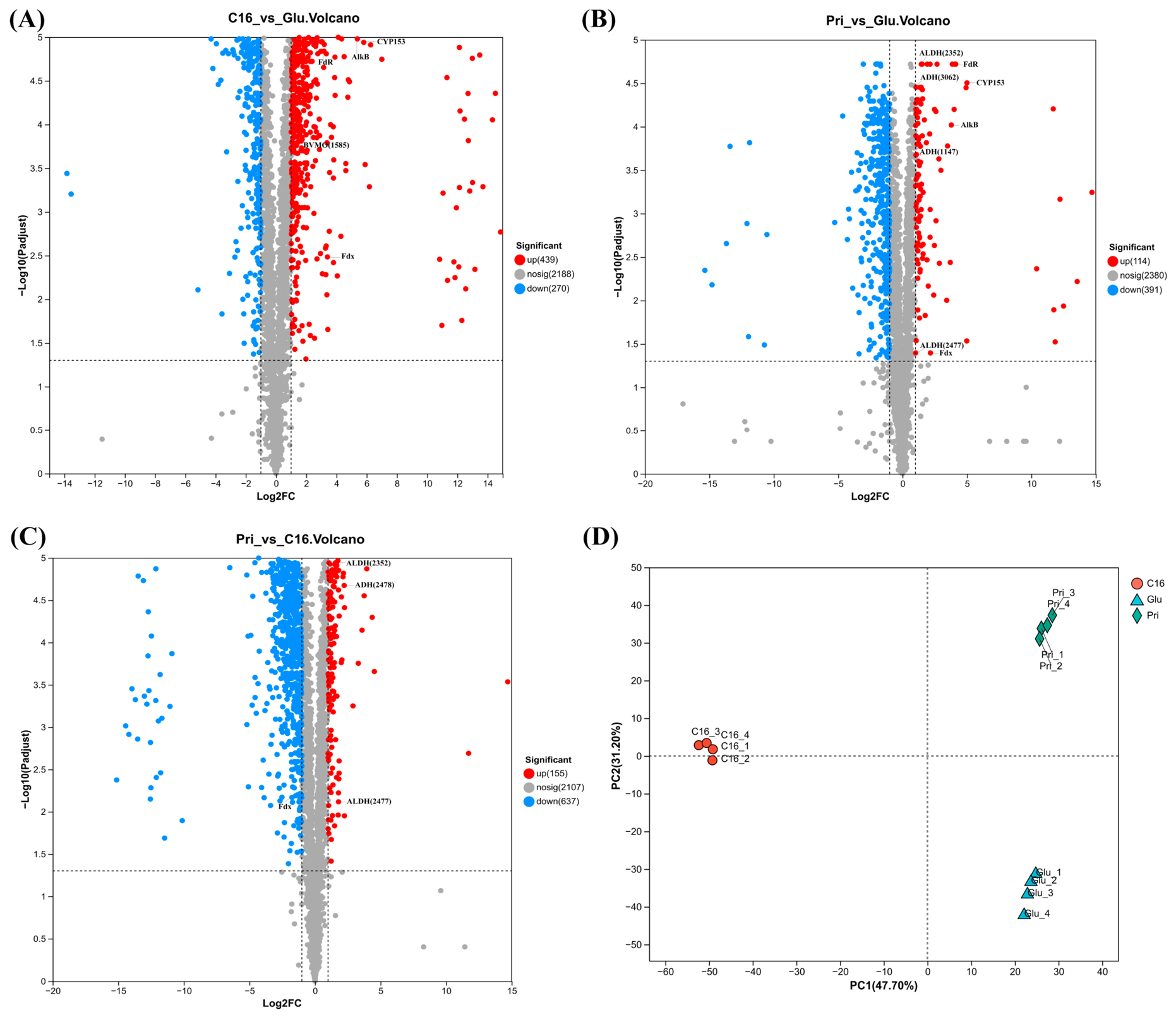
3.1. Overview of DIA-Based Quantitative Proteomic Analysis
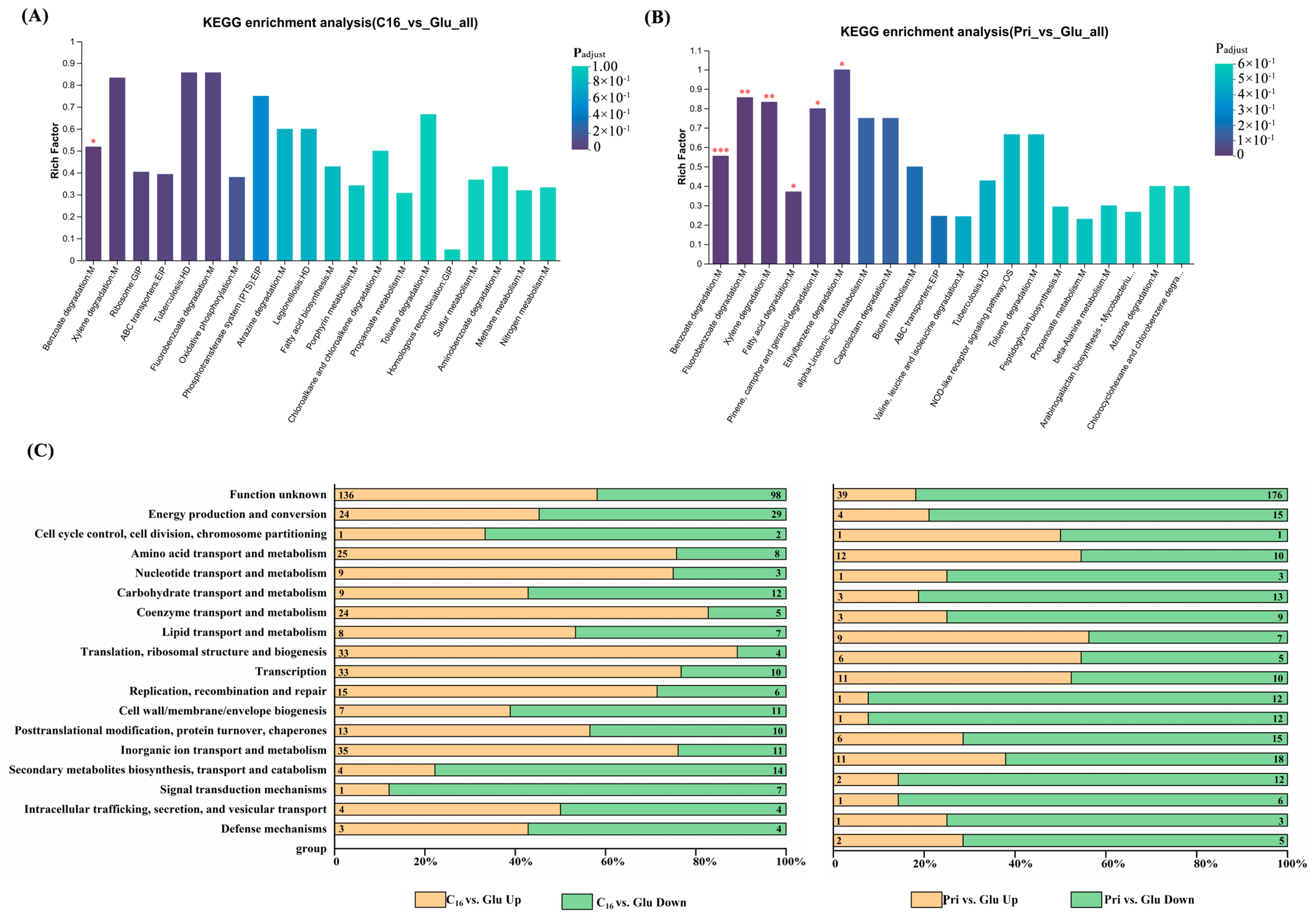
3.2. Functional Annotation and Pathway Enrichment Analyses
3.3. Alkane Uptake and Transport
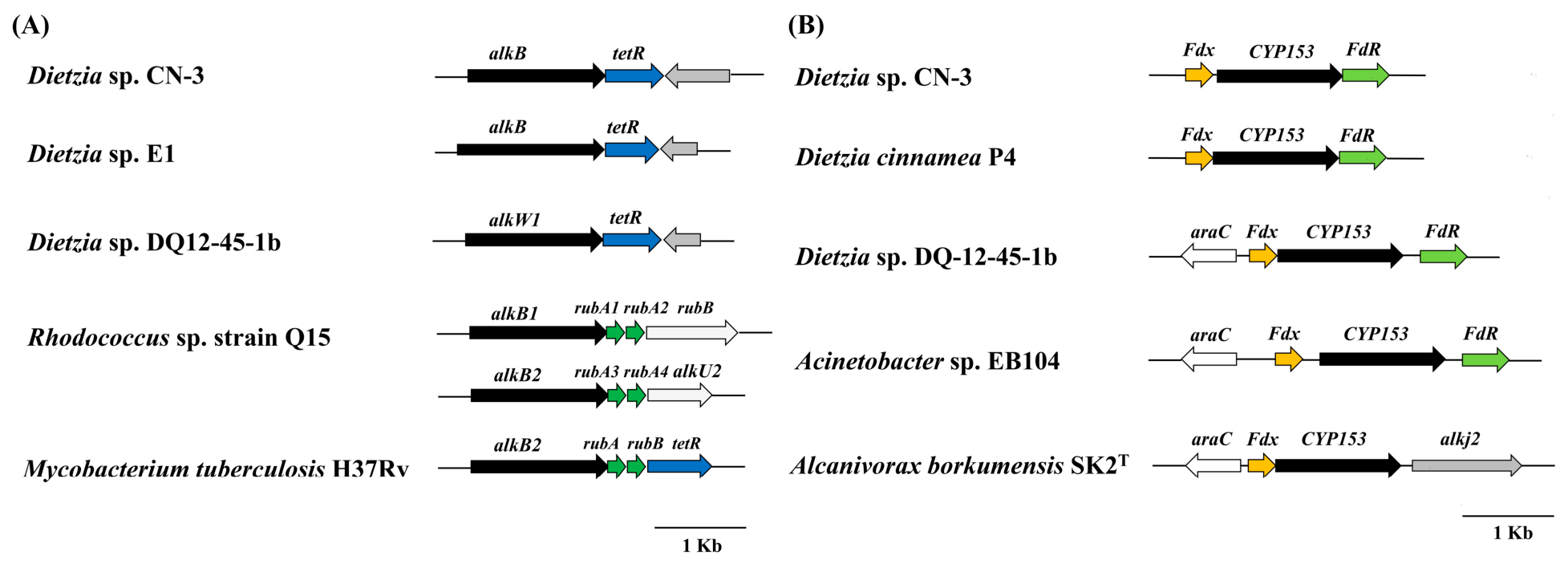
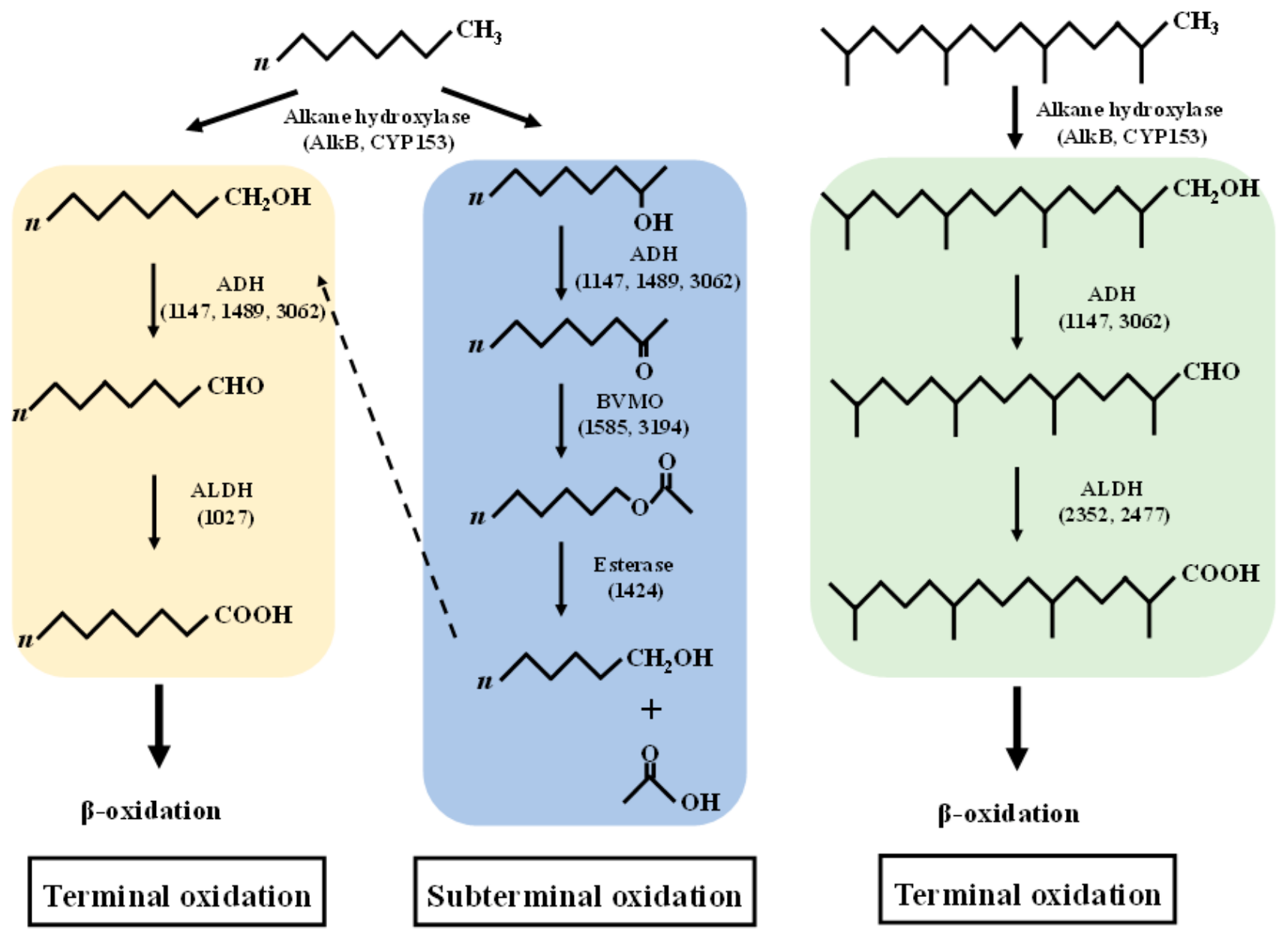
3.4. Terminal and Subterminal Oxidation of n-Alkane
3.5. Terminal Oxidation of the Branched Alkane
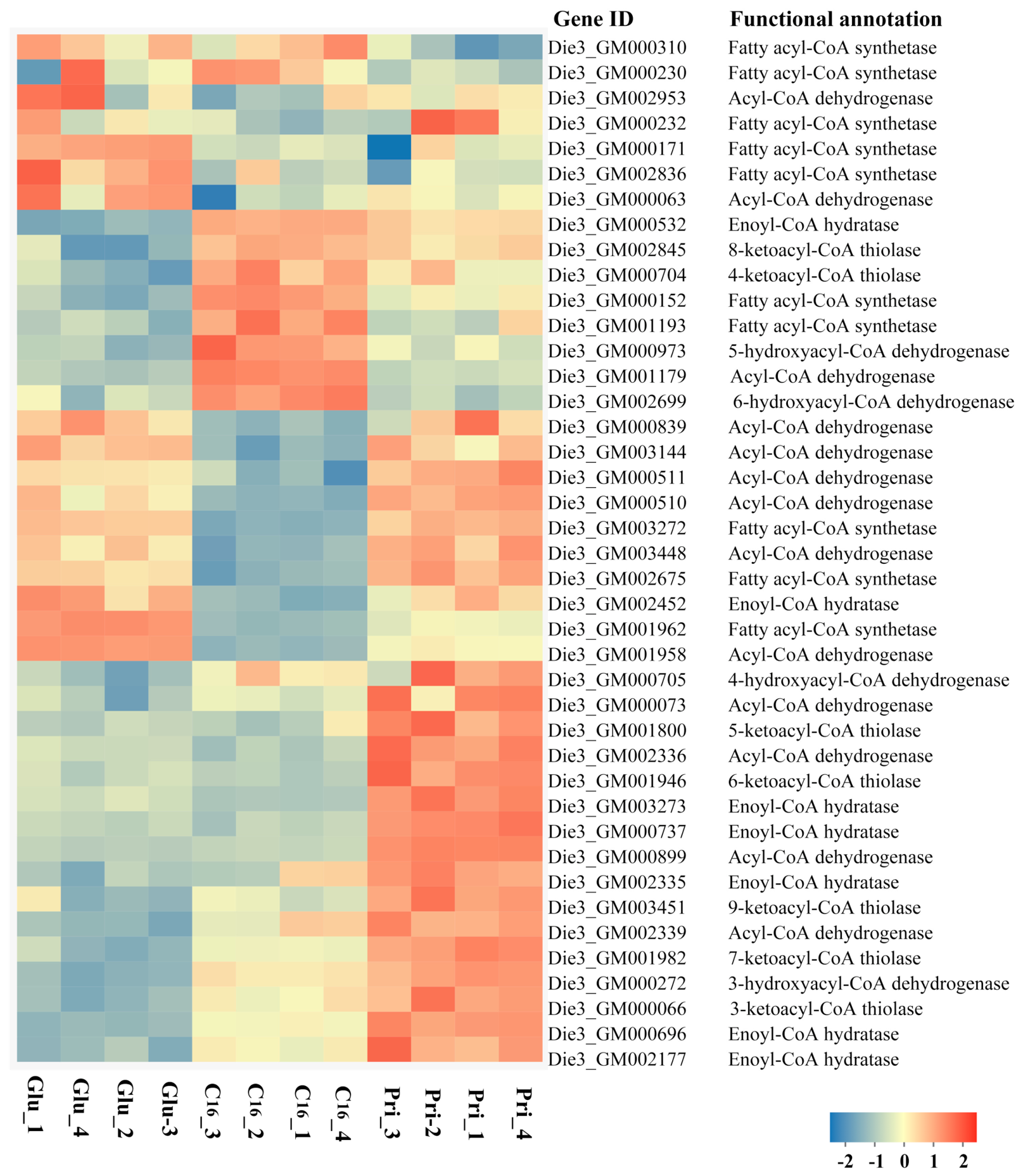
3.6. Fatty Acid β-Oxidation
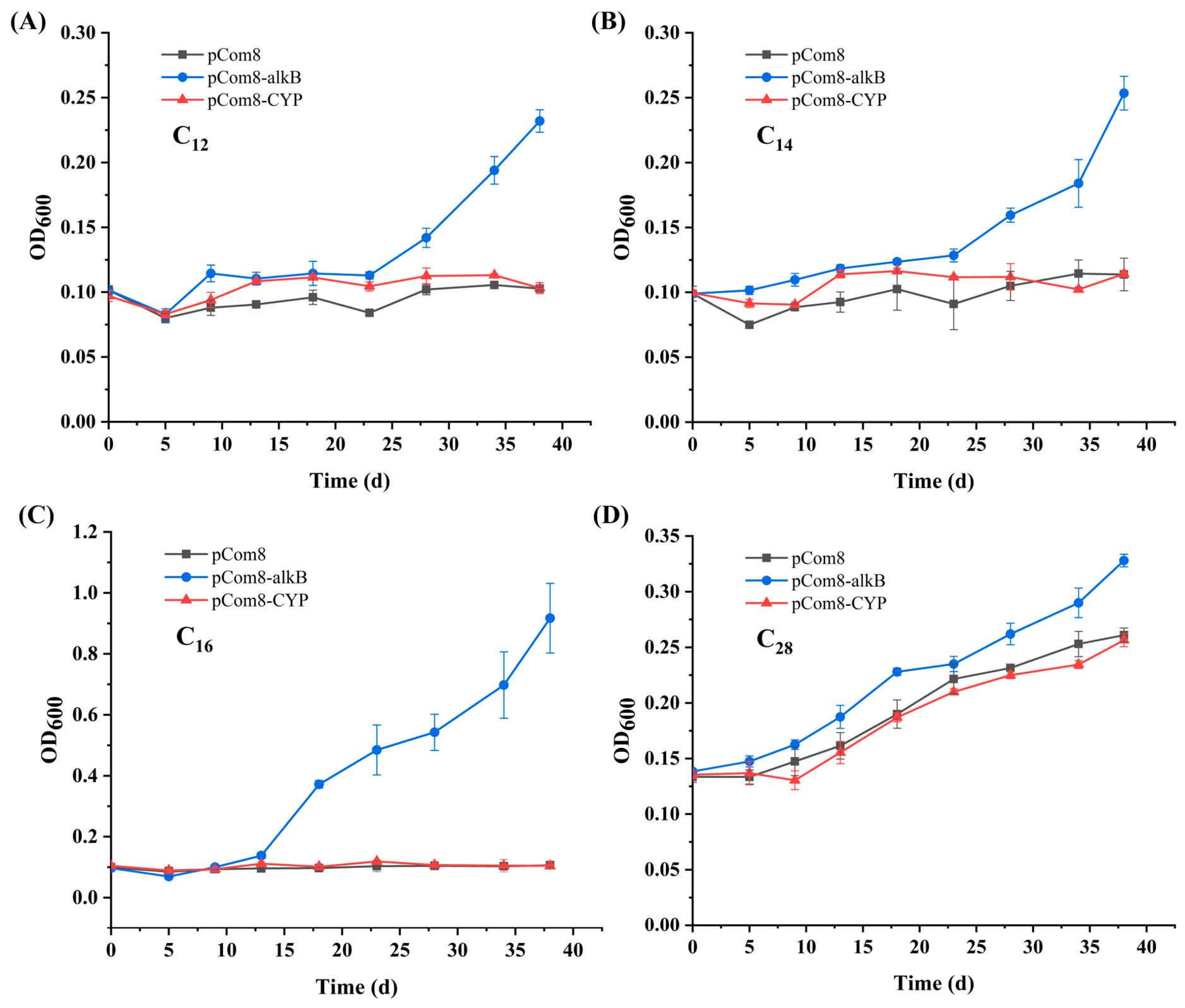
3.7. Functional Complementation of alkB and CYP153 Genes in P. fluorescens KOB2Δ1
4. Conclusions
Supplementary Materials
Author Contributions
Funding
Institutional Review Board Statement
Informed Consent Statement
Data Availability Statement
Conflicts of Interest
References
- Vauloup, A.; Cébron, A. Development of a device to trap soil bacteria capable of degrading organic contaminants such as alkanes and polycyclic aromatic hydrocarbons. J. Hazard. Mater. 2025, 491, 137690. [Google Scholar] [CrossRef] [Scilit]
- Rojo, F. Degradation of alkanes by bacteria. Environ. Microbiol. 2009, 11, 2477–2490. [Google Scholar] [CrossRef] [Scilit] [PubMed]
- Mu, B.Z.; Nazina, T.N. Recent advances in petroleum microbiology. Microorganisms 2022, 10, 1706. [Google Scholar] [CrossRef] [Scilit] [PubMed]
- Mapelli, F.; Scoma, A.; Michoud, G.; Aulenta, F.; Boon, N.; Borin, S.; Kalogerakis, N.; Daffonchio, D. Biotechnologies for marine oil spill cleanup: Indissoluable ties with microorganisms. Trends Biotechnol. 2017, 35, 860–870. [Google Scholar] [CrossRef] [Scilit] [PubMed]
- Chen, W.W.; Min, J.; Hu, X.K. Bioremediation of crude oil by indigenous bacteria in Bohai Bay. In Oilfield Microbiology; Whitby, C., Skovhus, T.L., Eds.; Taylor & Francis: Boca Raton, FL, USA, 2019; pp. 197–214. [Google Scholar]
- Huang, H.L.; Xie, C.Y.; Xia, Z.Y.; Sun, Z.Y.; Chen, Y.T.; Gou, M.; Tang, Y.Q.; Cui, H.L.; Wu, X.L. Multi-omics association study of hexadecane degradation in haloarchaeal strain Halogranum rubrum RO2-11. Environ. Res. 2024, 252, 118751. [Google Scholar] [CrossRef] [Scilit] [PubMed]
- Gaid, M.; Pöpke, D.; Reinhard, A.; Berzhanova, R.; Mukasheva, T.; Urich, T.; Mikolasch, A. Characterization of the mycoremediation of n-alkanes and branched-chain alkanes by filamentous fungi from oil-polluted soil samples in Kazakhstan. Microorganisms 2023, 11, 2195. [Google Scholar] [CrossRef] [Scilit] [PubMed]
- Chen, W.W.; Li, J.D.; Sun, X.N.; Min, J.; Hu, X.K. High efficiency degradation of alkanes and crude oil by a salt-tolerant bacterium Dietzia species CN-3. Int. Biodeterior. Biodegrad. 2017, 118, 110–118. [Google Scholar] [CrossRef] [Scilit]
- Gregson, B.H.; Metodieva, G.; Metodiev, M.V.; McKew, B.A. Differential protein expression during growth on linear versus branched alkanes in the obligate marine hydrocarbon-degrading bacterium Alcanivorax borkumensis SK2T. Environ. Microbiol. 2019, 21, 2347–2359. [Google Scholar] [CrossRef] [Scilit] [PubMed]
- Zhang, Y.; Liu, H.; Yu, S.; Pei, R.C.; Hu, H.Y.; Wang, W.W.; Xu, P.; Tang, H.Z. Characterization of C16–C36 alkane degradation and oily sludge bioremediation by Rhodococcus erythropolis XP. Appl. Environ. Microbiol. 2025, 91, e02124–25. [Google Scholar] [CrossRef] [Scilit] [PubMed]
- Sun, J.Q.; Xu, L.; Zhang, Z.; Li, Y.; Tang, Y.Q.; Wu, X.L. Diverse bacteria isolated from microtherm oil-production water. Antonie Van Leeuwenhoek 2014, 105, 401–411. [Google Scholar] [CrossRef] [Scilit] [PubMed]
- Hu, B.; Wang, M.; Geng, S.; Wen, L.; Wu, M.; Nie, Y.; Tang, Y.Q.; Wu, X.L. Metabolic exchange with non-alkane-consuming Pseudomonas stutzeri SLG510A3-8 improves n-alkane biodegradation by the alkane degrader Dietzia sp. strain DQ12-45-1b. Appl. Environ. Microbiol. 2020, 86, e02931–19. [Google Scholar] [CrossRef] [Scilit] [PubMed]
- Bihari, Z.; Szabó, Z.; Szvetnik, A.; Balázs, M.; Bartos, P.; Tolmacsov, P.; Zombori, Z.; Kiss, I. Characterization of a novel long-chain n-alkane-degrading strain, Dietzia sp. E1. Z. Naturforsch. C. 2010, 65, 693–700. [Google Scholar] [CrossRef] [Scilit] [PubMed]
- Wang, X.B.; Chi, C.Q.; Nie, Y.; Tang, Y.Q.; Tan, Y.; Wu, G.; Wu, X.L. Degradation of petroleum hydrocarbons (C6–C40) and crude oil by a novel Dietzia strain. Bioresour. Technol. 2011, 102, 7755–7761. [Google Scholar] [CrossRef] [Scilit] [PubMed]
- Gurav, R.; Lyu, H.; Ma, J.; Tang, J.; Liu, Q.; Zhang, H. Degradation of n-alkanes and PAHs from the heavy crude oil using salt-tolerant bacterial consortia and analysis of their catabolic genes. Environ. Sci. Pollut. Res. Int. 2017, 24, 11392–11403. [Google Scholar] [CrossRef] [Scilit] [PubMed]
- Wei, Y.Q.; Ding, D.S.; Qu, K.M.; Sun, J.; Cui, Z.G. Ecological risk assessment of heavy metal pollutants and total petroleum hydrocarbons in sediments of the Bohai Sea, China. Mar. Pollut. Bull. 2022, 184, 114218. [Google Scholar] [CrossRef] [Scilit] [PubMed]
- Xu, H.X.; Tang, Y.Q.; Nie, Y.; Wu, X.L. Comparative transcriptome analysis reveals different adaptation mechanisms for degradation of very long-chain and normal long-chain alkanes in Dietzia sp. DQ12-45-1b. Environ. Microbiol. 2022, 24, 1932–1945. [Google Scholar] [CrossRef] [Scilit] [PubMed]
- Yin, C.F.; Nie, Y.; Li, T.; Zhou, N.Y. AlmA involved in the long-chain n-alkane degradation pathway in Acinetobacter baylyi ADP1 is a Baeyer-Villiger monooxygenase. Appl. Environ. Microbiol. 2024, 90, e0162523. [Google Scholar] [CrossRef] [Scilit] [PubMed]
- Wang, W.; Shao, Z. The long-chain alkane metabolism network of Alcanivorax dieselolei. Nat. Commun. 2014, 5, 5755. [Google Scholar] [CrossRef] [Scilit] [PubMed]
- Wang, W.P.; Shao, Z.Z. Enzymes and genes involved in aerobic alkane degradation. Front. Microbiol. 2013, 4, 116. [Google Scholar] [CrossRef] [Scilit] [PubMed]
- Yin, C.F.; Xu, Y.; Li, T.; Zhou, N.Y. Wide distribution of the sad gene cluster for sub-terminal oxidation in alkane utilizers. Environ. Microbiol. 2022, 24, 6307–6319. [Google Scholar] [CrossRef] [Scilit] [PubMed]
- Wang, W.P.; Shao, Z.Z. Genes involved in alkane degradation in the Alcanivorax hongdengensis strain A-11-3. Appl. Microbiol. Biotechnol. 2012, 94, 437–448. [Google Scholar] [CrossRef] [Scilit] [PubMed]
- Schneiker, S.; Santos, V.A.M.d.; Bartels, D.; Bekel, T.; Brecht, M.; Buhrmester, J.; Chernikova, T.N.; Denaro, R.; Ferrer, M.; Gertler, C.; et al. Genome sequence of the ubiquitous hydrocarbon-degrading marine bacterium Alcanivorax borkumensis. Nat. Biotechnol. 2006, 24, 997–1004. [Google Scholar] [CrossRef] [Scilit] [PubMed]
- Nie, Y.; Liang, J.L.; Fang, H.; Tang, Y.Q.; Wu, X.L. Characterization of a CYP153 alkane hydroxylase gene in a gram-positive Dietzia sp. DQ12-45-1b and its "team role" with alkW1 in alkane degradation. Appl. Microbiol. Biotechnol. 2014, 98, 163–173. [Google Scholar] [CrossRef] [Scilit] [PubMed]
- Feng, L.; Wang, W.; Cheng, J.S.; Ren, Y.; Zhao, G.; Gao, C.X.; Tang, Y.; Liu, X.Q.; Han, W.Q.; Peng, X.; et al. Genome and proteome of long-chain alkane degrading Geobacillus thermodenitrificans NG80-2 isolated from a deep-subsurface oil reservoir. Proc. Natl. Acad. Sci. USA 2007, 104, 5602–5607. [Google Scholar] [CrossRef] [Scilit] [PubMed]
- Throne-Holst, M.; Wentzel, A.; Ellingsen, T.E.; Kotlar, H.K.; Zotchev, S.B. Identification of novel genes involved in long-chain n-alkane degradation by Acinetobacter sp. strain DSM 17874. Appl. Environ. Microbiol. 2007, 73, 3327e3332. [Google Scholar] [CrossRef] [Scilit] [PubMed]
- Sabirova, J.S.; Ferrer, M.; Regenhardt, D.; Timmis, K.N.; Golyshin, P.N. Proteomic insights into metabolic adaptations in Alcanivorax borkumensis induced by alkane utilization. J. Bacteriol. 2006, 188, 3763–3773. [Google Scholar] [CrossRef] [Scilit] [PubMed]
- Liu, H.; Sun, W.; Liang, R.; Huang, L.; Hou, J.; Liu, J. iTRAQ-based quantitative proteomic analysis of Pseudomonas aeruginosa SJTD-1: A global response to n-octadecane induced stress. J. Proteom. 2015, 123, 14–28. [Google Scholar] [CrossRef] [Scilit] [PubMed]
- Chen, W.W.; Sun, J.W.; Zhang, X.; Zhang, J.W.; Wang, Y.; Cheng, S.W. Comparative transcriptomics reveals distinct adaptation mechanisms for degradation of n-alkane and branched alkane in the salt-tolerant bacterium Dietzia sp. CN-3. Microorganisms 2025, 13, 2206. [Google Scholar] [CrossRef] [Scilit] [PubMed]
- Smits, T.H.; Balada, S.B.; Witholt, B.; van Beilen, J.B. Functional analysis of alkane hydroxylases from gram-negative and gram-positive bacteria. J. Bacteriol. 2002, 184, 1733–1742. [Google Scholar] [CrossRef] [Scilit] [PubMed]
- Xiang, W.; Hong, S.; Xue, Y.; Ma, Y. Functional analysis of novel alkB genes encoding long-chain n-alkane hydroxylases in Rhodococcus sp. strain CH91. Microorganisms 2023, 11, 1537. [Google Scholar] [CrossRef] [Scilit] [PubMed]
- Smits, T.H.; Seeger, M.A.; Witholt, B.; van Beilen, J.B. New alkane-responsive expression vectors for Escherichia coli and Pseudomonas. Plasmid 2001, 46, 16–24. [Google Scholar] [CrossRef] [Scilit] [PubMed]
- Zwietering, M.H.; Jongenburger, I.; Rombouts, F.M.; van’t Riet, K. Modeling of the bacterial growth curve. Appl. Environ. Microbiol. 1990, 56, 1875–1881. [Google Scholar] [CrossRef] [Scilit] [PubMed]
- Kong, Y.C.; Min, J.; Liu, Y.H.; Fang, S.Y.; Huang, Y.Y.; Xu, Y.H.; Hu, X.K. Quantitative proteomic analysis of differential proteins from Acinetobacter sp. HC8-3S responses to hydrocarbons. Curr. Microbiol. 2026, 83, 253. [Google Scholar] [CrossRef] [Scilit] [PubMed]
- Mounier, J.; Hakil, F.; Branchu, P.; Naïtali, M.; Goulas, P.; Sivadon, P.; Grimaud, R. AupA and AupB are outer and inner membrane proteins involved in alkane uptake in Marinobacter hydrocarbonoclasticus SP17. mBio 2018, 9, e00520-18. [Google Scholar] [CrossRef] [Scilit] [PubMed]
- Dou, Y.; Zhou, X.F.; Liu, X.P.; Hou, J.L. Exoproteome analysis of Pseudomonas aeruginosa response to high alkane stress. Arch. Microbiol. 2024, 206, 5. [Google Scholar] [CrossRef] [Scilit] [PubMed]
- Wang, W.; Cai, B.; Shao, Z.Z. Oil degradation and biosurfactant production by the deep sea bacterium Dietzia maris as-13-3. Front. Microbiol. 2014, 5, 711. [Google Scholar] [CrossRef] [Scilit] [PubMed]
- Gregson, B.H.; Metodieva, G.; Metodiev, M.V.; Golyshin, P.N.; McKew, B.A. Differential protein expression during growth on medium versus long-chain alkanes in the obligate marine hydrocarbon-degrading bacterium Thalassolituus oleivorans MIL-1. Front. Microbiol. 2018, 9, 3130. [Google Scholar] [CrossRef] [Scilit] [PubMed]
- Wang, X.B.; Nie, Y.; Tang, Y.Q.; Wu, G.; Wu, X.L. Alkane chain length alters Dietzia sp. strain DQ12-45-1b biosurfactant production and cell surface activity. Appl. Environ. Microbiol. 2013, 79, 400–402. [Google Scholar] [CrossRef] [Scilit] [PubMed]
- Gunasekera, T.S.; Bowen, L.L.; Zhou, C.E.; Howard-Byerly, S.C.; Foley, W.S.; Striebich, R.C.; Dugan, L.C.; Ruiz, O.N. Transcriptomic analyses elucidate adaptive differences of closely related strains of Pseudomonas aeruginosa in fuel. Appl. Environ. Microbiol. 2017, 83, e03249–16. [Google Scholar] [CrossRef] [Scilit] [PubMed]
- Ferrari, E.; Di Benedetto, G.; Firrincieli, A.; Presentato, A.; Frascari, D.; Cappelletti, M. Unravelling the role of the group 6 soluble di-iron monooxygenase (SDIMO) SmoABCD in alkane metabolism and chlorinated alkane degradation. Microb. Biotechnol. 2024, 17, e14453. [Google Scholar] [CrossRef] [Scilit] [PubMed]
- Aldarini, N.; Alhasawi, A.A.; Thomas, S.C.; Appanna, V.D. The role of glutamine synthetase in energy production and glutamine metabolism during oxidative stress. Antonie Van Leeuwenhoek 2017, 110, 629–639. [Google Scholar] [CrossRef] [Scilit] [PubMed]
- Li, L.X.; Zhang, Y.Y.; Huang, X.F.; He, M.F.; Liu, J.; Lu, L.J.; Cai, C.; Peng, K.M. Transcriptomic insights into lower biomass and higher cell-surface hydrophobicity of Dietzia natronolimnaea S-XJ-1 grown on alkanes compared to fatty acid esters. Int. Biodeterior. Biodegrad. 2022, 171, 105423. [Google Scholar] [CrossRef] [Scilit]
- Liang, J.L.; Nie, Y.; Wang, M.; Xiong, G.; Wang, Y.P.; Maser, E.; Wu, X.L. Regulation of alkane degradation pathway by a TetR family repressor via an autoregulation positive feedback mechanism in a gram-positive Dietzia bacterium. Mol. Microbiol. 2016, 99, 338–359. [Google Scholar] [CrossRef] [Scilit] [PubMed]
- Hamamura, N.; Yeager, C.M.; Arp, D.J. Two distinct monooxygenases for alkane oxidation in Nocardioides sp. strain CF8. Appl. Environ. Microbiol. 2001, 67, 4992–4998. [Google Scholar] [CrossRef] [Scilit] [PubMed]
- Chai, J.; Guo, G.R.; McSweeney, S.M.; Shanklin, J.; Liu, Q. Structural basis for enzymatic terminal C–H bond functionalization of alkanes. Nat. Struct. Mol. Biol. 2023, 30, 521–526. [Google Scholar] [CrossRef] [Scilit] [PubMed]
- Mikulska-Ruminska, K.; Licht, M.; Ertem, M.Z.; Shanklin, J.; Liu, Q.; Bahar, I. Binding and translocation of substrate allosterically promotes functional interactions within the AlkB–AlkG electron transfer complex. J. Mol. Biol. 2026, 438, 169548. [Google Scholar] [CrossRef] [Scilit] [PubMed]
- Romanova, V.; Markelova, M.; Boulygina, E.; Siniagina, M.; Müller, R.; Grigoryeva, T.; Laikov, A. Significance of both alkB and P450 alkane-degrading systems in Tsukamurella tyrosinosolvens: Proteomic evidence. Appl. Microbiol. Biotechnol. 2022, 106, 3153–3171. [Google Scholar] [CrossRef] [Scilit] [PubMed]
- Fraaije, M.W.; Kamerbeek, N.M.; van Berkel, W.J.H.; Janssen, D.B. Identification of a Baeyer-Villiger monooxygenase sequence motif. FEBS. Lett. 2002, 518, 43–47. [Google Scholar] [CrossRef] [Scilit] [PubMed]
- Fürst, M.J.L.J.; Gran-Scheuch, A.; Aalbers, F.S.; Fraaije, M.W. Baeyer-Villiger monooxygenases: Tunable oxidative biocatalysts. ACS Catal. 2019, 9, 11207–11241. [Google Scholar] [CrossRef] [Scilit]
- Shou, L.B.; Liu, Y.F.; Zhou, J.; Liu, Z.L.; Zhou, L.; Liu, J.F.; Yang, S.Z.; Gu, J.D.; Mu, B.Z. New evidence for a hydroxylation pathway for anaerobic alkane degradation supported by analyses of functional genes and signature metabolites in oil reservoirs. AMB Express 2021, 11, 18. [Google Scholar] [CrossRef] [Scilit] [PubMed]
- Dawson, K.S.; Schaperdoth, I.; Freeman, K.H.; Macalady, J.L. Anaerobic biodegradation of the isoprenoid biomarkers pristane and phytane. Org. Geochem. 2013, 65, 118–126. [Google Scholar] [CrossRef] [Scilit]
- Kemp, G.D.; Dickinson, F.M.; Ratledge, C. Inducible long chain alcohol oxidase from alkane-grown Candida tropicalis. Appl. Microbiol. Biotechnol. 1988, 29, 370–374. [Google Scholar] [CrossRef] [Scilit]
- Sevilla, E.; Yuste, L.; Moreno, R.; Rojo, F. Differential expression of the three Alcanivorax borkumensis SK2 genes coding for the P450 cytochromes involved in the assimilation of hydrocarbons. Environ. Microbiol. Rep. 2017, 9, 797–808. [Google Scholar] [CrossRef] [Scilit] [PubMed]
- Guengerich, F.P.; Sohl, C.D.; Chowdhury, G. Multi-step oxidations catalyzed by cytochrome P450 enzymes: Processive vs. distributive kinetics and the issue of carbonyl oxidation in chemical mechanisms. Arch. Biochem. Biophys. 2011, 507, 126–134. [Google Scholar] [CrossRef] [Scilit] [PubMed]
- Nhi-Cong, L.T.; Mikolasch, A.; Klenk, H.P.; Schauer, F. Degradation of the multiple branched alkane 2,6,10,14-tetramethyl-pentadecane (pristane) in Rhodococcus ruber and Mycobacterium neoaurum. Int. Biodeterior. Biodegrad. 2009, 63, 201–207. [Google Scholar] [CrossRef] [Scilit]
- Menendez-Bravo, S.; Paganini, J.; Avignone-Rossa, C.; Gramajo, H.; Arabolaza, A. Identification of FadAB complexes involved in fatty acid β-oxidation in Streptomyces coelicolor and construction of a triacylglycerol overproducing strain. Front. Microbiol. 2017, 8, 1428. [Google Scholar] [CrossRef] [Scilit] [PubMed]
- Srivastava, S.; Chaudhary, S.; Thukral, L.; Shi, C.; Gupta, R.D.; Gupta, R.; Priyadarshan, K.; Vats, A.; Haque, A.S.; Sankaranarayanan, R.; et al. Unsaturated lipid assimilation by Mycobacteria requires auxiliary cis-trans Enoyl CoA isomerase. Chem. Biol. 2015, 22, 1577–1587. [Google Scholar] [CrossRef] [Scilit] [PubMed]
- Park, C.; Shin, B.; Jung, J.; Lee, Y.; Park, W. Metabolic and stress responses of Acinetobacter oleivorans DR1 during long-chain alkane degradation. Microb. Biotechnol. 2017, 10, 1809–1823. [Google Scholar] [CrossRef] [Scilit] [PubMed]
- Sandholm, R.M.; Rojas Calderón, D.; Dahl, Ø.; Chowreddy, R.R.; Vaaje-Kolstad, G.; La Rosa, S.L. Paired genomic and proteomic analysis of Acinetobacter towneri from waste sludge reveals an extensive repertoire of enzymes for breakdown of hydrocarbons. Microbiol. Spectr. 2026, 14, e0005426. [Google Scholar] [CrossRef] [Scilit] [PubMed]
- Nie, Y.; Liang, J.; Fang, H.; Tang, Y.Q.; Wu, X.L. Two novel alkane hydroxylase-rubredoxin fusion genes isolated from a Dietzia bacterium and the functions of fused rubredoxin domains in long-chain n-alkane degradation. Appl. Environ. Microbiol. 2011, 77, 7279–7288. [Google Scholar] [CrossRef] [Scilit] [PubMed]
- Liu, C.L.; Wang, W.P.; Wu, Y.H.; Zhou, Z.W.; Lai, Q.L.; Shao, Z.Z. Multiple alkane hydroxylase systems in a marine alkane degrader, Alcanivorax dieselolei B-5. Environ. Microbiol. 2011, 13, 1168–1178. [Google Scholar] [CrossRef] [Scilit] [PubMed]




| Strain or Plasmid | Relevant Phenotype, Genotype, or Characteristics | Source or Reference |
|---|---|---|
| Strains | ||
| Pseudomonas fluorescens KOB2Δ1 | alkB knockout strain of P. fluorescens CHA0 | [30] |
| D. sp. CN-3 | Grows on C12–C36 n-alkanes, branched alkanes and crude oil | [8] |
| Escherichia coli DH5α | Cloning strain | Vazyme |
| Plasmids | ||
| pCom8 | Broad-host-range expression vector with PalkB, Gmr, oriT, alkS | [32] |
| pCom8-alkB | pCom8 with D. sp. CN-3 alkB gene, Genr | This study |
| pCom8-CYP | pCom8 with D. sp. CN-3 CYP153 gene, Genr | This study |
| Pathways | Gene ID | Protein Annotation | C16/Glu | Pri/Glu | Pri/C16 |
|---|---|---|---|---|---|
| Biosynthesis of outer membrane lipoprotein | Die3_GM000578 | Zinc ABC transporter substrate-binding protein | 2.02 | −0.22 | −2.24 |
| Die3_GM000935 | Lipoprotein | 0.70 | −0.67 | −1.37 | |
| Biosynthesis of glycolipid | Die3_GM002152 | Glycosyltransferase | 3.30 | −10.22 | −13.52 |
| Die3_GM002374 | Glycosyltransferase | 1.61 | −0.01 | −1.62 | |
| Die3_GM003051 | Glycosyltransferase | 10.83 | 6.76 | −4.07 | |
| Biosynthesis of PLG layer | Die3_GM000255 | Glutamate synthase (NADPH) small chain GltD | 1.44 | 0.49 | −0.95 |
| Die3_GM000431 | Glutamine synthetase family protein | −0.58 | 0.48 | 1.06 | |
| Die3_GM002030 | Glutamine synthetase | 1.13 | −0.32 | −1.45 |
Disclaimer/Publisher’s Note: The statements, opinions and data contained in all publications are solely those of the individual author(s) and contributor(s) and not of MDPI and/or the editor(s). MDPI and/or the editor(s) disclaim responsibility for any injury to people or property resulting from any ideas, methods, instructions or products referred to in the content. |
© 2026 by the authors. Licensee MDPI, Basel, Switzerland. This article is an open access article distributed under the terms and conditions of the Creative Commons Attribution (CC BY) license.
Share and Cite
Chen, W.; Zhang, X.; Liu, N.; Min, J.; Cheng, S. Quantitative Proteomics Reveals Substrate-Specific Metabolic Adaptations for n-Alkane and Branched Alkane Degradation in Dietzia sp. CN-3. Microorganisms 2026, 14, 2100. https://doi.org/10.3390/microorganisms14092100
Chen W, Zhang X, Liu N, Min J, Cheng S. Quantitative Proteomics Reveals Substrate-Specific Metabolic Adaptations for n-Alkane and Branched Alkane Degradation in Dietzia sp. CN-3. Microorganisms. 2026; 14(9):2100. https://doi.org/10.3390/microorganisms14092100
Chicago/Turabian StyleChen, Weiwei, Xin Zhang, Nian Liu, Jun Min, and Shiwei Cheng. 2026. "Quantitative Proteomics Reveals Substrate-Specific Metabolic Adaptations for n-Alkane and Branched Alkane Degradation in Dietzia sp. CN-3" Microorganisms 14, no. 9: 2100. https://doi.org/10.3390/microorganisms14092100
APA StyleChen, W., Zhang, X., Liu, N., Min, J., & Cheng, S. (2026). Quantitative Proteomics Reveals Substrate-Specific Metabolic Adaptations for n-Alkane and Branched Alkane Degradation in Dietzia sp. CN-3. Microorganisms, 14(9), 2100. https://doi.org/10.3390/microorganisms14092100