The Tol-Pal System Promotes Pseudoiodinine Production by Enhancing Bacterial Growth in Pseudomonas mosselii
 , ,
, ,  and
and
Abstract
1. Introduction
2. Materials and Methods
2.1. Plasmids, Strains, and Growth Conditions
2.2. Tn5 Mutagenesis Screening and Identification
2.3. Generation of tolB and tolR Complementation Strains
2.4. Quantitative Analysis of Pseudoiodinine Production
2.5. Bacterial Growth Curve Assays
2.6. Antimicrobial Activity Assays
2.7. Generation of Tol-Pal Operon Overexpression Strains
2.8. Statistical Analysis
3. Results
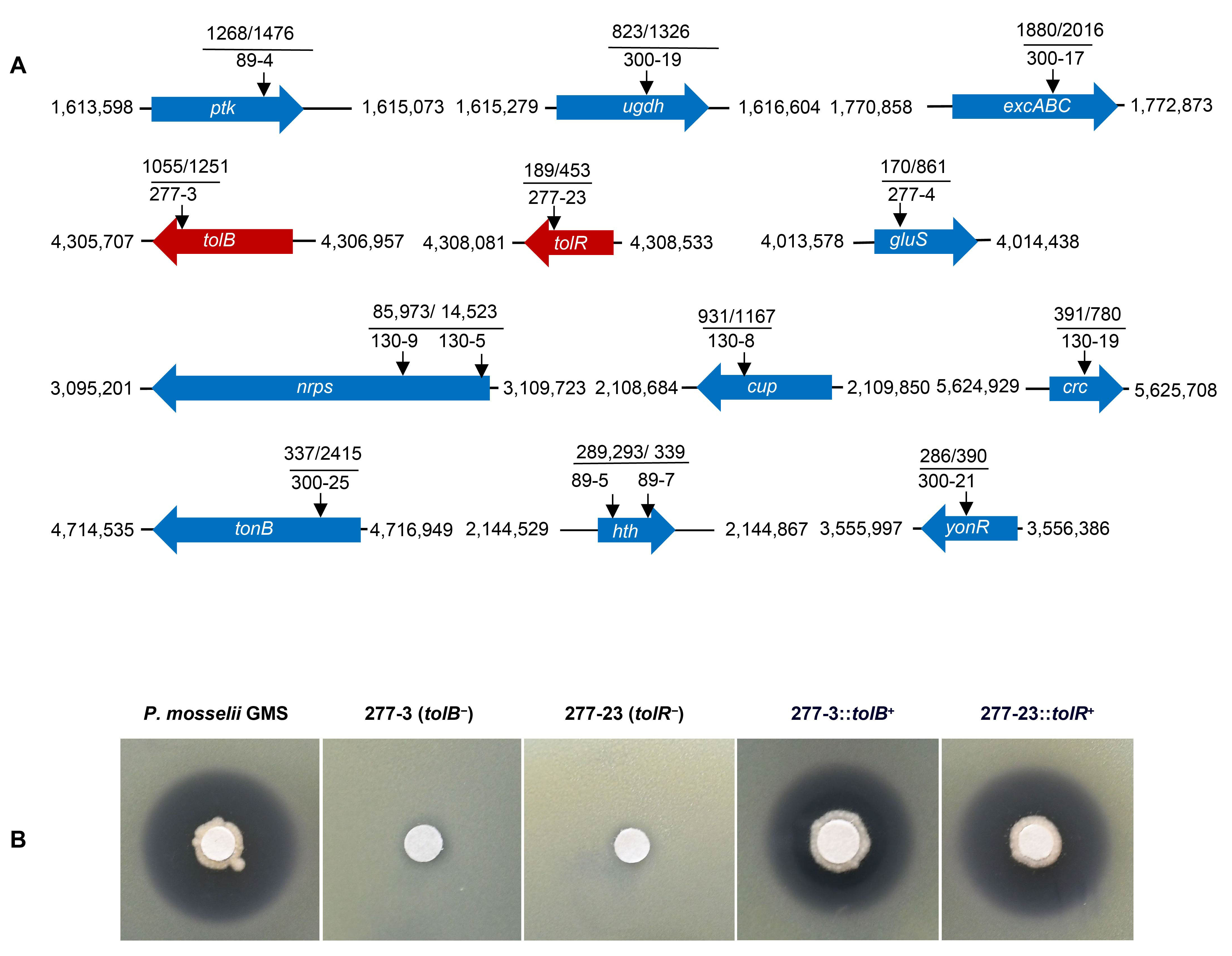
3.1. Genome-Wide Identification of the Antibacterial Functional Genes of GMS Against Xoc RS105
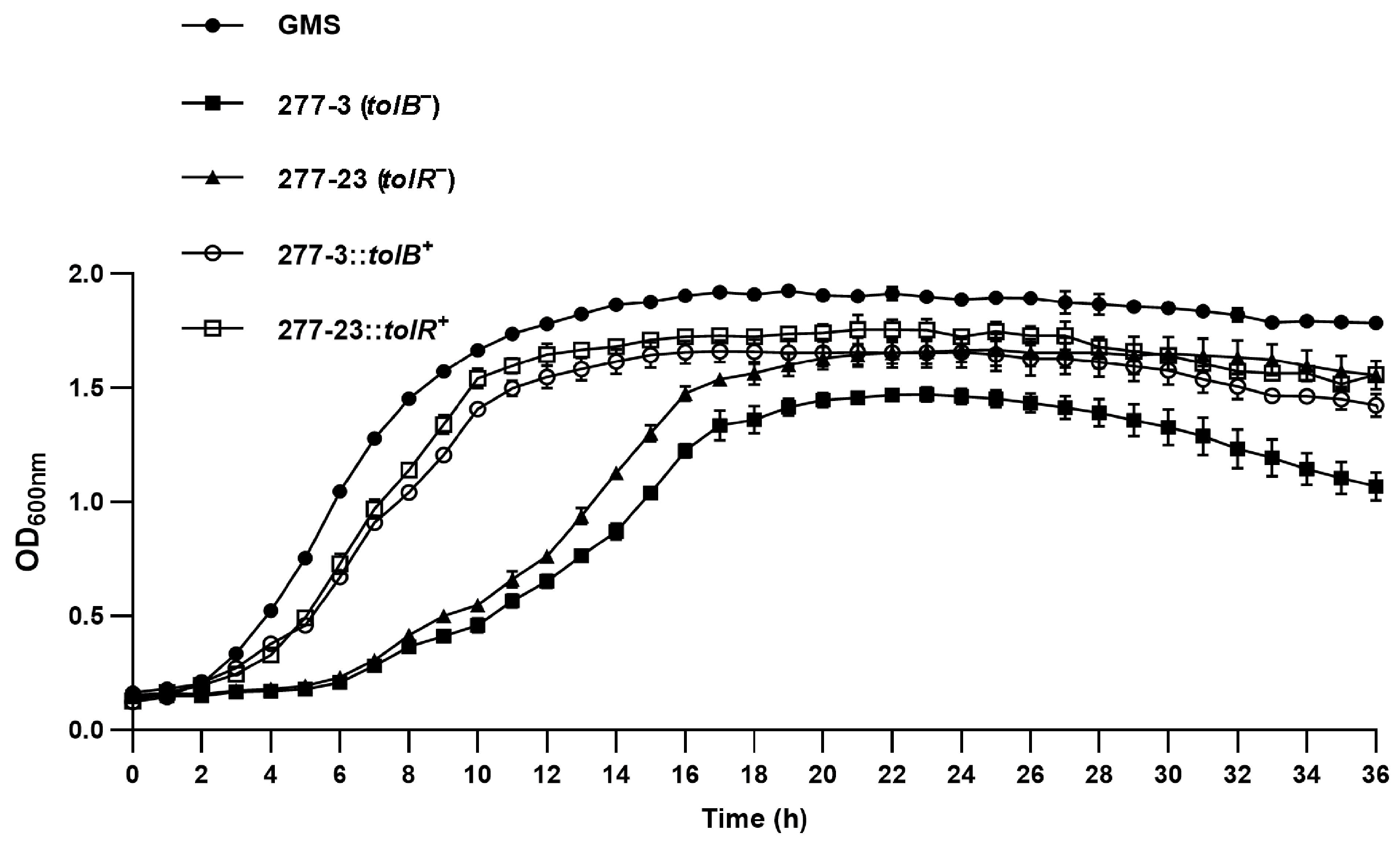
3.2. The Roles of tolB and tolR in Bacterial Growth
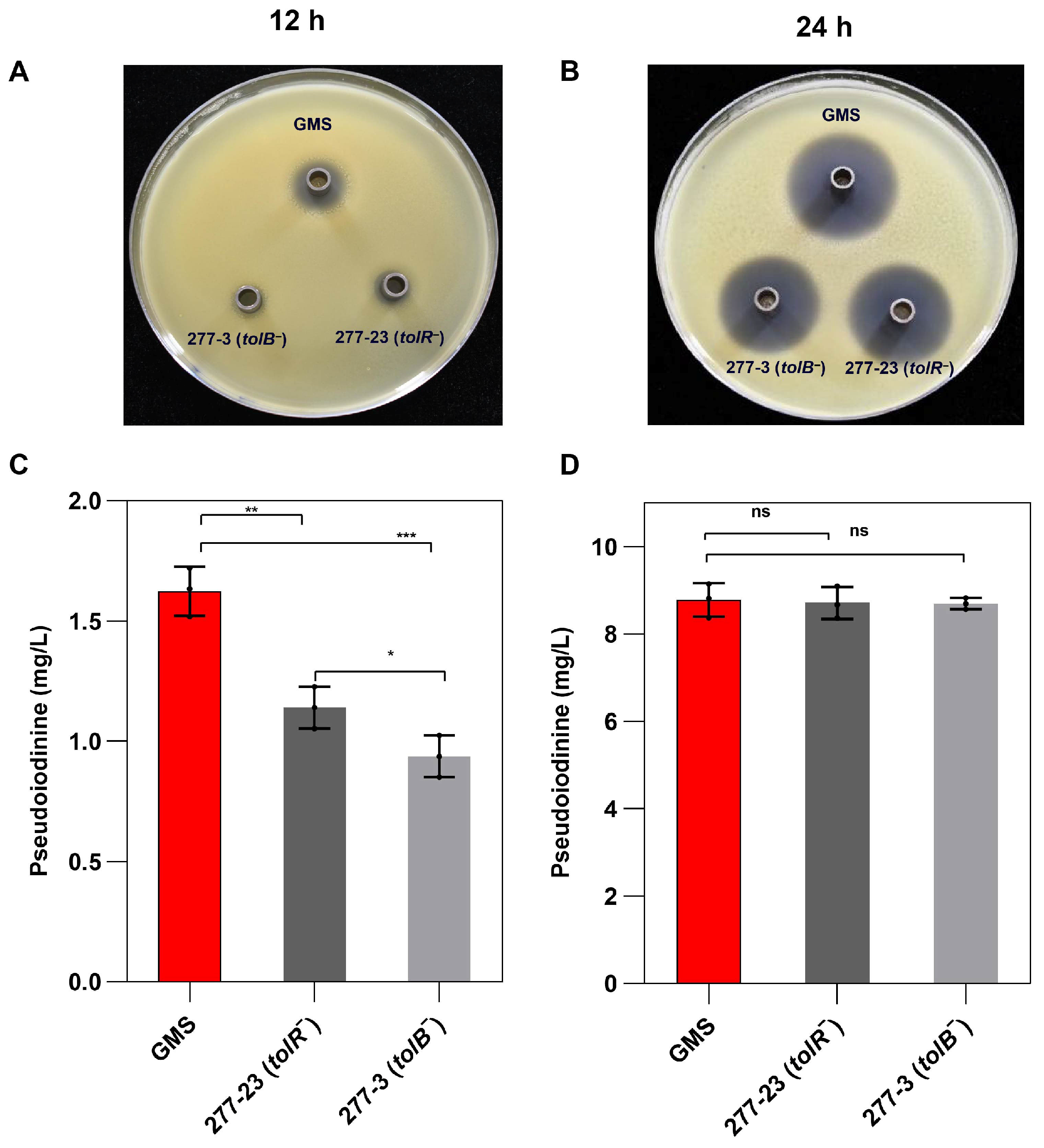
3.3. Effects of tolB and tolR Mutations on Antagonistic Activity and Pseudoiodinine Production
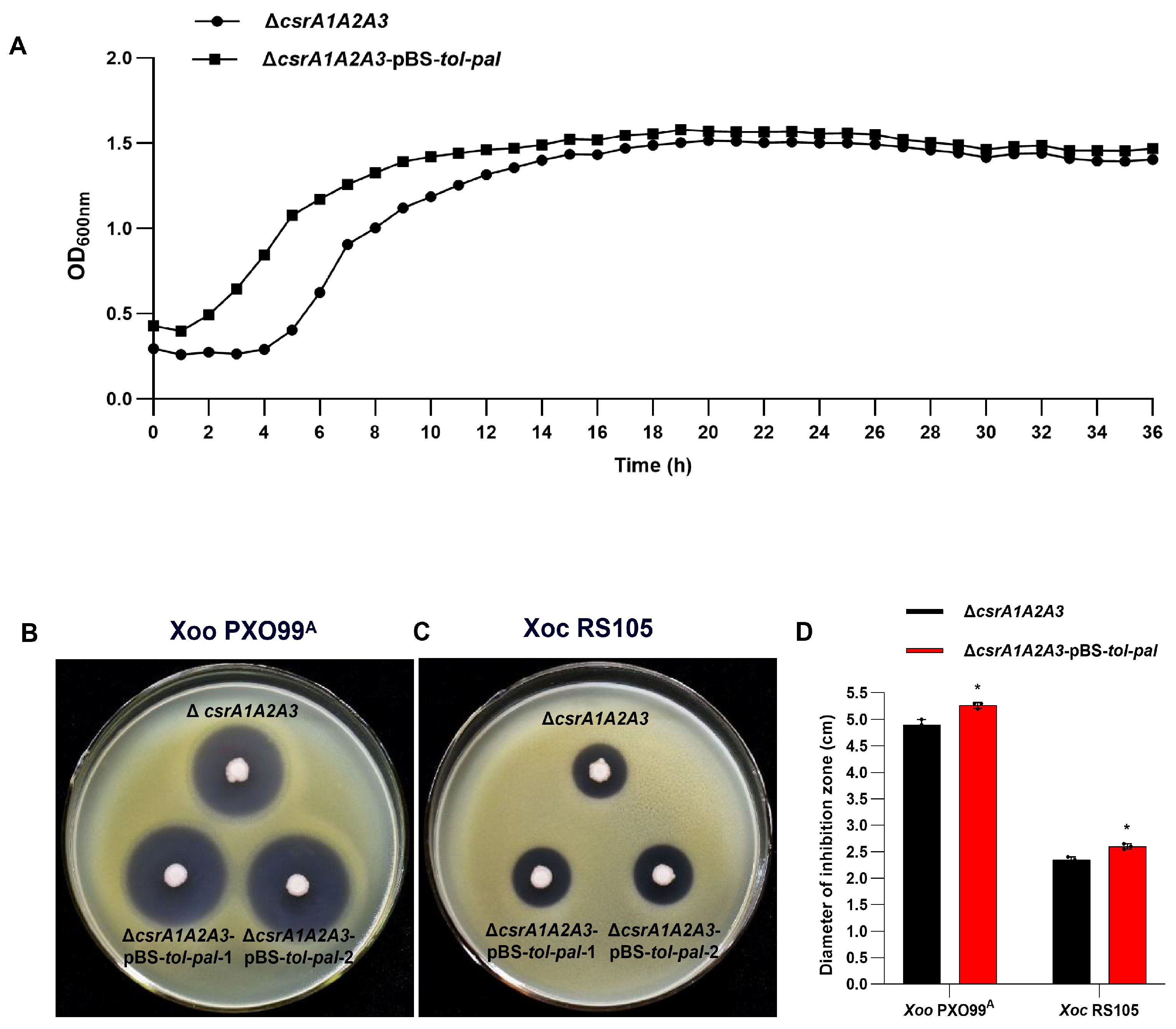
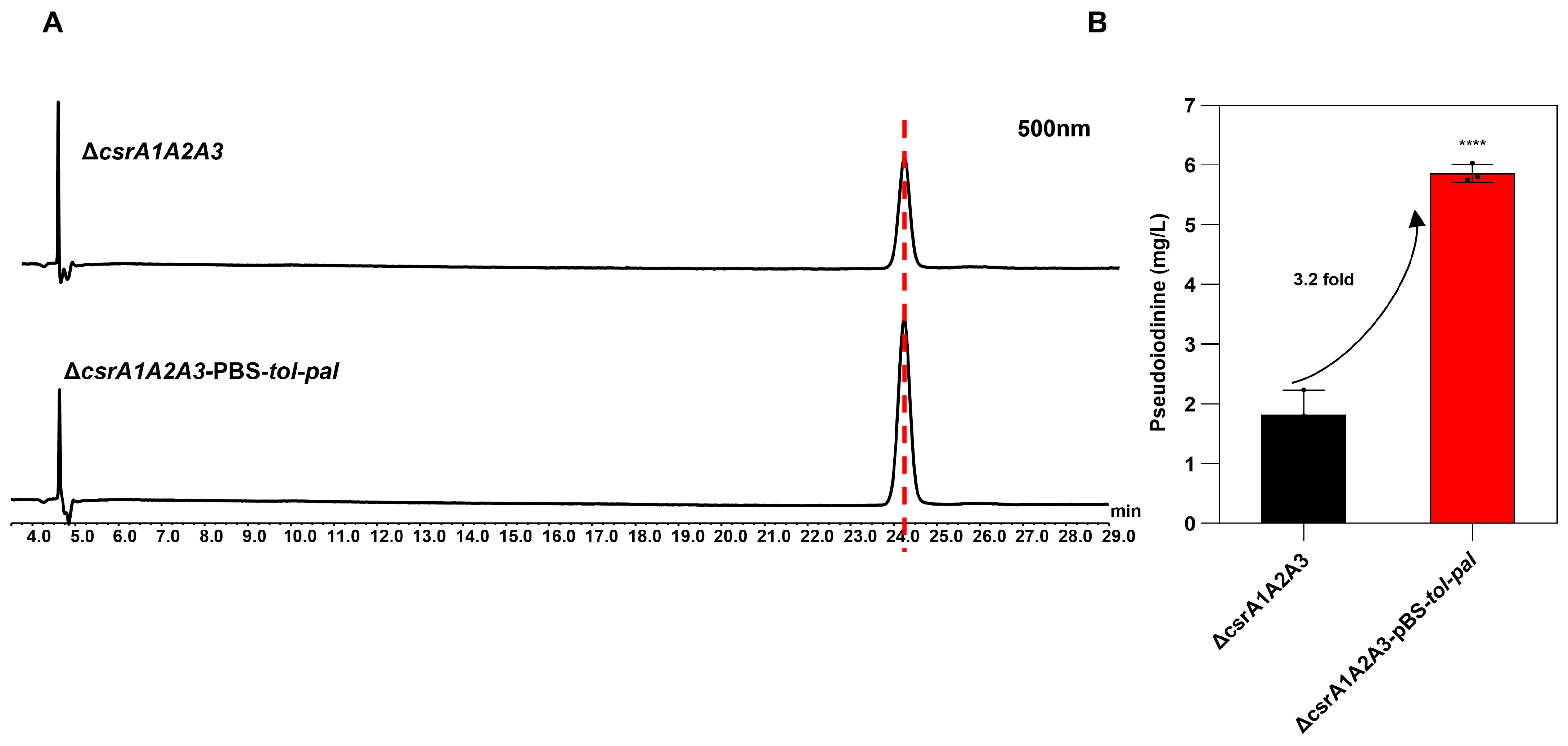
3.4. Overexpression of the Tol-Pal Operon Enhances Pseudoiodinine Production
4. Discussion
5. Conclusions
Supplementary Materials
Author Contributions
Funding
Institutional Review Board Statement
Informed Consent Statement
Data Availability Statement
Acknowledgments
Conflicts of Interest
Abbreviations
| GMS | Genetically modified strain |
| Xoc | Xanthomonas oryzae pv. oryzicola |
| Xoo | Xanthomonas oryzae pv. oryzae |
References
- Deng, Y.; He, Z. The seesaw action: Balancing plant immunity and growth. Sci. Bull. 2024, 69, 3–6. [Google Scholar] [CrossRef] [Scilit] [PubMed]
- Liu, F.; Xi, M.; Liu, T.; Wu, X.; Ju, L.; Wang, D. The central role of transcription factors in bridging biotic and abiotic stress responses for plants’ resilience. New Crops 2024, 1, 100005. [Google Scholar] [CrossRef] [Scilit]
- Ronald, P.; Leung, H. The most precious things are not jade and pearls. Science 2002, 296, 58–59. [Google Scholar] [CrossRef] [Scilit] [PubMed]
- Niño-Liu, D.O.; Ronald, P.C.; Bogdanove, A.J. Xanthomonas oryzae pathovars: Model pathogens of a model crop. Mol. Plant Pathol. 2006, 7, 303–324. [Google Scholar] [CrossRef] [Scilit] [PubMed]
- Cai, X.; He, W.; Qian, Q.; Shang, L. Genetic resource utilization in wild rice species: Genomes and gene bank. New Crops 2025, 2, 100065. [Google Scholar] [CrossRef] [Scilit]
- Kumar, S. Biopesticides: A need for food and environmental safety. J. Biofertil. Biopestic. 2012, 3, E107. [Google Scholar]
- Lahlali, R.; Ezrari, S.; Radouane, N.; Kenfaoui, J.; Esmaeel, Q.; El Hamss, H.; Belabess, Z.; Barka, E.A. Biological control of plant pathogens: A global perspective. Microorganisms 2022, 10, 596. [Google Scholar] [CrossRef] [Scilit] [PubMed]
- Yang, R.; Du, X.; Khojasteh, M.; Shah, S.M.A.; Peng, Y.; Zhu, Z.; Xu, Z.; Chen, G. Green guardians: The biocontrol potential of Pseudomonas-derived metabolites for sustainable agriculture. Biol. Control 2025, 201, 105699. [Google Scholar] [CrossRef] [Scilit]
- Gross, H.; Loper, J.E. Genomics of secondary metabolite production by Pseudomonas spp. Nat. Prod. Rep. 2009, 26, 1408–1446. [Google Scholar] [CrossRef] [Scilit] [PubMed]
- Dabboussi, F.; Hamze, M.; Singer, E.; Geoffroy, V.; Meyer, J.-M.; Izard, D. Pseudomonas mosselii sp. nov., a novel species isolated from clinical specimens. Int. J. Syst. Evol. Microbiol. 2002, 52, 363–376. [Google Scholar] [CrossRef] [Scilit] [PubMed]
- Li, W.; Wang, J.; Jiang, X.; Zhu, Q.; He, Y.; Fu, T.; Wang, Z. Identification and Characterization of a Pseudomonas mosselii strain and its Antibacterial Function against Agrobacterium tumefaciens. J. Plant Sci. 2020, 4, 223–231. [Google Scholar] [CrossRef] [Scilit]
- Wu, L.; Xiao, W.; Chen, G.; Song, D.; Khaskheli, M.A.; Li, P.; Zhang, S.; Feng, G. Identification of Pseudomonas mosselii BS011 gene clusters required for suppression of rice blast fungus Magnaporthe oryzae. J. Biotechnol. 2018, 282, 1–9. [Google Scholar] [CrossRef] [Scilit] [PubMed]
- De La Torre-Ruiz, N.; Ruiz-Valdiviezo, V.M.; Rincón-Molina, C.I.; Rodríguez-Mendiola, M.; Arias-Castro, C.; Gutiérrez-Miceli, F.A.; Palomeque-Dominguez, H.; Rincón-Rosales, R. Effect of plant growth-promoting bacteria on the growth and fructan production of Agave americana L. Braz. J. Microbiol. 2016, 47, 587–596. [Google Scholar] [CrossRef] [Scilit] [PubMed]
- Yang, R.; Shi, Q.; Huang, T.; Yan, Y.; Li, S.; Fang, Y.; Li, Y.; Liu, L.; Liu, L.; Wang, X. The natural pyrazolotriazine pseudoiodinine from Pseudomonas mosselii 923 inhibits plant bacterial and fungal pathogens. Nat. Commun. 2023, 14, 734. [Google Scholar] [CrossRef] [Scilit] [PubMed]
- Jin, K.; Zhou, L.; Jiang, H.; Sun, S.; Fang, Y.; Liu, J.; Zhang, X.; He, Y.-W. Engineering the central biosynthetic and secondary metabolic pathways of Pseudomonas aeruginosa strain PA1201 to improve phenazine-1-carboxylic acid production. Metab. Eng. 2015, 32, 30–38. [Google Scholar] [CrossRef] [Scilit] [PubMed]
- Lapouge, K.; Schubert, M.; Allain, F.H.T.; Haas, D. Gac/Rsm signal transduction pathway of γ-proteobacteria: From RNA recognition to regulation of social behaviour. Mol. Microbiol. 2008, 67, 241–253. [Google Scholar] [CrossRef] [Scilit] [PubMed]
- Whiteley, M.; Diggle, S.P.; Greenberg, E.P. Progress in and promise of bacterial quorum sensing research. Nature 2017, 551, 313–320, Erratum in Nature 2018, 555, 126. [Google Scholar] [CrossRef] [Scilit] [PubMed]
- Sánchez, S.; Chávez, A.; Forero, A.; García-Huante, Y.; Romero, A.; Sánchez, M.; Rocha, D.; Sánchez, B.; Avalos, M.; Guzmán-Trampe, S. Carbon source regulation of antibiotic production. J. Antibiot. 2010, 63, 442–459. [Google Scholar] [CrossRef] [Scilit] [PubMed]
- Bode, H.B.; Bethe, B.; Höfs, R.; Zeeck, A. Big effects from small changes: Possible ways to explore nature’s chemical diversity. ChemBioChem 2002, 3, 619–627. [Google Scholar] [CrossRef] [Scilit] [PubMed]
- Szczepaniak, J.; Press, C.; Kleanthous, C. The multifarious roles of Tol-Pal in Gram-negative bacteria. FEMS Microbiol. Rev. 2020, 44, 490–506, Erratum in FEMS Microbiol. Rev. 2021, 45, fuab027. [Google Scholar] [CrossRef] [Scilit] [PubMed]
- Li, S.; Hu, J.; Liu, C.; Lin, Z.; Peng, H.; Zhang, B.; Wang, X.; Guo, W.; Qi, J.; Tian, M. Inner membrane protein TolA facilitates the antibiotic resistance, environment adaptability, biofilm formation and virulence of avian pathogenic Escherichia coli. J. Integr. Agric. 2025, 25, 3842–3852. [Google Scholar] [CrossRef] [Scilit]
- Hirakawa, H.; Suzue, K.; Kurabayashi, K.; Tomita, H. The Tol-Pal system of uropathogenic Escherichia coli is responsible for optimal internalization into and aggregation within bladder epithelial cells, colonization of the urinary tract of mice, and bacterial motility. Front. Microbiol. 2019, 10, 1827. [Google Scholar] [CrossRef] [Scilit] [PubMed]
- Baccelli, P.; Rachedi, R.; Serrano, B.; Petiti, M.; Bernard, C.S.; Houot, L.; Duche, D. Timing of TolA and TolQ recruitment at the septum depends on the functionality of the Tol-Pal system. J. Mol. Biol. 2022, 434, 167519. [Google Scholar] [CrossRef] [Scilit] [PubMed]
- Bouveret, E.; Derouiche, R.; Rigal, A.; Lloubès, R.; Lazdunski, C.; Bénédetti, H. Peptidoglycan-associated lipoprotein-TolB interaction: A possible key to explaining the formation of contact sites between the inner and outer membranes of Escherichia coli. J. Biol. Chem. 1995, 270, 11071–11077. [Google Scholar] [PubMed]
- Karimullina, E.; Guo, Y.; Khan, H.M.; Emde, T.; Otwinowski, Z.; Tieleman, P.D.; Borek, D.; Savchenko, A. BPS2025-Novel findings in TolQ-TolR complex structure. Biophys. J. 2025, 124, 25a. [Google Scholar] [CrossRef] [Scilit]
- Szczepaniak, J.; Holmes, P.; Rajasekar, K.; Kaminska, R.; Samsudin, F.; Inns, P.G.; Rassam, P.; Khalid, S.; Murray, S.M.; Redfield, C. The lipoprotein Pal stabilises the bacterial outer membrane during constriction by a mobilisation-and-capture mechanism. Nat. Commun. 2020, 11, 1305. [Google Scholar] [CrossRef] [Scilit] [PubMed]
- Webster, R. The tol gene products and the import of macronmolecules into Escherichia coli. Mol. Microbiol. 1991, 5, 1005–1011. [Google Scholar] [CrossRef] [Scilit] [PubMed]
- Llamas, M.a.A.; Ramos, J.L.; Rodríguez-Herva, J.J. Mutations in each of the tol genes of Pseudomonas putida reveal that they are critical for maintenance of outer membrane stability. J. Bacteriol. 2000, 182, 4764–4772. [Google Scholar] [CrossRef] [Scilit] [PubMed]
- Lo Sciuto, A.; Fernandez-Pinar, R.; Bertuccini, L.; Iosi, F.; Superti, F.; Imperi, F. The periplasmic protein TolB as a potential drug target in Pseudomonas aeruginosa. PLoS ONE 2014, 9, e103784. [Google Scholar] [CrossRef] [Scilit] [PubMed][Green Version]
- Heilpern, A.J.; Waldor, M.K. CTXφ infection of Vibrio cholerae requires the tolQRA gene products. J. Bacteriol. 2000, 182, 1739–1747. [Google Scholar] [CrossRef] [Scilit] [PubMed]
- Li, Q.; Li, Z.; Fei, X.; Tian, Y.; Zhou, G.; Hu, Y.; Wang, S.; Shi, H. The role of TolA, TolB, and TolR in cell morphology, OMVs production, and virulence of Salmonella Choleraesuis. Amb. Express 2022, 12, 5. [Google Scholar] [CrossRef] [Scilit] [PubMed]
- Hirakawa, H.; Suzue, K.; Tomita, H. Roles of the Tol/Pal system in bacterial pathogenesis and its application to antibacterial therapy. Vaccines 2022, 10, 422. [Google Scholar] [CrossRef] [Scilit] [PubMed]
- Fortney, K.R.; Young, R.S.; Bauer, M.E.; Katz, B.P.; Hood, A.F.; Munson, R.S., Jr.; Spinola, S.M. Expression of peptidoglycan-associated lipoprotein is required for virulence in the human model of Haemophilus ducreyi infection. Infect. Immun. 2000, 68, 6441–6448. [Google Scholar] [CrossRef] [Scilit][Green Version]
- Dubuisson, J.-F.; Vianney, A.; Hugouvieux-Cotte-Pattat, N.; Lazzaroni, J.C. Tol-Pal proteins are critical cell envelope components of Erwinia chrysanthemi affecting cell morphology and virulence. Microbiology 2005, 151, 3337–3347. [Google Scholar] [CrossRef] [Scilit] [PubMed]
- Szczepaniak, J.; Webby, M.N. The Tol Pal system integrates maintenance of the three layered cell envelope. npj Antimicrob. Resist. 2024, 2, 46. [Google Scholar] [CrossRef] [Scilit] [PubMed]
- Tan, W.; Chng, S. Primary role of the Tol-Pal complex in bacterial outer membrane lipid homeostasis. Nat. Commun. 2025, 16, 2293. [Google Scholar] [CrossRef] [Scilit] [PubMed]
- Yang, R.; Li, S.; Li, Y.; Yan, Y.; Fang, Y.; Zou, L.; Chen, G. Bactericidal effect of Pseudomonas oryziphila sp. nov., a novel Pseudomonas species against Xanthomonas oryzae reduces disease severity of bacterial leaf streak of rice. Front. Microbiol. 2021, 12, 759536. [Google Scholar] [CrossRef] [Scilit] [PubMed]
- McCarthy, R.R.; Mooij, M.J.; Reen, F.J.; Lesouhaitier, O.; O’Gara, F. A new regulator of pathogenicity (bvlR) is required for full virulence and tight microcolony formation in Pseudomonas aeruginosa. Microbiology 2014, 160, 1488–1500. [Google Scholar] [CrossRef] [Scilit] [PubMed]
- Wang, M.; Ge, Z.; Fan, X.; Zhao, H.; Shi, Z.; Zhang, J.; Jin, L.; Li, Y.; Wang, J.; Zao, X. Downregulation of UDP-glucose 6-dehydrogenase predicts adverse outcomes in patients with colorectal cancer and promotes tumorigenesis. Sci. Rep. 2025, 15, 21522. [Google Scholar] [CrossRef] [Scilit] [PubMed]
- Webby, M.N.; Williams-Jones, D.P.; Press, C.; Kleanthous, C. Force-generation by the trans-envelope Tol-Pal system. Front. Microbiol. 2022, 13, 852176. [Google Scholar] [CrossRef] [Scilit] [PubMed]
- Egan, A.J. Bacterial outer membrane constriction. Mol. Microbiol. 2018, 107, 676–687. [Google Scholar] [CrossRef] [Scilit] [PubMed]
- Raaijmakers, J.M.; Mazzola, M. Diversity and natural functions of antibiotics produced by beneficial and plant pathogenic bacteria. Annu. Rev. Phytopathol. 2012, 50, 403–424. [Google Scholar] [CrossRef] [Scilit] [PubMed]
- Huang, Q.; Chen, X.; Ma, S.; Li, Z.; Sun, P. Ortho-alkyl phenylalkenoyl natural products: Structural diversity, bioactivities and biosynthesis. Nat. Prod. Rep. 2026. online ahead of print. [Google Scholar]
- Reybroeck, W.; De Vleeschouwer, M.; Marchand, S.; Sinnaeve, D.; Heylen, K.; De Block, J.; Madder, A.; Martins, J.C.; Heyndrickx, M. Cyclic lipodepsipeptides produced by Pseudomonas spp. naturally present in raw milk induce inhibitory effects on microbiological inhibitor assays for antibiotic residue screening. PLoS ONE 2014, 9, e98266. [Google Scholar] [CrossRef] [Scilit] [PubMed]
- Medarametla, P.; Greenhalgh, J.C.; Pöhner, I.; Welch, M.; Poso, A.; Kronenberger, T.; Rahman, T. A Twist of Fate: The Helix–Turn–Helix Motif in Pseudomonas aeruginosa ExsA Can Allosterically Stabilize the Ligand-Binding Domain. J. Chem. Inf. Model. 2025, 65, 12448–12463. [Google Scholar] [CrossRef] [Scilit] [PubMed]
- Muzio, F.M.; Hamilton, C.D.; Stincone, P.; Agaras, B.; Haney, C.H.; Petras, D.; Valverde, C. Comparative Multi-Omics Survey Reveals Novel Specialized Metabolites and Biosynthetic Gene Clusters Under GacS Control in Pseudomonas donghuensis Strain SVBP6. Mol. Microbiol. 2024, 122, 896–913. [Google Scholar] [CrossRef] [Scilit] [PubMed]
- Godlewska, R.; Wiśniewska, K.; Pietras, Z.; Jagusztyn-Krynicka, E.K. Peptidoglycan-associated lipoprotein (Pal) of Gram-negative bacteria: Function, structure, role in pathogenesis and potential application in immunoprophylaxis. FEMS Microbiol. Lett. 2009, 298, 1–11. [Google Scholar] [CrossRef] [Scilit] [PubMed]
- Van Wezel, G.P.; McDowall, K.J. The regulation of the secondary metabolism of Streptomyces: New links and experimental advances. Nat. Prod. Rep. 2011, 28, 1311–1333. [Google Scholar] [CrossRef] [Scilit] [PubMed]
- Raaijmakers, J.M.; De Bruijn, I.; Nybroe, O.; Ongena, M. Natural functions of lipopeptides from Bacillus and Pseudomonas: More than surfactants and antibiotics. FEMS Microbiol. Rev. 2010, 34, 1037–1062. [Google Scholar] [CrossRef] [Scilit] [PubMed]
- Demain, A.L.; Fang, A. The natural functions of secondary metabolites. In History of Modern Biotechnology I; Springer: Berlin/Heidelberg, Germany, 2001; pp. 1–39. [Google Scholar]
- Park, S.Y.; Yang, D.; Ha, S.H.; Lee, S.Y. Metabolic engineering of microorganisms for the production of natural compounds. Adv. Biosyst. 2018, 2, 1700190, Erratum in Adv. Biosyst. 2019, 3, 1900122. [Google Scholar]
- Adrio, J.L.; Demain, A.L. Genetic improvement of processes yielding microbial products. FEMS Microbiol. Rev. 2006, 30, 187–214. [Google Scholar] [CrossRef] [Scilit] [PubMed]
- Nielsen, J.; Keasling, J.D. Engineering cellular metabolism. Cell 2016, 164, 1185–1197. [Google Scholar] [CrossRef] [Scilit] [PubMed]
- Yang, X.; Yuan, L.; Zeeshan, M.; Yang, C.; Gao, W.; Zhang, G.; Wang, C. Optimization of fermentation conditions to increase the production of antifungal metabolites from Streptomyces sp. KN37. Microb. Cell Factories 2025, 24, 26. [Google Scholar] [CrossRef] [Scilit] [PubMed]
- Wakefield, J.; Hassan, H.M.; Jaspars, M.; Ebel, R.; Rateb, M.E. Dual induction of new microbial secondary metabolites by fungal bacterial co-cultivation. Front. Microbiol. 2017, 8, 1284. [Google Scholar] [CrossRef] [Scilit] [PubMed]
- Haryani, Y.; Halid, N.A.; Goh, S.G.; Nor-Khaizura, M.A.R.; Hatta, M.A.M.; Sabri, S.; Radu, S.; Hasan, H. Efficient metabolic pathway modification in various strains of lactic acid bacteria using CRISPR/Cas9 system for elevated synthesis of antimicrobial compounds. J. Biotechnol. 2024, 395, 53–63. [Google Scholar] [CrossRef] [Scilit] [PubMed]




| Gene ID | Gene Name | COG Function | KEGG Pathway |
|---|---|---|---|
| gene1426 | ptk | Protein tyrosine kinase | Not assigned |
| gene1940 | hth | Helix-turn-helix domain-containing protein | Not assigned |
| gene2877 | nrps | Non-ribosomal peptide synthetase | Metabolism of terpenoids and polyketides |
| gene1901 | cup | Cupin 4 family protein 50S ribosomal protein L16 3-hydroxylase | Translation |
| gene5089 | crc | Catabolite repression control protein Crc | Replication and repair |
| gene3909 | tolB | Tol-Pal system beta propeller repeat protein TolB | Membrane transport |
| gene3911 | tolR | Biopolymer transport protein TolR | Membrane transport |
| gene 3637 | gluS | Glutathione S-transferase Glutathionyl-hydroquinone reductase | Not assigned |
| gene1587 | excABC | Excinuclease ABC subunit B | Replication and repair |
| gene1427 | ugdh | UDP-glucose/GDP-mannose dehydrogenase family protein | Carbohydrate metabolism |
| gene3237 | yonR | SPBc2 prophage-derived uncharacterized HTH-type transcriptional regulator YonR | Not assigned |
| gene4305 | tonB | TonB-dependent siderophore receptor | Membrane transport |
Disclaimer/Publisher’s Note: The statements, opinions and data contained in all publications are solely those of the individual author(s) and contributor(s) and not of MDPI and/or the editor(s). MDPI and/or the editor(s) disclaim responsibility for any injury to people or property resulting from any ideas, methods, instructions or products referred to in the content. |
© 2026 by the authors. Licensee MDPI, Basel, Switzerland. This article is an open access article distributed under the terms and conditions of the Creative Commons Attribution (CC BY) license.
Share and Cite
Yang, R.; Du, X.; Zhang, H.; Yang, J.; Huang, Z.; Xu, N.; Zou, L.; Chen, G. The Tol-Pal System Promotes Pseudoiodinine Production by Enhancing Bacterial Growth in Pseudomonas mosselii. Microorganisms 2026, 14, 2079. https://doi.org/10.3390/microorganisms14092079
Yang R, Du X, Zhang H, Yang J, Huang Z, Xu N, Zou L, Chen G. The Tol-Pal System Promotes Pseudoiodinine Production by Enhancing Bacterial Growth in Pseudomonas mosselii. Microorganisms. 2026; 14(9):2079. https://doi.org/10.3390/microorganisms14092079
Chicago/Turabian StyleYang, Ruihuan, Xiangning Du, Heng Zhang, Jiacan Yang, Zhuoyi Huang, Ning Xu, Lifang Zou, and Gongyou Chen. 2026. "The Tol-Pal System Promotes Pseudoiodinine Production by Enhancing Bacterial Growth in Pseudomonas mosselii" Microorganisms 14, no. 9: 2079. https://doi.org/10.3390/microorganisms14092079
APA StyleYang, R., Du, X., Zhang, H., Yang, J., Huang, Z., Xu, N., Zou, L., & Chen, G. (2026). The Tol-Pal System Promotes Pseudoiodinine Production by Enhancing Bacterial Growth in Pseudomonas mosselii. Microorganisms, 14(9), 2079. https://doi.org/10.3390/microorganisms14092079