Non-Conventional Yeasts with Probiotic Potential: Diversity, Functional Role, Sustainable Bioprocessing and Local Relevance

Abstract
1. Introduction
2. General Properties of Yeasts with Probiotic Potential
3. Saccharomyces boulardii
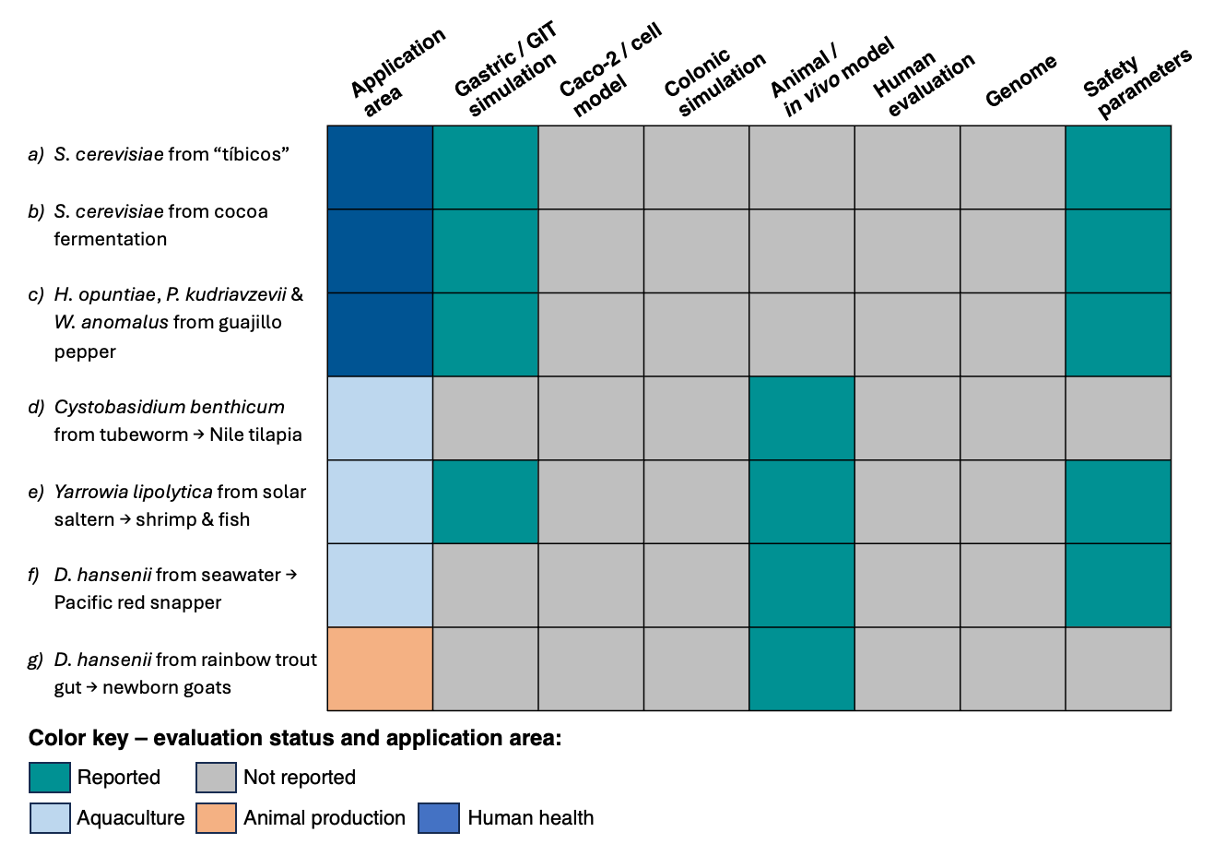
4. Isolation Niches and Local Relevance of Candidate Probiotic Yeasts
5. Snapshot of Three Species with Promising Potential

| Species | Key In Vitro Functional and Host-Related Models | Animal Evidence | Safety Characterization/Genomics | Evidence in Target Host | Commercial Readiness/Health Claim |
|---|---|---|---|---|---|
| K. marxianus | Strain PCH397 (yak milk): high GIT survival (78–99%), hydrophobicity (~81%) and autoaggregation (96%) [103]. Strain A4 (kefir): higher GIT survival than Sb, with hydrophobicity, biofilm formation, and autoaggregation [104]. Strain B0399 (dairy): high Caco-2 adhesion; modulation of inflammatory responses in PBMCs/Caco-2 cells; increased bifidobacteria in a human colonic model [105]. Strain CBS 1553: anti-inflammatory Foxp3+ Treg response, contrasting with the TH1 response induced by Sb [106]. | Strain CIDCA 8154 (kefir) reduced colitis histopathology and circulating IL-6 in mice [107]. | QPS status (Qualification 1) &. Strains A4 and A5 (kefir): non-hemolytic; safety confirmed in mice [108]. Draft genome available for B0399 [109]. | No controlled human trials identified. | Strong food/industry association. B0399 marketed mainly in Italy as DiarYeast® (“probiotic dairy yeast”). |
| D. hansenii | 23 food/fish-gut strains: GIT survival, Caco-2/mucin adhesion and strain-dependent anti-inflammatory responses; some strains showed stronger adhesion or higher IL-10/IL-12 ratios than Sb [74]. | Enhanced immune/antioxidant responses, growth, gut condition and host defense in gilthead seabream [110,111]; stimulated innate immune and antioxidant parameters in newborn goats [95]. | QPS status (Qualification 1) &. May be a less common human pathogen than previously thought because of earlier misidentification [112]. | No controlled human trials identified. Probiotic effects reported in terrestrial and aquatic target animals [113]. | Potential adoption in aquaculture has been proposed [113]. |
| P. kudriavzevii | Strain YGM091 (goat milk): high acid/bile survival, hydrophobicity, aggregation and antioxidant activity; fluconazole resistant, susceptible to other tested antifungals, non-hemolytic and lacking tested virulence enzymes [114]. Strain Y33 (mango pickle): high acid/bile survival, autoaggregation, and cholesterol assimilation; no antifungal testing [115]. Strain 5S5: selected among 105 isolates for GIT survival, intestinal-cell adhesion and hydrophobicity, using Sb as reference [116]. | Strain YGM091: in vivo safety in Galleria mellonella [114]. | Not QPS-recommended. It exhibits intrinsic fluconazole resistance and is included in the WHO fungal priority pathogens list [74]. Complete genome available for strain SJP-SNU (fermented plants); no antifungal testing reported; no mortality induced in chicken embryos [117]. | No controlled human trials identified. Isolate 8 (rumen fistula of Hu sheep) improved growth, digestibility and rumen fermentation in Hu sheep [118]. | No established live human probiotic application identified; rigorous strain-level safety assessment required. |
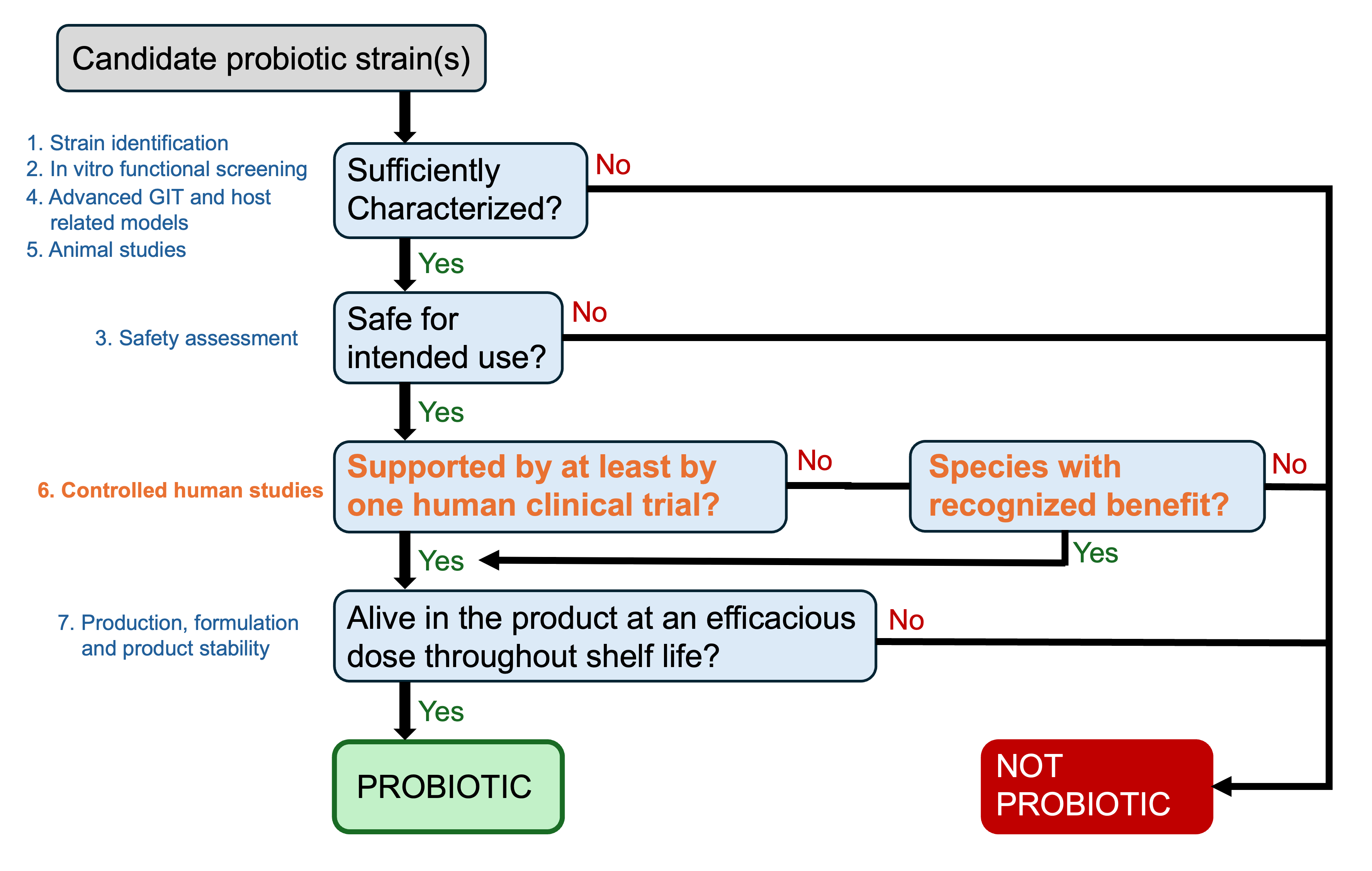
6. Probiotic Activity and Safety Assessment
| Evidence Level | Assay or Approach | Purpose |
|---|---|---|
| 1. Strain identification | Strain-level identification (DNA barcodes/phenotypic tests); WGS and phylogenomic analyses. | Unambiguous taxonomic identification. |
| 2. In vitro functional screening | Simulated GIT survival (acid and bile tolerance/digestion); cell-surface properties (hydrophobicity, auto- and coaggregation); antimicrobial and antioxidant activities; beneficial enzymatic activities. | Identifies promising candidates and provides functional or mechanistic evidence under host-related conditions. |
| 3. Safety assessment | History of safe use; species-specific concerns; QPS status; antifungal susceptibility; hemolysis and other virulence-related phenotypes; genomic screening for virulence- and resistance-associated determinants. | Establishes candidate safety for the intended use. |
| 4. Advanced GIT and host-related models | SHIME or other dynamic GIT models; relevant intestinal or other host–cell models (e.g., Caco-2/HT-29). | Provides physiologically relevant supportive evidence under simplified host conditions. |
| 5. Animal studies | Relevant animal models, including Caenorhabditis elegans, G. mellonella and mice. | Provides in vivo evidence of biological effects and safety; may also support veterinary or agricultural applications. |
| 6. Controlled human studies | Appropriate study design; defined strain and dose; relevant clinical biomarkers and outcomes. | Demonstrates health benefit in the target host, a key criterion for probiotic status. |
| 7. Production, formulation and product stability | Effective viable dose; survival during production/processing; formulation and shelf-life stability; sensory acceptance. | Determines whether the strain can be delivered at the effective viable dose throughout shelf life. |
| 8. Regulatory assessment and potential application | Requirements according to microorganism, product category, intended use, target population and jurisdiction. | Assesses regulatory requirements for the intended application, including probiotic qualification, health claims and market authorization. |
7. Sustainable Production of Probiotic Yeast Biomass
8. Encapsulation and Controlled Release
9. Incorporation into Functional Foods and Food Matrices
10. Conclusions
11. Future Perspectives
Author Contributions
Funding
Institutional Review Board Statement
Informed Consent Statement
Data Availability Statement
Conflicts of Interest
References
- Gasbarrini, G.; Bonvicini, F.; Gramenzi, A. Probiotics History. J. Clin. Gastroenterol. 2016, 50, S116–S119. [Google Scholar] [CrossRef] [Scilit]
- Hill, C.; Guarner, F.; Reid, G.; Gibson, G.R.; Merenstein, D.J.; Pot, B.; Morelli, L.; Canani, R.B.; Flint, H.J.; Salminen, S.; et al. Expert Consensus Document: The International Scientific Association for Probiotics and Prebiotics Consensus Statement on the Scope and Appropriate Use of the Term Probiotic. Nat. Rev. Gastroenterol. Hepatol. 2014, 11, 506–514. [Google Scholar] [CrossRef] [Scilit]
- Tofalo, R.; Fusco, V.; Böhnlein, C.; Kabisch, J.; Logrieco, A.F.; Habermann, D.; Cho, G.-S.; Benomar, N.; Abriouel, H.; Schmidt-Heydt, M.; et al. The Life and Times of Yeasts in Traditional Food Fermentations. Crit. Rev. Food Sci. Nutr. 2020, 60, 3103–3132. [Google Scholar] [CrossRef] [Scilit]
- McFarland, L.V. From Yaks to Yogurt: The History, Development, and Current Use of Probiotics. Clin. Infect. Dis. 2015, 60, S85–S90. [Google Scholar] [CrossRef] [Scilit]
- Perpetuini, G.; Waché, Y.; Tofalo, R. Yeasts as Probiotics and Their Functional Roles. In Probiotics, Prebiotics and Synbiotics; Panesar, P.S., Anal, A.K., Eds.; John Wiley & Sons: Hoboken, NJ, USA, 2022; pp. 103–121. [Google Scholar] [CrossRef] [Scilit]
- Metchnikoff, E. Part IV. Chapter IV. Lactic Acid as Inhibiting Intestinal Putrefaction. In The prolongation of Life: Optimistic Studies; Chalmers Mitchell, P., Ed.; G. P. Putnam’s Sons: New York, NY, USA; London, UK, 1908; pp. 161–183. [Google Scholar]
- McFarland, L.V. Common Organisms and Probiotics: Saccharomyces boulardii. In The Microbiota in Gastrointestinal Pathophysiology; Floch, M.H., Ringel, Y., Walker, W.A., Eds.; Academic Press: Cambridge, MA, USA, 2017. [Google Scholar] [CrossRef] [Scilit]
- Biocodex Our Heritage. Available online: https://www.biocodex.com/en/about-us/biocodex-heritage/ (accessed on 12 July 2026).
- Vohra, A.; Satyanarayana, T. Probiotic Yeasts. In Microorganisms in Sustainable Agriculture and Biotechnology; Satyanarayana, T., Johri, B.N., Prakash, A., Eds.; Springer: Dordrecht, The Netherlands, 2012; pp. 411–433. [Google Scholar] [CrossRef] [Scilit]
- Choudhary, V.; Vohra, A.; Madan, A.; Satyanarayana, T. Probiotic Yeasts in Human Welfare. In Yeast Diversity in Human Welfare; Satyanarayana, T., Kunze, G., Eds.; Springer: Singapore, 2017; pp. 115–136. [Google Scholar]
- Vergara, S.C.; Leiva, M.J.; Mestre, M.V.; Vazquez, F.; Nally, M.C.; Maturano, Y.P. Non-Saccharomyces Yeast Probiotics: Revealing Relevance and Potential. FEMS Yeast Res. 2023, 23, foad041. [Google Scholar] [CrossRef] [Scilit]
- Shahryari, S.; Sadeghi, A. Probiotic Yeasts. In Handbook of Food Bioactive Ingredients; Jafari, S.M., Rashidinejad, A., Simal-Gandara, J., Eds.; Springer : Cham, Switzerland, 2023; pp. 1533–1553. [Google Scholar] [CrossRef] [Scilit]
- Tullio, V. Probiotic Yeasts: A Developing Reality? J. Fungi 2024, 10, 489. [Google Scholar] [CrossRef] [Scilit]
- de Castro Oliveira, W.; de Brito, L.P.; de Souza, E.A.G.; Lopes, I.L.; de Oliveira, C.A.; de Andrade Calaça, P.R.; Oliveira, M.B.P.P.; Costa, E.D. The Yeast-Based Probiotic Encapsulation Scenario: A Systematic Review and Meta-Analysis. Appl. Sci. 2024, 14, 5461. [Google Scholar] [CrossRef] [Scilit]
- Moonsamy, G.; Roets-Dlamini, Y.; Langa, C.N.; Ramchuran, S.O. Advances in Yeast Probiotic Production and Formulation for Preventative Health. Microorganisms 2024, 12, 2233. [Google Scholar] [CrossRef] [Scilit]
- Cicero, A.F.G.; Bartoli, C.; Lluís-Ganella, C.; Fabrizzi, P. Probiotic Yeasts and Bacteria: A Complementary Approach to Gut Health. Microorganisms 2026, 14, 1763. [Google Scholar] [CrossRef] [Scilit]
- Cunningham, M.; Azcarate-Peril, M.A.; Barnard, A.; Benoit, V.; Grimaldi, R.; Guyonnet, D.; Holscher, H.D.; Hunter, K.; Manurung, S.; Obis, D.; et al. Shaping the Future of Probiotics and Prebiotics. Trends Microbiol. 2021, 29, 667–685. [Google Scholar] [CrossRef] [Scilit]
- Kurtzman, C.P.; Fell, J.W.; Boekhout, T. Chapter 1. Definition, Classification and Nomenclature of the Yeasts. In The Yeasts, a Taxonomic Study; Kurtzman, C.P., Fell, J.W., Boekhout, T., Eds.; Elsevier: Amsterdam, The Netherlands, 2011; pp. 3–5. [Google Scholar]
- Nagy, L.G.; Tóth, R.; Kiss, E.; Slot, J.; Gácser, A.; Kovács, G.M. Six Key Traits of Fungi: Their Evolutionary Origins and Genetic Bases. Microbiol. Spectr. 2017, 5, 35–56. [Google Scholar] [CrossRef] [Scilit]
- Boekhout, T.; Amend, A.S.; El Baidouri, F.; Gabaldón, T.; Geml, J.; Mittelbach, M.; Robert, V.; Tan, C.S.; Turchetti, B.; Vu, D.; et al. Trends in Yeast Diversity Discovery. Fungal Divers. 2022, 114, 491–537. [Google Scholar] [CrossRef] [Scilit]
- Seike, T.; Ide, M.; Yamamoto, M.; Yurimoto, H.; Shiraishi, K. Phenotypic Diversity of Yeasts Curated in the 5th Edition of The Yeasts: A Data-Driven Visualization Approach. bioRxiv 2026. [Google Scholar] [CrossRef] [Scilit]
- Nenciarini, S.; Renzi, S.; di Paola, M.; Meriggi, N.; Cavalieri, D. Ascomycetes Yeasts: The Hidden Part of Human Microbiome. WIREs Mech. Dis. 2024, 16, e1641. [Google Scholar] [CrossRef] [Scilit]
- Zhao, X.; Hu, X.; Han, J.; Yin, R.; Zhang, S.; Liu, H. Gut Mycobiome: A “Black Box” of Gut Microbiome–Host Interactions. WIREs Mech. Dis. 2023, 15, e1611. [Google Scholar] [CrossRef] [Scilit]
- Mueller, K.D.; Lee, S.C. Yeasts in the Gastrointestinal Tract. FEMS Yeast Res. 2026, 26, foag029. [Google Scholar] [CrossRef] [Scilit]
- Mohammadi, R.; Morovati, H.; Safari, F. The Human Mycobiome: A Critical yet Understudied Component of Health and Disease. Microbiology 2025, 171, 001631. [Google Scholar] [CrossRef] [Scilit]
- Binati, R.L.; Salvetti, E.; Bzducha-Wróbel, A.; Bašinskienė, L.; Čižeikienė, D.; Bolzonella, D.; Felis, G.E. Non-Conventional Yeasts for Food and Additives Production in a Circular Economy Perspective. FEMS Yeast Res. 2021, 21, foab052. [Google Scholar] [CrossRef] [Scilit]
- Comitini, F.; Canonico, L.; Agarbati, A.; Ciani, M. Biocontrol and Probiotic Function of Non-Saccharomyces Yeasts: New Insights in Agri-Food Industry. Microorganisms 2023, 11, 1450. [Google Scholar] [CrossRef] [Scilit]
- Zinno, P.; Perozzi, G.; Devirgiliis, C. Foodborne Microbial Communities as Potential Reservoirs of Antimicrobial Resistance Genes for Pathogens: A Critical Review of the Recent Literature. Microorganisms 2023, 11, 1696. [Google Scholar] [CrossRef] [Scilit]
- Gonçalves, P.; Gonçalves, C. Horizontal Gene Transfer in Yeasts. Curr. Opin. Genet. Dev. 2022, 76, 101950. [Google Scholar] [CrossRef] [Scilit]
- Shruthi, B.; Deepa, N.; Somashekaraiah, R.; Adithi, G.; Divyashree, S.; Sreenivasa, M.Y. Exploring Biotechnological and Functional Characteristics of Probiotic Yeasts: A Review. Biotechnol. Rep. 2022, 34, e00716. [Google Scholar] [CrossRef] [Scilit]
- Alkalbani, N.S.; Osaili, T.M.; Al-Nabulsi, A.A.; Olaimat, A.N.; Liu, S.-Q.; Shah, N.P.; Apostolopoulos, V.; Ayyash, M.M. Assessment of Yeasts as Potential Probiotics: A Review of Gastrointestinal Tract Conditions and Investigation Methods. J. Fungi 2022, 8, 365. [Google Scholar] [CrossRef] [Scilit]
- Jofre, F.M.; de Souza Queiroz, S.; Sanchez, D.A.; Arruda, P.V.; Santos, J.C.D.; das Graças de Almeida Felipe, M. Biotechnological Potential of Yeast Cell Wall: An Overview. Biotechnol. Prog. 2024, 40, e3491. [Google Scholar] [CrossRef] [Scilit]
- Batbayar, S.; Lee, D.H.; Kim, H.W. Immunomodulation of Fungal β-Glucan in Host Defense Signaling by Dectin-1. Biomol. Ther. 2012, 20, 433–445. [Google Scholar] [CrossRef] [Scilit]
- De Marco Castro, E.; Calder, P.C.; Roche, H.M. β-1,3/1,6-Glucans and Immunity: State of the Art and Future Directions. Mol. Nutr. Food Res. 2021, 65, e1901071. [Google Scholar] [CrossRef] [Scilit]
- Fernández-Pacheco, P.; Ramos Monge, I.M.; Fernández-González, M.; Poveda Colado, J.M.; Arévalo-Villena, M. Safety Evaluation of Yeasts With Probiotic Potential. Front. Nutr. 2021, 8, 659328. [Google Scholar] [CrossRef] [Scilit]
- Kelesidis, T.; Pothoulakis, C. Efficacy and Safety of the Probiotic Saccharomyces boulardii for the Prevention and Therapy of Gastrointestinal Disorders. Ther. Adv. Gastroenterol. 2012, 5, 111–125. [Google Scholar] [CrossRef] [Scilit]
- de Melo Pereira, G.V.; de Oliveira Coelho, B.; Magalhães Júnior, A.I.; Thomaz-Soccol, V.; Soccol, C.R. How to Select a Probiotic? A Review and Update of Methods and Criteria. Biotechnol. Adv. 2018, 36, 2060–2076. [Google Scholar] [CrossRef] [Scilit]
- Morard, M.; Pérez-Través, L.; Perpiñá, C.; Lairón-Peris, M.; Collado, M.C.; Pérez-Torrado, R.; Querol, A. Comparative Genomics of Infective Saccharomyces cerevisiae Strains Reveals Their Food Origin. Sci. Rep. 2023, 13, 10435. [Google Scholar] [CrossRef] [Scilit]
- Evans, D.F.; Pye, G.; Bramley, R.; Clark, A.G.; Dyson, J.; Hardcastle, J.D. Measurement of Gastrointestinal PH Profiles in Normal Ambulant Human Subjects. Gut 1988, 29, 1035–1041. [Google Scholar] [CrossRef] [Scilit]
- Schiavone, M.; François, J.M.; Zerbib, D.; Capp, J.P. Emerging Relevance of Cell Wall Components from Non-Conventional Yeasts as Functional Ingredients for the Food and Feed Industry. Curr. Res. Food Sci. 2023, 7, 100603. [Google Scholar] [CrossRef] [Scilit]
- Netea, M.G.; Domínguez-Andrés, J.; Barreiro, L.B.; Chavakis, T.; Divangahi, M.; Fuchs, E.; Joosten, L.A.B.; van der Meer, J.W.M.; Mhlanga, M.M.; Mulder, W.J.M.; et al. Defining Trained Immunity and Its Role in Health and Disease. Nat. Rev. Immunol. 2020, 20, 375–388. [Google Scholar] [CrossRef] [Scilit]
- Ogawa, C.; Liu, Y.-J.; Kobayashi, K.S. Muramyl Dipeptide and Its Derivatives: Peptide Adjuvant in Immunological Disorders and Cancer Therapy. Curr. Bioact. Compd. 2011, 7, 180–197. [Google Scholar] [CrossRef] [Scilit]
- Vacariu, C.M.; Tanner, M.E. Recent Advances in the Synthesis and Biological Applications of Peptidoglycan Fragments. Chem.—A Eur. J. 2022, 28, e202200788. [Google Scholar] [CrossRef] [Scilit]
- Guryanova, S.V.; Khaitov, R.M. Strategies for Using Muramyl Peptides—Modulators of Innate Immunity of Bacterial Origin—In Medicine. Front. Immunol. 2021, 12, 607178. [Google Scholar] [CrossRef] [Scilit]
- Dong, Z.; Wang, L.; An, Y.; Wang, T.; Dong, H.; Li, Q.; Li, H.; Chen, L. Saccharomyces boulardii as a Probiotic Yeast in Food Applications and Its Health Properties: A Review and Future Perspectives. Front. Nutr. 2026, 13, 1864466. [Google Scholar] [CrossRef] [Scilit]
- McFarland, L.V. Saccharomyces boulardii Is Not Saccharomyces cerevisiae. Clin. Infect. Dis. 1996, 22, 200–201. [Google Scholar] [CrossRef] [Scilit][Green Version]
- Mitterdorfer, G.; Mayer, H.K.; Kneifel, W.; Viernstein, H. Clustering of Saccharomyces boulardii Strains within the Species S. cerevisiae Using Molecular Typing Techniques. J. Appl. Microbiol. 2002, 93, 521–530. [Google Scholar] [CrossRef] [Scilit]
- Khatri, I.; Tomar, R.; Ganesan, K.; Prasad, G.S.; Subramanian, S. Complete Genome Sequence and Comparative Genomics of the Probiotic Yeast Saccharomyces boulardii. Sci. Rep. 2017, 7, 371. [Google Scholar] [CrossRef] [Scilit]
- Duffey, H.E.; Hedin, K.A.; Gelli, H.P.; Vaaben, T.H.; Sommer, M.O.A. Genomic and Phenotypic Comparisons Reveal Lineage-Specific Traits of the Probiotic Saccharomyces boulardii. iScience 2026, 29, 115706. [Google Scholar] [CrossRef] [Scilit]
- Offei, B.; Vandecruys, P.; De Graeve, S.; Foulquié-Moreno, M.R.; Thevelein, J.M. Unique Genetic Basis of the Distinct Antibiotic Potency of High Acetic Acid Production in the Probiotic Yeast Saccharomyces cerevisiae Var. Boulardii. Genome Res. 2019, 29, 1478–1494. [Google Scholar] [CrossRef] [Scilit]
- Ting, T.-Y.; Lee, W.-J.; Goh, H.-H. Molecular Genetics and Probiotic Mechanisms of Saccharomyces cerevisiae Var. Boulardii. Probiotics Antimicrob. Proteins 2026, 18, 3040–3054. [Google Scholar] [CrossRef] [Scilit]
- Stier, H.; Bischoff, S. Influence of Saccharomyces boulardii CNCM I-745 on the Gut-Associated Immune System. Clin. Exp. Gastroenterol. 2016, 9, 269–279. [Google Scholar] [CrossRef] [Scilit]
- Moré, M.I.; Vandenplas, Y. Saccharomyces boulardii CNCM I-745 Improves Intestinal Enzyme Function: A Trophic Effects Review. Clin. Med. Insights Gastroenterol. 2018, 11, 1179552217752679. [Google Scholar] [CrossRef] [Scilit]
- Terciolo, C.; Dapoigny, M.; Andre, F. Beneficial Effects of Saccharomyces boulardii CNCM I-745 on Clinical Disorders Associated with Intestinal Barrier Disruption. Clin. Exp. Gastroenterol. 2019, 12, 67–82. [Google Scholar] [CrossRef] [Scilit]
- Czerucka, D.; Rampal, P. Diversity of Saccharomyces boulardii CNCM I-745 Mechanisms of Action against Intestinal Infections. World J. Gastroenterol. 2019, 25, 2188–2203. [Google Scholar] [CrossRef] [Scilit]
- Pais, P.; Almeida, V.; Yılmaz, M.; Teixeira, M.C. Saccharomyces boulardii: What Makes It Tick as Successful Probiotic? J. Fungi 2020, 6, 78. [Google Scholar] [CrossRef] [Scilit]
- Hittinger, C.T.; Steele, J.L.; Ryder, D.S. Diverse Yeasts for Diverse Fermented Beverages and Foods. Curr. Opin. Biotechnol. 2018, 49, 199–206. [Google Scholar] [CrossRef] [Scilit]
- van der Aa Kühle, A.; Skovgaard, K.; Jespersen, L. In Vitro Screening of Probiotic Properties of Saccharomyces cerevisiae Var. Boulardii and Food-Borne Saccharomyces cerevisiae Strains. Int. J. Food Microbiol. 2005, 101, 29–39. [Google Scholar] [CrossRef] [Scilit]
- Romero-Luna, H.E.; Hernández-Sánchez, H.; Ribas-Aparicio, R.M.; Cauich-Sánchez, P.I.; Dávila-Ortiz, G. Evaluation of the Probiotic Potential of Saccharomyces cerevisiae Strain (C41) Isolated from Tibicos by In Vitro Studies. Probiotics Antimicrob. Proteins 2019, 11, 794–800. [Google Scholar] [CrossRef] [Scilit]
- Rai, A.K.; Jeyaram, K. Role of Yeasts in Food Fermentation. In Yeast Diversity in Human Welfare; Satyanarayana, T., Kunze, G., Eds.; Springer: Singapore, 2017; pp. 83–113. [Google Scholar] [CrossRef] [Scilit]
- Bhalla, T.C. Savitri Yeasts and Traditional Fermented Foods and Beverages. In Yeast Diversity in Human Welfare; Springer: Singapore, 2017; pp. 53–82. [Google Scholar]
- Kunyeit, L.; Rao, R.P.; Anu-Appaiah, K.A. Yeasts Originating from Fermented Foods, Their Potential as Probiotics and Therapeutic Implication for Human Health and Disease. Crit. Rev. Food Sci. Nutr. 2024, 64, 6660–6671. [Google Scholar] [CrossRef] [Scilit]
- Moslehi-Jenabian, S.; Lindegaard, L.; Jespersen, L. Beneficial Effects of Probiotic and Food Borne Yeasts on Human Health. Nutrients 2010, 2, 449–473. [Google Scholar] [CrossRef] [Scilit]
- Staniszewski, A.; Staniszewska, P.; Kordowska-Wiater, M. Probiotic Yeasts and How to Find Them—From Spoilage to Probiotic. Appl. Sci. 2024, 14, 11698. [Google Scholar] [CrossRef] [Scilit]
- Staniszewski, A.; Kordowska-Wiater, M. Probiotic and Potentially Probiotic Yeasts—Characteristics and Food Application. Foods 2021, 10, 1306. [Google Scholar] [CrossRef] [Scilit]
- Tamang, J.P.; Lama, S. Probiotic Properties of Yeasts in Traditional Fermented Foods and Beverages. J. Appl. Microbiol. 2022, 132, 3533–3542. [Google Scholar] [CrossRef] [Scilit]
- Kanyakam, K.; Prakitchaiwattana, C. Influence of Isolation Source on the Probiotic Properties and Health Benefits of Yeasts: Insights from Metabarcoding and Cultivation Approaches. Appl. Microbiol. 2025, 5, 76. [Google Scholar] [CrossRef] [Scilit]
- Sonets, I.V.; Solovyev, M.A.; Ivanova, V.A.; Vasiluev, P.A.; Kachalkin, A.V.; Ochkalova, S.D.; Korobeynikov, A.I.; Razin, S.V.; Ulianov, S.V.; Tyakht, A.V. Hi-C Metagenomics Facilitate Comparative Genome Analysis of Bacteria and Yeast from Spontaneous Beer and Cider. Food Microbiol. 2024, 121, 104520. [Google Scholar] [CrossRef] [Scilit]
- Álvarez, M.; Andrade, M.J.; Cebrián, E.; Roncero, E.; Delgado, J. Perspectives on the Probiotic Potential of Indigenous Moulds and Yeasts in Dry-Fermented Sausages. Microorganisms 2023, 11, 1746. [Google Scholar] [CrossRef] [Scilit]
- Fernández-Pacheco, P.; Rosa, I.Z.; Arévalo-Villena, M.; Gomes, E.; Pérez, A.B. Study of Potential Probiotic and Biotechnological Properties of Non-Saccharomyces Yeasts from Fruit Brazilian Ecosystems. Braz. J. Microbiol. 2021, 52, 2129–2144. [Google Scholar] [CrossRef] [Scilit]
- Agarbati, A.; Moretti, L.; Canonico, L.; Ciani, M.; Comitini, F. Agro-Ecosystem of Honeybees as Source for Native Probiotic Yeasts. World J. Microbiol. Biotechnol. 2024, 40, 147. [Google Scholar] [CrossRef] [Scilit]
- Xue, S.-J.; Zhou, M.; Guo, J.; Zhao, F.-Y.; Jiang, W.-W.; Huang, X.; Zhang, J.-Y. Unveiling the Culturable and Non-Culturable Yeast Biodiversity in Chaste Honey Produced by the Sympatric Apis Cerana and Apis Mellifera from Eastern China. Int. J. Food Microbiol. 2025, 443, 111423. [Google Scholar] [CrossRef] [Scilit]
- Zahoor, F.; Sooklim, C.; Songdech, P.; Duangpakdee, O.; Soontorngun, N. Selection of Potential Yeast Probiotics and a Cell Factory for Xylitol or Acid Production from Honeybee Samples. Metabolites 2021, 11, 312. [Google Scholar] [CrossRef] [Scilit]
- Ochangco, H.S.; Gamero, A.; Smith, I.M.; Christensen, J.E.; Jespersen, L.; Arneborg, N. In Vitro Investigation of Debaryomyces hansenii Strains for Potential Probiotic Properties. World J. Microbiol. Biotechnol. 2016, 32, 141. [Google Scholar] [CrossRef] [Scilit]
- Meral-Aktaş, H.; Çetin, B.; Güler, M.A.; Albayrak, B.; Tekgündüz, K.Ş.; Kara, M.; Işlek, A. Safety Aspects and in Vitro Probiotic Assessment of Kluyveromyces marxianus Strains from Neonatal Faeces. Antonie Van Leeuwenhoek 2025, 118, 79. [Google Scholar] [CrossRef] [Scilit]
- Psomas, E.I.; Fletouris, D.J.; Litopoulou-Tzanetaki, E.; Tzanetakis, N. Assimilation of Cholesterol by Yeast Strains Isolated from Infant Feces and Feta Cheese. J. Dairy Sci. 2003, 86, 3416–3422. [Google Scholar] [CrossRef] [Scilit]
- Wu, F.; Wang, Y.; Mai, Z.; Xu, Z.; Li, S.; Li, Y.; Yin, R.; Li, J.; Yu, Z.; Wu, Y.; et al. Human Intestinal Fungus Clavispora lusitaniae Attenuates Colitis through Pyruvate Decarboxylase-Derived Indole-3-Ethanol. Nat. Commun. 2025, 16, 9980. [Google Scholar] [CrossRef] [Scilit]
- García-Hernández, Y.; Rodríguez, Z.; Brandão, L.R.; Rosa, C.A.; Nicoli, J.R.; Elías Iglesias, A.; Peréz-Sanchez, T.; Salabarría, R.B.; Halaihel, N. Identification and in Vitro Screening of Avian Yeasts for Use as Probiotic. Res. Vet. Sci. 2012, 93, 798–802. [Google Scholar] [CrossRef] [Scilit]
- Sybesma, W.; Kort, R.; Lee, Y.-K. Locally Sourced Probiotics, the next Opportunity for Developing Countries? Trends Biotechnol. 2015, 33, 197–200. [Google Scholar] [CrossRef] [Scilit]
- Román, S.; Sánchez-Siles, L.M.; Siegrist, M. The Importance of Food Naturalness for Consumers: Results of a Systematic Review. Trends Food Sci. Technol. 2017, 67, 44–57. [Google Scholar] [CrossRef] [Scilit]
- Setta, M.C.; Matemu, A.; Mbega, E.R. Potential of Probiotics from Fermented Cereal-Based Beverages in Improving Health of Poor People in Africa. J. Food Sci. Technol. 2020, 57, 3935–3946. [Google Scholar] [CrossRef] [Scilit]
- Mbuyane, L.L. A Review on Potentially Probiotic Yeasts From Traditional Fermented Products in Sub-Saharan Africa for Sustainable Food Systems and Improved Health. Food Saf. Health 2026, 4, 4–30. [Google Scholar] [CrossRef]
- Astuti, R.I.; Prastya, M.E.; Wulan, R.; Anam, K.; Meryandini, A. Current Trends and Future Perspective of Probiotic Yeasts Research in Indonesia. FEMS Yeast Res. 2023, 23, foad013. [Google Scholar] [CrossRef] [Scilit]
- López-Palestino, A.; Gómez-Vargas, R.; Suárez-Quiroz, M.; González-Ríos, O.; Hernández-Estrada, Z.J.; Castellanos-Onorio, O.P.; Alonso-Villegas, R.; Estrada-Beltrán, A.E.; Figueroa-Hernández, C.Y. Probiotic Potential of Lactic Acid Bacteria and Yeast Isolated from Cocoa and Coffee Bean Fermentation: A Review. Fermentation 2025, 11, 95. [Google Scholar] [CrossRef] [Scilit]
- Menezes, A.G.T.; Ramos, C.L.; Cenzi, G.; Melo, D.S.; Dias, D.R.; Schwan, R.F. Probiotic Potential, Antioxidant Activity, and Phytase Production of Indigenous Yeasts Isolated from Indigenous Fermented Foods. Probiotics Antimicrob. Proteins 2020, 12, 280–288. [Google Scholar] [CrossRef] [Scilit]
- Rodríguez Machado, A.; Caro, C.M.; Hurtado-Murillo, J.J.; Gomes Lobo, C.J.; Zúñiga, R.N.; Franco, W. Unconventional Yeasts Isolated from Chilean Honey: A Probiotic and Phenotypic Characterization. Foods 2024, 13, 1582. [Google Scholar] [CrossRef] [Scilit]
- Villanueva-Flores, F.; Garcia-Atutxa, I. From Forgotten to Frontier: Vindicating Latin America’s Indigenous Biotechnology. J. Ethnobiol. Ethnomed. 2025, 21, 52. [Google Scholar] [CrossRef] [Scilit]
- Ruiz-Ramírez, Y.; Valadez-Blanco, R.; Calderón-García, C.; Chikindas, M.L.; Ponce-Alquicira, E. Probiotic and Functional Potential of Lactic Acid Bacteria Isolated from Pulque and Evaluation of Their Safety for Food Applications. Front. Microbiol. 2023, 14, 52. [Google Scholar] [CrossRef] [Scilit]
- López-Palestino, A.; Hernández-Parada, N.; Hernández-Estrada, Z.J.; González-Ríos, O.; Castellanos-Onorio, O.P.; Alonso-Villegas, R.; Estrada-Beltrán, A.E.; Suárez-Quiroz, M.L.; Figueroa-Hernández, C.Y. Preliminary Functional Screening of Autochthonous Saccharomyces cerevisiae from Mexican Cocoa Bean Fermentation for Traits Associated with Probiotic Potential. Microorganisms 2026, 14, 1153. [Google Scholar] [CrossRef] [Scilit]
- Lara-Hidalgo, C.E.; Dorantes-Álvarez, L.; Hernández-Sánchez, H.; Santoyo-Tepole, F.; Martínez-Torres, A.; Villa-Tanaca, L.; Hernández-Rodríguez, C. Isolation of Yeasts from Guajillo Pepper (Capsicum annuum L.) Fermentation and Study of Some Probiotic Characteristics. Probiotics Antimicrob. Proteins 2019, 11, 748–764. [Google Scholar] [CrossRef] [Scilit]
- Machuca, C.; Angulo, M.; Monreal-Escalante, E.; Méndez-Martínez, Y.; Magallón-Servín, P.; Vázquez-Juárez, R.; Silva-Jara, J.M.; Angulo, C. Effect of Diets Containing Probiotic Yeast Cystobasidium benthicum and Fruit Cyrtocarpa Edulis on Growth and Immune Parameters of Nile Tilapia (Oreochromis niloticus). Microb. Pathog. 2024, 194, 106817. [Google Scholar] [CrossRef] [Scilit]
- Licona-Jain, A.; Campa-Córdova, Á.; Luna-González, A.; Racotta, I.S.; Tello, M.; Angulo, C. Dietary Supplementation of Marine Yeast Yarrowia lipolytica Modulates Immune Response in Litopenaeus vannamei. Fish Shellfish Immunol. 2020, 105, 469–476. [Google Scholar] [CrossRef] [Scilit]
- Reyes-Becerril, M.; Alamillo, E.; Angulo, C. Probiotic and Immunomodulatory Activity of Marine Yeast Yarrowia Lipolytica Strains and Response Against Vibrio Parahaemolyticus in Fish. Probiotics Antimicrob. Proteins 2021, 13, 1292–1305. [Google Scholar] [CrossRef] [Scilit]
- Angulo, C.; Maldonado, M.; Delgado, K.; Reyes-Becerril, M. Debaryomyces hansenii up Regulates Superoxide Dismutase Gene Expression and Enhances the Immune Response and Survival in Pacific Red Snapper (Lutjanus peru) Leukocytes after Vibrio Parahaemolyticus Infection. Dev. Comp. Immunol. 2017, 71, 18–27. [Google Scholar] [CrossRef] [Scilit]
- Angulo, M.; Reyes-Becerril, M.; Cepeda-Palacios, R.; Tovar-Ramírez, D.; Esteban, M.Á.; Angulo, C. Probiotic Effects of Marine Debaryomyces hansenii CBS 8339 on Innate Immune and Antioxidant Parameters in Newborn Goats. Appl. Microbiol. Biotechnol. 2019, 103, 2339–2352. [Google Scholar] [CrossRef] [Scilit]
- Chu, Y.; Li, M.; Jin, J.; Dong, X.; Xu, K.; Jin, L.; Qiao, Y.; Ji, H. Advances in the Application of the Non-Conventional Yeast Pichia Kudriavzevii in Food and Biotechnology Industries. J. Fungi 2023, 9, 170. [Google Scholar] [CrossRef] [Scilit]
- Samiksha, F.; San Valentin, E.M.D.; Li, G.; Blazer, M.; McCormick, T.S.; Ghannoum, M. A Narrative Review on the Functional Applications, Safety, and Probiotic Characteristics of Pichia. Nutrients 2025, 17, 3594. [Google Scholar] [CrossRef] [Scilit]
- Huang, K.; Wu, L.; Huang, S.; Gui, X.; Yuan, C.; Song, Z.; Wang, T.; Liu, Z.; Yi, J.; Chu, C. From Physiology to Food Applications: Kluyveromyces marxianus as a Key Player for Innovation in Probiotic Attributes, Fermented Foods and Functional Food Ingredients. Food Res. Int. 2026, 242, 119849. [Google Scholar] [CrossRef] [Scilit]
- Dong, B.; Wang, Y.; Yao, Y.; Zhao, G. Intracellular Regulation in Response to Environmental Stresses, Production Processes of Flavor Substances, and Potential Applications of Debaryomyces hansenii in the Food Industry: A Review. Food Chem. 2025, 493, 146111. [Google Scholar] [CrossRef] [Scilit]
- Reina-Posso, D.; Gonzales-Zubiate, F.A. Expanding Horizons: The Untapped Potential of Kluyveromyces marxianus in Biotechnological Applications. Fermentation 2025, 11, 98. [Google Scholar] [CrossRef] [Scilit]
- Suzuki, M.; Prasad, G.S.; Kurtzman, C.P. Debaryomyces Lodder & Kreger-van Rij (1952). In The Yeasts; Elsevier: Amsterdam, The Netherlands, 2011; pp. 361–372. [Google Scholar]
- Navarrete, C.; Estrada, M.; Martínez, J.L. Debaryomyces hansenii: An Old Acquaintance for a Fresh Start in the Era of the Green Biotechnology. World J. Microbiol. Biotechnol. 2022, 38, 99. [Google Scholar] [CrossRef] [Scilit]
- Nag, D.; Goel, A.; Padwad, Y.; Singh, D. In Vitro Characterisation Revealed Himalayan Dairy Kluyveromyces marxianus PCH397 as Potential Probiotic with Therapeutic Properties. Probiotics Antimicrob. Proteins 2022, 15, 761–773. [Google Scholar] [CrossRef] [Scilit]
- Youn, H.-Y.; Kim, D.-H.; Kim, H.-J.; Bae, D.; Song, K.-Y.; Kim, H.; Seo, K.-H. Survivability of Kluyveromyces marxianus Isolated From Korean Kefir in a Simulated Gastrointestinal Environment. Front. Microbiol. 2022, 13, 842097. [Google Scholar] [CrossRef] [Scilit]
- Maccaferri, S.; Klinder, A.; Brigidi, P.; Cavina, P.; Costabile, A. Potential Probiotic Kluyveromyces marxianus B0399 Modulates the Immune Response in Caco-2 Cells and Peripheral Blood Mononuclear Cells and Impacts the Human Gut Microbiota in an In Vitro Colonic Model System. Appl. Environ. Microbiol. 2012, 78, 956–964. [Google Scholar] [CrossRef] [Scilit]
- Smith, I.M.; Baker, A.; Christensen, J.E.; Boekhout, T.; Frøkiær, H.; Arneborg, N.; Jespersen, L. Kluyveromyces marxianus and Saccharomyces boulardii Induce Distinct Levels of Dendritic Cell Cytokine Secretion and Significantly Different T Cell Responses In Vitro. PLoS ONE 2016, 11, e0167410. [Google Scholar] [CrossRef] [Scilit]
- Romanin, D.E.; Llopis, S.; Genovés, S.; Martorell, P.; Ramón, V.D.; Garrote, G.L.; Rumbo, M. Probiotic Yeast Kluyveromyces marxianus CIDCA 8154 Shows Anti-Inflammatory and Anti-Oxidative Stress Properties in in Vivo Models. Benef. Microbes 2016, 7, 83–94. [Google Scholar] [CrossRef] [Scilit]
- Youn, H.-Y.; Kim, D.-H.; Kim, H.-J.; Jang, Y.-S.; Song, K.-Y.; Bae, D.; Kim, H.; Seo, K.-H. A Combined In Vitro and In Vivo Assessment of the Safety of the Yeast Strains Kluyveromyces marxianus A4 and A5 Isolated from Korean Kefir. Probiotics Antimicrob. Proteins 2023, 15, 129–138. [Google Scholar] [CrossRef] [Scilit]
- Quarella, S.; Lovrovich, P.; Scalabrin, S.; Campedelli, I.; Backovic, A.; Gatto, V.; Cattonaro, F.; Turello, A.; Torriani, S.; Felis, G.E. Draft Genome Sequence of the Probiotic Yeast Kluyveromyces marxianus Fragilis B0399. Genome Announc. 2016, 4, e00923-16. [Google Scholar] [CrossRef] [Scilit]
- Sanahuja, I.; Fernandez-Alacid, L.; Torrecillas, S.; Ruiz, A.; Vallejos-Vidal, E.; Firmino, J.P.; Reyes-Lopez, F.E.; Tort, L.; Tovar-Ramirez, D.; Ibarz, A.; et al. Dietary Debaryomyces hansenii Promotes Skin and Skin Mucus Defensive Capacities in a Marine Fish Model. Front. Immunol. 2023, 14, 1247199. [Google Scholar] [CrossRef] [Scilit]
- Sanahuja, I.; Ruiz, A.; Firmino, J.P.; Reyes-López, F.E.; Ortiz-Delgado, J.B.; Vallejos-Vidal, E.; Tort, L.; Tovar-Ramírez, D.; Cerezo, I.M.; Moriñigo, M.A.; et al. Debaryomyces hansenii Supplementation in Low Fish Meal Diets Promotes Growth, Modulates Microbiota and Enhances Intestinal Condition in Juvenile Marine Fish. J. Anim. Sci. Biotechnol. 2023, 14, 90. [Google Scholar] [CrossRef] [Scilit]
- Desnos-Ollivier, M.; Ragon, M.; Robert, V.; Raoux, D.; Gantier, J.-C.; Dromer, F. Debaryomyces hansenii (Candida famata), a Rare Human Fungal Pathogen Often Misidentified as Pichia guilliermondii (Candida guilliermondii). J. Clin. Microbiol. 2008, 46, 3237–3242. [Google Scholar] [CrossRef] [Scilit]
- Angulo, M.; Reyes-Becerril, M.; Medina-Córdova, N.; Tovar-Ramírez, D.; Angulo, C. Probiotic and Nutritional Effects of Debaryomyces hansenii on Animals. Appl. Microbiol. Biotechnol. 2020, 104, 7689–7699. [Google Scholar] [CrossRef] [Scilit]
- Tran, K.-D.; Le-Thi, L.; Vo, H.-H.; Dinh-Thi, T.-V.; Nguyen-Thi, T.; Phan, N.-H.; Nguyen, K.-U. Probiotic Properties and Safety Evaluation in the Invertebrate Model Host Galleria Mellonella of the Pichia Kudriavzevii YGM091 Strain Isolated from Fermented Goat Milk. Probiotics Antimicrob. Proteins 2024, 16, 1288–1303. [Google Scholar] [CrossRef] [Scilit]
- Lata, P.; Kumari, R.; Sharma, K.B.; Rangra, S.; Savitri. In Vitro Evaluation of Probiotic Potential and Enzymatic Profiling of Pichia Kudriavzevii Y33 Isolated from Traditional Home-Made Mango Pickle. J. Genet. Eng. Biotechnol. 2022, 20, 132. [Google Scholar] [CrossRef] [Scilit]
- Kahve, H.İ. In Vitro Evaluation of the Technological and Probiotic Potential of Pichia Kudriavzevii Strains Isolated from Traditional Fermented Foods. Curr. Microbiol. 2023, 80, 379. [Google Scholar] [CrossRef] [Scilit]
- Hong, S.-M.; Kwon, H.-J.; Park, S.-J.; Seong, W.-J.; Kim, I.; Kim, J.-H. Genomic and Probiotic Characterization of SJP-SNU Strain of Pichia Kudriavzevii. AMB Express 2018, 8, 80. [Google Scholar] [CrossRef] [Scilit]
- Wang, Y.; Li, Z.; Jin, W.; Mao, S. Isolation and Characterization of Ruminal Yeast Strain with Probiotic Potential and Its Effects on Growth Performance, Nutrients Digestibility, Rumen Fermentation and Microbiota of Hu Sheep. J. Fungi 2022, 8, 1260. [Google Scholar] [CrossRef] [Scilit]
- Cui, Y.; Guo, P.; Ning, M.; Yue, Y.; Yuan, Y.; Yue, T. Kluyveromyces marxianus Supplementation Ameliorates Alcohol-Induced Liver Injury Associated with the Modulation of Gut Microbiota in Mice. Food Funct. 2023, 14, 9920–9935. [Google Scholar] [CrossRef] [Scilit]
- Wang, W.; Li, Z.; Lv, Z.; Zhang, B.; Lv, H.; Guo, Y. Effects of Kluyveromyces marxianus Supplementation on Immune Responses, Intestinal Structure and Microbiota in Broiler Chickens. PLoS ONE 2017, 12, e0180884. [Google Scholar] [CrossRef] [Scilit]
- Rogalska, M.; Kmita, K.; Gryciuk, A.; Kaczmarek, A.; Wrońska, A.K.; Mierzejewska, J. New Generation Probiotics: Combining Probiotic and Biotechnological Potential of Kluyveromyces marxianus. Appl. Microbiol. Biotechnol. 2025, 109, 245. [Google Scholar] [CrossRef] [Scilit]
- Douglass, A.P.; Offei, B.; Braun-Galleani, S.; Coughlan, A.Y.; Martos, A.A.R.; Ortiz-Merino, R.A.; Byrne, K.P.; Wolfe, K.H. Population Genomics Shows No Distinction between Pathogenic Candida Krusei and Environmental Pichia Kudriavzevii: One Species, Four Names. PLoS Pathog. 2018, 14, e1007138. [Google Scholar] [CrossRef] [Scilit]
- Zheng, T.; Ji, L.; Chen, Y.; Cao, C.; Bing, J.; Hu, T.; Zheng, Q.; Wu, D.; Chu, H.; Huang, G. Biology and Genetic Diversity of Candida krusei Isolates from Fermented Vegetables and Clinical Samples in China. Virulence 2024, 15, 2411543. [Google Scholar] [CrossRef] [Scilit]
- World Health Organization. WHO Fungal Priority Pathogens List to Guide Research, Development and Public Health Action. Available online: https://www.who.int/publications/i/item/9789240060241 (accessed on 28 August 2026).
- Nguyen, T.A.; Kim, H.Y.; Stocker, S.; Kidd, S.; Alastruey-Izquierdo, A.; Dao, A.; Harrison, T.; Wahyuningsih, R.; Rickerts, V.; Perfect, J.; et al. Pichia kudriavzevii (Candida krusei): A Systematic Review to Inform the World Health Organisation Priority List of Fungal Pathogens. Med. Mycol. 2024, 62, myad132. [Google Scholar] [CrossRef] [Scilit]
- Maione, A.; Matuozzo, M.; Imparato, M.; D’Ambrosio, C.; de Alteriis, E.; Guida, M.; Scaloni, A.; Galdiero, E. Extracellular Vesicles from the Probiotic Yeast Pichia Kudriavzevii: Proteomic Characterization and Modulation of Immune and Defense Responses in an Induced Inflammation Model of Intestinal Epithelial Cells. Nutrients 2026, 18, 912. [Google Scholar] [CrossRef] [Scilit]
- Papadimitriou, K.; Zoumpopoulou, G.; Folignã, B.; Alexandraki, V.; Kazou, M.; Pot, B.; Tsakalidou, E. Discovering Probiotic Microorganisms: In Vitro, in Vivo, Genetic and Omics Approaches. Front. Microbiol. 2015, 6, 58. [Google Scholar] [CrossRef] [Scilit]
- Binda, S.; Hill, C.; Johansen, E.; Obis, D.; Pot, B.; Sanders, M.E.; Tremblay, A.; Ouwehand, A.C. Criteria to Qualify Microorganisms as “Probiotic” in Foods and Dietary Supplements. Front. Microbiol. 2020, 11, 1662. [Google Scholar] [CrossRef] [Scilit]
- Kim, H.; Haque, M.A.; Razzak, M.A.; Jang, M.J.; Song, S.; Ku, S. Probiotic Development Strategy Centered on Stability and Regulatory Considerations. Compr. Rev. Food Sci. Food Saf. 2026, 25, e70320. [Google Scholar] [CrossRef] [Scilit]
- Olvera-Rosales, D.K.; Pérez-Flores, J.G.; González-Olivares, L.G.; Ramírez-Godínez, J.; Monroy-Rodríguez, I.; López-Hernández, R.E.; Manzo-Martínez, L.; Manzo-Martínez, M.A.; Olvera-Rosales, L.B.; Pérez-Escalante, E. Regulatory Challenges for the International Commercialization of Fermented Functional Foods Containing Probiotics. Fermentation 2026, 12, 274. [Google Scholar] [CrossRef] [Scilit]
- Hatoum, R.; Labrie, S.; Fliss, I. Antimicrobial and Probiotic Properties of Yeasts: From Fundamental to Novel Applications. Front. Microbiol. 2012, 3, 421. [Google Scholar] [CrossRef] [Scilit]
- Fernández-Pacheco, P.; Pintado, C.; Briones Pérez, A.; Arévalo-Villena, M. Potential Probiotic Strains of Saccharomyces and Non-Saccharomyces: Functional and Biotechnological Characteristics. J. Fungi 2021, 7, 177. [Google Scholar] [CrossRef] [Scilit]
- Fernandez-Pacheco Rodríguez, P.; Arévalo-Villena, M.; Zaparoli Rosa, I.; Briones Pérez, A. Selection of Potential Non-Sacharomyces Probiotic Yeasts from Food Origin by a Step-by-Step Approach. Food Res. Int. 2018, 112, 143–151, Correction in Food Res. Int. 2019, 126, 108491. [Google Scholar] [CrossRef] [Scilit]
- Uhegwu, C.C.; Anumudu, C.K. Probiotic Potential of Traditional and Emerging Microbial Strains in Functional Foods: From Characterization to Applications and Health Benefits. Microorganisms 2025, 13, 2521. [Google Scholar] [CrossRef] [Scilit]
- Leiva Alaniz, M.J.; Vergara, S.C.; Mestre Furlani, M.V.; Vazquez, F.; Mancha-Agresti, P.; Maturano, Y.P. Assessment of Yeasts from Winemaking Environments: Biosafety and Functional Perspectives on Probiotic Capabilities. Front. Ind. Microbiol. 2025, 3, 1494334. [Google Scholar] [CrossRef] [Scilit]
- Liszkowska-Walisiak, W.; Motyl, I.; Płacheta-Kwiatkowska, B.; Wlaźlak, M.; Ruman, T.; Nizioł, J.; Wilkowska, A.; Maher, A.; Berłowska, J. Apple Pomace Fermented with Non-Saccharomyces Yeast as a Factor Modulating Gut Microbiota. Int. J. Mol. Sci. 2026, 27, 2960. [Google Scholar] [CrossRef] [Scilit]
- Begley, M.; Hill, C.; Gahan, C.G.M. Bile Salt Hydrolase Activity in Probiotics. Appl. Environ. Microbiol. 2006, 72, 1729–1738. [Google Scholar] [CrossRef] [Scilit]
- Smith, I.M.; Christensen, J.E.; Arneborg, N.; Jespersen, L. Yeast Modulation of Human Dendritic Cell Cytokine Secretion: An In Vitro Study. PLoS ONE 2014, 9, e96595. [Google Scholar] [CrossRef] [Scilit]
- Ceugniez, A.; Drider, D.; Jacques, P.; Coucheney, F. Yeast Diversity in a Traditional French Cheese “Tomme d’orchies” Reveals Infrequent and Frequent Species with Associated Benefits. Food Microbiol. 2015, 52, 177–184. [Google Scholar] [CrossRef] [Scilit]
- Menezes, A.G.T.; de Sousa Melo, D.; Ramos, C.L.; Moreira, S.I.; Alves, E.; Schwan, R.F. Yeasts Isolated from Brazilian Fermented Foods in the Protection against Infection by Pathogenic Food Bacteria. Microb. Pathog. 2020, 140, 103969. [Google Scholar] [CrossRef] [Scilit]
- Alvarez, S.C.V.; Pendón, M.D.; Bengoa, A.A.; Leiva Alaniz, M.J.; Maturano, Y.P.; Garrote, G.L. Probiotic Potential of Yeasts Isolated from Fermented Beverages: Assessment of Antagonistic Strategies Against Salmonella Enterica Serovar Enteritidis. J. Fungi 2024, 10, 878. [Google Scholar] [CrossRef] [Scilit]
- Lohith, K.; Anu-Appaiah, K.A. Antagonistic Effect of Saccharomyces cerevisiae KTP and Issatchenkia Occidentalis ApC on Hyphal Development and Adhesion of Candida Albicans. Med. Mycol. 2018, 56, 1023–1032. [Google Scholar] [CrossRef] [Scilit]
- Allende, A.; Alvarez-Ordóñez, A.; Bortolaia, V.; Bover-Cid, S.; De Cesare, A.; Dohmen, W.; Guillier, L.; Jacxsens, L.; Nauta, M.; Mughini-Gras, L.; et al. Update of the List of Qualified Presumption of Safety (QPS) Recommended Microbiological Agents Intentionally Added to Food or Feed as Notified to EFSA 24: Suitability of Taxonomic Units Notified to EFSA until March 2026. EFSA J. 2026, 24, e10155. [Google Scholar] [CrossRef] [Scilit]
- Guinea, J.; Meletiadis, J.; Arikan-Akdagli, S.; Giske, C.; Muehlethaler, K.; Arendrup, M.C.; EUCAST-AFST. EUCAST Definitive Document E.Def 7.4: Method for the Determination of Broth Dilution Minimum Inhibitory Concentrations of Antifungal Agents for Yeasts; EUCAST: Växjö, Sweden, 2023. [Google Scholar]
- European Food Safety Authority (EFSA). Updated List of QPS-Recommended Microorganisms for Safety Risk Assessments Carried Out by EFSA; European Food Safety Authority: Parma, Italy, 2026. [Google Scholar]
- Bourdichon, F.; Budde-Niekiel, A.; Dubois, A.; Fritz, D.; Hatte, J.-L.; Laulund, S.; McAuliffe, O.; Ouwehand, A.C.; Yao, S.; Zgoda, A.; et al. Inventory of Microbial Food Cultures with Safety Demonstration in Fermented Food Products. Update of the Bulletin of the IDF N°377-2002, N°455-2012 and N°495-2018; International Dairy Federation: Brussels, Belgium, 2022. [Google Scholar]
- European Food Safety Authority (EFSA). EFSA Statement on the Requirements for Whole Genome Sequence Analysis of Microorganisms Intentionally Used in the Food Chain. EFSA J. 2024, 22, e8912. [Google Scholar] [CrossRef] [Scilit]
- Libkind, D.; Peris, D.; Cubillos, F.A.; Steenwyk, J.L.; Opulente, D.A.; Langdon, Q.K.; Rokas, A.; Hittinger, C.T. Into the Wild: New Yeast Genomes from Natural Environments and New Tools for Their Analysis. FEMS Yeast Res. 2020, 20, foaa008. [Google Scholar] [CrossRef] [Scilit]
- Li, Y.; Mo, X.; Xiong, J.; Huang, K.; Zheng, M.; Jiang, Q.; Su, G.; Ou, Q.; Pan, H.; Jiang, C. Deciphering the Probiotic Properties and Safety Assessment of a Novel Multi-Stress-Tolerant Aromatic Yeast Pichia Kudriavzevii HJ2 from Marine Mangroves. Food Biosci. 2023, 56, 103248. [Google Scholar] [CrossRef] [Scilit]
- Calabrese, F.M.; Vincentini, O.; Filannino, P.; De Battistis, F.; Prota, V.; Latronico, R.; Ripari, V.; Polo, M.; De Angelis, M. Non-Conventional Yeasts with the Potential to Bridge Probiotic and Parabiotic Applications in Foods and Dietary Supplements: Genomics and Human Model Interaction. Appl. Food Res. 2026, 6, 101811. [Google Scholar] [CrossRef] [Scilit]
- McFarland, L.V.; Evans, C.T.; Goldstein, E.J.C. Strain-Specificity and Disease-Specificity of Probiotic Efficacy: A Systematic Review and Meta-Analysis. Front. Med. 2018, 5, 124. [Google Scholar] [CrossRef] [Scilit]
- Martin, G.J.O.; Chan, S. Future Production of Yeast Biomass for Sustainable Proteins: A Critical Review. Sustain. Food Technol. 2024, 2, 1592–1609. [Google Scholar] [CrossRef] [Scilit]
- Rzechonek, D.A.; Olsson, L. Effect of the Biomass Production Conditions on Survival of the Probiotic Yeast Saccharomyces cerevisiae Var. Boulardii in a Laboratory Model of the Gastrointestinal Tract. Microb. Cell Fact. 2026, 25, 103. [Google Scholar] [CrossRef] [Scilit]
- Moonsamy, G.; Singh, S.; Roets-Dlamini, Y.; Baikgaki, K.K.; Ramchuran, S.O. Development of a High-Cell-Density Production Process for a Biotherapeutic Yeast, Saccharomyces cerevisiae Var. Boulardii, for Use as a Human Probiotic. Fermentation 2025, 11, 186. [Google Scholar] [CrossRef] [Scilit]
- Śliwa-Dominiak, J.; Czechowska, K.; Blanco, A.; Sielatycka, K.; Radaczyńska, M.; Skonieczna-Żydecka, K.; Marlicz, W.; Łoniewski, I. Flow Cytometry in Microbiology: A Review of the Current State in Microbiome Research, Probiotics, and Industrial Manufacturing. Cytom. Part A 2025, 107, 145–164. [Google Scholar] [CrossRef] [Scilit]
- Schiavone, M.; Dagkesamanskaya, A.; Vieu, P.-G.; Duperray, M.; Duplan-Eche, V.; François, J.M. A Flow Cytometry Method for Quantitative Measurement and Molecular Investigation of the Adhesion of Bacteria to Yeast Cells. Sci. Rep. 2024, 14, 20935. [Google Scholar] [CrossRef] [Scilit]
- Cuadrado-Osorio, P.D.; Ramírez-Mejía, J.M.; Mejía-Avellaneda, L.F.; Mesa, L.; Bautista, E.J. Agro-Industrial Residues for Microbial Bioproducts: A Key Booster for Bioeconomy. Bioresour. Technol. Rep. 2022, 20, 101232. [Google Scholar] [CrossRef] [Scilit]
- de Oliveira Silva, S.; Mafra, A.K.C.; Pelissari, F.M.; Rodrigues de Lemos, L.; Molina, G. Biotechnology in Agro-Industry: Valorization of Agricultural Wastes, By-Products and Sustainable Practices. Microorganisms 2025, 13, 1789. [Google Scholar] [CrossRef] [Scilit]
- Mukherjee, V.; Radecka, D.; Aerts, G.; Verstrepen, K.J.; Lievens, B.; Thevelein, J.M. Phenotypic Landscape of Non-Conventional Yeast Species for Different Stress Tolerance Traits Desirable in Bioethanol Fermentation. Biotechnol. Biofuels 2017, 10, 216. [Google Scholar] [CrossRef] [Scilit]
- Geijer, C.; Ledesma-Amaro, R.; Tomás-Pejó, E. Unraveling the Potential of Non-Conventional Yeasts in Biotechnology. FEMS Yeast Res. 2022, 22, foab071. [Google Scholar] [CrossRef] [Scilit]
- Pendón, M.D.; Madeira, J.V.; Romanin, D.E.; Rumbo, M.; Gombert, A.K.; Garrote, G.L. A Biorefinery Concept for the Production of Fuel Ethanol, Probiotic Yeast, and Whey Protein from a by-Product of the Cheese Industry. Appl. Microbiol. Biotechnol. 2021, 105, 3859–3871. [Google Scholar] [CrossRef] [Scilit]
- Hull, C.M.; Loveridge, E.J.; Donnison, I.S.; Kelly, D.E.; Kelly, S.L. Co-Production of Bioethanol and Probiotic Yeast Biomass from Agricultural Feedstock: Application of the Rural Biorefinery Concept. AMB Express 2014, 4, 64. [Google Scholar] [CrossRef] [Scilit]
- Deparis, Q.; Claes, A.; Foulquié-Moreno, M.R.; Thevelein, J.M. Engineering Tolerance to Industrially Relevant Stress Factors in Yeast Cell Factories. FEMS Yeast Res. 2017, 17, fox036. [Google Scholar] [CrossRef] [Scilit]
- Martiniano, S.E.; Fernandes, L.A.; Alba, E.M.; Philippini, R.R.; Tabuchi, S.C.T.; Kieliszek, M.; dos Santos, J.C.; da Silva, S.S. A New Approach for the Production of Selenium-Enriched and Probiotic Yeast Biomass from Agro-Industrial by-Products in a Stirred-Tank Bioreactor. Metabolites 2020, 10, 508. [Google Scholar] [CrossRef] [Scilit]
- Chen, K.; Deng, X.; Jiang, D.; Qin, L.; Lu, M.; Jiang, W.; Yang, M.; Zhang, L.; Jiang, J.; Lu, L. Efficient Conversion of Distillers Grains as Feed Ingredient by Synergy of Probiotics and Enzymes. Front. Microbiol. 2024, 15, 1403011. [Google Scholar] [CrossRef] [Scilit]
- Gaboardi, G.; Gil de los Santos, D.; Mendes, L.; Centeno, L.; Meireles, T.; Vargas, S.; Griep, E.; de Castro Jorge Silva, A.; Moreira, Â.N.; Conceição, F.R. Bioremediation and Biomass Production from the Cultivation of Probiotic Saccharomyces boulardii in Parboiled Rice Effluent. J. Environ. Manag. 2018, 226, 180–186. [Google Scholar] [CrossRef] [Scilit]
- Voutilainen, E.; Pihlajaniemi, V.; Parviainen, T. Economic Comparison of Food Protein Production with Single-Cell Organisms from Lignocellulose Side-Streams. Bioresour. Technol. Rep. 2021, 14, 100683. [Google Scholar] [CrossRef] [Scilit]
- Bustos, A.Y.; Taranto, M.P.; Gerez, C.L.; Agriopoulou, S.; Smaoui, S.; Varzakas, T.; Enshasy, H.A. El Recent Advances in the Understanding of Stress Resistance Mechanisms in Probiotics: Relevance for the Design of Functional Food Systems. Probiotics Antimicrob. Proteins 2025, 17, 138–158. [Google Scholar] [CrossRef] [Scilit]
- Ribeiro, R.A.; Bourbon-Melo, N.; Sá-Correia, I. The Cell Wall and the Response and Tolerance to Stresses of Biotechnological Relevance in Yeasts. Front. Microbiol. 2022, 13, 953479. [Google Scholar] [CrossRef] [Scilit]
- Wang, D.; Wang, L.; Liu, S.; Zhang, S.; Bai, H.; Liu, Y.; Sun, X.; Gan, L.; Xu, Z.; Wang, Y. Proteomic and Functional Analyses Reveal the Stress Tolerance Network in Saccharomyces boulardii during Gastrointestinal Challenge. J. Proteome Res. 2026, 25, 244–252. [Google Scholar] [CrossRef] [Scilit]
- Qiu, X.; Zhang, J.; Zhou, J.; Fang, Z.; Zhu, Z.; Li, J.; Du, G. Stress Tolerance Phenotype of Industrial Yeast: Industrial Cases, Cellular Changes, and Improvement Strategies. Appl. Microbiol. Biotechnol. 2019, 103, 6449–6462. [Google Scholar] [CrossRef] [Scilit]
- Sadeghi, A.; Ebrahimi, M.; Shahryari, S.; Assadpour, E.; Jafari, S.M. Potential Applications of Encapsulated Yeasts Especially within Alginate and Chitosan as Smart Bioreactors and Intelligent Micro-Machines. Carbohydr. Polym. Technol. Appl. 2024, 7, 100513. [Google Scholar] [CrossRef] [Scilit]
- Sun, Q.; Yin, S.; He, Y.; Cao, Y.; Jiang, C. Biomaterials and Encapsulation Techniques for Probiotics: Current Status and Future Prospects in Biomedical Applications. Nanomaterials 2023, 13, 2185. [Google Scholar] [CrossRef] [Scilit]
- Chávez-Falcón, M.S.; Buitrago-Arias, C.; Avila-Reyes, S.V.; Solorza-Feria, J.; Arenas-Ocampo, M.L.; Camacho-Díaz, B.H.; Jiménez-Aparicio, A.R. Kinetics and Mechanisms of Saccharomyces boulardii Release from Optimized Whey Protein–Agavin–Alginate Beads under Simulated Gastrointestinal Conditions. Bioengineering 2022, 9, 460. [Google Scholar] [CrossRef] [Scilit]
- Kanak, E.K.; Öztürk Yılmaz, S. Development of Probiotic Dark Chocolate Enriched with Encapsulated Saccharomyces boulardii: Storage Stability and In Vitro Gastrointestinal Survival. Fermentation 2026, 12, 145. [Google Scholar] [CrossRef] [Scilit]
- Ohlmaier-Delgadillo, F.; Carvajal-Millan, E.; López-Franco, Y.L.; Islas-Osuna, M.A.; Micard, V.; Antoine-Assor, C.; Rascón-Chu, A. Ferulated Pectins and Ferulated Arabinoxylans Mixed Gel for Saccharomyces boulardii Entrapment in Electrosprayed Microbeads. Molecules 2021, 26, 2478. [Google Scholar] [CrossRef] [Scilit]
- Sukmawati, D.; Setiarto, R.; Anshory, L.; Khusniati, T.; Setiawan, A.; Al-Ani, L.; Rahayu, S.; Yahya, R.; Syabana, M.; Irfan, M.; et al. The Potential of Alginate and Corn Starch as Microencapsulant Materials to Protect The Viability of Probiotic Pichia Kudriavzevii UNJCC Y-109. Biointerface Res. Appl. Chem. 2025, 15, 32. [Google Scholar] [CrossRef] [Scilit]
- Arslan, S.; Erbas, M.; Tontul, I.; Topuz, A. Microencapsulation of Probiotic Saccharomyces cerevisiae Var. Boulardii with Different Wall Materials by Spray Drying. LWT—Food Sci. Technol. 2015, 63, 685–690. [Google Scholar] [CrossRef] [Scilit]
- Savoldi, T.E.; Scheufele, F.B.; Drunkler, D.A.; da Silva, G.J.; de Lima, J.D.; Maestre, K.L.; Triques, C.C.; da Silva, E.A.; Fiorese, M.L. Microencapsulation of Saccharomyces boulardii Using Vegan and Vegetarian Wall Materials. J. Food Process. Preserv. 2022, 46, e16596. [Google Scholar] [CrossRef] [Scilit]
- Cerutti Martellet, M.; Majolo, F.; Cima, L.; Goettert, M.I.; Volken de Souza, C.F. Microencapsulation of Kluyveromyces marxianus and Plantago Ovata in Cheese Whey Particles: Protection of Sensitive Cells to Simulated Gastrointestinal Conditions. Food Biosci. 2023, 52, 102474. [Google Scholar] [CrossRef] [Scilit]
- Suvarna, S.; Dsouza, J.; Ragavan, M.L.; Das, N. Potential Probiotic Characterization and Effect of Encapsulation of Probiotic Yeast Strains on Survival in Simulated Gastrointestinal Tract Condition. Food Sci. Biotechnol. 2018, 27, 745–753. [Google Scholar] [CrossRef] [Scilit]
- Zamora-Vega, R.; Montañez-Soto, J.L.; Martínez-Flores, H.E.; Flores-Magallón, R.; Muñoz-Ruiz, C.V.; Venegas-González, J.; Ariza Ortega, T.D.J. Effect of Incorporating Prebiotics in Coating Materials for the Microencapsulation of Sacharomyces boulardii. Int. J. Food Sci. Nutr. 2012, 63, 930–935. [Google Scholar] [CrossRef] [Scilit]
- Suryabhan, P.; Lohith, K.; Anu-Appaiah, K.A. Sucrose and Sorbitol Supplementation on Maltodextrin Encapsulation Enhance the Potential Probiotic Yeast Survival by Spray Drying. LWT 2019, 107, 243–248. [Google Scholar] [CrossRef] [Scilit]
- Vanden Braber, N.L.; Díaz Vergara, L.I.; Rossi, Y.E.; Aminahuel, C.A.; Mauri, A.N.; Cavaglieri, L.R.; Montenegro, M.A. Effect of Microencapsulation in Whey Protein and Water-Soluble Chitosan Derivative on the Viability of the Probiotic Kluyveromyces marxianus VM004 during Storage and in Simulated Gastrointestinal Conditions. LWT 2020, 118, 108844. [Google Scholar] [CrossRef] [Scilit]
- Ho, T.M.; Yousefvand, A.; Suhonen, H.; Saris, P.E.J.; Mikkonen, K.S. Protective Role of Wood Hemicelluloses: Enhancing Yeast Probiotics Survival in Spray Drying and Storage. Future Foods 2024, 10, 100437. [Google Scholar] [CrossRef] [Scilit]
- Ragavan, M.L.; Das, N. Nanoencapsulation of Saccharomycopsis fibuligera VIT-MN04 Using Electrospinning Technique for Easy Gastrointestinal Transit. IET Nanobiotechnol. 2020, 14, 766–773. [Google Scholar] [CrossRef] [Scilit]
- Ngo, A.; Minh, T.; Bui, N.; Dam, X. Microencapsulation Containing L. acidophilus and S. boulardii for Targeted Release in the Stomach and Small Intestine. Biol. Commun. 2024, 69, 76–89. [Google Scholar] [CrossRef] [Scilit]
- Ben Thomas, M.; Vaidyanathan, M.; Radhakrishnan, K.; Raichur, A.M. Enhanced Viability of Probiotic Saccharomyces boulardii Encapsulated by Layer-by-Layer Approach in PH Responsive Chitosan–Dextran Sulfate Polyelectrolytes. J. Food Eng. 2014, 136, 1–8. [Google Scholar] [CrossRef] [Scilit]
- Bailon-Barceinas, K.L.; Sánchez-Portilla, Z.; Román-Gutiérrez, A.D.; Melgoza-Contreras, L.M.; González-Vázquez, R.; Mayorga-Reyes, L.; Gutiérrez-Nava, M.A. Encapsulation of Saccharomyces boulardii into Sugar Pellets Coated with an Enteric Polymer. World J. Microbiol. Biotechnol. 2025, 41, 425. [Google Scholar] [CrossRef] [Scilit]
- Sadeghi, A.; Ebrahimi, M.; Shahryari, S.; Kharazmi, M.S.; Jafari, S.M. Food Applications of Probiotic Yeasts; Focusing on Their Techno-Functional, Postbiotic and Protective Capabilities. Trends Food Sci. Technol. 2022, 128, 278–295. [Google Scholar] [CrossRef] [Scilit]
- Neffe-Skocińska, K.; Rzepkowska, A.; Szydłowska, A.; Kołożyn-Krajewska, D. Trends and Possibilities of the Use of Probiotics in Food Production. In Alternative and Replacement Foods; Holban, A.M., Grumezescu, A.M., Eds.; Elsevier: Amsterdam, The Netherlands, 2018; pp. 65–94. [Google Scholar] [CrossRef] [Scilit]
- Kazemi, S.; Homayouni-Rad, A.; Samadi Kafil, H.; Sarabi-aghdam, V.; Zeynolabedini, P.; pour Agha, B.; Allah Madadi, S. Selection of Appropriate Probiotic Yeasts for Use in Dairy Products: A Narrative Review. Food Prod. Process. Nutr. 2025, 7, 13. [Google Scholar] [CrossRef] [Scilit]
- Homayouni-Rad, A.; Azizi, A.; Oroojzadeh, P.; Pourjafar, H. Kluyveromyces marxianus as a Probiotic Yeast: A Mini-Review. Curr. Nutr. Food Sci. 2020, 16, 1163–1169. [Google Scholar] [CrossRef] [Scilit]
- Ozarslan, S.; Kök Taş, T. Treatment of Lactose by Fermentation: Production Process on β-Galactosidase Using Kluyveromyces marxianus Isolated from Kefir Grains. Int. Food Res. J. 2022, 29, 864–871. [Google Scholar] [CrossRef] [Scilit]
- Wang, X.; Li, W.; Mahsa, G.C.; Zhang, C.; Ma, K.; Rui, X.; Li, W. Co-Cultivation Effects of Lactobacillus Helveticus SNA12 and Kluveromyces marxiensis GY1 on the Probiotic Properties, Flavor, and Digestion in Fermented Milk. Food Res. Int. 2023, 169, 112843. [Google Scholar] [CrossRef] [Scilit]
- Huang, Z.; Huang, L.; Xing, G.; Xu, X.; Tu, C.; Dong, M. Effect of Co-Fermentation with Lactic Acid Bacteria and K. marxianus on Physicochemical and Sensory Properties of Goat Milk. Foods 2020, 9, 299. [Google Scholar] [CrossRef] [Scilit]
- Perpetuini, G.; Rossetti, A.P.; Rapagnetta, A.; Tofalo, R. Unlocking the Potential of Kluyveromyces marxianus in the Definition of Aroma Composition of Cheeses. Front. Microbiol. 2024, 15, 1464953. [Google Scholar] [CrossRef] [Scilit]
- Bintsis, T. Yeasts in Different Types of Cheese. AIMS Microbiol. 2021, 7, 447–470. [Google Scholar] [CrossRef] [Scilit]
- Zhang, L.; Huang, C.; Johansen, P.G.; Petersen, M.A.; Poojary, M.M.; Lund, M.N.; Jespersen, L.; Arneborg, N. The Utilisation of Amino Acids by Debaryomyces hansenii and Yamadazyma Triangularis Associated with Cheese. Int. Dairy J. 2021, 121, 105135. [Google Scholar] [CrossRef] [Scilit]
- Leclercq-Perlat, M.-N.; Saint-Eve, A.; Picque, D.; Trelea, I.-C. Microbiological, Physicochemical, and Sensory Changes throughout Ripening of an Experimental Soft Smear-Ripened Cheese in Relation to Salt Concentrations. J. Dairy Sci. 2024, 107, 6393–6411. [Google Scholar] [CrossRef] [Scilit]
- Ramos-Moreno, L.; Ruiz-Pérez, F.; Rodríguez-Castro, E.; Ramos, J. Debaryomyces hansenii Is a Real Tool to Improve a Diversity of Characteristics in Sausages and Dry-Meat Products. Microorganisms 2021, 9, 1512. [Google Scholar] [CrossRef] [Scilit]
- Gong, X.; Chen, X.; Mi, R.; Qi, B.; Xiong, S.; Li, J.; Zhu, Q.; Wang, S. Two Debaryomyces hansenii Strains as Starter Cultures for Improving the Nutritional and Sensory Quality of Dry-Cured Pork Belly. Food Res. Int. 2024, 183, 114227. [Google Scholar] [CrossRef] [Scilit]
- Ruiz-Castilla, F.J.; Pérez-Fernández, A.L.; Villamagua-Rojas, P.I.; Chacón-Navarrete, H.; Ramos, J. Assessing the Biocontrol Activity of Debaryomyces hansenii Against Spoilage Molds in Synthetic and Meat-Derived Media. J. Fungi 2025, 11, 681. [Google Scholar] [CrossRef] [Scilit]
- Greppi, A.; Saubade, F.; Botta, C.; Humblot, C.; Guyot, J.-P.; Cocolin, L. Potential Probiotic Pichia Kudriavzevii Strains and Their Ability to Enhance Folate Content of Traditional Cereal-Based African Fermented Food. Food Microbiol. 2017, 62, 169–177. [Google Scholar] [CrossRef] [Scilit]
- Ferreira, I.; de Sousa Melo, D.; Menezes, A.G.T.; Fonseca, H.C.; de Assis, B.B.T.; Ramos, C.L.; Magnani, M.; Dias, D.R.; Schwan, R.F. Evaluation of Potentially Probiotic Yeasts and Lactiplantibacillus plantarum in Co-Culture for the Elaboration of a Functional Plant-Based Fermented Beverage. Food Res. Int. 2022, 160, 111697. [Google Scholar] [CrossRef] [Scilit]
- da Anunciação, T.A.; Guedes, J.D.S.; Tavares, P.P.L.G.; de Melo Borges, F.E.; Ferreira, D.D.; Costa, J.A.V.; Umsza-Guez, M.A.; Magalhães-Guedes, K.T. Biological Significance of Probiotic Microorganisms from Kefir and Kombucha: A Review. Microorganisms 2024, 12, 1127. [Google Scholar] [CrossRef] [Scilit]
- Chong, A.Q.; Lau, S.W.; Chin, N.L.; Talib, R.A.; Basha, R.K. Fermented Beverage Benefits: A Comprehensive Review and Comparison of Kombucha and Kefir Microbiome. Microorganisms 2023, 11, 1344. [Google Scholar] [CrossRef] [Scilit]
- Pirouzian, H.R.; Pourjafar, H.; Ansari, F.; Armand, N.; Jafari, S.M. Formulation Optimization of a Sucrose-Free Probiotic Dark Chocolate; Rheological Characteristics and Viability of Saccharomyces Boulardi. Curr. Res. Food Sci. 2025, 11, 101174. [Google Scholar] [CrossRef] [Scilit]
- Salık, M.A.; Arslaner, A. The Quality Characteristics and Shelf Life of Probiotic Ice Cream Containing Saruç and Saccharomyces boulardii. Int. Food Res. J. 2020, 27, 234–244. [Google Scholar]
- Niamah, A.; Al-Manhel, A.; Al-Sahlany, S. Effect Microencapsulation of Saccharomyces boulardii on Viability of Yeast In Vitro And Ice Cream. Carpathian J. Food Sci. Technol. 2018, 10, 100–107. [Google Scholar]
- Arslan-Tontul, S.; Erbas, M.; Gorgulu, A. The Use of Probiotic-Loaded Single- and Double-Layered Microcapsules in Cake Production. Probiotics Antimicrob. Proteins 2019, 11, 840–849. [Google Scholar] [CrossRef] [Scilit]
- Yazici, G.N.; Ozoglu, O.; Taspinar, T.; Yilmaz, I.; Ozer, M.S. The Potential Use of Synbiotic Combinations in Bread—A Review. Biol. Life Sci. Forum 2023, 26, 22. [Google Scholar] [CrossRef] [Scilit]




| Reference | Type of Publication and Main Scope | Key Message | Focus of the Present Review |
|---|---|---|---|
| Vohra and Satyanarayana (2013) [9]; Choudhary et al. (2017) [10] | Book chapters. Probiotic yeasts in human health with focus on Sb: mechanisms, clinical applications and safety. | Establishes the clinical and mechanistic basis for Sb. Emphasis on strain specificity and safety. | Sb as the clinically established probiotic yeast. |
| Perpetuini et al. (2022) [5] | Book chapter. Overview of probiotic yeasts: taxonomy, Sb and its mechanisms of action and health effects, other yeasts with probiotic potential, encapsulation. | Only a limited number of yeast strains are commercially available (Sb and Kluyveromyces marxianus B0399). Beneficial traits are often strain-specific. Need for thorough characterization of new candidates. | Focuses on NCY candidates: diversity and sources, functional and safety assessment, production and encapsulation, food applications, progression from candidate to probiotic status. |
| Vergara et al. (2023) [11] | Narrative review. NCY as probiotic candidates: diversity, functional traits, bioactive compounds, food applications, multiomics, and microencapsulation. | Highlights the diversity and promising functional properties of NCY and their potential for functional-food and nutraceutical applications. | Examines how functional evidence, strain-level safety, and technological aspects affect progression toward application. |
| Shahryari and Sadeghi (2023) [12] | Book chapter. Yeasts with probiotic potential in fermented foods and production of bioactive metabolites. | Shows how candidate probiotic yeasts can contribute to health-related properties as well as food quality, safety, and technological functionality. | Links the value of food-derived yeasts and other traditional sources with the evidence required to progress from a candidate to a probiotic application. |
| Tullio (2024) [13] | Narrative review. Established, emerging, and next-generation probiotic yeasts * and candidates, including mechanisms, safety, and engineered strains. | Identifies several promising NCY candidates while emphasizing strain specificity and the need for human studies to establish safety and efficacy. | Examines selected NCY candidates across different levels of evidence and relates biological evidence to safety and application readiness. |
| Oliveira et al. (2024) [14] | Systematic review and meta-analysis of probiotic yeast encapsulation with evidence mainly based on Sb. | Shows the potential of encapsulation to improve yeast viability and identifies the need for process standardization. | Places encapsulation within the pathway from candidate selection to formulation and food applications. Exemplifies with NCY. |
| Moonsamy et al. (2024) [15] | Narrative review. Probiotic yeasts and candidates: lists mechanisms, health benefits and in vitro tests. Presents general concepts for probiotic biomass production, formulation, and delivery. | Integrates health applications with production and formulation requirements and highlights opportunities for conventional and engineered yeasts. | Connects strain-level evidence and safety, sustainable production, food-matrix applications, and regulatory considerations. Exemplifies with NCY. |
| Cicero et al. (2026) [16] | Narrative review. Comparison of bacterial and yeast probiotics, their distinct mechanisms and gut-health effects, Sb and K. marxianus as main yeast examples. | Highlights the complementary functional profiles of bacterial and yeast probiotics, proposes a framework for complementary use in intestinal homeostasis support, emphasizes the need for clinical validation. | Sources, diversity and development of NCY candidates, strain-level functional and safety assessment, production, formulation and technological aspects, and food applications, addresses progression from candidate toward probiotic status. |
| Present review | Narrative review of NCY with probiotic potential, from strain discovery to application. | Integrates functional evidence, strain-level safety, biological efficacy, production aspects, formulation, and food applications. | Comparative analysis of K. marxianus, Debaryomyces hansenii, and Pichia kudriavzevii as contrasting examples to identify gaps and factors that determine progress toward application and commercialization. |
| Characteristic | General Comparison | Potential Advantage of Yeasts | Points to Consider |
|---|---|---|---|
| Cell size | Yeast cells are typically larger, although size varies among taxa and growth conditions [9,10,30,31]. | Larger cell size may influence interactions with microorganisms and host surfaces. | Cell size alone does not predict adhesion, pathogen exclusion, or probiotic efficacy. |
| Cell wall | Yeast cell walls contain β-glucans, mannoproteins, and chitin, bacterial cell walls are based on peptidoglycan [32]. | β-Glucans and other cell-wall components may contribute to immunomodulatory effects [33,34]. | Cell-wall composition and structure vary with species, strain, and physiological state. Biological effects depend on dose and experimental model. |
| Response to antibiotics | Yeasts are generally insensitive to antibacterial antibiotics, whereas bacterial susceptibility varies according to species, strain, and antimicrobial agent [30,35]. | Yeasts may remain viable during antibacterial treatment. | Antifungal susceptibility should be assessed as part of candidate yeast strain-level safety evaluation [35]. |
| Horizontal gene transfer | HGT is well established in bacteria and has also been documented in yeasts [28,29]. | Potentially lower risk of acting as vectors for the spread of antibacterial resistance determinants. | HGT should not be considered absent in yeasts, and its potential safety implications require strain-level evaluation. |
| Gastrointestinal behavior | Yeasts generally have a lower optimal growth pH (approximately 4.5–6.5) than bacteria. Acid and bile tolerance and gastrointestinal persistence are strain dependent. Transient persistence is well documented for Sb but should not be generalized to other yeasts [9,10,30,31,36,37]. | Tolerance to acidic conditions may favor survival through the stomach and contribute to the delivery of viable cells to different sites of the GIT $, from stomach to colon. | In vitro tolerance to GIT conditions does not demonstrate probiotic efficacy. The relevance of survival and persistence depends on the proposed site and mechanism of action. Transient persistence does not exclude opportunistic infection in susceptible hosts [13,36,38]. |
| Functional Classification | Site of Action | Mechanisms |
|---|---|---|
| Antitoxin effects | Luminal | Proteolytic degradation of toxins, toxin binding, inhibition of toxin–receptor interaction. |
| Direct pathogen inhibition/competitive exclusion | Luminal | Binding of pathogens and flushing during intestinal transit, inhibition of pathogen adhesion and invasive properties. |
| Modulation of normal microbiota | Luminal | Restoration of microbial balance after antibiotic treatment. |
| Physiologic/barrier protection | Mucosal (epithelial) | Tight junction stabilization, reduced permeability, protection against apoptosis. |
| Trophic/nutritional effects | Mucosal (epithelial) | Polyamine production, stimulation of enterocyte growth, brush-border digestive enzymes and glucose transport, secretion of invertase. |
| Metabolic regulation | Luminal and mucosal | Restores SCFAs levels (acetate, propionate, butyrate), improved nutrient absorption. |
| Immune system regulation | Mucosal and systemic | Modulation of pro-inflammatory cytokines and inflammatory immune cells, IgA stimulation, inhibition of inflammatory signaling pathways NF-κB and MAPK. |
Disclaimer/Publisher’s Note: The statements, opinions and data contained in all publications are solely those of the individual author(s) and contributor(s) and not of MDPI and/or the editor(s). MDPI and/or the editor(s) disclaim responsibility for any injury to people or property resulting from any ideas, methods, instructions or products referred to in the content. |
© 2026 by the authors. Licensee MDPI, Basel, Switzerland. This article is an open access article distributed under the terms and conditions of the Creative Commons Attribution (CC BY) license.
Share and Cite
Arroyo-Maya, I.J.; Gaytán, I.; Santacruz, A.; Le Borgne, S. Non-Conventional Yeasts with Probiotic Potential: Diversity, Functional Role, Sustainable Bioprocessing and Local Relevance. Microorganisms 2026, 14, 2075. https://doi.org/10.3390/microorganisms14092075
Arroyo-Maya IJ, Gaytán I, Santacruz A, Le Borgne S. Non-Conventional Yeasts with Probiotic Potential: Diversity, Functional Role, Sustainable Bioprocessing and Local Relevance. Microorganisms. 2026; 14(9):2075. https://doi.org/10.3390/microorganisms14092075
Chicago/Turabian StyleArroyo-Maya, Izlia J., Itzel Gaytán, Arlette Santacruz, and Sylvie Le Borgne. 2026. "Non-Conventional Yeasts with Probiotic Potential: Diversity, Functional Role, Sustainable Bioprocessing and Local Relevance" Microorganisms 14, no. 9: 2075. https://doi.org/10.3390/microorganisms14092075
APA StyleArroyo-Maya, I. J., Gaytán, I., Santacruz, A., & Le Borgne, S. (2026). Non-Conventional Yeasts with Probiotic Potential: Diversity, Functional Role, Sustainable Bioprocessing and Local Relevance. Microorganisms, 14(9), 2075. https://doi.org/10.3390/microorganisms14092075