1. Introduction
Lactose intolerance (LI) is a prevalent digestive disorder primarily caused by insufficient lactase activity in the small intestine. Clinically, LI presents with a spectrum of gastrointestinal symptoms—including diarrhea, bloating, and abdominal pain—that impair dietary tolerance and substantially reduce quality of life [
1,
2]. Epidemiological data indicate that approximately 65–75% of adults worldwide experience varying degrees of lactose maldigestion [
1], and the condition represents a significant individual and public health burden, particularly in Asian and African populations, where prevalence is highest [
3].
To alleviate symptoms, individuals with LI frequently limit or avoid dairy consumption. However, such long-term dietary restrictions can inadvertently lead to deficiencies in essential nutrients [
4], including calcium, vitamin D, and riboflavin, thereby potentially increasing the risk of osteoporosis and other health complications [
5,
6]. Current management strategies rely on lactose-free products or exogenous lactase supplementation [
6,
7]; yet their effectiveness is often inconsistent, as enzyme activity may vary widely depending on dosage, food matrix interactions, and interindividual physiological differences [
8]. These limitations highlight the need for safe, effective, and sustainable biological approaches to enhance lactose digestion and restore intestinal homeostasis.
In recent years, probiotics have gained considerable attention as potential functional candidates for LI management [
9,
10,
11]. Mechanistically, many probiotic strains possess intrinsic β-galactosidase activity that facilitates lactose hydrolysis and reduces the osmotic load associated with undigested lactose in the colon [
6,
12]. Beyond enzymatic assistance, probiotics contribute to gut health by modulating microbial community structure and SCFA-related metabolic functions, as well as reinforcing intestinal barrier integrity [
13,
14]. Notably, certain lactic acid bacteria (LAB) exhibit robust acid and bile tolerance, facilitating transient colonization or interaction with the intestinal mucosa and competitive inhibition of pathogenic adhesion [
15]. LAB also exert immunomodulatory effects, attenuating proinflammatory cytokines (e.g., TNF-α, IL-6) and enhancing mucosal antioxidant defenses, thereby counteracting lactose-induced inflammation and oxidative stress [
16,
17].
Despite accumulating evidence supporting the functional benefits of LAB, comprehensive investigations that integrate in vitro probiotic characterization with in vivo validation in LI models remain limited. We isolated LAB strains from edible plants (Wasabia japonica) and selected Lactiplantibacillus (L.) plantarum A458 as a representative candidate for systematic evaluation. The primary aim of this study was to evaluate the probiotic potential of L. plantarum A458 in alleviating LI and to explore its effects on gut microbiota composition and redox balance in a mouse model. Accordingly, we assessed its acid and bile resistance, metabolic activity, and epithelial adhesion in vitro, and examined its ability to modulate inflammation, oxidative stress, and gut microbiota in vivo. This study provides additional insights into the functional potential of L. plantarum A458 and offers experimental evidence supporting probiotic-based strategies for LI management.
2. Materials and Methods
2.1. Strain and Cell Culture Conditions
L. plantarum A458 was isolated from
Wasabia japonica and maintained in our laboratory culture collection. The strain was cultivated in a modified de Man, Rogosa, and Sharpe (MRS) broth, in which glucose was completely replaced by lactose (20 g/L) as the sole carbon source to evaluate its lactose-metabolizing capacity [
18]. The remaining components of the modified MRS medium were identical to those of standard MRS.
L. monocytogenes was cultured in Luria–Bertani (LB) broth at 37 °C. Human colorectal adenocarcinoma Caco-2 cells (RBRC, RCB2095) were obtained from the RIKEN BRC Cell Bank (Tsukuba, Japan) and cultured in high-glucose Dulbecco’s Modified Eagle’s Medium (DMEM; FUJIFILM Wako Pure Chemical Co., Osaka, Japan) supplemented with 10% fetal bovine serum (FBS, Life Technologies, Waltham, MA, USA) and 1% penicillin–streptomycin. Cells were maintained at 37 °C in a humidified atmosphere containing 5% CO2.
2.2. In Vitro Physiological Tolerance and Growth Characteristics
2.2.1. Acid and Bile Salt Tolerance
Acid and bile salt tolerance were evaluated according to the method described by Charteris et al. [
19], with slight modifications. Overnight cultures were adjusted to an optical density at 600 nm (OD600) of 1.0 and inoculated into modified MRS broth adjusted to pH 2.0 for acid tolerance testing or modified MRS broth supplemented with 0.3% or 0.5% (
w/
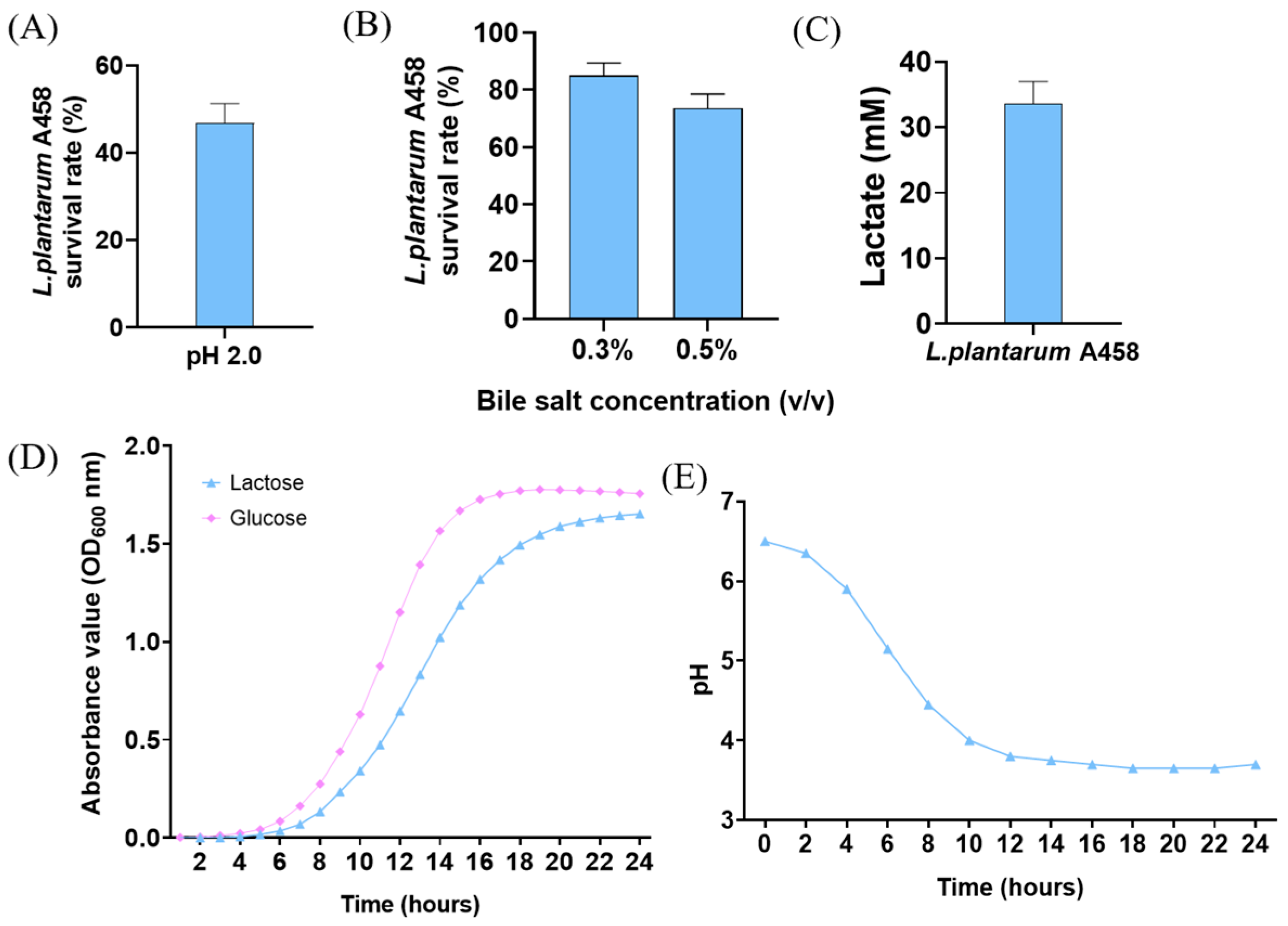
v) bile salts (FUJIFILM, Osaka, Japan) for bile tolerance assessment. Cultures were incubated at 37 °C under static conditions and sampled at designated time points (acid tolerance: 0 and 3 h; bile tolerance: 0 and 5 h). Viable cell counts (CFU/mL) were determined by plate counting on MRS agar. Survival rate (%) was calculated according to Equation (1):
where
and
represent viable counts at 0 h and after incubation, respectively.
2.2.2. Growth Characteristics and Organic Acid Production
Overnight cultures were inoculated (1%, v/v) in modified MRS containing lactose or glucose as a carbon source and incubated at 37 °C under static conditions. OD600 measurements were used for relative growth comparison, with L-lactic acid and pH data serving as complementary indicators. OD600 was measured at predetermined time intervals to construct growth curves. Culture pH was monitored simultaneously during incubation. After 24 h, culture supernatants were obtained by centrifugation (5000× g, 10 min, 4 °C), and L-lactic acid concentrations were determined using a commercial enzymatic assay kit based on lactate dehydrogenase (LDH; FUJIFILM Wako Pure Chemical Co., Osaka, Japan) according to the manufacturer’s instructions.
2.3. Caco-2 Cell Adhesion and Invasion Assays
2.3.1. Adhesion and Invasion Assays
Adhesion and invasion assays were performed as previously described by Moroni et al. [
20], with slight modifications. Briefly, activated bacterial cells and
L. monocytogenes were harvested by centrifugation, washed twice with sterile PBS, and resuspended in PBS. Caco-2 cell monolayers were co-incubated with bacteria at a multiplicity of infection (MOI) of 10:1 (bacteria:cell) at 37 °C in a humidified atmosphere containing 5% CO
2.
For the adhesion assay, after 1 h of incubation, monolayers were washed three times with PBS to remove non-adherent bacteria and lysed with 0.1% Triton X-100 in PBS. For the invasion assay, after 2 h of co-incubation, monolayers were washed with PBS and incubated with fresh DMEM containing gentamicin (100 μg/mL; FUJIFILM Wako Pure Chemical Co., Osaka, Japan) for 1 h to eliminate extracellular bacteria, followed by cell lysis as described above. Cell lysates were serially diluted and plated on MRS or LB agar plates for colony-forming unit (CFU) enumeration.
Adhesion or invasion rate (%) was calculated according to Equation (2):
where
represents the number of adherent or intracellular bacteria recovered from lysed cells, and
represents the total number of bacteria in the initial inoculum.
2.3.2. Inhibition of L. monocytogenes Invasion by L. plantarum A458
To evaluate the inhibitory effect of L. plantarum A458 on L. monocytogenes invasion, Caco-2 cells were co-incubated with L. plantarum A458 and L. monocytogenes at a multiplicity of infection (MOI) of 10:1 for 2 h at 37 °C. After incubation, monolayers were washed with PBS to remove non-adherent bacteria and then treated with gentamicin (100 μg/mL) for 1 h to eliminate extracellular bacteria. Subsequently, cells were lysed, and intracellular bacteria were enumerated by plating serial dilutions on LB agar plates for colony-forming unit (CFU) counting.
The competitive invasion rate was calculated as Equation (3):
where
represents the number of invaded bacteria recovered from lysed cells, and
represents the total number of bacteria in the initial inoculum. The inhibitory effect of
L. plantarum A458 on
L. monocytogenes invasion was expressed as the percentage reduction relative to the
L. monocytogenes-only group.
2.4. Mouse Model of LI and Intervention
All animal experiments were conducted in accordance with the Guidelines for the Care and Use of Laboratory Animals of Hiroshima University and were approved by the Institutional Animal Care and Use Committee (Approval No. A25-196). Eight-week-old male BALB/c mice (specific-pathogen-free, SPF; Shimizu Laboratory Supplies Co., Ltd., Kyoto, Japan) were housed under controlled conditions (temperature 20–26 °C, humidity 40–60%, 12 h light/dark cycle) with free access to standard chow and water.
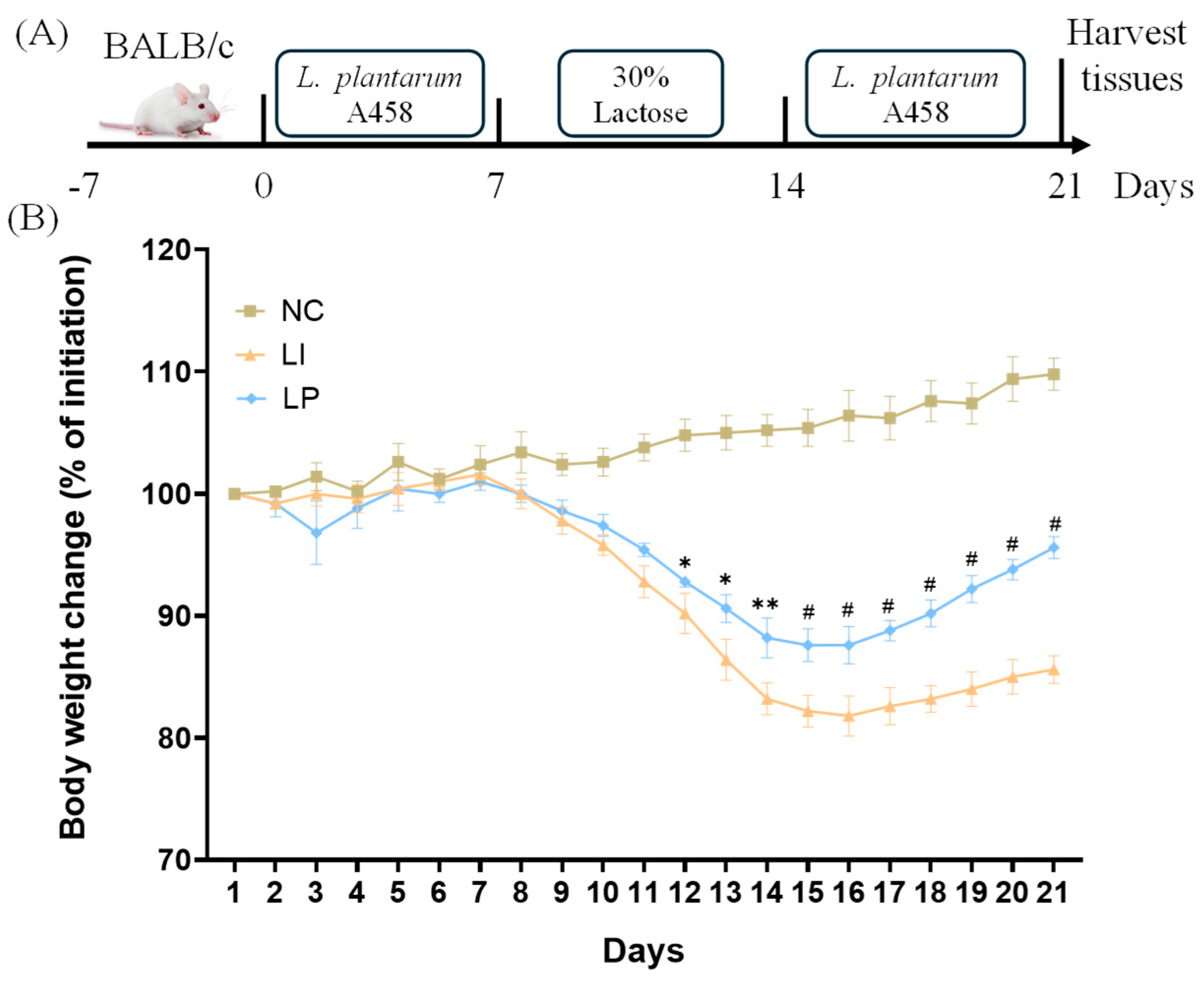
After one week of acclimatization, mice were randomly divided into three groups (n = 5): healthy control (NC), lactose intolerance (LI), and
L. plantarum A458 (LP). The experimental design consisted of three phases. During the prevention phase (Week 1), the LP group received daily oral gavage of 200 μL bacterial suspension (1 × 10
9 CFU/mouse) for 7 days, while the NC and LI groups received an equal volume of sterile saline. During the induction phase (Week 2), the LI and LP groups were provided with 30% (
w/
v) lactose solution as drinking water to induce LI, whereas the NC group continued to receive normal drinking water. Probiotic administration was paused during the induction phase. The lactose concentration was selected based on previous studies demonstrating reliable induction of lactose maldigestion-related gastrointestinal symptoms in rodents [
21,
22,
23,
24]. To confirm successful establishment of the LI model, we evaluated the following parameters: body weight changes (daily recording), and clinical manifestations (diarrhea, fecal water content, fur condition, and spontaneous activity) at the end of the induction phase. During the intervention phase (Week 3), the LP group continued to receive oral gavage of 200 μL bacterial suspension (1 × 10
9 CFU/mouse/day), and the NC and LI groups were administered saline.
Body weight was recorded daily throughout the experiment. At the end of the study, mice were euthanized under isoflurane anesthesia, and blood samples were collected via the abdominal aorta. Blood samples were centrifuged at 4000× g for 10 min at 4 °C to obtain serum, which was stored at −80 °C. Jejunum and corresponding intestinal contents, as well as liver tissues, were rapidly collected, snap-frozen in liquid nitrogen, and stored at −80 °C for further analysis.
2.5. Measurement of Serum Inflammatory Cytokines
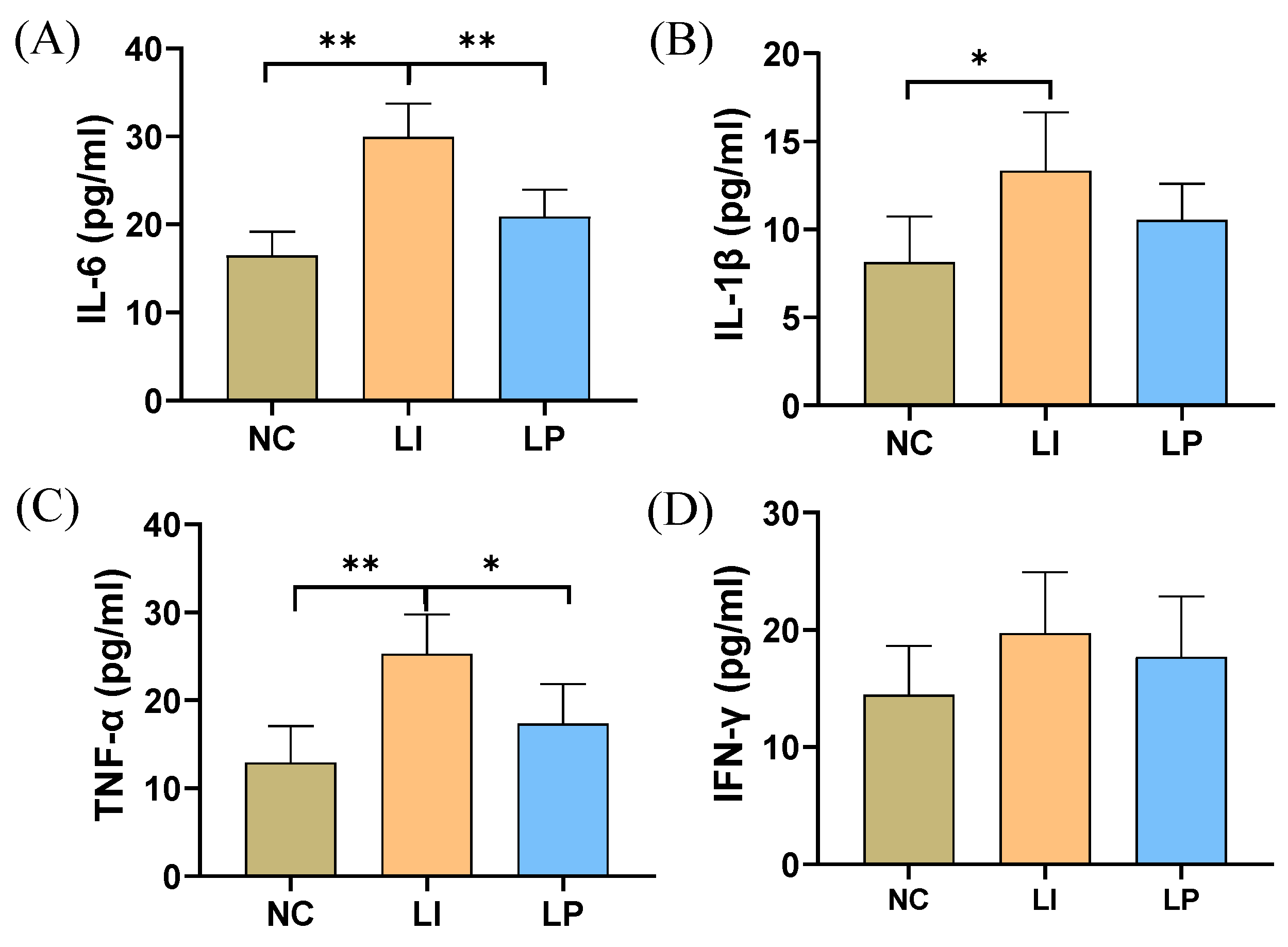
Serum cytokines—including IFN-γ (Cat: 430801), IL-6 (Cat: 431301), TNF-α (Cat: 430901), and IL-1β (Cat: 432601)—were quantified using BioLegend ELISA kits (San Diego, CA, USA) according to the manufacturer’s protocols. Briefly, 100 μL of standards or serum samples were added to antibody-coated 96-well plates and incubated at room temperature. After washing, enzyme conjugates, substrates, and stop solution were sequentially added. The optical density was measured at 450 nm using a microplate reader (Varioskan, Thermo Scientific, Vantaa, Finland), and cytokine concentrations were calculated based on standard curves. All samples were analyzed in duplicate.
2.6. Determination of Hepatic Oxidative Stress Parameters
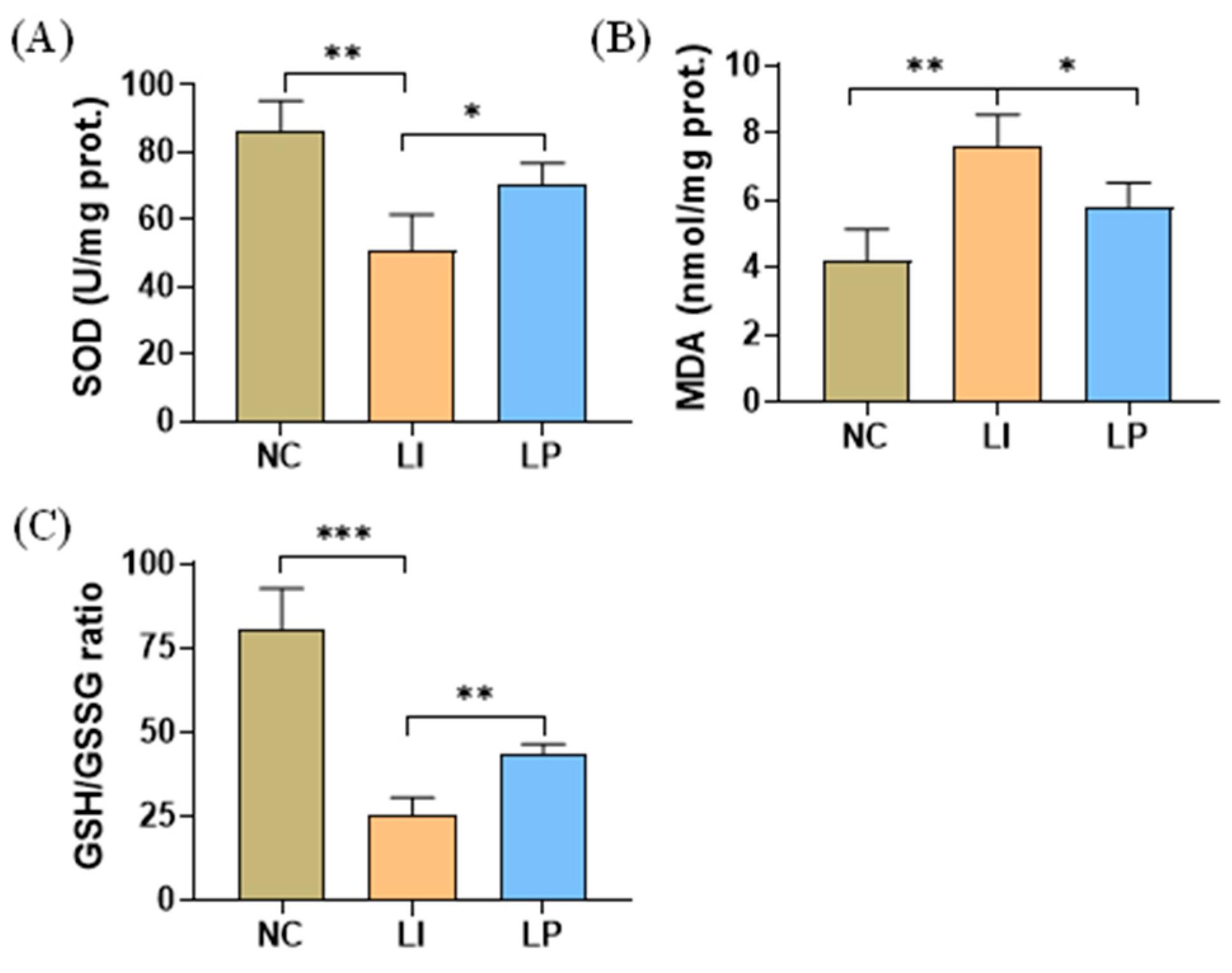
Liver tissues were homogenized on ice at a ratio of 10 mg tissue per 100 μL of the appropriate assay buffer for the determination of superoxide dismutase (SOD) activity, malondialdehyde (MDA) content, and the reduced-to-oxidized glutathione ratio (GSH/GSSG). For SOD measurement, tissues were homogenized in sucrose buffer and centrifuged at 10,000× g for 60 min at 4 °C according to the manufacturer’s instructions. For MDA determination, samples were homogenized in the assay buffer provided with the kit and centrifuged at 10,000× g for 5 min. For GSH/GSSG analysis, tissues were homogenized in 5% sulfosalicylic acid solution and centrifuged at 8000× g for 10 min at 4 °C.
The resulting supernatants were analyzed using commercial assay kits, including a WST-based SOD Assay Kit (Code: S311, Dojindo, Kumamoto, Japan), an MDA Assay Kit (Code: M496, Dojindo, Japan), and a GSH/GSSG Ratio Assay Kit (Code: G257, Dojindo, Japan). Protein concentrations were determined using the bicinchoninic acid (BCA) method with bovine serum albumin as the standard. Results were expressed as U/mg protein for SOD activity, nmol/mg protein for MDA content, and the GSH/GSSG ratio.
2.7. Determination of Intestinal Lactase Activity
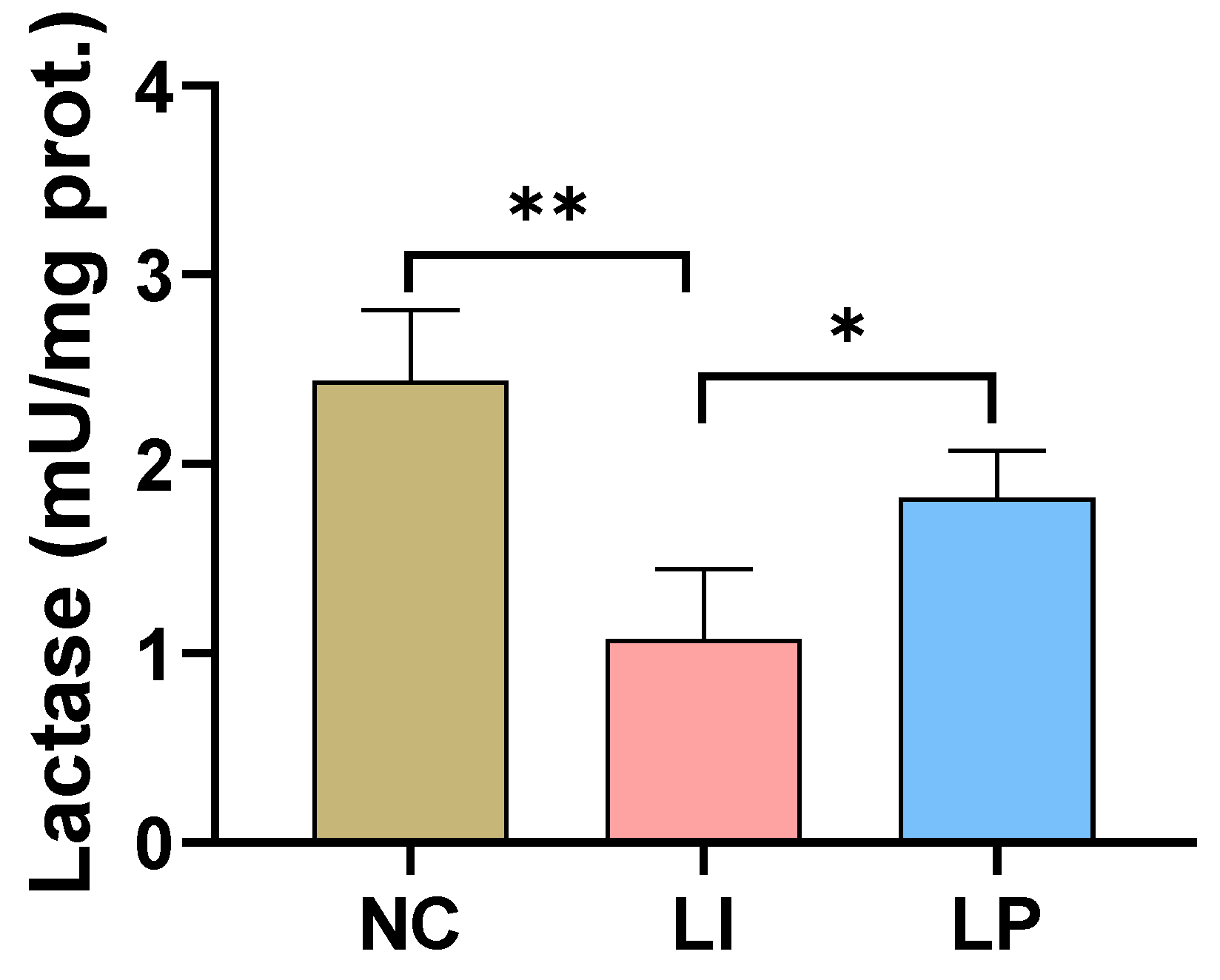
Jejunum tissues were rinsed with ice-cold saline, blotted dry, and homogenized in saline (1:9, w/v), followed by centrifugation at 10,000× g for 20 min at 4 °C to collect the supernatants. Jejunal β-galactosidase (lactase) activity was determined using o-nitrophenyl-β-D-galactopyranoside (ONPG) as the substrate. The supernatants were incubated with ONPG at 37 °C for 30 min under standard assay conditions, and the reaction was terminated by adding sodium carbonate stop solution prior to measuring absorbance at 420 nm. Lactase activity was calculated based on the amount of o-nitrophenol released per minute using a standard curve, normalized to protein concentration, and expressed as U/mg protein.
2.8. Gut Microbiota Analysis
Total genomic DNA was extracted using an enzymatic–chemical lysis method followed by phenol–chloroform extraction. Briefly, fecal samples were suspended in phosphate-buffered saline, filtered to remove debris, and centrifuged to obtain pellets, which were resuspended in TE10 buffer. Bacterial cells were lysed sequentially using lysozyme and achromopeptidase, followed by SDS and proteinase K treatment. Genomic DNA was extracted with phenol/chloroform/isoamyl alcohol, precipitated with isopropanol, washed with 75% ethanol, and dissolved in TE buffer. RNase A treatment and polyethylene glycol precipitation were performed to further purify the DNA.
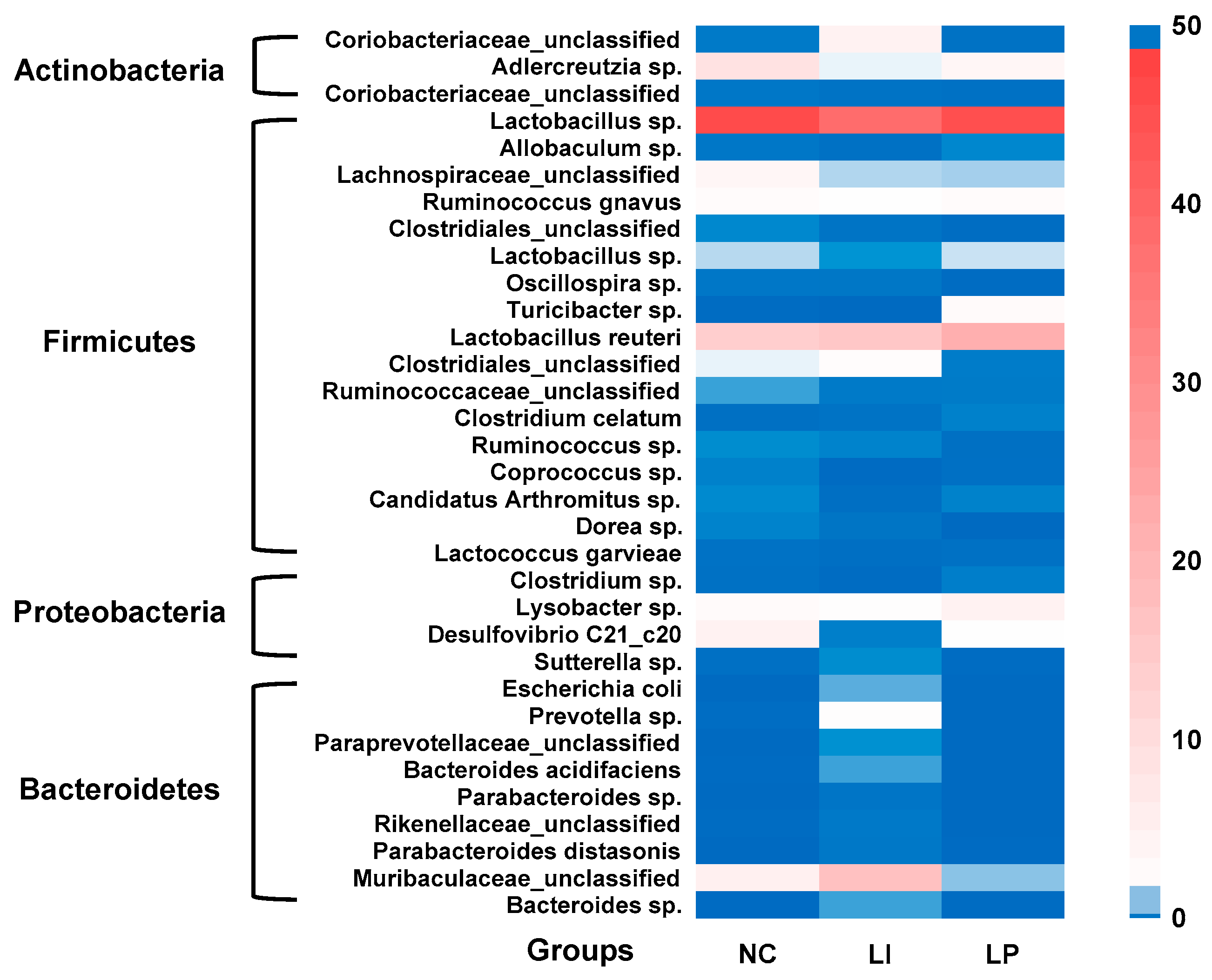
DNA quality was assessed by agarose gel electrophoresis, and DNA concentration was measured using a Qubit fluorometer (Thermo Fisher Scientific, Waltham, MA, USA). Qualified DNA samples were subjected to amplification of the V4 region (515F/806R) of the bacterial 16S rRNA gene and sequenced on an Illumina NovaSeq 6000 platform (San Diego, CA, USA). After quality filtering and chimera removal, the average sequencing depth was 29,880 effective reads per sample (range 28,908–31,350), with Good’s coverage >99% for all samples. Raw paired-end sequencing reads were processed using QIIME2 (version 2024.2), including quality filtering, denoising, feature table construction, and taxonomic classification using the SILVA 138.1 database, followed by downstream diversity and community composition analyses. Due to the limited sample size, only descriptive comparisons of relative abundances were performed. Formal alpha/beta diversity analyses and differential abundance tests were not conducted, and the results are interpreted as preliminary and indicative.
2.9. Statistical Analysis
Statistical analyses were performed using GraphPad Prism (2020), version 9.0 (San Diego, CA, USA). In vitro experiments were conducted in triplicate, and data are presented as mean ± standard deviation (SD). Differences among multiple groups were analyzed using one-way analysis of variance (ANOVA) followed by Tukey’s multiple comparisons test. Data normality was assessed prior to ANOVA. Differences were considered statistically significant at * p < 0.05, ** p < 0.01, and *** p < 0.001.
4. Discussion
LI is a common digestive disorder characterized primarily by reduced lactose digestion capacity. In the present study, both in vivo and in vitro experiments were performed to assess the potential effects of
L. plantarum A458 in an LI model. Under lactose challenge conditions, mice exhibited decreased lactase activity, elevated levels of inflammatory mediators, impaired antioxidant status, and noticeable alterations in gut microbiota composition compared with the NC group, reflecting multiple physiological changes associated with LI [
22]. Administration of
L. plantarum A458 was associated with partial improvement in these parameters, suggesting its possible involvement in the amelioration of LI-associated alterations.
In vitro assay showed that
L. plantarum A458 maintained relatively high survival rates under simulated gastric acidic conditions (pH 2.0) and bile salt exposure, suggesting its capacity to tolerate gastrointestinal-like stress following oral administration. Adequate resistance to gastric acid and bile salts is generally considered an important prerequisite for probiotics to exert potential effects on gut microbiota and host physiology [
25]. In addition,
L. plantarum A458 exhibited notable acid-producing activity, with lactic acid identified as a major metabolic product. Organic acid production may contribute to environmental acidification, which has been reported to suppress the growth of certain opportunistic pathogens while favoring the proliferation of beneficial microorganisms such as LAB, thereby potentially contributing to microbial community balance [
26]. Furthermore, adhesion assays showed that
L. plantarum A458 adhered to Caco-2 cells and reduced
L. monocytogenes invasion into intestinal epithelial cells. Its unconventional origin and distinctive multifunctional properties support the consideration of
L. plantarum A458 as a potential LI probiotic candidate. Although in vitro adhesion and antagonistic activities cannot be directly extrapolated to in vivo colonization or functional outcomes, these findings provide preliminary evidence supporting the potential role of
L. plantarum A458 in intestinal microbial interactions in vivo [
27,
28].
In the LI group, mice exhibited typical clinical manifestations, including body weight loss, diarrhea, and increased fecal water content, accompanied by a significant reduction in lactase activity, suggesting impaired intestinal lactose digestion capacity. Beyond these intestinal symptoms, the model mice also displayed evident systemic changes. Specifically, serum levels of several pro-inflammatory cytokines were significantly elevated, while hepatic antioxidant defense capacity was compromised, as reflected by decreased SOD activity, increased MDA levels, and a reduced GSH/GSSG ratio. Similar inflammatory and oxidative stress-related alterations have been reported in various models of LI and related gastrointestinal functional disorders, suggesting that lactose maldigestion may be accompanied by enhanced inflammatory responses and disturbed redox homeostasis at the systemic level [
29,
30]. It should be noted that these changes primarily represent concurrent physiological characteristics of the LI model rather than direct causal consequences of lactose maldigestion, and the underlying causal relationships remain to be further clarified.
From a conceptual perspective based on previous studies, inadequately hydrolyzed lactose reaching the colon has been proposed to promote the release of inflammatory mediators and to contribute to oxidative stress through abnormal fermentation processes, increased intestinal barrier permeability, and gut microbial dysbiosis, thereby potentially participating in the development of systemic inflammatory and oxidative responses [
31,
32]. This process has been proposed as a plausible explanation for the progression of LI from localized intestinal dysfunction to broader systemic alterations, rather than being solely attributable to lactase deficiency. Notably, oral administration of
L. plantarum A458 correlated with improvements in multiple abnormal parameters, including increased lactase activity and reduced inflammatory cytokine levels. In addition, several antioxidant indices showed trends toward normalization compared with the NC group. These multi-level phenotypic improvements suggest that the effects of
L. plantarum A458 may not be limited to enhanced lactose digestion alone but may also be associated with the modulation of inflammatory responses and oxidative stress, consistent with the alleviation of systemic physiological disturbances observed in the LI model. Nevertheless, the precise causal mechanisms underlying these effects remain to be further elucidated.
From a hypothetical mechanistic perspective based on previously reported probiotic functions, the potential effects of
L. plantarum A458 may involve the coordinated contribution of multiple factors. On the one hand, its capacity for lactose fermentation and acid production may be associated with improved intestinal lactose digestion efficiency and modulation of the luminal microenvironment [
33,
34]. On the other hand, accumulating evidence suggests that LAB and their metabolites may exert anti-inflammatory and antioxidant effects through the modulation of inflammation- and oxidative stress-related signaling pathways, particularly NF-κB and Nrf2, although these pathways were not directly examined in the present study [
35]. Previous studies have reported that
Lactobacillus-derived probiotics can attenuate inflammatory responses through inhibition of NF-κB signaling while enhancing antioxidant gene expression via activation of the Nrf2 pathway, contributing to improved redox balance in various in vitro and in vivo models [
36]. The reductions in pro-inflammatory cytokine levels and improvements in antioxidant indices observed in the present study are broadly consistent with these previously reported signaling modulation patterns rather than representing direct mechanistic evidence. Collectively, these observations raise the possibility that
L. plantarum A458 could exert systemic protective effects through related signaling pathways; however, the precise molecular targets and mechanisms require further experimental validation.
The gut microbiota analysis provided additional microecological insights into the potential mechanisms by which
L. plantarum A458 may be associated with alleviation of LI. It should be noted that 16S rRNA sequencing provides relative abundance data; thus, the observed alterations represent changes in the relative representation of taxa rather than absolute quantitative differences. Consequently, interpretations of microbiota modulation should be considered preliminary and indicative. High-throughput 16S rRNA sequencing indicated a pronounced disruption of gut microbial community structure in LI model mice, a lower relative abundance of certain taxa previously reported to be associated with intestinal homeostasis and metabolic functions, a higher relative abundance of several genera that have been linked to inflammatory or stress-associated intestinal environments. Previous studies suggest that such microbial dysbiosis may interfere with normal carbohydrate metabolism and potentially aggravate LI-related physiological disturbances by promoting inflammatory responses and impairing intestinal barrier integrity [
37].
Following
L. plantarum A458 intervention, the relative abundances of
Lactobacillus,
Allobaculum, and
Turicibacter increased to varying degrees in relative terms.
Lactobacillus, as a representative LAB, has been widely reported to possess β-galactosidase activity and to be associated with lactose metabolism, as well as with the maintenance of intestinal barrier homeostasis through modulation of the luminal microenvironment and competitive interactions with other microorganisms [
38].
Allobaculum has been frequently linked to short-chain fatty acid production and host energy metabolism, and decreases in its relative abundance have been observed in various metabolic and inflammatory conditions [
39].
Turicibacter has also been reported in microbiota-based studies to be associated with intestinal immune regulation and barrier function; however, its precise physiological roles remain incompletely understood [
40]. The coordinated alterations observed in these taxa suggest that
L. plantarum A458 intervention may be associated with a trend toward increased relative abundance of microbial communities related to metabolic balance and intestinal homeostasis.
In contrast, several genera, including
Bacteroides,
Prevotella,
Parabacteroides,
Escherichia, and
Sutterella, showed a higher relative abundance in the LI group. Previous studies have reported that shifts in the relative abundance of these taxa may be linked to intestinal stress, microbial imbalance, increased inflammatory responses, or alterations in mucosal barrier function under specific pathological conditions [
41]. In the present study,
L. plantarum A458 administration was accompanied by decreases in the relative abundance of these genera. These microbial changes may reflect a tendency toward rebalancing of the intestinal microbial ecosystem; however, their functional implications should be interpreted with caution, as microbiota associations do not necessarily indicate direct causal relationships.
Taken together, these findings suggest that
L. plantarum A458 intervention was associated with partial alleviation of LI-related alterations, accompanied by shifts in gut microbiota composition toward a profile more commonly linked to lactose metabolism and intestinal homeostasis, along with decreases in the relative abundance of genera that showed higher relative abundance under LI conditions. These microbial changes may reflect a trend toward increased relative abundance of the intestinal microbial ecosystem and a more balanced intestinal microenvironment. Similar patterns of coordinated changes involving microbiota modulation, attenuation of inflammatory responses, and improvements in metabolic-related indices have been described in previous probiotic intervention studies targeting LI and related intestinal functional disorders [
42]. Notably, the observed microecological alterations were broadly consistent with reductions in inflammatory markers, improvements in antioxidant status, and increased jejunal lactase activity identified in the present study, with several indices showing trends toward improvement. From an application perspective, these findings suggest the possibility that
L. plantarum A458 could be considered a candidate functional probiotic for dietary strategies aimed at managing LI-associated symptoms. Nevertheless, the present study has several limitations. The sample size (n = 5 per group) is relatively small, which may reduce statistical power and increase the risk of random variation or overestimation of the treatment effects. No dose–response assessment of
L. plantarum A458 was performed, and no comparison with standard therapies was made. Consequently, the practical significance of the observed effects and whether the strain offers advantages over conventional approaches remain unknown. Furthermore, the study was limited to an animal model, and the underlying molecular mechanisms remain incompletely understood. Further investigations, including mechanistic studies, dose–response evaluations, and well-designed trials with larger cohorts and active comparators, are required to confirm its efficacy and safety in humans.