Review

West Nile Virus in Horses as a Sentinel Host in One Health Surveillance: Epidemiological Insights and Future Perspectives


1
Department of Infectious Diseases and Preventive Medicine, Faculty of Veterinary Medicine, University of Life Sciences “King Mihai I” from Timişoara, 300645 Timişoara, Romania
2
Doctoral School “Veterinary Medicine”, University of Life Sciences “King Mihai I” from Timişoara, Calea Aradului 119, 300645 Timişoara, Romania
3
Discipline of Microbiology, Faculty of Medicine, “Victor Babes” University of Medicine and Pharmacy, Eftimie Murgu Square 2, 300041 Timişoara, Romania
4
Department of Internal Medicine, University of Life Sciences “King Mihai I” from Timişoara, 300645 Timişoara, Romania
5
Department of Animal Husbandry, University of Life Sciences “King Mihai I” from Timişoara, 300645 Timişoara, Romania
6
Department of Forestry, Faculty of Engineering and Applied Technologies, University of Life Sciences “King Mihai I” from Timișoara, 300645 Timișoara, Romania
7
Academy of Romanian Scientists, Str. Ilfov, Nr. 3, Sector 5, 50044 Bucharest, Romania
*
Author to whom correspondence should be addressed.
These authors contributed equally to this work.
Microorganisms 2026, 14(6), 1263; https://doi.org/10.3390/microorganisms14061263

Submission received: 30 April 2026 / Revised: 30 May 2026 / Accepted: 1 June 2026 / Published: 3 June 2026

Abstract

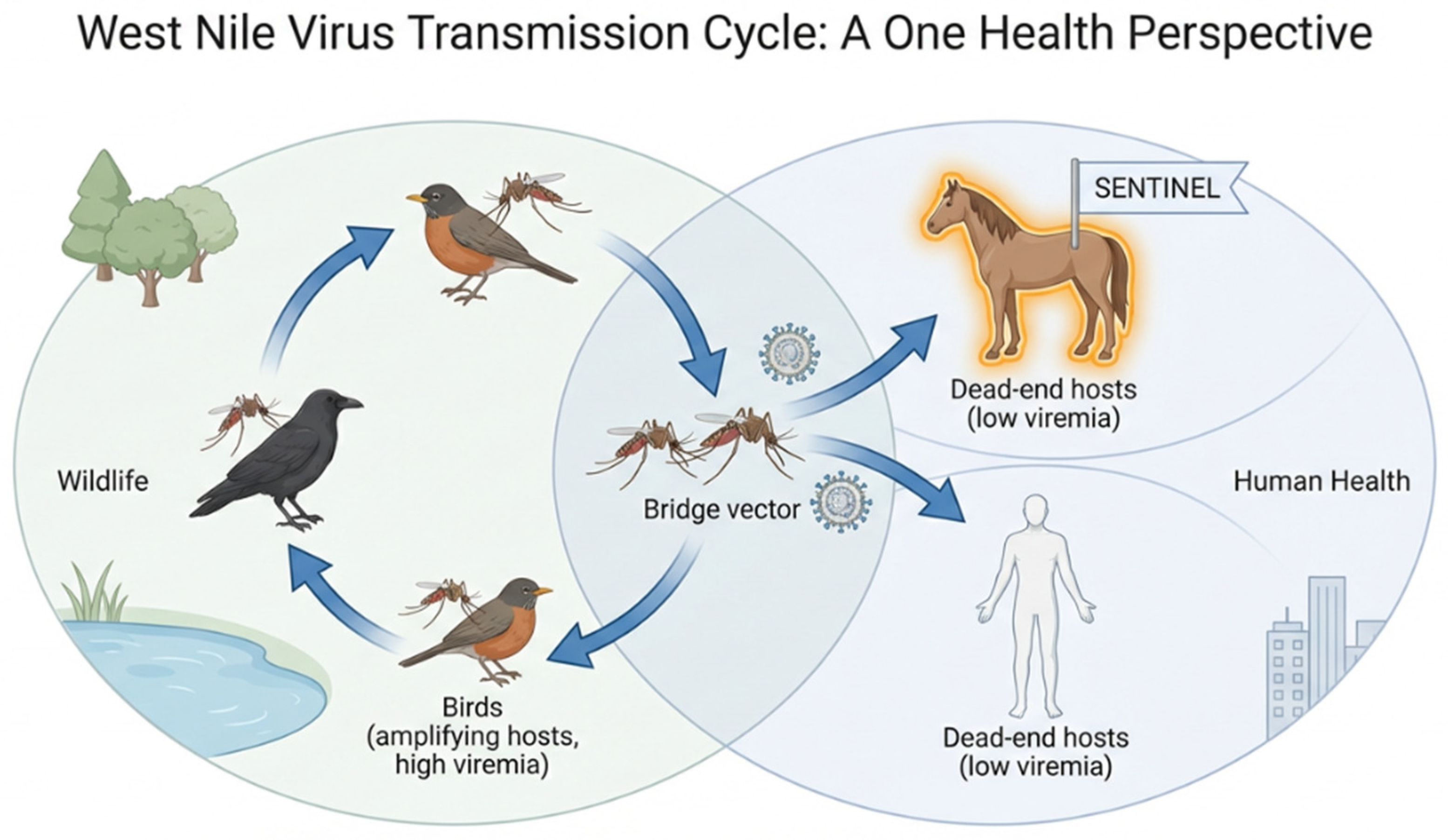
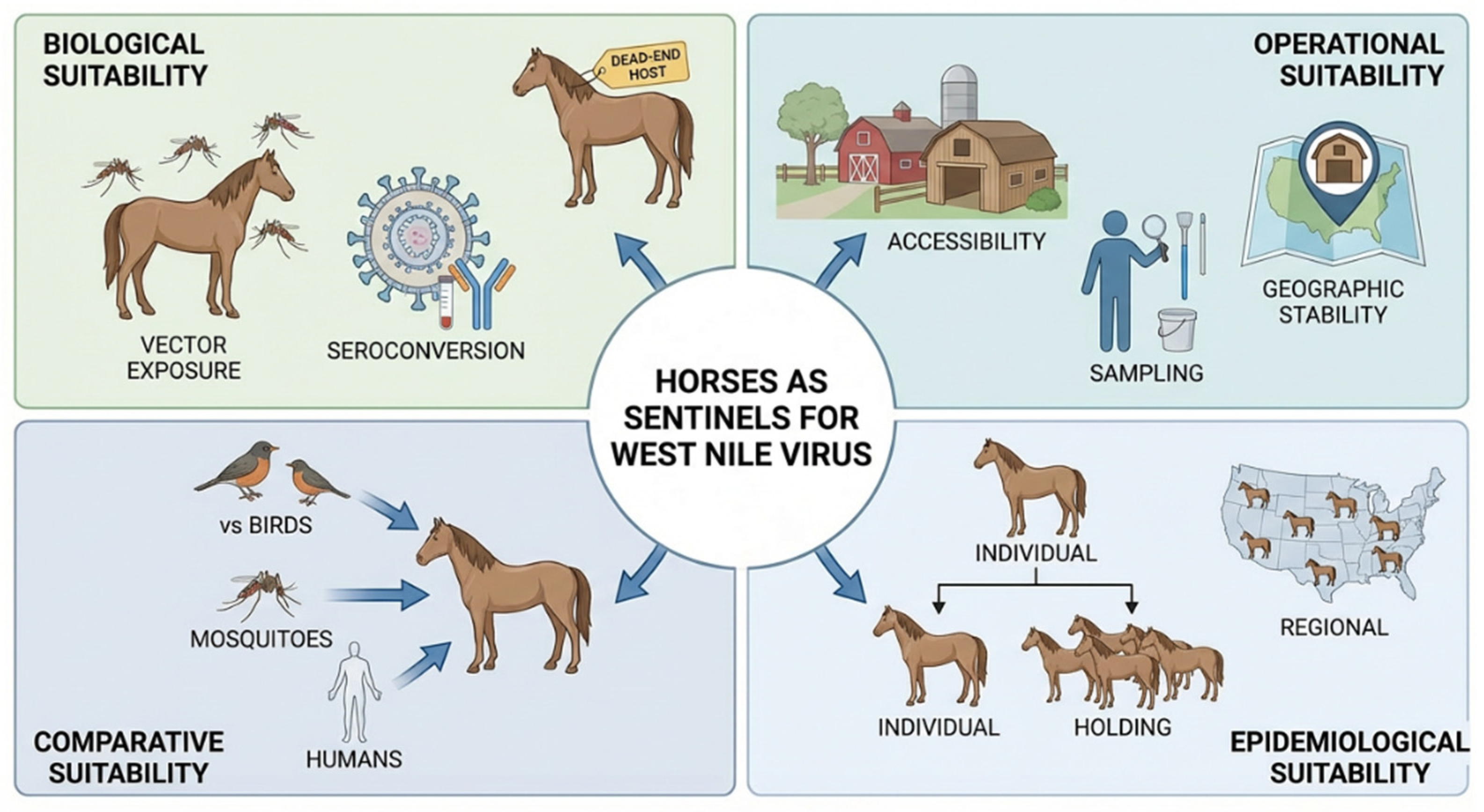
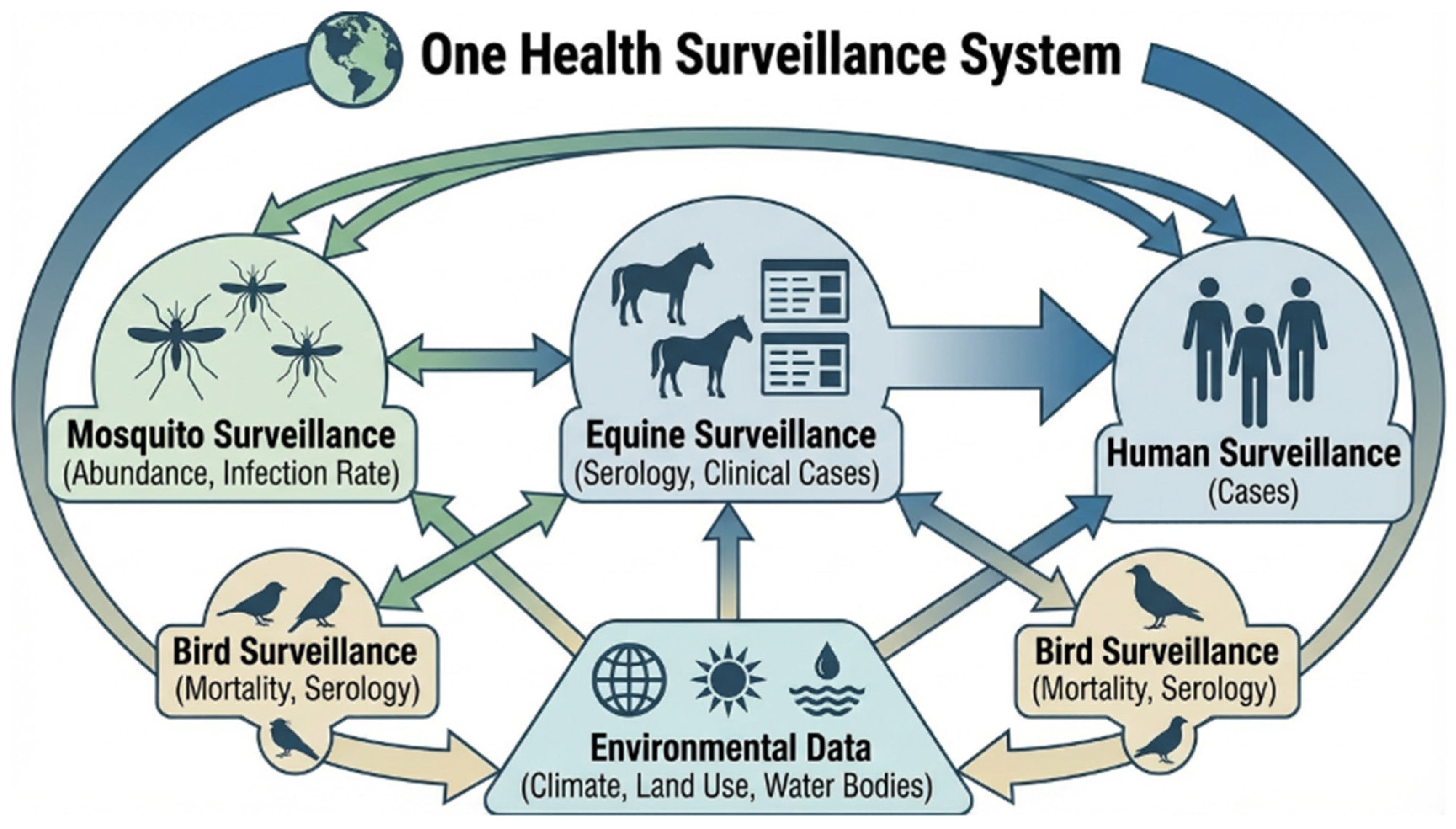
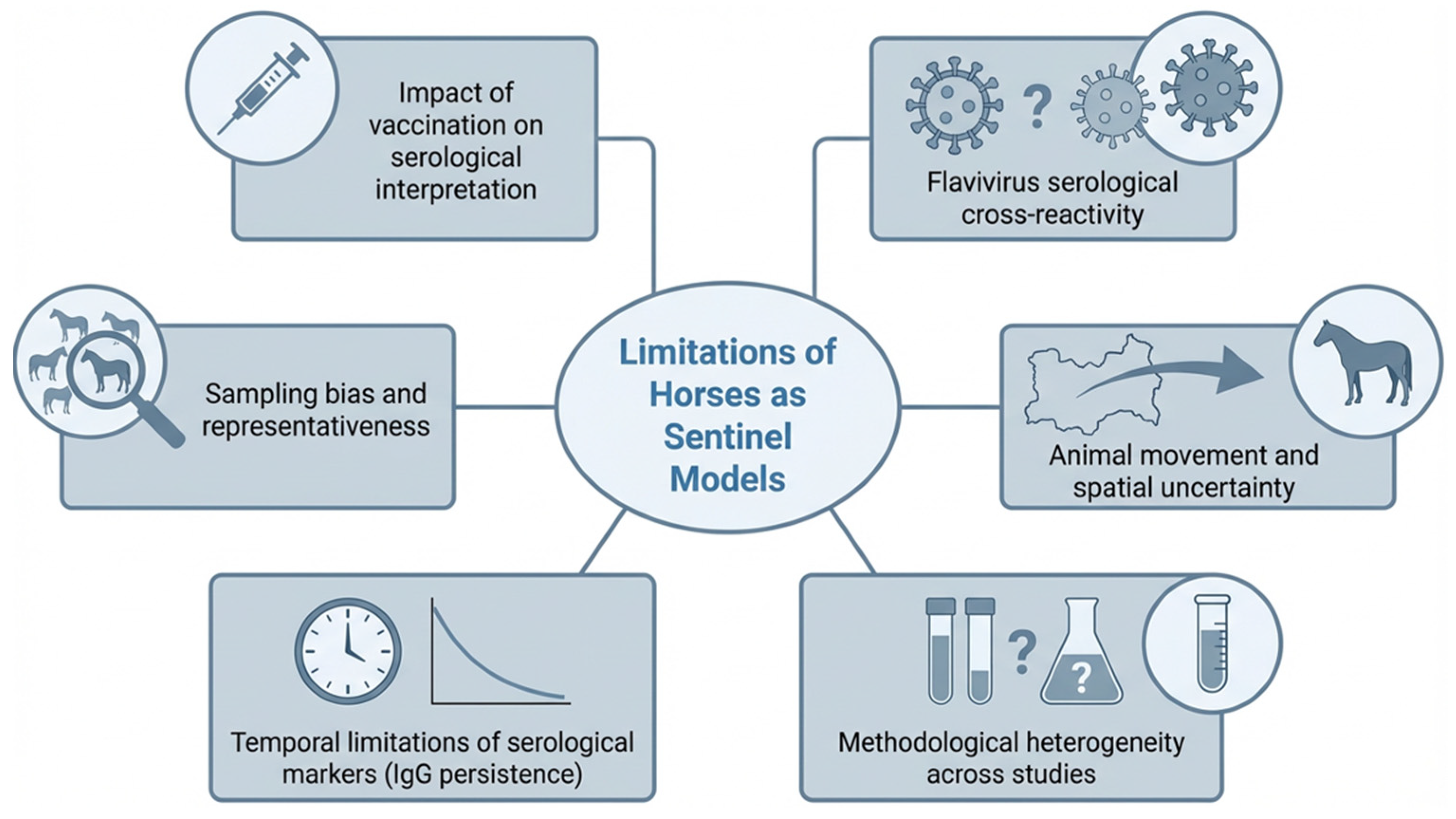
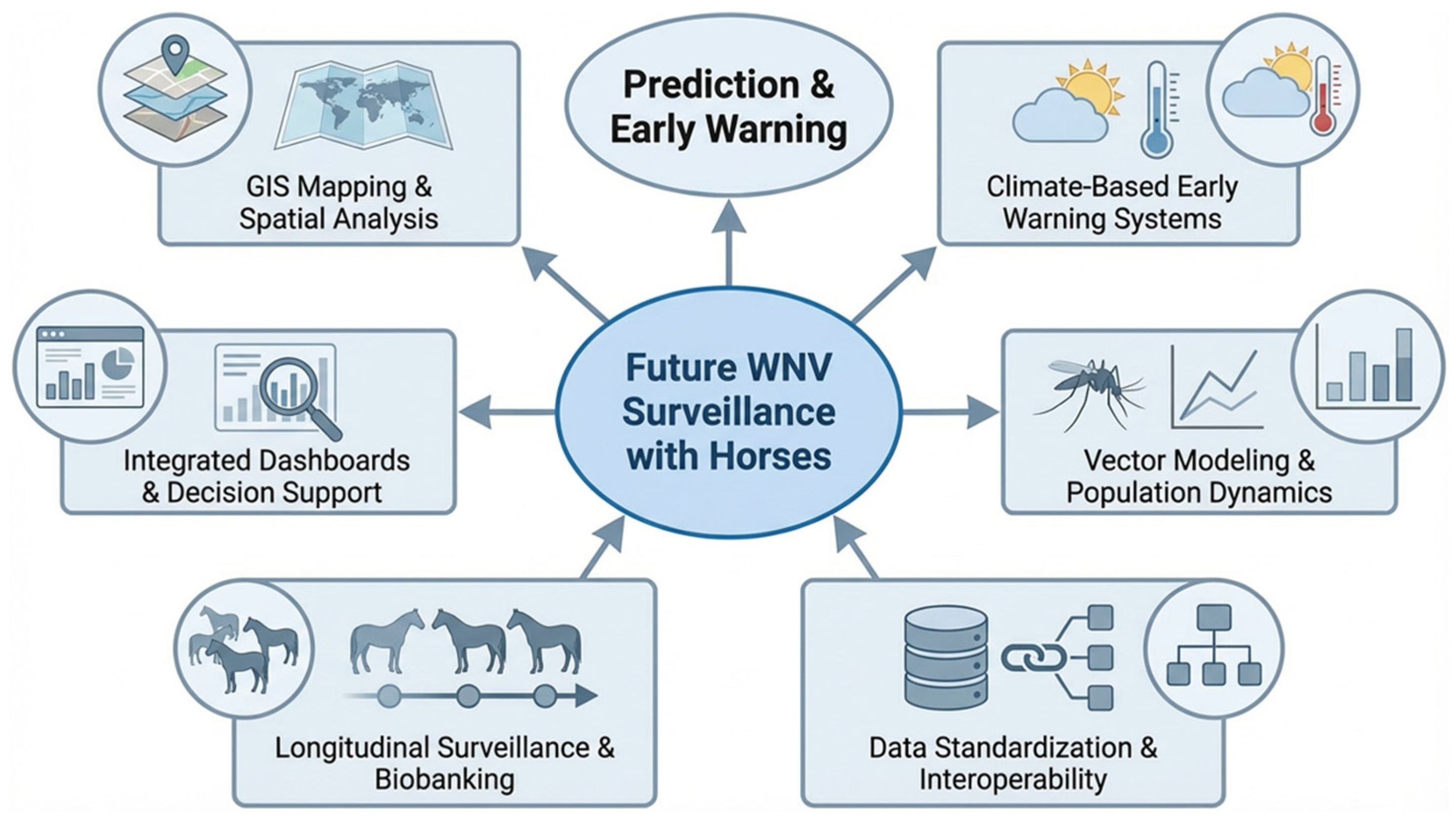
West Nile virus (WNV) is a globally distributed mosquito-borne flavivirus with significant implications for both veterinary and public health. While horses are incidental dead-end hosts, their epidemiological role extends beyond clinical disease, as they can serve as effective sentinel hosts for detecting local viral circulation. Their frequent exposure to mosquito vectors, ability to mount measurable antibody responses, geographic stability, accessibility for monitoring, and the possibility of observation within managed owner–veterinarian systems make them particularly suitable for surveillance within a One Health framework. Evidence from Europe and the Americas demonstrates that equine seroprevalence and field surveillance can identify transmission hotspots, reveal silent circulation, and contribute to the understanding of spatial and temporal risk patterns. The review also addresses key limitations, including vaccination effects, flavivirus cross-reactivity, methodological heterogeneity, and challenges in interpreting serological data across different ecological contexts. Strengthening equine sentinel surveillance through standardized methodologies and integration with predictive and geospatial approaches may improve early warning capacity and support more effective control of WNV and other emerging arboviral diseases.
Keywords: West Nile virus; horses; sentinel surveillance; One Health; arboviruses; epidemiology; seroprevalence; vector-borne diseases West Nile virus; horses; sentinel surveillance; One Health; arboviruses; epidemiology; seroprevalence; vector-borne diseases