The Use of Bacteria and Their Toxins as Antitumor Agents: Present and Future

 , , , and
Abstract
1. Introduction
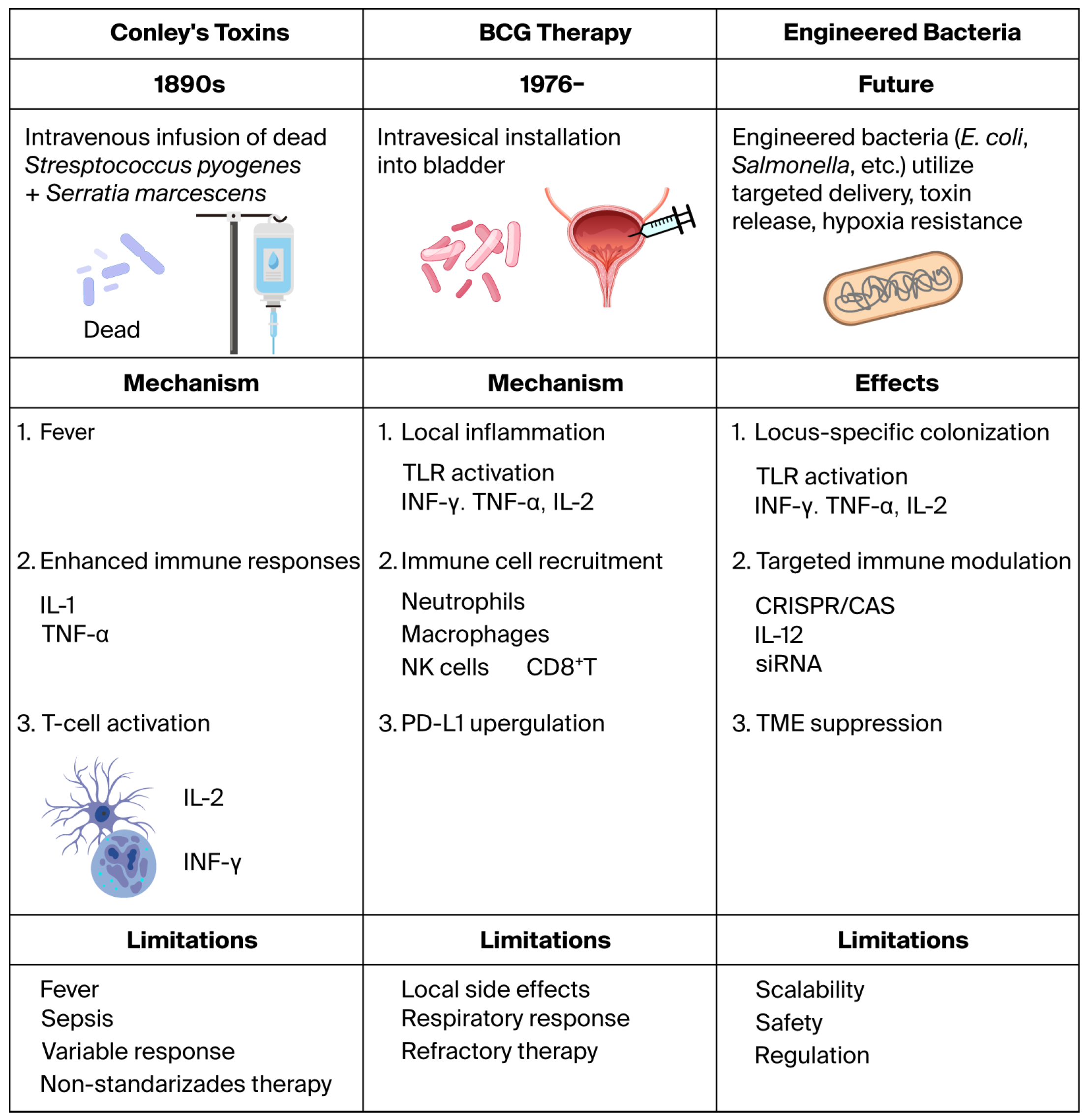
2. Reprogramming the Tumor Ecosystem: Clinical Validation of BCG and the Emergence of Precision Bacterial Oncology
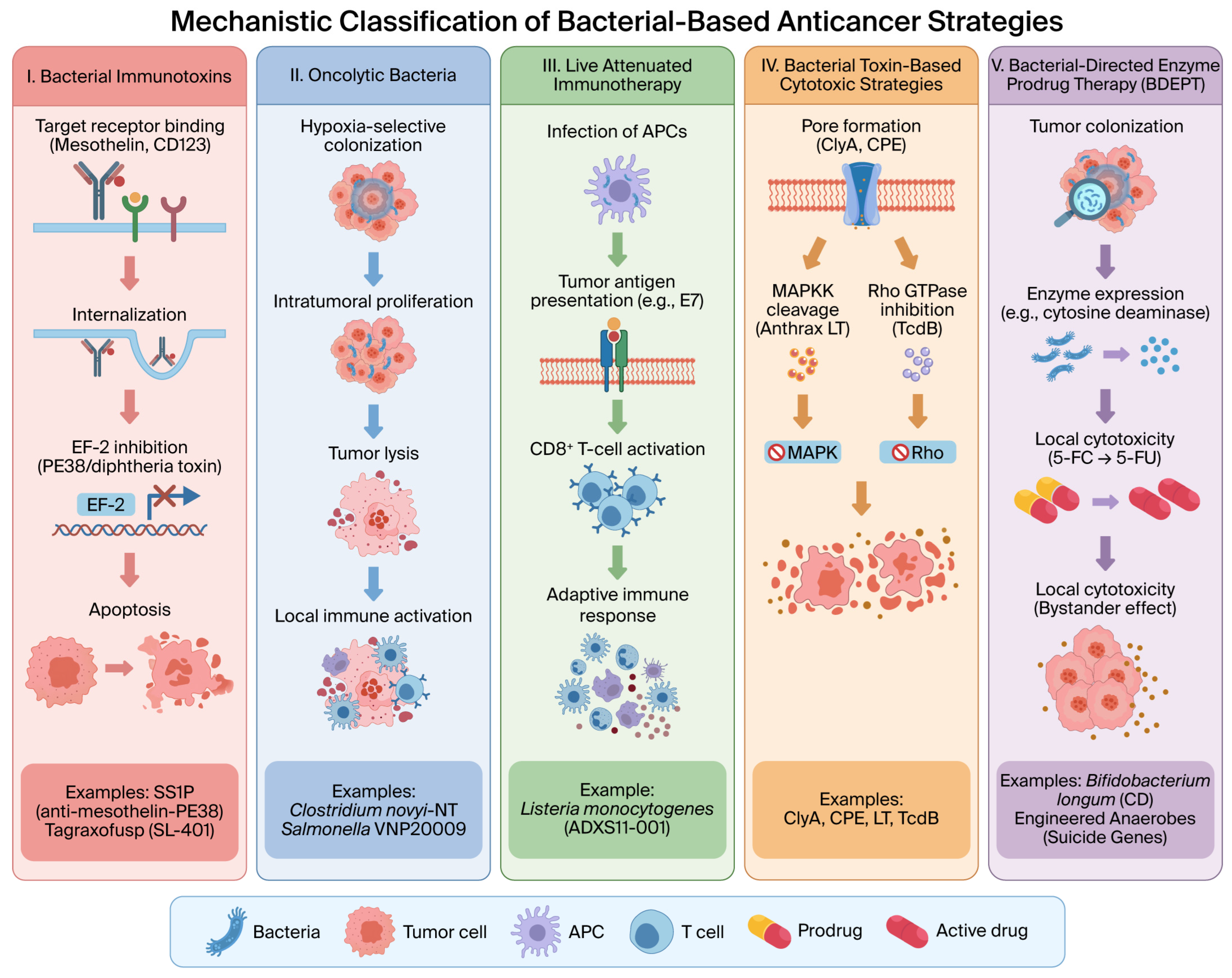
3. Mechanisms of Tumor-Targeting and Tumoricidal Activity of Bacteria
4. Possible Synergistic Role of Bacteria/Toxins with Existing Combination Therapies
- Bacteria/Toxin-Based Therapies in Combination with Immunotherapy
- Bacteria/Toxin-Based Therapies in Combination with Radiotherapy
- Bacteria/Toxin-Based Therapies in Combination with Chemotherapy
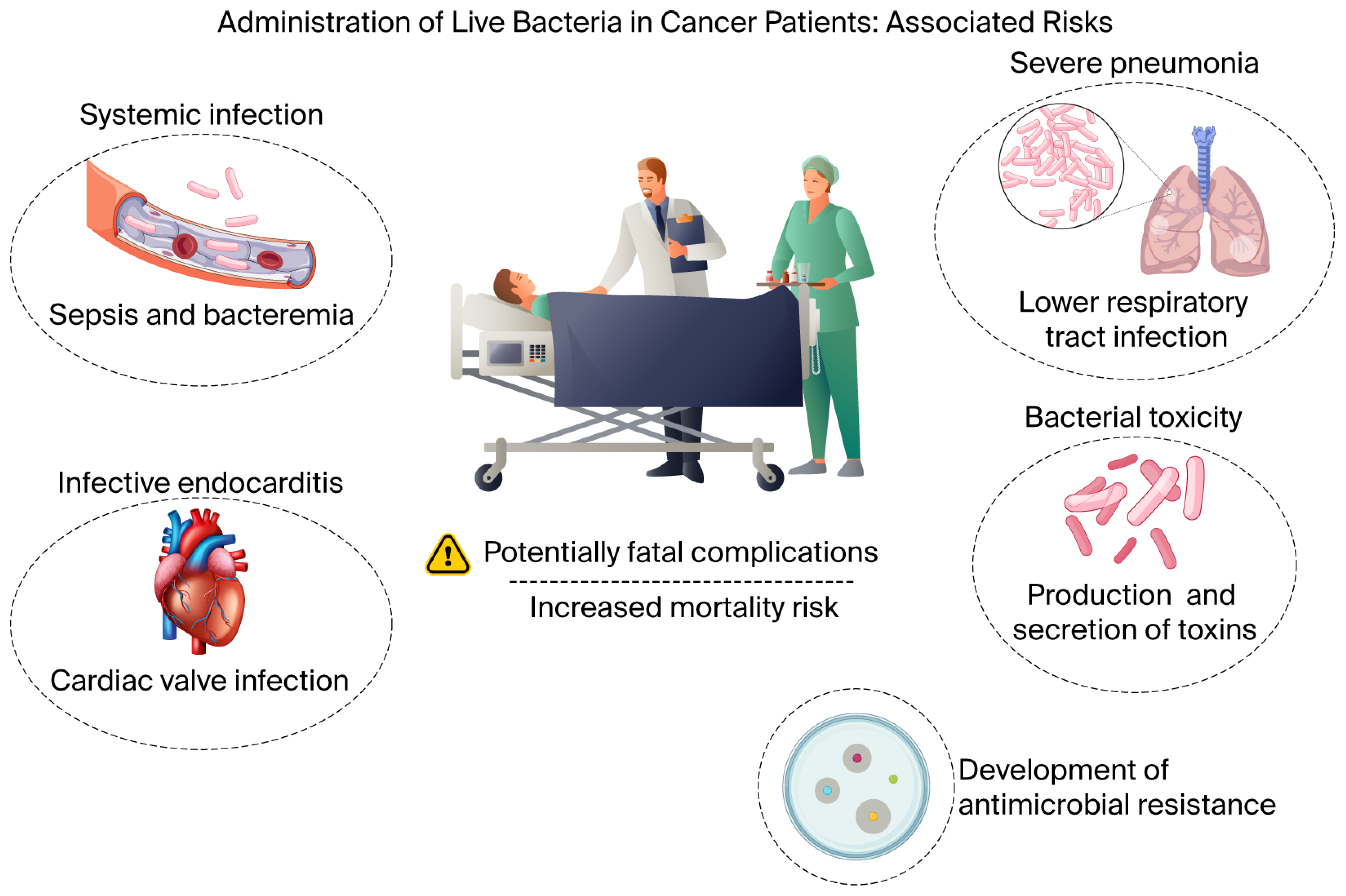
5. Safety Challenges of Live Bacterial Cancer Therapy and Quorum-Based Biocontention
6. Therapeutic Potential of Bacterial Toxins in Oncology
- Cell Cycle Modulation: Cytolethal stretching toxins (CDTs) and cell cycle inhibitory factor (CIF) act as potent inhibitors of mitosis. Although these mechanisms can interfere with the clonal expansion of lymphocytes, their ability to arrest the cell cycle offers a pathway for controlling malignant proliferation. In contrast, factors such as cytotoxic necrotizing factor (CNF) allow for exploring the manipulation of cell differentiation and cycle progression in specific contexts [29].
- Induction of Apoptosis and Lysis: Cytolysin A (ClyA or HlyE) stands out as a pore-forming toxin capable of disrupting the cytoplasmic membrane and inducing apoptosis. The use of bacterial vectors such as Escherichia coli or Salmonella typhimurium engineered to express ClyA has demonstrated a significant reduction in tumor burden in in vivo models, validating its potential in antitumor gene therapy [18,24].
- Tumor Microenvironment Immunomodulation: In addition to its proteolytic effect, CdtB induces the secretion of proinflammatory chemokines and cytokines [30,62]. Experimental findings confirm that this toxin not only reduces tumor volume through direct cytotoxicity but also stimulates a robust immune response against the neoplasm, solidifying its profile as a cutting-edge therapeutic strategy [18,23].
7. Immunotoxins: Chimeric Protein Engineering in Cancer Immunotherapy
- Optimization of Immunogenicity: The first generations, based on murine antibodies, exhibited high immunogenicity that limited their clinical efficacy. Currently, fourth-generation immunotoxins employ humanized antibodies and modified toxin variants to reduce the antichimeric antibody response, significantly improving the safety profile and plasma half-life [25].
- Synergy with Immunotherapy: Immunotherapy has transformed the oncology paradigm by enhancing the intrinsic capacity of the immune system to identify malignant phenotypes. However, immune evasion and mimicry with self-tissue remain major obstacles. In this context, the use of bacterial vectors and recombinant toxins acts as a molecular adjuvant, increasing the tumor’s immunogenicity and making it more “visible” to host effector cells [70].
7.1. The Case of Denileukin Diftitox (Ontak®)
- Ligand–Receptor Interaction: The IL-2 portion selectively binds to high-affinity receptors expressed on malignant cells, which function as the target antigen.
- Effector Mechanism: After binding and subsequent internalization, diphtheria toxin inhibits cellular protein synthesis, inducing cell death.
- Clinical Status: This therapy, approved for cutaneous T-cell lymphoma (CTCL), has shown promising activity in leukemias and other lymphomas, and is currently in Phase III clinical trials to solidify its position as a robust therapeutic alternative.
7.2. Loncastuximab Terisina
7.3. Moxetumomab Pasudotox
7.4. Gemtuzumab Ozogamicin
8. Prodrug Therapies Activated Enzymatically
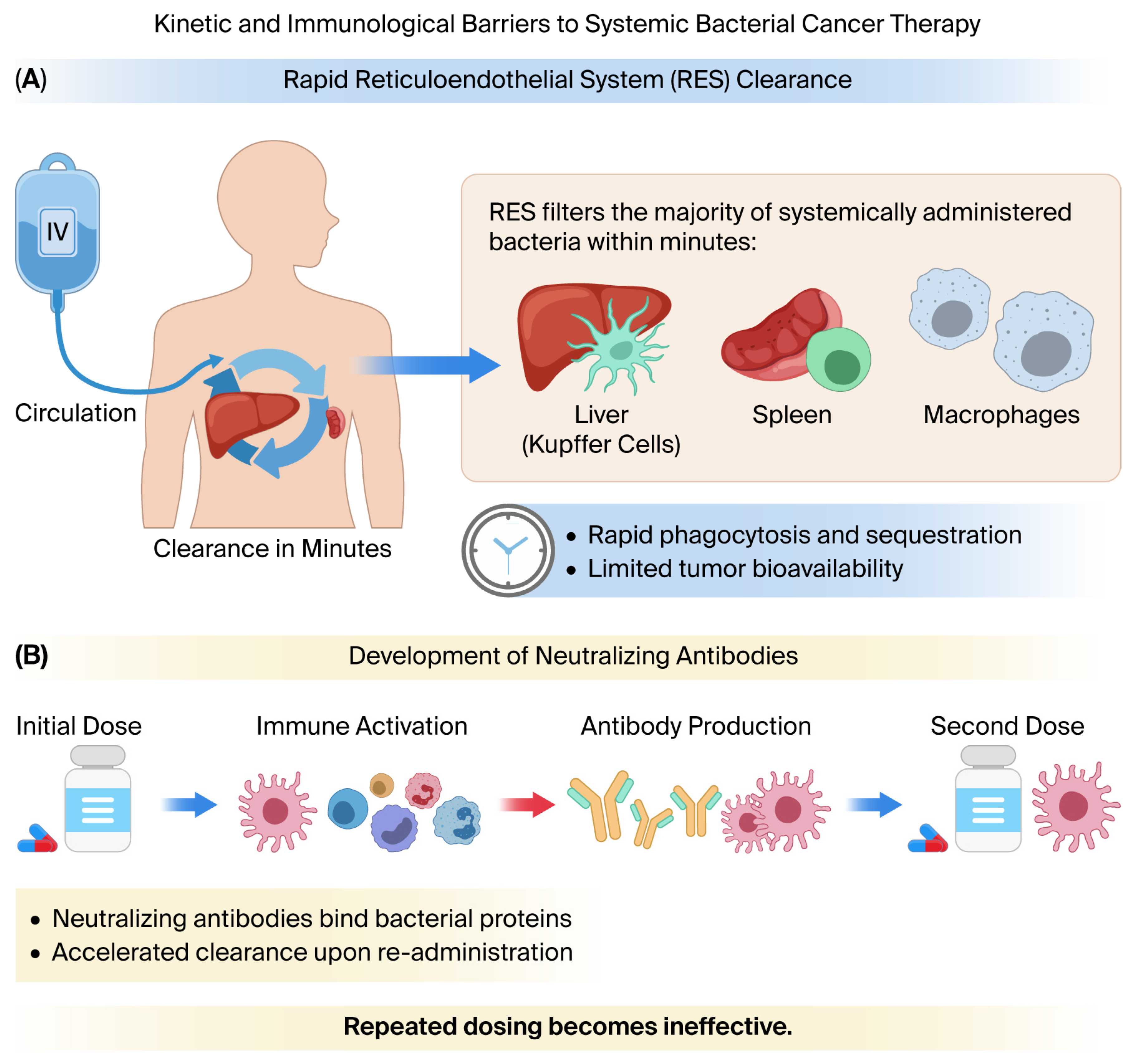
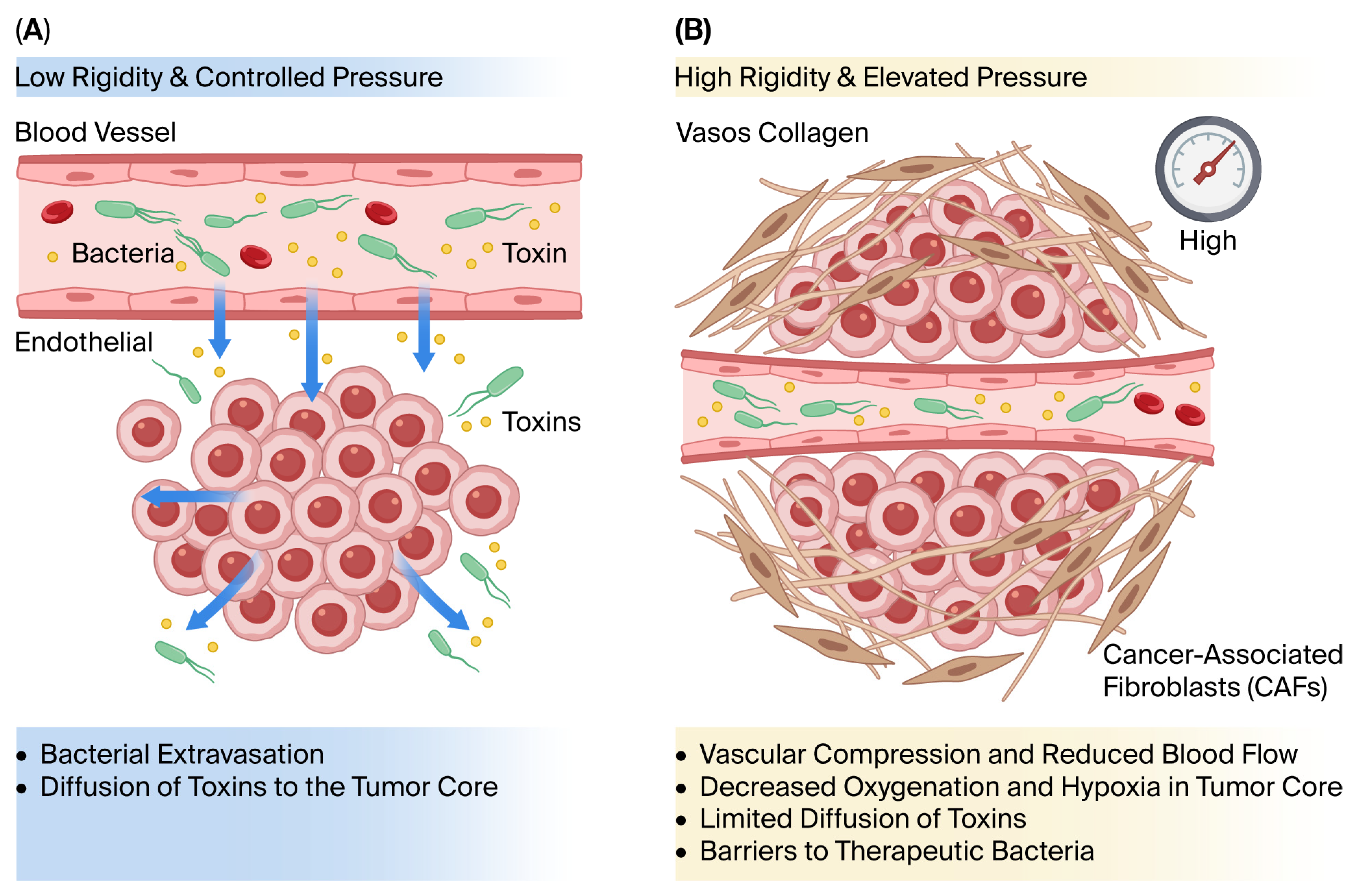
9. Pharmacokinetic and Mechanical Limitations of the Use of Bacteria and Bacterial-Derived Agents in Cancer Therapies
- Rapid Clearance by the Reticuloendothelial System (RES).
- Development of Neutralizing Antibodies Against Bacterial Proteins and Toxins.
- Dense Fibrotic Stroma and Elevated Interstitial Fluid Pressure (IFP).
10. Overview of Current Clinical Trials
11. Clinical Translation and Future Perspectives
12. Conclusions
Author Contributions
Funding
Institutional Review Board Statement
Informed Consent Statement
Data Availability Statement
Conflicts of Interest
References
- Bray, F.; Laversanne, M.; Sung, H.; Ferlay, J.; Siegel, R.L.; Soerjomataram, I.; Jemal, A. Global cancer statistics 2022: GLOBOCAN estimates of incidence and mortality worldwide for 36 cancers in 185 countries. CA A Cancer J. Clin. 2024, 74, 229–263. [Google Scholar] [CrossRef] [PubMed]
- Ferlay, J.; Soerjomataram, I.; Dikshit, R.; Eser, S.; Mathers, C.; Rebelo, M.; Parkin, D.M.; Forman, D.; Bray, F. Cancer incidence and mortality worldwide: Sources, methods and major patterns in GLOBOCAN 2012. Int. J. Cancer 2015, 136, E359–E386. [Google Scholar] [CrossRef] [PubMed]
- Sawant, S.S.; Patil, S.M.; Gupta, V.; Kunda, N.K. Microbes as Medicines: Harnessing the Power of Bacteria in Advancing Cancer Treatment. Int. J. Mol. Sci. 2020, 21, 7575. [Google Scholar] [CrossRef] [PubMed]
- Siegel, R.L.; Miller, K.D.; Fuchs, H.E.; Jemal, A. Cancer Statistics, 2021. CA A Cancer J. Clin. 2021, 71, 7–33. [Google Scholar] [CrossRef]
- Sung, H.; Ferlay, J.; Siegel, R.L.; Laversanne, M.; Soerjomataram, I.; Jemal, A.; Bray, F. Global Cancer Statistics 2020: GLOBOCAN Estimates of Incidence and Mortality Worldwide for 36 Cancers in 185 Countries. CA A Cancer J. Clin. 2021, 71, 209–249. [Google Scholar] [CrossRef]
- De Visser, K.E.; Joyce, J.A. The evolving tumor microenvironment: From cancer initiation to metastatic outgrowth. Cancer Cell 2023, 41, 374–403. [Google Scholar] [CrossRef]
- Iwata, S.; Nishiyama, T.; Sakari, M.; Doi, Y.; Takaya, N.; Ogitani, Y.; Nagano, H.; Fukuchi, K.; Miyako, E. Tumour-resident oncolytic bacteria trigger potent anticancer effects through selective intratumoural thrombosis and necrosis. Nat. Biomed. Eng. 2025, 10, 293–308. [Google Scholar] [CrossRef]
- Heldin, C.-H.; Rubin, K.; Pietras, K.; Östman, A. High interstitial fluid pressure—An obstacle in cancer therapy. Nat. Rev. Cancer 2004, 4, 806–813. [Google Scholar] [CrossRef]
- Duong, M.T.-Q.; Qin, Y.; You, S.-H.; Min, J.-J. Bacteria-cancer interactions: Bacteria-based cancer therapy. Exp. Mol. Med. 2019, 51, 1–15. [Google Scholar] [CrossRef]
- Gupta, K.H.; Nowicki, C.; Giurini, E.F.; Marzo, A.L.; Zloza, A. Bacterial-based cancer therapy (BBCT): Recent advances, current challenges, and future prospects for cancer immunotherapy. Vaccines 2021, 9, 1497. [Google Scholar] [CrossRef]
- Singh, S.; Kim, G.H.; Baek, K.R.; Seo, S.O. Anti-Cancer Strategies Using Anaerobic Spore-Forming Bacteria Clostridium: Advances and Synergistic Approaches. Life 2025, 15, 465. [Google Scholar] [CrossRef]
- Wei, X.; Du, M.; Chen, Z.; Yuan, Z. Recent Advances in Bacteria-Based Cancer Treatment. Cancers 2022, 14, 4945. [Google Scholar] [CrossRef]
- McCarthy, E.F. The toxins of William B. Coley and the treatment of bone and soft-tissue sarcomas. Iowa Orthop. J. 2006, 26, 154. [Google Scholar]
- Han, J.; Gu, X.; Li, Y.; Wu, Q. Mechanisms of BCG in the treatment of bladder cancer-current understanding and the prospect. Biomed. Pharmacother. 2020, 129, 110393. [Google Scholar] [CrossRef]
- Liatsos, G.D.; Mariolis, I.; Hadziyannis, E.; Bamias, A.; Vassilopoulos, D. Review of BCG immunotherapy for bladder cancer. Clin. Microbiol. Rev. 2025, 38, e00194-23. [Google Scholar] [CrossRef] [PubMed]
- Aganja, R.P.; Sivasankar, C.; Lee, J.H. AI-2 quorum sensing controlled delivery of cytolysin-A by tryptophan auxotrophic low-endotoxic Salmonella and its anticancer effects in CT26 mice with colon cancer. J. Adv. Res. 2024, 61, 83–100. [Google Scholar] [CrossRef] [PubMed]
- Wachsberger, P.; Burd, R.; Dicker, A.P. Tumor Response to Ionizing Radiation Combined with Antiangiogenesis or Vascular Targeting Agents: Exploring Mechanisms of Interaction1. Clin. Cancer Res. 2003, 9, 1957–1971. [Google Scholar] [PubMed]
- Zhang, T.; Yu, X.-M.; Yang, S.-T.; Zhou, W.-W. Gut Bacteria-Based Cancer Therapy and Anti-Solid Tumor Mechanisms. Microbiol. Res. 2025, 16, 92. [Google Scholar] [CrossRef]
- Dailey, K.M.; Jacobson, R.I.; Johnson, P.R.; Woolery, T.J.; Kim, J.; Jansen, R.J.; Mallik, S.; Brooks, A.E. Methods and Techniques to Facilitate the Development of Clostridium novyi NT as an Effective, Therapeutic Oncolytic Bacteria. Front. Microbiol. 2021, 12, 624618. [Google Scholar] [CrossRef]
- Staedtke, V.; Sun, N.; Bai, R. Hypoxia-targeting bacteria in cancer therapy. Semin. Cancer Biol. 2024, 100, 39–48. [Google Scholar] [CrossRef]
- Leschner, S.; Westphal, K.; Dietrich, N.; Viegas, N.; Jablonska, J.; Lyszkiewicz, M.; Lienenklaus, S.; Falk, W.; Gekara, N.; Loessner, H. Tumor invasion of Salmonella enterica serovar Typhimurium is accompanied by strong hemorrhage promoted by TNF-α. PLoS ONE 2009, 4, e6692. [Google Scholar] [CrossRef]
- Khormi, M.A.; Al-Maaqar, S.M.; Al Johni, A.R.; Al-Tayyar, N.A.; Alhamad, J.A.; Ghyathuddin, A.A.; Alblawi, Z.; Behairy, S.M.; Alghamdi, M.A.; Alsubhi, W.A.; et al. Oncolytic bacteria: A revolutionary approach to cancer therapy. Open Life Sci. 2025, 20, 20251076. [Google Scholar] [CrossRef] [PubMed]
- Zhang, M.; Liu, J.; Xia, Q. Role of gut microbiome in cancer immunotherapy: From predictive biomarker to therapeutic target. Exp. Hematol. Oncol. 2023, 12, 84. [Google Scholar] [CrossRef] [PubMed]
- Yamamoto, M.; Curiel, D.T. Cancer Gene Therapy. Technol. Cancer Res. Treat. 2005, 4, 315–330. [Google Scholar] [CrossRef]
- Lazaro-Gorines, R.; Ruiz-de-la-Herran, J.; Navarro, R.; Sanz, L.; Alvarez-Vallina, L.; Martinez-Del-Pozo, A.; Gavilanes, J.G.; Lacadena, J. A novel Carcinoembryonic Antigen (CEA)-Targeted Trimeric Immunotoxin shows significantly enhanced Antitumor Activity in Human Colorectal Cancer Xenografts. Sci. Rep. 2019, 9, 11680. [Google Scholar] [CrossRef] [PubMed]
- Kreitman, R.J. Recombinant Immunotoxins Containing Truncated Bacterial Toxins for the Treatment of Hematologic Malignancies. BioDrugs 2009, 23, 1–13. [Google Scholar] [CrossRef]
- Rouleau, C.; Menon, K.; Boutin, P.; Guyre, C.; Yoshida, H.; Kataoka, S.; Perricone, M.; Shankara, S.; Frankel, A.E.; Duesbery, N.S. The systemic administration of lethal toxin achieves a growth delay of human melanoma and neuroblastoma xenografts: Assessment of receptor contribution. Int. J. Oncol. 2008, 32, 739–748. [Google Scholar] [CrossRef]
- Turk, B.E. Manipulation of host signalling pathways by anthrax toxins. Biochem. J. 2007, 402, 405–417. [Google Scholar] [CrossRef]
- Nougayrède, J.-P.; Taieb, F.; De Rycke, J.; Oswald, E. Cyclomodulins: Bacterial effectors that modulate the eukaryotic cell cycle. Trends Microbiol. 2005, 13, 103–110. [Google Scholar] [CrossRef]
- Zhang, Y.; Li, Y.; Li, H.; Chen, W.; Liu, W. Clostridium difficile toxin B recombinant protein inhibits tumor growth and induces apoptosis through inhibiting Bcl-2 expression, triggering inflammatory responses and activating C-erbB-2 and Cox-2 expression in breast cancer mouse model. Biomed. Pharmacother. 2018, 101, 391–398. [Google Scholar] [CrossRef]
- Huang, T.; Li, S.; Li, G.; Tian, Y.; Wang, H.; Shi, L.; Perez-Cordon, G.; Mao, L.; Wang, X.; Wang, J. Utility of Clostridium difficile toxin B for inducing anti-tumor immunity. PLoS ONE 2014, 9, e110826. [Google Scholar] [CrossRef] [PubMed]
- Huelsenbeck, J.; Dreger, S.; Gerhard, R.; Barth, H.; Just, I.; Genth, H. Difference in the cytotoxic effects of toxin B from Clostridium difficile strain VPI 10463 and toxin B from variant Clostridium difficile strain 1470. Infect. Immun. 2007, 75, 801–809. [Google Scholar] [CrossRef] [PubMed]
- Portsmouth, D.; Hlavaty, J.; Renner, M. Suicide genes for cancer therapy. Mol. Asp. Med. 2007, 28, 4–41. [Google Scholar] [CrossRef]
- Maciag, P.C.; Radulovic, S.; Rothman, J. The first clinical use of a live-attenuated Listeria monocytogenes vaccine: A Phase I safety study of Lm-LLO-E7 in patients with advanced carcinoma of the cervix. Vaccine 2009, 27, 3975–3983. [Google Scholar] [CrossRef]
- Bettegowda, C.; Dang, L.H.; Abrams, R.; Huso, D.L.; Dillehay, L.; Cheong, I.; Agrawal, N.; Borzillary, S.; McCaffery, J.M.; Watson, E.L.; et al. Overcoming the hypoxic barrier to radiation therapy with anaerobic bacteria. Proc. Natl. Acad. Sci. USA 2003, 100, 15083–15088. [Google Scholar] [CrossRef]
- Hassan, R.; Sharon, E.; Thomas, A.; Zhang, J.; Ling, A.; Miettinen, M.; Kreitman, R.J.; Steinberg, S.M.; Hollevoet, K.; Pastan, I. Phase 1 study of the antimesothelin immunotoxin SS1P in combination with pemetrexed and cisplatin for front-line therapy of pleural mesothelioma and correlation of tumor response with serum mesothelin, megakaryocyte potentiating factor, and cancer antigen 125. Cancer 2014, 120, 3311–3319. [Google Scholar]
- Pemmaraju, N.; Lane, A.A.; Sweet, K.L.; Stein, A.S.; Vasu, S.; Blum, W.; Rizzieri, D.A.; Wang, E.S.; Duvic, M.; Sloan, J.M. Tagraxofusp in blastic plasmacytoid dendritic-cell neoplasm. N. Engl. J. Med. 2019, 380, 1628–1637. [Google Scholar] [CrossRef]
- Janku, F.; Zhang, H.H.; Pezeshki, A.; Goel, S.; Murthy, R.; Wang-Gillam, A.; Shepard, D.R.; Helgason, T.; Masters, T.; Hong, D.S.; et al. Intratumoral Injection of Clostridium novyi-NT Spores in Patients with Treatment-refractory Advanced Solid Tumors. Clin. Cancer Res. 2021, 27, 96–106. [Google Scholar] [CrossRef]
- Toso, J.F.; Gill, V.J.; Hwu, P.; Marincola, F.M.; Restifo, N.P.; Schwartzentruber, D.J.; Sherry, R.M.; Topalian, S.L.; Yang, J.C.; Stock, F. Phase I study of the intravenous administration of attenuated Salmonella typhimurium to patients with metastatic melanoma. J. Clin. Oncol. 2002, 20, 142–152. [Google Scholar] [CrossRef]
- Basu, P.; Mehta, A.; Jain, M.; Gupta, S.; Nagarkar, R.V.; John, S.; Petit, R. A Randomized Phase 2 Study of ADXS11-001 Listeria monocytogenes-Listeriolysin O Immunotherapy with or Without Cisplatin in Treatment of Advanced Cervical Cancer. Int. J. Gynecol. Cancer 2018, 28, 764–772. [Google Scholar] [CrossRef] [PubMed]
- Miles, B.A.; Monk, B.J.; Safran, H.P. Mechanistic insights into ADXS11-001 human papillomavirus-associated cancer immunotherapy. Gynecol. Oncol. Res. Pract. 2017, 4, 9. [Google Scholar] [CrossRef] [PubMed]
- Murase, K. Cytolysin A (ClyA): A bacterial virulence factor with potential applications in nanopore technology, vaccine development, and tumor therapy. Toxins 2022, 14, 78. [Google Scholar] [CrossRef]
- Tan, W.; Duong, M.T.-Q.; Zuo, C.; Qin, Y.; Zhang, Y.; Guo, Y.; Hong, Y.; Zheng, J.H.; Min, J.-J. Targeting of pancreatic cancer cells and stromal cells using engineered oncolytic Salmonella typhimurium. Mol. Ther. 2022, 30, 662–671. [Google Scholar] [CrossRef]
- Abi-Habib, R.J.; Singh, R.; Leppla, S.H.; Greene, J.J.; Ding, Y.; Berghuis, B.; Duesbery, N.S.; Frankel, A.E. Systemic anthrax lethal toxin therapy produces regressions of subcutaneous human melanoma tumors in athymic nude mice. Clin. Cancer Res. 2006, 12, 7437–7443. [Google Scholar] [CrossRef]
- Peters, D.E.; Hoover, B.; Cloud, L.G.; Liu, S.; Molinolo, A.A.; Leppla, S.H.; Bugge, T.H. Comparative toxicity and efficacy of engineered anthrax lethal toxin variants with broad anti-tumor activities. Toxicol. Appl. Pharmacol. 2014, 279, 220–229. [Google Scholar] [CrossRef]
- Cocco, E.; Shapiro, E.M.; Gasparrini, S.; Lopez, S.; Schwab, C.L.; Bellone, S.; Bortolomai, I.; Sumi, N.J.; Bonazzoli, E.; Nicoletti, R. Clostridium perfringens enterotoxin C-terminal domain labeled to fluorescent dyes for in vivo visualization of micrometastatic chemotherapy-resistant ovarian cancer. Int. J. Cancer 2015, 137, 2618–2629. [Google Scholar] [CrossRef] [PubMed]
- Gao, Z.; McClane, B.A. Use of Clostridium perfringens enterotoxin and the enterotoxin receptor-binding domain (C-CPE) for cancer treatment: Opportunities and challenges. J. Toxicol. 2012, 2012, 981626. [Google Scholar] [CrossRef]
- Black, J.D.; Lopez, S.; Cocco, E.; Schwab, C.L.; English, D.P.; Santin, A.D. Clostridium perfringens enterotoxin (CPE) and CPE-binding domain (c-CPE) for the detection and treatment of gynecologic cancers. Toxins 2015, 7, 1116–1125. [Google Scholar] [CrossRef]
- Sasaki, T.; Fujimori, M.; Hamaji, Y.; Hama, Y.; Ito, K.I.; Amano, J.; Taniguchi, S.I. Genetically engineered Bifidobacterium longum for tumor-targeting enzyme-prodrug therapy of autochthonous mammary tumors in rats. Cancer Sci. 2006, 97, 649–657. [Google Scholar] [CrossRef]
- Hidaka, A.; Hamaji, Y.; Sasaki, T.; Taniguchi, S.I.; Fujimori, M. Exogeneous cytosine deaminase gene expression in Bifidobacterium breve I-53-8w for tumor-targeting enzyme/prodrug therapy. Biosci. Biotechnol. Biochem. 2007, 71, 2921–2926. [Google Scholar] [CrossRef] [PubMed]
- Theys, J.; Landuyt, W.; Nuyts, S.; Van Mellaert, L.; Van Oosterom, A.; Lambin, P.; Anné, J. Specific targeting of cytosine deaminase to solid tumors by engineered Clostridium acetobutylicum. Cancer Gene Ther. 2001, 8, 294–297. [Google Scholar] [CrossRef]
- King, I.; Bermudes, D.; Lin, S.; Belcourt, M.; Pike, J.; Troy, K.; Le, T.; Ittensohn, M.; Mao, J.; Lang, W. Tumor-targeted Salmonella expressing cytosine deaminase as an anticancer agent. Hum. Gene Ther. 2002, 13, 1225–1233. [Google Scholar] [CrossRef]
- Liu, Z.; Lei, L.; Zhang, Z.; Du, M.; Chen, Z. Ultrasound-responsive engineered bacteria mediated specific controlled expression of catalase and efficient radiotherapy. Mater. Today Bio 2025, 31, 101620. [Google Scholar] [CrossRef]
- Liu, Z.; Lim, S.H.; Min, J.J.; Jung, S. Synergistic Antitumor Effect of Combined Radiotherapy and Engineered Salmonella typhimurium in an Intracranial Sarcoma Mouse Model. Vaccines 2023, 11, 1275. [Google Scholar] [CrossRef]
- Bonù, M.L.; Georgopulos, A.; Ramera, M.; Andreuccetti, J.; Guerini, A.E.; Bozzola, A.M.; Morelli, V.; Balduzzi, J.; Katica, M.; Cefaratti, M.; et al. Microbiota Modulation of Radiosensitiveness and Toxicity in Gastrointestinal Cancers: What Radiation Oncologists Need to Know—A Review on Behalf of the Italian Association of Radiobiology (AIRB). Curr. Issues Mol. Biol. 2025, 47, 265. [Google Scholar] [CrossRef]
- Xiao, S.; Mu, M.; Feng, C.; Pan, S.; Chen, N. The application of bacteria-nanomaterial hybrids in antitumor therapy. J. Nanobiotechnol. 2024, 22, 536. [Google Scholar] [CrossRef]
- Yan, S.; Gan, Y.; Xu, H.; Piao, H. Bacterial carrier-mediated drug delivery systems: A promising strategy in cancer therapy. Front. Bioeng. Biotechnol. 2024, 12, 1526612. [Google Scholar] [CrossRef] [PubMed]
- Yang, X.; Xie, S.; Yang, X.; Cueva, J.C.; Hou, X.; Tang, Z.; Yao, H.; Mo, F.; Yin, S.; Liu, A.; et al. Opportunities and Challenges for Antibodies against Intracellular Antigens. Theranostics 2019, 9, 7792–7806. [Google Scholar] [CrossRef] [PubMed]
- Gurbatri, C.R.; Arpaia, N.; Danino, T. Engineering bacteria as interactive cancer therapies. Science 2022, 378, 858–864. [Google Scholar] [CrossRef] [PubMed]
- Alinejad, V.; Dolati, S.; Motallebnezhad, M.; Yousefi, M. The role of IL17B-IL17RB signaling pathway in breast cancer. Biomed. Pharmacother. 2017, 88, 795–803. [Google Scholar] [CrossRef]
- Voth, D.E.; Ballard, J.D. Clostridium difficile toxins: Mechanism of action and role in disease. Clin. Microbiol. Rev. 2005, 18, 247–263. [Google Scholar] [CrossRef]
- Bobo, L.D.; El Feghaly, R.E.; Chen, Y.-S.; Dubberke, E.R.; Han, Z.; Baker, A.H.; Li, J.; Burnham, C.-A.D.; Haslam, D.B. MAPK-activated protein kinase 2 contributes to Clostridium difficile-associated inflammation. Infect. Immun. 2013, 81, 713–722. [Google Scholar] [CrossRef]
- Johannes, L.; Römer, W. Shiga toxins—From cell biology to biomedical applications. Nat. Rev. Microbiol. 2010, 8, 105–116. [Google Scholar] [CrossRef]
- Liu, Y.; Tian, S.; Thaker, H.; Dong, M. Shiga toxins: An update on host factors and biomedical applications. Toxins 2021, 13, 222. [Google Scholar] [CrossRef]
- Danielewicz, N.; Rosato, F.; Tomisch, J.; Gräber, J.; Wiltschi, B.; Striedner, G.; Römer, W.; Mairhofer, J. Clickable Shiga toxin B subunit for drug delivery in cancer therapy. ACS Omega 2023, 8, 15406–15421. [Google Scholar] [CrossRef]
- Distler, U.; Souady, J.; Hulsewig, M.; Drmic-Hofman, I.; Haier, J.; Friedrich, A.W.; Karch, H.; Senninger, N.; Dreisewerd, K.; Berkenkamp, S.; et al. Shiga toxin receptor Gb3Cer/CD77: Tumor-association and promising therapeutic target in pancreas and colon cancer. PLoS ONE 2009, 4, e6813. [Google Scholar] [CrossRef] [PubMed]
- Pinto, A.; Miret, N.V.; Aloi, A.B.R.; Vassallu, F.; Igaz, L.M.; Randi, A.S.; Goldstein, J. Shiga toxins from enterohemorrhagic Escherichia coli and anti-GB3 antibody as novel agents against triple negative breast cancer. Chem.-Biol. Interact. 2025, 419, 111639. [Google Scholar] [CrossRef] [PubMed]
- Rivas, M.; Pichel, M.; Zylberman, V.; Colonna, M.; Valerio, M.; Massa, C.; Pardo, R.; Ciocchini, A.E.; Sanguineti, S.; Roubicek, I. INM004: Polyclonal Neutralizing Antibodies Against Shiga Toxin as a Treatment for Hemolytic Uremic Syndrome. Toxins 2025, 17, 282. [Google Scholar] [CrossRef] [PubMed]
- Pastan, I.; Hassan, R.; FitzGerald, D.J.; Kreitman, R.J. Immunotoxin therapy of cancer. Nat. Rev. Cancer 2006, 6, 559–565. [Google Scholar] [CrossRef]
- Xie, Y.-J.; Huang, M.; Li, D.; Hou, J.-C.; Liang, H.-H.; Nasim, A.A.; Huang, J.-M.; Xie, C.; Leung, E.L.-H.; Fan, X.-X. Bacteria-based nanodrug for anticancer therapy. Pharmacol. Res. 2022, 182, 106282. [Google Scholar] [CrossRef]
- Frankel, A.; Liu, J.-S.; Rizzieri, D.; Hogge, D. Phase I clinical study of diphtheria toxin-interleukin 3 fusion protein in patients with acute myeloid leukemia and myelodysplasia. Leuk. Lymphoma 2008, 49, 543–553. [Google Scholar] [CrossRef] [PubMed]
- Beck, A.; Goetsch, L.; Dumontet, C.; Corvaïa, N. Strategies and challenges for the next generation of antibody–drug conjugates. Nat. Rev. Drug Discov. 2017, 16, 315–337. [Google Scholar] [CrossRef] [PubMed]
- Caimi, P.F.; Ai, W.; Alderuccio, J.P.; Ardeshna, K.M.; Hamadani, M.; Hess, B.; Kahl, B.S.; Radford, J.; Solh, M.; Stathis, A.; et al. Loncastuximab tesirine in relapsed or refractory diffuse large B-cell lymphoma (LOTIS-2): A multicentre, open-label, single-arm, phase 2 trial. Lancet Oncol. 2021, 22, 790–800. [Google Scholar] [CrossRef]
- Alderuccio, J.P.; Alencar, A.J.; Schatz, J.H.; Kuker, R.A.; Pongas, G.; Reis, I.M.; Lekakis, L.J.; Spiegel, J.Y.; Sandoval-Sus, J.; Beitinjaneh, A. Loncastuximab tesirine with rituximab in patients with relapsed or refractory follicular lymphoma: A single-centre, single-arm, phase 2 trial. Lancet Haematol. 2025, 12, e23–e34. [Google Scholar] [CrossRef]
- Kreitman, R.J.; Dearden, C.; Zinzani, P.L.; Delgado, J.; Karlin, L.; Robak, T.; Gladstone, D.E.; Le Coutre, P.; Dietrich, S.; Gotic, M. Moxetumomab pasudotox in relapsed/refractory hairy cell leukemia. Leukemia 2018, 32, 1768–1777. [Google Scholar] [CrossRef]
- Kang, C. Moxetumomab pasudotox in hairy cell leukaemia: A profile of its use. Clin. Drug Investig. 2021, 41, 829–834. [Google Scholar] [CrossRef]
- Lambert, J.; Pautas, C.; Terré, C.; Raffoux, E.; Turlure, P.; Caillot, D.; Legrand, O.; Thomas, X.; Gardin, C.; Gogat-Marchant, K. Gemtuzumab ozogamicin for de novo acute myeloid leukemia: Final efficacy and safety updates from the open-label, phase III ALFA-0701 trial. Haematologica 2018, 104, 113. [Google Scholar] [CrossRef]
- Döhner, H.; Weber, D.; Krzykalla, J.; Fiedler, W.; Kühn, M.W.M.; Schroeder, T.; Mayer, K.; Lübbert, M.; Wattad, M.; Götze, K.; et al. Intensive chemotherapy with or without gemtuzumab ozogamicin in patients with NPM1-mutated acute myeloid leukaemia (AMLSG 09–09): A randomised, open-label, multicentre, phase 3 trial. Lancet Haematol. 2023, 10, e495–e509. [Google Scholar] [CrossRef] [PubMed]
- Freeman, S.D.; Thomas, A.; Thomas, I.; Hills, R.K.; Vyas, P.; Gilkes, A.; Metzner, M.; Jakobsen, N.A.; Kennedy, A.; Moore, R. Fractionated vs. single-dose gemtuzumab ozogamicin with determinants of benefit in older patients with AML: The UK NCRI AML18 trial. Blood 2023, 142, 1697–1707. [Google Scholar] [CrossRef]
- Forbes, N.S.; Munn, L.L.; Fukumura, D.; Jain, R.K. Sparse initial entrapment of systemically injected Salmonella typhimurium leads to heterogeneous accumulation within tumors. Cancer Res. 2003, 63, 5188–5193. [Google Scholar]
- Zhou, S.; Gravekamp, C.; Bermudes, D.; Liu, K. Tumour-targeting bacteria engineered to fight cancer. Nat. Rev. Cancer 2018, 18, 727–743. [Google Scholar] [CrossRef] [PubMed]
- Mazor, R.; Onda, M.; Pastan, I. Immunogenicity of therapeutic recombinant immunotoxins. Immunol. Rev. 2016, 270, 152–164. [Google Scholar] [CrossRef] [PubMed]
- Jain, R.K. Normalization of tumor vasculature: An emerging concept in antiangiogenic therapy. Science 2005, 307, 58–62. [Google Scholar] [CrossRef]
- Provenzano, P.P.; Cuevas, C.; Chang, A.E.; Goel, V.K.; Von Hoff, D.D.; Hingorani, S.R. Enzymatic targeting of the stroma ablates physical barriers to treatment of pancreatic ductal adenocarcinoma. Cancer Cell 2012, 21, 418–429. [Google Scholar] [CrossRef]
- Forbes, N.S. Engineering the perfect (bacterial) cancer therapy. Nat. Rev. Cancer 2010, 10, 785–794. [Google Scholar] [CrossRef]
- Felgner, S.; Kocijancic, D.; Frahm, M.; Weiss, S. Bacteria in Cancer Therapy: Renaissance of an Old Concept. Int. J. Microbiol. 2016, 2016, 8451728. [Google Scholar] [CrossRef] [PubMed]
- Riglar, D.T.; Silver, P.A. Engineering bacteria for diagnostic and therapeutic applications. Nat. Rev. Microbiol. 2018, 16, 214–225. [Google Scholar] [CrossRef]
- Muhammad, S.; Li, M.; Jia, Q.; Ijaz, M.; Liang, S.; Zeng, W.; Chen, D.; Zhang, Y.; Du, X.; Song, W.; et al. Advances in the engineering of living probiotics for cancer immunotherapy. Theranostics 2026, 16, 1164–1226. [Google Scholar] [CrossRef]
- Bauman, K.D.; Shende, V.V.; Chen, P.Y.-T.; Trivella, D.B.; Gulder, T.A.; Vellalath, S.; Romo, D.; Moore, B.S. Enzymatic assembly of the salinosporamide γ-lactam-β-lactone anticancer warhead. Nat. Chem. Biol. 2022, 18, 538–546. [Google Scholar] [CrossRef]
- Cooper, R.M.; Wright, J.A.; Ng, J.Q.; Goyne, J.M.; Suzuki, N.; Lee, Y.K.; Ichinose, M.; Radford, G.; Ryan, F.J.; Kumar, S.; et al. Engineered bacteria detect tumor DNA. Science 2023, 381, 682–686. [Google Scholar] [CrossRef]
- Faraz, A.; Amani, J.; Arbabian, S.; Zare Karizi, S.; Bikhof Torbati, M. Design and Characterization of Ricin Based Immunotoxins Against EPHA2 Receptor for Breast Cancer Therapy: An In-Silico Study. Iran. J. Pharm. Res. IJPR 2025, 24, e151574. [Google Scholar] [CrossRef] [PubMed]



| Bacterium/Toxin | Target Cancer Type | Mechanism of Action | Developmental Stage | Results | References |
|---|---|---|---|---|---|
| I. Bacterial Immunotoxin | |||||
| Pseudomonas aeruginosa exotoxin A (PE38)-based recombinant immunotoxin SS1P (SS1(dsFv)PE38) | Advanced malignant pleural mesothelioma (MSLN-positive). | After binding to mesothelin, SS1P undergoes receptor-mediated internalization. The Pseudomonas exotoxin A (PE38) catalytic domain inhibits protein synthesis via ADP-ribosylation of elongation factor-2 (EF-2), leading to tumor cell death. | Phase I clinical trial (frontline combination with pemetrexed + cisplatin). | Among 20 evaluable patients, 12 (60%) achieved partial response. At the maximum tolerated dose (45 µg/kg), 10 of 13 patients (77%) achieved partial response. Objective responses were associated with significant decreases in serum mesothelin, megakaryocyte potentiating factor (MPF), and CA-125 levels. | [36] |
| Diphtheria toxin-based fusion protein Tagraxofusp (SL-401) | Blastic plasmacytoid dendritic-cell neoplasm (BPDCN), an aggressive CD123 (IL3RA)–overexpressing hematologic malignancy. | IL-3 binds CD123 (IL3RA) → receptor-mediated internalization → diphtheria toxin catalytic fragment ADP-ribosylates elongation factor-2 (EF-2) → inhibition of protein synthesis → apoptosis. | Multicenter, open-label pivotal clinical study. | In previously untreated BPDCN patients receiving 12 µg/kg, combined complete response + clinical complete response rate 72% (95% CI 53–87); durable remissions observed. Capillary leak syndrome was the most clinically significant toxicity. | [37] |
| II. Oncolytic bacteria | |||||
| Clostridium novyi-NT (attenuated anaerobic spore-forming bacterium) | Treatment-refractory advanced solid tumors (intratumoral administration) | Intratumoral injection of Clostridium novyi-NT spores results in selective germination within hypoxic tumor regions, followed by bacterial proliferation and localized tumor tissue destruction. | Phase I clinical trial (3+3 dose-escalation design) | Spore germination and tumor colonization observed in a subset of patients; evidence of tumor necrosis; partial responses and disease stabilization reported; dose-limiting toxicities associated with inflammatory reactions. | [38] |
| Salmonella enterica serovar Typhimurium VNP20009 (purI−, msbB− deletions) | Metastatic melanoma (n = 23); metastatic renal cell carcinoma (n = 1) | Purl gene deletion (ΔpurI) confers adenine auxotrophy, restricting bacterial replication in normal tissues while permitting growth in purine-rich necrotic tumor microenvironments; msbB gene deletion (ΔmsbB) modifies lipid A structure, reducing TLR4-mediated inflammatory toxicity. After intravenous administration, the strain preferentially accumulates in hypoxic/necrotic tumor regions, inducing pro-inflammatory cytokine release (TNF-α, IL-1β, IL-6, IL-12) and tumor necrosis. Rapid systemic clearance limits sustained colonization. | Phase I (intravenous) | Intravenous administration of the attenuated strain was evaluated in a Phase I dose-escalation study for safety, tumor colonization, and systemic cytokine induction (IL-1β, TNF-α, IL-6, IL-12); no radiologically confirmed objective tumor responses were observed. | [39] |
| III. Live Attenuated Immunotherapy | |||||
| Live attenuated Listeria monocytogenes immunotherapeutic platform ADXS11-001 (Lm-LLO-E7) | Recurrent or advanced cervical carcinoma with confirmed Human Papillomavirus type 16 (HPV16) infection and active expression of the viral oncoprotein E7. | Preferential infection of antigen-presenting cells (APCs); truncated listeriolysin O (tLLO) mediates phagosomal membrane disruption and cytosolic escape; proteasomal processing of HPV16 E7 in tumors expressing the viral oncoprotein, followed by TAP-dependent loading onto MHC class I molecules; concurrent MHC class II presentation; activation of E7-specific CD8+ cytotoxic T lymphocytes and Th1-polarized immune response with increased interferon-gamma production; modulation of the tumor microenvironment, including reduction in regulatory T-cells (Tregs) and myeloid-derived suppressor cells (MDSCs). | Phase I and Phase II clinical trials | Phase I demonstrated safety and induction of HPV16 E7-specific cellular immune responses. Phase II reported clinical activity and survival benefit in patients with recurrent or advanced HPV16-positive cervical cancer. | [34,40,41] |
| IV. Bacterial Toxin-based Cytotoxic Strategies | |||||
| Cytolysin A (ClyA) Produced by Escherichia coli and Salmonella enterica. Delivered via engineered attenuated Salmonella enterica serovar Typhimurium strains. | Pancreatic cancer and other solid tumors (murine xenograft and orthotopic models) | ClyA is an α-helical pore-forming toxin that binds to cholesterol-rich membrane domains and undergoes conformational rearrangement leading to oligomerization and transmembrane pore assembly. This results in membrane permeabilization, ionic dysregulation (potassium efflux and calcium influx), mitochondrial dysfunction, caspase activation, and apoptotic or necrotic cell death depending on toxin concentration. | Preclinical only (in vitro and in vivo murine models). No human clinical trials reported to date. | Tumor-selective accumulation of engineered Salmonella expressing ClyA, significant inhibition of tumor growth in murine pancreatic models, stromal modulation, and increased immune cell infiltration within the tumor microenvironment. | [42,43] |
| Clostridium difficile toxin B (TcdB), large glucosyltransferase cytotoxin. | Pro-apoptotic glucosyltransferase cytotoxin with inflammatory modulation. Breast cancer (murine xenograft model). | TcdB enters target cells via receptor-mediated endocytosis and releases its glucosyltransferase domain into the cytosol, where it inactivates Rho family GTPases (Rho, Rac, Cdc42) through glucosylation. This disrupts actin cytoskeleton dynamics, impairs survival signaling pathways, induces mitochondrial dysfunction, activates caspase-dependent apoptosis, and modulates inflammatory mediators within the tumor microenvironment. | Preclinical only (in vivo murine models). No human clinical trials reported to date. | Recombinant TcdB significantly inhibited tumor growth in murine breast cancer models, reduced Bcl-2 expression, increased apoptosis, and altered inflammatory and signaling markers compared with controls. | [30] |
| Bacillus anthracis Lethal Toxin | MAPK pathway inhibition via LF metalloprotease activity. Melanoma; Neuroblastoma (murine xenograft models). | Binary toxin composed of Protective Antigen (PA) and Lethal Factor (LF). Following receptor-mediated internalization, LF—a Zn2+-dependent metalloprotease—cleaves MAPKs (MEK/MAPKK family), thereby inhibiting ERK, p38, and JNK signaling pathways that are critical for tumor cell proliferation and survival. | Preclinical (in vivo murine xenograft models). Antitumor efficacy demonstrated in melanoma and neuroblastoma models; no human clinical trials reported to date. | Systemic LT induced significant tumor growth delay and partial/complete regressions in human melanoma xenografts. Tumor growth inhibition was also observed in neuroblastoma xenografts and engineered LT variants in melanoma models. | [27,44,45] |
| Clostridium perfringes Enteroxin (CPE) | Claudin-3/4-mediated selective necrotic cytotoxicity Ovarian; Colorectal cancer | CPE is a pore-forming toxin that binds with high affinity to claudin-3 and claudin-4 tight junction proteins overexpressed in epithelial tumors. Binding promotes prepore and pore complex assembly, membrane destabilization, loss of ionic homeostasis, and selective necrotic/cytolytic death in claudin-overexpressing tumor cells. | Preclinical (in vivo murine xenograft and receptor-targeting models). No human clinical trials reported to date. | CPE and its C-terminal fragment (c-CPE) demonstrate preferential localization to claudin-3/4-overexpressing ovarian and colorectal tumor models, with selective cytotoxicity and tumor necrosis observed in preclinical studies. | [46,47,48] |
| V. Bacterial Directed Enzyme Prodrug Therapy (BDEPT) | |||||
| Genetically engineered Bifidobacterium longum expressing cytosine deaminase (CD) | Autochthonous rat mammary tumors; murine solid tumor models | Systemic administration results in selective colonization of tumor tissue. Expression of cytosine deaminase enables intratumoral conversion of 5-fluorocytosine (5-FC) into 5-fluorouracil (5-FU), leading to local cytotoxic effects within tumor tissue. | Preclinical validation (in vivo rodent models) | Demonstrated intratumoral production of 5-FU and significant tumor growth inhibition in rat mammary tumor models following administration of 5-FC. | [49,50] |
| Engineered anaerobic bacteria (suicide gene systems) | Solid tumors | Tumor-restricted enzymatic activation of prodrugs with bystander effect | Genetically engineered anaerobic or facultative anaerobic bacteria selectively colonize hypoxic/necrotic tumor regions and express prodrug-activating enzymes such as cytosine deaminase. Following systemic administration of a non-toxic prodrug (e.g., 5-fluorocytosine), the bacterial enzyme converts it locally into a cytotoxic agent (e.g., 5-fluorouracil), resulting in tumor-restricted drug activation and a bystander cytotoxic effect in neighboring tumor cells. | Preclinical (in vivo murine solid tumor and xenograft models). Demonstrated tumor localization, intratumoral prodrug conversion, and significant tumor growth inhibition. No definitive human clinical efficacy data reported for enzyme prodrug bacterial systems. | [51,52] |
Disclaimer/Publisher’s Note: The statements, opinions and data contained in all publications are solely those of the individual author(s) and contributor(s) and not of MDPI and/or the editor(s). MDPI and/or the editor(s) disclaim responsibility for any injury to people or property resulting from any ideas, methods, instructions or products referred to in the content. |
© 2026 by the authors. Licensee MDPI, Basel, Switzerland. This article is an open access article distributed under the terms and conditions of the Creative Commons Attribution (CC BY) license.
Share and Cite
Ibarra-Velázquez, L.M.; Cardona-López, M.A.; Cervantes-Figueroa, R.S.; Ascencio-Navarrate, A.G.; Becerra-Mercado, M.E.; Madriz-Elisondo, A.L. The Use of Bacteria and Their Toxins as Antitumor Agents: Present and Future. Microorganisms 2026, 14, 964. https://doi.org/10.3390/microorganisms14050964
Ibarra-Velázquez LM, Cardona-López MA, Cervantes-Figueroa RS, Ascencio-Navarrate AG, Becerra-Mercado ME, Madriz-Elisondo AL. The Use of Bacteria and Their Toxins as Antitumor Agents: Present and Future. Microorganisms. 2026; 14(5):964. https://doi.org/10.3390/microorganisms14050964
Chicago/Turabian StyleIbarra-Velázquez, Luz María, Marco Antonio Cardona-López, Reynaldo Salvador Cervantes-Figueroa, Alba Guadalupe Ascencio-Navarrate, María Elena Becerra-Mercado, and Ana Luisa Madriz-Elisondo. 2026. "The Use of Bacteria and Their Toxins as Antitumor Agents: Present and Future" Microorganisms 14, no. 5: 964. https://doi.org/10.3390/microorganisms14050964
APA StyleIbarra-Velázquez, L. M., Cardona-López, M. A., Cervantes-Figueroa, R. S., Ascencio-Navarrate, A. G., Becerra-Mercado, M. E., & Madriz-Elisondo, A. L. (2026). The Use of Bacteria and Their Toxins as Antitumor Agents: Present and Future. Microorganisms, 14(5), 964. https://doi.org/10.3390/microorganisms14050964