Article

Molecular Epidemiology of the blaCTX-M Gene in Escherichia coli from a Pig Farm: Antimicrobial Resistance Profiles, Genetic Background, and Its Horizontal Transfer and Environmental Dissemination


College of Veterinary Medicine, Hunan Agricultural University, 1 Nongda Rd., District Furong, Changsha 410128, China
*
Authors to whom correspondence should be addressed.
Microorganisms 2026, 14(5), 1007; https://doi.org/10.3390/microorganisms14051007

Submission received: 9 March 2026 / Revised: 24 April 2026 / Accepted: 27 April 2026 / Published: 29 April 2026
(This article belongs to the Special Issue Microbial Evolutionary Genomics and Bioinformatics)

Abstract

This study investigated the epidemiology, antimicrobial resistance, and transmission risks of β-lactamase, cefotaxime-hydrolyzing, Munich (blaCTX-M)-positive Escherichia coli (CTX-M-EC) in large-scale pig farms in Jiangxi Province (China). In total, 278 samples (manure, wastewater, drinking water, and flies) were collected. CTX-M-EC strains were isolated and analyzed using antimicrobial susceptibility testing, resistance gene profiling, multilocus sequence typing, and genetic environment analysis with gene transfer assessed by transduction experiments. Twenty-seven CTX-M-EC strains (9.71%) were isolated, all exhibiting multi-drug resistance with 100% resistance to cefotaxime, ciprofloxacin, and tetracycline, and >90% resistance to ceftazidime, florfenicol, and trimethoprim-sulfamethoxazole. Four blaCTX-M subtypes were identified. blaCTX-M-55 was the predominant subtype (70.37%) and was distributed across diverse sequence types and serotypes. Each strain harbored multiple antibiotic resistance genes, plasmids, and virulence genes. Mobile elements such as ISEcp1 and IS26 were detected surrounding the blaCTX-M gene, and 96.29% of strains successfully transferred the blaCTX-M gene via transduction. Clones highly homologous to pig manure strains were detected in flies and sewage, suggesting that this resistance gene can spread between animals, the environment, and vectors. These findings highlight the high transmission risk of blaCTX-M and underscore the need for rational antibiotic use, waste management, and vector control within a One Health framework.

1. Introduction

Antimicrobial resistance (AMR) has been recognized as one of the most serious threats to global public health in the 21st century. The World Health Organization (WHO) has listed AMR among the top ten global health threats [1]. Moreover, the number of deaths directly attributable to AMR is projected to reach 1.91 million worldwide by 2050 [2]. Currently, China faces a similarly severe situation regarding bacterial resistance: according to the 2024 report of the CHINET China Bacterial Resistance Surveillance Network, the antimicrobial resistance of clinically isolated bacteria remains very high in major regions of China [3]. Escherichia coli (E. coli), a common opportunistic intestinal pathogen both in humans and animals, has become one of the core vectors for antimicrobial resistance dissemination [4], frequently causing various diseases, including diarrhea and septicemia in piglets as well as mastitis and endometritis in sows [5,6,7]. Third- and fourth-generation cephalosporins are commonly used for treatment during farming operations. However, bacteria producing extended-spectrum beta-lactamases (ESBLs) are also proliferating [8].
In Gram-negative bacteria, ESBL production represents the primary resistance mechanism against third-generation cephalosporins and other beta-lactam antibiotics. Among these enzymes, the blaCTX-M genotype was first identified in Germany in 1989, having become the global predominant ESBL type [9]. Epidemiological data from different continents indicate significant geographical differences in CTX-M prevalence: in Europe, blaCTX-M-1 remains dominant [10]; in North America, blaCTX-M-15 is the predominant subtype, often associated with the epidemic clone ST131 [11]; in South America, blaCTX-M-55 is more common [12]; in South Africa, blaCTX-M-15 is the major epidemic genotype, with a higher prevalence in animal- than in human-derived samples [13]; in Asia, the dominant epidemic genotypes are blaCTX-M-14 and blaCTX-M-55 [10]. In China, blaCTX-M-14, blaCTX-M-15, and blaCTX-M-55 are common variants [14], among which blaCTX-M-55 is predominant in animal sources, whereas blaCTX-M-14 is more common in the human population [15,16].
CTX-M-type ESBL dissemination primarily relies on two core mechanisms [17]. First, horizontal gene transfer, involving genes typically located on plasmids that often carry multiple antibiotic resistance genes (ARGs) and can spread horizontally between bacterial species, thereby accelerating the proliferation of multi-drug resistance (MDR) strains [10]. Second, clonal dissemination, driven by highly adaptable clonal strains. ST131 is widely recognized as the most important clonal vector for the spread of CTX-M-type ESBLs and the primary carrier of blaCTX-M-15, but it can also harbor various other subtypes such as blaCTX-M-14 and blaCTX-M-27 [18]. ST38 is the second most common sequence type, capable of carrying multiple blaCTX-M variants, including blaCTX-M-14 and blaCTX-M-15 [19]. ST410 is an emerging “One-Health” high-risk clone with significant potential to acquire carbapenemases and evolve into an MDR phenotype. Furthermore, ST410 has been widely detected in human, animal, and environmental sources [20].
The rapid spread of CTX-M-type extended-spectrum β-lactamases (ESBLs) in animal sources not only poses a serious threat to the healthy development of the livestock industry and increases production costs, but may also transmit resistance risks to human society through the food chain and environmental media, thereby constituting a major public health threat [21]. Therefore, this study involved the collection of pig manure and environmental samples from a large-scale pig farm in Jiangxi Province, China. On the basis of blaCTX-M gene detection, epidemiological analysis, and gene transfer experiments of E. coli isolates, this study aimed to elucidate the prevalence, antimicrobial resistance characteristics, and potential transmission risks of blaCTX-M-positive E. coli (CTX-M-EC) on this pig farm.

2. Materials and Methods

In 2022, 278 samples (pig manure, wastewater, drinking water, and flies) were collected from a pig farm in Pingxiang City, Jiangxi Province, China. The samples were inoculated in Lysogeny Broth (Beijing Luqiao Technology Co., Ltd., Beijing, China) and incubated in a constant-temperature air shaker (Eppendorf China Ltd., Shanghai, China) at 37 °C for 16–18 h for enrichment. The bacterial cultures were then streaked onto MacConkey agar (Beijing Luqiao Technology Co., Ltd.) supplemented with 2 mg/L cefotaxime (Shanghai Aladdin Biochemical Technology Co., Ltd., Shanghai, China) for isolation and purification of ESBL-producing E. coli. Strains carrying the blaCTX-M gene were screened by polymerase chain reaction (PCR) and agarose gel electrophoresis [22]. After species identification as E. coli via 16S ribosomal RNA gene Sanger sequencing (ABI 3730xl platform, Applied Biosystems, Foster City, CA, USA), the strains were supplemented with glycerol (Sinopharm Chemical Reagent Co., Ltd., Shanghai, China) and stored at −80 °C for subsequent use.
Minimum inhibitory concentrations (MICs) of the isolates against 11 antimicrobial agents were determined using a microbroth dilution method. The assessed antibiotics encompassed polymyxin E, cefotaxime, ceftazidime, tetracycline, tigecycline, amikacin, gentamicin, ciprofloxacin, meropenem, florfenicol, and trimethoprim-sulfamethoxazole (all purchased from Shanghai Aladdin Biochemical Technology Co., Ltd.). E. coli ATCC 25922 (American Type Culture Collection, Manassas, VA, USA) was used as a quality control strain, and results were interpreted following the Clinical and Laboratory Standards Institute (CLSI) guidelines.
Genomic DNA was extracted from CTX-M-EC isolates using a TIANamp Bacterial DNA Kit (TianGen Biotech (Beijing) Co., Ltd., Beijing, China), with sequencing performed using the Illumina HiSeq 2500 platform (Illumina, San Diego, CA, USA). The resulting reads were assembled using SPAdes (v3.11) [23], and genomes were annotated using the PATRIC (v3.6.9) platform. Subsequent analyses of sequence types (STs), antimicrobial resistance genes, virulence factors, and plasmid replicon types were performed using the Center for Genomic Epidemiology server (https://cge.food.dtu.dk/ accessed on 15 March 2023). Phylogenetic trees were visualized using iTOL (v6.5.7), and the genetic context of blaCTX-M was compared with data from GenBank using EasyFig (v2.2.5) to elucidate its genetic environment.
Using E. coli EC600 (HonorGene, Changsha, China) as the recipient strain and CTX-M-EC as the donor strain, both strains were cultured to the logarithmic phase, and their concentrations were adjusted to 0.5 McFarland turbidity (approximately 1–1.5 × 10⁸ CFU/mL). The strains were mixed at a donor-to-recipient volume ratio of 1:3. A 100-μL aliquot of the mixed suspension was spread onto a sterile membrane filter (0.45 μm; BioSharp Biotechnology Co., Ltd., Hefei, China) placed on a Mueller-Hinton agar (Beijing Luqiao Technology Co., Ltd., Beijing, China) plate. After co-incubation at 37 °C for 12 h, the bacterial lawn on the filter was eluted with sterile physiological saline. The eluate was serially diluted and spread onto MacConkey agar plates supplemented with 4 mg/L cefotaxime and 500 mg/L rifampicin (Shanghai Aladdin Biochemical Technology Co., Ltd., Shanghai, China), followed by incubation at 37 °C for 20–24 h. Grayish-white colonies growing on the dual-antibiotic plates were randomly selected, and the presence of the blaCTX-M gene was verified by PCR and agarose gel electrophoresis. Negative controls were set by spreading 100 μL of the donor suspension or 100 μL of the recipient suspension alone onto the same dual-antibiotic plates [24].

3. Results

3.1. CTX-M-EC Separation

From the 278 samples, 121 cefotaxime-resistant strains (an isolation percentage of 43.53%) were isolated, among which 27 strains (9.71%) were CTX-M-EC. Sources of origin were manure samples from piglet pens (5, 10.20%), finishing pens (3, 12.00%), gestation barns (5, 10.00%), farrowing barns (5, 10.00%), boar barn (4, 44.44%), wastewater (3, 16.67%), and flies (2, 13.33%) (Table 1).

3.2. Antimicrobial Susceptibility

A comparison of MIC values with respect to CLSI resistance criteria revealed that all CTX-M-EC strains were resistant to cefotaxime, ciprofloxacin, and tetracycline, with more than 90% of strains being resistant to ceftazidime, florfenicol, and trimethoprim-sulfamethoxazole, whereas resistance to gentamicin, polymyxin E, tigecycline, and amikacin was observed in 59.25%, 29.63%, 22.22%, and 14.81% of strains, respectively. All strains were susceptible to meropenem. According to the criteria proposed by Magiorakos et al., MDR is defined as acquired non-susceptibility to at least one agent in three or more antimicrobial classes [25]. All 27 CTX-M-EC isolates were resistant to four or more classes of antimicrobial agents, with 100% multi-drug resistance. Notably, strain P78BP showed resistance to seven classes of antimicrobial agents (excluding meropenem and tigecycline) (Table 2).

3.3. ARGs

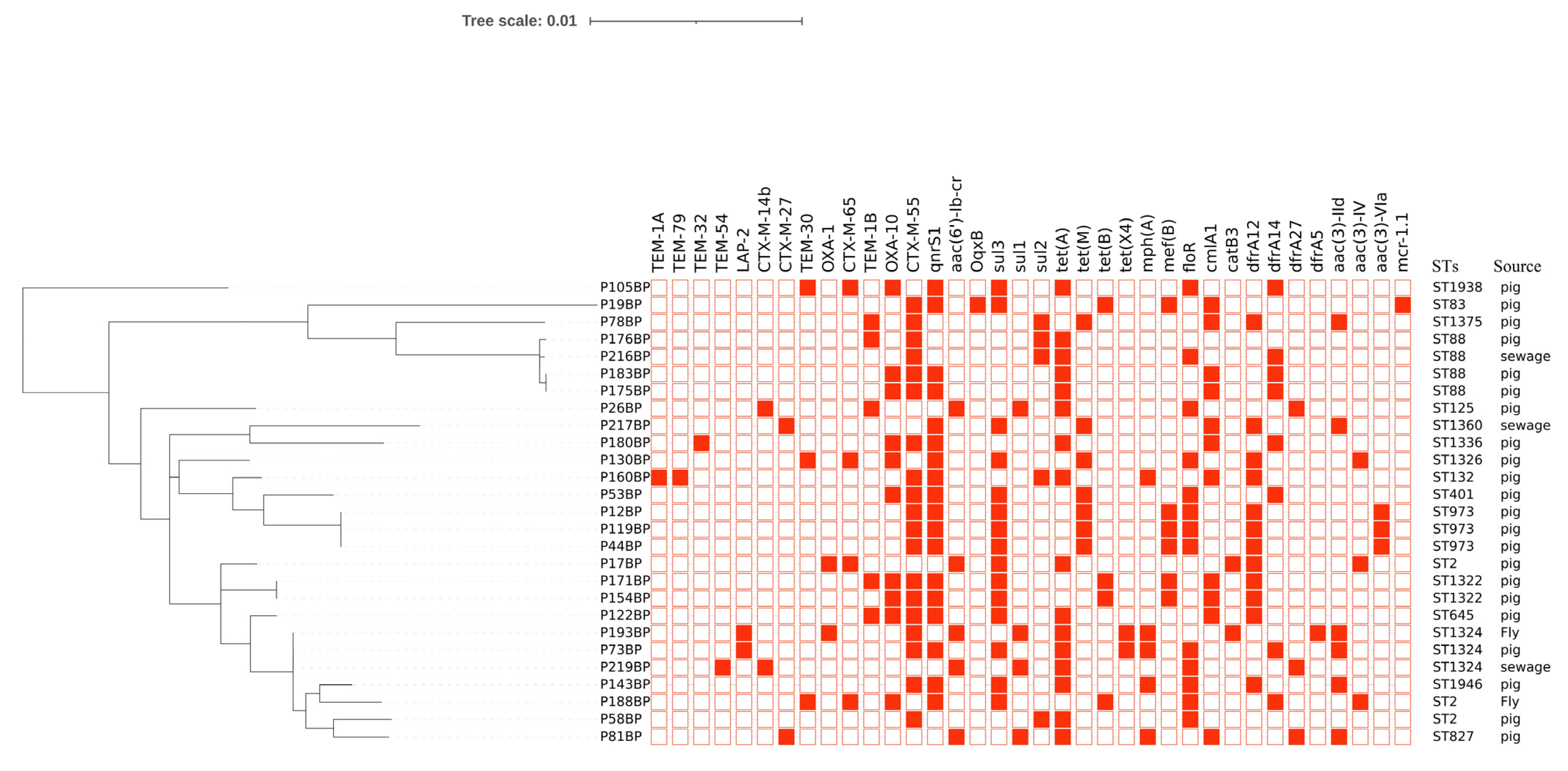
Whole-genome sequencing analysis was performed on the 27 isolated MDR E. coli strains. Each isolate carried only one blaCTX-M variant, and a total of four blaCTX-M variants were detected among the 27 strains, belonging to two phylogenetic groups: blaCTX-M-14b (n = 2, 7.41%), blaCTX-M-27 (n = 2, 7.41%) and blaCTX-M-65 (n = 4, 14.81%) from the CTX-M-9 group, blaCTX-M-55 (n = 19, 70.37%) from the CTX-M-1 group. In addition to blaCTX-M, other antimicrobial resistance genes (ARGs) conferring resistance to β-lactams, aminoglycosides, amphenicols, tetracyclines, sulfonamides, trimethoprim, macrolides, quinolones, and polypeptides were also present, totaling 36 ARGs. Among these, qnrS1 (n = 18, 66.67%), tet(A) (n = 16, 59.26%), and sul3 (n = 15, 55.56%) showed relatively high detection rates (Figure 1).

3.4. STs

The 27 CTX-M-EC strains were distributed among 17 distinct STs, thereby revealing their genetic diversity. These included four strains of ST88, three strains each of ST2, ST1324, and ST973, two strains of ST1322, and one strain each of the remaining STs (Figure 1).

3.5. Virulence Genes

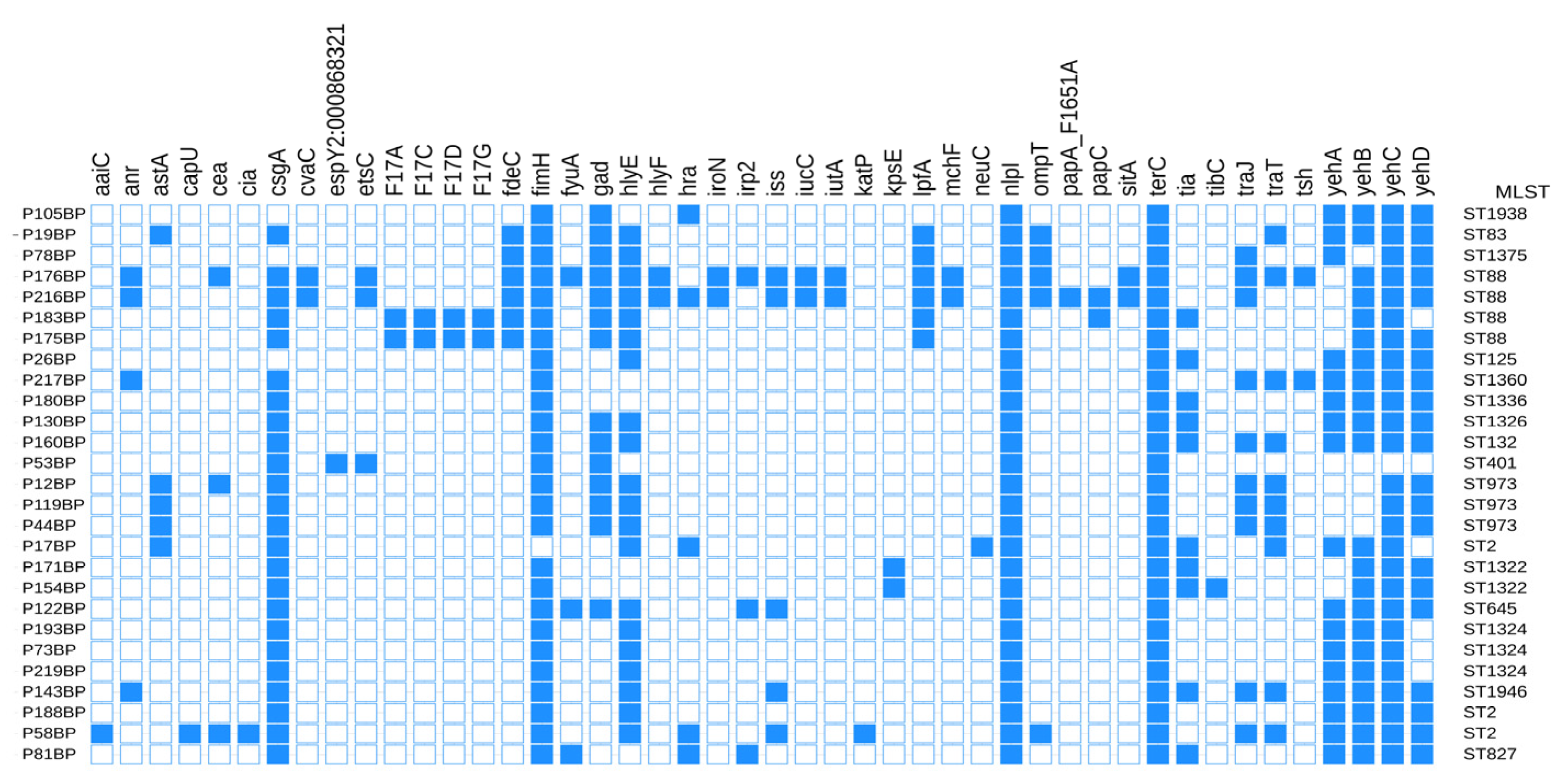
Analysis of the 27 strains revealed the presence of 46 virulence genes, among which nlpI and terC were present in all strains, whereas csgA, fimH, hlyE, and yehB/C/D were detected in a majority of strains (Figure 2).

3.6. Plasmid Replicons

Plasmid replicon typing analysis of the 27 isolated strains revealed 23 plasmid replicons, among which IncQ1 (14/27), IncFIB(K) (11/27), and IncX1 (13/27) were identified in most isolates, with statistical analysis indicating that almost all positive strains harbored two or more plasmids (Table 3).

3.7. Genetic Background

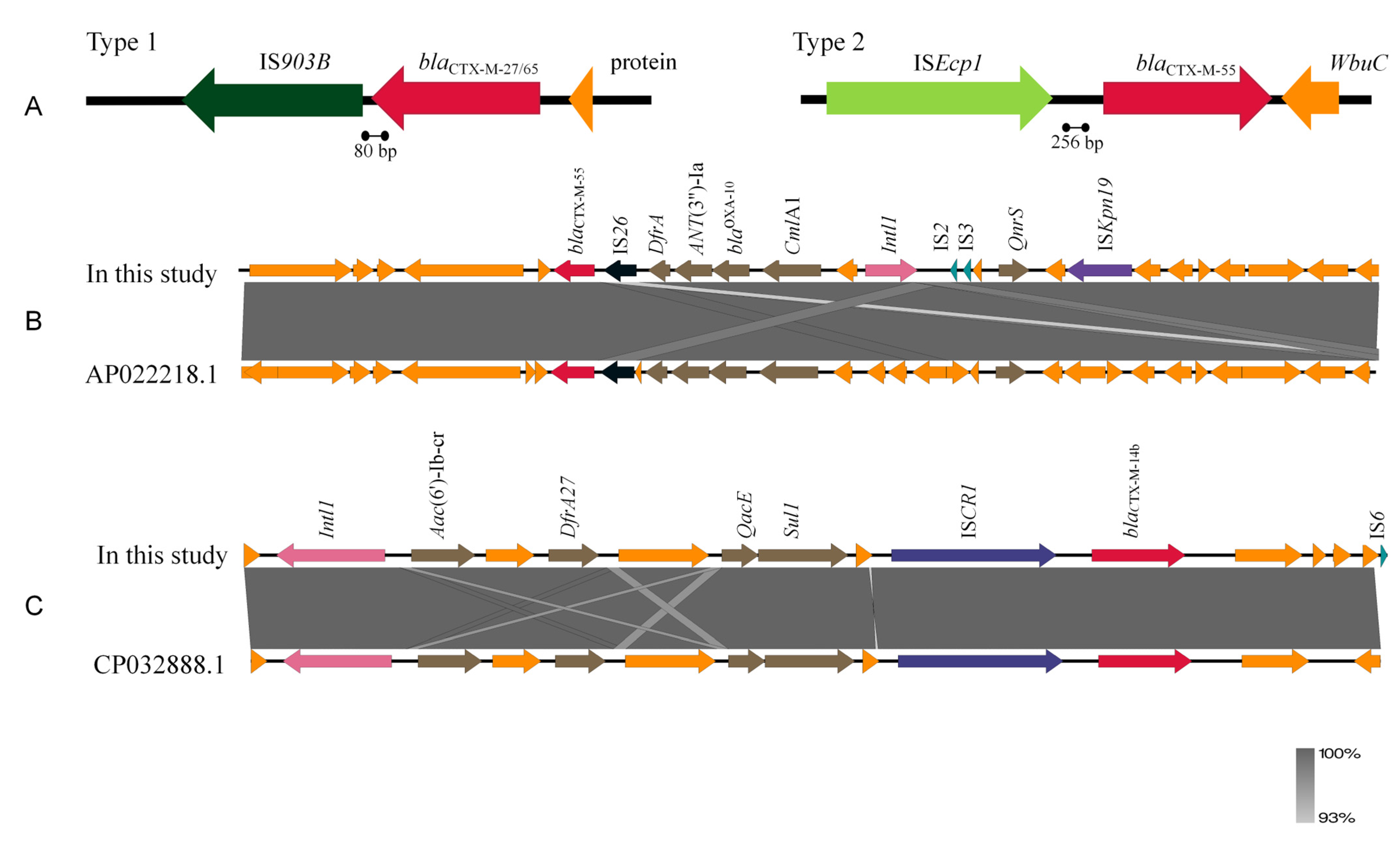
Further analysis of the gene environments of the four blaCTX-M subtypes revealed that both blaCTX-M-27 and blaCTX-M-65 had a blaCTX-M-IS903B gene environment, with IS903B located 80 bp downstream of blaCTX-M (Figure 3). The core gene environment of certain blaCTX-M-55 strains was “ISEcp1-blaCTX-M,” (Figure 3), whereas the remaining strains harbored multi-drug resistance regions highly similar to those in strains isolated from Japanese sewage treatment plants(GenBank accession number: AP022218.1; Figure 3). The analysis revealed IS26-mediated resistance regions for DfrA14, blaOXA-10, and CmlA1, and cassette arrays, such as ISKpn19-qnrS1, mediated by Class I integrons (intI1). The blaCTX-M-14b gene environment showed high similarity to that isolated from human-derived E. coli(GenBank accession: CP032888.1; Figure 3), both harboring a multi-drug resistance region comprising sul1-qacE-DfrA27-aac(6ʹ)-Ib-cr mediated by an intI1 and insertion sequence common region 1 (collectively termed a composite intI1).

3.8. Gene Transfer

Following three rounds of conjugation, we established that 96.29% (n = 26) of the blaCTX-M genes had been transferred from the isolates to the recipient E. coli EC600 (Table 3).

3.9. Transmission Routes of CTX-M-EC

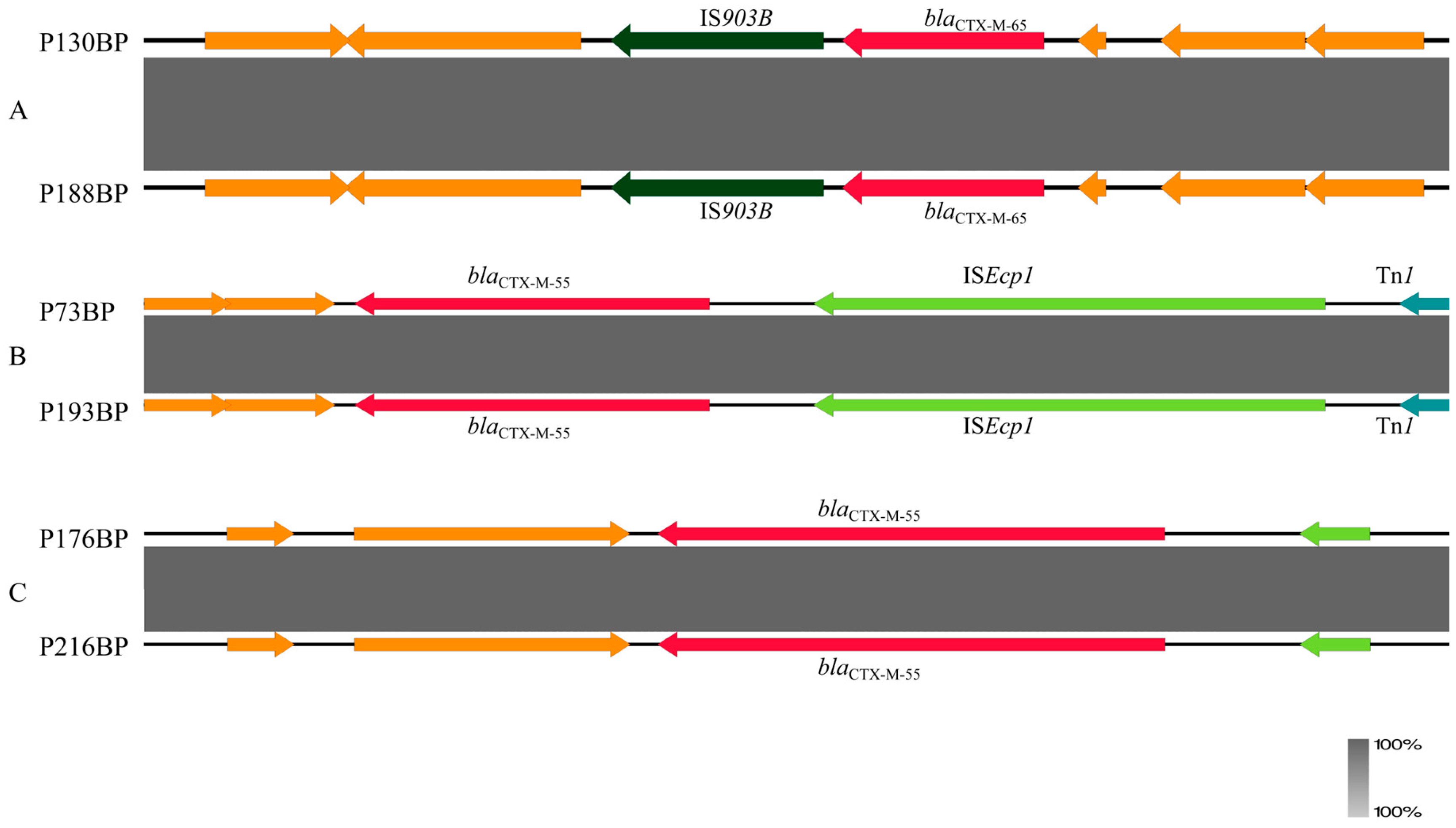
By comparing the phylogenetic tree with the genetic environment maps, it was observed that two distinct transmission routes existed for blaCTX-M-carrying E. coli strains in this pig farm. Strains P130BP and P188BP were placed on distinct branches of the core genome phylogenetic tree and had different STs. Both harbored an identical “blaCTX-M-65-IS903B” drug resistance gene module (Figure 4), which is indicative of ongoing horizontal gene transfer [10]. However, phylogenetic tree analysis revealed that three E. coli strains, isolated from farrowing house flies (P193BP), finishing house manure (P73BP), and gestation house wastewater (P219BP), formed a tight phylogenetic cluster with the same ST (Figure 1), indicating that they are members of a recent common transmission clone [26]. Therefore, in this pig farm, CTX-M-EC exhibited dual transmission mechanisms: clonal dissemination and horizontal gene transfer. Meanwhile, comparison of the genetic contexts revealed that strain P73BP from a fecal sample in the finishing barn shared an identical genetic environment with strain P193BP from a fly sample in the farrowing room (Figure 4), while strain P176BP from a fecal sample in the boar room had an identical genetic environment to strain P216BP from a wastewater sample (Figure 4). These findings indicate the presence of transmission chains mediated by flies and wastewater that span production areas within this farm.

4. Discussion

4.1. Comparison with Previous Studies: Antimicrobial Resistance Rates and Distribution of blaCTX-M Subtypes

The overall isolation rate of cefotaxime-resistant strains in this study was 43.53%, which is similar to that of cefotaxime-resistant strains (46%) from Kim et al. from various farms in South Korea between 2022 and 2023. In that study, blaCTX-M-55 (59.9%) was also the dominant genotype conferring cefotaxime resistance, a finding highly consistent with the result of the present study (70.37%). They also reported a significantly higher resistance rate on farms with ceftiofur usage, indicating that the widespread use of third-generation cephalosporins is an important driver for the selection and enrichment of resistant strains [8]. In avian-derived E. coli, Chen et al. identified 358 CTX-M-positive strains from 1808 chicken-origin E. coli isolates collected from 10 provinces in China, among which blaCTX-M-55 and blaCTX-M-65 accounted for 42.7% and 25.7%, respectively. This suggests that the prevalence of blaCTX-M-55 also exists in poultry farming [15], which is consistent with the trend that blaCTX-M-55 has surpassed blaCTX-M-15 to become the most common CTX-M subtype in animal-origin E. coli in China [15]. The positive rate of CTX-M-EC in this experiment was 9.71%, which was similar to that reported by Masui et al. (9.7%) in a study conducted between 2015 and 2019 using fecal specimens of healthy Japanese individuals [27]. However, it was lower than the rate reported by Wei et al. from cattle feces in different provinces of China (29.6%) [28]. These differences may be attributed to variations in sample types and regional antibiotic usage.
All CTX-M-EC isolates in this study were MDR (100%), which is consistent with trends reported in both Chinese and international studies. Li et al. investigated porcine-origin extraintestinal pathogenic E. coli in China and reported an MDR rate of 97% [29], indicating that MDR among swine-origin E. coli has become a common phenomenon. All isolates in this study remained 100% susceptible to meropenem, consistent with findings from most global studies on animal-origin E. coli, suggesting that carbapenem use in animal husbandry remains effectively controlled [30].

4.2. Relationship Between Multilocus Sequence Typing (MLST), Plasmid Types, Insertion Sequences, Virulence Genes, and blaCTX-M

In this study, blaCTX-M-55-carrying strains were distributed among 12 different STs, with ST88 being the predominant ST carrying this gene. blaCTX-M-65-carrying strains were distributed among three STs, predominantly ST2. Strains carrying blaCTX-M-27 and blaCTX-M-14b were distributed across different STs. Furthermore, strains belonging to ST2 and ST1324 also carried blaCTX-M-55, indicating that the same ST can carry different CTX-M subtypes by acquiring different plasmids.
In this study, all blaCTX-M-65-positive strains carried the IncHI2/IncHI2A composite plasmid, whereas it was rarely detected in other strains, suggesting that the IncHI2 plasmid may be a specific vehicle for blaCTX-M-65. This finding is supported by several studies. For example, in dairy cow-origin E. coli from China, blaCTX-M-65 was located within a Tn3-like composite transposon on an IncHI2 plasmid. Similarly [31], in the swine farm environment in Spain, the genetic context of blaCTX-M-65 was identified as the conserved IS903-blaCTX-M-65-fipA structure on an IncHI2 plasmid [32]. In contrast, the plasmid types carrying blaCTX-M-55 in this study included more than 20 different types. A genomic epidemiological analysis by Yu et al. involving 1345 CTX-M-carrying plasmids worldwide also confirmed the high diversity of plasmid backbones harboring blaCTX-M-55 [10]. Therefore, the strong plasmid adaptability of blaCTX-M-55 may explain why it has become the dominant epidemic subtype in this pig farm and more broadly in animal-origin E. coli in China.
The ISEcp1, IS26, and IS903B elements detected in this study are major mobile elements mediating the horizontal transfer of blaCTX-M [33]. Research indicates that ISEcp1 insertion sequences are associated with most blaCTX-M variants, and the blaCTX-M genes associated with this element are typically located within multi-drug resistance regions that frequently carry genes conferring resistance to aminoglycosides, tetracyclines, sulfonamides, or fluoroquinolones [34], which is consistent with the ARG results obtained in the present study.
In this study, all 27 CTX-M-EC isolates carried the nlpI and terC genes, which are involved in lipoprotein synthesis and tellurite resistance, respectively, and are associated with bacterial stress adaptation. Furthermore, the high detection rates of adhesion-related genes fimH (26/27), csgA (24/27), and the yeh family genes suggest that these isolates possess strong intestinal colonization and biofilm-forming abilities, which may enhance their persistence and transmission potential in the farming environment [35]. Notably, a relatively high proportion of isolates carried hlyE and gad, genes associated with pathogenicity [36,37], indicating that some CTX-M-EC isolates have potential pathogenic risks.

4.3. Public Health Implications and Practical Recommendations for One Health Strategies

The high diversity of MLST indicates that these drug-resistant strains are unlikely to originate from the dissemination of a single clonal lineage but rather are likely transmitted through horizontal gene transfer. Although the overall diversity was high, a few STs, such as ST88 (4 isolates), ST2 (3 isolates), ST1324 (3 isolates), and ST973 (3 isolates), were isolated multiple times, suggesting that these clones may possess enhanced adaptability and transmission capacity within the farming environment. ST88 E. coli can carry multiple resistance genes and has been isolated from human clinical samples [38]. In this study, ST88 clone strains were present in both pig feces (P176BP) and wastewater (P216BP), indicating that this clone may spread through animals and the environment, posing a potential animal–environment–human transmission risk. Furthermore, ST88 strains carried more virulence genes than other STs. Among them, P176BP and P216BP carried more than 27 virulence genes (including the iron uptake-related genes iucC/iutA and iroN, as well as the adhesins fimH and papC), indicating that the ST88 clone may represent an epidemic lineage with high virulence potential in the pig farm environment. Therefore, surveillance of high-risk clones such as ST88 should be incorporated into the antimicrobial resistance control system in livestock farms. This also implies that controlling antimicrobial resistance must shift from single-animal treatment to integrated management, elevating pest control and wastewater disinfection to core biosecurity strategies.
The blaCTX-M genes are frequently located on conjugative plasmids, among which incompatibility (Inc) group F plasmids are the most common [10], which is consistent with the finding in this study that 92.59% (n = 25) of the strains carried IncF plasmids. This study reported that 96.29% of the isolated strains harbored blaCTX-M genes with transferability. Therefore, it is necessary to strengthen surveillance of such strains to prevent their entry into the human food chain through contaminated meat products or environmental discharge, thereby threatening public health safety [39].
Previously, we have also observed that all multi-drug-resistant strains harboring mobilized colistin resistance gene 1 (mcr-1) at this pig farm simultaneously carried at least one β-lactam resistance gene, on the basis of which, we hypothesized that the prevalence of ESBLs may have generated selective pressure, facilitating the colonization and spread of strains carrying mcr-1 [40]. Our findings in this study provide strong environmental evidence supporting this hypothesis. Controlling the prevalence of ESBL genes, such as blaCTX-M, on farms is essential for addressing β-lactam antibiotic resistance and preserving the efficacy of polymyxin, a key last-resort antibiotic. Consequently, antimicrobial resistance management on livestock farms should focus not solely on individual resistance genes but adopt a collaborative “One Health” approach.
Based on the findings of this study, the following integrated measures are recommended to curb the spread of CTX-M-EC in pig farms: (i) immediate discontinuation of the prophylactic use of β-lactam antibiotics and reserving their administration for treatment guided by antimicrobial susceptibility testing; (ii) application of high-temperature composting or anaerobic fermentation to feces, and disinfecting wastewater by UV or chlorine treatment before discharge; (iii) installation of insect-proof nets and eliminating standing water to reduce vector-borne transmission by flies; and (iv) routine monitoring of pig feces for the presence of blaCTX-M and mcr-1 genes, as well as high-risk ST88 strains. The synergistic implementation of these measures can effectively interrupt the transmission chain of resistance genes within the pig farm ecosystem.

5. Conclusions

Our survey of a pig farm in China revealed a widespread dissemination of the blaCTX-M gene, with all bacterial carriers being characterized by multi-drug resistance, thereby highlighting the need to strengthen on-farm surveillance. Furthermore, the detection of resistant bacteria in wastewater and insect environmental samples confirms that drug-resistant bacteria can spread through the environment. More alarmingly, 96.29% of isolates harbored blaCTX-M with transferable capabilities. Therefore, enhanced manure management is essential to interrupt environmental transmission chains, thereby reducing the spread of resistant bacteria and safeguarding public health.

Author Contributions

Conceptualization, Y.W. and J.-Y.L.; methodology, R.-H.J., Y.W. and J.-Y.L.; investigation, R.-H.J., B.H., D.-N.L. and Z.-K.L.; data curation, R.-H.J., B.H., D.-N.L. and Z.-K.L.; writing—original draft preparation, R.-H.J.; writing—review and editing, Y.W. and J.-Y.L.; funding acquisition, Y.W. All authors have read and agreed to the published version of the manuscript.

Funding

This study was supported by the Hunan Provincial College Student Innovation Training Program (Project No.: S202410537038) and the Hunan Province graduate scientific research innovation project (Grant No. QL20230182).

Institutional Review Board Statement

All experimental procedures involving animals were reviewed and approved by the Animal Care and Use Committee of Hunan Agricultural University (Approval No. 20240206, approved on 6 February 2024).

Informed Consent Statement

Not applicable.

Data Availability Statement

Genome assembly of 27 Escherichia coli strains in this study was deposited in GenBank under the BioProject accession: PRJNA1394679.

Conflicts of Interest

The authors declare no conflicts of interest.

Abbreviations

The following abbreviations are used in this manuscript:
AMRantimicrobial resistance
blaCTX-Mβ-lactamase, cefotaxime-hydrolyzing, Munich
E. coliEscherichia coli
ESBLsextended-spectrum beta-lactamases
ARGantibiotic resistance gene
CTX-M-ECblaCTX-M-positive E. coli
PCRpolymerase chain reaction
MICminimum inhibitory concentration
STssequence types
MDRmulti-drug resistance

References

  1. World Health Organization. Antimicrobial Resistance. Available online: https://www.who.int/news-room/fact-sheets/detail/antimicrobial-resistance (accessed on 19 April 2026).
  2. GBD 2021 Antimicrobial Resistance Collaborators. Global burden of bacterial antimicrobial resistance 1990–2021: A systematic analysis with forecasts to 2050. Lancet 2024, 404, 1199–1226. [Google Scholar] [CrossRef]
  3. Guo, Y.; Ding, L.; Han, R.; Yin, D.; Wu, S.; Yang, Y.; Wang, F.; Zhu, D.; Hu, F. The China Antimicrobial Surveillance Network (CHINET) Study Group. Antimicrobial resistance profile of clinical isolates from hospitals across China: CHINET 2024 surveillance report. One Health Adv. 2025, 3, 23. [Google Scholar] [CrossRef]
  4. Kerek, Á.; Román, I.; Szabó, Á.; Kovács, D.; Kardos, G.; Kovács, L.; Jerzsele, Á. Antibiotic resistance genes in Escherichia coli—Literature review. Crit. Rev. Microbiol. 2026, 52, 1–35. [Google Scholar] [CrossRef]
  5. Song, D.; Lee, J.; Kim, K.; Oh, H.; An, J.; Chang, S.; Cho, H.; Park, S.; Jeon, K.; Yoon, Y.; et al. Effects of dietary supplementation of Pediococcus pentosaceus strains from kimchi in weaned piglet challenged with Escherichia coli and Salmonella enterica. J. Anim. Sci. Technol. 2023, 65, 611–626. [Google Scholar] [CrossRef]
  6. Moxley, R.A.; Berberov, E.M.; Francis, D.H.; Xing, J.; Moayeri, M.; Welch, R.A.; Baker, D.R.; Barletta, R.G. Pathogenicity of an enterotoxigenic Escherichia coli hemolysin (hlyA) mutant in gnotobiotic piglets. Infect. Immun. 1998, 66, 5031–5035. [Google Scholar] [CrossRef] [PubMed]
  7. Li, X.X.; Hong, Z.Q.; Xiong, Z.X.; Zhang, L.W.; Wang, S.; Tao, P.; Chen, P.; Li, X.M.; Qian, P. Development of a novel chimeric lysin to combine parental phage lysin and cefquinome for preventing sow endometritis after artificial insemination. Veter. Res. 2025, 56, 39. [Google Scholar] [CrossRef]
  8. Kim, J.I.; Moon, B.Y.; Ali, M.S.; Kang, H.-S.; Choi, J.-H.; Kim, J.-M.; Park, S.-C.; Lim, S.-K. High prevalence of blaCTX-M-55-carrying Escherichia coli in both ceftiofur-use and non-use pig farms. Appl. Environ. Microbiol. 2025, 91, e0252524. [Google Scholar] [CrossRef]
  9. Jesudason, T. WHO publishes updated list of bacterial priority pathogens. Lancet Microbe 2024, 5, 100940. [Google Scholar] [CrossRef]
  10. Yu, K.; Huang, Z.; Xiao, Y.; Gao, H.; Bai, X.; Wang, D. Global spread characteristics of CTX-M-type extended-spectrum β-lactamases: A genomic epidemiology analysis. Drug Resist. Updat. 2024, 73, 101036. [Google Scholar] [CrossRef]
  11. Rahman, M.K.; Rodriguez-Mori, H.; Loneragan, G.; Awosile, B. One Health distribution of beta-lactamases in Enterobacterales in the United States: A systematic review and meta-analysis. Int. J. Antimicrob. Agents 2025, 65, 107422. [Google Scholar] [CrossRef] [PubMed]
  12. Bastidas-Caldes, C.; Romero-Alvarez, D.; Valdez-Vélez, V.; Morales, R.D.; Montalvo-Hernández, A.; Gomes-Dias, C.; Calvopiña, M. Extended-Spectrum Beta-Lactamases Producing Escherichia coli in South America: A Systematic Review with a One Health Perspective. Infect. Drug Resist. 2022, 15, 5759–5779. [Google Scholar] [CrossRef]
  13. Yartey, S.N.A.; Kungu, F.; Asantewaa, A.A.; Donkor, E.S. Extended Spectrum Beta-Lactamase-Producing Bacterial Clones in West Africa: A Systematic Review and Meta-Analysis from a One Health Perspective. Sci. Rep. 2025, 15, 29625. [Google Scholar] [CrossRef] [PubMed]
  14. Salman, S.; Umar, Z.; Xiao, Y. Current epidemiologic features and health dynamics of ESBL-producing Escherichia coli in China. Biosaf. Health 2024, 6, 40–49. [Google Scholar] [CrossRef]
  15. Chen, X.; Ju, Z.J.; Li, C.; Wang, Q.; Yang, X.; Huang, Z.-R.; Lei, C.-W.; Wang, H.-N. Epidemiological characteristics of human- and chicken-derived CTX-M-type extended-spectrum β-lactamase-producing Escherichia coli from China. Veter. Microbiol. 2024, 293, 110072. [Google Scholar] [CrossRef]
  16. Zhang, J.; Zheng, B.; Zhao, L.; Wei, Z.; Ji, J.; Li, L.; Xiao, Y. Nationwide high prevalence of CTX-M and an increase of CTX-M-55 in Escherichia coli isolated from patients with community-onset infections in Chinese county hospitals. BMC Infect. Dis. 2014, 14, 659. [Google Scholar] [CrossRef]
  17. Naseer, U.; Sundsfjord, A. The CTX-M conundrum: Dissemination of plasmids and Escherichia coli clones. Microb. Drug Resist. 2011, 17, 83–97. [Google Scholar] [CrossRef]
  18. Peirano, G.; Pitout, J.D. Molecular epidemiology of Escherichia coli producing CTX-M β-lactamases: The worldwide emergence of clone ST131 O25:H4. Int. J. Antimicrob. Agents 2010, 35, 316–321. [Google Scholar] [CrossRef]
  19. Roy Chowdhury, P.; Hastak, P.; DeMaere, M.; Wyrsch, E.; Li, D.; Elankumaran, P.; Dolejska, M.; Browning, G.F.; Marenda, M.S.; Gottlieb, T.; et al. Phylogenomic analysis of a global collection of Escherichia coli ST38: Evidence of interspecies and environmental transmission? mSystems 2023, 8, e0123622. [Google Scholar] [CrossRef]
  20. Pitout, J.D.D.; Peirano, G.; Matsumura, Y.; DeVinney, R.; Chen, L. Escherichia coli sequence type 410 with carbapenemases: A paradigm shift within E. coli toward multidrug resistance. Antimicrob. Agents Chemother. 2024, 68, e0133923. [Google Scholar] [CrossRef] [PubMed]
  21. Widodo, A.; Khairullah, A.R.; Effendi, M.H.; Moses, I.B.; Agustin, A.L.D. Extended-spectrum β-lactamase-producing Escherichia coli from poultry: A review. Veter. World 2024, 17, 2017–2027. [Google Scholar] [CrossRef] [PubMed]
  22. Gurung, R.; Adhikari, S.; Adhikari, N.; Sapkota, S.; Rana, J.C.; Dhungel, B.; Shrestha, U.T.; Banjara, M.R.; Ghimire, P.; Rijal, K.R. Efficacy of Urine Dipstick Test in Diagnosing Urinary Tract Infection and Detection of the blaCTX-M Gene among ESBL-Producing Escherichia coli. Diseases 2021, 9, 59. [Google Scholar] [CrossRef]
  23. Bankevich, A.; Nurk, S.; Antipov, D.; Gurevich, A.A.; Dvorkin, M.; Kulikov, A.S.; Lesin, V.M.; Nikolenko, S.I.; Pham, S.; Prjibelski, A.D.; et al. SPAdes: A new genome assembly algorithm and its applications to single-cell sequencing. J. Comput. Biol. 2012, 19, 455–477. [Google Scholar] [CrossRef]
  24. Alvarez-Molina, A.; Trigal, E.; Prieto, M.; López, M.; Alvarez-Ordóñez, A. Assessment of a plasmid conjugation procedure to monitor horizontal transfer of an extended-spectrum β-lactamase resistance gene under food chain scenarios. Curr. Res. Food Sci. 2022, 6, 100405. [Google Scholar] [CrossRef]
  25. Magiorakos, A.P.; Srinivasan, A.; Carey, R.B.; Carmeli, Y.; Falagas, M.E.; Giske, C.G.; Harbarth, S.; Hindler, J.F.; Kahlmeter, G.; Olsson-Liljequist, B.; et al. Multidrug-resistant, extensively drug-resistant and pandrug-resistant bacteria: An international expert proposal for interim standard definitions for acquired resistance. Clin. Microbiol. Infect. 2012, 18, 268–281. [Google Scholar] [CrossRef]
  26. Tasnim, Y.; Rahman, M.K.; Awosile, B. Genetic relatedness and antimicrobial resistance profiles of β-lactamase-producing Escherichia coli from environmental and animal sources in West Texas: A One Health approach. J. Appl. Microbiol. 2025, 136, lxaf190. [Google Scholar] [CrossRef] [PubMed]
  27. Masui, T.; Nakano, R.; Nakano, A.; Saito, K.; Suzuki, Y.; Kakuta, N.; Horiuchi, S.; Tsubaki, K.; Kitahara, T.; Yano, H. Predominance of CTX-M-9 Group Among ESBL-Producing Escherichia coli Isolated from Healthy Individuals in Japan. Microb. Drug Resist. 2022, 28, 355–360. [Google Scholar] [CrossRef]
  28. Wei, X.; Wang, W.; Lu, N.; Wu, L.; Dong, Z.; Li, B.; Zhou, X.; Cheng, F.; Zhou, K.; Cheng, H.; et al. Prevalence of Multidrug-Resistant CTX-M Extended Spectrum Beta-Lactamase-Producing Escherichia coli From Different Bovine Faeces in China. Front. Veter. Sci. 2022, 9, 738904. [Google Scholar] [CrossRef]
  29. Li, X.; Hu, H.; Zhu, Y.; Wang, T.; Lu, Y.; Wang, X.; Peng, Z.; Sun, M.; Chen, H.; Zheng, J.; et al. Population structure and antibiotic resistance of swine extraintestinal pathogenic Escherichia coli from China. Nat. Commun. 2024, 15, 5811. [Google Scholar] [CrossRef] [PubMed]
  30. De Jong, A.; El Garch, F.; Hocquet, D.; Prenger-Berninghoff, E.; Dewulf, J.; Migura-Garcia, L.; Perrin-Guyomard, A.; Veldman, K.T.; Janosi, S.; Skarzynska, M.; et al. European-wide antimicrobial resistance monitoring in commensal Escherichia coli isolated from healthy food animals between 2004 and 2018. J. Antimicrob. Chemother. 2022, 77, 3301–3311. [Google Scholar] [CrossRef] [PubMed]
  31. Wang, W.; Wei, X.; Zhu, Z.; Wu, L.; Zhu, Q.; Arbab, S.; Wang, C.; Bai, Y.; Wang, Q.; Zhang, J. Tn3-like structures co-harboring of blaCTX-M-65, blaTEM-1 and blaOXA-10 in the plasmids of two Escherichia coli ST1508 strains originating from dairy cattle in China. BMC Veter. Res. 2023, 19, 279. [Google Scholar] [CrossRef]
  32. Martínez-Álvarez, S.; Châtre, P.; François, P.; Abdullahi, I.N.; Simón, C.; Zarazaga, M.; Madec, J.-Y.; Haenni, M.; Torres, C. Unexpected role of pig nostrils in the clonal and plasmidic dissemination of extended-spectrum beta-lactamase-producing Escherichia coli at farm level. Ecotoxicol. Environ. Saf. 2024, 273, 116145. [Google Scholar] [CrossRef]
  33. Wang, L.; Guan, Y.; Lin, X.; Wei, J.; Zhang, Q.; Zhang, L.; Tan, J.; Jiang, J.; Ling, C.; Cai, L.; et al. Whole-Genome Sequencing of an Escherichia coli ST69 Strain Harboring bla(CTX-M-27) on a Hybrid Plasmid. Infect. Drug Resist. 2024, 17, 365–375. [Google Scholar] [CrossRef] [PubMed]
  34. Shawa, M.; Chambaro, H.; Kamboyi, H.K.; Sulwe, C.; Chizimu, J.Y.; Nasilele, S.J.; Ogata, S.; Samutela, M.; Zorigt, T.; Mudenda, S.; et al. In silico characterization of chromosomally integrated blaCTX-M genes among clinical Enterobacteriaceae in Africa: Insights from whole-genome analysis. Front. Microbiol. 2025, 16, 1655907. [Google Scholar] [CrossRef]
  35. Abbood, D.H.A.; Alwan, Z.H.O. Molecular detection of genes encoding for adhesion factors in biofilm formation among uropathogenic Escherichia coli isolates. Med. J. Babylon 2023, 20, 258–263. [Google Scholar] [CrossRef]
  36. Murase, K.; Ooka, T.; Iguchi, A.; Ogura, Y.; Nakayama, K.; Asadulghani; Islam, R.; Hiyoshi, H.; Kodama, T.; Beutin, L.; et al. Haemolysin E- and enterohaemolysin-derived haemolytic activity of O55/O157 strains and other Escherichia coli lineages. Microbiology 2012, 158, 746–758. [Google Scholar] [CrossRef] [PubMed][Green Version]
  37. Foster, J. Escherichia coli acid resistance: Tales of an amateur acidophile. Nat. Rev. Microbiol. 2004, 2, 898–907. [Google Scholar] [CrossRef] [PubMed]
  38. Flament-Simon, S.C.; Nicolas-Chanoine, M.H.; García, V.; Duprilot, M.; Mayer, N.; Alonso, M.P.; García-Meniño, I.; Blanco, J.E.; Blanco, M.; Blanco, J. Clonal Structure, Virulence Factor-encoding Genes and Antibiotic Resistance of Escherichia coli, Causing Urinary Tract Infections and Other Extraintestinal Infections in Humans in Spain and France during 2016. Antibiotics 2020, 9, 161. [Google Scholar] [CrossRef]
  39. Pokharel, S.; Shrestha, P.; Adhikari, B. Antimicrobial use in food animals and human health: Time to implement ‘One Health’ approach. Antimicrob. Resist. Infect. Control 2020, 9, 181. [Google Scholar] [CrossRef]
  40. Wu, Y.; Wang, C.H.; Li, X.; Li, F.; Jiang, M.-L.; Liu, Z.-K.; Liu, G.-F.; Li, J.-Y. Characteristics of The Plasmid-Mediate Characteristics of the plasmid-mediate colistin-resistance gene mcr-1 in Escherichia coli isolated from pig farm in Jiangxi. Pak. Veter. J. 2024, 44, 1303–1307. [Google Scholar] [CrossRef]
Figure 1. Phylogenetic trees, resistant genes, and STs of 27 strains of CTX-M-EC. Left: Phylogenetic tree constructed based on the core genome. Branch lengths represent the nucleotide substitution rate (i.e., evolutionary distance) between isolates or between an isolate and a common ancestor. Shorter branches indicate smaller genomic differences and closer genetic relatedness among isolates, whereas longer branches indicate greater differences and more distant relationships. Middle: Heatmap showing resistance genes carried by each isolate, with red squares indicating presence and white squares indicating absence. Right: STs and sample sources of the isolates. The scale bar represents 0.01 nucleotide substitutions per site.
Microorganisms 14 01007 g001
Figure 2. Left: Strain names. Middle: Heatmap showing virulence genes carried by each isolate, with blue squares indicating presence and white squares indicating absence. Right: STs of the isolates.
Microorganisms 14 01007 g002
Figure 3. Genetic background of 27 strains of CTX-M-EC. (A) From left to right, the genetic environment of blaCTX-M-27 and blaCTX-M-65, and the genetic organization of blaCTX-M-55; (B) The genetic environment of the blaCTX-M-55 strain is highly similar to that of a Japanese sewage treatment plant isolate; (C) The genetic environment of blaCTX-M-14b is highly similar to that of a human-derived E. coli isolate. Arrows represent genes or coding sequences, with direction indicating transcription (5′→3′). Colors denote function: red, blaCTX-M; brown, other resistance genes; orange, other genes (e.g., WbuC) or hypothetical proteins; other colors, insertion sequences (see labels in the figure for details). Gray shading indicates homology with reference sequences. IS903B, ISEcp1, IS26, ISKpn19, IS2, IS3, and ISCR1 are common insertion sequences; intI1 is a class 1 integron integrase gene; WbuC is a cupin family metalloprotein (function not fully characterized); the remaining arrows represent resistance genes and their abbreviations, such as blaCTX-M, qnrS1, and dfrA14.
Microorganisms 14 01007 g003
Figure 4. Comparison of gene-environment maps between strains. (A) Strains P130BP and P188BP have identical genetic environments. (B) The fecal isolate P73BP from the finishing house and the fly isolate P193BP from the farrowing house have identical genetic environments. (C) The fecal isolate P176BP from the boar house and the wastewater isolate P216BP have identical genetic environments. The arrows, colors, and shading in this figure have the same meanings as described in Figure 3.
Microorganisms 14 01007 g004
Table 1. Sampling overview and distribution of cefotaxime-resistant E. coli and CTX-M-EC.
Sample TypeSampling SiteNumber of SamplesNumber of Cefotaxime-Resistant E. coliNumber of CTX-M-EC
Manure Piglet house4925 (51.02%)5 (10.20%)
Gestation house5023 (46.00%)5 (10.00%)
Farrowing house5034 (68.00%)5 (10.00%)
Finishing house2514 (56.00%)3 (12.00%)
Boar house96 (66.67%)4 (44.44%)
Wastewater Piglet house400
Gestation house43 (75.00%)2 (50.00%)
Farrowing house42 (50.00%)0
Finishing house41 (25.00%)0
Boar house21 (50.00%)1 (50.00%)
Drinking waterPiglet house400
Gestation house400
Farrowing house400
Finishing house42 (50.00%)0
Boar house200
FlyPiglet house31 (33.33%)0
Gestation house32 (66.67%)1 (33.33%)
Farrowing house32 (66.67%)1 (33.33%)
Finishing house32 (66.67%)0
Boar house33 (100.00%)0
SoilSurroundings of pig houses1600
PassagePersonnel disinfection passage500
Vehicle disinfection passage300
Quarantine area500
Pig driving passage1500
Total 278121 (43.53%)27 (9.71%)
Table 2. Drug resistance rate and MIC (mg/L) of 27 strains of CTX-M-EC.
StrainblaCTX-M VariantGENAMKCAZCTXMEMFFCCIPTETTGCCOLTMP-SMX
P12BPblaCTX-M-55>1281>128>1280.125>128>128>1280.252>128
P17BPblaCTX-M-65>128832>1280.5>12864>1280.52>128
P19BPblaCTX-M-5524>128>1280.25>128>128>1280.12516>128
P26BPblaCTX-M-14b264128>1280.25>12816>1280.5128>128
P44BPblaCTX-M-55>1288>128>1280.125>128128>1280.252>128
P53BPblaCTX-M-55164>128>1280.125>12832>1280.52>128
P58BPblaCTX-M-552864>1280.25>1281>1280.5216
P73BPblaCTX-M-55>1288>128>1280.125>128>128>12882>128
P78BPblaCTX-M-55>1288>128>1280.125>128>128>128>1284>128
P81BPblaCTX-M-27>1284>128>1280.125>12832>1280.252>128
P105BPblaCTX-M-6512641280.125>128>128>1280.251>128
P119BPblaCTX-M-55>1288>128>1280.25>12832>1280.52>128
P122BPblaCTX-M-550.54>128160.125>12841280.254>128
P130BPblaCTX-M-65>1284>1281280.125>128>128640.1258>128
P143BPblaCTX-M-55>1288>128>1280.125>128>128>128>1282>128
P154BPblaCTX-M-55168128640.125>128>128>1280.12518
P160BPblaCTX-M-55264>128>1280.125>128>128>1280.52>128
P171BPblaCTX-M-551432>1280.125>12816>1280.1254>128
P175BPblaCTX-M-5528>128>1280.2532>128>128>1282>128
P176BPblaCTX-M-55162>128>1280.25164>1280.252>128
P180BPblaCTX-M-5518>128>1280.125>1284>1280.254>128
P183BPblaCTX-M-5524>128>1280.12516>128640.252>128
P188BPblaCTX-M-65>12884>1280.12564>128>1280.1251>128
P193BPblaCTX-M-55>12864128>1280.125>1284>12882>128
P216BPblaCTX-M-55>1288>128>1280.125>128>128>1280.258>128
P217BPblaCTX-M-27>128132320.125>1284640.252>128
P219BPblaCTX-M-14b6444640.25>1281>12882>128
resistance rate(%)-59.2514.8192.59100.00092.59100.00100.0022.2229.6392.59
GEN, Gentamicin; AMK, Amikacin; CAZ, Ceftazidime; CTX, Cefotaxime; MEM, Meropenem; FFC, Florfenicol; CIP, Ciprofloxacin; TET, Tetracycline; TGC, Tigecycline; COL, Colistin; TMP-SMX, trimethoprim-sulfamethoxazole.
Table 3. Plasmid conjugation and plasmid replicon of 27 strains of CTX-M-EC.
StrainTransferable (+/−)Plasmid Types
P12BP+IncFIB(K), IncFII(pHN7A8), IncQ1, p0111
P17BP+Col156, IncFII, IncHI2, IncHI2A, IncY
P19BP+IncFIA(HI1), IncFIB(K), IncFII, IncI1-I(Alpha), IncX4
P26BPIncFIB(K), IncQ1
P44BP+IncFIB(K), IncFII(pHN7A8), IncQ1, p0111
P53BP+IncQ1, IncX1, IncY
P58BP+Col(KPHS6), IncFII, IncFII(pHN7A8)
P73BP+IncFIA(HI1), IncFIB(K), IncHI2, IncHI2A, IncQ1, IncX1
P78BP+IncFIB(AP001918), IncFII(pHN7A8), Col(pHAD28)
P81BP+IncFIA(HI1), IncHI1A, IncHI1B(R27), IncQ1, IncX1
P105BP+IncFIA(HI1), IncFIB(K), IncHI2, IncHI2A, IncQ1, Col(pHAD28)
P119BP+IncFIB(K), IncFII(pHN7A8), p0111
P122BP+IncFIA(HI1), IncFIB(K), IncQ1, IncX1, p0111, Col(pHAD28)
P130BP+IncHI2, IncHI2A, IncQ1
P143BP+IncFIB(AP001918), IncI1-I(Alpha), IncR, IncX1
P154BP+IncX1, IncFIB(pHCM2)
P160BP+IncFIB(AP001918), IncFIB(K), IncFII(pHN7A8), IncQ1, IncR, IncX1
P171BP+IncQ1, IncX1, IncFII(pHCM2)
P175BP+IncX1, IncFII
P176BP+IncFIB(AP001918), IncFIC(FII), IncFII(pHN7A8), IncN
P180BP+IncX1
P183BP+IncX1, IncHI2, IncFIA(HI1), IncHI2A
P188BP+IncFIB(AP001918), IncHI2, IncHI2A, IncQ1
P193BP+IncFIA(HI1), IncFIB(K), IncHI2, IncHI2A, IncQ1, IncX1
P216BP+IncFIB(AP001918), IncFIC(FII), IncFII(pHN7A8), IncN
P217BP+IncFIB(AP001918), p0111, IncFIC(FII)
P219BP+IncFIB(K), IncQ1, IncX1
+, positive (successful transfer); –, negative (failed transfer).
Disclaimer/Publisher’s Note: The statements, opinions and data contained in all publications are solely those of the individual author(s) and contributor(s) and not of MDPI and/or the editor(s). MDPI and/or the editor(s) disclaim responsibility for any injury to people or property resulting from any ideas, methods, instructions or products referred to in the content.