Article

Habitat-Adapted Endophytic Fusarium clavum EeR24 from the Arava Desert Induces Resistance Against Fusarium Wilt of Muskmelons


1
Department of Plant Pathology and Weed Research, The Volcani Institute, Agricultural Research Organization, Rishon LeZion 7528809, Israel
2
Department of Biotechnology, Anjaneya University, Nardaha, Raipur 492101, CG, India
3
Department of Plant Biotechnology, Gujarat Biotechnology University, GIFT City, Gandhinagar 382355, GJ, India
4
Institute of Plant Sciences, The Volcani Institute, Agricultural Research Organization, Rishon LeZion 7528809, Israel
5
Department of Biosciences and Technology, Maharishi Markandeshwar (deemed to be) University, Mullana-Ambala 133207, HR, India
6
Independent Researcher, Charlotte, NC 28202, USA
*
Author to whom correspondence should be addressed.
Microorganisms 2026, 14(4), 871; https://doi.org/10.3390/microorganisms14040871
Submission received: 3 February 2026 / Revised: 24 March 2026 / Accepted: 3 April 2026 / Published: 12 April 2026

Abstract

Muskmelon (Cucumis melo) is a widely cultivated and economically important fruit crop that is severely affected by Fusarium wilt caused by Fusarium oxysporum f. sp. melonis (race 1.2) (Fom). Conventional management practices have shown limited effectiveness and pose environmental and health risks; therefore, sustainable and eco-friendly alternatives are required to manage this disease. In the present study, 23 endophytic fungal isolates belonging to eight genera were isolated from Ecballium elaterium and screened to determine antifungal potential against Fom using an in vitro antagonistic assay. Two endophytic isolates (Fusarium sp. EeR4 and Fusarium clavum EeR24) exhibited an inhibitory effect against Fom on quarter-strength PDA plates. In growth chamber experiments, F. clavum EeR24-colonized melon seedlings and significantly protected plants from wilting compared to non-colonized pathogen-challenged seedlings. Under greenhouse conditions, F. clavum EeR24 significantly improved morphological and physiological traits, including plant height, weight, number of leaves, membrane stability, photosynthesis, stomatal conductance, and transpiration, in Cucumis melo. Endophytic colonization improved catalase (56%), guaiacol peroxide (47%), and superoxide dismutase activity (25%), and increased flavonoid and phenolic content by 11–59% compared to non-colonized Fom-challenged plants. Lipid peroxidation significantly decreased by 37% and proline accumulation increased by 70% in colonized plants compared to non-colonized plants. Histochemical analysis also indicated that endophytic colonization considerably reduced the levels of H2O2, O2, malondialdehyde, and cell mortality in Fom-challenged plants. In addition, the culture filtrate and organic residues of F. clavum EeR24 inhibited the mycelial growth of Fom by 52–58%, respectively. Furthermore, a study on spatial colonization of the endophyte and the pathogen using GFP and RFP tagging indicated that both the endophyte and the pathogen simultaneously colonized the root tissues of C. melo; however, the endophyte significantly reduced the pathogenicity of Fom. These results suggest that endophytic F. clavum EeR24 may be developed as an effective biocontrol agent for the management of Fusarium wilt in melon plants under field conditions.

1. Introduction

Muskmelon (C. melo) is one of the most popular, widely consumed, and economically important fruit crops, with a total harvested area of 1,068,238 ha and an annual production of approximately 28.5 million tons worldwide [1]. It is ranked fourth in the fresh fruit market and possesses essential vitamins, minerals, nutrients, and several other bioactive compounds that have certain medicinal and nutritional properties [2,3,4]. Muskmelon is extensively cultivated in the Mediterranean region and Southeast Asian countries. In Israel, it is cultivated in the deserts of the Jordan and Arava valleys, where extreme climatic conditions prevail, which are major limiting factors to plant growth and development [5]. Muskmelon is susceptible to soilborne diseases caused by a variety of pathogenic microorganisms, which may result in 100% yield losses [6,7]. Fusarium wilt of melon caused by Fom is a prevalent severe fungal disease that significantly impacts the yield and commercial value of muskmelon. Fom is a soilborne pathogen that invades the vascular system of melons, eventually resulting in seedling and plant mortality [8]. Fom can survive persistently in the soil for several years by producing conidia and chlamydospores, which then serve as the primary source of inoculum in the following year. Thus, the disease is particularly severe in monocultured melon fields and remains a major problem in melon cropping systems [9].
Traditional control strategies, including the use of fungicides, crop rotation, and development of wilt-resistant cultivars, have been suggested to control melon Fusarium wilt; however, these strategies have provided limited protection against Fusarium wilt, along with hazardous effects on the environment and human health [10]. The use of resistant cultivars has also led to the development of new virulent races in specific locations. In Fom, four common races (0, 1, 2, and 1.2) exist worldwide, and to date no known resistant field cultivars are available to this pathogen [11,12,13]. Therefore, alternative avenues need to be explored to develop robust, sustainable, and environmentally friendly strategies to manage and control Fusarium wilt in muskmelons [12]. Grafting of melon seedlings onto cucurbit rootstock is one of the most effective approaches for controlling Fusarium wilt, and is widely practiced in countries like Israel, Spain, and South Korea. However, due to the high price of grafted transplants, other plausible approaches need to be investigated [14]. Biological control offers an attractive alternative method for protection of melon against Fusarium wilt. A nonpathogenic mutant strain of Fom significantly colonized the seedling roots and stem tissues and reduced the mortality of melon seedling in cross-protection experiments [15]. A bioorganic fertilizer made from organic fertilizer and antagonistic microorganisms decreased the incidence of Fusarium wilt and increased melon yield [16]. Similarly, Trichoderma polysporum in combination with liquid compost significantly decreased Fusarium wilt of melon and increased fruit production by 100% [10]. A talc-based formulation of two strains of Pseudomonas putida effectively suppressed the growth of Fusarium wilt of muskmelon [17]. Several antagonistic strains, such as Cadophora, Chaetomium, Fusarium, Meyerozima, Penicillium, and Trichoderma strains, have been proven as effective biocontrol agents against Fusarium wilt in controlled laboratory or greenhouse conditions [6,10,18,19,20]. Hence, using beneficial microorganisms to manage plant disease not only enhances agricultural yield and product quality, but also reduces reliance on chemical pesticides [18].
Endophytes are a ubiquitous, polyphyletic group of microorganisms that spend an entire or significant part of their life cycle within living tissues of host plants without causing detrimental impacts [21,22,23]. Endophytes are well known to provide fitness benefits to their host plants by mediating abiotic and biotic stress tolerance, inducing resistance [6,10,18,24], regulating nutrition acquisition [20], decreasing water consumption [25,26], improving photosynthetic machinery [27], inducing antagonism, antibiosis, and mycoparasitism [19,28,29,30,31], preventing ROS production [5,32], producing antioxidant enzymes, [5,33] and expressing genes involved in homeostasis [34]. Based on their evolutionary history, taxonomy, host plant specificity, and ecological roles, fungal endophytes have been categorized into two principal groups: clavicipitaceous and non-clavicipitaceous endophytes [35,36]. Clavicipitaceous endophytes, which are restricted to certain grass species, belong to class 1 and consist of a limited number of closely related species. These fungi exhibit vertical transmission, passing directly from one generation to another. In contrast, non-clavicipitaceous endophytes, which are found within a broader range of host plants, including bryophytes, ferns, gymnosperms, and angiosperms, are further divided into class 2, class 3, and class 4. These endophytes exhibit both horizontal and vertical modes of transmission [37]. Interestingly, certain studies have suggested that class 2 fungal endophytes adapt native plants to various abiotic and biotic stresses via habitat-specific fungal adaptation, i.e., fungal species isolated from plants growing in a particular area with high levels of stress are specially adapted to improving host stress tolerance [5,7,27,35]. For example, Dichanthelium lanuginosum (panic grass) thrives in geothermal soils, is symbiotic with the fungus Curvularia protuberata, and confers thermotolerance to this grass at elevated temperatures [38]. It was also shown that the C. protuberata endophyte can asymptomatically colonize genetically distant plants (tomato, rice, wheat, squash) and confer heat tolerance equivalent to that observed in panic grass [39]. Fungal endophytes such as Alternaria and Trichoderma isolated from naturally growing plants in salinized soil in Saskatchewan, Canada, conferred salt and drought tolerance to tomato [27]. Similarly, endophytic Acremonium sclerotigenum and Sarocladium implicatum isolated from a wild wheat variety (Sharon goat grass) protected wheat plants from drought by altering the physiological responses of the host plant to water stress [25]. Endophytic Trichoderma phayaoense isolated from Chromolaena odorata (Siam weed) growing in the forest of Phayao province, Thailand, inhibited the mycelial growth of Stagonosporopsis cucurbitacearum and Fusarium equiseti, which cause gummy stem blight and wilt of muskmelon, respectively. In addition, T. phayaoense also tolerated a fungicide (metalaxyl) at recommended dosages for field applications, and thus can be used together with the fungicide to manage gummy stem blight and wilt of muskmelon [7].
The endophytic fungal isolate F. clavum EeR24, isolated from Ecballium elaterium growing in the Arava Valley, Israel in a previous study, mitigated salt stress in muskmelons by improving morphological and physiological traits, decreased absorption of Na+ and Cl ions, and enhanced production of antioxidant enzymes, osmoprotectants, and growth hormones [5]. Therefore, isolation, preservation, and characterization of these fungal endophytes surviving within plants under stressed environments are of paramount biotechnological and agricultural importance [26,40]. In this study, we comprehensively assessed the ability of fungal endophytes isolated from E. elaterium to inhibit the growth of Fom responsible for causing Fusarium wilt in muskmelon. After preliminary antagonistic and growth chamber assays, the endophytic isolate F. clavum EeR24 was selected for greenhouse experiments. Although there are previous reports that investigated the biocontrol potential of endophytes against Fom [6,10], to the best of our knowledge, this is the first study on exploiting the potential of habitat-adapted fungal endophytes of E. elaterium isolated from the Arava valley in Israel as a biocontrol agent against Fom in melon plants.

2. Materials and Methods

2.1. Plant Sample Collection and Isolation of Fungal Endophytes

Healthy and mature root samples of E. elaterium (aka squirting melons) growing in the Arava Valley, Israel were collected in August 2017. Isolation was performed within 24 h of sample collection. The samples were washed thoroughly under running tap water for 15 min to remove adhered debris. Thereafter, the samples were sequentially surface-sterilized with 70% ethanol for 10 s followed by 1% sodium hypochlorite for 2.3 min and then rinsed thrice with sterile distilled water (SDW). The surface-sterilized samples were then cut into 2–5 mm segments with the help of a sterile blade and placed on potato dextrose agar (DifcoTM, Becton, Dickinson and Company, Sparks, MD, USA) plates supplemented with chloramphenicol (PDAC) (250 mg/L) (Arcos Organics, Saddle Brook, NJ, USA). The plates were then incubated at 26 ± 2 °C for 7–10 days, with 12 h light and dark cycles. Individual colonies were picked from the edge of an advancing colony and were further purified by single spore isolation. The pure endophytic isolates obtained were stored in glycerol stocks at −80 °C until further examination and characterization [21].

2.2. Fungal DNA Extraction

Genomic DNA was extracted from all collected fungal isolates (Table 1) as per Meshram et al. (2023) [5]. The extracted DNA was visualized under UV light (Enduro GDS, Labnet International, Edison, NJ, USA) after separation in 1.2% agarose gels (SeaKem LE Agarose, Waltham, ME, USA) stained with ethidium bromide. The purity and quantity of DNA were determined using an ND-1000 spectrophotometer (Thermo Fisher Scientific, Waltham, MA, USA) at 260 and 280 nm [5].

2.3. Arbitrarily Primed PCR (ap-PCR) Amplification of Fungal DNA

Ap-PCR was performed on DNA of all 23 fungal isolates with three of the repeat-motif primers—(CAG)5, (GACA)4 and (GACAC)3 (Integrated DNA Technologies, Coralville, IA, USA)—as per [5]. The amplification products were separated in 1.8% agarose gels (SeaKem LE Agarose, Lonza Bioscience, Basel, Switzerland) in 1X Tris-acetate–EDTA buffer and run at a constant voltage of 80 V for 1.5 h. Representative isolates were chosen from those that had identical banding patterns after Ap-PCR amplification. Ap-PCR was repeated twice for reference isolate DNA to verify reproducibility of the results [5,41].

2.4. ITS-Based Identification of Fungal Endophytes

For molecular identification of fungal endophytes, the universal internal transcribed spacer (ITS) primers ITS1 and ITS4 were used to amplify fungal ITS regions (ITS1-5.8S- ITS2). The amplified products (~500 bp) were resolved on 1.2% agarose gels and imaging was performed under UV light (EnduroTM GDS, Labnet International Inc, Edison, NJ, USA) using a documentation system (Enduro GDS analysis software). The products were purified using a NucleoSpin gel and PCR cleanup kit (Macherey-Nagel GmbHand Co., Backnang, Germany) and the amplified products were sequenced at Macrogen Inc (Amsterdam, The Netherlands). Further, the obtained sequences were homology-searched using NCBI BLAST 2.17.0 (http://blast.ncbi.nlm.nih.gov; default parameters). Identification of the fungal endophytes (to the genus level) was ascertained based on maximum query coverage and score in the BLAST results and further verified using the UNITE database (https://unite.ut.ee/analysis.php accessed on 3 February 2026) [5].

2.5. Screening of Fungal Endophytes for Antifungal Activity

Fungal endophytes were screened for their antagonistic activity against Fom by a modified dual-culture method [42]. Petri dishes containing quarter-strength potato dextrose agar (PDA) were inoculated with actively growing mycelial plugs (5 mm) of endophytic fungi and Fom 4 cm apart from each other. Petri dishes inoculated with Fom and an agar plug on opposite sides served as controls. The plates were sealed with double-layered parafilm and incubated in the dark at 28 ± 1 °C for 7 days, and treatments were replicated in triplicate. Antagonistic effects were determined by calculating the percentage of radial growth inhibition (PGRI) using the formula: (R1−R2)/R1 × 100, where R1 is the radial growth of Fom without the fungal endophyte and R2 is the radial growth of Fom co-inoculated with the fungal endophyte. An analysis of variance (ANOVA) of the PGRI values was carried out seven days post incubation to determine differences between treatments based on Tukey’s significance test (p < 0.05). Furthermore, the type of antagonism exhibited by the fungal endophytes towards Fom was categorized into three categories i.e., competition for substrate (Type A), antibiosis (Type B) and mycoparasitism (Type C), with A = deadlock with mycelial contact, B = deadlock at a distance, and C = overgrowth without initial deadlock, as described by Huang et al. 2020 [43]. Fungal endophytes exhibiting antibiosis or Type B interaction in in vitro assays were selected for further studies.

2.6. Plant Cultivar and Treatments with Endophytic Fungi Fusarium clavum EeR24 and Fusarium sp. EeR4

The Ra’anan muskmelon variety (susceptible to wilting by Fom) was used to study the effect of endophyte colonization on seedlings under biotic stress using four-week-old seedlings, kindly provided by Hishtil Nehalim Nursery, Nehalim, Israel. Endophytic F. clavum EeR24 and Fusarium sp. EeR4 exhibiting Type B interaction with Fom were selected for further studies. Conidia of selected fungal endophytes and Fom were separately produced in Fusarium minimal medium (FMM), as previously described by [5]. Conidial concentration was adjusted to 1 × 10⁶ conidia per milliliter. The following treatments (Treatment 1–3) were individually set up by soaking the melon seedling roots in a conidial suspension (1 × 10⁶ per mL) in saline solution and shaken gently on an orbital shaker at 150 rpm for 1 h, then incubated under growth chamber or greenhouse conditions.
Treatment 1: Non-colonized seedlings: control/reference.
Treatment 2: Endophyte-colonized seedlings.
Treatment 3: Non-colonized seedlings challenged with pathogen: Fom.
Treatment 4: Endophyte-colonized seedlings challenged with pathogen.
For treatment 4, melon seedlings were first colonized with fungal endophytes, incubated for 7 days at 25 ± 1 °C, and then treated with a conidial suspension (1 × 10⁶ conidia/mL) of Fom [44].

2.7. Effect of Selected Fungal Endophytes (Fusarium clavum EeR24 and Fusarium sp. EeR4) on Melon Seedlings in Growth Chamber Assays

The ability of selected fungal endophytes in conferring Fom disease tolerance to melon seedlings was assessed in a controlled environment (growth chamber) using a randomized block design experiment. Endophyte-colonized and non-colonized melon seedlings (2 weeks old) from different treatments (as mentioned in Section 2.6) were planted in sterile double-decker magenta boxes (14 × 7 × 7 cm) containing equivalent amounts (35 g) of sterile vermiculite (Agrekal, Hof HaCarmel, Israel) in the upper chamber and Hoagland solution in the lower one. Plants were grown under a 12 h light regime at 24 ± 2 °C, 60% relative humidity (RH), and photosynthetic photon flux density of 300–400 μmol/m2/s for the next three weeks. After three weeks of exposure, plants were harvested and growth parameters (plant height, plant fresh weight), infection rate, and control efficacy were determined [43,45]. Each experiment contained three replicates per treatment, and experiments were conducted three times.

2.8. Effects of Fusarium clavum EeR24 on Melon Seedlings Under Greenhouse Conditions

Seven days after colonization, endophyte-colonized (F. clavum EeR24) and non-colonized melon seedlings were challenged with Fom, as described earlier in Section 2.6. The development of Fom-challenged and water control plants grown in the absence or presence of the endophytic fungus was monitored over the next three weeks.

2.8.1. Morphological Parameters

Three weeks after exposure to Fom under greenhouse conditions, the length and fresh weight (FW) of roots, shoots, leaves, and whole plants were measured. Dry weight (DW) was measured after drying the samples in a hot-air oven at 70 °C for 48 h [26,33]. The fresh leaves of each plant were immediately frozen in liquid nitrogen and stored at −80 °C for further biochemical analyses. Roots, stems, and leaves were collected from six different plants per treatment to measure morphological growth parameters. The plants were also monitored regularly for the appearance of wilting symptoms. Disease severity was scored using a 0–9-point scale at 21 dpi [44]. Percentage disease incidence (PDI) and percentage disease severity (PDS) for melon seedlings 21 days postinoculation with Fusarium oxysporum f. sp. melonis were calculated using the following formulas:
PDI (%) = x/N × 100
PDS (%) = Σ(a + b)/N.Z × 100
where Σ(a + b) = sum of infected seedlings and their corresponding score scale, N (total number of sampled seedlings (6), Z (highest score scale (9), and x (number of infected seedlings (6).

2.8.2. Physiological Parameters

Membrane stability index (MSI), relative water content (RWC), lipid peroxidation, proline levels, and gas exchange parameters were measured. MSI was determined by measuring the electrical conductivity of leaves, as described by [25]. RWC was measured by weighing the FW, DW, and turgid weight (TW) of leaves, as described by [5]. Lipid peroxidation was determined by measuring malondialdehyde (MDA) formation using the thiobarbituric acid method, as described by [46]. Free proline content was measured according to the method described by [47].
To analyze gas exchange parameters, net photosynthesis (PN), stomatal conductance (Gs), and transpiration rate (Tr) were quantified in fully developed leaves of melon seedlings under normal and stressed conditions using an LI-6800 portable photosynthesis system (LI-COR Inc., Lincoln, NE, USA), following the protocol of [48]. Three weeks later, six leaves from each treatment were sampled for evaluation. A steady state of reference carbon dioxide (400 ppm) was maintained before taking the measurements. Photosynthetic parameters were measured at 1200 μmol photons m−2 s−1 (90% red, 10% blue) and a CO2 concentration of 400 μmol/mol at 24 °C, and expressed per unit leaf area.

2.8.3. Biochemical Parameters

Antioxidant enzyme and non-enzyme activities along with pigment production were determined. For enzymatic activity, leaves (0.5 g) from all treatments were crushed into fine powder and homogenized in a pre-chilled pestle–mortar in 5 mL of extraction buffer containing 0.1 M phosphate buffer (pH 7). The homogenate was centrifuged at 10,000× g for 10 min at 4 °C. The supernatant was collected and used to determine catalase (CAT; EC 1.11.1.6), guaiacol peroxidase (GPX; EC 1.11.17), and superoxide dismutase (SOD) activities. CAT activity was estimated according to [34] by measuring the decomposition of H2O2 at 240 nm. GPX activity was determined according to [49] based on tetrahydro-guaiacol formation at 470 nm. SOD activity was determined by using the photoinhibition of nitro-blue tetrazolium (NBT) assay at 560 nm absorbance according to [50]. Protein content of the enzyme mixture was measured as previously described [51].
For extraction and estimation of total pigments and phenolic and flavonoid content, approximately 0.1 g of leaves was finely ground and extracted in the dark with 10 mL of ethanol and then centrifuged at 8000× g for 10 min. The concentration of chlorophyll a, chlorophyll b, total chlorophyll, and carotenoids were determined according to the method described by [52], by measuring the absorbance at 663, 653, and 470 nm using a Tecan Spark™ 10M multimode microplate reader (Spectro V-12, MRC Lab, Holon, Israel). Total phenolic content was quantified using the Folin–Ciocâlteu procedure previously described by [40]. The absorbance was recorded at 765 nm and expressed in milligrams gallic acid (GAE)/g. Furthermore, total flavonoids were quantified according to [53]. The OD was recorded at 415 nm. Quercetin was used as a standard, and values are expressed as mg QR/g.

2.9. In Situ Detection of H2O2, Lipid Peroxidation, Superoxide Accumulation, and Cell Mortality

Histochemical detection of hydrogen peroxide production was detected by the 3,30-diaminobenzidine (DAB) staining method. Formation of brown spots on the leaves indicated H2O2 production due to DAB polymerization. Estimation of aldehydes produced by peroxidation of membrane lipids was performed using Schiff’s reagent. Formation of pink spots indicated lipid peroxidation. Cell death was determined using Evans blue dye, where necrotic lesions after staining dye developed as blue spots on leaves. Similarly, superoxide (O2) accumulation was localized by formation of blue spots suggesting formazan deposits after infiltrating the leaves with NBT [5,54].

2.10. Fungal Transformation, Green and Red Fluorescence Protein Labeling, and Localization of Endophytic F. clavum EeR24 and Fom in Melon Seedlings

Fungal transformations were performed using GFP plasmid pSK1019 [55] and RFP plasmid pCA56 [56]. Fom was transformed using GFP plasmid pSK1019 following Agrobacterium-mediated transformation, whereas transformation of endophytic F. clavum EeR24 with RFP plasmid pCA56 was previously described [5]. To localize the colonization pattern, conidia of both GFP-labeled and RFP-labeled fungal isolates were individually cultured for 7 days on 50 mL FMM supplemented with hygromycin B (100 μg/mL). Conidia were then harvested and different treatments conducted as previously described in Section 2.6. Melon seedlings were planted in magenta boxes and incubated in a growth chamber at 24 ± 1 °C for three weeks. Colonization patterns in melon seedlings were evaluated at 3, 7, 14, and 21 days after inoculation using an Olympus IX 81 (Tokyo, Japan) inverted laser scanning confocal microscope (FLUOVIEW 500) equipped with a 561 nm laser. RFP and GFP were excited and then emission was collected through a BA 570–620 nm filter. The images were color-coded red for RFP and green for GFP. The transmitted light images were obtained using Nomarski differential interference contrast.

2.11. Culture Filtrate Production, Partial Purification, and GC–MS Analysis of Bioactive Compound Produced by F. clavum EeR24

Liquid culture of the endophytic fungus was prepared on potato dextrose broth following the procedure of [21]. Thereafter, a liquid–liquid extraction procedure was adopted for extracting bioactive metabolites from culture filtrate of the endophytic fungus. The cell-free culture filtrate was sequentially extracted with ethyl acetate, chloroform, and hexane. The obtained organic layers were pooled and then evaporated using nitrogen blowout to obtain ethyl acetate, chloroform, and hexane extract residues. Stock solutions (1 mg/mL) of all three residues were prepared in methanol.
To evaluate the toxicity of different organic residues towards Fom, a food poison assay was conducted. The stock solutions of culture filtrate and organic residues were added in appropriate concentration to molten PDA medium in order to achieve a final concentration of 0–10 µg/20 mL of PDA, which was then aseptically poured into 90 mm petri dishes and allowed to solidify. The control plates were dispensed only with methanol and PDB. Plates were then inoculated with actively growing mycelial discs of Fom. Plates were incubated at 26 ± 2 °C for one week. The mycelial growth of Fom in test and control plates based on diameter and inhibition was calculated, as described previously in Section 2.5. Furthermore, the biocontrol efficacy of the bioactive organic residue (ethyl acetate) of endophytic F. clavum EeR24 was evaluated against Fom under in vivo conditions in magenta boxes following the procedure described in Section 2.7. For this purpose, 1 mL of organic residue (1 mg/mL) was added for every 100 mL of water. Growth parameters and infection rate were measured three weeks post exposure to Fom.
Based on the food poison assay, GC–MS analyses of the bioactive residue, i.e., ethyl acetate residue, was carried out using Agilent Technologies 7890B GC system coupled with Agilent Technologies 5977A MSD software (Wilmington, DE, USA) with column HP-5MS (30 m × 250 µm × 0.25 µm). The instrument was set to an initial temperature of 40 °C for 3 min. The oven temperature was then raised to 300 °C at an increment rate of 10 °C/min and maintained for 1 h. Injection port temperature was set to 220 °C. The samples were injected in splitless mode at 100 mL/min. The obtained compounds were then identified based on high-quality matching (above 60% similarity) using the database of National Institute of Standards and Technology for compounds (NIST14) [57].

3. Results

3.1. Isolation and Identification of Fungal Endophytes

A total of 23 endophytic fungal isolates representing eight fungal taxa were isolated from root tissues of E. elaterium. All the isolates sporulated and were identified as different taxa based on their morphological characteristics. Most of the fungal isolates belonged to Ascomycota (86.95%), followed by Deutromycetes (8.69%) and Zygomycetes (4.34%). Among the taxa identified, Fusarium spp. (43%) were the most predominant colonizers followed by Alternaria (17.4%), Aspergillus (13.04%), and Cladosporium spp. (8.69%), whereas Curvularia, Mortierellales, Plectosphaerella, and Phoma were the least frequently isolated fungal taxa isolated within this study (Table 1).

3.2. Genetic Diversity of the Fungal Isolates

Amplification products were obtained for all 23 endophytic isolates collected in this study using three ap-PCR primers: (CAG)5, (GACA)4, and (GACAC)3. A high level of genetic diversity was observed, categorizing the isolates into 19 distinct groups. The representative isolates were then selected from the genetically distinct groups for further identification based on ITS gene sequencing (Table 1, Supplementary Figure S1).

3.3. Screening of Fungal Endophytes for Antifungal Activity

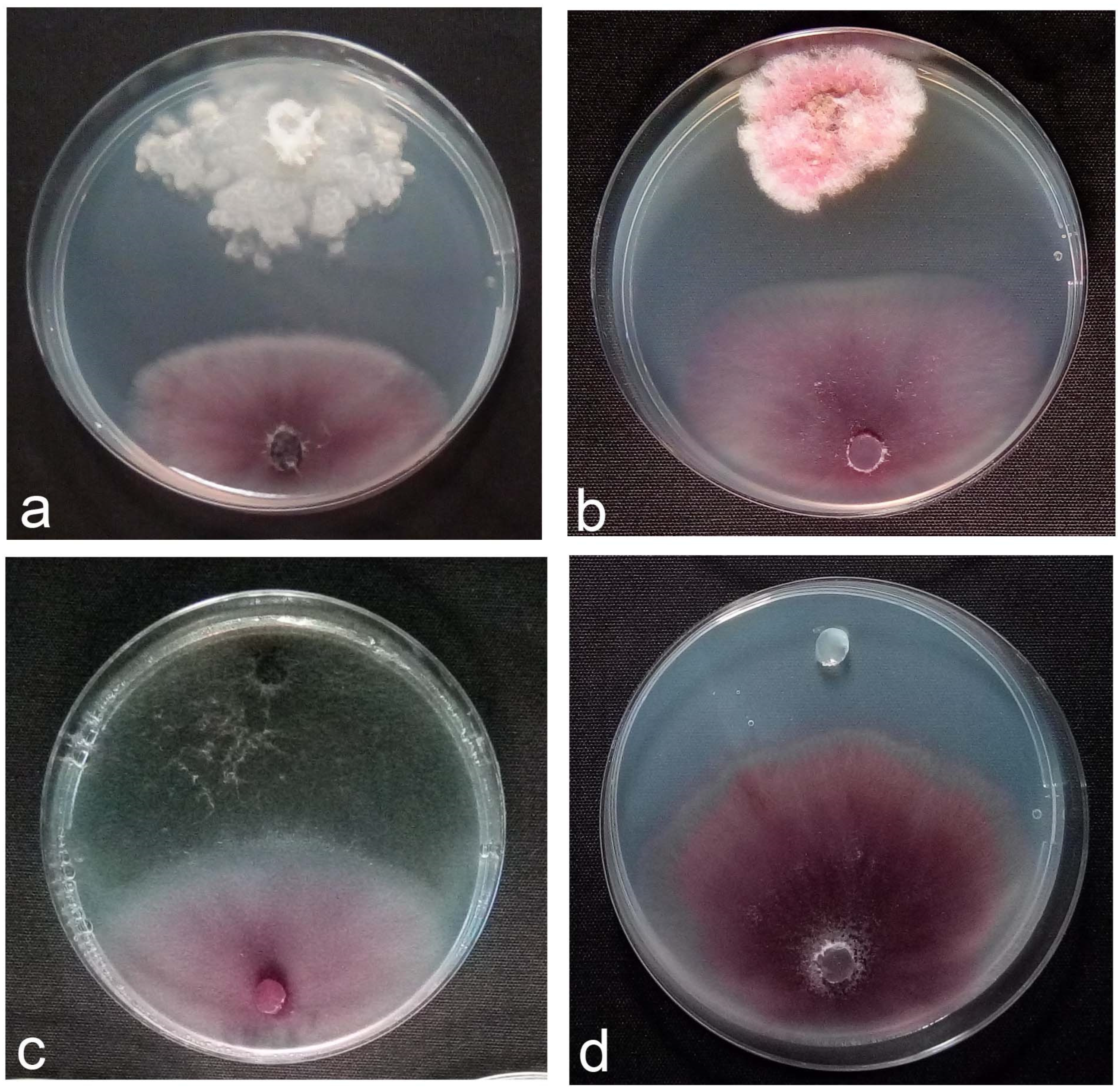
Varying degrees of mycelial growth inhibition of Fom were observed with the representative antagonistic fungal endophytes. Endophytic Fusarium sp. EeR5 and Alternaria sp. EeR28 had the maximum inhibitory effect on mycelial growth of Fom, with a reduction of 34%, followed by Fusarium clavum EeR24, Fusarium sp. EeR10, and Fusarium sp. EeR17, with an inhibition of 31% compared to control (Figure 1). Endophytic isolates of Alternaria sp. EeR25, Curvularia sp. EeR20, Phoma sp. EeR22, Aspergillus sp. EeR27 and Fusarium sp. EeR1 expressed significantly lower mycelial growth inhibition, with reductions in the range of 21–29% (Table 1). The interactions between fungal endophytes and Fom in dual cultures on PDAC plates is also shown in Figure 1. Three classes (A, B, and C) of interactions were observed. Endophytic isolates Fusarium clavum EeR24 and Fusarium sp. EeR4 exhibiting class B interaction (deadlock at a distance) with the pathogen were considered active and selected for in vivo growth chamber assays against Fom in planta.

3.4. Effect of Selected Fungal Endophytes on Melon Seedlings in Growth Chamber Assays

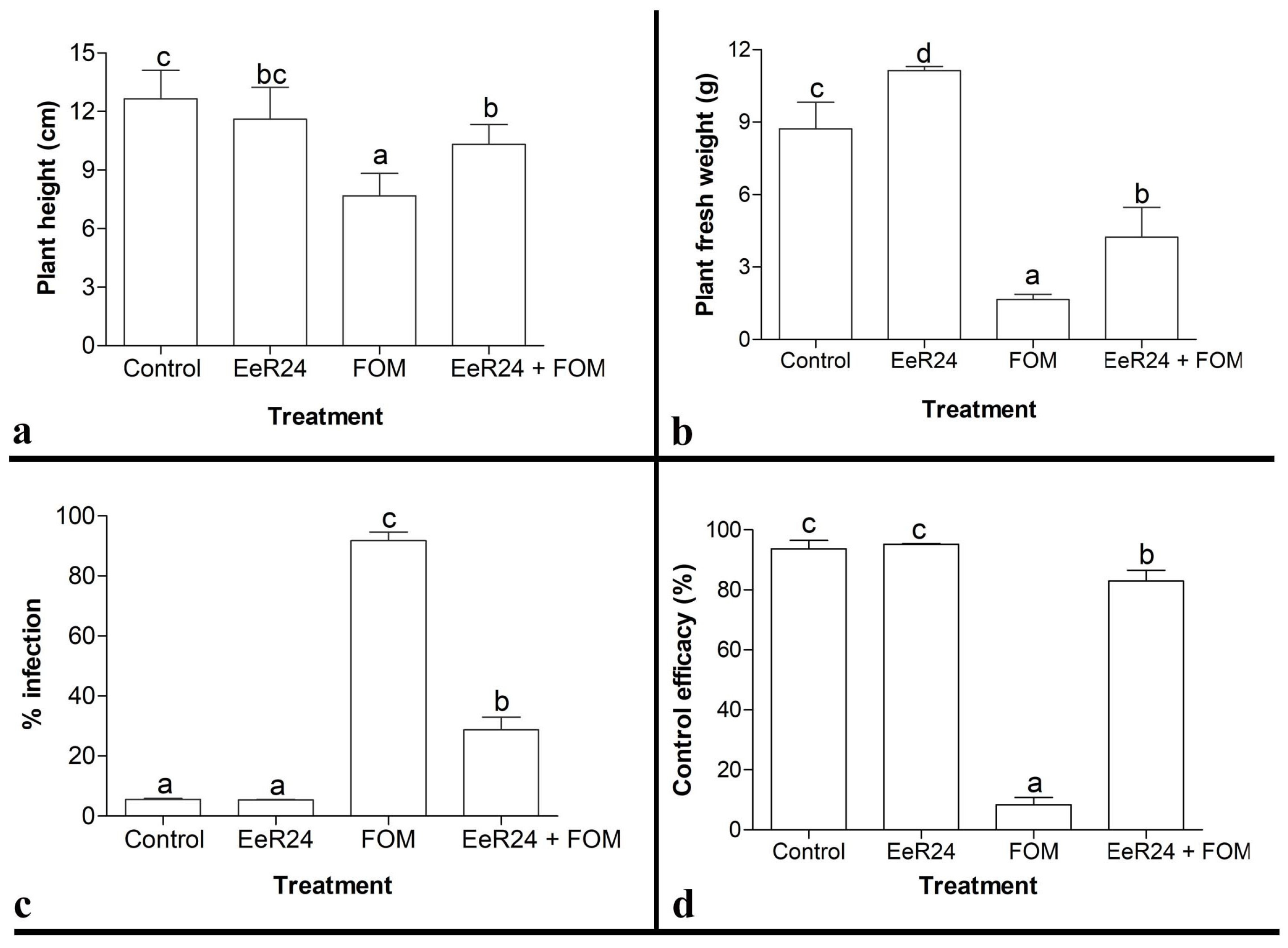
Statistically significant differences in growth parameters were observed between F. clavum EeR24-colonized and non-colonized plants in the presence and absence of Fom infection. However, no significant differences were observed in the case of Fusarium sp. EeR4-colonized plants with Fom infection. F. clavum EeR24-colonized plants challenged with Fom exhibited significantly higher plant biomass and height compared to that of non-colonized plants (Table 2). After three weeks of Fom infection, endophytic colonization with F. clavum EeR24 increased fresh plant biomass by 91% and height of melon seedlings by 32% in comparison to non-colonized Fom-infected plants. Furthermore, the control efficacy of F. clavum EeR24 against Fom infection was 77% compared to 2% for Fusarium sp. EeR4 (Table 2). Thus, endophytic fungal isolate F. clavum EeR24 was selected for further greenhouse experiments and characterization.

3.5. Effect of F. clavum EeR24 on Melon Seedlings Under Greenhouse Conditions

3.5.1. Morphological Parameters

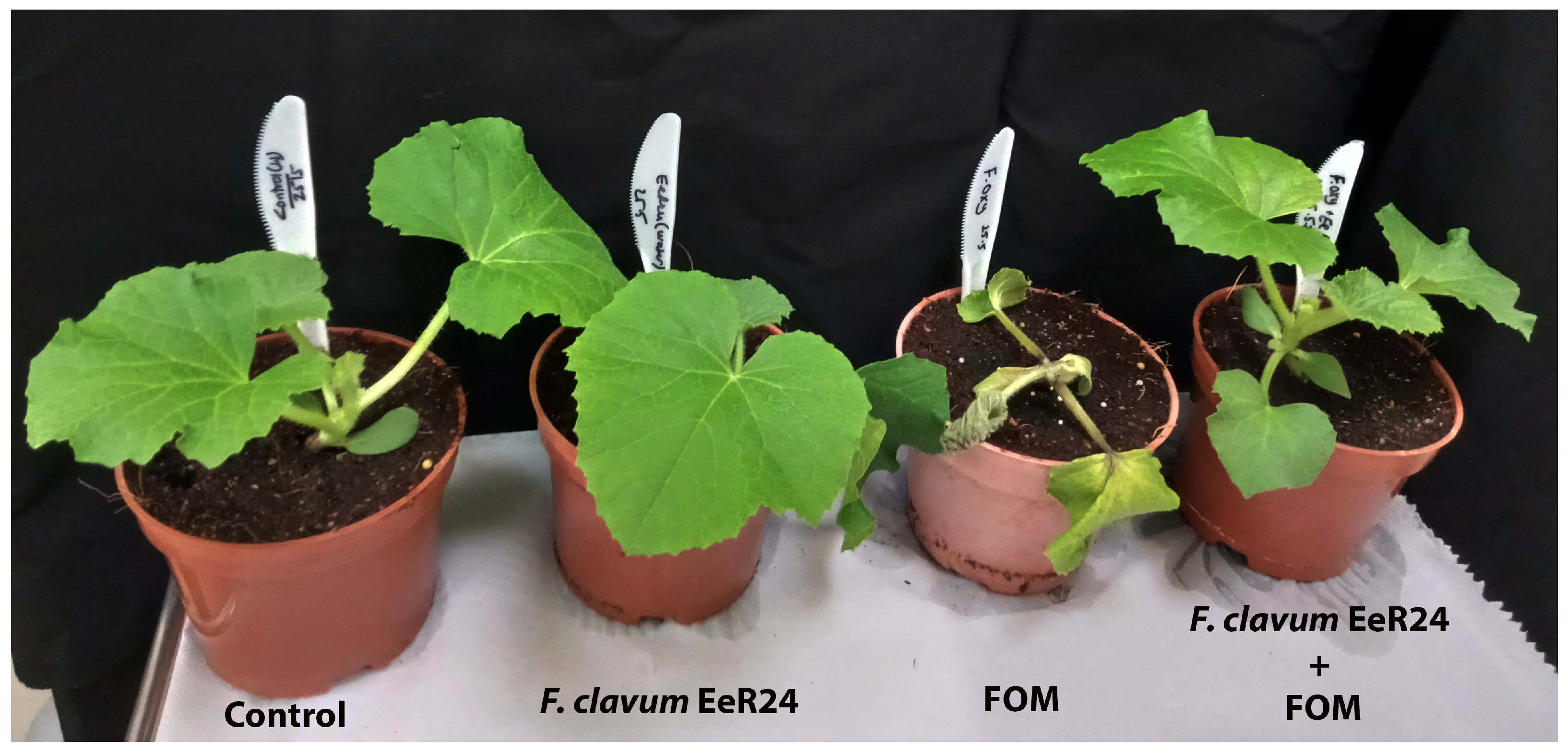
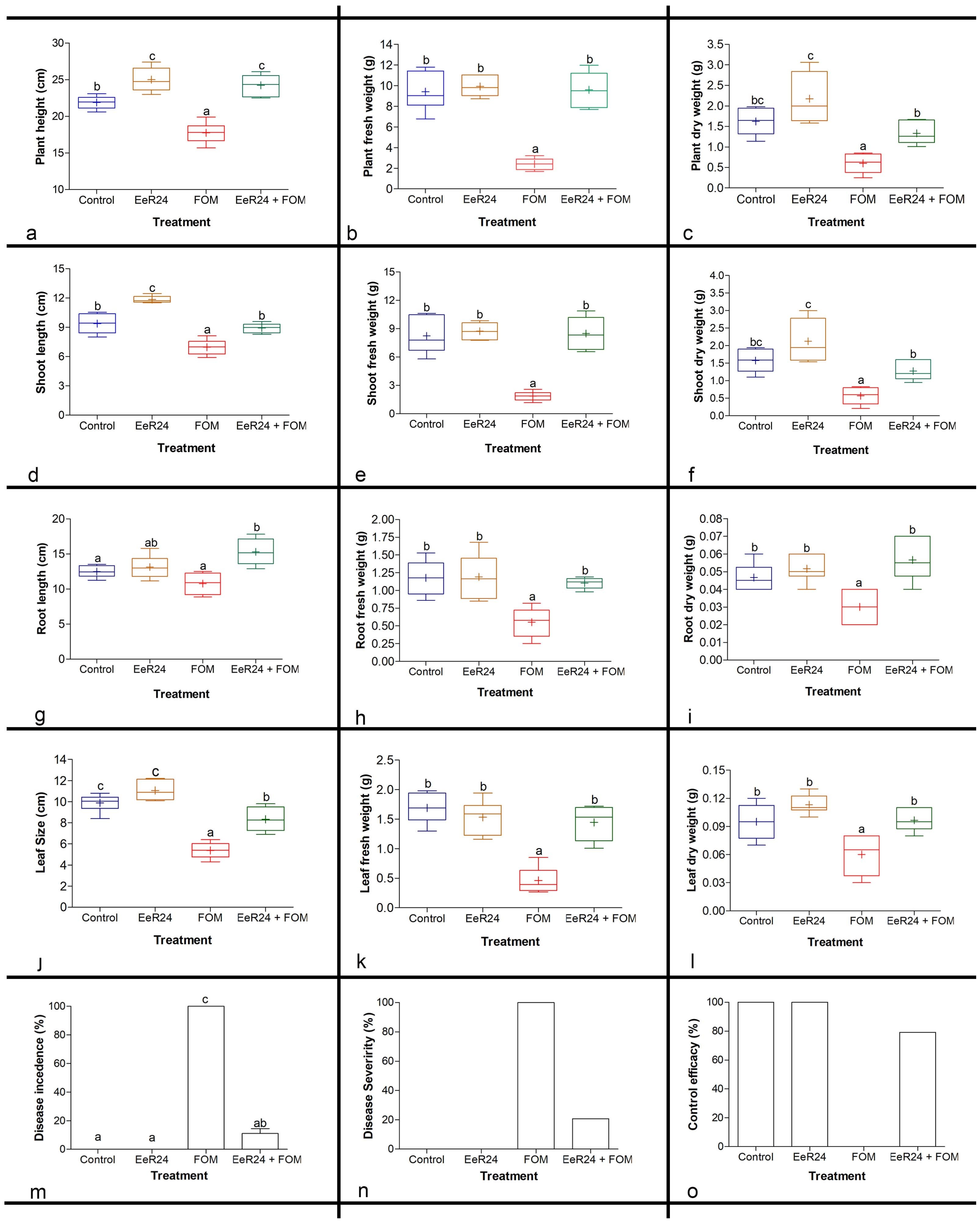
The infection of melon seedlings with Fom negatively impacted the growth and development of melons; however, colonization with endophytic F. clavum EeR24 significantly promoted growth compared to Fom-inoculated and non-inoculated plants, respectively (Figure 2). Endophyte colonization improved plant height by 12.4% and 26.7% in melons with or without Fom colonization, respectively (Figure 3a). On the contrary, plant weight (FW and DW) increased by 74.8% and 55.1% compared to the respective non-inoculated plants with Fom infections (Figure 3b,c). Similarly, colonization with F. clavum EeR24 also significantly increased the shoot FW and DW by 78.1% and 55.4%, respectively (Figure 3d–f).
Furthermore, F. clavum EeR24 increased root branching and leaf size in melons under normal conditions; therefore, colonization results were also evaluated in Fom-infected plants. Significant differences were observed in primary root length between colonized and non-colonized plants, either challenged or non-challenged with Fom. Roots of F. clavum EeR24-colonized plants were 19.2% longer than those of non-colonized plants, whereas for Fom-challenged plants, root development of F. clavum EeR24-colonized plants was 12% longer than their non-colonized counterparts (Figure 3g). A significant increase was also observed in the FW and DW of roots, with an increase of 50% and 47.1%, respectively (Figure 3h,i). Additionally, a considerable decrease was observed in the size, weight, and number of leaves in melon plants infected with Fom compared to F. clavum EeR24 colonization on size (35%), FW, and DW (37–68%) of leaves infected with Fom compared to the respective controls (Figure 3j–l).
In greenhouse experiments, 100% plant mortality was observed in Fom-inoculated plants, whereas in F. clavum EeR24-colonized plants infected with Fom, significantly lower (11.1%) disease incidence was recorded. Increased disease severity was observed in non-inoculated plants infected with Fom (100%), whereas the disease severity was reduced to 16.7% in F. clavum EeR24-colonized plants infected with Fom (Figure 3m,n). It was also observed that colonization with endophytic F. clavum EeR24 increased the control efficacy against Fom infection of melon seedlings by 83.3% (Figure 3o).

3.5.2. Determination of Membrane Stability Index (MSI), Relative Water (RWC), Malondialdehyde, Proline Content, and Gas Exchange Parameters

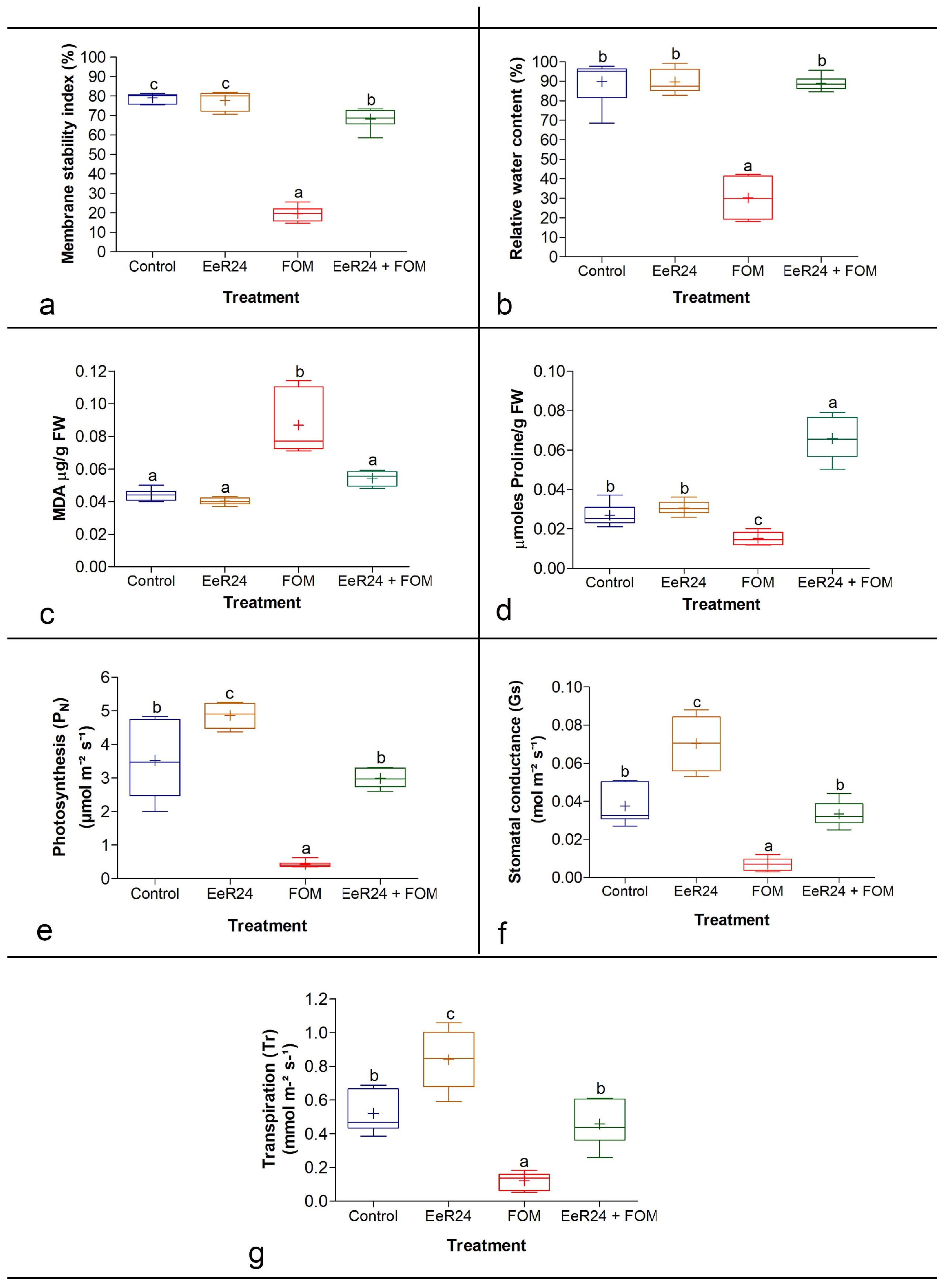
The MSI of melon plants with or without F. clavum EeR24 colonization did not differ significantly. However, a significant increase of 71% was observed in the MSI of F. clavum EeR24-colonized plants compared to non-colonized plants infected with Fom (Figure 4a). Similarly, no significant differences were observed in the RWC of melon plants under normal conditions, irrespective of their colonization status. However, the RWC of F. clavum EeR24-colonized plants infected with Fom increased significantly by 66% compared to the non-colonized plants (Figure 4b).
To further investigate the accumulation of cellular oxidative damage, the aldehyde levels were measured. No significant differences were observed between F. clavum EeR24-colonized and non-colonized melon plants. However, a significant increase (1.5-fold) in lipid peroxidation was observed in non-colonized Fom-infected melon plants compared to endophyte-colonized melon plants with Fom infection (Figure 4c).
Similarly, a significant difference in proline accumulation was observed in endophyte-colonized and non-colonized melon plants under normal and inoculated conditions. F. clavum EeR24-colonized melon plants exhibited a 1.1-fold increase in proline accumulation compared to non-colonized plants under normal conditions. However, colonization of melon plants with F. clavum EeR24 mitigated the adverse effect of Fom infection by significantly increasing the proline accumulation 4.3-fold (Figure 4d).
Fom infection reduced the gas exchange properties in melon. Significant differences (p < 0.05) in stomatal conductance, transpiration, and photosynthesis were recorded between F. clavum EeR24-colonized plants infected with or without Fom. Stomatal conductance (78.5%), transpiration (64.9%), and net photosynthesis rates (85.5%) increased significantly in F. clavum EeR24-colonized plants infected with Fom compared to the respective non-colonized plants (Figure 4e–g).

3.5.3. Antioxidant Enzyme Assays

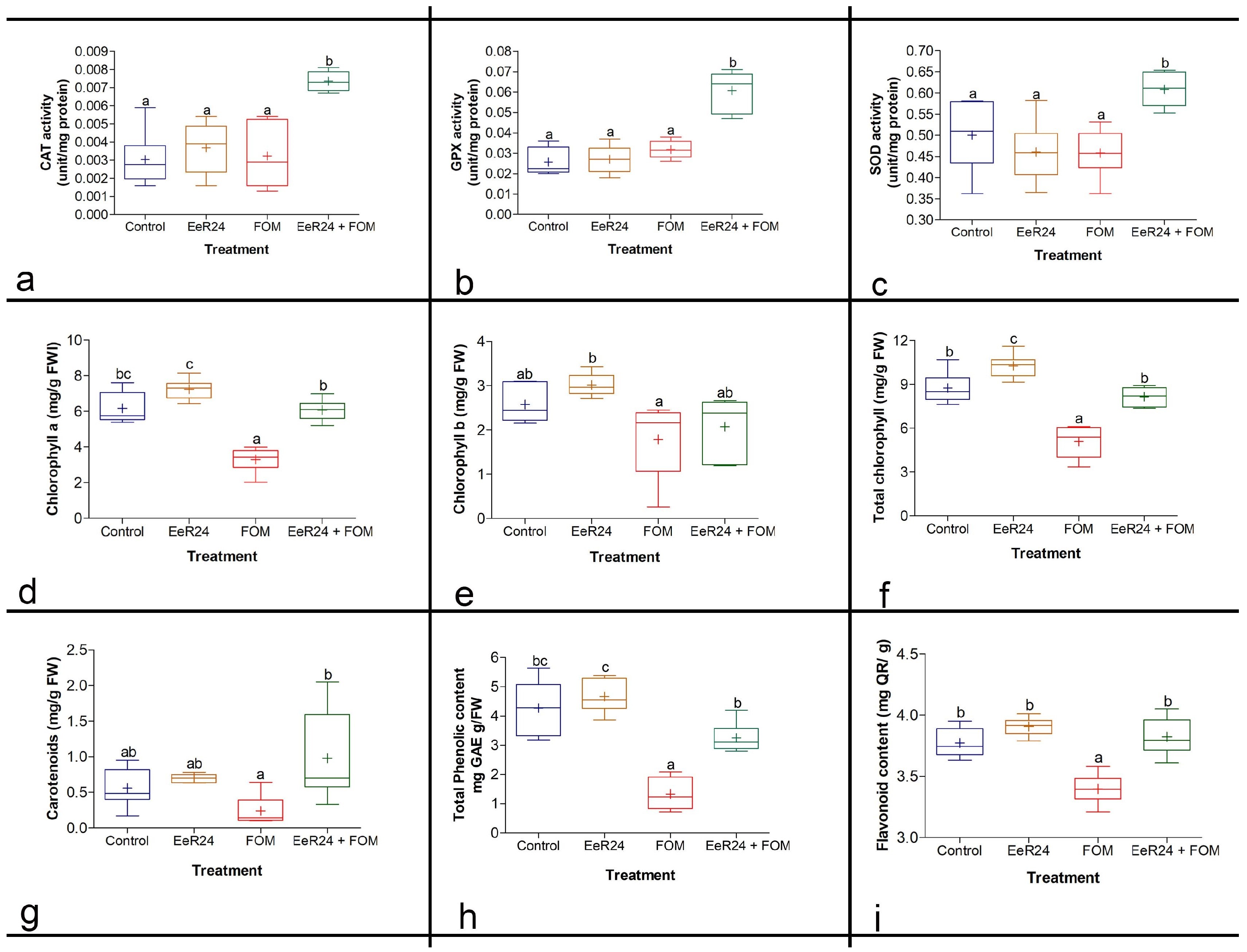
CAT, GPX, and SOD were recorded in F. clavum EeR24-colonized and non-colonized melon plants under normal and inoculated conditions. CAT, GPX, and SOD activities increased significantly in F. clavum EeR24-colonized Fom-infected melon plants compared to non-colonized Fom-infected plants. Melon plants colonized with F. clavum EeR24 and infected with Fom exhibited a significant increase in CAT (2.3-fold), GPX (1.9-fold), and SOD (1.3-fold) activities compared to non-colonized Fom-infected plants (Figure 5a–c).

3.5.4. Quantification of Total Chlorophyll, Carotenoids, Phenolic, and Flavonoid Content

F. clavum EeR24 alleviated the adverse effects of Fom infection in melon plants by increasing chlorophyll (Chl a, Chl b, and total chlorophyll) content under colonized conditions. Colonization of melon plants with F. clavum EeR24 increased Chl a by 45.7%, Chl b by 13.8%, and total chlorophyll by 37.6% compared to non-colonized plants with Fom infection (Figure 5d–f). Similarly, total carotenoids, phenol, and flavonoid content of melon plants colonized with F. clavum EeR24 and exposed to Fom infections increased significantly compared to non-colonized plants. Endophyte-colonized melon plants exposed to Fom infections exhibited a significant increase in total carotenoid (4.1-fold), total phenol (2.4-fold), and total flavonoid (1.2-fold) content compared to non-colonized control plants (Figure 5g–i).

3.6. In Situ Detection of H2O2 and Superoxide Accumulation, Lipid Peroxidation, and Cell Mortality

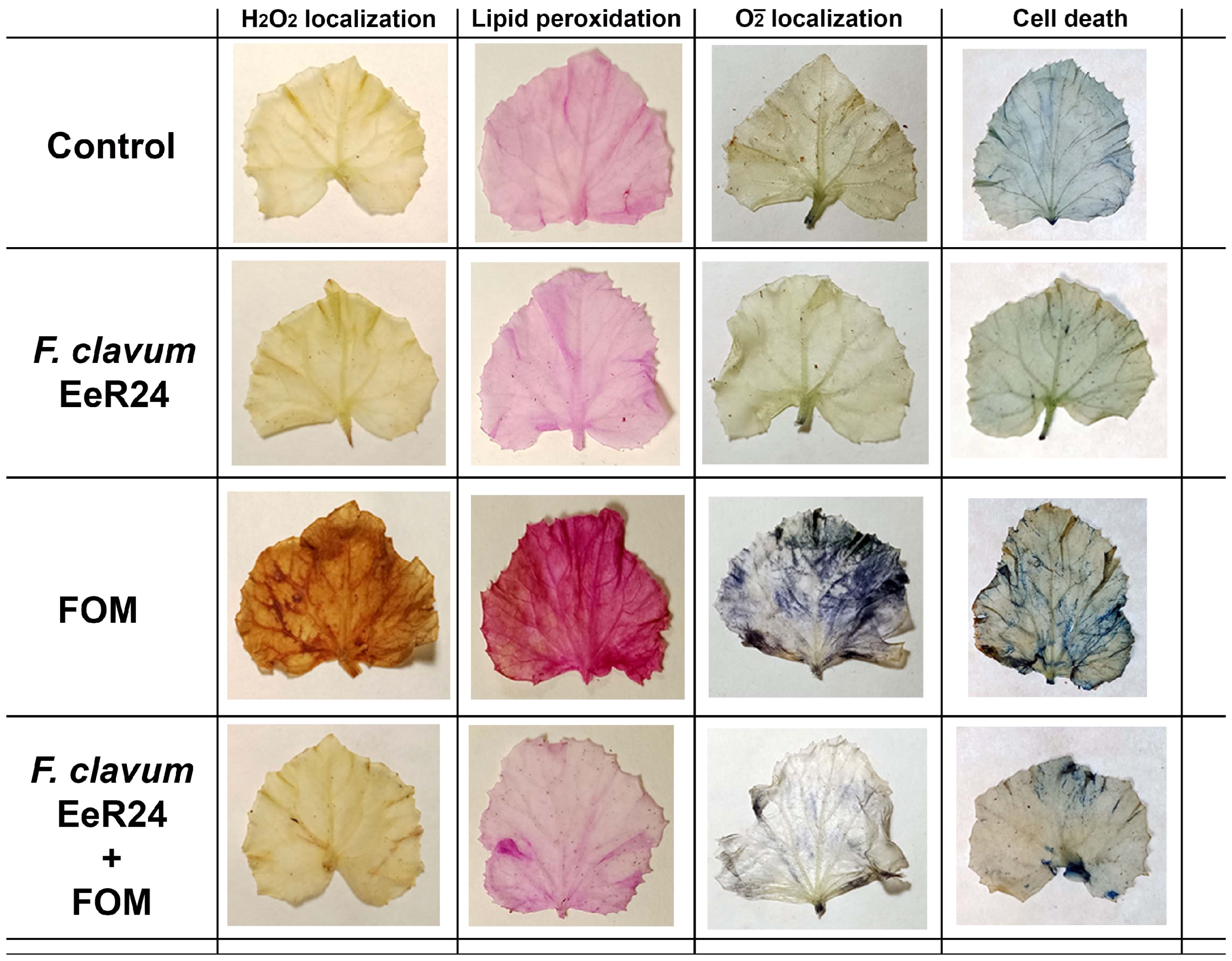
To determine the in situ accumulation of H2O2 within the leaf tissues of melon plants, histochemical assays using DAB treatment were performed that enabled the localization of H2O2 production within the leaf tissues characterized by dark-brown spots. Non-colonized plants exposed to Fom displayed prominent brown spots, in contrast to that of F. clavum EeR24-colonized plants under similar conditions (Figure 6). Maximum H2O2 was recorded in non-colonized plants exposed to Fom while minimum accumulation was observed in F. clavum EeR24-colonized plants under normal conditions (Figure 6). Lipid peroxidation was identified by the presence of pinkish spots of MDA on the leaf surface, indicating the formation of lipid peroxides. Elevated levels of lipid peroxidation were characterized by an increased number of pink spots. Among the four treatments, the non-colonized plants exposed to Fom infections showed maximum lipid peroxidation, whereas endophyte-colonized plants exposed to Fom exhibited a reduction in the number of spots (Figure 6). In situ cell death was analyzed according to the number of blue spots formed during hypersensitive reactions. Maximum cell death was observed in non-colonized plants exposed to Fom, characterized by regions of cell mortality on their surfaces. However, colonization with F. clavum EeR24 reduced host plant mortality under similar conditions, resulting in decreased blue spots detected by Evans blue staining (Figure 6). Similarly, in situ production of superoxide (O2) ions within the leaf tissues was determined using NBT treatment, which enabled the localization of blue formazan deposits produced as a result of reaction with O2 ions. Non-colonized plants exposed to Fom resulted in large accumulation of O2 ions, whereas F. clavum EeR24-colonized plants under similar conditions had substantially reduced O2 ion production levels (Figure 6).

3.7. Fungal Transformation, GFP and RFP Labeling and Localization of Endophytic F. clavum EeR24 in Melon Seedlings

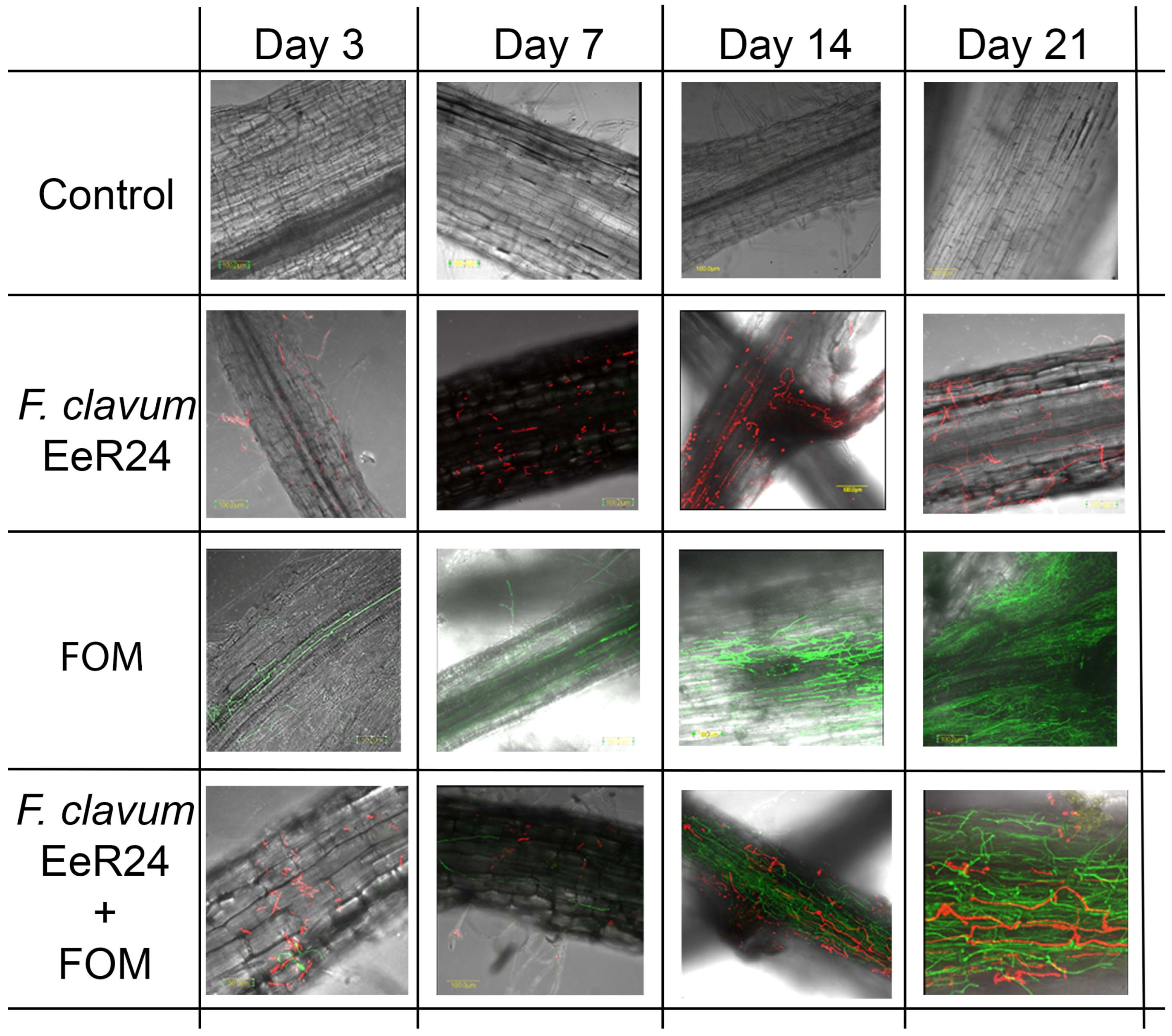
Root colonization patterns were evaluated using recombinant Fom and endophytic F. clavum EeR24 strains expressing GFP and RFP, respectively. Three days after treating melon seedlings with conidial suspensions, both the GFP- and RFP-expressing fungi had germinated. Their hyphae had elongated by 3 dpi and 7 dpi, and penetration of hyphae was frequently observed in the epidermal cells (Figure 7). Melon seedlings started to exhibit weak green and red signals in various root tissues under normal and inoculated conditions. After 7 days of colonization, increased intensities of GFP and RFP signals were observed during the incubation period. At 14 dpi, Fom formed an extensive hyphal network that covered almost the entire root surface, and strong GFP signals were observed (Figure 7). Furthermore, both Fom and endophytic F. clavum EeR24 were observed colonizing the intra- and intercellular tissues of the host plant’s roots, whereas no colonization was observed in stem and leaf tissues (Figure 7). Fom is a fast-growing fungus, exhibiting strong green signals that were recorded in the respective treatments compared to the slower-growing endophytic F. clavum EeR24, which exhibited comparatively less red signal. F. clavum EeR24 effectively suppressed the pathogenicity of Fom. No fluorescent signals were observed throughout the entire root system of the non-colonized melon plants. This again conformed the endosymbiotic nature of F. clavum EeR24 with the host plant and demonstrated its ability to colonize the interior root tissues of melons, as indicated by improving host plant growth and health.

3.8. Effect of Culture Filtrate and Organic Residues on Growth of Fom and GC–MS Analysis of Bioactive Residue

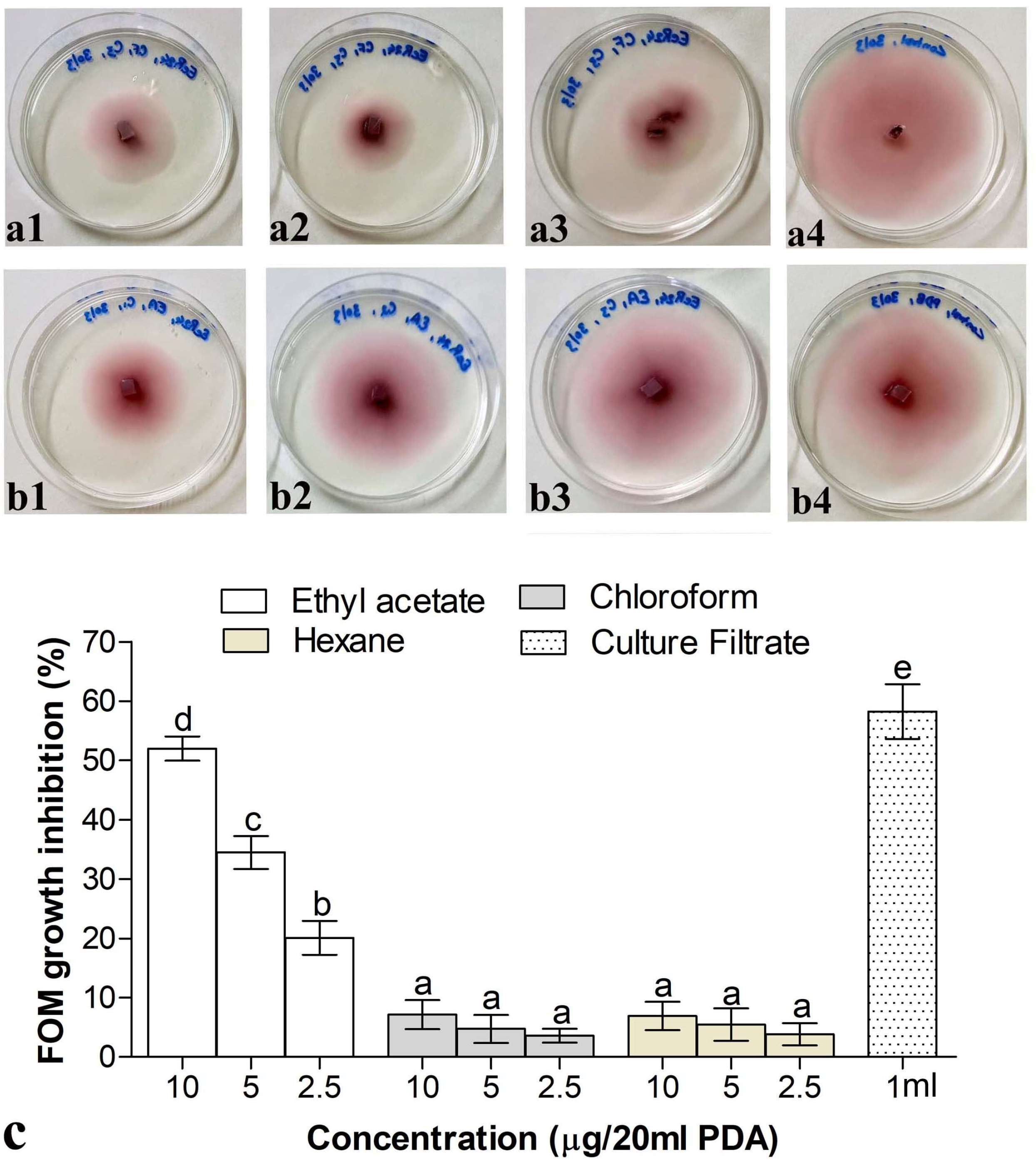
The mycelial growth of Fom was inhibited significantly when incubated along with either culture filtrate or organic residues of F. clavum EeR24. The growth of Fom was significantly inhibited by 58% when the medium was supplemented with culture filtrate (Figure 8a,c). Similarly, a dose-dependent inhibition was observed in the growth rate of Fom with an increase in concentration of organic residues. The ethyl acetate residue at 10 µg/20 mL exhibited maximum inhibition (52%) of fungal growth, which decreased gradually (32–20%) as organic residue concentrations decreased. Furthermore, organic residues of chloroform and hexane exhibited weak fungal growth inhibition by 4–7% (Figure 8b,c). In addition, in growth chamber assays, melon plants supplemented with ethyl acetate residue of F. clavum EeE24 and exposed to Fom exhibited significantly higher biomass and height compared to non-supplemented plants. After three weeks of exposure to Fom, ethyl acetate residue-supplemented plants increased the height of melon seedlings by 25% and plant biomass by 61% in comparison to non-supplemented plants (Figure 9a,b). Furthermore, the control efficacy of F. clavum EeR24 ethyl acetate residue-supplemented plants exposed to Fom was 68% (Figure 9c,d).
Gas chromatography–mass spectroscopy (GC–MS) was used to identify the bioactive compounds in the ethyl acetate residue of F. clavum EeR24. Compared to mass spectra in the NIST library, eighteen volatile compounds were obtained based on retention time and molecular weight (Table 3): alpha-hydroxyisobutyric acid, acetate (1), e-11,13-tetradecadien-1-ol (2), dodecanoic acid (3), oxalic acid, allyl hexadecyl ester (4), tetradecanoic acid (5), lauroyl peroxide (6), oxirane, [(dodecyloxy)methyl]- (7), pyrrolo [1,2-a]pyrazine-1,4-dione, hexahydro-3-(2-methylpropyl)- (8), n-hexadecanoic acid (9), 1-ethoxypentan-3-ol (10), 1-propanol, 2-(2-hydroxypropoxy)- (11), carbonic acid, eicosyl prop-1-en-2-yl ester (12), 2-hydroxypentadecyl propanoate (13), 2-propanol, 1-[1-methyl-2-(2-propenyloxy)ethoxy] (14), hexadecane, 1-chloro- (15), 2-piperidinone, n-[4-bromo-n-butyl]- (16), octadecanoic acid, 2-oxo-, methyl ester (17), 4,8-decadienal, and 5,9-dimethyl- (18).

4. Discussion

Endophytic fungi have been widely studied for their potential as biocontrol agents against plant pathogenic fungi, as well as their role in promoting plant growth. This approach offers a promising, eco-friendly alternative to chemical fungicides and synthetic fertilizers for improving crop productivity [45,58]. The endophytic fungus Muscodor albus has emerged as a promising biofumigant, demonstrating considerable efficacy in the post-harvest disease management of fruit, including apple, grape, citrus, and tomato, by inhibiting major pathogens such as Botrytis cinerea, Penicillium digitatum, and Rhizopus spp. The successful commercialization of this technology by AgraQuest highlights its practical applicability [59]. Similarly, the endophytic bacterium Bacillus subtilis QST713 has been developed into the widely used biocontrol product SerenadeTM, which is extensively applied in fruit crops for the management of diseases such as powdery mildew, brown rot, and late blight [60]. Additionally, the growing interest in endophyte-based formulations is reflected in the development of commercial products such as CandifruitTM, ShemerTM, and Boni-ProtectTM, which have shown significant success as biocontrol agents. Collectively, these examples underscore the increasing recognition of endophytes as viable, eco-friendly alternatives to synthetic chemicals for sustainable agricultural practices [61]. Furthermore, several studies have demonstrated the effectiveness of endophytic fungi in controlling wilt diseases [18,42,62,63]. However, research on endophytic fungi isolated from wild cucurbit varieties in hot and arid regions as biocontrol agents against melon pathogens remains limited [6,7]. The present study showed that fungal endophytes isolated from the wild cucurbit E. elaterium, which grows natively in the Arava Valley under continuous biotic and abiotic stresses, successfully conferred resistance against Fom wilt in cultured muskmelon. Among the fungal genera isolated in this work, Alternaria, Cladosporium, Curvularia, Fusarium, and Phoma have also been reported as endophytes in other melon plants [42,64]. This study also revealed a high frequency of Fusarium isolates. The elevated occurrence of Fusarium species as endophytes in melon suggests a resistance relationship that attenuates fungal virulence, along with a possible balanced antagonism between the plant and fungus, as proposed by [65]. Although the genus Fusarium is associated with wilting and other diseases in many important crops, various Fusarium spp., when isolated as endophytes, confer protection against plant pathogens such as Verticillium dahliae, Pythium ultimum, and Rhizoctonia solani [42,66].
In the present study, endophytic fungi were screened for their potential to inhibit the growth of Fom and promote plant growth. The novelty of our study lies in isolating these endophytes from wild squirting melons (E. elaterium) growing in the hot, arid conditions of Israel’s Arava Desert. Previous studies have shown that the beneficial effects of endophytes are not limited to their original host and can be transferred to related cultivars by introducing endophytes isolated from wild relatives as bioinoculants [67]. This suggests that endophytes are often defined by their geographic location rather than their functional relationship with the host plant, unlike mycorrhizae, which implies a specific symbiotic interaction [31]. Fusarium clavum has previously been isolated as an endophyte from various host tissues worldwide, including roots of potato and wheat [68,69], stems of Orobanche spp., and flowers of Syzygium cordatum [70,71], where it exhibits diverse bioactivities. Endophytic Fusarium species are also capable of coexisting with other beneficial rhizospheric microorganisms, forming a dynamic microbial consortium that may significantly influence plant health. Recent studies indicated that these endophytes interact with bacteria such as Bacillus, Pseudomonas, and Flavobacterium, which can suppress pathogenic Fusarium species through antibiosis, niche competition, and modulation of root exudates [72,73]. Moreover, nonpathogenic F. oxysporum strain can function as protective endophytes, enhancing plant resistance against Verticillium while maintaining compatibility with other beneficial microbiota [74]. These findings highlight the dual ecological role of Fusarium and its potential exploitation in sustainable biocontrol strategies.
Findings from the in vitro screening assays showed that among the 23 endophytes tested, Fusarium spp. and Alternaria sp. significantly reduced Fom mycelial growth, with inhibition rates of 30–35%, though effects and inhibition types varied by isolate. Three types of inhibition were observed among the tested isolates: Type A (competition for substrate with deadlock upon mycelial contact), Type B (antibiosis characterized by a deadlock at a distance), and Type C (mycoparasitism involving overgrowth without initial deadlock). Among these, endophytic isolates exhibiting Type B interactions (Fusarium sp. EeR4 and Fusarium clavum EeR24) were selected for further characterization, as antibiosis confers a distinct advantage over the other interaction types. Such isolates produce inhibitory metabolites that suppress pathogen growth without requiring direct contact, making them particularly valuable. Moreover, these isolates can be utilized directly as biocontrol agents, or their culture filtrates or residual metabolites can be exploited for effective disease management. Similar inhibitory effects have been reported for endophytic fungi isolated from melons and other plants, including Chaetomium, Colletotrichum, Epicoccum, Fusarium, and Trichoderma spp. [19,28,30,42,64]. Fungal endophytes control plant pathogens through diverse mechanisms. Endophytic Trichoderma phayaoense from Siam weed suppressed gummy blight and wilt in muskmelons caused by Stagonosporopsis cucurbitacearum and Fusarium equiseti, respectively [7]. Similarly, endophytic Daldinia cf. concentrica from olive trees in Israel inhibited mold growth on organic dried fruits and prevented Aspergillus niger infection in peanuts [75]. Recently, endophytic Penicillium sp. UM12 from Urginea maritima leaves in Israel inhibited Alternaria alternata, Botrytis cinerea, Fusarium oxysporum, Sclerotinia sclerotiorum, and Rhizoctonia solani [76]. Endophytic bacteria such as Bacillus sp., B. amyloliquefaciens, B. subtilis, and Streptomyces sp. from C. melo in Israel also inhibited Fom races 1 and 2 [77]. These reports indicate that endophytes are a valuable reservoir of bioactive compounds with biocontrol properties against plant pathogens [76,78].
Dual-culture assays are commonly used as an initial screening step for biocontrol strains because pot experiments are time-consuming and costly. Strains showing antagonism in vitro are then evaluated in pot experiments with pathogen inoculation to assess disease control efficacy under in planta conditions. However, few studies have examined the correlation between in vitro antagonism and in planta disease suppression. Evaluations of biocontrol screening strategies have highlighted significant limitations of in vitro methods [42]. In this study, endophytic Fusarium sp. EeR4 exhibited antagonism against Fom in screening assays, but showed no activity in the in planta assay, indicating no significant correlation between in vitro antagonism and control of muskmelon Fusarium wilt. This aligns with findings from [42,45]. The loss of bioactivity in Fusarium sp. EeR4 may stem from nutrient composition and microbial growth stage influencing secondary metabolite secretion, as synthetic media are nutrient-richer than soil or natural environments [79]. This likely explains why Fusarium sp. EeR4, which demonstrated antibiosis on plates, failed to inhibit Fom in planta. In contrast, endophytic F. clavum EeR24 conferred resistance against Fom by promoting seedling growth through enhanced biomass and height. This efficacy may be attributed to strain specific traits, such as siderophore production, IAA synthesis, hydrolytic enzymes, and phosphate solubilization, which facilitate root colonization and trigger plant immunity [5].
In the present study, the fungal endophyte F. clavum EeR24 conferred resistance against Fom infection in melons by promoting morphological (Figure 3), physiological (Figure 4), and biochemical (Figure 5) responses. Endophytic fungi enhance plant growth under biotic stress by increasing biomass, leaf, shoot and root length, and synthesis of growth-promoting hormones and metabolites [7,45,80,81]. Plant roots are the primary infection site for Fom, and undergo architectural changes that regulate pathogen colonization and enhance tolerance to infection [82,83]. Increased root branching and weight expand the surface area for nutrient and ion uptake, aiding resistance to fungal pathogens [84]. Melon plants colonized with F. clavum EeR24 and challenged with Fom showed increased root length and lateral branching (Figure 3g–i). In contrast, Fom infection alone reduced leaf size and weight (Figure 3j–l), likely due to blocked nutrient and water transport from roots to shoots, causing chlorosis and wilting [85]. Colonization with F. clavum EeR24 mitigated these effects, preserving leaf size and weight by limiting Fom root colonization. Moreover, F. clavum EeR24 significantly reduced Fusarium wilt incidence and severity, boosted root and shoot fresh and dry weight, and improved growth in colonized melons. Endophyte-colonized plants exhibited lower disease incidence (11%) (Figure 3m–o) and reduced severity by 16% compared to non-colonized controls, yielding high control efficacy. This resistance can be attributed to host defenses and antifungal metabolites produced by F. clavum EeR24. This observation is consistent with previous reports of reduced disease incidence and severity in banana, cucumber, melon, and tomato when colonized with endophytes [7,18,24,34,43,45].
Fom colonization also induces water deficiency in plant tissues, making leaf RWC a key indicator of stress responses and cellular processes. Our findings confirm prior reports that fungal endophyte colonization not only alleviates stress but also enhances water availability from otherwise inaccessible sources [86,87,88]. Fungal infection increases electrolyte leakage by displacing membrane-bound ions, compromising cellular integrity [89]. In this study, F. clavum EeR24-colonized melons challenged with Fom showed lower electrolyte leakage, plasma membrane permeability, lipid peroxidation, and malondialdehyde content compared to non-colonized Fom-challenged plants (Figure 4a,c). As an indicator of oxidative damage, elevated MDA reflects higher ROS production and membrane injury [54,90].
Under stress conditions, osmolytes like proline accumulate to maintain osmotic balance and provide energy for growth and survival. F. clavum EeR24-colonized Fom-challenged melons exhibited significant proline accumulation (Figure 4d), consistent with reports of endophytes reducing MDA and increasing proline under stress conditions [54,91]. Phenolic compounds also accumulated as an adaptive defense, aligning with prior studies [63,91,92]. Endophyte colonization further maintained photosynthesis, stomatal conductance, and transpiration rates under Fom challenge (Figure 4e–g), likely by regulating stomatal conductivity for resistance. Similar enhancements in photosynthetic activity have been previously reported for endophytes like Ustilago esculenta and Epichloë typhina [93,94].
Pathogen stress damages membranes and elevates H2O2 and O2 ROS. Endophyte-colonized melons had lower H2O2 and O2 levels than non-colonized Fom-challenged plants, reducing overall ROS (Figure 5a–c). A Similar effect was exhibited by Piriformospora indica in enhancing disease resistance via antioxidants in Anthurium andraeanum and Citrus sinensis [87,95]. The antioxidant enzymes SOD, CAT, and GPX activate to scavenge ROS, where SOD converts O2 to H2O2, which is then converted to water by CAT and GPX [96]. CAT also mitigates photorespiratory H2O2, supporting photosynthesis [96], while GPX overexpression improves photoprotection [43]. Herein, endophyte colonization increased CAT, GPX, and SOD activities, likely by enabling synergistic ROS scavenging.
Improved chlorophyll content signals endophyte-induced resistance. Fom infection sharply reduced chlorophyll a, b, and total chlorophyll due to fewer leaves or elevated degrading enzymes [97,98]. F. clavum EeR24 colonization restored these levels (Figure 5d–f), enhancing PN, Gs, and Tr (Figure 4e–g). Previous studies also showed that an increase in antioxidant enzyme activity reduces levels of ROS and H2O2 in guard cells, leading to opening of the stomata, improved Gs, and enhanced PN and Tr [96,99].
Fom triggers H2O2 bursts that inhibit host oxidative responses [100]. High H2O2 in non-colonized plants likely results from pathogen release at infection sites, while endophyte-colonized plants showed lower levels due to elevated CAT, GPX, and SOD production. Lipid peroxidation, a membrane damage marker [101], was highest in non-colonized Fom-challenged seedlings, with histochemical staining confirming elevated superoxide, cell death, and oxidative stress, contrasting sharply with endophyte-colonized plants [54].
In planta colonization of roots by F. clavum EeR24 conferred significant fitness benefits to melon plants under the tested conditions, observed using RFP-labeled endophytic F. clavum EeR24 and GFP-labeled Fom (Figure 7). Similar observations have been reported for an RFP-tagged endophytic F. oxysporum F047 isolate, which effectively colonized tomato roots and induced endophyte-mediated resistance against Fusarium wilt [102]. Likewise, a GFP-transformed endophytic Acremonium implicatum (Acr-1) isolate colonized the epidermal and cortical tissues of tomato roots and exhibited strong biocontrol activity against Meliodogyne incognita [103]. In the present study, microscopic analysis further revealed that roots of melons were heavily colonized with Fom compared to endophytic F. clavum EeR24; however, the endophytic colonization greatly reduced the pathogenicity of Fom (Figure 7). This was evident by healthier melon saplings when colonized with F. clavum EeR24 compared to wilted saplings when not colonized with endophytes.
Fungal endophytes are prolific producers of a wide range of bioactive metabolites. These metabolites serve various functions. In the present study, cell-free culture filtrate of endophytic F. clavum EeR24 demonstrated growth inhibition against Fom and suggested that diffusible metabolites could be responsible for the inhibition of Fom. In addition, ethyl acetate residues of F. clavum EeR24 also exhibited strong antifungal activity against Fom.
Both the culture filtrate and its ethyl acetate residue exhibited significant inhibitory activity against Fom (Figure 8). Our findings are in accordance with previous studies where culture filtrates and organic residues of endophytic fungi exhibited inhibitory activity against Pestalotiopsis theae, Colletotrichum camelliae, Cladosporium cladosporioides, and C. sphaerospermum [76,104,105]. Furthermore, when the culture filtrate of F. clavum EeR24 was applied to melon seedlings, it positively influenced the height and weight of plant and replicated the fitness benefit against Fom, as demonstrated by endophytic colonization. Generally, the direct use of fungal endophytes is preferred to check beneficial effects against biotic and abiotic stresses [5,106]. However, fewer studies have been performed in which culture filtrates or their organic residues were applied instead of living organisms to evaluate the effect on fitness benefits (Figure 9). Endophytic fungal isolates such as F. avenaceum, Sarocladium terricola, and Trichoderma ongibrachiatum species have been found to produce metabolites that increase the germination rate in Lolium multiflorum and peanuts, along with inhibition of mycotoxigenic fungi like Aspergillus flavus, A. ochraceus, and F. oxysporum, respectively [106,107]. Further, the GC–MS analysis of the ethyl acetate residue suggested production of a mixture of compounds belonging to the chemical classes of acids, alcohols, esters, and oxides. Compounds such as dodecanoic acid, tetradecanoic acid, and n-hexadecanoic acid identified in the present study have been reported to exhibit significant antifungal activity against plant pathogens, including Botrytis cinerea, F. oxysporum f. sp. lycopersici, F. oxysporum f. sp. niveum, and Phytopthora sojae [108,109,110]. In a previous study, brefeldin A produced by endophytic Penicillium brefeldianum HS-1 inhibited the growth of Fom and root-knot Meloidogyne incognita nematodes [31]. Similarly, endophytic Penicillium sp. UM12 secretes mycophenolic acids that inhibit the growth of phytopathogenic fungi, whereas the volatile organic compounds produced by Daldinia cf. concentrica inhibited the growth of molds on dried fruits and eliminated Aspergillus infection in peanuts [75,76]. These studies suggest that compounds present in the organic residues have potent biological activities and can be further taken into account as an alternative approach for controlling the growth and spread of Fom, thereby reducing reliance on chemical fertilizers and pesticides and supporting the adoption of sustainable agriculture practices.
In summary, our current findings indicate that F. clavum EeR24 successfully established a symbiotic relationship with muskmelons under biotic stress. Endophytic F. clavum EeR24 significantly improved the growth of melons challenged with Fom by increasing membrane stability, proline and phenol accumulation, stabilizing photosynthetic machinery, and reducing lipid peroxidation and ROS production via enhanced antioxidant activities. To the best of our knowledge, no report exists regarding an endophytic role of F. clavum EeR24 isolated from a desert weed plant conferring fitness benefits to muskmelons.

5. Conclusions

From the current study, it is evident that Fom infection poses a severe threat to the growth and development of melon plants. However, colonization with the endophytic fungus F. clavum EeR24 significantly reduced the detrimental effects of Fom infection on melon seedlings by enhanced biomass production, proline and phenol content, photosynthetic efficiency, and antioxidant activities, which reduced ROS production and hence lipid peroxidation. These effects help melons to resist Fom infection. Further, the culture filtrate or the ethyl acetate residue can also be applied as a biofungicide as well as a biostimulant of growth. The molecular mechanisms employed by F. clavum EeR24 to resist Fom infection in melon are under investigation. Moreover, the study suggested that F. clavum EeR24 is a promising endophytic isolate for potential application in agricultural applications and as a biocontrol agent against Fom, which severely damages muskmelons plants by causing wilting. In the future, this isolate should be further developed as a biocontrol agent to reduce the spread of Fusarium wilt and improve plant immunity in muskmelons.

Supplementary Materials

The following supporting information can be downloaded at: https://www.mdpi.com/article/10.3390/microorganisms14040871/s1, Figure S1: Band pattern of Arbitrarily primed PCR (ap-PCR) amplified genomic DNA of Endophytic isolates of Ecballium elaterium using three primers (CAG)5, (GACA)4 and (GACA)3. M: DNA molecular marker, C: Control.

Author Contributions

S.F.: conceptualization and design of experiments; V.M.: design of experiments, experimental work, manuscript preparation, data curation, statistical analysis; M.E.: experimental work, data curation; M.M.: design of experiments, experimental work, data curation; G.S.: experimental work, data curation, manuscript writing; E.B.: experimental work, data curation; D.C.: experimental work, data curation; M.G.: manuscript preparation, statistical analysis; S.G. (Soniya Goyal): manuscript preparation, statistical analysis; S.G. (Surbhi Goel): manuscript preparation, statistical analysis. All authors have read and agreed to the published version of the manuscript.

Funding

This article is based upon work from COST Action ROOT-BENEFIT CA22142, partially supported by COST (European Cooperation in Science and Technology). Additional funding was received from the US Agency for International Development under the terms of Middle East Regional Cooperation Program Award SIS70022GR0025. V.M. and G.S. thank the Agricultural Research Organization, Israeli Ministry of Agriculture and Rural Development for the award of a postdoctoral fellowship. The authors also thank Lynda M. Ciuffetti, Department of Botany and Plant Pathology, Oregon State University, Corvallis, Oregon for generously providing the RFP plasmid. This research was partially funded by the Chief Scientist of the Israeli Ministry of Agriculture, Research Program 20–02-0050 (132–1867-19) and by the US Agency for International Development under the terms of Middle East Regional Cooperation Program Award SIS70021GR3001.

Institutional Review Board Statement

Not applicable.

Informed Consent Statement

Not applicable.

Data Availability Statement

Data will be made available upon request.

Acknowledgments

The authors thank Lynda M. Ciuffetti, Department of Botany and Plant Pathology, Oregon State University, Corvallis, Oregon for generously providing the RFP plasmid.

Conflicts of Interest

The authors declare no conflicts of interest.

References

  1. Ludemann, C.I.; Wanner, N.; Chivenge, P.; Dobermann, A.; Einarsson, R.; Grassini, P.; Tubiello, F.N. A global FAOSTAT reference database of cropland nutrient budgets and nutrient use efficiency (1961–2020): Nitrogen, phosphorus and potassium. Earth Syst. Sci. Data 2024, 16, 525–541. [Google Scholar] [CrossRef]
  2. Vella, F.M.; Cautela, D.; Laratta, B. Characterization of polyphenolic compounds in cantaloupe melon by-products. Foods 2019, 8, 196. [Google Scholar] [CrossRef] [PubMed]
  3. Hassan, S.A.; Khalid, S.; Javaid, H.; Zafar, S.J.; Abdi, G.; Aadil, R.M. Unlocking the potential of muskmelon seeds as sustainable ingredients for the food industry. Food Chem. Adv. 2025, 7, 101008. [Google Scholar] [CrossRef]
  4. Din, A.; Nadeem, M.; Saeed, F.; Ahmad, M.H.; Tufail, T.; Bader Ul Ain, H.; Mushtaq, Z.; Hussain, S.; Anjum, F.M. Development and optimization of processing techniques for intermediate moisture muskmelon chunks. Food Sci. Nutr. 2019, 7, 3253–3260. [Google Scholar] [CrossRef]
  5. Meshram, V.; Elazar, M.; Maymon, M.; Sharma, G.; Shawahna, R.; Belausov, E.; Charuvi, D.; Freeman, S. Endophytic Fusarium clavum confers growth and salt tolerance in Cucumis melo. Environ. Exp. Bot. 2023, 206, 105153. [Google Scholar] [CrossRef]
  6. Khastini, R.O.; Ogawara, T.; Sato, Y.; Narisawa, K. Control of Fusarium wilt in melon by the fungal endophyte, Cadophora sp. Eur. J. Plant Pathol. 2014, 139, 339–348. [Google Scholar] [CrossRef]
  7. Nuangmek, W.; Aiduang, W.; Kumla, J.; Lumyong, S.; Suwannarach, N. Evaluation of a newly identified endophytic fungus, Trichoderma phayaoense for plant growth promotion and biological control of gummy stem blight and wilt of muskmelon. Front. Microbiol. 2021, 5, 634772. [Google Scholar] [CrossRef]
  8. Kaur, A.; Sharma, M.; Bhatia, S.K.; Sharma, S.; Gill, R.; Kaur, G.; Sarao, N.K. Quantitative trait loci mapping for Fusarium wilt using genotyping by sequencing based genetic map in melon (Cucumis melo L.). Sci. Hortic. 2025, 343, 114050. [Google Scholar] [CrossRef]
  9. Tong, Y.; Du, H.; Xiao, J.; Zhou, B.; Zheng, X.; Deng, Y.; Zheng, X.; Chen, M. Watermelon wilt disease: Causes, harms, and control measures. Front. Microbiol. 2025, 16, 1601130. [Google Scholar] [CrossRef]
  10. Gava, C.A.T.; Pinto, J.M. Biocontrol of melon wilt caused by Fusarium oxysporum Schlect f. sp. melonis using seed treatment with Trichoderma spp. and liquid compost. Biol. Control 2016, 97, 13–20. [Google Scholar] [CrossRef]
  11. Sabahi, F.; Sain, M.; Banihashemi, Z.; Rep, M. Comparative genomics of Fusarium oxysporum f. sp. melonis strains reveals nine lineages and a new sequence type of AvrFom2. Environ. Microbiol. 2021, 23, 2035–2053. [Google Scholar] [CrossRef]
  12. Oumouloud, A.; El-Otmani, M.; Chikh-Rouhou, H.; Claver, A.G.; Torres, R.G.; Perl-Treves, R.; Alvarez, J.M. Breeding melon for resistance to Fusarium wilt: Recent developments. Euphytica 2013, 192, 155. [Google Scholar] [CrossRef]
  13. Yang, T.; Liu, J.; Li, X.; Amanullah, S.; Lu, X.; Zhang, M.; Zhang, Y.; Luan, F.; Liu, H.; Wang, X. Transcriptomic analysis of Fusarium oxysporum stress-induced pathosystem and screening of Fom-2 interaction factors in contrasted Melon plants. Front. Plant Sci. 2022, 13, 961586. [Google Scholar] [CrossRef] [PubMed]
  14. Chen, S.; Jiang, K.; Zheng, W.; Jia, D.; Zhao, C. Adaptive precision cutting method for rootstock grafting of melons: Modeling, analysis, and validation. Comput. Electron. Agric. 2024, 218, 108655. [Google Scholar] [CrossRef]
  15. Freeman, S.; Zveibil, A.; Vintal, H.; Maymon, M. Isolation of nonpathogenic mutants of Fusarium oxysporum f. sp. melonis for biological control of Fusarium wilt in cucurbits. Phytopathology 2002, 92, 164–168. [Google Scholar] [CrossRef]
  16. Zhao, Q.; Dong, C.; Yang, X.; Mei, X.; Ran, W.; Shen, Q.; Xu, Y. Biocontrol of Fusarium wilt disease for Cucumis melo melon using bio-organic fertilizer. Appl. Soil Ecol. 2011, 47, 67–75. [Google Scholar] [CrossRef]
  17. Bora, T.; Ozaktan, H.; Gore, E.; Aslan, E.M.E.K. Biological control of Fusarium oxysporum f. sp. melonis by wettable powder formulations of the two strains of Pseudomonas putida. J. Phytopathol. 2004, 152, 471–475. [Google Scholar] [CrossRef]
  18. De Cal, A.; Sztejnberg, A.; Sabuquillo, P.; Melgarejo, P. Management Fusarium wilt on melon and watermelon by Penicillium oxalicum. BioControl 2009, 51, 480–486. [Google Scholar] [CrossRef]
  19. Fierro-Cruz, J.E.; Jimenez, P.; Coy-Barrera, E. Fungal endophytes isolated from Protium heptaphyllum and Trattinnickia rhoifolia as antagonists of Fusarium oxysporum. Rev. Argent. Microbiol. 2017, 49, 255–263. [Google Scholar] [CrossRef]
  20. Lida, Y.; Ogata, A.; Kanda, H.; Nishi, O.; Sushida, H.; Higashi, Y.; Tsuge, T. Biocontrol activity of nonpathogenic strains of Fusarium oxysporum: Colonization on the root surface to overcome nutritional competition. Front. Microbiol. 2022, 13, 826677. [Google Scholar] [CrossRef]
  21. Meshram, V.; Kapoor, N.; Saxena, S. Endophytic Fusarium isolates from Aegle marmelos in Western Ghats of India and their fibrinolytic ability. Sydowia 2016, 68, 119–130. [Google Scholar]
  22. Meshram, V.; Saxena, S.; Paul, K. Xylarinase: A novel clot busting enzyme from an endophytic fungus Xylaria curta. J. Enzyme Inhib. Med. Chem. 2016, 31, 1–10. [Google Scholar] [CrossRef] [PubMed]
  23. Lata, R.; Chowdhury, S.; Gond, S.K.; White, J.F. Induction of abiotic stress tolerance in plants by endophytic microbes. Lett. Appl. Microbiol. 2018, 66, 268–276. [Google Scholar] [CrossRef] [PubMed]
  24. Zhang, L.; Zhang, M.; Huang, S.; Li, L.; Gao, Q.; Wang, Y. A highly conserved core bacterial microbiota with nitrogen-fixation capacity inhabits the xylem sap in maize plants. Nat. Commun. 2022, 13, 3361. [Google Scholar] [CrossRef]
  25. Llorens, E.; Sharon, O.; Camanes, G.; Garcia-Agustin, P.; Sharon, A. Endophytes from wild cereals protect wheat plants from drought by alteration of physiological responses of the plants to water stress. Environ. Microbiol. 2019, 21, 3299–3312. [Google Scholar] [CrossRef]
  26. Hosseyni Moghaddam, M.S.; Safaie, N.; Rahimlou, S.; Hagh-Doust, N. Inducing tolerance to abiotic stress in Hordeum vulgare L. by halotolerant endophytic fungi associated with salt lake plants. Front. Microbiol. 2021, 13, 906365. [Google Scholar] [CrossRef]
  27. Azad, K.; Kaminskyj, S. A fungal endophyte strategy for mitigating the effect of salt and drought stress on plant growth. Symbiosis 2016, 68, 73–78. [Google Scholar] [CrossRef]
  28. Zhao, X.; Hou, D.; Xu, J.; Wang, K.; Hu, Z. Antagonistic Activity of Fungal Strains against Fusarium Crown Rot. Plants 2022, 11, 255. [Google Scholar] [CrossRef]
  29. Zhao, J.H.; Zhang, Y.L.; Wang, L.W.; Wang, J.Y.; Zhang, C.L. Bioactive secondary metabolites from Nigrospora sp. LLGLM003, an endophytic fungus of the medicinal plant Moringa oleifera Lam. World J. Microbiol. Biotechnol. 2012, 28, 2107–2112. [Google Scholar] [CrossRef]
  30. Bongiorno, V.A.; Rhoden, S.A.; Garcia, A.; Polonio, J.C.; Azevedo, J.L.; Pereira, J.O.; Pamphile, J.A. Genetic diversity of endophytic fungi from Coffea arabica cv. IAPAR-59 in organic crops. Annal. Microbiol. 2015, 66, 855–865. [Google Scholar] [CrossRef]
  31. Miao, G.P.; Han, J.; Zhang, K.G.; Wang, S.C.; Wang, C.R. Protection of melon against Fusarium wilt-root knot nematode complex by endophytic fungi Penicillium brefeldianum HS-1. Symbiosis 2019, 77, 83–89. [Google Scholar] [CrossRef]
  32. Fan, D.; Subramanian, S.; Smith, D.L. Plant endophytes promote growth and alleviate salt stress in Arabidopsis thaliana. Sci. Rep. 2020, 10, 12740. [Google Scholar] [CrossRef]
  33. Siddiqui, Z.S.; Wei, X.; Umar, M.; Abideen, Z.; Zulfiqar, F.; Chen, J.; Hanif, A.; Dawar, S.; Dias, D.A.; Yasmeen, R. Scrutinizing the application of saline endophyte to enhance salt tolerance in rice and maize plants. Front. Plant Sci. 2022, 12, 770084. [Google Scholar] [CrossRef] [PubMed]
  34. Abdelaziz, M.E.; Kim, D.; Ali, S.; Fedoroff, N.V.; Al-Babili, S. The endophytic fungus Piriformospora indica enhances Arabidopsis thaliana growth and modulates Na+/K+ homeostasis under salt stress conditions. Plant Sci. 2017, 263, 107–115. [Google Scholar] [CrossRef] [PubMed]
  35. Kuźniar, A.; Kruczyńska, A.; Włodarczyk, K.; Vangronsveld, J.; Wolińska, A. Endophytes as Permanent or Temporal Inhabitants of Different Ecological Niches in Sustainable Agriculture. Appl. Sci. 2025, 15, 1253. [Google Scholar] [CrossRef]
  36. El Mansy, S.M.; Nouh, F.A.A.; Mousa, M.K.; Abdel-Azeem, A.M. Endophytic fungi: Diversity, abundance, and plant growth-promoting attributes. In Agriculturally Important Fungi for Sustainable Agriculture: Perspective for Diversity and Crop Productivity, 1st ed.; Yadav, A., Mishra, S., Kour, D., Yadav, N., Kumar, A., Eds.; Springer International Publishing: Cham, Switzerland, 2020; Volume 1, pp. 21–59. [Google Scholar]
  37. Perotto, S.; Daghino, S.; Martino, E. Ericoid mycorrhizal fungi and their genomes: Another side to the mycorrhizal symbiosis? New Phytol. 2018, 220, 1141–1147. [Google Scholar] [CrossRef]
  38. Redman, R.S.; Sheehan, K.B.; Stout, R.G.; Rodriguez, R.J.; Henson, J.M. Thermotolerance generated by plant/fungal symbiosis. Science 2002, 298, 1581. [Google Scholar] [CrossRef]
  39. Rodriguez, R.J.; Henson, J.; Van Volkenburgh, E.; Hoy, M.; Wright, L.; Beckwith, F.; Kim, Y.; Redman, R.S. Stress tolerance in plants via habitat-adapted symbiosis. ISME 2008, 2, 404–416. [Google Scholar] [CrossRef]
  40. Gonzalez-Teuber, M.; Contreras, R.A.; Zuniga, G.E.; Barrera, D.; Bascunan-Godoy, L. Synergistic association with root endophytic fungi improves morpho-physiological and biochemical responses of Chenopodium quinoa to salt stress. Front. Ecol. Evol. 2022, 9, 787318. [Google Scholar] [CrossRef]
  41. Meshram, V.; Sharma, G.; Maymon, M.; Protasov, A.; Mendel, Z.; Freeman, S. Symbiosis and pathogenicity of Geosmithia and Talaromyces spp. associated with the cypress bark beetles Phloeosinus spp. and their parasitoids. Environ. Microbiol. 2022, 24, 3369–3389. [Google Scholar] [CrossRef]
  42. Huang, L.Q.; Niu, Y.C.; Su, L.; Deng, H.; Lyu, H. The potential of endophytic fungi isolated from cucurbit plants for biocontrol of soilborne fungal diseases of cucumber. Microbiol. Res. 2020, 231, 126369. [Google Scholar] [CrossRef] [PubMed]
  43. Huang, M.; He, P.; Munir, S.; Wu, Y.; Li, X.; He, P.; He, Y. Ecology and etiology of bacterial top rot in maize caused by Klebsiella pneumoniae KpC4. Microb. Pathog. 2020, 139, 103906. [Google Scholar] [CrossRef] [PubMed]
  44. Sharma, G.; Maymon, M.; Freeman, S. Epidemiology, pathology and identification of Colletotrichum including a novel species associated with avocado (Persea americana) anthracnose in Israel. Sci. Rep. 2017, 7, 15839. [Google Scholar] [CrossRef] [PubMed]
  45. Abro, M.A.; Sun, X.; Li, X.; Jatoi, G.H.; Guo, L.D. Biocontrol potential of fungal endophytes against Fusarium oxysporum f. sp. cucumerinum causing wilt in cucumber. Plant Pathol. J. 2019, 35, 598–608. [Google Scholar] [CrossRef]
  46. Gul, K.; Khan, R.S.; Iqbal, A.; Hussain, A.; Ali, Q.; Han, S.; Ali, D. Salt stress mitigating potential of bacterial endophytes isolated from Moringa oleifera. Sci. Rep. 2025, 15, 39813. [Google Scholar] [CrossRef]
  47. Lal, M.K.; Abhishek, R.R.; Hanjagi, P.S.; Padmaja, A.S.; Behera, L.; Jena, R.; Kumar, A.; Tiwari, R.K.; Kumar, R.; Nataraja, K.N. Endophyte-induced physiological adjustments to improve drought tolerance in rice. Plant Physiol. Biochem. 2026, 232, 111175. [Google Scholar] [CrossRef]
  48. Trainin, T.; Brukental, H.; Shapira, O.; Attia, Z.; Tiwari, V.; Hatib, K.; Gal, S.; Zemach, H.; Belausov, E.; Charuvi, D.; et al. Physiological characterization of the wild almond Prunus arabica stem photosynthetic capability. Front. Plant Sci. 2022, 13, 941504. [Google Scholar] [CrossRef]
  49. Rotich, E.; Mmbaga, M.T. Data on plant defense enzyme activity associated with three endophytes against Cornus florida Erysiphe pulchra powdery mildew. Data Brief 2023, 48, 109220. [Google Scholar] [CrossRef]
  50. Wang, S.; Wang, J.; Zhou, Y.; Huang, Y.; Tang, X. Prospecting the plant growth–promoting activities of endophytic bacteria Franconibacter sp. YSD YN2 isolated from Cyperus esculentus L. var. sativus leaves. Ann. Microbiol. 2022, 72, 1. [Google Scholar] [CrossRef]
  51. Bradford, M.M. A rapid and sensitive method for the quantitation of microgram quantities of protein utilizing the principle of protein-dye binding. Anal. Biochem. 1976, 72, 248–254. [Google Scholar] [CrossRef]
  52. Shukla, N.; Singh, D.; Tripathi, A.; Kumari, P.; Gupta, R.K.; Singh, S.; Shanker, K.; Singh, A. Synergism of endophytic Bacillus subtilis and Klebsiella aerogenes modulates plant growth and bacoside biosynthesis in Bacopa monnieri. Front. Plant Sci. 2022, 13, 896856. [Google Scholar] [CrossRef] [PubMed]
  53. Khan, A.L.; Gilani, S.A.; Waqas, M.; Al-Hosni, K.; Al-Khiziri, S.; Kim, Y.H.; Ali, L.; Kang, S.M.; Asaf, S.; Shahzad, R.; et al. Endophytes from medicinal plants and their potential for producing indole acetic acid, improving seed germination and mitigating oxidative stress. J. Zhejiang Univ. Sci. B 2017, 18, 125–137. [Google Scholar] [CrossRef] [PubMed]
  54. Ray, S.; Singh, V.; Singh, S.; Sarma, B.K.; Singh, H.B. Biochemical and histochemical analyses revealing endophytic Alcaligenes faecalis mediated suppression of oxidative stress in Abelmoschus esculentus challenged with Sclerotium rolfsii. Plant Physiol. Biochem. 2016, 109, 430–441. [Google Scholar] [CrossRef] [PubMed]
  55. Gamliel-Atinsky, E.; Freeman, S.; Sztejnberg, A.; Maymon, M.; Ochoa, R.; Belausov, E.; Palevsky, E. Interaction of the mite Aceria mangiferae with Fusarium mangiferae, the causal agent of mango malformation disease. Phytopathology 2009, 99, 152–159. [Google Scholar] [CrossRef]
  56. Andrie, R.M.; Martinez, J.P.; Ciuffetti, L.M. Development of ToxA and ToxB promoter-driven fluorescent protein expression vectors for use in filamentous ascomycetes. Mycologia 2005, 97, 1152–1161. [Google Scholar] [CrossRef]
  57. Kaur, N.; Arora, D.S.; Kalia, N.; Kaur, M. Bioactive potential of endophytic fungus Chaetomium globosum and GC–MS analysis of its responsible components. Sci. Rep. 2020, 10, 18792. [Google Scholar] [CrossRef]
  58. Wang, L.M.; Zhang, L.D.; Chen, J.B.; Huang, D.F.; Zhang, Y.D. Physiological analysis and transcriptome comparison of two muskmelon (Cucumis melo L.) cultivars in response to salt stress. Genet. Mol. Res. 2016, 15, 4238. [Google Scholar] [CrossRef]
  59. Gupta, M.; Meshram, V. The biological promises of endophytic Muscodor species. In Fungi and Their Role in Sustainable Development: Current Perspectives; Gehlot, P., Singh, J., Eds.; Springer Nature: Singapore, 2018; pp. 51–74. [Google Scholar]
  60. Chowdhury, S.P.; Hartmann, A.; Gao, X.; Borriss, R. Biocontrol mechanism by root-associated Bacillus amyloliquefaciens. Front. Microbiol. 2015, 6, 780. [Google Scholar] [CrossRef]
  61. Ling, L.; Feng, L.; Li, Y.; Yue, R.; Wang, Y.; Zhou, Y. Endophytic Fungi Volatile Organic Compounds as Crucial Biocontrol Agents Used for Controlling Fruit and Vegetable Postharvest Diseases. J. Fungi 2024, 10, 332. [Google Scholar] [CrossRef]
  62. Yang, L.; Gao, W.; Wang, W.; Zhang, C.; Wang, Y. First report of stem and root rot of coriander caused by Fusarium equiseti in China. Plant Dis. 2021, 105, 220. [Google Scholar] [CrossRef]
  63. Attia, M.S.; Salem, M.S.; Abdelaziz, A.M. Endophytic fungi Aspergillus spp. reduce fusarial wilt disease severity, enhance growth, metabolism and stimulate the plant defense system in pepper plants. Biomass Convers. Biorefin. 2024, 14, 16603–16613. [Google Scholar] [CrossRef]
  64. Gonzalez, V.; Armijos, E.; Claver, A.G. Fungal endophytes as biocontrol agents against the main soil-borne diseases of melon and watermelon in Spain. Agronomy 2020, 10, 820. [Google Scholar] [CrossRef]
  65. Zhao, C.; Onyino, J.; Gao, X. Current Advances in the Functional Diversity and Mechanisms Underlying Endophyte–Plant Interactions. Microorganisms 2024, 12, 779. [Google Scholar] [CrossRef]
  66. De Lamo, F.J.; Takken, F.L. Biocontrol by Fusarium oxysporum using endophyte-mediated resistance. Front. Plant Sci. 2020, 11, 37. [Google Scholar] [CrossRef] [PubMed]
  67. Mili, C.; Roy, S.; Tayung, K. Endophytic fungi of wild and domesticated crop plants and their prospect for applications in sustainable agriculture. In Endophytes; Patil, R.H., Maheshwari, V.L., Eds.; Springer: Singapore, 2021; pp. 29–41. [Google Scholar]
  68. Akhmetova, G.K.; Knapp, D.G.; Ozer, G.; O’Donnell, K.; Laraba, I.; Kiyas, A.; Zabolotskich, V.; Kovacs, G.M.; Molnar, O. Multilocus molecular phylogenetic-led discovery and formal recognition of four novel root-colonizing Fusarium species from northern Kazakhstan and the phylogenetically divergent Fusarium steppicola lineage. Mycologia 2023, 115, 16–31. [Google Scholar] [CrossRef] [PubMed]
  69. Mamaghani, N.A.; Masiello, M.; Somma, S.; Moretti, A.; Saremi, H.; Haidukowski, M.; Altomare, C. Endophytic Alternaria and Fusarium species associated to potato plants (Solanum tuberosum L.) in Iran and their capability to produce regulated and emerging mycotoxins. Heliyon 2024, 10, 26385. [Google Scholar] [CrossRef] [PubMed]
  70. Mkandawire, R.I.; Yilmaz, N.; Steenkamp, E.T.; Kvas, M.; Wingfield, M.J.; Fourie, G. Diversity of Fusarium species associated with healthy and malformed Syzygium cordatum inflorescences in South Africa. Eur. J. Plant Pathol. 2022, 162, 907–926. [Google Scholar] [CrossRef]
  71. Gholizadeh, R.; Hemmati, R. L-Asparaginase activity of endophytic fungi isolated from Orobanche spp. In Iran. Research Square 2025. [Google Scholar] [CrossRef]
  72. Todorović, I.; Moënne-Loccoz, Y.; Raičević, V.; Jovičić-Petrović, J.; Muller, D. Microbial Diversity in Soils Suppressive to Fusarium Diseases. Front. Plant Sci. 2023, 14, 1228749. [Google Scholar] [CrossRef]
  73. Liu, H.; Wang, Z.; Sun, Y.; Zhao, L. Interactions between beneficial bacteria and Fusarium species in the rhizosphere: Mechanisms of disease suppression. Appl. Soil Ecol. 2024, 190, 105012. [Google Scholar]
  74. Zhang, S.; Xu, R.; Liu, M.; Wang, X. Non-pathogenic Fusarium oxysporum as a biocontrol agent: Mechanisms and agricultural applications. Biol. Control 2023, 176, 105089. [Google Scholar]
  75. Liarzi, O.; Bar, E.; Lewinsohn, E.; Ezra, D. Use of the Endophytic Fungus Daldinia cf. concentrica and Its volatiles as bio-control agents. PLoS ONE 2016, 11, 0168242. [Google Scholar] [CrossRef] [PubMed]
  76. Azar, N.; Liarzi, O.; Zavitan, M.; Samara, M.; Nasser, A.; Ezra, D. Endophytic Penicillium species secretes mycophenolic acid that inhibits the growth of phytopathogenic fungi. Microb. Biotechnol. 2023, 16, 1629–1638. [Google Scholar] [CrossRef] [PubMed]
  77. Glassner, H.; Zchori-Fein, E.; Compant, S.; Sessitsch, A.; Katzir, N.; Portnoy, V.; Yaron, S. Characterization of endophytic bacteria from cucurbit fruits with potential benefits to agriculture in melons (Cucumis melo L.). FEMS Microbiol. Ecol. 2015, 91, fiv074. [Google Scholar] [CrossRef]
  78. Waller, F.; Achatz, B.; Baltruschat, H.; Fodor, J.; Becker, K.; Fischer, M.; Heier, T.; Huckelhoven, R.; Neumann, C.; von Wettstein, D.; et al. The endophytic fungus Piriformospora indica reprograms barley to salt-stress tolerance, disease resistance, and higher yield. Proc. Natl. Acad. Sci. USA 2005, 102, 13386–13391. [Google Scholar] [CrossRef]
  79. Kashyap, K.; Parihar, S.; Shekhawat, G.S. In vitro establishment of cell suspension culture of Ceropegia bulbosa for improved production of cerpegin content through elicitation of engineered carbon and ZnO nanoparticles. Environ. Sci. Pollut. Res. 2003, 30, 118263–118279. [Google Scholar] [CrossRef]
  80. Fauriah, R.; Djaya, E.; Djaenuddin, N.; Muis, A.; Nonci, N. Potential of endophytic fungi as a pathogenic biocontrol agent and growth promoters in corn seedlings. Egypt J. Biol. Pest Control 2023, 33, 83. [Google Scholar] [CrossRef]
  81. Muhorakeye, M.C.; Namikoye, E.S.; Khamis, F.M.; Wanjohi, W.; Akutse, K.S. Biostimulant and antagonistic potential of endophytic fungi against fusarium wilt pathogen of tomato Fusarium oxysporum f. sp. lycopersici. Sci. Rep. 2024, 14, 15365. [Google Scholar] [CrossRef]
  82. Sinno, M.; Ranesi, M.; Di Lelio, I.; Iacomino, G.; Becchimanzi, A.; Barra, E.; Molisso, D.; Pennacchio, F.; Digilio, M.C.; Vitale, S.; et al. Selection of Endophytic Beauveria bassiana as a Dual Biocontrol Agent of Tomato Pathogens and Pests. Pathogens 2021, 10, 1242. [Google Scholar] [CrossRef]
  83. Wang, Y.; Pruitt, R.N.; Nurnberger, T.; Wang, Y. Evasion of plant immunity by microbial pathogens. Nat. Rev. Microbiol. 2022, 20, 449–464. [Google Scholar] [CrossRef]
  84. Wahab, A.; Batool, F.; Muhammad, M.; Zaman, W.; Mikhlef, R.M.; Qaddoori, S.M.; Ullah, S.; Abdi, G.; Saqib, S. Unveiling the complex molecular dynamics of arbuscular mycorrhizae: A comprehensive exploration and future perspectives in harnessing phosphate-solubilizing microorganisms for sustainable progress. Environ. Exp. Bot. 2024, 219, 105633. [Google Scholar] [CrossRef]
  85. Ma, L.; Han, R.; Yang, Y.; Liu, X.; Li, H.; Zhao, X.; Li, J.; Fu, H.; Huo, Y.; Sun, L.; et al. Phytochromes enhance SOS2-mediated PIF1 and PIF3 phosphorylation and degradation to promote Arabidopsis salt tolerance. Plant Cell 2023, 35, 2997–3020. [Google Scholar] [CrossRef] [PubMed]
  86. Gibert, A.; Volaire, F.; Barre, P.; Hazard, L. A fungal endophyte reinforces population adaptive differentiation in its host grass species. New Phytol. 2012, 194, 561–571. [Google Scholar] [CrossRef] [PubMed]
  87. Daroodi, Z.; Taheri, P.; Tarighi, S. Endophytic fungus Acrophialophora jodhpurensis induced resistance against tomato early blight via interplay of reactive oxygen species, iron and antioxidants. Physiol. Mol. Plant Pathol. 2021, 115, 101681. [Google Scholar] [CrossRef]
  88. Raeisi-Vanani, F.; Shabani, L.; Sabzalian, M.R.; Sharifi-Tehrani, M. Epichloe endophyte-infected Lolium perenne experienced less oxidative damage when exposed to drought stress. Rhizosphere 2025, 34, 101059. [Google Scholar] [CrossRef]
  89. Peng, L.; Shan, X.; Yang, Y.; Wang, Y.; Druzhinina, I.S.; Pan, X.; Jin, W.; He, X.; Wang, X.; Zhang, X.; et al. Facultative symbiosis with a saprotrophic soil fungus promotes potassium uptake in American sweetgum trees. Plant Cell Environ. 2021, 44, 2793–2809. [Google Scholar] [CrossRef]
  90. Abdelaziz, A.M.; Kalaba, M.H.; Hashem, A.H.; Sharaf, M.H.; Attia, M.S. Biostimulation of tomato growth and biocontrol of Fusarium wilt disease using certain endophytic fungi. Bot. Stud. 2022, 63, 34. [Google Scholar] [CrossRef]
  91. Li, X.; Lin, Y.; Qin, Y.; Han, G.; Wang, H.; Yan, Z. Beneficial endophytic fungi improve the yield and quality of Salvia miltiorrhiza by performing different ecological functions. PeerJ 2024, 12, 16959. [Google Scholar] [CrossRef]
  92. Abdelaziz, A.M.; Mohamed, A.S.; Attia, M.S. Protective role of Claroideoglomus etunicatum and Trichoderma harzianum to improve growth and physiological immune responses of Olea europaea tolerance against Fusarium solani. Physiol. Mol. Plant Pathol. 2025, 136, 102593. [Google Scholar] [CrossRef]
  93. Yan, N.; Wang, X.Q.; Xu, X.F.; Guo, D.P.; Wang, Z.D.; Zhang, J.Z.; Hyde, K.D.; Liu, H.L. Plant growth and photosynthetic performance of Zizania latifolia are altered by endophytic Ustilago esculenta infection. Physiol. Mol. Plant Pathol. 2013, 83, 75–83. [Google Scholar] [CrossRef]
  94. Rozpadek, P.; Wezowicz, K.; Nosek, M.; Ważny, R.; Tokarz, K.; Lembicz, M.; Miszalski, Z.; Turnau, K. The fungal endophyte Epichloe typhina improves photosynthesis efficiency of its host orchard grass (Dactylis glomerata). Planta 2015, 242, 1025–1035. [Google Scholar] [CrossRef] [PubMed]
  95. Li, J.; Fokkens, L.; Rep, M. A single gene in Fusarium oxysporum limits host range. Mol. Plant Pathol. 2021, 22, 108–116. [Google Scholar] [CrossRef] [PubMed]
  96. Fan, T.; Yang, W.; Zeng, X.; Xu, X.; Xu, Y.; Fan, X.; Luo, M.; Tian, C.; Xia, K.; Zhang, M. A rice autophagy gene OsATG8b is involved in nitrogen remobilization and control of grain quality. Front. Plant Sci. 2020, 11, 588. [Google Scholar] [CrossRef] [PubMed]
  97. Hortensteiner, S.; Krautler, B. Chlorophyll breakdown in higher plants. Biochim. Biophys. Acta Bioenerg. 2011, 1807, 977–988. [Google Scholar] [CrossRef]
  98. Rahman, M.S.; Ahmed, M.K.; Alam, M.J.; Mili, I.J.; Rani, S.; Chowdhury, K.A. Intra-annual variability of Chlorophyll-a and Sea Surface Temperature (SST) in the Northern Bay of Bengal. DEW DROP 2019, 6, 11–19. [Google Scholar]
  99. Gao, H.; Zeng, S.; Yue, X.; Yuan, S.; Zuo, J.; Wang, Q. Palmitic acid regulation of stem browning in freshly harvested mini-chinese Cabbage (Brassica pekinensis (Lour.) Rupr.). Foods 2023, 12, 1105. [Google Scholar] [CrossRef]
  100. Papapostolou, I.; Sideri, M.; Georgiou, C.D. Cell proliferating and differentiating role of H2O2 in Sclerotium rolfsii and Sclerotinia sclerotiorum. Microbiol Res. 2014, 169, 527–532. [Google Scholar] [CrossRef]
  101. Jain, V.; Vart, S.; Verma, E.; Malhotra, S.P. Spermine reduces salinity-induced oxidative damage by enhancing antioxidative system and decreasing lipid peroxidation in rice seedlings. J. Plant Biochem. Biotechnol. 2015, 24, 316–323. [Google Scholar] [CrossRef]
  102. Constantin, M.E.; De Lamo, F.J.; Vlieger, B.V.; Rep, M.; Takken, F.L. Endophyte-mediated resistance in tomato to Fusarium oxysporum is independent of ET, JA, and SA. Front. Plant Sci. 2019, 10, 979. [Google Scholar] [CrossRef]
  103. Yao, Y.R.; Tian, X.L.; Shen, B.M.; Mao, Z.C.; Chen, G.H.; Xie, B.Y. Transformation of the endophytic fungus Acremonium implicatum with GFP and evaluation of its biocontrol effect against Meloidogyne incognita. World J. Microbiol. Biotechnol. 2015, 31, 549–556. [Google Scholar] [CrossRef]
  104. Inacio, M.L.; Silva, G.H.; Meshra Teles, H.L.; Trevisan, H.C.; Cavalheiro, A.J.; Bolzani, V.D.S.; Young, M.C.; Pfenning, L.H.; Araujo, A.R. Antifungal metabolites from Colletotrichum gloeosporioides, an endophytic fungus in Cryptocarya mandioccana Nees (Lauraceae). Bioch. Syst. Ecol. 2006, 34, 822–824. [Google Scholar] [CrossRef]
  105. Rabha, A.J.; Naglot, A.; Sharma, G.D.; Gogoi, H.K.; Veer, V. In vitro evaluation of antagonism of endophytic Colletotrichum gloeosporioides against potent fungal pathogens of Camellia sinensis. Indian J. Microbiol. 2014, 54, 302–309. [Google Scholar] [CrossRef]
  106. Garcia-Latorre, C.; Rodrigo, S.; Santamaría, O. Potential of fungal endophytes isolated from pasture species in spanish dehesas to produce enzymes under salt conditions. Microorganisms 2023, 11, 908. [Google Scholar] [CrossRef]
  107. Al-Askar, A.A.; Rashad, E.M.; Moussa, Z.; Ghoneem, K.M.; Mostafa, A.A.; Al-Otibi, F.O.; Arishi, A.A.; Saber, W.I.A. A novel endophytic Trichoderma longibrachiatum WKA55 with biologically active metabolites for promoting germination and reducing mycotoxinogenic fungi of Peanut. Front. Microbiol. 2022, 13, 772417. [Google Scholar] [CrossRef]
  108. Ma, Y.; Li, X.; Zhang, Q.; Chen, J. Fatty acid-mediated inhibition of phytopathogenic fungi and its role in biological control of plant diseases. Front. Microbiol. 2021, 12, 708329. [Google Scholar]
  109. Liang, X.; Liu, H.; Wang, Z.; Zhao, L. Antifungal activity of microbial metabolites against Fusarium oxysporum and other plant pathogens: Mechanisms and applications. Biol. Control 2021, 159, 104634. [Google Scholar]
  110. Aleahmad, P.; Rezaei, S.; Karimi, E. Bioactive fatty acids and their antifungal potential against phytopathogens: Implications for sustainable agriculture. J. Fungi 2023, 9, 215. [Google Scholar]
Figure 1. In vitro antagonistic activity of fungal endophytes towards Fusarium oxysporum f. sp. melonis (race 1.2) (Fom). (a,b): endophytic isolates F. clavum EeR24 and Fusarium sp. EeR4 exhibiting antibiosis (Type B interaction), (c): endophyte exhibiting mycoparasitism (Type C interaction) towards Fusarium oxysporum f. sp. melonis (race 1.2), (d) control plate with Fusarium oxysporum f. sp. melonis (race 1.2) growing without any antagonistic fungus.
Microorganisms 14 00871 g001
Figure 2. Effect of fungal endophyte Fusarium clavum EeR24-colonization on melon plants infected with or without Fusarium oxysporum f. sp. melonis (race 1.2) under greenhouse conditions.
Microorganisms 14 00871 g002
Figure 3. Effect of fungal endophyte Fusarium clavum EeR24-colonization on morphological parameters: (a) plant height, (b) plant fresh weight, (c) plant dry weight, (d) shoot length, (e) shoot fresh weight, (f) shoot dry weight, (g) root length, (h) root fresh weight, (i) root dry weight, (j) leaf size, (k) leaf fresh weight, (l) leaf dry weight in melon plants, (m) percentage disease incidence (PDI), (n) percentage disease severity (PDS), and (o) control efficacy of melon plants with various treatments exposed to Fusarium oxysporum f. sp. melonis (race 1.2) (21 days postinoculation) under greenhouse conditions. Data presented are means ± standard deviation of six replicate plants per treatment. Means with different letters are significant according to Tukey’s post hoc test (p < 0.05). A representative experiment of three is presented.
Microorganisms 14 00871 g003
Figure 4. Effect of fungal endophyte Fusarium clavum EeR24 colonization on physiological parameters: (a) membrane stability index (b), relative water content, (c) malondialdehyde (MDA) (d) proline accumulation (e) net photosynthesis, (f) stomatal conductance, and (g) transpiration in melon plants exposed to Fusarium oxysporum f. sp. melonis (race 1.2), 21 days postinoculation under greenhouse conditions. Data presented are means ± standard deviation of six replicate plants per treatment. Means with different letters are significant according to Tukey’s post hoc test (p < 0.05). A representative experiment of three is presented.
Microorganisms 14 00871 g004
Figure 5. Effect of fungal endophyte Fusarium clavum EeR24 colonization on biochemical parameters: (a) catalase (CAT), (b) guaiacol peroxidase (GPX), (c) superoxide dismutase (SOD) activities (d) chlorophyll a, (e) chlorophyll b, (f) total chlorophyll, (g) carotenoids (h) total phenol, and (i) total flavonoid contents in melon plants exposed to Fusarium oxysporum f. sp. melonis (race 1.2) (21 days postinoculation) under greenhouse conditions. Data presented are means ± standard deviation of six replicate plants per treatment. Means with different letters are significant according to Tukey’s post hoc test (p < 0.05). A representative experiment of three is presented.
Microorganisms 14 00871 g005
Figure 6. In situ detection of H2O2, lipid peroxidation, superoxide ions, and hypersensitive cell death in leaves of melon plants colonized by fungal endophyte Fusarium clavum EeR24 and then exposed to Fusarium oxysporum f. sp. melonis (race 1.2).
Microorganisms 14 00871 g006
Figure 7. Confocal fluorescent microscopy of roots of melon seedlings colonized by RFP-tagged endophytic Fusarium clavum EeR24 after exposure (3, 7, 14 and 21 days) to GFP-tagged Fusarium oxysporum f. sp. melonis.
Microorganisms 14 00871 g007
Figure 8. Inhibition of growth of Fusarium oxysporum f. sp. melonis (race 1.2) by (a1a3) culture filtrate and organic residues. (b1b3) Ethyl acetate, endophytic Fusarium clavum EeR24 in food poison assay with respect to (a4,b4) control plates without any supplementation. (c) Effect of ethyl acetate, chloroform, hexane, and culture filtrate on growth of Fom. Means with different superscript letters are significant by Tukey’s post hoc test (p < 0.05).
Microorganisms 14 00871 g008
Figure 9. Effect of bioactive organic residue (ethyl acetate) on (a) plant height, (b) plant weight, (c) infection rate, and (d) control efficiency in melon plants exposed to Fusarium oxysporum f. sp. melonis (race 1.2) (21 days postinoculation) under growth chamber assays. Data presented are means ± standard deviation of three replicates. Means with different letters are significant according to Tukey’s post hoc test (p < 0.05). A representative experiment of three is presented.
Microorganisms 14 00871 g009
Table 1. Isolation, identification, and screening of fungal endophytes from Ecballium elaterium for antagonistic activity against Fusarium oxysporum f. sp. melonis.
Endophytic IsolateFungal TaxaNCBI Accession
Number
% InhibitionType of Interaction
EeR1Fusarium sp.OQ33883421.74 ± 0.47 defC
EeR2Alternaria sp. *OQ33884314.49 ± 3.32 cdeC
EeR4Fusarium sp.OQ5044793.61 ± 1.2 abcB
EeR5Fusarium sp.OQ33883534.74 ± 3.17 gA
EeR6Plectosphaerella sp.OQ3388366.52 ±0.14 abcA
EeR7Fusarium sp. #OQ33883731.88 ± 3.15 fgC
EeR8Fusarium sp. #-30.39 ± 3.69 fgC
EeR10Fusarium sp. #-31.88 ± 4.42 fgC
EeR12Fusarium sp.OQ3388382.88 ± 1.19 abC
EeR13Aspergillus sp.OQ33884713.77 ± 2.54 bcdeA
EeR15Mortierellales sp.OQ3388485.07 ± 1.26 abcC
EeR16Fusarium sp.OQ33883934.04 ± 1.88 gC
EeR17Fusarium sp.OQ33884031.15 ± 4.4 fgA
EeR18Cladosporium sp.OQ33884910.86 ± 2.05 abcdA
EeR20Curvularia sp.OQ33884423.92 ± 0.52 efgC
EeR22Phoma sp.OQ33885122.46 ± 2.51 efC
EeR24Fusarium sp.ON90896631.82 ± 5.62 fgB
EeR25Alternaria sp. *-29.61 ± 7.01 fgC
EeR26Cladosporium sp.OQ3388502.16 ± 2.17 aA
EeR27Aspergillus sp.OQ50448022.49 ± 3.48 efA
EeR28Alternaria sp. *-34.75 ± 3.17 gC
EeR29Alternaria sp.OQ3388457.19 ± 4.83 abcA
EeR30Aspergillus sp.OQ3388469.36 ± 4.36 abcA
Note: Data presented as means ± standard deviation of three replicates. Means with different letters are significant according to Tukey’s post hoc test (p < 0.05). The test was repeated twice and a representative experiment of two is presented. # and * isolates were identical as per Ap-PCR. Type A: competition for substrate; Type B: antibiosis; Type C: mycoparasitism. A = deadlock with mycelial contact, B = deadlock at a distance, C = overgrowth without initial deadlock.
Table 2. Effect of endophytic fungal colonization on melon seedlings exposed to Fusarium oxysporum f. sp. melonis (race 1.2) under growth chamber conditions.
TreatmentPlant Fresh Weight (g)Plant Height (cm)Infection (%)Control Efficacy (%)
Control (reference plant)20.66 ± 1.53 bc13.32 ± 1.88 d--
Fusarium sp. EeR419.33 ± 1.53 bc12.11 ± 1.31 cd10.39 ± 0.8 a89.61 ± 0.8 c
Fusarium clavum EeR2421.33 ± 2.08 c14.06 ± 3.36 d6.17 ± 2.22 a93.83 ± 2.22 c
Fusarium oxysporum f. sp. melonis (Fom)1.67 ± 0.58 a7.28 ± 1.86 a91.8 ± 3.2 c8.2 ± 3.2 a
Fusarium sp. EeR4 + Fom2 ± 1 a8.28 ± 0.5 ab89.88 ± 4.38 c10.12 ± 4.38 a
Fusarium clavum EeR24 + Fom17 ± 2 b10.74 ± 0.95 bc20.39 ± 2.73 b79.61 ± 2.73 b
Data represent means ± standard deviation of three replicates after 21 days postinoculation. Means with different letters are significant according to Tukey’s post hoc test (p < 0.05). A representative experiment of three is presented. -: No activity.
Table 3. GC–MS spectrum of the bioactive ethyl acetate residue.
CompoundFormulaScore (%)Mass
Alpha-hydroxyisobutyric acid, acetateC6H10O466.93146.1
E-11,13-tetradecadien-1-olC14H26O84.09210.2
Dodecanoic acidC12H24O277.96200.2
Oxalic acid, allyl hexadecyl esterC21H38O480.11354.3
Tetradecanoic acidC14H28O274.2228.2
Lauroyl peroxideC24H46O465.57398.3
Oxirane, [(dodecyloxy)methyl]-C15H30O270.78242.2
Pyrrolo[1,2-a]pyrazine-1,4-dione, hexahydro-3-(2-methylpropyl)-C11H18N2O272.47210.1
n-Hexadecanoic acidC16H32O278.04256.2
1-Ethoxypentan-3-olC7H16O269.38132.1
1-Propanol, 2-(2-hydroxypropoxy)-C6H14O369.52134.1
Carbonic acid, eicosyl prop-1-en-2-yl esterC24H46O376.73382.3
2-Hydroxypentadecyl propanoateC18H36O378.02300.3
2-Propanol, 1-[1-methyl-2-(2-propenyloxy)ethoxy]C9H18O371.47174.1
Hexadecane, 1-chloro-C16H33Cl65.32260.2
2-Piperidinone, N-[4-bromo-n-butyl]-C9H16BrNO64.96233
Octadecanoic acid, 2-oxo-, methyl esterC19H36O362.38312.3
4,8-Decadienal, 5,9-dimethyl-C12H20O68.65180.2
Note: The GC–MS technique can primarily detect low-molecular-weight and volatile compounds. Fusarium spp. are known to produce an array of secondary metabolites, including antibiotics and toxins, which are nonvolatile and may not be detected using this technique. Therefore, further comprehensive analyses involving complementary methods (LC-MS, HPLC, etc.) are warranted for complete characterization and better understanding of the antifungal activity of these compounds.
Disclaimer/Publisher’s Note: The statements, opinions and data contained in all publications are solely those of the individual author(s) and contributor(s) and not of MDPI and/or the editor(s). MDPI and/or the editor(s) disclaim responsibility for any injury to people or property resulting from any ideas, methods, instructions or products referred to in the content.