1. Introduction
Candida albicans is a major opportunistic fungal pathogen of humans that occupies a wide range of divergent niches within the host, including the skin, oral cavity, gastrointestinal and genitourinary tracts [
1,
2,
3]. Encountering diverse hostile stresses within the host microenvironment, the ability to transition between commensal and pathogenic states relies on flexible coordination between metabolic shift, organelle homeostasis, and stress adaptation [
4,
5]. This critical evolutionary strategy is associated with its pathogenicity, yet it constitutes a formidable challenge to human health. Moreover,
C. albicans was classified as a human fungal pathogen of critical priority by the World Health Organization (WHO) [
6,
7].
In eukaryotes, mitochondria serve not only as bioenergetic centers but also as hubs for redox balance, metabolic regulation and signal transduction [
8,
9]. The mitochondrial network contains distinct regions that perform specialized functions [
10,
11]. For instance, the endoplasmic reticulum–mitochondria encounter structure (ERMES) is involved in regulating lipid exchange, calcium signaling, mitochondrial fission, and mitochondrial DNA replication [
12,
13]. In the recent years, it has been reported that processing bodies (P-bodies; PBs), membrane-less cytoplasmic condensates conserved from yeast to human, are associated with mitochondria [
14,
15,
16]. This organelle participates in modulating mRNA decay, acting as sites of RNA storage during cellular stress, and translation repression [
17,
18]. Although much is known about the formation of PBs involving liquid–liquid phase separation through multiple protein–protein and protein–RNA interactions [
19,
20], PBs’ interaction with other cytoplasmic organelles remains unclear. In budding yeast, the Pumilio family member Puf3 has been reported to accumulate in P-bodies and mitochondria-associated foci [
21,
22]. Puf3 preferentially binds the 3′ UTR of mRNAs of nuclear-encoded mitochondrial proteins, which contributes to their localization at the periphery of the mitochondria and to their deadenylation and degradation [
23]. However, P-bodies contain numerous protein components. Puf3 is not a high-concentration core component of PB. Thus, whether the core components of PB directly participate in regulating mitochondrial structure and function still requires further investigation.
The Target of Rapamycin (TOR) signaling pathway, as a central hub, senses intracellular nutrient availability and physical environment, including amino acid, and regulates cellular growth, stress adaptation and responses to host cells [
24,
25]. Importantly, mitochondrial function and TORC1 activity are highly interdependent: mitochondrial metabolism influences amino acid pools and redox balance, while TORC1 signaling reciprocally regulates mitochondrial biogenesis, respiratory activity, and quality control [
26,
27]. In addition, autophagy acts downstream of TORC1 to remove damaged organelles and maintain cellular fitness under fluctuating environmental and host-associated stresses [
24]. In yeast, studies have shown that the P-body components, including the Pat1-Lsm complex, can post-transcriptionally regulate autophagy-related (
ATG) genes under nitrogen starvation conditions, and another component Dhh1 plays a role in the effective translation of Atg1 and Atg13 [
28,
29]. Consequently, disruption of the coordinated interplay between mitochondria, TORC1 signaling, and autophagic quality control is expected to impair cellular adaptation and attenuated virulence in pathogenic fungi. Whether P-body core components impact the virulence and pathogenicity of
Candida albicans by regulating this network remains to be explored.
Lsm1 is a core constituent of P-bodies and a conserved component of the Lsm1-7 complex, primarily implicated in mRNA decapping and 5′-3′ mRNA decay in
Saccharomyces cerevisiae [
30]; its role in
C. albicans remains to be identified. Here, we show that a population of PBs are associated with mitochondria in
C. albicans. Deletion of
LSM1 disrupts amino acid metabolism, induces mitochondrial dysfunction, and reduces TOR activity and uncouples autophagy initiation from degradative flux. Importantly, these defects induce metabolic reprogramming and adaptive redox responses, ultimately leading to profound attenuation of virulence in vitro and in vivo. Our findings establish a critical link between post-transcriptional regulation of metabolic shift, mitochondrial function and virulence in fungal pathogen
C. albicans, potentially unveiling novel therapeutic avenues and strategies for combating candidiasis.
2. Materials and Methods
2.1. Strains and Culture Conditions
The strains and plasmids used in this study are listed in
Supplementary Table S1. All
Candida albicans strains were cultured in liquid YPD medium (1% yeast extract, 2% peptone, and 2% glucose) at 30 °C with shaking at 160 rpm to logarithmic phase. Further experimental conditions are specified otherwise. Nitrogen starvation was induced by transferring to SD-N medium (1.04% (
m/
v) MgSO
4·7H
2O, 3.04% (
m/
v) KH
2PO
4, 1.04% (
m/
v) KCl, 0.1% (
v/
v) 1000 × trace element solution, 0.1% (
v/
v) 1000 × vitamin solution). To induce mitochondrial oxidative stress, fungal cells in logarithmic phase were treated with rotenone (10 μg/mL, MCE, Monmouth Junction, NJ, USA) for 1 h at 30 °C with shaking at 160 rpm before being harvested for subsequent assays.
Strain manipulations were performed using standard methods and culture conditions. Gene deletion and tagging were performed by homologous recombination and confirmed by PCR on genomic DNA. To select
C. albicans transformants, cells were plated in SD selective medium (glucose 2%, yeast nitrogen base 0.67%, amino acid drop-out mixture 0.2%, and agar 2%) lacking uracil or histidine, and colonies were checked by PCR and sequencing. The primers used for the construction of the mutants are listed in
Supplementary Table S2.
2.2. Transcription Profiling Analysis
To investigate the effect of
LSM1 deletion on transcription profiling, the strains WT and
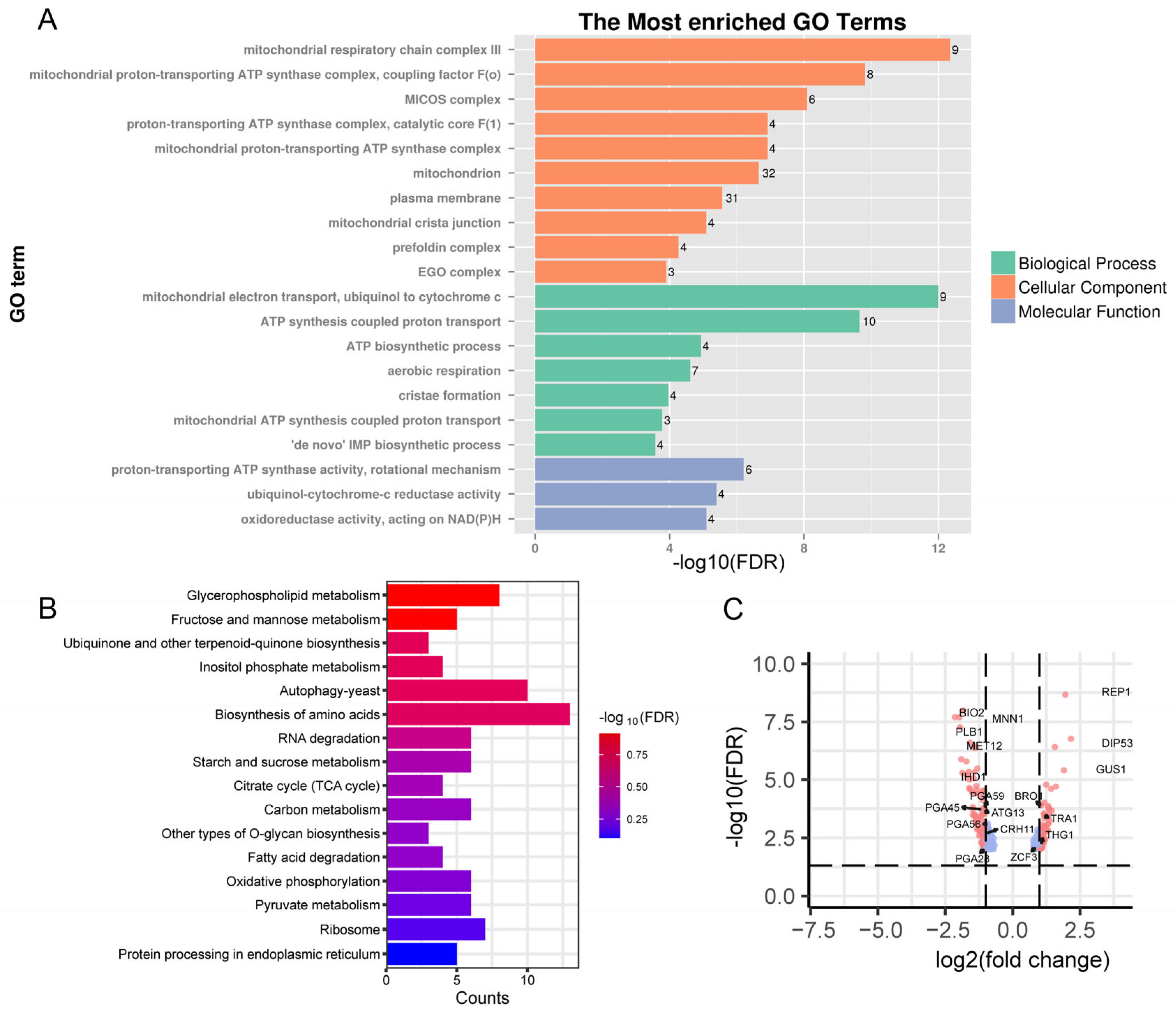
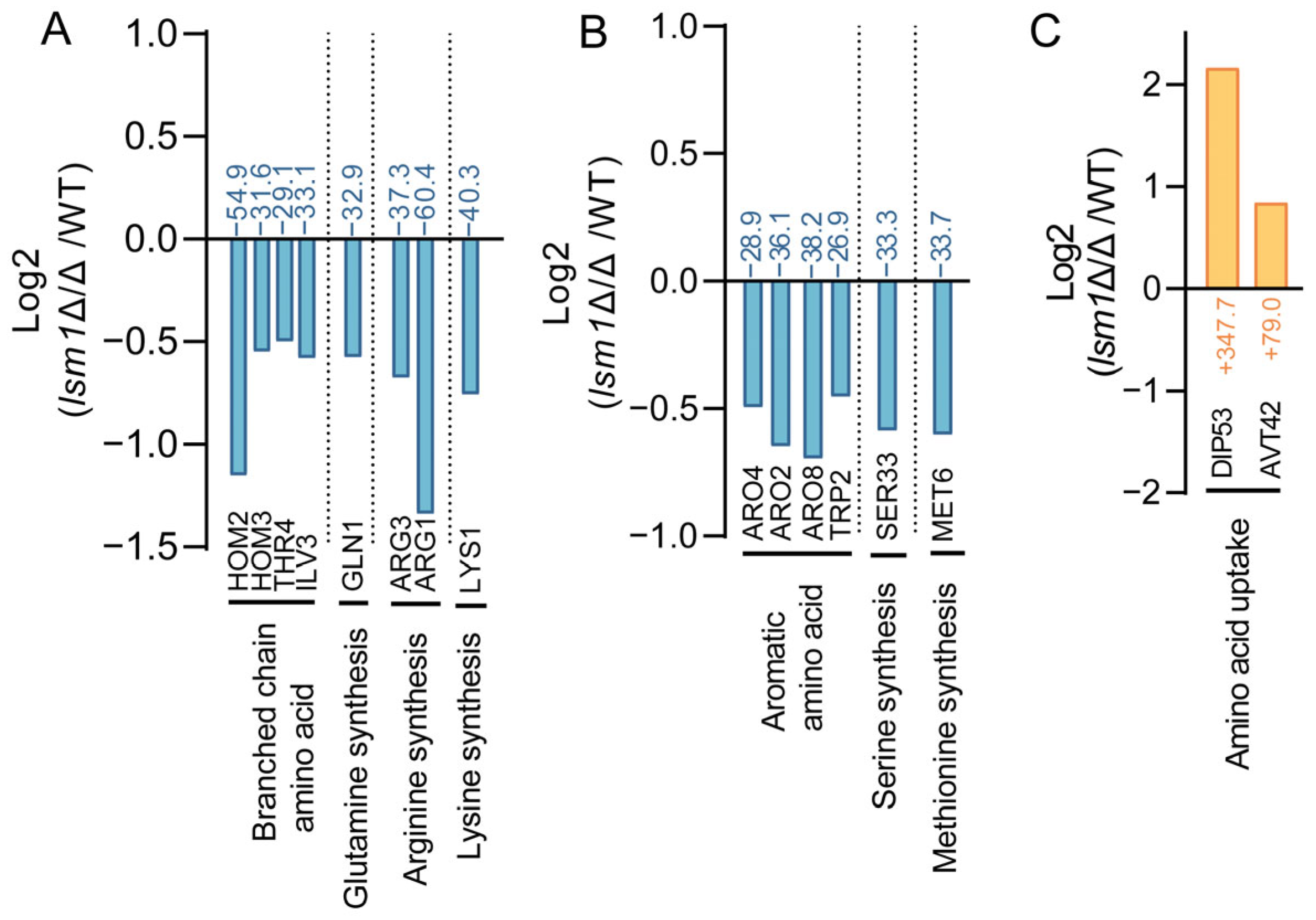
lsm1Δ/Δ were cultured in liquid YPD medium at 30 °C for 4 h, and then the cells were harvested for RNA extraction. Three independent biological replicates were prepared for each strain. RNA concentration and purity was analyzed using NanoDrop 2000 spectrophotometer (Thermo Fisher Scientific, Waltham, MA, USA). RNA integrity was assessed using the RNA Nano 6000 Assay Kit of the Agilent Bioanalyzer 2100 system (Agilent Technologies, Santa Clara, CA, USA). Sequencing libraries were generated using NEBNext UltraTM RNA Library Prep Kit for Illumina (NEB, Ipswich, MA, USA) following manufacturer’s recommendations. Raw sequencing reads were subjected to quality control using FastQC, and low-quality reads and adaptor sequences were removed before downstream analysis. Gene annotations were retrieved from
C. albicans genome browser (
www.candidagenome.org). Differential expression analysis was conducted using the DESeq2, and statistical significance was evaluated using adjusted
p-values calculated by the Benjamini–Hochberg false discovery rate (FDR) correction.
2.3. Spot Assays
To test the growth of C. albicans cells in the medium (containing a respiratory carbon source), the overnight cultured strains were diluted to OD600 = 0.1, grown to exponential phase. The strains were harvested and diluted to OD600 = 0.2. Then the 10-fold serial dilutions were spotted on solid SC medium containing 2% glucose, 3% glycerol or 2% ethanol. For the assay of oxidative stress, the 10-fold serial dilutions were spotted on solid YPD medium with or without 5 mM H2O2. The plates were incubated at 30 °C for 2–3 days and photographed.
2.4. Western Blotting
The samples were prepared in lysis buffer (50 mM Tris-HCl pH 7.4, 150 mM NaCl,1% NP-40, 1% sodium deoxycholate, 0.1% SDS, 1 mM EDTA, 1 mM PMSF, 1:100 Protease Inhibitor Cocktail). Samples were loaded on SDS-PAGE or Phos-tag SDS-PAGE and analyzed by Western blotting. GFP-Atg8 fusion proteins were detected with monoclonal anti-GFP antibody (MBL, Tokyo, Japan, 1:3000 dilution), Sch9-HA fusion proteins were detected with monoclonal anti-HA antibody (Sigma, St. Louis, MO, USA, 1:3000 dilution), and GAPDH was detected using anti-GAPDH antibody (ZENBIO, Chengdu, China, 1:5000 dilution). HRP-conjugated goat anti-mouse IgG (BioRad, Hercules, CA, USA, 1:5000 dilution) was used as the secondary antibody. Phos-tag SDS-PAGE was performed using a gel prepared with 8% (w/v) polyacrylamide, Phosbind acrylamide (20 μM), 2 equivalents of MnCl2, 375 mM Tris-HCl (pH 8.8) and 0.1% SDS at 30 mA/gel for 60 min at room temperature. The electrophoresis running buffer (pH 8.4) was 25 mM Tris, 192 mM glycine and 0.1% SDS.
2.5. Real-Time qPCR (RT-qPCR)
Strains cultured to logarithmic phase in liquid YPD (30 °C, 160 rpm) were used as the nutrient-rich control. For the nitrogen starvation group, cells were harvested and resuspended in SD-N medium for 1 h. Total RNA was extracted using RNA extraction kits (Promega, Madison, WI, USA), and the cDNAs were prepared from the extracted RNAs using TransScript Uni All-in-One First-Strand cDNA Synthesis Kits (TransGen, Beijing, China). The expression of interested genes was detected by using the RealMaster Mix (SYBR Green) Kit (TransGen, Beijing, China). RT-qPCR analysis was performed by using the IQTM5 Multicolor Real-Time PCR Detection System (BIO-RAD, Hercules, CA, USA). Transcription levels of these genes were normalized against the levels of ACT1. Relative expression levels were calculated using the 2−ΔΔCt method from three independent biological replicates, each performed in technical triplicate.
2.6. Confocal Microscopy
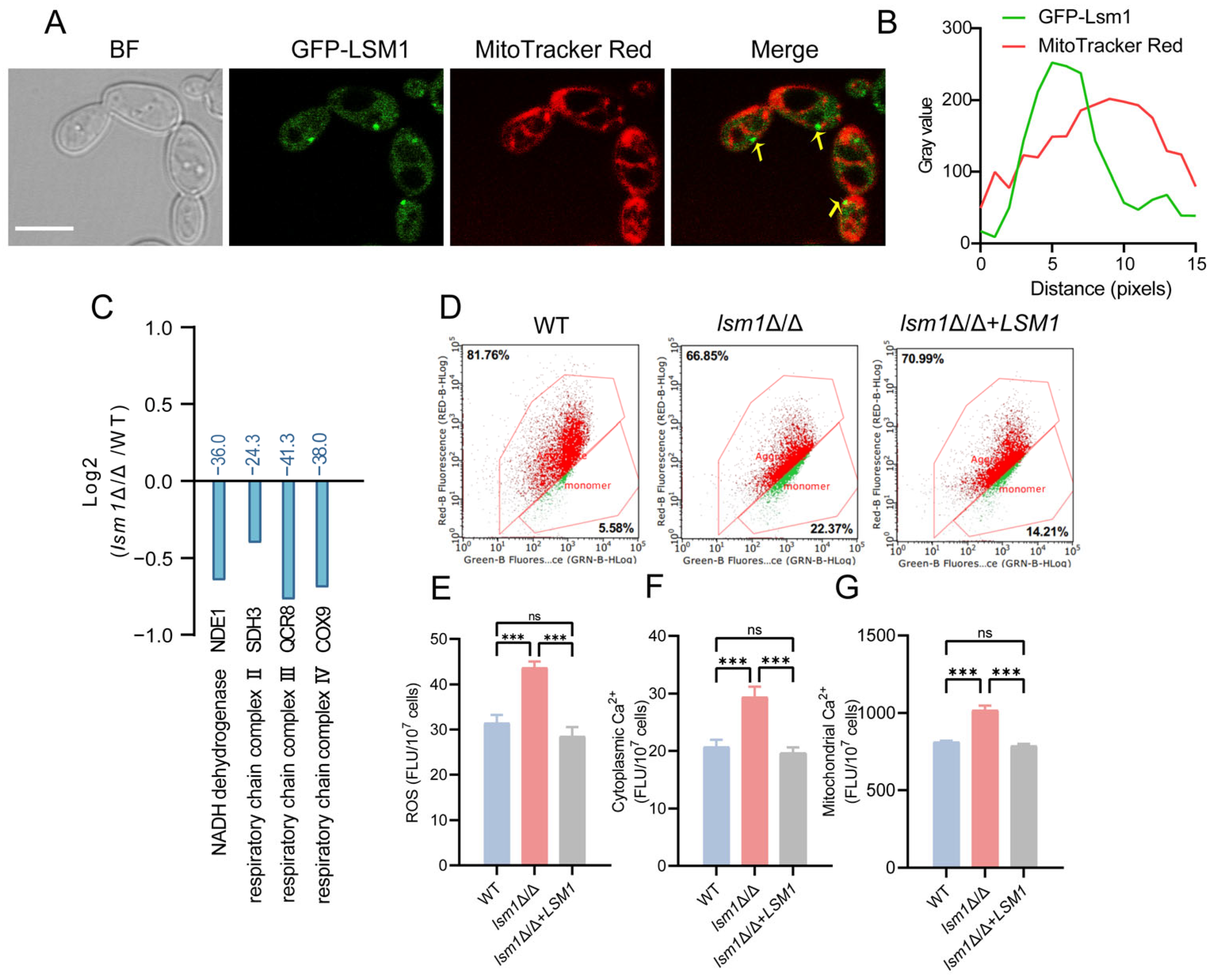
For Lsm1 localization analysis, the strain WT-GFP-Lsm1 stained with Hoechst 33342 (5 μg/mL) and MitoTracker Deep Red FM (0.1 mmol/L, prepared in DMSO, Invitrogen, Carlsbad, CA, USA) for 30 min was observed by confocal microscopy with a 63× oil-immersion objective. (Zeiss LSM710, Oberkochen, Germany).
2.7. Assay of Mitochondrial Membrane Potential
To test the mitochondrial membrane potential, cells were cultured overnight in YPD medium at 30 °C with shaking, adjusted to an OD600 of 0.1 in YPD and cultured for 4 h. Cells were collected and stained by JC-1 (5 μM, prepared in DMSO, Sigma, USA) for 30 min at 30 °C. After washed twice with PBS, the cells were assessed by flow cytometry (FACS Calibar flow cytometer, BD, Sparks, MD, USA) to evaluate the mitochondrial membrane potential. Depolarized mitochondria were detected as JC-1 monomers (green fluorescence, Ex 488 nm/Em 530 nm), whereas healthy, hyperpolarized mitochondria were characterized by JC-1 J-aggregates (red fluorescence, Ex 488 nm/Em 590 nm). A minimum of 10,000 events were acquired per sample.
2.8. Measurement of Intracellular ROS and Calcium Levels
Intracellular ROS was detected using the oxidant-sensitive agent DCFH-DA (10 μM, Sigma, USA). The cells were stained for 30 min at 30 °C and washed twice with PBS. Then, the fluorescence density (FLU) was detected by a fluorescence microplate reader (Agilent, USA). Cells were also counted using a spectrophotometer with OD600. The relative fluorescence density of each sample was calculated as FLU divided by OD600 to evaluate intracellular ROS levels. Intracellular calcium levels were determined following the same procedure, using the calcium-sensitive dye Fluo-4 AM (2 μM, MCE, USA) for cytosolic Ca2+ and the mitochondria-targeted indicator Rhod-2 AM (10 μM, MCE, USA) for mitochondrial Ca2+ levels.
2.9. Assay of NAD+/NADH and NADP+/NADPH
The intracellular levels of NAD+/NADH were quantified using commercial assay kits according to the manufacturer’s instructions with minor modifications (CheKineTM Micro Coenzyme I NAD(H) Assay Kit, Abbkine, Wuhan, China). Cells were grown in YPD medium to logarithmic phase, harvested by centrifugation at 4000× g for 5 min at 4 °C, and washed twice with ice-cold PBS. Cell pellets (≈2 × 10⁸ cells) were resuspended in 300 μL NAD+/NADH extraction buffer provided in the kit (modified from the manufacturer’s protocol in terms of starting cell number and extraction volume). The amount of starting material and extraction volume were optimized in preliminary experiments to ensure that the measured absorbance values fell within the linear range of the standard curve. Cells were disrupted by vortexing with acid-washed glass beads (30 s vortexing followed by cooling on ice, repeated 8–10 times) (modification: bead-beating was used instead of the ultrasonic disruption recommended in the kit protocol). The lysates were boiled for 5 min to inactivate enzymes and subsequently neutralized by adding 20 μL Assay Buffer and 100 μL of the complementary extraction buffer (NADH extraction buffer for NAD+ determination or NAD extraction buffer for NADH determination). Samples were centrifuged at 13,000× g for 10 min at 4 °C, and the supernatants were collected for analysis. An amount of 40 μL of sample extract was added to a 96-well microplate and mixed with 80 μL of freshly prepared reaction working solution containing Assay Buffer, NAD cycling enzyme mix, WST-8, enhancer, and ethanol solution as specified by the kit instructions. After incubation at room temperature for 30 min, absorbance at 450 nm was measured using a microplate reader.
The intracellular levels of NADP+/NADPH were quantified using commercial assay kits according to the manufacturer’s instructions with minor modifications (NADP+/NADPH Assay Kit with WST-8, Beyotime, Shanghai, China). Cells were harvested and lysed in NADP+/NADPH extraction buffer provided in the kit. After vigorous vortexing with glass beads, the lysates were centrifuged at 13,000× g for 10 min at 4 °C, and the supernatants were collected as sample extracts. To distinguish oxidized and reduced forms, each sample was split into two aliquots: one was used directly to determine total NADP(H), while the other was incubated at 60 °C for 30 min to selectively decompose NADP+ for measurement of NADPH. After cooling and centrifugation to remove precipitates, the supernatants were used for subsequent assays. For the colorimetric reaction, 20 μL of sample extract was added to a 96-well plate followed by 90 μL alcohol dehydrogenase working solution. After incubation at 37 °C for 10 min, 10 μL WST-8 chromogenic solution was added and the reaction was further incubated at 37 °C for 20 min in the dark. Absorbance at 450 nm was measured using a microplate reader. NADP+ levels were calculated by subtracting NADPH from total NADP(H), and the NADP+/NADPH ratio was determined accordingly. The results were normalized to total protein concentration measured by the BCA assay.
2.10. Assay of Superoxide Dismutase (SOD) Activity
SOD activity was determined using a commercial Superoxide Dismutase Assay Kit with WST-8 (Beyotime) according to the manufacturer’s instructions. Briefly, 20 μL of sample lysate was mixed with 200 μL of WST-8/enzyme working solution in a 96-well plate, incubated at 37 °C for 20 min, and the absorbance at 450 nm was recorded using a microplate reader. One unit of SOD activity was defined as the amount of enzyme needed to exhibit 50% inhibition of the WST-8 reaction under assay conditions. Enzyme activities were normalized to total protein content measured in parallel by the BCA assay.
2.11. Assay of GSH/GSSG
The well-cultured fungal cells were harvested by centrifugation and washed twice with PBS. The weight of the cell pellet was determined by weighing the centrifuge tube before and after cell collection, and the difference was calculated. Three volumes of extraction solution from a commercial GSH and GSSG Assay Kit (Beyotime Biotechnology, Shanghai, China) relative to the cell pellet were added to the samples. Cells were disrupted using 6–8 rapid freeze–thaw cycles by alternating between liquid nitrogen and a 37 °C water bath. The lysates were then incubated on ice for 5 min and centrifuged at 10,000× g for 10 min at 4 °C. The supernatants were collected for determination of total glutathione. For GSSG measurement, an aliquot of the prepared sample was treated with GSH-depleting auxiliary solution (20 µL per 100 µL sample) and the GSH-depleting working solution (4 µL per 100 µL sample). The mixture was vortexed immediately and incubated at 25 °C for 60 min to remove GSH. The resulting samples were subsequently used for GSSG determination according to the manufacturer’s instructions.
2.12. Assay of Hyphal Growth and Biofilm Formation
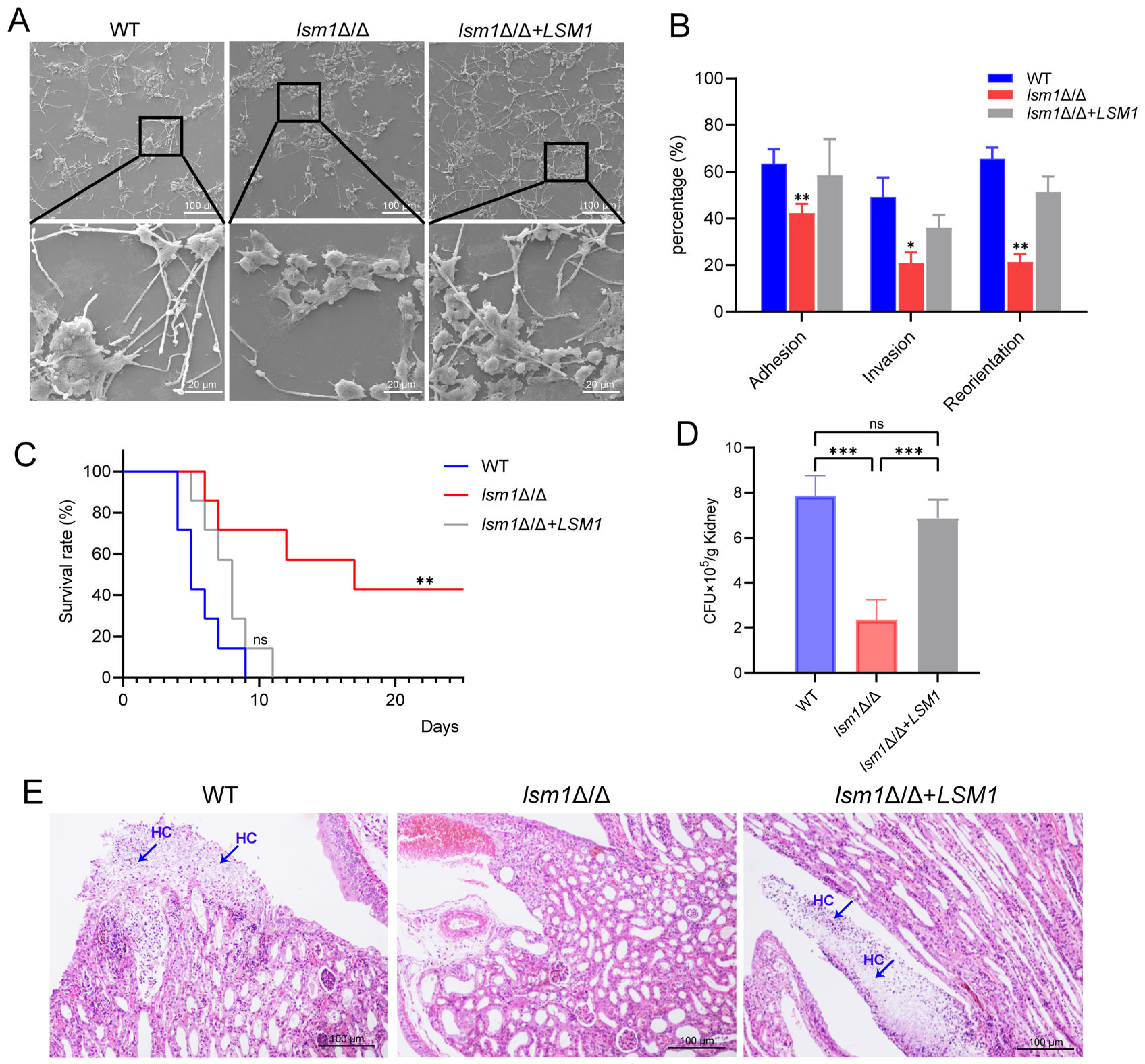
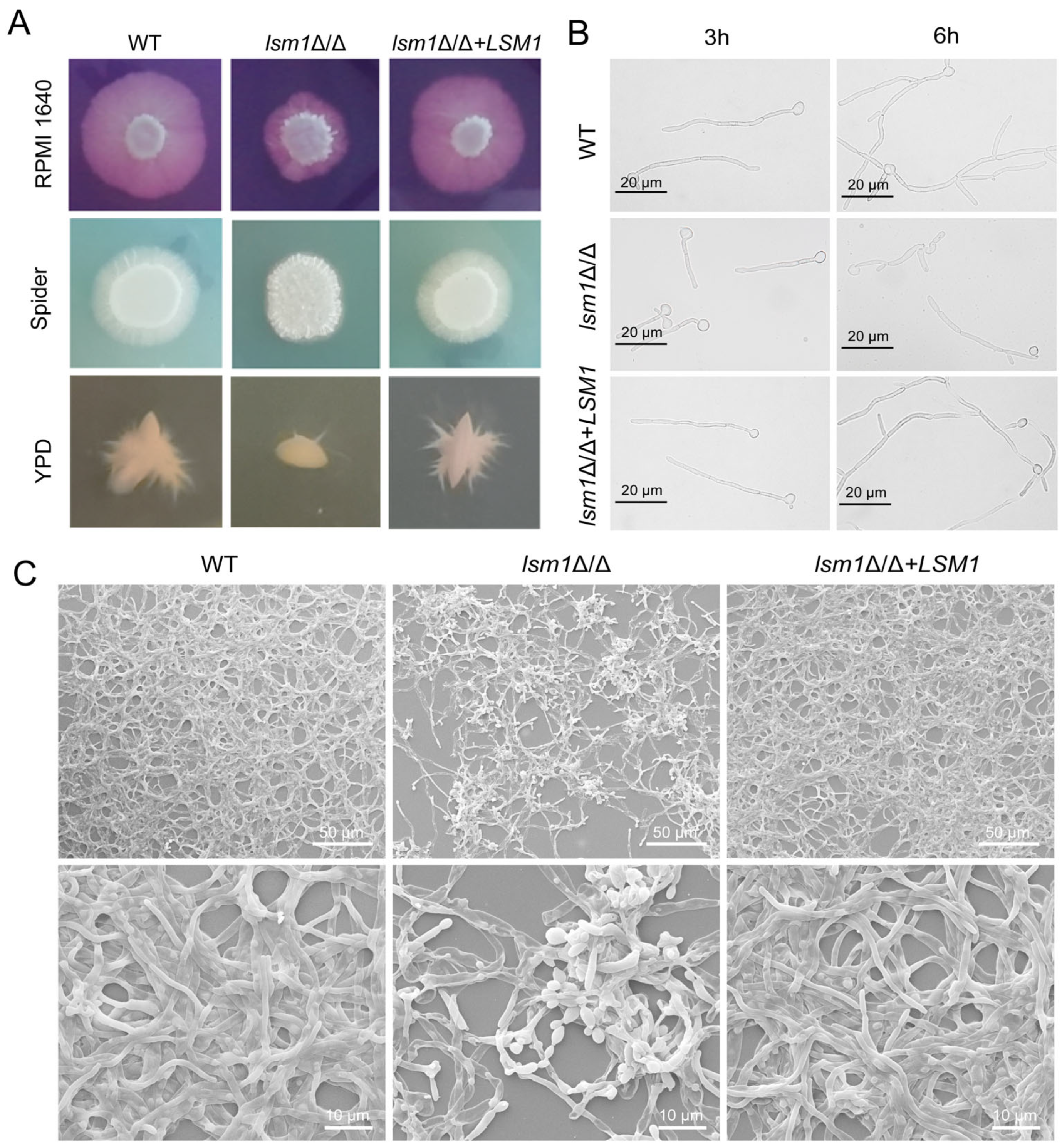
RPMI-1640 and Spider solid media were used to induce hyphal growth. The overnight cultured strains were diluted in sterile water to an OD600 of 0.5, dotted on the solid plates. The plates were incubated at 37 °C for 3–5 days and photographed. To induce embedded growth, cells were cultured to the exponential phase, washed, mixed in molten YPD semi-solid medium (1% agar) and incubated at 25 C for 3–5 days. RPMI-1640 was used for liquid induction of morphogenetic switching. The strains were diluted in RPMI-1640 to an OD600 of 0.05, shaken at 37 °C for 3 h or 6 h and collected for microscopic observation. For the biofilm formation assay, cells were incubated on polystyrene plates at 37 °C for 12 h, followed by fixation with 2.5% (v/v) glutaraldehyde at 4 °C for 4 h. After washing with PBS, the samples were dehydrated through a graded series of ethanol (30%, 50%, 70%, 80%, 90%, and 100% for 20 min each). The samples were then lyophilized in vacuum desiccators. After being sputter-coated with gold, the samples were observed by scanning electron microscopy (FEI QUANTA 200, Thermo Fisher Scientific, Waltham, MA, USA).
2.13. In Vitro Fungus-293T Cell Interaction Model
The human embryonic kidney cell line 293T was procured from the Cell Resource Center (China Academy of Medical Science, Beijing, China). The 293T cells were cultured in DMEM medium supplemented with 10% FBS in 24-well polystyrene plates in a humidified incubator at 37 °C with 5% CO
2 for 2 days. Cell monolayers in each well were washed twice with PBS to remove any residual media. The cells were then incubated with 5 × 10
5 log-phase fungal cells in 500 μL of the 293T culture medium and incubated at 37 °C for 2 h. After incubation, the samples underwent the same fixation, dehydration and SEM preparation steps as the biofilm assay. The percentages of adhesion, invasion into 293T cells, and hyphal reorientation in the strains were determined as previously described [
31].
2.14. In Vivo Fungal Infection Assays
For virulence assay, overnight cultures of the corresponding strains were harvested and re-suspended in a 0.9% NaCl solution to create a standardized inoculum. Female ICR mice, aged 5–6 weeks, were used for the assay. Each mouse was inoculated with 5 × 10⁶ C. albicans cells via the tail vein to simulate systemic infection. The survival rate of the mice was monitored over a 20-day period to assess the virulence of the fungal strains and the progression of the infection. After 5 days post-inoculation, three mice from each group were sacrificed to determine the fungal burden in the kidneys, a common target organ for Candida species. The kidneys were removed, homogenized to disrupt tissue and release fungal cells, and then serial dilutions were prepared. The diluted homogenates were plated on YPD agar plates to culture and enumerate the viable fungal cells. For histopathological analysis, the kidneys from the sacrificed mice were fixed, processed, and embedded in paraffin to create tissue sections. The sections were stained with hematoxylin and eosin (H&E); then, the stained sections were observed under a light microscope (Leica DM3000, Wetzlar, Germany) to assess tissue damage, inflammation, and fungal invasion.
2.15. Statistical Analysis
Differences between two groups were analyzed using Student’s t-test, and comparions among multiple groups were performed using one-way ANOVA followed by Tukey’s multiple comparison test. For all analyses, a p-value of less than 0.05 (p < 0.05) is considered statistically significant. The data are presented as means ± standard deviations (s.d.) based on three or more independent experiments.
4. Discussion
Fungal pathogens rapidly integrate nutritional cues with organelle homeostasis to survive and infect host tissues. In this study, we found that a subpopulation of PB is localized to mitochondria, and we characterized the function of the PB-associated protein Lsm1 in the opportunistic fungus C. albicans. We identified that mRNA decay factor Lsm1 participates in regulating numerous cellular processes, such as nutrient sensing, maintenance of mitochondrial function, TOR signaling, autophagy execution, hyphal growth and pathogenicity. Our findings reveal that loss of Lsm1 triggers system-wide cellular dysfunction, initiating from broad transcriptomic alterations and culminating in mitochondrial impairment, uncoupled TORC1 signaling, and defective autophagic flux. This indicates that Lsm1 is required to maintain coordinated metabolic and organelle homeostasis. Moreover, these findings suggest that post-transcriptional control is not merely a basal cellular process, but a crucial regulatory tier governing the pathogen’s stress adaptation and virulence. Despite these insights, we acknowledge certain limitations inherent in our experimental design. Although the phenotypic defects were rescued in the complemented strain, the transcriptomic profile of this strain was not assessed. Consequently, while the observed transcriptional changes are strongly associated with LSM1 deletion, we cannot entirely exclude the potential contribution of background mutations to the global expression profile. Furthermore, given that C. albicans is prone to genomic rearrangements and aneuploidy, the possibility of subtle secondary genomic alterations should be considered. Additionally, while our data highlight a significant link between LSM1 and transcript abundance, future studies employing direct measurements of mRNA decay rates will be required to formally establish the precise post-transcriptional mechanisms of Lsm1 in this context.
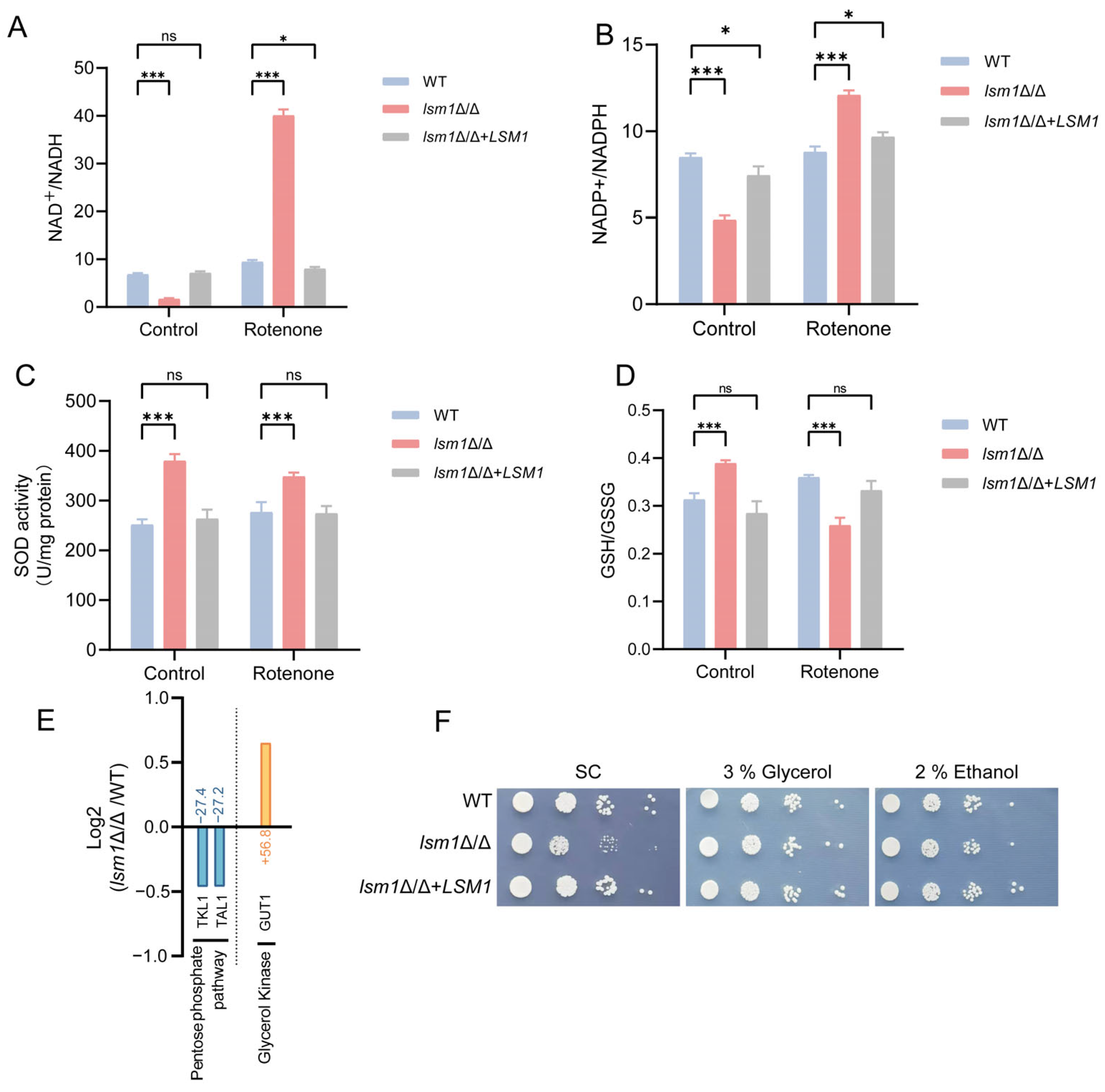
Our data reveal that Lsm1 is required to maintain mitochondrial function and metabolic flexibility. Mitochondria emerge as a central hub of dysregulation in lsm1Δ/Δ cells. Transcriptional imbalance of respiratory complexes, loss of membrane potential, and cytosolic and mitochondrial Ca2+ overload collectively indicate mitochondrial stress. Intriguingly, rather than undergoing oxidative collapse, lsm1Δ/Δ cells establish a redox balance characterized by elevated NADPH, SOD activity and GSH/GSSG ratios. Importantly, metabolic flexibility is enhanced, as growth defects are rescued when glycerol replaces glucose as the carbon source, highlighting a shift toward alternative metabolic strategies. This metabolic plasticity allows the lsm1Δ/Δ mutant to survive chronic mitochondrial stress but creates a fragile equilibrium. As evidenced by the rapid depletion of GSH upon rotenone exposure, lsm1Δ/Δ cells operate at a high metabolic cost to preserve short-term survival.
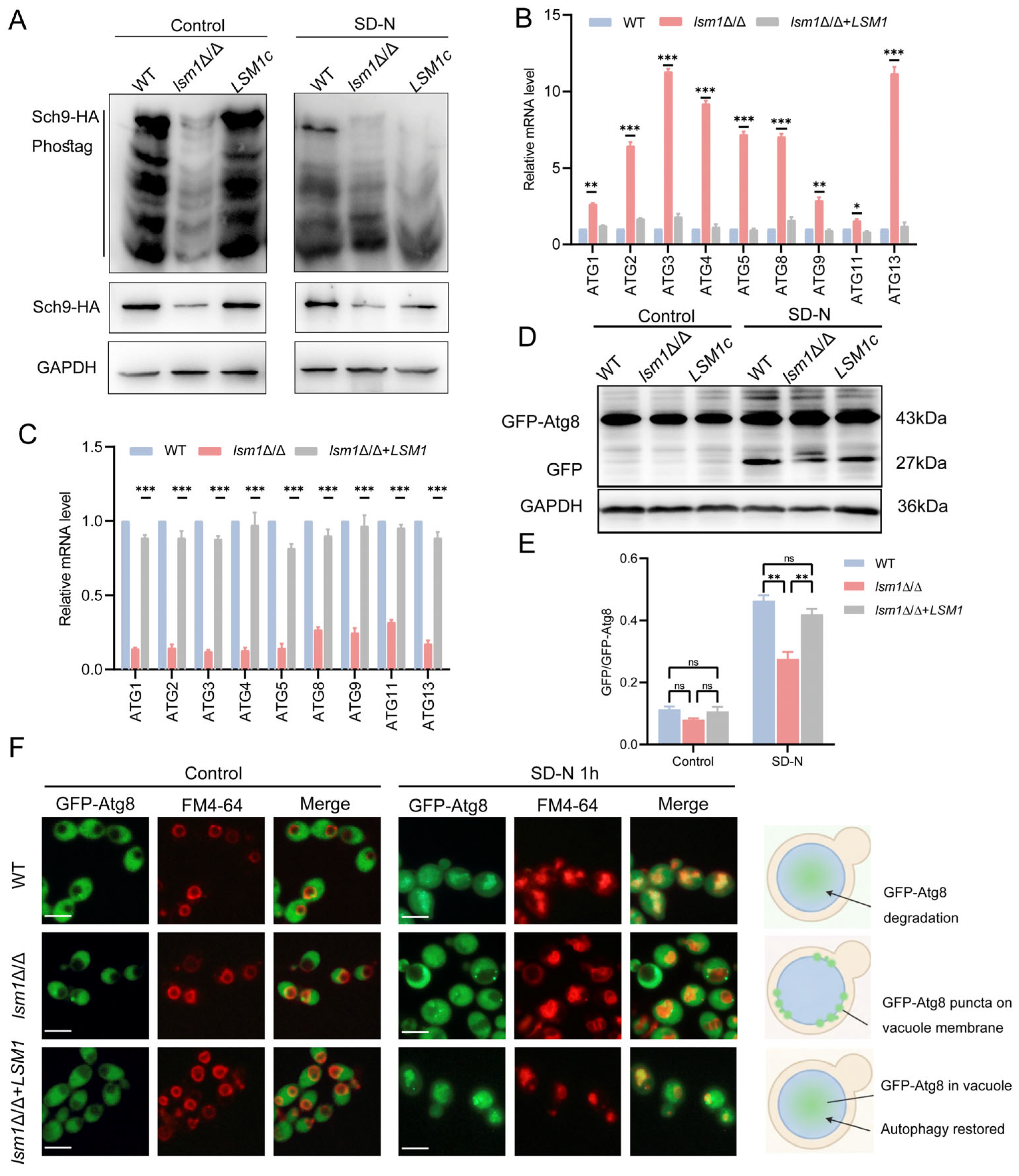
A key finding of our study is the uncoupling of autophagy induction from the degradative process in the absence of Lsm1. As an evolutionarily conserved signaling pathway, TOR is ubiquitously expressed in eukaryotic cells and serves as a critical sensor for both environmental and endogenous stress. The inhibition of TOR signaling under nutrient-limited conditions facilitates a metabolic shift from anabolic processes toward catabolic recycling to maintain homeostasis. While nutrient limitation caused by amino acid deficiency and mitochondrial dysfunction normally suppresses TORC1 activity to induce autophagy, we found that
lsm1Δ/Δ cells display aberrant TORC1 signaling that is reduced under basal conditions but increased under nitrogen starvation. Furthermore, even when autophagy was initiated, the flux was blocked at the late stages. The accumulation of GFP-Atg8 puncta at the vacuolar membrane and the failure to generate free GFP indicate a defect in autophagosome–vacuole fusion. First, this phenotype is mechanistically consistent with the stability of
ATG transcript levels. The Pat1-Lsm complex is known to stabilize
ATG mRNAs during nitrogen starvation to sustain autophagic capacity; consistent with this, we observed a failure to maintain
ATG transcript levels in starving
lsm1Δ/Δ cells. Second, it may account for compromised endosomal–vacuolar trafficking and autophagosome–vacuole fusion, thereby uncoupling autophagy initiation from subsequent cargo degradation. This is likely because previous studies have reported interactions between P-bodies and late endosomes or multivesicular bodies in Drosophila and mammalian [
35,
36]. Additionally, increased commensal fitness in
C. albicans clinical isolates has been reported to be associated with elevated TOR activity within host niches, suggesting that the TOR signaling pathway is involved in the adaptive evolution of
C. albicans [
37].