Article

Multi-Strain Probiotic Intervention Modestly Modulates Microbial Composition and Inflammatory Profile in Individuals with Long COVID

by
Ana Bačić
1,†,
Tijana Gmizić
2,†,
Marija Branković
2,3 and
Mirjana Rajilić-Stojanović
4,*
1
Innovation Centre of Faculty of Technology and Metallurgy, University of Belgrade, 11000 Belgrade, Serbia
2
Department of Gastroenterology and Hepatology, Clinic for Internal Medicine, University Hospital Medical Center “Bežanijska Kosa”, 11000 Belgrade, Serbia
3
Faculty of Medicine, University of Belgrade, 11000 Belgrade, Serbia
4
Department of Biochemical Engineering and Biotechnology, Faculty of Technology and Metallurgy, University of Belgrade, 11000 Belgrade, Serbia
*
Author to whom correspondence should be addressed.
These authors contributed equally to this work.
Microorganisms 2026, 14(4), 734; https://doi.org/10.3390/microorganisms14040734
Submission received: 27 February 2026 / Revised: 18 March 2026 / Accepted: 21 March 2026 / Published: 25 March 2026
(This article belongs to the Special Issue Probiotics and Gut Microbiome Dynamics in Health and Disease)

Abstract

Probiotics are widely used to support host health by modulating microbial communities and immune–metabolic homeostasis. Such interventions may be particularly relevant in long COVID syndrome, a condition characterized by persistent symptoms, low-grade inflammation, and microbiota alterations following SARS-CoV-2 infection. This study investigated the effects of a multi-strain probiotic on gut microbiota composition and predicted functional potential and biochemical parameters in individuals with long COVID and convalescent participants. Healthy individuals were included as reference controls. In an interventional study, 34 participants received a 12-week probiotic formulation containing Saccharomyces boulardii, Lacticaseibacillus rhamnosus GG, and two Lactiplantibacillus plantarum strains, while 40 served as non-supplemented controls. Fecal microbiota, assessed using 16S rRNA sequencing, and biochemical markers were measured at baseline and post-intervention. Probiotic supplementation induced selective compositional changes without significantly altering overall microbial diversity. Effects were more pronounced in long COVID participants and included enrichment of bacteria associated with metabolic and immune regulation, including Adlercreutzia, Coprococcus, and Eubacterium. Functional prediction analysis identified a probiotic-responsive signature in long-COVID-affected individuals, characterized by enrichment of pathways related to energy metabolism and redox balance. These microbial changes were accompanied by a consistent trend toward reduced inflammatory and hepatic markers. Overall, probiotic intervention demonstrated microbiota-status-dependent potential in long COVID recovery.

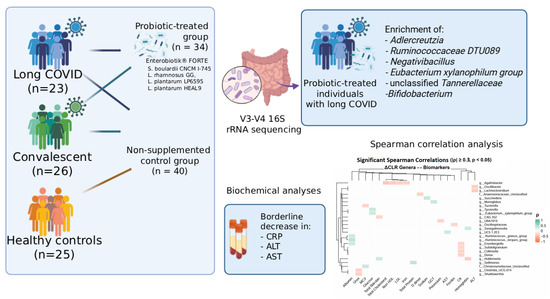
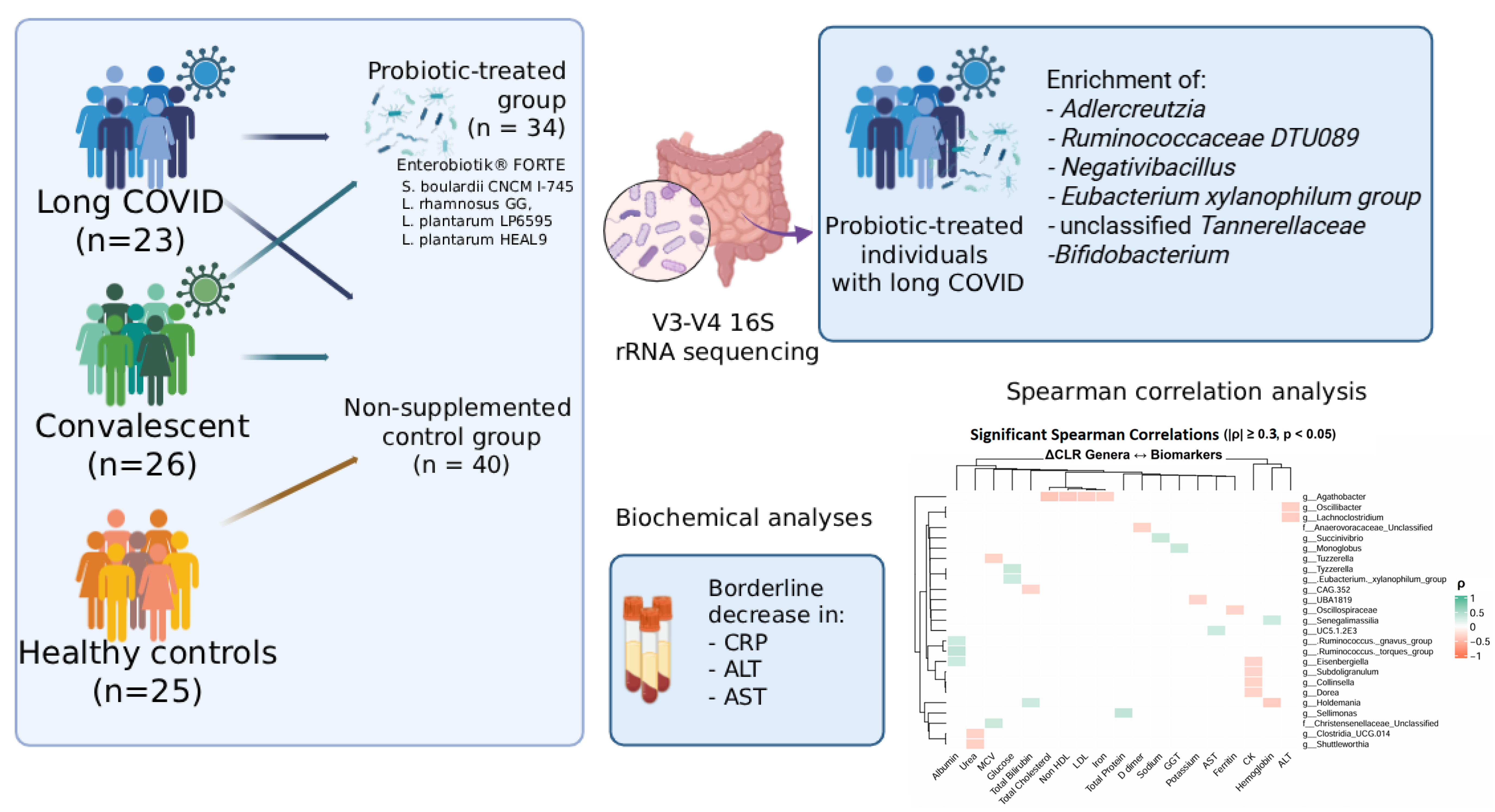
Graphical Abstract

1. Introduction

Modulation of the gut microbiota has emerged as a promising therapeutic approach in the management of infectious, inflammatory, and metabolic diseases [1,2,3]. Gut microorganisms play a central role in maintaining host homeostasis through regulation of immune responses, metabolic processes, intestinal barrier integrity, and systemic inflammation [4,5,6]. Detrimental disruption of microbial ecosystem balance, commonly referred to as dysbiosis, has been associated with chronic low-grade inflammation, metabolic dysfunction, and impaired intestinal integrity across a variety of diseases [7,8].
Probiotic interventions have demonstrated potential in restoring disrupted microbial communities, regulating dysbiosis, and supporting immune and metabolic functions [9,10,11]. Beyond competing for nutrients as transient colonizers, probiotic strains may influence resident microbes through their metabolic activity by supporting intestinal integrity and regulating immune and inflammatory signaling [9,11,12,13]. Due to these properties, probiotics are increasingly explored as adjunctive therapeutic strategies in conditions characterized by prolonged immune and metabolic disturbances [14,15].
In this context, infection with severe acute respiratory syndrome coronavirus 2 (SARS-CoV-2), the cause of coronavirus disease 2019 (COVID-19), represents a particularly relevant model. Beyond its primary respiratory manifestations [16], SARS-CoV-2 affects multiple organ systems, including the gastrointestinal tract and residing microbes [17,18,19]. Through direct interactions with intestinal epithelial cells and indirect systemic effects, SARS-CoV-2 induces pronounced pro-inflammatory and immunomodulatory responses, disrupts the intestinal barrier, alters metabolic pathways, and interferes with gut-distal organ signaling [18,20,21]. Collectively, these mechanisms create a permissive environment for sustained microbial dysbiosis, consistently reported in COVID-19 [17,22,23,24].
Beyond the acute infection, a substantial proportion (up to 30–50%) of COVID-affected individuals experience multisystemic symptoms, persisting for months or even years after initial infection [25,26,27]. More than 200 symptoms have been described, collectively referred to as long COVID or post-COVID syndrome [28,29,30,31,32]. Accumulating evidence indicates that long COVID is associated with sustained alterations in gut microbial communities [31,33,34,35]. Disrupted gut microbiota may, in turn, contribute to the persistence of long COVID symptoms [35,36,37,38]. Although partial microbial recovery may occur over time [39,40], distinct signatures have been reported in individuals with long COVID more than a year after infection [41,42,43].
Given the limited therapeutic options available for long COVID [44,45], interventions aimed at restoring gut microbiota homeostasis, including probiotic supplementation, represent a promising therapeutic approach for alleviating persistent symptoms [37,46,47,48]. Probiotic supplementation has shown potential to support microbial recovery following SARS-CoV-2 infection by promoting beneficial commensals and enhancing the production of health-promoting metabolites, including short-chain fatty acids [37,49]. Most interventional studies in COVID-19 and long COVID populations have focused on Lactobacillus and Bifidobacterium strains, reporting improvements in microbial composition, inflammatory markers, and symptom alleviation [46,47,50]. In contrast, data on Saccharomyces boulardii, a probiotic yeast with established barrier-protective, immunomodulatory, and anti-inflammatory properties [51,52], remain scarce in the context of long COVID. Given that probiotic effects are strain- and formulation-specific [11], multi-strain combinations may provide broader functional coverage than single-strain interventions in alleviating long COVID symptoms.
Therefore, the present study aimed to investigate the effects of a multi-strain probiotic intervention on gut microbiota composition, predicted microbial functional potential, and selected biochemical parameters in individuals with long COVID and convalescent participants, with healthy individuals included as non-intervention reference controls.

2. Materials and Methods

2.1. Study Design and Participants

This study was designed as a double-blind, single-center, double-arm interventional study, with a previously published cross-sectional analysis of the same cohort [41]. The study was conducted at the University Hospital Medical Center Bežanijska Kosa (Belgrade, Serbia) between January and June 2023.
A total of 90 adult participants (≥18 years) were recruited. Participants were categorized into three clinical groups (n = 30 per group) based on infection history and symptom persistence:
(1)
Individuals with long COVID syndrome, defined as persistent symptoms lasting at least 3 months following confirmed SARS-CoV-2 infection;
(2)
Fully recovered convalescent controls with documented history of SARS-CoV-2 infection but no persistent symptoms;
(3)
Healthy controls without a history of symptomatic COVID-19.
SARS-CoV-2 infection was confirmed by polymerase chain reaction (PCR) or antigen testing. Among participants with long COVID syndrome, the duration of persistent symptoms at enrollment ranged from 3 to 27 months following the initial infection, with a median duration of 14 months. During the acute phase of SARS-CoV-2 infection, infected participants received antibiotics and probiotics according to the standard treatment protocol at the University Hospital Medical Center Bežanijska Kosa [53]. Exclusion criteria included active SARS-CoV-2 or other acute infection, antibiotic or probiotic use within 3 months prior to sample collection, malignant disease, and other uncontrolled chronic conditions with the potential to substantially affect microbiota composition.
The study was designed to evaluate the effects of probiotic supplementation on fecal microbiota composition and biochemical parameters, as well as associations between microbial and biochemical changes over time. Baseline microbial composition of this cohort has been previously characterized in a cross-sectional study [41]. The present study builds on these findings by evaluating longitudinal changes associated with probiotic supplementation. Probiotic supplementation was administered only to participants with a history of SARS-CoV-2 infection (long COVID and convalescent groups), while healthy individuals served as non-intervention reference controls. Due to non-random allocation and unequal distribution of participants, the study was analyzed as an interventional study, rather than a randomized placebo-controlled trial.
The study was approved by the University Hospital Medical Centre “Bežanijska kosa” Ethics Committee (approval number 2237/2), and written informed consent was obtained from all participants.

2.2. Probiotic Intervention

The probiotic formulation consisted of Saccharomyces boulardii DBVPG-6763, Lacticaseibacillus rhamnosus GG, Lactiplantibacillus plantarum LP6595, and L. plantarum HEAL9 (EnteroBiotik® FORTE, Abela Pharm, Belgrade, Serbia), providing a daily dose of at least ≥8.5 × 10⁹ viable colony-forming units (CFUs).
The probiotic was stored according to the manufacturer’s instructions at room temperature in a dry environment until administration. It was packaged using flow-pack technology, ensuring stability and preservation of viable microorganisms [54]. As a commercially validated formulation was used, no additional viability testing was performed.
Participants in the intervention group received the probiotic orally for 12 weeks, while participants in the control group did not receive probiotic supplementation. Compliance was monitored by self-report. To minimize subjectivity and placebo-related bias of this double-blinded intervention, the study focused on objective outcome measures, including microbiota profiling and laboratory-based biochemical markers.

2.3. Sample Collection and Biochemical Analysis

Fasting blood and fecal samples were collected at baseline and after the 12-week intervention period. A total of 90 were initially enrolled. Of these, 16 participants were excluded due to unclear sample labeling (n = 9) or incomplete paired sampling when the second timepoint was not provided (n = 7). As the analysis was based on paired baseline and post-intervention samples, only participants with complete sample pairs were included.
The final dataset comprised 74 paired samples from 23 participants with long COVID, 26 convalescent controls, and 25 healthy controls. Of these, 34 participants (13 with long COVID and 21 convalescent) received probiotic supplementation, while 40 participants (10 with long COVID) served as non-supplemented controls (Table 1).
Blood samples were analyzed using Mindray BS-800 (Mindray, Shenzhen, China). Biochemical analysis included complete blood count, glucose, lipid profile, urea, creatinine, total and direct bilirubin, liver enzymes (AST, ALT, ALP, GGT), LDH, CK, electrolytes (sodium, potassium, chloride), total proteins, albumin, C-reactive protein (CRP), D-dimer, iron, total iron-binding capacity, and ferritin.

2.4. Fecal Microbiota Analysis

Microbial DNA was extracted from fecal samples using the QIAamp Fast DNA stool mini kit (Qiagen, Hilden, Germany) according to the manufacturer’s instructions, with the addition of a bead-beating step [55]. DNA integrity was assessed with agarose gel electrophoresis, and extracted DNA samples were stored at −20 °C until sequencing.
The V3–V4 hypervariable region of the bacterial 16S rRNA gene was amplified and sequenced using paired-end sequencing on the Illumina NovaSeq 600 platform, conducted at Novogene (Beijing, China). Primers 341F (CCTAYGGGRBGCASCAG) and 806R (GGACTACNNGGGTATCTAAT) were used. Paired-end FASTQ files were generated, and sequencing quality was assessed using FastQC prior to downstream bioinformatics processing [56]. Sequence processing was performed using Quantitative Insights Into Microbial Ecology 2 (QIIME-2, version 2025.7) [57]. Raw paired-end demultiplexed FASTQ sequences were processed using the Divisive Amplicon Denoising Algorithm 2 (DADA2) pipeline for quality filtering, denoising, chimera removal, and amplicon sequence variant (ASV) inference [58]. Phylogenetic trees were constructed using the q2-phylogeny plugin [58], while taxonomic classification was performed using a naïve Bayes classifier trained on the SILVA reference database (version 138.2) [59,60].

2.5. Statistical Analysis

Statistical analysis was performed in R (version 4.5.0) using the RStudio interface (version 2025.05.0). QIIME-2-generated objects were imported into R using qiime2R [61]. Downstream microbiota analysis was conducted using phyloseq, microbiome, microbiomeStat, lme4, and ggplot2 packages [62,63,64,65,66]. Prior to analysis, generated ASVs were filtered by removing singletons, taxa present in fewer than 10% of samples, and taxa with relative abundance below 0.01%. Filtered ASV counts were normalized using total sum scaling (TSS) to obtain relative abundances. Rarefaction was not applied, as compositional data analysis approaches were used [67]. For differential abundance testing, data were subsequently transformed using centered log-ratio (CLR) transformation.
Analyses focused on probiotic-treated versus non-supplemented participants, with additional subgroup analysis within the long COVID cohort. Statistical significance was defined as p < 0.05, while results with 0.05 < p < 0.1 were reported as trends, as done by others [68,69]. Differences between groups were evaluated using Fisher’s exact test for categorical variables, including sex, time since infection, and long COVID severity, and Mann–Whitney U or Kruskal–Wallis tests for continuous variables (age).
Alpha diversity was assessed using the Shannon and Observed species indices, and differences among groups were investigated using the microbiomeStat alpha diversity functions [66]. Beta diversity was evaluated using Bray–Curtis and weighted UniFrac distances and visualized with Principal coordinate analysis (PCoA) plots. Differences among groups were tested by permutational multivariate analysis of variance (PERMANOVA) with 999 permutations, and permutational analysis of multivariate dispersions (PERMDISP) [70].
Differential abundance analysis was performed using the Linear Model for Differential Abundance Analysis (LinDA) on CLR-transformed genus-level data. Pairwise differences in log-fold changes (LFC) between groups were assessed with generate_taxa_change_test_pair() function from the microbiomeStat package [71]. Selected COVID-associated taxa were additionally analyzed individually using Student’s t-test on changes in relative abundance (Δ, t1–t0) to assess differences between probiotic and control groups using a targeted approach. Functional potential of the gut microbiota was assessed using Phylogenetic Investigation of Communities by Reconstruction of Unobserved States 2 (PICRUSt2, version 2.4.2) [72]. Predicted KEGG Orthologs were summarized into MetaCyc metabolic pathways [73,74]. Changes in pathway abundances were evaluated using linear mixed-effects models, with time, disease group, probiotic status, and their interactions as fixed effects, and participant ID as a random intercept.
Biochemical parameters were evaluated by comparing within-group paired sample changes (Δ, t1–t0) using Wilcoxon signed-rank tests. Spearman correlation analysis was used to investigate associations between changes in CLR-transformed microbial genera and biochemical parameters.

3. Results

3.1. Participant Characteristics

This study assessed the impact of a multi-strain probiotic intervention on fecal microbiota composition, predicted microbial functional potential, and biochemical parameters in individuals with long COVID and convalescent participants, with healthy non-supplemented individuals included as reference controls.
Baseline demographic characteristics of the study cohort are summarized in Table 2. No statistically significant differences were observed in age or sex distribution between long COVID, convalescent individuals, and healthy control groups (p > 0.05 for all comparisons).
Across the entire cohort, participants receiving probiotic supplementation and non-supplemented controls were comparable in age and sex distribution (Table 3).
Within the long COVID subgroup, no significant differences were observed between probiotic-treated and non-supplemented participants in age, sex distribution, time since infection, or symptom severity (Table 4, p > 0.05 for all comparisons).
Analyses were performed on paired baseline and post-intervention samples, with gut microbiota composition profiled using 16S rRNA gene amplicon sequencing. After sequence processing and quality control, sequencing generated a median of 45,980 reads per sample, with a total of 7,355,659 high-quality sequences retained for downstream analysis. In total, 8998 ASVs were identified, representing 323 genera across 103 bacterial families.

3.2. Microbial Diversity

Overall microbial diversity was assessed using alpha- and beta-diversity metrics. Alpha diversity, evaluated with Shannon and Observed species indices, showed no statistically significant differences between baseline and post-intervention samples across study groups (p > 0.05 for all comparisons).
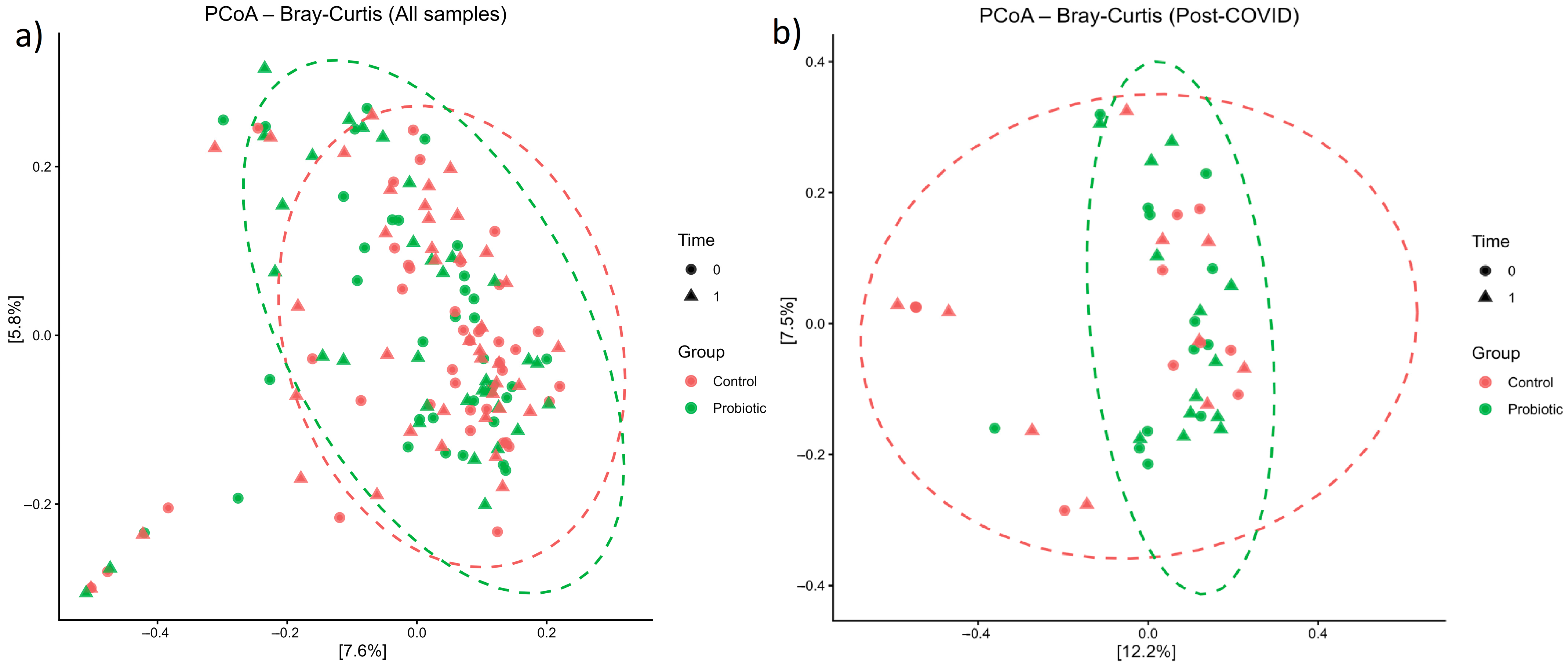
Consistent with these findings, beta-diversity analyses revealed no significant changes in overall microbial community structure following probiotic supplementation. PERMANOVA based on Bray–Curtis distances showed no differences between probiotic and control groups (F = 0.83, p = 0.422), and dispersion did not differ significantly (F = 0.43, p = 0.51). Similar results were obtained for weighted UniFrac distances (p > 0.05). PcoA based on Bray–Curtis distances showed substantial overlap between probiotic and control samples, both in the full cohort and in the long COVID subgroup (Figure 1a,b).

3.3. Differential Microbiota Composition Analysis

Differential abundance analysis demonstrated that probiotic supplementation resulted in selective modulation of the gut microbial community compared with the control groups. The observed log-fold changes indicated a shift in microbial composition, with a subset of genera exhibiting significant alterations in abundance following the intervention, while the majority of taxa remained unchanged.

3.3.1. Overall Microbiota Response to Probiotic Supplementation

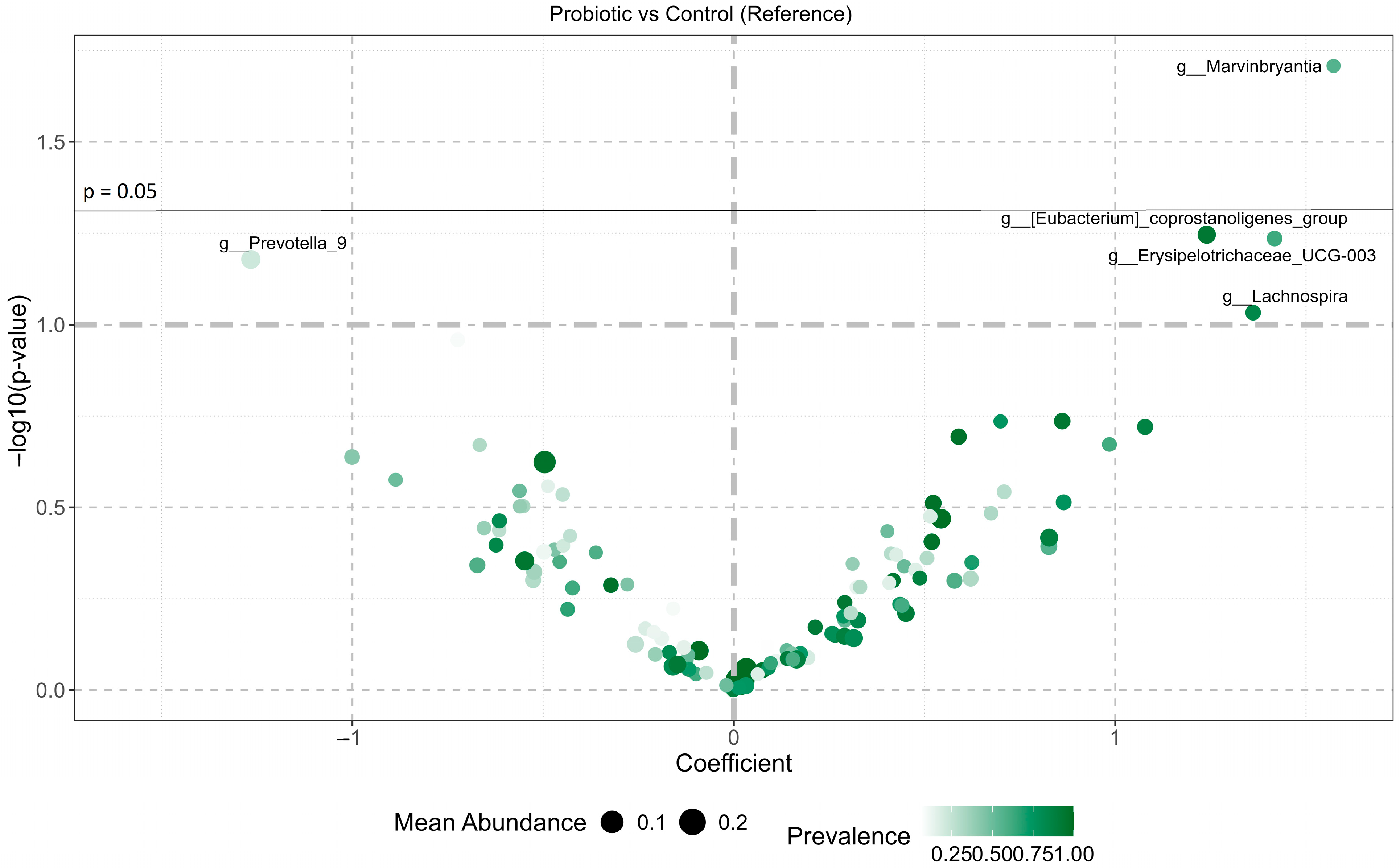
Across the full cohort, probiotic supplementation was associated with modest but detectable changes in the abundance of several bacterial genera (Figure 2, Table S1). The most evident change was the increase in Marvinbryantia relative abundance (LFC = 1.57, p = 0.019). Additionally, a trend of increase following probiotic supplementation was observed for the Eubacterium coprostanoligenes group (p = 0.057), Erysipelotrichaceae UCG-003 (p = 0.058), and Lachnospira (p = 0.093). In contrast, a trend toward a decrease in Prevotella_9 abundance was detected in the probiotic group compared with controls (LFC = −1.27, p = 0.066).

3.3.2. Long-COVID-Specific Response to Probiotic Supplementation

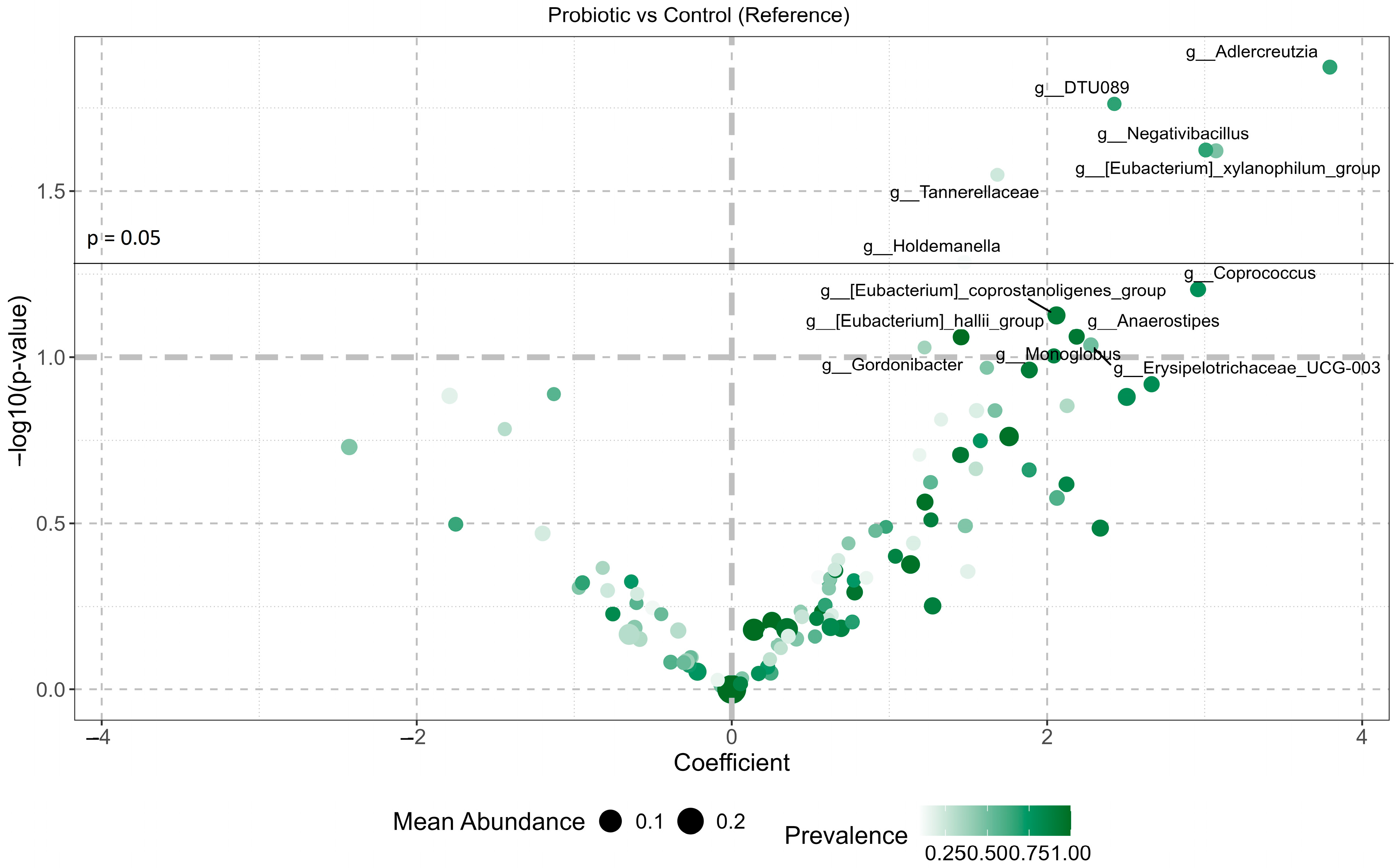
The microbial response to probiotic intervention in long-COVID-affected participants was evident through significant changes in the abundance of five genera and 13 trend-level alterations across the three dominant phyla: Actinomycetota, Bacillota, and Bacteroidota (Figure 3, Table S2). Several genera were significantly enriched in the probiotic group compared with controls, including Adlercreutzia (p = 0.013), Ruminococcaceae DTU089 (p = 0.017), Negativibacillus (p = 0.024), the Eubacterium xylanophilum group (p = 0.024), and unclassified Tannerellaceae (p = 0.028). Additional genera exhibited trend-level increases in abundance (p < 0.1), including Coprococcus, the Eubacterium coprostanoligenes group, Anaerostipes, and the Eubacterium hallii group.
Overall, although probiotic supplementation was associated with modest compositional changes in the full cohort, a greater number of differentially abundant genera were observed in participants with long COVID.

3.3.3. Changes in the Relative Abundance of Selected COVID-Associated Bacterial Genera

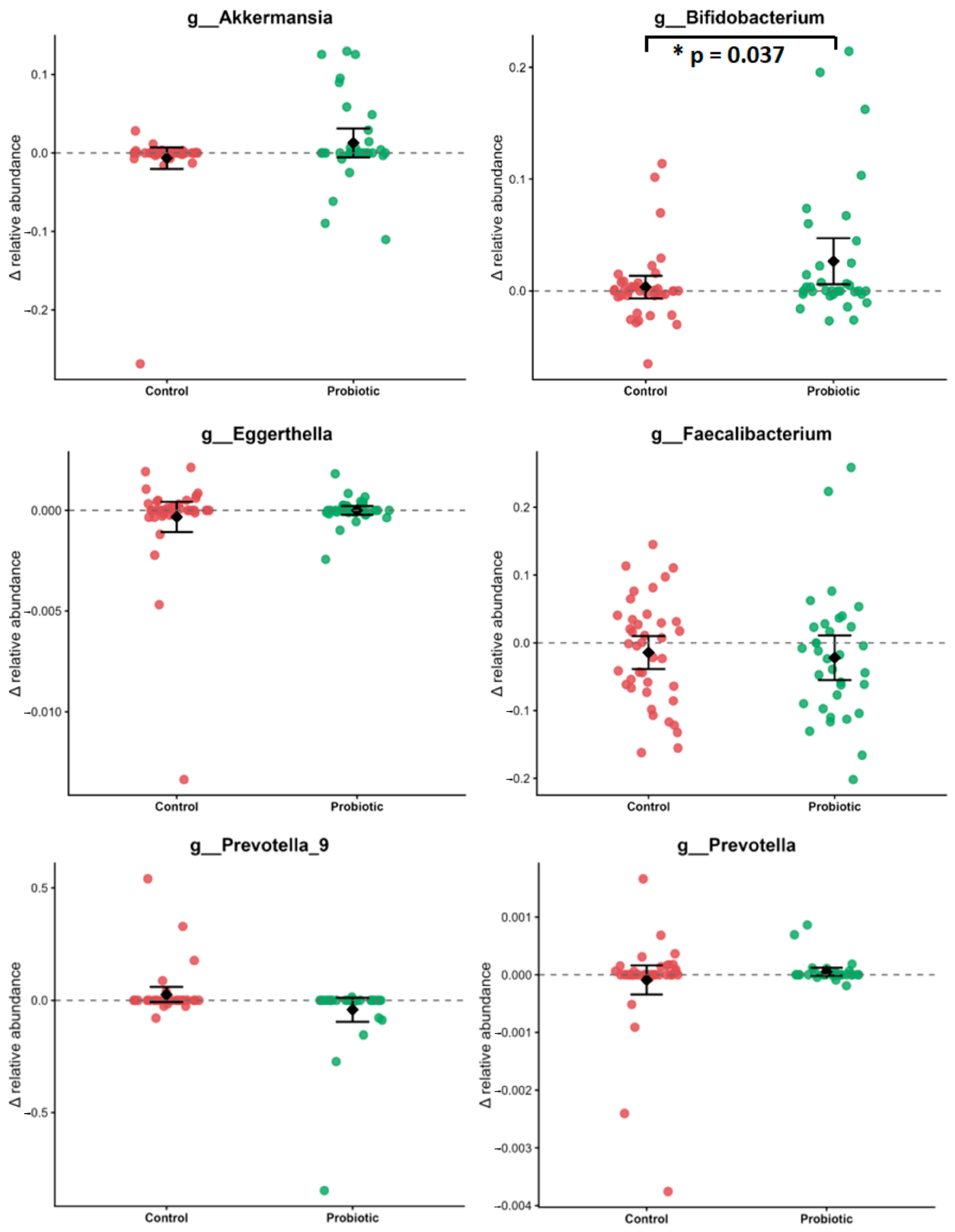
To complement the global differential abundance analysis, a targeted analysis of selected COVID-associated genera was performed. Focused analyses were performed to assess the effect of probiotic supplementation on the abundance of specific bacterial groups, which have been previously reported to be altered in COVID-19 and post-COVID conditions [17,75,76]. The change in the relative abundance of beneficial Akkermansia, Bifidobacterium, and Faecalibacterium, as well as potentially pathogenic Eggerthella, Prevotella, and Prevotella_9, was evaluated.
Following the intervention, differences in relative abundance changes between probiotic and control groups were observed for selected genera (Figure 4). A significant increase in Bifidobacterium was detected in the probiotic group compared with controls (Δ probiotic = 0.0264, Δ control = −0.0067, p = 0.0371). Akkermansia showed a trend toward higher abundance in the probiotic group (Δ probiotic = 0.0128, Δ control = 0.0034, p = 0.0829). Furthermore, a lower relative abundance of Prevotella_9 was observed following probiotic supplementation compared with controls (Δ probiotic = 0.019, Δ control = −0.030, p = 0.013). No significant differences between groups were detected for Faecalibacterium (Δ probiotic = −0.0218, Δ control = −0.0144, p = 0.7089), Eggerthella (Δ probiotic = −2.2 × 10⁻⁶, Δ control = −3.21 × 10⁻⁴, p = 0.44), and Prevotella (Δ probiotic = −5.16 × 10⁻⁵, Δ control = −7.9 × 10⁻⁵, p = 0.32).

3.4. Functional Prediction Analysis

Functional prediction analysis was performed to evaluate changes in gut microbial functional potential following probiotic supplementation.
In the overall analysis including all probiotic recipients (long COVID and fully recovered individuals), probiotic supplementation was associated with a consistent trend toward enrichment of microbial biosynthetic and metabolic pathways over time (p < 0.1; Table S3). These pathways were primarily related to amino acid biosynthesis (including L-tryptophan), vitamin metabolism (folate, pantothenate, thiamine), and nucleotide-associated metabolic processes. Although these changes reached trend-level significance, enrichment was observed consistently across multiple functionally related pathways.
To assess whether probiotic-associated functional changes differed specifically in long COVID participants, a three-way interaction linear model was applied. This analysis identified a set of functional pathways significantly enriched in long COVID individuals receiving probiotics (p < 0.05; Table 5). These pathways were predominantly related to central energy metabolism and redox processes, including multiple ubiquinone and ubiquinol biosynthesis pathways.

3.5. Biochemical Parameters Analysis

Biochemical parameters were evaluated to examine probiotic-associated changes compared with the control. At baseline, no significant differences in biochemical markers were observed between study groups.
Across all participants, probiotic supplementation was associated with a borderline reduction in CRP (r = −0.405, p = 0.058). When analyses were restricted to the long COVID subgroup, participants receiving probiotics exhibited consistent directional trends toward lower liver enzyme levels (ALT and AST) and CRP, alongside higher serum ferritin concentrations compared with controls (p < 0.1, Table 6). Although none of these differences reached statistical significance, effect size estimates indicated moderate effects across the evaluated biomarkers (|r| ≈ 0.43–0.46).

3.6. Gut Microbiota and Biochemical Parameters Association

Spearman correlation analysis was performed using changes (Δ) in CLR-transformed genus abundances and corresponding changes in biochemical parameter levels. Correlations with |ρ| > 0.3 and p < 0.05 were considered statistically significant.
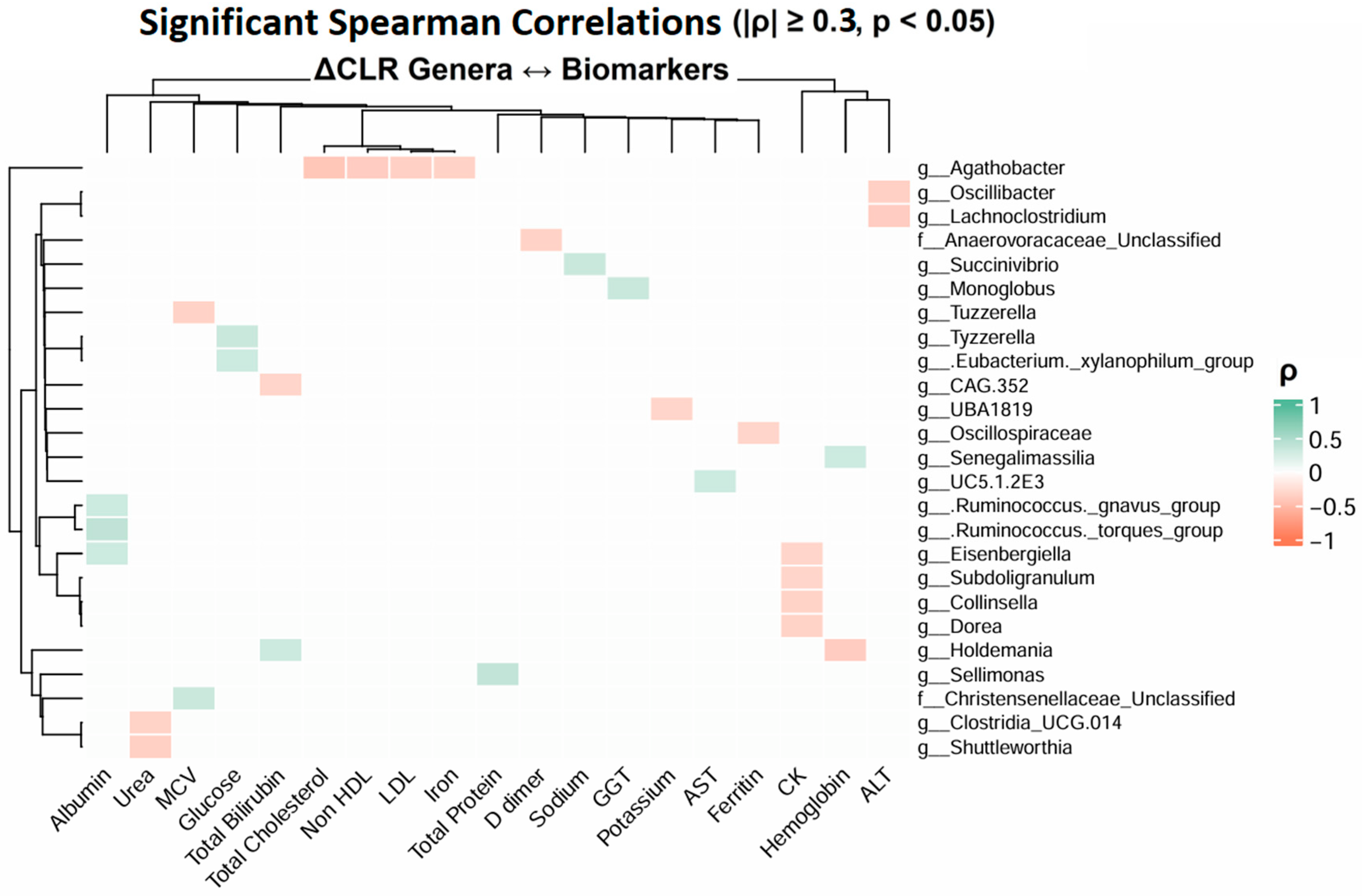
Across all participants, 30 significant associations between changes in microbial genera and biochemical parameters were identified (p < 0.05; Figure 5, Table S4), primarily involving markers of liver function and systemic inflammation. When the analysis was restricted to participants with long COVID, a total of 217 significant correlations were detected, indicating a stronger coupling between microbiota changes and host biochemical responses in long COVID-affected individuals. Several genera showed notable associations with liver enzymes. In particular, increases in Negativibacillus, Eubacterium coprostanoligenes, and Collinsella abundance were negatively correlated with ALT and AST levels. In addition, several bacterial groups, including Tannerellaceae, Frisingicoccus, Gordonibacter, and Holdemanella, showed significant associations with inflammatory and hepatic markers, including a negative association with CRP levels (p < 0.05, Figure S1, Table S5). In contrast, the abundance of Prevotella_9 and Intestinibacter was positively correlated with CK levels, while Collinsella, Coprobacter, and Erysipelotrichaceae UCG-003 showed a negative correlation.

4. Discussion

Probiotic interventions are increasingly recognized as targeted strategies for supporting recovery of disrupted microbial ecosystems in conditions characterized by persistent dysbiosis and immune–metabolic imbalance [9,10,14,15]. Rather than inducing major shifts in microbiota structure, probiotics typically exert selective compositional and functional modulation of microbiota [9,12,13,77]. Such effects may be particularly relevant in incompletely recovered microbial communities, including those described in long COVID. Although previous probiotic studies in COVID-19 and long COVID have reported beneficial effects, study design, used strains, and outcomes vary considerably [37,46,47,48,49]. In our previous cross-sectional analysis of this cohort, significant differences in microbiota composition were observed in individuals with long COVID, whereas convalescent participants showed profiles comparable to healthy controls [41].
In the present interventional study, the effects of a multi-strain probiotic on gut microbiota composition, predicted functional potential, and biochemical parameters were evaluated in individuals with long COVID and convalescent participants, while healthy controls represented the reference group. Probiotic supplementation did not induce major shifts in overall microbial diversity or global community structure, as reflected by stable alpha- and beta-diversity metrics. This is consistent with the established understanding that probiotics primarily modulate specific taxa rather than altering global community diversity [12,78].
At the taxonomic level, probiotic intervention was responsible for modest but biologically relevant changes in bacterial abundance. These effects were more evident in the long COVID subgroup, where a greater number of differentially abundant taxa were observed following the intervention. This heightened responsiveness likely reflects persistent microbial and metabolic perturbations and greater ecological plasticity in long COVID, consistent with previous reports of sustained dysbiosis in this condition [42,43,79]. In contrast, the limited response observed at the overall cohort level suggests that individuals without persistent symptoms may have a more stable and less responsive microbial community, in line with evidence of microbial recovery following SARS-CoV-2 infection [80].
Differential abundance analysis revealed enrichment of genera associated with metabolic homeostasis and immune regulation in probiotic-treated long COVID participants, including Adlercreutzia, Negativibacillus, Eubacterium-related groups, and members of Ruminococcaceae. These taxa have previously been reported as depleted in acute COVID-19 and long COVID [42,81,82,83], suggesting that their increase may reflect partial microbial restoration. Many of these bacteria are involved in short-chain fatty acid production, immunomodulation, and regulation of inflammatory responses [84,85,86,87], processes potentially relevant to long COVID recovery. The enrichment of Adlercreutzia is particularly relevant given its role in polyphenol metabolism, anti-inflammatory, and other health-promoting properties [84,88]. Previous studies have also demonstrated that lactobacilli-containing probiotics can stimulate the growth of Adlercreutzia and Coprococcus [89], highlighting indirect effects of probiotics, mediated through microbial interactions.
Probiotic supplementation did not result in a generalized restoration of microbial taxa reported as altered in individuals with long COVID in our previous cross-sectional study. However, several probiotic-associated shifts were observed within specific bacterial lineages. Notably, multiple members of the Eggerthellaceae family have been previously identified as altered in association with long COVID status in this cohort and elsewhere [41,82,83]. Following probiotic intervention, compositional changes were observed within this group, including an increase in Adlercreutzia, although Slackia was decreased in the baseline. Both genera have been reported to possess potentially beneficial metabolic activities [84,88,90]. Although these changes do not indicate a complete normalization of the microbiota, they suggest that probiotic supplementation may influence specific microbial lineages associated with host metabolic functions.
To further assess the impact of probiotic intervention on key microbiota members, targeted analyses of selected COVID-associated genera were conducted. Bifidobacterium showed a significant increase, while Akkermansia demonstrated a trend toward enrichment following the intervention. Responses were heterogeneous, with substantial inter-individual variability, likely reflecting differences in baseline microbiota composition and host-related factors [91,92]. Furthermore, genera commonly enriched in inflammatory or dysbiotic states, like acute and long COVID conditions, including Prevotella_9 and Eggerthella [46,81,93,94], were not stimulated by the intervention and, in some individuals, exhibited decreasing trends.
Functional prediction analysis further suggested potential disease-specific probiotic-associated functional shifts. Across all participants, trend-level enrichment of predicted biosynthetic pathways suggested modulation of microbial metabolic activity, including amino acid and vitamin metabolism pathways reported as altered in COVID conditions [81,95,96]. Importantly, a distinct and statistically significant probiotic-responsive functional signature was identified exclusively in long COVID participants. Predicted enriched pathways were predominantly related to microbial energy metabolism, including redox balance and quinone biosynthesis, indicating potential enhancement of microbial respiratory capacity and energetic efficiency. Given that functions have been found to be disrupted in long COVID [81,96], their predicted enrichment may reflect partial restoration of microbial activity.
Beyond microbiota modulation, probiotic supplementation was associated with modest yet directionally consistent biochemical changes. In long COVID participants receiving probiotics, trends toward reduced CRP and liver enzyme levels (ALT, AST), together with increased serum ferritin concentrations, were observed. Although not statistically significant, their consistency may suggest a potential attenuation of persistent systemic inflammation and hepatic biochemical alterations, recognized features of long COVID [37,97]. Correlation analysis further supported links between microbial shifts and host responses. Increases in Negativibacillus and the Eubacterium coprostanoligenes group were negatively correlated with ALT and AST concentrations, suggesting a potential relationship between enrichment of these taxa and improved hepatic biomarkers. Although causality cannot be inferred, these findings align with previous reports connecting gut microbiota composition with metabolic and inflammatory parameters in long COVID [98].
Previous probiotic studies in acute and long COVID populations have predominantly evaluated bacterial formulations containing Lactobacillus and Bifidobacterium strains, reporting variable outcomes [46,47,50,99,100,101]. In the present study, probiotic supplementation selectively enriched metabolically and immunologically relevant bacteria, with compositional changes most evident in long COVID participants. These findings provide preliminary evidence that multi-strain probiotic supplementation may modulate microbiota composition and functional potential in post-infection conditions.
Differences between studies are not unexpected and likely reflect formulation- and strain-specific effects, as well as microbiota baseline, host-, and geography-related variability [11,102,103]. Notably, our formulation included S. boulardii, a probiotic yeast not previously systematically evaluated in long COVID. Its inclusion may have contributed to the observed distinct compositional and functional responses, potentially through complementary mechanisms within the gut ecosystem. In addition to S. boulardii, other emerging probiotic candidates, including Pediococcus species, are increasingly being investigated for their role in microbial modulation and post-infectious recovery [104,105].
Despite the presence of Lactobacillus strains in the formulation, no increase in their relative abundance was detected. This observation is consistent with several previous studies indicating that probiotic effects may occur without stable colonization of the administered taxa [99,100].
This study has limitations, including its modest sample size, non-randomized design, and reliance on functional prediction inferred from 16S rRNA gene data rather than metagenomic measurements. In addition, as with all amplicon-based approaches, potential biases related to primer specificity and amplification efficiency should be considered when interpreting taxonomic profiles [106]. Given the sample size and variability inherent to microbiome data, several observations were identified as trends and should be interpreted cautiously.
Despite these limitations, the consistency of compositional, biochemical, correlation, and predicted functional findings supports a biologically coherent probiotic-associated modulation of the gut ecosystem, particularly in individuals with long COVID.

5. Conclusions

Multi-strain probiotic supplementation promoted the modulation of both taxonomic composition and predicted functional potential of the gut microbiota, with more evident effects in individuals with long COVID. Enrichment of selected beneficial taxa, together with a consistent trend of inflammatory and metabolic markers decrease, supports a potential role of probiotics in addressing post-infectious microbial and metabolic alterations. These findings suggest that targeted probiotic interventions may contribute to the restoration of gut ecosystem stability and host homeostasis during long COVID recovery. Confirmation of these observations in larger randomized controlled trials with strain-specific evaluation and multi-omics approaches is warranted.

Supplementary Materials

The following supporting information can be downloaded at: https://www.mdpi.com/article/10.3390/microorganisms14040734/s1, Table S1: differentially abundant bacterial genera following probiotic supplementation compared with control. Log-fold change (LFC) coefficients were estimated using paired linear modeling of abundance changes over time. Positive LFC values indicate greater increases in abundance in the probiotic group relative to controls, whereas negative values indicate greater decreases. p < 0.05 was considered statistically significant, and p < 0.10 was considered a trend. SE, standard error. Table S2: differentially abundant bacterial genera in post-COVID participants following probiotic intervention compared with control. Log-fold change (LFC) coefficients were estimated from paired (t1–t0) changes in genus-level abundance using linear modeling. p < 0.05 was considered statistically significant, and p < 0.10 was considered a trend. SE, standard error. Table S3: MetaCyc metabolic pathways showing trend-level enrichment following probiotic supplementation in overall cohort. Functional pathway abundances were predicted from 16S rRNA gene data using PICRUSt2 and summarized at the MetaCyc level. Effect estimates were obtained using linear model analysis to evaluate changes in pathway abundance between probiotic and control groups over time. Table S4: Spearman correlation analysis results for long-COVID-affected individuals showing significant associations between changes (Δ, t1–t0) in CLR-transformed genus abundances and biochemical markers of liver function (ALT, AST) and systemic inflammation (CRP). Only correlations with |ρ| > 0.4 and p < 0.05 for selected biochemical markers are shown. Table S5. Spearman correlation analysis results for long COVID affected individuals showing significant associations between changes (Δ, t1–t0) in CLR-transformed genus abundances and biochemical markers of liver function (ALT, AST), systemic inflammation (CRP), D-dimer, ferritin, HDL, and non-HDL. Selected correlations with |ρ| > 0.3 and p < 0.05 for biochemical markers are shown. Figure S1. Clustered heatmap of Spearman correlation displaying Spearman correlation coefficients (ρ) between changes in CLR-transformed gut microbial genera and biochemical parameters in long COVID individuals. ρ > 0.5, p < 0.05; Green indicated positive correlations and red indicate negative correlations.

Author Contributions

Conceptualization, M.R.-S. and M.B.; methodology, M.R.-S., M.B. and A.B.; formal analysis, A.B. and T.G.; investigation, A.B. and T.G.; data curation, A.B. and T.G.; writing—original draft preparation, A.B.; writing—review and editing, M.R.-S., M.B., A.B. and T.G.; visualization, A.B.; supervision, M.R.-S. and M.B.; project administration, M.R.-S.; funding acquisition, M.R.-S. and M.B. All authors have read and agreed to the published version of the manuscript.

Funding

This work was supported by the Ministry of Education, Science and Technological Development of the Republic of Serbia (Contract No. 451-03-34/2026-03/200135) and the AbelaPharm Probiotic Excellence Center.

Institutional Review Board Statement

The study was conducted in accordance with the Declaration of Helsinki and approved by the University Hospital Medical Centre “Bežanijska kosa” Ethics Committee (approval number 2237/2 from 21 April 2022).

Informed Consent Statement

Informed consent was obtained from all subjects involved in the study.

Data Availability Statement

The raw sequence data have been deposited in the National Center for Biotechnology Information (NCBI) Sequence Read Archive (SRA) under the project number PRJNA1441616 and will be made publicly available upon acceptance of the manuscript.

Acknowledgments

The researchers gratefully acknowledge the Joint Japan-Serbia Center for the Promotion of Science and Technology and the ITO Foundation for providing the computing infrastructure necessary for this research. The authors would also like to thank Svetlana Mitrović, whose initiative made the collaboration with the AbelaPharm Probiotic Excellence Center possible. Her efforts were instrumental in shaping this research, and we remember her with deep appreciation.

Conflicts of Interest

The probiotic formulation was provided by AbelaPharm, which also partially supported this study. The funders had no role in study design, data collection, analysis, interpretation of data, or manuscript preparation. The authors declare no other conflicts of interest.

Abbreviations

The following abbreviations are used in this manuscript:
SARS-CoV-2Severe Acute Respiratory Syndrome Coronavirus 2
COVID-19Coronavirus Disease 2019
CFUColony-forming Units
AST Aspartate Aminotransferase
ALTAlanine Aminotransferase
ALPAlkaline Phosphatase
GGTGamma-Glutamyl Transferase
LDHLactate Dehydrogenase
CKCreatine Kinase
CRPC-reactive protein
QIIME-2Quantitative Insights Into Microbial Ecology 2
DADA2Divisive Amplicon Denoising Algorithm 2
ASVAmplicon Sequence Variant
PCoAPrincipal Coordinate Analysis
PERMANOVAPermutational Multivariate Analysis of Variance
PERMDISPPermutational Analysis of Multivariate Dispersions
LinDALinear Model for Differential Abundance Analysis
CLRCentered log-ratio
PICRUSt2Phylogenetic Investigation of Communities by Reconstruction of Unobserved States 2
KEGGKyoto Encyclopedia of Genes and Genomes
LFClog-fold change

References

  1. Cruz, C.S.; Ricci, M.F.; Vieira, A.T. Gut Microbiota Modulation as a Potential Target for the Treatment of Lung Infections. Front. Pharmacol. 2021, 12, 724033. [Google Scholar] [CrossRef]
  2. Vieira, A.T.; Fukumori, C.; Ferreira, C.M. New Insights into Therapeutic Strategies for Gut Microbiota Modulation in Inflammatory Diseases. Clin. Transl. Immunol. 2016, 5, e87. [Google Scholar] [CrossRef]
  3. Mutalub, Y.B.; Abdulwahab, M.; Mohammed, A.; Yahkub, A.M.; AL-Mhanna, S.B.; Yusof, W.; Tang, S.P.; Rasool, A.H.G.; Mokhtar, S.S. Gut Microbiota Modulation as a Novel Therapeutic Strategy in Cardiometabolic Diseases. Foods 2022, 11, 2575. [Google Scholar] [CrossRef]
  4. Ahlawat, S.; Asha; Sharma, K.K. Gut–Organ Axis: A Microbial Outreach and Networking. Lett. Appl. Microbiol. 2021, 72, 636–668. [Google Scholar] [CrossRef]
  5. Rowland, I.; Gibson, G.; Heinken, A.; Scott, K.; Swann, J.; Thiele, I.; Tuohy, K. Gut Microbiota Functions: Metabolism of Nutrients and Other Food Components. Eur. J. Nutr. 2018, 57, 1–24. [Google Scholar] [CrossRef]
  6. Thursby, E.; Juge, N. Introduction to the Human Gut Microbiota. Biochem. J. 2017, 474, 1823–1836. [Google Scholar] [CrossRef]
  7. Carding, S.; Verbeke, K.; Vipond, D.T.; Corfe, B.M.; Owen, L.J. Dysbiosis of the Gut Microbiota in Disease. Microb. Ecol. Health Dis. 2015, 26, 26191. [Google Scholar] [CrossRef]
  8. Hrncir, T. Gut Microbiota Dysbiosis: Triggers, Consequences, Diagnostic and Therapeutic Options. Microorganisms 2022, 10, 578. [Google Scholar] [CrossRef]
  9. Sánchez, B.; Delgado, S.; Blanco-Míguez, A.; Lourenço, A.; Gueimonde, M.; Margolles, A. Probiotics, Gut Microbiota, and Their Influence on Host Health and Disease. Mol. Nutr. Food Res. 2017, 61, 1600240. [Google Scholar] [CrossRef]
  10. Kumar, R.; Sood, U.; Gupta, V.; Singh, M.; Scaria, J.; Lal, R. Recent Advancements in the Development of Modern Probiotics for Restoring Human Gut Microbiome Dysbiosis. Indian J. Microbiol. 2020, 60, 12–25. [Google Scholar] [CrossRef] [PubMed]
  11. Guarner, F.; Sanders, M.E.; Szajewska, H.; Cohen, H.; Eliakim, R.; Herrera-deGuise, C.; Karakan, T.; Merenstein, D.; Piscoya, A.; Ramakrishna, B.; et al. World Gastroenterology Organisation Global Guidelines: Probiotics and Prebiotics. J. Clin. Gastroenterol. 2024, 58, 533–553. [Google Scholar] [CrossRef]
  12. Azad, M.A.K.; Sarker, M.; Li, T.; Yin, J. Probiotic Species in the Modulation of Gut Microbiota: An Overview. BioMed Res. Int. 2018, 2018, 9478630. [Google Scholar] [CrossRef]
  13. Chandrasekaran, P.; Weiskirchen, S.; Weiskirchen, R. Effects of Probiotics on Gut Microbiota: An Overview. Int. J. Mol. Sci. 2024, 25, 6022. [Google Scholar] [CrossRef]
  14. Ashraf, R.; Shah, N.P. Immune System Stimulation by Probiotic Microorganisms. Crit. Rev. Food Sci. Nutr. 2014, 54, 938–956. [Google Scholar] [CrossRef] [PubMed]
  15. Yoo, J.Y.; Kim, S.S. Probiotics and Prebiotics: Present Status and Future Perspectives on Metabolic Disorders. Nutrients 2016, 8, 173. [Google Scholar] [CrossRef] [PubMed]
  16. Lamers, M.M.; Haagmans, B.L. SARS-CoV-2 Pathogenesis. Nat. Rev. Microbiol. 2022, 20, 270–284. [Google Scholar] [CrossRef]
  17. Zhang, F.; Lau, R.I.; Liu, Q.; Su, Q.; Chan, F.K.L.; Ng, S.C. Gut Microbiota in COVID-19: Key Microbial Changes, Potential Mechanisms and Clinical Applications. Nat. Rev. Gastroenterol. Hepatol. 2023, 20, 323–337, Erratum in Nat. Rev. Gastroenterol. Hepatol. 2023, 20, 195. https://doi.org/10.1038/s41575-023-00742-x. [Google Scholar] [CrossRef]
  18. Zhang, Y.; Geng, X.; Tan, Y.; Li, Q.; Xu, C.; Xu, J.; Hao, L.; Zeng, Z.; Luo, X.; Liu, F.; et al. New Understanding of the Damage of SARS-CoV-2 Infection Outside the Respiratory System. Biomed. Pharmacother. 2020, 127, 110195. [Google Scholar] [CrossRef]
  19. Synowiec, A.; Szczepański, A.; Barreto-Duran, E.; Lie, L.K.; Pyrc, K. Severe Acute Respiratory Syndrome Coronavirus 2 (SARS-CoV-2): A Systemic Infection. Clin. Microbiol. Rev. 2021, 34, e00133-20. [Google Scholar] [CrossRef] [PubMed]
  20. Lowery, S.A.; Sariol, A.; Perlman, S. Innate Immune and Inflammatory Responses to SARS-CoV-2: Implications for COVID-19. Cell Host Microbe 2021, 29, 1052–1062. [Google Scholar] [CrossRef] [PubMed]
  21. Durairajan, S.S.K.; Singh, A.K.; Saravanan, U.B.; Namachivayam, M.; Radhakrishnan, M.; Huang, J.-D.; Dhodapkar, R.; Zhang, H. Gastrointestinal Manifestations of SARS-CoV-2: Transmission, Pathogenesis, Immunomodulation, Microflora Dysbiosis, and Clinical Implications. Viruses 2023, 15, 1231. [Google Scholar] [CrossRef]
  22. Dhar, D.; Mohanty, A. Gut Microbiota and COVID-19-Possible Link and Implications. Virus Res. 2020, 285, 198018. [Google Scholar] [CrossRef] [PubMed]
  23. Yeoh, Y.K.; Zuo, T.; Lui, G.C.-Y.; Zhang, F.; Liu, Q.; Li, A.Y.; Chung, A.C.; Cheung, C.P.; Tso, E.Y.; Fung, K.S.; et al. Gut Microbiota Composition Reflects Disease Severity and Dysfunctional Immune Responses in Patients with COVID-19. Gut 2021, 70, 698–706. [Google Scholar] [CrossRef] [PubMed]
  24. Smail, S.W.; Albarzinji, N.; Salih, R.H.; Taha, K.O.; Hirmiz, S.M.; Ismael, H.M.; Noori, M.F.; Azeez, S.S.; Janson, C. Microbiome Dysbiosis in SARS-CoV-2 Infection: Implication for Pathophysiology and Management Strategies of COVID-19. Front. Cell. Infect. Microbiol. 2025, 15, 1537456. [Google Scholar] [CrossRef]
  25. Becker, C.; Beck, K.; Zumbrunn, S.; Memma, V.; Herzog, N.; Bissmann, B.; Gross, S.; Loretz, N.; Mueller, J.; Amacher, S.A.; et al. Long COVID 1 Year after Hospitalisation for COVID-19: A Prospective Bicentric Cohort Study. Swiss Med. Wkly. 2021, 151, w30091. [Google Scholar] [CrossRef] [PubMed]
  26. Fernandez-de-las-Peñas, C.; Notarte, K.I.; Macasaet, R.; Velasco, J.V.; Catahay, J.A.; Ver, A.T.; Chung, W.; Valera-Calero, J.A.; Navarro-Santana, M. Persistence of Post-COVID Symptoms in the General Population Two Years after SARS-CoV-2 Infection: A Systematic Review and Meta-Analysis. J. Infect. 2024, 88, 77–88. [Google Scholar] [CrossRef]
  27. Taher, M.K.; Salzman, T.; Banal, A.; Morissette, K.; Domingo, F.R.; Cheung, A.M.; Cooper, C.L.; Boland, L.; Zuckermann, A.M.; Mullah, M.A.; et al. Global Prevalence of Post-COVID-19 Condition: A Systematic Review and Meta-Analysis of Prospective Evidence. Health Promot. Chronic Dis. Prev. Can. Res. Policy Pract. 2025, 45, 112–138, Erratum in Health Promot. Chronic Dis. Prev. Can. Res. Policy Pract. 2025, 45, 307–308. https://doi.org/10.24095/hpcdp.45.6.06. [Google Scholar] [CrossRef]
  28. Proal, A.D.; VanElzakker, M.B. Long COVID or Post-Acute Sequelae of COVID-19 (PASC): An Overview of Biological Factors That May Contribute to Persistent Symptoms. Front. Microbiol. 2021, 12, 698169. [Google Scholar] [CrossRef]
  29. National Academies of Sciences, Engineering, and Medicine; Health and Medicine Division; Board on Global Health; Board on Health Sciences Policy; Committee on Examining the Working Definition for Long COVID. A Long COVID Definition: A Chronic, Systemic Disease State with Profound Consequences; Goldowitz, I., Worku, T., Brown, L., Fineberg, H.V., Eds.; National Academies Press (US): Washington, DC, USA, 2024; ISBN 978-0-309-71908-7. [Google Scholar]
  30. Sk Abd Razak, R.; Ismail, A.; Abdul Aziz, A.F.; Suddin, L.S.; Azzeri, A.; Sha’ari, N.I. Post-COVID Syndrome Prevalence: A Systematic Review and Meta-Analysis. BMC Public Health 2024, 24, 1785. [Google Scholar] [CrossRef]
  31. Greenhalgh, T.; Sivan, M.; Perlowski, A.; Nikolich, J.Ž. Long COVID: A Clinical Update. Lancet 2024, 404, 707–724. [Google Scholar] [CrossRef]
  32. Davis, H.E.; Assaf, G.S.; McCorkell, L.; Wei, H.; Low, R.J.; Re’em, Y.; Redfield, S.; Austin, J.P.; Akrami, A. Characterizing Long COVID in an International Cohort: 7 Months of Symptoms and Their Impact. eClinicalMedicine 2021, 38, 101019. [Google Scholar] [CrossRef]
  33. Davis, H.E.; McCorkell, L.; Vogel, J.M.; Topol, E.J. Long COVID: Major Findings, Mechanisms and Recommendations. Nat. Rev. Microbiol. 2023, 21, 133–146, Erratum in Nat. Rev. Gastroenterol. Hepatol. 2023, 21, 408. https://doi.org/10.1038/s41579-023-00896-0. [Google Scholar] [CrossRef]
  34. Lau, R.I.; Su, Q.; Ng, S.C. Long COVID and Gut Microbiome: Insights into Pathogenesis and Therapeutics. Gut Microbes 2025, 17, 2457495. [Google Scholar] [CrossRef]
  35. Wang, B.; Zhang, L.; Wang, Y.; Dai, T.; Qin, Z.; Zhou, F.; Zhang, L. Alterations in Microbiota of Patients with COVID-19: Potential Mechanisms and Therapeutic Interventions. Signal Transduct. Target. Ther. 2022, 7, 143. [Google Scholar] [CrossRef]
  36. Aid, M.; Boero-Teyssier, V.; McMahan, K.; Dong, R.; Doyle, M.; Belabbaci, N.; Borducchi, E.; Collier, A.Y.; Mullington, J.; Barouch, D.H. Long COVID Involves Activation of Proinflammatory and Immune Exhaustion Pathways. Nat. Immunol. 2025, 27, 61–71, Erratum in Nat. Immunol. 2026, 27, 1–11. https://doi.org/10.1038/s41590-026-02438-1. [Google Scholar] [CrossRef] [PubMed]
  37. Iqbal, N.T.; Khan, H.; Khalid, A.; Mahmood, S.F.; Nasir, N.; Khanum, I.; de Siqueira, I.; Van Voorhis, W. Chronic Inflammation in Post-Acute Sequelae of COVID-19 Modulates Gut Microbiome: A Review of Literature on COVID-19 Sequelae and Gut Dysbiosis. Mol. Med. 2025, 31, 22. [Google Scholar] [CrossRef] [PubMed]
  38. An, Y.; He, L.; Xu, X.; Piao, M.; Wang, B.; Liu, T.; Cao, H. Gut Microbiota in Post-Acute COVID-19 Syndrome: Not the End of the Story. Front. Microbiol. 2024, 15, 1500890. [Google Scholar] [CrossRef] [PubMed]
  39. Chen, Y.; Gu, S.; Chen, Y.; Lu, H.; Shi, D.; Guo, J.; Wu, W.-R.; Yang, Y.; Li, Y.; Xu, K.-J.; et al. Six-Month Follow-up of Gut Microbiota Richness in Patients with COVID-19. Gut 2022, 71, 222–225. [Google Scholar] [CrossRef]
  40. Tkacheva, O.N.; Klimenko, N.S.; Kashtanova, D.A.; Tyakht, A.V.; Maytesyan, L.V.; Akopyan, A.A.; Koshechkin, S.I.; Strazhesko, I.D. Gut Microbiome in Post-COVID-19 Patients Is Linked to Immune and Cardiovascular Health Status but Not COVID-19 Severity. Microorganisms 2023, 11, 1036. [Google Scholar] [CrossRef]
  41. Bačić, A.; Gmizić, T.; Takić, T.; Zdravković, M.; Branković, M.; Rajilić-Stojanović, M. Gut Microbiota as a Key Player in Health and Disease with a Focus on Long-Term Alterations in Post-COVID. Dig. Dis. 2025, 43, 731–746. [Google Scholar] [CrossRef]
  42. Zhang, D.; Zhou, Y.; Ma, Y.; Chen, P.; Tang, J.; Yang, B.; Li, H.; Liang, M.; Xue, Y.; Liu, Y.; et al. Gut Microbiota Dysbiosis Correlates with Long COVID-19 at One-Year After Discharge. J. Korean Med. Sci. 2023, 38, e120. [Google Scholar] [CrossRef]
  43. Su, Q.; Lau, R.I.; Liu, Q.; Chan, F.K.L.; Ng, S.C. Post-Acute COVID-19 Syndrome and Gut Dysbiosis Linger beyond 1 Year after SARS-CoV-2 Clearance. Gut 2023, 72, 1230–1232. [Google Scholar] [CrossRef] [PubMed]
  44. Chee, Y.J.; Fan, B.E.; Young, B.E.; Dalan, R.; Lye, D.C. Clinical Trials on the Pharmacological Treatment of Long COVID: A Systematic Review. J. Med. Virol. 2023, 95, e28289. [Google Scholar] [CrossRef]
  45. Bonilla, H.; Peluso, M.J.; Rodgers, K.; Aberg, J.A.; Patterson, T.F.; Tamburro, R.; Baizer, L.; Goldman, J.D.; Rouphael, N.; Deitchman, A.; et al. Therapeutic Trials for Long COVID-19: A Call to Action from the Interventions Taskforce of the RECOVER Initiative. Front. Immunol. 2023, 14, 1129459. [Google Scholar] [CrossRef] [PubMed]
  46. Jach, M.E.; Sajnaga, E.; Bumbul, M.; Serefko, A.; Borowicz, K.K.; Golczyk, H.; Kieliszek, M.; Wiater, A. The Role of Probiotics and Their Postbiotic Metabolites in Post-COVID-19 Syndrome. Molecules 2025, 30, 4130. [Google Scholar] [CrossRef]
  47. Łoniewski, I.; Skonieczna-Żydecka, K.; Sołek-Pastuszka, J.; Marlicz, W. Probiotics in the Management of Mental and Gastrointestinal Post-COVID Symptomes. J. Clin. Med. 2022, 11, 5155. [Google Scholar] [CrossRef] [PubMed]
  48. Bajić, D.; Todorović, N.; Popović, M.L.; Plazačić, M.; Mihajlović, A. Immunity’s Core Reset: Synbiotics and Gut Microbiota in the COVID-19 Era. Innate Immun. 2025, 31, 17534259251362023. [Google Scholar] [CrossRef]
  49. Din, A.U.; Mazhar, M.; Waseem, M.; Ahmad, W.; Bibi, A.; Hassan, A.; Ali, N.; Gang, W.; Qian, G.; Ullah, R.; et al. SARS-CoV-2 Microbiome Dysbiosis Linked Disorders and Possible Probiotics Role. Biomed. Pharmacother. 2021, 133, 110947. [Google Scholar] [CrossRef]
  50. Taufer, C.R.; da Silva, J.; Rampelotto, P.H. The Influence of Probiotic Lactobacilli on COVID-19 and the Microbiota. Nutrients 2024, 16, 1350. [Google Scholar] [CrossRef]
  51. Fu, J.; Liu, J.; Wen, X.; Zhang, G.; Cai, J.; Qiao, Z.; An, Z.; Zheng, J.; Li, L. Unique Probiotic Properties and Bioactive Metabolites of Saccharomyces Boulardii. Probiotics Antimicrob. Proteins 2023, 15, 967–982. [Google Scholar] [CrossRef]
  52. Li, B.; Zhang, H.; Shi, L.; Li, R.; Luo, Y.; Deng, Y.; Li, S.; Li, R.; Liu, Z. Saccharomyces Boulardii Alleviates DSS-Induced Intestinal Barrier Dysfunction and Inflammation in Humanized Mice. Food Funct. 2022, 13, 102–112. [Google Scholar] [CrossRef]
  53. Terapijski Protokol COVID-19 06.07.verzija8.pdf [Internet]. Available online: https://www.lks.org.rs/images/Documents/Obavestenja/Terapijski%20protokol%20COVID-19%20%2006.07.verzija8%20(1).pdf (accessed on 18 August 2025).
  54. Katona, G.; Korčok, D.J.; Tršić-Milanović, N.A.; Jovanović-Lješković, N.M. Improving the Stability of a Probiotic Product with Lactiplantibacillus Plantarum 299v by Introducing Flow Pack Bags: Technical Paper. Hem. Ind. Chem. Ind. 2023, 77, 129–136. [Google Scholar] [CrossRef]
  55. Knudsen, B.E.; Bergmark, L.; Munk, P.; Lukjancenko, O.; Priemé, A.; Aarestrup, F.M.; Pamp, S.J. Impact of Sample Type and DNA Isolation Procedure on Genomic Inference of Microbiome Composition. mSystems 2016, 1, e00095-16. [Google Scholar] [CrossRef]
  56. Andrews, S. FastQC: A Quality Control Tool for High Throughput Sequence Data. 2010. Available online: https://www.bioinformatics.babraham.ac.uk/projects/fastqc/ (accessed on 20 November 2025).
  57. Bolyen, E.; Rideout, J.R.; Dillon, M.R.; Bokulich, N.A.; Abnet, C.C.; Al-Ghalith, G.A.; Alexander, H.; Alm, E.J.; Arumugam, M.; Asnicar, F.; et al. Reproducible, Interactive, Scalable and Extensible Microbiome Data Science Using QIIME 2. Nat. Biotechnol. 2019, 37, 852–857, Erratum in Nat. Biotechnol. 2019, 37, 1091. https://doi.org/10.1038/s41587-019-0252-6. [Google Scholar] [CrossRef] [PubMed]
  58. Callahan, B.J.; McMurdie, P.J.; Rosen, M.J.; Han, A.W.; Johnson, A.J.; Holmes, S.P. DADA2: High-Resolution Sample Inference from Illumina Amplicon Data. Nat. Methods 2016, 13, 581–583. [Google Scholar] [CrossRef] [PubMed]
  59. Price, M.N.; Dehal, P.S.; Arkin, A.P. FastTree 2–Approximately Maximum-Likelihood Trees for Large Alignments. PLoS ONE 2010, 5, e9490. [Google Scholar] [CrossRef] [PubMed]
  60. Quast, C.; Pruesse, E.; Yilmaz, P.; Gerken, J.; Schweer, T.; Yarza, P.; Peplies, J.; Glöckner, F.O. The SILVA Ribosomal RNA Gene Database Project: Improved Data Processing and Web-Based Tools. Nucleic Acids Res. 2013, 41, D590–D596. [Google Scholar] [CrossRef]
  61. Bisanz, J.E. qiime2R: Importing QIIME2 Artifacts and Associated Data into R Sessions. 2018. Available online: https://github.com/jbisanz/qiime2R (accessed on 20 November 2025).
  62. McMurdie, P.J.; Holmes, S. Phyloseq: An R Package for Reproducible Interactive Analysis and Graphics of Microbiome Census Data. PLoS ONE 2013, 8, e61217. [Google Scholar] [CrossRef]
  63. Bates, D.; Mächler, M.; Bolker, B.; Walker, S. Fitting Linear Mixed-Effects Models Using Lme4. J. Stat. Softw. 2015, 67, 1–48. [Google Scholar] [CrossRef]
  64. Wickham, H. Ggplot2: Elegant Graphics for Data Analysis; Use R! Springer International Publishing: Cham, Switzerland, 2016; ISBN 978-3-319-24275-0. [Google Scholar]
  65. Lahti, L.; Shetty, S. Microbiome R Package, Release (3.22); Bioconductor: Seattle, WA, USA, 2017. [CrossRef]
  66. Yang, C.; Zhang, X.; Chen, J. MicrobiomeStat: Comprehensive Statistical and Visualization Methods for Microbiome and Multi-Omics Data, R package version 1; Zenodo: Geneva, Switzerland, 2025. [CrossRef]
  67. McMurdie, P.J.; Holmes, S. Waste Not, Want Not: Why Rarefying Microbiome Data Is Inadmissible. PLoS Comput. Biol. 2014, 10, e1003531. [Google Scholar] [CrossRef]
  68. Johnstone, N.; Milesi, C.; Burn, O.; van den Bogert, B.; Nauta, A.; Hart, K.; Sowden, P.; Burnet, P.W.J.; Cohen Kadosh, K. Anxiolytic Effects of a Galacto-Oligosaccharides Prebiotic in Healthy Females (18–25 Years) with Corresponding Changes in Gut Bacterial Composition. Sci. Rep. 2021, 11, 8302. [Google Scholar] [CrossRef] [PubMed]
  69. Firth, J.; Teasdale, S.B.; Allott, K.; Siskind, D.; Marx, W.; Cotter, J.; Veronese, N.; Schuch, F.; Smith, L.; Solmi, M.; et al. The Efficacy and Safety of Nutrient Supplements in the Treatment of Mental Disorders: A Meta-Review of Meta-Analyses of Randomized Controlled Trials. World Psychiatry 2019, 18, 308–324. [Google Scholar] [CrossRef]
  70. Anderson, M.J. Permutational Multivariate Analysis of Variance (PERMANOVA). In Wiley StatsRef: Statistics Reference Online; John Wiley & Sons, Ltd.: Hoboken, NJ, USA, 2017; pp. 1–15. ISBN 978-1-118-44511-2. [Google Scholar]
  71. Zhou, H.; He, K.; Chen, J.; Zhang, X. LinDA: Linear Models for Differential Abundance Analysis of Microbiome Compositional Data. Genome Biol. 2022, 23, 95. [Google Scholar] [CrossRef]
  72. Douglas, G.M.; Maffei, V.J.; Zaneveld, J.R.; Yurgel, S.N.; Brown, J.R.; Taylor, C.M.; Huttenhower, C.; Langille, M.G.I. PICRUSt2 for Prediction of Metagenome Functions. Nat. Biotechnol. 2020, 38, 685–688. [Google Scholar] [CrossRef]
  73. Kanehisa, M.; Sato, Y.; Kawashima, M.; Furumichi, M.; Tanabe, M. KEGG as a Reference Resource for Gene and Protein Annotation. Nucleic Acids Res. 2016, 44, D457–D462. [Google Scholar] [CrossRef]
  74. Caspi, R.; Billington, R.; Keseler, I.M.; Kothari, A.; Krummenacker, M.; Midford, P.E.; Ong, W.K.; Paley, S.; Subhraveti, P.; Karp, P.D. The MetaCyc Database of Metabolic Pathways and Enzymes—A 2019 Update. Nucleic Acids Res. 2020, 48, D445–D453. [Google Scholar] [CrossRef]
  75. Talukdar, D.; Bandopadhyay, P.; Ray, Y.; Paul, S.R.; Sarif, J.; D’Rozario, R.; Lahiri, A.; Das, S.; Bhowmick, D.; Chatterjee, S.; et al. Association of Gut Microbial Dysbiosis with Disease Severity, Response to Therapy and Disease Outcomes in Indian Patients with COVID-19. Gut Pathog. 2023, 15, 22. [Google Scholar] [CrossRef]
  76. Barichello, T.; Kluwe-Schiavon, B.; Borba, L.A.; Pedro, L.C.; Niero, F.S.; dos Santos, L.N.; Leonardo, L.M.; Ignácio, Z.M.; Morales, R.; Ceretta, L.B.; et al. Alterations in Gut Microbiome Composition and Increased Inflammatory Markers in Post-COVID-19 Individuals. Mol. Neurobiol. 2025, 62, 8038–8047. [Google Scholar] [CrossRef]
  77. Wieërs, G.; Belkhir, L.; Enaud, R.; Leclercq, S.; Philippart de Foy, J.-M.; Dequenne, I.; de Timary, P.; Cani, P.D. How Probiotics Affect the Microbiota. Front. Cell. Infect. Microbiol. 2020, 9, 454. [Google Scholar] [CrossRef]
  78. Éliás, A.J.; Földvári-Nagy, K.C.; Al-Gharati, Y.Z.; Veres, D.S.; Schnabel, T.; Teutsch, B.; Erőss, B.; Hegyi, P.; Lenti, K.; Földvári-Nagy, L. Effect of Probiotic Supplementation on the Gut Microbiota Diversity in Healthy Populations: A Systematic Review and Meta-Analysis of Randomised Controlled Trials. BMC Med. 2026, 24, 71. [Google Scholar] [CrossRef]
  79. Álvarez-Santacruz, C.; Tyrkalska, S.D.; Candel, S. The Microbiota in Long COVID. Int. J. Mol. Sci. 2024, 25, 1330. [Google Scholar] [CrossRef]
  80. Liu, Q.; Mak, J.W.Y.; Su, Q.; Yeoh, Y.K.; Lui, G.C.-Y.; Ng, S.S.S.; Zhang, F.; Li, A.Y.L.; Lu, W.; Hui, D.S.-C.; et al. Gut Microbiota Dynamics in a Prospective Cohort of Patients with Post-Acute COVID-19 Syndrome. Gut 2022, 71, 544–552. [Google Scholar] [CrossRef]
  81. Mussabay, K.; Kozhakhmetov, S.; Dusmagambetov, M.; Mynzhanova, A.; Nurgaziyev, M.; Jarmukhanov, Z.; Vinogradova, E.; Dusmagambetova, A.; Daulbaeva, A.; Chulenbayeva, L.; et al. Gut Microbiome and Cytokine Profiles in Post-COVID Syndrome. Viruses 2024, 16, 722. [Google Scholar] [CrossRef]
  82. Li, S.; Yang, S.; Zhou, Y.; Disoma, C.; Dong, Z.; Du, A.; Zhang, Y.; Chen, Y.; Huang, W.; Chen, J.; et al. Microbiome Profiling Using Shotgun Metagenomic Sequencing Identified Unique Microorganisms in COVID-19 Patients with Altered Gut Microbiota. Front. Microbiol. 2021, 12, 712081. [Google Scholar] [CrossRef]
  83. Yin, Y.S.; Minacapelli, C.D.; Parmar, V.; Catalano, C.C.; Bhurwal, A.; Gupta, K.; Rustgi, V.K.; Blaser, M.J. Alterations of the Fecal Microbiota in Relation to Acute COVID-19 Infection and Recovery. Mol. Biomed. 2022, 3, 36. [Google Scholar] [CrossRef]
  84. Oñate, F.P.; Chamignon, C.; Burz, S.D.; Lapaque, N.; Monnoye, M.; Philippe, C.; Bredel, M.; Chêne, L.; Farin, W.; Paillarse, J.-M.; et al. Adlercreutzia Equolifaciens Is an Anti-Inflammatory Commensal Bacterium with Decreased Abundance in Gut Microbiota of Patients with Metabolic Liver Disease. Int. J. Mol. Sci. 2023, 24, 12232. [Google Scholar] [CrossRef]
  85. Su, Q.; Lau, R.I.; Liu, Q.; Li, M.K.T.; Mak, J.W.Y.; Lu, W.; Lau, I.S.F.; Lau, L.H.S.; Yeung, G.T.Y.; Cheung, C.P.; et al. The Gut Microbiome Associates with Phenotypic Manifestations of Post-Acute COVID-19 Syndrome. Cell Host Microbe 2024, 32, 651–660.e4. [Google Scholar] [CrossRef] [PubMed]
  86. Nogal, A.; Louca, P.; Zhang, X.; Wells, P.M.; Steves, C.J.; Spector, T.D.; Falchi, M.; Valdes, A.M.; Menni, C. Circulating Levels of the Short-Chain Fatty Acid Acetate Mediate the Effect of the Gut Microbiome on Visceral Fat. Front. Microbiol. 2021, 12, 711359. [Google Scholar] [CrossRef] [PubMed]
  87. Mukherjee, A.; Lordan, C.; Ross, R.P.; Cotter, P.D. Gut Microbes from the Phylogenetically Diverse Genus Eubacterium and Their Various Contributions to Gut Health. Gut Microbes 2020, 12, 1802866. [Google Scholar] [CrossRef] [PubMed]
  88. Stoll, D.A.; Danylec, N.; Soukup, S.T.; Hetzer, B.; Kulling, S.E.; Huch, M. Adlercreutzia rubneri sp. nov., a Resveratrol-Metabolizing Bacterium Isolated from Human Faeces and Emended Description of the Genus Adlercreutzia. Int. J. Syst. Evol. Microbiol. 2021, 71, 004987. [Google Scholar] [CrossRef]
  89. Zhang, Z.; Yang, Z.; Lin, S.; Jiang, S.; Zhou, X.; Li, J.; Lu, W.; Zhang, J. Probiotic-Induced Enrichment of Adlercreutzia Equolifaciens Increases Gut Microbiome Wellness Index and Maps to Lower Host Blood Glucose Levels. Gut Microbes 2025, 17, 2520407. [Google Scholar] [CrossRef]
  90. Jin, J.-S.; Kitahara, M.; Sakamoto, M.; Hattori, M.; Benno, Y. Slackia Equolifaciens Sp. Nov., a Human Intestinal Bacterium Capable of Producing Equol. Int. J. Syst. Evol. Microbiol. 2010, 60, 1721–1724. [Google Scholar] [CrossRef] [PubMed]
  91. Reid, G.; Gaudier, E.; Guarner, F.; Huffnagle, G.B.; Macklaim, J.M.; Munoz, A.M.; Martini, M.; Ringel-Kulka, T.; Sartor, B.R.; Unal, R.R.; et al. Responders and Non-Responders to Probiotic Interventions: How Can We Improve the Odds? Gut Microbes 2010, 1, 200–204. [Google Scholar] [CrossRef]
  92. Wastyk, H.C.; Perelman, D.; Topf, M.; Fragiadakis, G.K.; Robinson, J.L.; Sonnenburg, J.L.; Gardner, C.D.; Sonnenburg, E.D. Randomized Controlled Trial Demonstrates Response to a Probiotic Intervention for Metabolic Syndrome That May Correspond to Diet. Gut Microbes 2023, 15, 2178794. [Google Scholar] [CrossRef]
  93. Larsen, J.M. The Immune Response to Prevotella Bacteria in Chronic Inflammatory Disease. Immunology 2017, 151, 363–374. [Google Scholar] [CrossRef]
  94. Shin, Y.-H.; Bang, S.; Xavier, R.; Clardy, J. Eggerthella Lenta Produces a Cryptic Pro-Inflammatory Lipid. J. Am. Chem. Soc. 2025, 147, 25180–25183. [Google Scholar] [CrossRef]
  95. Blackett, J.W.; Sun, Y.; Purpura, L.; Margolis, K.G.; Elkind, M.S.V.; O’Byrne, S.; Wainberg, M.; Abrams, J.A.; Wang, H.H.; Chang, L.; et al. Decreased Gut Microbiome Tryptophan Metabolism and Serotonergic Signaling in Patients with Persistent Mental Health and Gastrointestinal Symptoms After COVID-19. Clin. Transl. Gastroenterol. 2022, 13, e00524. [Google Scholar] [CrossRef]
  96. Tobi, M.; Chaudhari, D.; Ryan, E.P.; Rossi, N.F.; Koka, O.; Baxter, B.; Tipton, M.; Dutt, T.S.; Tobi, Y.; McVicker, B.; et al. Immune Signatures in Post-Acute Sequelae of COVID-19 (PASC) and Myalgia/Chronic Fatigue Syndrome (ME/CFS): Insights from the Fecal Microbiome and Serum Cytokine Profiles. Biomolecules 2025, 15, 928. [Google Scholar] [CrossRef] [PubMed]
  97. Paris, D.; Palomba, L.; Albertini, M.C.; Tramice, A.; Motta, L.; Giammattei, E.; Ambrosino, P.; Maniscalco, M.; Motta, A. The Biomarkers’ Landscape of Post-COVID-19 Patients Can Suggest Selective Clinical Interventions. Sci. Rep. 2023, 13, 22496. [Google Scholar] [CrossRef] [PubMed]
  98. Oh, S.; An, S.; Park, K.; Lee, S.; Han, Y.M.; Koh, S.-J.; Lee, J.; Gim, H.; Kim, D.; Seo, H. Gut Microbial Signatures in Long COVID: Potential Biomarkers and Therapeutic Targets. Infect. Dis. Ther. 2025, 14, 1461–1475. [Google Scholar] [CrossRef]
  99. Horvath, A.; Haller, R.; Feldbacher, N.; Habisch, H.; Žukauskaitė, K.; Madl, T.; Stadlbauer, V. Probiotic Therapy of Gastrointestinal Symptoms During COVID-19 Infection: A Randomized, Double-Blind, Placebo-Controlled, Remote Study. Nutrients 2024, 16, 3970. [Google Scholar] [CrossRef]
  100. Horvath, A.; Habisch, H.; Prietl, B.; Pfeifer, V.; Balazs, I.; Kovacs, G.; Foris, V.; John, N.; Kleinschek, D.; Feldbacher, N.; et al. Alteration of the Gut–Lung Axis After Severe COVID-19 Infection and Modulation Through Probiotics: A Randomized, Controlled Pilot Study. Nutrients 2024, 16, 3840. [Google Scholar] [CrossRef]
  101. Laterza, L.; Putignani, L.; Settanni, C.R.; Petito, V.; Varca, S.; De Maio, F.; Macari, G.; Guarrasi, V.; Gremese, E.; Tolusso, B.; et al. Ecology and Machine Learning-Based Classification Models of Gut Microbiota and Inflammatory Markers May Evaluate the Effects of Probiotic Supplementation in Patients Recently Recovered from COVID-19. Int. J. Mol. Sci. 2023, 24, 6623. [Google Scholar] [CrossRef]
  102. Rossi, F.; Amadoro, C.; Pallotta, M.L.; Colavita, G. Variability of Genetic Characters Associated with Probiotic Functions in Lacticaseibacillus Species. Microorganisms 2022, 10, 1023. [Google Scholar] [CrossRef]
  103. Abavisani, M.; Khoshroo, N.; Tafti, P.; Akbari Moghadam, M.; Kesharwani, P.; Sahebkar, A. Exploring Regional Variations in Probiotics: Implications for Efficacy and Application. Microb. Pathog. 2025, 208, 107963. [Google Scholar] [CrossRef] [PubMed]
  104. Gutiérrez-Castrellón, P.; Gandara-Martí, T.; Abreu Y Abreu, A.T.; Nieto-Rufino, C.D.; López-Orduña, E.; Jiménez-Escobar, I.; Jiménez-Gutiérrez, C.; López-Velazquez, G.; Espadaler-Mazo, J. Probiotic Improves Symptomatic and Viral Clearance in Covid19 Outpatients: A Randomized, Quadruple-Blinded, Placebo-Controlled Trial. Gut Microbes 2022, 14, 2018899. [Google Scholar] [CrossRef] [PubMed]
  105. Butt, O.; Jafri, L.; Rani, R.; Ghazanfar, S.; Iqbal, S. Pediococcus Pentosaceus Strain SPARC2 as a Potential Probiotic Food Supplement: Genomic Insight, Probiotic Potential, and Biosafety Profiling in BALB/c Mice. Arch. Microbiol. 2025, 207, 306. [Google Scholar] [CrossRef]
  106. Abellan-Schneyder, I.; Matchado, M.S.; Reitmeier, S.; Sommer, A.; Sewald, Z.; Baumbach, J.; List, M.; Neuhaus, K. Primer, Pipelines, Parameters: Issues in 16S rRNA Gene Sequencing. mSphere 2021, 6, e01202-20. [Google Scholar] [CrossRef]
Figure 1. Principal Coordinates Analysis (PCoA) plots based on Bray–Curtis distances depicting gut microbial communities in probiotic and control groups at baseline (t0) and post-intervention (t1), including (a) all participants, and (b) long COVID subset.
Microorganisms 14 00734 g001
Figure 2. Volcano plot of paired genus-level abundance changes following probiotic intervention. Log-fold change coefficients and −log10(p values) are shown for genera abundance changes between baseline and post-intervention, comparing probiotic and control groups. Results were obtained using paired linear modeling. Positive coefficients indicate greater increases in the probiotic group relative to controls. Point size reflects the mean relative abundance, and color intensity indicates prevalence across samples.
Microorganisms 14 00734 g002
Figure 3. Volcano plot of differentially abundant genera in probiotic-treated participants with long COVID. Log-fold change coefficients and −log10(p values) are shown for genera abundance changes between baseline and post-intervention, comparing probiotic and control groups. Point size reflects the mean relative abundance, and color intensity indicates prevalence across samples.
Microorganisms 14 00734 g003
Figure 4. Change in relative abundance (Δ, t1–t0) of selected COVID-associated bacterial genera following probiotic intervention. Individual points represent participant-level changes in relative abundance for control and probiotic groups. Black points indicate group means, with error bars representing 95% confidence intervals. * indicates p < 0.05.
Microorganisms 14 00734 g004
Figure 5. Clustered heatmap of Spearman correlation displaying Spearman correlation coefficients (ρ) between changes in CLR-transformed gut microbial genera and biochemical parameters in the overall cohort. ρ > 0.4, p < 0.05; Green indicates positive correlations, and red indicates negative correlations.
Microorganisms 14 00734 g005
Table 1. Distribution of study participants by clinical groups and intervention status (probiotic vs. non-supplemented control).
Clinical GroupProbiotic (n)Control (n)Total (n)
Long COVID131023
Convalescent21526
Healthy controls02525
Total344074
Table 2. Baseline demographic characteristics of study participants across clinical groups. Differences between groups for sex distribution were evaluated using Fisher’s exact test and Kruskal–Wallis tests for continuous variables (age).
CharacteristicLong COVID
(n = 23)
Convalescent
(n = 26)
Healthy Controls (n = 25)p-Value
Age (years),
mean ± SD
45.3 ± 11.641.5 ± 8.943.9 ± 11.20.52
Female, n (%)20 (87%)21 (81%)20 (80%)0.75
Table 3. Baseline characteristics of participants according to intervention status. Differences between groups were evaluated using Fisher’s exact test for sex distribution and Mann–Whitney U tests for continuous variables (age).
CharacteristicProbiotic (n = 34)Control (n = 40)p-Value
Age (years),
mean ± SD
43.5 ± 10.242.7 ± 10.80.77
Female, n (%)30 (88%)28 (70%)0.09
Table 4. Baseline characteristics of long COVID participants according to probiotic intervention status. Differences between groups were evaluated using Fisher’s exact test for categorical variables and Mann–Whitney U tests for continuous variables (age).
CharacteristicProbiotic (n = 13)Control (n = 10)p-Value
Age (years), mean ± SD47.2 ± 10.540.5 ± 9.90.15
Female, n (%)12 (92%)8 (80%)0.56
Time since infection > 12 months, n (%)9 (69%)4 (40%)0.23
Long COVID severity
Mild, n (%)3 (23%)4 (40%)0.74
Moderate, n (%)5 (38%)3 (30%)
Severe, n (%)4 (31%)3 (30%)
Table 5. MetaCyc metabolic pathways enriched following probiotic supplementation in individuals with long COVID. Effect estimates were obtained using linear model analysis to evaluate changes in pathway abundance between probiotic and control groups over time.
Pathway IDMetaCyc PathwaysEffect
Estimate
SET-Statisticp-Value
PWY-6165Chorismate biosynthesis II0.6910.2662.5980.011
P221-PWYOctane oxidation0.8940.3772.3730.020
UBISYN-PWYSuperpathway of ubiquinol-8 biosynthesis (prokaryotes)0.8930.4452.0090.048
PWY-5855Ubiquinol-7 biosynthesis0.8930.4452.0070.049
PWY-5856Ubiquinol-8 biosynthesis (chorismate → 4-hydroxybenzoate)0.8930.4452.0070.049
PWY-5857Ubiquinol-9 biosynthesis0.8930.4452.0070.049
PWY-6708Ubiquinone-8 biosynthesis (prokaryotes)0.8930.4452.0070.049
Table 6. Changes in selected biochemical parameters following probiotic intervention compared with control. Median within-group changes (Δ, t1–t0) are shown for the probiotic and control groups in the overall cohort and within the long COVID subgroup. Differences between groups were assessed using the Wilcoxon signed-rank test applied to Δ values. Effect sizes are reported as rank correlation coefficients (r). p < 0.10 was considered indicative of a trend.
VariableProbiotic Group
(Median Δ)
Control Group
(Median Δ)
p-Valuer
All participants
CRP−0.2500.058−0.405
Long COVID subgroup
ALT−0.52.50.073−0.458
AST−0.51.50.073−0.458
CRP−0.250.050.089−0.433
Ferritin14.50.50.0990.425
Disclaimer/Publisher’s Note: The statements, opinions and data contained in all publications are solely those of the individual author(s) and contributor(s) and not of MDPI and/or the editor(s). MDPI and/or the editor(s) disclaim responsibility for any injury to people or property resulting from any ideas, methods, instructions or products referred to in the content.