1. Introduction
The term “immunocompromised” refers to a state involving a quantitative or functional defect in the immune system, either because of disease or as a result of treatment. The immune deficiency may be primary (congenital, such as hereditary immunodeficiencies) or secondary (acquired, for example, via HIV infection, hematological malignancies, solid or hematopoietic organ transplantation, or immunosuppressive treatments, including corticosteroids, chemotherapy, biological therapies, or radiotherapy). The presence of an immune defect (primary or secondary), determined by disease or treatment, increases the risk of infections or infectious complications.
Over recent decades, advances in medical therapies, including immunosuppressive agents and biologics, have improved survival and quality of life for patients with conditions such as HIV/AIDS, patients with malignancy, those receiving immunosuppressive therapies, and patients who have undergone organ or hematopoietic stem cell transplantation, thereby expanding the population of immunocompromised travellers [
1,
2].
This growth correlates with the global increase in travellers, as evidenced by the projected 1 billion tourist arrivals by 2013 and over 1.4 billion recorded in 2019, before the COVID-19 pandemic [
3,
4]. The heightened risk of severe infections from various pathogens must be acknowledged. Despite the documented risks, infection prevention and management in immunocompromised travellers remain challenging. The complexity of customizing prophylactic measures, including vaccinations and chemoprophylaxis, for varying immunosuppressive conditions and travel itineraries exacerbates this issue. A knowledge gap persists due to limited information on non-vaccine-preventable infections and drug interactions, impacting optimal vaccination schedules, efficacy, and safety for immunocompromised populations.
Our narrative review aims to analyse and synthesise the current evidence on infection prevention and management strategies for immunocompromised travellers, with a focus on bacterial, viral, and fungal infections. We aim to clarify which prophylactic measures are most effective and to identify persistent knowledge gaps. Ultimately, our goal is to provide practical guidance to clinicians who offer pre-travel counselling and post-travel care. For transparency and reproducibility, we conducted a specific search of PubMed, Embase, Scopus, and Web of Science. We searched for narrative reviews, systematic reviews, and research only in English between 1993 and 2025. Our search included terms related to “immunocompromised traveller”, “immunocompromised patient”, “travel medicine”, “vaccination”, “pre-travel consultation”, and “post-travel consultation”.
2. Epidemiology
Travellers with compromised immune systems are more vulnerable to serious consequences from foodborne and waterborne infections (e.g.,
Shigella,
Listeria,
Salmonella,
Campylobacter, and
Cryptosporidium), which can become chronic or even fatal [
3]. They are also more susceptible to geographically focal infections, including visceral leishmaniasis, talaromycosis in Southeast Asia, coccidioidomycosis and histoplasmosis in the Americas, and tuberculosis in endemic regions. Fungal infections are particularly concerning in those with severe cellular immunodeficiency, such as advanced HIV or transplant recipients [
5]. Respiratory viral infections, notably SARS-CoV-2, can raise mortality in this population and present a serious risk for severe illness [
3].
Diseases that can be prevented by vaccination, such as influenza, hepatitis, and enteric fever, are less common but are associated with more hospitalizations. This shows how important it is to get vaccinated before travelling, even though immune responses may be weaker [
4,
6]. It appears that the rates of common travel-related infections may not differ substantially between immunocompetent and immunocompromised travellers. However, immunocompromised travellers are more likely to have severe clinical events and complications from infections [
5,
7]. These observations highlight the importance of personalized pre-travel counselling, comprehensive preventive strategies, and careful post-travel follow-up for unusual or severe presentations.
The most frequent acute infections among short-term (≤2 weeks) travellers are respiratory infections and traveller’s diarrhoea. Travellers who stay for more than a month face cumulative exposure risks, including higher rates of parasite infections, TB exposure, and diseases that can be prevented by vaccination (
Table 1). Chronic infections like hepatitis B and C are more common in people who visit endemic areas frequently.
Adventurous travellers who engage in high-risk activities exhibit distinct infection patterns. Those participating in freshwater activities face an increased risk of schistosomiasis and leptospirosis, as well as exposure to waterborne pathogens. Cave exploration and rural trekking increase exposure to histoplasmosis, rabies, and arthropod-borne diseases [
8]. Standard tourism to resort areas has lower overall infection rates but poses risks of foodborne and waterborne illnesses due to dietary indiscretion [
9].
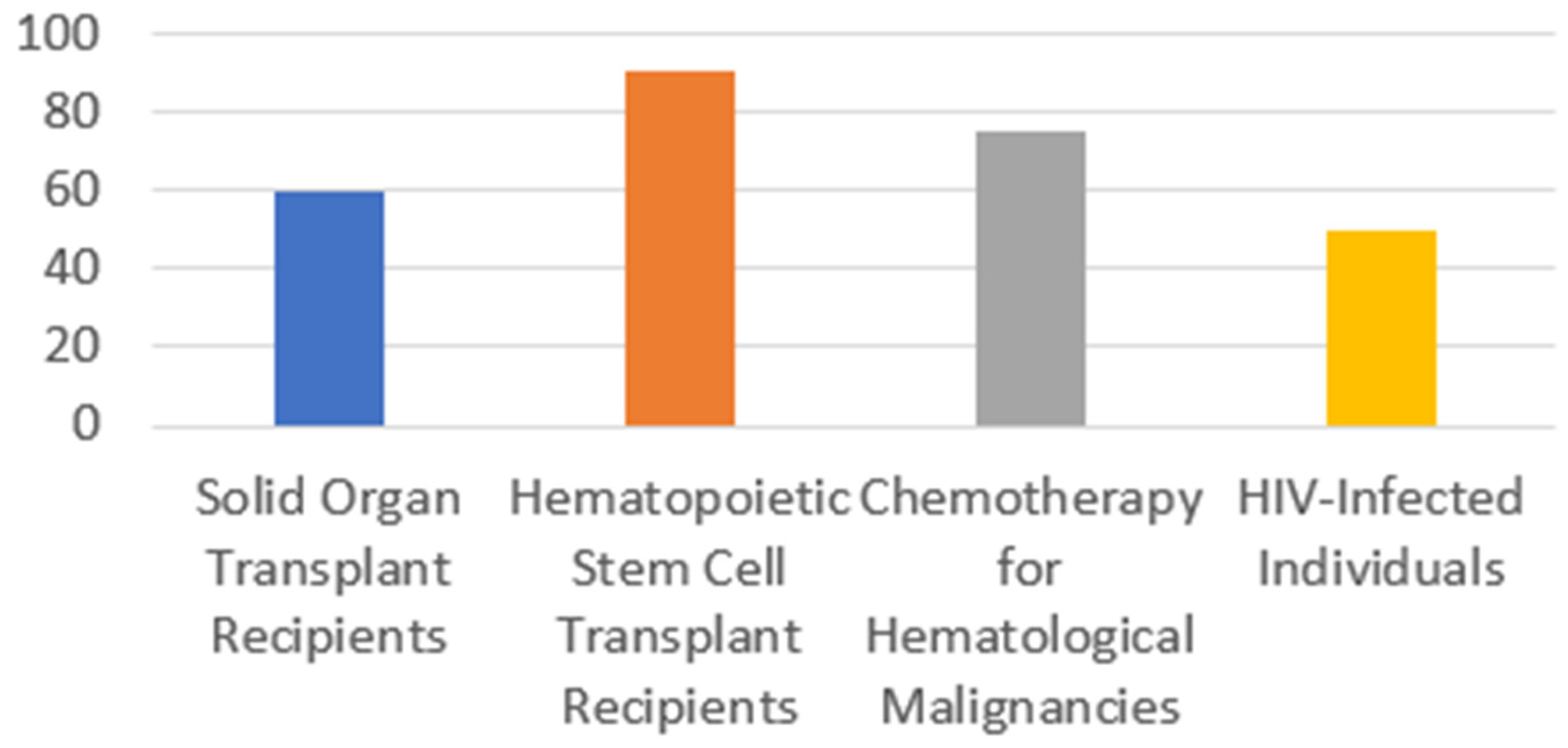
The prevalence of infections varies considerably across different immunocompromised populations. Recent cohort studies, both prospective and retrospective, show that the risk of significant infections after transplantation is highest during the first year, with rates ranging from 55–62% across large multicenter and single-center cohorts [
10,
11,
12].
Hematopoietic stem cell transplant (HSCT) recipients show even greater vulnerability, with up to 90% developing at least one significant infection during their treatment course [
12]. This happens in the first year, especially in the allogeneic setting. For example, a large Swiss cohort found that 88% of adult allogeneic HSCT recipients developed at least one microbiologically documented infection in the first year, with a mean of 3.66 infections per patient-year [
13]. Risk is driven by profound neutropenia, mucosal barrier injury, graft-versus-host disease (GvHD), and delayed immune reconstitution. Infections occur in distinct phases: early (bacterial, HSV), intermediate (CMV, fungal), and late (encapsulated bacteria, VZV) [
12].
Patients with haematological malignancies receiving chemotherapy have infection rates of 70–80% during periods of neutropenia, particularly with prolonged or profound neutropenia. Risk factors include duration and depth of neutropenia, mucositis, and prior infections. Intensive regimens almost invariably lead to febrile neutropenia, with bloodstream infections occurring frequently [
14,
15].
Individuals with HIV experience infection rates that are inversely proportional to CD4 T-cell counts. The risk of opportunistic infections rises sharply as CD4 counts fall below 200 cells/μL, with specific pathogens (e.g.,
Pneumocystis jirovecii, CMV,
Mycobacterium avium complex) predominating at lower counts [
16]. All of these are summarised in
Figure 1 and
Table 2.
3. Contributing Factors to Increased Risk
3.1. Food and Water Contamination
Undercooking food often fails to eliminate vegetative bacteria and parasitic cysts, particularly in regard to meat, eggs, and seafood. As a result, pathogens such as Campylobacter, Salmonella, Shigella, and non-cholera Vibrio species may be transmitted [
21]. Cross-contamination between raw and cooked foods, or through contaminated hands and surfaces, constitutes a significant mode of transmission, especially in environments characterized by inadequate hygiene [
22]. Improper food storage at ambient temperatures allows rapid bacterial multiplication and toxin production, thereby increasing the risk of foodborne illness [
22]. Contaminated water sources, such as municipal supplies that are not adequately treated and ice manufactured from contaminated water, are significant pathways for the spread of infections, including Giardia, Cryptosporidium, Shigella, Salmonella Typhi, and hepatitis A virus [
23]. Street-vended foods are often associated with infections due to inadequate refrigeration, poor hygiene, and exposure to environmental pollutants, resulting in an elevated prevalence of multidrug-resistant Enterobacteriaceae [
22]. Vibrio species, hepatitis A, and norovirus are all associated with raw or undercooked seafood, particularly in coastal areas [
24]. Fresh foods, especially leafy greens and fruits, can become contaminated when they are watered with untreated water or touched by unhygienic hands, which facilitates the spread of enteric bacteria and protozoa [
24].
3.2. Sexual Risk Behaviors
Travel is linked to increased sexual risk-taking, characterised by more frequent new partnerships and reduced condom use, often shaped by alcohol use, anonymity, and cultural context. Regional differences in sexually transmitted infection (STI) prevalence further influence the risk of contracting STIs; in sub-Saharan Africa, Southeast Asia, and the Western Pacific, for example, there are higher rates of HIV, hepatitis B, syphilis, and antimicrobial-resistant gonorrhea. Certain traveller groups, including men who have sex with men, backpackers, and those visiting friends or relatives, are especially at risk of STI acquisition [
25]. The risk is further increased by shorter trip durations, lack of pre-travel consultation, and lack of vaccination [
25].
Pre-travel consultation for sexually transmitted diseases (STDs) involves a systematic assessment of individual risk, personalised counselling, and implementation of active and passive preventive measures, according to the recommendations of the Centers for Disease Control and Prevention (CDC). The risk assessment has to include a detailed sexual history, which is obtained using the “Five P’s” approach (partners, practices, protection, history of STDs, pregnancy prevention), with non-judgmental and culturally appropriate language [
3]. There is also a need to identify high-risk behaviours (sex with new partners, unprotected sex, alcohol/drug use, use of sex socialising applications).
According to the CDC, active measures such as vaccination against hepatitis A, hepatitis B, and HPV are recommended, but also screening for HIV and treatable STDs (chlamydia, gonorrhea, syphilis, trichomonas) should be performed, with the patient being informed about the tests performed and those available [
3]. Into the consultation should be discussed the HIV pre-exposure prophylaxis (PrEP) for individuals at high risk and also prescribed HIV post-exposure prophylaxis (PEP) and emergency contraception, with clear instructions for initiation within <72 h of exposure [
3,
25].
Passive measures include counselling on correct and consistent condom use, reducing the number of partners, avoiding sex with minors, or engaging in illegal activities [
3]. Education of the patient about STD symptoms and the importance of post-travel testing, as well as avoiding exposure to partners upon return, is also very important.
3.3. Medical Tourism and Healthcare Exposures
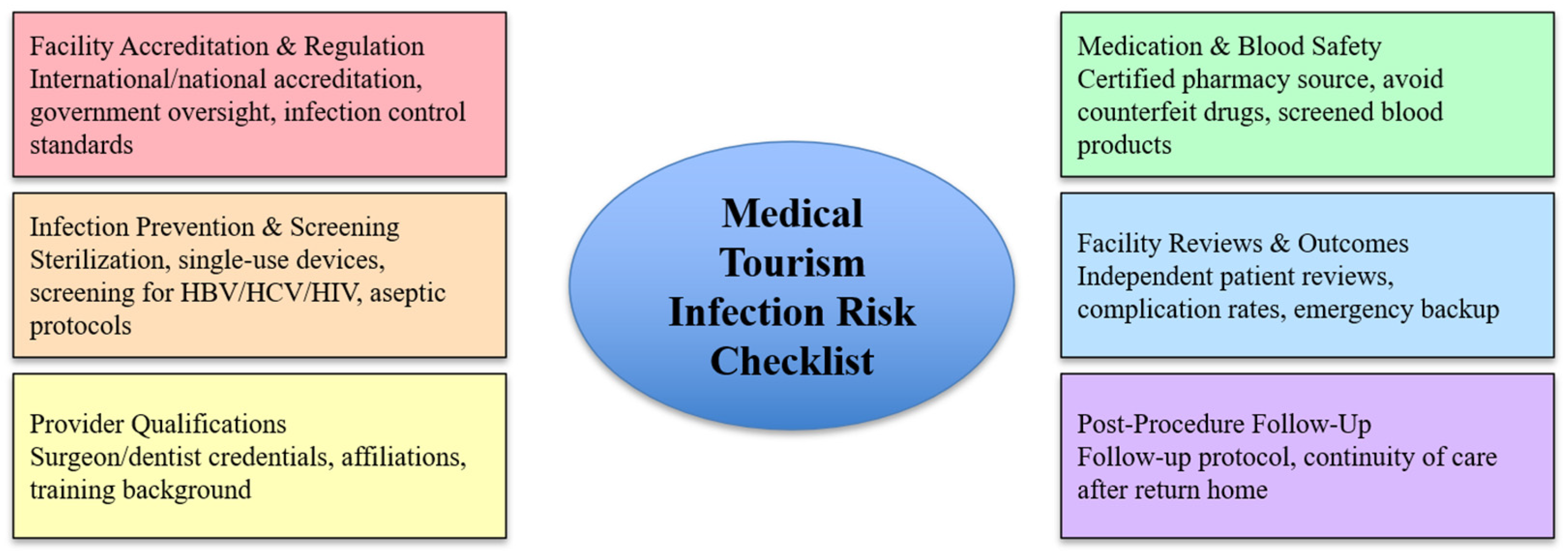
In medical tourism in resource-limited settings, the risk of infection is increased by insufficient sterilization, the reuse of disposable devices, and ineffective infection-control measures. Higher prevalence of surgical site infections and the spread of bloodborne infections like HIV, hepatitis B, and hepatitis C are caused by these factors. Medication and blood-product safety concerns are significant in these settings, with a high prevalence of counterfeit or contaminated medications and inadequately screened blood products. Estimates suggest that a substantial proportion of medications in some regions lack appropriate quality control, and contaminated injectable medications have been linked to outbreaks of bloodborne infections. Blood transfusion risks are increased by insufficient screening for pathogens and a lack of viral inactivation procedures. This makes it even more likely that medical tourists are at risk of being infected with hepatitis B, hepatitis C, and HIV [
3].
The checklist should be systematically reviewed before choosing a destination or provider abroad. Assessing accreditation, evaluating infectious and noninfectious risks, ensuring continuity of care, and fully informing the patient of their rights and associated risks are important (
Figure 2).
3.4. Recreational Drug Use
High-risk exposure scenarios for bloodborne pathogens are created when travellers who use injection drugs share needles. HIV, hepatitis B, and hepatitis C transmission risks are substantially elevated through contaminated injection equipment [
26]. Local drug preparation practices may involve contaminated cutting agents or preparation surfaces, thereby increasing infection risk [
27]. Recreational drugs purchased in unfamiliar markets may contain impurities or contaminants that increase susceptibility to infection. Immunosuppressive impurities can weaken host defences, while contaminated diluents may serve as a source of pathogenic organisms [
28].
3.5. Environmental and Recreational Exposures
Environmental and recreational exposures during travel increase the risk of acquiring waterborne and vector-borne infections not typically encountered in travellers’ home environments. Since both leptospirosis and schistosomiasis are associated with exposure to contaminated water, freshwater activities in endemic areas can increase the risk of these diseases [
29]. Vibrio species can infect open wounds exposed to brackish or saltwater, occasionally resulting in severe wound infections. Furthermore, contact with marine life may expose individuals to toxins or cause envenomation by venomous organisms, both of which can occasionally necessitate medical treatment [
29]. Contact with wildlife increases the risk of zoonotic disease transmission, while exposure to insects and other arthropods in unfamiliar ecosystems raises the risk of vector-borne diseases, often beyond the protection given by standard preventive measures [
3]. A detailed travel and exposure history is essential for risk assessment and diagnosis in returning travellers, as the spectrum of possible infections is highly dependent on specific activities and geographic regions visited (
Table 3).
3.6. Accommodation and Transportation Factors
Shared accommodation facilities, public transportation, and group tourism activities create opportunities for the transmission of respiratory pathogens. Outbreaks of respiratory infections, including influenza, SARS-CoV-2, and Legionella, have been reported in settings such as hotels, cruise ships, and tour groups, with higher risk among children, older adults, and individuals with comorbid pulmonary conditions [
3]. Bed bug infestations in accommodation facilities cause nuisance bites and can lead to secondary bacterial infections through scratching and poor hygiene. Bed bug bites typically present as pruritic, erythematous papules, often in linear or grouped patterns, and scratching can disrupt the skin barrier, predisposing to secondary infections such as impetigo, cellulitis, or lymphangitis [
30].
4. Pre-Travel Preparation and Risk Assessment
Pre-travel preparation and risk assessment for immunocompromised travellers must be customised and comprehensive, taking into account the traveller’s underlying medical condition, level of immunosuppression, destination-specific risks, and planned activities. The Centers for Disease Control and Prevention (CDC) advises that a detailed pre-travel consultation should include an assessment of disease stability, a review of current medications, and an evaluation of contraindications or interactions with travel-related prophylaxis and vaccines. Collaboration with the patient’s primary or specialty care provider is advised to ensure fitness for travel and to optimize management of the underlying condition during travel [
3,
5].
4.1. Individual Risk Profiling
Developing a detailed itinerary that includes all planned locations and specific regions to be visited, distinguishing between urban and rural areas, the order of destinations, the season, timing, and total travel duration should be the first step in a thorough risk assessment for pre-travel preparation. The reason for travel (e.g., business, tourism, visiting friends and relatives, and humanitarian work) and travel type (e.g., independent, group, luxury, budget, and local accommodations) are important, as these factors influence exposure risk and access to healthcare. Planned activities must be reviewed in detail, with attention to high-risk exposures such as adventure sports, animal contact, freshwater activities, or high-altitude travel, as these may require specific precautions (e.g., rabies vaccination, altitude illness prophylaxis) [
3]. Underlying medical conditions should be systematically evaluated, including chronic diseases (e.g., cardiovascular, pulmonary, and diabetes), as these may affect fitness for travel and require tailored management plans. Immunisation history must be reviewed to ensure all routine and travel-specific vaccines are up to date, considering both destination risks and the traveller’s health status. Current medications should be provided, with plans for adequate supply, and potential interactions with travel-related prophylaxis or treatments assessed [
31].
4.2. Destination-Specific Risk Analysis
Destination-specific risk analysis for immunocompromised travellers is a structured assessment that quantifies the infectious and non-infectious risks at the travel destination, taking into account the traveller’s degree and type of immunosuppression, planned activities, and local epidemiology. This process aims to identify geographically focal infections (e.g., visceral leishmaniasis in certain regions) that can increase the risk of severe outcomes among immunocompromised individuals, and to determine whether specific interventions (e.g., chemoprophylaxis, vaccination, or itinerary modification) are warranted [
8].
Chemoprophylaxis selection should be tailored to the destination’s malaria species, resistance patterns, and the traveller’s comorbidities and medications. For regions with chloroquine-resistant
Plasmodium falciparum, the CDC recommend atovaquone–proguanil (250 mg/100 mg once daily, starting 1–2 days before travel, continued daily during travel, and for 7 days after leaving the area), or doxycycline (100 mg once daily, same schedule, but continued for 30 days after exposure), or mefloquine (228 mg base once weekly, starting 1–2 weeks before travel, continued weekly during travel, and for 4 weeks after exposure) [
3].
4.3. Vaccinations of Immunocompromised Travellers
Immunocompromised travellers are advised to follow vaccination protocols that maximize protection while lowering the risk of live vaccinations. Immunocompromised travellers should receive all recommended non-live (inactivated or recombinant) vaccines in accordance with routine and travel-specific schedules, as recommended by the Centers for Disease Control and Prevention (CDC) and the Infectious Diseases Society of America (IDSA). This is because these vaccines are generally safe and effective, though immunogenicity may be decreased. Inactivated influenza, hepatitis A and B, pneumococcal, meningococcal, polio (IPV), rabies, and recombinant zoster vaccines are a few examples [
32]. Live vaccines (e.g., yellow fever, MMR, varicella) are generally contraindicated in those with severe immunosuppression, but may be considered in select cases (e.g., HIV-infected individuals with CD4 counts ≥200 cells/μL) after careful risk assessment. The IDSA and CDC recommend that, if live vaccines are required for travel (e.g., yellow fever), they should be administered only if the degree of immunosuppression is mild and the risk of disease is high; otherwise, a medical waiver should be obtained [
33].
4.4. Travel-Specific Vaccinations
4.4.1. Hepatitis A Vaccination
Immunocompromised travellers to areas of high or intermediate hepatitis A endemicity should receive a single dose of hepatitis A vaccine as soon as travel is planned and complete the 2-dose series according to the routine schedule [
34,
35]. Post-vaccination antibody confirmation (HAV IgG ≥10 mIU/mL) is recommended for immunocompromised individuals whose clinical management depends on knowing their immune status, and for those with HIV infection, testing should occur ≥ 1 month after completing the vaccine series [
3].
4.4.2. Hepatitis B Vaccination
For immunocompromised travellers, hepatitis B vaccination requires modified strategies to optimize immunogenicity and protection. Double-dose vaccines are preferred for individuals with HIV and other immunocompromised conditions [
35]. Accelerated schedules are appropriate for urgent travel but may yield lower peak antibody levels; completion of the full series is necessary for optimal long-term protection [
3].
4.4.3. Typhoid Vaccination
The Centers for Disease Control and Prevention (CDC) and the Advisory Committee on Immunization Practices (ACIP) specifically recommend the injectable Vi capsular polysaccharide vaccine (ViCPS, Typhim Vi) for immunocompromised patients and advise against the use of the live oral vaccine in these individuals [
3]. The Infectious Diseases Society of America also recommends the avoidance of live-attenuated oral typhoid vaccine in people with HIV [
35]. Inactivated typhoid vaccines provide 50–80% protection in healthy individuals, but efficacy may be reduced in immunocompromised travellers [
35].
4.4.4. Meningococcal Vaccination
Immunogenicity of meningococcal vaccines may be reduced in certain immunocompromised populations, particularly those with complement deficiencies or receiving complement inhibitors such as eculizumab or ravulizumab. Antibody responses may be suboptimal in these patients, necessitating consideration of additional protective measures such as antibiotic prophylaxis during periods of high exposure risk [
36]. For travellers with functional or anatomic asplenia, persistent complement component deficiency, or those on complement inhibitors, a two-dose primary series of MenACWY (doses administered 8–12 weeks apart) is recommended, with subsequent booster doses every 5 years for patients with ongoing risk [
36].
4.4.5. Polio Vaccination
Polio vaccination for immunocompromised travellers should always utilize the inactivated polio vaccine (IPV), as the oral polio vaccine is contraindicated due to the risk of vaccine-associated paralytic polio. A single lifetime IPV booster is considered sufficient for adults with prior vaccination, but long-term travellers may be subject to country-specific requirements for documentation and additional boosters [
3].
4.4.6. Yellow Fever Vaccination
The yellow fever vaccine is a live attenuated vaccine and is contraindicated in individuals with severe immunosuppression (e.g., organ transplant recipients, those on high-dose immunosuppressive or immunomodulatory therapies, or with thymus disorders associated with abnormal immune function), due to the risk of life-threatening adverse events such as yellow fever vaccine–associated viscerotropic disease (YEL-AVD) and neurologic disease (YEL-AND) [
3]. The United States Centers for Disease Control and Prevention (CDC) and its Advisory Committee on Immunization Practices (ACIP) recommend that such travellers be strongly discouraged from visiting yellow fever–endemic areas. If travel is unavoidable, a medical waiver should be provided, and the traveller must be counselled on the risks of being unvaccinated and the possibility of entry denial or quarantine [
3,
37]. No inactivated yellow fever vaccine is currently available for individuals with contraindications. Family members of immunocompromised individuals who are not immunocompromised may safely receive the vaccine.
4.4.7. Rabies Vaccination
Immunocompromised travellers should receive a 3-dose series of rabies vaccine administered intramuscularly on days 0, 7, and 21 or 28, rather than the 2-dose series used for immunocompetent persons. This adjustment is based on evidence that immunocompromised individuals may have a reduced and less durable antibody response to rabies vaccination [
3].
4.4.8. Influenza Vaccination
Immunocompromised travellers should avoid travel during periods of high influenza activity at their destination, if possible. Influenza seasonality varies by hemisphere and is less predictable in the tropics, so risk assessment should be individualized. If travel is unavoidable, vaccination should be administered at least two weeks before departure. All immunocompromised individuals receive an age-appropriate inactivated influenza vaccine (IIV) or recombinant influenza vaccine (RIV), but not live attenuated influenza vaccine (LAIV), due to the risk of vaccine-associated disease. Timing of vaccination should be optimized, ideally before initiation of immunosuppression or during periods of lowest immunosuppressive therapy, when feasible. For solid-organ transplant recipients, high-dose or adjuvanted IIV may improve immunogenicity; however, there is no clear preference over standard-dose IIV or RIV for most immunocompromised adults [
38].
4.4.9. Pneumococcal Vaccination
A single dose of PCV20, or PCV15, followed by PPSV23, is recommended regardless of travel destination if they have not previously received a pneumococcal conjugate vaccine or if their vaccination history is unknown.
4.4.10. Recombinant Zoster Vaccination
Is recommended for immunocompromised travellers aged ≥ 19 years to prevent herpes zoster and its complications, regardless of travel plans [
3].
4.5. Accelerated Vaccination Schedule
Accelerated vaccination schedules are a validated strategy for immunocompromised travellers who require rapid protection before imminent travel.
Partial vaccination prior to travel confers meaningful protection, and travellers should be counselled to complete the series upon return for durable immunity. Emergency vaccination protocols prioritise vaccines based on destination-specific risks and individual susceptibility, with hepatitis A and B being high priority for travellers to endemic regions. For immunocompromised travellers, post-vaccination serologic testing is recommended to confirm seroprotection, and immune globulin may be co-administered with hepatitis A vaccine if travel is imminent and immune response is uncertain [
3,
35,
39,
40]. We present tables comparing classic and accelerated vaccination schedules for immunocompetent and immunocompromised travellers (
Table 4 and
Table 5).
4.6. Travel Logistics and Preparedness
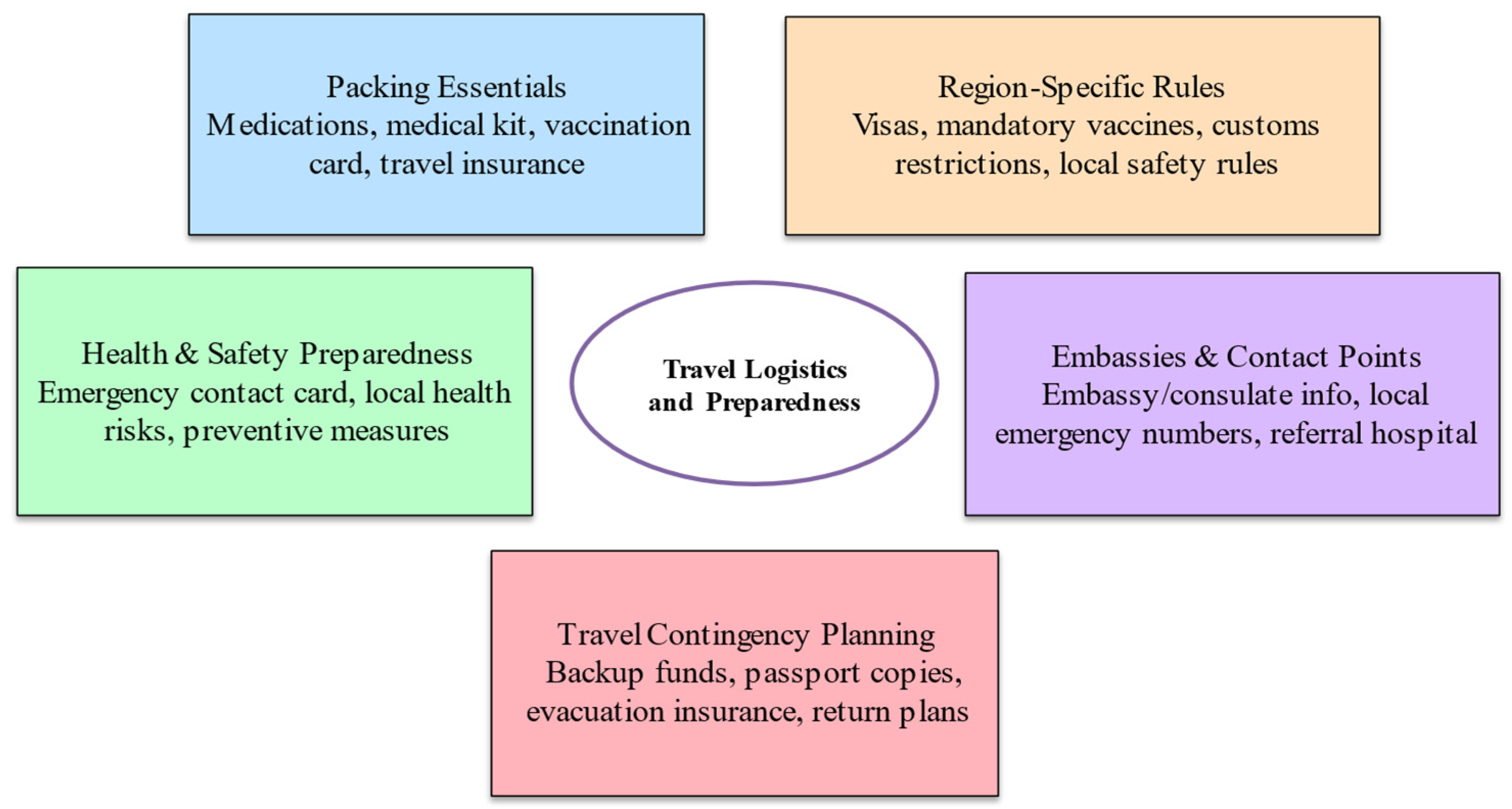
A structured checklist approach ensures that essential items, regulatory requirements, and contingency plans are addressed systematically during pre-travel counselling.
Figure 3 summarises the key domains of travel logistics and preparedness in a flowchart format, providing a practical tool for clinicians and a user-friendly reference for patients.
Immunocompromised travellers should bring an extra supply of all essential medications, ideally enough for the entire trip, plus additional quantities to cover unexpected delays. Medications should be kept in their original packaging with clear labels to facilitate identification and avoid issues at customs or border crossings [
3,
41].
Medications requiring refrigeration (e.g., certain biologics) should be transported in insulated containers with cold packs. Travellers should verify storage requirements for each drug and plan for contingencies if refrigeration is unavailable. All medications should be stored in carry-on luggage to prevent loss or damage [
42].
Travellers should carry a comprehensive medication list, including generic and brand names, dosages, and indications. A physician’s letter detailing the immunosuppressive regimen, underlying condition, and necessity of the medications is recommended. The letter should explicitly state the need for carrying a buffer supply (30–50% extra) due to the risk of travel delays. This documentation can be critical for customs and border officials, and in medical emergencies [
42]. Countries in the Middle East (such as the United Arab Emirates, Saudi Arabia, and Qatar), Southeast Asia (including Singapore and Thailand), and some in Africa and South America are known to have stringent controls on the importation of prescription drugs, especially those considered controlled substances or those with immunosuppressive or psychotropic properties. Requirements may include advance notification, import permits, and detailed documentation [
43].
Personal protection kits for immunocompromised travellers should include antibacterial hand wipes or alcohol-based hand sanitiser (≥60% alcohol), face masks, insect repellents (for skin and clothing), sun protection (sunscreen, protective clothing, sunglasses) and water purification methods. It can include a thermometer, pain relievers, and basic medications for managing minor illnesses that might otherwise require healthcare facility visits in questionable environments.
Telemedicine access should be planned by identifying internationally available platforms and ensuring that the traveller has the necessary devices and connectivity. The CDC Yellow Book recommends preloading relevant apps and confirming that the traveller’s home providers offer remote consultation options [
3].
Immunocompromised travellers require comprehensive coverage for emergency medical care, medical evacuation, access to specialised medical centers, telemedicine services, and buffer supplies of immunosuppressive medications. Insurance policies should be scrutinized for exclusions related to pre-existing conditions, as many claims are denied for this reason. Direct discussion with the insurer prior to travel is recommended to clarify coverage for immunosuppressive therapy and related complications [
3].
5. During Travel
5.1. Hygiene Practices
Recommended hygiene practices for immunocompromised travellers include frequent, thorough handwashing with soap and water, especially after contact with public surfaces or animals and before eating or preparing food. When soap and water are unavailable, it is recommended to use an alcohol-based hand sanitiser containing at least 60% alcohol. Avoid touching the face, particularly in high-risk environments such as airports and public transportation is also important. Mask use in crowded or enclosed spaces is recommended to reduce the risk of respiratory infections.
5.2. Food and Water Safety
Food and water safety measures require strict avoidance of raw or undercooked meats, seafood, unpasteurized dairy, and foods from street vendors. It is recommended that only steaming-hot foods, fruits peeled by the traveller, and bottled or canned beverages be consumed. Tap water, ice made from tap water, and untreated water should be avoided. Boiling water for at least one minute is the most reliable method for disinfection; chemical treatments (iodine/chlorine) are less effective against Cryptosporidium [
44].
5.3. Environmental Awareness
Include avoiding swimming in water that may be contaminated with sewage or animal waste, not swallowing water during recreational activities, and avoiding direct exposure to salt water for those with liver disease due to Vibrio risk. Sun protection is essential due to the increased risk of skin cancer and photosensitivity associated with certain medications. The use of broad-spectrum sunscreen and protective clothing is important [
44].
5.4. Managing and Recognising Warning Signs of Illness
Involve monitoring for fever, diarrhoea, respiratory symptoms, or other acute changes (
Table 6). Immunocompromised travellers should be educated to promptly report any illness and provide travel history to healthcare providers, as infections may present atypically and can be severe or chronic. Because infections may present atypically, clinicians should be aware that immunocompromised patients may not mount a classic inflammatory response. For example, neutropenic or immunosuppressed individuals may have minimal fever or localizing signs despite significant infection [
45].
5.5. Seeking Medical Care
Include identifying clinics or hospitals at the destination that can manage immunocompromised patients, knowing how to access embassy resources, and purchasing supplemental insurance for medical care and evacuation. Early medical evaluation is critical for any illness during or after travel.
A rapid post-exposure management for rabies in immunocompromised individuals is needed and consists of immediate and thorough washing of the wound with soap and water, followed by application of a virucidal agent, but also administration of rabies immunoglobulin (RIG) 20 IU/kg and administration of five doses of rabies vaccine on days 0, 3, 7, 14, and 28 [
3]. Monitoring of serologic response to observe neutralising antibody titers should be checked 1–2 weeks after completion of the series; if the titer is <0.5 IU/mL, an additional dose should be administered and the test repeated.
6. Post-Travel Follow-Up
Post-travel follow-up care involves a structured evaluation to identify and manage travel-associated illnesses, particularly in those returning from low- and middle-income countries or with high-risk exposures. The process begins with a detailed, itinerary-specific history, including destinations, duration, activities, exposures (e.g., food, water, animals, insect bites) [
4].
A focused physical examination should be performed, guided by symptoms and exposure history. Immunocompromised patients may present atypically or with subtle findings. Tailored testing should include early and repeated malaria diagnostics, blood cultures, and targeted serologies/PCR for regionally relevant pathogens. Screening for tuberculosis (using IGRA or chest radiograph, as skin testing may be less sensitive) is particularly important after traveling to endemic areas. Consideration of multidrug-resistant organisms is heightened, and stool ova and parasite test, cultures, and serologies for strongyloidiasis and schistosomiasis are prioritised in those with relevant exposures [
4,
8,
46].
Infection control precautions are necessary for suspected high-consequence or transmissible infections (e.g., viral hemorrhagic fevers, SARS-CoV-2). Consultation with infectious disease or tropical medicine specialists is recommended for severe, complicated, or unclear cases. Post-travel visits also provide an opportunity for preventive counselling regarding future trips and for addressing ongoing or new symptoms that may arise after return, as delayed presentations are not uncommon.
Individuals requiring post-travel screening even if asymptomatic include:
Health care workers or those with prolonged residence (>6 months) in high TB prevalence areas (TB screening 8–10 weeks post-return) [
3]
Travellers with freshwater exposure in schistosomiasis-endemic regions (schistosoma serology) [
3]
Those with frequent barefoot exposure to contaminated soil (strongyloides serology) [
3]
Travellers with sexual, medical, or injection drug exposures (STI/bloodborne pathogen screening) [
3]
Long-term travellers, expatriates, humanitarian workers, and those visiting friends/relatives in endemic areas (CBC, stool ova and parasite, serology for region-specific pathogens) [
3,
47]
Routine screening of short-term asymptomatic travellers is generally not recommended unless specific risk factors are present, due to low yield and risk of false positives [
3]. The Infectious Diseases Society of America recommends stool PCR and culture for travellers with fever or bloody diarrhoea, and targeted serology based on exposure history. Tuberculosis screening should be performed 8–10 weeks after return for those with high-risk exposures, using IGRA or TST [
3,
47]. A structured, risk-based approach ensures prompt identification and management of serious travel-related infections, while minimising unnecessary testing in low-risk individuals [
48].
7. Future Directions and Research Gaps in Travel Medicine for Immunocompromised Travellers
7.1. Evidence-Based Vaccination Strategies
Current recommendations for immunocompromised travellers are largely extrapolated from expert opinion and limited data, with a lack of robust, prospective studies on vaccine immunogenicity, safety, and efficacy in this population. Research on the best times, dosages, and schedules for both live and inactivated vaccines is required, as is the creation of substitute plans for people who cannot receive live vaccinations [
49].
7.2. Pandemic Preparedness
The COVID-19 pandemic revealed many deficiencies in travel medicine protocols for immunocompromised populations, notably reduced vaccine efficacy and increased illness severity. Future pandemic preparedness must incorporate personalised protocols for immunocompromised travellers. These should include:
up-to-date vaccination with additional booster doses, recognising that immune responses may be suboptimal and vary by underlying condition and vaccine type;
considering pre-exposure prophylaxis with monoclonal antibodies and early access to oral antivirals for those with poor vaccine response;
maintaining strict non-pharmaceutical interventions such as masking, avoiding poorly ventilated spaces, and advising close contacts to adhere to similar precautions;
developing emergency plans for medical evacuation and care abroad, including insurance coverage and access to specialised care; and
including immunocompromised populations in future vaccine and therapeutic trials to generate robust efficacy and safety data [
50,
51,
52,
53].
7.3. Access to Care and Emergency Planning
Research is necessary to identify optimal strategies for emergency planning, international access to specialised care, and the effects of telemedicine and digital health tools on this demographic [
54]. The CDC maintains the necessity of identifying clinics or hospitals abroad that can care for immunocompromised patients, purchasing supplemental insurance for medical evacuation, and knowing how to access embassy resources [
3].
7.4. Impact of New Therapies on Travel Advice
As more people use biological therapies such as monoclonal antibodies, checkpoint inhibitors, and targeted small molecules, travel medicine faces new challenges. These agents have different ways of working and different risks of infection, which may mean that travel advice needs to be tailored to each person. Chimeric antigen receptor T-cell (CAR-T) therapy and other cellular immunotherapies induce prolonged periods of significant immunosuppression, characterised by distinct patterns of infection susceptibility. Patients undergoing these therapies necessitate distinct travel guidelines that may markedly diverge from conventional immunosuppression management [
32,
55].
7.5. Next Generation Vector Control
Wearable spatial repellents, clothing treated with insecticides that last longer, and smart traps linked to exposure dashboards are new environmental and vector control innovations important for travel medicine in people with weak immune systems. Field trials of volatile pyrethroid spatial repellents (VPSRs) and etofenprox-treated clothing have shown a big drop in Anopheles mosquito landings (protective efficacy 61–95%). The best protection comes from using both at the same time, but the effectiveness may go down over time and with adherence problems [
56].
7.6. Implementation of Science and Equity
This includes the need for pragmatic trial designs that compare standard versus algorithm-guided pre- and post-travel care. Such trials should incorporate point-of-care serology and artificial intelligence-based risk scores to tailor interventions by immune status and destination, as the complexity of pretravel assessment and the heterogeneity of immunosuppression require individualised, data-driven approaches [
42]. Algorithm-guided care can standardise risk stratification, optimize vaccine and prophylaxis selection, and facilitate timely post-travel follow-up, addressing the current lack of uniform guidelines and variability in practice [
57].
Equity solutions must close the gaps in access for travellers from low- and middle-income countries, migrants, and humanitarian workers who are on immunosuppressive drugs. This includes making and using digital tools for risk assessment, education, and care navigation that work in any language, as well as adding travel health to regular primary and specialty care for immunocompromised populations [
53,
58].
7.7. Artificial Intelligence and Personalization
Multimodal risk engines leveraging artificial intelligence (AI) are increasingly capable of integrating diverse data types—such as medication history, laboratory results, genotype, microbiome, travel itinerary, and seasonality—to generate individualized risk predictions for conditions like venous thromboembolism (VTE), malaria, severe dengue, traveller’s diarrhea, and vaccine failure. For instance, combining clinical and genetic risk factors has been shown to greatly improve the prediction of VTE risk. Polygenic risk scores and clinical models work better together than either one alone [
59]. In travel medicine, machine learning models that use real-world data like demographics, destination, and vaccination history can make malaria risk assessments more personal and improve chemoprophylaxis recommendations, which cuts down on unnecessary prescriptions [
60].
Digital twin technology is becoming a way to test out prophylaxis, vaccines, and drug interactions before traveling. Digital twins integrate multi-omics, behavioural, and environmental data to create dynamic, patient-specific simulations, enabling predictive analytics for disease risk, treatment response, and drug-drug interaction modelling [
60]. These virtual representations can be used to test different preventive strategies and optimize interventions before actual exposure, supporting precision travel medicine.
8. Conclusions
Immunocompromised travellers face a disproportionate burden of infection, driven by destination epidemiology, the intensity and type of immunosuppression, and exposure behaviours. Our review shows that the risk is not uniform: hematologic malignancies, B-cell-depleting therapies, and transplant recipients entail distinct vulnerabilities. Outcomes improve when prevention and management are individualized. With individualized planning, interaction-savvy prophylaxis, and rapid, protocolized responses to illness, most immunocompromised patients can travel safely. The field now needs implementation studies and equitable tooling to make this standard—not the exception—across diverse settings.
Author Contributions
Conceptualization, A.-E.D. and S.-N.B.; methodology, A.-E.D. and S.-N.B.; formal analysis, A.-E.D., A.-L.M.-N. and S.-N.B.; writing—original draft preparation, A.-E.D.; writing—review and editing, A.-L.M.-N. and S.-N.B.; supervision, S.-N.B. All authors have read and agreed to the published version of the manuscript.
Funding
This research received no external funding.
Institutional Review Board Statement
Not applicable.
Informed Consent Statement
Not applicable.
Data Availability Statement
No new data were created or analyzed in this study. Data sharing is not applicable to this article.
Conflicts of Interest
The authors declare no conflicts of interest.
Abbreviations
The following abbreviations are used in this manuscript:
| HSCT | Hematopoietic Stem Cell Transplant |
| GvHD | Graft-versus-Host Disease |
| HIV | Human Immunodeficiency Virus |
| CMV | Cytomegalovirus |
| HSV | Herpes Simplex Virus |
| VZV | Varicella-Zoster Virus |
| EBV | Epstein–Barr Virus |
| ART | Antiretroviral Therapy |
| CDC | Centers for Disease Control and Prevention |
| ACIP | Advisory Committee on Immunization Practices |
| IDSA | Infectious Diseases Society of America |
| RIV | Recombinant Influenza vaccine |
| LAIV | Live Attenuated Influenza vaccine |
| PCV20 | 20-valent Pneumococcal Conjugate vaccine |
| PCV15 | 15-valent Pneumococcal Conjugate vaccine |
| PPSV23 | 23-valent Pneumococcal Polysaccharide vaccine |
| RZV | Recombinant Zoster vaccine |
| MMR | Measles, Mumps, Rubella vaccine |
| ViCPS | Vi Capsular Polysaccharide vaccine |
| IPV | Inactivated Polio vaccine |
| YEL-AVD | Yellow Fever Vaccine-Associated Viscerotropic Disease |
| YEL-AND | Yellow Fever Vaccine-Associated Neurologic Disease |
| MenACWY | Quadrivalent Meningococcal Conjugate Vaccine |
| MenB | Serogroup B Meningococcal Vaccine |
| IG | Immunoglobulin |
| IgG | Immunoglobulin G |
| PrEP | Pre-Exposure Prophylaxis |
| PEP | Post-Exposure Prophylaxis |
| STI | Sexually Transmitted Infection |
| STD | Sexually Transmitted Disease |
| HPV | Human Papillomavirus |
| HAV | Hepatitis A Virus |
| HBV | Hepatitis B Virus |
| HCV | Hepatitis C Virus |
| TB | Tuberculosis |
| PCR | Polymerase Chain Reaction |
| IGRA | Interferon-Gamma Release Assay |
| NAAT | Nucleic Acid Amplification Test |
| IIV | Inactivated Influenza vaccine |
| IM | Intramuscular |
References
- Mellinghoff, S.C.; Stemler, J.; Forkl, S.; Khatamzas, E.; Classen, A.Y. Infektionsmanagement bei Immunsupprimierten. DMW—Dtsch. Med. Wochenschr. 2022, 147, 840–850. [Google Scholar] [CrossRef] [PubMed]
- Hall, V.; Johnson, D.; Torresi, J. Travel and biologic therapy: Travel-related infection risk, vaccine response and recommendations. J. Travel Med. 2018, 25, tay018. [Google Scholar] [CrossRef] [PubMed]
- Halsey, E. (Ed.) CDC Yellow Book 2026; Oxford University Press: New York, NY, USA, 2025. [Google Scholar] [CrossRef]
- Thwaites, G.E.; Day, N.P.J. Approach to Fever in the Returning Traveler. N. Engl. J. Med. 2017, 376, 548–560. [Google Scholar] [CrossRef] [PubMed]
- Liang, S.; Patel, R.; Koolwal, P.; Kulhmann, F.M. Travel advice for the immunocompromised traveler: Prophylaxis, vaccination, and other preventive measures. Ther. Clin. Risk Manag. 2015, 11, 217–228, Erratum in Ther. Clin. Risk Manag. 2015, 11, 633. [Google Scholar] [CrossRef]
- Askling, H.H.; Dalm, V.A. The medically immunocompromised adult traveler and pre-travel counseling: Status quo 2014. Travel Med. Infect. Dis. 2014, 12, 219–228. [Google Scholar] [CrossRef]
- Dekkiche, S.; de Vallière, S.; D’acremont, V.; Genton, B. Travel-related health risks in moderately and severely immunocompromised patients: A case-control study. J. Travel Med. 2016, 23, taw001. [Google Scholar] [CrossRef]
- Aung, A.; Trubiano, J.; Spelman, D. Travel risk assessment, advice and vaccinations in immunocompromised travellers (HIV, solid organ transplant and haematopoeitic stem cell transplant recipients): A review. Travel Med. Infect. Dis. 2015, 13, 31–47. [Google Scholar] [CrossRef]
- Ross, A.G.; Olds, G.R.; Cripps, A.W.; Farrar, J.J.; McManus, D.P. Enteropathogens and Chronic Illness in Returning Travelers. N. Engl. J. Med. 2013, 368, 1817–1825, Erratum in N. Engl. J. Med. 2013, 368, 2242. [Google Scholar] [CrossRef]
- van Delden, C.; Stampf, S.; Hirsch, H.H.; Manuel, O.; Meylan, P.; Cusini, A.; Hirzel, C.; Khanna, N.; Weisser, M.; Garzoni, C.; et al. Burden and Timeline of Infectious Diseases in the First Year After Solid Organ Transplantation in the Swiss Transplant Cohort Study. Clin. Infect. Dis. 2020, 71, e159–e169. [Google Scholar] [CrossRef]
- Daele, C.V.D.; Martiny, D.; Etienne, I.; Kemlin, D.; Roussoulières, A.; Sokolow, Y.; Germanova, D.; Gustot, T.; Nobile, L.; Hites, M. Monocentric, Retrospective Study on Infectious Complications within One Year after Solid-Organ Transplantation at a Belgian University Hospital. Microorganisms 2024, 12, 755. [Google Scholar] [CrossRef]
- Sahin, U.; Toprak, S.K.; Atilla, P.A.; Atilla, E.; Demirer, T. An overview of infectious complications after allogeneic hematopoietic stem cell transplantation. J. Infect. Chemother. 2016, 22, 505–514. [Google Scholar] [CrossRef] [PubMed]
- Vu, D.; Dayer, J.; Masouridi-Levrat, S.; Combescure, C.; Boely, E.; Khanna, N.; Mueller, N.J.; Kleber, M.; Medinger, M.; Halter, J.; et al. Microbiologically documented infections after adult allogeneic hematopoietic cell transplantation: A 5-year analysis within the Swiss Transplant Cohort study. Transpl. Infect. Dis. 2020, 22, e13289. [Google Scholar] [CrossRef]
- Yoshino, N.; Kimura, S.-I.; Matsuoka, A.; Meno, T.; Ishikawa, T.; Nakamura, Y.; Kawamura, M.; Takeshita, J.; Kawamura, S.; Misaki, Y.; et al. Clinical features of febrile neutropenia and bloodstream infection in autologous hematopoietic cell transplantation: Comparison to those in intensive chemotherapy for acute myeloid leukemia. J. Infect. Chemother. 2023, 29, 384–390. [Google Scholar] [CrossRef]
- Tverdek, F.; Escobar, Z.K.; Liu, C.; Jain, R.; Lindsay, J. Antimicrobials in patients with hematologic malignancies and recipients of hematopoietic cell transplantation and other cellular therapies. Transpl. Infect. Dis. 2023, 25, e14129. [Google Scholar] [CrossRef] [PubMed]
- Pizzo, P.A. Fever in Immunocompromised Patients. N. Engl. J. Med. 1999, 341, 893–900. [Google Scholar] [CrossRef] [PubMed]
- Martínez, A.R.; Pascual, I.P.; Rubio, E.M. Infecciones en el paciente inmunocomprometido (II). Paciente trasplantado. Med. Programa Form. Médica Contin. Acreditado 2018, 12, 3245–3252. [Google Scholar] [CrossRef]
- Styczynski, J.; Czyzewski, K.; Wysocki, M.; Gryniewicz-Kwiatkowska, O.; Kolodziejczyk-Gietka, A.; Salamonowicz, M.; Hutnik, L.; Zajac-Spychala, O.; Zaucha-Prazmo, A.; Chelmecka-Wiktorczyk, L.; et al. Increased risk of infections and infection-related mortality in children undergoing haematopoietic stem cell transplantation compared to conventional anticancer therapy: A multicentre nationwide study. Clin. Microbiol. Infect. 2016, 22, 179.e1–179.e10. [Google Scholar] [CrossRef]
- Gundacker, N.D.; Rolfe, R.J.; Rodriguez, J.M. Infections associated with adventure travel: A systematic review. Travel Med. Infect. Dis. 2017, 16, 3–10. [Google Scholar] [CrossRef]
- Schlagenhauf, P.; Weld, L.; Goorhuis, A.; Gautret, P.; Weber, R.; von Sonnenburg, F.; Lopez-Vélez, R.; Jensenius, M.; Cramer, J.P.; Field, V.K.; et al. Travel-associated infection presenting in Europe (2008–12): An analysis of EuroTravNet longitudinal, surveillance data, and evaluation of the effect of the pre-travel consultation. Lancet Infect. Dis. 2015, 15, 55–64, Erratum in Lancet Infect. Dis. 2015, 15, 263. [Google Scholar] [CrossRef]
- DuPont, H.L.; Ericsson, C.D. Prevention and Treatment of Traveler’s Diarrhea. N. Engl. J. Med. 1993, 328, 1821–1827. [Google Scholar] [CrossRef]
- Salamandane, A.; Malfeito-Ferreira, M.; Brito, L. The Socioeconomic Factors of Street Food Vending in Developing Countries and Its Implications for Public Health: A Systematic Review. Foods 2023, 12, 3774. [Google Scholar] [CrossRef]
- Backer, H.D.; Derlet, R.W.; Hill, V.R. Wilderness Medical Society Clinical Practice Guidelines on Water Treatment for Wilderness, International Travel, and Austere Situations: 2024 Update. Wilderness Environ. Med. 2024, 35, 45S–66S. [Google Scholar] [CrossRef]
- Chlebicz, A.; Śliżewska, K. Campylobacteriosis, Salmonellosis, Yersiniosis, and Listeriosis as Zoonotic Foodborne Diseases: A Review. Int. J. Environ. Res. Public Health 2018, 15, 863. [Google Scholar] [CrossRef]
- Matteelli, A.; Schlagenhauf, P.; Carvalho, A.C.; Weld, L.; Davis, X.M.; Wilder-Smith, A.; Barnett, E.D.; Parola, P.; Pandey, P.; Han, P.; et al. Travel-associated sexually transmitted infections: An observational cross-sectional study of the GeoSentinel surveillance database. Lancet Infect. Dis. 2013, 13, 205–213. [Google Scholar] [CrossRef] [PubMed]
- Assoumou, S.A.; Alexander, R.N.; Miller, S.E. Viral Infections Associated With Injection Drug Use. JAMA 2025, 334, 1386–1387. [Google Scholar] [CrossRef]
- Hahn, J.A.; Page-Shafer, K.; Ford, J.; Paciorek, A.; Lum, P.J. Traveling young injection drug users at high risk for acquisition and transmission of viral infections. Drug Alcohol Depend. 2008, 93, 43–50. [Google Scholar] [CrossRef]
- Radeva, S.; Vergiev, S.; Georgiev, G.; Niyazi, D. Emerging Vibrio vulnificus-Associated Infections After Seawater Exposure—Cases from the Bulgarian Black Sea Coast. Medicina 2024, 60, 1748. [Google Scholar] [CrossRef] [PubMed]
- Thomas, C.; Valladares, H.C.; Berger, T.G.; Chang, A.Y. Scabies, Bedbug, and Body Lice Infestations. JAMA 2024, 332, 1189–1199. [Google Scholar] [CrossRef] [PubMed]
- Hill, D.R.; Ericsson, C.D.; Pearson, R.D.; Keystone, J.S.; Freedman, D.O.; Kozarsky, P.E.; DuPont, H.L.; Bia, F.J.; Fischer, P.R.; Ryan, E.T. The Practice of Travel Medicine: Guidelines by the Infectious Diseases Society of America. Clin. Infect. Dis. 2006, 43, 1499–1539. [Google Scholar] [CrossRef]
- Kamboj, M.; Bohlke, K.; Baptiste, D.M.; Dunleavy, K.; Fueger, A.; Jones, L.; Kelkar, A.H.; Law, L.Y.; LeFebvre, K.B.; Ljungman, P.; et al. Vaccination of Adults With Cancer: ASCO Guideline. J. Clin. Oncol. 2024, 42, 1699–1721. [Google Scholar] [CrossRef]
- See, K.C. Vaccination for the Prevention of Infection among Immunocompromised Patients: A Concise Review of Recent Systematic Reviews. Vaccines 2022, 10, 800. [Google Scholar] [CrossRef]
- Nelson, N.P.; Link-Gelles, R.; Hofmeister, M.G.; Romero, J.R.; Moore, K.L.; Ward, J.W.; Schillie, S.F. Update: Recommendations of the Advisory Committee on Immunization Practices for Use of Hepatitis A Vaccine for Postexposure Prophylaxis and for Preexposure Prophylaxis for International Travel. MMWR-Morbidity Mortal. Wkly. Rep. 2018, 67, 1216–1220, Erratum in MMWR-Morbidity Mortal. Wkly. Rep. 2019, 68, 233. [Google Scholar] [CrossRef]
- Horberg, M.; Thompson, M.; Agwu, A.; Colasanti, J.; Haddad, M.; Jain, M.; McComsey, G.; Radix, A.; Rakhmanina, N.; Short, W.R.; et al. Primary Care Guidance for Providers Who Care for Persons With Human Immunodeficiency Virus: 2024 Update by the HIV Medicine Association of the Infectious Diseases Society of America. Clin. Infect. Dis. 2024, ciae479. [Google Scholar] [CrossRef]
- Bobde, S.; Bhusal, C.; Cosgrove, C.A.; Sohn, W.-Y. Immunogenicity and safety of meningococcal vaccines, MenACWY-CRM and 4CMenB, in groups at increased risk for meningococcal disease. Expert Rev. Vaccines 2025, 24, 656–667. [Google Scholar] [CrossRef] [PubMed]
- Farraye, F.A.; Melmed, G.Y.; Lichtenstein, G.R.; Barnes, F.L.; Limketkai, B.N.; Caldera , F.; Kane, S. ACG Clinical Guideline Update: Preventive Care in Inflammatory Bowel Disease. Am. J. Gastroenterol. 2017, 120, 1447–1473. [Google Scholar] [CrossRef] [PubMed]
- Grohskopf, L.A.; Ferdinands, J.M.; Blanton, L.H.; Broder, K.R.; Loehr, J. Prevention and Control of Seasonal Influenza with Vaccines: Recommendations of the Advisory Committee on Immunization Practices—United States, 2024–2025 Influenza Season. MMWR Recomm. Rep. 2024, 73, 1–25. [Google Scholar] [CrossRef]
- Nothdurft, H.; Dietrich, M.; Zuckerman, J.; Knobloch, J.; Kern, P.; Vollmar, J.; Sänger, R. A new accelerated vaccination schedule for rapid protection against hepatitis A and B. Vaccine 2002, 20, 1157–1162. [Google Scholar] [CrossRef]
- Weng, M.K.; Doshani, M.; Khan, M.A.; Frey, S.; Ault, K.; Moore, K.L.; Hall, E.W.; Morgan, R.L.; Campos-Outcalt, D.; Wester, C.; et al. Universal Hepatitis B Vaccination in Adults Aged 19–59 Years: Updated Recommendations of the Advisory Committee on Immunization Practices—United States, 2022. MMWR-Morb. Mortal. Wkly. Rep. 2022, 71, 477–483. [Google Scholar] [CrossRef]
- Rupert, J.; Groh, T.; Allen, R. The Pretravel Consultation. Am. Fam. Physician 2025, 111, 245–253. [Google Scholar] [PubMed]
- Tarazona, B.; Díaz-Menéndez, M.; Chaín, G.M. El viajero internacional con inmunodepresión farmacológica: Retos y oportunidades. Med. Clin. 2018, 150, 233–239. [Google Scholar] [CrossRef] [PubMed]
- Mutie, M.; Cooper, G.; Kyle, G.; Naunton, M.; Zwar, N. Travelling with medications and medical equipment across international borders. Travel Med. Infect. Dis. 2014, 12, 505–510. [Google Scholar] [CrossRef]
- Panel on Antiretroviral Therapy and Medical Management of Children Living with HIV. Guidelines for the Use of Antiretroviral Agents in Pediatric HIV Infection. Available online: https://clinicalinfo.hiv.gov/ (accessed on 17 February 2026).
- Lortholary, O.; Charlier, C.; Lebeaux, D.; Lecuit, M.; Consigny, P.H. Fungal Infections in Immunocompromised Travelers. Clin. Infect. Dis. 2013, 56, 861–869. [Google Scholar] [CrossRef]
- Blumrick, C. Severe Infections in Returning Travelers. Med. Clin. N. Am. 2025, 109, 695–704. [Google Scholar] [CrossRef]
- Shane, A.L.; Mody, R.K.; Crump, J.A.; Tarr, P.I.; Steiner, T.S.; Kotloff, K.; Langley, J.M.; Wanke, C.; Warren, C.A.; Cheng, A.C.; et al. 2017 Infectious Diseases Society of America Clinical Practice Guidelines for the Diagnosis and Management of Infectious Diarrhea. Clin. Infect. Dis. 2017, 65, e45–e80. [Google Scholar] [CrossRef] [PubMed]
- Paquet, D.; Jung, L.; Trawinski, H.; Wendt, S.; Lübbert, C. Fever in the returning traveler. Dtsch. Aerzteblatt Online 2022, 119, 400–407. [Google Scholar] [CrossRef]
- Freedman, D.O.; Chen, L.H. Vaccines for International Travel. Mayo Clin. Proc. 2019, 94, 2314–2339. [Google Scholar] [CrossRef] [PubMed]
- Antinori, A.; Bausch-Jurken, M. The Burden of COVID-19 in the Immunocompromised Patient: Implications for Vaccination and Needs for the Future. J. Infect. Dis. 2023, 228, S4–S12. [Google Scholar] [CrossRef]
- Alsoubani, M.; Chow, J. Navigating Coronavirus Disease 2019 in Immunocompromised Populations. Infect. Dis. Clin. N. Am. 2025, 39, 309–329. [Google Scholar] [CrossRef] [PubMed]
- Narayanasamy, S.; Curtis, L.H.; Hernandez, A.F.; Woods, C.W.; Moody, M.A.; Sulkowski, M.; Turbett, S.E.; Baden, L.R.; Gulick, R.M.; Pau, A.K.; et al. Lessons From COVID-19 for Pandemic Preparedness: Proceedings From a Multistakeholder Think Tank. Clin. Infect. Dis. 2023, 77, 1635–1643. [Google Scholar] [CrossRef]
- Weissman, Y.L.; Cooper, L.; Sternbach, N.; Ashkenazi-Hoffnung, L.; Yahav, D. Clinical efficacy and safety of high dose trivalent influenza vaccine in adults and immunosuppressed populations—A systematic review and meta-analysis. J. Infect. 2021, 83, 444–451. [Google Scholar] [CrossRef]
- Kissi, J.; Annobil, C.; Mensah, N.K.; Owusu-Marfo, J.; Osei, E.; Asmah, Z.W. Telehealth services for global emergencies: Implications for COVID-19: A scoping review based on current evidence. BMC Health Serv. Res. 2023, 23, 567. [Google Scholar] [CrossRef]
- Redelman-Sidi, G.; Michielin, O.; Cervera, C.; Ribi, C.; Aguado, J.; Fernández-Ruiz, M.; Manuel, O. ESCMID Study Group for Infections in Compromised Hosts (ESGICH) Consensus Document on the safety of targeted and biological therapies: An infectious diseases perspective (Immune checkpoint inhibitors, cell adhesion inhibitors, sphingosine-1-phosphate receptor modulators and proteasome inhibitors). Clin. Microbiol. Infect. 2018, 24, S95–S107. [Google Scholar] [CrossRef]
- Vajda, É.A.; Ross, A.; Doum, D.; Fairbanks, E.L.; Chitnis, N.; Hii, J.; Moore, S.J.; Richardson, J.H.; Macdonald, M.; Sovannaroth, S.; et al. Field evaluation of a volatile pyrethroid spatial repellent and etofenprox treated clothing for outdoor protection against forest malaria vectors in Cambodia. Sci. Rep. 2024, 14, 17348. [Google Scholar] [CrossRef] [PubMed]
- van Aalst, M.; Verhoeven, R.; Omar, F.; Stijnis, C.; van Vugt, M.; de Bree, G.J.; Goorhuis, A.; Grobusch, M.P. Pre-travel care for immunocompromised and chronically ill travellers: A retrospective study. Travel Med. Infect. Dis. 2017, 19, 37–48. [Google Scholar] [CrossRef] [PubMed]
- Hill, J.A.; Boonyaratanakornkit, J.; Mikulska, M.; Teh, B.W.; Hahn, W.O.; Haidar, G.; Liu, C.; Kumar, D.; Ison, M.G.; Halasa, N. Innovation in active and passive immunisation of people who are immunocompromised: A call to action. Lancet Infect. Dis. 2026, 26, e16–e29. [Google Scholar] [CrossRef] [PubMed]
- Kolin, D.A.; Kulm, S.; Elemento, O. Prediction of primary venous thromboembolism based on clinical and genetic factors within the U.K. Biobank. Sci. Rep. 2021, 11, 21340, Erratum in Sci. Rep. 2021, 11, 23364. [Google Scholar] [CrossRef]
- Fleitas, P.E.; Sarasola, L.B.; Ferrer, D.C.; Muñoz, J.; Petrone, P. Machine learning approach to identify malaria risk in travelers using real-world evidence. Heliyon 2024, 10, e28534. [Google Scholar] [CrossRef]
- Vallée, A. Digital Twins for Personalized Medicine Require Epidemiological Data and Mathematical Modeling: Viewpoint. J. Med. Internet Res. 2025, 27, e72411. [Google Scholar] [CrossRef] [PubMed]
| Disclaimer/Publisher’s Note: The statements, opinions and data contained in all publications are solely those of the individual author(s) and contributor(s) and not of MDPI and/or the editor(s). MDPI and/or the editor(s) disclaim responsibility for any injury to people or property resulting from any ideas, methods, instructions or products referred to in the content. |