First Report of Desmodium styracifolium as a Novel Host for ‘Candidatus Phytoplasma australasiaticum’—Related Strains in China

 ,
,
Abstract
1. Introduction
2. Materials and Methods
2.1. Field Investigation and Sample Collection
2.2. DNA Extraction and Molecular Identification
2.3. Sequence Analysis
3. Results
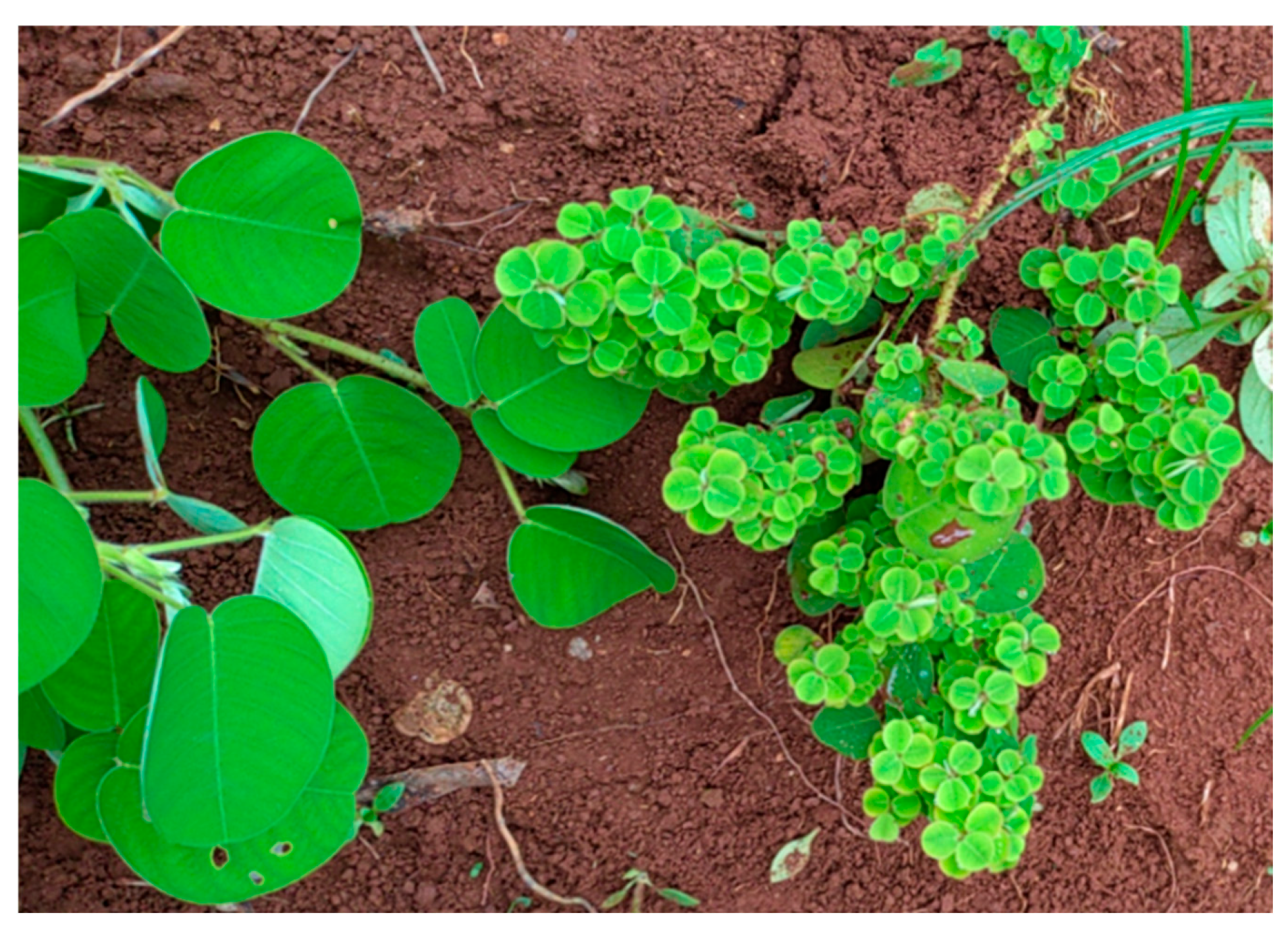
3.1. Field Surveys
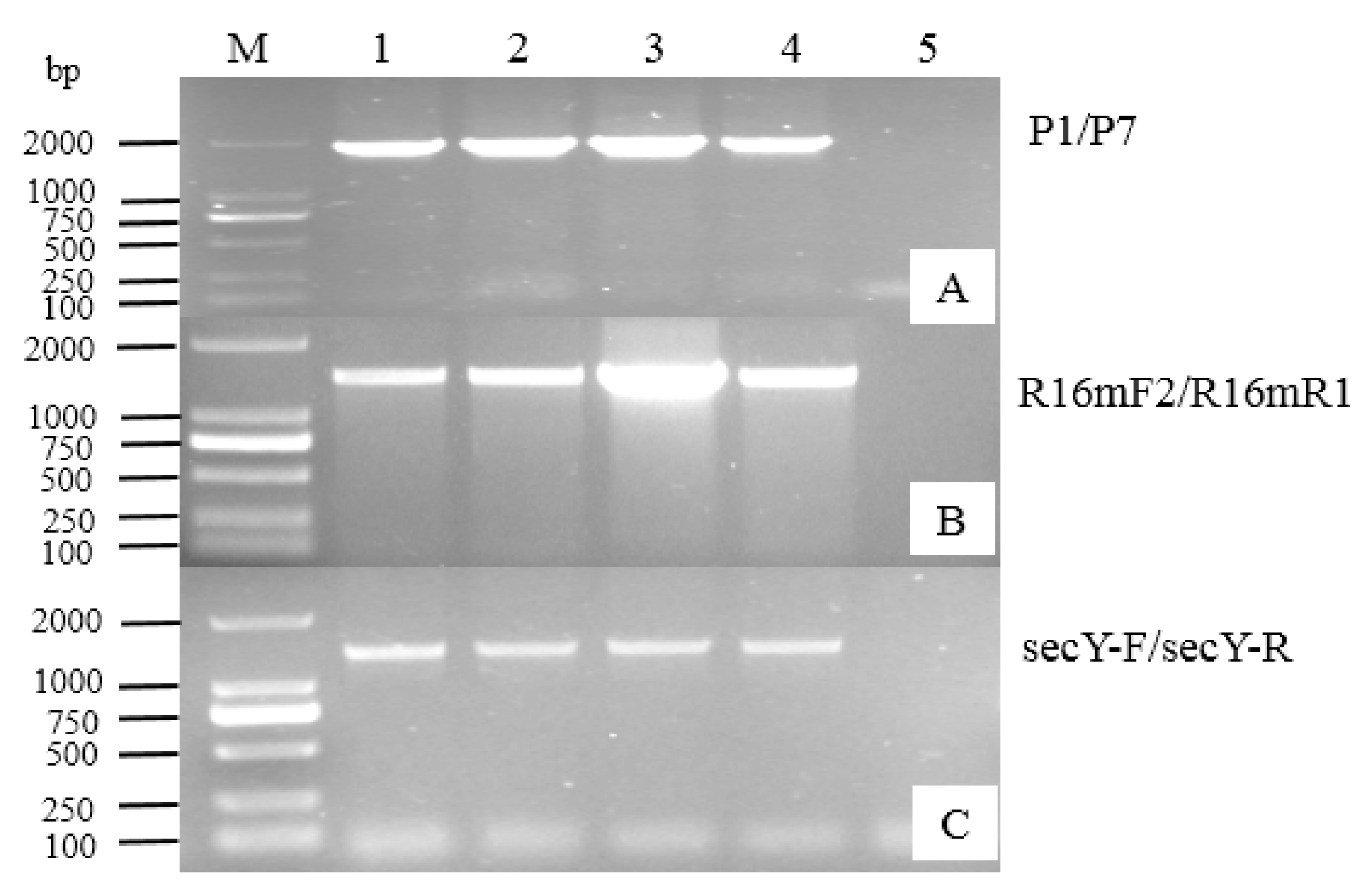
3.2. Molecular Detection
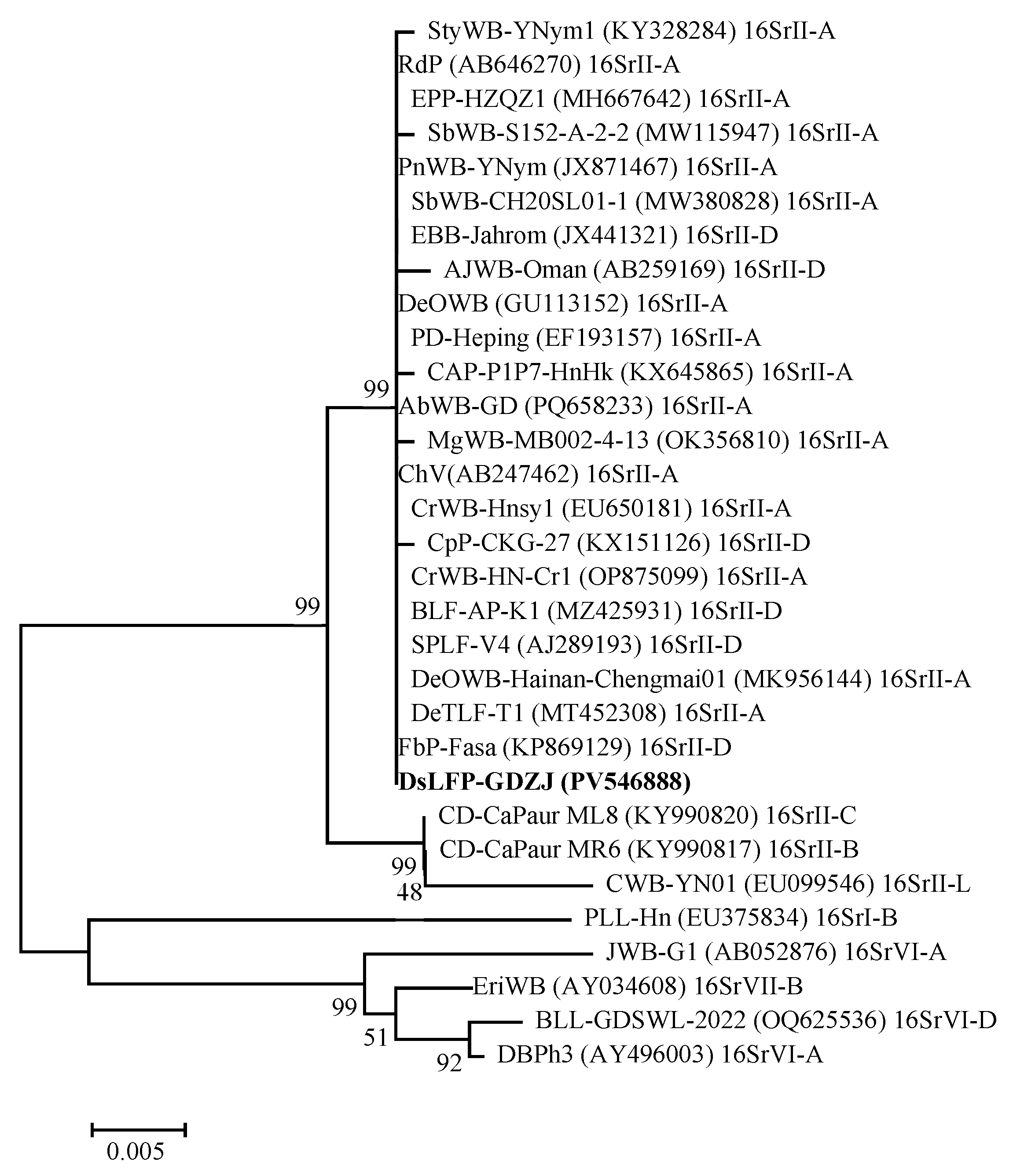
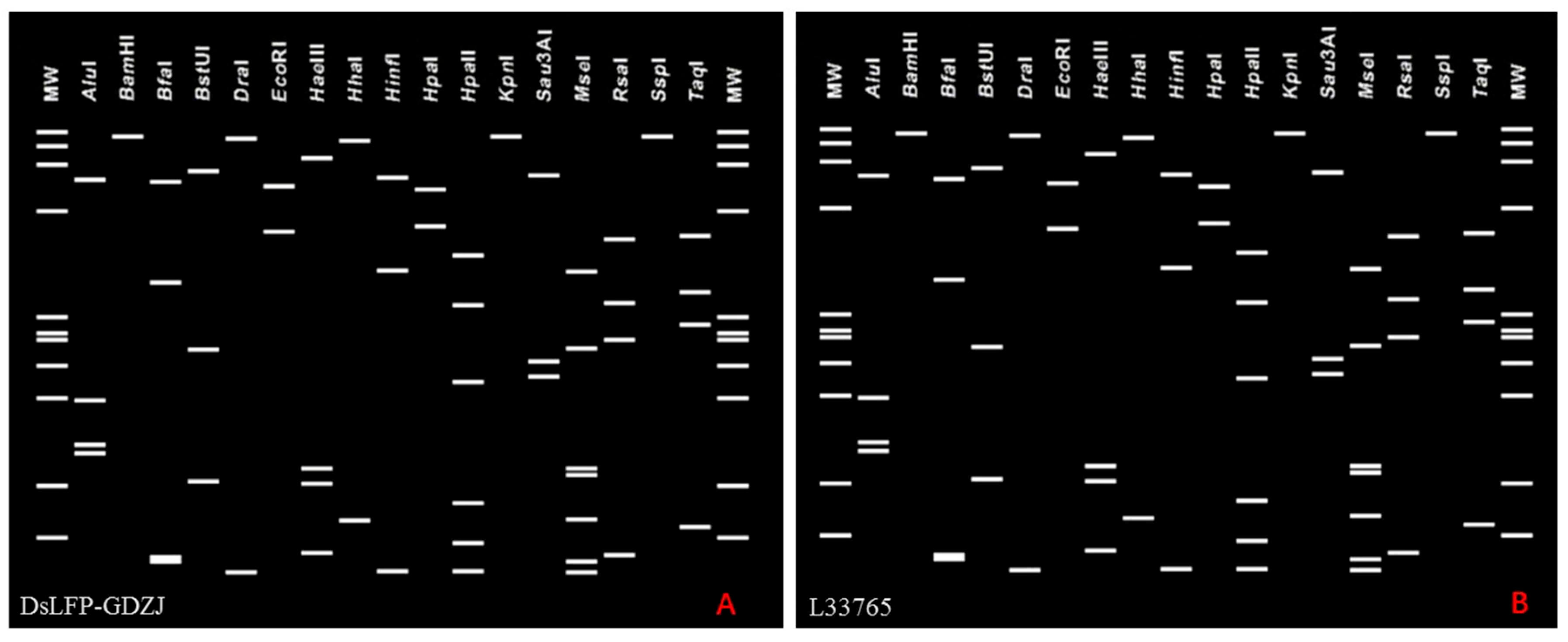
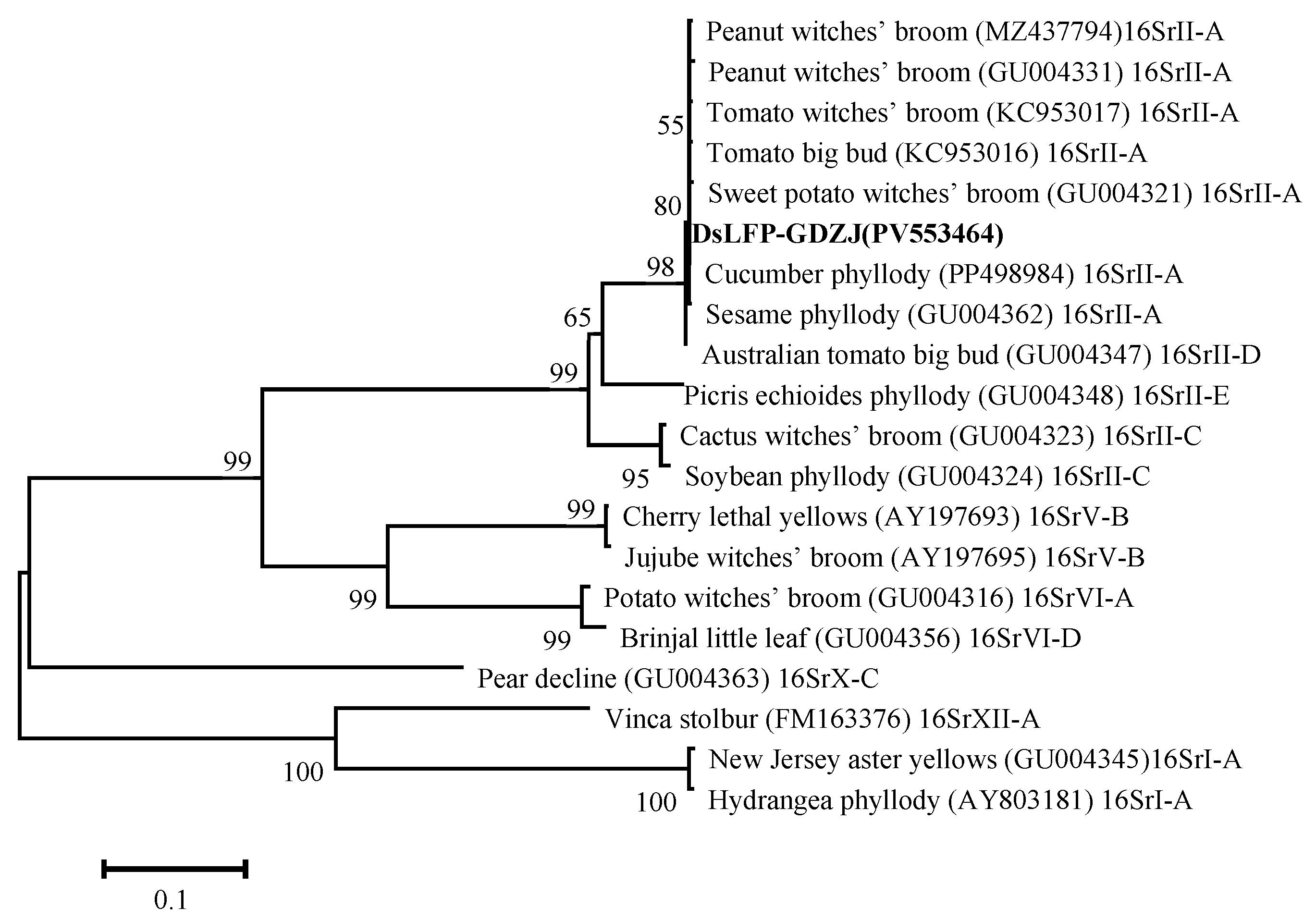
3.3. Sequence Analysis of 16S rDNA
3.4. Sequence Analysis of the secY Gene
4. Discussion
5. Conclusions
Supplementary Materials
Author Contributions
Funding
Institutional Review Board Statement
Informed Consent Statement
Data Availability Statement
Conflicts of Interest
References
- Bertaccini, A.; Duduk, B.; Paltrinieri, S.; Contaldo, N. Phytoplasmas and phytoplasma diseases: A severe threat to agriculture. Am. J. Plant Sci. 2014, 5, 1763–1788. [Google Scholar] [CrossRef]
- Wei, W.; Zhao, Y. Phytoplasma taxonomy: Nomenclature, classification, and identification. Biology 2022, 11, 1119. [Google Scholar] [CrossRef] [Scilit]
- Hogenhout, S.A.; Oshima, K.; Ammar, E.-D.; Kakizawa, S.; Kingdom, H.N.; Namba, S. Phytoplasmas: Bacteria that manipulate plants and insects. Mol. Plant Pathol. 2008, 9, 403–423. [Google Scholar] [CrossRef] [Scilit]
- Koinuma, H.; Maejima, K.; Tokuda, R.; Kitazawa, Y.; Nijo, T.; Wei, W.; Kumita, K.; Miyazaki, A.; Namba, S.; Yamaji, Y. Spatiotemporal dynamics and quantitative analysis of phytoplasmas in insect vectors. Sci. Rep. 2020, 10, 4291. [Google Scholar] [CrossRef] [Scilit] [PubMed]
- Sugio, A.; MacLean, A.M.; Kingdom, H.N.; Grieve, V.M.; Manimekalai, R.; Hogenhout, S.A. Diverse targets of phytoplasma effectors: From plant development to defense against insects. Annu. Rev. Phytopathol. 2011, 49, 75–95. [Google Scholar] [CrossRef] [Scilit] [PubMed]
- Salehia, M.; Rasoulpour, R.; Izadpanah, K. Molecular characterization, vector identification and partial host range determination of phytoplasmas associated with faba bean phyllody in Iran. Crop Prot. 2016, 89, 12–20. [Google Scholar] [CrossRef] [Scilit]
- Akhtar, K.P.; Sarwar, G.; Dickinson, M.; Ahmad, M.; Haq, M.A.; Hameed, S.; Iqbal, M.J. Sesame phyllody disease: Its symptomatology, etiology, and transmission in Pakistan. Turk. J. Agric. For. 2009, 33, 477–486. [Google Scholar] [CrossRef] [Scilit]
- Bertaccini, A. Phytoplasmas: Diversity, taxonomy, and epidemiology. Front. Biosci 2007, 12, 673–689. [Google Scholar] [CrossRef] [Scilit]
- Kirdat, K.; Tiwarekar, B.; Sathe, S.; Yadav, A. From sequences to species: Charting the phytoplasma classification and taxonomy in the era of taxogenomics. Front. Microbiol. 2003, 14, 1123783. [Google Scholar] [CrossRef] [Scilit]
- Tedeschi, R.; Alma, A. Fieberiella florii (Homoptera:Auchenorrhyncha) as a vector of “Candidatus Phytoplasma mali”. Plant Dis. 2006, 90, 284–290. [Google Scholar] [CrossRef] [Scilit]
- Bertaccini, A.; Duduk, B. Phytoplasma and phytoplasma diseases: A review of recent research. Phytopathol. Mediterr. 2009, 48, 355–378. [Google Scholar] [CrossRef]
- Wei, W.; Shao, J.; Zhao, Y.; Inaba, J.; Ivanauskas, A.; Bottner-Parker, K.D.; Costanzo, S.; Kim, B.M.; Flowers, K.; Escobar, J. iPhyDSDB: Phytoplasma Disease and SymptomDatabase. Biology 2024, 13, 657. [Google Scholar] [CrossRef] [Scilit]
- Wang, R.; Bai, B.; Li, D.; Wang, J.; Huang, W.; Wu, Y.; Zhao, L. Phytoplasma: A plant pathogen that cannot be ignored in agricultural production—Research progress and outlook. Mol. Plant Pathol. 2024, 25, e13437. [Google Scholar] [CrossRef] [Scilit]
- Asudi, G.O.; Omenge, K.M.; Paulmann, M.K.; Reichelt, M.; Grabe, V.; Mithöfer, A.; Oelmüller, R.; Furch, A.C.U. The physiological and biochemical effects on napier grass plants following napier grass stunt phytoplasma infection. Phytopathology 2021, 111, 703–712. [Google Scholar] [CrossRef] [Scilit] [PubMed]
- Maejima, K.; Oshima, K.; Namba, S. Exploring the phytoplasmas, plant pathogenic bacteria. J. Gen. Plant Pathol. 2014, 80, 210–221. [Google Scholar] [CrossRef] [Scilit]
- Bertaccini, A.; Arocha-Rosete, Y.; Contaldo, N.; Duduk, B.; Fiore, N.; Montano, H.G.; Kube, M.; Kuo, C.-H.; Martini, M.; Oshima, K.; et al. Revision of the ‘Candidatus Phytoplasma’ species description guidelines. Int. J. Syst. Evol. Micr. 2022, 72, 005353. [Google Scholar] [CrossRef] [Scilit] [PubMed]
- Martini, M.; Quaglino, F.; Bertaccini, A. Multilocus genetic characterization of phytoplasmas. In Phytoplasmas: Plant Pathogenic Bacteria—III Genomics, Host Pathogen Interactions, and Diagnosis; Bertaccini, A., Oshima, K., Kube, M., Rao, G.P., Eds.; Springer: Singapore, 2019; Chapter 9; pp. 161–200. [Google Scholar]
- Zhao, M.; Duan, J.A.; Che, C.T. Isoflavanones and their O-glycosides from Desmodium styracifolium. Phytochemistry 2007, 68, 1471–1479. [Google Scholar] [CrossRef] [Scilit] [PubMed]
- Xiang, S.T.; Zhou, J.F.; Li, J.; Wang, Q.; Zhang, Q.H.; Zhao, Z.X.; Zhang, L.; Chen, A.Q.; Wang, S.S. Antilithic effects of extracts from different polarity fractionsof Desmodium styracifolium onexperimentally inducedurolithiasis in rats. Urolithiasis 2015, 43, 433–439. [Google Scholar] [CrossRef] [Scilit]
- Che, H.; Yu, S.; Chen, W.; Zheng, W.; Cao, X.; Luo, D. Molecular identification and characterization of novel taxonomic subgroups and new host plants in 16SrI and 16SrII group phytoplasmas and their evolutionary diversity on Hainan island, China. Plant Dis. 2024, 108, 1703–1718. [Google Scholar] [CrossRef] [Scilit]
- Deng, S.; Hiruki, C. Amplification of 16S rRNA genes from culturable and nonculturable Mollicutes. J. Microbiol. Methods 1991, 14, 53–61. [Google Scholar] [CrossRef] [Scilit]
- Smart, C.D.; Schneider, B.; Blomquist, C.L.; Guerra, L.J.; Harrison, N.A.; Ahrens, U.; Lorenz, K.H.; Seemuller, E.; Kirkpatrick, B.C. Phytoplasma-specific PCR primers based on sequences of the 16S-23S rRNA spacer region. Appl. Environ. Microbiol. 1996, 62, 2988–2993. [Google Scholar] [CrossRef] [Scilit]
- Gundersen, D.E.; Lee, I.M. Ultrasensitive detection of phytoplasmas by nested-PCR assays using two universal primer pairs. Phytopathol. Mediterr. 1996, 35, 144–151. [Google Scholar]
- Xu, X.P.; Su, F.; Yang, Z.X.; Liu, J.N.; Wan, Q.G.; Cai, H. Molecular identification and related gene sequence analysis of phytoplasma of Gendarussa vulgaris Witches’-broom in Yunnan Province. J. Yunnan Agric. Univ. (Nat. Sci.) 2021, 36, 205–214. [Google Scholar] [CrossRef]
- Zhao, Y.; Wei, W.; Lee, I.M.; Shao, J.; Suo, X.; Davis, R.E. Construction of an interactive online phytoplasma classification tool, iPhyClassifier, and its application in analysis of the peach X-disease phytoplasma group (16SrIII). Int. J. Syst. Evol. Microbiol. 2009, 59, 2582–2593. [Google Scholar] [CrossRef] [Scilit]
- Wang, X.Y.; Zhang, R.Y.; Li, J.; Li, Y.H.; Shan, H.L.; Li, W.F.; Huang, Y.K. The diversity, distribution and status of phytoplasma diseases in China. Front. Sustain. Food Syst. 2022, 6, 943080. [Google Scholar] [CrossRef] [Scilit]
- Zhang, S.B.; Zhang, D.Y.; Luo, X.W.; Zhang, S.G.; Li, H.P. Sequence analysis of 16S Ribosomal DNA of phytoplasma associated with rice orange leaf. J. South China Agric. Univ. 2009, 30, 37–39. [Google Scholar] [CrossRef]
- Liu, Q.S.; Xu, D.L.; Lin, P.F.; Zhou, G.H. Molecular detection of mulberry phytoplasma in Guangzhou and primary study of its 16S rDNA diversity. Canye Kexue 2006, 32, 1–5. [Google Scholar] [CrossRef]
- Zhou, G.H.; Xu, D.L. Molecular identification and detection of Eucalyptus yellowing and witches’-broom phytoplasma in Guangdong. Acta Phytophylacica Sin. 2005, 32, 387–391. [Google Scholar] [CrossRef]
- Li, Z.G.; She, X.M.; Tang, Y.F.; Yu, L.; Lan, G.B.; Deng, M.G.; He, Z.F. Molecular identification of phytoplasma associated with jujube witches’ broom in Guangdong. Acta Phytopathol. Sin. 2019, 49, 281–282. [Google Scholar] [CrossRef]
- Song, X.B.; Feng, H.; Tang, Y.F.; Cui, Y.P.; Ling, J.F.; Chen, X. First report of little leaf disease caused by phytoplasma on Breynia disticha in China. Plant Protection 2024, 50, 272–277. [Google Scholar] [CrossRef]
- Zhang, L.; Li, Z.B.; She, X.M.; Tarhir, F.; Li, Z.G.; Yu, L.; Lan, G.B.; He, Z.F.; Tang, Y.F. First report of 16SrII-V phytoplasma associated with cowpea (Vigna unguiculata) phyllody in China. Can. J. Plant Pathol. 2023, 45, 103–109. [Google Scholar] [CrossRef] [Scilit]
- Li, Z.G.; Tang, Y.F.; She, X.M.; Yu, L.; Lan, G.B.; He, Z.F. First report of 16SrII-D phytoplasma associated with eggplant phyllody in China. Can. J. Plant Pathol. 2019, 41, 339–344. [Google Scholar] [CrossRef] [Scilit]
- Xi, Y.W.; Du, M.d.; Tang, Y.F.; She, X.M.; Lan, G.B.; Yu, L.; Ding, S.W.; He, Z.F.; Li, Z.G. Identification and molecular characterization of a 16SrII-A phytoplasma associated with cucumber phyllody in China. Agronomy 2024, 14, 1873. [Google Scholar] [CrossRef] [Scilit]
- Tang, Y.F.; Li, Q.; She, X.M.; Li, Z.G.; Yu, L.; Lan, G.B.; He, Z.F. Molecular identification of peanut witches’-broom phytoplasma in Guangdong province. Plant Prot. 2022, 48, 83–90. [Google Scholar] [CrossRef]
- Tang, Y.F.; Li, Z.G.; She, X.M.; Yu, L.; Lan, G.B.; He, Z.F. Molecular identification of phytoplasma associated with tomato big bud disease in Guangdong province. Plant Prot. 2024, 50, 203–210. [Google Scholar] [CrossRef]



| Plant Disease Name | Strain | 16S rDNA Group/Subgroup | Origin | GenBank Accession No. | Identity (%) |
|---|---|---|---|---|---|
| Adzuki bean witches’ broom | AbWB-GD | 16SrII-A | China | PQ658233 | 100.00 |
| Eggplant phyllody | EPP-HZQZ1 | 16SrII-A | China | MH667642 | 100.00 |
| Cleome rutidosperma witches’ broom | CrWB-HN-Cr1 | 16SrII-A | China | OP875099 | 100.00 |
| Soybean Witches’ Broom | SbWB-CH20SL01-1 | 16SrII-A | China | MW680828 | 100.00 |
| Crotalaria witches’ broom | CrWB-Hnsy1 | 16SrII-A | China | EU650181 | 100.00 |
| Chrysanthemum virescence | ChV | 16SrII-A | Okinawa | AB247462 | 100.00 |
| Sweet potato little leaf | SPLF-V4 | 16SrII-A | Australia | AJ289193 | 100.00 |
| Desmodium ovalifolium witches’ broom | DeOWB | 16SrII-A | China | GU113152 | 100.00 |
| Desmodium ovalifolium witches’ broom | DeOWB-Hainan-Chengmai01 | 16SrII-A | China | MK956144 | 100.00 |
| Desmodium triflorum little leaf | DeTLF-T1 | 16SrII-A | China | MT452308 | 100.00 |
| Pear decline | PD-Heping | 16SrII-A | China | EF193157 | 100.00 |
| Corchorus aestuans phyllody | CAP-P1P7-HnHk | 16SrII-A | China | KX645865 | 99.93 |
| Soybean witches’ broom | SbWB-S152-A-2-2 | 16SrII-A | China | MW115947 | 99.93 |
| Mungbean Witches’ Broom | MgWB-MB002-4 | 16SrII-A | China | OK356810 | 99.93 |
| Peanut witches’ broom | PnWB-YNym | 16SrII-A | China | JX871467 | 99.93 |
| Stylosanthes guianensis witches’ broom | StyWB-YNym1 | 16SrII-A | China | KY328284 | 99.87 |
| Brinjal little leaf | BLF-AP-K1 | 16SrII-D | India | MZ425931 | 99.87 |
| Chickpea phyllody | CpP-CKG-27 | 16SrII-D | India | KX151126 | 99.80 |
| Radish phyllody | RdP | 16SrII-A | Myanmar | AB646270 | 99.80 |
| Faba bean phyllody | FbP-Fasa | 16SrII-D | Iran | KP869129 | 99.74 |
| Eggplant big bud | EBB-Jahrom | 16SrII-D | Iran | JX441321 | 99.67 |
| Arabian Jasmine witches’ broom | AJWB-Oman | 16SrII-D | Oman | AB259169 | 99.67 |
| Citrus decline | CD-CaPaur_ML8 | 16SrII-C | Iran | KY990820 | 98.56 |
| Citrus decline | CD-CaPaur_MR6 | 16SrII-B | Iran | KY990817 | 98.56 |
| Cactus witches’ broom | CWB-YN01 | 16SrII-L | China | EU099546 | 98.00 |
| Erigeron witches’ broom | EriWB | 16SrVII-B | Brazil | AY034608 | 91.12 |
| Dry bean phyllody | DBPh3 | 16SrVI-A | USA | AY496003 | 90.90 |
| Breynianivosa little leaf | BLL-GDSWL-2022 | 16SrVI-D | China | OQ625536 | 90.65 |
| Periwinkle little leaf | PLL-Hn | 16SrI-B | China | EU375834 | 89.25 |
Disclaimer/Publisher’s Note: The statements, opinions and data contained in all publications are solely those of the individual author(s) and contributor(s) and not of MDPI and/or the editor(s). MDPI and/or the editor(s) disclaim responsibility for any injury to people or property resulting from any ideas, methods, instructions or products referred to in the content. |
© 2026 by the authors. Licensee MDPI, Basel, Switzerland. This article is an open access article distributed under the terms and conditions of the Creative Commons Attribution (CC BY) license.
Share and Cite
Tang, Y.; Li, Z.; Du, M.; Lan, G.; Yu, L.; Ding, S.; He, Z.; She, X. First Report of Desmodium styracifolium as a Novel Host for ‘Candidatus Phytoplasma australasiaticum’—Related Strains in China. Microorganisms 2026, 14, 657. https://doi.org/10.3390/microorganisms14030657
Tang Y, Li Z, Du M, Lan G, Yu L, Ding S, He Z, She X. First Report of Desmodium styracifolium as a Novel Host for ‘Candidatus Phytoplasma australasiaticum’—Related Strains in China. Microorganisms. 2026; 14(3):657. https://doi.org/10.3390/microorganisms14030657
Chicago/Turabian StyleTang, Yafei, Zhenggang Li, Mengdan Du, Guobing Lan, Lin Yu, Shanwen Ding, Zifu He, and Xiaoman She. 2026. "First Report of Desmodium styracifolium as a Novel Host for ‘Candidatus Phytoplasma australasiaticum’—Related Strains in China" Microorganisms 14, no. 3: 657. https://doi.org/10.3390/microorganisms14030657
APA StyleTang, Y., Li, Z., Du, M., Lan, G., Yu, L., Ding, S., He, Z., & She, X. (2026). First Report of Desmodium styracifolium as a Novel Host for ‘Candidatus Phytoplasma australasiaticum’—Related Strains in China. Microorganisms, 14(3), 657. https://doi.org/10.3390/microorganisms14030657