Article

Effects of Microbial Inoculants on Carbon, Nitrogen, and Phosphorus Stoichiometry of Soil Aggregates


1
Co-Innovation Center for Sustainable Forestry in Southern China of Jiangsu Province, Key Laboratory of Soil and Water Conservation and Ecological Restoration of Jiangsu Province, Nanjing Forestry University, Nanjing 210037, China
2
Department of Renewable Resources, University of Alberta, Edmonton, AB T6G 2E3, Canada
*
Author to whom correspondence should be addressed.
Microorganisms 2026, 14(3), 583; https://doi.org/10.3390/microorganisms14030583

Submission received: 6 January 2026 / Revised: 26 February 2026 / Accepted: 3 March 2026 / Published: 4 March 2026
(This article belongs to the Section Environmental Microbiology)

Abstract

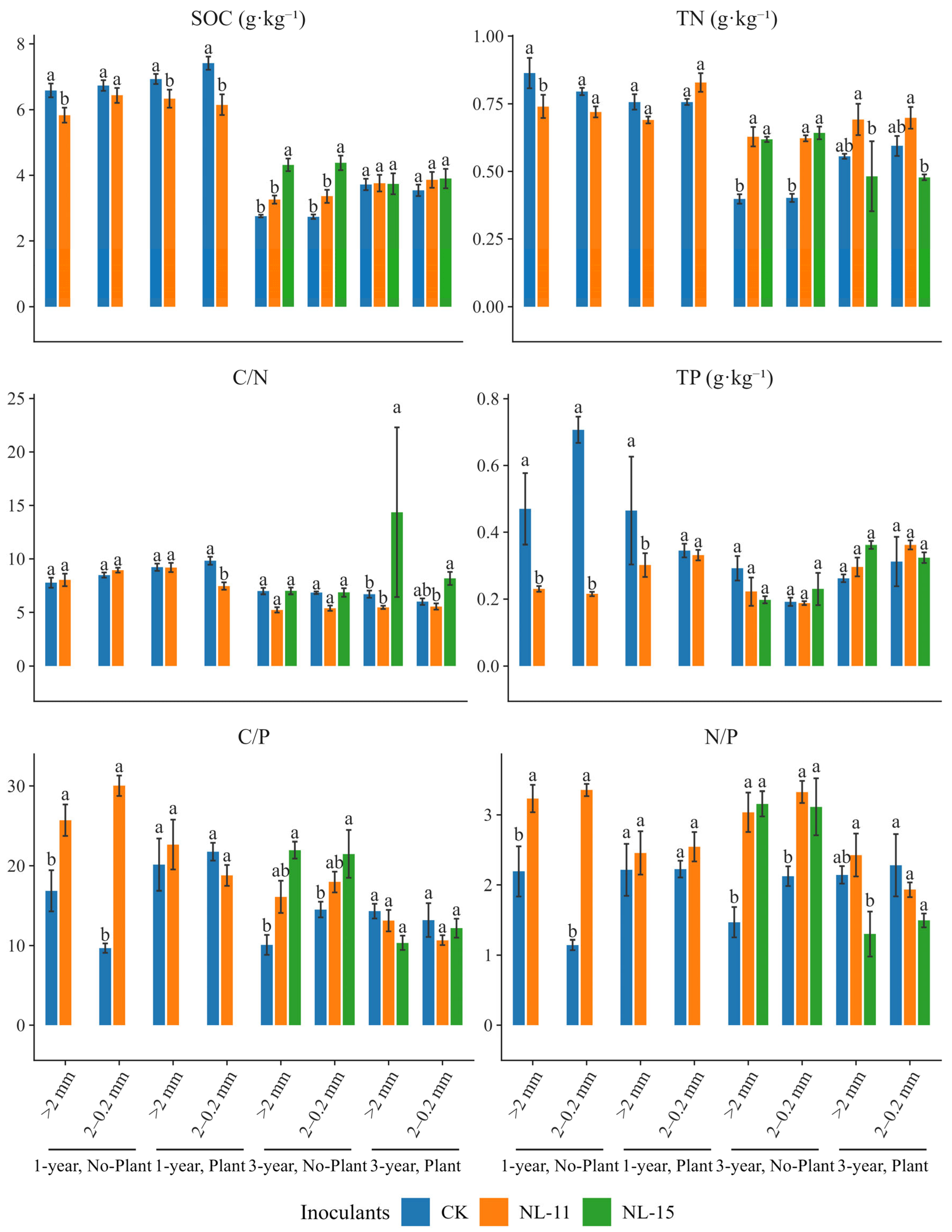
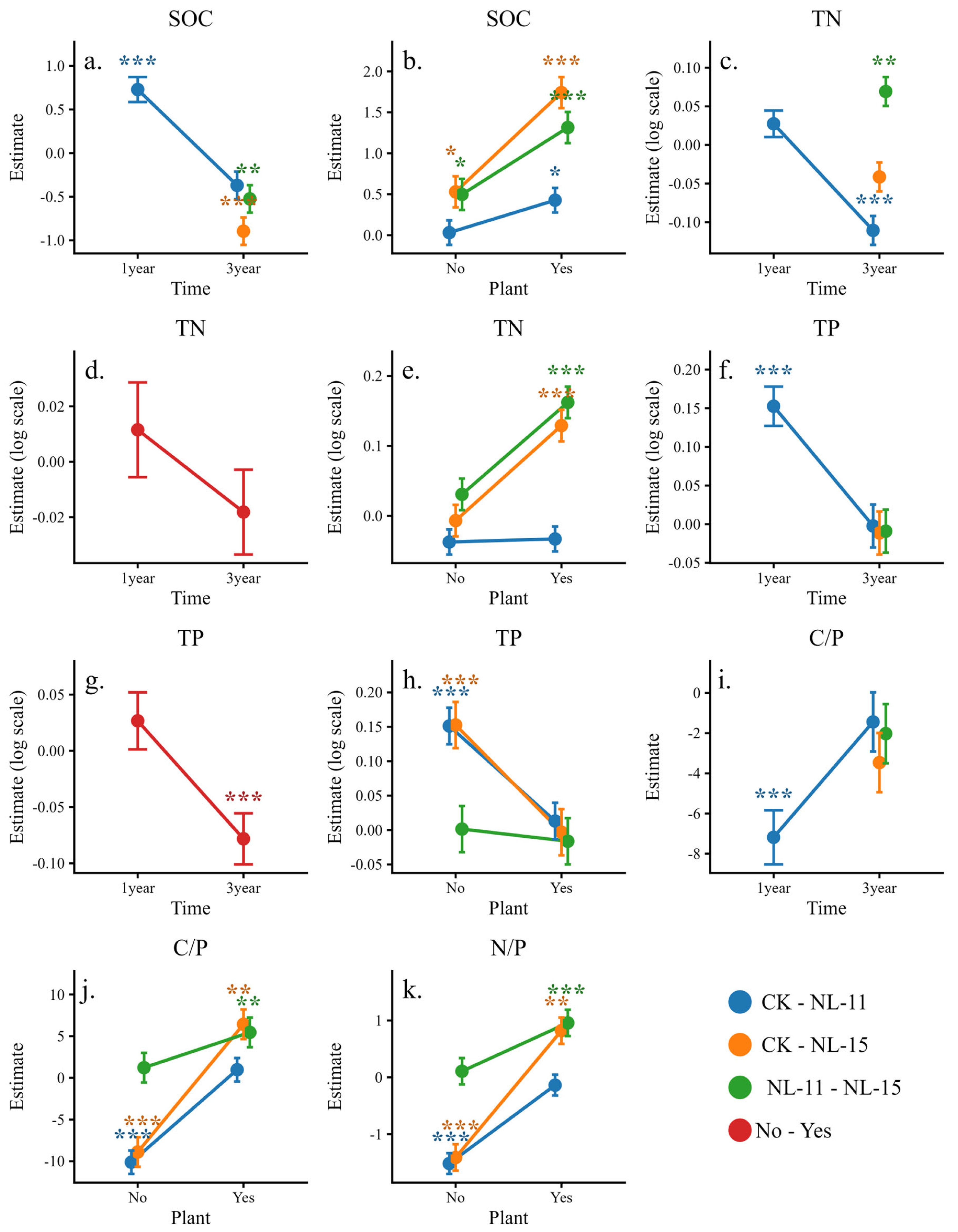
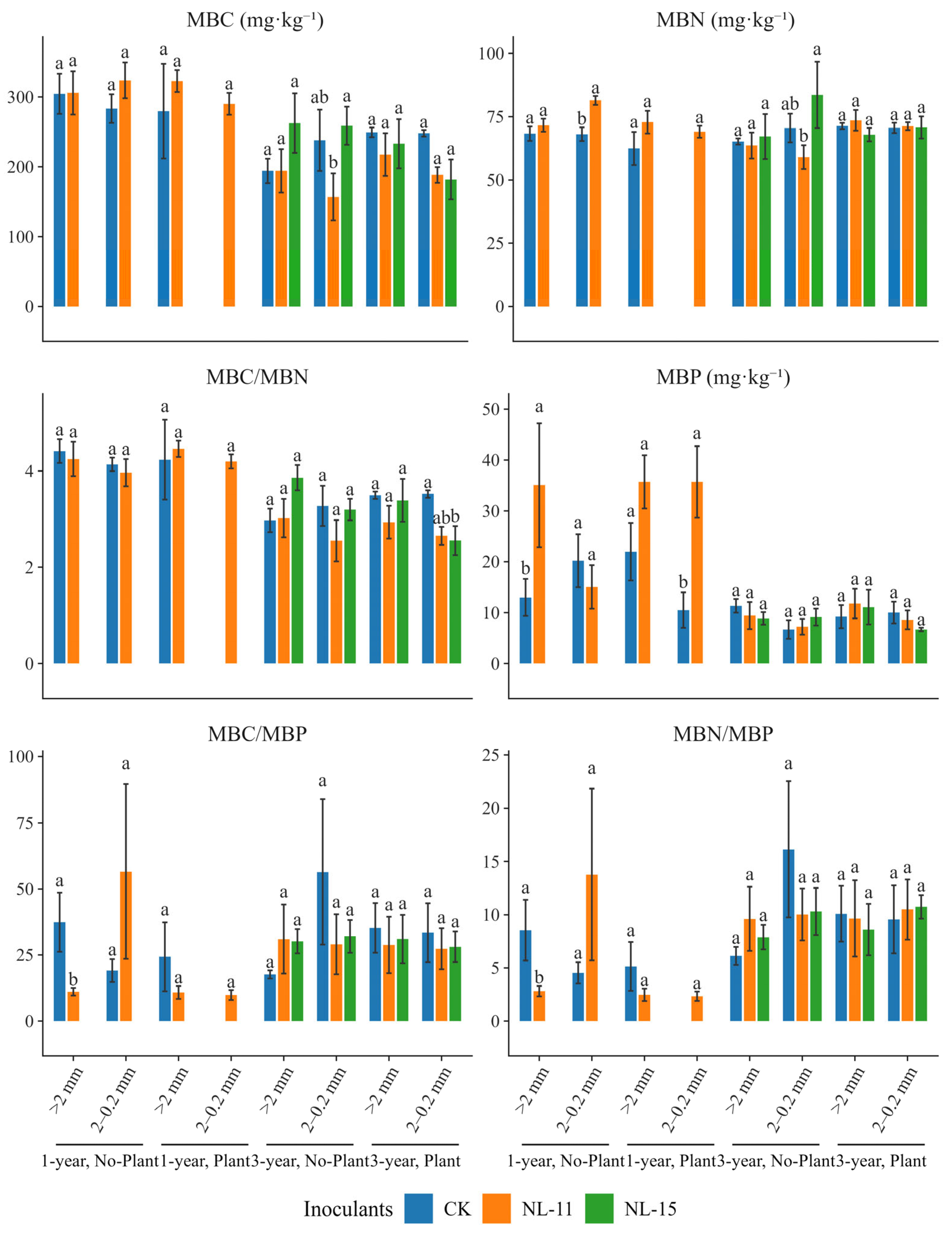
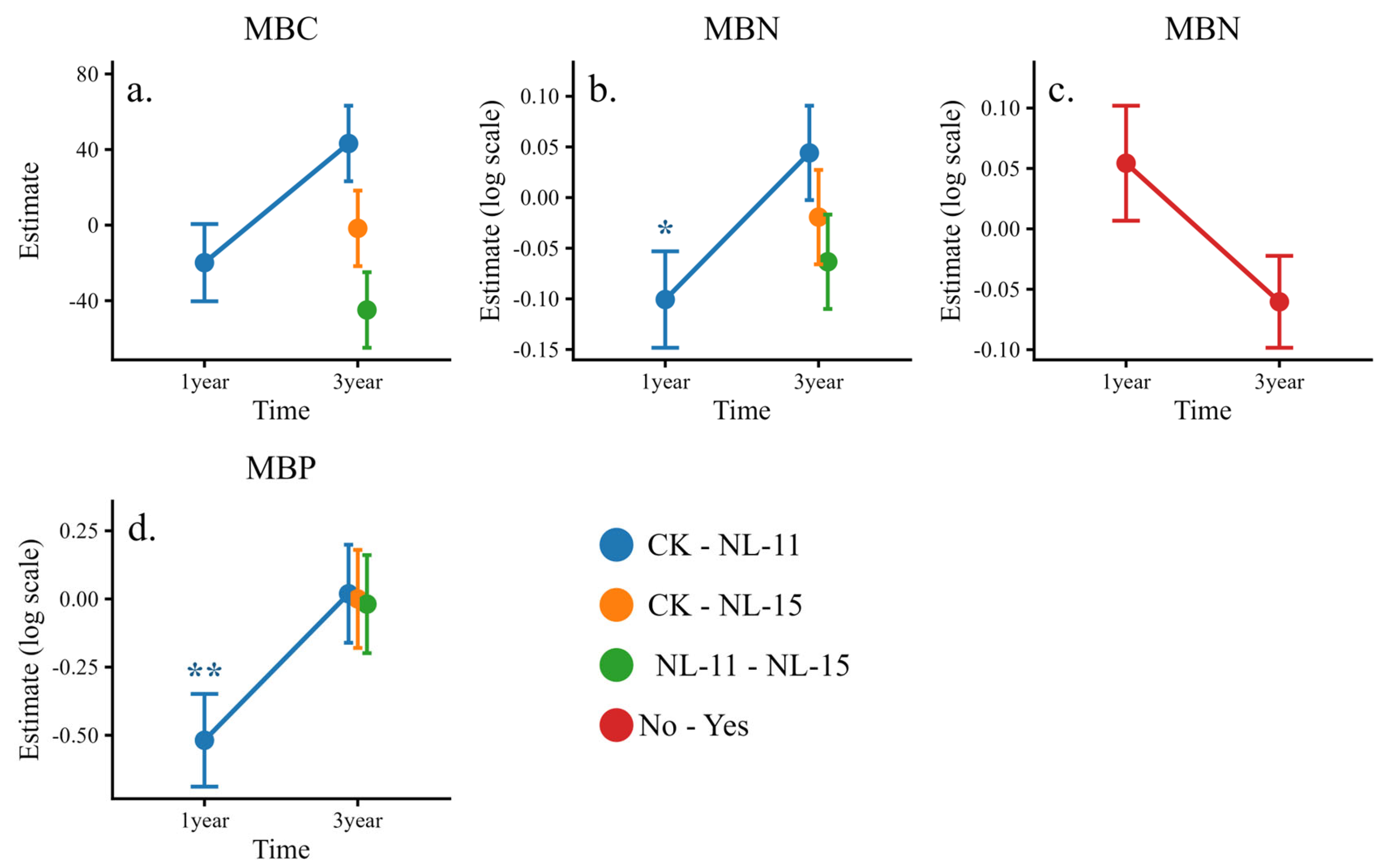
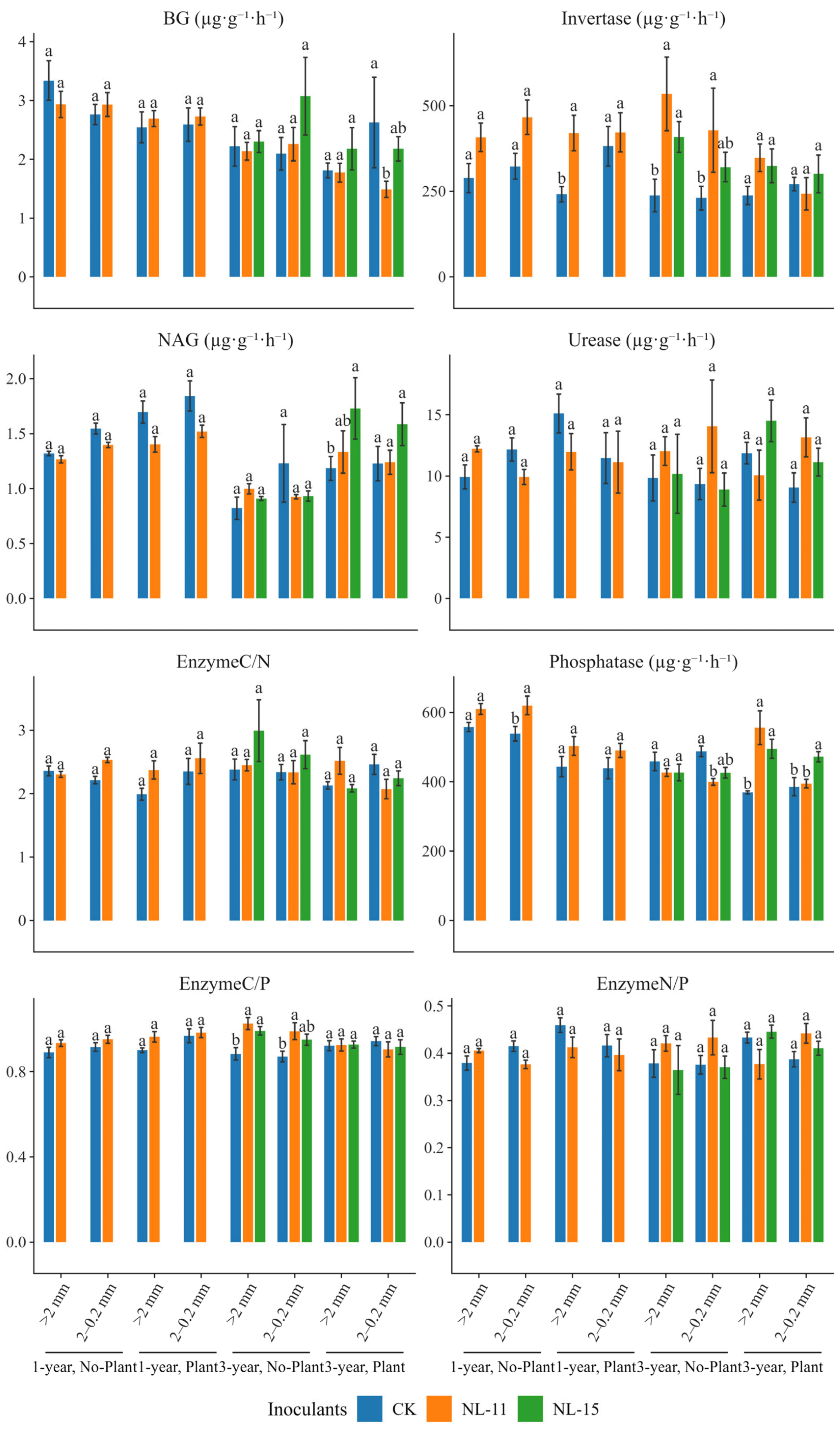
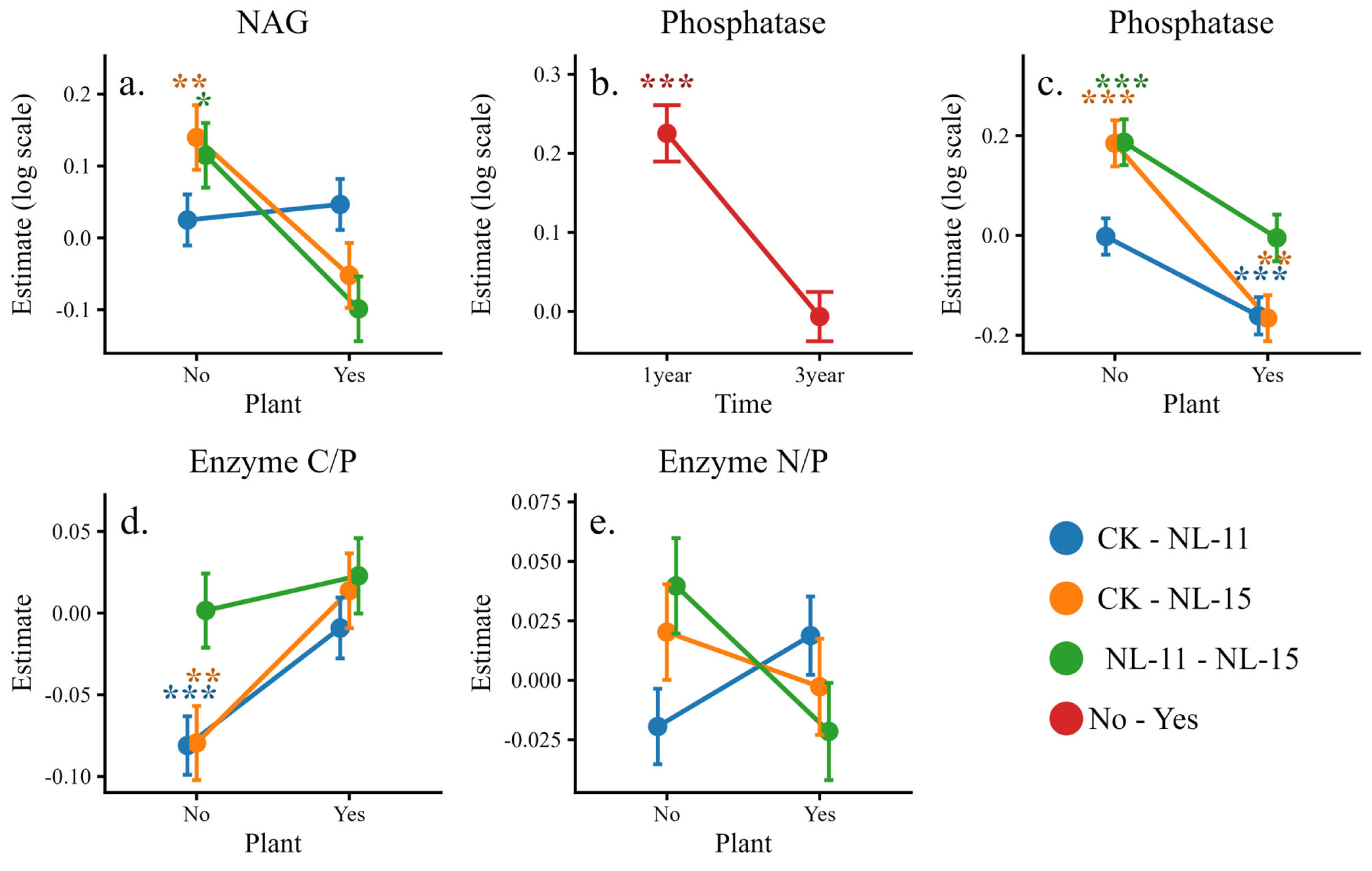
Functional microbial inoculation is widely applied in soil restoration; however, its effects on aggregate-scale nutrient cycling remain unclear. Based on ecological stoichiometry theory, we conducted 1-year and 3-year pot experiments using Bacillus thuringiensis (NL-11) and Gongronella butleri (NL-15) under plant-present and plant-absent conditions, with only NL-11 applied in the 1-year experiment. Aggregate size distribution, mean weight diameter (MWD), soil nutrients, microbial biomass, and enzyme activities were evaluated across aggregate classes. The results demonstrated that microbial effects were dependent on both time and plant presence. Under 3-year plant-present conditions, NL-11 and NL-15 significantly increased macroaggregate proportions and MWD, thereby enhancing aggregate stability. Under 3-year no-plant conditions, NL-15 increased organic carbon and total nitrogen in macro- and meso-aggregates by 55–59% and elevated soil C/P and N/P ratios, whereas NL-11 primarily enhanced total nitrogen. In 1-year no-plant macroaggregates, NL-11 increased microbial biomass phosphorus and reduced microbial biomass C/P and N/P ratios. Both inoculants enhanced invertase activity under plant-absent conditions, whereas plant presence stimulated acid phosphatase activity, with NAG activity increasing only under NL-15. Overall, microbial inoculation altered nutrient availability and microbial metabolic characteristics, promoted coordinated C–N–P stoichiometry, and facilitated the recovery of aggregate-scale nutrient cycling.
Keywords: functional microbial inoculation; stoichiometry; soil–microbe–enzyme; aggregate scale functional microbial inoculation; stoichiometry; soil–microbe–enzyme; aggregate scale