

Why Clinical Trials of Microbiome-Targeted Interventions Often Fail to Support Health Claims: A Commentary on Probiotics and Translational Design

Abstract
1. Introduction
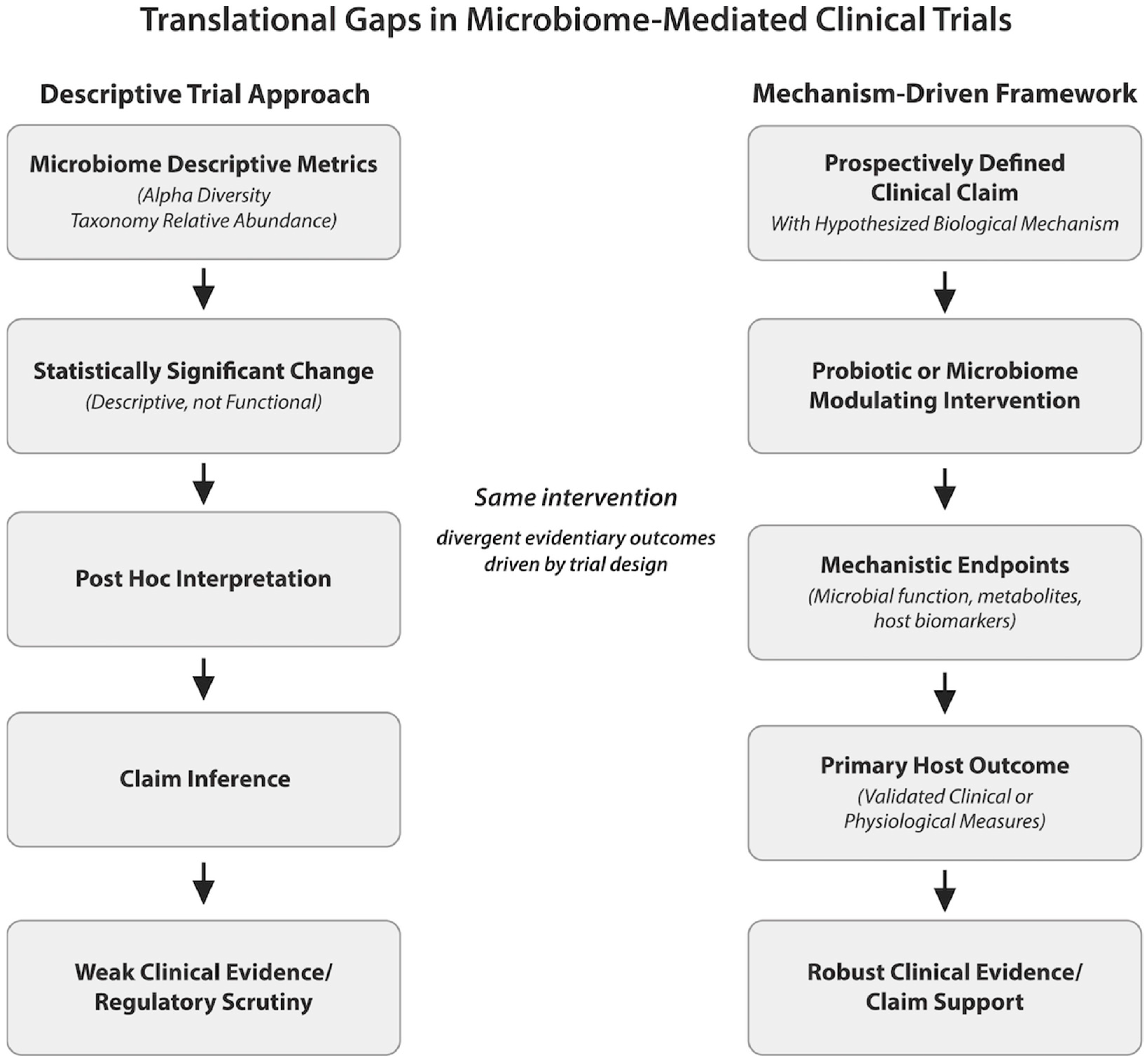
2. Descriptive Microbiome Metrics Versus Functional Relevance
- •
- Functional microbial endpoints (e.g., short-chain fatty acid production, bile acid transformation, metatranscriptomics).
- •
- Relevant host biomarkers (e.g., CRP, insulin sensitivity, intestinal permeability).
- •
- Clearly defined clinical outcomes aligned with the intended health claim.
3. Misalignment Between Trial Endpoints and Intended Claims
4. Symptom-Based Outcomes, Placebo Effects, and Responsible Interpretation
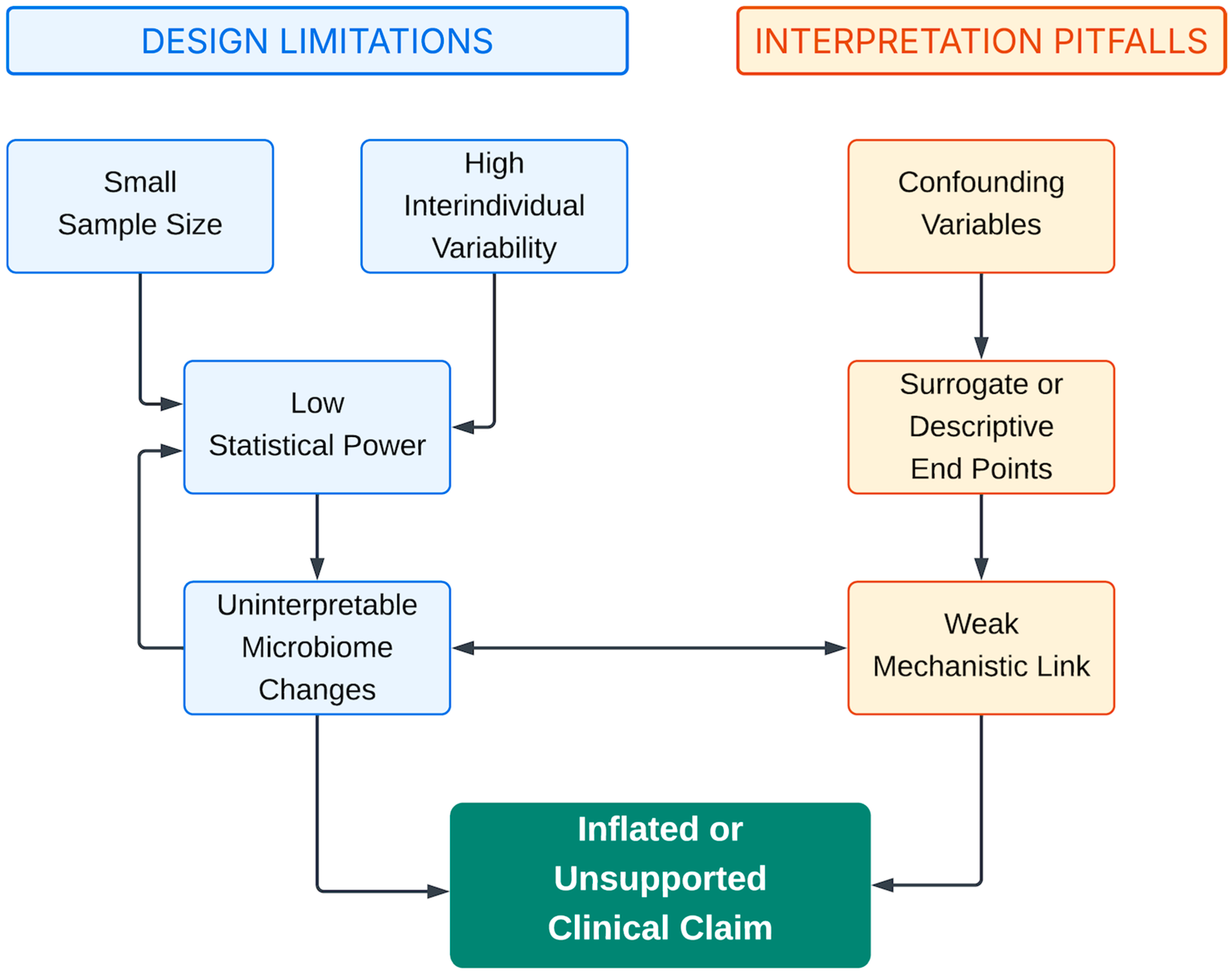
5. Interacting Pitfalls in Microbiome Trial Design
6. Confounding Variables and Trial Discipline in Microbiome Research
7. Sequencing Methodology as a Critical Variable in Microbiome Trials
8. Statistical Power, Microbiome Variability, and Hypothesis Discipline
9. Reframing the Microbiome as a Mechanistic Mediator
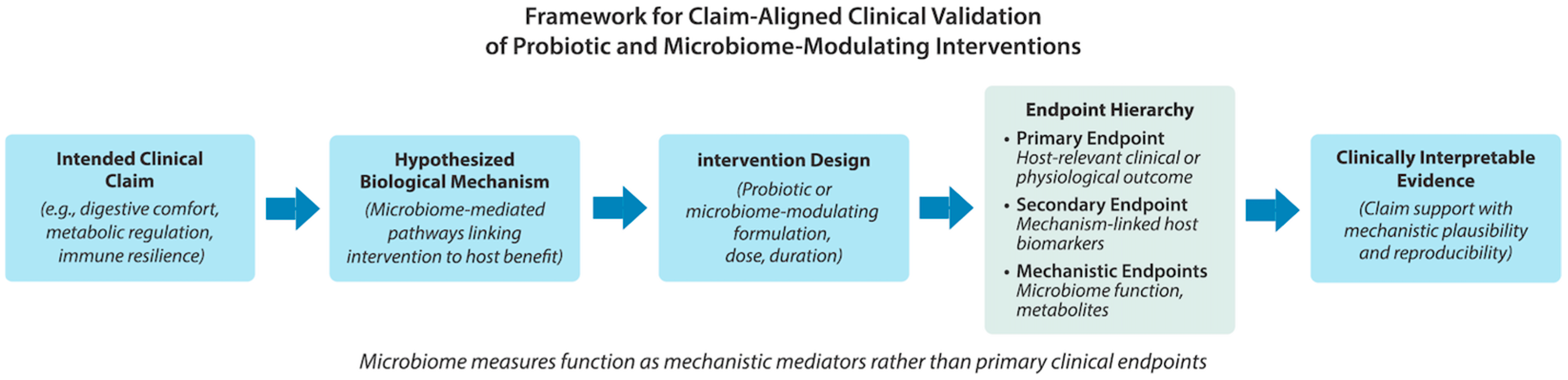
10. Toward More Robust Frameworks for Clinical Validation of Probiotics
- •
- Mediation analysis (e.g., structural equation modeling, counterfactual frameworks, or causal mediation via the Baron and Kenny method) can statistically test whether microbiome changes mediate observed host effects.
- •
- Longitudinal sampling and multi-omics integration (e.g., combining metagenomics, metabolomics, and transcriptomics) can strengthen temporal and functional linkage.
- •
- Functional microbiome measures—such as SCFA production, bile acid metabolism, or immune-modulatory gene expression—offer more direct evidence of mechanistic engagement than taxonomic shifts alone.
- •
- Supportive criteria for mechanistic inference include dose–response relationships, temporal precedence, and strain-specific biological activity replicated in independent studies.
11. Conclusions and Future Directions
Author Contributions
Funding
Institutional Review Board Statement
Informed Consent Statement
Data Availability Statement
Acknowledgments
Conflicts of Interest
Abbreviations
| PRO | Patient-Reported Outcomes |
| SCFA | Short-Chain Fatty Acids |
| IRB | Institutional Review Board |
| CRediT | Contributor Roles Taxonomy |
References
- Huttenhower, C.; Gevers, D.; Knight, R.; Abubucker, S.; Badger, J.H.; Chinwalla, A.T.; Creasy, H.H.; Earl, A.M.; FitzGerald, M.G.; Fulton, R.S.; et al. Structure, function and diversity of the healthy human microbiome. Nature 2012, 486, 207–214. [Google Scholar] [CrossRef] [Scilit]
- Marchesi, J.R.; Adams, D.H.; Fava, F.; Hermes, G.D.; Hirschfield, G.M.; Hold, G.; Quraishi, M.N.; Kinross, J.; Smidt, H.; Tuohy, K.M. The gut microbiota and host health: A new clinical frontier. Gut 2016, 65, 330–339. [Google Scholar] [CrossRef] [Scilit] [PubMed]
- Salminen, S.; Collado, M.C.; Endo, A.; Hill, C.; Lebeer, S.; Quigley, E.M.M.; Sanders, M.E.; Shamir, R.; Swann, J.R.; Szajewska, H.; et al. The International Scientific Association of Probiotics and Prebiotics (ISAPP) consensus statement on the definition and scope of postbiotics. Nat. Rev. Gastroenterol. Hepatol. 2021, 18, 649–667, Erratum in Nat. Rev. Gastroenterol. Hepatol. 2022, 19, 551. [Google Scholar] [CrossRef] [Scilit]
- Derrien, M.; van Hylckama Vlieg, J.E. Fate, activity, and impact of ingested bacteria within the human gut microbiota. Trends Microbiol. 2015, 23, 354–366. [Google Scholar] [CrossRef] [Scilit] [PubMed]
- McFarland, L.V. Use of probiotics to correct dysbiosis of normal microbiota following disease or disruptive events: A systematic review. BMJ Open 2014, 4, e005047. [Google Scholar] [CrossRef] [Scilit]
- Sanders, M.E.; Merenstein, D.J.; Reid, G.; Gibson, G.R.; Rastall, R.A. Probiotics and prebiotics in intestinal health and disease: From biology to the clinic. Nat. Rev. Gastroenterol. Hepatol. 2019, 16, 605–616, Erratum in Nat. Rev. Gastroenterol. Hepatol. 2019, 16, 642. [Google Scholar] [CrossRef] [Scilit] [PubMed]
- Reid, G. Probiotics: Definition, scope and mechanisms of action. Best Pract. Res. Clin. Gastroenterol. 2016, 30, 17–25. [Google Scholar]
- Cani, P.D. Human gut microbiome: Hopes, threats and promises. Gut 2018, 67, 1716–1725. [Google Scholar] [CrossRef] [Scilit]
- Duncanson, K.; Williams, G.; Hoedt, E.C.; Collins, C.E.; Keely, S.; Talley, N.J. Diet-microbiota associations in gastrointestinal research: A systematic review. Gut Microbes 2024, 16, 2350785. [Google Scholar] [CrossRef] [Scilit]
- Mansour, S.; Alkhaaldi, S.M.; Sammanasunathan, A.F.; Ibrahim, S.; Farhat, J.; Al-Omari, B. Precision nutrition unveiled: Gene–nutrient interactions, microbiota dynamics, and lifestyle factors in obesity management. Nutrients 2024, 16, 581. [Google Scholar] [CrossRef] [Scilit]
- Kok, C.R.; Rose, D.; Hutkins, R. Predicting personalized responses to dietary fiber interventions: Opportunities for modulation of the gut microbiome to improve health. Annu. Rev. Food Sci. Technol. 2023, 14, 157–182. [Google Scholar] [CrossRef] [Scilit]
- Johnson, A.J.; Vangay, P.; Al-Ghalith, G.A.; Hillmann, B.M.; Ward, T.L.; Shields-Cutler, R.R.; Kim, A.D.; Shmagel, A.K.; Syed, A.N.; Walter, J. Daily sampling reveals personalized diet-microbiome associations in humans. Cell Host Microbe 2019, 25, 789–802.e785. [Google Scholar] [CrossRef] [Scilit] [PubMed]
- Shade, A. Diversity is the question, not the answer. ISME J. 2017, 11, 1–6. [Google Scholar] [CrossRef] [Scilit]
- Willis, A.D. Rarefaction, alpha diversity, and statistics. Front. Microbiol. 2019, 10, 2407. [Google Scholar] [CrossRef] [Scilit] [PubMed]
- Lynch, S.V.; Pedersen, O. The human intestinal microbiome in health and disease. N. Engl. J. Med. 2016, 375, 2369–2379. [Google Scholar] [CrossRef] [Scilit]
- EFSA Panel on Dietetic Products, Nutrition and Allergies (NDA). Guidance on the scientific requirements for health claims related to the immune system, the gastrointestinal tract and defence against pathogenic microorganisms. EFSA J. 2016, 14, 4369. [Google Scholar] [CrossRef] [Scilit]
- Bailey, R.L. Current regulatory guidelines and resources to support research of dietary supplements in the United States. Crit. Rev. Food Sci. Nutr. 2020, 60, 298–309. [Google Scholar]
- Ioannidis, J.P. Why most published research findings are false. Chance 2019, 32, 4–13. [Google Scholar] [CrossRef] [Scilit]
- Falony, G.; Joossens, M.; Vieira-Silva, S.; Wang, J.; Darzi, Y.; Faust, K.; Kurilshikov, A.; Bonder, M.J.; Valles-Colomer, M.; Vandeputte, D. Population-level analysis of gut microbiome variation. Science 2016, 352, 560–564. [Google Scholar] [CrossRef] [Scilit]
- Aizpurua, O.; Dunn, R.R.; Hansen, L.H.; Gilbert, M.T.P.; Alberdi, A. Field and laboratory guidelines for reliable bioinformatic and statistical analysis of bacterial shotgun metagenomic data. Crit. Rev. Biotechnol. 2024, 44, 1164–1182. [Google Scholar] [CrossRef] [Scilit] [PubMed]
- Gloor, G.B.; Macklaim, J.M.; Pawlowsky-Glahn, V.; Egozcue, J.J. Microbiome datasets are compositional: And this is not optional. Front. Microbiol. 2017, 8, 2224. [Google Scholar] [CrossRef] [Scilit]
- Hibberd, A.A.; Lyra, A.; Ouwehand, A.C.; Rolny, P.; Lindegren, H.; Cedgård, L.; Wettergren, Y. Intestinal microbiota is altered in patients with colon cancer and modified by probiotic intervention. BMJ Open Gastroenterol. 2017, 4, e000145. [Google Scholar] [CrossRef] [Scilit]
- Ishikawa, K.H.; Bueno, M.R.; Kawamoto, D.; Simionato, M.R.L.; Mayer, M.P.A. Lactobacilli postbiotics reduce biofilm formation and alter transcription of virulence genes of Aggregatibacter actinomycetemcomitans. Mol. Oral Microbiol. 2021, 36, 92–102. [Google Scholar] [CrossRef] [Scilit]
- John, D.; Michael, D.; Dabcheva, M.; Hulme, E.; Illanes, J.; Webberley, T.; Wang, D.; Plummer, S. A double-blind, randomized, placebo-controlled study assessing the impact of probiotic supplementation on antibiotic induced changes in the gut microbiome. Front. Microbiomes 2024, 3, 1359580, Erratum in Front. Microbiomes 2024, 3, 1484878. [Google Scholar] [CrossRef] [Scilit]
- Ghosh, S.; Singh, K.K.; Raghunath, M.; Sinha, J.K. Clinical Trials and Evidence-Based Nutraceutical Interventions. In Rejuvenating the Brain: Nutraceuticals, Autophagy, and Longevity; Springer: Berlin/Heidelberg, Germany, 2025; pp. 427–455. [Google Scholar]
- Ishikawa, H.; Akedo, I.; Otani, T.; Suzuki, T.; Nakamura, T.; Takeyama, I.; Ishiguro, S.; Miyaoka, E.; Sobue, T.; Kakizoe, T. Randomized trial of dietary fiber and Lactobacillus casei administration for prevention of colorectal tumors. Int. J. Cancer 2005, 116, 762–767. [Google Scholar] [CrossRef] [Scilit]
- Lloyd-Price, J.; Arze, C.; Ananthakrishnan, A.N.; Schirmer, M.; Avila-Pacheco, J.; Poon, T.W.; Andrews, E.; Ajami, N.J.; Bonham, K.S.; Brislawn, C.J.; et al. Multi-omics of the gut microbial ecosystem in inflammatory bowel diseases. Nature 2019, 569, 655–662. [Google Scholar] [CrossRef] [Scilit]
- Meiners, F.; Ortega-Matienzo, A.; Fuellen, G.; Barrantes, I. Gut microbiome-mediated health effects of fiber and polyphenol-rich dietary interventions. Front. Nutr. 2025, 12, 1647740. [Google Scholar] [CrossRef] [Scilit]
- Zhang, X.; Browman, G.; Siu, W.; Basen-Engquist, K.M.; Hanash, S.M.; Hoffman, K.L.; Okhuysen, P.C.; Scheet, P.; Petrosino, J.F.; Kopetz, S.; et al. The BE GONE trial study protocol: A randomized crossover dietary intervention of dry beans targeting the gut microbiome of overweight and obese patients with a history of colorectal polyps or cancer. BMC Cancer 2019, 19, 1233. [Google Scholar] [CrossRef] [Scilit]
- Wastyk, H.C.; Fragiadakis, G.K.; Perelman, D.; Dahan, D.; Merrill, B.D.; Yu, F.B.; Topf, M.; Gonzalez, C.G.; Van Treuren, W.; Han, S.; et al. Gut-microbiota-targeted diets modulate human immune status. Cell 2021, 184, 4137–4153.e14. [Google Scholar] [CrossRef] [Scilit] [PubMed]
- Wastyk, H.C.; Perelman, D.; Topf, M.; Fragiadakis, G.K.; Robinson, J.L.; Sonnenburg, J.L.; Gardner, C.D.; Sonnenburg, E.D. Randomized controlled trial demonstrates response to a probiotic intervention for metabolic syndrome that may correspond to diet. Gut Microbes 2023, 15, 2178794. [Google Scholar] [CrossRef] [Scilit] [PubMed]
- El-Salhy, M.; Hatlebakk, J.G.; Gilja, O.H.; Bråthen Kristoffersen, A.; Hausken, T. Efficacy of faecal microbiota transplantation for patients with irritable bowel syndrome in a randomised, double-blind, placebo-controlled study. Gut 2020, 69, 859–867. [Google Scholar] [CrossRef] [Scilit]
- Dewulf, E.M.; Cani, P.D.; Claus, S.P.; Fuentes, S.; Puylaert, P.G.; Neyrinck, A.M.; Bindels, L.B.; de Vos, W.M.; Gibson, G.R.; Thissen, J.P.; et al. Insight into the prebiotic concept: Lessons from an exploratory, double blind intervention study with inulin-type fructans in obese women. Gut 2013, 62, 1112–1121. [Google Scholar] [CrossRef] [Scilit]
- Ghosh, T.S.; Rampelli, S.; Jeffery, I.B.; Santoro, A.; Neto, M.; Capri, M.; Giampieri, E.; Jennings, A.; Candela, M.; Turroni, S.; et al. Mediterranean diet intervention alters the gut microbiome in older people reducing frailty and improving health status: The NU-AGE 1-year dietary intervention across five European countries. Gut 2020, 69, 1218–1228. [Google Scholar] [CrossRef] [Scilit] [PubMed]
- Staudacher, H.M.; Lomer, M.C.E.; Farquharson, F.M.; Louis, P.; Fava, F.; Franciosi, E.; Scholz, M.; Tuohy, K.M.; Lindsay, J.O.; Irving, P.M.; et al. A Diet Low in FODMAPs Reduces Symptoms in Patients With Irritable Bowel Syndrome and A Probiotic Restores Bifidobacterium Species: A Randomized Controlled Trial. Gastroenterology 2017, 153, 936–947. [Google Scholar] [CrossRef] [Scilit]
- Depommier, C.; Everard, A.; Druart, C.; Plovier, H.; Van Hul, M.; Vieira-Silva, S.; Falony, G.; Raes, J.; Maiter, D.; Delzenne, N.M.; et al. Supplementation with Akkermansia muciniphila in overweight and obese human volunteers: A proof-of-concept exploratory study. Nat. Med. 2019, 25, 1096–1103. [Google Scholar] [CrossRef] [Scilit] [PubMed]
- Costello, S.P.; Hughes, P.A.; Waters, O.; Bryant, R.V.; Vincent, A.D.; Blatchford, P.; Katsikeros, R.; Makanyanga, J.; Campaniello, M.A.; Mavrangelos, C.; et al. Effect of Fecal Microbiota Transplantation on 8-Week Remission in Patients With Ulcerative Colitis: A Randomized Clinical Trial. Jama 2019, 321, 156–164. [Google Scholar] [CrossRef] [Scilit]
- Fleming, T.R.; Powers, J.H. Biomarkers and surrogate endpoints in clinical trials. Stat. Med. 2012, 31, 2973–2984. [Google Scholar] [CrossRef] [Scilit] [PubMed]
- Meyvisch, P. Surrogate Marker Evaluation in Clinical Trials Using Methods of Causal Inference. Ph.D. Thesis, KU Leuven, Leuven, Belgium, 2020. [Google Scholar]
- McFarland, L.V.; Evans, C.T.; Goldstein, E.J. Strain-specificity and disease-specificity of probiotic efficacy: A systematic review and meta-analysis. Front. Med. 2018, 5, 124. [Google Scholar] [CrossRef] [Scilit]
- Ioannidis, J.P. Why most published research findings are false. PLoS Med. 2005, 2, e124. [Google Scholar]
- U.S. Food and Drug Administration. Clinical Trial Endpoints for the Approval of Cancer Drugs and Biologics: Guidance for Industry. 2018. Available online: https://www.fda.gov/media/71195/download (accessed on 12 December 2025).
- Enck, P.; Bingel, U.; Schedlowski, M.; Rief, W. The placebo response in medicine: Minimize, maximize or personalize? Nat. Rev. Drug Discov. 2013, 12, 191–204. [Google Scholar] [CrossRef] [Scilit]
- Kaptchuk, T.J.; Miller, F.G. Placebo effects in medicine. N. Engl. J. Med. 2015, 373, 8–9. [Google Scholar] [CrossRef] [Scilit]
- Enck, P.; Klosterhalfen, S. The placebo response in functional bowel disorders: Perspectives and putative mechanisms. Neurogastroenterol. Motil. 2005, 17, 325–331. [Google Scholar] [CrossRef] [Scilit]
- Spiegel, B.; Bolus, R.; Harris, L.; Lucak, S.; Naliboff, B.; Esrailian, E.; Chey, W.; Lembo, A.; Karsan, H.; Tillisch, K. Measuring irritable bowel syndrome patient-reported outcomes with an abdominal pain numeric rating scale. Aliment. Pharmacol. Ther. 2009, 30, 1159–1170. [Google Scholar] [CrossRef] [Scilit]
- Black, C.J.; Ford, A.C. Global burden of irritable bowel syndrome: Trends, predictions and risk factors. Nat. Rev. Gastroenterol. Hepatol. 2020, 17, 473–486. [Google Scholar] [CrossRef] [Scilit]
- Bischoff, S.C.; Barbara, G.; Buurman, W.; Ockhuizen, T.; Schulzke, J.-D.; Serino, M.; Tilg, H.; Watson, A.; Wells, J.M. Intestinal permeability—A new target for disease prevention and therapy. BMC Gastroenterol. 2014, 14, 189. [Google Scholar] [CrossRef] [Scilit] [PubMed]
- Dasriya, V.L.; Samtiya, M.; Ranveer, S.; Dhillon, H.S.; Devi, N.; Sharma, V.; Nikam, P.; Puniya, M.; Chaudhary, P.; Chaudhary, V. Modulation of gut-microbiota through probiotics and dietary interventions to improve host health. J. Sci. Food Agric. 2024, 104, 6359–6375. [Google Scholar] [CrossRef] [Scilit] [PubMed]
- Hrobjartsson, A.; Gotzsche, P.C. Placebo interventions for all clinical conditions. Cochrane Database Syst. Rev. 2010. [Google Scholar] [CrossRef] [Scilit]
- David, L.A.; Maurice, C.F.; Carmody, R.N.; Gootenberg, D.B.; Button, J.E.; Wolfe, B.E.; Ling, A.V.; Devlin, A.S.; Varma, Y.; Fischbach, M.A. Diet rapidly and reproducibly alters the human gut microbiome. Nature 2014, 505, 559–563. [Google Scholar] [CrossRef] [Scilit]
- Sonnenburg, E.D.; Sonnenburg, J.L. Starving our microbial self: The deleterious consequences of a diet deficient in microbiota-accessible carbohydrates. Cell Metab. 2014, 20, 779–786. [Google Scholar] [CrossRef] [Scilit]
- Wu, G.D.; Chen, J.; Hoffmann, C.; Bittinger, K.; Chen, Y.-Y.; Keilbaugh, S.A.; Bewtra, M.; Knights, D.; Walters, W.A.; Knight, R. Linking long-term dietary patterns with gut microbial enterotypes. Science 2011, 334, 105–108. [Google Scholar] [CrossRef] [Scilit]
- Szajewska, H.; Scott, K.P.; de Meij, T.; Forslund-Startceva, S.K.; Knight, R.; Koren, O.; Little, P.; Johnston, B.C.; Łukasik, J.; Suez, J. Antibiotic-perturbed microbiota and the role of probiotics. Nat. Rev. Gastroenterol. Hepatol. 2025, 22, 155–172. [Google Scholar] [CrossRef] [Scilit]
- Cusumano, G.; Flores, G.A.; Venanzoni, R.; Angelini, P. The Impact of Antibiotic Therapy on Intestinal Microbiota: Dysbiosis, Antibiotic Resistance, and Restoration Strategies. Antibiotics 2025, 14, 371. [Google Scholar] [CrossRef] [Scilit] [PubMed]
- Xiao, X.; Zhang, X.; Wang, J.; Liu, Y.; Yan, H.; Xing, X.; Yang, J. Proton pump inhibitors alter gut microbiota by promoting oral microbiota translocation: A prospective interventional study. Gut 2024, 73, 1098–1109. [Google Scholar] [CrossRef] [Scilit] [PubMed]
- Forslund, K.; Hildebrand, F.; Nielsen, T.; Falony, G.; Le Chatelier, E.; Sunagawa, S.; Prifti, E.; Vieira-Silva, S.; Gudmundsdottir, V.; Krogh Pedersen, H. Disentangling type 2 diabetes and metformin treatment signatures in the human gut microbiota. Nature 2015, 528, 262–266, Erratum in Nature 2017, 545, 116. [Google Scholar] [CrossRef] [Scilit]
- Le Bastard, Q.; Berthelot, L.; Soulillou, J.-P.; Montassier, E. Impact of non-antibiotic drugs on the human intestinal microbiome. Expert Rev. Mol. Diagn. 2021, 21, 911–924. [Google Scholar] [CrossRef] [Scilit]
- Zeevi, D.; Korem, T.; Zmora, N.; Israeli, D.; Rothschild, D.; Weinberger, A.; Ben-Yacov, O.; Lador, D.; Avnit-Sagi, T.; Lotan-Pompan, M. Personalized nutrition by prediction of glycemic responses. Cell 2015, 163, 1079–1094. [Google Scholar] [CrossRef] [Scilit]
- Suez, J.; Korem, T.; Zeevi, D.; Zilberman-Schapira, G.; Thaiss, C.A.; Maza, O.; Israeli, D.; Zmora, N.; Gilad, S.; Weinberger, A. Artificial sweeteners induce glucose intolerance by altering the gut microbiota. Nature 2014, 514, 181–186. [Google Scholar] [CrossRef] [Scilit] [PubMed]
- Woodland, B.; Farrell, L.A.; Brockbals, L.; Rezcallah, M.; Brennan, A.; Sunnucks, E.J.; Gould, S.T.; Stanczak, A.M.; O’Rourke, M.B.; Padula, M.P. Sample Preparation for Multi-Omics Analysis: Considerations and Guidance for Identifying the Ideal Workflow. Proteomics 2025, 25, 76-101. [Google Scholar] [CrossRef] [Scilit] [PubMed]
- Wen, T.; Niu, G.; Chen, T.; Shen, Q.; Yuan, J.; Liu, Y.-X. The best practice for microbiome analysis using R. Protein Cell 2023, 14, 713–725. [Google Scholar] [CrossRef] [Scilit]
- Knight, R.; Vrbanac, A.; Taylor, B.C.; Aksenov, A.; Callewaert, C.; Debelius, J.; Gonzalez, A.; Kosciolek, T.; McCall, L.-I.; McDonald, D. Best practices for analysing microbiomes. Nat. Rev. Microbiol. 2018, 16, 410–422. [Google Scholar] [CrossRef] [Scilit]
- Quince, C.; Walker, A.W.; Simpson, J.T.; Loman, N.J.; Segata, N. Shotgun metagenomics, from sampling to analysis. Nat. Biotechnol. 2017, 35, 833–844, Erratum in Nat. Biotechnol. 2017, 35, 1211. [Google Scholar] [CrossRef] [Scilit]
- Sinha, R.; Abu-Ali, G.; Vogtmann, E.; Fodor, A.A.; Ren, B.; Amir, A.; Schwager, E.; Crabtree, J.; Ma, S.; Abnet, C.C.; et al. Assessment of variation in microbial community amplicon sequencing by the Microbiome Quality Control (MBQC) project consortium. Nat. Biotechnol. 2017, 35, 1077–1086. [Google Scholar] [CrossRef] [Scilit]
- Button, K.S.; Ioannidis, J.P.; Mokrysz, C.; Nosek, B.A.; Flint, J.; Robinson, E.S.; Munafò, M.R. Power failure: Why small sample size undermines the reliability of neuroscience. Nat. Rev. Neurosci. 2013, 14, 365–376, Erratum in Nat. Rev. Neurosci. 2013, 14, 451. [Google Scholar] [CrossRef] [Scilit]
- Wasserstein, R.L.; Lazar, N.A. The ASA statement on p-values: Context, process, and purpose. Am. Stat. 2016, 70, 129–133. [Google Scholar]
- Turnbaugh, P.J.; Ley, R.E.; Hamady, M.; Fraser-Liggett, C.M.; Knight, R.; Gordon, J.I. The Human Microbiome Project. Nature 2007, 449, 804–810. [Google Scholar] [CrossRef] [Scilit]
- Sonnenburg, J.L.; Bäckhed, F. Diet–microbiota interactions as moderators of human metabolism. Nature 2016, 535, 56–64. [Google Scholar] [CrossRef] [Scilit] [PubMed]
- Koh, A.; De Vadder, F.; Kovatcheva-Datchary, P.; Bäckhed, F. From dietary fiber to host physiology: Short-chain fatty acids as key bacterial metabolites. Cell 2016, 165, 1332–1345. [Google Scholar] [CrossRef] [Scilit] [PubMed]
- Lloyd-Price, J.; Mahurkar, A.; Rahnavard, G.; Crabtree, J.; Orvis, J.; Hall, A.B.; Brady, A.; Creasy, H.H.; McCracken, C.; Giglio, M.G. Strains, functions and dynamics in the expanded Human Microbiome Project. Nature 2017, 550, 61–66, Erratum in Nature 2017, 551, 256. [Google Scholar] [CrossRef] [Scilit] [PubMed]
- Franzosa, E.A.; McIver, L.J.; Rahnavard, G.; Thompson, L.R.; Schirmer, M.; Weingart, G.; Lipson, K.S.; Knight, R.; Caporaso, J.G.; Segata, N. Species-level functional profiling of metagenomes and metatranscriptomes. Nat. Methods 2018, 15, 962–968. [Google Scholar] [CrossRef] [Scilit]
- D’Urso, F.; Paladini, F.; Miraglia, A.; D’Amuri, A.; Chieppa, M.; Pollini, M.; Broccolo, F. Translating Patent Innovation into Clinical Practice: Two Decades of Therapeutic Advancements in Dysbiosis Management. Microorganisms 2025, 13, 1064. [Google Scholar] [CrossRef] [Scilit]
- D’Urso, F.; Broccolo, F. Applications of artificial intelligence in microbiome analysis and probiotic interventions—An overview and perspective based on the current state of the art. Appl. Sci. 2024, 14, 8627. [Google Scholar] [CrossRef] [Scilit]



| Citation | Intervention Tested | Microbiome Endpoints | Reported Health Claim | Key Methodological Issue |
|---|---|---|---|---|
| Meiners et al., 2025 [28] | Fiber and polyphenol-rich diets | Fatty-acid producing bacteria | Increased visceral fat loss mediated by urolithins, and enhanced anti-inflammatory effects, | Descriptive endpoints as surrogates |
| Zhang et al., 2019 [29] | Navy bean (fiber-rich) diet vs. habitual diet (8 weeks) in obese colorectal cancer survivors | Gut microbiome α-diversity; beneficial genera (e.g., Faecalibacterium, Bifidobacterium); opportunistic bacteria. | Improved gut health and potential cancer prevention–diet-induced microbiome shifts associated with reduced inflammation and cancer risk markers. | Descriptive endpoints as surrogates |
| Wastyk et al., Cell, 2021 [30] | Diet high in fermented foods vs. high-fiber diet (10 weeks) in healthy adults | Microbial diversity (Shannon index) in fermented-food group; no change in diversity with high-fiber diet; compositional shifts and altered microbial functional genes. | Reduced inflammation and improved immune responses–fermented-food diet lowered 19 inflammatory blood markers (e.g., IL-6) and modulated immune cell activation. | Reliance on broad metrics: |
| Wastyk et al., Gut Microbes, 2023 [31] | Multistrain probiotic vs. placebo (18 weeks) in adults with metabolic syndrome | Longitudinal stool profiling: no significant overall change in microbiome composition or diversity across the full cohort; post hoc “responder” subgroup had distinct microbial shifts after probiotic (vs. non-responders). | Metabolic improvements (subset only): no overall effect on insulin resistance or lipids, but responders showed triglycerides and blood pressure. Diet was a differentiating factor, suggesting probiotic efficacy tied to microbiome-diet interactions. | Endpoint misalignment and post hoc narrative |
| El-Salhy et al., Gut, 2020 [32] | Fecal microbiota transplant (FMT) from one healthy donor vs. placebo (own stool) in IBS (single delivery + capsules) | Microbial richness and diversity in FMT groups; major shifts toward donor-like taxonomic profile in FMT recipients (vs. minimal change with autologous placebo). | Symptom relief in IBS–8-week responder rates: 77% (FMT low dose) and 89% (FMT high dose) vs. 24% placebo, with improved IBS symptom scores and quality of life. | Functional ambiguity despite microbiome change. |
| Dewulf et al., Gut, 2013 [33] | Prebiotic inulin-type fructans vs. placebo (3 months) in obese women | Abundance of putative beneficial taxa (Bifidobacterium, Faecalibacterium prausnitzii); relative abundance of Bacteroides spp.; no global community shift by PCA. | Improved metabolic health markers–slight reduction in body fat and metabolic endotoxemia (serum LPS), with correlations noted between microbial changes and lowered plasma inflammation/metabolite levels. | Modest outcomes with correlative |
| Ghosh et al., Gut, 2020 [34] | Mediterranean diet vs. regular diet (1 year) in elderly adults (five-country NU-AGE study) | Fiber-degrading SCFA-producing genera with diet adherence; overall β-diversity shift in gut microbiome; enriched taxa (e.g., Faecalibacterium, Roseburia) correlated with diet compliance. | Reduced frailty and improved cognitive function–better diet adherence associated with lower frailty index and higher cognitive scores, alongside reduced inflammatory markers (CRP, IL-6). | Associative claim, mechanism not established. |
| Staudacher et al., Gastroenterology, 2017 [35] | Low-FODMAP diet vs. sham diet (4 weeks) in IBS patients; plus a probiotic or placebo sub-arm | Co-primary endpoints included stool Bifidobacterium abundance (qPCR): low-FODMAP diet caused Bifidobacterium counts (vs. baseline and vs. sham) and did not change diversity. Adjunct probiotic restored Bifidobacterium levels. | Improved IBS symptoms–61% on low-FODMAP diet reported adequate symptom relief vs. 39% on sham diet (per-protocol). Probiotic co-administration aimed to mitigate microbiome “downsides” of the diet (i.e., counteract loss of bifidobacteria) without hindering symptom benefits. | Endpoint trade-off and misalignment. |
| John et al., Front. Microbiomes, 2024 [24] | Multi-strain probiotic vs. placebo during antibiotic [36] therapy (single-center RCT) | Antibiotic disruption of gut flora: probiotic group preserved overall microbiota α-diversity (no post-antibiotic diversity loss, vs. significant diversity drop in placebo). Probiotic maintained higher Bacteroides and lower Enterobacteriaceae, and attenuated expansion of antibiotic resistance genes (ARGs). | Mitigation of antibiotic-induced dysbiosis–probiotic ostensibly protected “gut health” by maintaining microbial balance and reducing the antibiotic resistance gene reservoir. Implied benefit: lower risk of antibiotic-associated complications (e.g., diarrhea or resistance development). | Surrogate endpoints & implied benefit. |
| Depommier et al., Nat. Medicine, 2019 [36] | Pasteurized Akkermansia muciniphila supplement vs. placebo (3 months) in overweight/obese insulin-resistant adults | No significant change in overall gut microbiome composition or diversity (the introduced bacterium did not colonize or alter community structure). [A. muciniphila detectable but low in stool of treated subjects.] Secondary endpoint: gut barrier integrity (plasma LPS). | Improved metabolic markers–pasteurized Akkermansia led to better insulin sensitivity (+~29%), lower insulinemia (−34%) and reduced blood cholesterol, without weight loss. Additionally, modest reductions in inflammation and liver enzymes were noted, suggesting metabolic health benefits despite no microbiota upheaval. | Lack of mechanistic. |
| Costello et al., JAMA, 2019 [37] | Donor fecal microbiota transplant vs. autologous placebo (1-week intensive protocol) in mild-moderate ulcerative colitis | Engraftment of donor microbial strains and community diversity in FMT group (per protocol analysis in study manuscript); microbiome shift toward “healthier” profile in responders (reported in secondary analyses). | Induction of remission in ulcerative colitis–at 8 weeks, 32% achieved steroid-free clinical remission with donor FMT vs. 9% with placebo (autologous FMT). Some responders maintained remission at 12 months. | Outcome achieved, mechanism unclear. |
Disclaimer/Publisher’s Note: The statements, opinions and data contained in all publications are solely those of the individual author(s) and contributor(s) and not of MDPI and/or the editor(s). MDPI and/or the editor(s) disclaim responsibility for any injury to people or property resulting from any ideas, methods, instructions or products referred to in the content. |
© 2026 by the authors. Licensee MDPI, Basel, Switzerland. This article is an open access article distributed under the terms and conditions of the Creative Commons Attribution (CC BY) license.
Share and Cite
Cano, R.d.J.; García Menéndez, G. Why Clinical Trials of Microbiome-Targeted Interventions Often Fail to Support Health Claims: A Commentary on Probiotics and Translational Design. Microorganisms 2026, 14, 470. https://doi.org/10.3390/microorganisms14020470
Cano RdJ, García Menéndez G. Why Clinical Trials of Microbiome-Targeted Interventions Often Fail to Support Health Claims: A Commentary on Probiotics and Translational Design. Microorganisms. 2026; 14(2):470. https://doi.org/10.3390/microorganisms14020470
Chicago/Turabian StyleCano, Raul de Jesus, and Gissel García Menéndez. 2026. "Why Clinical Trials of Microbiome-Targeted Interventions Often Fail to Support Health Claims: A Commentary on Probiotics and Translational Design" Microorganisms 14, no. 2: 470. https://doi.org/10.3390/microorganisms14020470
APA StyleCano, R. d. J., & García Menéndez, G. (2026). Why Clinical Trials of Microbiome-Targeted Interventions Often Fail to Support Health Claims: A Commentary on Probiotics and Translational Design. Microorganisms, 14(2), 470. https://doi.org/10.3390/microorganisms14020470