Genetically Modified Microorganisms: Risks and Regulatory Considerations for Human and Environmental Health

 ,
, 
 , and
, and
Abstract
1. Introduction
1.1. Modern and Future Use of Genetically Modified Microorganisms
1.2. Microbial Communities and Ecology
- Rapid replication. Unlike plants and animals that may require growing seasons and gestation periods to pass down traits to offspring, microbes under ideal conditions microbes can double their numbers in as little as 20 min [24].
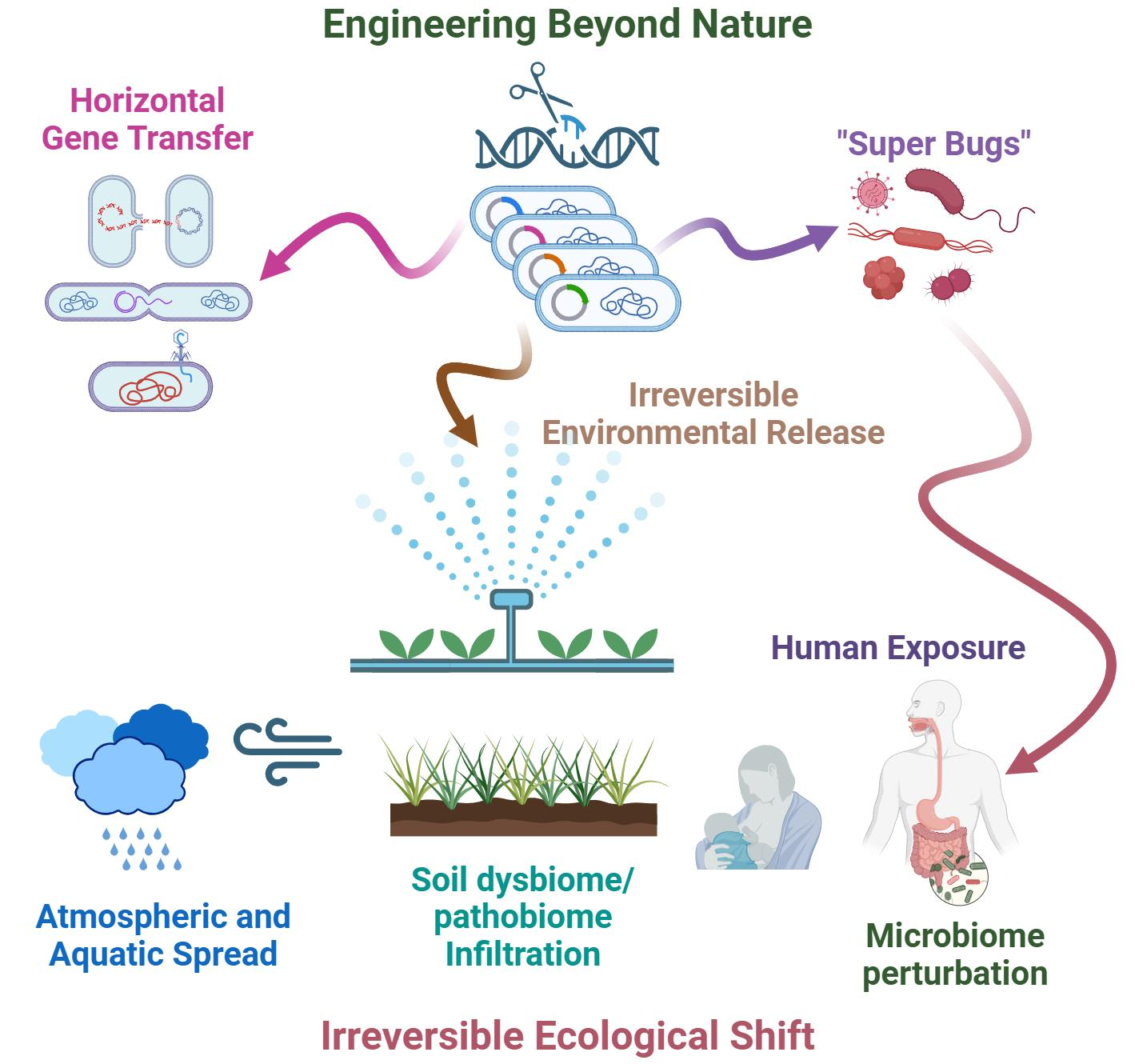
- Challenges with containment. Microbes are not easily contained. They can travel to distant and unexpected ecosystems and hosts and interact with a wide range of other microbes and organisms.
- Gene transfer. Microbes might readily transfer their genes to other microbes (known as horizontal gene transfer), or receive genes transferred from GM or non-GM microbes. If they confer advantages, the transferred genes may continue to be passed on from mother to daughter cells, exponentially increasing their count.
- Microbiomes are life-critical. Microbial communities are critical to the health and function of humans, animals, plants, and ecosystems around the planet.
- Unknown complexities. Science has only identified perhaps one percent of the estimated one trillion microbes on the planet [3]. Furthermore, we have only begun to map the complex relationships within and between microbiomes, hosts, and ecosystems.
1.3. Rapid Advancement of Genetic Engineering Technologies Surpass Policy Updates
- Enhance the ability of microbes to survive, spread, adapt, replicate, and/or escape host defenses, and mutate [39].
- Further, the technology can create countless combinations of GMMs, given the natural availability of thousands of types of microbes and the ease of defining CRISPR target sequences online.
2. Examples of Genetically Modified Microorganisms Risk Scenarios Contributed by Scientists and Physicians
2.1. GMMs Could Threaten Infant Gut Microbiome Acquisition, Immunological, and Neurological Development
2.2. Genetically Modified Microorganisms Could Pose Threats to Human Oral and Systemic Health by Altering the Human Oral Microbiome
2.3. Bioengineered Yeast Could Increase Risk of Human Gastrointestinal Infection with Pathogenic Clostridium Difficile
2.4. Enzymes from Genetically Engineered Microorganisms Can Trigger Autoimmune Disease and Gastrointestinal Illness
2.5. Genetically Modified Microorganisms Released in Soil Could Affect Climate Change and Disrupt Agricultural Systems
2.6. Genetically Modified Microorganisms Could Encourage Soil “Super Bugs”
3. Technical and Regulatory Considerations
3.1. Inherent Technical Challenges Working with Genetically Modified Microorganisms
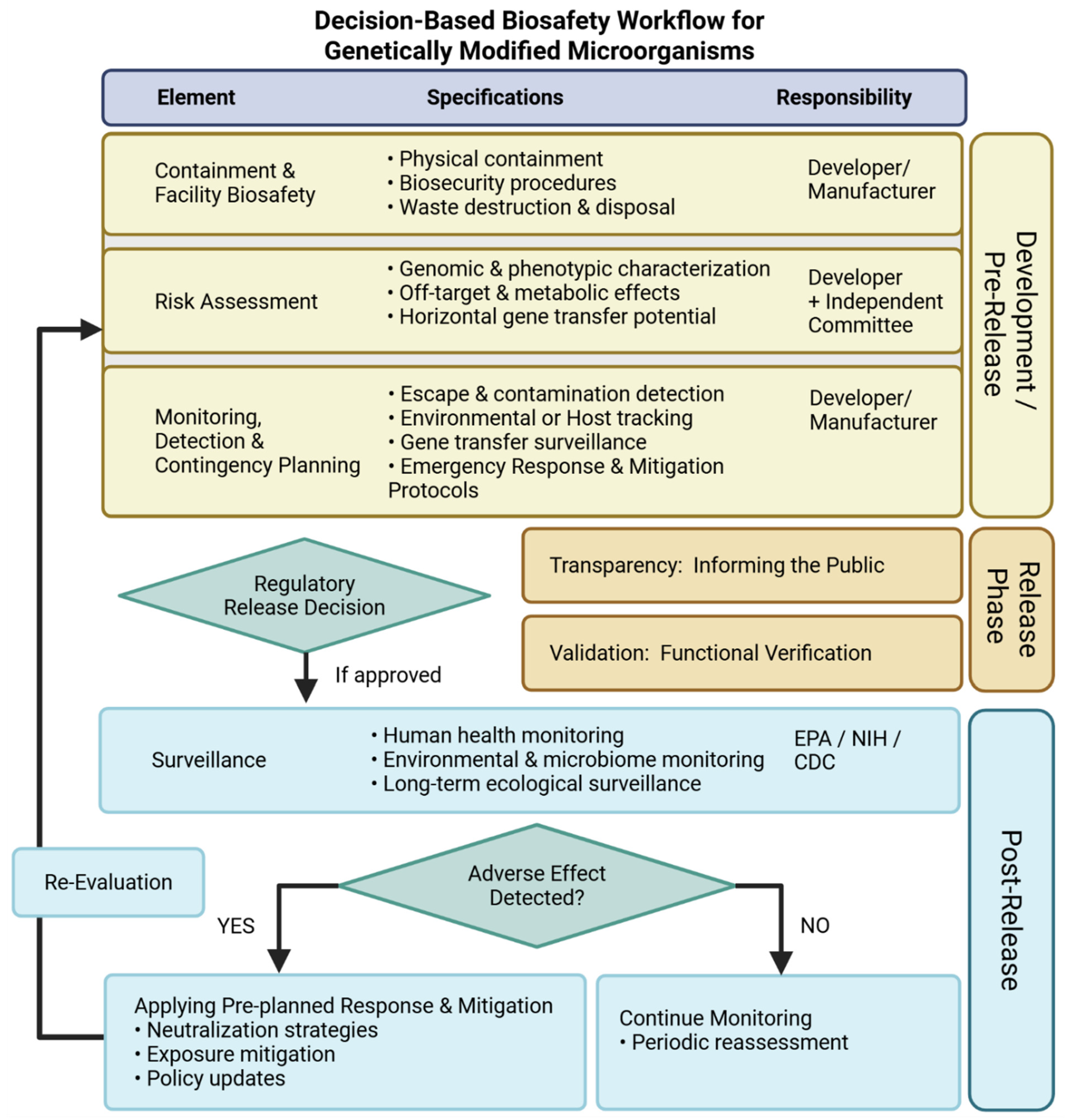
3.2. Contemporary Technologies for Genetically Modified Microorganisms Biosafety and Biocontainment
3.3. Insufficient International Regulatory Framework for Genetically Modified Microorganisms
3.4. Current State of Regulations in the United States
3.5. Current State of Regulations in Europe
3.6. Successful Regulatory Case Study: Pseudomonas fluorescens HK44
Environmental Bioremediation and Biosensing Applications
4. Conclusions
Author Contributions
Funding
Institutional Review Board Statement
Informed Consent Statement
Data Availability Statement
Conflicts of Interest
Correction Statement
References
- Genetically Modified Organisms. Available online: https://www.epa.gov/regulation-biotechnology-under-tsca-and-fifra/genetically-modified-organisms (accessed on 7 January 2026).
- Simard, S.W. Mycorrhizal Networks Facilitate Tree Communication, Learning, and Memory. In Memory and Learning in Plants; Baluska, F., Gagliano, M., Witzany, G., Eds.; Signaling and Communication in Plants; Springer: Berlin/Heidelberg, Germany, 2018; pp. 191–213. [Google Scholar]
- Locey, K.J.; Lennon, J.T. Scaling laws predict global microbial diversity. Proc. Natl. Acad. Sci. USA 2016, 113, 5970–5975. [Google Scholar] [CrossRef] [Scilit]
- Berg, G.; Rybakova, D.; Fischer, D.; Cernava, T.; Verges, M.C.; Charles, T.; Chen, X.; Cocolin, L.; Eversole, K.; Corral, G.H.; et al. Microbiome definition re-visited: Old concepts and new challenges. Microbiome 2020, 8, 103. [Google Scholar] [CrossRef] [Scilit] [PubMed]
- Kilian, M.; Chapple, I.L.; Hannig, M.; Marsh, P.D.; Meuric, V.; Pedersen, A.M.; Tonetti, M.S.; Wade, W.G.; Zaura, E. The oral microbiome—An update for oral healthcare professionals. Br. Dent. J. 2016, 221, 657–666. [Google Scholar] [CrossRef] [Scilit] [PubMed]
- Hou, K.; Wu, Z.-X.; Chen, X.-Y.; Wang, J.-Q.; Zhang, D.; Xiao, C.; Zhu, D.; Koya, J.B.; Wei, L.; Li, J.; et al. Microbiota in health and diseases. Signal Transduct. Target. Ther. 2022, 7, 135. [Google Scholar] [CrossRef] [Scilit] [PubMed]
- Hanlon, P.; Sewalt, V. GEMs: Genetically engineered microorganisms and the regulatory oversight of their uses in modern food production. Crit. Rev. Food Sci. Nutr. 2021, 61, 959–970. [Google Scholar] [CrossRef] [Scilit]
- Lambré, C.; Barat Baviera, J.M.; Bolognesi, C.; Cocconcelli, P.S.; Crebelli, R.; Gott, D.M.; Grob, K.; Lampi, E.; Mengelers, M.; Mortensen, A.; et al. Safety evaluation of the food enzyme chymosin from the genetically modified Kluyveromyces lactis strain CHY. EFSA J. 2022, 20, e07462. [Google Scholar] [CrossRef] [Scilit]
- Wesseler, J.; Kleter, G.; Meulenbroek, M.; Purnhagen, K.P. EU regulation of genetically modified microorganisms in light of new policy developments: Possible implications for EU bioeconomy investments. Appl. Econ. Perspect. Policy 2022, 45, 839–859. [Google Scholar] [CrossRef] [Scilit]
- Benner, S.A.; Sismour, A.M. Synthetic biology. Nat. Rev. Genet. 2005, 6, 533–543. [Google Scholar] [CrossRef] [Scilit]
- Archibald, B.N.; Zhong, V.; Brophy, J.A.N. Policy makers, genetic engineers, and an engaged public can work together to create climate-resilient plants. PLoS Biol. 2023, 21, e3002208. [Google Scholar] [CrossRef] [Scilit]
- He, D.C.; He, M.H.; Amalin, D.M.; Liu, W.; Alvindia, D.G.; Zhan, J. Biological Control of Plant Diseases: An Evolutionary and Eco-Economic Consideration. Pathogens 2021, 10, 1311. [Google Scholar] [CrossRef] [Scilit]
- Agricultural Biologicals Market to Hit USD 29.31 Billion by 2029. Available online: https://www.globenewswire.com/news-release/2023/06/05/2681944/0/en/Agricultural-Biologicals-Market-to-Hit-USD-29-31-Billion-by-2029-Fortune-Business-Insights.html (accessed on 7 January 2026).
- America’s No. 1 Seed Treatment Continues to Deliver: Poncho/VOTiVO Consistently Increases Yield by 10 bu/A over Commercial Fungicide. Available online: https://www.prnewswire.com/news-releases/americas-no-1-seed-treatment-continues-to-deliver-300419259.html (accessed on 7 January 2026).
- Gold, M.; Hemmelgarn, H. Action in Agroforestry: Economic Development Research Translates to Major Commercial Application. Available online: https://centerforagroforestry.org/wp-content/uploads/2021/05/1805action.pdf (accessed on 23 January 2026).
- Can microbes save the planet? Nat. Biotechnol. 2023, 41, 735. [CrossRef] [Scilit] [PubMed]
- Li, T.; Menegatti, S.; Crook, N. Breakdown of polyethylene therepthalate microplastics under saltwater conditions using engineered Vibrio natriegens. AIChE J. 2023, 69, e18228. [Google Scholar] [CrossRef] [Scilit]
- Industrial Microbes and Opus 12 Awarded $1M to Turn Waste Gas into Valuable Chemicals. Available online: https://www.synbiobeta.com/read/industrial-microbes-and-opus-12-awarded-1m-to-turn-waste-gas-into-valuable-chemicals (accessed on 7 January 2026).
- Govender, K.; Naicker, T.; Lin, J.; Baijnath, S.; Chuturgoon, A.A.; Abdul, N.S.; Docrat, T.; Kruger, H.G.; Govender, T. A novel and more efficient biosynthesis approach for human insulin production in Escherichia coli (E. coli). AMB Express 2020, 10, 43. [Google Scholar] [CrossRef] [Scilit] [PubMed]
- Nielsen, K.M.; Johnsen, P.J.; Bensasson, D.; Daffonchio, D. Release and persistence of extracellular DNA in the environment. Environ. Biosaf. Res. 2007, 6, 37–53. [Google Scholar] [CrossRef] [Scilit]
- Steinhäuser, K.G. Environmental risks of chemicals and genetically modified organisms: A comparison. Part I: Classification and characterisation of risks posed by chemicals and GMOs. Environ. Sci. Pollut. Res. Int. 2001, 8, 120–126. [Google Scholar] [CrossRef] [Scilit]
- Casamayor, E.O.; Cáliz, J.; Triadó-Margarit, X.; Pointing, S.B. Understanding atmospheric intercontinental dispersal of harmful microorganisms. Curr. Opin. Biotechnol. 2023, 81, 102945. [Google Scholar] [CrossRef] [Scilit]
- Lerner, A.; Benzvi, C.; Vojdani, A. The Potential Harmful Effects of Genetically Engineered Microorganisms (GEMs) on the Intestinal Microbiome and Public Health. Microorganisms 2024, 12, 238. [Google Scholar] [CrossRef] [Scilit]
- Gibson, B.; Wilson, D.J.; Feil, E.; Eyre-Walker, A. The distribution of bacterial doubling times in the wild. Proc. Biol. Sci. 2018, 285, 20180789. [Google Scholar] [CrossRef] [Scilit]
- Lerner, A.; Soprun, L.; Benzvi, C. Antimicrobial Resistance along the Food Chain: Contaminated and Industrially Processed Nutrients. J. Food Nutr. Health 2022, 3, 1–11. [Google Scholar] [CrossRef] [Scilit]
- Rosander, A.; Connolly, E.; Roos, S. Removal of antibiotic resistance gene-carrying plasmids from Lactobacillus reuteri ATCC 55730 and characterization of the resulting daughter strain, L. reuteri DSM 17938. Appl. Environ. Microbiol. 2008, 74, 6032–6040. [Google Scholar] [CrossRef] [Scilit]
- Muñoz-Atienza, E.; Gómez-Sala, B.; Araújo, C.; Campanero, C.; del Campo, R.; Hernández, P.E.; Herranz, C.; Cintas, L.M. Antimicrobial activity, antibiotic susceptibility and virulence factors of Lactic Acid Bacteria of aquatic origin intended for use as probiotics in aquaculture. BMC Microbiol. 2013, 13, 15. [Google Scholar] [CrossRef] [Scilit]
- Johansson, I.; Witkowska, E.; Kaveh, B.; Lif Holgerson, P.; Tanner, A.C. The Microbiome in Populations with a Low and High Prevalence of Caries. J. Dent. Res. 2016, 95, 80–86. [Google Scholar] [CrossRef] [Scilit]
- Lozupone, C.A.; Stombaugh, J.I.; Gordon, J.I.; Jansson, J.K.; Knight, R. Diversity, stability and resilience of the human gut microbiota. Nature 2012, 489, 220–230. [Google Scholar] [CrossRef] [Scilit]
- Blaser, M.J. The theory of disappearing microbiota and the epidemics of chronic diseases. Nat. Rev. Immunol. 2017, 17, 461–463. [Google Scholar] [CrossRef] [Scilit]
- Stryjewska, A.; Kiepura, K.; Librowski, T.; Lochynski, S. Biotechnology and genetic engineering in the new drug development. Part I. DNA technology and recombinant proteins. Pharmacol. Rep. 2013, 65, 1075–1085. [Google Scholar] [CrossRef] [Scilit]
- Recombinant DNA Technology. Available online: https://www.genome.gov/genetics-glossary/Recombinant-DNA-Technology#:~:text=Recombinant%20DNA%20technology%20involves%20using,referred%20to%20as%20recombinant%20DNA (accessed on 7 January 2026).
- Redman, M.; King, A.; Watson, C.; King, D. What is CRISPR/Cas9? Arch. Dis. Child. Educ. Pract. Ed. 2016, 101, 213–215. [Google Scholar] [CrossRef] [Scilit]
- Zaib, S.; Saleem, M.A.; Khan, I. CRISPR-Cas9 Genome Engineering: Trends in Medicine and Health. Mini Rev. Med. Chem. 2022, 22, 410–421. [Google Scholar] [CrossRef] [Scilit]
- Ledford, H. CRISPR gene editing in human embryos wreaks chromosomal mayhem. Nature 2020, 583, 17–18. [Google Scholar] [CrossRef] [Scilit]
- What Are Genome Editing and CRISPR-Cas9? Available online: https://medlineplus.gov/genetics/understanding/genomicresearch/genomeediting/ (accessed on 7 January 2026).
- Blattner, G.; Cavazza, A.; Thrasher, A.J.; Turchiano, G. Gene Editing and Genotoxicity: Targeting the Off-Targets. Front. Genome Ed. 2020, 2, 613252. [Google Scholar] [CrossRef] [Scilit]
- Guo, C.; Ma, X.; Gao, F.; Guo, Y. Off-target effects in CRISPR/Cas9 gene editing. Front. Bioeng. Biotechnol. 2023, 11, 1143157. [Google Scholar] [CrossRef] [Scilit] [PubMed]
- George, D.R.; Danciu, M.; Davenport, P.W.; Lakin, M.R.; Chappell, J.; Frow, E.K. A bumpy road ahead for genetic biocontainment. Nat. Commun. 2024, 15, 650. [Google Scholar] [CrossRef] [Scilit]
- Spagnuolo, M.; Shabbir Hussain, M.; Gambill, L.; Blenner, M. Alternative Substrate Metabolism in Yarrowia lipolytica. Front. Microbiol. 2018, 9, 1077. [Google Scholar] [CrossRef] [Scilit] [PubMed]
- Prabhu, A.A.; Ledesma-Amaro, R.; Lin, C.S.K.; Coulon, F.; Thakur, V.K.; Kumar, V. Bioproduction of succinic acid from xylose by engineered Yarrowia lipolytica without pH control. Biotechnol. Biofuels 2020, 13, 113. [Google Scholar] [CrossRef] [Scilit] [PubMed]
- Heuer, H.; Smalla, K. Horizontal gene transfer between bacteria. Environ. Biosaf. Res. 2007, 6, 3–13. [Google Scholar] [CrossRef] [Scilit] [PubMed]
- Zahran, E.; Sauerborn, J.; Abbasher, A.; Ahmed, E.; Mohukker, R.; Karlovsky, P.; Mohamed, E.; Muller-Stover, D. “Pesta” and alginate delivery systems of Fusarium spp. for biological control of Striga hermonthica (Del.) Benth. under Sudanese field conditions. Biol. Control. 2008, 44, 160–168. [Google Scholar] [CrossRef] [Scilit]
- Sudheer, S.; Bai, R.G.; Usmani, Z.; Sharma, M. Insights on Engineered Microbes in Sustainable Agriculture: Biotechnological Developments and Future Prospects. Curr. Genom. 2020, 21, 321–333. [Google Scholar] [CrossRef] [Scilit]
- Thomson, C.; McCoy, K. The Role of Mom’s Microbes During Pregnancy. Available online: https://www.the-scientist.com/features/the-role-of-mom-s-microbes-during-pregnancy-69009 (accessed on 7 January 2026).
- Pelzer, E.; Gomez-Arango, L.F.; Barrett, H.L.; Nitert, M.D. Review: Maternal health and the placental microbiome. Placenta 2017, 54, 30–37. [Google Scholar] [CrossRef] [Scilit]
- Ardissone, A.N.; de la Cruz, D.M.; Davis-Richardson, A.G.; Rechcigl, K.T.; Li, N.; Drew, J.C.; Murgas-Torrazza, R.; Sharma, R.; Hudak, M.L.; Triplett, E.W.; et al. Meconium microbiome analysis identifies bacteria correlated with premature birth. PLoS ONE 2014, 9, e90784, Erratum in PLoS ONE 2014, 9, e101399. [Google Scholar] [CrossRef] [Scilit]
- Williams, N.; Vella, R.; Zhou, Y.; Gao, H.; Mass, K.; Townsel, C.; Campbell, W.; Luo, G. Investigating the origin of the fetal gut and placenta microbiome in twins. J. Matern. Fetal Neonatal Med. 2022, 35, 7025–7035. [Google Scholar] [CrossRef] [Scilit]
- Sajdel-Sulkowska, E.M. The Impact of Maternal Gut Microbiota during Pregnancy on Fetal Gut-Brain Axis Development and Life-Long Health Outcomes. Microorganisms 2023, 11, 2199. [Google Scholar] [CrossRef] [Scilit]
- Bokulich, N.A.; Chung, J.; Battaglia, T.; Henderson, N.; Jay, M.; Li, H.; Lieber, A.D.; Wu, F.; Perez-Perez, G.I.; Chen, Y.; et al. Antibiotics, birth mode, and diet shape microbiome maturation during early life. Sci. Transl. Med. 2016, 8, 343ra82. [Google Scholar] [CrossRef] [Scilit] [PubMed]
- Hoel, S.T.; Wiik, J.; Carlsen, K.C.L.; Endre, K.M.A.; Gudmundsdóttir, H.K.; Haugen, G.; Hoyer, A.; Jonassen, C.M.; LeBlanc, M.; Nordlund, B.; et al. Birth mode is associated with development of atopic dermatitis in infancy and early childhood. J. Allergy Clin. Immunol. Glob. 2023, 2, 100104. [Google Scholar] [CrossRef] [Scilit] [PubMed]
- Andersen, V.; Möller, S.; Jensen, P.B.; Møller, F.T.; Green, A. Caesarean Delivery and Risk of Chronic Inflammatory Diseases (Inflammatory Bowel Disease, Rheumatoid Arthritis, Coeliac Disease, and Diabetes Mellitus): A Population Based Registry Study of 2,699,479 Births in Denmark During 1973–2016. Clin. Epidemiol. 2020, 12, 287–293. [Google Scholar] [CrossRef] [Scilit] [PubMed]
- Roager, H.M.; Stanton, C.; Hall, L.J. Microbial metabolites as modulators of the infant gut microbiome and host-microbial interactions in early life. Gut Microbes 2023, 15, 2192151. [Google Scholar] [CrossRef] [Scilit]
- Shao, Y.; Forster, S.C.; Tsaliki, E.; Vervier, K.; Strang, A.; Simpson, N.; Kumar, N.; Stares, M.D.; Rodger, A.; Brocklehurst, P.; et al. Stunted microbiota and opportunistic pathogen colonization in caesarean-section birth. Nature 2019, 574, 117–121. [Google Scholar] [CrossRef] [Scilit]
- Stokholm, J.; Thorsen, J.; Blaser, M.J.; Rasmussen, M.A.; Hjelmsø, M.; Shah, S.; Christensen, E.D.; Chawes, B.L.; Bønnelykke, K.; Brix, S.; et al. Delivery mode and gut microbial changes correlate with an increased risk of childhood asthma. Sci. Transl. Med. 2020, 12, eaax9929. [Google Scholar] [CrossRef] [Scilit]
- Bode, L.; McGuire, M.; Rodriguez, J.M.; Geddes, D.T.; Hassiotou, F.; Hartmann, P.E.; McGuire, M.K. It’s alive: Microbes and cells in human milk and their potential benefits to mother and infant. Adv. Nutr. 2014, 5, 571–573. [Google Scholar] [CrossRef] [Scilit]
- Hassiotou, F.; Geddes, D.T. Immune cell-mediated protection of the mammary gland and the infant during breastfeeding. Adv. Nutr. 2015, 6, 267–275. [Google Scholar] [CrossRef] [Scilit]
- Ramsay, D.T.; Kent, J.C.; Owens, R.A.; Hartmann, P.E. Ultrasound imaging of milk ejection in the breast of lactating women. Pediatrics 2004, 113, 361–367. [Google Scholar] [CrossRef] [Scilit]
- Sanders, L. Backwash from Nursing Babies May Trigger Infection Fighters. Available online: https://www.sciencenews.org/blog/growth-curve/backwash-nursing-babies-may-trigger-infection-fighters (accessed on 7 January 2026).
- Yoo, J.Y.; Groer, M.; Dutra, S.V.O.; Sarkar, A.; McSkimming, D.I. Gut Microbiota and Immune System Interactions. Microorganisms 2020, 8, 1587, Erratum in Microorganisms 2020, 8, E2046. [Google Scholar] [CrossRef] [Scilit]
- Yao, Y.; Cai, X.; Ye, Y.; Wang, F.; Chen, F.; Zheng, C. The Role of Microbiota in Infant Health: From Early Life to Adulthood. Front. Immunol. 2021, 12, 708472. [Google Scholar] [CrossRef] [Scilit]
- Ramadugu, K.; Bhaumik, D.; Luo, T.; Gicquelais, R.E.; Lee, K.H.; Stafford, E.B.; Marrs, C.F.; Neiswanger, K.; McNeil, D.W.; Marazita, M.L.; et al. Maternal Oral Health Influences Infant Salivary Microbiome. J. Dent. Res. 2021, 100, 58–65. [Google Scholar] [CrossRef] [Scilit] [PubMed]
- Saini, R.; Saini, S.; Sharma, S. Biofilm: A dental microbial infection. J. Nat. Sci. Biol. Med. 2011, 2, 71–75. [Google Scholar] [CrossRef] [Scilit] [PubMed]
- Kitamoto, S.; Nagao-Kitamoto, H.; Hein, R.; Schmidt, T.M.; Kamada, N. The Bacterial Connection between the Oral Cavity and the Gut Diseases. J. Dent. Res. 2020, 99, 1021–1029. [Google Scholar] [CrossRef] [Scilit] [PubMed]
- He, J.; Li, Y.; Cao, Y.; Xue, J.; Zhou, X. The oral microbiome diversity and its relation to human diseases. Folia Microbiol. 2015, 60, 69–80. [Google Scholar] [CrossRef] [Scilit]
- Kiyono, H.; Azegami, T. The mucosal immune system: From dentistry to vaccine development. Proc. Jpn. Acad. Ser. B Phys. Biol. Sci. 2015, 91, 423–439. [Google Scholar] [CrossRef] [Scilit]
- Segata, N.; Haake, S.K.; Mannon, P.; Lemon, K.P.; Waldron, L.; Gevers, D.; Huttenhower, C.; Izard, J. Composition of the adult digestive tract bacterial microbiome based on seven mouth surfaces, tonsils, throat and stool samples. Genome Biol. 2012, 13, R42. [Google Scholar] [CrossRef] [Scilit]
- Hyde, E.R.; Andrade, F.; Vaksman, Z.; Parthasarathy, K.; Jiang, H.; Parthasarathy, D.K.; Torregrossa, A.C.; Tribble, G.; Kaplan, H.B.; Petrosino, J.F.; et al. Metagenomic analysis of nitrate-reducing bacteria in the oral cavity: Implications for nitric oxide homeostasis. PLoS ONE 2014, 9, e88645. [Google Scholar] [CrossRef] [Scilit]
- Burleigh, M.C.; Liddle, L.; Monaghan, C.; Muggeridge, D.J.; Sculthorpe, N.; Butcher, J.P.; Henriquez, F.L.; Allen, J.D.; Easton, C. Salivary nitrite production is elevated in individuals with a higher abundance of oral nitrate-reducing bacteria. Free Radic. Biol. Med. 2018, 120, 80–88. [Google Scholar] [CrossRef] [Scilit]
- Rydén, L.; Buhlin, K.; Ekstrand, E.; de Faire, U.; Gustafsson, A.; Holmer, J.; Kjellström, B.; Lindahl, B.; Norhammar, A.; Nygren, Å.; et al. Periodontitis Increases the Risk of a First Myocardial Infarction: A Report from the PAROKRANK Study. Circulation 2016, 133, 576–583. [Google Scholar] [CrossRef] [Scilit]
- Bale, B.F.; Doneen, A.L.; Vigerust, D.J. High-risk periodontal pathogens contribute to the pathogenesis of atherosclerosis. Postgrad. Med. J. 2017, 93, 215–220. [Google Scholar] [CrossRef] [Scilit] [PubMed]
- Pritchard, A.B.; Crean, S.; Olsen, I.; Singhrao, S.K. Periodontitis, Microbiomes and their Role in Alzheimer’s Disease. Front. Aging Neurosci. 2017, 9, 336. [Google Scholar] [CrossRef] [Scilit] [PubMed]
- Adam, M. Does periodontitis affect respiratory health? Evid. Based Dent. 2023, 24, 102–103. [Google Scholar] [CrossRef] [Scilit] [PubMed]
- Nazir, M.A. Prevalence of periodontal disease, its association with systemic diseases and prevention. Int. J. Health Sci. 2017, 11, 72–80. [Google Scholar]
- Su, S.C.; Chang, L.C.; Huang, H.D.; Peng, C.Y.; Chuang, C.Y.; Chen, Y.T.; Lu, M.Y.; Chiu, Y.W.; Chen, P.Y.; Yang, S.F. Oral microbial dysbiosis and its performance in predicting oral cancer. Carcinogenesis 2021, 42, 127–135. [Google Scholar] [CrossRef] [Scilit]
- Chang, Y.; Chung, M.K.; Park, J.H.; Song, T.J. Association of Oral Health with Risk of Rheumatoid Arthritis: A Nationwide Cohort Study. J. Pers. Med. 2023, 13, 340. [Google Scholar] [CrossRef] [Scilit]
- Posada-Lopez, A.; Botero, J.E.; Duque-Castano, J.D.; Ronda-Perez, E.; Agudelo-Suarez, A.A. Oral health-related quality of life in a group of patients with rheumatoid arthritis. Dent. Med. Probl. 2023, 60, 109–119. [Google Scholar] [CrossRef] [Scilit]
- Moeller, A.H.; Sanders, J.G. Roles of the gut microbiota in the adaptive evolution of mammalian species. Philos. Trans. R. Soc. B 2020, 375, 20190597. [Google Scholar] [CrossRef] [Scilit]
- Barbosa, T.; Rescigno, M. Host-bacteria interactions in the intestine: Homeostasis to chronic inflammation. Wiley Interdiscip. Rev. Syst. Biol. Med. 2010, 2, 80–97. [Google Scholar] [CrossRef] [Scilit]
- Cummings, J.H.; Macfarlane, G.T. Role of intestinal bacteria in nutrient metabolism. J. Parenter. Enter. Nutr. 1997, 21, 357–365. [Google Scholar] [CrossRef] [Scilit]
- Jumpertz, R.; Le, D.S.; Turnbaugh, P.J.; Trinidad, C.; Bogardus, C.; Gordon, J.I.; Krakoff, J. Energy-balance studies reveal associations between gut microbes, caloric load, and nutrient absorption in humans. Am. J. Clin. Nutr. 2011, 94, 58–65. [Google Scholar] [CrossRef] [Scilit] [PubMed]
- Kalliomaki, M.; Collado, M.C.; Salminen, S.; Isolauri, E. Early differences in fecal microbiota composition in children may predict overweight. Am. J. Clin. Nutr. 2008, 87, 534–538. [Google Scholar] [CrossRef] [Scilit] [PubMed]
- Kelly, D.; Mulder, I.E. Microbiome and immunological interactions. Nutr. Rev. 2012, 70, S18–S30. [Google Scholar] [CrossRef] [Scilit] [PubMed]
- Tlaskalova-Hogenova, H.; Stepankova, R.; Hudcovic, T.; Tuckova, L.; Cukrowska, B.; Lodinova-Zadnikova, R.; Kozakova, H.; Rossmann, P.; Bartova, J.; Sokol, D.; et al. Commensal bacteria (normal microflora), mucosal immunity and chronic inflammatory and autoimmune diseases. Immunol. Lett. 2004, 93, 97–108. [Google Scholar] [CrossRef]
- Veerappan, G.R.; Betteridge, J.; Young, P.E. Probiotics for the treatment of inflammatory bowel disease. Curr. Gastroenterol. Rep. 2012, 14, 324–333. [Google Scholar] [CrossRef] [Scilit]
- Yu, L.C.; Wang, J.T.; Wei, S.C.; Ni, Y.H. Host-microbial interactions and regulation of intestinal epithelial barrier function: From physiology to pathology. World J. Gastrointest. Pathophysiol. 2012, 3, 27–43. [Google Scholar] [CrossRef] [Scilit]
- Bengmark, S. Gut microbiota, immune development and function. Pharmacol. Res. 2013, 69, 87–113. [Google Scholar] [CrossRef] [Scilit]
- Musso, G.; Gambino, R.; Cassader, M. Interactions between gut microbiota and host metabolism predisposing to obesity and diabetes. Annu. Rev. Med. 2011, 62, 361–380. [Google Scholar] [CrossRef] [Scilit]
- Sanz, Y.; Santacruz, A.; Gauffin, P. Gut microbiota in obesity and metabolic disorders. Proc. Nutr. Soc. 2010, 69, 434–441. [Google Scholar] [CrossRef] [Scilit]
- Tilg, H.; Kaser, A. Gut microbiome, obesity, and metabolic dysfunction. J. Clin. Investig. 2011, 121, 2126–2132. [Google Scholar] [CrossRef] [Scilit]
- Delzenne, N.M.; Cani, P.D. Gut microbiota and the pathogenesis of insulin resistance. Curr. Diabetes Rep. 2011, 11, 154–159. [Google Scholar] [CrossRef] [Scilit] [PubMed]
- Pagnini, C.; Corleto, V.D.; Mangoni, M.L.; Pilozzi, E.; Torre, M.S.; Marchese, R.; Carnuccio, A.; Giulio, E.D.; Delle Fave, G. Alteration of local microflora and alpha-defensins hyper-production in colonic adenoma mucosa. J. Clin. Gastroenterol. 2011, 45, 602–610. [Google Scholar] [CrossRef] [Scilit] [PubMed]
- Nougayrede, J.P.; Oswald, E. [Microbiota and colorectal cancer: Genotoxic bacteria in the intestinal tract]. Bull. Acad. Natl. Med. 2011, 195, 1295–1304; discussion 1304–1295. [Google Scholar]
- Leviatan, S.; Shoer, S.; Rothschild, D.; Gorodetski, M.; Segal, E. An expanded reference map of the human gut microbiome reveals hundreds of previously unknown species. Nat. Commun. 2022, 13, 3863. [Google Scholar] [CrossRef] [Scilit]
- Yang, J.; Pu, J.; Lu, S.; Bai, X.; Wu, Y.; Jin, D.; Cheng, Y.; Zhang, G.; Zhu, W.; Luo, X.; et al. Species-Level Analysis of Human Gut Microbiota with Metataxonomics. Front. Microbiol. 2020, 11, 2029. [Google Scholar] [CrossRef] [Scilit]
- Canny, G.O.; McCormick, B.A. Bacteria in the intestine, helpful residents or enemies from within? Infect. Immun. 2008, 76, 3360–3373. [Google Scholar] [CrossRef] [Scilit]
- Li, Z.; Xiong, W.; Liang, Z.; Wang, J.; Zeng, Z.; Kolat, D.; Li, X.; Zhou, D.; Xu, X.; Zhao, L. Critical role of the gut microbiota in immune responses and cancer immunotherapy. J. Hematol. Oncol. 2024, 17, 33. [Google Scholar] [CrossRef] [Scilit]
- Panigrahi, P. The neonatal gut microbiome and global health. Gut Microbes 2024, 16, 2352175. [Google Scholar] [CrossRef] [Scilit]
- Tang, W.H.W.; Hazen, S.L. Unraveling the Complex Relationship Between Gut Microbiome and Cardiovascular Diseases. Circulation 2024, 149, 1543–1545. [Google Scholar] [CrossRef] [Scilit]
- Watanabe, H.; Inoue, T.; Miyamoto, L.; Ono, Y.; Matsumoto, K.; Takeda, M.; Tsuchiya, K. Changes in intestinal microbiota and biochemical parameters in patients with inflammatory bowel disease and irritable bowel syndrome induced by the prolonged addition of soluble fibers to usual drug therapy. J. Med. Investig. 2024, 71, 121–128. [Google Scholar] [CrossRef] [Scilit]
- Abbes, S.; Amouri, I.; Trabelsi, H.; Neji, S.; Sellami, H.; Rahmouni, F.; Makni, F.; Rebai, T.; Ayadi, A. Analysis of virulence factors and in vivo biofilm-forming capacity of Yarrowia lipolytica isolated from patients with fungemia. Med. Mycol. 2017, 55, 193–202. [Google Scholar] [CrossRef] [Scilit] [PubMed]
- Schwartz, C.M.; Hussain, M.S.; Blenner, M.; Wheeldon, I. Synthetic RNA Polymerase III Promoters Facilitate High-Efficiency CRISPR-Cas9-Mediated Genome Editing in Yarrowia lipolytica. ACS Synth. Biol. 2016, 5, 356–359. [Google Scholar] [CrossRef] [Scilit] [PubMed]
- Gao, S.; Han, L.; Zhu, L.; Ge, M.; Yang, S.; Jiang, Y.; Chen, D. One-step integration of multiple genes into the oleaginous yeast Yarrowia lipolytica. Biotechnol. Lett. 2014, 36, 2523–2528. [Google Scholar] [CrossRef] [Scilit]
- Celinska, E.; Ledesma-Amaro, R.; Larroude, M.; Rossignol, T.; Pauthenier, C.; Nicaud, J.M. Golden Gate Assembly system dedicated to complex pathway manipulation in Yarrowia lipolytica. Microb. Biotechnol. 2017, 10, 450–455. [Google Scholar] [CrossRef] [Scilit]
- Connors, J.; Dawe, N.; Van Limbergen, J. The Role of Succinate in the Regulation of Intestinal Inflammation. Nutrients 2018, 11, 25. [Google Scholar] [CrossRef] [Scilit]
- Ferreyra, J.A.; Wu, K.J.; Hryckowian, A.J.; Bouley, D.M.; Weimer, B.C.; Sonnenburg, J.L. Gut microbiota-produced succinate promotes C. difficile infection after antibiotic treatment or motility disturbance. Cell Host Microbe 2014, 16, 770–777. [Google Scholar] [CrossRef] [Scilit]
- Park, Y.K.; Ledesma-Amaro, R. What makes Yarrowia lipolytica well suited for industry? Trends Biotechnol. 2023, 41, 242–254. [Google Scholar] [CrossRef] [Scilit]
- Lerner, A.; Aminov, R.; Matthias, T. Dysbiosis May Trigger Autoimmune Diseases via Inappropriate Post-Translational Modification of Host Proteins. Front. Microbiol. 2016, 7, 84. [Google Scholar] [CrossRef] [Scilit]
- Lerner, A.; Aminov, R.; Matthias, T. Transglutaminases in Dysbiosis as Potential Environmental Drivers of Autoimmunity. Front. Microbiol. 2017, 8, 66. [Google Scholar] [CrossRef] [Scilit]
- Lerner, A.; Benzvi, C. Microbial Transglutaminase Is a Very Frequently Used Food Additive and Is a Potential Inducer of Autoimmune/Neurodegenerative Diseases. Toxics 2021, 9, 233. [Google Scholar] [CrossRef] [Scilit]
- Lerner, A.; Matthias, T. Microbial Transglutaminase is Beneficial to Food Industries but a Caveat to Public Health. Med. One 2019, 4, e190001. [Google Scholar]
- Lerner, A.; Matthias, T. Processed Food Additive Microbial Transglutaminase and Its Cross-Linked Gliadin Complexes Are Potential Public Health Concerns in Celiac Disease. Int. J. Mol. Sci. 2020, 21, 1127. [Google Scholar] [CrossRef] [Scilit]
- Lerner, A.; Benzvi, C. “Let Food Be Thy Medicine”: Gluten and Potential Role in Neurodegeneration. Cells 2021, 10, 756. [Google Scholar] [CrossRef] [Scilit]
- Lerner, A.; Matthias, T. Possible association between celiac disease and bacterial transglutaminase in food processing: A hypothesis. Nutr. Rev. 2015, 73, 544–552. [Google Scholar] [CrossRef] [Scilit]
- Aaron, L.; Torsten, M. Microbial transglutaminase: A new potential player in celiac disease. Clin. Immunol. 2019, 199, 37–43. [Google Scholar] [CrossRef] [Scilit]
- Lerner, A.; Matthias, T. Don’t forget the exogenous microbial transglutaminases: It is immunogenic and potentially pathogenic. AIMS Biophys. 2016, 3, 546–552. [Google Scholar] [CrossRef] [Scilit]
- Lerner, A.; Matthias, T. Microbial transglutaminase should be considered as an environmental inducer of celiac disease. World J. Clin. Cases 2019, 7, 3912–3914. [Google Scholar] [CrossRef] [Scilit]
- Lerner, A.; Ramesh, A.; Matthias, T. The Revival of the Battle Between David and Goliath in the Enteric Viruses and Microbiota Struggle: Potential Implication for Celiac Disease. Microorganisms 2019, 7, 173. [Google Scholar] [CrossRef] [Scilit]
- Matthias, T.; Jeremias, P.; Neidhöfer, S.; Lerner, A. The industrial food additive, microbial transglutaminase, mimics tissue transglutaminase and is immunogenic in celiac disease patients. Autoimmun. Rev. 2016, 15, 1111–1119. [Google Scholar] [CrossRef] [Scilit]
- Matthias, T.; Lerner, A. Microbial transglutaminase is immunogenic and potentially pathogenic in pediatric celiac disease. Front. Pediatr. 2018, 6, 389. [Google Scholar] [CrossRef] [Scilit]
- Kolotylo, V.; Piwowarek, K.; Kieliszek, M. Microbiological transglutaminase: Biotechnological application in the food industry. Open Life Sci. 2023, 18, 20220737. [Google Scholar] [CrossRef] [Scilit] [PubMed]
- Lerner, A.; Benzvi, C.; Vojdani, A. Cross-reactivity and sequence similarity between microbial transglutaminase and human tissue antigens. Sci. Rep. 2023, 13, 17526. [Google Scholar] [CrossRef] [Scilit] [PubMed]
- Okpara, M. Microbial Enzymes and Their Applications in Food Industry: A Mini-Review. Adv. Enzym. Res. 2022, 10, 23–47. [Google Scholar] [CrossRef]
- Vasić, K.; Knez, Ž.; Leitgeb, M. Transglutaminase in Foods and Biotechnology. Int. J. Mol. Sci. 2023, 24, 12402. [Google Scholar] [CrossRef] [Scilit]
- English, J.; Connolly, L.; Stewart, L.D. Increased Intestinal Permeability: An Avenue for the Development of Autoimmune Disease? Expo. Health 2024, 16, 575–605. [Google Scholar] [CrossRef] [Scilit]
- Ellermann, M.; Sartor, R.B. Intestinal bacterial biofilms modulate mucosal immune responses. J. Immunol. Sci. 2018, 2, 13–18. [Google Scholar] [CrossRef] [Scilit]
- Recktenwald, C.V.; Hansson, G.C. The Reduction-insensitive Bonds of the MUC2 Mucin Are Isopeptide Bonds. J. Biol. Chem. 2016, 291, 13580–13590. [Google Scholar] [CrossRef] [Scilit]
- Gouseti, O.; Larsen, M.E.; Amin, A.; Bakalis, S.; Petersen, I.L.; Lametsch, R.; Jensen, P.E. Applications of Enzyme Technology to Enhance Transition to Plant Proteins: A Review. Foods 2023, 12, 2518. [Google Scholar] [CrossRef] [Scilit]
- Lerner, A.; Matthias, T.; Aminov, R. Potential Effects of Horizontal Gene Exchange in the Human Gut. Front. Immunol. 2017, 8, 1630. [Google Scholar] [CrossRef] [Scilit]
- Deckers, M.; Vanneste, K.; Winand, R.; Keersmaecker, S.C.J.; Denayer, S.; Heyndrickx, M.; Deforce, D.; Fraiture, M.A.; Roosens, N.H.C. Strategy for the identification of micro-organisms producing food and feed products: Bacteria producing food enzymes as study case. Food Chem. 2020, 305, 125431. [Google Scholar] [CrossRef] [Scilit]
- Faustman, C.; Aaron, D.; Negowetti, N.; Leib, E.B. Ten years post-GAO assessment, FDA remains uninformed of potentially harmful GRAS substances in foods. Crit. Rev. Food Sci. Nutr. 2021, 61, 1260–1268. [Google Scholar] [CrossRef] [Scilit] [PubMed]
- Matouskova, K.; Neltner, T.G.; Maffini, M.V. Out of balance: Conflicts of interest persist in food chemicals determined to be generally recognized as safe. Environ. Health 2023, 22, 59. [Google Scholar] [CrossRef] [Scilit] [PubMed]
- Neltner, T.G.; Alger, H.M.; O’Reilly, J.T.; Krimsky, S.; Bero, L.A.; Maffini, M.V. Conflicts of interest in approvals of additives to food determined to be generally recognized as safe: Out of balance. JAMA Intern. Med. 2013, 173, 2032–2036. [Google Scholar] [CrossRef] [Scilit] [PubMed]
- Vandenberg, L.N.; Zoeller, R.T.; Prins, G.S.; Trasande, L. Evaluating adverse effects of environmental agents in food: A brief critique of the US FDA’s criteria. Environ. Health 2023, 22, 38. [Google Scholar] [CrossRef] [Scilit]
- Sewalt, V.; LaMarta, J.; Shanahan, D.; Gregg, L.; Carrillo, R. Letter to the editor regarding”GRAS from the ground up: Review of the Interim Pilot Program for GRAS notification” by Hanlon et al. Food Chem. Toxicol. 2017, 107, 520–521. [Google Scholar] [CrossRef] [Scilit]
- Microbial Transglutaminase Market Size & Outlook, 2025–2033: Microbial Transglutaminase Market Size, Share & Trends Analysis Report by Source: (Streptomyces Mobaraense, Streptoverticillium Griseocarneum, Streptoverticillium Hygroscopicus, Others), by Form: (Powder, Liquid), by End-Use Industry: (Food & Beverage, Pharmaceuticals, Cosmetics, Others) and by Region (North America, Europe, APAC, Middle East and Africa, LATAM) Forecasts, 2025–2033. Available online: https://straitsresearch.com/report/microbial-transglutaminase-market?utm_source=chatgpt.com (accessed on 23 January 2026).
- Merten, C.; Schoonjans, R.; Di Gioia, D.; Peláez, C.; Sanz, Y.; Maurici, D.; Robinson, T. Editorial: Exploring the need to include microbiomes into EFSA’s scientific assessments. EFSA J. 2020, 18, e18061. [Google Scholar] [CrossRef] [Scilit]
- Fortuna, A. The soil biota. Nat. Educ. Knowl. 2012, 3, 1. [Google Scholar]
- Singh, J. Microbes: The chief ecological engineers in reinstating equilibrium in degraded ecosystems. Agric. Ecosyst. Environ. 2015, 203, 80–82. [Google Scholar] [CrossRef] [Scilit]
- Flemming, H.C.; Wuertz, S. Bacteria and archaea on Earth and their abundance in biofilms. Nat. Rev. Microbiol. 2019, 17, 247–260. [Google Scholar] [CrossRef] [Scilit]
- Sartori, M.; Philippidis, G.; Ferrari, E.; Borrelli, P.; Lugato, E.; Montanarella, L.; Panagos, P. A linkage between the biophysical and the economic: Assessing the global market impacts of soil erosion. Land Use Policy 2019, 86, 299–312. [Google Scholar] [CrossRef] [Scilit]
- Handelsman, J.; Cohen, K. A World Without Soil: The Past, Present, and Precarious Future of the Earth Beneath Our Feet; Yale University Press: New Haven, CT, USA, 2021. [Google Scholar]
- Liu, X.; Le Roux, X.; Salles, J.F. Functional interactions behind microbial invasion and their consequence for soil ecosystem processes. iScience 2022, 25, 10382. [Google Scholar]
- Mawarda, P.C.; Le Roux, X.; van Elsas, J.D.; Salles, J.F. Deliberate introduction of invisible invaders: Impact on belowground microbial communities. Soil Biol. Biochem. 2020, 148, 107874. [Google Scholar] [CrossRef] [Scilit]
- Mawarda, P.C.; Mallon, C.A.; Le Roux, X.; van Elsas, J.D.; Salles, J.F. Interactions between Bacterial Inoculants and Native Soil Bacterial Community: The Case of Spore-forming Bacillus spp. FEMS Microbiol. Ecol. 2022, 98, fiac127. [Google Scholar] [CrossRef] [Scilit] [PubMed]
- Hendrix, P.F.; Baker, G.H.; Callaham, M.A.; Damoff, G.A.; Fragoso, C.; González, G.; James, S.W.; Lachnicht, S.L.; Winsome, T.; Zou, X. Invasion of exotic earthworms into ecosystems inhabited by native earthworms. Biol. Invasions 2006, 8, 1287–1300. [Google Scholar] [CrossRef] [Scilit]
- Migge-Kleian, S.; McLean, M.A.; Maerz, J.C.; Heneghan, L. The influence of invasive earthworms on indigenous fauna in ecosystems previously uninhabited by earthworms. Biol. Invasions 2006, 8, 1275–1285. [Google Scholar] [CrossRef] [Scilit]
- Horwath, D. Chapter 2: The role of the soil microbial biomass in cycling nutrients. In Microbial Biomass: A Paradigm Shift in Terrestrial Biogeochemistry; World Scientific: Hackensack, NJ, USA, 2017; pp. 41–66. [Google Scholar]
- Zhu-Barker, X.; Easter, M.; Swan, A. Soil Management Practices to Mitigate Nitrous Oxide Emissions and Inform Emission Factors in Arid Irrigated Specialty Crop Systems. Soil Syst. 2019, 3, 76. [Google Scholar] [CrossRef] [Scilit]
- Kirschke, S.; Bousquet, P.; Ciais, P.; Saunois, M. Three decades of global methane sources and sinks. Nat. Geosci. 2013, 6, 813–823. [Google Scholar] [CrossRef] [Scilit]
- Cortrufo, M.; Lavallee, J. Soil organic matter formation, persistence, and functioning: A synthesis of current understanding to inform its conservation and regeneration. Adv. Agron. 2022, 172, 1–66. [Google Scholar]
- Smith, P. Soils as carbon sinks: The global context. Soil Use Manag. 2004, 20, 212–218. [Google Scholar] [CrossRef] [Scilit]
- Tilman, D. Global environmental impacts of agricultural expansion: The need for sustainable and efficient practices. Proc. Natl. Acad. Sci. USA 1999, 96, 5995–6000. [Google Scholar] [CrossRef] [Scilit]
- Parikh, S.J.; James, B.R. Soil: The Foundaton of Agriculture. Available online: https://www.nature.com/scitable/knowledge/library/soil-the-foundation-of-agriculture-84224268/ (accessed on 7 January 2026).
- Singh, I.; Stoskopf, N. Harvest Index in Cereals. Agron. J. 1971, 63, 224–226. [Google Scholar] [CrossRef] [Scilit]
- Mosier, A. Nitrous oxide emissions from agricultural soils. Fertil. Res. 1994, 37, 191–200. [Google Scholar] [CrossRef] [Scilit]
- Byrnes, B. Environmental effects of N fertilizer use—An overview. Fertil. Res. 1990, 26, 209–215. [Google Scholar] [CrossRef] [Scilit]
- Savci, S. Investigation of Effect of Chemical Fertilizers on Environment. APCBEE Procedia 2012, 1, 287–292. [Google Scholar] [CrossRef] [Scilit]
- Gardenas, A.; Agren, G.; Bird, J.; Clarholm, M.; Hallin, S.; Ineson, P.; Kätterer, T.; Knicker, H.; Nilsson, S.I.; Näsholm, T.; et al. Knowledge gaps in soil carbon and nitrogen interactons—From molecular to global scale. Soil Biol. Biochem. 2011, 43, 702–717. [Google Scholar] [CrossRef] [Scilit]
- IPCC, 2018: Summary for Policymakers. An IPCC Special Report on the impacts of global warming of 1.5 °C above pre-industrial levels and related global greenhouse gas emission pathways, in the context of strengthening the global response to the threat of climate change, sustainable development, and efforts to eradicate poverty. In Global Warming of 1.5 °C; Delmotte, V.P., Zhai, H.-O., Portner, D., Roberts, J., Skea, P.R., Shukla, A., Pirani, W., Moufouma-Okia, C., Pean, R., Pidcock, S., et al., Eds.; Cambridge University Press: Cambridge, UK; New York, NY, USA, 2018; pp. 3–24. [Google Scholar]
- Badri, D.V.; Vivanco, J.M. Regulation and function of root exudates. Plant Cell Environ. 2009, 32, 666–681. [Google Scholar] [CrossRef] [Scilit]
- Jones, D.; Nguyen, C.; Findlay, R. Carbon flow in the rhizosphere: Carbon trading at the soil-root interface. Plant Soil 2009, 321, 5–39. [Google Scholar] [CrossRef] [Scilit]
- Leu, A. Growing Life, Regenerating Farming and Ranching; Acres USA: Greeley, CO, USA, 2021; p. 212. [Google Scholar]
- Prescott, C.; Rui, Y.; Cotrufo, M.; Grayston, S. Managing plant surplus carbon to generate soil organic matter in regenerative agriculture. J. Soil Water Conserv. 2021, 76, 99A–104A. [Google Scholar] [CrossRef] [Scilit]
- Verma, A.; Verma, S. Plant Root Exudate Analysis. In Phytomicrobiome Interactions and Sustainable Agriculture, 1st ed.; Verma, A., Saini, J., Hesham, A., Singh, H., Eds.; Wiley-Blackwell: Hoboken, NJ, USA, 2021. [Google Scholar]
- Lal, R. Soil carbon sequestration impacts on global climate change and food security. Science 2004, 304, 1623–1627. [Google Scholar] [CrossRef] [Scilit]
- Lal, R.; Follett, R.; Stewart, B.; Kimble, J. Soil Carbon Sequestration to Mitigate Climate Change and Advance Food Security. Soil Sci. 2007, 172, 943–956. [Google Scholar] [CrossRef] [Scilit]
- Andres, P.; Doblas-Miranda, E.; Silva-Sanchez, A.; Mattana, S.; Font, F. Physical, Chemical and Biological Indicators of Soil Quality in Mediterranean Vineyards under Contrasting Farming Schemes. Agronomy 2022, 12, 2643. [Google Scholar] [CrossRef] [Scilit]
- Chomel, M.; Lavallee, J.M.; Alvarez-Segura, N.; Baggs, E.M.; Caruso, T.; de Castro, F.; Emmerson, M.C.; Magilton, M.; Rhymes, J.M.; de Vries, F.T.; et al. Intensive grassland management disrupts below-ground multi-trophic resource transfer in response to drought. Nat. Commun. 2022, 13, 6991. [Google Scholar] [CrossRef] [Scilit] [PubMed]
- Machmuller, M.B.; Kramer, M.G.; Cyle, T.K.; Hill, N.; Hancock, D.; Thompson, A. Emerging land use practices rapidly increase soil organic matter. Nat. Commun. 2015, 6, 6995. [Google Scholar] [CrossRef] [Scilit] [PubMed]
- Teague, W.R.; Dowhower, S.L.; Baker, S.A.; Haile, N.; DeLaune, P.B.; Conover, D.M. Grazing management impacts on vegetation, soil biota and soil chemical, physical and hydrological properties in tall grass prairie. Agric. Ecosyst. Environ. 2011, 141, 310–322. [Google Scholar] [CrossRef] [Scilit]
- Tong, W.; Teague, W.; Park, C.; Bevers, S. GHG Mitigation Potential of Different Grazing Strategies in the United States Southern Great Plains. Sustainability 2015, 7, 13500–13521. [Google Scholar] [CrossRef] [Scilit]
- Leu, A. Maximizing Photosynthesis and Root Exudates through Regenerative Agriculture to Increase Soil Organic Carbon to Mitigate Climate Change. SCIREA J. Agric. 2023, 8, 1–26. [Google Scholar]
- Mallon, C.A.; Le Roux, X.; van Doorn, G.S.; Dini-Andreote, F.; Poly, F.; Salles, J.F. The impact of failure: Unsuccessful bacterial invasions steer the soil microbial community away from the invader’s niche. ISME J. 2018, 12, 728–741. [Google Scholar] [CrossRef] [Scilit]
- Xing, J.; Jia, X.; Wang, H.; Ma, B.; Falcão Salles, J.; Xu, J. The legacy of bacterial invasions on soil native communities. Environ. Microbiol. 2021, 23, 669–681. [Google Scholar] [CrossRef] [Scilit]
- Mallon, C.; van Elsas, J.; Salles, J. An ecological framework for microbial invasions: Examining the phases of invasion and the mechanisms driving invasion. Trends Microbiol. 2015, 23, 719–729. [Google Scholar] [CrossRef] [Scilit]
- Mallon, C.A.; Poly, F.; Le Roux, X.; Marring, I.; van Elsas, J.D.; Salles, J.F. Resource pulses can alleviate the biodiversity-invasion relationship in soil microbial communities. Ecology 2015, 96, 915–926. [Google Scholar] [CrossRef] [Scilit]
- van Elsas, J.D.; Chiurazzi, M.; Mallon, C.A.; Elhottova, D.; Kristufek, V.; Salles, J.F. Microbial diversity determines the invasion of soil by a bacterial pathogen. Proc. Natl. Acad. Sci. USA 2012, 109, 1159–1164. [Google Scholar] [CrossRef] [Scilit]
- Xing, J.; Wang, H.; Brookes, P.; Salles, J. Soil pH and microbial diversity constrain the survival of E. coli in soil. Soil Biol. Biochem. 2019, 128, 139–149. [Google Scholar] [CrossRef] [Scilit]
- Heap, I.; Duke, S.O. Overview of glyphosate-resistant weeds worldwide. Pest Manag. Sci. 2018, 74, 1040–1049. [Google Scholar] [CrossRef] [Scilit]
- Liu, X.; Le Roux, X.; Salles, J.F. The legacy of microbial inoculants in agroecosystems and potential for tackling climate change challenges. iScience 2022, 25, 103821. [Google Scholar] [CrossRef] [Scilit]
- Macfarlane, N.B.W.; Adams, J.; Bennett, E.L.; Brooks, T.M.; Delborne, J.A.; Eggermont, H.; Endy, D.; Esvelt, K.M.; Kolodziejczyk, B.; Kuiken, T.; et al. Direct and indirect impacts of synthetic biology on biodiversity conservation. iScience 2022, 25, 105423. [Google Scholar] [CrossRef] [Scilit] [PubMed]
- Pardo, C. Genetically Modified Organisms and Biodiversity: Assessing the Threats. Biotecnol. Apl. 2003, 20, 1–8. [Google Scholar]
- Tsatsakis, A.M.; Nawaz, M.A.; Tutelyan, V.A.; Golokhvast, K.S.; Kalantzi, O.I.; Chung, D.H.; Kang, S.J.; Coleman, M.D.; Tyshko, N.; Yang, S.H.; et al. Impact on environment, ecosystem, diversity and health from culturing and using GMOs as feed and food. Food Chem. Toxicol. 2017, 107, 108–121. [Google Scholar] [CrossRef] [Scilit] [PubMed]
- Saravanan, A. Genetically Modified Organisms (GMOs) and Its Impact on Biodiversity. Available online: https://www.omicsonline.org/proceedings/genetically-modified-organisms-gmos-and-its-impact-on-biodiversity-4507.html (accessed on 24 January 2026).
- Abu Kwaik, Y.; Bumann, D. Microbial quest for food in vivo: ‘nutritional virulence’ as an emerging paradigm. Cell. Microbiol. 2013, 15, 882–890. [Google Scholar] [CrossRef] [Scilit]
- Rohmer, L.; Hocquet, D.; Miller, S.I. Are pathogenic bacteria just looking for food? Metabolism and microbial pathogenesis. Trends Microbiol. 2011, 19, 341–348. [Google Scholar] [CrossRef] [Scilit]
- Watt, J.C.; Wroniewicz, V.S.; Ioli, D.F. Environmental concerns associated with the design of genetic engineering facilities. Basic Life Sci. 1988, 45, 307–322. [Google Scholar] [CrossRef] [Scilit]
- Carasso, S.; Zaatry, R.; Hajjo, H.; Kadosh-Kariti, D.; Ben-Assa, N.; Naddaf, R.; Mandelbaum, N.; Pressman, S.; Chowers, Y.; Gefen, T.; et al. Inflammation and bacteriophages affect DNA inversion states and functionality of the gut microbiota. Cell Host Microbe 2024, 32, 322–334.e329. [Google Scholar] [CrossRef] [Scilit] [PubMed]
- Gilsdorf, J.R.; Zilinskas, R.A. New considerations in infectious disease outbreaks: The threat of genetically modified microbes. Clin. Infect. Dis. 2005, 40, 1160–1165. [Google Scholar] [CrossRef] [Scilit] [PubMed]
- Johansson, J.; Mandin, P.; Renzoni, A.; Chiaruttini, C.; Springer, M.; Cossart, P. An RNA thermosensor controls expression of virulence genes in Listeria monocytogenes. Cell 2002, 110, 551–561. [Google Scholar] [CrossRef] [Scilit] [PubMed]
- Sannasiddappa, T.H.; Costabile, A.; Gibson, G.R.; Clarke, S.R. The influence of Staphylococcus aureus on gut microbial ecology in an in vitro continuous culture human colonic model system. PLoS ONE 2011, 6, e23227. [Google Scholar] [CrossRef] [Scilit] [PubMed]
- Berg, P.; Baltimore, D.; Brenner, S.; Roblin, R.O.; Singer, M.F. Summary statement of the Asilomar conference on recombinant DNA molecules. Proc. Natl. Acad. Sci. USA 1975, 72, 1981–1984. [Google Scholar] [CrossRef] [Scilit]
- Bej, A.K.; Perlin, M.H.; Atlas, R.M. Effect of introducing genetically engineered microorganisms on soil microbial community diversity. Appl. Environ. Microbiol. 1988, 54, 2472–2477. [Google Scholar] [CrossRef] [Scilit]
- Boss, L.; Kędzierska, B. Bacterial Toxin-Antitoxin Systems’ Cross-Interactions-Implications for Practical Use in Medicine and Biotechnology. Toxins 2023, 15, 380. [Google Scholar] [CrossRef] [Scilit]
- Chan, C.T.; Lee, J.W.; Cameron, D.E.; Bashor, C.J.; Collins, J.J. ‘Deadman’ and ‘Passcode’ microbial kill switches for bacterial containment. Nat. Chem. Biol. 2016, 12, 82–86. [Google Scholar] [CrossRef] [Scilit]
- Chlebek, J.L.; Leonard, S.P.; Kang-Yun, C.; Yung, M.C.; Ricci, D.P.; Jiao, Y.; Park, D.M. Prolonging genetic circuit stability through adaptive evolution of overlapping genes. Nucleic Acids Res. 2023, 51, 7094–7108. [Google Scholar] [CrossRef] [Scilit]
- Dudley, Q.M.; Karim, A.S.; Jewett, M.C. Cell-free metabolic engineering: Biomanufacturing beyond the cell. Biotechnol. J. 2015, 10, 69–82. [Google Scholar] [CrossRef] [Scilit]
- Jia, B.; Qi, H.; Li, B.Z.; Pan, S.; Liu, D.; Liu, H.; Cai, Y.; Yuan, Y.J. Orthogonal Ribosome Biofirewall. ACS Synth. Biol. 2017, 6, 2108–2117. [Google Scholar] [CrossRef] [Scilit]
- Karig, D.K.; Bessling, S.; Thielen, P.; Zhang, S.; Wolfe, J. Preservation of protein expression systems at elevated temperatures for portable therapeutic production. J. R. Soc. Interface 2017, 14, 20161039. [Google Scholar] [CrossRef] [Scilit] [PubMed]
- Mandell, D.J.; Lajoie, M.J.; Mee, M.T.; Takeuchi, R.; Kuznetsov, G.; Norville, J.E.; Gregg, C.J.; Stoddard, B.L.; Church, G.M. Biocontainment of genetically modified organisms by synthetic protein design. Nature 2015, 518, 55–60, Erratum in Nature 2015, 527, 264. [Google Scholar] [CrossRef] [Scilit] [PubMed]
- Rovner, A.J.; Haimovich, A.D.; Katz, S.R.; Li, Z.; Grome, M.W.; Gassaway, B.M.; Amiram, M.; Patel, J.R.; Gallagher, R.R.; Rinehart, J.; et al. Recoded organisms engineered to depend on synthetic amino acids. Nature 2015, 518, 89–93, Erratum in Nature 2015, 527, 264. [Google Scholar] [CrossRef] [Scilit] [PubMed]
- Halvorsen, T.M.; Ricci, D.P.; Park, D.M.; Jiao, Y.; Yung, M.C. Comparison of Kill Switch Toxins in Plant-Beneficial Pseudomonas fluorescens Reveals Drivers of Lethality, Stability, and Escape. ACS Synth. Biol. 2022, 11, 3785–3796. [Google Scholar] [CrossRef] [Scilit]
- Hilbeck, A.; Binimelis, R.; Defarge, N.; Steinbrecher, R.; Székács, A.; Wickson, F.; Antoniou, M.; Bereano, P.L.; Clark, E.A.; Hansen, M.; et al. No scientific consensus on GMO safety. Environ. Sci. Eur. 2015, 27, 2–6. [Google Scholar] [CrossRef] [Scilit]
- The Lancet. Health risks of genetically modified foods. Lancet 1999, 353, 1811. [Google Scholar] [CrossRef] [Scilit]
- Microbial Products of Biotechnology Summary of Regulations Under the Toxic Substances Control Act. Available online: https://www.epa.gov/sites/default/files/2015-08/documents/biotech_fact_sheet.pdf (accessed on 7 January 2026).
- EPA. Regulation of Biotechnology Under TSCA and FIFRA: Filing a Biotechnology Submission Under TSCA. Available online: https://www.epa.gov/regulation-biotechnology-under-tsca-and-fifra/filing-biotechnology-submission-under-tsca#:~:text=Persons%20who%20wish%20to%20commercialize,90%20days%20prior%20to%20commercialization (accessed on 7 January 2026).
- U.S. Environmental Protection Agency Premanufacturing Notice. Available online: https://www.epa.gov/sites/default/files/2020-02/documents/section_5_main_form_updated_omb_and_expiration_01142020.pdf (accessed on 7 January 2026).
- Genetically Modified Microbes: Technological and Legislative Challenges and National Security Implications. 2021. Available online: https://protectnaturenow.com/white-paper-report/ (accessed on 1 January 2020).
- EFSA. Guidance on the risk assessment of genetically modified microorganisms and their products intended for food and feed use. EFSA J. 2011, 9, 2193. [Google Scholar] [CrossRef] [Scilit]
- Ripp, S.; Nivens, D.E.; Ahn, Y.; Werner, C.; Jarrell, J.; Easter, J.P.; Cox, C.D.; Burlage, R.S.; Sayler, G.S. Controlled field release of a bioluminescent genetically engineered microorganism for bioremediation process monitoring and control. Environ. Sci. Technol. 2000, 34, 846–853. [Google Scholar] [CrossRef] [Scilit]
- King, J.M.; Digrazia, P.M.; Applegate, B.; Burlage, R.; Sanseverino, J.; Dunbar, P.; Larimer, F.; Sayler, G.S. Rapid, sensitive bioluminescent reporter technology for naphthalene exposure and biodegradation. Science 1990, 249, 778–781. [Google Scholar] [CrossRef] [Scilit]
- Trögl, J.; Chauhan, A.; Ripp, S.; Layton, A.C.; Kuncová, G.; Sayler, G.S. Pseudomonas fluorescens HK44: Lessons learned from a model whole-cell bioreporter with a broad application history. Sensors 2012, 12, 1544–1571. [Google Scholar] [CrossRef] [Scilit]
- Case Study No. VI Bioremediation and Biosensing Using Bacteria. Available online: https://clintonwhitehouse5.archives.gov/media/pdf/bacteria.pdf (accessed on 23 January 2026).
- Microbial Products of Biotechnology; Final Regulation Under the Toxic Substances Control Act. Available online: https://www.federalregister.gov/documents/1997/04/11/97-8669/microbial-products-of-biotechnology-final-regulation-under-the-toxic-substances-control-act (accessed on 23 January 2026).
- Layton, A.C.; Smartt, A.E.; Tekeli, O.; Chauhan, A.; Ripp, S.; Williams, D.E.; Burton, W.; Moser, S.; Phillips, J.; Palumbo, A.V.; et al. Ameliorating Risk: Culturable and Metagenomic Monitoring of the 14 Year Decline of a Genetically Engineered Microorganism at a Bioremediation Field Site. J. Bioremediat. Biodegrad. 2012. [Google Scholar] [CrossRef]
- Wade, W. Unculturable bacteria—The uncharacterized organisms that cause oral infections. J. R. Soc. Med. 2002, 95, 81–83. [Google Scholar] [CrossRef] [Scilit] [PubMed]
- Microbiome. Available online: https://www.niehs.nih.gov/health/topics/science/microbiome (accessed on 7 January 2026).
- Williams, S. Our Bacteria Are More Personal than We Thought, Stanford Medicine-Led Study Shows. Available online: https://med.stanford.edu/news/all-news/2024/03/personal-microbiome.html (accessed on 20 January 2020).
- Dudeja, C.; Mishra, A.; Ali, A.; Singh, P.P.; Jaiswal, A.K. Microbial Genome Editing with CRISPR–Cas9: Recent Advances and Emerging Applications Across Sectors. Fermentation 2025, 11, 410. [Google Scholar] [CrossRef] [Scilit]
- Eckerstorfer, M.F.; Dolezel, M.; Miklau, M.; Greiter, A.; Heissenberger, A.; Kastenhofer, K.; Schulz, F.; Hagen, K.; Otto, M.; Engelhard, M. Environmental Applications of GM Microorganisms: Tiny Critters Posing Huge Challenges for Risk Assessment and Governance. Int. J. Mol. Sci. 2025, 26, 3174. [Google Scholar] [CrossRef] [Scilit]
- Gao, W.; Wu, Z.; Zuo, K.; Xiang, Q.; Chen, X.; Zhang, L.; Liu, H. Biosafety concept: Origins, Evolution, and Prospects. Biosaf. Health 2025, 7, 209–217. [Google Scholar] [CrossRef] [Scilit]
- Goh, Y.X.; Anupoju, S.M.B.; Nguyen, A.; Zhang, H.; Ponder, M.; Krometis, L.A.; Pruden, A.; Liao, J. Evidence of horizontal gene transfer and environmental selection impacting antibiotic resistance evolution in soil-dwelling Listeria. Nat. Commun. 2024, 15, 10034. [Google Scholar] [CrossRef] [Scilit]
- Lea-Smith, D.J.; Hassard, F.; Coulon, F.; Partridge, N.; Horsfall, L.; Parker, K.D.J.; Smith, R.D.J.; McCarthy, R.R.; McKew, B.; Gutierrez, T.; et al. Engineering biology applications for environmental solutions: Potential and challenges. Nat. Commun. 2025, 16, 3538. [Google Scholar] [CrossRef] [Scilit]
- Yahya, E.B.; Abdulsamad, M.A.; Aburowais, A.S.; Abogmaza, A.F. Insights into microbiome-based therapeutics: Engineered probiotics, bacteriophages, and microbiome-derived metabolites. Biomed. Res. Ther. 2025, 12, 8062–8071. [Google Scholar] [CrossRef] [Scilit]
- OECD. Developments in Delegations on Biosafety Issues, March 2024–March 2025, Series on the Harmonisation of Regulatory Oversight in Biotechnology, No. 77. 2025. Available online: https://one.oecd.org/document/ENV/CBC/MONO(2025)13/en/pdf (accessed on 7 January 2026).
- Shams, A.; Fischer, A.; Bodnar, A.; Kliegman, M. Perspectives on Genetically Engineered Microorganisms and Their Regulation in the United States. ACS Synth. Biol. 2024, 13, 1412–1423, Erratum in ACS Synth Biol. 2024, 13, 1963. [Google Scholar] [CrossRef] [Scilit]


| Risk Category | Primary Concerns |
|---|---|
| Horizontal Gene Transfer (Outbound) | Engineered genes may transfer to native species, potentially enhancing pathogen virulence, altering commensal microbe characteristics, or creating novel environmental threats. |
| Horizontal Gene Transfer (Inbound) | Native genetic material entering GMMs may confer over-competitive traits, expand host range, or enable resistance to biological control mechanisms. |
| Novel Biological Signals and Interactions | GMMs may produce unexpected metabolites or signals that disrupt microbiome homeostasis, affect host immunity, trigger inflammatory responses, or enable colonization of unanticipated niches. |
| Altered Host or Microbial Metabolism | GMMs may interfere with native or pharmaceutical metabolism, particularly in the gut, requiring dose adjustments or alternative treatment modalities. |
| Virulence Enhancement | Mobile genetic elements (mRNA/sRNA systems) may increase pathogenicity of the GMM. |
| Containment Failure | Release of intermediate development versions may include environmental exposure to unexpected dosage, unintended mutations, antibiotic resistance genes, or uncharacterized genetic elements. |
| Unintended Genetic or Systems-Level Consequences | Unpredictable changes to genome, transcriptome, proteome, and metabolome may alter stress responses, membrane structure, environmental persistence, or regulatory pathways. |
| Diagnostic Complications | Modified organisms may require specialized detection methods, and consultation with reference laboratories during outbreak investigations. |
Disclaimer/Publisher’s Note: The statements, opinions and data contained in all publications are solely those of the individual author(s) and contributor(s) and not of MDPI and/or the editor(s). MDPI and/or the editor(s) disclaim responsibility for any injury to people or property resulting from any ideas, methods, instructions or products referred to in the content. |
© 2026 by the authors. Licensee MDPI, Basel, Switzerland. This article is an open access article distributed under the terms and conditions of the Creative Commons Attribution (CC BY) license.
Share and Cite
Lerner, A.; Lieber, A.D.; Nelson-Dooley, C.; Leu, A.; Perro, M.; Koch, G.; Benzvi, C.; Smith, J. Genetically Modified Microorganisms: Risks and Regulatory Considerations for Human and Environmental Health. Microorganisms 2026, 14, 467. https://doi.org/10.3390/microorganisms14020467
Lerner A, Lieber AD, Nelson-Dooley C, Leu A, Perro M, Koch G, Benzvi C, Smith J. Genetically Modified Microorganisms: Risks and Regulatory Considerations for Human and Environmental Health. Microorganisms. 2026; 14(2):467. https://doi.org/10.3390/microorganisms14020467
Chicago/Turabian StyleLerner, Aaron, Arnon D. Lieber, Cass Nelson-Dooley, Andre Leu, Michelle Perro, Geoffrey Koch, Carina Benzvi, and Jeffrey Smith. 2026. "Genetically Modified Microorganisms: Risks and Regulatory Considerations for Human and Environmental Health" Microorganisms 14, no. 2: 467. https://doi.org/10.3390/microorganisms14020467
APA StyleLerner, A., Lieber, A. D., Nelson-Dooley, C., Leu, A., Perro, M., Koch, G., Benzvi, C., & Smith, J. (2026). Genetically Modified Microorganisms: Risks and Regulatory Considerations for Human and Environmental Health. Microorganisms, 14(2), 467. https://doi.org/10.3390/microorganisms14020467