Review

Clinical and Immunological Perspectives on the Nasal Microbiome’s Role in Olfactory Function and Dysfunction

1
Department of Medicina e Scienze della Salute “V. Tiberio”, Università degli Studi del Molise, 86100 Campobasso, Molise, Italy
2
Department of Drug and Health Sciences, Università degli Studi di Catania, 95125 Catania, Sicily, Italy
3
Department of Otolaryngology, Azienda Ospedaliera Università di Padova, 35128 Padova, Veneto, Italy
4
Department of Bioinformatics and Biotechnology, Government College University, Faisalabad 38000, Pakistan
5
Department of Microbiology, Tbilisi State Medical University, 0186 Tbilisi, Georgia
*
Author to whom correspondence should be addressed.
Microorganisms 2026, 14(1), 234; https://doi.org/10.3390/microorganisms14010234

Submission received: 19 December 2025 / Revised: 8 January 2026 / Accepted: 15 January 2026 / Published: 20 January 2026
(This article belongs to the Section Medical Microbiology)

Abstract

The nasal microbiome represents a complex and dynamic microbial ecosystem that contributes to mucosal defense, epithelial homeostasis, immune regulation, and olfactory function. Increasing evidence indicates that this microbial community actively interacts with host physiology, while alterations in its composition are associated with chronic inflammation, oxidative stress, and olfactory impairment. Such changes have been reported in conditions including chronic rhinosinusitis, allergic rhinitis, and post-viral anosmia. Beyond local effects, chronic nasal inflammation has been hypothesized to influence neuroinflammatory processes and protein aggregation pathways involving α-synuclein and tau, potentially linking nasal microbial imbalance to neurodegenerative mechanisms. However, current evidence remains largely indirect and does not support a causal relationship. This narrative review summarizes current clinical and immunological evidence on the role of the nasal microbiome in olfactory function and dysfunction, highlighting limitations of existing studies and outlining future research directions.

1. Introduction

The human sense of smell plays a fundamental role in everyday life. Beyond influencing flavor perception and environmental awareness, it directly affects emotions, behavior, and overall quality of life [1,2]. In addition to its sensory function, the olfactory system acts as an early warning mechanism against environmental toxins and pathogens, thereby contributing to survival and health [3]. Olfactory receptor neurons, which promote sustentacular cells and basal progenitors, form the olfactory epithelium (OE), present in the superior nasal cavity, and can be regularly replaced throughout life [4]. These sensory nerve fibers synapse with the olfactory bulb via the cribriform plate and form a direct anatomical and functional connection between the nasal mucosa and the central nervous system [5]. It is now recognized that the nasal cavity is not a sterile environment but a complex microbial ecosystem. The nasal microbiome plays a crucial role in mucosal homeostasis and immune regulation [6]. The predominant bacterial phyla are Firmicutes, Actinobacteria, Proteobacteria, and Bacteroidetes, with common genera such as Corynebacterium, Staphylococcus, Moraxella, and Dolosigranulum being the significant representatives of the healthy nasal microbiota [7]. This microbial community serves as a biological barrier that limits pathogen colonization and regulates epithelial and immune activity [8].
Nasal microbiome composition depends on age, environment, and host immunity. In the early life stage, maternal contact and environmental exposure influence the colonization patterns that are essential to the maturation of the immune system [9]. Microbial diversity in adults reflect lifestyle, occupation, and environmental pollutants, and poor microbial diversity in older people is frequently accompanied by chronic inflammation and dysfunction of the epithelium [10]. Such changes in the balance of microbes may have a profound effect on the physiology of the nose and predisposition to infection. Commensal microorganisms support immune regulation and epithelial defense in the nasal cavity by producing antimicrobial peptides (AMPs) and metabolites such as short-chain fatty acids (SCFAs) [11]. These metabolites control the mucosal pH, epithelial tight-junction integrity, and local immune signaling using G protein-coupled and Toll-like receptors (TLRs) [12]. Homeostatic microbial cues promote olfactory receptor expression and sensory neuron regeneration. In contrast, dysbiosis stimulates inflammatory cytokine release and disrupts olfactory signal transduction [13].
Viruses have been shown to disrupt the nasal microbial community, or dysbiosis, which has been associated with different diseases, such as chronic rhinosinusitis (CRS), allergic rhinitis, and olfactory dysfunction (OD), caused by viruses [14]. In CRS, lower prevalence of advantageous taxa, including Corynebacterium and Dolosigranulum, and amplified opportunistic pathogenic taxa, such as Staphylococcus aureus and Pseudomonas aeruginosa, are factors of ongoing mucosal swelling [15]. Such modifications in microbes result in heightened synthesis of pro-inflammatory cytokines like IL-6 and TNF-α, which disrupt the fixing of the epithelia and turnover of olfactory neurons [16].
The nasal microbiome and olfactory health also depend on environmental factors. Air pollution, PM, and tobacco smoke exposure lower the diversity of microorganisms and contribute to oxidative stress in the mucosa [17]. Additional impacts on the stability of the commensal population are antibiotic use and diet or humidity modifications affecting immune responses and epithelial functions [18]. Notably, the nasal cavity is a special point of contact between microbial, immune, and neural responses. These systems need to communicate with each other to preserve olfactory functions (OF) and mucosal well-being [19]. This interface may be prone to chronic inflammation. In some contexts, inflammatory processes may extend beyond the nasal epithelium and engage neuroinflammatory pathways relevant to neurodegenerative diseases such as Parkinson’s disease (PD) and Alzheimer’s disease (AD) [20].
The fact that early olfaction loss is seen in these pathologies is a contributor to the hypothesis that nasal dysbiosis and mucosal inflammation might be antecedents of central nervous pathology [21]. Nasal microbiome in this regard is a biological mediator, as well as a possible biomarker of health and disease. Knowledge of its composition and its role is critical to understanding the processes associated with the linkage of mucosal immunity, sensory functioning, and neuroinflammation [22].
The purpose of this narrative mini-review is thus to provide an overview of the existing body of knowledge in clinical and immunological applications of the nasal microbiome in OD and OF. The importance of microbial diversity, epithelial–immune crosstalk, and inflammatory sensory loss in CRS, allergic rhinitis, and viral infections is stressed. The review further examines current knowledge of the nasal–brain axis with regard to the potential role of chronic dysbiosis and immune activation in causing neuropathological alterations.
The literature search was conducted using PubMed, Scopus, and Web of Science to identify studies addressing the nasal microbiome in relation to olfactory function, immunity, and neurological conditions. Searches were performed up to 2024 using combinations of relevant keywords (e.g., nasal microbiome, olfactory dysfunction, chronic rhinosinusitis, and neurodegeneration). Peer-reviewed human and animal studies providing information on microbiome–olfactory interactions were preferentially considered, while editorials, opinion pieces, and studies unrelated to the nasal microbiome were excluded. Articles were screened based on titles and abstracts, followed by full-text evaluation of relevant studies. The final selection focused on studies of high relevance and methodological quality, consistent with the narrative scope of the review.

2. The Nasal Microbiome and Its Composition

The nasal cavity has a dynamic microbiome, which is dependent on the region, the exposure to the environment, and the physiology of the host. These microbial communities are involved in functions that are important in immune tolerance, maintenance of barriers, and defense against pathogens [23,24,25]. Equilibrium in the microbiome is also associated with olfactory perception, and dysbiosis can interfere with mucosal–neuronal communication [26,27].

2.1. Microbial Diversity and Spatial Distribution

The nasal cavity has distinct anatomical regions that form specific ecological niches that influence microbial colonization [28]. Staphylococcus epidermidis, Corynebacterium accolens, and Cutibacterium acnes can be found in the front nares and are in stable consortia to defend the host by competitive exclusion of pathogens [29]. Moraxella, Haemophilus, and Streptococcus are usually found in the middle meatus and the nasopharyngeal areas [30].
Microbial communities have unique spatial distributions and clinical implications of the anatomical niches of the nasal cavity are summarized in Table 1. Protective commensals predominate the anterior nares including S. epidermidis and Corynebacterium, which play a role in protecting the epithelium and can be involved in the health of the olfactory system due to their ability to influence the immune response [31]. Conversely, opportunistic genera such as Moraxella, Klebsiella, and Escherichia are more commonly found in the nasopharyngeal region and are more likely to cause respiratory infections and inflammatory reactions, leading to the loss of olfaction [32].
Table 1 draws attention to the occupancy of particular taxa in the defined layers of the epithelium of the vestibular to nasopharyngeal area and outlines the possible pathogenic or probiotic functions. One example is Dolosigranulum pigrum and Bifidobacterium, which are also becoming recognized as useful residents known to stabilize the mucosal environment, while Lawsonella clevelandensis and Neisseriaceae are new taxa whose olfactory roles remain unclear [35,37,38]. These space distributions represent that microbial composition and regionalization to an anatomical site are vital factors of nasal immune tone and sensory activity. Such patterns of microbes are affected by various host factors such as age, immune system maturity, hormonal balance, and exposure to the environment [42]. During their delivery and initial interactions, newborns obtain their nasal microbiota through maternal sources and form a baseline of immune development [43]. Microbial diversity in adults is related to workplace and lifestyle exposures, but in older patients, low diversity is routinely linked to an increased occurrence of pathogenic species and inflammatory diseases [36].
All these observations highlight the dynamic homeostasis between the nasal microbiome and host physiology. Any disturbance of this balance, by infection, the use of antimicrobials, or environmental disputes, can make people vulnerable to inflammatory and olfactory diseases [37].

2.2. Determinants of Microbial Stability

The stability of microbes in the nasal cavity is determined by host immunity, mucosal secretions, and interactions between the bacteria. S. epidermidis, which is a commensal bacterium, releases proteases that destabilize S. aureus biofilms, reducing pathogen colonization [39]. On the same note, C. accolens releases free fatty acids, which prevent the exacerbation of pneumococcal disease and ensure a balance of the epithelial status [42]. These mutually beneficial defenses are an example of the defensive roles of the commensal community. Humidity, temperature, exposure to particulate matter, and smoking are environmental and behavioral factors that play a significant role in influencing microbial composition [44]. The reduction in beneficial taxa, such as Dolosigranulum, and an increase in pathogenic genera are caused by pollutants and cigarette smoke [45]. The use of antibiotics and food habits also contribute to the microbial balance of the nose, and thus, they are signals of both local and global well-being [46].
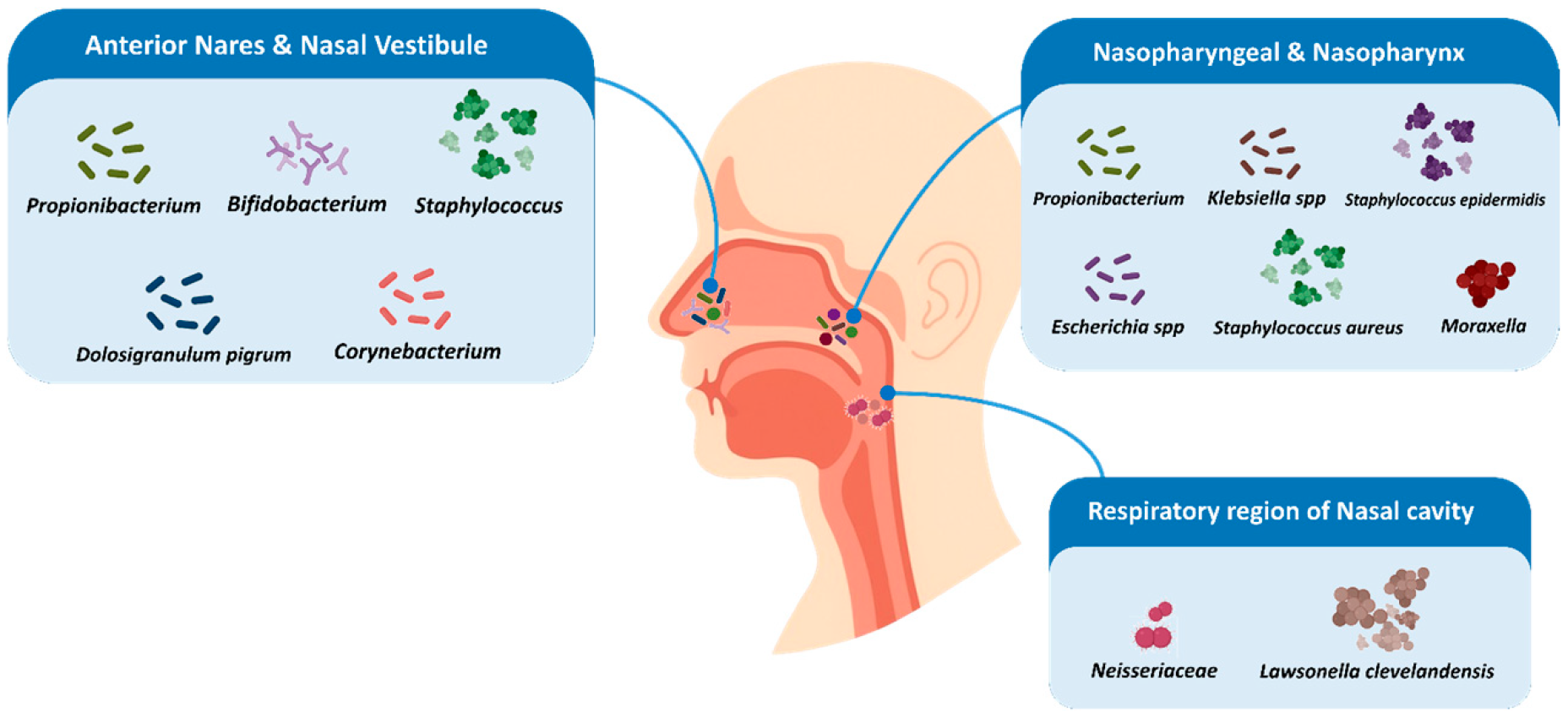
The visual representation of the topographical distribution of the microbial population amongst the nasal compartments is shown in Figure 1. The nasal cavity has large populations of defensive commensals, including S. epidermidis and Corynebacterium; the nasopharynx has a higher population of opportunistic pathogens, including Moraxella and Haemophilus [28,29,47,48,49]. This geographical separation, as shown in the figure, points to the exclusive microbial gradients of the nasal cavity and their possible functional implications on mucosal immunity and olfactory sensitivity [50].

3. Olfactory Regulation Mechanisms

OE is a specialized neuroepithelial cell layer, which has sensory neurons, sustentacular cells, and basal progenitors that permit the constant renewal of neurons [51]. Microbes that are in the proximity of the OE are capable of informing olfactory sensitivity through mediating immune and epithelial responses.
Important signaling molecules, which also control tight-junction integrity and odorant receptor gene expression, are microbial metabolites (especially SCFAs such as butyrate and acetate) [52]. Bifidobacterial activity ensures the integrity and stability of mucus and supports neuronal regeneration, whereas dysbiosis leads to the release of inflammatory cytokines that suppress receptor activity and neural signal transmission [45]. Pattern-recognition receptors (PRRs) such as TLR2, TLR4, and TLR9 are expressed on the nasal epithelium, and detect microbial-associated molecular patterns [53]. Homeostatic stimulation of these receptors facilitates the repair of the mucosa, but chronic stimulation through pathogenic organisms leads to chronic inflammation and sensory impairment [54].
Olfactory neuron renewal and signaling can further be disrupted by pro-inflammatory cytokines like IL-6, TNF-α, and IFN-γ [55]. Therefore, the nasal microbiome’s connections with immune signaling and olfactory neurons are a complex regulatory system that defines sensory health.

3.1. Signal Transduction

Signal transduction in the nasal mucosa entails the interaction of microbial metabolites, epithelial cells, and the local immune system [56]. The nasal microbiome has been found to affect host signaling through metabolites like SCFAs, indoles, and other microbial products that control epithelial gene expression and barrier activity [57].
Metabolites bind to G protein-coupled receptors (GPCRs) and nuclear receptors in epithelial and immune cells and regulate local cytokine production and receptor sensitivity [58]. As an example, butyrate improves epithelial tight-junction integrity and decreases inflammatory signals by suppressing histone deacetylases, thus increasing tissue stability [59].
On the contrary, bacterial toxins and pathogen-associated molecular patterns (PAMPs) like lipopolysaccharides (LPS) activate TLR2 and TLR4, which trigger the pathway of NF-kB-regulated transcription of pro-inflammatory genes [46,60]. Excessive stimulation of these mechanisms leads to the overproduction of cytokines (e.g., IL-6, TNF-α, and IL-8), the apoptosis of the endothelium, and the impairment of the regeneration of olfactory neurons [51,61].
It is the reciprocal interaction between microbial-associated signals and host transduction responses that thus determines whether immune tolerance or inflammation prevails. Regulated microbial signaling promotes mucosal homeostasis, and uncontrolled activation is the basis of chronic inflammation and loss of sensory functions [62,63].

3.2. Microbiome-Driven Diversity

The biodiversity of microbes is a very important factor in nasal ecosystem resilience. A heterogeneous community of microbes has been shown to offer functional redundancy that averts pathogenic overgrowth and balances the mucosa [64]. In healthy persons, healthy taxa (C. accolens and D. pigrum) co-exist with commensal Staphylococcus species, which play a role in immunological homeostasis and epithelial fitness [65].
A decrease in microbial diversity is associated with inflammation and olfactory loss and is observed in various conditions, such as CRS, allergic rhinitis, virus infection, etc. [66]. The loss of protective commensals causes local metabolic disturbance and the growth of opportunistic pathogens, including S. aureus and P. aeruginosa [50]. The nasal microbial diversity is also defined by environmental factors such as air pollution, work-related exposures, and use of antibiotics [67]. Pollutants cause oxidative stress and alter the pH of the mucosal surface, which favors pro-inflammatory microbial species [55]. On the same note, antibiotics can temporarily decrease the microbial count at the expense of recolonizing beneficial species, facilitating infection relapses [56].
Hence, microbial diversity is central to mucosal integrity, immune tolerance, and sensory perception. Cessation of this diversity preconditions the nasal mucosa to chronic inflammation and immune system disorders.

3.3. The Mucosal Layer and Host Interaction

The nares’ mucosal layer is a dynamic structure, in which epithelial, microbial, and immune components enable homeostasis via continuous interaction [58]. Both physical and biochemical barriers formed by the mucus secreted through goblet cells and submucosal glands trap inhaled particles, allergens, and microorganisms [59].
Commensal bacteria play a role in promoting the health of the mucosa through the formation of AMPs, mucin-degrading enzymes that maintain the viscosity of mucus [46]. They also regulate signaling in epithelial cells, which affects tight-junction integrity and expression of cytokines [64]. Pathogenic species interfere with this balance during dysbiosis. Both overproduction of mucus and the development of microbial biofilms result in the inhibition of ciliary clearance and long-term infection [65]. The biofilms that S. aureus and P. aeruginosa develop are resistant to host immune responses, which continues to cause inflammation and tissue remodeling [66].
The epithelial tissue is also an immunologically active structure. It releases cytokines and AMPs, including β-defensins and lysozymes, upon response to microbial stimuli [53]. These molecules are not only responsible for regulating the colonization of bacteria, but also the health of olfactory neurons and sensory transduction. Therefore, mucosal–microbial interactions are a protective and regulatory response, which combine microbial and host communication to preserve OF [67].

3.4. Immune Mechanisms in the Nasal Microbiome

3.4.1. Innate Immunity

The first line of defense against microbial imbalance of the nasal cavity is innate immunity [68]. PRRs, including TLR2, TLR4, and NOD-like receptors (NLRs), are used by epithelial and immune cells to recognize microbial components [31]. The receptors sense bacterial cell wall constituents and trigger downstream signaling cascades, which activate NF-kB and other transcription factors [57].
These pathways are regulated to ensure epithelial integrity and repair. Nevertheless, chronic stimulation by pathogenic bacteria causes chronic production of cytokines (IL-1β, IL-8, and TNF-α) and neutrophil and macrophage recruitment, which is capable of damaging the surrounding tissues [58].
Defensins and cathelicidins are ectodermal-origin AMPs that play an important part in innate immunity, restricting pathogen colonization and promoting commensal stability [59]. When microbial diversity is in balance with the innate immune regulation, it guarantees the protection of the mucosal system as well as the prevention of excessive inflammation, which can hamper olfactory neurons [51].

3.4.2. Adaptive Immunity

T and B lymphocytes play a critical role in long-term mucosal homeostasis by having an adaptive immune response [61]. Secretory immunoglobulin A (sIgA), synthesized by the plasma cells of the submucosa, neutralizes pathogens and inhibits the adhesion of the microbes. A decrease in the level of sIgA is linked with microbial overgrowth and chronic inflammation, as was found in CRS and allergic rhinitis [63]. Subsets of T helper cells, such as Th1, Th2, and Th17, mediate the release of cytokines that characterize the inflammatory microenvironment [64]. T17 cells stimulate neutrophilic inflammation, and Tregs are regulatory T cells that prevent the overstimulation of the immune system and tolerance [52]. The loss of the Th17/Treg balance may lead to long-term inflammation and tissue destruction [65].
This immune deregulation is not only involved in the progression of nasal disease but also in the renewal of olfactory neurons, which results in permanent sensory impairments [66]. Table 2 summarizes the main immune mediators and specific relationships between them and the nasal microbiome. The following table summarizes both innate and adaptive parts and highlights their two functions in defense and regulation. Secretory IgA preserves the normal microbial balance by stopping the adhesion of pathogens and enhancing immune tolerance [58]. The local inflammatory balance is orchestrated by defensins and cytokines such as IL-1β and TNF-α, and the recognition of microbial motifs and the subsequent induction of the immune response are mediated by TLRs [59].
Abnormal regulation of such pathways in CRS and allergic rhinitis usually leads to excessive cytokine secretion, neutrophil inflammation, and loss of barrier function. The summarized data presented herein demonstrate that microbial signals may alter immune responses from protective homeostasis to chronic inflammation, which highlights the primary centrality of microbe–immune system crosstalk in olfactory and respiratory pathology.

3.5. Nasal Microbiome in Contexts of Disease

3.5.1. Chronic Rhinosinusitis (CRS)

CRS is one of the most widely researched disorders that connect nasal microbiome and OD. It is defined by chronic inflammation of the mucosa, biofilm development, and dysbiosis [53]. Research studies have always found depleted levels of Corynebacterium and Dolosigranulum, as well as a growth in the number of S. aureus and P. aeruginosa in CRS patients [54]. The microbial changes that can be summarized in Table 1 are in line with CRS-related dysbiosis, where commensal loss and opportunistic pathogen gain are continuous contributors of mucosal inflammation and olfactory loss [54].
The pathogenic dominance will result in augmentation of cytokine synthesis and epithelial barrier breakdown, specifically through TLR2/TLR4 signaling pathways [55]. Persistent exposure to inflammatory products like IL-6 and TNF-α also worsens the situation by damaging the olfactory neurons, which can regenerate and perform their functions [68].
The treatment prospects of microbial repair with the help of probiotics and topical care are promising to alleviate inflammation and enhance olfactory results [69]. Commensal restoration has the potential to suppress biofilm development as well as restore immune balance [57].

3.5.2. Allergic Rhinitis and Environmental Factors

Allergic rhinitis is an exaggerated Th2-type reaction with increased levels of IgE and eosinophilic inflammation [58]. Changes in the nasal microbiome in allergic rhinitis are commonly associated with losses in diversity and gains in Staphylococcus species, which stimulate mucosal inflammation and defective barrier operations [59]. This imbalance is worsened by environmental contaminants, allergens, and smoking, which cause oxidative stress and change epithelial cytokine signaling [56].
The changes not only contribute to long-term inflammation, but also to the olfactory impairment that is typical of patients with allergic rhinitis [39]. Microbial stability recovery by specific interventions can help prevent allergic inflammation and maintain olfactory capability.

3.6. Viral Infections and Olfactory Dysfunction

One of the most common and clinically relevant causes of the loss of OF is a viral infection. As the main entry point of the virus, the nasal mucosa serves as the entry point of multiple respiratory pathogens that can destabilize epithelial integrity, provoke inflammation, and change the microbiome that dwells in the nasal cavity. Cellular apoptosis, cytokine release, and secondary bacterial colonization as a result of viral replication in the nasal and OE impair the process of detecting odors, as well as transmission of signals [67]. The nature and duration of the olfactory loss are determined by the nature of the virus, the host immune response, and the extent of the epithelial and neuronal injury [51].
Various respiratory viruses, specifically coronaviruses, influenza, and parainfluenza, disrupt the sustentacular cells, as well as olfactory sensory neurons, triggering local inflammation and consequent failure to maintain the expression of odorant receptors. Moreover, the release of cytokines caused by viruses changes the nasal microbial composition to an acute dysbiosis that can last beyond the elimination of viruses [61]. The combination of viral pathogen-related immune activation and microbiome imbalance underlies post-infectious olfactory disorders.

3.6.1. SARS-CoV-2

The global COVID-19 pandemic provided a unique opportunity to investigate the mechanisms underlying SARS-CoV-2-associated anosmia. SARS-CoV-2 enters into sustentacular and glandular epithelial cells that express the ACE2 receptor and the serine protease TMPRSS2, triggering a localized inflammatory reaction and epithelial shedding [57]. However, unlike previous coronaviruses, SARS-CoV-2 seems to attack most olfactory neurons sparingly, but its cytopathic impact on supporting cells alters the ionic and metabolic microenvironment that the neurons need in order to function [58]. The resultant upsurge of cytokines, such as IL-6, TNF-α, and interferons, impairs the integrity of the epithelia and slows down the regeneration of sensory neurons.
OD is an early symptom of SARS-CoV-2 infection and may precede respiratory manifestations, representing a useful clinical indicator of viral involvement in the upper airway. Although the majority of people are able to regain their smell within weeks, a major part experience long-term anosmia or hyposmia, which is the manifestation of long-lasting inflammation of the epithelia, destruction of microvasculature, and failure of stem-cell-mediated recovery [59]. Recent studies indicate that nasal dysbiosis—characterized by reduced commensal diversity and expansion of opportunistic taxa—may persist after SARS-CoV-2 clearance, sustaining inflammatory responses despite viral elimination [46]. Microbial homeostasis by probiotic or microbiome-modulating therapies has thus been suggested as a complementary treatment modality to speed up mucosal recovery and olfactory recuperation.

3.6.2. Other Viral and Post-Infectious Olfactory Loss

In addition to SARS-CoV-2, many widespread respiratory viruses cause OD, such as influenza, parainfluenza, rhinovirus, and respiratory syncytial virus, which damage the structures of epithelial and neuronal cells [51]. Viral replication causes the apoptosis of sustentacular and basal cells, and the host immune response that accompanies it produces a large amount of reactive oxygen species (ROS), worsening the tissue damage [61]. Acute viral attack is, in most instances, preceded by chronic inflammatory alterations and subsequent bacterial colonization of the mucosa, which further disrupts mucosal homeostasis.
Maintenance of olfactory loss following the infection is an indication of a multifactorial mechanism that entails oxidative stress, immune dysregulation, and microbiome imbalance. Sustained stimulation of the local immune response impairs the recovery of the olfactory receptor neurons and maintains tissue remodeling mediated by cytokines. Additionally, the loss of favorable taxa, including Corynebacterium and Dolosigranulum, can cause a decrease in mucosal resilience and slow repair of the epithelium. Awareness of this interaction between viral infection, immune response, and microbial disruption is important to therapeutic approaches focusing on both the inflammation and microbiome restoration [62,63]. Combinations of anti-inflammatory therapy and specific microbial re-equilibration have led to promising improvements in outcomes of recovery and prevention of persistent post-infectious olfactory loss.

3.7. Nasal Decolonization Protocols and Microbiome Modulation

Decolonization is also focused on restoring a microbial balance that is selective in reducing the pathogenic load but does not affect commensal stability [52]. Traditional antiseptic solutions, including mupirocin and povidone-iodine, are effective against S. aureus but can destroy beneficial microbes in the case of excessive use [65].
Other interventions, such as probiotic-based interventions, bacteriophage therapy, and nasal saline irrigation are under active consideration to foster microbial homeostasis [66]. Lactobacillus sakei and Lactobacillus plantarum have demonstrated the potential to inhibit pathogens and the regulation of mucosal immunity [50].
The microbial resilience can also be enhanced with preventive measures like staying hydrated, eliminating pollutants, and ensuring optimal nutrition [67]. Altogether, it is possible to note that nasal microbiome modulation is a promising adjunctive method of treating olfactory and inflammatory conditions [68].

4. Neuropathological Correlates of Nasal Dysbiosis

The OE represents a unique anatomical and physiological interface between the external environment and the central nervous system [1,3]. In recent years, nasal dysbiosis has been increasingly associated with markers of neuroinflammation, protein aggregation, and neuronal vulnerability. However, current evidence, largely derived from preclinical and experimental models, does not establish a direct causal relationship, instead supporting a hypothesis-generating link between nasal microbial imbalance and neurological health [5,70]. Accumulated data, primarily associative in nature, suggest that microbial metabolites, pro-inflammatory cytokines, and impaired mucosal immunity may be linked to neuropathological processes relevant to PD and AD, potentially modulating disease-related pathways rather than directly initiating them [6,7].
Sustained nasal inflammation has been proposed to facilitate changes in the translocation of inflammatory mediators and microbial components along olfactory pathways, potentially influencing microglial activation and neuronal signal transduction within the olfactory bulb and connected brain regions [8,9]. In this context, microbial-derived amyloid-like proteins and lipopolysaccharides may act as permissive factors by promoting protein misfolding or amplifying neuroinflammatory signaling. Experimental studies have shown that bacterial amyloids can function as cross-seeding templates, facilitating the aggregation of neurodegeneration-related proteins such as α-synuclein and tau [10,71].
α-synuclein and tau are neuronal proteins that, under pathological conditions, undergo misfolding and aggregation, leading to synaptic dysfunction and neuronal loss [15,72]. In PD, α-synuclein aggregates to form Lewy bodies, whereas in AD, tau aggregation results in neurofibrillary tangles [16]. Experimental and observational evidence suggests that α-synuclein pathology may involve the olfactory epithelium as an early site of involvement; however, this model remains speculative and is largely supported by animal studies and post-mortem observations [17,18]. This hypothesis is consistent with clinical observations indicating that olfactory dysfunction often precedes motor symptoms by several years in PD [19].
Microbial-derived amyloids, inflammatory mediators, and oxidative stress have been shown to accelerate α-synuclein and tau aggregation and to enhance neuronal susceptibility to misfolding-related damage [20,73]. For example, curli fibers produced by Escherichia coli have been reported to cross-seed α-synuclein aggregation, thereby promoting neuroinflammatory responses in experimental models [21,22]. In parallel, microglial activation induced by lipopolysaccharides and other bacterial components may further contribute to neuronal vulnerability through sustained inflammatory signaling and redox imbalance [24,25].
Although a reduction in olfactory sensory neurons might intuitively be expected to limit pathogen access to the central nervous system, neuronal loss in inflammatory conditions is typically accompanied by a broader collapse of olfactory epithelial barrier function. Inflammatory damage to sustentacular cells, disruption of tight junctions, and degradation of extracellular matrix components compromise both the structural and immunological integrity of the olfactory epithelium, resulting in increased epithelial permeability [44,74].
This barrier dysfunction facilitates the translocation of microbial products, cytokines, and other inflammatory mediators toward the olfactory bulb, despite partial neuronal depletion [8,9,46,75]. In parallel, epithelial injury and cytokine-driven inflammation may further weaken blood–brain barrier integrity, amplifying central nervous system exposure to peripheral inflammatory signals [65,67]. This barrier-centric mechanism helps reconcile neuronal loss with an increased susceptibility to pathogen- or inflammation-mediated brain involvement.
Collectively, these observations support the view that nasal dysbiosis may represent a permissive or upstream factor associated with neurodegenerative proteopathies, rather than a direct causal driver. While alterations in the nasal microbiome and chronic mucosal inflammation may contribute to pathways relevant to neurodegeneration, direct causality in human populations has not been demonstrated [11,13]. As such, these mechanisms should be regarded as hypothesis-generating, underscoring the need for longitudinal human studies and targeted experimental models to clarify temporal relationships and clinical relevance (Supplementary Table S1).

Cytokine-Mediated Mechanisms of Olfactory Neurodegeneration

Pro-inflammatory cytokines released during chronic nasal inflammation, including IL-1β, IL-6, and TNF-α, have been implicated in mechanisms that may contribute to olfactory neurodegeneration. These mediators can disrupt epithelial barrier integrity and alter the metabolic and ionic support provided by sustentacular cells, thereby compromising the microenvironment required for olfactory sensory neuron survival [29].
In addition, cytokine diffusion along olfactory pathways may promote microglial activation within the olfactory bulb, leading to sustained neuroinflammatory signaling and increased production of reactive oxygen species [30,33]. Prolonged oxidative stress can damage neuronal membranes, mitochondria, and cytoskeletal structures, ultimately increasing neuronal vulnerability [43].
Importantly, excessive cytokine signaling has also been associated with impaired regeneration of olfactory sensory neurons, as inflammatory mediators interfere with stem-cell-mediated renewal processes within the olfactory epithelium [66,68]. Together, these findings suggest that cytokine-driven inflammation may contribute to olfactory neurodegeneration through combined effects on neuroinflammation, oxidative damage, and failed neuronal repair, while remaining primarily supported by experimental and associative evidence.

5. Discussion

5.1. Integrative Mechanisms Linking Microbiome and Olfactory Dysfunction

The interaction between the nasal microbiome, immune responses, and neuronal activity is increasingly recognized as a key determinant of olfactory health [45]. Rather than acting through isolated pathways, microbial imbalance appears to influence olfactory function indirectly by modulating immune tone, epithelial resilience, and inflammatory signaling, including alterations in microbial metabolite production such as short-chain fatty acids (SCFAs) [57], as well as inflammation-driven effects on epithelial regeneration and local immune responses [53].
Clinical conditions such as chronic rhinosinusitis and viral infections exemplify contexts in which microbial dysbiosis is associated with local and systemic inflammation and sensory impairment [50,54]. Similarly, long-term exposure to environmental pollutants or allergens may alter mucosal immunity and influence microbiome composition, thereby increasing susceptibility to olfactory dysfunction [36]. Importantly, these conditions should be interpreted as models of interaction rather than linear cause–effect relationships.
The compartmentalized organization of the nasal microbiome, as illustrated in Figure 1, may further contribute to region-specific immune regulation, potentially influencing the differential vulnerability of the olfactory epithelium to infectious or inflammatory insults [45,66].
Finally, emerging evidence supports a bidirectional relationship between the nasal microbiome and the central nervous system, whereby microbial products may influence brain activity through immune and neuroendocrine mechanisms, while neurodegenerative processes may in turn alter mucosal immunity and microbial colonization patterns [55,68]. Together, these observations highlight the dual role of the nasal cavity as a sensory and immunological interface, where microbial, immune, and neural networks converge in health and disease [56,69].

5.2. Methodological and Research Limitations

Within the body of evidence examined in this manuscript, investigations linking nasal microbiome alterations to neurodegenerative diseases are predominantly cross-sectional or based on preclinical models. Consequently, these findings should be interpreted as associative rather than causal, highlighting the need for longitudinal human studies to clarify temporal relationships and underlying mechanistic pathways.
Although improving quickly, there are still major methodological issues with the investigation of the nasal microbiome. Microbial community profiles can all be affected by sampling variability, DNA extraction procedures, and sequencing biases [58]. The complexity of the anatomy of the nasal cavity, with a variety of microenvironments and low microbial biomass, also makes it difficult to adequately characterize the nasal cavity [59]. Longitudinal plans with metagenomics, transcriptomics, and metabolomics need to be conducted to help shed light on the effects of particular taxa and metabolites in shaping olfactory and neurological outcomes [57,69].
Sampling methods and workflows should undergo standardization to increase cross-study reproducibility and comparability. Moreover, it is possible to combine clinical data with molecular analyses in order to translate microbial signatures into diagnostic or therapeutic uses [46,60].

5.3. Clinical and Translational Implications

A clearer understanding of the nasal microbiome may support the future exploration of novel strategies for addressing olfactory and neurological disorders, rather than immediate clinical application [51,61]. Microbiome-targeted approaches, including probiotics, prebiotics, and bacteriophage-based modalities, have been proposed as potential means to modulate microbial balance and mucosal inflammation, although their clinical efficacy remains to be established [62,63].
Restoring balanced interactions between commensal microorganisms and key immune components represents a conceptual framework for intervention, as summarized in Table 2. In this context, selected probiotic strains reported to influence secretory IgA levels or Toll-like receptor signaling have been explored for their capacity to modulate inflammation and support the recovery of olfactory function in experimental or early clinical settings [52,64]. Topical application of commensal strains, including Lactobacillus sakei and Lactobacillus plantarum, has shown preliminary potential in regulating mucosal immunity and improving olfactory outcomes, although supporting evidence remains limited [64].
Beyond local olfactory disorders, microbiome modulation has been hypothesized to hold relevance for neurodegenerative diseases in which olfactory impairment represents an early or accompanying feature, rather than a confirmed preventive strategy [52,65].
At the clinical level, nasal microbiome profiling may emerge as a complementary biomarker to assess disease risk or support the identification of neurodegenerative conditions [45,66]. From a translational perspective, the nasal cavity can therefore be viewed as an interface at the intersection of immunology, neurology, and microbiology, with potential diagnostic and therapeutic relevance that warrants further investigation [50,54].

5.4. Future Perspectives

Future research should focus on elucidating the molecular communication between the nasal microbiome and the host nervous system. In particular, integrated omics approaches, including genomics, metabolomics, and proteomics, may enable the investigation of microbial metabolites and signaling pathways relevant to olfactory function and neuroimmune interactions [55,68].
Mechanistic insights may be further advanced through the development of physiologically relevant in vitro models, such as nasal organoids and co-culture systems incorporating epithelial, immune, and neuronal components [31]. In parallel, host–microbiome–neuron interactions and immune modulation can be explored using in vivo models, including Galleria mellonella and murine systems, which offer complementary experimental advantages [58,69].
Finally, personalized medicine approaches that integrate individual microbiome profiles, genetic susceptibility, and environmental exposures may inform the future development of more selective and targeted interventions [49,59]. Achieving this goal will require enhanced interdisciplinary collaboration among microbiologists, clinicians, and neuroscientists to facilitate translational progress.

6. Conclusions

The nasal microbiome represents a biologically active component of the olfactory system that interacts with epithelial integrity, immune regulation, and neuronal function. Alterations in microbial balance may be associated with inflammatory mechanisms that extend beyond the nasal cavity and are relevant to broader neuroimmune and neurodegenerative pathways.
Rather than acting as a passive reservoir, the nasal microbiome appears to participate in dynamic host–microbe interactions with potential implications for olfactory dysfunction and related neurological conditions. However, current evidence remains largely associative, and the translational relevance of these findings is yet to be established.
Future research should prioritize longitudinal human studies, mechanistic investigations, and integrative multi-omics approaches to clarify causal relationships and define the role of the nasal microbiome within the nasal–brain axis.

Supplementary Materials

The following supporting information can be downloaded at https://www.mdpi.com/article/10.3390/microorganisms14010234/s1, Supplementary Table S1. Mechanistic overview of nasal dysbiosis and neuro-olfactory dysfunction.

Author Contributions

Conceptualization, F.M. and A.G.; methodology, F.M.; software, N.B.; validation, D.N., G.P.P. and M.D.N.; formal analysis, N.B., A.V. (Antonio Varricchio), and A.V. (Attilio Varricchio); investigation, M.D.N. and F.M.; resources, T.D. and M.Z.; data curation, T.D.; writing—original draft preparation, F.M. and A.V. (Attilio Varricchio); writing—review and editing, F.M. and A.G.; visualization, A.V. (Attilio Varricchio), A.V. (Antonio Varricchio), and M.Z.; supervision, G.P.P., D.N. and M.Z.; project administration, R.D.M.; funding acquisition, R.D.M. All authors have read and agreed to the published version of the manuscript.

Funding

This research received no external funding.

Institutional Review Board Statement

Not applicable.

Informed Consent Statement

Not applicable.

Data Availability Statement

No new data were created or analyzed in this study. Data sharing is not applicable to this article.

Conflicts of Interest

The authors declare no conflicts of interest.

Abbreviations

The following abbreviations are used in this manuscript:
ADAlzheimer’s disease
AMPAntimicrobial peptide
BBBBlood–brain barrier
IL-1βInterleukin-1 beta
CRSChronic rhinosinusitis
GPCRG protein-coupled receptor
LPSLipopolysaccharides
NLRNOD-like receptor
OBOlfactory bulb
OEOlfactory epithelium
OFOlfactory functions
ODOlfactory dysfunction
PDParkinson’s disease
PRRPattern-recognition receptor
ROSReactive oxygen species
sIgASecretory immunoglobulin A
SCFAShort-chain fatty acid
TNF-αTumor necrosis factor-alpha
TLRsToll-like receptors

References

  1. Barwich, A.-S. What Is so Special about Smell? Olfaction as a Model System in Neurobiology. Postgrad. Med. J. 2015, 92, 27–33. [Google Scholar] [CrossRef]
  2. Shepard, B.D.; Pluznick, J.L. How Does Your Kidney Smell? Emerging Roles for Olfactory Receptors in Renal Function. Pediatr. Nephrol. 2015, 31, 715–723. [Google Scholar] [CrossRef]
  3. Li, A.-A.; Rao, X.-P.; Xu, F.-Q.; Wu, R.-Q. Application of fMRI in Olfactory Studies of Small Animals *. Prog. Biochem. Biophys. 2010, 37, 14–21. [Google Scholar] [CrossRef]
  4. Croy, I.; Negoias, S.; Buschhüter, D.; Seo, H.-S.; Hummel, T. Individual Significance of Olfaction: Development of a Questionnaire. Eur. Arch. Otorhinolaryngol. 2009, 267, 67–71. [Google Scholar] [CrossRef]
  5. Zhu, K.; Jin, Y.; Zhao, Y.; He, A.; Wang, R.; Cao, C. Proteomic Scrutiny of Nasal Microbiomes: Implications for the Clinic. Expert. Rev. Proteom. 2024, 21, 169–179. [Google Scholar] [CrossRef]
  6. Kronbichler, A.; Harrison, E.M.; Wagner, J. Nasal Microbiome Research in ANCA-Associated Vasculitis: Strengths, Limitations, and Future Directions. Comput. Struct. Biotechnol. J. 2020, 19, 415–423. [Google Scholar] [CrossRef]
  7. Koskinen, K.; Reichert, J.L.; Hoier, S.; Schachenreiter, J.; Duller, S.; Moissl-Eichinger, C.; Schöpf, V. The Nasal Microbiome Mirrors and Potentially Shapes Olfactory Function. Sci. Rep. 2018, 8, 1296. [Google Scholar] [CrossRef] [PubMed]
  8. Biswas, K.; Draf, J.; Ballauf, C.; Douglas, R.G.; Mackenzie, B.W.; Hummel, T. Loss of Bacterial Diversity in the Sinuses Is Associated with Lower Smell Discrimination Scores. Sci. Rep. 2020, 10, 1–9. [Google Scholar] [CrossRef] [PubMed]
  9. Han, P.; Su, T.; Hummel, T. Human Odor Exploration Behavior Is Influenced by Olfactory Function and Interest in the Sense of Smell. Physiol. Behav. 2022, 249, 113762. [Google Scholar] [CrossRef] [PubMed]
  10. Kumpitsch, C.; Fischmeister, F.P.S.; Lackner, S.; Holasek, S.; Madl, T.; Habisch, H.; Wolf, A.; Schöpf, V.; Moissl-Eichinger, C. Reduced Olfactory Performance Is Associated with Changed Microbial Diversity, Oralization, and Accumulation of Dead Biomaterial in the Nasal Olfactory Area. Microbiol. Spectr. 2024, 12, e0154923. [Google Scholar] [CrossRef]
  11. Ahmed, N.; Solyman, S.; Hanora, A.; Mahmoud, N.F. Human Nasal Microbiome as Characterized by Metagenomics Differs Markedly Between Rural and Industrial Communities in Egypt. OMICS J. Integr. Biol. 2019, 23, 573–582. [Google Scholar] [CrossRef]
  12. Gan, W.; Liu, S.; Yang, F.; Liu, F.; Meng, J.; Xian, J. Comparing the Nasal Bacterial Microbiome Diversity of Allergic Rhinitis, Chronic Rhinosinusitis and Control Subjects. Eur. Arch. Otorhinolaryngol. 2020, 278, 711–718. [Google Scholar] [CrossRef]
  13. Liu, Q.; Liu, Q.; Meng, H.; Lv, H.; Liu, Y.; Liu, J.; Wang, H.; He, L.; Qin, J.; Wang, Y.; et al. Staphylococcus Epidermidis Contributes to Healthy Maturation of the Nasal Microbiome by Stimulating Antimicrobial Peptide Production. Cell Host Microbe 2019, 27, 68–78.e5. [Google Scholar] [CrossRef]
  14. Dalen, R.V.; Stemmler, R.; Peschel, A.; Alber, S.; Elsherbini, A.M.A.; Harms, M. Targeting of the Human Nasal Microbiota by Secretory IgA Antibodies. Available online: https://discovery.researcher.life/article/targeting-of-the-human-nasal-microbiota-by-secretory-iga-antibodies/5720d3a2be183305b4a3d898a9a78f15?eos_user_id=5671161&expiry_in_minutes=5&usersource=paperpal&utm_source=paperpal&utm_medium=website&utm_campaign=organic (accessed on 25 November 2024).
  15. Stapleton, A.L.; Morris, A.; Shaffer, A.D.; Li, K.; Fitch, A.; Methé, B.A. The Microbiome of Pediatric Patients with Chronic Rhinosinusitis. Int. Forum Allergy Rhinol. 2020, 11, 31–39. [Google Scholar] [CrossRef]
  16. Kidoguchi, M.; Aoki, S.; Ii, R.; Omura, K.; Morii, W.; Hosokawa, Y.; Nakamura, T.; Tanaka, K.; Tanaka, Y.; Hida, Y.; et al. Middle Meatus Microbiome in Patients with Eosinophilic Chronic Rhinosinusitis in a Japanese Population. J. Allergy Clin. Immunol. 2023, 152, 1669–1676.e3. [Google Scholar] [CrossRef]
  17. Shi, Z.; Li, Z.; Fu, X.; Li, X.; Zhang, L.; Wang, X.; Li, L.; Sun, Z.; Zhang, M.; Zhang, X. Characteristics and Clinical Implications of the Nasal Microbiota in Extranodal NK/T-Cell Lymphoma, Nasal Type. Front. Cell. Infect. Microbiol. 2021, 11, 686595. [Google Scholar] [CrossRef] [PubMed]
  18. Lim, S.J.; Jithpratuck, W.; Dishaw, L.J.; Wasylik, K.; Sriaroon, P. Associations of Microbial Diversity with Age and Other Clinical Variables among Pediatric Chronic Rhinosinusitis (CRS) Patients. Microorganisms 2023, 11, 422. [Google Scholar] [CrossRef]
  19. Hahn, A.; Warnken, S.; Pérez-Losada, M.; Freishtat, R.J.; Crandall, K.A. Microbial Diversity within the Airway Microbiome in Chronic Pediatric Lung Diseases. Infect. Genet. Evol. 2017, 63, 316–325. [Google Scholar] [CrossRef] [PubMed]
  20. Kim, M.; Lai, P.S.; Harris, J.K.; Huang, C.-Y.; Baig, A.; Willis, A.D.; Ross, M.; Cormier, J.; Shah, V.S.; Brenner, L.; et al. Host DNA Depletion on Frozen Human Respiratory Samples Enables Successful Metagenomic Sequencing for Microbiome Studies. Commun. Biol. 2024, 7, 1590. [Google Scholar] [CrossRef] [PubMed]
  21. Gehrig, J.L.; Ashby, M.; Chakraborty, S.; Portik, D.M.; Driscoll, M.D.; Gratalo, D.; Valladares, R.; Jackson, E. Finding the Right Fit: Evaluation of Short-Read and Long-Read Sequencing Approaches to Maximize the Utility of Clinical Microbiome Data. Microb. Genom. 2022, 8, 000794. [Google Scholar] [CrossRef]
  22. Montgomery, S. Extraction of High Molecular Weight DNA from Nasal Lining Fluid V1. Available online: https://discovery.researcher.life/article/extraction-of-high-molecular-weight-dna-from-nasal-lining-fluid-v1/72bb2ac5c59838d49471121a2c5e0d82?eos_user_id=5671161&expiry_in_minutes=5&usersource=paperpal&utm_source=paperpal&utm_medium=website&utm_campaign=organic (accessed on 25 November 2024).
  23. Huang, Z.; Su, Y.; Lin, S.; Wu, G.; Cheng, H.; Huang, G. Elevational Patterns of Microbial Species Richness and Evenness across Climatic Zones and Taxonomic Scales. Ecol. Evol. 2023, 13, e10594. [Google Scholar] [CrossRef]
  24. Schiano-Lomoriello, D.; Bonzano, C.; Ballesteros-Sánchez, A.; Pietro, F.D.; Giannaccare, G.; Rocha-De-Lossada, C.; Sánchez-González, J.-M.; Borroni, D.; Alfonsi, C.; Mazzotta, C.; et al. Infectious Keratitis: Characterization of Microbial Diversity through Species Richness and Shannon Diversity Index. Biomolecules 2024, 14, 389. [Google Scholar] [CrossRef]
  25. Manzini, I.; Croy, I.; Frasnelli, J. How We Smell and What It Means to Us: Basic Principles of the Sense of Smell. HNO 2014, 62, 846–852. [Google Scholar] [CrossRef] [PubMed]
  26. Xia, P.; Duan, Q.; Meng, X.; Wu, Y.; Lian, S.; Yan, L.; Zhu, G. Research Progress on Toll-like Receptor Signal Transduction and Its Roles in Antimicrobial Immune Responses. Appl. Microbiol. Biotechnol. 2021, 105, 5341–5355. [Google Scholar] [CrossRef] [PubMed]
  27. Zhang, M.; Tang, H.; Yuan, Y.; Ou, Z.; Chen, Z.; Xu, Y.; Fu, X.; Zhao, Z.; Sun, Y. The Role of Indoor Microbiome and Metabolites in Shaping Children’s Nasal and Oral Microbiota: A Pilot Multi-Omic Analysis. Metabolites 2023, 13, 1040. [Google Scholar] [CrossRef]
  28. Anto, L.; Blesso, C.N. Interplay between Diet, the Gut Microbiome, and Atherosclerosis: Role of Dysbiosis and Microbial Metabolites on Inflammation and Disordered Lipid Metabolism. J. Nutr. Biochem. 2022, 105, 108991. [Google Scholar] [CrossRef] [PubMed]
  29. Tosta, E. The Seven Constitutive Respiratory Defense Barriers against SARS-CoV-2 Infection. Rev. Soc. Bras. Med. Trop. 2021, 54, e04612021. [Google Scholar] [CrossRef]
  30. Heidari, M.; Vareki, S.M.; Yaghobi, R.; Karimi, M.H. Microbiota Activation and Regulation of Adaptive Immunity. Front. Immunol. 2024, 15, 1429436. [Google Scholar] [CrossRef]
  31. Kanjanaumporn, J.; Aeumjaturapat, S.; Snidvongs, K.; Seresirikachorn, K.; Chusakul, S. Smell and Taste Dysfunction in Patients with SARS-CoV-2 Infection: A Review of Epidemiology, Pathogenesis, Prognosis, and Treatment Options. Asian Pac. J. Allergy Immunol. 2020, 38, 69–77. [Google Scholar] [CrossRef]
  32. Hickman, E.; Roca, C.; Zorn, B.T.; Rebuli, M.E.; Robinette, C.; Wolfgang, M.C.; Jaspers, I. E-Cigarette Use, Cigarette Smoking, and Sex Are Associated with Nasal Microbiome Dysbiosis. Nicotine Tob. Res. Off. J. Soc. Res. Nicotine Tob. 2024, 27, 114–124. [Google Scholar] [CrossRef]
  33. Geng, J.; Dong, Y.; Liu, Y.; Huang, H.; Xu, T.; Wen, X.; Zhao, Y. Nasal Microbiota Homeostasis Regulates Host Anti-Influenza Immunity via the IFN and Autophagy Pathways in Beagles. Available online: https://discovery.researcher.life/article/nasal-microbiota-homeostasis-regulates-host-anti-influenza-immunity-via-the-ifn-and-autophagy-pathways-in-beagles/850cc81e153e3f9e82dd095c6c586536?eos_user_id=5671161&expiry_in_minutes=5&usersource=paperpal&utm_source=paperpal&utm_medium=website&utm_campaign=organic (accessed on 25 November 2024).
  34. Liu, C.M.; Price, L.B.; Christensen, K.; Abraham, A.G.; Skov, R.; Hungate, B.A.; Andersen, P.S.; Larsen, L.A.; Stegger, M. Staphylococcus aureus and the Ecology of the Nasal Microbiome. Sci. Adv. 2015, 1, e1400216. [Google Scholar] [CrossRef]
  35. Sperandio, B.; Fischer, N.; Sansonetti, P.J. Mucosal Physical and Chemical Innate Barriers: Lessons from Microbial Evasion Strategies. Semin. Immunol. 2015, 27, 111–118. [Google Scholar] [CrossRef]
  36. Han, X.; He, X.; Zhan, X.; Yao, L.; Sun, Z.; Gao, X.; Wang, S.; Wang, Z. Disturbed Microbiota-Metabolites-Immune Interaction Network Is Associated with Olfactory Dysfunction in Patients with Chronic Rhinosinusitis. Front. Immunol. 2023, 14, 1159112. [Google Scholar] [CrossRef]
  37. Shukla, V.; Singh, S.; Verma, S.; Verma, S.; Rizvi, A.A.; Abbas, M. Targeting the Microbiome to Improve Human Health with the Approach of Personalized Medicine: Latest Aspects and Current Updates. Clin. Nutr. ESPEN 2024, 63, 813–820. [Google Scholar] [CrossRef] [PubMed]
  38. Sahle, Z.; Engidaye, G.; Gebreyes, D.S.; Adenew, B.; Abebe, T.A. Fecal Microbiota Transplantation and Next-Generation Therapies: A Review on Targeting Dysbiosis in Metabolic Disorders and Beyond. SAGE Open Med. 2024, 12, 42–56. [Google Scholar] [CrossRef] [PubMed]
  39. Anastassopoulou, C.; Davaris, N.; Ferous, S.; Siafakas, N.; Boufidou, F.; Anagnostopoulos, K.; Tsakris, A. The Molecular Basis of Olfactory Dysfunction in COVID-19 and Long COVID. Lifestyle Genom. 2024, 17, 42–56. [Google Scholar] [CrossRef]
  40. Shi, N.; Duan, X.; Niu, H.; Li, N. Interaction between the Gut Microbiome and Mucosal Immune System. Mil. Med. Res. 2017, 4, 1–7. [Google Scholar] [CrossRef]
  41. Chen, S.; Wang, S. The Immune Mechanism of the Nasal Epithelium in COVID-19-Related Olfactory Dysfunction. Front. Immunol. 2023, 14, 1045009. [Google Scholar] [CrossRef]
  42. Melo, G.D.D.; Levallois, S.; Hervochon, R.; Gheusi, G.; Kergoat, L.; Michel, V.; Larrous, F.; Bourhy, H.; Salmon, D.; Lecuit, M.; et al. COVID-19-Associated Olfactory Dysfunction Reveals SARS-CoV-2 Neuroinvasion and Persistence in the Olfactory System. Available online: https://discovery.researcher.life/article/covid-19-associated-olfactory-dysfunction-reveals-sars-cov-2-neuroinvasion-and-persistence-in-the-olfactory-system/8d0a6fe4e0bf34e2b34b1cd2cd6e1f51?eos_user_id=5671161&expiry_in_minutes=5&usersource=paperpal&utm_source=paperpal&utm_medium=website&utm_campaign=organic (accessed on 25 November 2024).
  43. Maheshwari, K.; Gupta, R.; Sharma, R.; Kaur, A.; Vashist, A.; Aggarwal, G. Nasal Microbiome Dynamics: Decoding the Intricate Nexus in the Progression of Respiratory and Neurological Diseases. Crit. Rev. Microbiol. 2024, 51, 2391488. [Google Scholar] [CrossRef] [PubMed]
  44. Vásquez-Pérez, J.M.; González-Guevara, E.; Gutiérrez-Buenabad, D.; Martínez-Gopar, P.E.; Martinez-Lazcano, J.C.; Cárdenas, G. Is Nasal Dysbiosis a Required Component for Neuroinflammation in Major Depressive Disorder? Mol. Neurobiol. 2024, 62, 2459–2469. [Google Scholar] [CrossRef]
  45. Frank, D.N.; Feazel, L.M.; Bessesen, M.T.; Price, C.S.; Janoff, E.N.; Pace, N.R. The Human Nasal Microbiota and Staphylococcus aureus Carriage. PLoS ONE 2010, 5, e10598. [Google Scholar] [CrossRef]
  46. Yu, X.; Chen, G.; Zhou, H.; Shao, B.; Li, J.; Zhou, G.; Yan, F.; Xu, C.; Wang, L.; Fu, X. Gut Microbiota Dysbiosis Induced by Intracerebral Hemorrhage Aggravates Neuroinflammation in Mice. Front. Microbiol. 2021, 12, 647304. [Google Scholar] [CrossRef]
  47. Kyriakidis, D.A.; Tiligada, E. Signal Transduction and Adaptive Regulation through Bacterial Two-Component Systems: The Escherichia coli AtoSC Paradigm. Amino Acids 2009, 37, 443–458. [Google Scholar] [CrossRef] [PubMed]
  48. Jeon, Y.J.; Gil, C.H.; Won, J.; Jo, A.; Kim, H.J. Symbiotic Microbiome Staphylococcus aureus from Human Nasal Mucus Modulates IL-33-Mediated Type 2 Immune Responses in Allergic Nasal Mucosa. BMC Microbiol. 2020, 20, 301. [Google Scholar] [CrossRef]
  49. Ganesan, S.S.U. Innate Immunity of Airway Epithelium and COPD. Available online: https://discovery.researcher.life/article/innate-immunity-of-airway-epithelium-and-copd/87c7b841e48e320d814e297fbbee71f6?eos_user_id=5671161&expiry_in_minutes=5&usersource=paperpal&utm_source=paperpal&utm_medium=website&utm_campaign=organic (accessed on 25 November 2024).
  50. Bassis, C.M.; Tang, A.L.; Young, V.B.; Pynnonen, M.A. The Nasal Cavity Microbiota of Healthy Adults. Microbiome 2014, 2, 27. [Google Scholar] [CrossRef] [PubMed]
  51. Koutsokostas, C.; Merkouris, E.; Goulas, A.; Aidinopoulou, K.; Sini, N.; Dimaras, T.; Tsiptsios, D.; Mueller, C.; Nystazaki, M.; Tsamakis, K. Gut Microbes Associated with Neurodegenerative Disorders: A Comprehensive Review of the Literature. Microorganisms 2024, 12, 1735. [Google Scholar] [CrossRef] [PubMed]
  52. Fernández-Rodríguez, D.; Cho, J.; Chisari, E.; Citardi, M.J.; Parvizi, J. Nasal Microbiome and the Effect of Nasal Decolonization with a Novel Povidone-Iodine Antiseptic Solution: A Prospective and Randomized Clinical Trial. Sci. Rep. 2024, 14, 16739. [Google Scholar] [CrossRef]
  53. Sánchez Montalvo, A.; Gohy, S.; Rombaux, P.; Pilette, C.; Hox, V. The Role of IgA in Chronic Upper Airway Disease: Friend or Foe? Front. Allergy 2022, 3, 852546. [Google Scholar] [CrossRef]
  54. Sarkar, S.; Routhray, S.; Ramadass, B.; Parida, P.K. A Review on the Nasal Microbiome and Various Disease Conditions for Newer Approaches to Treatments. Indian. J. Otolaryngol. Head. Neck Surg. Off. Publ. Assoc. Otolaryngol. India 2023, 75, 755–763. [Google Scholar] [CrossRef]
  55. Biswas, K.; Hoggard, M.; Jain, R.; Taylor, M.W.; Douglas, R.G. The Nasal Microbiota in Health and Disease: Variation within and between Subjects. Front. Microbiol. 2015, 6, 134. [Google Scholar] [CrossRef]
  56. Kumpitsch, C.; Koskinen, K.; Schöpf, V.; Moissl-Eichinger, C. The Microbiome of the Upper Respiratory Tract in Health and Disease. BMC Biol. 2019, 17, 87. [Google Scholar] [CrossRef]
  57. Escapa, I.F.; Chen, T.; Huang, Y.; Gajare, P.; Dewhirst, F.E.; Lemon, K.P. New Insights into Human Nostril Microbiome from the Expanded Human Oral Microbiome Database (eHOMD): A Resource for the Microbiome of the Human Aerodigestive Tract. mSystems 2018, 3, e00187-18. [Google Scholar] [CrossRef]
  58. Joseph, J. Harnessing Nasal Immunity with IgA to Prevent Respiratory Infections. Immuno 2022, 2, 571–583. [Google Scholar] [CrossRef]
  59. Kozlov, M. Your Nose Has Its Own Army of Guardian Immune Cells. Nature 2024, 632, 8. [Google Scholar] [CrossRef]
  60. Consonni, A.; Miglietti, M.; De Luca, C.M.G.; Cazzaniga, F.A.; Ciullini, A.; Dellarole, I.L.; Bufano, G.; Di Fonzo, A.; Giaccone, G.; Baggi, F.; et al. Approaching the Gut and Nasal Microbiota in Parkinson’s Disease in the Era of the Seed Amplification Assays. Brain Sci. 2022, 12, 1579. [Google Scholar] [CrossRef]
  61. Shen, L. Gut, Oral and Nasal Microbiota and Parkinson’s Disease. Microb. Cell Factories 2020, 19, 1–7. [Google Scholar] [CrossRef] [PubMed]
  62. Taheri, A.; Naderi, M.; Jafari, N.J.; Koochak, H.E.; Esfeedvajani, M.S.; Abolghasemi, R. Therapeutic Effects of Olfactory Training and Systemic Vitamin A in Patients with COVID-19-Related Olfactory Dysfunction: A Double-Blinded Randomized Controlled Clinical Trial. Braz. J. Otorhinolaryngol. 2024, 90, 101451. [Google Scholar] [CrossRef]
  63. Miwa, T.; Ikeda, K.; Ishibashi, T.; Kobayashi, M.; Kondo, K.; Matsuwaki, Y.; Ogawa, T.; Shiga, H.; Suzuki, M.; Tsuzuki, K.; et al. Clinical Practice Guidelines for the Management of Olfactory Dysfunction—Secondary Publication. Auris. Nasus. Larynx 2019, 46, 653–662. [Google Scholar] [CrossRef]
  64. Rosenstein, R.; Torres Salazar, B.O.; Sauer, C.; Heilbronner, S.; Krismer, B.; Peschel, A. The Staphylococcus aureus-Antagonizing Human Nasal Commensal Staphylococcus lugdunensis Depends on Siderophore Piracy. Microbiome 2024, 12, 213. [Google Scholar] [CrossRef] [PubMed]
  65. Leone, L.; Mazzetta, F.; Martinelli, D.; Valente, S.; Alimandi, M.; Raffa, S.; Santino, I. Klebsiella Pneumoniae Is Able to Trigger Epithelial-Mesenchymal Transition Process in Cultured Airway Epithelial Cells. PLoS ONE 2016, 11, e0146365. [Google Scholar] [CrossRef] [PubMed]
  66. Duan, S.; Zheng, H.; Yuan, Y.; Liu, Y.; Yang, J.; Luo, H.; Li, J.; Xu, Y.; Zhao, L.; Zhao, T.; et al. Seed Amplification Assay of Nasal Swab Extracts for Accurate and Non-Invasive Molecular Diagnosis of Neurodegenerative Diseases. Transl. Neurodegener. 2023, 12, 1–10. [Google Scholar] [CrossRef]
  67. Thangaleela, S.; Sivamaruthi, B.S.; Kesika, P.; Bharathi, M.; Chaiyasut, C. Nasal Microbiota, Olfactory Health, Neurological Disorders and Aging—A Review. Microorganisms 2022, 10, 1405. [Google Scholar] [CrossRef] [PubMed]
  68. Konovalovas, A.; Armalytė, J.; Klimkaitė, L.; Liveikis, T.; Jonaitytė, B.; Danila, E.; Bironaitė, D.; Mieliauskaitė, D.; Bagdonas, E.; Aldonytė, R. Human Nasal Microbiota Shifts in Healthy and Chronic Respiratory Disease Conditions. BMC Microbiol. 2024, 24, 150. [Google Scholar] [CrossRef] [PubMed]
  69. Kern, R.C.; Decker, J.R. Functional Defense Mechanisms of the Nasal Respiratory Epithelium. In Nasal Physiology and Pathophysiology of Nasal Disorders; Önerci, T.M., Ed.; Springer: Berlin/Heidelberg, Germany, 2013; pp. 27–45. ISBN 978-3-642-37250-6. [Google Scholar]
  70. Munger, S.D.; Zufall, F.; Leinders-Zufall, T. Subsystem Organization of the Mammalian Sense of Smell. Annu. Rev. Physiol. 2009, 71, 100608. [Google Scholar] [CrossRef]
  71. Fatuzzo, I.; Riccardi, G.; Cavalcanti, L.; Niccolini, G.F.; Petrella, C.; Bellizzi, M.G.; Zoccali, F.; Vincentiis, M.D.; Fiore, M.; Minni, A.; et al. Neurons, Nose, and Neurodegenerative Diseases: Olfactory Function and Cognitive Impairment. Int. J. Mol. Sci. 2023, 24, 2117. [Google Scholar] [CrossRef]
  72. van Dalen, R.; Elsherbini, A.M.A.; Harms, M.; Alber, S.; Stemmler, R.; Peschel, A. Secretory IgA Impacts the Microbiota Density in the Human Nose. Microbiome 2023, 11, 233. [Google Scholar] [CrossRef]
  73. Yan, M.; Fukuyama, J.; Relman, D.A.; Hwang, P.H.; Holmes, S.; Cho, D.-Y.; Pamp, S.J. Nasal Microenvironments and Interspecific Interactions Influence Nasal Microbiota Complexity and S. aureus Carriage. Cell Host Microbe 2013, 14, 631–640. [Google Scholar] [CrossRef]
  74. Melo, G.D.D.; Gheusi, G.; Kergoat, L.; Hautefort, C.; Bourhy, H.; Hervochon, R.; Wagner, S.; Lazarini, F.; Lecuit, M.; Kornobis, É.; et al. COVID-19-Related Anosmia Is Associated with Viral Persistence and Inflammation in Human Olfactory Epithelium and Brain Infection in Hamsters. Sci. Transl. Med. 2021, 13, abf8396. [Google Scholar] [CrossRef] [PubMed]
  75. Hochuli, N.; Nagpal, R.; Kadyan, S.; Park, G.; Patoine, C. Pathways Linking Microbiota-Gut-Brain Axis with Neuroinflammatory Mechanisms in Alzheimer’s Pathophysiology. Microbiome Res. Rep. 2023, 3, 9. [Google Scholar] [CrossRef]
Figure 1. Schematic representation of the compartmentalized nasal microbiome. The anterior nares and nasal vestibule are commonly enriched in Cutibacterium/Propionibacterium, Bifidobacterium, Staphylococcus spp., Dolosigranulum pigrum, and Corynebacterium [30,31,33,35,36,37,38]. The nasopharynx may harbor Cutibacterium/Propionibacterium, Klebsiella spp., Staphylococcus epidermidis, Escherichia spp., Staphylococcus aureus, and Moraxella spp., particularly in inflammatory or infectious contexts [30,32,33,39,40]. The respiratory region of the nasal cavity includes members of the Neisseriaceae family and Lawsonella clevelandensis, for which olfactory relevance is currently supported by limited evidence [37,41].
Microorganisms 14 00234 g001
Table 1. Summary of nasal microbiome strains, anatomical locations, clinical and olfactory relevance.
StrainsPresenceClinical and Olfactory RelevanceReferences
Staphylococcus aureusEpithelial Layer—Anterior Nares (nostrils)Opportunistic pathogen associated with nasal and respiratory infections and antibiotic resistance; indirectly associated with olfactory dysfunction in infectious or inflammatory conditions[32,33,34]
Staphylococcus epidermidisEpithelial Layer—Anterior Nares (nostrils)Common nasal commensal associated with microbial balance and mucosal homeostasis; protective associations reported in observational studies[33]
Corynebacterium spp.Epithelial Layer—Nasal VestibuleCommon nasal commensal associated with microbial balance and mucosal homeostasis; protective associations reported in observational studies.[30,33,35,36]
Dolosigranulum pigrumEpithelial Layer—Nasal VestibuleCommensal taxon associated with respiratory health and microbial stability; potential indirect relevance to olfactory function[33,37,38]
Moraxella spp.Epithelial Layer—Nasopharynx (upper part of the throat)Associated with respiratory infections and otitis media; olfactory impairment may occur secondary to inflammatory respiratory disease[30]
Bifidobacterium spp.Epithelial Layer—Nasal CavityPotential probiotic candidate, beneficial for respiratory health, may support respiratory health and indirectly influence olfactory function.[31]
Cutibacterium (Propionibacterium) spp.Epithelial Layer—Nasal CavitySkin-associated commensals also detected in the nasal cavity; limited and indirect evidence regarding olfactory relevance[30]
Escherichia spp.Epithelial Layer—nasopharyngeal region of nasal cavityIndicator of gut microbiome health and potential pathogen may impact olfactory function due to gut microbiome health.[39]
Klebsiella spp.Epithelial Layer—nasopharyngeal region of the nasal cavityOpportunistic pathogens associated with respiratory infections; potential indirect effects on olfactory function during infection[40]
Lawsonella clevelandensisNasal cavity—Respiratory regionEmerging pathogen reported in respiratory conditions; olfactory relevance remains poorly characterized[37,41]
Neisseriaceae (family)Nasal cavity—Respiratory regionComponent of the upper respiratory microbiome; proposed indicator of mucosal ecological state with limited data on olfactory impact[37,41]
Table 2. Immune components of the nasal mucosa and their microbial interactions. This table summarizes key immune factors, their roles in maintaining nasal health, disease-associated dysregulation, and interactions with microbial elements.
Immune ComponentRole in HealthDysregulation in DiseaseMicrobial InfluenceReferences
Secretory IgA (sIgA)Pathogen defense, microbiome stabilityReduced in CRSLimits bacterial colonization[58]
DefensinsInnate immune response, microbial regulationAltered expression in viral infectionsProtects against pathogens[49,59]
Cytokines (e.g., IL-1β, TNF-α)Immune signaling, inflammation controlElevated in CRS and allergic rhinitisModulates immune response to microbes[49,69]
Toll-like receptors (TLRs)Pathogen recognition, immune activationDysregulation in respiratory infectionsDetects microbial components[49]
NeutrophilsPhagocytosis, pathogen clearanceIncrease in bacterial infectionsResponds to microbial presence[49]
Disclaimer/Publisher’s Note: The statements, opinions and data contained in all publications are solely those of the individual author(s) and contributor(s) and not of MDPI and/or the editor(s). MDPI and/or the editor(s) disclaim responsibility for any injury to people or property resulting from any ideas, methods, instructions or products referred to in the content.