
Efficacy and Safety of Probiotics in Children with Irritable Bowel Syndrome: A Systematic Review and Meta-Analysis
 , , , , , , , and
Abstract
1. Introduction
2. Materials and Methods
2.1. Search Strategy, Study Selection and Inclusion Criteria
2.2. Review Question
2.3. Data Extraction
2.4. Quality Assessment
2.5. Statistical Analysis
3. Results
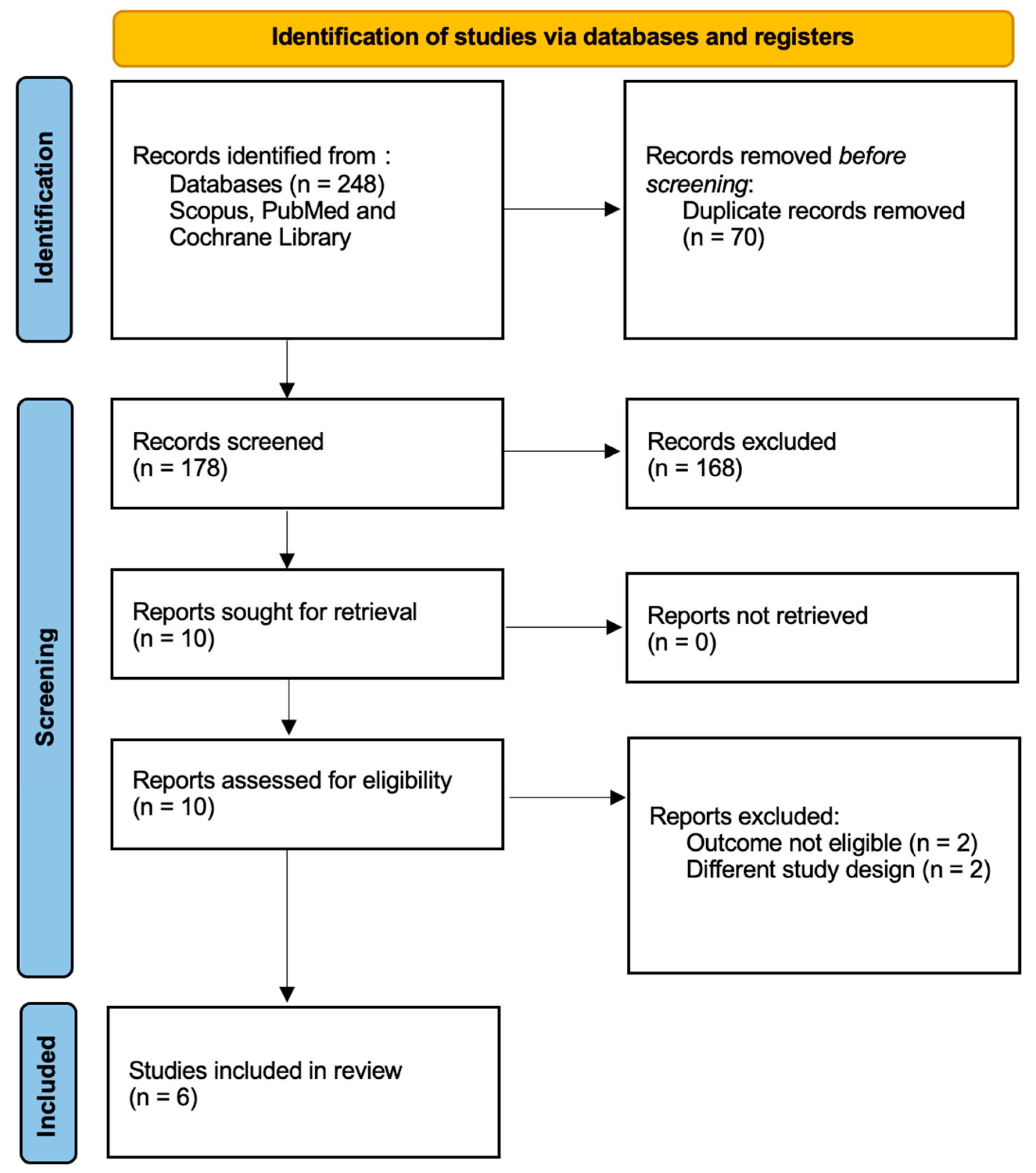
3.1. Study Selection
3.2. Studies and Patient Characteristics
3.2.1. Efficacy of Probiotics on Abdominal Pain Scores
3.2.2. Efficacy on Abdominal Distension and Bloating
3.2.3. Effects on Bowel Habits
3.2.4. Quality of Life Outcomes
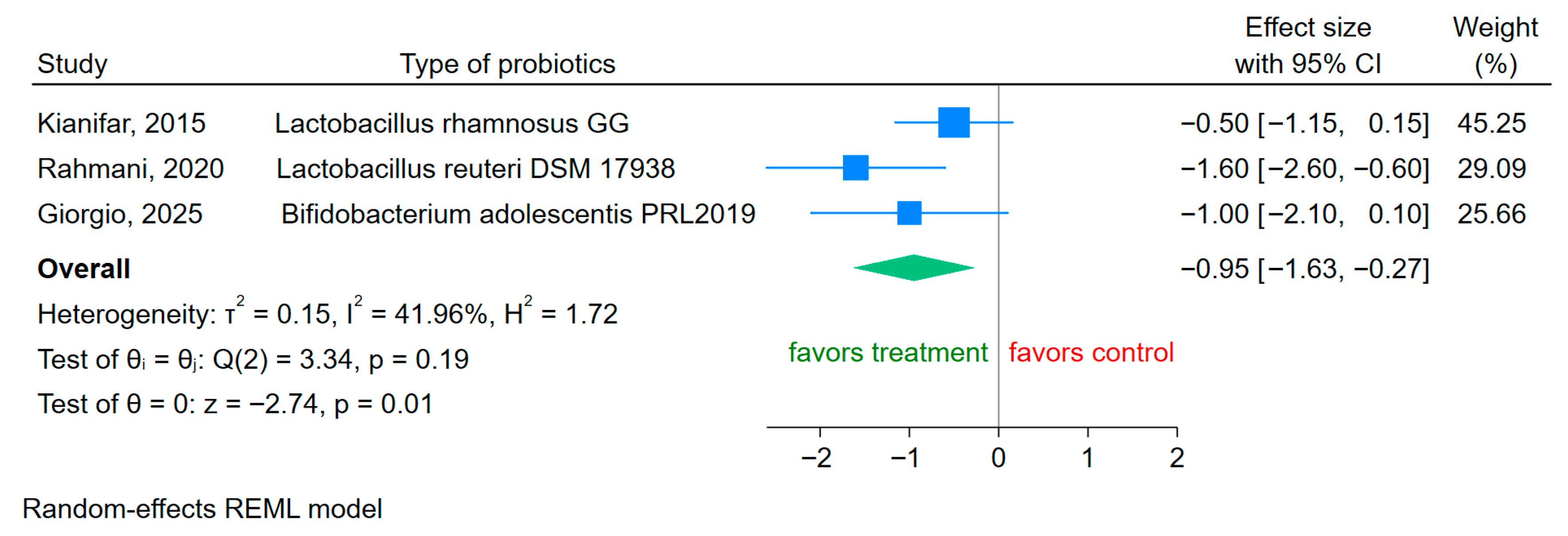
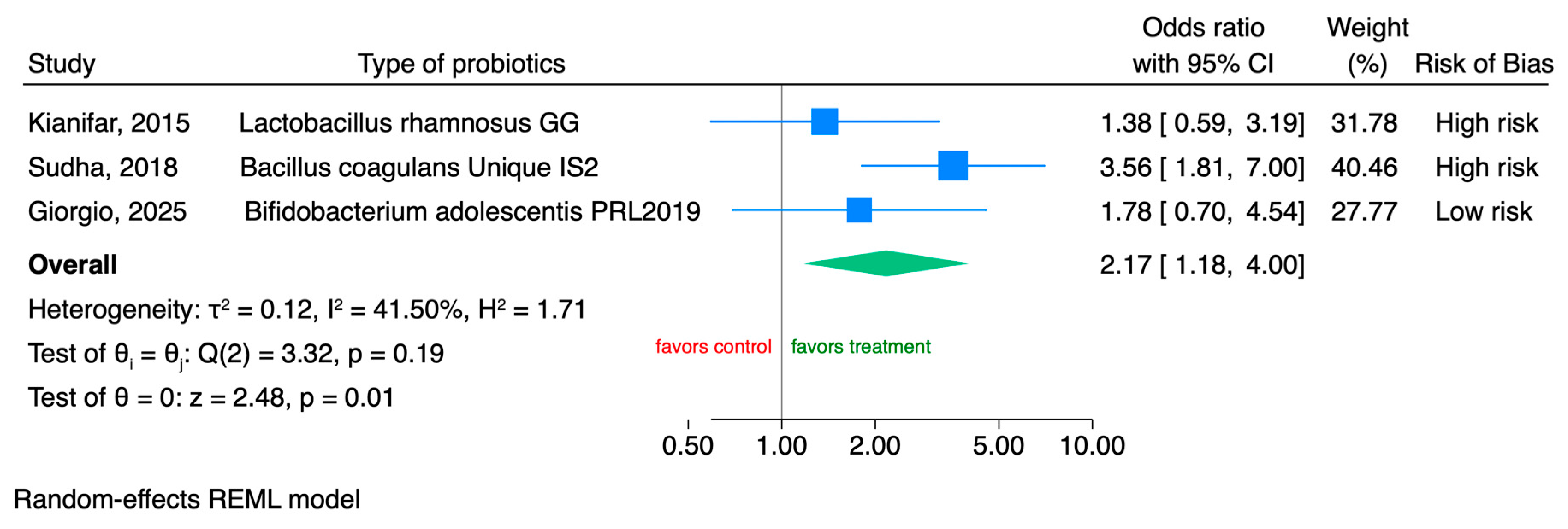
3.3. Meta-Analysis
4. Discussion
5. Conclusions
Supplementary Materials
Author Contributions
Funding
Institutional Review Board Statement
Informed Consent Statement
Data Availability Statement
Conflicts of Interest
Abbreviations
| IBS | Irritable Bowel Syndrome |
| DGBI | Disorder of Gut–brain Interaction |
| IBS-C | Irritable Bowel Syndrome constipation-predominant |
| IBS-D | Irritable Bowel Syndrome diarrhea-predominant |
| IBS-M | Irritable Bowel Syndrome mixed type |
| IBS-U | Irritable Bowel Syndrome-unsubtyped |
| BSFS | Bristol Stool Form Scale |
| RCT | Randomized Controlled Trial |
| MESH | Medical Subject Headings |
| PICO | Population, Intervention, Comparison, Outcomes |
| QoL | Quality of Life |
| SD | Standard Deviation |
| CI | Confidence Interval |
| SMD | Standardized Mean Difference |
| SEs | Standard errors |
| REML | Restricted Maximum Likelihood |
| ESPGHAN | European Society for Paediatric Gastroenterology Hepatology and Nutrition |
References
- Hyams, J.S.; Di Lorenzo, C.; Saps, M.; Shulman, R.J.; Staiano, A.; van Tilburg, M. Functional Disorders: Children and Adolescents. Gastroenterology 2016. Epub ahead of printing. [Google Scholar] [CrossRef]
- Devanarayana, N.M.; Rajindrajith, S. Irritable bowel syndrome in children: Current knowledge, challenges and opportunities. World J. Gastroenterol. 2018, 24, 2211–2235. [Google Scholar] [CrossRef] [PubMed]
- Liu, D.; Li, D.; Xu, X.; Lu, H. An epidemiologic study of irritable bowel syndrome in adolescents and children in China: A school-based study. Pediatrics 2005, 116, e393–e396. [Google Scholar] [CrossRef]
- Karabulut, G.S.; Beşer, Ö.F.; Erginöz, E.; Kutlu, T.; Çokuğraş, F.Ç.; Erkan, T. The incidence of irritable bowel syndrome in children using the Rome III criteria and the effect of trimebutine treatment. J. Neurogastroenterol. Motil. 2013, 19, 90. [Google Scholar] [CrossRef]
- Adeniyi, O.F.; Adenike Lesi, O.; Olatona, F.A.; Esezobor, C.I.; Ikobah, J.M. Irritable bowel syndrome in adolescents in Lagos. Pan Afr. Med. J. 2017, 28, 93. [Google Scholar] [CrossRef]
- Rajindrajith, S.; Devanarayana, N.M. Subtypes and Symptomatology of Irritable Bowel Syndrome in Children and Adolescents: A School-based Survey Using Rome III Criteria. J. Neurogastroenterol. Motil. 2012, 18, 298–304. [Google Scholar] [CrossRef] [PubMed]
- Giannetti, E.; de’Angelis, G.; Turco, R.; Campanozzi, A.; Pensabene, L.; Salvatore, S.; de Seta, F.; Staiano, A. Subtypes of irritable bowel syndrome in children: Prevalence at diagnosis and at follow-up. J. Pediatr. 2014, 164, 1099–1103.e1. [Google Scholar] [CrossRef] [PubMed]
- Devanarayana, N.M.; Rajindrajith, S.; Benninga, M.A. Quality of life and health care consultation in 13 to 18 year olds with abdominal pain predominant functional gastrointestinal diseases. BMC Gastroenterol. 2014, 14, 150. [Google Scholar] [CrossRef]
- Ranasinghe, N.; Devanarayana, N.M.; Rajindrajith, S.; Perera, M.S.; Nishanthinie, S.; Warnakulasuriya, T.; de Zoysa, P.T. Functional gastrointestinal diseases and psychological maladjustment, personality traits and quality of life. BMC Gastroenterol. 2018, 18, 33. [Google Scholar] [CrossRef]
- Sagawa, T.; Okamura, S.; Kakizaki, S.; Zhang, Y.; Morita, K.; Mori, M. Functional gastrointestinal disorders in adolescents and quality of school life. J. Gastroenterol. Hepatol. 2013, 28, 285–290. [Google Scholar] [CrossRef]
- Varni, J.W.; Lane, M.M.; Burwinkle, T.M.; Fontaine, E.N.; Youssef, N.N.; Schwimmer, J.B.; Pardee, P.E.; Pohl, J.F.; Easley, D.J. Health-related quality of life in pediatric patients with irritable bowel syndrome: A comparative analysis. J. Dev. Behav. Pediatr. 2006, 27, 451–458. [Google Scholar] [CrossRef]
- Park, R.; Mikami, S.; LeClair, J.; Bollom, A.; Lembo, C.; Sethi, S.; Lembo, A.; Jones, M.; Cheng, V.; Friedlander, E.; et al. Inpatient burden of childhood functional GI disorders in the USA: An analysis of national trends in the USA from 1997 to 2009. Neurogastroenterol. Motil. 2015, 27, 684–692. [Google Scholar] [CrossRef]
- Hoekman, D.R.; Rutten, J.M.; Vlieger, A.M.; Benninga, M.A.; Dijkgraaf, M.G. Annual Costs of Care for Pediatric Irritable Bowel Syndrome, Functional Abdominal Pain, and Functional Abdominal Pain Syndrome. J. Pediatr. 2015, 167, 1103–1108.e2. [Google Scholar] [CrossRef] [PubMed]
- Lane, M.M.; Weidler, E.M.; Czyzewski, D.I.; Shulman, R.J. Pain symptoms and stooling patterns do not drive diagnostic costs for children with functional abdominal pain and irritable bowel syndrome in primary or tertiary care. Pediatrics 2009, 123, 758–764. [Google Scholar] [CrossRef] [PubMed]
- Self, M.M.; Czyzewski, D.I.; Chumpitazi, B.P.; Weidler, E.M.; Shulman, R.J. Subtypes of irritable bowel syndrome in children and adolescents. Clin. Gastroenterol. Hepatol. 2014, 12, 1468–1473. [Google Scholar] [CrossRef]
- Lacy, B.E.; Patel, N.K. Rome Criteria and a Diagnostic Approach to Irritable Bowel Syndrome. J. Clin. Med. 2017, 6, 99. [Google Scholar] [CrossRef] [PubMed]
- Ford, A.C.; Lacy, B.E.; Talley, N.J. Irritable Bowel Syndrome. N. Engl. J. Med. 2017, 376, 2566–2578. [Google Scholar] [CrossRef]
- Durbán, A.; Abellán, J.J.; Jiménez-Hernández, N.; Artacho, A.; Garrigues, V.; Ortiz, V.; Ponce, J.; Latorre, A.; Moya, A. Instability of the faecal microbiota in diarrhoea-predominant irritable bowel syndrome. FEMS Microbiol. Ecol. 2013, 86, 581–589. [Google Scholar] [CrossRef]
- Najjar, S.A.; Albers, K.M. Pain in Inflammatory Bowel Disease: Optogenetic Strategies for Study of Neural-Epithelial Signaling. Crohns Colitis 2021, 360, otab040. [Google Scholar] [CrossRef]
- El-Salhy, M.; Hausken, T.; Gilja, O.H.; Hatlebakk, J.G. The possible role of gastrointestinal endocrine cells in the pathophysiology of irritable bowel syndrome. Expert Rev. Gastroenterol. Hepatol. 2017, 11, 139–148. [Google Scholar] [CrossRef]
- Sandhu, B.K.; Paul, S.P. Irritable bowel syndrome in children: Pathogenesis, diagnosis and evidence-based treatment. World J. Gastroenterol. 2014, 20, 6013–6023. [Google Scholar] [CrossRef]
- Ding, L.; Ning, L.; Xu, G. Efficacy of different probiotic protocols in irritable bowel syndrome: A network meta-analysis. Medicine 2019, 98, e16068. [Google Scholar]
- Goodoory, V.C.; Khasawneh, M.; Black, C.J.; Quigley, E.M.M.; Moayyedi, P.; Ford, A.C. Efficacy of Probiotics in Irritable Bowel Syndrome: Systematic Review and Meta-analysis. Gastroenterology 2023, 165, 1206–1218, Erratum in Gastroenterology 2024, 167, 1248. [Google Scholar] [CrossRef] [PubMed]
- Xu, H.L.; Zou, L.L.; Chen, M.B.; Wang, H.; Shen, W.M.; Zheng, Q.H.; Cui, W.Y. Efficacy of probiotic adjuvant therapy for irritable bowel syndrome in children: A systematic review and meta-analysis. PLoS ONE 2021, 16, e0255160. [Google Scholar] [CrossRef] [PubMed]
- Fatahi, S.; Hosseini, A.; Sohouli, M.H.; Sayyari, A.; Khatami, K.; Farsani, Z.F.; Amiri, H.; Dara, N.; de Souza, I.G.O.; Santos, H.O. Effects of probiotic supplementation on abdominal pain severity in pediatric patients with irritable bowel syndrome: A systematic review and meta-analysis of randomized clinical trials. World J. Pediatr. 2022, 18, 320–332. [Google Scholar] [CrossRef]
- Higgins, J.P.T.; Thomas, J.; Chandler, J.; Cumpston, M.; Li, T.; Page, M.J. Cochrane Handbook for Systematic Reviews of Interventions Version 6.5; Cochrane: Oxford, UK, 2024. [Google Scholar]
- Sterne, J.A.C.; Savović, J.; Page, M.J.; Elbers, R.G.; Blencowe, N.S.; Boutron, I.; Cates, C.J.; Cheng, H.Y.; Corbett, M.S.; Eldridge, S.M.; et al. RoB 2: A revised tool for assessing risk of bias in randomised trials. BMJ 2019, 366, L4898. [Google Scholar] [CrossRef]
- Kianifar, H.; Jafari, S.A.; Kiani, M.; Ahanchian, H.; Ghasemi, S.V.; Grover, Z.; Mahmoodi, L.Z.; Bagherian, R.; Khalesi, M. Probiotic for irritable bowel syndrome in pediatric patients: A randomized controlled clinical trial. Electron. Physician 2015, 7, 1255–1260. [Google Scholar]
- Sudha, M.R.; Jayanthi, N.; Aasin, M.; Dhanashri, R.D.; Anirudh, T. Efficacy of Bacillus coagulans Unique IS2 in treatment of irritable bowel syndrome in children: A double blind, randomised placebo controlled study. Benef. Microbes 2018, 9, 563–572. [Google Scholar] [CrossRef]
- Vázquez-Frias, R.; Consuelo-Sánchez, A.; Acosta-Rodríguez-Bueno, C.P.; Blanco-Montero, A.; Robles, D.C.; Cohen, V.; Márquez, D.; Perez, M. Efficacy and Safety of the Adjuvant Use of Probiotic Bacillus clausii Strains in Pediatric Irritable Bowel Syndrome: A Randomized, Double-Blind, Placebo-Controlled Study. Paediatr. Drugs 2023, 25, 115–126. [Google Scholar] [CrossRef]
- Giorgio, V.; Quatrale, G.; Mennini, M.; Piccirillo, M.; Furio, S.; Stella, G.; Ferretti, A.; Parisi, P.; Evangelisti, M.; Felici, E.; et al. Bifidobacterium adolescentis PRL2019 in Pediatric Irritable Bowel Syndrome: A Multicentric, Randomized, Double-Blind, Placebo-Controlled Trial. Microorganisms 2025, 13, 627. [Google Scholar] [CrossRef]
- Rahmani, P.; Ghouran-Orimi, A.; Motamed, F.; Moradzadeh, A. Evaluating the effects of probiotics in pediatrics with recurrent abdominal pain. Clin. Exp. Pediatr. 2020, 63, 485–490. [Google Scholar] [CrossRef]
- Giannetti, E.; Maglione, M.; Alessandrella, A.; Strisciuglio, C.; De Giovanni, D.; Campanozzi, A.; Miele, E.; Staiano, A. A Mixture of 3 Bifidobacteria Decreases Abdominal Pain and Improves the Quality of Life in Children with Irritable Bowel Syndrome: A Multicenter, Randomized, Double-Blind, Placebo-Controlled, Crossover Trial. J. Clin. Gastroenterol. 2017, 51, e5–e10. [Google Scholar] [CrossRef] [PubMed]
- Williams, N. Probiotics. Am. J. Health-Syst. Pharm. 2010, 67, 449–458. [Google Scholar] [CrossRef] [PubMed]
- Camilleri, M. Peripheral mechanisms in irritable bowel syndrome. N. Engl. J. Med. 2012, 367, 1626–1635. [Google Scholar] [CrossRef]
- Martin, C.R.; Osadchiy, V.; Kalani, A.; Mayer, E.A. The Brain-Gut-Microbiome Axis. Cell. Mol. Gastroenterol. Hepatol. 2018, 6, 133–148. [Google Scholar] [CrossRef]
- Di Nardo, G.; Barbara, G.; Borrelli, O.; Cremon, C.; Giorgio, V.; Greco, L.; La Pietra, M.; Marasco, G.; Pensabene, L.; Piccirillo, M.; et al. Italian guidelines for the management of irritable bowel syndrome in children and adolescents: Joint Consensus from the Italian Societies of: Gastroenterology, Hepatology and Pediatric Nutrition (SIGENP), Pediatrics (SIP), Gastroenterology and Endoscopy (SIGE) and Neurogastroenterology and Motility (SINGEM). Ital. J. Pediatr. 2024, 50, 51. [Google Scholar] [PubMed]
- Barbara, G.; Cremon, C.; Bellini, M.; Corsetti, M.; Di Nardo, G.; Falangone, F.; Fuccio, L.; Galeazzi, F.; Iovino, P.; Sarnelli, G.; et al. Italian guidelines for the management of irritable bowel syndrome: Joint Consensus from the Italian Societies of: Gastroenterology and Endoscopy (SIGE), Neurogastroenterology and Motility (SINGEM), Hospital Gastroenterologists and Endoscopists (AIGO), Digestive Endoscopy (SIED), General Medicine (SIMG), Gastroenterology, Hepatology and Pediatric Nutrition (SIGENP) and Pediatrics (SIP). Dig. Liver Dis. 2023, 55, 187–207. [Google Scholar]
- Roager, H.M.; Hansen, L.B.; Bahl, M.I.; Frandsen, H.L.; Carvalho, V.; Gøbel, R.J.; Dalgaard, M.D.; Plichta, D.R.; Sparholt, M.H.; Vestergaard, H.; et al. Colonic transit time is related to bacterial metabolism and mucosal turnover in the gut. Nat. Microbiol. 2016, 1, 16093. [Google Scholar] [CrossRef]
- Benjak Horvat, I.; Gobin, I.; Kresović, A.; Hauser, G. How can probiotic improve irritable bowel syndrome symptoms? World J. Gastrointest. Surg. 2021, 13, 923–940. [Google Scholar] [CrossRef]
- Tap, J.; Derrien, M.; Törnblom, H.; Brazeilles, R.; Cools-Portier, S.; Doré, J.; Störsrud, S.; Le Nevé, B.; Öhman, L.; Simrén, M. Identification of an Intestinal Microbiota Signature Associated with Severity of Irritable Bowel Syndrome. Gastroenterology 2017, 152, 111–123.e8. [Google Scholar] [CrossRef]
- Pozuelo, M.; Panda, S.; Santiago, A.; Mendez, S.; Accarino, A.; Santos, J.; Guarner, F.; Azpiroz, F.; Manichanh, C. Reduction of butyrate- and methane-producing microorganisms in patients with Irritable Bowel Syndrome. Sci. Rep. 2015, 5, 12693. [Google Scholar] [CrossRef]
- Amaral, F.A.; Sachs, D.; Costa, V.V.; Fagundes, C.T.; Cisalpino, D.; Cunha, T.M.; Ferreira, S.H.; Cunha, F.Q.; Silva, T.A.; Nicoli, J.R.; et al. Commensal microbiota is fundamental for the development of inflammatory pain. Proc. Natl. Acad. Sci. USA 2008, 105, 2193–2197. [Google Scholar] [CrossRef] [PubMed]
- Cenac, N.; Bautzova, T.; Le Faouder, P.; Veldhuis, N.A.; Poole, D.P.; Rolland, C.; Bertrand, J.; Liedtke, W.; Dubourdeau, M.; Bertrand-Michel, J.; et al. Quantification and Potential Functions of Endogenous Agonists of Transient Receptor Potential Channels in Patients with Irritable Bowel Syndrome. Gastroenterology 2015, 149, 433–444.e7. [Google Scholar] [CrossRef]
- Bautzova, T.; Hockley, J.R.F.; Perez-Berezo, T.; Pujo, J.; Tranter, M.M.; Desormeaux, C.; Barbaro, M.R.; Basso, L.; Le Faouder, P.; Rolland, C.; et al. 5-oxoETE triggers nociception in constipation-predominant irritable bowel syndrome through MAS-related G protein-coupled receptor D. Sci. Signal. 2018, 11, eaal2171. [Google Scholar] [CrossRef]
- Barbara, G.; Wang, B.; Stanghellini, V.; de Giorgio, R.; Cremon, C.; Di Nardo, G.; Trevisani, M.; Campi, B.; Geppetti, P.; Tonini, M.; et al. Mast cell-dependent excitation of visceral-nociceptive sensory neurons in irritable bowel syndrome. Gastroenterology 2007, 132, 26–37. [Google Scholar] [CrossRef]
- Gargari, G.; Taverniti, V.; Gardana, C.; Cremon, C.; Canducci, F.; Pagano, I.; Barbaro, M.R.; Bellacosa, L.; Castellazzi, A.M.; Valsecchi, C.; et al. Fecal Clostridiales distribution and short-chain fatty acids reflect bowel habits in irritable bowel syndrome. Environ. Microbiol. 2018, 20, 3201–3213. [Google Scholar] [CrossRef]
- O’Mahony, L.; McCarthy, J.; Kelly, P.; Hurley, G.; Luo, F.; Chen, K.; O’Sullivan, G.C.; Kiely, B.; Collins, J.K.; Shanahan, F.; et al. Lactobacillus and bifidobacterium in irritable bowel syndrome: Symptom responses and relationship to cytokine profiles. Gastroenterology 2005, 128, 541–551. [Google Scholar] [CrossRef]
- Ma, D.; Forsythe, P.; Bienenstock, J. Live Lactobacillus rhamnosus [corrected] is essential for the inhibitory effect on tumor necrosis factor alpha-induced interleukin-8 expression. Infect. Immun. 2004, 72, 5308–5314. [Google Scholar] [CrossRef]
- Camilleri, M. Probiotics and irritable bowel syndrome: Rationale, putative mechanisms, and evidence of clinical efficacy. J. Clin. Gastroenterol. 2006, 40, 264–269. [Google Scholar] [CrossRef] [PubMed]
- Brydon, W.G.; Nyhlin, H.; Eastwood, M.A.; Merrick, M.V. Serum 7 alpha-hydroxy-4-cholesten-3-one and selenohomocholyltaurine (SeHCAT) whole body retention in the assessment of bile acid induced diarrhoea. Eur. J. Gastroenterol. Hepatol. 1996, 8, 117–123. [Google Scholar] [CrossRef] [PubMed]
- Chatterjee, S.; Park, S.; Low, K.; Kong, Y.; Pimentel, M. The degree of breath methane production in IBS correlates with the severity of constipation. Am. J. Gastroenterol. 2007, 102, 837–841. [Google Scholar] [CrossRef]
- Agrawal, A.; Houghton, L.A.; Morris, J.; Reilly, B.; Guyonnet, D.; Goupil Feuillerat, N.; Schlumberger, A.; Jakob, S.; Whorwell, P.J. Clinical trial: The effects of a fermented milk product containing Bifidobacterium lactis DN-173 010 on abdominal distension and gastrointestinal transit in irritable bowel syndrome with constipation. Aliment. Pharmacol. Ther. 2009, 29, 104–114. [Google Scholar] [CrossRef] [PubMed]
- McFarland, L.V.; Karakan, T.; Karatas, A. Strain-specific and outcome-specific efficacy of probiotics for the treatment of irritable bowel syndrome: A systematic review and meta-analysis. eClinicalMedicine 2021, 41, 101154. [Google Scholar] [CrossRef] [PubMed]
- Szajewska, H.; Canani, R.B.; Domellöf, M.; Guarino, A.; Hojsak, I.; Indrio, F.; Vecchio, A.L.; Mihatsch, W.A.; Mosca, A.; Salvatore, S. Probiotics for the management of pediatric gastrointestinal disorders: Position paper of the ESPGHAN Special Interest Group on Gut Microbiota and Modifications. J. Pediatr. Gastroenterol. Nutr. 2023, 76, 232–247. [Google Scholar] [CrossRef] [PubMed]


Disclaimer/Publisher’s Note: The statements, opinions and data contained in all publications are solely those of the individual author(s) and contributor(s) and not of MDPI and/or the editor(s). MDPI and/or the editor(s) disclaim responsibility for any injury to people or property resulting from any ideas, methods, instructions or products referred to in the content. |
© 2025 by the authors. Licensee MDPI, Basel, Switzerland. This article is an open access article distributed under the terms and conditions of the Creative Commons Attribution (CC BY) license.
Share and Cite
Piccirillo, M.; Renzi, E.; De Vito, C.; Mennini, M.; Giarrusso, G.; Gallo, G.; Quatrale, G.; Bianchi, M.; Graziani, M.; Caron, F.; et al. Efficacy and Safety of Probiotics in Children with Irritable Bowel Syndrome: A Systematic Review and Meta-Analysis. Microorganisms 2026, 14, 23. https://doi.org/10.3390/microorganisms14010023
Piccirillo M, Renzi E, De Vito C, Mennini M, Giarrusso G, Gallo G, Quatrale G, Bianchi M, Graziani M, Caron F, et al. Efficacy and Safety of Probiotics in Children with Irritable Bowel Syndrome: A Systematic Review and Meta-Analysis. Microorganisms. 2026; 14(1):23. https://doi.org/10.3390/microorganisms14010023
Chicago/Turabian StylePiccirillo, Marisa, Erika Renzi, Corrado De Vito, Maurizio Mennini, Giacomo Giarrusso, Giorgia Gallo, Giovanna Quatrale, Marco Bianchi, Marco Graziani, Francesca Caron, and et al. 2026. "Efficacy and Safety of Probiotics in Children with Irritable Bowel Syndrome: A Systematic Review and Meta-Analysis" Microorganisms 14, no. 1: 23. https://doi.org/10.3390/microorganisms14010023
APA StylePiccirillo, M., Renzi, E., De Vito, C., Mennini, M., Giarrusso, G., Gallo, G., Quatrale, G., Bianchi, M., Graziani, M., Caron, F., Ferretti, A., Parisi, P., & Nardo, G. D. (2026). Efficacy and Safety of Probiotics in Children with Irritable Bowel Syndrome: A Systematic Review and Meta-Analysis. Microorganisms, 14(1), 23. https://doi.org/10.3390/microorganisms14010023