How Habitat Micromodification Influences Gut Microbiota and Diet Composition of Reintroduced Species: Evidence from Endangered Père David’s Deer


Abstract
1. Introduction
2. Materials and Methods
2.1. Sample Collection and DNA Extraction
2.2. Analysis of Gut Microbiota
2.3. Analysis of Dietary Composition
2.4. Potential Correlation Between Dietary Composition and Gut Microbiota
3. Results
3.1. Results of Gut Microbiota
3.1.1. Basic Sequencing Information
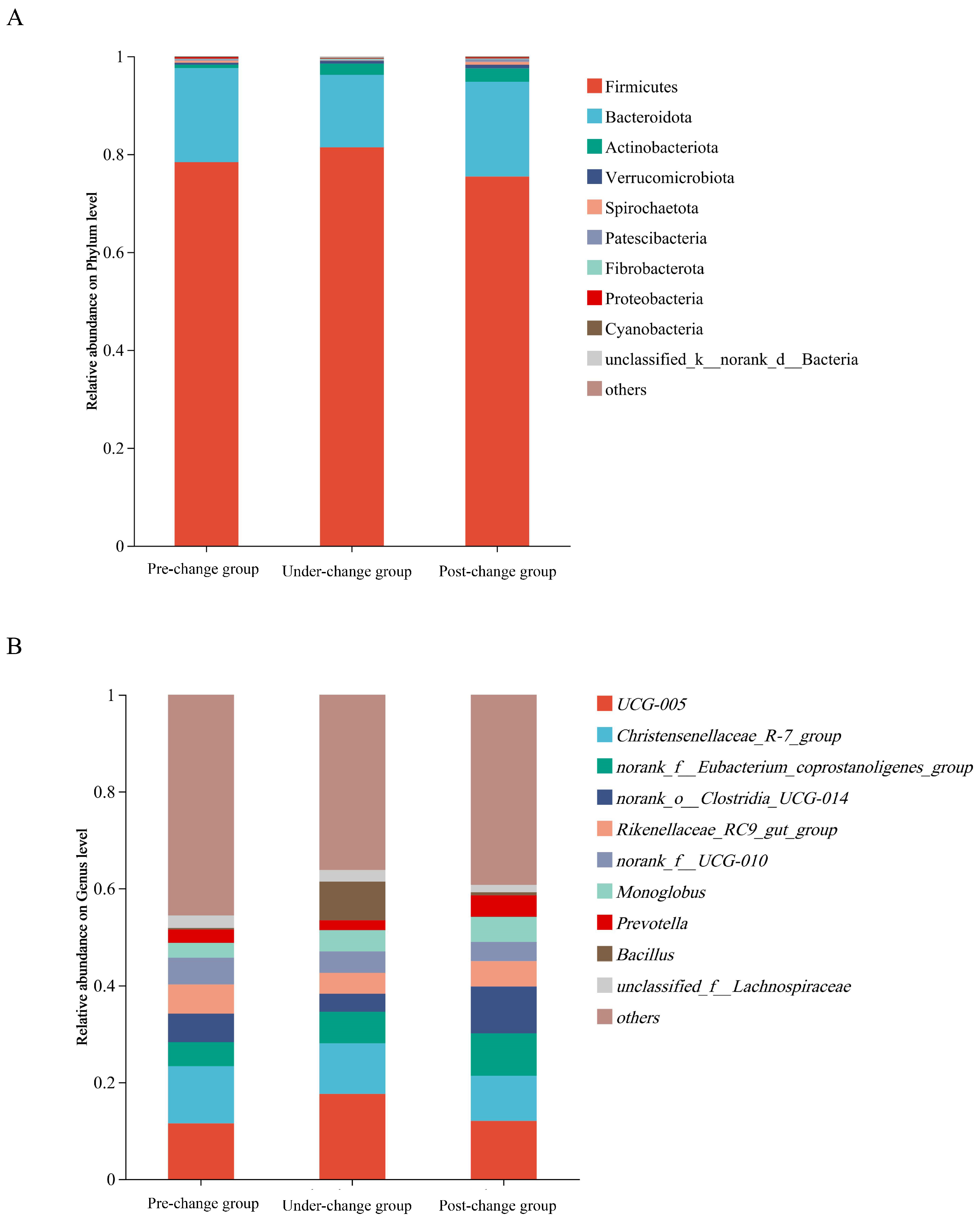
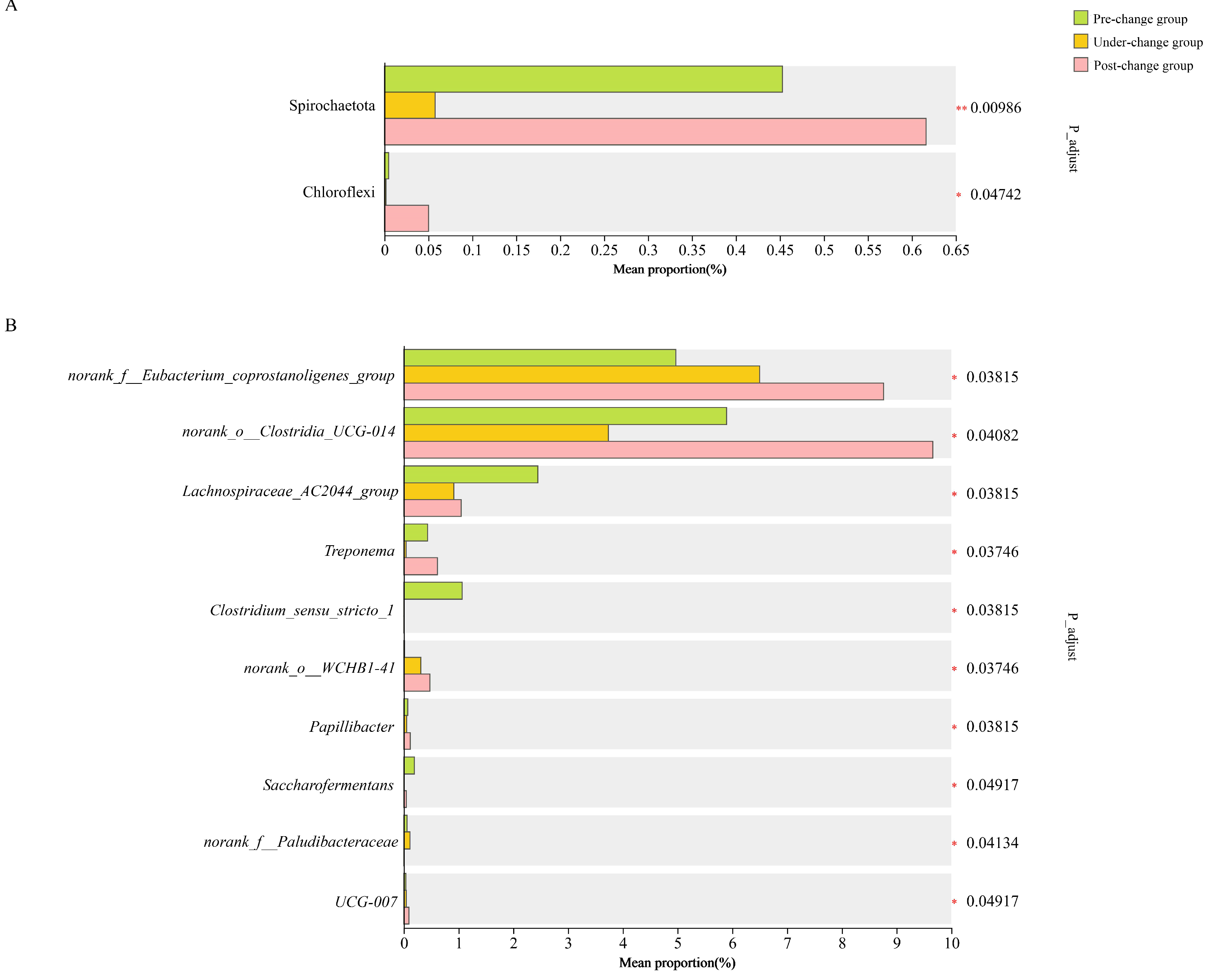
3.1.2. Species Composition and Differences in Gut Microbiota
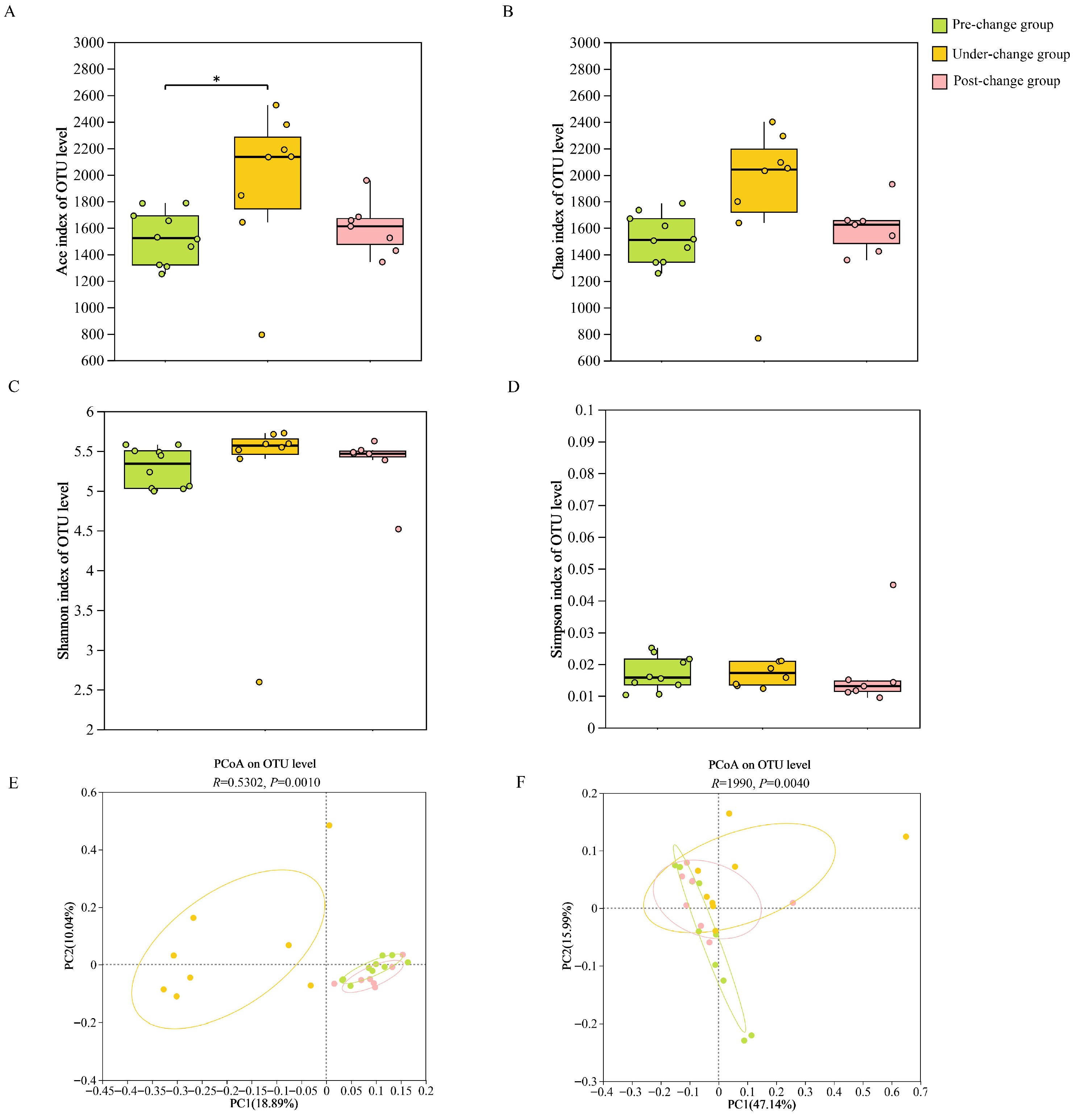
3.1.3. Alpha Diversity and Beta Diversity Analysis
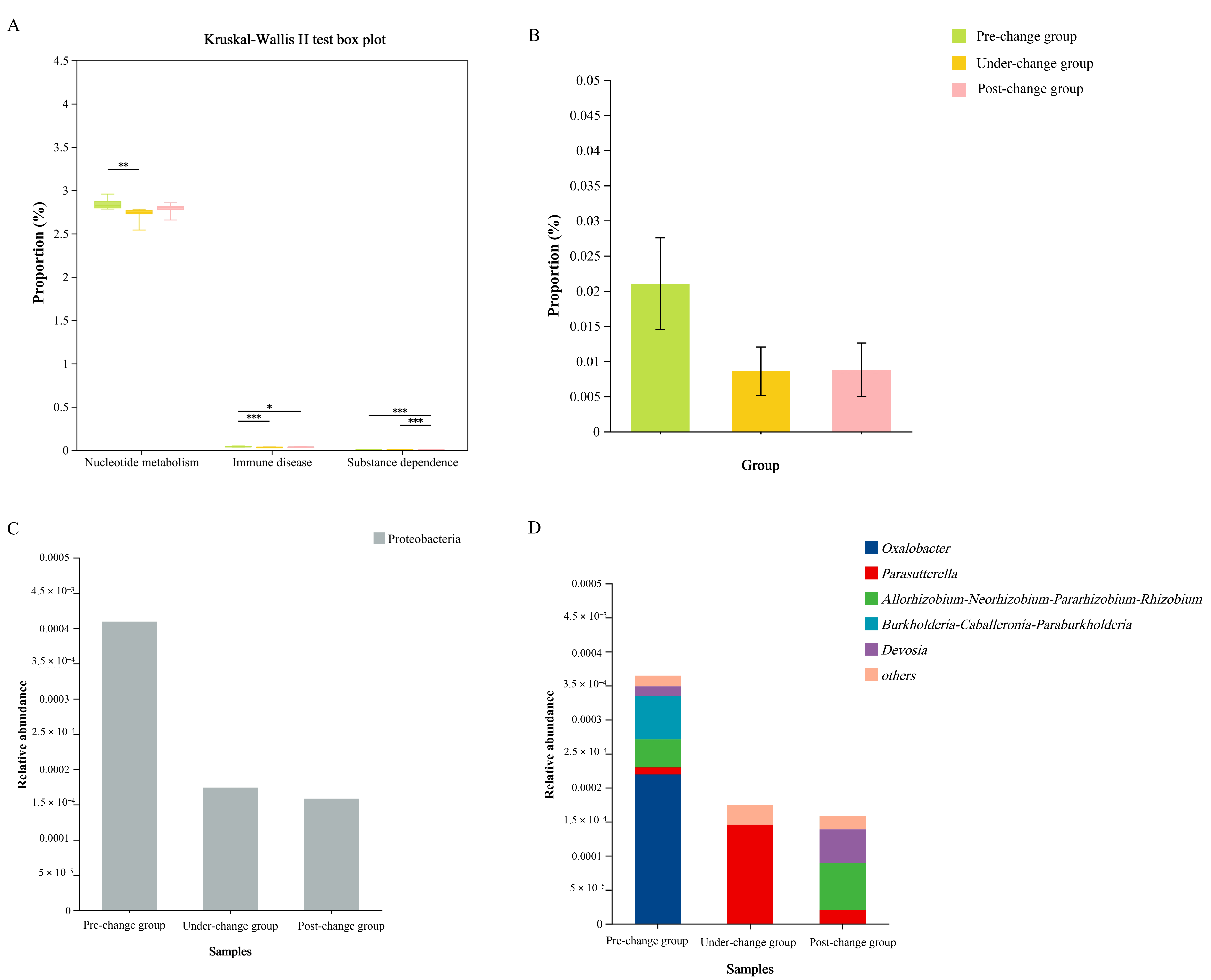
3.1.4. Prediction of Gut Microbiota Function
3.1.5. Pathogenicity Analysis of Gut Microbiota
3.2. Dietary Composition
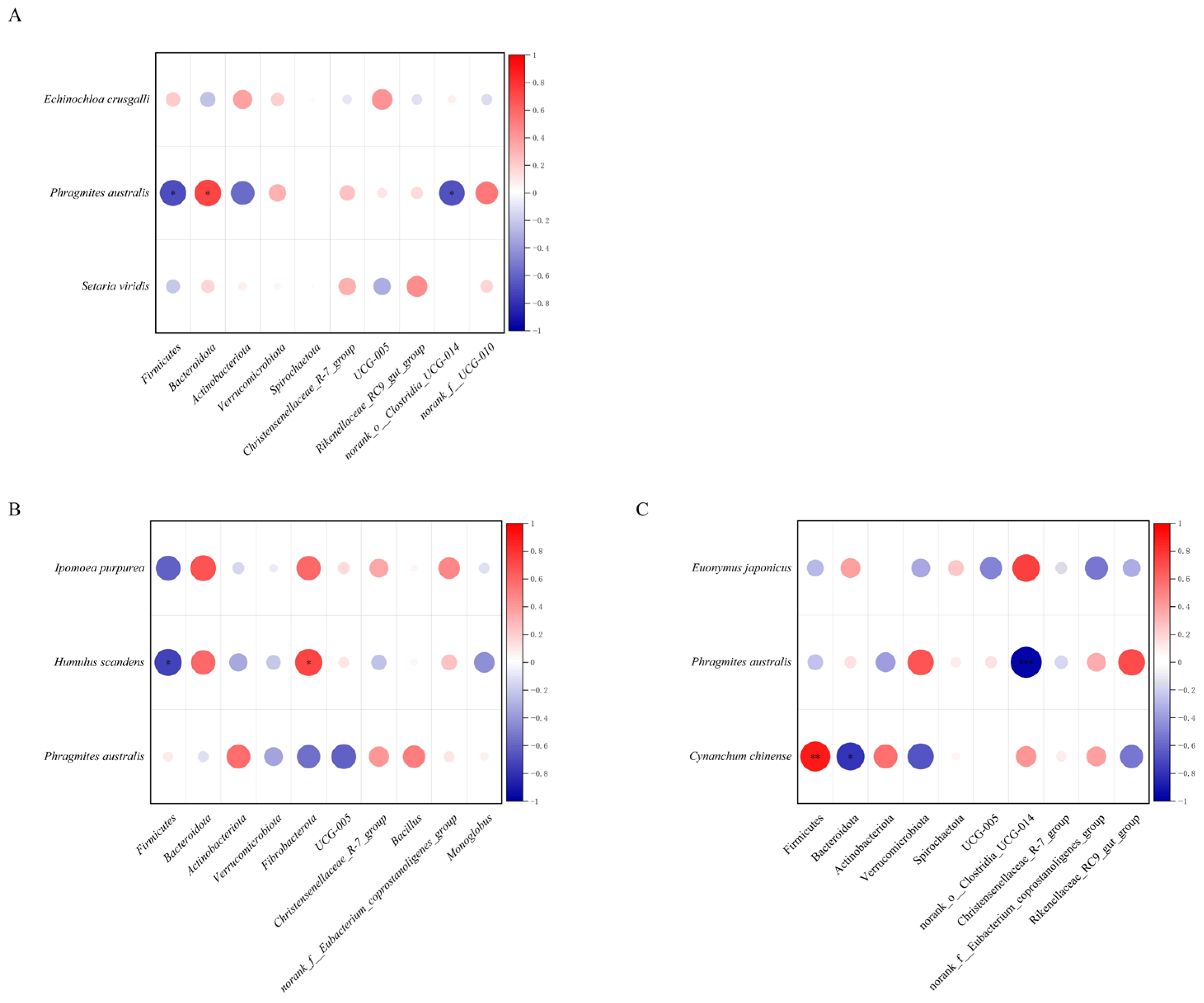
3.3. Diet–Microbiota Correlations Across Habitat Micromodification Phases
4. Discussion
4.1. Structural Conservation of Gut Microbiota Amidst Habitat Alteration
4.2. Diet–Microbiota Dynamics in Père David’s Deer During Habitat Micromodification
5. Conclusions
Supplementary Materials
Author Contributions
Funding
Institutional Review Board Statement
Informed Consent Statement
Data Availability Statement
Acknowledgments
Conflicts of Interest
References
- Soliveres, S.; Van Der Plas, F.; Manning, P.; Prati, D.; Gossner, M.M.; Renner, S.C.; Alt, F.; Arndt, H.; Baumgartner, V.; Binkenstein, J. Biodiversity at multiple trophic levels is needed for ecosystem multifunctionality. Nature 2016, 536, 456–459. [Google Scholar] [CrossRef] [PubMed]
- Ugine, T.A.; Gill, H.K.; Hernandez, N.; Grebenok, R.J.; Behmer, S.T.; Losey, J.E. Predator performance and fitness is dictated by herbivore prey type plus indirect effects of their host plant. J. Chem. Ecol. 2021, 47, 877–888. [Google Scholar] [CrossRef]
- Robinson, C.T.; Uehlinger, U. Experimental floods cause ecosystem regime shift in a regulated river. Ecol. Appl. 2008, 18, 511–526. [Google Scholar] [CrossRef]
- Duan, Y.; Di, B.; Ustin, S.L.; Xu, C.; Xie, Q.; Wu, S.; Li, J.; Zhang, R. Changes in ecosystem services in a montane landscape impacted by major earthquakes: A case study in Wenchuan earthquake-affected area, China. Ecol. Indic. 2021, 126, 107683. [Google Scholar] [CrossRef]
- Haddad, N.M.; Brudvig, L.A.; Clobert, J.; Davies, K.F.; Gonzalez, A.; Holt, R.D.; Lovejoy, T.E.; Sexton, J.O.; Austin, M.P.; Collins, C.D. Habitat fragmentation and its lasting impact on Earth’s ecosystems. Sci. Adv. 2015, 1, e1500052. [Google Scholar] [CrossRef]
- Sievers, M.; Hale, R.; Parris, K.M.; Swearer, S.E. Impacts of human-induced environmental change in wetlands on aquatic animals. Biol. Rev. 2018, 93, 529–554. [Google Scholar] [CrossRef]
- Xin, Y.; Qi, Q.; Zhang, M.; Zhang, D.; Cui, G.; An, Y.; Wang, Y.; Tong, S.; Xing, X. Responses of plant productivity and diversity to drought in Carex schmidtii tussock wetlands, Northeast China. Commun. Ecol. 2024, 25, 1–13. [Google Scholar] [CrossRef]
- Magioli, M.; Moreira, M.Z.; Fonseca, R.C.B.; Ribeiro, M.C.; Rodrigues, M.G.; Ferraz, K.M.P.M.D.B. Human-modified landscapes alter mammal resource and habitat use and trophic structure. Proc. Natl. Acad. Sci. USA 2019, 116, 18466–18472. [Google Scholar] [CrossRef]
- Lindsay, E.C.; Metcalfe, N.B.; Llewellyn, M.S. The potential role of the gut microbiota in shaping host energetics and metabolic rate. J. Anim. Ecol. 2020, 89, 2415–2426. [Google Scholar] [CrossRef] [PubMed]
- Li, S.; Xu, K.; Cheng, Y.; Chen, L.; Yi, A.; Xiao, Z.; Zhao, X.; Chen, M.; Tian, Y.; Meng, W. The role of complex interactions between the intestinal flora and host in regulating intestinal homeostasis and inflammatory bowel disease. Front. Microbiol. 2023, 14, 1188455. [Google Scholar] [CrossRef] [PubMed]
- Sun, C.H.; Liu, H.Y.; Liu, B.; Yuan, B.D.; Lu, C.H. Analysis of the gut microbiome of wild and captive Père David’s deer. Front. Microbiol. 2019, 10, 2331. [Google Scholar] [CrossRef]
- Mo, Q.; Yao, H.; Wu, H.; Zhao, D. Impact of environmental food intake on the gut microbiota of endangered père david’s deer: Primary evidence for population reintroduction. Animals 2024, 14, 728. [Google Scholar] [CrossRef] [PubMed]
- Blackburn, R.C.; Barber, N.A.; Jones, H.P. Reintroduced bison diet changes throughout the season in restored prairie. Restor. Ecol. 2021, 29, e13161. [Google Scholar] [CrossRef]
- Huang, G.; Qi, D.; Yang, Z.; Hou, R.; Shi, W.; Zhao, F.; Li, Z.; Yan, L.; Wei, F. Gut microbiome as a key monitoring indicator for reintroductions of captive animals. Conserv. Biol. 2024, 38, e14173. [Google Scholar] [CrossRef]
- Durbán, A.; Abellán, J.J.; Jiménez-Hernández, N.; Ponce, M.; Ponce, J.; Sala, T.; D’Auria, G.; Latorre, A.; Moya, A. Assessing gut microbial diversity from feces and rectal mucosa. Microb. Ecol. 2011, 61, 123–133. [Google Scholar] [CrossRef]
- Lin, L.; Guo, Z.; Bai, J.; Zhong, Z.; Li, J.; Guo, Q. Seasonal covariations of diet-gut microbiota in the adaptation of the newly reintroduced Père David’s deer (Elaphurus davidianus) to the northern habitat. Glob. Ecol. Conserv. 2024, 52, e02983. [Google Scholar] [CrossRef]
- Jiang, Z.; Harris, R.B. Elaphurus davidianus. The IUCN Red List of Threatened Species 2016: e.T7121A22159785. Available online: https://dx.doi.org/10.2305/IUCN.UK.2016-2.RLTS.T7121A22159785.en (accessed on 5 January 2026).
- Xue, D.Y.; Zhang, Y.Y.; Cheng, Z.B.; Zong, Z.Y.; Cao, M.; Fu, M.D.; Bai, J.D.; Yuan, X.J. Père David’s deer (Elaphurus davidianus) in China: Population dynamics and challenges. J. Resour. Ecol. 2022, 13, 41–50. [Google Scholar]
- Zhang, Y.; Bai, J.; Zhu, A.; Chen, R.; Xue, D.; Zhong, Z.; Cheng, Z. Reversing extinction in China’s Père David’s deer. Science 2021, 371, 685. [Google Scholar] [CrossRef]
- Wang, L.; Ding, J.; Yang, Z.; Chen, H.; Yao, R.; Dai, Q.; Ding, Y.; Zhu, L. Père David’s deer gut microbiome changes across captive and translocated populations: Implications for conservation. Evol. Appl. 2019, 12, 622–635. [Google Scholar] [CrossRef]
- Zhang, M.S.; Shi, M.H.; Fan, M.Y.; Xu, S.H.; Li, Y.M.; Zhang, T.X.; Cha, M.H.; Liu, Y.; Guo, X.B.; Chen, Q.; et al. Comparative analysis of gut microbiota changes in pere david’s deer populations in Beijing Milu Park and Shishou, Hubei Province in China. Front. Microbiol. 2018, 9, 11. [Google Scholar] [CrossRef]
- Mathews, F.; Moro, D.; Strachan, R.; Gelling, M.; Buller, N. Health surveillance in wildlife reintroductions. Biol. Conserv. 2006, 131, 338–347. [Google Scholar] [CrossRef]
- Raspa, F.; Chessa, S.; Bergero, D.; Sacchi, P.; Ferrocino, I.; Cocolin, L.; Corvaglia, M.R.; Moretti, R.; Cavallini, D.; Valle, E. Microbiota characterization throughout the digestive tract of horses fed a high-fiber vs. a high-starch diet. Front. Vet. Sci. 2024, 11, 1386135. [Google Scholar] [CrossRef]
- Masebo, N.T.; Marliani, G.; Shannon Del Re, F.; Abram, L.; Cavallini, D.; Di Pietro, M.; Beltrame, A.; Schiavon, E.; Bolcato, M.; Hernandez Bermudez, J. Evaluation of antimicrobial and non-steroidal anti-inflammatory treatments for BRD on health and welfare in fattening bulls: A cross-sectional study. Vet. Quart. 2024, 44, 1–11. [Google Scholar] [CrossRef]
- Zhao, H.; Jiang, F.; Gu, H.; Gao, H.; Zhang, J.; Zhang, M.; Zhang, T. Seasonal variation of gut microbial composition and metabolism in Tibetan antelopes in Hoh Xil National Nature Reserve. Animals 2023, 13, 3569. [Google Scholar] [CrossRef] [PubMed]
- Yao, H.; Mo, Q.; Wu, H.; Zhao, D. How do living conditions affect the gut microbiota of endangered Père David’s deer (Elaphurus davidianus)? Initial findings from the warm temperate zone. PeerJ 2023, 11, e14897. [Google Scholar] [CrossRef] [PubMed]
- Li, B.; Gao, H.; Song, P.; Liang, C.; Jiang, F.; Xu, B.; Liu, D.; Zhang, T. Captivity shifts gut microbiota communities in white-lipped deer (Cervus albirostris). Animals 2022, 12, 431. [Google Scholar] [CrossRef]
- Zheng, P.; Gao, W.; Cong, S.; Leng, L.; Wang, T.; Shi, L. High-energy supplemental feeding shifts gut microbiota composition and function in red deer (Cervus elaphus). Animals 2024, 14, 1428. [Google Scholar] [CrossRef]
- Zhu, Z.; Sun, Y.; Zhu, F.; Liu, Z.; Pan, R.; Teng, L.; Guo, S. Seasonal variation and sexual dimorphism of the microbiota in wild blue sheep (Pseudois nayaur). Front. Microbiol. 2020, 11, 1260. [Google Scholar] [CrossRef]
- Jiang, F.; Gao, H.; Qin, W.; Song, P.; Wang, H.; Zhang, J.; Liu, D.; Wang, D.; Zhang, T. Marked seasonal variation in structure and function of gut microbiota in forest and alpine musk deer. Front. Microbiol. 2021, 12, 699797. [Google Scholar] [CrossRef] [PubMed]
- Cheng, J.; Hu, J.; Geng, F.; Nie, S. Bacteroides utilization for dietary polysaccharides and their beneficial effects on gut health. Food Sci. Hum. Wellness 2022, 11, 1101–1110. [Google Scholar] [CrossRef]
- Wang, L.; Wang, P.; Yan, Z.; Zhang, P.; Yin, X.; Jia, R.; Li, Y.; Yang, J.; Gun, S.; Yang, Q. Whole-plant silage maize to improve fiber digestive characteristics and intestinal microbiota of Hezuo pigs. Front. Microbiol. 2024, 15, 1360505. [Google Scholar] [CrossRef] [PubMed]
- Hazarika, S.N.; Thakur, D. Actinobacteria. In Beneficial Microbes in Agro-Ecology; Elsevier: Amsterdam, The Netherlands, 2020; pp. 443–476. [Google Scholar]
- Šuľák, M.; Sikorová, L.; Jankuvová, J.; Javorský, P.; Pristaš, P. Variability of Actinobacteria, a minor component of rumen microflora. Folia Microbiol. 2012, 57, 351–353. [Google Scholar] [CrossRef] [PubMed]
- Gharechahi, J.; Vahidi, M.F.; Bahram, M.; Han, J.L.; Ding, X.Z.; Salekdeh, G.H. Metagenomic analysis reveals a dynamic microbiome with diversified adaptive functions to utilize high lignocellulosic forages in the cattle rumen. ISME J. 2021, 15, 1108–1120. [Google Scholar] [CrossRef] [PubMed]
- Jia, Y.; Shi, Y.; Qiao, H. Bacterial community and diversity in the rumen of 11 Mongolian cattle as revealed by 16S rRNA amplicon sequencing. Sci. Rep. 2024, 14, 1546. [Google Scholar] [CrossRef]
- Salgado, J.F.M.; Hervé, V.; Vera, M.A.; Tokuda, G.; Brune, A. Unveiling lignocellulolytic potential: A genomic exploration of bacterial lineages within the termite gut. Microbiome 2024, 12, 201. [Google Scholar] [CrossRef]
- Hartinger, T.; Edwards, J.E.; Gómez Expósito, R.; Smidt, H.; Ter Braak, C.J.; Gresner, N.; Südekum, K.H. Differently pre-treated alfalfa silages affect the in vitro ruminal microbiota composition. Front. Microbiol. 2019, 10, 2761. [Google Scholar] [CrossRef]
- Long, C.; Venema, K. Pretreatment of rapeseed meal increases its recalcitrant fiber fermentation and alters the microbial community in an in vitro model of swine large intestine. Front. Microbiol. 2020, 11, 588264. [Google Scholar] [CrossRef]
- Guo, W.; Liu, T.; Wang, W.; Yu, Y.; Neves, A.L.A.; Zhou, M.; Chen, X. Survey of the fecal microbiota of indigenous small ruminants living in different areas of Guizhou. Front. Microbiol. 2024, 15, 1415230. [Google Scholar] [CrossRef]
- Zhang, R.; Mei, S.; He, G.; Wei, M.; Chen, L.; Chen, Z.; Zhu, M.; Zhou, B.; Wang, K.; Cheng, Z.; et al. Multiomics analyses reveal fecal microbial community and metabolic alterations in finishing cattle fed probiotics-fermented distiller’s grains diets. Microbiol. Spect. 2025, 13, e00721-24. [Google Scholar] [CrossRef]
- Perea, K.; Perz, K.; Olivo, S.K.; Williams, A.; Lachman, M.; Ishaq, S.L.; Thomson, J.; Yeoman, C.J. Feed efficiency phenotypes in lambs involve changes in ruminal, colonic, and small-intestine-located microbiota. J. Anim. Sci. 2017, 95, 2585–2592. [Google Scholar] [CrossRef][Green Version]
- Tang, X.; Zhang, K.; Xiong, K. Fecal microbial changes in response to finishing pigs directly fed with fermented feed. Front. Vet. Sci. 2022, 9, 894909. [Google Scholar] [CrossRef] [PubMed]
- Emerson, E.L.; Weimer, P.J. Fermentation of model hemicelluloses by Prevotella strains and Butyrivibrio fibrisolvens in pure culture and in ruminal enrichment cultures. Appl. Microbiol. Biotechnol. 2017, 101, 4269–4278. [Google Scholar] [CrossRef]
- Liang, Z.; Zhang, J.; Du, M.; Ahmad, A.A.; Wang, S.; Zheng, J.; Salekdeh, G.H.; Yan, P.; Han, J.; Tong, B. Age-dependent changes of hindgut microbiota succession and metabolic function of Mongolian cattle in the semi-arid rangelands. Front. Microbiol. 2022, 13, 957341. [Google Scholar] [CrossRef] [PubMed]
- Shi, H.; Guo, P.; Wang, Z.; Zhou, J.; He, M.; Shi, L.; Huang, X.; Guo, P.; Guo, Z.; Zhang, Y. Cellulase enhancing rumen microbiome of Tan sheep indicates plastic responses to seasonal variations of diet in the typical steppe. BMC Microbiol. 2025, 25, 154. [Google Scholar] [CrossRef] [PubMed]
- Saxena, A.K.; Kumar, M.; Chakdar, H.; Anuroopa, N.; Bagyaraj, D. Bacillus species in soil as a natural resource for plant health and nutrition. J. Appl. Microbiol. 2020, 128, 1583–1594. [Google Scholar] [CrossRef]
- Grgas, D.; Rukavina, M.; Bešlo, D.; Štefanac, T.; Crnek, V.; Šikić, T.; Habuda-Stanić, M.; Landeka Dragičević, T. The bacterial degradation of lignin—A review. Water 2023, 15, 1272. [Google Scholar] [CrossRef]
- Abd-Elsalam, H.E.; El-Hanafy, A.A. Lignin biodegradation with ligninolytic bacterial strain and comparison of Bacillus subtilis and Bacillus sp. isolated from Egyptian soil. Am. Eurasian J. Agric. Environ. Sci. 2009, 5, 39–44. [Google Scholar]
- Wu, H.; Shi, C.; Xu, T.; Dai, X.; Zhao, D. Characterization and optimization of cellulose-degrading bacteria isolated from fecal samples of Elaphurus davidianus through response surface methodology. Microorganisms 2025, 13, 348. [Google Scholar] [CrossRef] [PubMed]
- Ravelo, A.D.; Arce-Cordero, J.A.; Lobo, R.R.; Liu, T.; Jeong, K.C.; Faciola, A. Effects of partially replacing dietary corn with sugars in a dual-flow continuous culture system on the ruminal microbiome. Transl. Ani Sci. 2023, 7, txad011. [Google Scholar] [CrossRef]
- Mukherjee, A.; Lordan, C.; Ross, R.P.; Cotter, P.D. Gut microbes from the phylogenetically diverse genus Eubacterium and their various contributions to gut health. Gut Microbes 2020, 12, 1802866. [Google Scholar] [CrossRef] [PubMed]
- Lozupone, C.A.; Stombaugh, J.I.; Gordon, J.I.; Jansson, J.K.; Knight, R. Diversity, stability and resilience of the human gut microbiota. Nature 2012, 489, 220–230. [Google Scholar] [CrossRef]
- Arnold, W. Seasonal differences in the physiology of wild northern ruminants. Animals 2020, 14, s124–s132. [Google Scholar] [CrossRef]
- Kankılıç, G.B.; Metin, A.Ü. Phragmites australis as a new cellulose source: Extraction, characterization and adsorption of methylene blue. J. Mol. Liq. 2020, 312, 113313. [Google Scholar] [CrossRef]
- Köbbing, J.F.; Thevs, N.; Zerbe, S. The utilisation of reed (Phragmites australis): A review. Mires Peat 2013, 13, 1. [Google Scholar] [CrossRef]
- Belovsky, G.E. Diet optimization in a generalist herbivore: The moose. Theor. Popul. Biol. 1978, 14, 105–134. [Google Scholar] [CrossRef]
- Norberg, R.Å. To minimize foraging time, use high-efficiency, energy-expensive search and capture methods when food is abundant but low-efficiency, low-cost methods during food shortages. Ecol. Evol. 2021, 11, 16537–16546. [Google Scholar] [CrossRef]
- Wang, H.L.; Zhao, Y.; Wang, F.J.; Sun, X.J.; Zhu, J.Q.; Zhang, Y.M.; Wei, S.D.; Chen, H. Diet composition and selection of Père David’s deer in Hubei Shishou Milu National Nature Reserve, China. Ecol. Evol. 2023, 13, e9702. [Google Scholar] [CrossRef]
- Turnbaugh, P.J.; Bäckhed, F.; Fulton, L.; Gordon, J.I. Diet-induced obesity is linked to marked but reversible alterations in the mouse distal gut microbiome. Cell Host Microbe 2008, 3, 213–223. [Google Scholar] [CrossRef]
- De Filippo, C.; Cavalieri, D.; Di Paola, M.; Ramazzotti, M.; Poullet, J.B.; Massart, S.; Collini, S.; Pieraccini, G.; Lionetti, P. Impact of diet in shaping gut microbiota revealed by a comparative study in children from Europe and rural Africa. Proc. Natl. Acad. Sci. USA 2010, 107, 14691–14696. [Google Scholar] [CrossRef] [PubMed]
- Ayua, E.O.; Kazem, A.E.; Hamaker, B.R. Whole grain cereal fibers and their support of the gut commensal Clostridia for health. Bioact. Carbohydr. Diet. Fibre 2020, 24, 100245. [Google Scholar] [CrossRef]



| Taxonomic Status | Pre-Change Group RD% | Under-Change Group RD% | Post-Change Group RD% | ||
|---|---|---|---|---|---|
| Family | Genus | Species Name | |||
| Poaceae | Phragmites | Phragmites australis | 16.34% | 10.85% | 16.74% |
| Poaceae | Eleusine | Eleusine indica | 1.39% | 2.66% | 3.63% |
| Poaceae | Setaria | Setaria viridis | 5.77% | 4.17% | 2.76% |
| Poaceae | Chloris | Lysimachia barystachys | 1.52% | 0.55% | 1.58% |
| Poaceae | Pennisetum | Pennisetum alopecuroides | 0.97% | 2.47% | 0.47% |
| Poaceae | Digitaria | Digitaria sanguinalis | 0.47% | - | - |
| Poaceae | Echinochloa | Echinochloa crusgalli | 33.76% | 4.25% | 2.11% |
| Malvaceae | Abutilon | Abutilon theophrasti | 2.45% | 1.09% | 0.22% |
| Asteraceae | Ixeris | Ixeris polycephala | - | 3.11% | - |
| Asteraceae | Cirsium | Cirsium setosum | 1.03% | 1.53% | 2.36% |
| Asteraceae | Artemisia | Artemisia caruifolia | - | - | 0.22% |
| Asteraceae | Cosmos | Cosmos bipinnatus | 0.52% | 0.82% | 0.73% |
| Asteraceae | Bidens | Bidens pilosa | 0.53% | 2.06% | 0.51% |
| Chenopodiaceae | Kochia | Kochiascoparia | 3.95% | 0.57% | 0.48% |
| Chenopodiaceae | Suaeda | Suaeda glauca | 0.64% | 1.05% | 0.21% |
| Chenopodiaceae | Chenopodium | Chenopodium album | 1.87% | 2.64% | 5.31% |
| Polygonaceae | Polygonum | Polygonum aviculare | 0.15% | 0.80% | 3.19% |
| Polygonaceae | Polygonum | Polygonum orientale | 1.03% | 1.63% | 2.88% |
| Gentianaceae | Nymphoides | Nymphoides peltata | 0.20% | 2.50% | - |
| Asclepiadaceae | Cynanchum | Cynanchum chinense | 5.30% | 7.19% | 8.21% |
| Portulacaceae | Portulaca | Portulaca oleracea | 0.16% | 0.21% | - |
| Solanaceae | Solanum | Solanum nigrum | 1.03% | 2.32% | 2.47% |
| Cannabaceae | Humulus | Humulus scandens | 4.58% | 11.23% | 6.38% |
| Cyperaceae | Bolboschoenus | Bolboschoenus yagara | 2.83% | 2.04% | 0.48% |
| Typhaceae | Typha | Typha orientalis | 0.98% | 0.99% | 1.27% |
| Euphorbiaceae | Acalypha | Acalypha australis | 5.37% | 0.36% | 0.98% |
| Convolvulaceae | Ipomoea | Ipomoea purpurea | 3.62% | 30.22% | 7.18% |
| Nelumbonaceae | Nelumbo | Nelumbo nucifera | 0.15% | 2.45% | 0.89% |
| Rubiaceae | Rubia | Rubia cordifolia | 1.99% | - | 0.21% |
| Haloragaceae | Myriophyllum | Myriophyllum spicatum | 0.35% | - | - |
| Celastraceae | Euonymus | Euonymus japonicus | - | - | 26.77% |
| Ulmaceae | Ulmus | Ulmus pumila | 1.02% | - | 1.55% |
| Rosaceae | Prunus | Prunus persica | - | 0.22% | 0.21% |
Disclaimer/Publisher’s Note: The statements, opinions and data contained in all publications are solely those of the individual author(s) and contributor(s) and not of MDPI and/or the editor(s). MDPI and/or the editor(s) disclaim responsibility for any injury to people or property resulting from any ideas, methods, instructions or products referred to in the content. |
© 2026 by the authors. Licensee MDPI, Basel, Switzerland. This article is an open access article distributed under the terms and conditions of the Creative Commons Attribution (CC BY) license.
Share and Cite
Sun, M.; Yao, H.; Wang, R.; Zhang, Z.; Wu, H.; Zhao, D. How Habitat Micromodification Influences Gut Microbiota and Diet Composition of Reintroduced Species: Evidence from Endangered Père David’s Deer. Microorganisms 2026, 14, 155. https://doi.org/10.3390/microorganisms14010155
Sun M, Yao H, Wang R, Zhang Z, Wu H, Zhao D. How Habitat Micromodification Influences Gut Microbiota and Diet Composition of Reintroduced Species: Evidence from Endangered Père David’s Deer. Microorganisms. 2026; 14(1):155. https://doi.org/10.3390/microorganisms14010155
Chicago/Turabian StyleSun, Menglin, Hongyu Yao, Ran Wang, Zeming Zhang, Hong Wu, and Dapeng Zhao. 2026. "How Habitat Micromodification Influences Gut Microbiota and Diet Composition of Reintroduced Species: Evidence from Endangered Père David’s Deer" Microorganisms 14, no. 1: 155. https://doi.org/10.3390/microorganisms14010155
APA StyleSun, M., Yao, H., Wang, R., Zhang, Z., Wu, H., & Zhao, D. (2026). How Habitat Micromodification Influences Gut Microbiota and Diet Composition of Reintroduced Species: Evidence from Endangered Père David’s Deer. Microorganisms, 14(1), 155. https://doi.org/10.3390/microorganisms14010155