Whole-Genome Sequencing and Pathogenic Characterization of a Pasteurella multocida Serotype A Isolate from a Case of Respiratory Disease in Tan Sheep


Abstract
1. Introduction
2. Materials and Methods
2.1. Ethics Statement
2.2. Strain Isolation and Identification
2.3. Murine Infection Model for Supportive Assessment of Virulence Potential
2.4. Genome Sequencing and Annotation
2.5. Phylogenetic Analysis Based on Housekeeping Gene
2.6. Mobile Genetic Elements and Bacterial Defense Systems
2.6.1. CRISPR-Cas System Analysis
2.6.2. Genomic Island Prediction
2.6.3. Prophage Element Identification
2.6.4. Transposon and Insertion Sequence Analysis
2.7. Metabolic and Functional Genomics Analysis
2.7.1. Secondary Metabolite Biosynthetic Gene Cluster Analysis
2.7.2. Carbohydrate-Active Enzymes (CAZymes) Analysis
2.8. Pathogenicity and Virulence Analysis
2.8.1. Virulence Factor Database (VFDB) Analysis
2.8.2. Pathogen–Host Interaction (PHI-Base) Analysis
2.8.3. Antimicrobial Resistance Gene Analysis
2.8.4. Secretome and Signal Peptide Prediction
2.8.5. Protein Secretion System Analysis
3. Results
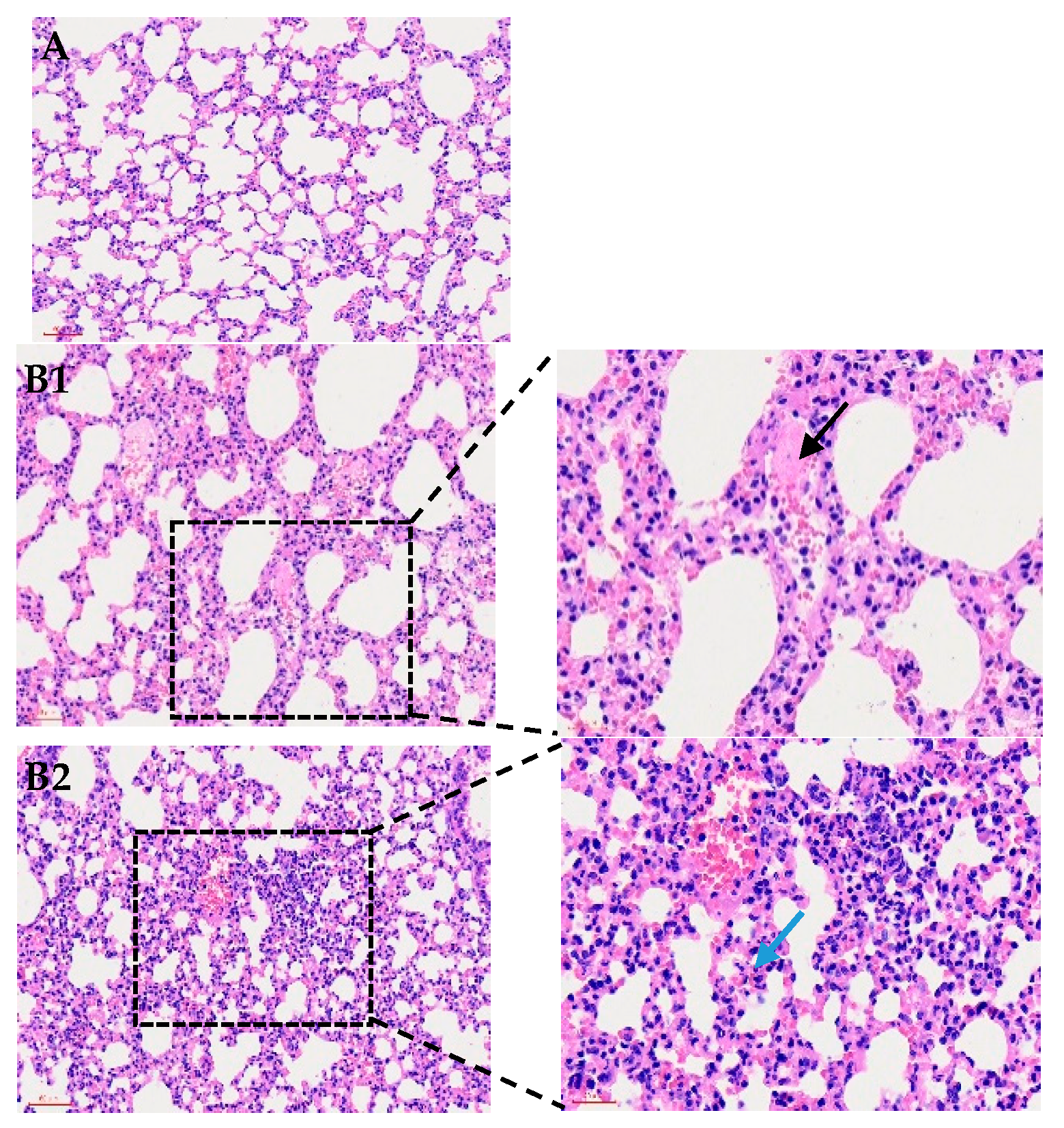
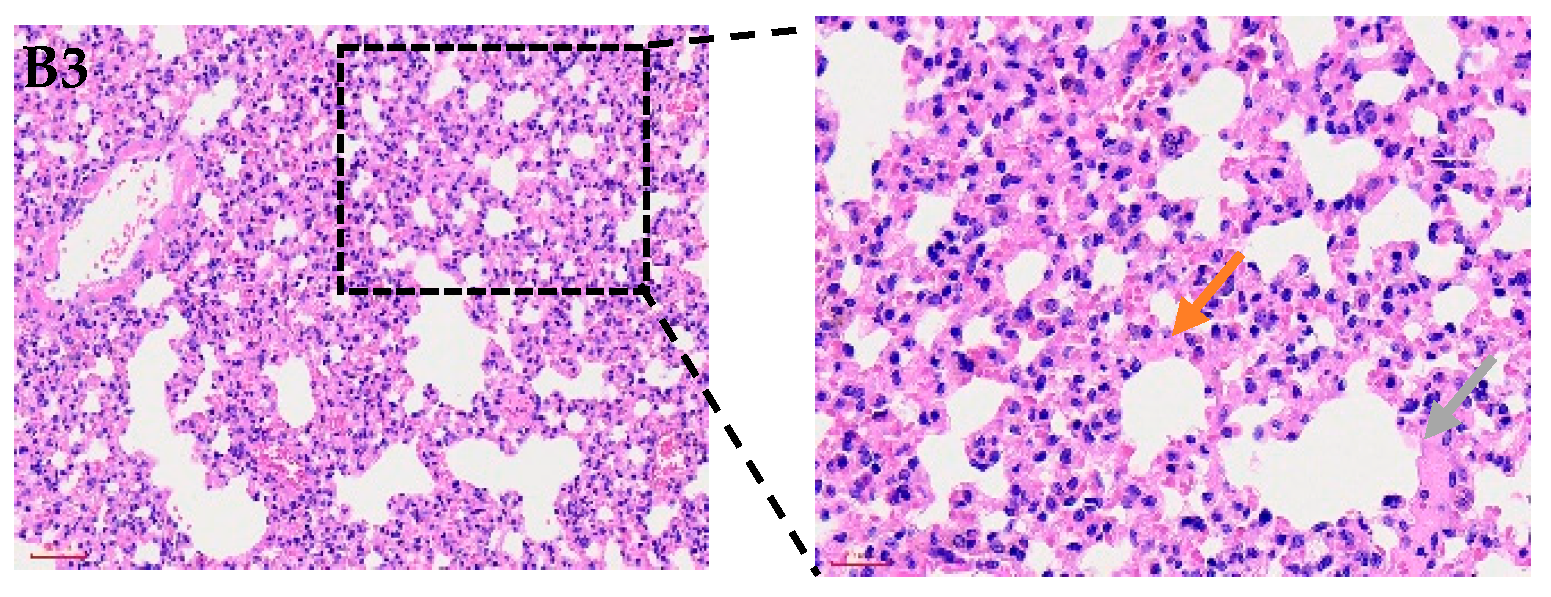
3.1. Mouse Lethality Assay
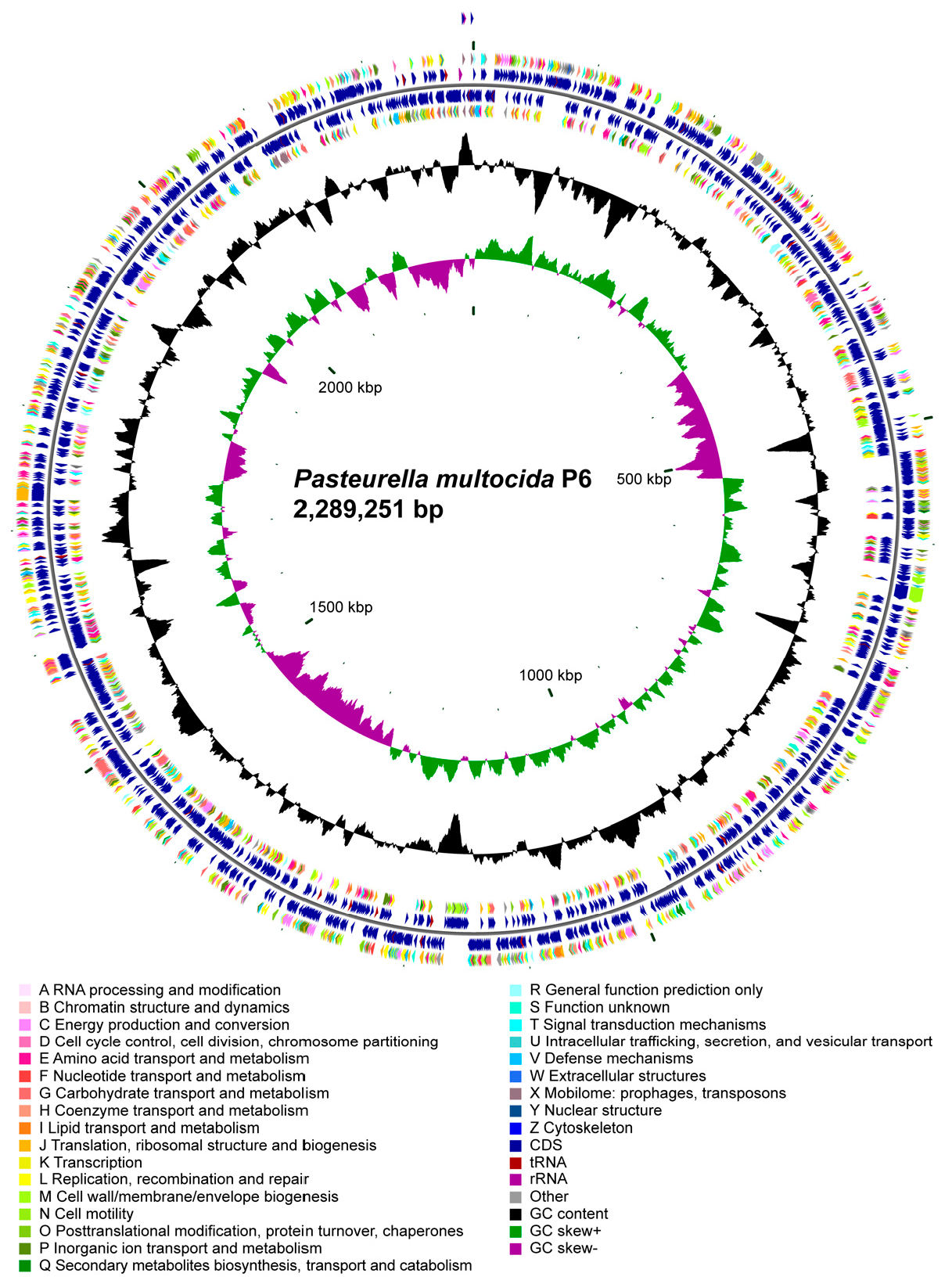
3.2. Genome Sequencing of P. multocida Strain P6
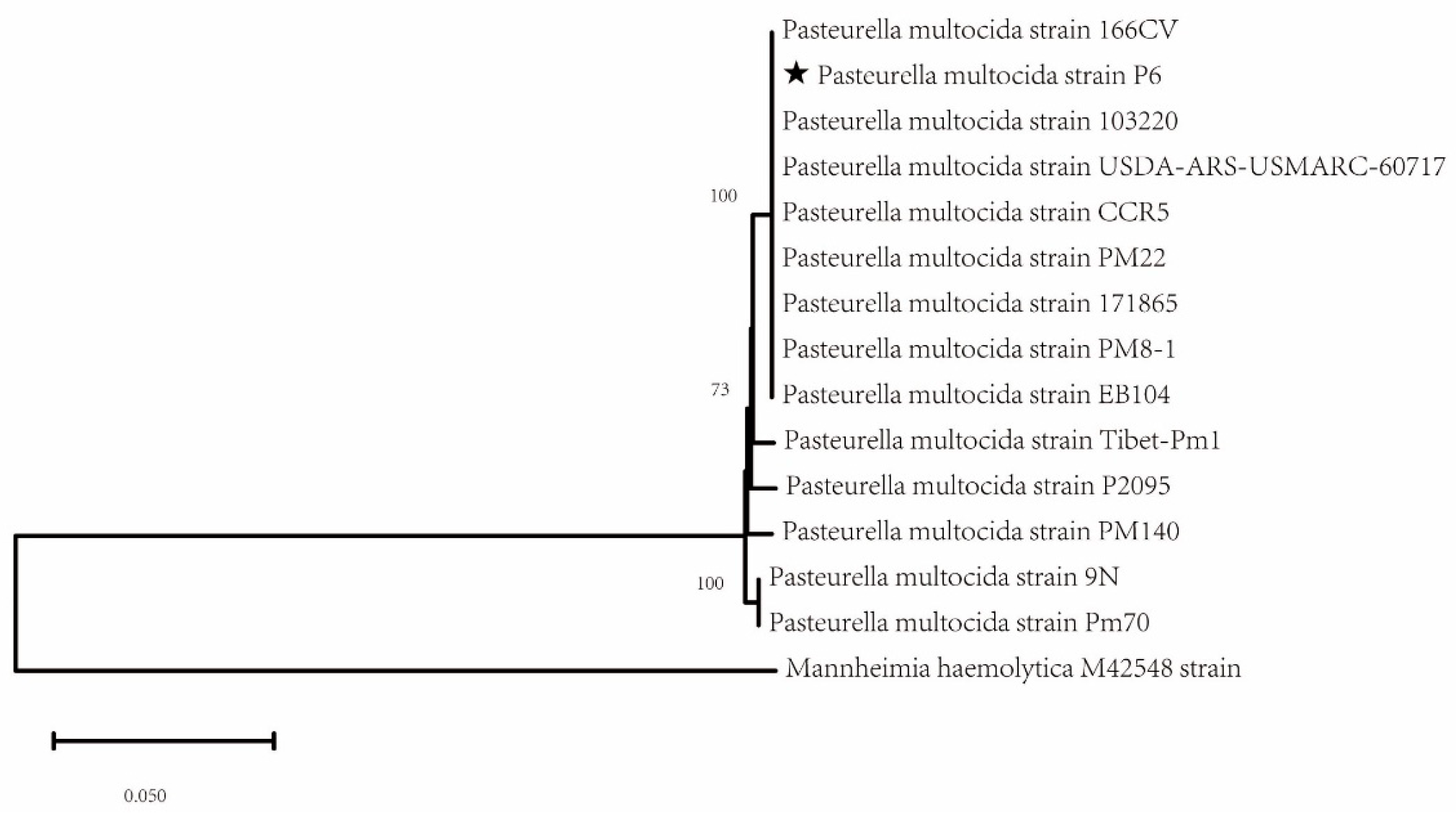
3.3. Phylogenetic Analysis of P. multocida Strain P6
3.4. Mobile Genetic Elements Analysis
3.4.1. CRISPR-Cas System Organization
3.4.2. Genomic Island Composition
3.4.3. Prophage Regions
3.4.4. Transposon Elements
3.5. Metabolic System Analysis
3.5.1. Secondary Metabolite Biosynthetic Gene Cluster Analysis
Gene Cluster Organization
Functional Gene Classification
- (i)
- Biosynthetic genes. These include core and auxiliary biosynthetic genes. The core biosynthetic genes comprise ycaO (encoding a 30S ribosomal protein S12 methylthiotransferase accessory factor) and a class I SAM-dependent methyltransferase. Key auxiliary biosynthetic genes include ubiX (flavin prenyltransferase), moeB (molybdopterin-synthase adenylyltransferase), and acs (acetate–CoA ligase), which are predicted to supply cofactors or generate key biochemical intermediates necessary for metabolite assembly.
- (ii)
- Regulatory genes. This category includes specific transcriptional regulators, notably an FNR-family transcription factor, suggesting that cluster expression may be regulated in response to environmental conditions.
- (iii)
- Transporter genes. These genes encode components of a peptide ABC transporter system, consistent with a role in transmembrane trafficking of pathway intermediates or the final metabolic product.
- (iv)
- Auxiliary biosynthetic genes. Designated as the biosynthetic-additional category, these genes encode supportive enzymatic functions, such as a CPBP family glutamic endopeptidase and a hydroxyacylglutathione hydrolase, which may assist in core biosynthetic steps.
- (v)
- Other genes. This group includes genes with housekeeping, basal metabolic, or unknown functions (e.g., xthA, sppA, folE) that are located within or adjacent to the cluster. These may contribute to the local genomic and transcriptional environment (Table S6).
3.5.2. Carbohydrate-Active Enzymes Analysis of Strain P6
Overall CAZyme Repertoire
GT Families
GH Families
CE Families and CBM
Synthesis
3.6. Pathogenic System Analysis
3.6.1. Identification of Pathogenicity-Related Genes
3.6.2. Phenotypic Classification of Virulence Genes
3.6.3. Functional Classification of Pathogenicity Genes
3.6.4. Characterization of the Secretome
3.6.5. Protein Secretion System Architecture
3.6.6. High-Confidence Core Virulence Determinants
3.7. Comparative Analysis
3.7.1. Comparative Analysis of Virulence Factors
3.7.2. Comparative Analysis of Antimicrobial Resistance Genes
3.7.3. Comparative Analysis of COG
3.7.4. Comparative Analysis of KEGG Functions
4. Discussion
4.1. Mobile Genetic Elements and Genome Plasticity
4.2. Virulence-Associated Gene Content and Putative Pathogenic Features
4.3. Carbohydrate Metabolism and Surface Glycan Remodeling
4.4. Comparative Genomic Perspectives and Evolutionary Trajectory
4.5. Evolutionary Implications and Ecological Adaptation
4.6. Study Limitations
5. Conclusions
Supplementary Materials
Author Contributions
Funding
Institutional Review Board Statement
Informed Consent Statement
Data Availability Statement
Conflicts of Interest
References
- Wilson, B.A.; Ho, M. Pasteurella multocida: From zoonosis to cellular microbiology. Clin. Microbiol. Rev. 2013, 26, 631–655. [Google Scholar] [CrossRef] [Scilit]
- Dabo, S.M.; Taylor, J.D.; Confer, A.W. Pasteurella multocida and bovine respiratory disease. Anim. Health Res. Rev. 2007, 8, 129–150. [Google Scholar] [CrossRef] [Scilit]
- Peng, Z.; Wang, X.; Zhou, R.; Chen, H.; Wilson, B.A.; Wu, B. Pasteurella multocida: Genotypes and Genomics. Microbiol. Mol. Biol. Rev. 2019, 83. [Google Scholar] [CrossRef] [Scilit]
- Ayoub, H.Y.; Hamda, F.H.; Ali, F.; Shoaib, M.; Hameed, H.; Ara, R. Outbreak of acute Pneumonic Pasteurellosis in camels reared at Cholistan. Cont. Vet. J. 2024, 4, 179–183. [Google Scholar] [CrossRef] [Scilit]
- Shahzad, M.N.; Zafar, M.A.; Tahir, A.H.; Ur Rehman, S. Effects of Tyloxapol in the Amelioration of Endotoxemic Effects of Pasteurella multocida During Hemorrhagic Septicemia in Water Buffaloes. Pak. Vet. J. 2024, 44, 675–682. [Google Scholar]
- Sun, Y.; Bi, Y.; Xia, X.; Zhao, X.; Guo, L.; Fu, Q.; Wang, C.; Wang, W.; Tang, N.; Liu, J.; et al. Application of a rational feeding strategy to increase the cell density of avian Pasteurella multocida. Kafkas Univ. Vet. Fak. Derg. 2024, 30, 587–593. [Google Scholar] [CrossRef] [Scilit]
- Harper, M.; Boyce, J.D.; Adler, B. Pasteurella multocida pathogenesis: 125 years after Pasteur. FEMS Microbiol. Lett. 2006, 265, 1–10. [Google Scholar] [CrossRef] [Scilit]
- Akcakavak, G.; Karatas, O.; Tuzcu, N.; Tuzcu, M. Determination of Apoptosis, Necroptosis and Autophagy Markers by Real-time PCR in Naturally Infected Pneumonic Pasteurellosis caused by Pasteurella multocida and Mannheimia haemolytica in Cattle. Pak. Vet. J. 2024, 44, 483–489. [Google Scholar]
- Odugbo, M.O.; Odama, L.E.; Umoh, J.U.; Lamorde, A.G. Pasteurella multocida pneumonic infection in sheep: Prevalence, clinical and pathological studies. Small Rumin. Res. 2006, 66, 273–277. [Google Scholar] [CrossRef] [Scilit]
- Umer, A.; Mezgebu, E. Review on pasteurellosis: Causes, pathogenesis, diagnosis and current status in Ethiopia. Austin J. Microbiol. 2023, 8, 1–8. [Google Scholar] [CrossRef] [Scilit]
- Townsend, K.M.; Boyce, J.D.; Chung, J.Y.; Frost, A.J.; Adler, B. Genetic organization of Pasteurella multocida cap Loci and development of a multiplex capsular PCR typing system. J. Clin. Microbiol. 2001, 39, 924–929. [Google Scholar] [CrossRef] [Scilit] [PubMed]
- Yihunie, F.B.; Syoum, A.; Dubie, T. Seroprevalence of Pasteurella multocida Serotype A2 in Cattle, Afar Region, Ethiopia. Vet. Med. Int. 2025, 2025, 6610210. [Google Scholar] [CrossRef] [Scilit] [PubMed]
- Bernal, J.M.C.; Fernández, A.; Arnal, J.L.; Tejero, C.S.; Fernández-Garayzábal, J.F.; Vela, A.I.; Cid, D. Molecular Epidemiology of Pasteurella multocida Associated with Bovine Respiratory Disease Outbreaks. Animals 2023, 13, 75. [Google Scholar] [CrossRef] [Scilit] [PubMed]
- Wang, J.; Sang, L.; Sun, S.; Chen, Y.; Chen, D.; Xie, X. Characterization of Pasteurella multocida isolated from dead rabbits with respiratory disease in Fujian, China. BMC Vet. Res. 2019, 15, 438. [Google Scholar] [CrossRef] [Scilit]
- Ma, L.; Zhao, W.; Ma, Q.; Wang, J.; Zhao, Z.; Zhang, J.; Gu, Y. Genome-Wide Association Study of Birth Wool Length, Birth Weight, and Head Color in Chinese Tan Sheep Through Whole-Genome Re-Sequencing. Animals 2024, 14, 3495. [Google Scholar] [CrossRef] [Scilit]
- Johnson, T.J.; E Abrahante, J.; Hunter, S.S.; Hauglund, M.; Tatum, F.M.; Maheswaran, S.K.; E Briggs, R. Comparative genome analysis of an avirulent and two virulent strains of avian Pasteurella multocida reveals candidate genes involved in fitness and pathogenicity. BMC Microbiol. 2013, 13, 106. [Google Scholar] [CrossRef] [Scilit]
- Du, H.; Fang, R.; Pan, T.; Li, T.; Li, N.; He, Q.; Wu, R.; Peng, Y.; Zhou, Z. Comparative Genomics Analysis of Two Different Virulent Bovine Pasteurella multocida Isolates. Int. J. Genom. 2017, 2016, 4512493. [Google Scholar] [CrossRef] [Scilit]
- May, B.J.; Zhang, Q.; Li, L.L.; Paustian, M.L.; Whittam, T.S.; Kapur, V. Complete genomic sequence of Pasteurella multocida, Pm70. Proc. Natl. Acad. Sci. USA 2001, 98, 3460–3465. [Google Scholar] [CrossRef] [Scilit]
- Prajapati, A.; Yogisharadhya, R.; Mohanty, N.N.; Mendem, S.K.; Chanda, M.M.; Siddaramappa, S.; Shivachandra, S.B. Comparative genome analysis of Pasteurella multocida strains of porcine origin. Genome 2023, 67, 13–23. [Google Scholar] [CrossRef] [Scilit]
- Boyce, J.D.; Seemann, T.; Adler, B.; Harper, M. Pathogenomics of Pasteurella multocida. Curr. Top. Microbiol. Immunol. 2012, 361, 23–38. [Google Scholar] [CrossRef] [Scilit]
- Cao, X.; Gu, L.; Gao, Z.; Fan, W.; Zhang, Q.; Sheng, J.; Zhang, Y.; Sun, Y. Pathogenicity and Genomic Characteristics Analysis of Pasteurella multocida Serotype A Isolated from Argali Hybrid Sheep. Microorganisms 2024, 12, 1072. [Google Scholar] [CrossRef] [Scilit] [PubMed]
- Moustafa, A.M.; Seemann, T.; Gladman, S.; Adler, B.; Harper, M.; Boyce, J.D.; Bennett, M.D. Comparative Genomic Analysis of Asian Haemorrhagic Septicaemia-Associated Strains of Pasteurella multocida Identifies More than 90 Haemorrhagic Septicaemia-Specific Genes. PLoS ONE 2015, 10, e0130296. [Google Scholar] [CrossRef] [Scilit]
- Li, N.; Long, Q.; Du, H.; Zhang, J.; Pan, T.; Wu, C.; Lei, G.; Peng, Y.; Hardwidge, P.R. High and low-virulent bovine Pasteurella multocida capsular type A isolates exhibit different virulence gene expression patterns in vitro and in vivo. Vet. Microbiol. 2016, 196, 44–49. [Google Scholar] [CrossRef] [Scilit]
- Sellyei, B.; Rónai, Z.; Jánosi, S.; Makrai, L. Comparative analysis of Pasteurella multocida strains isolated from bovine respiratory infections. Acta Microbiol. Immunol. Hung. 2015, 62, 453–461. [Google Scholar] [CrossRef] [Scilit]
- Prajapati, A.; Yogisharadhya, R.; Mohanty, N.N.; Mendem, S.K.; Nizamuddin, A.; Chanda, M.M.; Shivachandra, S.B. Comparative genome analysis of Pasteurella multocida serogroup B:2 strains causing haemorrhagic septicaemia (HS) in bovines. Gene 2022, 826, 146452. [Google Scholar] [CrossRef] [Scilit]
- Smallman, T.R.; Perlaza-Jiménez, L.; Wang, X.; Korman, T.M.; Kotsanas, D.; Gibson, J.S.; Turni, C.; Harper, M.; Boyce, J.D. Pathogenomic analysis and characterization of Pasteurella multocida strains recovered from human infections. Microbiol. Spectr. 2024, 12, e0380523. [Google Scholar] [CrossRef] [Scilit]
- Amirgazin, A.; Yessembekova, G.; Akhmetova, A.; Karibayev, T.; Mukanov, K.; Shevtsova, E.; Abdigulov, B.; Abdrakhmanov, S. Genomic Insights into Pasteurella multocida Serotype B:2 from Hemorrhagic Septicemia Outbreaks in Wildlife and Livestock in Kazakhstan. Pathogens 2025, 14, 1273. [Google Scholar] [CrossRef] [Scilit]
- Allen, J.L.; Bushell, R.N.; Noormohammadi, A.H.; Whiteley, P.; Ballard, S.A.; Valcanis, M.; Browning, G.F.; Marenda, M.S. Comparative genome analysis of Pasteurella multocida from Australian domestic animals suggests broad patterns of transmissions across multiple hosts and origins. PLoS ONE 2025, 20, e0329807. [Google Scholar] [CrossRef] [Scilit] [PubMed]
- Li, K.; Yuan, H.; Jin, C.; Rahim, M.F.; Luosong, X.; An, T.; Li, J. Characterization and Genomic Analysis of Pasteurella multocida NQ01 Isolated from Yak in China. Animals 2025, 15, 3462. [Google Scholar] [CrossRef] [Scilit] [PubMed]
- Na, W.; Fan, B.; Yuemei, Z.; Yue, S.; Wenhua, G.; Fan, Z.; Bin, Y.; Wei, L.; Fucun, G.; Lingfang, F.U. Isolation, Identification and Biological Characteristics of Pasteurella multocida from Sheep. Anim. Husb. Feed. Sci. 2024, 45, 115–122. [Google Scholar]
- Bolger, A.M.; Lohse, M.; Usadel, B. Trimmomatic: A flexible trimmer for Illumina sequence data. Bioinformatics 2014, 30, 2114–2120. [Google Scholar] [CrossRef] [Scilit]
- Davis, J.J.; Wattam, A.R.; Aziz, R.K.; Brettin, T.; Butler, R.; Butler, R.M.; Chlenski, P.; Conrad, N.; Dickerman, A.; Dietrich, E.M.; et al. The PATRIC Bioinformatics Resource Center: Expanding data and analysis capabilities. Nucleic. Acids Res. 2019, 48, D606–D612. [Google Scholar] [CrossRef] [Scilit] [PubMed]
- Wu, S.; Zhu, Z.; Fu, L.; Niu, B.; Li, W. WebMGA: A customizable web server for fast metagenomic sequence analysis. BMC Genom. 2011, 12, 144. [Google Scholar] [CrossRef] [Scilit]
- Couvin, D.; Bernheim, A.; Toffano-Nioche, C.; Touchon, M.; Michalik, J.; Néron, B.; Rocha, E.P.C.; Vergnaud, G.; Gautheret, D.; Pourcel, C. CRISPRCasFinder, an update of CRISRFinder, includes a portable version, enhanced performance and integrates search for Cas proteins. Nucleic Acids Res. 2018, 46, W246–W251. [Google Scholar] [CrossRef] [Scilit]
- Bertelli, C.; Laird, M.R.; Williams, K.P.; Simon Fraser University Research Computing Group; Lau, B.Y.; Hoad, G.; Winsor, G.L.; Brinkman, F.S. IslandViewer 4: Expanded prediction of genomic islands for larger-scale datasets. Nucleic Acids Res. 2017, 45, W30–W35. [Google Scholar] [CrossRef] [Scilit] [PubMed]
- Arndt, D.; Grant, J.R.; Marcu, A.; Sajed, T.; Pon, A.; Liang, Y.; Wishart, D.S. PHASTER: A better, faster version of the PHAST phage search tool. Nucleic Acids Res. 2016, 44, W16–W21. [Google Scholar] [CrossRef] [Scilit]
- Siguier, P.; Pérochon, J.; Lestrade, L.; Mahillon, J.; Chandler, M. ISfinder: The reference centre for bacterial insertion sequences. Nucleic Acids Res. 2005, 34, D32–D36. [Google Scholar] [CrossRef] [Scilit] [PubMed]
- Benson, G. Tandem repeats finder: A program to analyze DNA sequences. Nucleic Acids Res. 1998, 27, 573–580. [Google Scholar] [CrossRef] [Scilit]
- Carattoli, A.; Zankari, E.; Garcìa-Fernandez, A.; Larsen, M.; Lund, O.; Voldby Villa, L.; Møller Aarestrup, F.; Hasman, H. In silico detection and typing of plasmids using PlasmidFinder and plasmid multilocus sequence typing. Antimicrob. Agents Chemother. 2014, 58, 3895–3903. [Google Scholar] [CrossRef] [Scilit]
- Blin, K.; Shaw, S.; Kloosterman, A.M.; Charlop-Powers, Z.; van Wezel, G.P.; Medema, M.H.; Weber, T. antiSMASH 6.0: Improving cluster detection and comparison capabilities. Nucleic Acids Res. 2021, 49, W29–W35. [Google Scholar] [CrossRef] [Scilit] [PubMed]
- Zheng, J.; Ge, Q.; Yan, Y.; Zhang, X.; Huang, L.; Yin, Y. dbCAN3: Automated carbohydrate-active enzyme and substrate annotation. Nucleic Acids Res. 2023, 51, W115–W121. [Google Scholar] [CrossRef] [Scilit] [PubMed]
- Lombard, V.; Golaconda Ramulu, H.; Drula, E.; Coutinho, P.M.; Henrissat, B. The carbohydrate-active enzymes database (CAZy) in 2013. Nucleic Acids Res. 2013, 42, D490–D495. [Google Scholar] [CrossRef] [Scilit] [PubMed]
- Liu, B.; Zheng, D.; Jin, Q.; Chen, L.; Yang, J. VFDB 2019: A comparative pathogenomic platform with an interactive web interface. Nucleic Acids Res. 2018, 47, D687–D692. [Google Scholar] [CrossRef] [Scilit]
- Urban, M.; Cuzick, A.; Seager, J.; Wood, V.; Rutherford, K.; Venkatesh, S.Y.; De Silva, N.; Martinez, M.C.; Pedro, H.; Yates, A.D.; et al. PHI-base: The pathogen-host interactions database. Nucleic Acids Res. 2019, 48, D613–D620. [Google Scholar] [CrossRef] [Scilit]
- Jia, B.; Raphenya, A.R.; Alcock, B.; Waglechner, N.; Guo, P.; Tsang, K.K.; Lago, B.A.; Dave, B.M.; Pereira, S.; Sharma, A.N.; et al. CARD 2017: Expansion and model-centric curation of the comprehensive antibiotic resistance database. Nucleic Acids Res. 2016, 45, D566–D573. [Google Scholar] [CrossRef] [Scilit]
- Almagro Armenteros, J.J.; Tsirigos, K.D.; Sønderby, C.K.; Petersen, T.N.; Winther, O.; Brunak, S.; Von Heijne, G.; Nielsen, H. SignalP 5.0 improves signal peptide predictions using deep neural networks. Nat. Biotechnol. 2019, 37, 420–423. [Google Scholar] [CrossRef] [Scilit]
- Afgan, E.; Baker, D.; Batut, B.; van den Beek, M.; Bouvier, D.; Čech, M.; Chilton, J.; Clements, D.; Coraor, N.; Grüning, B.A.; et al. The Galaxy platform for accessible, reproducible and collaborative biomedical analyses: 2018 update. Nucleic Acids Res. 2018, 46, W537–W544. [Google Scholar] [CrossRef] [Scilit]
- RodolpheBarrangou, R.; Fremaux, C.; Deveau, H.; Richards, M.; Boyaval, P.; Moineau, S.; Romero, D.A.; Horvath, P. CRISPR provides acquired resistance against viruses in prokaryotes. Science 2007, 315, 1709–1712. [Google Scholar] [CrossRef] [Scilit]
- Bhaya, D.; Davison, M.; Barrangou, R. CRISPR-Cas systems in bacteria and archaea: Versatile small RNAs for adaptive defense and regulation. Annu. Rev. Genet. 2011, 45, 273–297. [Google Scholar] [CrossRef] [Scilit]
- Juhas, M.; van der Meer, J.R.; Gaillard, M.; Harding, R.M.; Hood, D.W.; Crook, D.W. Genomic islands: Tools of bacterial horizontal gene transfer and evolution. FEMS Microbiol. Rev. 2009, 33, 376–393. [Google Scholar] [CrossRef] [Scilit]
- Makarova, K.S.; Wolf, Y.I.; Alkhnbashi, O.S.; Costa, F.; Shah, S.A.; Saunders, S.J.; Barrangou, R.; Brouns, S.J.J.; Charpentier, E.; Haft, D.H.; et al. An updated evolutionary classification of CRISPR-Cas systems. Nat. Rev. Microbiol. 2015, 13, 722–736. [Google Scholar] [CrossRef] [Scilit]
- Faure, G.; Shmakov, S.A.; Yan, W.X.; Cheng, D.R.; Scott, D.A.; Peters, J.E.; Makarova, K.S.; Koonin, E.V. CRISPR-Cas in mobile genetic elements: Counter-defence and beyond. Nat. Rev. Microbiol. 2019, 17, 513–525. [Google Scholar] [CrossRef] [Scilit]
- Koonin, E.V.; Makarova, K.S. CRISPR in mobile genetic elements: Counter-defense, inter-element competition and RNA-guided transposition. BMC Biol. 2024, 22, 295. [Google Scholar] [CrossRef] [Scilit] [PubMed]
- Camara-Wilpert, S.; Mayo-Muñoz, D.; Russel, J.; Fagerlund, R.D.; Madsen, J.S.; Fineran, P.C.; Sørensen, S.J.; Pinilla-Redondo, R. Bacteriophages suppress CRISPR-Cas immunity using RNA-based anti-CRISPRs. Nature 2023, 623, 601–607. [Google Scholar] [CrossRef] [Scilit]
- Gregory W, G.; Elizabeth A, M.; Andrew, V.; Joshua W, M.; Poulami, S.; Wenyan, J.; Luciano A, M. Incomplete prophage tolerance by type III-A CRISPR-Cas systems reduces the fitness of lysogenic hosts. Nat. Commun. 2018, 9, 61. [Google Scholar] [CrossRef] [Scilit]
- Dobrindt, U.; Hochhut, B.; Hentschel, U.; Hacker, J. Genomic islands in pathogenic and environmental microorganisms. Nat. Rev. Microbiol. 2004, 2, 414–424. [Google Scholar] [CrossRef] [Scilit] [PubMed]
- Zhu, D.; He, J.; Yang, Z.; Wang, M.; Jia, R.; Chen, S.; Liu, M.; Zhao, X.; Yang, Q.; Wu, Y.; et al. Comparative analysis reveals the Genomic Islands in Pasteurella multocida population genetics: On Symbiosis and adaptability. BMC Genom. 2019, 20, 63. [Google Scholar] [CrossRef] [Scilit]
- Hacker, J.; Carniel, E. Ecological fitness, genomic islands and bacterial pathogenicity. A Darwinian view of the evolution of microbes. EMBO Rep. 2001, 2, 376–381. [Google Scholar] [CrossRef] [Scilit] [PubMed]
- Owen, S.V.; Wenner, N.; Dulberger, C.L.; Rodwell, E.V.; Bowers-Barnard, A.; Quinones-Olvera, N.; Rigden, D.J.; Rubin, E.J.; Garner, E.C.; Baym, M.; et al. Prophages encode phage-defense systems with cognate self-immunity. Cell Host Microbe 2021, 29, 1620–1633. [Google Scholar] [CrossRef] [Scilit]
- Brenes, L.R.; Laub, M.T. E. coli prophages encode an arsenal of defense systems to protect against temperate phages. Cell Host Microbe 2025, 33, 1004–1018. [Google Scholar] [CrossRef] [Scilit]
- Smith, E.; Miller, E.; Aguayo, J.M.; Figueroa, C.F.; Nezworski, J.; Studniski, M.; Wileman, B.; Johnson, T. Genomic diversity and molecular epidemiology of Pasteurella multocida. PLoS ONE 2021, 16, e0249138. [Google Scholar] [CrossRef] [Scilit] [PubMed]
- Serna, C.; Bernal, J.M.C.; Torre-Fuentes, L.; Muñoz, Á.G.; Guerrier, A.D.; Hernández, M.; Fernández-Garayzábal, J.F.; Vela, A.I.; Cid, D.; Alvarez, J. Integrative and conjugative elements associated with antimicrobial resistance in multidrug resistant Pasteurella multocida isolates from bovine respiratory disease (BRD)-affected animals in Spanish feedlots. Vet. Q. 2025, 45, 1–15. [Google Scholar] [CrossRef] [Scilit]
- Canchaya, C.; Proux, C.; Fournous, G.; Bruttin, A.; Brüssow, H. Prophage genomics. Microbiol. Mol. Biol. Rev. 2003, 67, 238–276. [Google Scholar] [CrossRef] [Scilit]
- He, F.; Zhao, Z.; Wu, X.; Duan, L.; Li, N.; Fang, R.; Li, P.; Peng, Y. Transcriptomic Analysis of High- and Low-Virulence Bovine Pasteurella multocida in vitro and in vivo. Front. Vet. Sci. 2021, 8, 616774. [Google Scholar] [CrossRef] [Scilit]
- Wilkie, I.W.; Harper, M.; Boyce, J.D.; Adler, B. Pasteurella multocida: Diseases and pathogenesis. Curr. Top. Microbiol. Immunol. 2012, 361, 1–22. [Google Scholar] [CrossRef] [Scilit] [PubMed]
- Peng, Z.; Liang, W.; Liu, W.; Wu, B.; Tang, B.; Tan, C.; Zhou, R.; Chen, H. Genomic characterization of Pasteurella multocida HB01, a serotype A bovine isolate from China. Gene 2016, 581, 85–93. [Google Scholar] [CrossRef] [Scilit] [PubMed]
- Danielsen, E.M.; Christiansen, N.; Danielsen, E.M. Pasteurella multocida toxin: Targeting mast cell secretory granules during kiss-and-run secretion. Tissue Cell 2016, 48, 1–9. [Google Scholar] [CrossRef] [Scilit]
- Voulhoux, R.; Ball, G.; Ize, B.; Vasil, M.L.; Lazdunski, A.; Wu, L.F.; Filloux, A. Involvement of the twin-arginine translocation system in protein secretion via the type II pathway. Embo. J. 2001, 20, 6735–6741. [Google Scholar] [CrossRef] [Scilit]
- Harper, M.; John, M.; Turni, C.; Edmunds, M.; St Michael, F.; Adler, B.; Blackall, P.J.; Cox, A.D.; Boyce, J.D. Development of a rapid multiplex PCR assay to genotype Pasteurella multocida strains by use of the lipopolysaccharide outer core biosynthesis locus. J. Clin. Microbiol. 2015, 53, 477–485. [Google Scholar] [CrossRef] [Scilit]
- Boyce, J.D.; Harper, M.; Michael, F.S.; John, M.; Aubry, A.; Parnas, H.; Logan, S.M.; Wilkie, I.W.; Ford, M.; Cox, A.D.; et al. Identification of novel glycosyltransferases required for assembly of the Pasteurella multocida A:1 lipopolysaccharide and their involvement in virulence. Infect. Immun. 2009, 77, 1532–1542. [Google Scholar] [CrossRef] [Scilit]
- Boyce, J.D.; Chung, J.Y.; Adler, B. Pasteurella multocida capsule: Composition, function and genetics. J. Biotechnol. 2000, 83, 153–160. [Google Scholar] [CrossRef] [Scilit]
- Smallman, T.R.; Williams, G.C.; Harper, M.; Boyce, J.D. Genome-Wide Investigation of Pasteurella multocida Identifies the Stringent Response as a Negative Regulator of Hyaluronic Acid Capsule Production. Microbiol. Spectr. 2022, 10, e0019522. [Google Scholar] [CrossRef] [Scilit] [PubMed]
- Soong, G.; Muir, A.; Gomez, M.I.; Waks, J.; Reddy, B.; Planet, P.; Singh, P.K.; Kaneko, Y.; Wolfgang, M.C.; Hsiao, Y.S.; et al. Bacterial neuraminidase facilitates mucosal infection by participating in biofilm production. J. Clin. Investig. 2006, 116, 2297–2305. [Google Scholar] [CrossRef] [Scilit]
- Steenbergen, S.M.; Lichtensteiger, C.A.; Caughlan, R.; Garfinkle, J.; Fuller, T.E.; Vimr, E.R. Sialic Acid metabolism and systemic pasteurellosis. Infect. Immun. 2005, 73, 1284–1294. [Google Scholar] [CrossRef] [Scilit]
- Zhao, X.; Shen, H.; Liang, S.; Zhu, D.; Wang, M.; Jia, R.; Chen, S.; Liu, M.; Yang, Q.; Wu, Y.; et al. The lipopolysaccharide outer core transferase genes pcgD and hptE contribute differently to the virulence of Pasteurella multocida in ducks. Vet. Res. 2021, 52, 1–13. [Google Scholar] [CrossRef] [Scilit] [PubMed]
- Harper, M.; Cox, A.D.; Michael, F.S.; Wilkie, I.W.; Boyce, J.D.; Adler, B. A heptosyltransferase mutant of Pasteurella multocida produces a truncated lipopolysaccharide structure and is attenuated in virulence. Infect. Immun. 2004, 72, 3436–3443. [Google Scholar] [CrossRef] [Scilit]
- Kehrenberg, C.; Salmon, S.A.; Watts, J.L.; Schwarz, S. Tetracycline resistance genes in isolates of Pasteurella multocida, Mannheimia haemolytica, Mannheimia glucosida and Mannheimia varigena from bovine and swine respiratory disease: Intergeneric spread of the tet(H) plasmid pMHT1. J. Antimicrob. Chemother. 2001, 48, 631–640. [Google Scholar] [CrossRef] [Scilit] [PubMed]
- Li, Y.; Xiao, J.; Cai, Q.; Chang, Y.F.; Li, R.; He, X.; Teng, Y.; Zhang, H.; Zhang, X.; Xie, Q. Whole genome characterization of a multidrug-resistant hypervirulent Pasteurella multocida with a new drug-resistant plasmid. Poult. Sci. 2023, 102, 102583. [Google Scholar] [CrossRef] [Scilit]
- Okay, S.; Kızıldoğan, A.K. Comparative genome analysis of five Pasteurella multocida strains to decipher the diversification in pathogenicity and host specialization. Gene 2015, 567, 58–72. [Google Scholar] [CrossRef] [Scilit] [PubMed]
- Ziagham, A.; Gharibi, D.; Mosallanejad, B.; Avizeh, R. Molecular characterization of Pasteurella multocida from cats and antibiotic sensitivity of the isolates. Vet. Med. Sci. 2024, 10, e1424. [Google Scholar] [CrossRef] [Scilit] [PubMed]
- Makarova, K.S.; Wolf, Y.I.; Iranzo, J.; Shmakov, S.A.; Alkhnbashi, O.S.; Brouns, S.J.J.; Charpentier, E.; Cheng, D.; Haft, D.H.; Horvath, P.; et al. Evolutionary classification of CRISPR–Cas systems: A burst of class 2 and derived variants. Nat. Rev. Microbiol. 2020, 18, 67–83. [Google Scholar] [CrossRef] [Scilit] [PubMed]
- Hurtado, R.; Maturrano, L.; Azevedo, V.; Aburjaile, F. Pathogenomics insights for understanding Pasteurella multocida adaptation. Int. J. Med. Microbiol. 2020, 310, 151417. [Google Scholar] [CrossRef] [Scilit]


Disclaimer/Publisher’s Note: The statements, opinions and data contained in all publications are solely those of the individual author(s) and contributor(s) and not of MDPI and/or the editor(s). MDPI and/or the editor(s) disclaim responsibility for any injury to people or property resulting from any ideas, methods, instructions or products referred to in the content. |
© 2026 by the authors. Licensee MDPI, Basel, Switzerland. This article is an open access article distributed under the terms and conditions of the Creative Commons Attribution (CC BY) license.
Share and Cite
Zhao, Y.; Wang, P.; Yang, Y.; Xu, Y.; Wang, J. Whole-Genome Sequencing and Pathogenic Characterization of a Pasteurella multocida Serotype A Isolate from a Case of Respiratory Disease in Tan Sheep. Microorganisms 2026, 14, 154. https://doi.org/10.3390/microorganisms14010154
Zhao Y, Wang P, Yang Y, Xu Y, Wang J. Whole-Genome Sequencing and Pathogenic Characterization of a Pasteurella multocida Serotype A Isolate from a Case of Respiratory Disease in Tan Sheep. Microorganisms. 2026; 14(1):154. https://doi.org/10.3390/microorganisms14010154
Chicago/Turabian StyleZhao, Yuxi, Pan Wang, Yuqiu Yang, Yarong Xu, and Jiandong Wang. 2026. "Whole-Genome Sequencing and Pathogenic Characterization of a Pasteurella multocida Serotype A Isolate from a Case of Respiratory Disease in Tan Sheep" Microorganisms 14, no. 1: 154. https://doi.org/10.3390/microorganisms14010154
APA StyleZhao, Y., Wang, P., Yang, Y., Xu, Y., & Wang, J. (2026). Whole-Genome Sequencing and Pathogenic Characterization of a Pasteurella multocida Serotype A Isolate from a Case of Respiratory Disease in Tan Sheep. Microorganisms, 14(1), 154. https://doi.org/10.3390/microorganisms14010154