HIV, Viral Hepatitis, and Schistosomiasis Association with Liver Cancer: A Systematic Review
 , and
, and
Abstract
1. Introduction
1.1. Human Immunodeficiency Virus (HIV) and HCC
1.2. Viral Hepatitis and HCC
1.3. Schistosomiasis and HCC
2. Materials and Methods
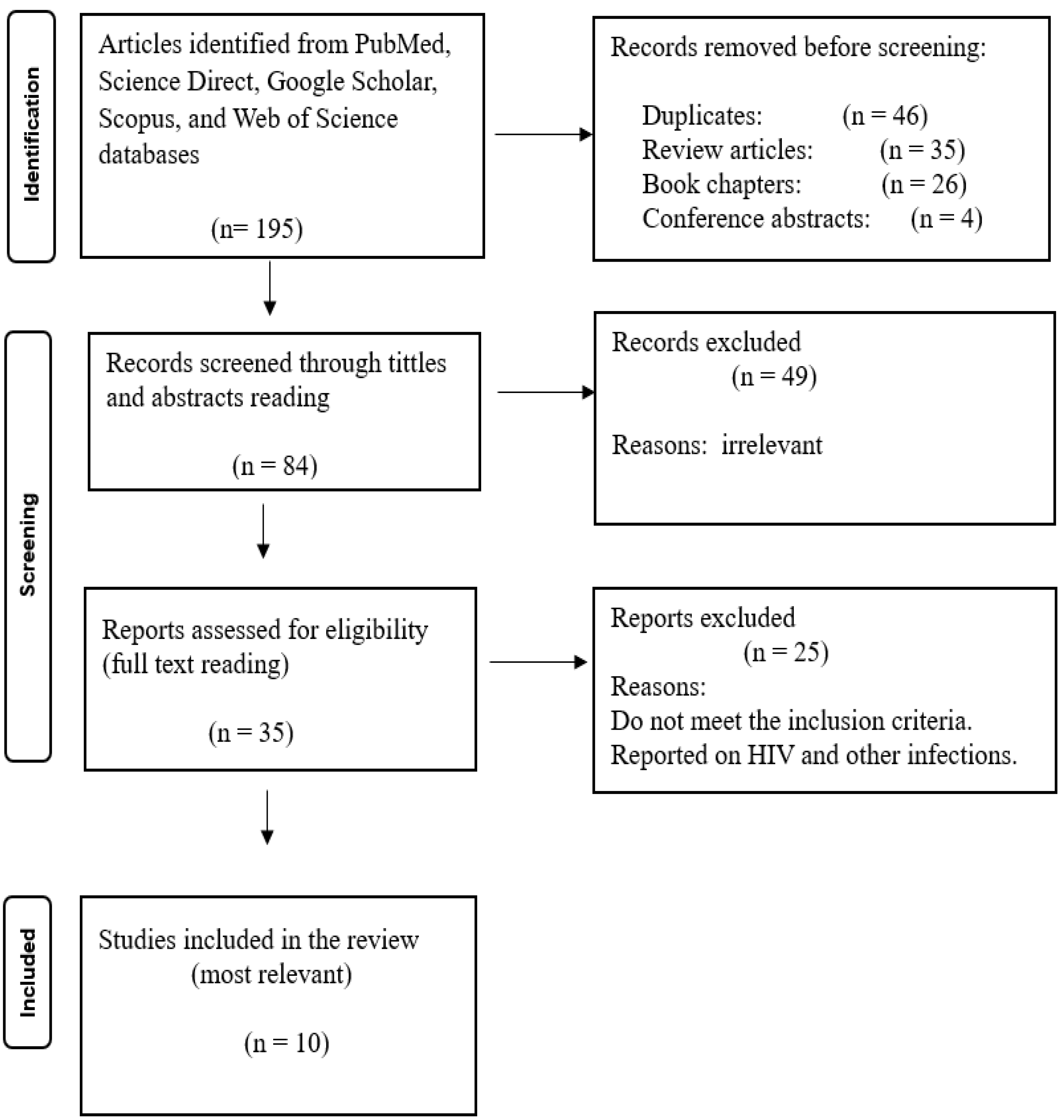
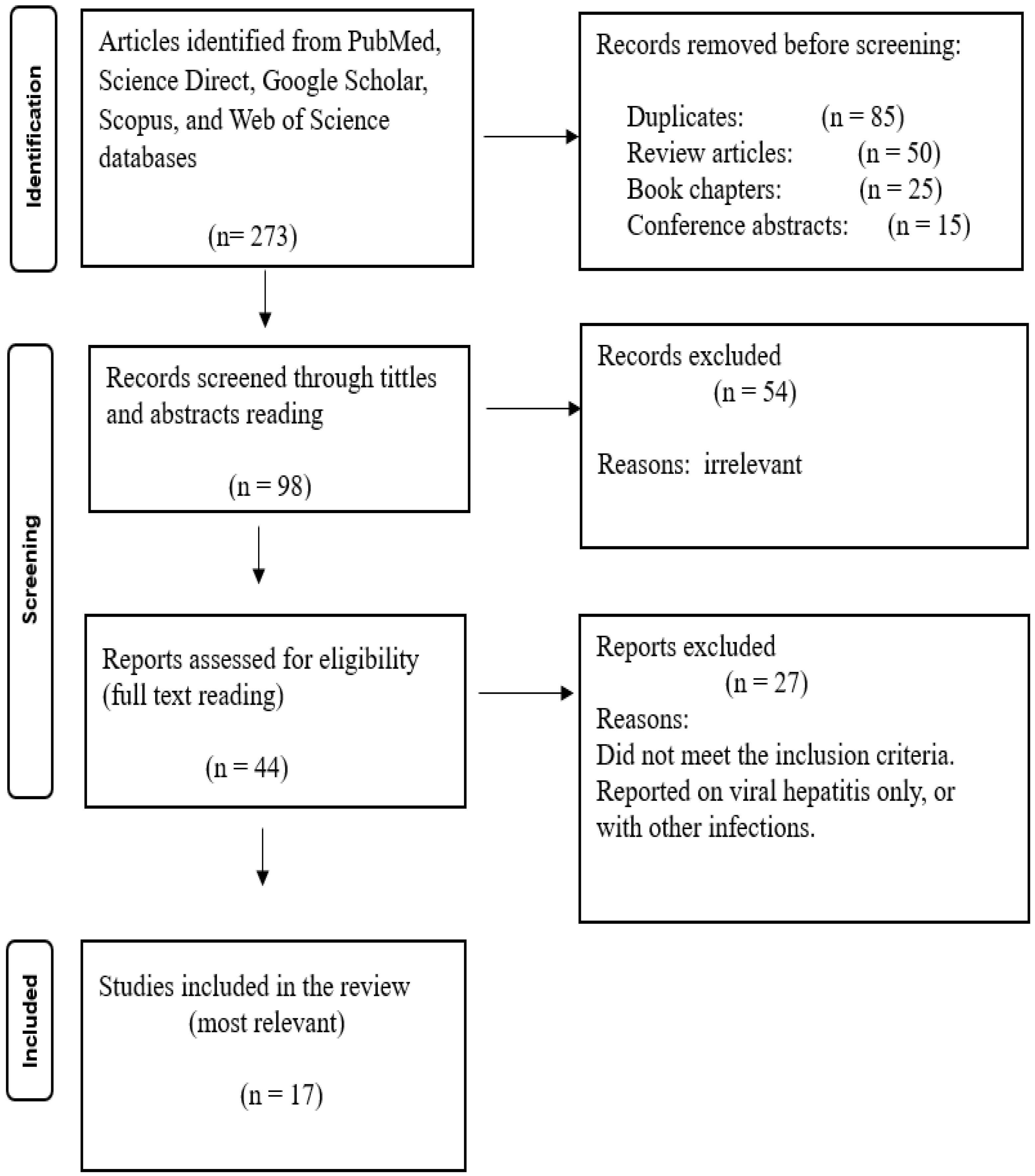
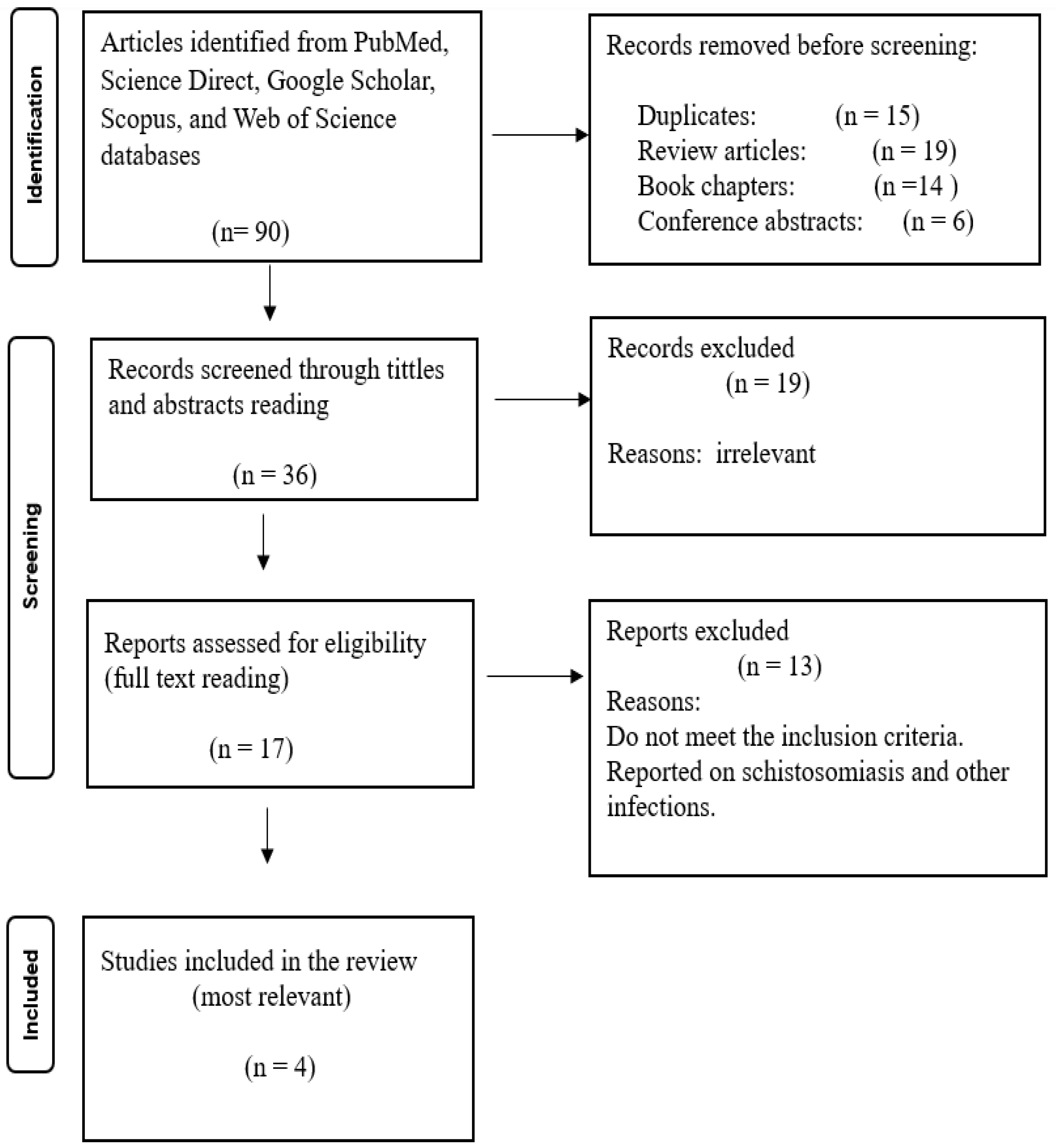
2.1. Literature Search Strategy
2.2. Study Selection and Data Extraction
2.3. Inclusion Criteria
- ▪
- Literature reporting on the association of HIV, viral hepatitis, and schistosomiasis with liver cancer, HCC.
- ▪
- Literature published in all countries and in the English language from January 2000 to March 2025.
- ▪
- Literature, including animal and human studies.
- ▪
- Molecular and genetic studies, which include the investigation of the molecular and genetic mechanisms linking HIV, hepatitis, and schistosomiasis to liver cancer development.
- ▪
- Cohort studies—observational studies that follow a group of people over time to see who develops liver cancer after exposure to either HIV, viral hepatitis, or schistosomiasis.
- ▪
- Case-control studies that compare individuals with liver cancer (cases) to those without (controls) to assess past exposure to HIV, hepatitis, or schistosomiasis.
- ▪
- Case series and case reports, retrospective studies.
2.4. Exclusion Criteria
- ▪
- Were review articles,
- ▪
- Were duplicate studies,
- ▪
- Had incomplete or unclear study information.
- ▪
- Not published in English
- ▪
- Articles published prior to January 2000
- ▪
- Conference abstracts and book chapters
2.5. Quality Assessment
3. Results
4. Discussion
5. Conclusions
6. Study Limitations
Supplementary Materials
Author Contributions
Funding
Institutional Review Board Statement
Informed Consent Statement
Data Availability Statement
Acknowledgments
Conflicts of Interest
References
- Yasukawa, K.; Shimizu, A.; Kubota, K.; Notake, T.; Hosoda, K.; Hayashi, H.; Soejima, Y. Clinical characteristics, prognosis, and surgical outcomes of patients with non-HBV and non-HCV related hepatocellular carcinoma: Three-decade observational study. BMC Gastroenterol. 2023, 23, 200. [Google Scholar] [CrossRef] [Scilit]
- Nsibirwa, S.K.; Aizire, J.; Mugerwa, J.N.; Thomas, D.L.; Ocama, P.; Kirk, G.D. The impact of HIV infection on clinical presentation and mortality among persons with hepatocellular carcinoma in Kampala, Uganda. BMC Infect. Dis. 2023, 23, 216. [Google Scholar] [CrossRef] [Scilit]
- Bray, F.; Ferlay, J.; Soerjomataram, I.; Siegel, R.L.; Torre, L.A.; Jemal, A. Global cancer statistics 2018: GLOBOCAN estimates of incidence and mortality worldwide for 36 cancers in 185 countries. CA A Cancer J. Clin. 2018, 68, 394–424. [Google Scholar] [CrossRef] [Scilit] [PubMed]
- Llovet, J.; Ducreux, M.; Lencioni, R.; Di Bisceglie, A.; Galle, P.; Dufour, J. European Association for the Study of the Liver European Organisation for Research and Treatment of Cancer: EASL-EORTC clinical practice guidelines: Management of hepatocellular carcinoma. J. Hepatol. 2012, 56, 908–943. [Google Scholar]
- Otedo, A.; Simbiri, K.O.; Were, V.; Ongati, O.; Estambale, B.A. Risk factors for liver Cancer in HIV endemic areas of Western Kenya. Infect. Agents Cancer 2018, 13, 41. [Google Scholar] [CrossRef] [Scilit]
- Turdean, S.; Gurzu, S.; Turcu, M.; Voidazan, S.; Sin, A. Current data in clinicopathological characteristics of primary hepatic tumors. Rom. J. Morphol. Embryol. 2012, 53 (Suppl. S3), 719–724. [Google Scholar]
- Hoffmann, C.J.; Thio, C.L. Clinical implications of HIV and hepatitis B co-infection in Asia and Africa. Lancet Infect. Dis. 2007, 7, 402–409. [Google Scholar] [CrossRef] [Scilit]
- Nelwan, M.L. Schistosomiasis: Life cycle, diagnosis, and control. Curr. Ther. Res. 2019, 91, 5–9. [Google Scholar] [CrossRef] [Scilit] [PubMed]
- Omar, A.; Marques, N.; Crawford, N. Cancer and HIV: The Molecular Mechanisms of the Deadly Duo. Cancers 2024, 16, 546. [Google Scholar] [CrossRef] [Scilit] [PubMed]
- Vidya Vijayan, K.; Karthigeyan, K.P.; Tripathi, S.P.; Hanna, L.E. Pathophysiology of CD4+ T-cell depletion in HIV-1 and HIV-2 infections. Front. Immunol. 2017, 8, 580. [Google Scholar] [CrossRef] [Scilit] [PubMed]
- Vojdani, A.; Koksoy, S.; Vojdani, E.; Engelman, M.; Benzvi, C.; Lerner, A. Natural Killer Cells and cytotoxic T cells: Complementary partners against microorganisms and Cancer. Microorganisms 2024, 12, 230. [Google Scholar] [CrossRef] [Scilit] [PubMed]
- Weiskirchen, R.; Tacke, F. Immune surveillance of liver cancer in non-alcoholic fatty liver disease: Excess lipids cause CD4 T-cells loss and promote hepatocellular carcinoma development. Hepatobiliary Surg. Nutr. 2016, 5, 433. [Google Scholar] [CrossRef] [Scilit] [PubMed]
- Ganesan, M.; Poluektova, L.Y.; Kharbanda, K.K.; Osna, N.A. Liver as a target of human immunodeficiency virus infection. World J. Gastroenterol. 2018, 24, 4728. [Google Scholar] [CrossRef] [Scilit] [PubMed]
- Isaguliants, M.; Bayurova, E.; Avdoshina, D.; Kondrashova, A.; Chiodi, F.; Palefsky, J.M. Oncogenic effects of HIV-1 proteins, mechanisms behind. Cancers 2021, 13, 305. [Google Scholar] [CrossRef] [Scilit] [PubMed]
- Sherman, K.E.; Thomas, D.L. HIV and liver disease: A comprehensive update. Top. Antivir. Med. 2022, 30, 547. [Google Scholar]
- Chwiki, S.; Campos, M.M.; McLaughlin, M.E.; Kleiner, D.E.; Kovacs, J.A.; Morse, C.G.; Abu-Asab, M.S. Adverse effects of antiretroviral therapy on liver hepatocytes and endothelium in HIV patients: An ultrastructural perspective. Ultrastruct. Pathol. 2017, 41, 186–195. [Google Scholar] [CrossRef] [Scilit]
- Seth, A.; Sherman, K.E. Fatty liver disease in persons with HIV infection. Top. Antivir. Med. 2019, 27, 75. [Google Scholar]
- Laguna-Meraz, S.; Roman, S.; Jose-Abrego, A.; Sigala-Arellano, R.; Panduro, A. A hospital-based study of the prevalence of HBV, HCV, HIV, and liver disease among a low-income population in West Mexico. Ann. Hepatol. 2022, 27, 100579. [Google Scholar] [CrossRef] [Scilit]
- Yang, J.D.; Hainaut, P.; Gores, G.J.; Amadou, A.; Plymoth, A.; Roberts, L.R. A global view of hepatocellular carcinoma: Trends, risk, prevention and management. Nat. Rev. Gastroenterol. Hepatol. 2019, 16, 589–604. [Google Scholar] [CrossRef] [Scilit]
- El-Serag, H.B. Epidemiology of viral hepatitis and hepatocellular carcinoma. Gastroenterology 2012, 142, 1264–1273.e1261. [Google Scholar] [CrossRef] [Scilit]
- Schweitzer, A.; Horn, J.; Mikolajczyk, R.T.; Krause, G.; Ott, J.J. Estimations of worldwide prevalence of chronic hepatitis B virus infection: A systematic review of data published between 1965 and 2013. Lancet 2015, 386, 1546–1555. [Google Scholar] [CrossRef] [Scilit]
- Bréchot, C.; Thiers, V.; Kremsdorf, D.; Nalpas, B.; Pol, S.; Paterlini-Bréchot, P. Persistent hepatitis B virus infection in subjects without hepatitis B surface antigen: Clinically significant or purely “occult”? Hepatology 2001, 34, 194–203. [Google Scholar] [CrossRef] [Scilit]
- Levrero, M.; Zucman-Rossi, J. Mechanisms of HBV-induced hepatocellular carcinoma. J. Hepatol. 2016, 64, S84–S101. [Google Scholar] [CrossRef] [Scilit] [PubMed]
- Liang, L.-B.; Zhu, X.; Yan, L.-B.; Du, L.-Y.; Liu, C.; Liao, J.; Tang, H. Quantitative intrahepatic HBV cccDNA correlates with histological liver inflammation in chronic hepatitis B virus infection. Int. J. Infect. Dis. 2016, 52, 77–82. [Google Scholar] [CrossRef] [Scilit]
- Wei, L.; Ploss, A. Mechanism of hepatitis B virus cccDNA formation. Viruses 2021, 13, 1463. [Google Scholar] [CrossRef] [Scilit]
- Agustiningsih, A.; Rasyak, M.R.; Jayanti, S.; Sukowati, C. The oncogenic role of hepatitis B virus X gene in hepatocarcinogenesis: Recent updates. Explor. Target. Anti-Tumor Ther. 2024, 5, 120. [Google Scholar] [CrossRef] [Scilit] [PubMed]
- Ivanov, A.V.; Bartosch, B.; Smirnova, O.A.; Isaguliants, M.G.; Kochetkov, S.N. HCV and oxidative stress in the liver. Viruses 2013, 5, 439–469. [Google Scholar] [CrossRef] [Scilit] [PubMed]
- Maynard, S.; Schurman, S.H.; Harboe, C.; de Souza-Pinto, N.C.; Bohr, V.A. Base excision repair of oxidative DNA damage and association with cancer and aging. Carcinogenesis 2009, 30, 2–10. [Google Scholar] [CrossRef] [Scilit]
- Mahmoudvand, S.; Shokri, S.; Taherkhani, R.; Farshadpour, F. Hepatitis C virus core protein modulates several signaling pathways involved in hepatocellular carcinoma. World J. Gastroenterol. 2019, 25, 42. [Google Scholar] [CrossRef] [Scilit]
- Darce, G.F.B.; Makdissi, F.F.; Ando, S.d.M.; Fonseca, G.M.; Kruger, J.A.P.; Coelho, F.F.; Rocha, M.d.S.; Herman, P. Hepatosplenic schistosomiasis-associated chronic portal vein thrombosis: Risk factor for hepatocellular carcinoma? ABCD Arq. Bras. Cir. Dig. 2023, 36, e1763. [Google Scholar] [CrossRef] [Scilit]
- Wilson, M.S.; Mentink-Kane, M.M.; Pesce, J.T.; Ramalingam, T.R.; Thompson, R.; Wynn, T.A. Immunopathology of schistosomiasis. Immunol. Cell Biol. 2007, 85, 148–154. [Google Scholar] [CrossRef] [Scilit]
- Roderfeld, M.; Padem, S.; Lichtenberger, J.; Quack, T.; Weiskirchen, R.; Longerich, T.; Schramm, G.; Churin, Y.; Irungbam, K.; Tschuschner, A.; et al. Schistosoma mansoni Egg–Secreted Antigens Activate Hepatocellular Carcinoma–Associated Transcription Factors c-Jun and STAT3 in Hamster and Human Hepatocytes. Hepatology 2020, 72, 626–641. [Google Scholar] [CrossRef] [Scilit]
- Khurana, S.; Dubey, M.; Malla, N. Association of parasitic infections and cancers. Indian J. Med. Microbiol. 2005, 23, 74–79. [Google Scholar] [CrossRef] [Scilit]
- El-Tonsy, M.M.; Hussein, H.M.; Helal, T.E.-S.; Tawfik, R.A.; Koriem, K.M.; Hussein, H.M. Schistosoma mansoni infection: Is it a risk factor for development of hepatocellular carcinoma? Acta Trop. 2013, 128, 542–547. [Google Scholar] [CrossRef] [Scilit]
- Booth, M.; Vennervald, B.; Kabatereine, N.; Kazibwe, F.; Ouma, J.; Kariuki, C.; Muchiri, E.; Kadzo, H.; Ireri, E.; Kimani, G.; et al. Hepatosplenic morbidity in two neighbouring communities in Uganda with high levels of Schistosoma mansoni infection but very different durations of residence. Trans. R. Soc. Trop. Med. Hyg. 2004, 98, 125–136. [Google Scholar] [CrossRef] [Scilit]
- Liu, Z.; Zhang, L.; Liang, Y.; Lu, L. Pathology and molecular mechanisms of Schistosoma japonicum-associated liver fibrosis. Front. Cell Infect. Microbiol. 2022, 12, 1035765. [Google Scholar] [CrossRef] [Scilit] [PubMed]
- Costain, A.H.; MacDonald, A.S.; Smits, H.H. Schistosome egg migration: Mechanisms, pathogenesis and host immune responses. Front. Immunol. 2018, 9, 3042. [Google Scholar] [CrossRef] [Scilit] [PubMed]
- AlGabbani, Q. Mutations in TP53 and PIK3CA genes in hepatocellular carcinoma patients are associated with chronic Schistosomiasis. Saudi J. Biol. Sci. 2022, 29, 848–853. [Google Scholar] [CrossRef] [Scilit] [PubMed]
- von Buelow, V.; Lichtenberger, J.; Grevelding, C.G.; Falcone, F.H.; Roeb, E.; Roderfeld, M. Does Schistosoma mansoni facilitate carcinogenesis? Cells 2021, 10, 1982. [Google Scholar] [CrossRef] [Scilit]
- Torgersen, J.; Kallan, M.J.; Carbonari, D.M.; Park, L.S.; Mehta, R.L.; D’Addeo, K.; Tate, J.P.; Lim, J.K.; Goetz, M.B.; Rodriguez-Barradas, M.C.; et al. HIV RNA, CD4+ percentage, and risk of hepatocellular carcinoma by cirrhosis status. JNCI J. Natl. Cancer Inst. 2020, 112, 747–755. [Google Scholar] [CrossRef] [Scilit]
- Yang, Z.; Zeng, J.; Chen, Y.; Wang, M.; Luo, H.; Huang, A.-L.; Deng, H.; Hu, Y. Detection of HBV DNA integration in plasma cell-free DNA of different HBV diseases utilizing DNA capture strategy. Virol. Sin. 2024, 39, 655–666. [Google Scholar] [CrossRef] [Scilit]
- Clifford, G.M.; Rickenbach, M.; Polesel, J.; Dal Maso, L.; Steffen, I.; Ledergerber, B.; Rauch, A.; Probst-Hensch, N.M.; Bouchardy, C.; Levi, F.; et al. Influence of HIV-related immunodeficiency on the risk of hepatocellular carcinoma. Aids 2008, 22, 2135–2141. [Google Scholar] [CrossRef] [Scilit]
- Sahasrabuddhe, V.V.; Shiels, M.S.; McGlynn, K.A.; Engels, E.A. The risk of hepatocellular carcinoma among individuals with acquired immunodeficiency syndrome in the United States. Cancer 2012, 118, 6226–6233. [Google Scholar] [CrossRef] [Scilit] [PubMed]
- Ke, H.; Yuan, R.; Liu, H.; Luo, M.; Hu, H.; Zhang, E.; Zhuang, K.; Yang, Y.; Yang, R. Serum protein biomarkers for HCC risk prediction in HIV/HBV co-infected people: A clinical proteomic study using mass spectrometry. Front. Immunol. 2023, 14, 1282469. [Google Scholar] [CrossRef] [Scilit] [PubMed]
- Di Benedetto, N.; Peralta, M.; Alvarez, E.; Schroder, M.T.; Estepo, C.; Paz, S.; Fainboim, H. Incidence of hepatocellular carcinoma in hepatitis C cirrhotic patients with and without HIV infection: A cohort study, 1999–2011. Ann. Hepatol. 2014, 13, 38–44. [Google Scholar] [CrossRef] [Scilit]
- Pinato, D.J.; Kaneko, T.; D’Alessio, A.; Forner, A.; Fessas, P.; Minguez, B.; Giannini, E.G.; Grillo, F.; Díaz, A.; Mauri, F.A.; et al. Integrated phenotyping of the anti-cancer immune response in HIV-associated hepatocellular carcinoma. JHEP Rep. 2023, 5, 100741. [Google Scholar] [CrossRef] [Scilit]
- Lu, J.-J.; Yan, S.; Chen, L.; Ju, L.-L.; Cai, W.-H.; Wu, J.-Z. Retrospective analysis of patients with hepatocellular carcinoma complicated with human immunodeficiency virus infection after hepatectomy. World J. Gastrointest. Oncol. 2024, 16, 3851. [Google Scholar] [CrossRef] [Scilit] [PubMed]
- Kim, K.; Zheng, Y.; Joyce, B.T.; Nannini, D.R.; Wang, J.; Qu, Y.; Hawkins, C.A.; Okeke, E.; Lesi, O.A.; Roberts, L.R.; et al. Cell-free DNA methylation-based inflammation score as a marker for hepatocellular carcinoma among people living with HIV. Hepatol. Int. 2025, 19, 596–606. [Google Scholar] [CrossRef] [Scilit]
- Maponga, T.G.; Glashoff, R.H.; Vermeulen, H.; Robertson, B.; Burmeister, S.; Bernon, M.; Omoshoro-Jones, J.; Ruff, P.; Neugut, A.I.; Jacobson, J.S.; et al. Hepatitis B virus-associated hepatocellular carcinoma in South Africa in the era of HIV. BMC Gastroenterol. 2020, 20, 226. [Google Scholar] [CrossRef] [Scilit]
- Park, H.K.; Lee, S.S.; Im, C.B.; Im, C.; Cha, R.R.; Kim, W.S.; Cho, H.C.; Lee, J.M.; Kim, H.J.; Kim, T.H.; et al. Hepatitis C virus genotype affects survival in patients with hepatocellular carcinoma. BMC Cancer 2019, 19, 822. [Google Scholar] [CrossRef] [Scilit]
- Estevez, J.; Chen, V.L.; Podlaha, O.; Li, B.; Le, A.; Vutien, P.; Chang, E.T.; Rosenberg-Hasson, Y.; Jiang, Z.; Pflanz, S. Differential serum cytokine profiles in patients with chronic hepatitis B, C, and hepatocellular carcinoma. Sci. Rep. 2017, 7, 11867. [Google Scholar] [CrossRef] [Scilit]
- Deng, H.; Fan, X.; Wang, X.; Zeng, L.; Zhang, K.; Zhang, X.; Li, N.; Han, Q.; Lv, Y.; Liu, Z. Serum pentraxin 3 as a biomarker of hepatocellular carcinoma in chronic hepatitis B virus infection. Sci. Rep. 2020, 10, 20276. [Google Scholar] [CrossRef] [Scilit]
- Wang, J.-W.; Qian, Y.; Wu, C.-S.; Zhao, N.-H.; Fang, Y.; Yuan, X.-D.; Gao, S.; Fan, Y.-C.; Wang, K. Combined use of murine double minute-2 promoter methylation and serum AFP improves diagnostic efficiency in hepatitis B virus-related hepatocellular carcinoma. Int. J. Med. Sci. 2020, 17, 3190. [Google Scholar] [CrossRef] [Scilit]
- McMahon, B.J.; Bruden, D.; Townshend-Bulson, L.; Simons, B.; Spradling, P.; Livingston, S.; Gove, J.; Hewitt, A.; Plotnik, J.; Homan, C.; et al. Infection with hepatitis C virus genotype 3 is an independent risk factor for end-stage liver disease, hepatocellular carcinoma, and liver-related death. Clin. Gastroenterol. Hepatol. 2017, 15, 431–437.e432. [Google Scholar] [CrossRef] [Scilit]
- Yan, J.; Liu, X.-L.; Xiao, G.; Li, N.-L.; Deng, Y.-N.; Han, L.-Z.; Yin, L.-C.; Ling, L.-J.; Liu, L.-X. Prevalence and clinical relevance of T-helper cells, Th17 and Th1, in hepatitis B virus-related hepatocellular carcinoma. PLoS ONE 2014, 9, e96080. [Google Scholar] [CrossRef] [Scilit] [PubMed]
- Choi, W.-M.; Yip, T.C.-F.; Kim, W.R.; Yee, L.J.; Brooks-Rooney, C.; Curteis, T.; Clark, L.J.; Jafry, Z.; Chen, C.-H.; Chen, C.-Y.; et al. Chronic hepatitis B baseline viral load and on-treatment liver cancer risk: A multinational cohort study of HBeAg-positive patients. Hepatology 2024, 80, 428–439. [Google Scholar] [CrossRef] [Scilit]
- Surguladze, S.; Armstrong, P.A.; Beckett, G.A.; Shadaker, S.; Gamkrelidze, A.; Tsereteli, M.; Getia, V.; Asamoah, B.O. Hepatitis C virus attributable liver cancer in the country of Georgia, 2015–2019: A case–control study. BMC Infect. Dis. 2024, 24, 1045. [Google Scholar] [CrossRef] [Scilit] [PubMed]
- Giannini, E.G.; Pasta, A.; Plaz Torres, M.C.; Pieri, G.; Cabibbo, G.; Sangiovanni, A.; Piscaglia, F.; Campani, C.; Missale, G.; Vidili, G. Absence of Viral Replication Is Associated with Improved Outcome in Anti-HCV-Positive Patients with Hepatocellular Carcinoma. Liver Int. 2025, 45, e16185. [Google Scholar] [CrossRef] [Scilit]
- Dai, M.-G.; Liu, S.-Y.; Zhu, L.; Lu, W.-F.; Xie, G.-L.; Liang, L.; Liu, J.-W.; Ye, B. Preoperative Antiviral Therapy and Long-Term Outcomes for Hepatitis B Virus-Related Hepatocellular Carcinoma After Curative Liver Resection: A Multicenter Analysis. J. Hepatocell. Carcinoma 2024, 11, 927–939. [Google Scholar] [CrossRef] [Scilit]
- Lee, S.-W.; Yang, S.-S.; Tsai, P.-C.; Huang, C.-F.; Chen, C.-Y.; Hung, C.-H.; Chen, C.-H.; Tai, C.-M.; Cheng, P.-N.; Kuo, H.-T.; et al. Direct-Acting Antiviral Therapy for Patients with HCV-Related Hepatocellular Carcinoma: A Nationwide Cohort Study. Clin. Mol. Hepatol. 2025, 31, 899–913. [Google Scholar] [CrossRef] [Scilit]
- Wang, M.; Wang, Y.; Feng, X.; Wang, R.; Wang, Y.; Zeng, H.; Qi, J.; Zhao, H.; Li, N.; Cai, J.; et al. Contribution of hepatitis B virus and hepatitis C virus to liver cancer in China north areas: Experience of the Chinese National Cancer Center. Int. J. Infect. Dis. 2017, 65, 15–21. [Google Scholar] [CrossRef] [Scilit]
- Wu, Z.; Dong, Z.; Luo, J.; Hu, W.; Tong, Y.; Gao, X.; Yao, W.; Tian, H.; Wang, X. A comprehensive comparison of molecular and phenotypic profiles between hepatitis B virus (HBV)-infected and non-HBV-infected hepatocellular carcinoma by multi-omics analysis. Genomics 2024, 116, 110831. [Google Scholar] [CrossRef] [Scilit]
- Shi, F.; Jiang, J.; Wang, B.; Hong, L.; Zhang, Y.; Meng, Y.; Zhang, X.; Gong, L.; Lin, J.; Diao, H. Hepatitis B virus X protein promotes tumor glycolysis by downregulating lncRNA OIP5-AS1/HKDC1 in HCC. Cell Signal. 2024, 119, 111183. [Google Scholar] [CrossRef] [Scilit]
- Zhang, C.; An, S.; Lv, R.; Li, K.; Liu, H.; Li, J.; Tang, Y.; Cai, Z.; Huang, T.; Long, L.; et al. The dynamic variation position and predominant quasispecies of hepatitis B virus: Novel predictors of early hepatocarcinoma. Virus Res. 2024, 341, 199317. [Google Scholar] [CrossRef] [Scilit]
- Von Buelow, V.; Schneider, M.; Dreizler, D.; Russ, L.; Baier, A.; Buss, N.; Lichtenberger, J.; Härle, L.; Müller, H.; Tschuschner, A.; et al. Schistosoma mansoni–Induced Oxidative Stress Triggers Hepatocellular Proliferation. Cell. Mol. Gastroenterol. Hepatol. 2024, 17, 107–117. [Google Scholar] [CrossRef] [Scilit]
- Davwar, P.M.; Okeke, E.; Duguru, M.; Nyam, D.; Bell, K.; Odeghe, E.A.; Oyeleke, G.; Lesi, O.A.; Singh, R.; Kim, K.-Y.; et al. Hepatocellular carcinoma presentation and prognosis among Nigerian adults with and without HIV. PLoS ONE 2023, 18, e0282539. [Google Scholar] [CrossRef] [Scilit]
- Bruyand, M.; Thiébaut, R.; Lawson-Ayayi, S.; Joly, P.; Sasco, A.J.; Mercié, P.; Pellegrin, J.L.; Neau, D.; Dabis, F.; Morlat, P.; et al. Role of uncontrolled HIV RNA level and immunodeficiency in the occurrence of malignancy in HIV-infected patients during the combination antiretroviral therapy era: Agence Nationale de Recherche sur le Sida (ANRS) CO3 Aquitaine Cohort. Clin. Infect. Dis. 2009, 49, 1109–1116. [Google Scholar] [CrossRef] [Scilit]
- Ioannou, G.N.; Bryson, C.L.; Weiss, N.S.; Miller, R.; Scott, J.D.; Boyko, E.J. The prevalence of cirrhosis and hepatocellular carcinoma in patients with human immunodeficiency virus infection. Hepatology 2013, 57, 249–257. [Google Scholar] [CrossRef] [Scilit] [PubMed]
- Kramer, J.R.; Kowalkowski, M.A.; Duan, Z.; Chiao, E.Y. The effect of HIV viral control on the incidence of hepatocellular carcinoma in veterans with hepatitis C and HIV coinfection. JAIDS J. Acquir. Immune Defic. Syndr. 2015, 68, 456–462. [Google Scholar] [CrossRef] [Scilit] [PubMed]
- Macdonald, D.C.; Nelson, M.; Bower, M.; Powles, T. Hepatocellular carcinoma, human immunodeficiency virus and viral hepatitis in the HAART era. World J. Gastroenterol. WJG 2008, 14, 1657. [Google Scholar] [CrossRef] [Scilit] [PubMed]
- Balagopal, A.; Philp, F.H.; Astemborski, J.; Block, T.M.; Mehta, A.; Long, R.; Kirk, G.D.; Mehta, S.H.; Cox, A.L.; Thomas, D.L.; et al. Human immunodeficiency virus-related microbial translocation and progression of hepatitis C. Gastroenterology 2008, 135, 226–233. [Google Scholar] [CrossRef] [Scilit] [PubMed]
- Lin, W.; Weinberg, E.M.; Chung, R.T. Pathogenesis of accelerated fibrosis in HIV/HCV co-infection. J. Infect. Dis. 2013, 207, S13–S18. [Google Scholar] [CrossRef] [Scilit] [PubMed]
- Cunha, L.; Carrilho, C.; Bhatt, N.; Loforte, M.; Maueia, C.; Fernandes, F.; Guisseve, A.; Mbofana, F.; Maibaze, F.; Mondlane, L.; et al. Hepatocellular carcinoma: Clinical-pathological features and HIV infection in Mozambican patients. Cancer Treat. Res. Commun. 2019, 19, 100129. [Google Scholar] [CrossRef] [Scilit]
- Koziel, M.J.; Peters, M.G. Viral hepatitis in HIV infection. N. Engl. J. Med. 2007, 356, 1445–1454. [Google Scholar] [CrossRef] [Scilit]
- Saud, L.R.; Chagas, A.L.; Maccali, C.; Pinto, P.V.; Horvat, N.; Alencar, R.S.; Tani, C.M.; Abdala, E.; Carrilho, F.J. Hepatocellular carcinoma in patients coinfected with hepatitis B or C and HIV: More aggressive tumor behavior? Eur. J. Gastroenterol. Hepatol. 2021, 33, 583–588. [Google Scholar] [CrossRef] [Scilit]
- Bonnard, P.; Lescure, F.; Amiel, C.; Guiard-Schmid, J.B.; Callard, P.; Gharakhanian, S.; Pialoux, G. Documented rapid course of hepatic fibrosis between two biopsies in patients coinfected by HIV and HCV despite high CD4 cell count. J. Viral Hepat. 2007, 14, 806–811. [Google Scholar] [CrossRef] [Scilit] [PubMed]
- Chen, W.; Jiang, J.; Gong, L.; Shu, Z.; Xiang, D.; Zhang, X.; Bi, K.; Diao, H. Hepatitis B virus P protein initiates glycolytic bypass in HBV-related hepatocellular carcinoma via a FOXO3/miRNA-30b-5p/MINPP1 axis. J. Exp. Clin. Cancer Res. 2021, 40, 1. [Google Scholar] [CrossRef] [Scilit]
- Carmo, R.; Aroucha, D.; Vasconcelos, L.; Pereira, L.; Moura, P.; Cavalcanti, M. Genetic variation in PTX 3 and plasma levels associated with hepatocellular carcinoma in patients with HCV. J. Viral Hepat. 2016, 23, 116–122. [Google Scholar] [CrossRef] [Scilit]
- El-Tonsy, M.M.; Hussein, H.M.; Helal, T.E.-S.; Tawfik, R.A.; Koriem, K.M.; Hussein, H.M. Human Schistosomiasis mansoni associated with hepatocellular carcinoma in Egypt: Current perspective. J. Parasit. Dis. 2016, 40, 976–980. [Google Scholar] [CrossRef] [Scilit]
- Elsammak, M.Y.; Amin, G.M.; Khalil, G.M.; Ragab, W.S.; Abaza, M.M. Possible contribution of serum activin A and IGF-1 in the development of hepatocellular carcinoma in Egyptian patients suffering from combined hepatitis C virus infection and hepatic schistosomiasis. Clin. Biochem. 2006, 39, 623–629. [Google Scholar] [CrossRef] [Scilit]
- Riebensahm, C.; Chitundu, H.; Muula, G.; Chihota, B.; Sinkala, E.; Sunkutu, V.; Maurer, M.; Dufour, J.-F.; Berzigotti, A.; Egger, M.; et al. Screening for hepatocellular carcinoma among adults with HIV/HBV co-infection in Zambia: A pilot study. Int. J. Infect. Dis. 2022, 116, 391–396. [Google Scholar] [CrossRef] [Scilit]
- Lu, L.-C.; Hsu, C.-H.; Hsu, C.; Cheng, A.-L. Tumor heterogeneity in hepatocellular carcinoma: Facing the challenges. Liver Cancer 2016, 5, 128–138. [Google Scholar] [CrossRef] [Scilit] [PubMed]
- Calvisi, D.F. Schistosoma mansoni and Hepatocellular Carcinoma: Is It All About c-Jun and Signal Transducer and Activator of Transcription 3? Hepatology 2020, 72, 375–378. [Google Scholar] [CrossRef] [Scilit] [PubMed]
- von Bülow, V.; Gindner, S.; Baier, A.; Hehr, L.; Buss, N.; Russ, L.; Wrobel, S.; Wirth, V.; Tabatabai, K.; Quack, T.; et al. Metabolic reprogramming of hepatocytes by Schistosoma mansoni eggs. JHEP Rep. 2023, 5, 100625. [Google Scholar] [CrossRef] [Scilit] [PubMed]
- Page, M.J.; McKenzie, J.E.; Bossuyt, P.M.; Boutron, I.; Hoffmann, T.C.; Mulrow, C.D.; Shamseer, L.; Tetzlaff, J.M.; Akl, E.A.; Brennan, S.E.; et al. The PRISMA 2020 statement: An updated guideline for reporting systematic reviews. BMJ 2021, 372, n71. [Google Scholar] [CrossRef] [Scilit]



| Research Title | Aim | Methodology | Study Region and Model (In Vivo/In Vitro/Human Model) | Clinical Findings | Ref. |
|---|---|---|---|---|---|
| Risk factors for liver cancer in HIV endemic areas of Western Kenya | To identify possible risk factors for HCC and to explore the association between HIV infection and HCC. |
|
|
| [5] |
| The impact of HIV infection on clinical presentation and mortality among persons with hepatocellular carcinoma in Kampala, Uganda | To evaluate how HIV infection influences the outcomes and presentation of HCC. |
|
|
| [2] |
| HIV RNA, CD4+ percentage, and risk of hepatocellular carcinoma by cirrhosis status. | To determine whether reduced CD4+ cell percentage and increased or long-term HIV viremia were linked to HCC, with a focus on whether this risk is modified by the presence of cirrhosis. |
|
|
| [40] |
| Influence of HIV-related immunodeficiency on the risk of hepatocellular carcinoma | To investigate HIV-associated immunosuppression as a potential risk factor for HCC in HIV-positive individuals. |
|
|
| [42] |
| The risk of hepatocellular carcinoma among individuals with acquired immunodeficiency syndrome in the United States | To investigate the incidence of HCC and additional hepatobiliary malignancies in AIDS-affected individuals. |
|
|
| [43] |
| Serum protein biomarkers for HCC risk prediction in HIV/HBV co-infected people: a clinical proteomic study using mass spectrometry | To identify the expression of DEPs (differentially expressed proteins) associated with HCC in order to filter out potential biomarkers in the evaluation of HCC in HIV/HBV co-infected individuals. |
|
|
| [44] |
| Incidence of hepatocellular carcinoma in hepatitis C cirrhotic patients with and without HIV infection: a cohort study | To measure the prevalence of HCC in cirrhotic HCV patients regardless of their HIV status during the HAART era. |
|
|
| [45] |
| Integrated phenotyping of the anti-cancer immune response in HIV-associated hepatocellular carcinoma. | To illustrate the functional features of the T cell infiltrate of HIV-linked HCC |
|
|
| [46] |
| Retrospective analysis of patients with hepatocellular carcinoma complicated with human immunodeficiency virus infection after hepatectomy. | To evaluate the survival outcomes and clinical effectiveness of hepatectomy in patients with HCC co-existing with HIV infection. |
|
|
| [47] |
| Cell-free DNA methylation-based inflammation score as a marker for hepatocellular carcinoma among people living with HIV | To evaluate the potential of a cell-free DNA methylation-based inflammation score as a biomarker for detecting HCC in people living with HIV. |
|
|
| [48] |
| Research Title | Aim | Methodology | Study Region and Model (In Vivo/In Vitro/Human model) | Clinical Findings | Ref. |
|---|---|---|---|---|---|
| Hepatitis B virus-associated hepatocellular carcinoma in South Africa in the era of HIV. | To characterize the natural progression of HCC in individuals infected with HBV alone, as well as those co-infected with HBV and HIV. |
|
|
| [49] |
| Hepatitis C virus genotype affects survival in patients with hepatocellular carcinoma. | To determine whether a person’s survival rate from HCV-associated HCC was influenced by their HCV genotype. |
|
|
| [50] |
| Differential serum cytokine profiles in patients with chronic hepatitis B, C, and hepatocellular carcinoma. | To investigate and compare serum cytokine profiles among patients with chronic HBV, chronic HCV, and HCC to identify cytokine patterns associated with disease progression and potential biomarkers for HCC. |
|
|
| [51] |
| Serum pentraxin 3 as a biomarker of hepatocellular carcinoma in chronic hepatitis B virus infection. | To assess whether serum pentraxin 3 (PTX3) quantification could enhance HCC diagnosis in cases of persistent HBV infection. |
|
|
| [52] |
| Combined use of murine double minute-2 promoter methylation and serum AFP improves diagnostic efficiency in hepatitis B virus-related hepatocellular carcinoma. | To investigate the diagnostic significance of methylation of the murine double minute-2 (MDM2) promoter in patients with HBV-correlated HCC |
|
|
| [53] |
| Infection with hepatitis C virus genotype 3 is an independent risk factor for end-stage liver disease, hepatocellular carcinoma, and liver-related death. | To investigate variables connected to the progression of HCV infection. |
|
|
| [54] |
| Prevalence and clinical relevance of T-helper cells, Th17 and Th1, in hepatitis B virus-related hepatocellular carcinoma. | Assessing the immune status of Th1 and Th17 cells among individuals having HBV-associated and non-HBV-associated HCC. |
|
|
| [55] |
| Chronic hepatitis B baseline viral load and on-treatment liver cancer risk: A multinational cohort study of HBeAg-positive patients | To confirm the relationship between baseline HBV viral load and the risk of HCC during treatment in a larger cohort |
|
|
| [56] |
| Hepatitis C virus attributable liver cancer in the country of Georgia, 2015–2019: a case–control study. | To evaluate the contribution of HCV infection to the development of HCC in the Georgian population. |
|
|
| [57] |
| Absence of Viral Replication Is Associated With Improved Outcome in Anti-HCV-Positive Patients With Hepatocellular Carcinoma | To assess the impact of active HCV infection on the survival of patients undergoing treatment for HCC. |
|
|
| [58] |
| Preoperative Antiviral Therapy and Long-Term Outcomes for Hepatitis B Virus-Related Hepatocellular Carcinoma After Curative Liver Resection: A Multicenter Analysis | To evaluate the impact of preoperative antiviral therapy (AVT) on tumor recurrence and overall survival in HBV-related HCC patients undergoing curative hepatectomy. |
|
|
| [59] |
| Direct-Acting Antiviral Therapy for Patients with HCV-Related Hepatocellular Carcinoma: A Nationwide Cohort Study. | To investigate the effect of Direct-Acting Antiviral (DAA) therapy on the overall survival of patients with HCC through a nationwide cohort study. |
|
|
| [60] |
| Contribution of hepatitis B virus and hepatitis C virus to liver cancer in China’s northern areas: experience of the Chinese National Cancer Center. | To ascertain how HBV and HCV affect the development of primary liver cancer (PLC) in the northern regions of China |
|
|
| [61] |
| A comprehensive comparison of molecular and phenotypic profiles between hepatitis B virus (HBV)-infected and non-HBV-infected hepatocellular carcinoma by multi-omics analysis | To perform an extensive comparison between HCC patients with and without HBV infection using multi-omics analyses to identify molecular and phenotypic differences that could potentially explain the distinct pathogenesis and clinical outcomes between these two groups. |
|
|
| [62] |
| Hepatitis B virus X protein promotes tumor glycolysis by downregulating lncRNA OIP5-AS1/HKDC1 in HCC | To explore the role of the HBV X protein (HBx) in promoting glycolysis in HCC and to investigate how HBx affects the expression of the long non-coding RNA OIP5-AS1 and its downstream target, HKDC1, a key glycolytic enzyme. |
|
|
| [63] |
| Detection of HBV DNA integration in plasma cell-free DNA of different HBV diseases utilizing a DNA capture strategy. | To detect the integration of HBV DNA into the host genome by analysing plasma cell-free DNA (cfDNA) in patients with different HBV-related diseases. |
|
|
| [41] |
| The dynamic variation position and predominant quasispecies of hepatitis B virus: Novel predictors of early hepatocarcinoma. | To discover new predictors for early HCC by examining the dynamic variation positions and dominant quasispecies of the HBV through the use of advanced sequencing techniques. |
|
|
| [64] |
| Research Title | Aim | Methodology | Study Region and Model (In Vivo/In Vitro/Human Model) | Clinical Findings | Ref. |
|---|---|---|---|---|---|
| Mutations in the TP53 and PIK3CA genes in hepatocellular carcinoma patients are associated with chronic Schistosomiasis. | To assess the PIK3CA gene’s genetic variation as well as the histopathological alterations in the liver tissue of individuals suffering from long-term schistosomiasis in order to forecast HCC. |
|
|
| [38] |
| Schistosoma mansoni Egg–Secreted Antigens Activate Hepatocellular Carcinoma–Associated Transcription Factors c-Jun and STAT3 in Hamster and Human Hepatocytes. | To look at the hepatocellular stimulation of STAT3 and c-Jun caused by an infection with Schistosoma mansoni. |
|
|
| [32] |
| Schistosoma mansoni–Induced Oxidative Stress Triggers Hepatocellular Proliferation. | To examine whether the effects of oxidative stress cause hepatocellular proliferation following infection with S. mansoni. |
|
|
| [65] |
| Hepatosplenic schistosomiasis-associated chronic portal vein thrombosis: risk factor for hepatocellular carcinoma? | To determine the prevalence of HCC as well as portal vein thrombosis (PVT) in schistosomiasis patients |
|
|
| [30] |
Disclaimer/Publisher’s Note: The statements, opinions and data contained in all publications are solely those of the individual author(s) and contributor(s) and not of MDPI and/or the editor(s). MDPI and/or the editor(s) disclaim responsibility for any injury to people or property resulting from any ideas, methods, instructions or products referred to in the content. |
© 2025 by the authors. Licensee MDPI, Basel, Switzerland. This article is an open access article distributed under the terms and conditions of the Creative Commons Attribution (CC BY) license (https://creativecommons.org/licenses/by/4.0/).
Share and Cite
Canham, K.; Naidoo, P.; Senzani, S.; Kader, S.S.; Mkhize-Kwitshana, Z.L. HIV, Viral Hepatitis, and Schistosomiasis Association with Liver Cancer: A Systematic Review. Microorganisms 2025, 13, 2753. https://doi.org/10.3390/microorganisms13122753
Canham K, Naidoo P, Senzani S, Kader SS, Mkhize-Kwitshana ZL. HIV, Viral Hepatitis, and Schistosomiasis Association with Liver Cancer: A Systematic Review. Microorganisms. 2025; 13(12):2753. https://doi.org/10.3390/microorganisms13122753
Chicago/Turabian StyleCanham, Khumbuzile, Pragalathan Naidoo, Sibusiso Senzani, Sayed Shakeel Kader, and Zilungile L. Mkhize-Kwitshana. 2025. "HIV, Viral Hepatitis, and Schistosomiasis Association with Liver Cancer: A Systematic Review" Microorganisms 13, no. 12: 2753. https://doi.org/10.3390/microorganisms13122753
APA StyleCanham, K., Naidoo, P., Senzani, S., Kader, S. S., & Mkhize-Kwitshana, Z. L. (2025). HIV, Viral Hepatitis, and Schistosomiasis Association with Liver Cancer: A Systematic Review. Microorganisms, 13(12), 2753. https://doi.org/10.3390/microorganisms13122753