Article

Prevalence and Antimicrobial Susceptibility of Foodborne Pathogens from Raw Livestock Meat in China, 2021

1
NHC Key Laboratory of Food Safety Risk Assessment, Chinese Academy of Medical Science Research Unit (2019RU014), China National Center for Food Safety Risk Assessment, Beijing 100022, China
2
Yunnan Provincial Center for Disease Control and Prevention, Kunming 650000, China
3
Jiangsu Provincial Center for Disease Control and Prevention, Nanjing 210009, China
4
Heilongjiang Provincial Center for Disease Control and Prevention, Harbin 150030, China
*
Authors to whom correspondence should be addressed.
Microorganisms 2024, 12(11), 2157; https://doi.org/10.3390/microorganisms12112157

Submission received: 30 September 2024 / Revised: 22 October 2024 / Accepted: 24 October 2024 / Published: 26 October 2024
(This article belongs to the Special Issue Salmonella Infections: Trends and Updates)

Abstract

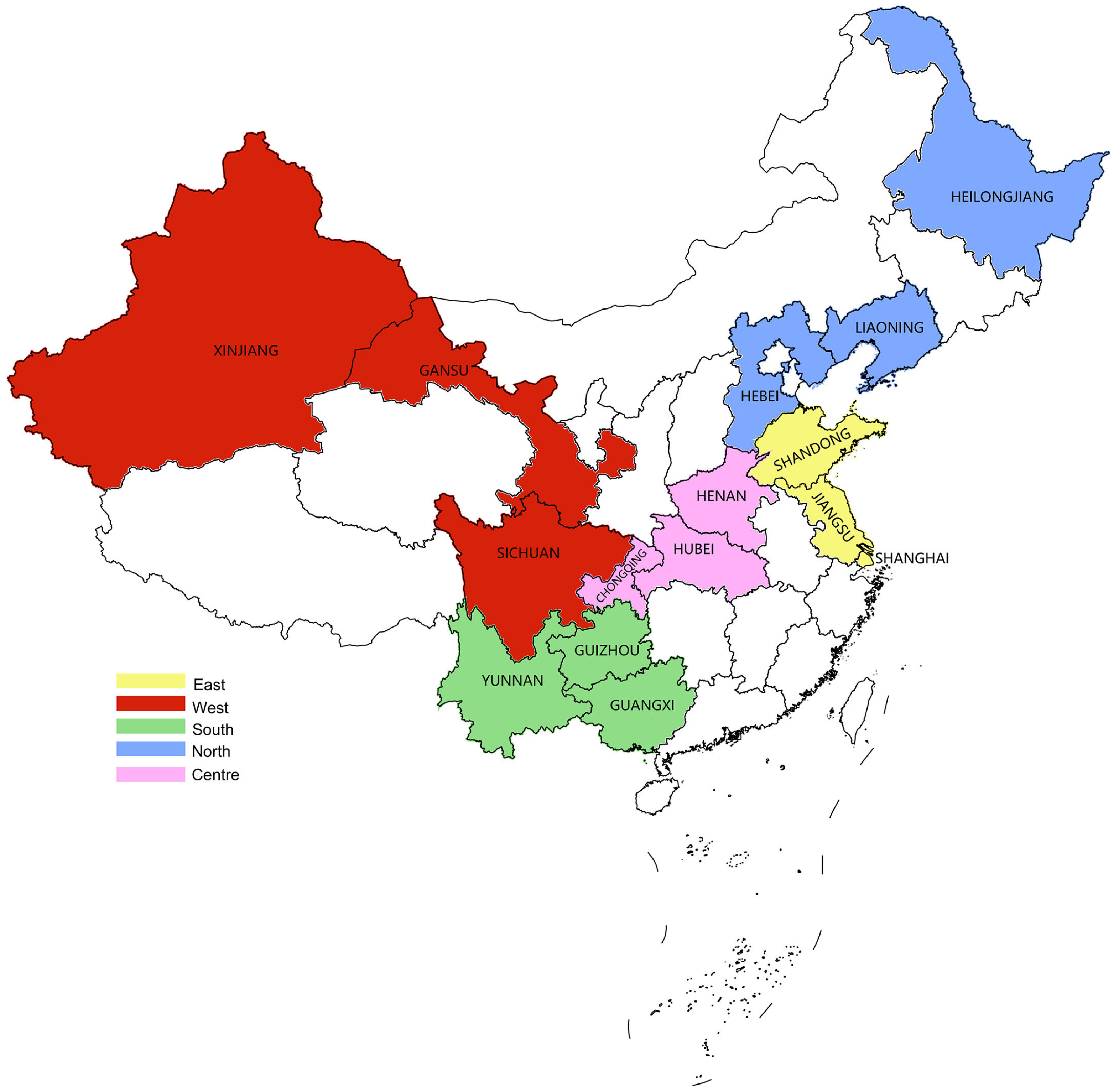
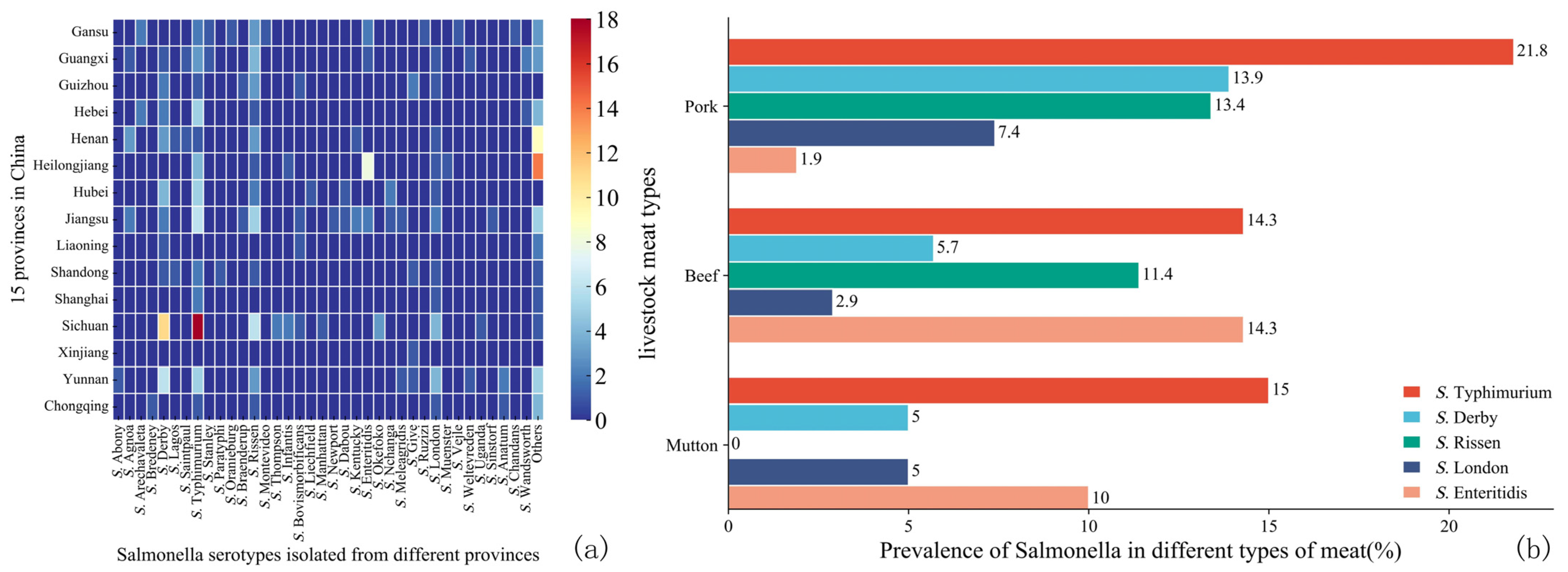
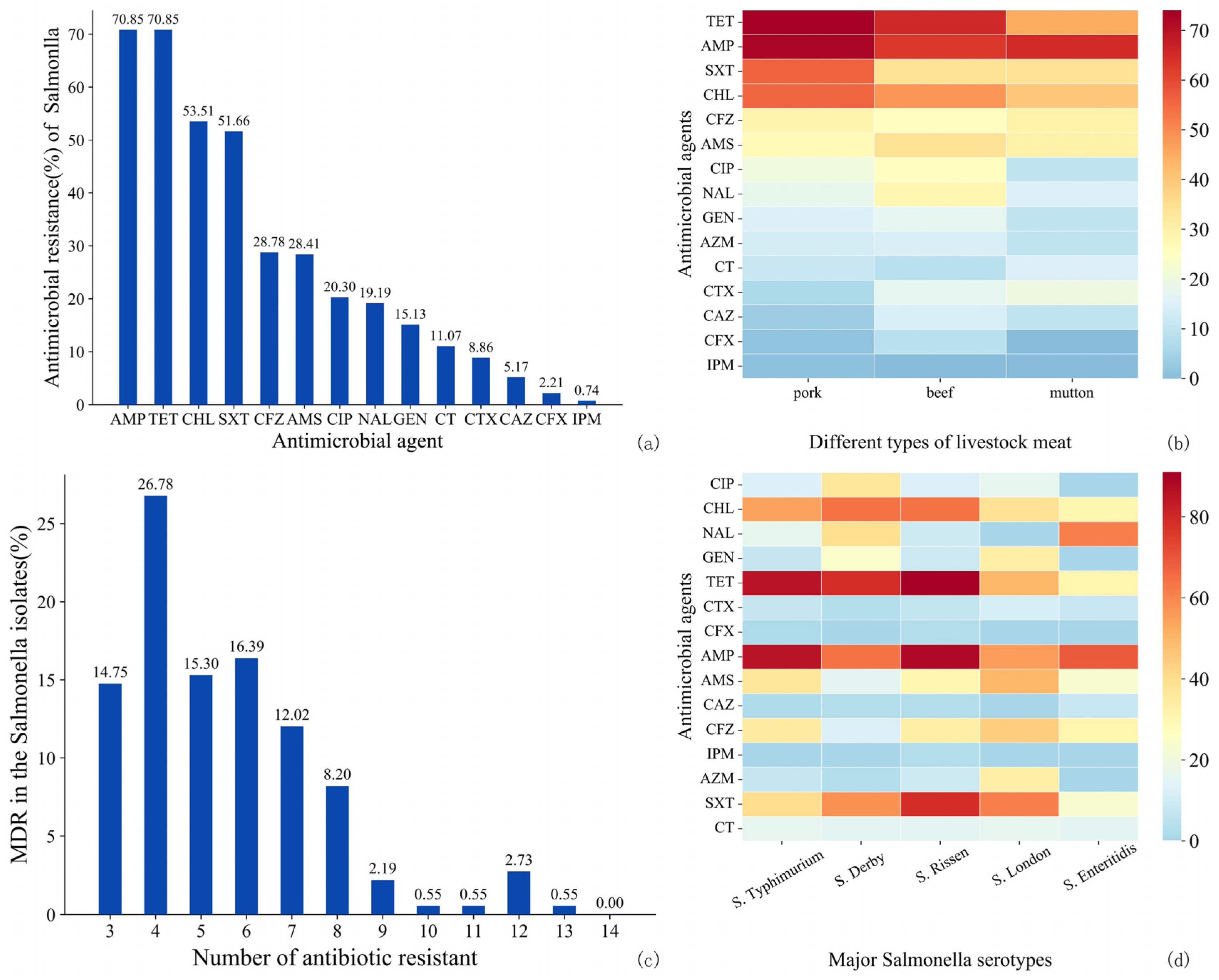
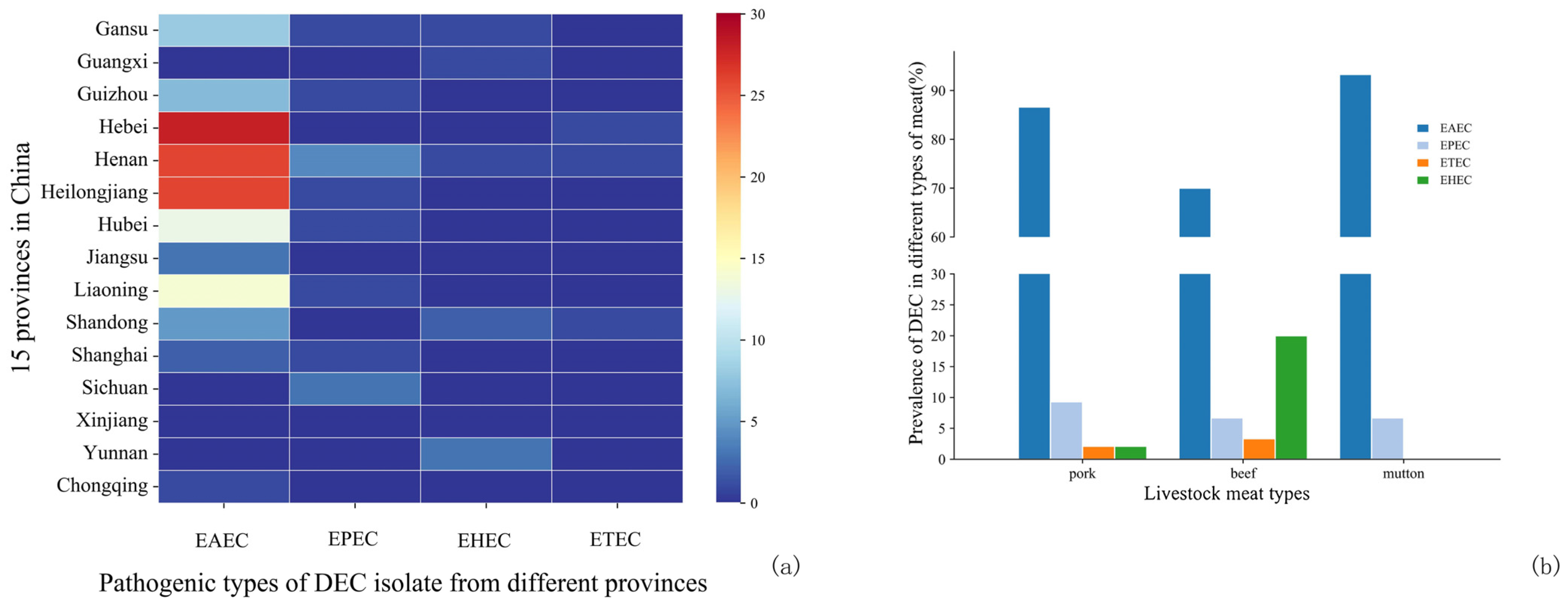
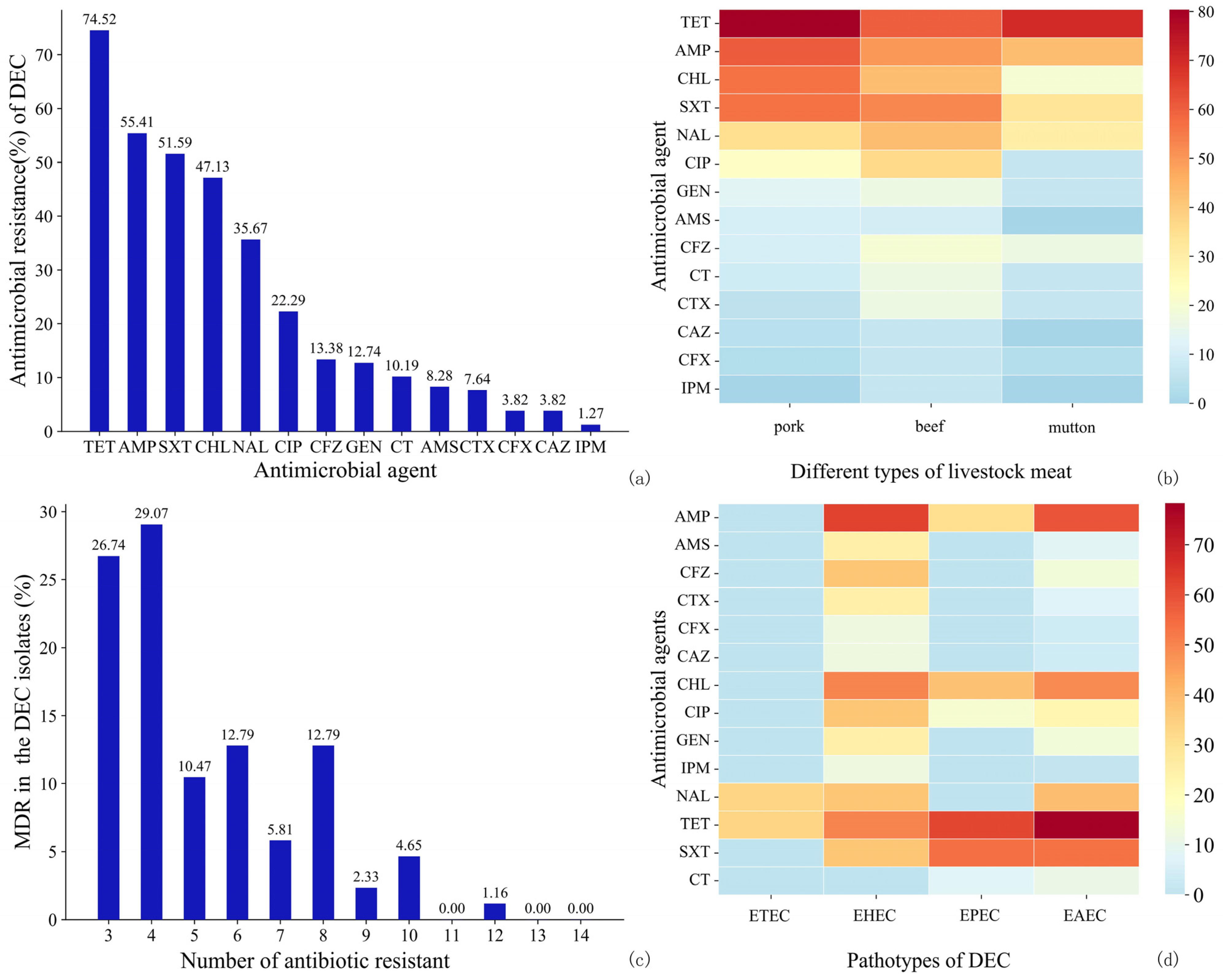
The rising prevalence of pathogenic bacteria in livestock meat poses a growing public health concern in China. The determination of antimicrobial resistance (AMR) is critical for the clinical management of foodborne infections stemming from livestock meat consumption. This study aimed to assess the prevalence of pathogenic bacteria in livestock meat (pork, beef, and mutton) sampled in China in 2021 and to identify the most common AMR patterns among the isolated pathogens. A total of 2515 raw livestock meat samples were collected across 15 provinces in China during 2021. Pathogen detection, including Listeria monocytogenes, Salmonella, and diarrheagenic Escherichia coli (DEC), followed China’s national food safety standards. All Salmonella isolates underwent serotyping via slide agglutination. Antimicrobial susceptibility of Salmonella and DEC isolates was assessed using the broth dilution method. The detection rates for L. monocytogenes, Salmonella, and DEC in raw livestock meat were 9.06% (228/2, 515), 10.54% (265/2, 515), and 6.16% (155/2, 515), respectively. Pork showed the highest contamination rates for Salmonella and DEC, with prevalence rates of 17.60% (214/1, 216, χ2 = 124.62, p < 0.05) and 7.89% (96/1, 216, χ2 = 14.466, p < 0.05), respectively. L. monocytogenes contamination was notably higher in chilled (14.43%, 84/582) and frozen (12.39%, 55/444) meat than in fresh meat (χ2 = 43.510, p < 0.05). In contrast, Salmonella (12.09%, 180/1489, χ2 = 15.173, p < 0.05) and DEC (7.25%, 108/1489, χ2 = 12.275, p < 0.05) were more prevalent in fresh meat than in chilled or frozen samples. The predominant Salmonella serotypes identified were Salmonella enterica subsp. enterica serovar Typhimurium, followed by Salmonella enterica serovar Derby, Salmonella enterica serovar Rissen, Salmonella enterica serovar London, and Salmonella enterica serotype Enteritidis. Enteroaggregative E. coli was the most frequent pathotype among DEC (84.7%, 133/157), followed by enteropathogenic E. coli (8.3%, 13/157) and enterohemorrhagic E. coli (5.1%, 8/157). Among the 14 tested antimicrobial agents, Salmonella isolates demonstrated an overall resistance rate of 87.50%, while DEC exhibited a resistance rate of 84.70%. Ampicillin and tetracycline showed the highest resistance rates in both pathogens. Multi-drug resistance (MDR) was observed in 67.53% of Salmonella isolates (183 isolates) and 57.96% of DEC isolates (91 isolates). This study highlights the significant contamination of retail raw livestock meat in China by L. monocytogenes, Salmonella, and DEC. The high resistance of MDR in both pathogens poses serious public health risks. Chinese food safety and veterinary authorities should implement stricter measures to control pathogen contamination and regulate the use of antimicrobials in livestock to mitigate these risks.
Keywords: Listeria monocytogenes; Salmonella; diarrheagenic Escherichia coli; raw livestock meat; prevalence; serovar; antimicrobial resistance Listeria monocytogenes; Salmonella; diarrheagenic Escherichia coli; raw livestock meat; prevalence; serovar; antimicrobial resistance