Article

Accelerating Chloroplast Engineering: A New System for Rapid Generation of Marker-Free Transplastomic Lines of Chlamydomonas reinhardtii


1
Department of Structural and Molecular Biology, University College London, Gower Street, London WC1E 6BT, UK
2
Centre of Excellence in Molecular Biology, University of the Punjab, Lahore 53700, Pakistan
*
Author to whom correspondence should be addressed.
Microorganisms 2023, 11(8), 1967; https://doi.org/10.3390/microorganisms11081967

Submission received: 8 June 2023 / Revised: 24 July 2023 / Accepted: 26 July 2023 / Published: 31 July 2023
(This article belongs to the Special Issue Production of Recombinant Molecules in Algal Chloroplasts)

Abstract

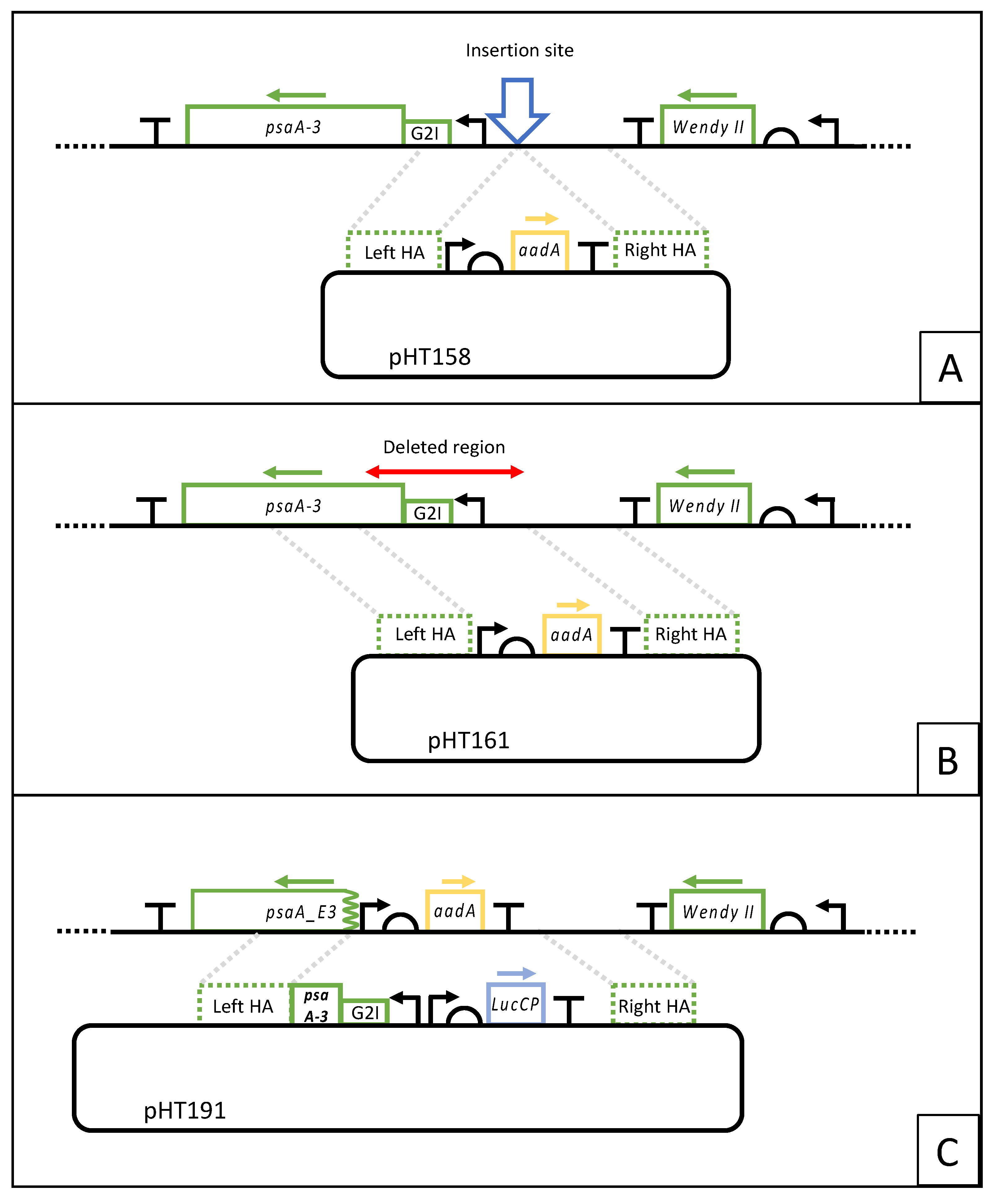
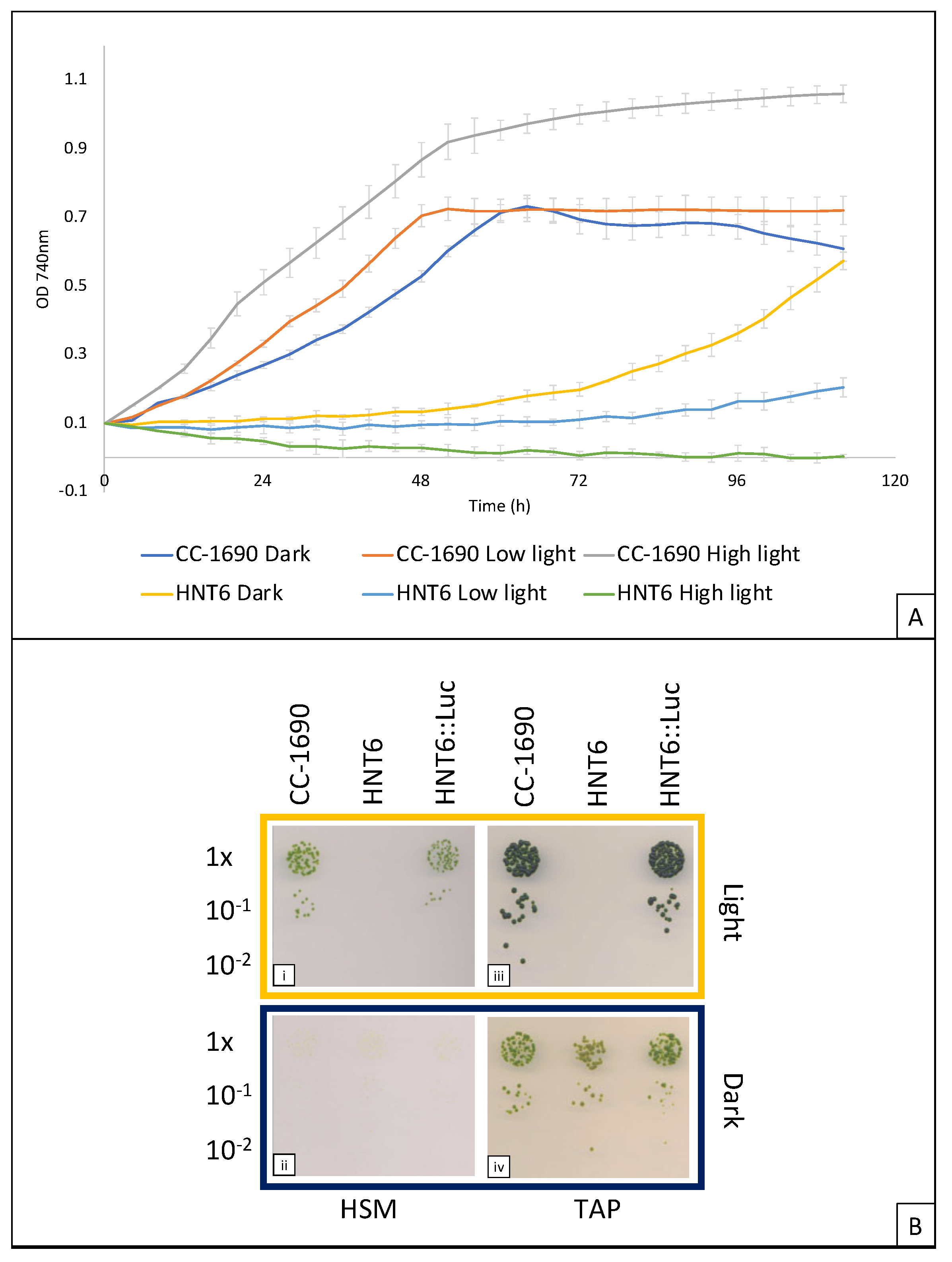
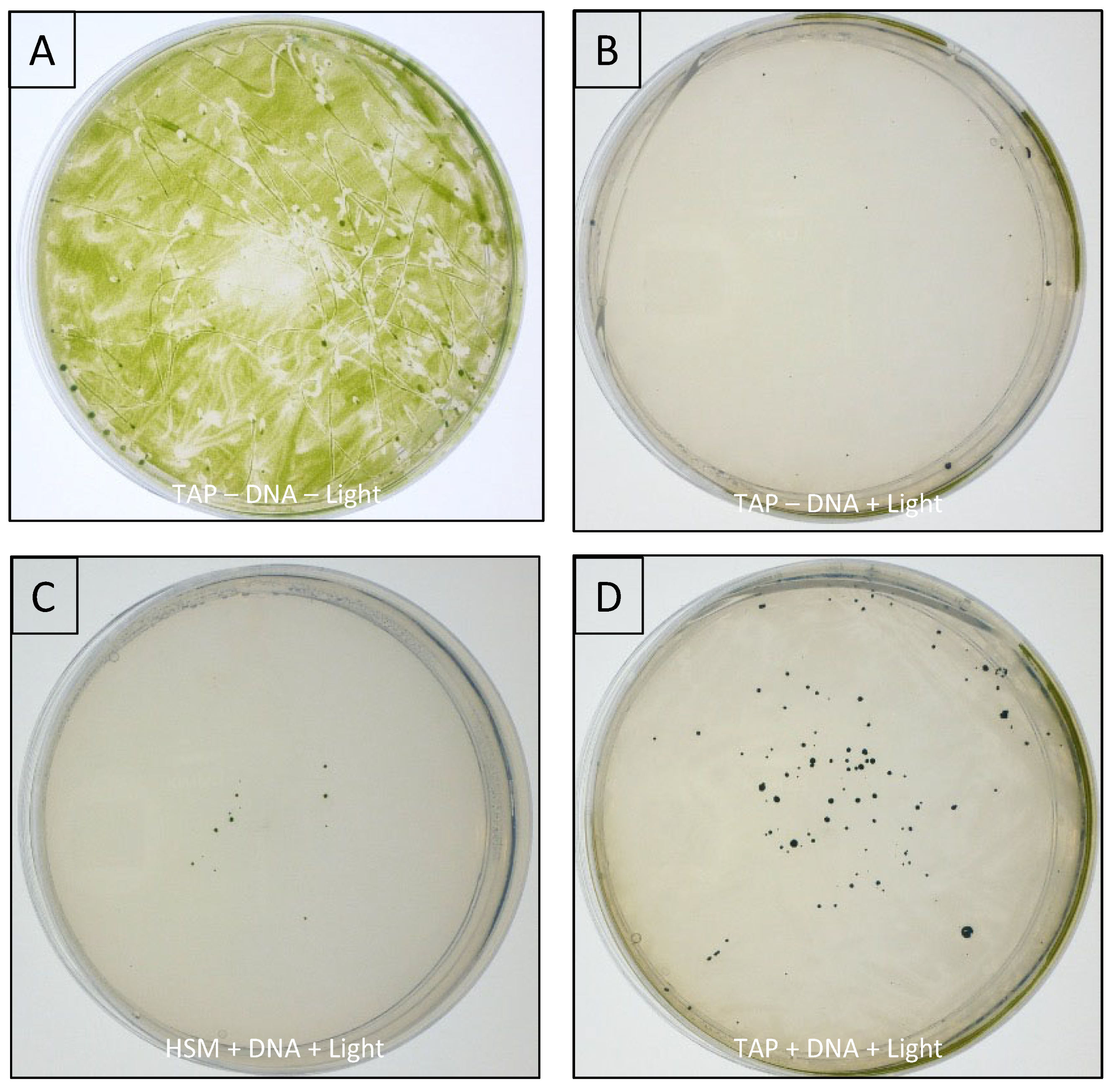
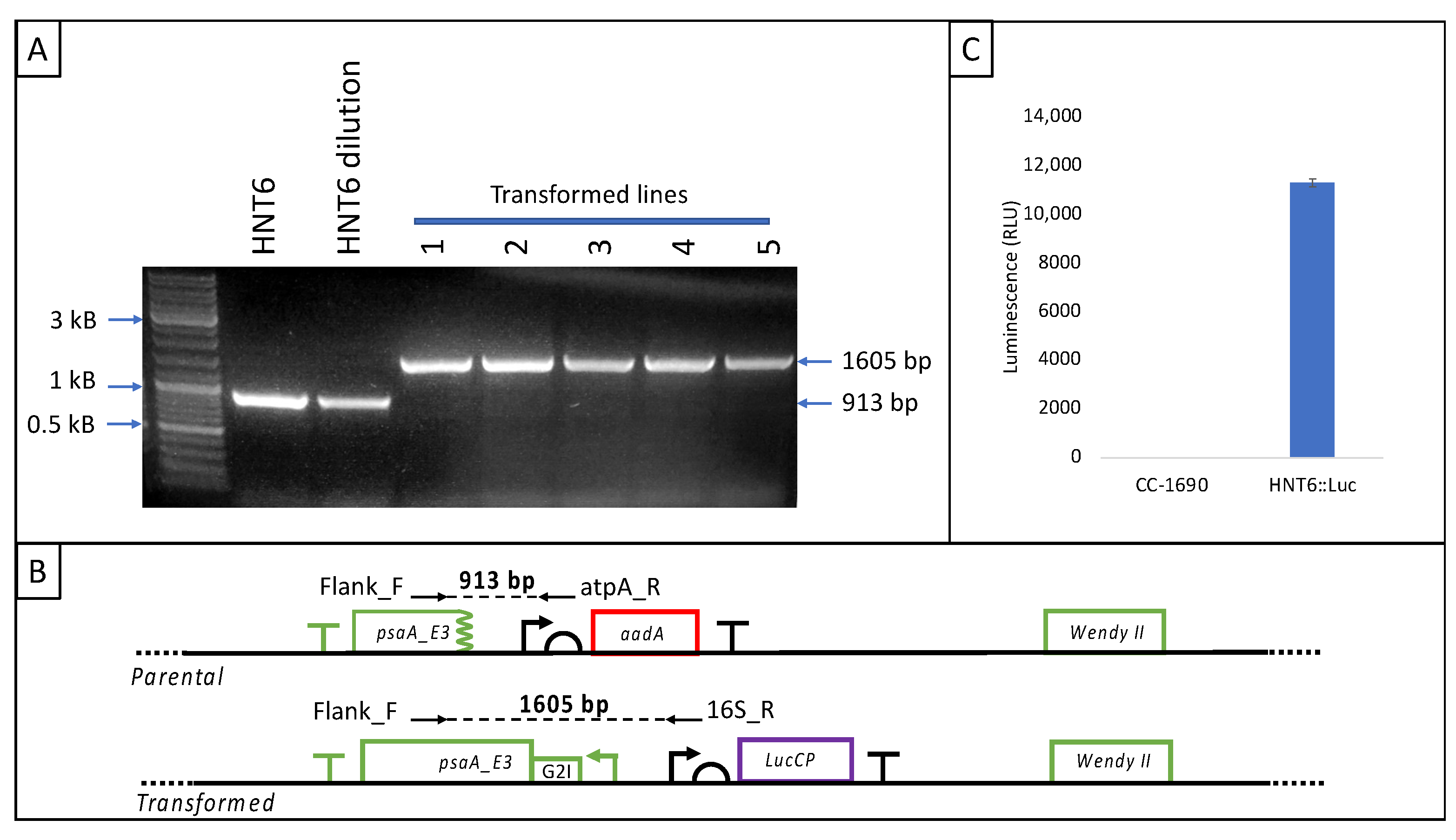
‘Marker-free’ strategies for creating transgenic microorganisms avoid the issue of potential transmission of antibiotic resistance genes to other microorganisms. An already-established strategy for engineering the chloroplast genome (=plastome) of the green microalga Chlamydomonas reinhardtii involves the restoration of photosynthetic function using a recipient strain carrying a plastome mutation in a key photosynthesis gene. Selection for transformant colonies is carried out on minimal media, such that only those cells in which the mutated gene has been replaced with a wild-type copy carried on the transgenic DNA are capable of phototrophic growth. However, this approach can suffer from issues of efficiency due to the slow growth of C. reinhardtii on minimal media and the slow die-back of the untransformed lawn of cells when using mutant strains with a limited photosensitivity phenotype. Furthermore, such phototrophic rescue has tended to rely on existing mutants that are not necessarily ideal for transformation and targeted transgene insertion: Mutants carrying point mutations can easily revert, and those with deletions that do not extend to the intended transgene insertion site can give rise to a sub-population of rescued lines that lack the transgene. In order to improve and accelerate the transformation pipeline for C. reinhardtii, we have created a novel recipient line, HNT6, carrying an engineered deletion in exon 3 of psaA, which encodes one of the core subunits of photosystem I (PSI). Such PSI mutants are highly light-sensitive allowing faster recovery of transformant colonies by selecting for light-tolerance on acetate-containing media, rather than phototrophic growth on minimal media. The deletion extends to a site upstream of psaA-3 that serves as a neutral locus for transgene insertion, thereby ensuring that all of the recovered colonies are transformants containing the transgene. We demonstrate the application of HNT6 using a luciferase reporter.
Keywords: Chlamydomonas reinhardtii; chloroplast; photosynthetic restoration; synthetic biology; transformation Chlamydomonas reinhardtii; chloroplast; photosynthetic restoration; synthetic biology; transformation