Opinion

Nanotechnology—A Light of Hope for Combating Antibiotic Resistance

Department of Nursing, College of Applied Medical Science, King Faisal University, Al-Ahsa 31982, Saudi Arabia
Microorganisms 2023, 11(6), 1489; https://doi.org/10.3390/microorganisms11061489

Submission received: 7 May 2023 / Revised: 31 May 2023 / Accepted: 1 June 2023 / Published: 3 June 2023
(This article belongs to the Special Issue Antibiotic Resistance: Present Knowledge and Future Challenges)

Abstract

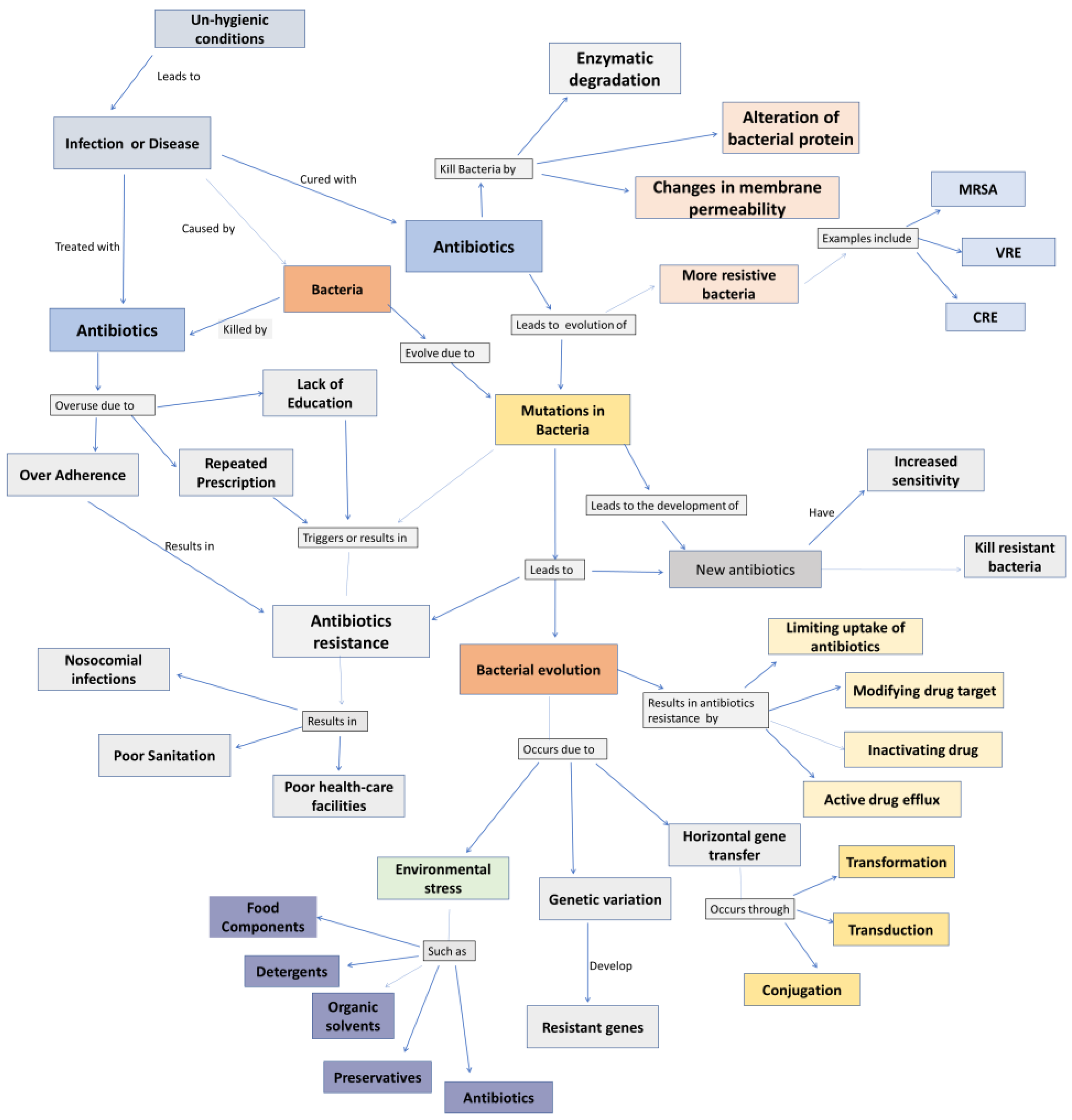
Antibiotic usage and resistance are major health concerns. Antibiotic resistance occurs when bacteria evolve to resist the effects of antibiotics, making it impossible to treat infections. The overuse and misuse of antibiotics are the main contributing factors, while environmental stress (such as heavy metals accumulation), unhygienic conditions, illiteracy, and unawareness also contribute to antibiotic resistance. The slow and costly development of new antibiotics has lagged behind the emergence of antibiotic-resistant bacteria, and the overuse of antibiotics leads to negative consequences. The current study used different literature resources to generate an opinion and find a possible solution to antibiotic barriers. Different scientific approaches have been reported to overcome antibiotic resistance. The most useful approach among these is nanotechnology. Nanoparticles can be engineered to disrupt bacterial cell walls or membranes, effectively eliminating resistant strains. Additionally, nanoscale devices enable the real-time monitoring of bacterial populations, allowing for the early detection of resistance emergence. Nanotechnology, along with evolutionary theory offers promising avenues in combating antibiotic resistance. Evolutionary theory helps us understand the mechanisms by which bacteria develop resistance, allowing us to anticipate and counteract their adaptive strategies. By studying the selective pressures that drive resistance, we can therefore design more effective interventions or traps. The synergy between the evolutionary theory and nanotechnology presents a powerful approach to combat antibiotic resistance, offering new avenues for the development of effective treatments and the preservation of our antibiotic arsenal.
Keywords: antibiotics; antibiotics resistance; nanotechnology; heavy metals; global health antibiotics; antibiotics resistance; nanotechnology; heavy metals; global health