Article

Identification and Growth Characteristics of a Gluten-Degrading Bacterium from Wheat Grains for Gluten-Degrading Enzyme Production

Food Convergence Research Division, Korea Food Research Institute, Wanju-gun 55365, Republic of Korea
*
Author to whom correspondence should be addressed.
Microorganisms 2023, 11(12), 2884; https://doi.org/10.3390/microorganisms11122884

Submission received: 8 October 2023 / Revised: 16 November 2023 / Accepted: 27 November 2023 / Published: 29 November 2023
(This article belongs to the Section Food Microbiology)

Abstract

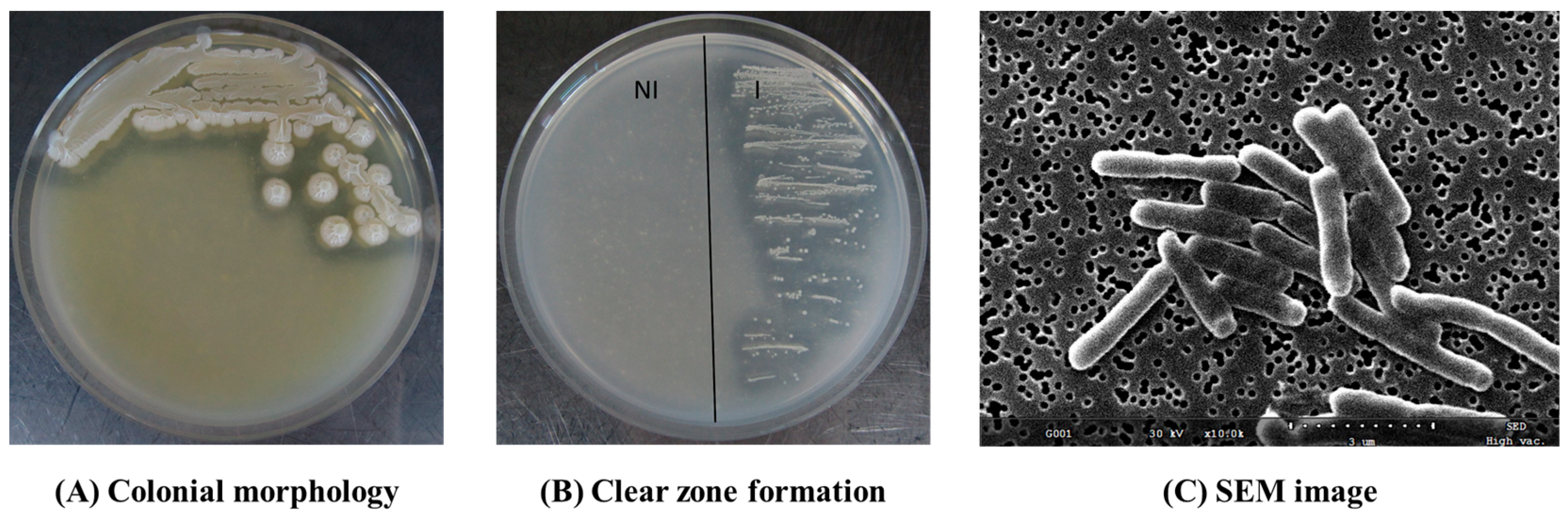
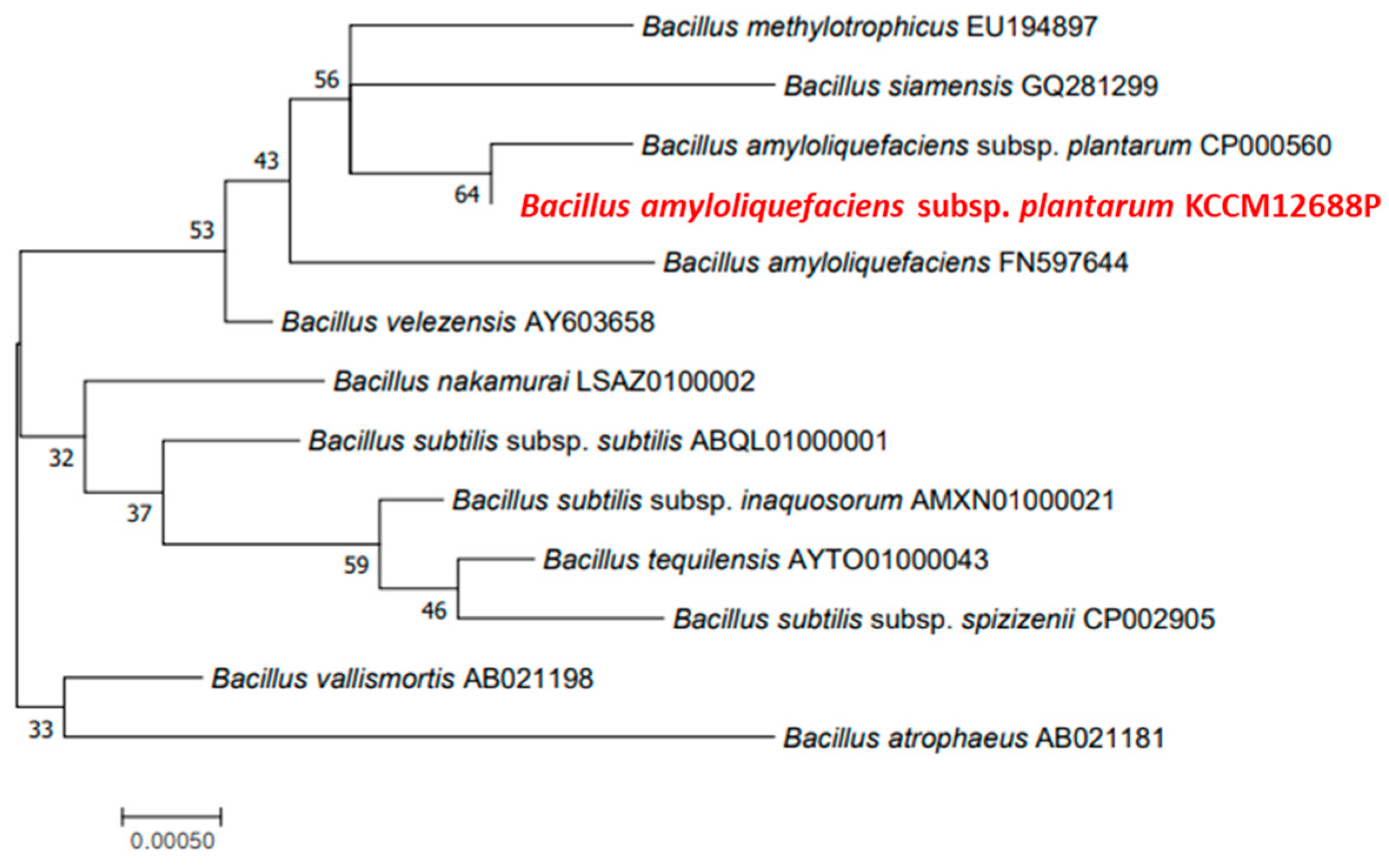
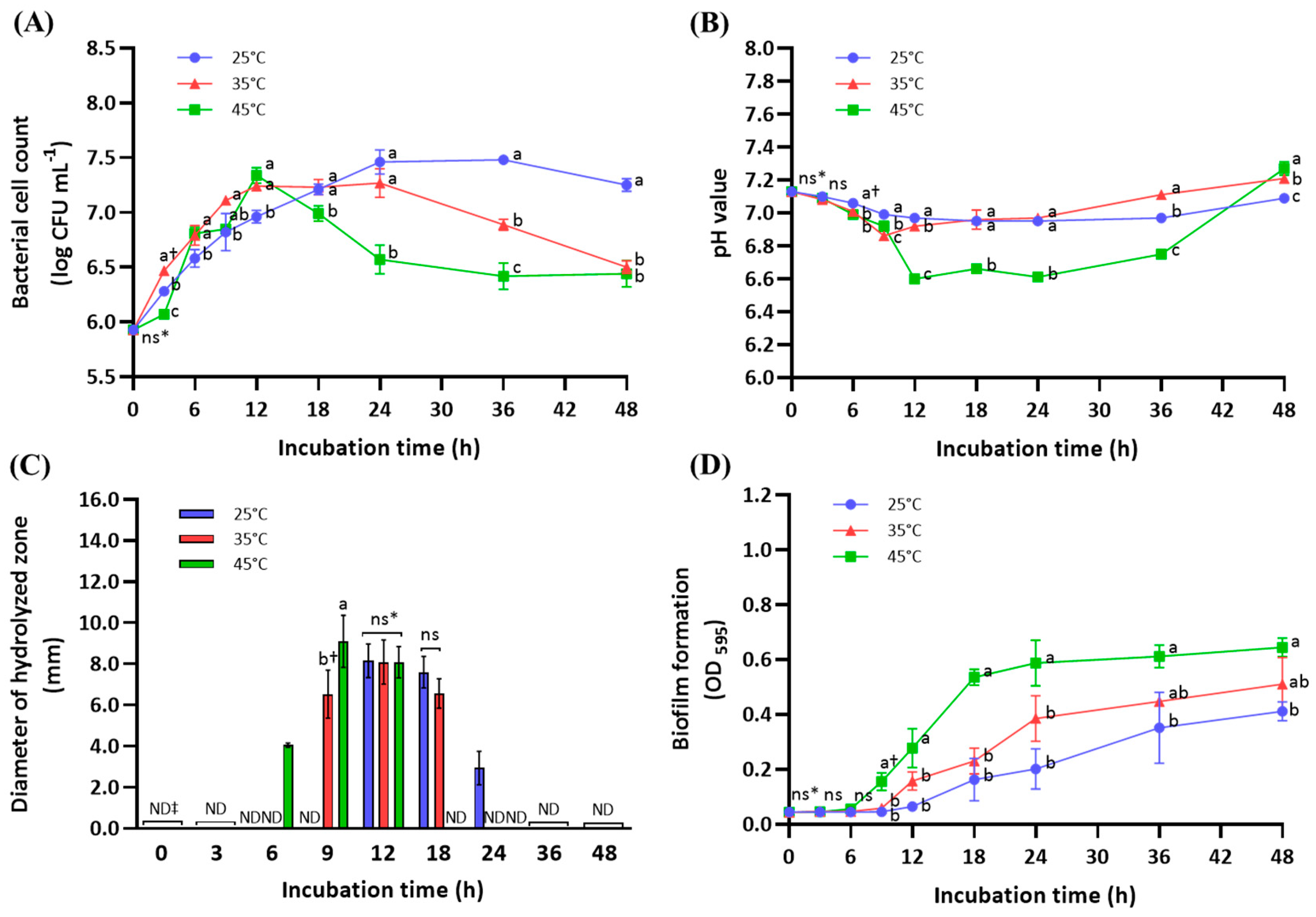
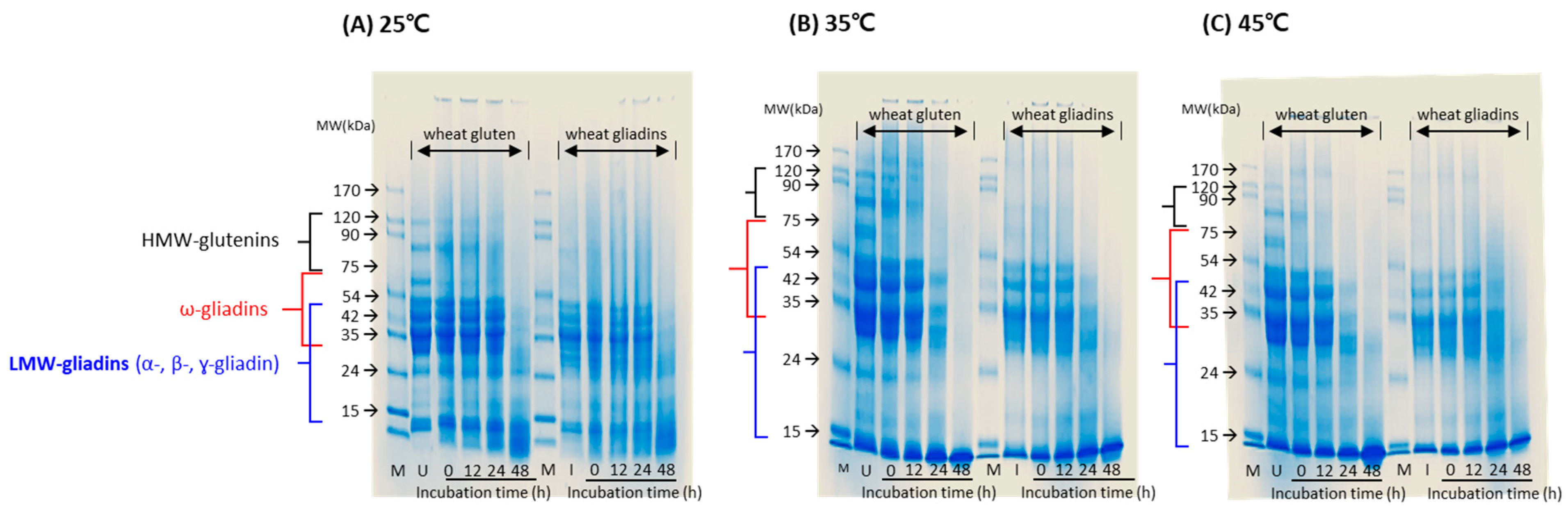
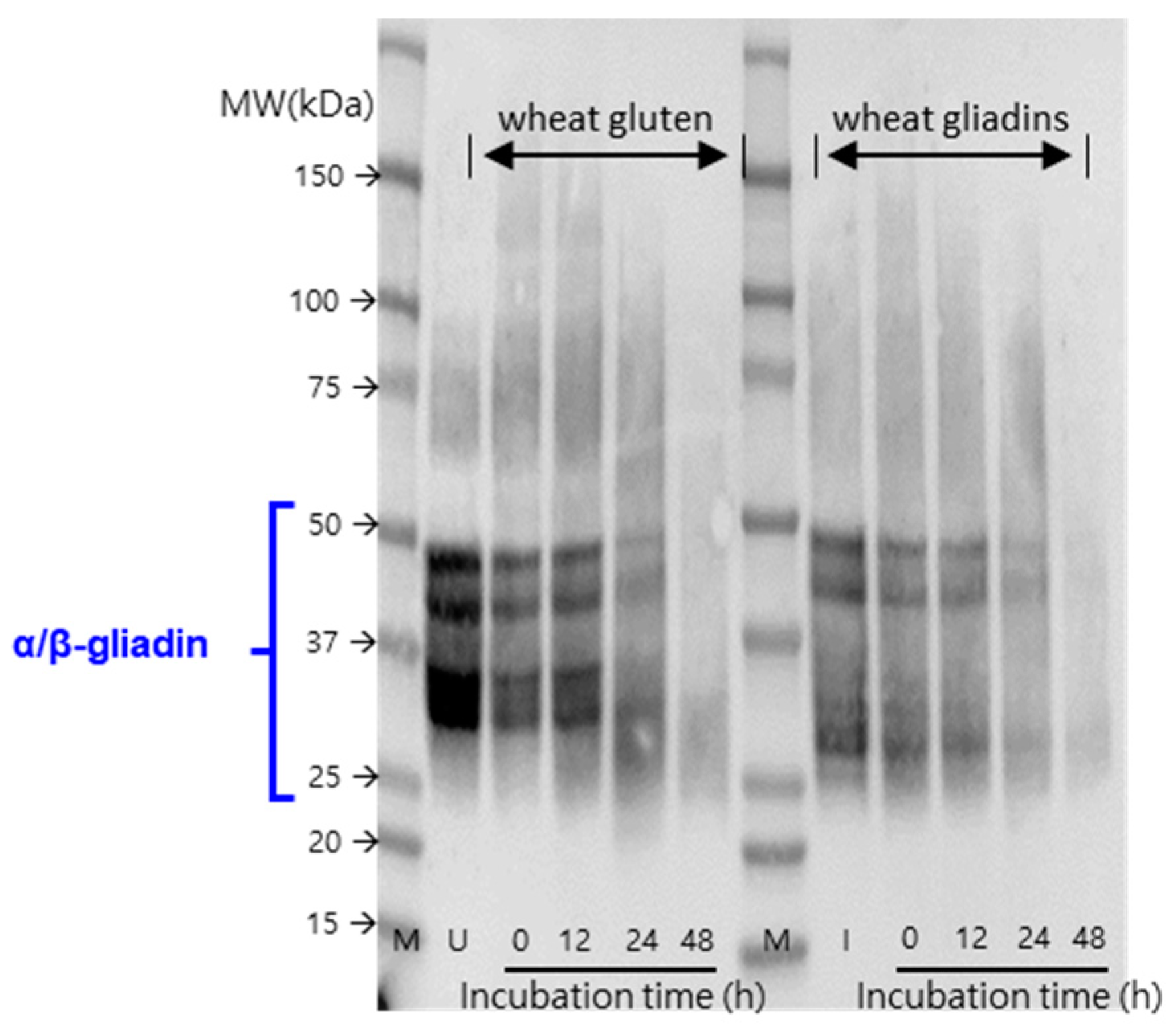
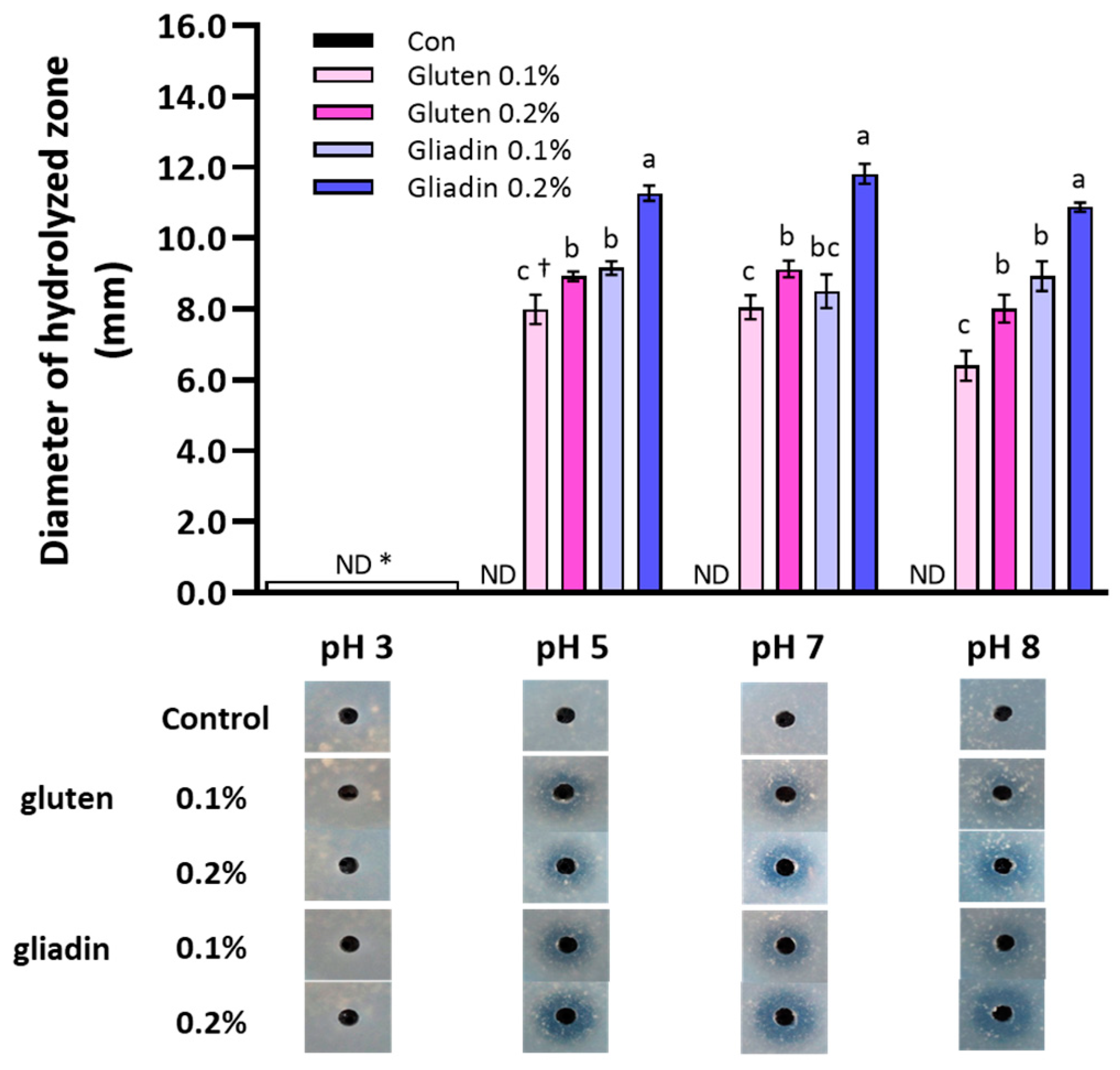
Immunogenic peptides from wheat gluten can be produced during digestion, which are difficult to digest by gastrointestinal proteases and negatively affect immune responses in humans. Gluten intolerance is a problem in countries where wheat is a staple food, and a gluten-free diet is commonly recommended for its treatment and prevention. Enzyme approaches for degradation of the peptides can be considered as a strategy for its prevention. Here, we isolated a gluten-degrading bacterium, Bacillus amyloliquefaciens subsp. plantarum, from wheat grains. The culture conditions for enzyme production or microbial use were considered based on gluten decomposition patterns. Additionally, the pH range for the activity of the crude enzyme was investigated. The bacterium production of gluten-degrading enzymes was temperature-dependent within 25 °C to 45 °C, and the production time decreased with increasing culture temperature. However, it was markedly decreased with increasing biofilm formation. The bacterium decomposed high-molecular-weight glutenin proteins first, followed by gliadin proteins, regardless of the culture temperature. Western blotting with an anti-gliadin antibody revealed that the bacterium decomposed immunogenic proteins related to α/β-gliadins. The crude enzyme was active in the pH ranges of 5 to 8, and enzyme production was increased by adding gliadin into the culture medium. In this study, the potential of the B. amyloliquefaciens subsp. plantarum for gluten-degrading enzyme production was demonstrated. If further studies for purification of the enzyme specific to the immunogenic peptides and its characteristics are conducted, it may contribute as a strategy for prevention of gluten intolerance.
Keywords: wheat gluten; gluten intolerance; gluten-degrading bacteria; Bacillus amyloliquefaciens subsp. plantarum; α/β-gliadin protein wheat gluten; gluten intolerance; gluten-degrading bacteria; Bacillus amyloliquefaciens subsp. plantarum; α/β-gliadin protein