Article

Characterization of the Gut Microbiota in Urban Thai Individuals Reveals Enterotype-Specific Signature

by
Jiramaetha Sinsuebchuea
1,
Prasobsook Paenkaew
2,
Montree Wutthiin
2,
Thatchawanon Nantanaranon
2,3,
Kiattiyot Laeman
2,
Weerayuth Kittichotirat
1,2,
Songsak Wattanachaisaereekul
4,
Sudarat Dulsawat
5,
Montira Nopharatana
6,
Namol Vorapreeda
7,
Sakarindr Bhumiratana
2,
Supapon Cheevadhanarak
2,5,8,* and
Sawannee Sutheeworapong
2,*
1
Bioinformatics and Systems Biology Program, School of Bioresources and Technology, and School of Information Technology, King Mongkut’s University of Technology Thonburi (KMUTT), Bangkok 10150, Thailand
2
Systems Biology and Bioinformatics Unit, Pilot Plant Development and Training Institute, King Mongkut’s University of Technology Thonburi (KMUTT), Bangkok 10150, Thailand
3
Innovation Ecosystem, Knowledge Xchange, King Mongkut’s University of Technology Thonburi (KMUTT), Bangkok 10600, Thailand
4
School of Food Industry, King Mongkut’s Institute of Technology Ladkrabang (KMITL), Bangkok 10520, Thailand
5
Fungal Biotechnology Unit, Pilot Plant Development and Training Institute, King Mongkut’s University of Technology Thonburi (KMUTT), Bangkok 10150, Thailand
6
Department of Food Engineering, Faculty of Engineering, King Mongkut’s University of Technology Thonburi (KMUTT), Bangkok 10140, Thailand
7
Research, Innovation and Partnerships Office, King Mongkut’s University of Technology Thonburi (KMUTT), Bangkok 10140, Thailand
8
School of Bioresources and Technology, King Mongkut’s University of Technology Thonburi (KMUTT), Bangkok 10150, Thailand
*
Authors to whom correspondence should be addressed.
Microorganisms 2023, 11(1), 136; https://doi.org/10.3390/microorganisms11010136

Submission received: 2 December 2022 / Revised: 30 December 2022 / Accepted: 3 January 2023 / Published: 5 January 2023
(This article belongs to the Topic Gut Microbiota in Human Health)

Abstract

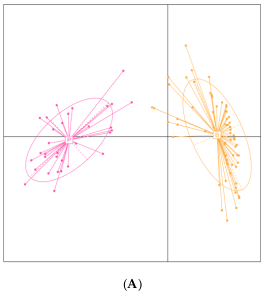
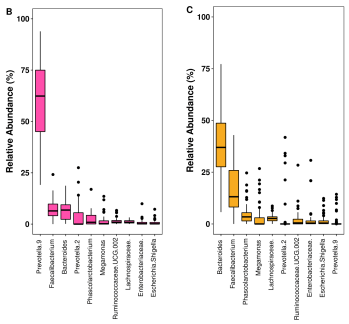
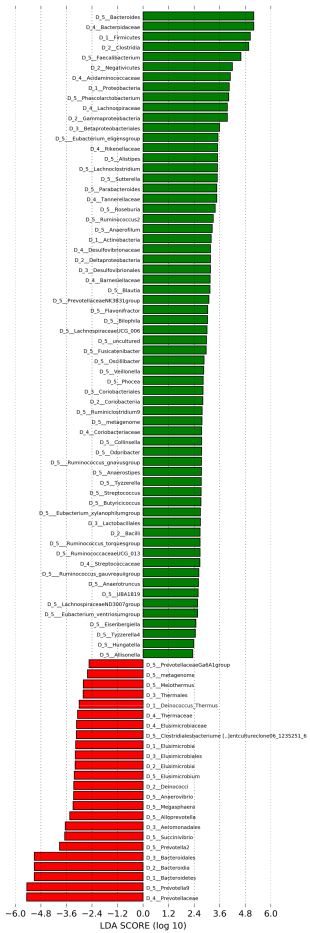
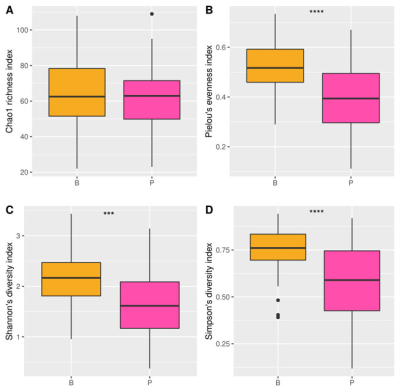
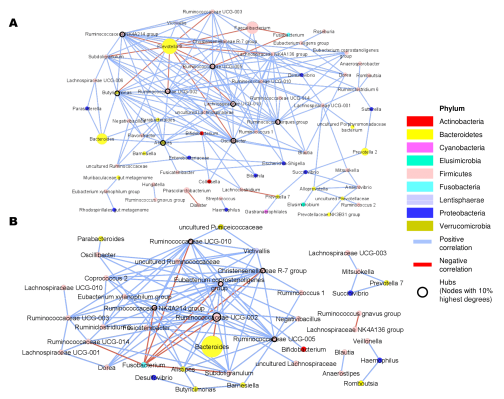
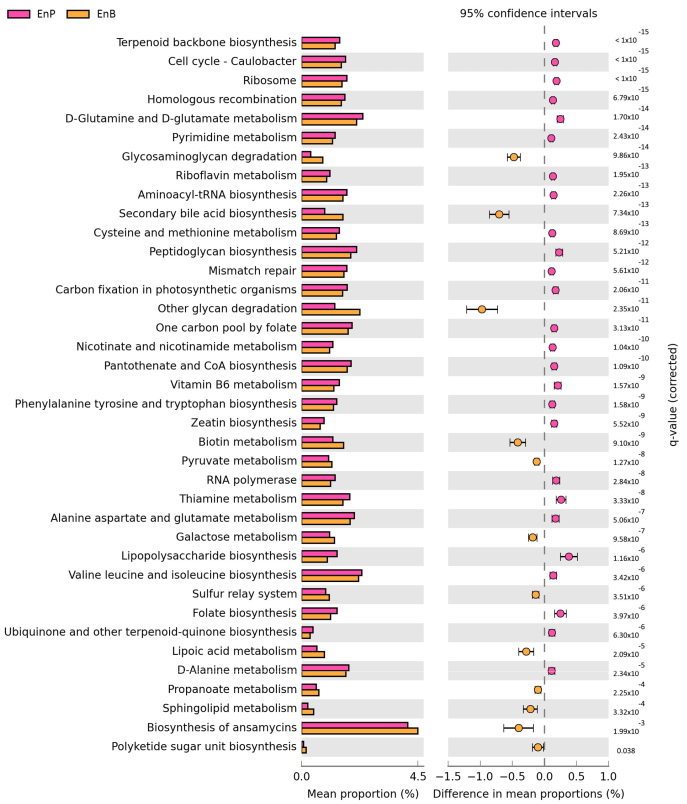
Gut microbiota play vital roles in human health, utilizing indigestible nutrients, producing essential substances, regulating the immune system, and inhibiting pathogen growth. Gut microbial profiles are dependent on populations, geographical locations, and long-term dietary patterns resulting in individual uniqueness. Gut microbiota can be classified into enterotypes based on their patterns. Understanding gut enterotype enables us to interpret the capability in macronutrient digestion, essential substance production, and microbial co-occurrence. However, there is still no detailed characterization of gut microbiota enterotype in urban Thai people. In this study, we characterized the gut microbiota of urban Thai individuals by amplicon sequencing and classified their profiles into enterotypes, including Prevotella (EnP) and Bacteroides (EnB) enterotypes. Enterotypes were associated with lifestyle, dietary habits, bacterial diversity, differential taxa, and microbial pathways. Microbe–microbe interactions have been studied via co-occurrence networks. EnP had lower α-diversities than those in EnB. A correlation analysis revealed that the Prevotella genus, the predominant taxa of EnP, has a negative correlation with α-diversities. Microbial function enrichment analysis revealed that the biosynthesis pathways of B vitamins and fatty acids were significantly enriched in EnP and EnB, respectively. Interestingly, Ruminococcaceae, resistant starch degraders, were the hubs of both enterotypes, and strongly correlated with microbial diversity, suggesting that traditional Thai food, consisting of rice and vegetables, might be the important drivers contributing to the gut microbiota uniqueness in urban Thai individuals. Overall findings revealed the biological uniqueness of gut enterotype in urban Thai people, which will be advantageous for developing gut microbiome-based diagnostic tools.
Keywords: gut microbiome; gut microbiota; enterotype; Ruminococcaceae; baseline gut microbiome; urban; co-occurrence network; 16S rRNA sequencing; Thai gut microbiome; gut microbiota; enterotype; Ruminococcaceae; baseline gut microbiome; urban; co-occurrence network; 16S rRNA sequencing; Thai