
Semi-Active Suppression of Longitudinal Vibration in Mine Hoisting Ropes Using Magnetorheological Damper and Output-Feedback Adaptive Sliding-Mode Control


Abstract
1. Introduction
- (1)
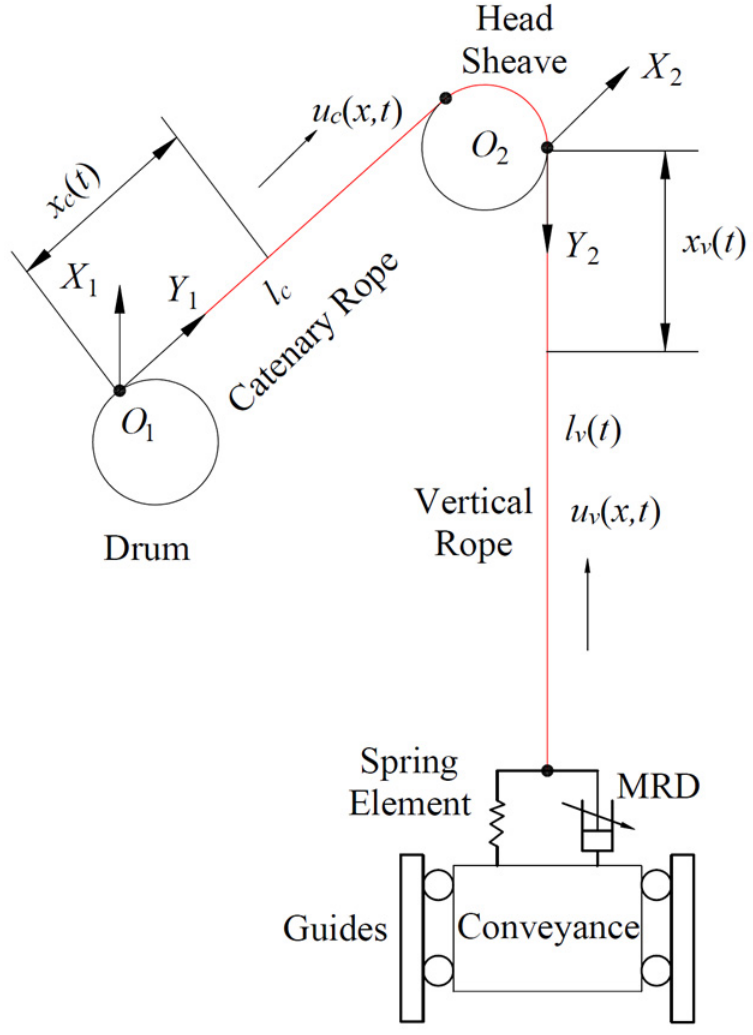
- A dynamic model of an MRD-equipped mine hoisting system is established by considering time-varying rope length, terminal mass, upper-boundary excitation, and a parallel load-bearing spring element.
- (2)
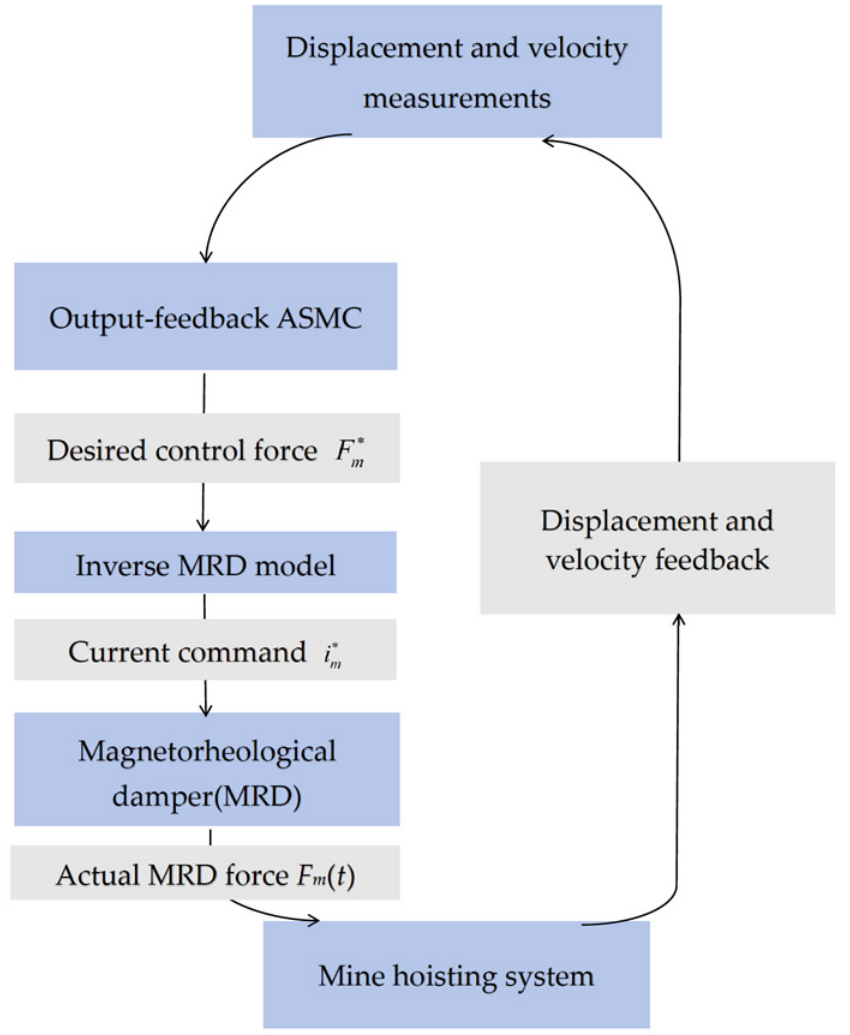
- An inverse SEHTFM-based MRD model is employed to convert the desired control force into feasible real-time current commands.
- (3)
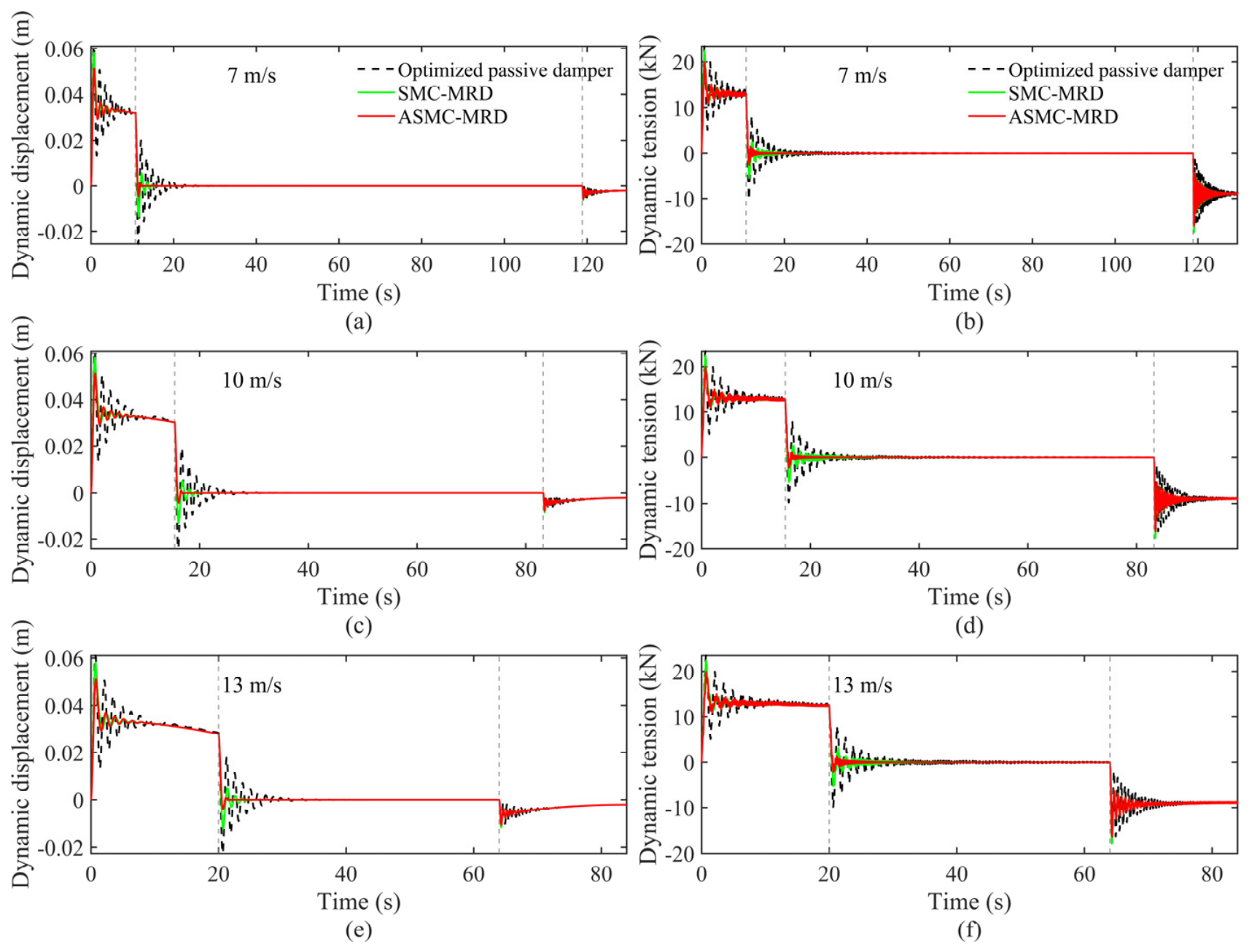
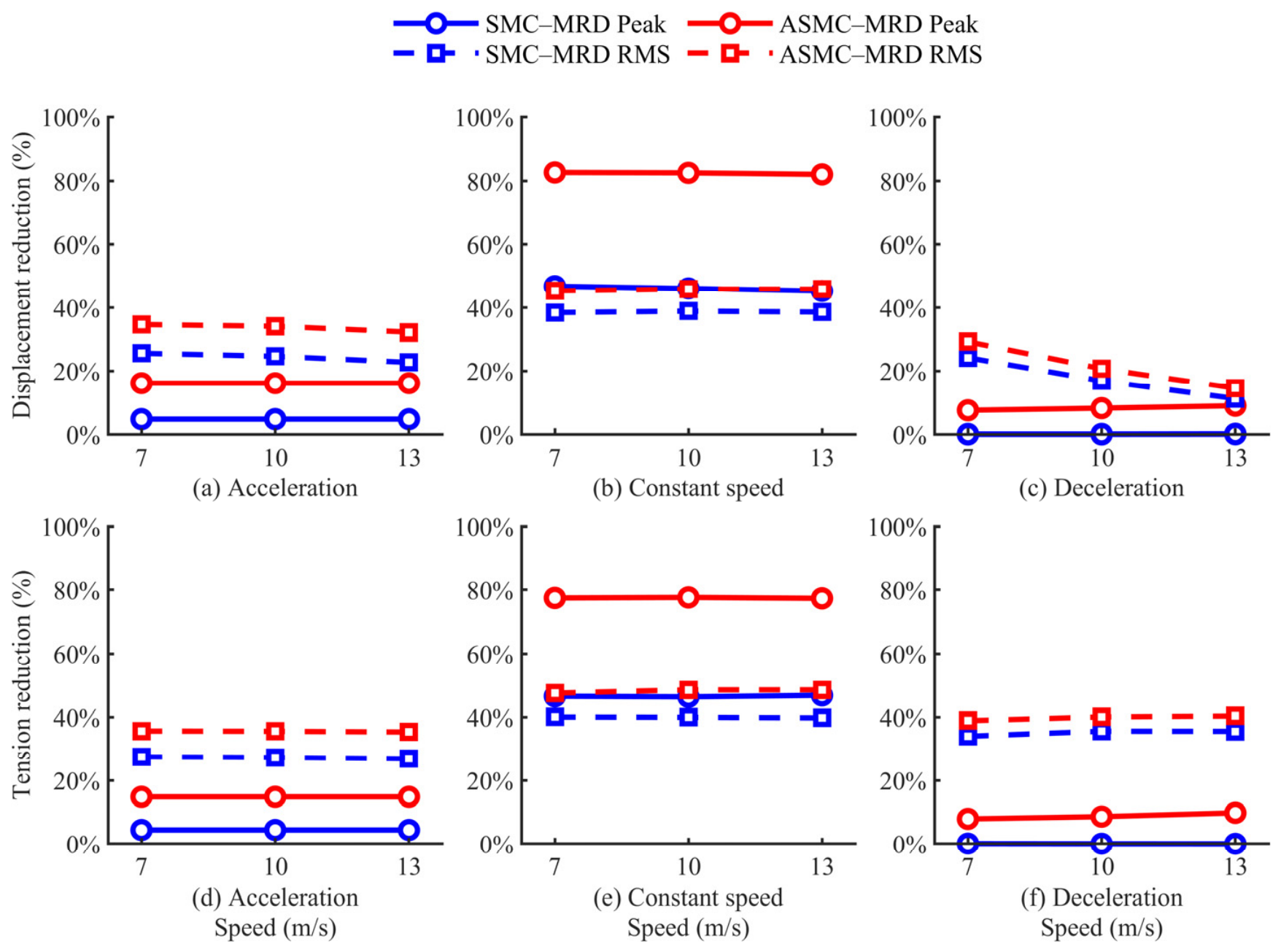
- An optimized passive viscous damper is introduced as the benchmark, and the reduction rates of SMC–MRD and ASMC–MRD are evaluated relative to this benchmark.
- (4)
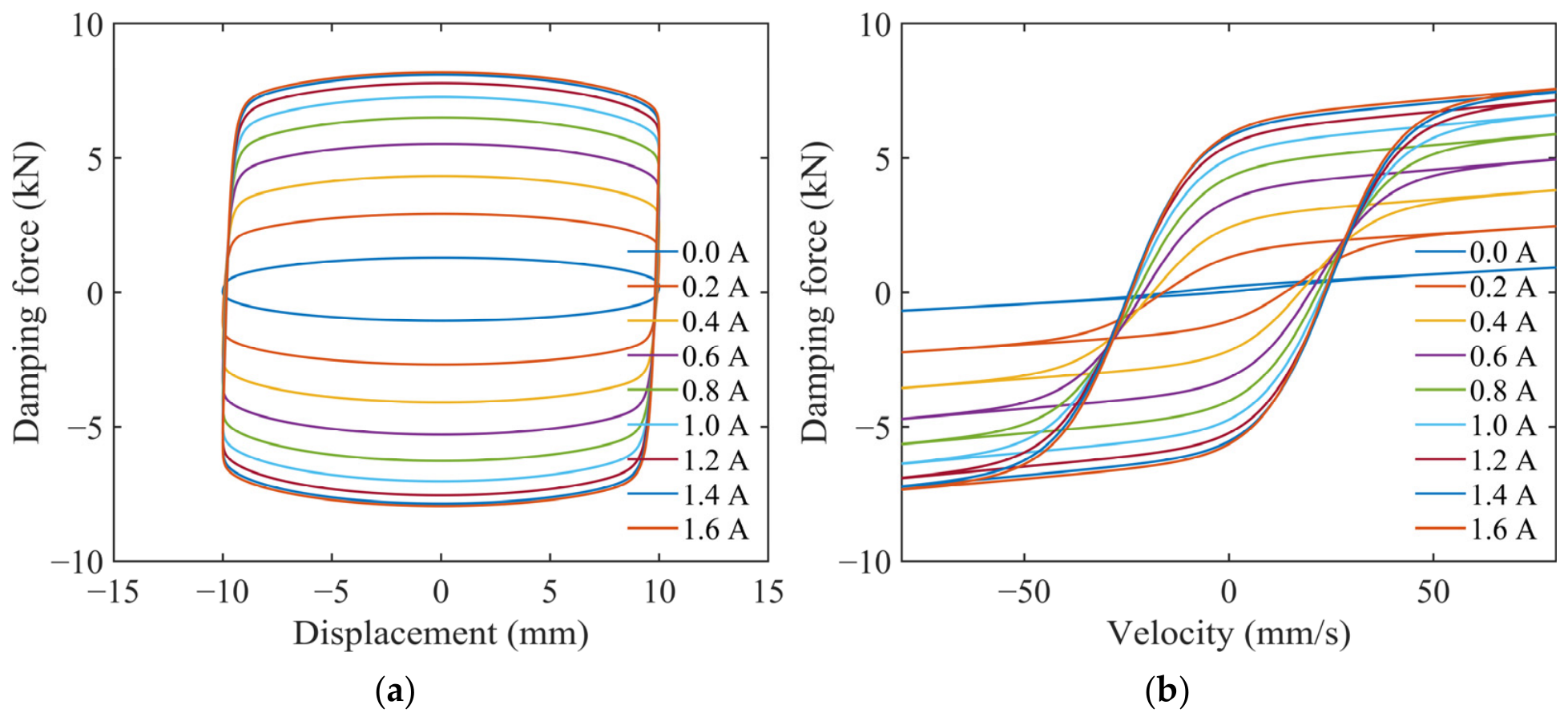
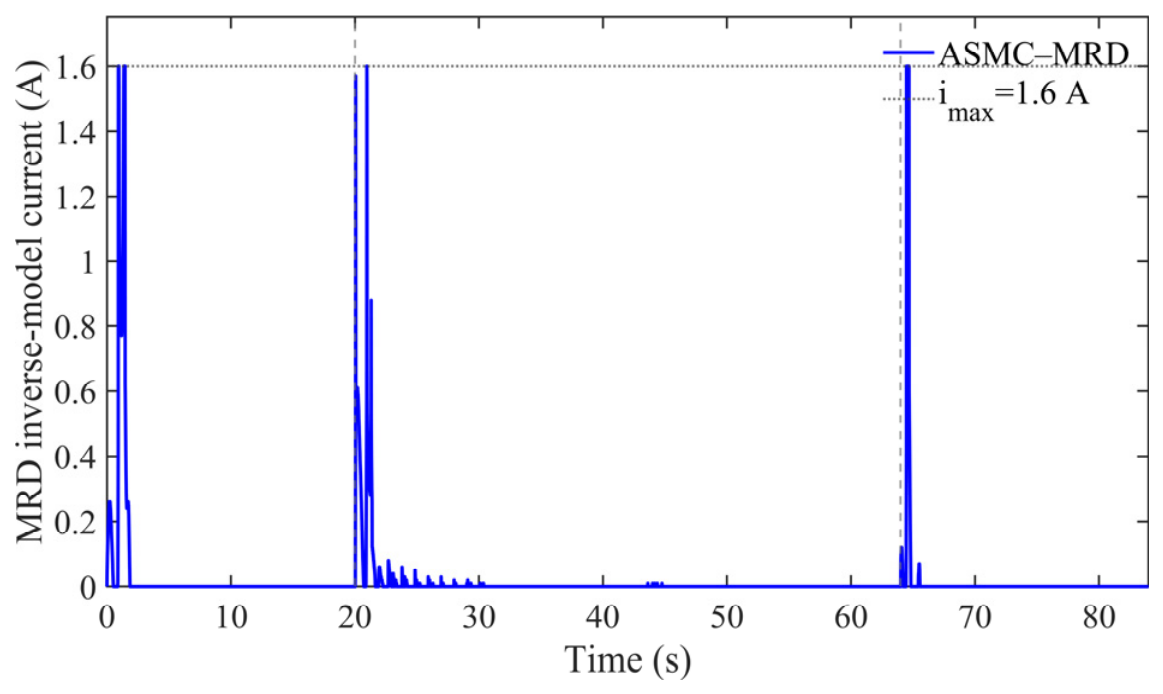
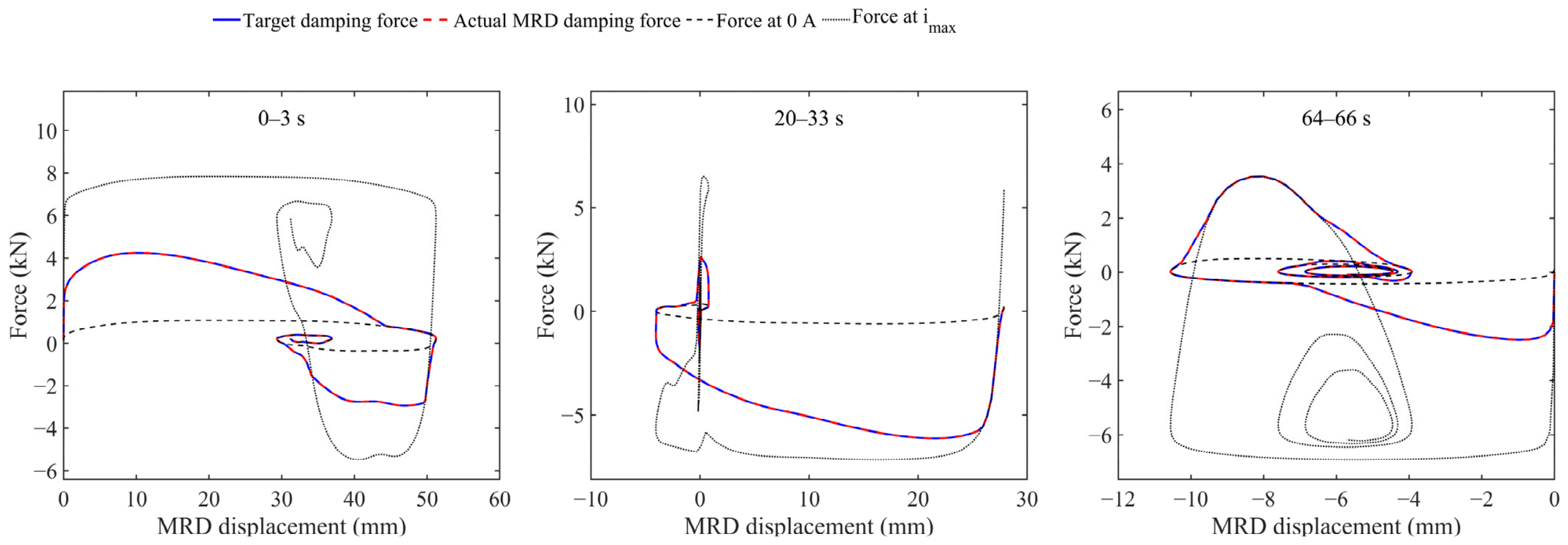
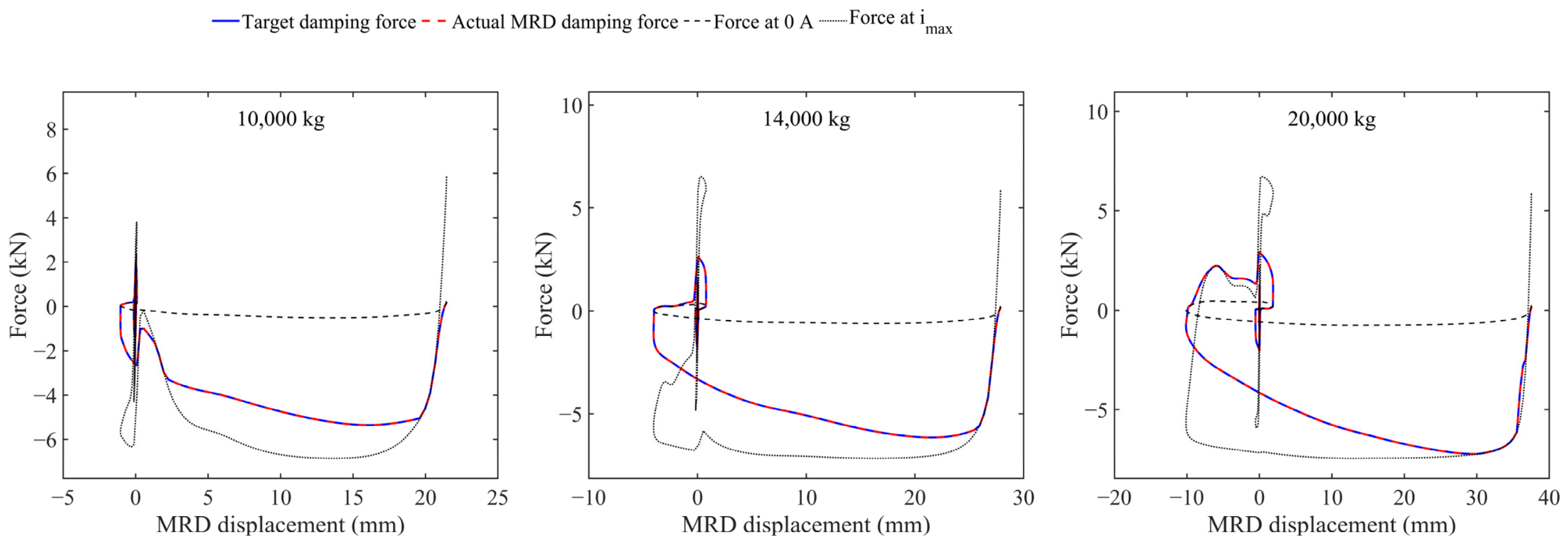
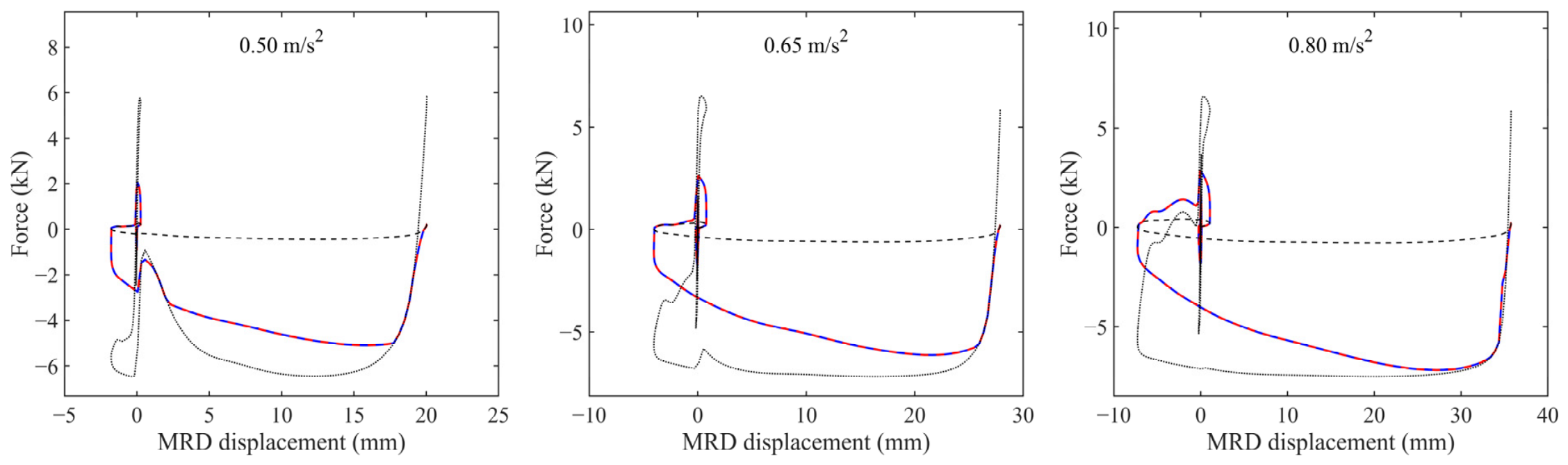
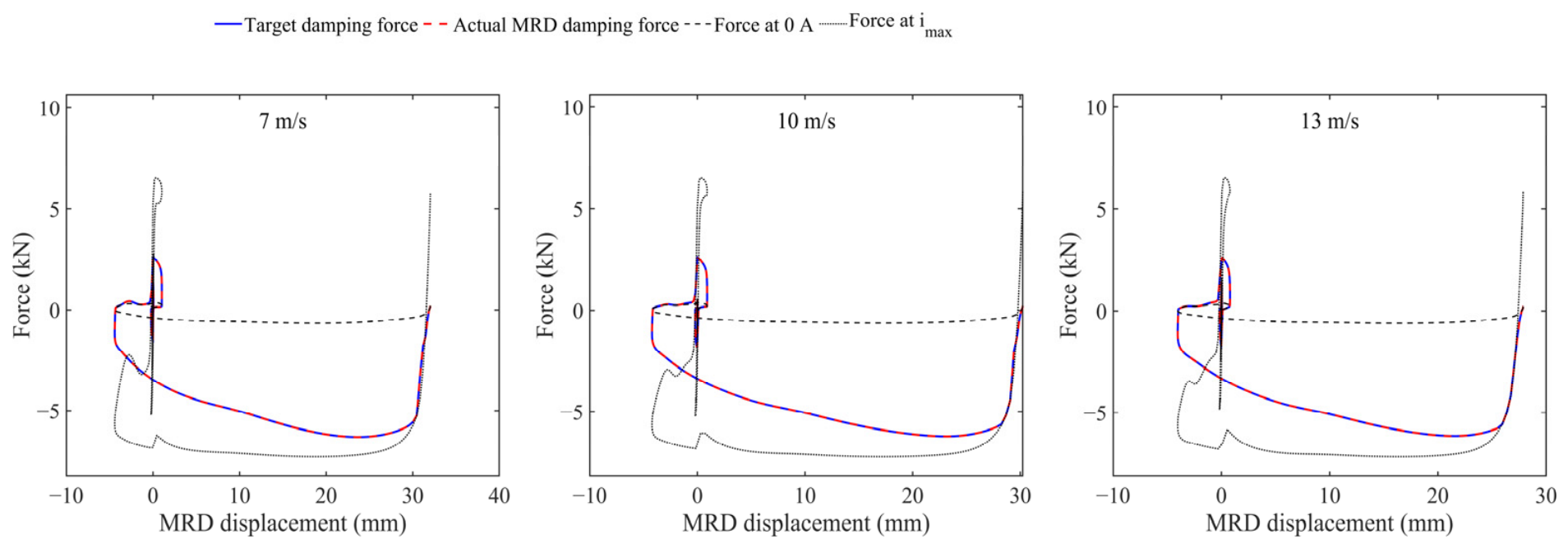
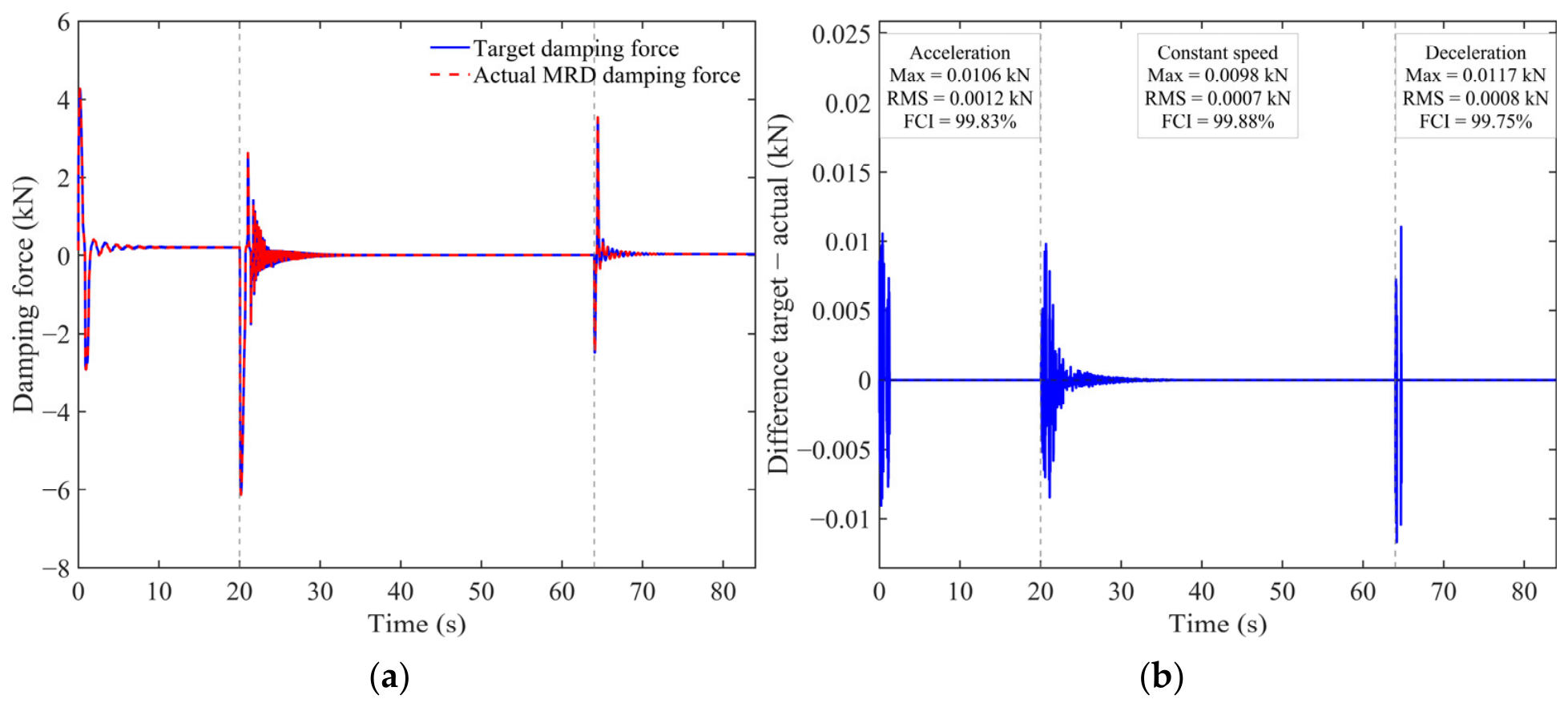
- The force–displacement and force–tracking characteristics of the MRD are analyzed to verify the semi-active force-realization capability under different operating conditions.
2. Mathematical Model
2.1. Dynamic Model of the MRD
2.2. Dynamic Model of the MRD-Equipped Hoisting System
3. Design of an Output-Feedback Adaptive Sliding-Mode Controller
3.1. Control-Oriented Dynamic Model and Sliding Surface
3.2. Output-Feedback Approximation and Lumped Uncertainty
3.3. Output-Feedback ASMC Law
3.4. Controller Implementation and Parameter Tuning
4. Results and Discussion
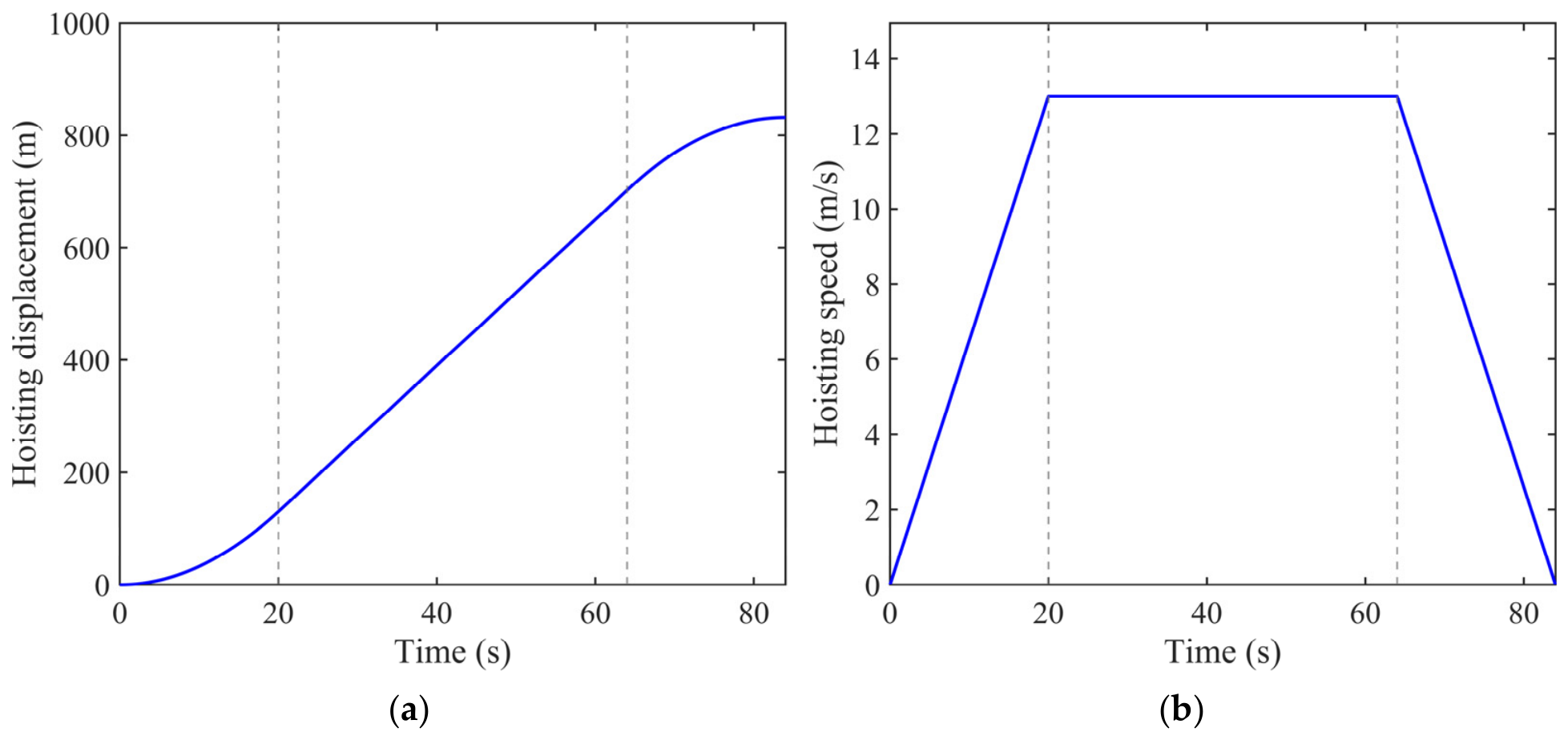
4.1. Simulation Parameters and Operating Conditions
4.2. Mechanical Characteristics of the MRD
4.3. Vibration-Suppression Performance of the ASMC–MRD Strategy
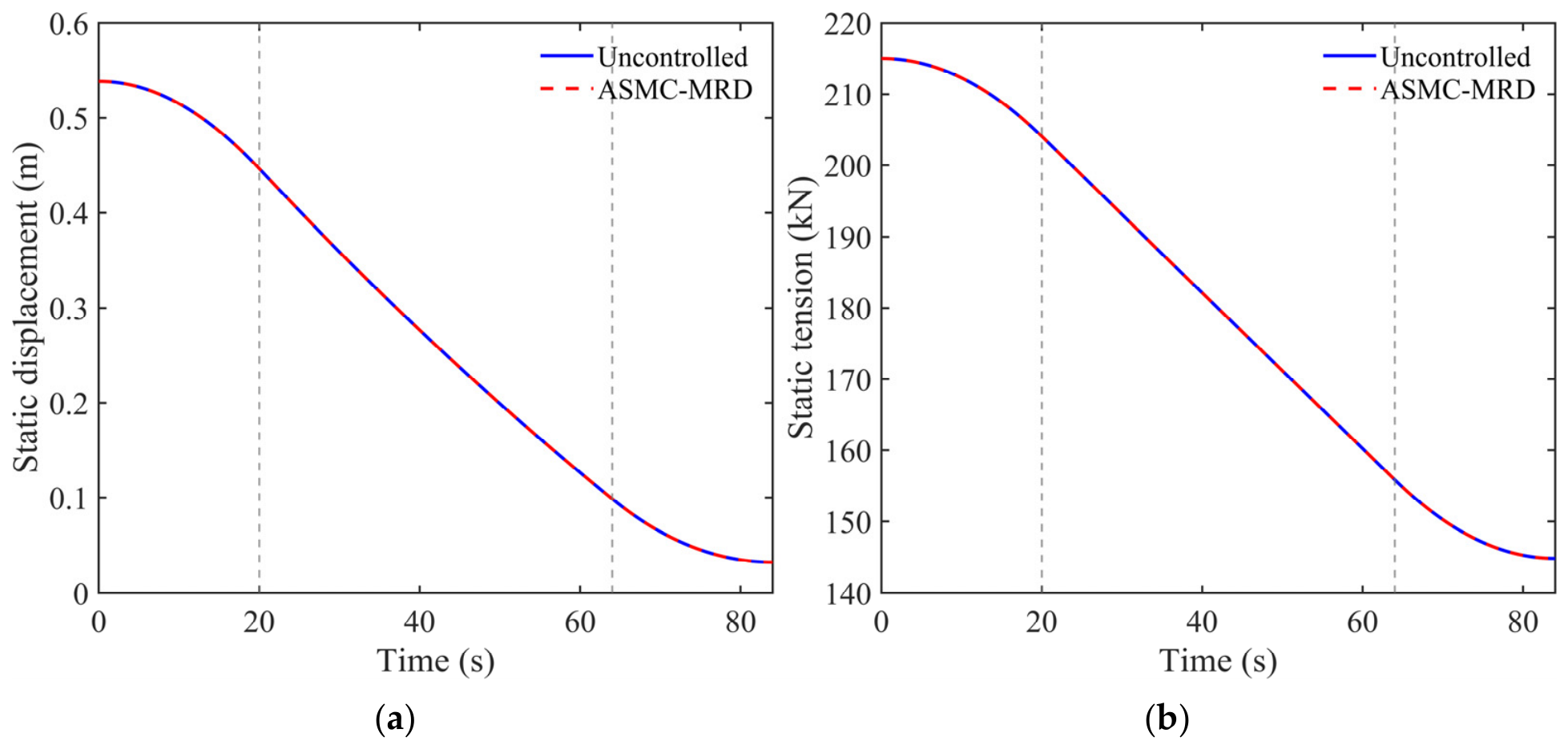
4.3.1. Static Equilibrium Components of the Hoisting Rope
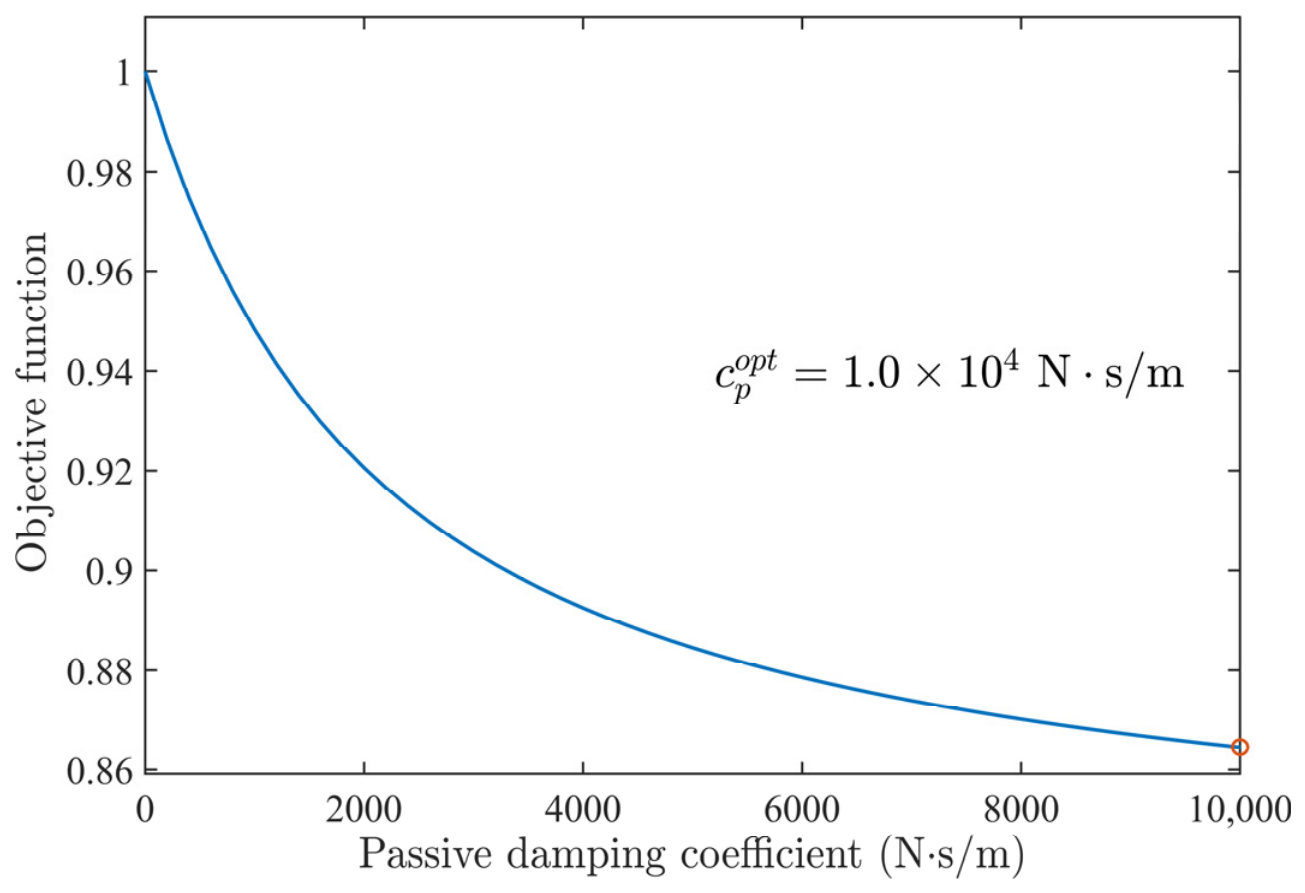
4.3.2. Optimized Passive Viscous Damper Benchmark
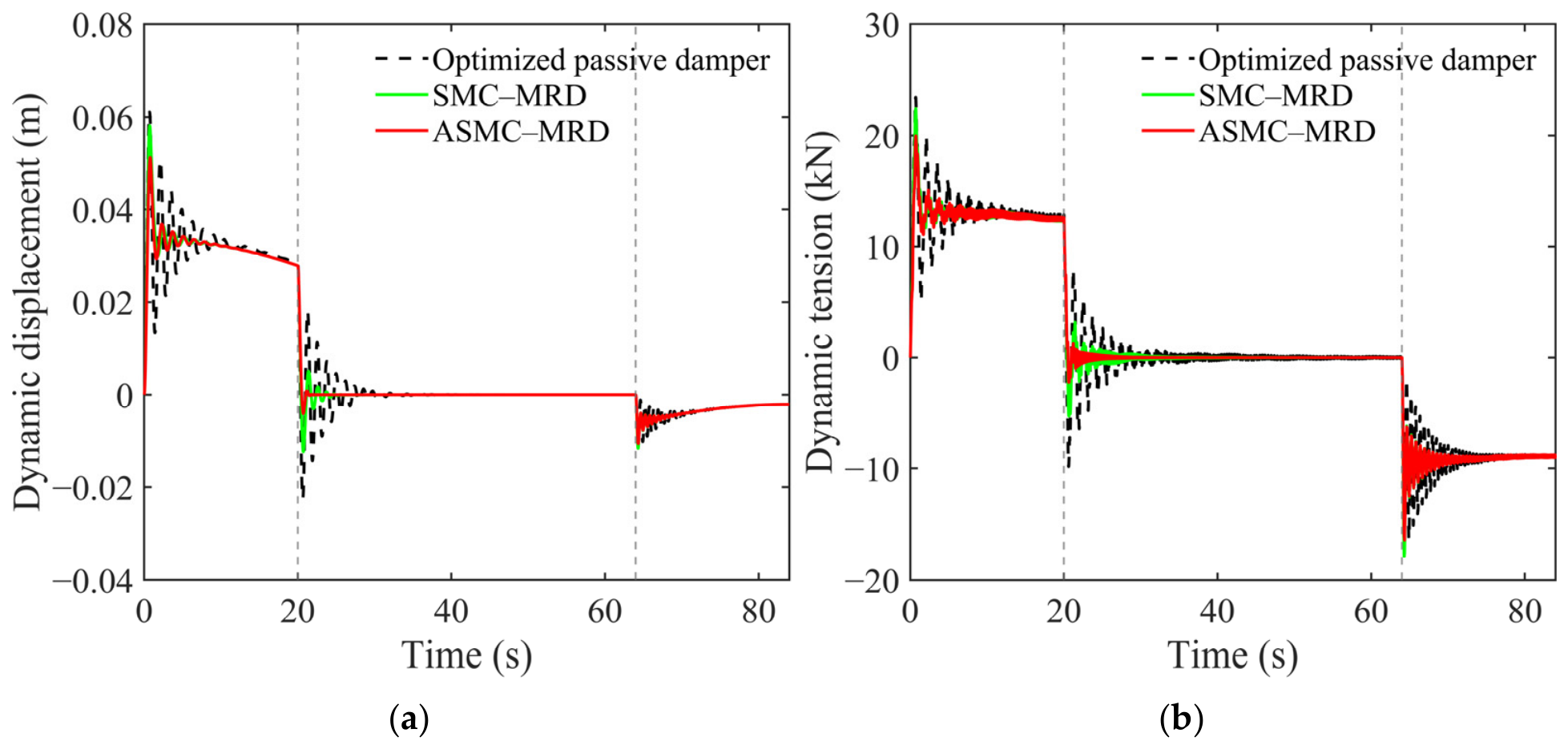
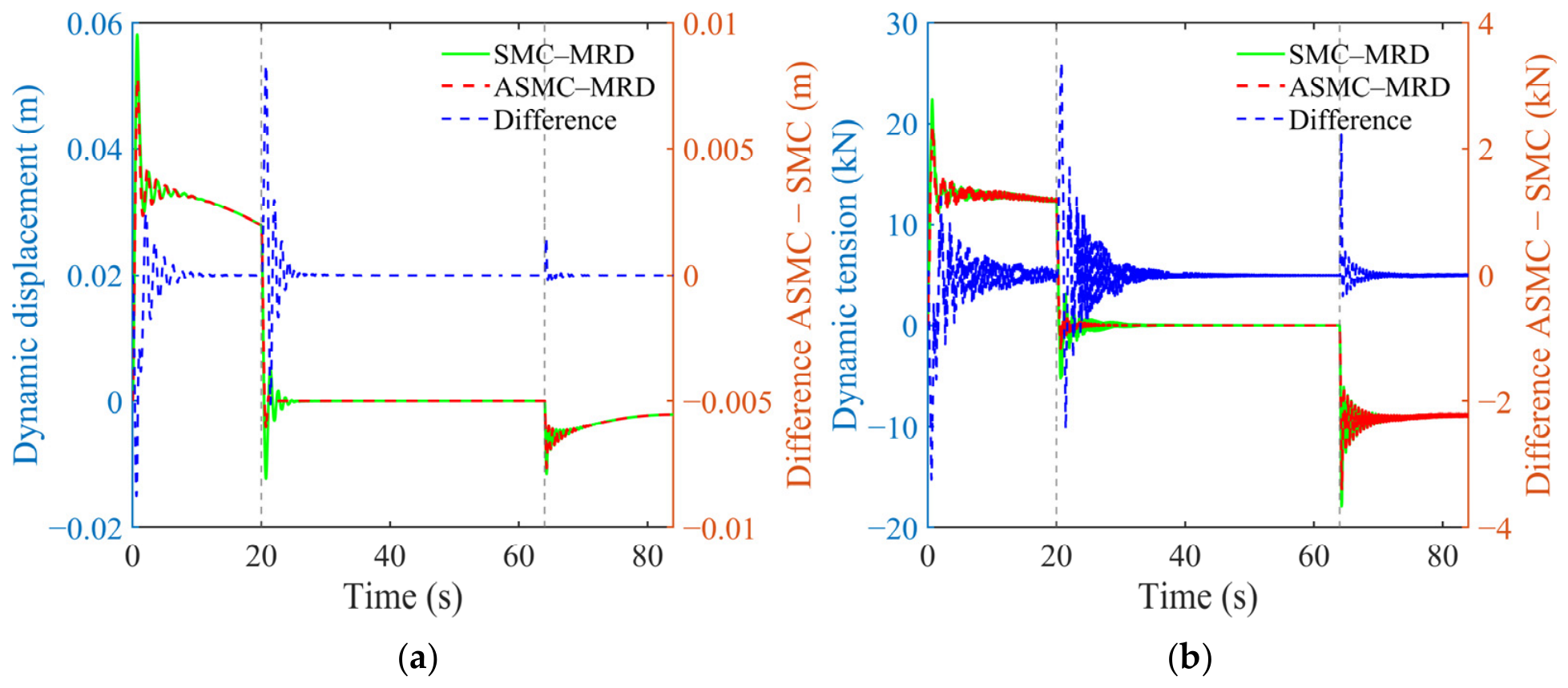
4.3.3. Dynamic Vibration-Suppression Performance Relative to the Passive Benchmark
4.3.4. Real-Time Current Regulation and Force-Tracking Performance of the MRD
4.4. Robustness Evaluation Under Variable Operating Conditions
4.4.1. Robustness to Payload Variations
4.4.2. Robustness to Acceleration Variations
4.4.3. Robustness to Hoisting Speed Variations
4.4.4. Overall Robustness Under Varying Operating Conditions
5. Conclusions
- An output-feedback ASMC was developed using only the measured displacement and velocity at the conveyance–rope connection. The proposed controller determines the desired control force, while the inverse MRD model generates the corresponding feasible current command. The σ-modified adaptive law compensates online for the equivalent matched lumped disturbance, and the continuous boundary-layer function reduces chattering. The force–tracking and force–displacement results show that the target damping force can be realized accurately within the attainable semi-active force boundaries of the MRD.
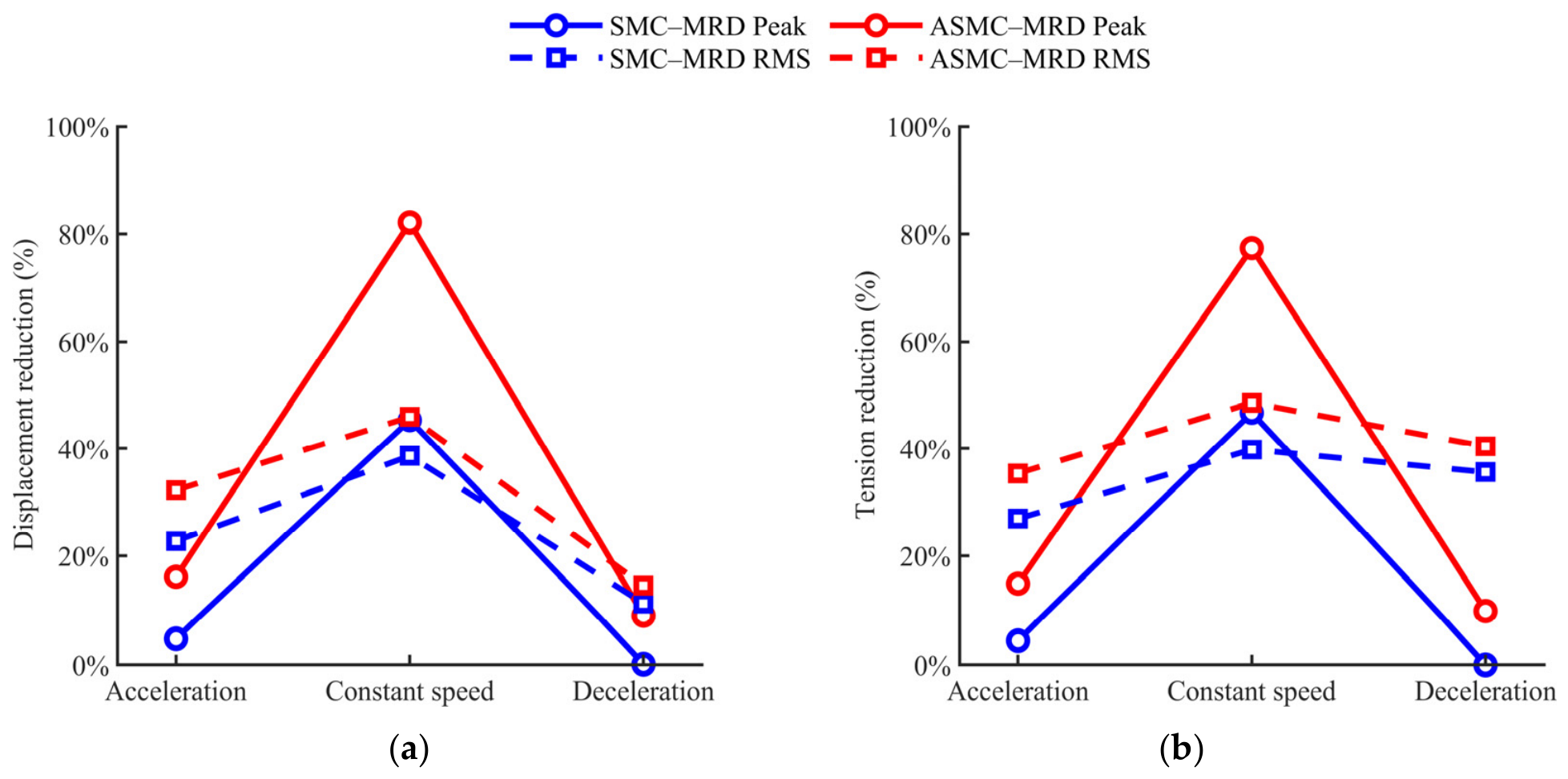
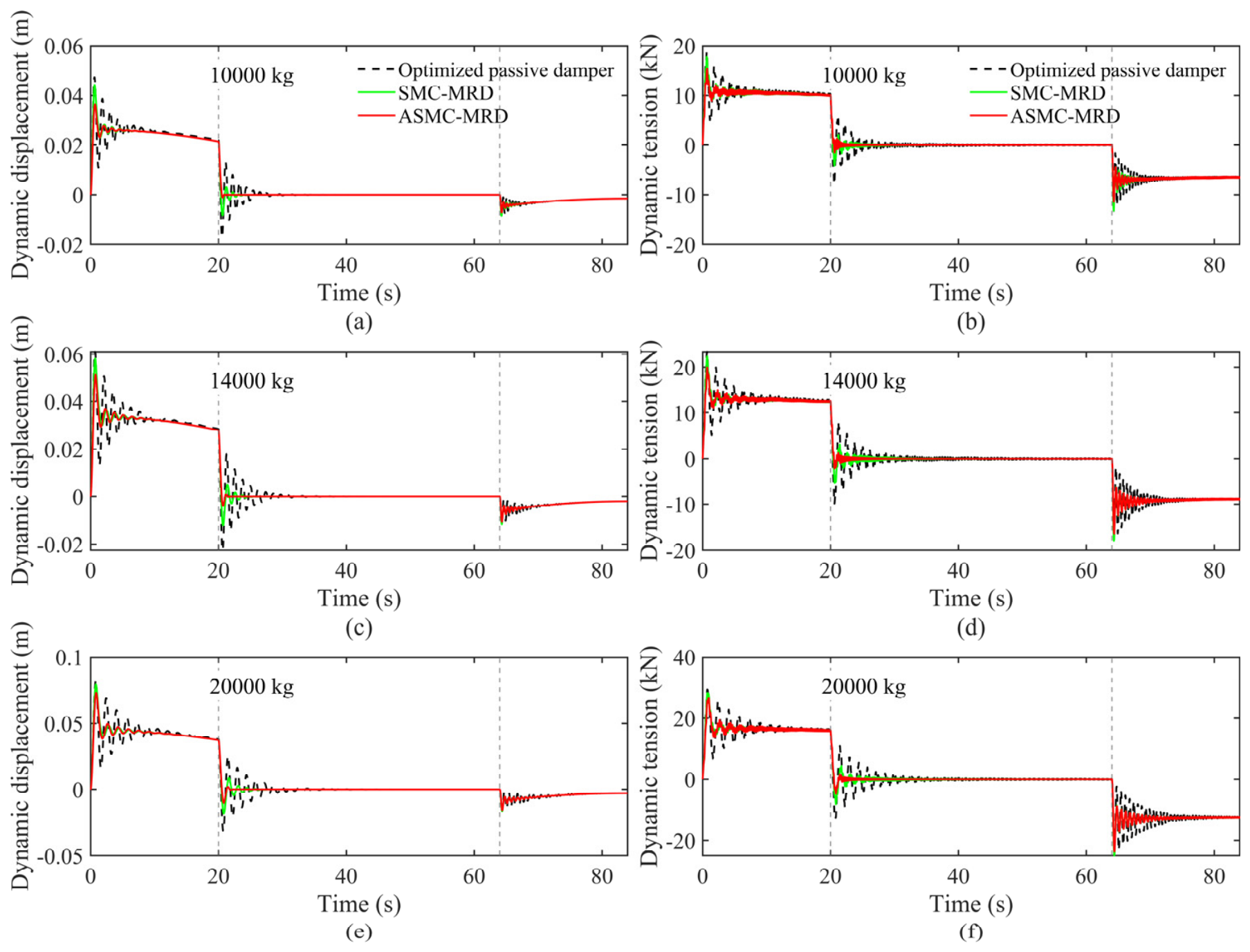
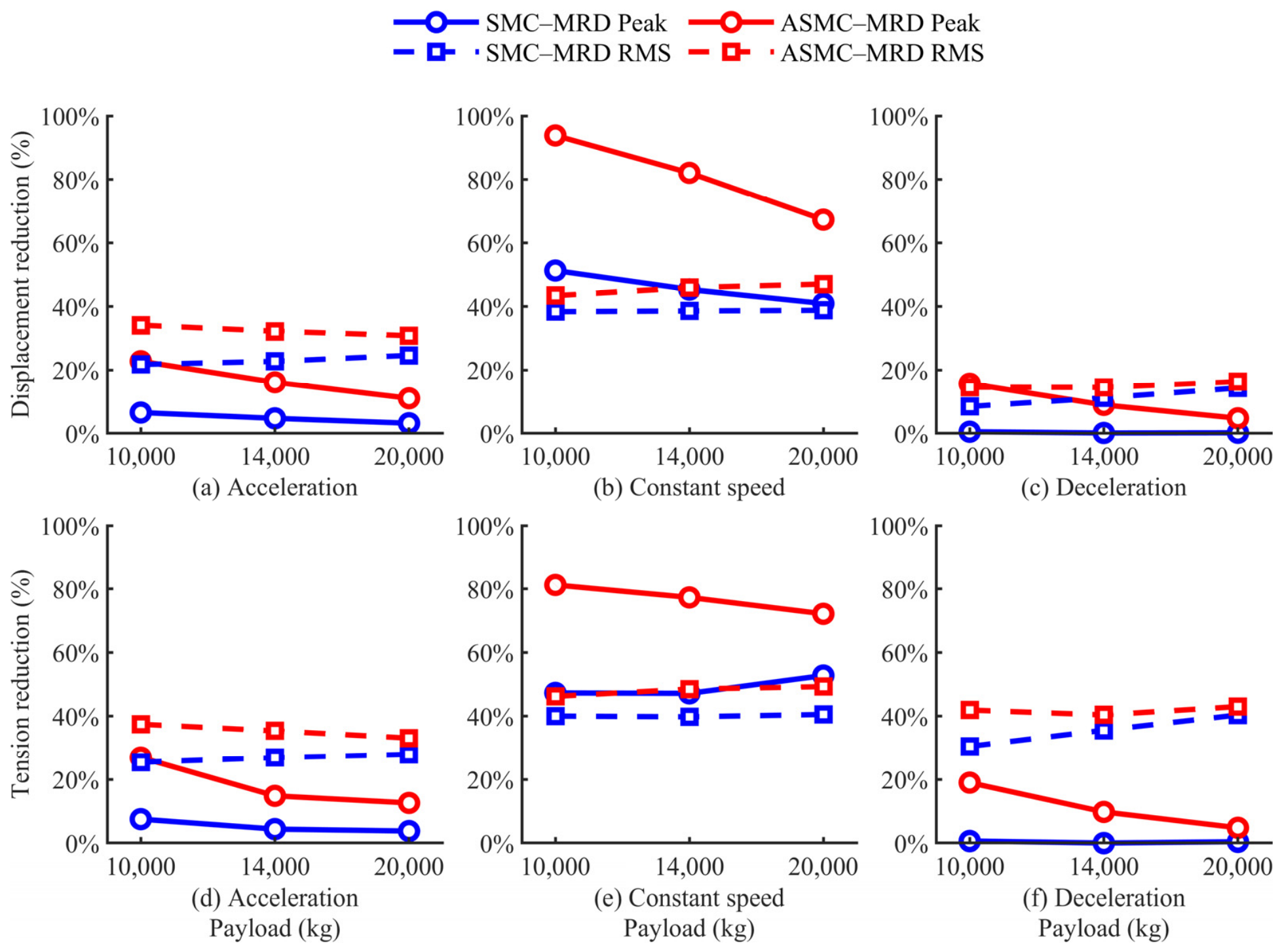
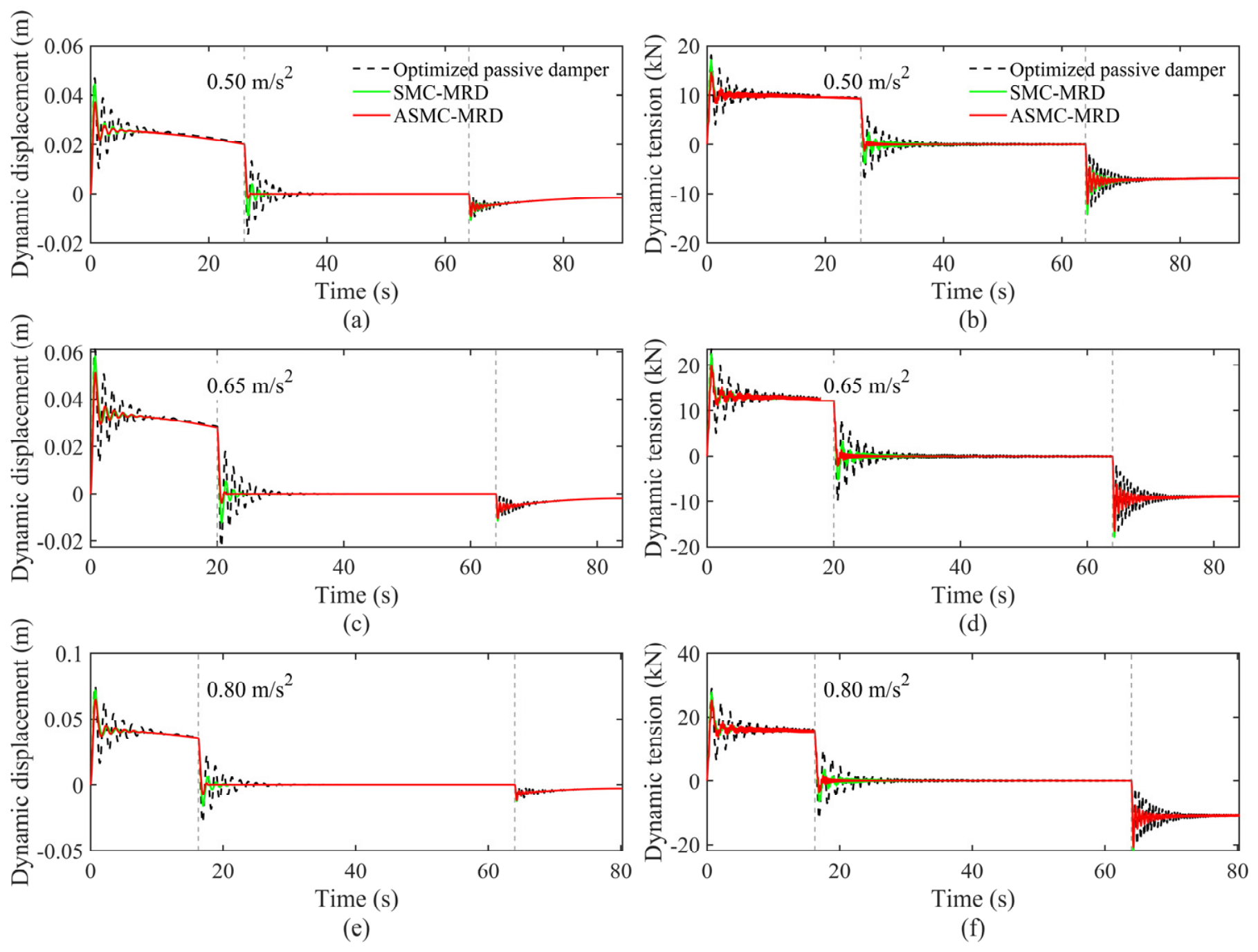
- An optimized passive viscous damper was introduced as the benchmark. Its damping coefficient was selected by minimizing a normalized RMS-based objective function within the prescribed admissible range, and the obtained passive damping coefficient was kept fixed in all subsequent simulations. Relative to this passive benchmark, both SMC–MRD and ASMC–MRD further reduce the dynamic displacement and dynamic tension responses. The advantage of ASMC–MRD is most evident in transient peak suppression and in RMS vibration attenuation, whereas the optimized passive damper can provide comparable tension-peak reduction in some intervals because its damping coefficient is already optimized for the nominal condition.
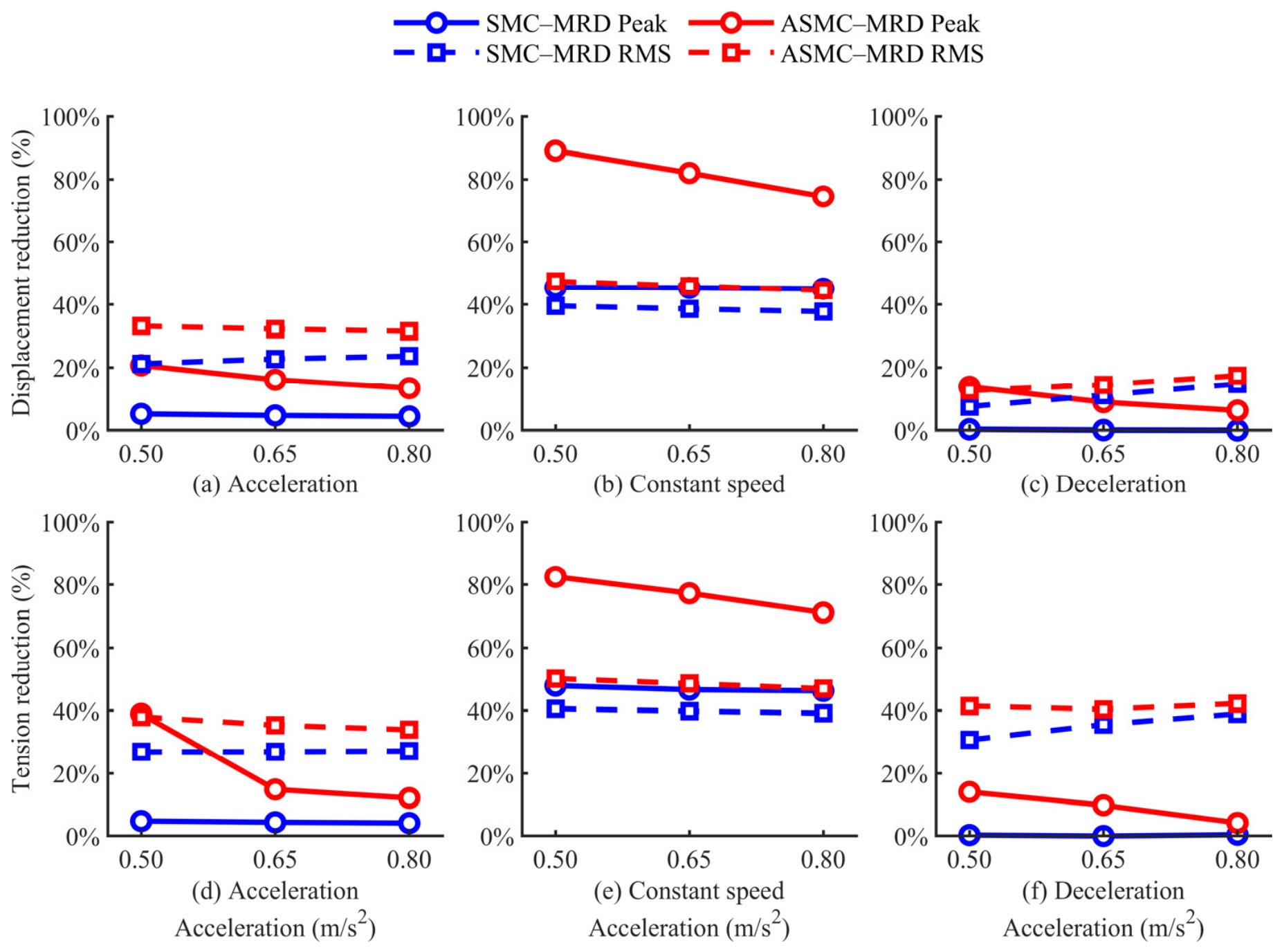
- Robustness simulations under variations in payload, acceleration, and hoisting speed demonstrate that the proposed ASMC–MRD strategy maintains effective vibration attenuation under changing operating conditions. Compared with SMC–MRD, ASMC–MRD provides improved reduction in peak displacement and peak tension responses, indicating stronger adaptability to transient excitations and variable operating parameters. These findings support the potential of MRD-based semi-active control as a compact and low-power approach for improving the operational smoothness and safety of mine hoisting systems.
Author Contributions
Funding
Institutional Review Board Statement
Informed Consent Statement
Data Availability Statement
Acknowledgments
Conflicts of Interest
Abbreviations
| MRD | Magnetorheological Damper |
| SMC | Sliding-Mode Control |
| ASMC | Adaptive Sliding-Mode Control |
| PDE | Partial Differential Equation |
| ODE | Ordinary Differential Equation |
| RMS | Root Mean Square |
| SEHTFM | Simplified Extended Hyperbolic Tangent Function Model |
| FCI | Force Consistency Index |
References
- González-Carbajal, J. An analytical model for the drum-rope interaction in hoisting mechanisms and cable-driven systems. Mech. Mach. Theory 2025, 207, 105939. [Google Scholar] [CrossRef]
- Wang, Y.; Chen, Z. Three-Dimensional dynamic modelling and analysis of a Dual-Cable winding hoisting system. Int. J. Struct. Stab. Dyn. 2024, 24, 2450178. [Google Scholar] [CrossRef]
- Zhou, B.; Hu, Y.; Zhu, H. Dynamic simulation and experimental investigation of the double-rope winding hoister based on an equivalent mechanical model of wire ropes. Structures 2024, 69, 107237. [Google Scholar] [CrossRef]
- Zhang, N.; Cao, G.; Zhu, Z.; Wang, K.; Yan, L. Nonlinear dynamics of time-varying curvature balance rope coupled with time-varying length hoisting rope in friction hoisting system. J. Sound Vib. 2023, 567, 117910. [Google Scholar] [CrossRef]
- Wang, J.; Koga, S.; Pi, Y.; Krstic, M. Axial vibration suppression in a partial differential equation model of ascending mining cable elevator. J. Dyn. Syst. Meas. Control 2018, 140, 111003. [Google Scholar] [CrossRef]
- Wang, J.; Krstic, M.; Pi, Y. Control of a 2 × 2 coupled linear hyperbolic system sandwiched between 2 ODEs. Int. J. Robust Nonlinear Control 2018, 28, 3987–4016. [Google Scholar] [CrossRef]
- Wang, J.; Tang, S.; Pi, Y.; Krstic, M. Exponential regulation of the anti-collocatedly disturbed cage in a wave PDE-modeled ascending cable elevator. Automatica 2018, 95, 122–136. [Google Scholar] [CrossRef]
- Wang, J.; Pi, Y.; Krstic, M. Balancing and suppression of oscillations of tension and cage in dual-cable mining elevators. Automatica 2018, 98, 223–238. [Google Scholar] [CrossRef]
- Wang, J.; Pi, Y.; Hu, Y.; Zhu, Z. State-observer design of a PDE-modeled mining cable elevator with time-varying sensor delays. IEEE Trans. Control Syst. Technol. 2020, 28, 1149–1157. [Google Scholar] [CrossRef]
- Li, X.; Zhu, Z.; Shen, G. A switching-type controller for wire rope tension coordination of electro-hydraulic-controlled double-rope winding hoisting systems. Proc. Inst. Mech. Eng. Part I 2016, 230, 1126–1144. [Google Scholar] [CrossRef]
- Zhu, Z.; Li, X.; Shen, G.; Zhu, W. Wire rope tension control of hoisting systems using a robust nonlinear adaptive backstepping control scheme. ISA Trans. 2018, 72, 256–272. [Google Scholar] [CrossRef] [PubMed]
- Chen, X.; Zhu, Z.; Li, W.; Shen, G. Fault-tolerant control of double-rope winding hoists combining neural-based adaptive technique and iterative learning method. IEEE Access 2019, 7, 50476–50491. [Google Scholar] [CrossRef]
- Ding, X.; Shen, G.; Tang, Y.; Li, X. Axial vibration suppression of wire-ropes and container in double-rope mining hoists with adaptive robust boundary control. Mechatronics 2022, 85, 102817. [Google Scholar] [CrossRef]
- Ding, X.; Yin, S.; Li, X. Adaptive robust boundary control strategy for tension balance of steel wire rope in double rope winding hoisting system. Eur. J. Control 2025, 86, 101376. [Google Scholar] [CrossRef]
- Zhu, W.; Chen, Y. Theoretical and experimental investigation of elevator cable dynamics and control. J. Vib. Acoust. 2006, 128, 66–78. [Google Scholar] [CrossRef]
- Benosman, M. Lyapunov-based control of the sway dynamics for elevator ropes. IEEE Trans. Control Syst. Technol. 2014, 22, 1855–1863. [Google Scholar] [CrossRef]
- Benosman, M.; Fukui, D. Lyapunov-based control of the sway dynamics for elevator ropes. In Proceedings of the American Control Conference, Portland, OR, USA, 4–6 June 2014; pp. 329–334. [Google Scholar]
- Benosman, M. Lyapunov-based control of the sway dynamics for elevator ropes with time-varying lengths. In Proceedings of the 19th World Congress of the International Federation of Automatic Control, Cape Town, South Africa, 24–29 August 2014; pp. 5592–5597. [Google Scholar]
- Knezevic, B.Z.; Blanusa, B.; Marcetic, D.P. A synergistic method for vibration suppression of an elevator mechatronic system. J. Sound Vib. 2017, 406, 29–50. [Google Scholar] [CrossRef]
- Santo, D.R.; Balthazar, J.M.; Tusset, A.M.; Piccirilo, V.; Brasil, R.; Silveira, M. On nonlinear horizontal dynamics and vibrations control for high-speed elevators. J. Vib. Control 2018, 24, 825–838. [Google Scholar] [CrossRef]
- Nguyen, X.T.; Bui, H.A.; Ly, H.H.; Tran, L.H.; Mac, T.T. Active control for simultaneous vibration reduction of ropes in high-rise elevator systems under seismic excitation. Nonlinear Dyn. 2026, 114, 107. [Google Scholar] [CrossRef]
- Nguyen, X.T.; Bui, H.A.; Nguyen, D.T.; Ly, H.H.; Mac, T.T. Development of a controller for rope vibration in a building-induced cable-guided hoisting system under seismic excitation. Earthq. Eng. Struct. Dyn. 2026, 55, 46–60. [Google Scholar] [CrossRef]
- Tian, Z.; He, H.; Zhou, Y. Modeling and numerical computation of the longitudinal non-linear dynamics of high-speed elevators. Appl. Sci. 2024, 14, 1821. [Google Scholar] [CrossRef]
- Huang, H.W.; Sun, L.M. Control performance assessment of cable-MR damper system based on pole assignment theory. Structures 2022, 44, 785–795. [Google Scholar] [CrossRef]
- Javanbakht, M.; Cheng, S.; Ghrib, F. Semi-active adaptive control of stay cable vibrations using MR dampers. Struct. Control Health Monit. 2022, 29, e3121. [Google Scholar] [CrossRef]
- Du, J.; Liu, M.; Zhou, P.; Xiao, H. Semiactive Control of Nonlinear Parametric Vibration of Super-Long Stay Cable in Cable-Stayed Bridge Installed with Magnetorheological Fluid Damper. Struct. Control Health Monit. 2024, 2024, 2161065. [Google Scholar] [CrossRef]
- Zhang, E.; Xiang, S.; Cheng, B.; Li, D. Intelligent vibration control of tensile cable based on deep reinforcement learning. Adv. Struct. Eng. 2025, 28, 736–752. [Google Scholar] [CrossRef]
- Li, Z.; Xiang, X.; Wu, T. Long short-term memory-enhanced semi-active control of cable vibrations with a magnetorheological damper. Front. Struct. Civ. Eng. 2025, 19, 163–179. [Google Scholar] [CrossRef]
- Yang, Y.; Liu, C.; Chen, L.; Zhang, X. Phase deviation of semi-active suspension control and its compensation with inertial suspension. Acta Mech. Sin. 2024, 40, 523367. [Google Scholar] [CrossRef]
- Rodríguez-Torres, A.; Morales-Valdez, J.; Yu, W. Semi-active vibration control via a magnetorheological damper and active disturbance rejection control. J. Vib. Control 2025, 47, 2285–2298. [Google Scholar] [CrossRef]
- Gonçalves, M.; Fuziki, M.E.K.; Balthazar, J.M.; Tusset, A.M. Semi-active vibration control for high-speed elevator using magnetorheological damper. Magnetism 2025, 5, 13. [Google Scholar] [CrossRef]
- Zong, L. Magnetorheological Dampers: Dynamic Models and Application in Vehicle Suspensions. Ph.D. Thesis, University of Science and Technology of China, Hefei, China, 2013. [Google Scholar]
- Miah, M.S.; Chatzi, E.N.; Dertimanis, V.K.; Weber, F. Nonlinear Modeling of a Rotational MR Damper via an Enhanced Bouc-Wen Model. Smart Mater. Struct. 2015, 24, 105020. [Google Scholar] [CrossRef]
- Chen, L.Q.; Zhang, N.H.; Zu, J.W. The regular and chaotic vibrations of an axially moving viscoelastic string based on fourth-order Galerkin truncation. J. Sound Vib. 2003, 261, 764–773. [Google Scholar] [CrossRef]
- Liu, Y.; Ding, N.; Kao, Y.; Zhang, C. Delta operator SMVSC for T-type three-level inverter system. IEEE J. Emerg. Sel. Top. Power Electron. 2025, 13, 162–173. [Google Scholar] [CrossRef]
- Liu, Y.; Zhang, Y.; Kao, Y.; Gao, Z. Sliding mode control for Delta operator sampled systems. IEEE Trans. Autom. Sci. Eng. 2025, 22, 8006–8017. [Google Scholar] [CrossRef]
- Kaczmarczyk, S.; Ostachowicz, W. Transient vibration phenomena in deep mine hoisting cables. Part 2: Numerical simulation of the dynamic response. J. Sound Vib. 2003, 262, 245–289. [Google Scholar] [CrossRef]
- Wang, J.; van Horssen, W.T. On resonances and transverse and longitudinal oscillations in elevator suspension systems with large initial sag. Nonlinear Dyn. 2023, 111, 2215–2238. [Google Scholar] [CrossRef]





| Parameters | Value | Parameters | Value |
|---|---|---|---|
| Rh (m) | 2.45 | m (kg) | 14,000 |
| Ih (kg/m2) | 1.5 × 10⁴ | ρ (kg/m) | 8.6 |
| EA (N) | 2.96 × 10⁸ | ch | 0.5 |
| md (kg) | 200 | g (m/s2) | 9.8 |
| Parameters | Value | Parameters | Value |
|---|---|---|---|
| dm0 (N) | 221.0 | cm0 (N·s/mm) | 7.285 |
| dm1 (N/A) | 7512.1 | cm1 (A−1) | 1.279 |
| dm2 (N/A2) | −2223 | cm2 (A−2) | −0.4 |
| am0 | −0.940 | cm3 | −0.977 |
| am1 (s/mm) | 5.296 | cm4 (N·s/mm) | 911.6 |
| bme | 0.2362 | fm0 (N) | 110 |
| Operating Phase | Control Strategy | Peak Disp. (mm) | RMS Disp. (mm) | Disp. Reduction, Peak/RMS (%) | Peak Tension (kN) | RMS Tension (kN) | Tension Reduction, Peak/RMS (%) |
|---|---|---|---|---|---|---|---|
| Acceleration | Passive | 61.07 | 6.79 | — | 23.45 | 2.34 | — |
| SMC–MRD | 58.18 | 5.25 | 4.74/22.75 | 22.42 | 1.71 | 4.38/26.93 | |
| ASMC–MRD | 51.22 | 4.60 | 16.12/32.25 | 19.97 | 1.51 | 14.85/35.37 | |
| Constant speed | Passive | 22.56 | 3.63 | — | 9.85 | 1.53 | — |
| SMC–MRD | 12.33 | 2.23 | 45.33/38.62 | 5.25 | 0.92 | 46.70/39.82 | |
| ASMC–MRD | 4.04 | 1.96 | 82.08/45.92 | 2.23 | 0.78 | 77.36/49.02 | |
| Deceleration | Passive | 11.61 | 1.64 | — | 18.11 | 1.78 | — |
| SMC–MRD | 11.59 | 1.46 | 0.13/11.21 | 17.89 | 1.15 | 1.21/35.58 | |
| ASMC–MRD | 10.56 | 1.41 | 8.97/14.5 | 16.42 | 1.06 | 9.33/40.45 |
Disclaimer/Publisher’s Note: The statements, opinions and data contained in all publications are solely those of the individual author(s) and contributor(s) and not of MDPI and/or the editor(s). MDPI and/or the editor(s) disclaim responsibility for any injury to people or property resulting from any ideas, methods, instructions or products referred to in the content. |
© 2026 by the authors. Licensee MDPI, Basel, Switzerland. This article is an open access article distributed under the terms and conditions of the Creative Commons Attribution (CC BY) license.
Share and Cite
Wang, G.; Li, D.; Ma, C.; Chen, W. Semi-Active Suppression of Longitudinal Vibration in Mine Hoisting Ropes Using Magnetorheological Damper and Output-Feedback Adaptive Sliding-Mode Control. Actuators 2026, 15, 370. https://doi.org/10.3390/act15070370
Wang G, Li D, Ma C, Chen W. Semi-Active Suppression of Longitudinal Vibration in Mine Hoisting Ropes Using Magnetorheological Damper and Output-Feedback Adaptive Sliding-Mode Control. Actuators. 2026; 15(7):370. https://doi.org/10.3390/act15070370
Chicago/Turabian StyleWang, Guoying, Dongyue Li, Chi Ma, and Wanqiang Chen. 2026. "Semi-Active Suppression of Longitudinal Vibration in Mine Hoisting Ropes Using Magnetorheological Damper and Output-Feedback Adaptive Sliding-Mode Control" Actuators 15, no. 7: 370. https://doi.org/10.3390/act15070370
APA StyleWang, G., Li, D., Ma, C., & Chen, W. (2026). Semi-Active Suppression of Longitudinal Vibration in Mine Hoisting Ropes Using Magnetorheological Damper and Output-Feedback Adaptive Sliding-Mode Control. Actuators, 15(7), 370. https://doi.org/10.3390/act15070370