1. Introduction
Assistive robotic technologies have gained significant attention in recent years as promising solutions for improving mobility and rehabilitation outcomes in patients with neurological impairments. Among these conditions, cerebral palsy and related motor disorders frequently result in monoplegia, a condition characterized by impaired control of a single limb, often affecting gait and overall functional independence [
1]. Conventional rehabilitation approaches primarily rely on physiotherapy and orthotic aids; however, these methods may be limited in their ability to provide continuous, adaptive, and personalized assistance [
2]. In this context, wearable lower-limb exoskeletons have emerged as an effective means of supporting locomotion and enhancing motor recovery through repetitive and controlled movement patterns [
3,
4,
5].
Current research in lower-limb exoskeletons includes a wide range of control strategies, from model-based approaches to data-driven techniques such as machine learning and artificial intelligence [
6]. In particular, neuro-fuzzy systems, such as Adaptive Neuro-Fuzzy Inference Systems (ANFIS), have demonstrated strong capability in modeling complex nonlinear relationships while maintaining interpretability through fuzzy rules [
7]. Despite these advances, several challenges remain, including the high cost of commercial systems, the complexity of control algorithms, and the difficulty of achieving intuitive human–robot interaction [
8,
9]. In addition, while some studies focus on sensor-driven control, there is ongoing debate regarding the most effective sensing modalities and control architectures for reliable and adaptive assistance during gait [
10]. While motion mirroring and adaptive control strategies have been previously explored, there remains a lack of systems that effectively combine minimal sensing, data-driven control, and low-cost embedded implementation within a unified wearable platform, particularly for monoplegia-oriented rehabilitation.
To address these challenges, this study proposes a wearable lower-limb exoskeleton incorporating a sensor-driven neuro-fuzzy control framework for the development of a wearable assistive system targeting motion support in monoplegia conditions. The system captures motion data from the user’s healthy limb using flex sensors and employs an ANFIS-based model to generate control signals for actuating the impaired limb. The mechanical design integrates 3D-printed structures with high-torque actuation, while control is implemented using a low-cost embedded platform. The main objective is to develop a practical and accessible system capable of reproducing basic motion patterns through a data-driven approach.
It should be noted that the present study focuses on system-level validation and proof-of-concept implementation rather than clinical evaluation. The results demonstrate that the proposed system can successfully map human motion data to actuator response and reproduce representative movement patterns under different conditions. These findings support the feasibility of combining low-cost sensing, neuro-fuzzy modeling, and embedded control in wearable rehabilitation devices, while also highlighting areas for further improvement in sensing accuracy, ergonomics, and system robustness.
This paper presents the design, development, and experimental evaluation of a wearable lower-limb exoskeleton for monoplegia rehabilitation, integrating sensor-based motion acquisition with a neuro-fuzzy control framework. The proposed system utilizes bend flex sensors placed on the healthy limb to capture motion patterns, which are processed through an ANFIS to generate control signals for actuating the impaired limb via an Arduino-based embedded platform. The mechanical structure is realized using 3D-printed components combined with high-torque actuation to ensure functional support and reproducibility. The key contributions of this work can be outlined as follows:
The development of a sensor-minimal motion mirroring framework that relies exclusively on flex sensors, enabling intuitive human-in-the-loop control while reducing sensing complexity compared with multimodal approaches.
The formulation of a data-driven ANFIS-based mapping strategy, which directly learns the relationship between healthy-limb motion and actuator commands without requiring predefined trajectories or explicit biomechanical modeling.
The implementation of an integrated embedded control architecture, where the trained ANFIS model is coupled with real-time sensing and actuation on a low-cost Arduino-based platform.
The co-design of mechanical structure and control strategy, focusing on function-oriented actuation at the knee and ankle joints and ensuring consistency between sensor inputs and actuator outputs.
The experimental validation of a fully functional wearable prototype, demonstrating the feasibility of combining simplified sensing, adaptive modeling, and low-cost hardware for rehabilitation applications.
This paper is organized as follows.
Section 2 reviews the related work on lower-limb exoskeleton systems, sensing technologies, and adaptive control approaches.
Section 3 presents the proposed system design and methodology, including the mechanical structure, sensing architecture, embedded control hardware, and the ANFIS-based modeling framework.
Section 4 outlines the experimental framework, including the experimental setup, data acquisition process, and the ANFIS training procedure.
Section 5 presents the experimental results, including sensor signal characterization, ANFIS performance evaluation, and the response of the exoskeleton system. Finally,
Section 6 discusses the main findings, outlines the limitations of the study, and concludes the paper with directions for future work.
2. Related Work
Recent research on lower-limb rehabilitation exoskeletons has increasingly focused on three interconnected directions: the development of adaptive control strategies, the integration of wearable sensing technologies, and the design of lighter and more affordable robotic systems for clinical or home-based rehabilitation. Comprehensive recent reviews indicate that the field is progressing toward more intelligent and user-centered systems; however, several challenges remain, including limited long-term validation, lack of standardization in evaluation, high implementation cost, and difficulties in translating advanced control methods into practical wearable platforms [
11,
12,
13,
14].
Yao et al. [
11] presented a comprehensive review of sensor technologies and control strategies for lower-limb rehabilitation exoskeletons, covering physiological sensors, inertial and force sensors, environmental sensing, and a broad range of control architectures. Their review is particularly useful because it highlights how sensor selection strongly affects the responsiveness, safety, and usability of the exoskeleton, while also emphasizing the trade-off between richer sensing and increased system complexity. Τhe review identifies the importance of user-centered sensing, but it does not specifically resolve how simpler, lower-cost sensing configurations can be effectively coupled with adaptive control in experimentally implemented wearable systems. This leaves open an important research gap for practical platforms that avoid the complexity of multimodal sensing while still enabling meaningful motion assistance.
Hasan and Alam [
12] provided a broader comparative review of lower-limb exoskeleton research, spanning control strategies, design, sensing modalities, human–robot interaction, and evaluation approaches across rehabilitation, mobility assistance, pediatric applications, and terrain adaptation. Their work shows the field’s transition from rigid, predefined systems toward adaptable, user-specific and data-driven exoskeletons. The review also reveals a core weakness in the literature: although many systems claim adaptability, a large proportion of studies are still difficult to compare because they use different performance metrics, different validation settings, and heterogeneous target populations.
The study in [
15] systematically examined robotic exoskeletons developed for cerebral palsy and found a clear trend toward personalized rehabilitation interfaces and user-specific device adaptation. The authors also reported major unresolved issues, including insufficient long-term evaluation, limited evidence on sustained therapeutic effects, and the continuing need for user-friendly designs that can support engagement over time. The review underscores that the cerebral palsy literature is still relatively sparse in terms of practical, experimentally validated, lightweight systems that can be adapted to different impairment patterns. This is especially important for monoplegia-oriented concepts, where unilateral impairment may benefit from control approaches that explicitly exploit the asymmetry between the healthy and affected limbs.
A broader rehabilitation perspective is provided by Bartloff et al. [
13], who reviewed wearable technologies for gait rehabilitation, including robotic exoskeletons, neuromodulation platforms, and sensory augmentation systems such as biofeedback and VR/AR. Their analysis places exoskeletons within the wider rehabilitation ecosystem and shows that effective gait recovery depends not only on hardware but also on task specificity, adaptability, portability, and integration into clinical workflows. The critical point raised by this review is that even technically promising devices may fail to achieve widespread adoption because of usability challenges, fragmented clinical evidence, high cost, and limited clinician training pathways. In this respect, the paper indirectly supports the need for simpler and more accessible exoskeleton solutions. However, it does not deeply examine how low-cost embedded implementations can realize adaptive control without relying on highly instrumented clinical infrastructures.
From the viewpoint of original system development, Zhu et al. [
16] proposed a lower-limb rehabilitation exoskeleton with active hip and knee joints, passive ankle behavior, and motion control for multiple scenarios, including walking, standing up, sitting down, and stair negotiation. The study presents a complete robotic platform with experiments showing angular response and trajectory tracking performance. The control strategy is primarily based on trajectory tracking and closed-loop position control, which provides reliable operation; however, it offers limited adaptability compared with more user-driven or intelligent control approaches. Furthermore, the validation is mainly conducted at the prototype level and on healthy participants, which, while appropriate for initial assessment, leaves room for further investigation in clinical conditions involving the target patient population.
Patricio et al. [
17] developed a lightweight, high-torque, and comparatively low-cost hip exoskeleton using 3D-printed materials, embedded electronics, and high-torque actuation. Their system explicitly addresses accessibility and reproducibility and demonstrates encouraging experimental performance in walking and sit-to-stand tasks. The control approach follows a conventional structure focused on trajectory tracking, which ensures stable performance but provides limited support for incorporating biologically informed or adaptive, patient-specific assistance. As such, the study does not explicitly explore the integration of real-time human motion sensing into intelligent actuator decision-making, which is an important aspect of sensor-driven rehabilitation systems.
Hamza and Abdullahi [
18] proposed an adaptive neuro-fuzzy fractional-order PID controller for a two-degree-of-freedom hip–knee exoskeleton. Their results indicate that ANFIS-based control can improve tracking accuracy, robustness, and energy efficiency under disturbances and parameter uncertainties. The study is primarily validated through nonlinear modeling and simulation rather than physical implementation. This provides strong methodological evidence for the effectiveness of the approach. To evaluate its performance under practical conditions, further work is required including real sensing hardware, human–device interaction, actuator constraints, and embedded system implementation.
In addition to trajectory-based and data-driven control approaches, recent research in robotics has increasingly focused on compliant and interaction-aware control strategies, particularly in systems operating in dynamic and uncertain environments. For instance, recent work on variable admittance control has demonstrated how robotic systems can adapt their dynamic behavior in response to environmental constraints, enabling stable motion–manipulation coordination and safe interaction with external forces [
19]. Such approaches are especially relevant in applications requiring close physical interaction, as they allow robots to modulate stiffness and damping characteristics in real time. However, these methods typically rely on accurate dynamic modeling and advanced sensing, which may increase system complexity and cost. In contrast, the proposed approach adopts a data-driven ANFIS-based framework that captures motion behavior without requiring explicit dynamic models, prioritizing simplicity and practical implementation.
To provide a clearer and more structured comparison of existing lower-limb rehabilitation exoskeleton systems,
Table 1 summarizes representative studies in terms of sensing approach, control strategy, system complexity, real-time capability, and application focus. This comparative overview highlights the diversity of design choices and identifies key trade-offs between performance, complexity, and accessibility.
The comparison presented in
Table 1 reveals several important trends in the design of lower-limb exoskeleton systems. First, most existing approaches rely on complex sensing configurations, including multimodal systems combining inertial, force, or EMG sensors, which increase system cost and integration complexity. In contrast, the proposed system adopts a minimal sensing strategy based solely on flex sensors, significantly reducing hardware requirements while maintaining functional motion reproduction.
Second, many prior studies utilize trajectory tracking or model-based control strategies, which require predefined motion profiles and detailed system modeling. While effective, these approaches may limit adaptability to user-specific motion patterns. The present work instead employs a data-driven ANFIS-based mapping, enabling the system to learn motion relationships directly from experimental data without explicit biomechanical modeling.
Third, although advanced control techniques such as ANFIS have been explored in the literature, they are often evaluated only in simulation environments. The proposed system extends this work by demonstrating real-time implementation within a physical wearable platform, including sensor acquisition, model deployment, and actuator control using an embedded microcontroller.
From a practical perspective, the proposed approach offers a favorable trade-off between cost, control complexity, and real-time capability. While high-end systems provide greater precision and richer sensing, they are often difficult to deploy in real-world rehabilitation settings due to cost and system complexity. In contrast, the presented system prioritizes accessibility, simplicity, and reproducibility, making it suitable for low-cost rehabilitation applications and early-stage assistive support.
Overall, the literature indicates a clear trend toward more adaptive and intelligent exoskeleton systems, accompanied by increasing sensing and control complexity. However, a gap remains in the development of experimentally validated, low-cost, and simplified systems that can be readily deployed in practical rehabilitation scenarios. In this context, the proposed framework addresses this gap by integrating minimal sensing, data-driven ANFIS control, and embedded real-time implementation within a unified wearable platform, specifically targeting monoplegia rehabilitation.
3. System Design and Methodology
This section presents the design and implementation of the proposed wearable lower-limb exoskeleton system, including its mechanical structure, sensing architecture, control strategy, and data processing framework. The overall objective is to develop an integrated platform capable of assisting the impaired limb by exploiting motion information derived from the healthy limb.
3.1. System Overview
The proposed system follows a sensor-driven, human-in-the-loop architecture, in which motion information acquired from the healthy limb is used to control the exoskeleton-assisted movement of the impaired limb. Human-in-the-loop control frameworks have been shown to improve synchronization between user intention and exoskeleton motion, enabling more natural and ergonomic gait assistance [
20]. The system consists of four main subsystems: (i) sensing module, (ii) data processing module, (iii) control module, and (iv) actuation and mechanical structure.
The sensing module captures joint motion through bend flex sensors, while the data processing module converts and prepares the acquired signals for modeling. The control module implements an ANFIS to generate actuator commands based on the input sensor data. Finally, the actuation system executes the desired motion through DC motors connected to the knee and ankle joints of the exoskeleton.
This architecture enables a direct mapping between human motion and robotic actuation, reducing the need for complex biomechanical modeling and facilitating intuitive operation.
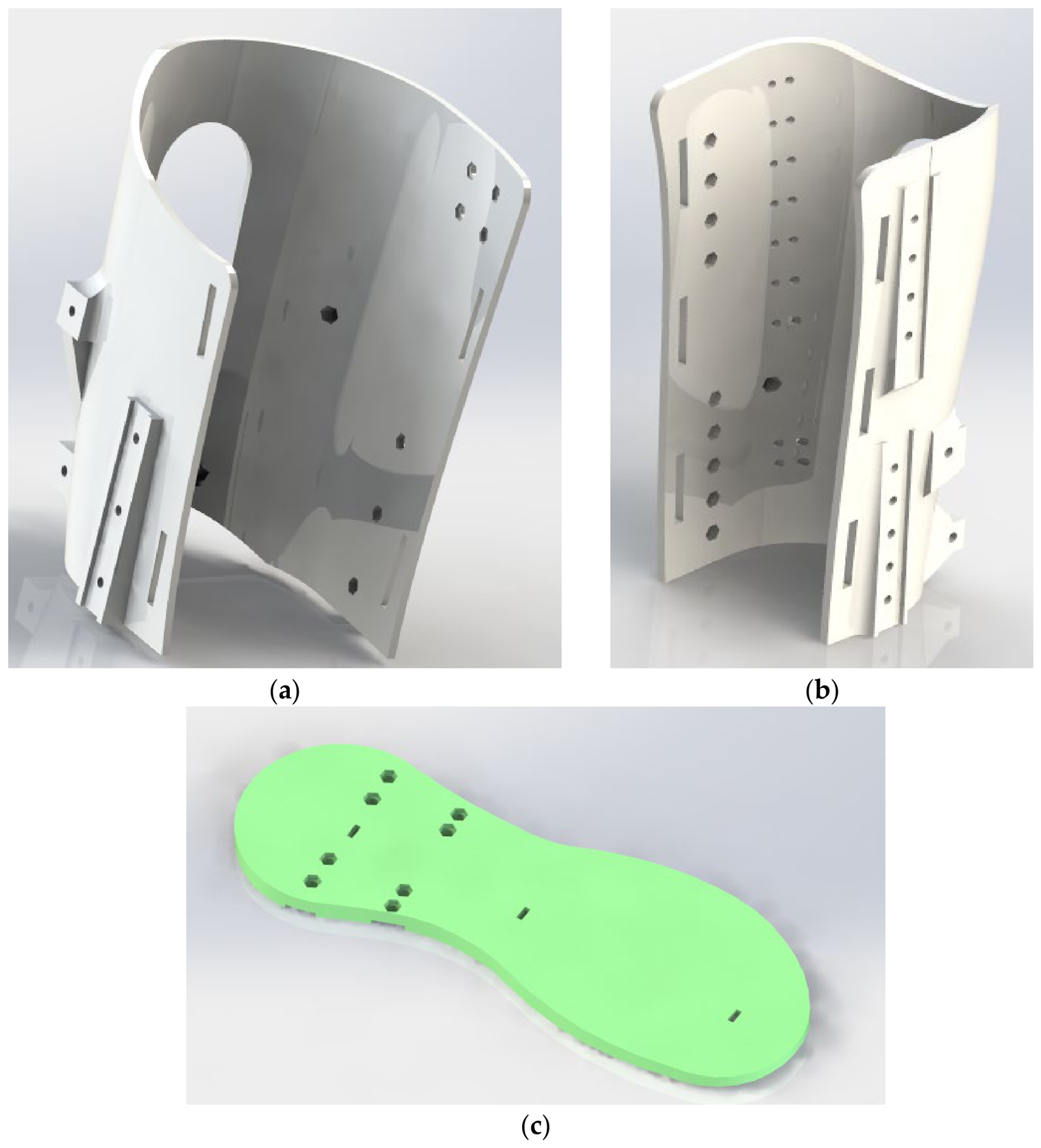
The mechanical design of the proposed wearable exoskeleton aims to provide a lightweight, structurally robust, and functionally adaptable platform for assisting lower-limb motion in monoplegia rehabilitation. The design follows a modular and anthropomorphic configuration, replicating the primary segments of the human lower limb, namely the femur, tibia, and foot, to ensure kinematic compatibility with natural gait patterns. A CAD representation of the main structural components of the exoskeleton designed using SolidWorks 2021 is shown in
Figure 1.
A key feature of the mechanical architecture is its modular 3D-printed construction, which enables rapid prototyping, cost reduction, and ease of customization. The structural components are manufactured using a combination of PLA–ABS materials and reinforced carbon-based elements, achieving a balance between mechanical strength and reduced weight. This approach allows the device to be adapted to different users with minimal redesign effort, contributing to improved accessibility compared with conventional rigid exoskeleton systems.
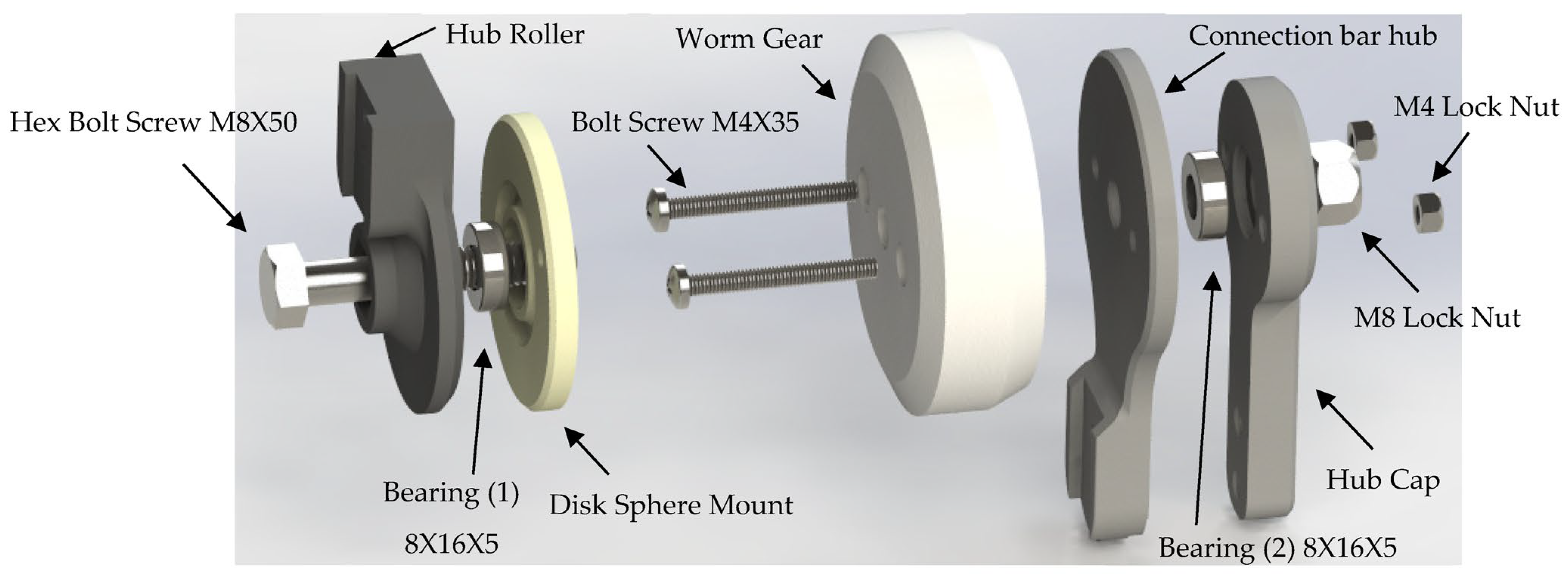
The actuation system is designed to provide sufficient torque to support joint movement under assisted conditions while maintaining stability and safety. A detailed CAD representation of the overlap-type knee–ankle joint and its constituent mechanical components is presented in
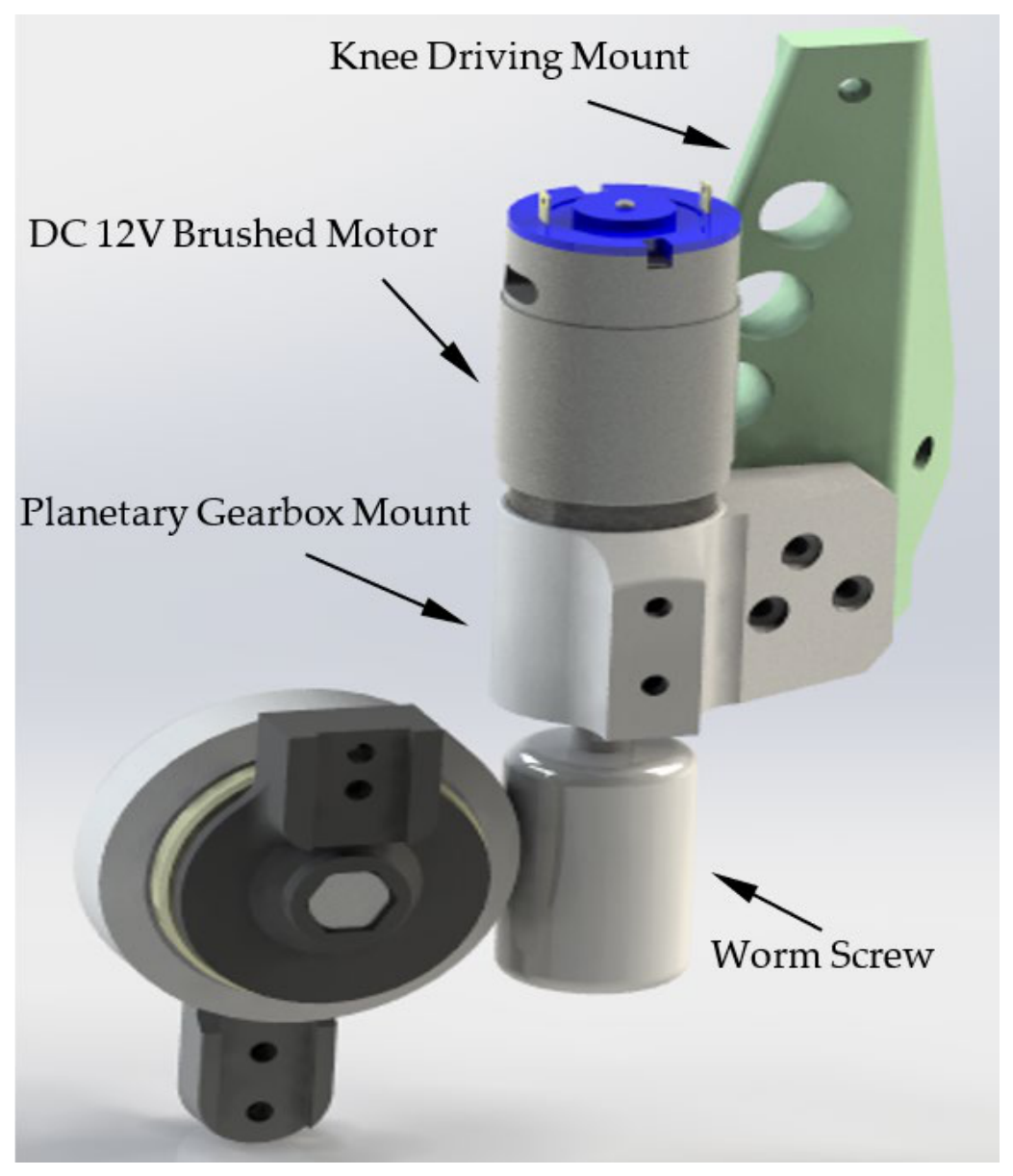
Figure 2. The knee and ankle joints are actuated using high-torque DC motors coupled with gearbox systems, incorporating a worm gear transmission mechanism. This configuration introduces several important advantages, including increased torque amplification, compactness, and inherent self-locking capability, which prevents unintended joint movement when the system is not actively driven. Such characteristics are particularly relevant in rehabilitation scenarios where controlled and stable motion is essential. The complete mechanical configuration of the joint actuation system, including the motor, gearbox, and worm gear transmission, is illustrated in
Figure 3.
In contrast to fully actuated multi-degree-of-freedom systems, the proposed design adopts a function-oriented actuation strategy, focusing on essential joint movements (knee flexion–extension and ankle dorsiflexion–plantarflexion). This simplification reduces mechanical complexity and system weight while preserving the functional motions required for basic gait assistance and rehabilitation exercises. The resulting design reflects a deliberate trade-off between kinematic completeness and practical implementation feasibility.
Another important aspect of the design is the integration of mechanical–control compatibility, ensuring that the mechanical structure supports the proposed sensor-driven control strategy. The joint alignment, transmission layout, and mounting interfaces are configured to enable smooth coupling between actuator output and human limb motion. Additionally, the structure incorporates adjustable connection elements (e.g., straps and alignment guides) to facilitate proper fitting and load distribution across the limb, enhancing user comfort and reducing localized stress.
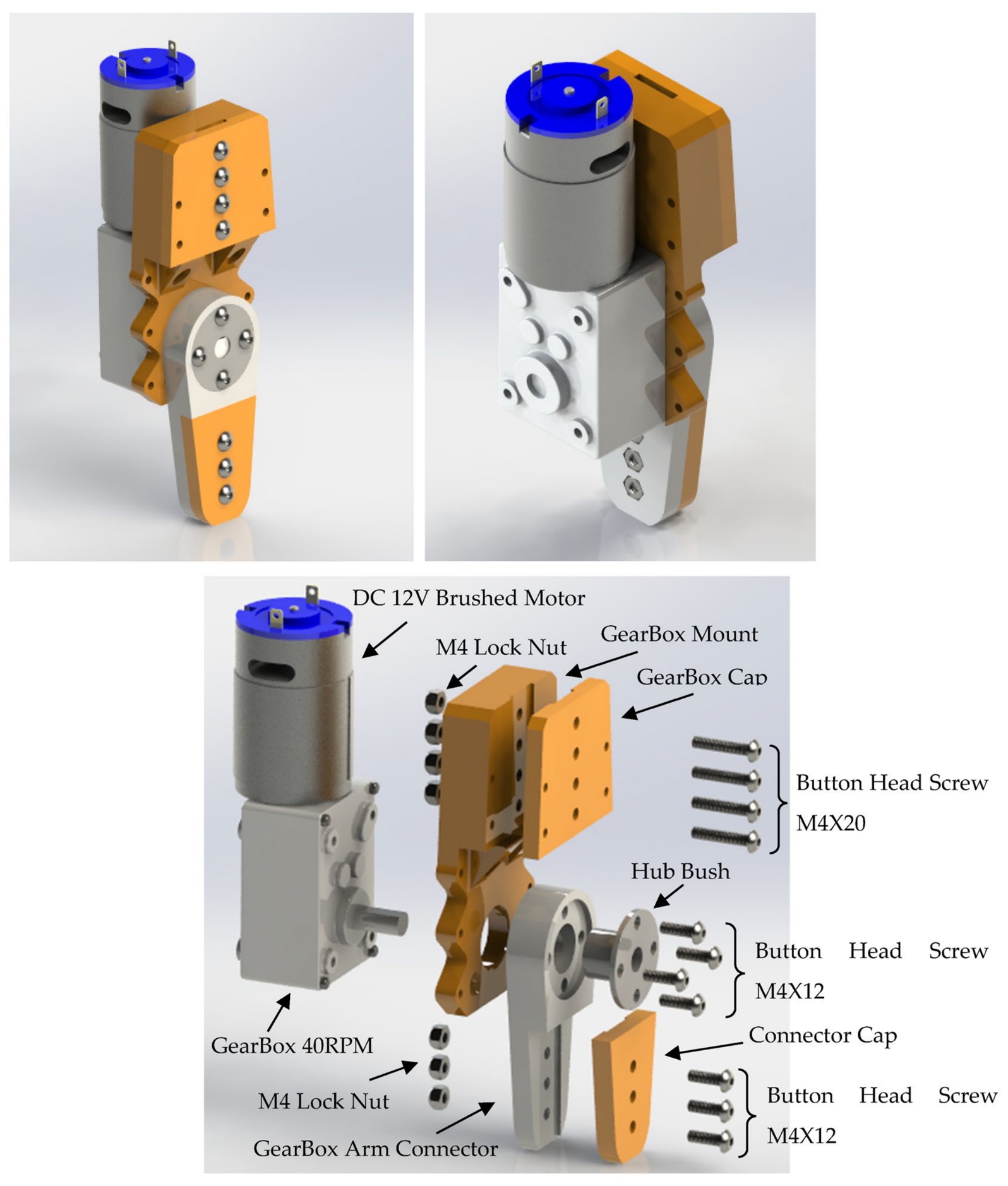
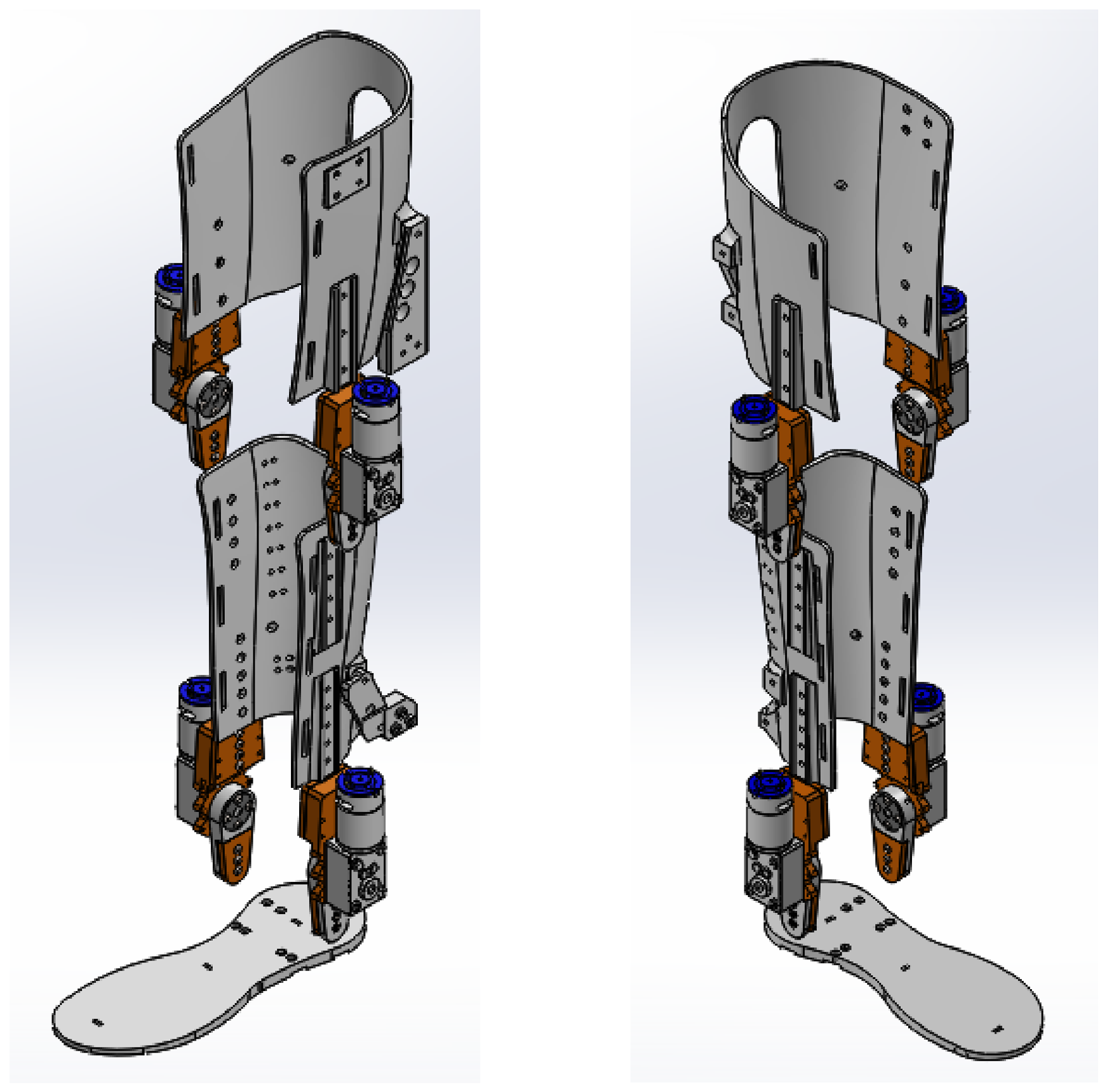
Finally, the mechanical system is conceived as part of an integrated mechatronic framework, where structural design, sensing placement, and actuation are co-developed to support the overall control methodology. In particular, the placement of joints and actuators is coordinated with the sensing strategy based on the healthy limb, enabling a consistent mapping between measured motion and assisted actuation. Alternative joint configurations and detailed actuator integration components are illustrated in
Figure 4. An overall view of the assembled exoskeleton structure is presented in
Figure 5.
To further support the evaluation of the proposed exoskeleton system from an engineering perspective, key mechanical and actuation specifications are summarized in
Table 2. These parameters describe the physical characteristics, actuation capabilities, and functional performance limits of the developed prototype.
The presented specifications correspond to a prototype-level assistive device designed to reproduce basic lower-limb movements rather than provide full load-bearing support. The actuation capability is sufficient for controlled joint assistance during rehabilitation exercises, while the selected gear transmission mechanisms (including worm gear configurations) ensure adequate torque delivery and inherent joint stability. The defined range of motion is aligned with typical gait and seated movement requirements, supporting the intended experimental scenarios. The mechanical design also incorporates an alignment strategy that ensures compatibility between the exoskeleton joints and the anatomical joints of the user, improving motion consistency and comfort during operation. In addition, the selected power supply supports short-duration operation appropriate for experimental trials, reflecting the prototype-oriented nature of the system. Overall, these design choices reflect a balance between functional performance, system simplicity, and low-cost implementation.
Based on the above design characteristics and specifications, the proposed mechanical design contributes to the innovation of the system through the combination of low-cost fabrication, modular architecture, targeted actuation, and integration with sensor-driven control, providing a practical foundation for wearable rehabilitation applications.
3.2. Sensing and Control Hardware
The sensing and control hardware of the proposed system is designed to provide a cost-effective, compact, and integrated platform for real-time acquisition and actuation, supporting the implementation of the sensor-driven control strategy. The hardware architecture combines simple wearable sensing components with an embedded control unit and actuator interface, enabling synchronized motion between the healthy and impaired limbs.
The control loop operates at an approximate frequency of 20 Hz, corresponding to the sensor sampling rate, ensuring continuous acquisition of motion data and timely actuator response. This update rate is sufficient to capture the dynamics of human gait under normal walking conditions while maintaining stable system operation within the computational limits of the embedded platform.
3.2.1. Sensing Hardware Configuration
Motion acquisition is achieved using bend flex sensors positioned on the healthy limb at the knee and ankle joints. These sensors provide a direct measurement of joint deformation by varying their electrical resistance as a function of bending angle. This configuration enables the capture of representative motion patterns associated with gait cycles and postural transitions.
The use of flex sensors represents a deliberate design choice that prioritizes simplicity, low cost, and ease of integration compared with more complex sensing modalities such as inertial measurement units (IMUs) or electromyography (EMG) systems. Flex sensors have been successfully used in wearable exoskeleton systems for capturing joint motion and enabling intuitive control through mirrored limb movement [
21]. Although these advanced alternatives may offer higher precision and richer biomechanical information, they typically require more sophisticated signal processing, calibration procedures, and hardware integration. In contrast, flex sensors provide a practical solution for capturing joint motion trends with minimal system overhead, making them suitable for wearable rehabilitation applications.
Each sensor is interfaced with the control unit through analog input channels, allowing continuous monitoring of joint motion during operation. The sensor placement and attachment are designed to ensure consistent response while maintaining user comfort and minimizing interference with natural movement.
3.2.2. Embedded Control Platform
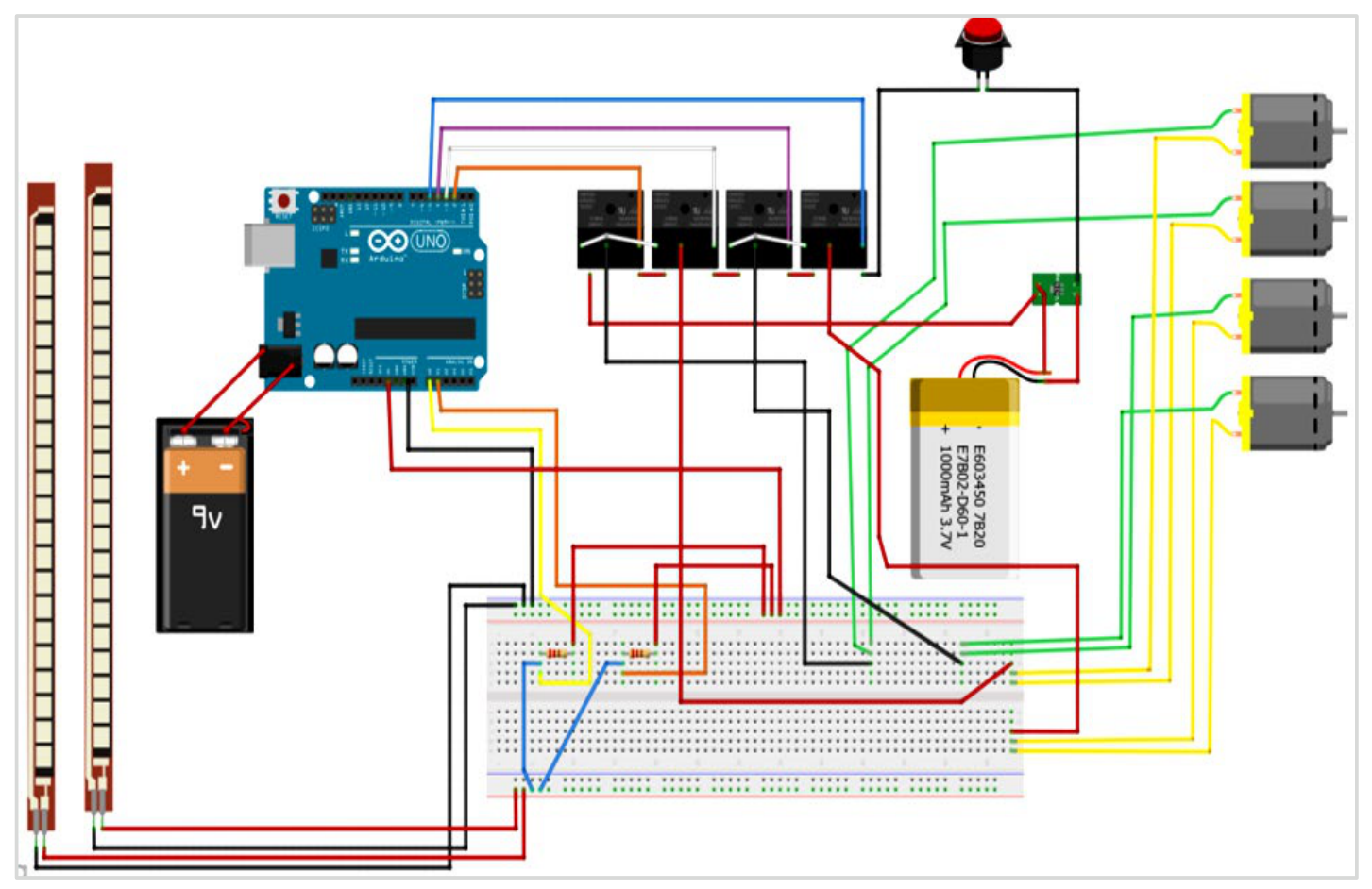
The core of the control hardware is an Arduino Uno microcontroller, based on the ATmega328P architecture, which serves as an embedded processing unit for both data acquisition and actuator control. The microcontroller is responsible for acquiring sensor signals, processing input data, and generating actuator commands in real time. Its functionality is supported by built-in analog-to-digital conversion, which allows direct sampling of the sensor outputs within the range of 0–5 V. The implementation of the sensing and control hardware, including the Arduino-based interface and actuator connections, is illustrated in
Figure 6.
The Arduino platform is selected due to its low cost, ease of programming, and wide compatibility with sensors and actuators, making it well suited for rapid prototyping and experimental validation. Additionally, its ability to operate with standard voltage levels (0–5 V) ensures direct compatibility with the flex sensor outputs, simplifying the signal acquisition process.
To facilitate sensor connectivity and signal routing, a sensor interface configuration is used, allowing stable connections between analog inputs, power supply, and ground references. The microcontroller communicates with external software for data logging and processing via serial communication, enabling efficient transfer of experimental data.
3.2.3. Actuation and Control Interface
The actuation subsystem consists of high-torque DC motors responsible for driving the knee and ankle joints of the exoskeleton. These motors are controlled through relay modules that act as an interface between the low-voltage control signals of the microcontroller and the higher-power motor supply. By switching the polarity of the supply, the system enables bidirectional motion, supporting both flexion and extension of the joints.
The control process is implemented within a continuous loop, in which sensor readings are acquired, evaluated, and translated into actuator commands. The decision logic combines threshold-based conditions with the outputs of the trained ANFIS model, allowing the system to respond dynamically to changes in the motion of the healthy limb.
The overall hardware configuration reflects a design approach that emphasizes system compatibility and real-time responsiveness while maintaining low implementation complexity. The integration of sensing, control, and actuation components within a unified embedded platform enables efficient data flow and synchronized operation. At the same time, the selected architecture supports scalability, allowing future enhancements such as additional sensing modalities or more advanced control techniques to be incorporated without fundamental redesign.
Overall, the proposed approach results in a low-cost and accessible exoskeleton prototype that integrates mechanical structure, sensing, embedded control, and actuation within a unified system architecture for rehabilitation-oriented applications.
3.3. ANFIS Modeling
To establish a mapping between the motion of the healthy limb and the corresponding actuation of the impaired limb, an ANFIS is employed as the core modeling and control component. ANFIS combines the learning capability of artificial neural networks with the rule-based reasoning of fuzzy logic, allowing it to approximate nonlinear relationships without requiring an explicit analytical formulation [
22]. ANFIS has been successfully applied to lower-limb exoskeleton control, demonstrating its ability to approximate nonlinear gait dynamics and improve trajectory tracking performance [
23].
In the present study, ANFIS is used to model the relationship between the sensor inputs obtained from the healthy limb and the control signals driving the exoskeleton actuators. The inputs to the model consist of the processed signals from the flex sensors placed at the knee and ankle joints, while the output corresponds to a control signal that defines the activation state and direction of the actuators driving the knee and ankle joints. In physical terms, this output does not directly represent torque or position, but rather an abstract control variable that is mapped to discrete actuator commands (e.g., forward rotation, reverse rotation, or idle state) through the relay-based motor interface. This mapping enables the transformation of continuous sensor inputs into actionable motor control decisions. This configuration enables a data-driven representation of motion transfer, in which the behavior of the system is directly inferred from experimental observations.
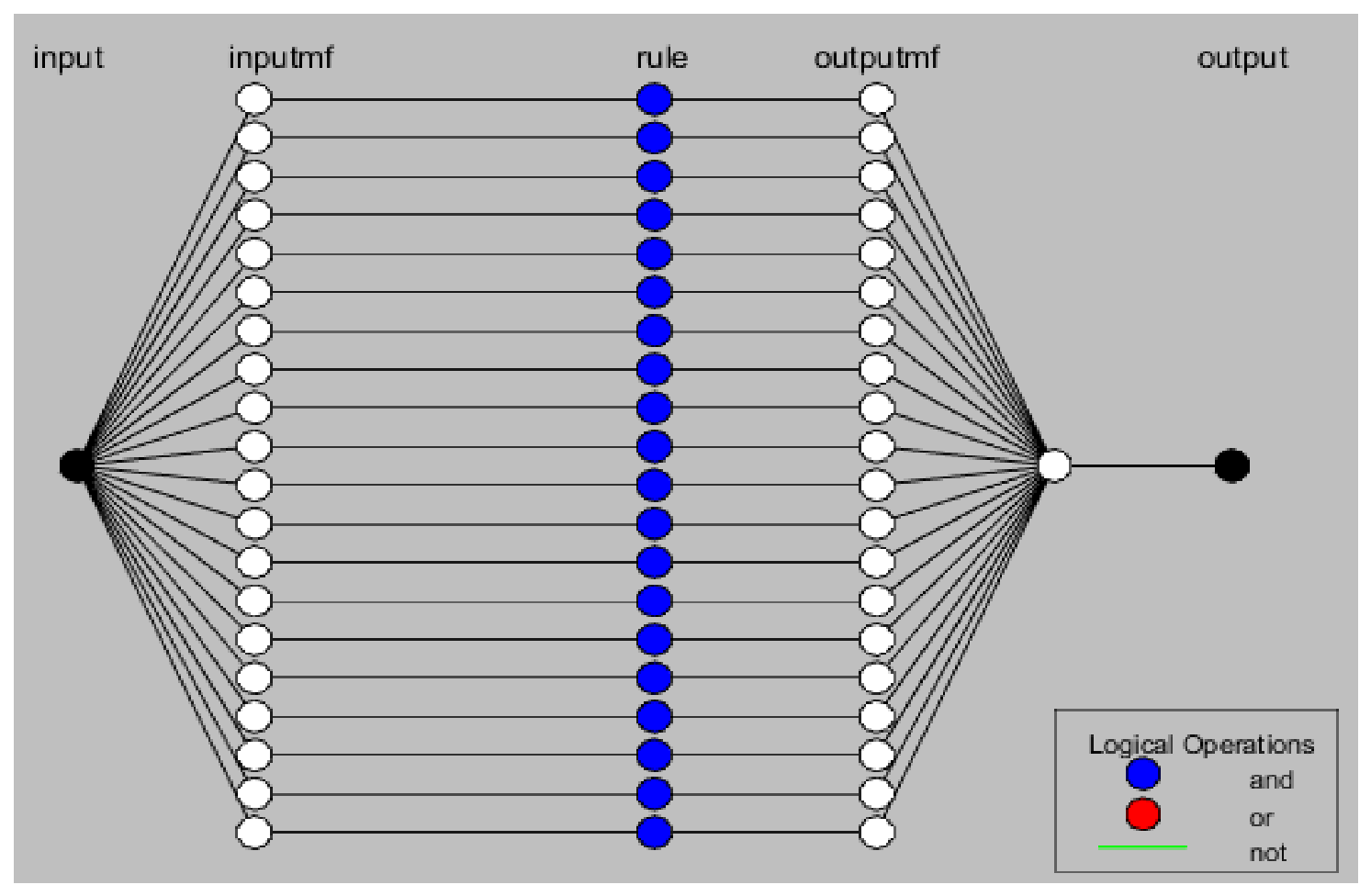
The adopted ANFIS structure follows a Takagi–Sugeno fuzzy inference framework, consisting of a set of fuzzy if–then rules that define the mapping between input variables and output responses. The model architecture comprises multiple layers, including fuzzification of inputs, rule evaluation, normalization, and output generation. The structure of the implemented ANFIS model is illustrated in
Figure 7. During the training phase, the parameters of the membership functions and the rule consequents are adjusted using a hybrid learning approach that combines least-squares estimation with gradient-based tuning. This allows the model to capture the nonlinear characteristics of the input–output relationship while maintaining computational efficiency.
The training data used for the ANFIS model are derived from experimental measurements of the healthy limb during different motion scenarios, such as walking and sitting. These datasets are organized into input–output pairs, where the sensor readings correspond to joint positions and their changes over time. Prior to training, the data are preprocessed through scaling to ensure consistent input representation and improve model convergence.
Once trained, the ANFIS model is used in inference mode within the control loop. In this phase, real-time sensor inputs are fed into the model, which generates corresponding output values that are used to determine the actuation commands for the motors. This approach enables the system to respond dynamically to changes in the motion of the healthy limb, providing an adaptive control mechanism that does not rely on predefined trajectories.
It should be noted that the ANFIS model is trained offline using MATLAB 2024a based on experimentally collected datasets. Due to the computational limitations of the embedded platform, the full ANFIS inference model is not deployed directly on the Arduino microcontroller. Instead, the trained model is used to derive control thresholds and decision rules, which are then implemented within the Arduino control loop for real-time execution. This approach enables the system to retain the benefits of data-driven modeling while ensuring compatibility with low-cost embedded hardware and maintaining real-time responsiveness.
A key advantage of the proposed ANFIS-based approach is its ability to handle nonlinear system behavior and uncertainty without requiring detailed knowledge of system dynamics. At the same time, the relatively low computational requirements of ANFIS make it suitable for implementation in embedded systems with limited processing capabilities. While the training process is performed offline, the resulting model enables consistent and reliable control performance during real-time operation, with adaptability inherently captured through representative training data.
Overall, the use of ANFIS provides an effective compromise between model simplicity, adaptability, and computational efficiency, supporting the development of a sensor-driven control framework that is compatible with low-cost wearable rehabilitation devices.
4. Experimental Procedure
This section describes the experimental methodology followed to validate the proposed wearable exoskeleton system. The main objective of the experimental procedure is to assess the system’s ability to acquire motion data from the healthy limb, process these signals for model training, and reproduce corresponding movements through the exoskeleton. To this end, a series of controlled experiments were conducted, including data acquisition, preprocessing, model training, and real-time system evaluation.
The procedure was designed to ensure repeatability and consistency of measurements while maintaining simplicity in the experimental setup. Particular emphasis was given to capturing representative motion patterns associated with basic rehabilitation activities, such as walking and seated positioning. The collected data were subsequently used to train and validate the ANFIS-based control model, as well as to evaluate the dynamic response of the exoskeleton during operation.
4.1. Experimental Setup
The experimental setup consists of the wearable exoskeleton prototype, a sensing system based on bend flex sensors, an embedded control unit, and a data acquisition interface. The exoskeleton is mounted on one lower limb and is equipped with actuators at the knee and ankle joints, designed to reproduce basic flexion–extension and dorsiflexion–plantarflexion movements.
Motion acquisition is performed using two bend flex sensors positioned at the knee and ankle joints of the healthy limb. The sensors are connected to an Arduino Uno microcontroller, which performs real-time analog data acquisition. The analog signals are sampled using a 10-bit analog-to-digital converter, resulting in digital values within the range of 0–1023, corresponding to an input voltage range of 0–5 V.
The data acquisition process is performed at an approximate sampling frequency of 20 Hz, which was found to be sufficient for capturing the dynamics of human joint motion during walking and stationary conditions. The acquired data are transmitted to a host computer via serial communication for storage and further processing.
The actuation system consists of high-torque DC motors supplied at 12 V, coupled with gearbox mechanisms to provide sufficient torque for joint movement. The motors are interfaced with the microcontroller through relay modules, which enable bidirectional control of joint motion.
All experiments were conducted in a controlled indoor environment to minimize external disturbances. Particular attention was given to maintaining consistent sensor placement across trials, ensuring stable attachment to the limb and minimizing signal variability due to sensor displacement.
4.2. Experimental Framework
The experimental protocol was designed to evaluate the functionality of the proposed exoskeleton system and to generate representative data for training and validation of the ANFIS model. The procedure focuses on capturing motion patterns from the healthy limb and assessing the system’s ability to reproduce corresponding movements through the exoskeleton.
Data acquisition was performed using bend flex sensors placed at the knee and ankle joints of the healthy limb, ensuring consistent measurement of joint deformation during motion. The subject executed representative movement tasks, including walking and seated positions, in order to capture both dynamic and static behavior relevant to rehabilitation scenarios. Detailed acquisition conditions and trial parameters are provided in
Section 4.3.
The raw sensor data, obtained through the Arduino-based acquisition system, were transmitted to a computer and recorded using serial communication. The recorded signals were then processed and converted into voltage values, ensuring consistent scaling before being used in the modeling stage. The dataset was organized into input–output pairs, where sensor signals served as inputs and corresponding actuator responses were defined as target outputs for the ANFIS training process.
Model training and validation were conducted using the prepared datasets. The training phase aimed to establish a reliable mapping between the motion of the healthy limb and the actuation signals required for the exoskeleton, while the validation phase evaluated the model’s ability to generalize across different motion patterns. The performance of the model was assessed using the testing error and by observing the consistency of the generated control signals.
Finally, the trained model was incorporated into the control loop, and the system was operated under real-time conditions to assess its response. The real-time control implementation is based on decision logic derived from the trained ANFIS model. The model output is interpreted as a control signal governing actuator direction and activation state within the Arduino-based system, ensuring consistent mapping between sensor inputs and actuator responses during operation. The evaluation focused on the ability of the exoskeleton to reproduce basic motion patterns and maintain stable operation during transitions between different movement states. The experimental protocol is intended as an initial validation of system feasibility rather than a comprehensive clinical assessment.
4.3. Data Acquisition Protocol
The data acquisition protocol was designed to capture representative motion patterns of the healthy limb under controlled and repeatable conditions. Two types of motion were considered, namely walking and seated positioning, in order to include both dynamic and static joint behavior relevant to rehabilitation scenarios.
The data acquisition was performed using a single voluntary participant for the purpose of system development and preliminary validation. The participant was an adult individual with no known musculoskeletal impairments, allowing the capture of representative motion patterns under controlled conditions. The experimental procedure involved non-invasive wearable testing, in which flex sensors were attached to the knee and ankle joints of the healthy limb. No clinical intervention, external assistance, or patient-specific rehabilitation protocol was involved, and no personal or sensitive data were collected during the experiments.
During the walking trials, the subject was instructed to move at a constant and comfortable pace along a short path of approximately 5 m. Each trial lasted approximately 20–30 s, resulting in a dataset of approximately 400–600 samples per trial, which is consistent with the selected sampling frequency of approximately 20 Hz.
A total of five walking trials were performed to ensure sufficient data coverage and improve repeatability. These trials enabled the recording of periodic signals corresponding to knee and ankle flexion–extension cycles during gait.
In addition to walking, seated-position trials were conducted to capture static joint configurations and transitions between movement states. For these trials, the subject remained seated for approximately 15–20 s while sensor data were continuously recorded. These measurements provided a baseline reference for joint position and helped distinguish between active and inactive movement conditions.
Throughout the acquisition process, sensor signals were continuously recorded and stored without interruption. Care was taken to avoid sudden movements or disturbances that could introduce noise into the measurements. The resulting dataset comprises both periodic signals corresponding to gait cycles and steady-state signals corresponding to stationary positions, providing a comprehensive representation of joint motion.
4.4. Data Processing and Preparation
The raw sensor signals obtained from the Arduino microcontroller were converted into voltage values using a linear transformation, mapping the digital range (0–1023) to the corresponding voltage range (0–5 V). This preprocessing step ensures consistent scaling of the input signals while preserving their physical interpretability.
Following conversion, the recorded signals were organized into structured datasets representing the motion of the knee and ankle joints. The complete dataset consisted of approximately 2000–2500 samples, combining data from both walking and seated trials. Each data sample includes synchronized input values from the two sensors, forming a two-dimensional input vector for the ANFIS model. Minor preprocessing steps were applied to remove inconsistent or corrupted samples, while preserving the overall structure and variability of the data.
The dataset was then divided into two subsets: 70% for training and 30% for validation. The training subset was used to identify the nonlinear mapping between sensor inputs and actuator outputs, while the validation subset was used to evaluate the generalization capability of the model. This division ensures that the model is not limited to memorizing specific patterns but can respond effectively to new input conditions.
The resulting datasets provided a reliable and well-structured input for the ANFIS training procedure, supporting the development of a stable and consistent control model.
4.5. ANFIS Training Procedure
The ANFIS model was trained using the processed datasets obtained from the experimental measurements. The training process was carried out in an offline environment, where input–output data pairs were used to establish the nonlinear mapping between the sensor signals and the corresponding actuator control commands.
The ANFIS structure was implemented using a first-order Takagi–Sugeno fuzzy inference system with two input variables, corresponding to the flex sensor signals from the knee and ankle joints of the healthy limb. The output of the model represents the control signal associated with the actuation of the exoskeleton joints.
Each input variable was described using three Gaussian membership functions, resulting in a total of nine fuzzy rules in the inference system. The use of Gaussian membership functions was selected due to their smoothness and suitability for modeling continuous nonlinear relationships. The number of membership functions was defined empirically in order to achieve a balance between approximation capability and model complexity.
The training process employed a hybrid learning algorithm, combining least-squares estimation for the consequent parameters and gradient descent for the membership function parameters. The model was trained over 50 epochs, which was found to be sufficient for convergence based on the observed reduction in the training error.
The dataset was divided into training (70%) and validation (30%) subsets, allowing the evaluation of the model’s generalization capability. After training, the ANFIS model was deployed in inference mode within the control framework. In this configuration, real-time sensor data are processed by the trained model to generate control signals for the actuators. This enables the exoskeleton to respond dynamically to variations in the motion of the healthy limb while maintaining low computational requirements suitable for embedded implementation. The performance of the ANFIS model was assessed using the prediction error between the estimated and target outputs.
During real-time operation, control commands are updated at the same rate as the sensor acquisition (approximately 20 Hz), resulting in a command update period of about 50 ms. The processing time required for each control cycle is minimal due to the use of pre-defined decision logic, allowing near-instantaneous actuator command generation within each loop iteration.
5. Results
The results of the experimental evaluation are presented in this section, focusing on the analysis of the acquired sensor signals, the performance of the ANFIS model, and the response of the exoskeleton system. The objective is to assess the ability of the proposed framework to capture human motion patterns and reproduce corresponding movements through the wearable device.
5.1. Sensor Signal Characterization
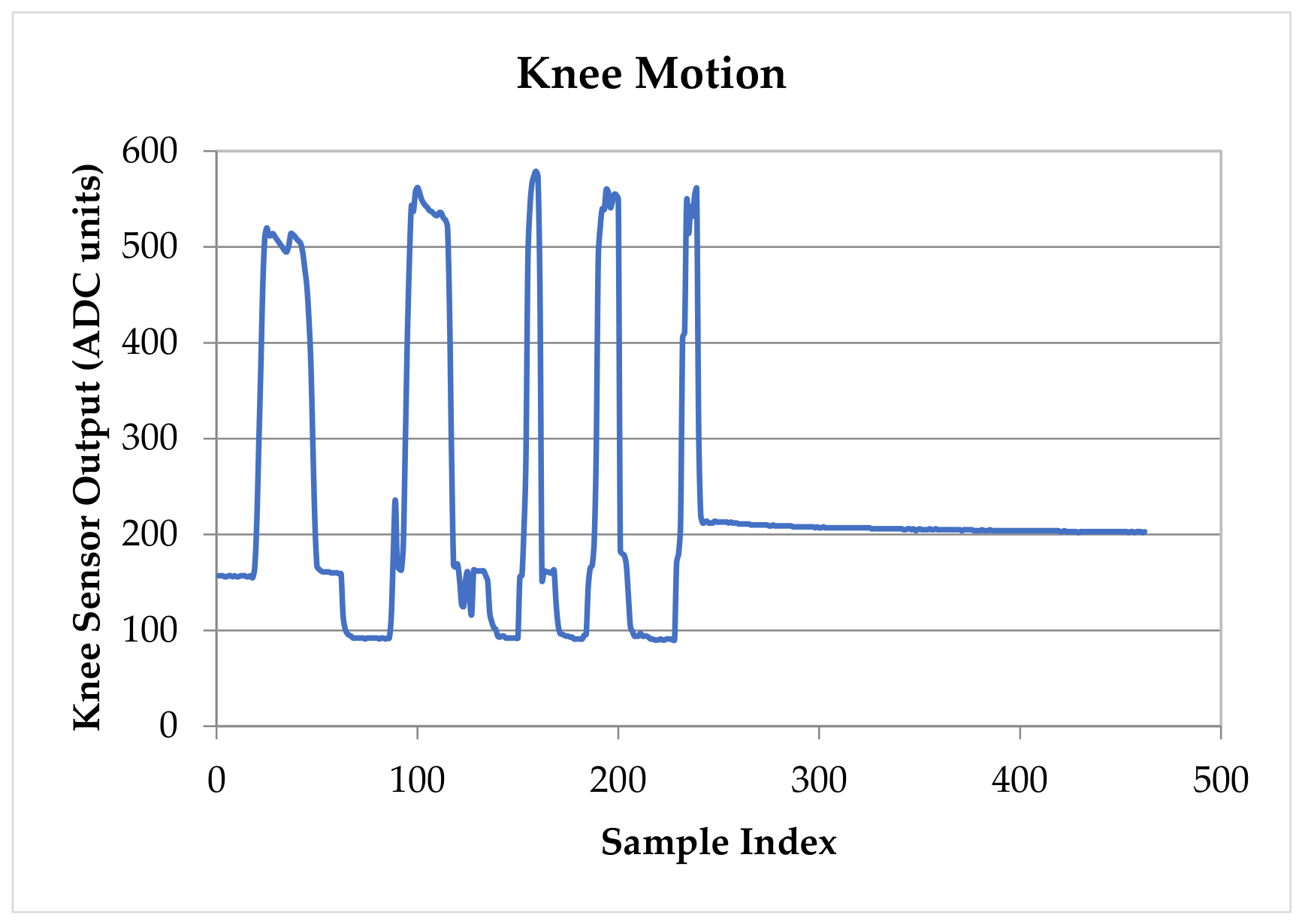
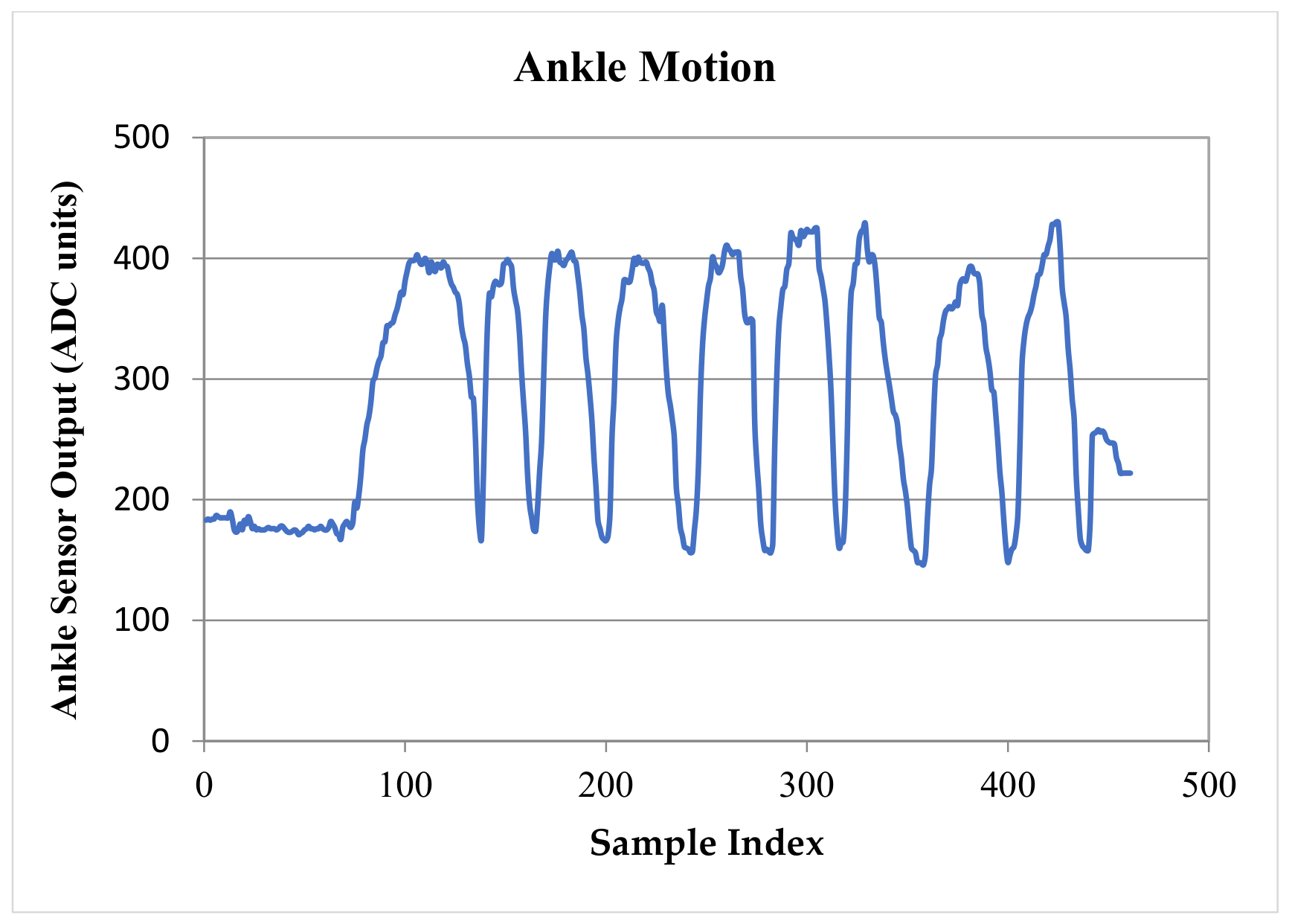
The recorded sensor signals from the knee and ankle joints exhibit clear and consistent patterns during both dynamic and static conditions. During walking trials, the signals present periodic variations corresponding to the gait cycle, with alternating phases of flexion and extension captured by the flex sensors. Representative sensor signals from the knee and ankle joints are presented in
Figure 8 and
Figure 9, respectively.
The knee sensor values typically ranged between approximately 180 and 750 ADC units, while the ankle sensor values showed a slightly narrower variation, generally within 200 to 680 ADC units, reflecting the lower range of motion at the ankle joint. These variations confirm that the sensors are capable of capturing meaningful joint motion trends during locomotion.
In contrast, during seated-position trials, the signals remain relatively stable with minimal variation, typically confined within narrow ranges (e.g., ±20 units), indicating the absence of active movement. This distinction between dynamic and static signal behavior is important for the subsequent modeling stage, as it enables the identification of different motion states.
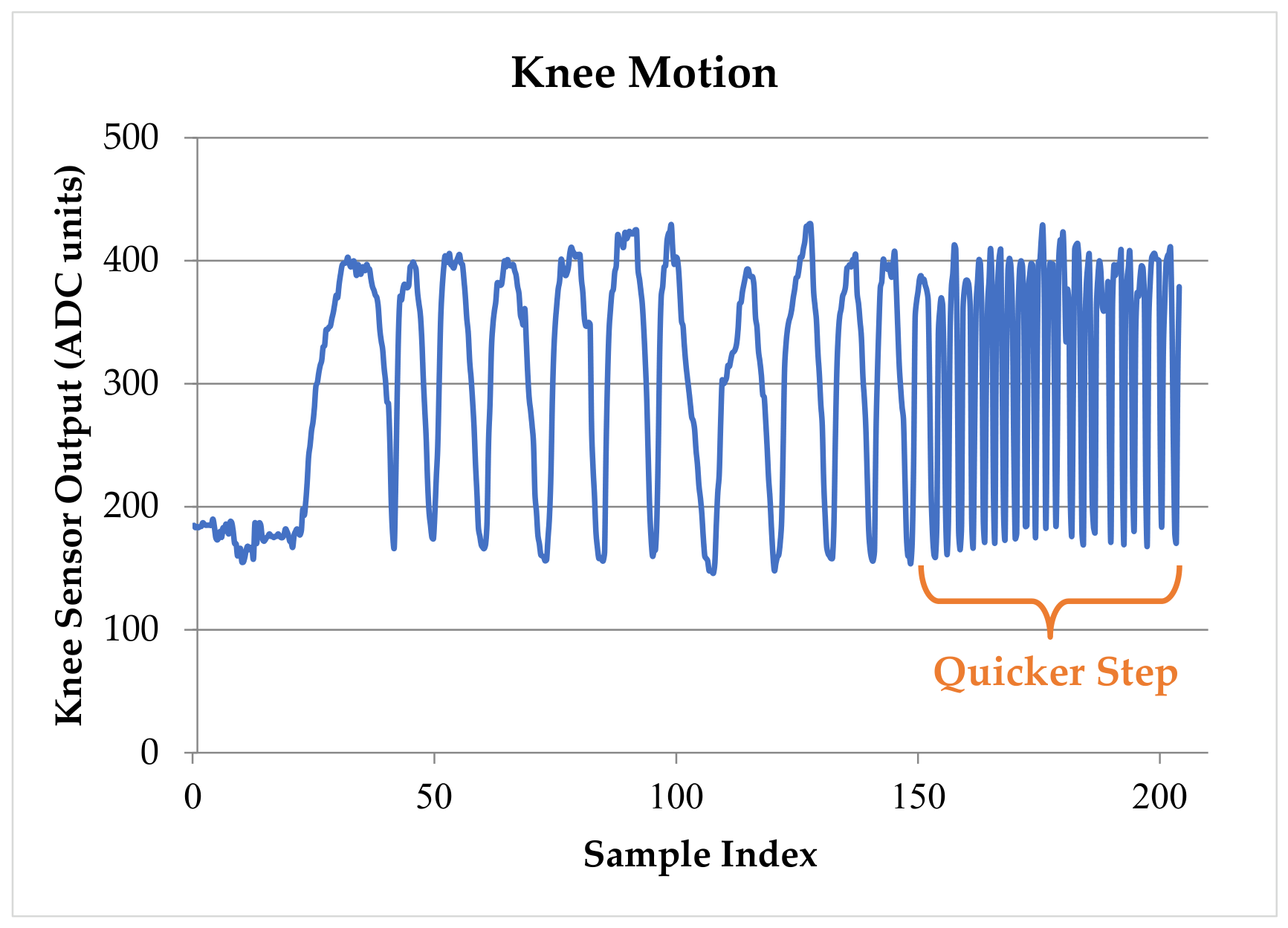
Overall, the sensor signals demonstrate sufficient repeatability across trials, with similar waveform patterns observed in successive walking cycles. An additional response under increased walking speed conditions is presented in
Figure 10, demonstrating higher-frequency variations consistent with faster gait dynamics. This consistency supports the reliability of the data acquisition process and provides a suitable basis for model training.
5.2. ANFIS Modeling Performance
The performance of the ANFIS model was evaluated based on its ability to approximate the nonlinear relationship between the sensor inputs and the corresponding actuator control signals. The model was trained using the experimental dataset and validated on unseen data, as described in
Section 4.4.
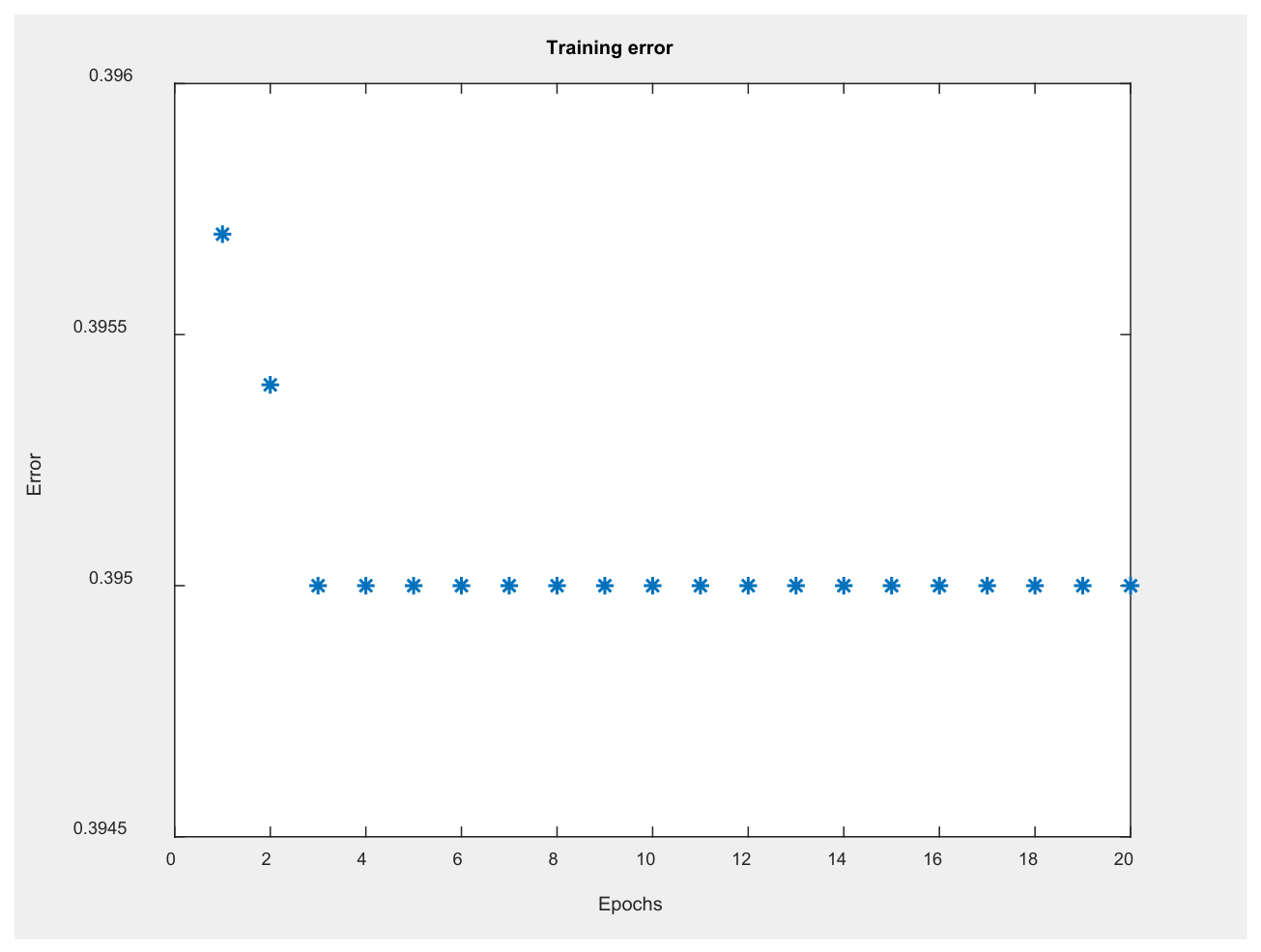
The training process converged within 20 epochs, with a gradual reduction in the prediction error across iterations. The evolution of the training error over the epochs is illustrated in
Figure 11. The convergence behavior indicates a stable learning process, where the root mean square error (RMSE) decreases consistently across training epochs.
The final trained model achieved an average testing error of approximately 0.39564, expressed as the root mean square error (RMSE) computed between the predicted and target outputs using scaled sensor data derived from ADC-to-voltage conversion. This value reflects deviations in the signal space used for model training and provides a consistent measure of approximation performance for the learned sensor–actuator mapping. Therefore, the reported error quantifies the model’s ability to capture the temporal and nonlinear characteristics of the mapping, which are essential for effective motion transfer within the proposed framework.
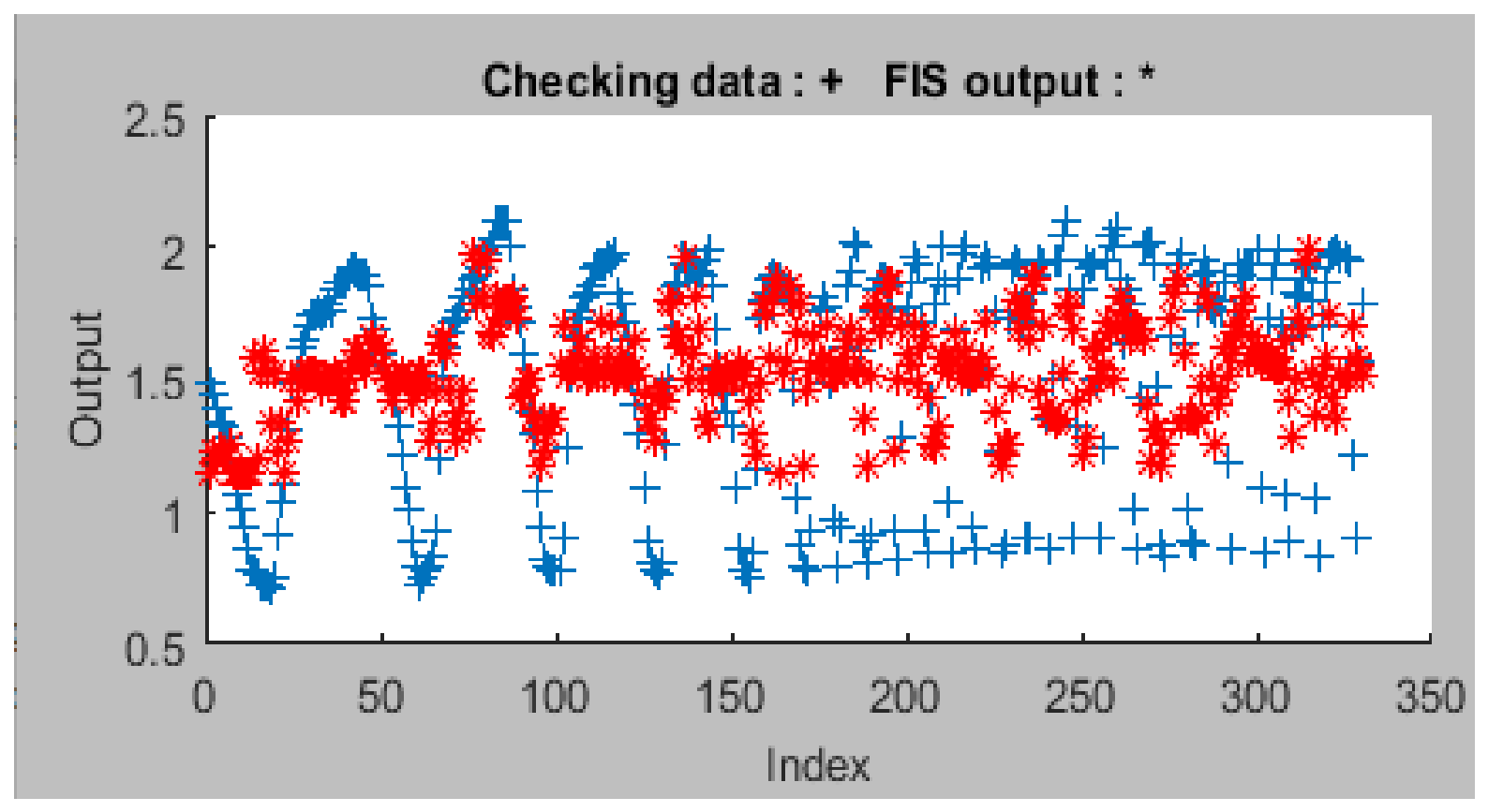
The predictive capability of the trained model is illustrated in
Figure 12, where the estimated outputs closely follow the target values, confirming the effectiveness of the learned nonlinear mapping. Although small deviations are observed in certain regions, particularly during rapid transitions in the input signals, the overall response remains stable and consistent.
These results demonstrate that the selected ANFIS configuration provides an effective balance between approximation accuracy and computational efficiency, supporting reliable and consistent functional motion reproduction.
5.3. Exoskeleton Motion Response
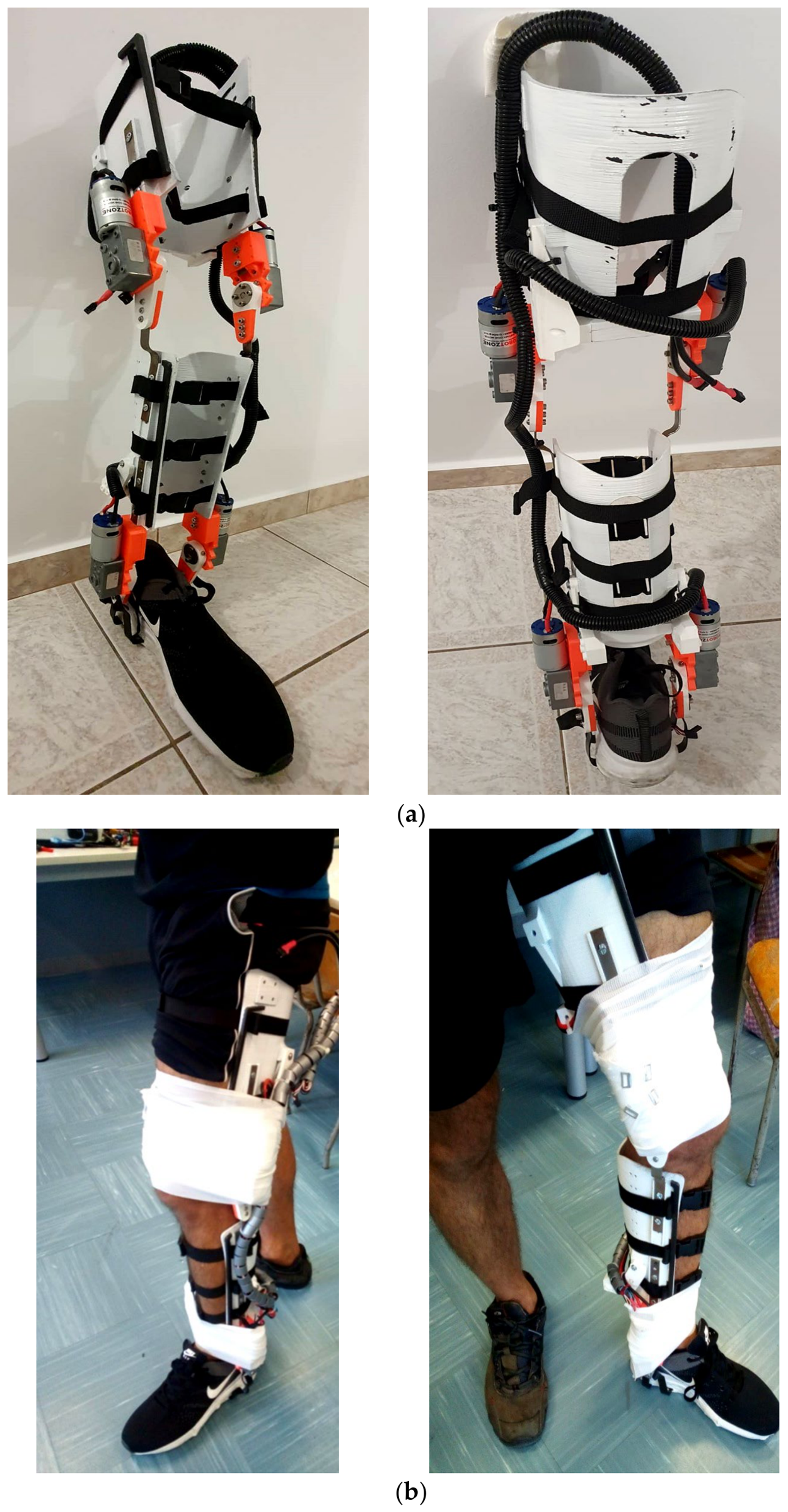
The response of the exoskeleton system was evaluated by examining the behavior of the actuators under the control of the trained ANFIS model. The fabricated exoskeleton prototype and its application during experimental evaluation are shown in
Figure 13. The results indicate that the system is capable of translating sensor inputs from the healthy limb into corresponding actuator commands for the impaired limb.
During walking trials, the motors exhibited continuous and coordinated motion, reflecting the periodic nature of the input signals. The joint movements followed a consistent pattern of flexion and extension, corresponding to the captured gait cycle. The response was stable throughout repeated trials, with no abrupt or irregular behavior observed in the actuation.
In addition, the system demonstrated the ability to transition between movement states. When the sensor signals indicated a stationary condition, the actuators remained inactive or held a stable position, preventing unintended motion. This behavior confirms the ability of the system to differentiate between active and inactive states based on sensor input.
To ensure stable and safe operation, transitions between motion states are governed by threshold-based logic derived from the ANFIS model. This approach prevents rapid switching or oscillatory behavior by introducing consistent decision boundaries between movement states, thereby improving control robustness and avoiding unintended actuator activation.
Overall, the actuation response is characterized by smooth and repeatable joint motion, which is essential for safe and effective rehabilitation support.
5.4. Validation of Motion Reproduction
The overall performance of the proposed system was assessed by evaluating its ability to reproduce motion patterns of the healthy limb through the exoskeleton. The results demonstrate that the system can effectively replicate the general behavior of knee and ankle movements during the tested scenarios.
During dynamic motion, the exoskeleton produces joint movements that follow the temporal characteristics of the input signals, maintaining synchronization with the motion of the healthy limb. While the reproduced movements do not perfectly match the exact amplitude and timing of the input signals, they capture the essential features of the motion pattern, which is sufficient for assisted rehabilitation purposes.
For static conditions, the system maintains stable joint positions, avoiding unnecessary actuation and ensuring safe operation. The ability to handle both dynamic and static scenarios highlights the versatility of the proposed approach.
The results confirm that the integration of sensor-based motion acquisition with ANFIS modeling and embedded control enables a functional and adaptive system for reproducing basic lower-limb movements. These findings support the feasibility of the proposed framework as a foundation for wearable rehabilitation applications.
6. Discussion
The results of the present study demonstrate the feasibility of implementing a sensor-driven, neuro-fuzzy-controlled wearable exoskeleton for lower-limb rehabilitation. The proposed system successfully establishes a functional mapping between motion acquired from the healthy limb and the assisted movement of the impaired limb, supporting the concept of human-in-the-loop rehabilitation through motion mirroring. From a practical standpoint, this approach provides a simple and intuitive mechanism for generating assistive motion without requiring complex biomechanical modeling or high-dimensional sensing.
A key strength of the proposed framework lies in the integration of low-cost sensing and adaptive control, which addresses a notable limitation in current exoskeleton systems where advanced control strategies are often coupled with complex and expensive sensor configurations. In contrast, the use of flex sensors enables a simplified acquisition of joint motion patterns, while the ANFIS-based model provides sufficient flexibility to capture the nonlinear relationship between sensor inputs and actuator commands. This combination allows the system to achieve adaptive behavior while maintaining a relatively low implementation complexity.
The experimental results further indicate that the ANFIS model is capable of generating consistent control outputs based on recorded motion data, as reflected in the obtained testing error and the corresponding actuator response. Although the achieved accuracy is modest compared with high-end model-based or deep learning approaches, it is important to note that the proposed system prioritizes practical implementation and computational efficiency over maximum precision. Within this context, the observed performance can be considered satisfactory for early-stage rehabilitation assistance, where the primary objective is to facilitate basic movement rather than achieve highly precise trajectory tracking.
From a mechanical perspective, the modular 3D-printed design, combined with targeted actuation at the knee and ankle joints, contributes to the overall accessibility and reproducibility of the system. The use of worm gear transmission enhances torque delivery and improves joint stability, which is particularly relevant for safe operation during assisted movement. At the same time, the decision to limit actuation to essential degrees of freedom reflects a deliberate design compromise that reduces system complexity and weight while preserving functional capability.
Despite these promising outcomes, several limitations should be acknowledged. First, the experimental validation is conducted at a prototype level and primarily under controlled conditions, without extensive testing on patients with monoplegia or other neurological impairments. As a result, the clinical effectiveness of the system cannot yet be fully assessed, and further user studies are required to evaluate its rehabilitation impact, usability, and safety in real-world scenarios.
Second, the sensing approach, although simple and cost-effective, is subject to limitations related to signal quality and robustness. Flex sensors can be influenced by factors such as sensor placement, skin contact variability, and motion artifacts, which may introduce noise and reduce measurement accuracy. These effects can propagate through the ANFIS model, affecting the stability and consistency of the control output. Future work may therefore consider incorporating additional sensing modalities, such as inertial or muscle-based sensors, to improve reliability while maintaining system simplicity.
Third, the current implementation of the ANFIS-based control strategy relies on offline training using pre-recorded datasets, which limits its adaptability to dynamic changes in user behavior. Although the model demonstrates acceptable performance under the tested scenarios, the integration of online learning or adaptive updating mechanisms could enhance responsiveness and enable personalization across different users and rehabilitation conditions.
Although the proposed system demonstrates the ability to reproduce motion patterns and provide assistive joint actuation, the current study focuses on engineering validation rather than clinical evaluation. The experimental results are obtained under controlled conditions using a voluntary participant, and therefore the findings should be interpreted as a proof-of-concept demonstration of system feasibility.
Within this context, the proposed system can be viewed as a platform that highlights the potential of combining simplified sensing, neuro-fuzzy control, and low-cost mechanical design for wearable assistive applications. The results demonstrate the capability of the system to reproduce motion patterns under the examined conditions, supporting the effectiveness of the proposed framework at a prototype level.
Further investigation, including studies involving patient populations, will be necessary to assess clinical effectiveness and validate the system in real-world rehabilitation scenarios.
Finally, the mechanical design, while effective for demonstrating feasibility, presents opportunities for further refinement. Improvements in ergonomics, weight distribution, and integration of more compact actuation units could enhance wearability and long-term usability, particularly for extended rehabilitation sessions.
7. Conclusions
This study presented the design, implementation, and experimental validation of a wearable lower-limb exoskeleton system for assistive motion support in monoplegia-related conditions, integrating simplified sensing with a data-driven ANFIS-based control framework. The proposed approach demonstrates that meaningful motion assistance can be achieved through a minimal sensing configuration combined with adaptive modeling, without requiring complex biomechanical formulations or high-dimensional sensor inputs.
The experimental results confirm that the ANFIS model is capable of capturing the nonlinear relationship between sensor signals from the healthy limb and the corresponding actuator commands. As reflected by the obtained performance metrics, including the reported RMSE, the model achieves a satisfactory level of approximation, allowing the system to reproduce consistent motion patterns and transitions between movement states. While the system does not target high-precision trajectory tracking, it effectively preserves the temporal characteristics of joint motion, which is essential for rehabilitation-oriented applications.
From a practical perspective, the proposed framework offers a favorable balance between control performance, system complexity, and cost. The use of flex sensors and an Arduino-based embedded platform enables a lightweight and accessible implementation, making the system suitable for early-stage rehabilitation support and experimental deployment. The real-time control behavior, derived from the trained ANFIS model, demonstrates stable operation and consistent mapping between sensor inputs and actuator responses.
The results also highlight the potential of data-driven strategies in wearable robotics, particularly in scenarios where simplicity, robustness, and ease of implementation are prioritized over high-fidelity dynamic modeling. In this context, the proposed system can be considered a proof-of-concept platform that bridges the gap between advanced computational intelligence techniques and practical rehabilitation devices.
Future work will focus on enhancing the system in several directions. Improvements in sensing accuracy and robustness, including the integration of complementary sensing modalities, could increase reliability and motion fidelity. The incorporation of adaptive or online learning mechanisms may further improve the system’s ability to adjust to individual users and evolving motion patterns. In addition, further optimization of the mechanical design and actuator integration is expected to improve ergonomics, weight distribution, and overall usability. Finally, extended experimental validation, including studies involving target patient populations, will be essential to assess clinical effectiveness and long-term applicability.
In conclusion, the proposed system demonstrates that the integration of simplified sensing, ANFIS-based modeling, and low-cost embedded control represents a promising and practical approach for the development of next-generation wearable rehabilitation technologies.





 ,
,