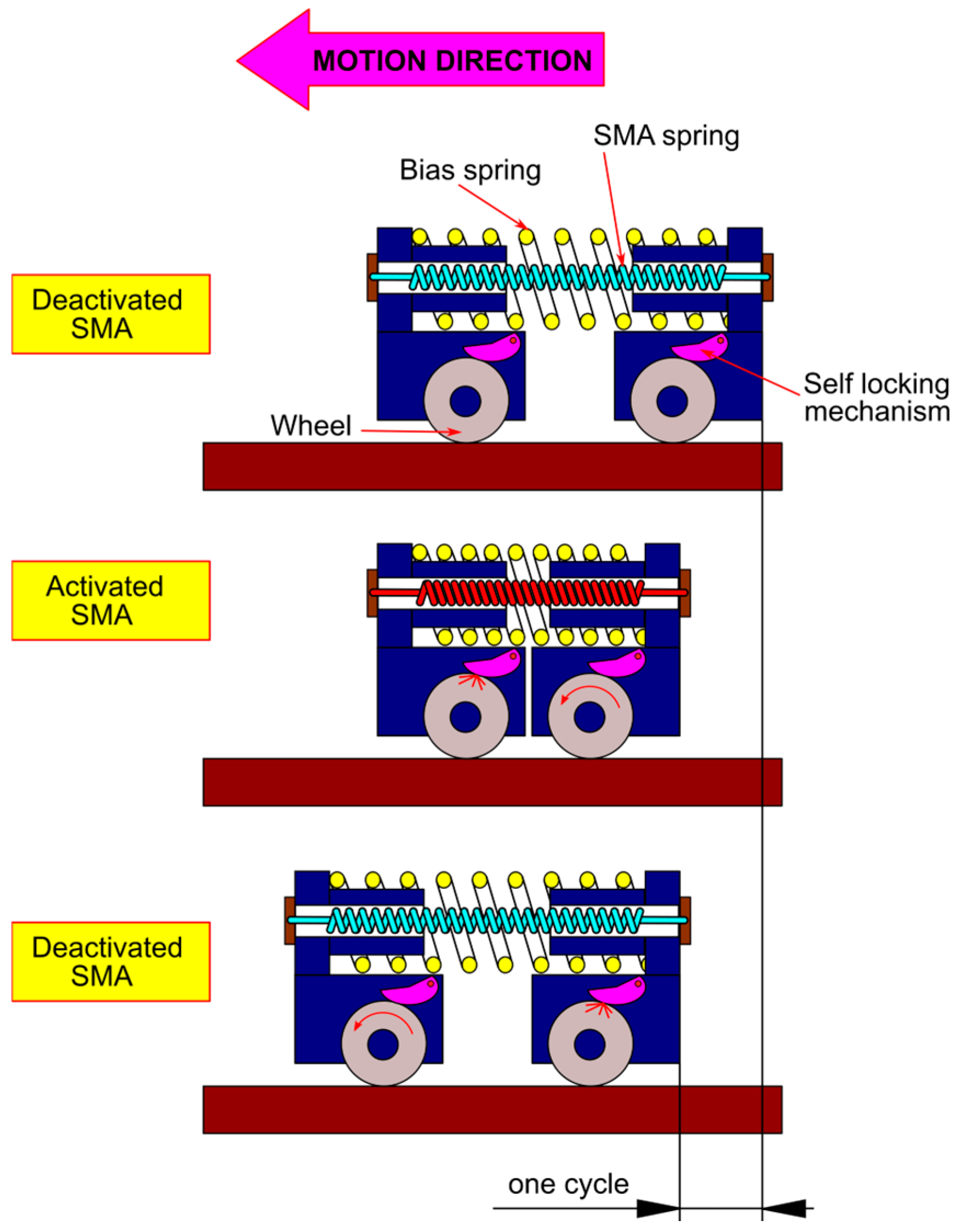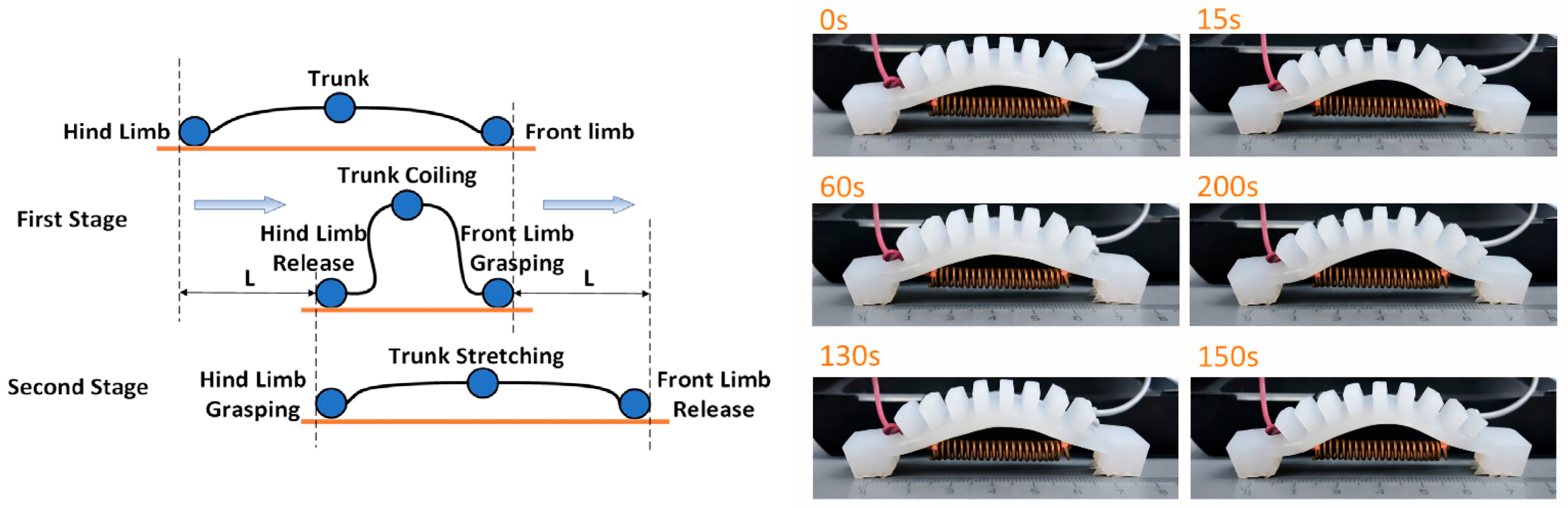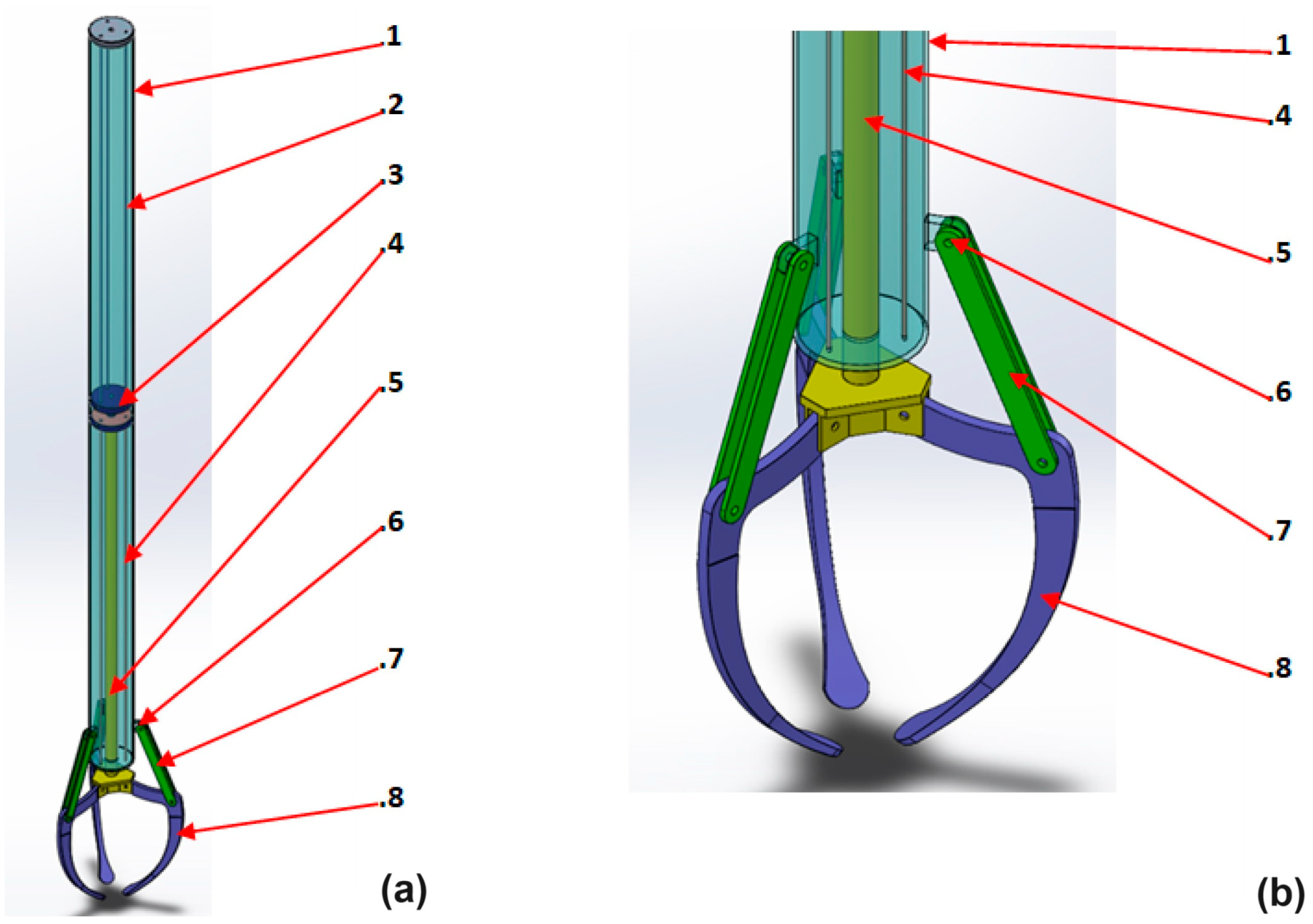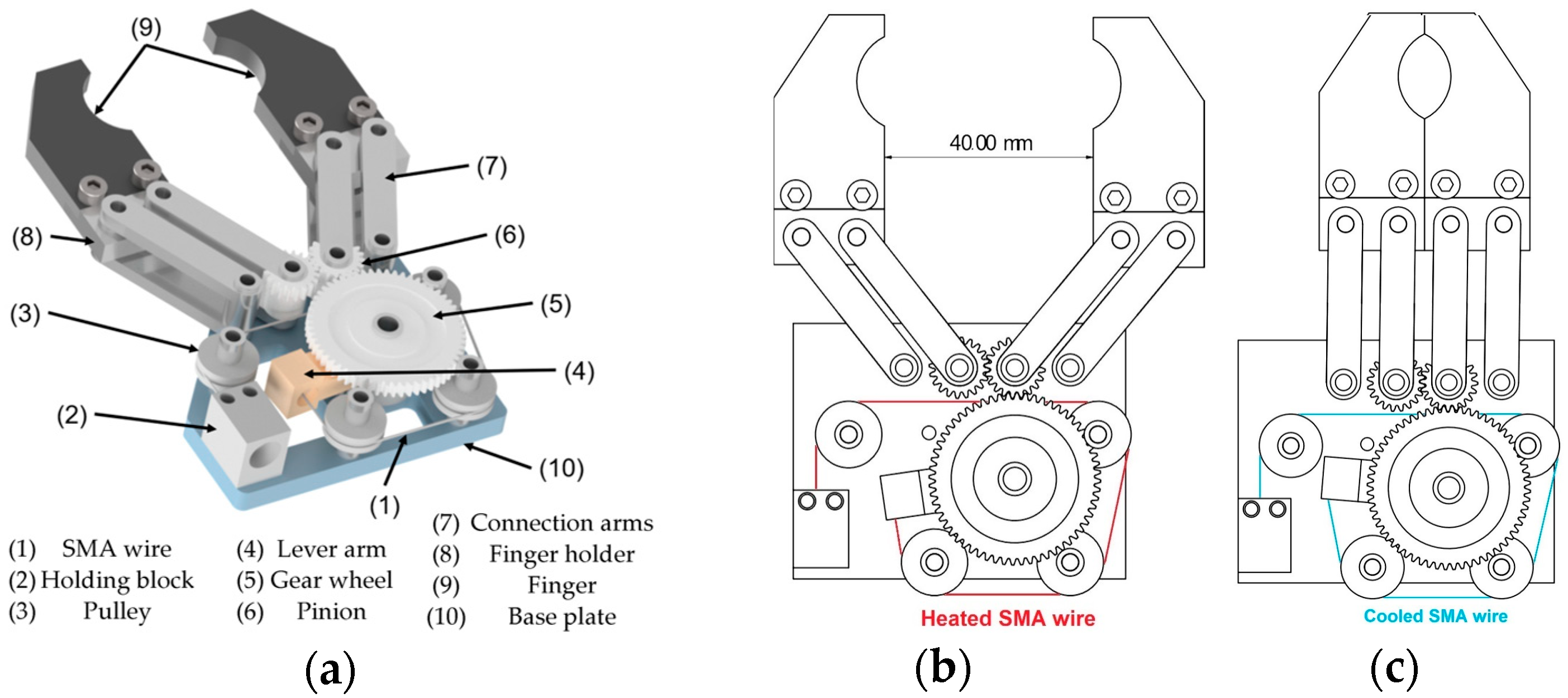

Shape Memory Alloy Actuators in Robotics


Abstract
1. Introduction
- electromagnetic actuators;
- electric motor—driven actuators;
- pneumatic actuators;
- hydraulic actuators.
- piezoelectric actuators;
- magnetostrictive actuators;
- electrostatic actuators;
- thermal actuators based on shape memory alloys (SMAs);
- wax-based thermal actuators.
- What type of motion must be implemented (linear or rotary)?
- What working stroke/rotation and what output force/torque are required?
- What positioning accuracy and operating speed are required?
- What level of efficiency and overall effectiveness is required?
- What additional requirements must be satisfied (e.g., dimensions, mass, control strategy, power-supply constraints, electrical current consumption, required ingress protection rating (IPXX), capability to operate in explosive atmospheres and environments with elevated fire risk, permissible operating temperature and humidity ranges, resistance to chemical agents, minimum service life, cost, etc.)?
1.1. Data Collection, Inclusion, Deduplication and Classification Procedure
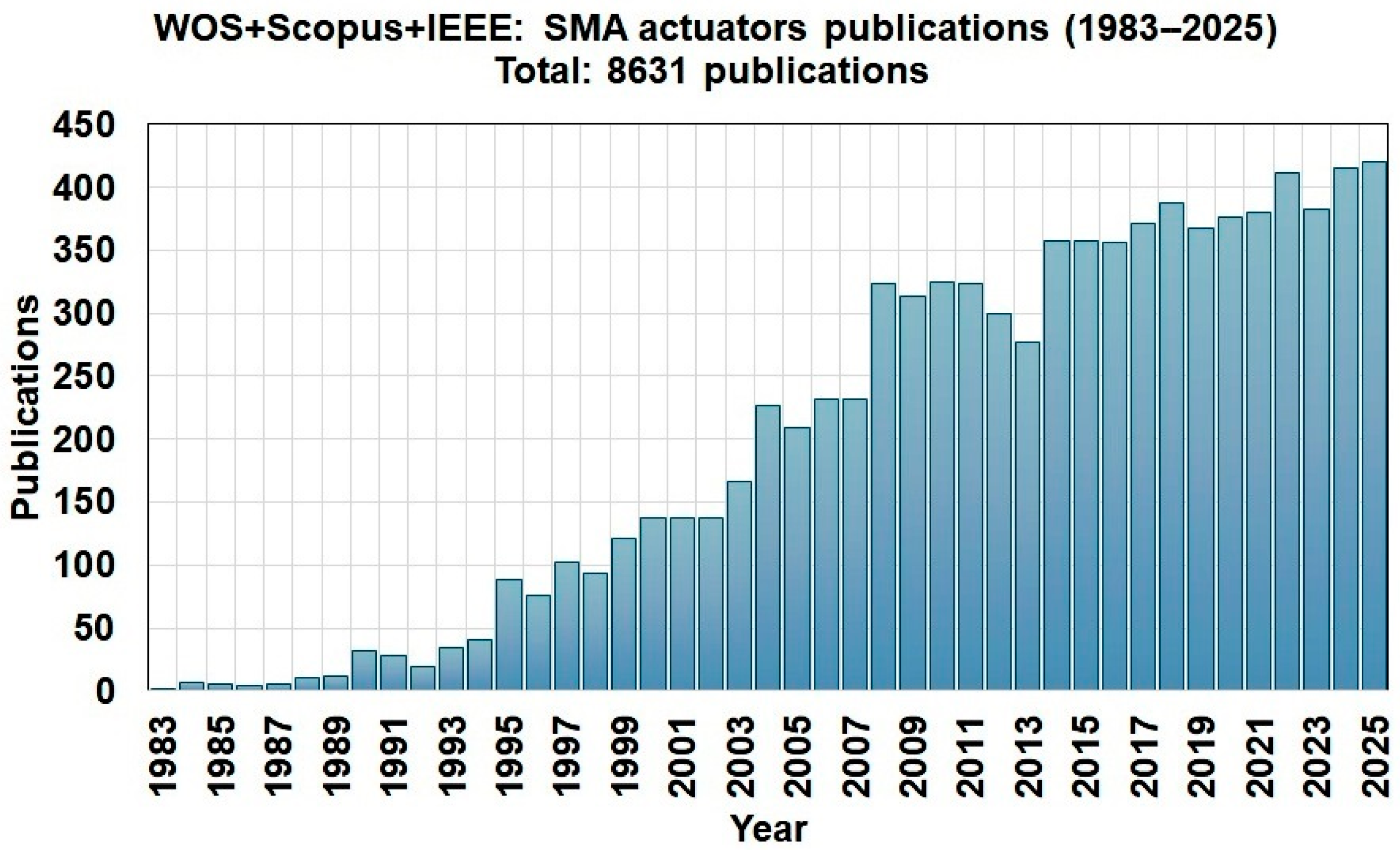
1.1.1. Data Collection and Search Strategy
- WOS: Title, Abstract, Author Keywords, Keywords Plus
- Scopus: Title, Abstract, Keywords
- IEEE Xplore: Document Title, Abstract, Author Keywords, IEEE Terms
- Document type: Article, Conference Paper, Review
- Language: English
- Time limit: no time limit (from the oldest available records to the end of 2025)
1.1.2. Exclusion of Irrelevant Publication Records
- It contained an explicit mention of SMA materials (e.g., “shape memory alloy”, “SMA”),
- It also dealt with their use as an actuator (not just material research),
- It had a content overlap with technical or robotic applications.
- focused exclusively on material characterization without an actuation application,
- related exclusively to superelasticity without an actuation use,
- without an available abstract (if relevance could not be verified),
- were clearly irrelevant (e.g., biomedical stents without an actuation function).
1.1.3. The Process of Deduplication of Publication Records Between WOS, Scopus and IEEE Xplore Databases
- Primary rule—DOI match: If two records had identical DOIs → they were considered duplicates. One record was kept (preferably with full abstract).
- Secondary rule—title + year + first author match: Used in case of missing DOIs. Publication names were normalized (converted to lowercase; removed punctuation; removed extra spaces).
- In case of conflicts, the record with full abstract, available DOI, richer metadata was kept.
1.1.4. Publication Record Classification Process
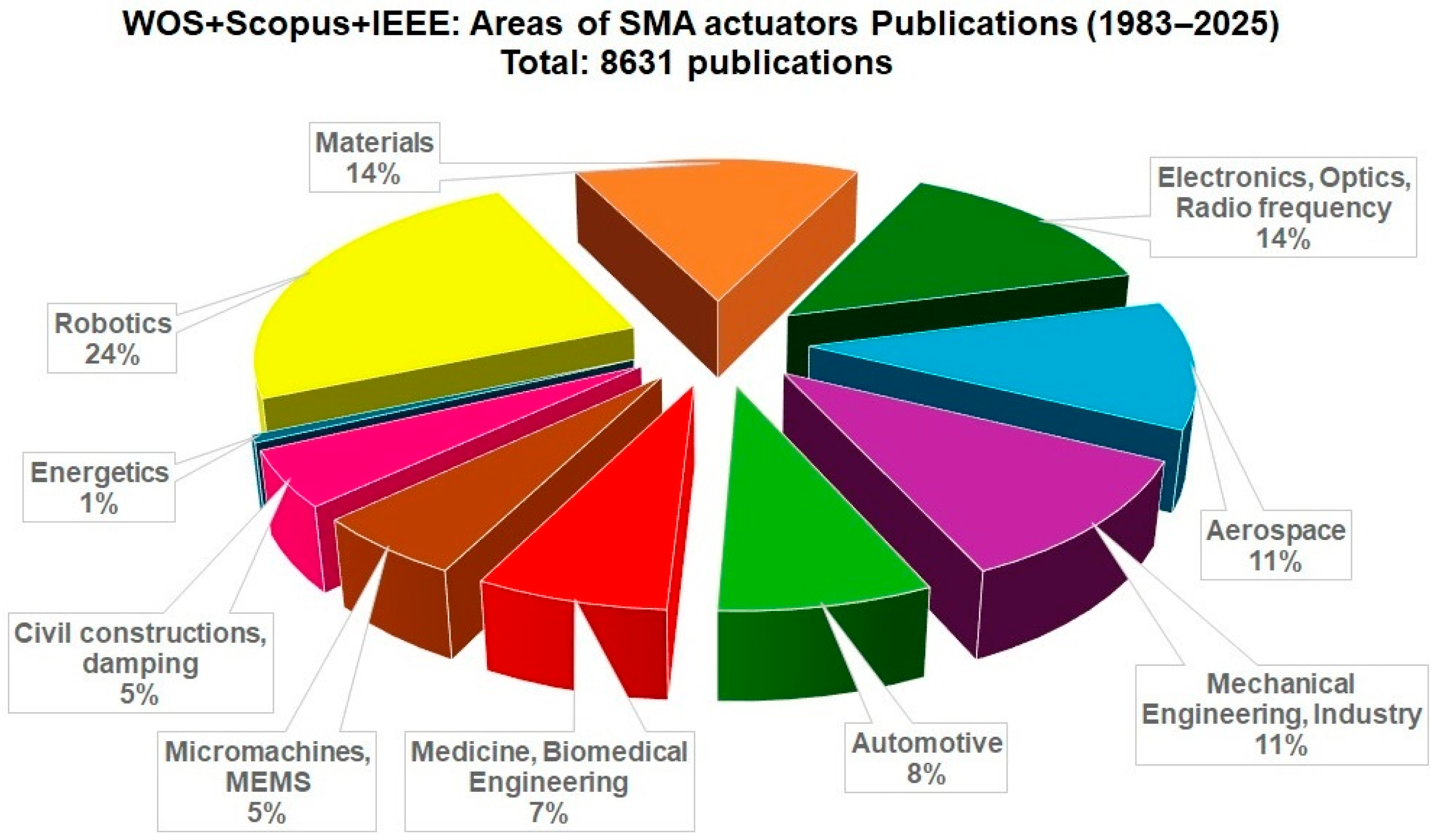
- Application area (robotics, medicine, aerospace, MEMS, civil construction, industry, etc.)
- Thematic focus in robotics (mobile robots, microrobotics, grippers, manipulators, exoskeletons, control, etc.)
1.1.5. Pseudocode of Publication Record Classification Process
| Pseudocode: |
| INPUT: WOS_records, Scopus_records, IEEE_records STEP 1: Merge all records R ← WOS_records ∪ Scopus_records ∪ IEEE_records STEP 2: Normalize metadata for each record r in R: r.doi_norm ← normalize_DOI(r.DOI) r.title_norm ← normalize_title(r.Title) r.first_auth ← first_author(r.Authors) r.key_noDOI ← (r.title_norm + r.Year + r.first_auth) STEP 3: Apply inclusion criteria (Title + Abstract + Keywords) R ← keep r where has_SMA_terms(r) AND has_actuator_terms(r) STEP 4: Deduplicate R ← deduplicate_by_DOI(R) R ← deduplicate_by_key_noDOI(R) // (title_norm + year + first_author) for records without DOI STEP 5: Classify application area for each record r in R: r.area ← assign_primary_area(r.Title, r.Abstract, r.Keywords) STEP 6: Classify robotics topic (only for robotics) for each record r in R where r.area == “Robotics”: r.topic ← assign_robotics_topic(r.Title, r.Abstract, r.Keywords) // treat “micromachine” as robotics if context indicates robot mobility/function OUTPUT: Deduplicated + classified dataset R (area, topic) |
1.2. Organization of Rest of the Paper
2. Materials and Methods
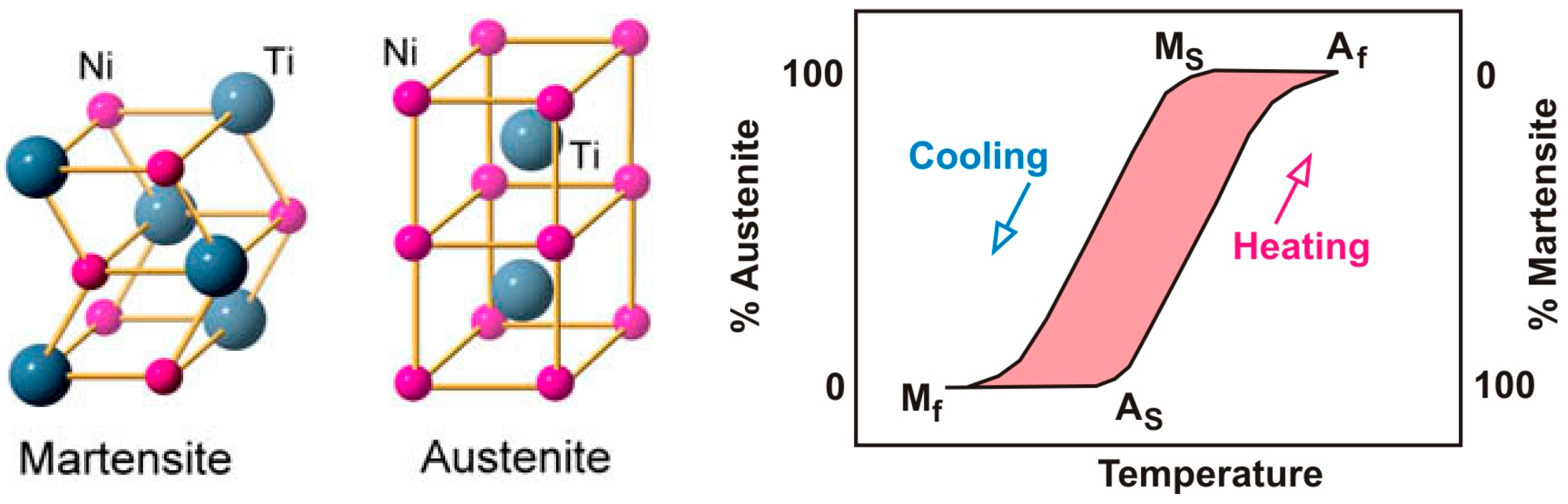
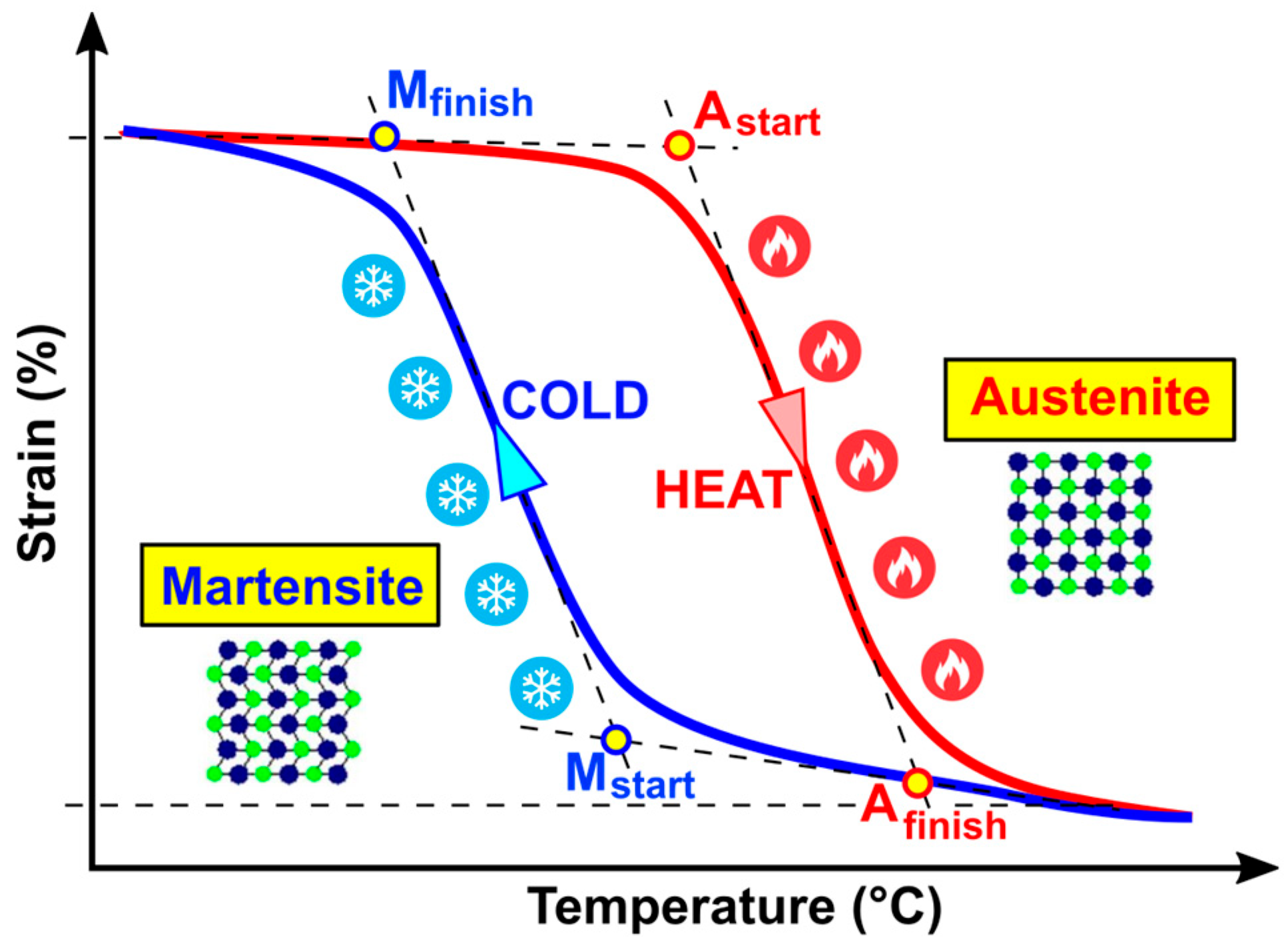
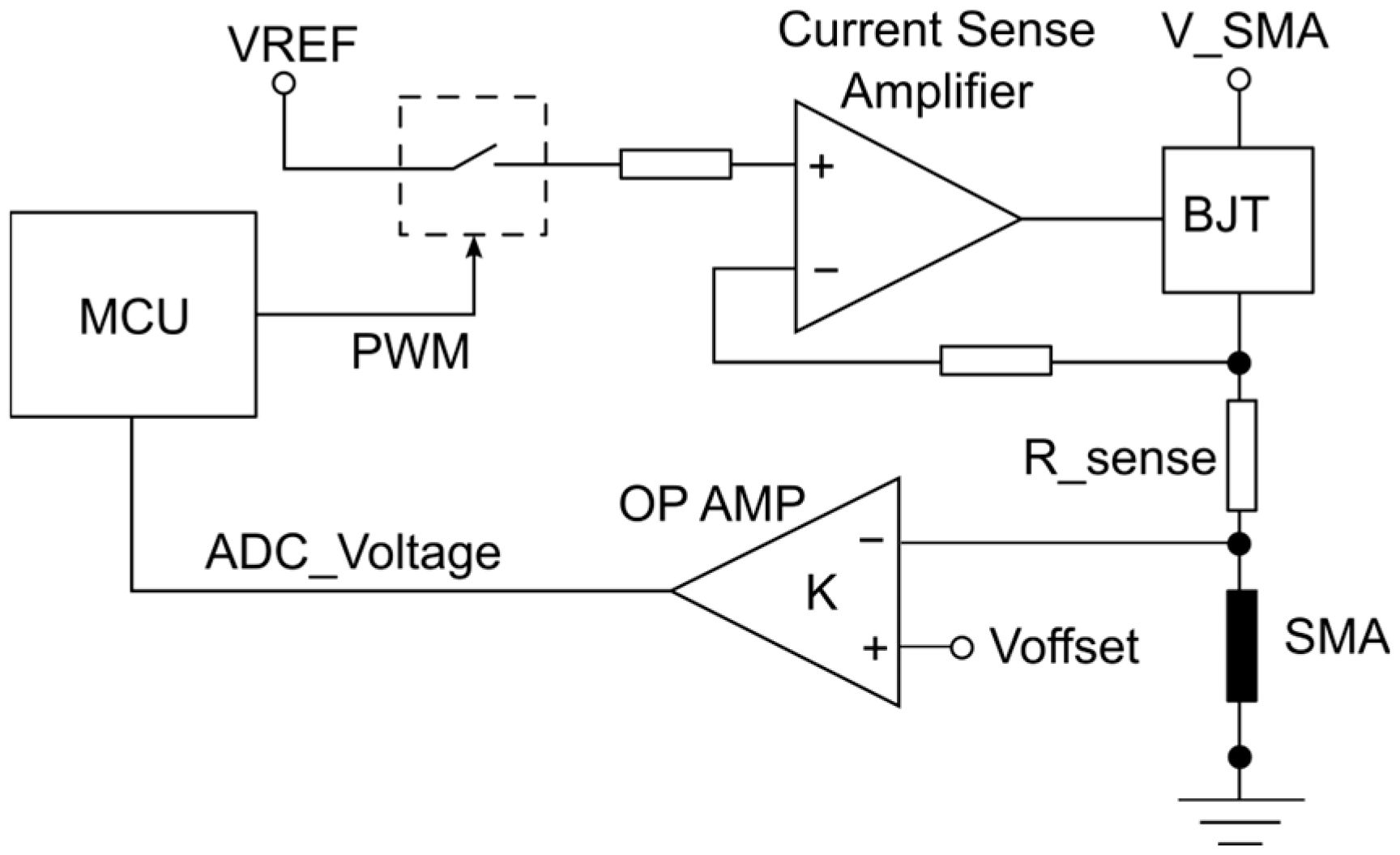
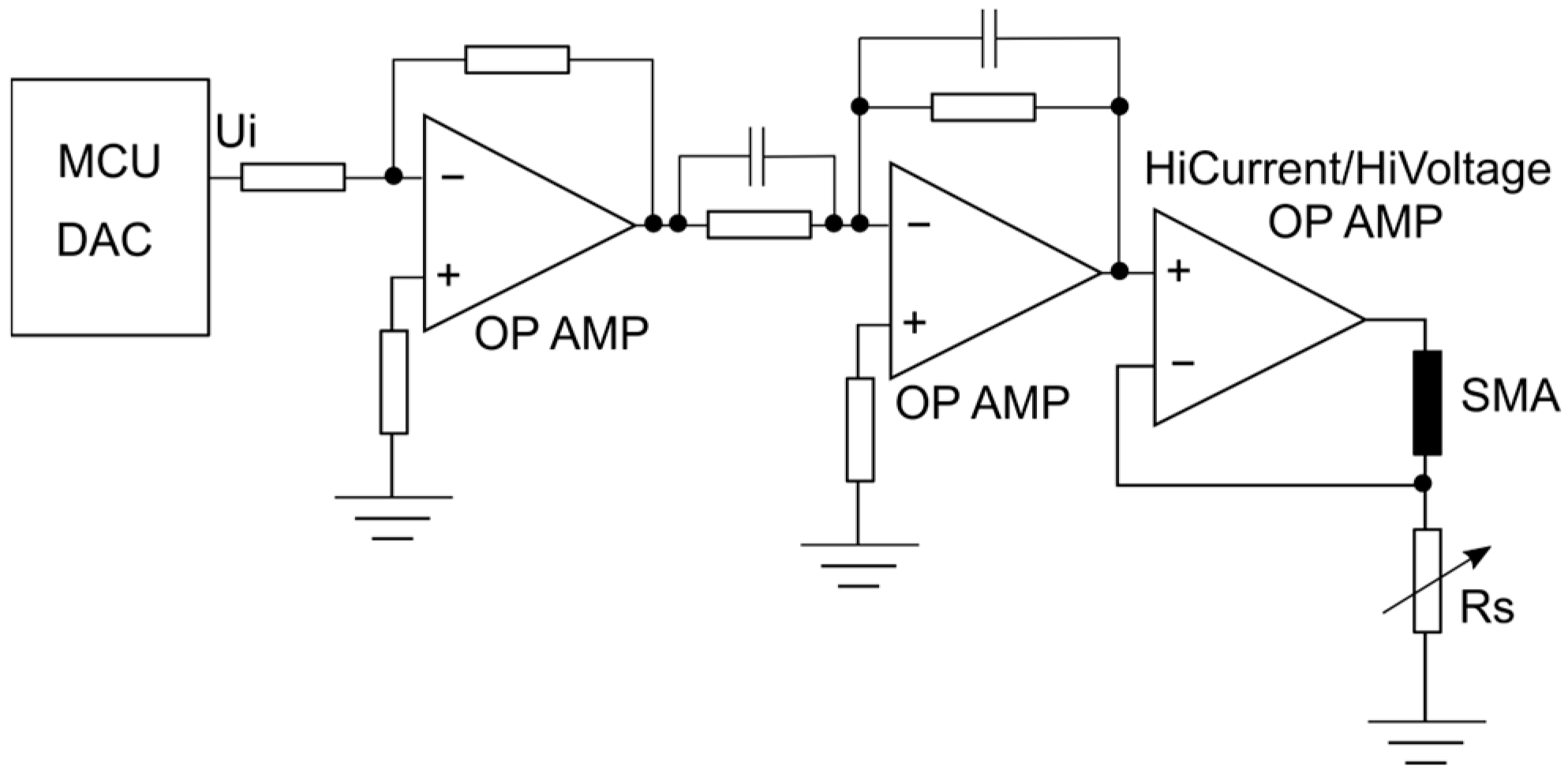
- SMA actuator activation can be achieved using a power source capable of regulating a constant electric current.
- SMA actuators operate quietly.
- A key advantage is their biocompatibility, which makes them well-suited for applications in biomedical engineering.
- A very limited stroke (typically up to ~5% of the active length).
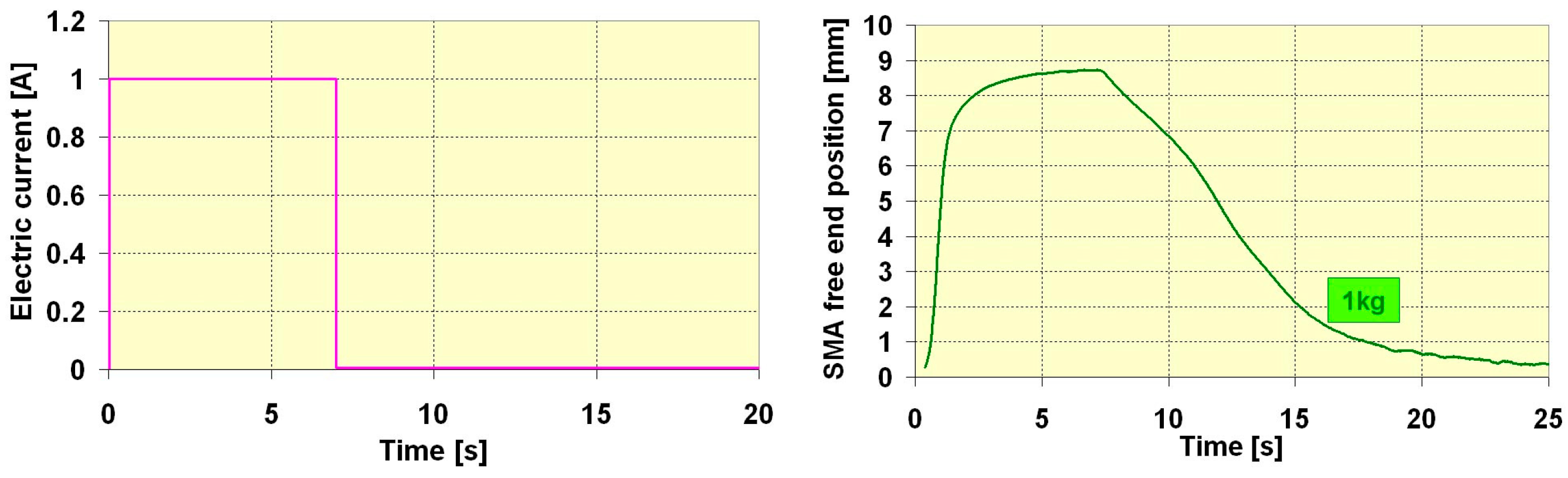
- A slow response time (one motion cycle usually takes several seconds, depending on actuator dimensions and the heating and cooling approach).
- One of the most significant limitations is the long response time, which is governed by the heating and, in particular, the cooling rate. Cooling is typically the primary bottleneck; therefore, dedicated cooling methods must be considered.
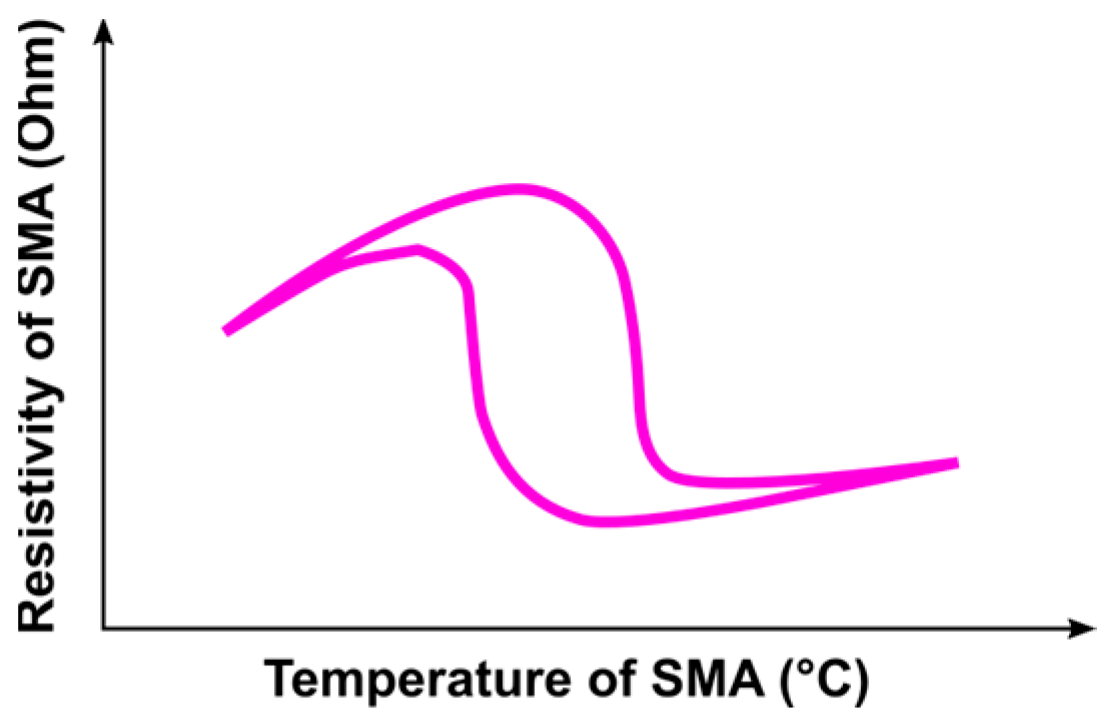
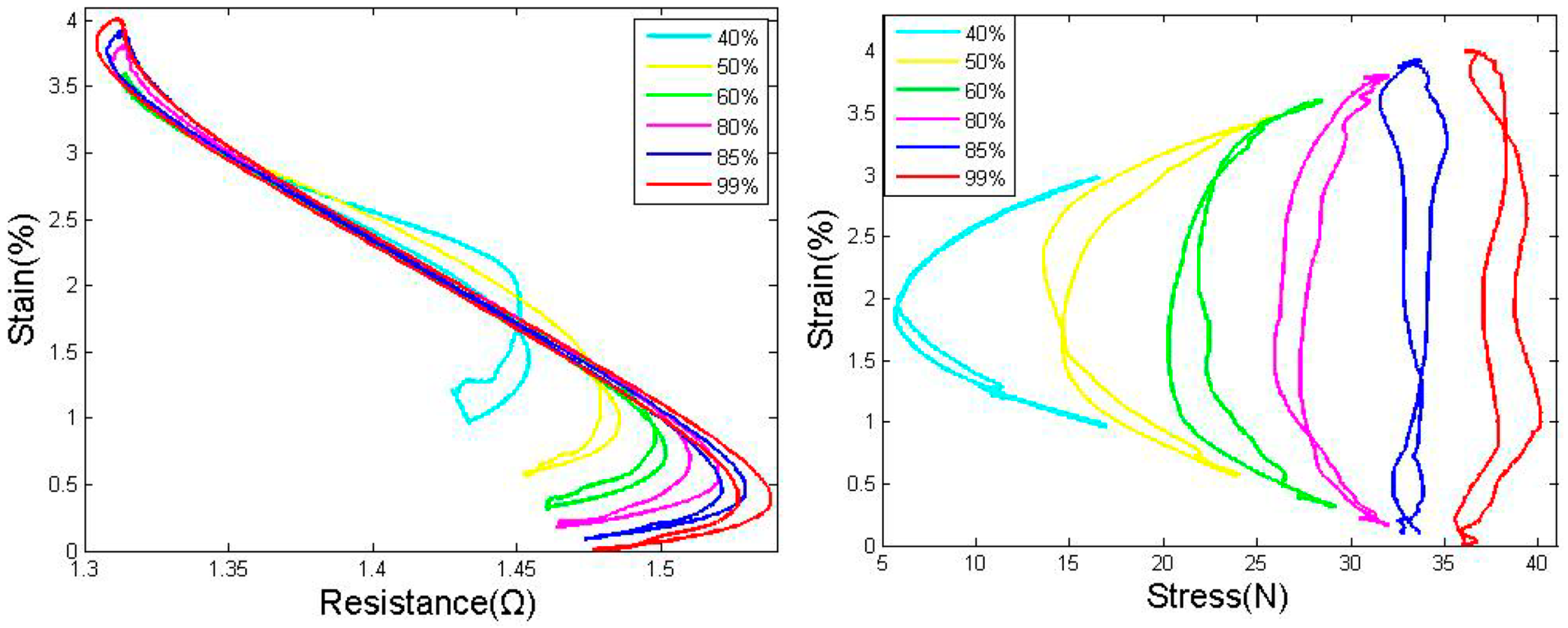
- Pronounced nonlinearity and hysteresis in the relationship between stroke and excitation current complicate position control of SMA actuators. If only end-to-end motion between two stroke limits is required, control is generally straightforward; however, difficulties arise when accurate control to intermediate positions is needed.
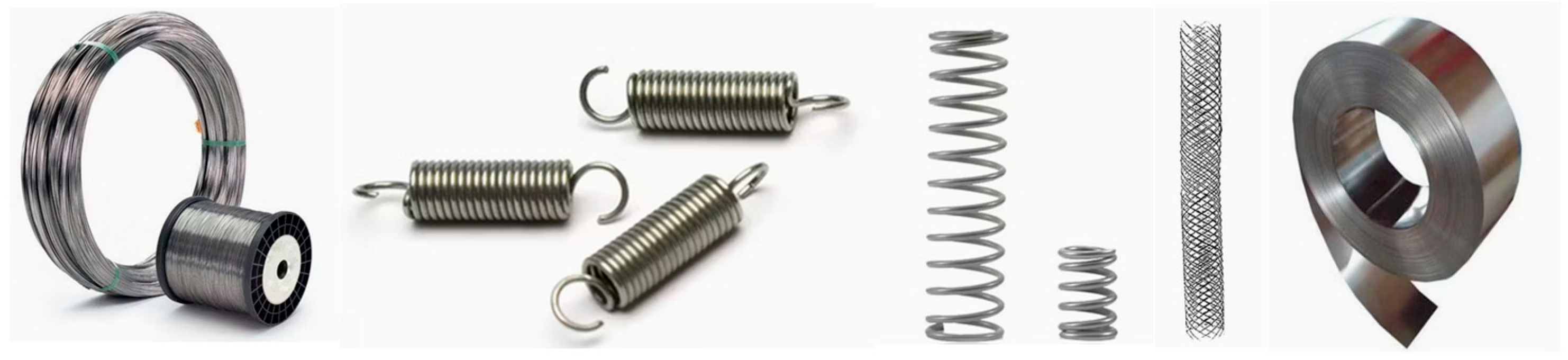
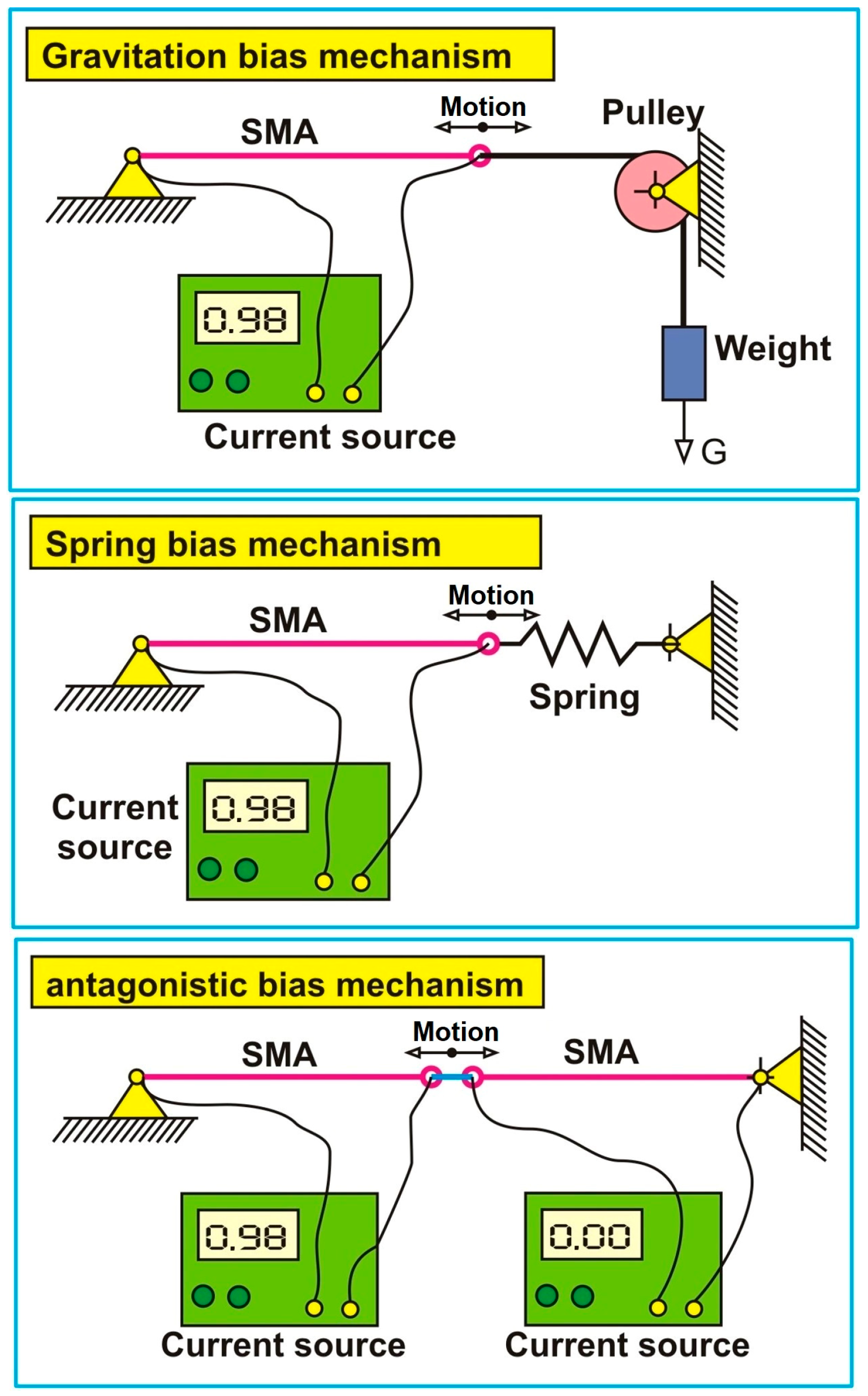
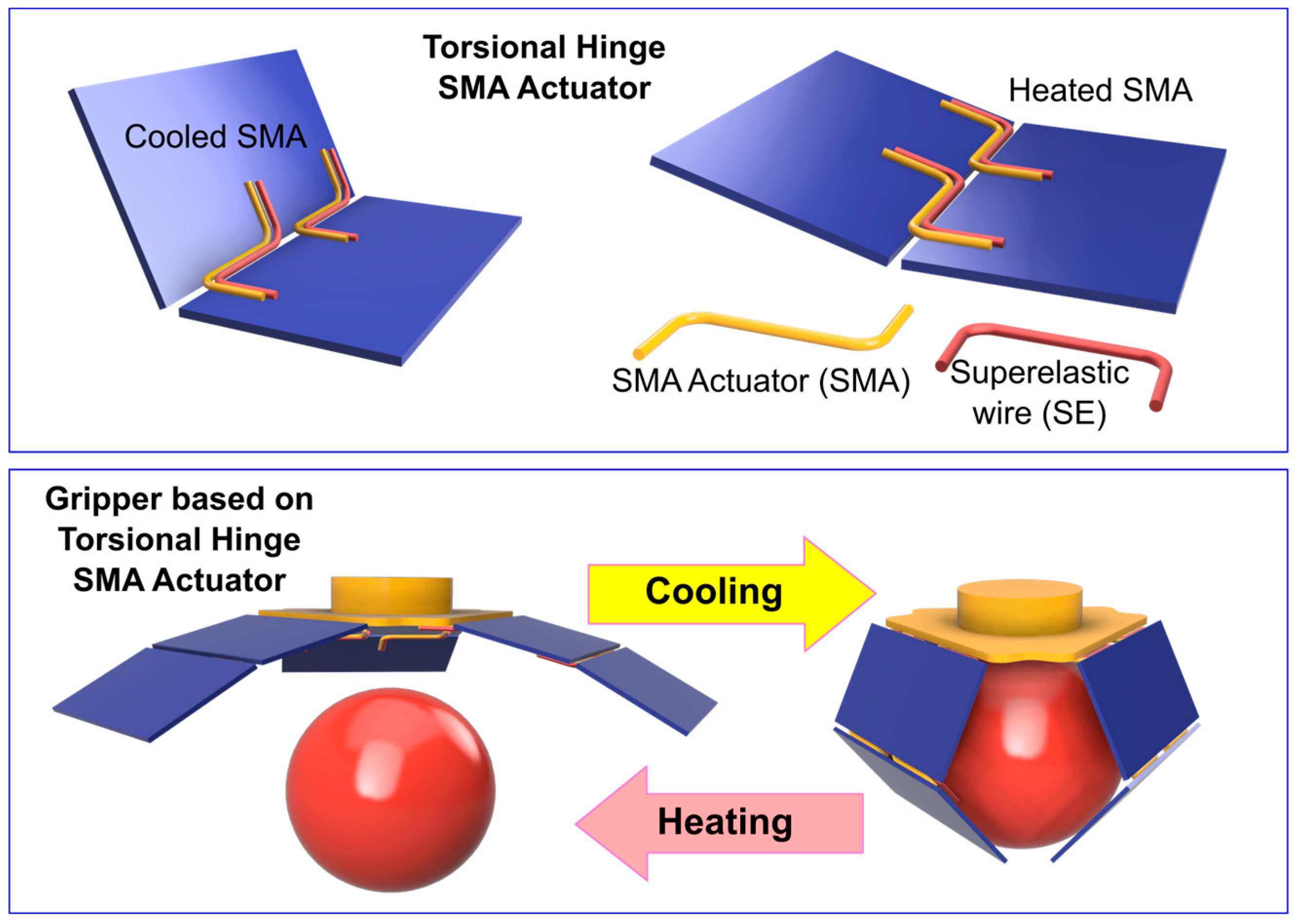
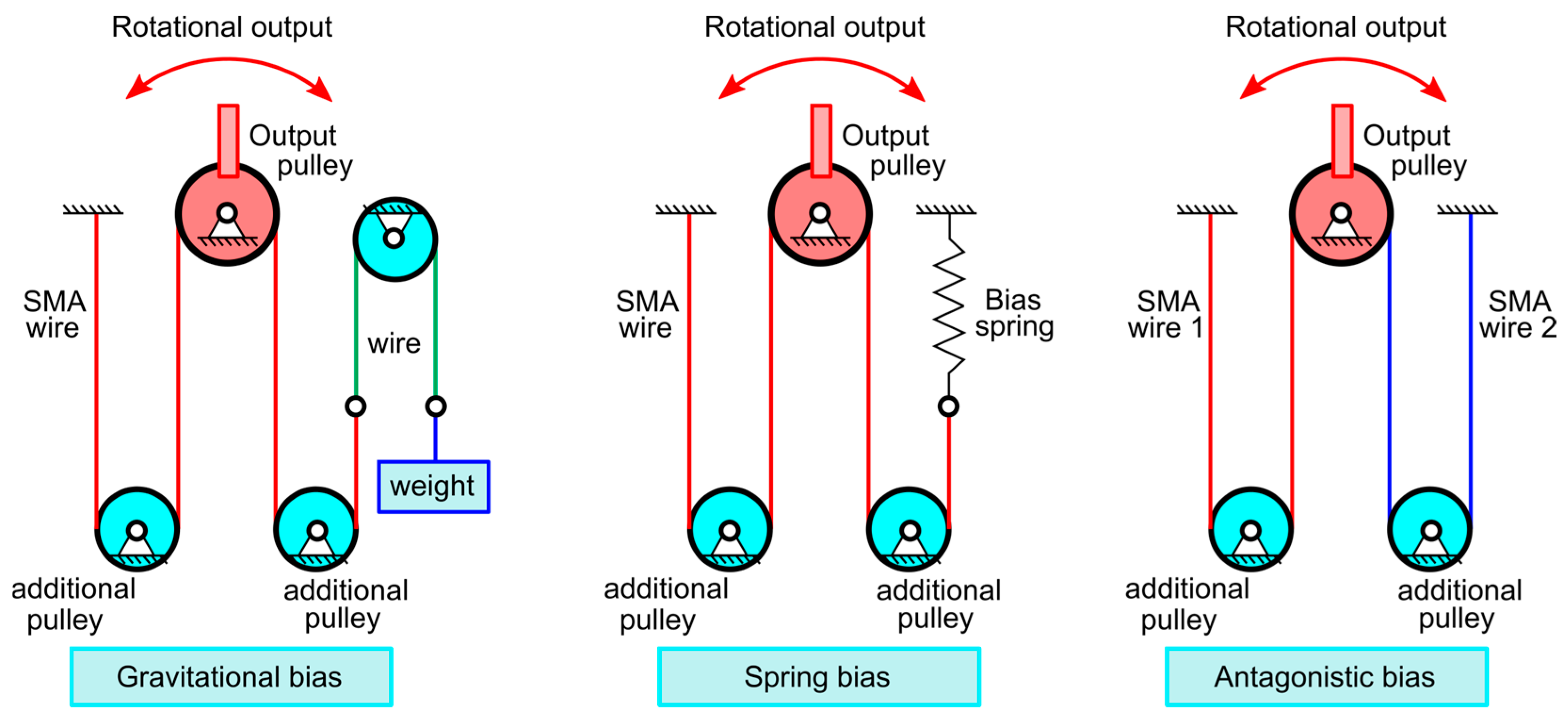
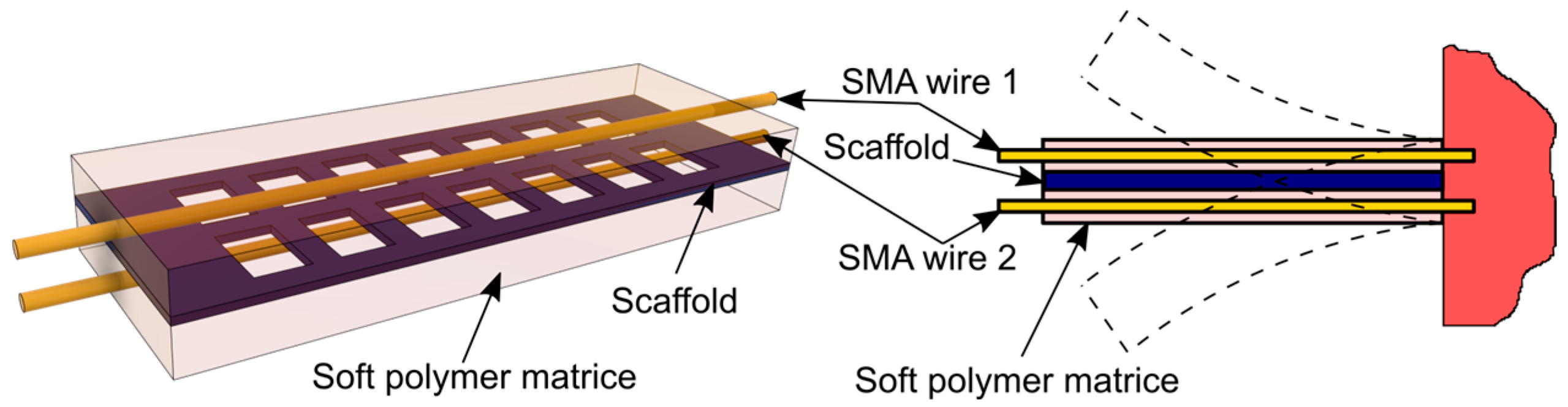
2.1. Actuator Design Configuration—Setup of Actuator
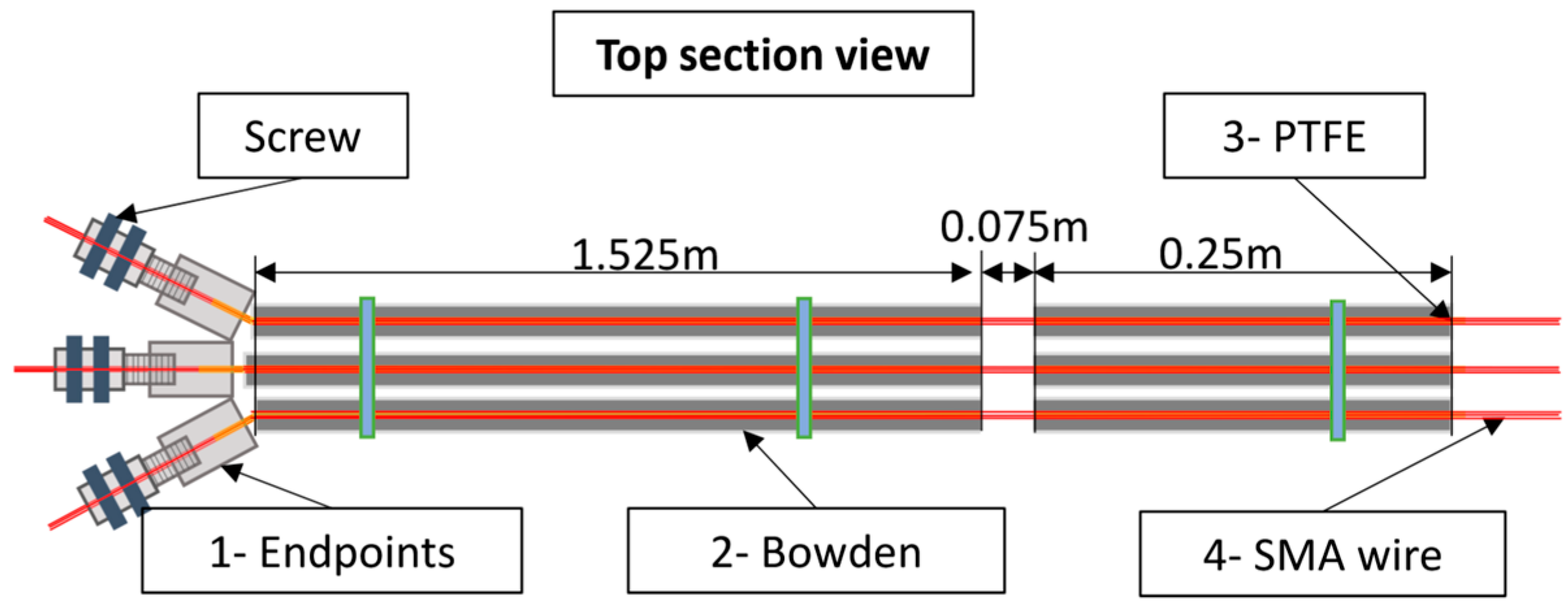
2.2. Termination and Fixation of SMA Actuators
2.3. Excitation of SMA Actuators
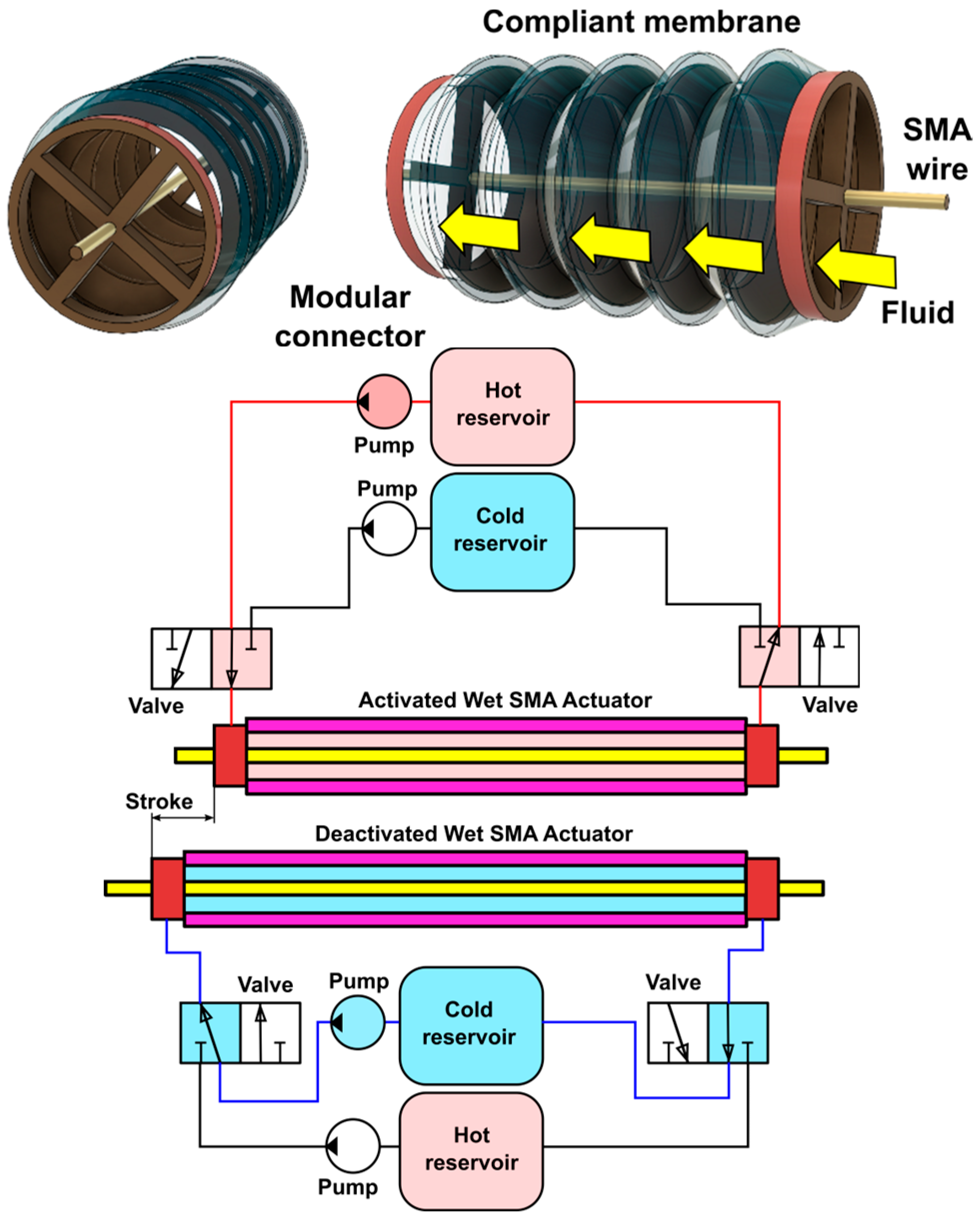
2.4. Cooling of SMA Actuators
2.5. Control Strategies of SMA Actuators
- ➢
- Open-loop current control (constant current or PWM-based)
- ➢
- Closed-loop position/force control
- ➢
- Model-based control with hysteresis compensation
- ➢
- Sensorless (self-sensing) control based on resistance estimation
2.5.1. Open-Loop and Current-Based Control
- ➢
- thermal time constants (0.1–2 s depending on wire diameter),
- ➢
- nonlinear resistance–temperature relation,
- ➢
- absence of hysteresis compensation.
2.5.2. Closed-Loop Control with External Sensing
- ➢
- position sensors (encoders, LVDTs, flex sensors),
- ➢
- force sensors (load cells),
- ➢
- temperature sensors (thermocouples).
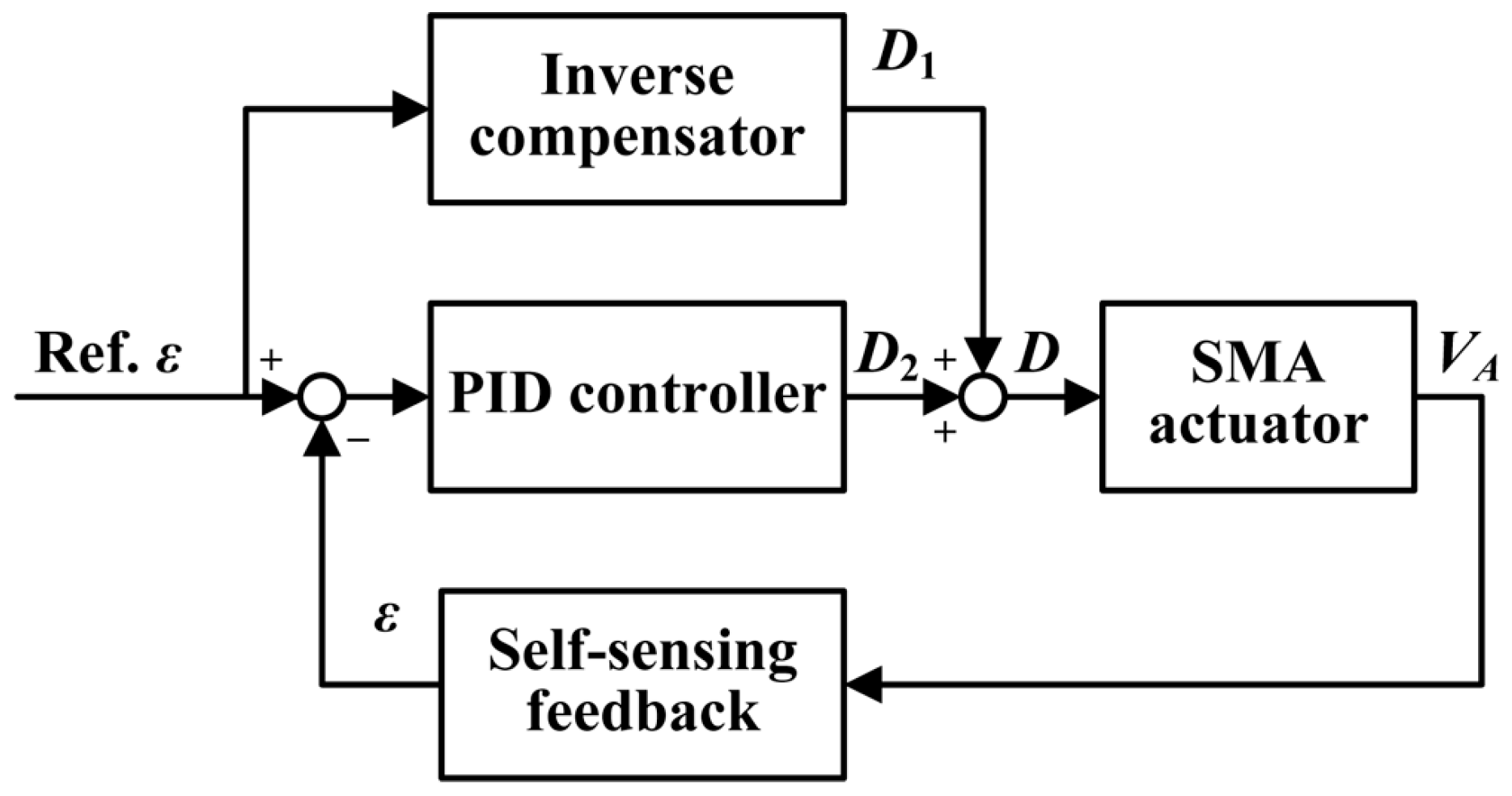
2.5.3. Hysteresis Compensation and Model-Based Control
- ➢
- Preisach-based models
- ➢
- Bouc–Wen models
- ➢
- Prandtl–Ishlinskii models
- ➢
- phenomenological thermomechanical models
- ➢
- reduced overshoot,
- ➢
- faster settling times,
- ➢
- improved repeatability,
- ➢
- enhanced robustness to ambient temperature variations.
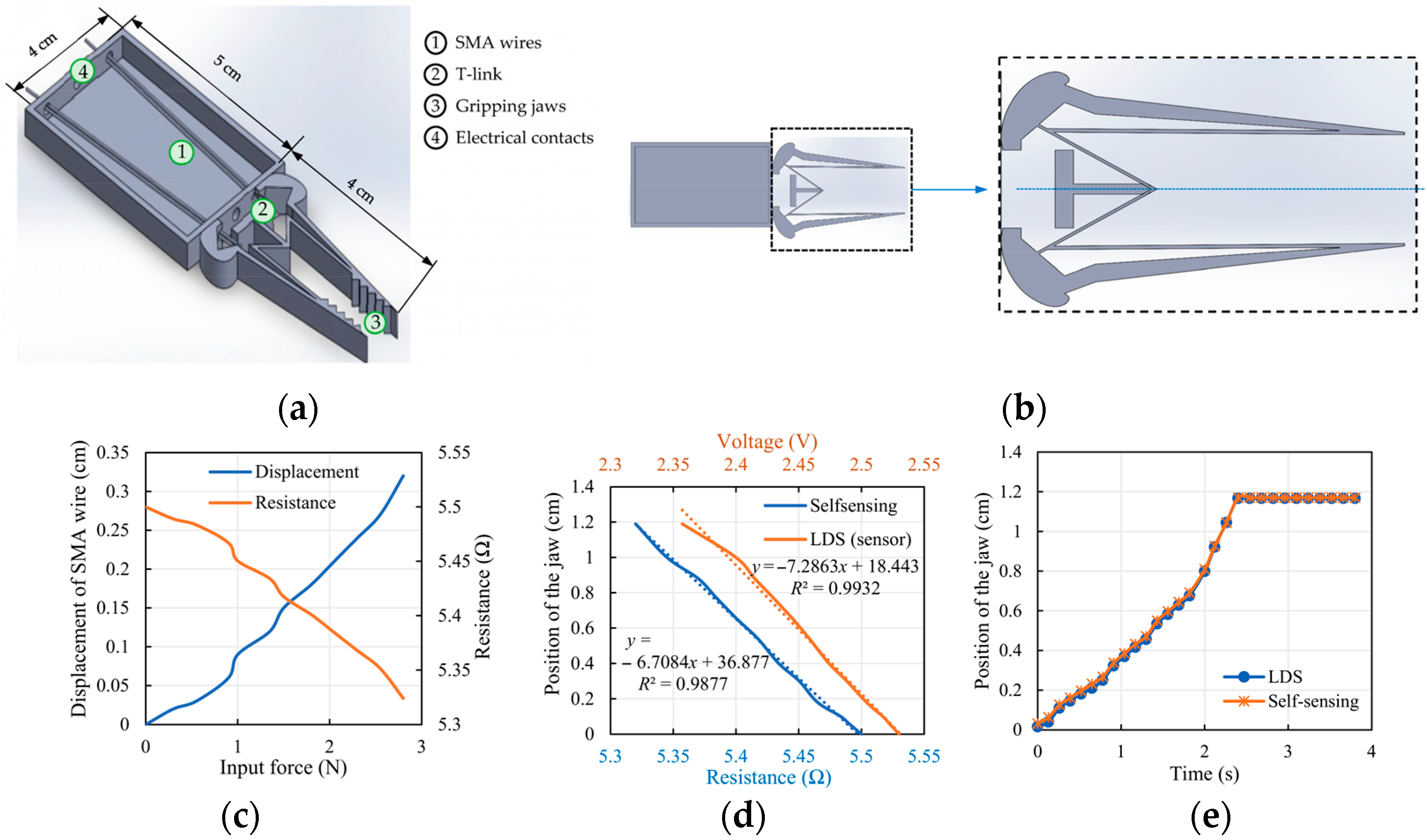
2.5.4. Self-Sensing (Resistance-Based Sensing)
- ➢
- eliminates external position sensors,
- ➢
- reduces system mass and wiring complexity.
- ➢
- resistance–strain relationship is nonlinear and temperature-dependent,
- ➢
- sensitive to noise and supply fluctuations.
- ➢
- sampling frequencies up to 1 kHz,
- ➢
- ➢
- separate heating/cooling mappings,
- ➢
- hysteresis compensation, or
- ➢
2.5.5. Thermal Management Considerations
- ➢
- ➢
- ➢
- ➢
2.5.6. Control Strategies in the Context of SMA Actuator Applications in Robotics
3. Application Potential of Shape Memory Alloy Actuators in Robotics
- ➢
- compact, structurally simple mechanisms with minimal peripheral integration (commonly grippers and micro-manipulation systems), and
- ➢
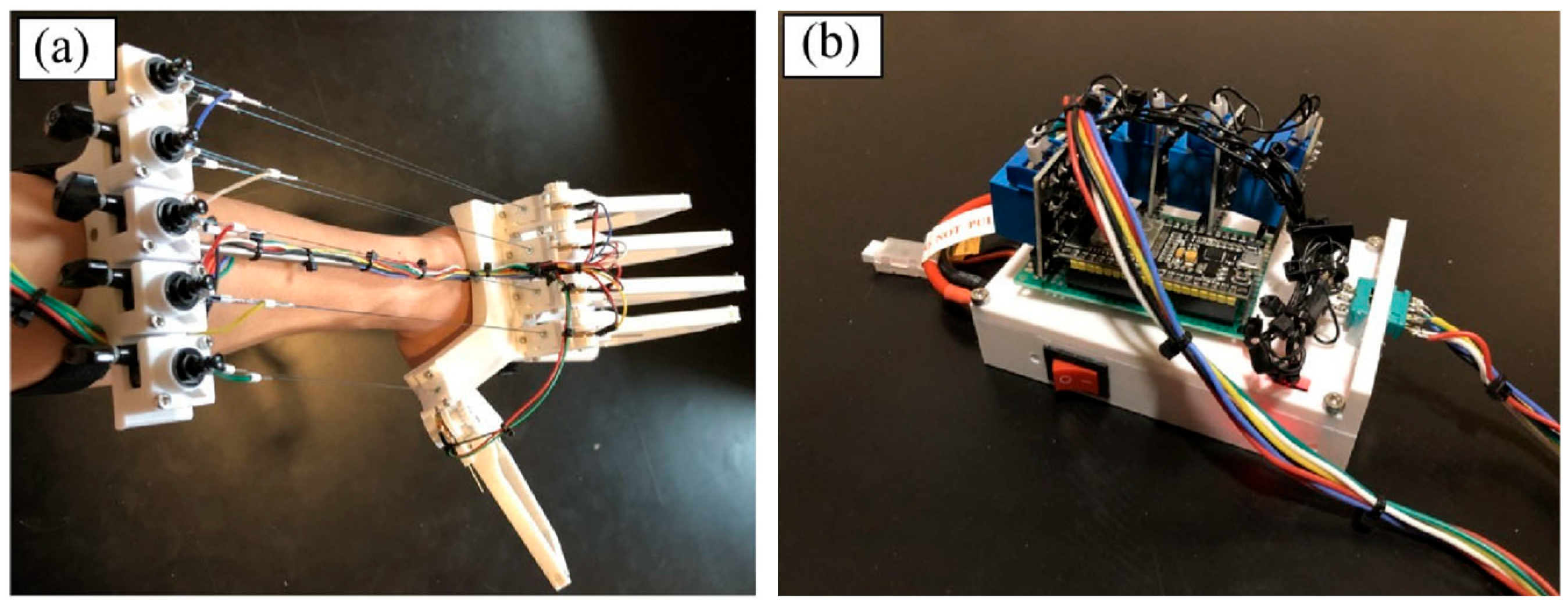
- performance-oriented, engineering-grade systems (primarily wearable devices and exosuits), where actuation is tightly integrated with sensing, control, and thermal management [116].

| Robotic Subdomain | Application | SMA Type | Stroke, Deformation, Strain | Force, Torque | Reaction, Frequency | Cooling |
|---|---|---|---|---|---|---|
| Grippers | Monolithic compliant gripper for microassembly [101] | SMA wire (≈0.15 mm) | Max finger tip stroke 1.2 cm; Max SMA contraction 3% | SMA force 2.8 N, Gripper force 0.38 N | Not mentioned | Passive |
| Wearables/exosuits (rehabilitation) | Soft exosuit elbow with multi-bundle SMA [49] | multiple wires (bundle), wire ~0.51 mm | Rotation 0–120°, position error 0.03 mm | 105 N | 0.065 Hz, 28 s per cycle | Passive |
| Wearables/exoskeleton (SMA springs) | Soft bionic elbow exoskeleton [50] | SMA springs | Rotation 0–80° | 48 N | 0.13 Hz | Passive |
| Soft/biomimetic robots | Aurelia-Inspired Robot Based on SMA Artificial Muscles [52] | SMA “artificial muscle modules” from SMA wires | Not mentioned Locomotion | Not mentioned | 2 Hz, max. velocity 12 cm/s | Water cooling |
| Robotic hands + microrobotics (SMA fibers/coils) | Functionalized SMA coil (PDA-AgNW) for robotic arm and microrobot [54] | SMA coil (SMAc), surface modified | Strain 40–200% | 0.77 N (40 = strain), 1.72 N (200% strain) | 1 Hz | Passive |
| Exoskeleton (ankle) | SMA-driven ankle exoskeleton [117] | SMA wire | Stroke 4 mm | 150 N | 0.5 Hz | Not mentioned |
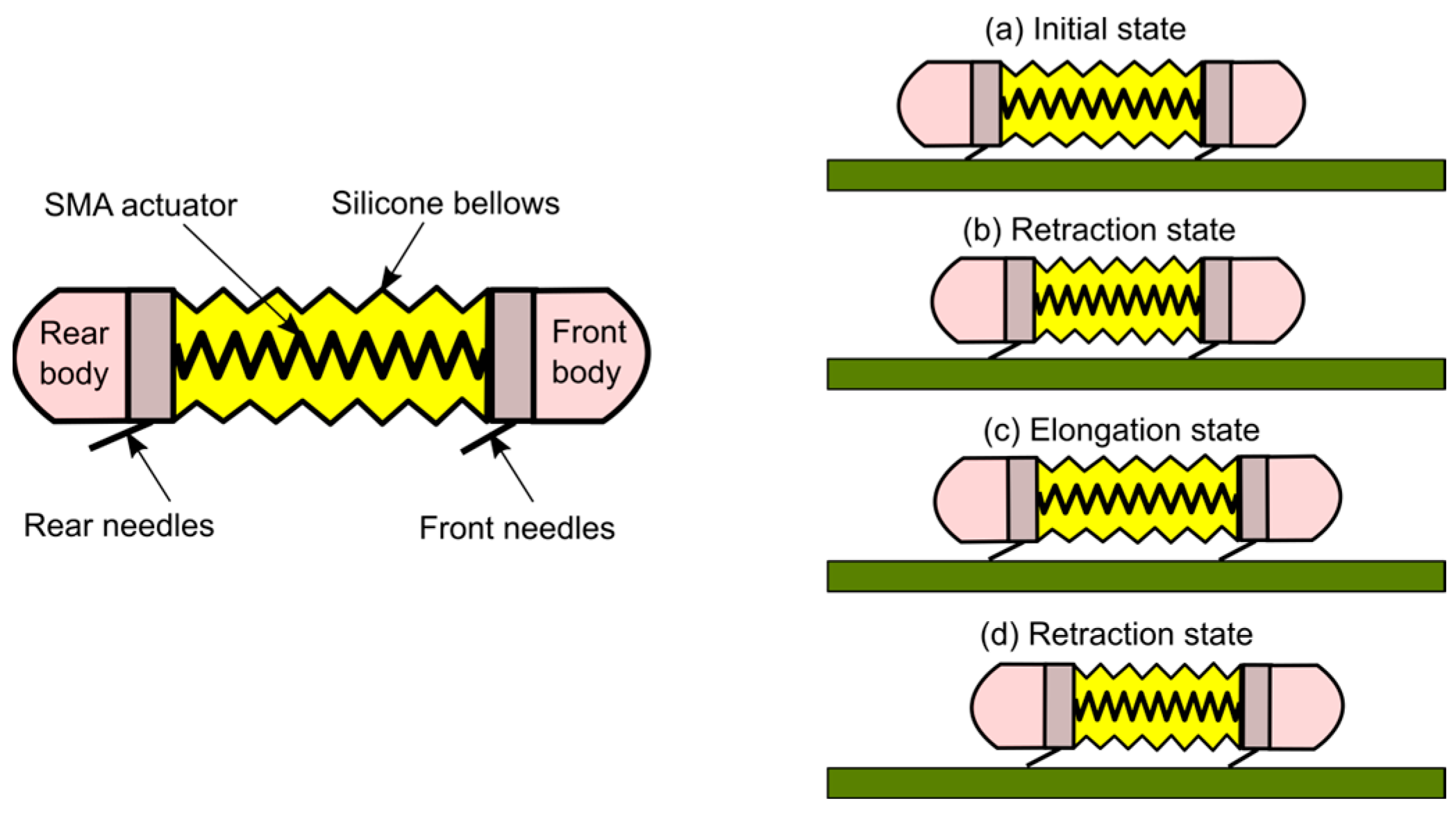
3.1. Mobile Robots
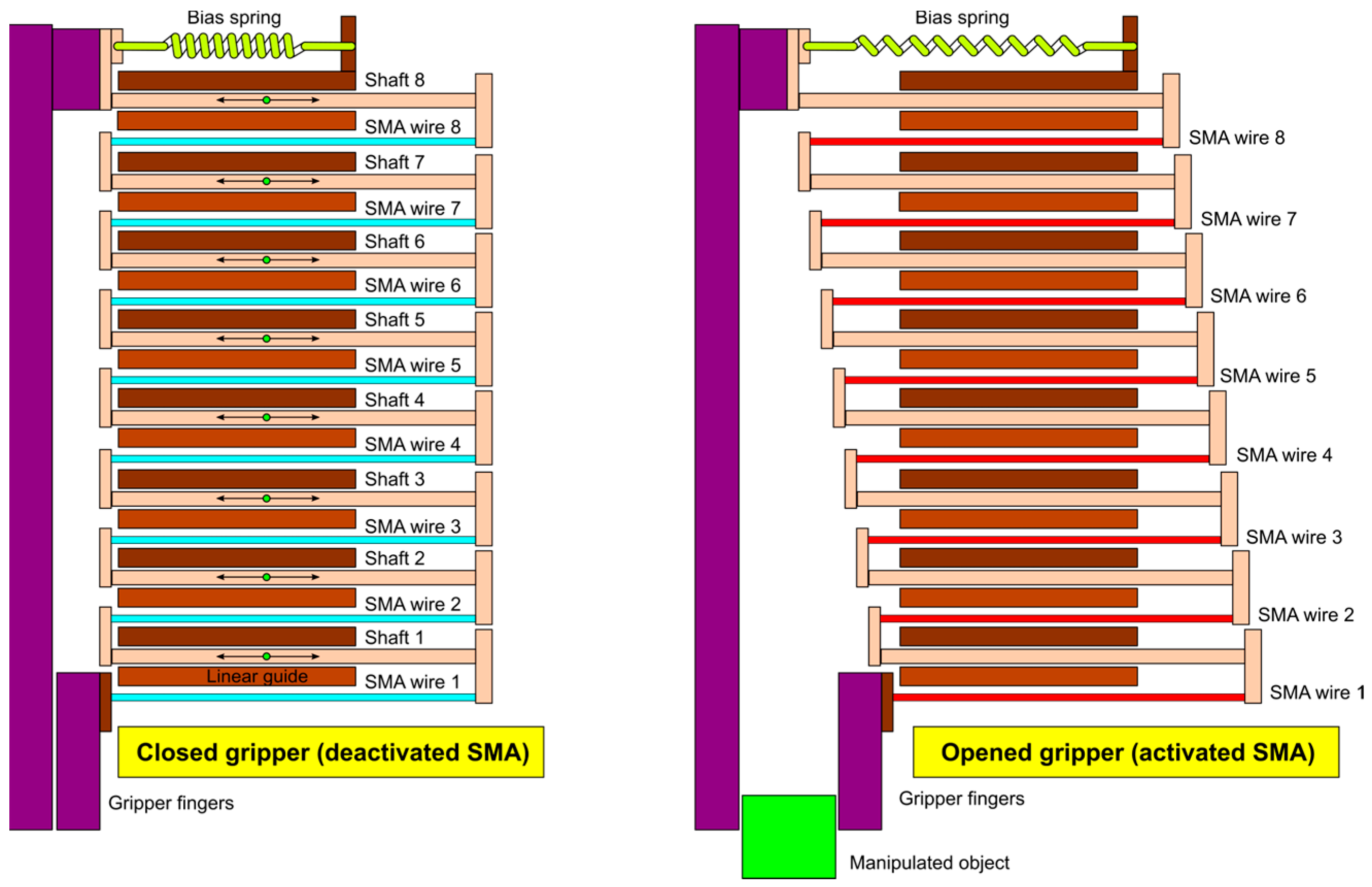
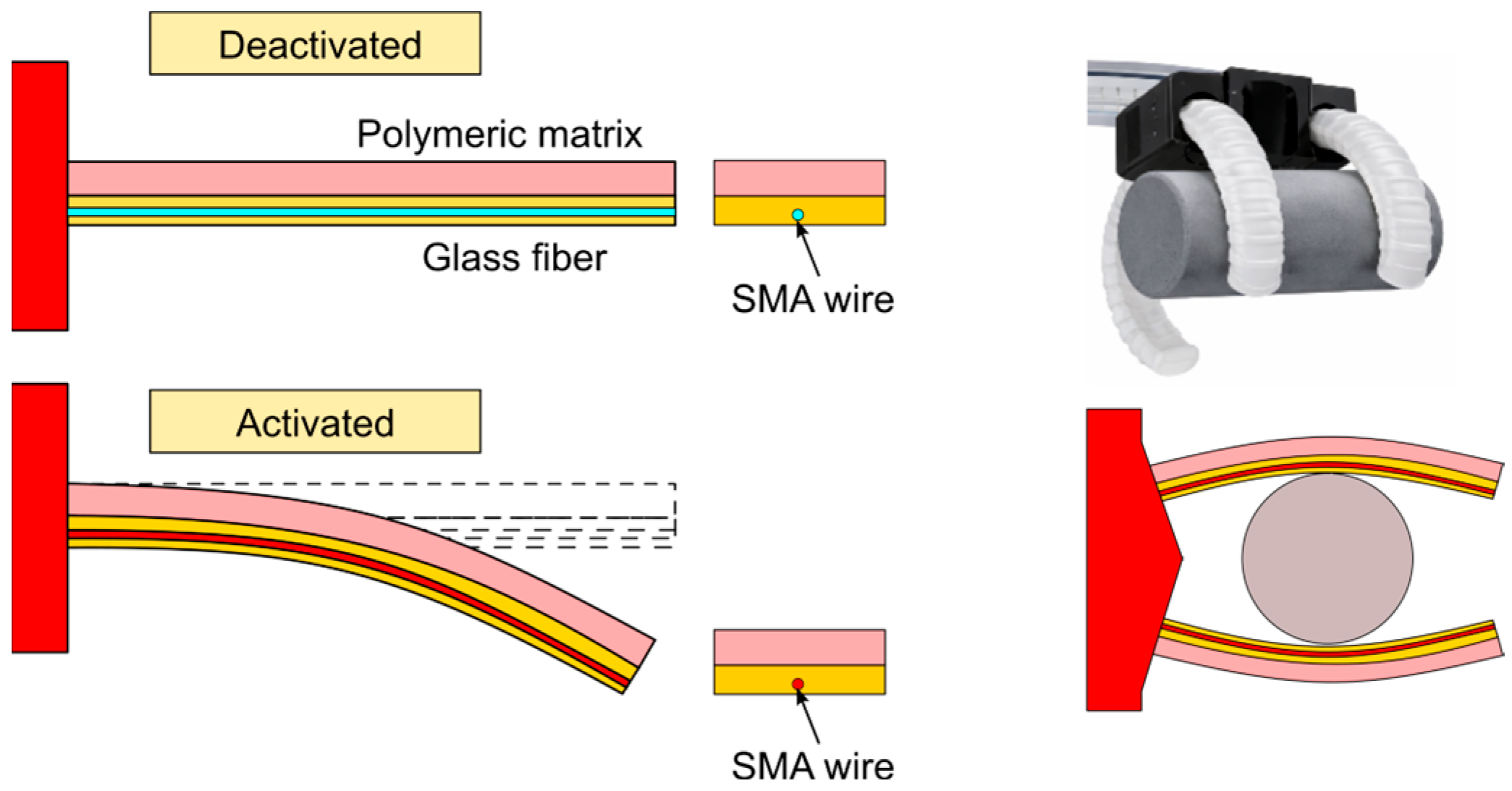
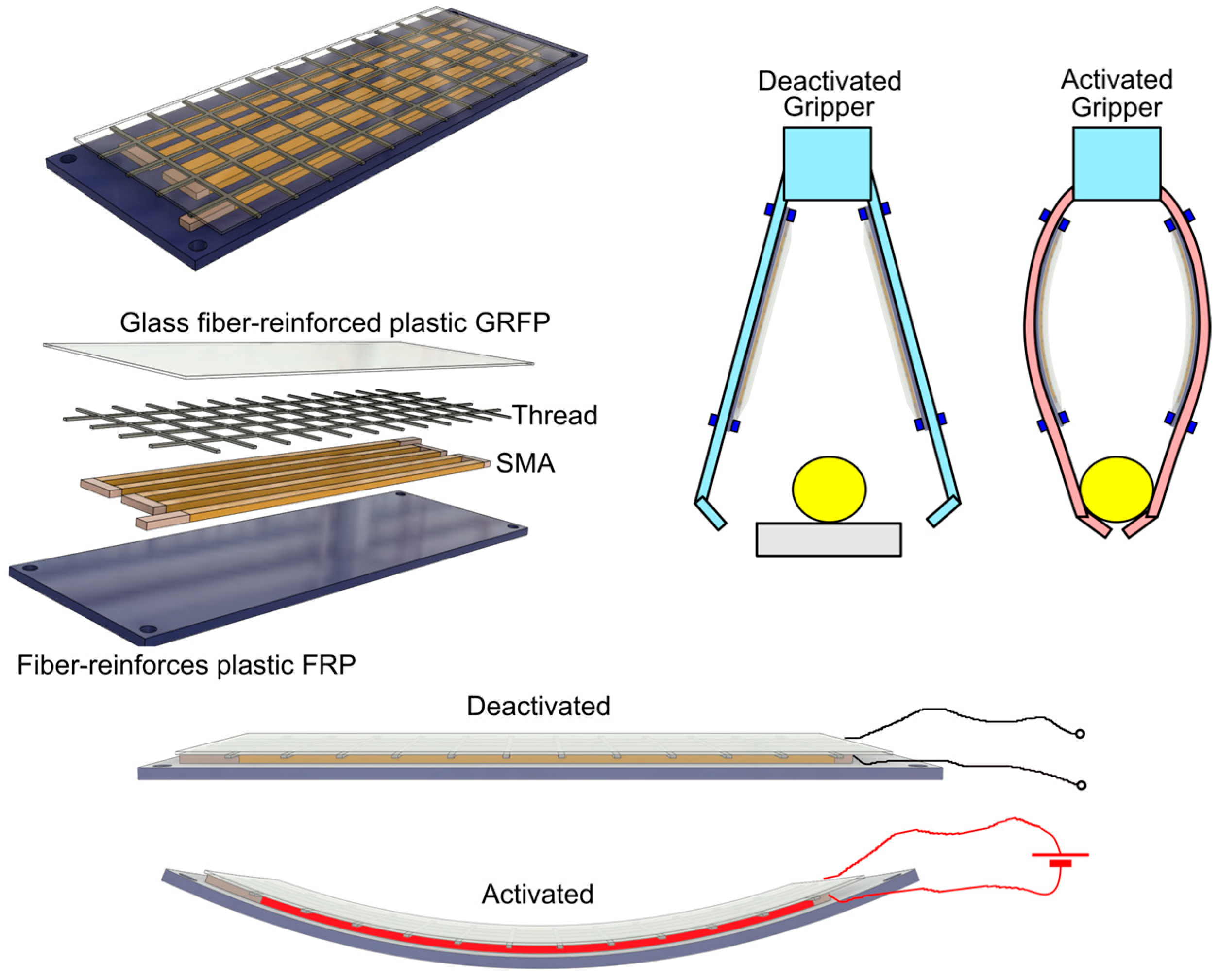
3.2. Manipulators and Grippers
3.3. Biomedical Application
3.4. Industrial Approaches to the Implementation of SMA Actuators
4. Discussion
4.1. Future Development of SMA Actuator Applications in Robotics Research Areas
- Additive manufacturing and advanced fabrication technologies, including 3D printing, laser processing, lattice structures, and multi-material integration of SMA actuators.
- Soft robotics and compliant structures, where SMA actuators are used to achieve muscle-like behavior and safe interaction with the environment.
- Microrobotics and micromachines, often without explicitly using the term “robot”, yet with clearly identifiable mobility or functionality within robotic systems.
- Closed-loop control and sensorless control, aimed at compensating hysteresis, nonlinearities, and the temperature dependence of SMA actuators.
- Composite and multifunctional material solutions, combining SMA elements with polymers, fibers, or multilayer structures.
- Soft grippers and compliant robotic hands: Research focuses on adaptive grasping, bioinspired manipulation, and safe human–robot interaction using SMA-driven fingers and end effectors.
- Microrobots and micromachines: Applications are dominated by miniature mobile systems, untethered microrobots, and microdevices, often extending to medical and inspection tasks.
- Advanced manufacturing of SMA robotic systems: Increasing emphasis is placed on additive manufacturing, laser-based technologies, and the integration of SMA elements into modular robotic structures suitable for repeatable production.
- Compact joints and actuator modules: SMA actuators are increasingly developed as integrated bending or rotary modules for lightweight manipulators, continuum robots, and modular robotic architectures.
- Wearable and rehabilitation devices: A substantial portion of work targets rehabilitation gloves, exoskeletons, and assistive devices, where quiet operation and a high power-to-mass ratio are key advantages.
- Control and sensing in robotic systems with SMA actuators: Although fewer in number, these studies address a technologically critical area focused on precise position control, state estimation, and improved motion repeatability.
- Terrain and inspection robotics (in-pipe, climbing, and crawling robots): These applications remain relevant in specific scenarios where compactness, compliance, and the ability to operate in confined spaces are decisive.
4.2. Industrial Perspectives on SMA Actuators in Robotic Applications
5. Conclusions
Author Contributions
Funding
Institutional Review Board Statement
Informed Consent Statement
Data Availability Statement
Acknowledgments
Conflicts of Interest
Abbreviations
| ADC | Analog to Digital Converter |
| FRP | Fiber-Reinforced Plastic |
| GFRP | Glass Fiber–Reinforced Plastic |
| IEEE | Institute of Electrical and Electronics Engineers |
| MEMS | Micro Electro Mechanical Systems |
| MCU | Microcontroller Unit |
| PWM | Pulse Width Modulation |
| OP | Operational Amplifier |
| OWSME | One-Way Shape Memory Effect |
| PID | Proportional-Integral-Derivative (PID) controller |
| PZT | Piezoelectric Actuator (Lead Zirconate Titanate) |
| SMA | Shape Memory Alloy |
| TWSME | Two-Way Shape Memory Effect |
| WoS | Web of Science |
References
- Kim, J.; Kim, J.W.; Kim, H.C.; Zhai, L.; Ko, H.-U.; Muthoka, R.M. Review of soft actuator materials. Int. J. Precis. Eng. Manuf. 2019, 20, 2221–2241. [Google Scholar] [CrossRef] [Scilit]
- Pons, J.L. Emerging Actuator Technologies: A Micromechatronic Approach; John Wiley & Sons, Ltd.: Chichester, UK, 2005; ISBN 978-0-470-09197-5. [Google Scholar]
- Haus, H.; Kern, T.A.; Matysek, M.; Sindlinger, S. Actuator design. In Engineering Haptic Devices; Hatzfeld, C., Kern, T., Eds.; Springer Series on Touch and Haptic Systems; Springer: London, UK, 2014; pp. 215–246. [Google Scholar] [CrossRef] [Scilit]
- de Silva, C.W. Sensors and Actuators: Engineering System Instrumentation, 2nd ed.; CRC Press: Boca Raton, FL, USA, 2015. [Google Scholar]
- Pawlak, A. Sensors and Actuators in Mechatronics; CRC Press: Boca Raton, FL, USA, 2016. [Google Scholar] [CrossRef] [Scilit]
- Janocha, H. (Ed.) Actuators: Basics and Applications; Springer: Berlin/Heidelberg, Germany, 2004. [Google Scholar] [CrossRef] [Scilit]
- Bar-Cohen, Y. Electroactive Polymer (EAP) Actuators as Artificial Muscles—Reality, Potential, and Challenges; SPIE Press: Bellingham, WA, USA, 2001; ISBN 978-0-8194-4054-9. [Google Scholar]
- Huber, J.E.; Fleck, N.A.; Ashby, M.F. The selection of mechanical actuators based on performance indices. Proc. R. Soc. A 1997, 453, 2185–2205. [Google Scholar] [CrossRef] [Scilit]
- Ashby, M.F. Materials Selection in Mechanical Design, 4th ed.; Butterworth-Heinemann: Oxford, UK, 2011; ISBN 978-1-85617-663-7. [Google Scholar]
- Lagoudas, D.C. (Ed.) Shape Memory Alloys: Modeling and Engineering Applications; Springer: New York, NY, USA, 2008. [Google Scholar] [CrossRef] [Scilit]
- Otsuka, K.; Wayman, C.M. Shape Memory Materials; Cambridge University Press: Cambridge, UK, 1998; ISBN 978-0-521-66384-7. [Google Scholar]
- Jani, J.M.; Leary, M.; Subic, A.; Gibson, M.A. A review of shape memory alloy research, applications and opportunities. Mater. Des. 2014, 56, 1078–1113. [Google Scholar] [CrossRef] [Scilit]
- Uchino, K. Piezoelectric Actuators and Ultrasonic Motors; Springer: Boston, MA, USA, 1997; ISBN 978-0-7923-9811-0. [Google Scholar]
- Prechtl, E.F.; Hall, S.R. Design of a high efficiency, large stroke, electromechanical actuator. Smart Mater. Struct. 1999, 8, 13–30. [Google Scholar] [CrossRef] [Scilit]
- Boldea, I.; Nasar, S.A. Linear Electric Actuators and Generators; Cambridge University Press: Cambridge, UK, 1997; ISBN 0-521-48017-5, 978-0-521-48017-8. [Google Scholar] [CrossRef] [Scilit]
- Clark, A.E.; Restorff, J.B.; Wun-Fogle, M.; Lograsso, T.A.; Schlagel, D.L. Magnetostrictive properties of body-centered cubic Fe-Ga and Fe-Ga-Al alloys. IEEE Trans. Magn. 2000, 36, 3238–3240. [Google Scholar] [CrossRef] [Scilit]
- Pelrine, R.; Kornbluh, R.; Pei, Q.; Joseph, J. High-speed electrically actuated elastomers with strain greater than 100%. Science 2000, 287, 836–839. [Google Scholar] [CrossRef] [Scilit]
- Carpi, F.; De Rossi, D. Electroactive polymer-based devices for e-textiles in biomedicine. IEEE Trans. Inf. Technol. Biomed. 2005, 9, 295–318. [Google Scholar] [CrossRef] [Scilit]
- Ogden, S.; Klintberg, L.; Thornell, G.; Hjort, K.; Bodén, R. Review on miniaturized paraffin phase change actuators, valves, and pumps. Microfluid. Nanofluid. 2014, 17, 53–71. [Google Scholar] [CrossRef] [Scilit]
- De Volder, M.; Reynaerts, D. Pneumatic and hydraulic microactuators: A review. J. Micromech. Microeng. 2010, 20, 043001. [Google Scholar] [CrossRef] [Scilit]
- Zupan, M.; Ashby, M.F.; Fleck, N.A. Actuator classification and selection—The development of a database. Adv. Eng. Mater. 2002, 4, 933–939. [Google Scholar] [CrossRef] [Scilit]
- Hollerbach, J.M.; Hunter, I.W.; Ballantyne, J. A comparative analysis of actuator technologies for robotics. Robot. Rev. 1992, 2, 299–342. Available online: https://bdml.stanford.edu/twiki/pub/Main/PerchingLinks/Hollerbach_Hunter_Ballantyne_1992_A_Comparative_Analysis_of_Actuator_Technologies_for_Robotics.pdf (accessed on 26 January 2026).
- Kim, M.-S.; Heo, J.-K.; Rodrigue, H.; Lee, H.-T.; Pané, S.; Han, M.-W.; Ahn, S.-H. Shape Memory Alloy (SMA) Actuators: The Role of Material, Form, and Scaling Effects. Adv. Mater. 2023, 35, 2208517. [Google Scholar] [CrossRef] [Scilit]
- Arivanandhan, G.; Li, Z.; Curtis, S.M.; Hanke, L.; Quandt, E.; Kohl, M. Power Optimization of TiNiHf/Si Shape Memory Microactuators. Actuators 2023, 12, 82. [Google Scholar] [CrossRef] [Scilit]
- Arias Guadalupe, J.; Copaci, D.; Serrano del Cerro, D.; Moreno, L.; Blanco, D. Efficiency Analysis of SMA-Based Actuators: Possibilities of Configuration According to the Application. Actuators 2021, 10, 63. [Google Scholar] [CrossRef] [Scilit]
- Ishihara, H.; Arai, F.; Fukuda, T. Micro mechatronics and micro actuators. IEEE/ASME Trans. Mechatron. 1996, 1, 68–79. [Google Scholar] [CrossRef] [Scilit]
- Hines, L.; Petersen, K.; Lum, G.Z.; Sitti, M. Soft actuators for small-scale robotics. Adv. Mater. 2017, 29, 1603483. [Google Scholar] [CrossRef] [Scilit]
- Waldron, K.J.; Hubert, C.J. Scaling of robotic mechanisms. In Proceedings of the 2000 IEEE International Conference on Robotics and Automation (ICRA), San Francisco, CA, USA, 24–28 April 2000; pp. 40–45. [Google Scholar] [CrossRef] [Scilit]
- Elwaleed, A.K.; Mohamed, N.A.; Nor, M.J.M.; Mustafa, M.M. A new concept of a linear smart actuator. Sensors Actuators A Phys. 2007, 135, 621–628. [Google Scholar] [CrossRef] [Scilit]
- Garcia, E. Smart structures and actuators: Past, present, and future. In Proceedings of SPIE 4698, Smart Structures and Materials 2002: Industrial and Commercial Applications of Smart Structures Technologies, San Diego, CA, USA, 9 July 2002; SPIE: Bellingham, WA, USA, 2002. [Google Scholar] [CrossRef] [Scilit]
- Do, X.P.; Choi, S.B. A state-of-the-art on smart materials actuators over the last decade: Control aspects for diverse applications. Smart Mater. Struct. 2022, 31, 053001. [Google Scholar] [CrossRef] [Scilit]
- Ölander, A. An Electrochemical Investigation of Solid Cadmium-Gold Alloys. J. Am. Chem. Soc. 1932, 54, 3819–3833. [Google Scholar] [CrossRef] [Scilit]
- Buehler, W.J.; Gilfrich, J.V.; Wiley, R.C. Effect of Low-Temperature Phase Changes on the Mechanical Properties of Alloys near Composition TiNi. J. Appl. Phys. 1963, 34, 1475–1477. [Google Scholar] [CrossRef] [Scilit]
- Wang, F.E.; Buehler, W.J.; Pickart, S.J. Crystal Structure and a Unique “Martensitic” Transition of TiNi. J. Appl. Phys. 1965, 36, 3232–3239. [Google Scholar] [CrossRef] [Scilit]
- Wayman, C.M.; Duerig, T.W. An introduction to martensite and shape memory. Eng. Asp. Shape Mem. Alloys 1990, 11, 3–20. [Google Scholar] [CrossRef] [Scilit]
- Funakubo, H. Shape Memory Alloys; Gordon and Breach Science Publishers: New York, NY, USA, 1987; ISBN 2-88124-136-0, 978-2-88124-136-9. [Google Scholar]
- Kainuma, R.; Ishida, K. Shape Memory Alloys. In Physical Metallurgy, 5th ed.; Laughlin, D.E., Hono, K., Eds.; Elsevier: Amsterdam, The Netherlands, 2014; pp. 1915–1970. [Google Scholar]
- Saburi, T. Ti-Ni Shape Memory Alloys. In Shape Memory Materials; Otsuka, K., Wayman, C.M., Eds.; Cambridge University Press: Cambridge, UK, 1998; pp. 49–96. ISBN 978-0521444873. [Google Scholar]
- Sato, A.; Chishima, E.; Soma, K.; Mori, T. Shape memory effect in γ⇄ϵ transformation in Fe-30Mn-1Si alloy single crystals. Acta Metall. 1982, 30, 1177–1183. [Google Scholar] [CrossRef] [Scilit]
- Menciassi, A.; Gorini, S.; Pernorio, G.; Dario, P. A SMA Actuated Artificial Earthworm. In Proceedings of the IEEE International Conference on Robotics and Automation (ICRA 2004), New Orleans, LA, USA, 26 April–1 May 2004; Volume 4, pp. 3282–3287. [Google Scholar] [CrossRef] [Scilit]
- Guarneros-Sandoval, A.; Ballesteros, M.; Fuentes-Aguilar, R.Q.; Chairez, I. Modeling and robust control of a parallel robotic mechanism driven by linear actuators based on shape memory alloys. Results Eng. 2025, 25, 103990. [Google Scholar] [CrossRef] [Scilit]
- Shi, Z.; Wang, T.; Liu, D.; Ma, C.; Yuan, X. A fuzzy PID-controlled SMA actuator for a two-DOF joint. Chin. J. Aeronaut. 2014, 27, 453–460. [Google Scholar] [CrossRef] [Scilit]
- Concilio, A.; Galasso, B.; Ameduri, S. Scaling Effects on Morphing Structures: Preliminary Guidelines for Managing the Effects on a Case Study. Actuators 2023, 12, 366. [Google Scholar] [CrossRef] [Scilit]
- Ceyssens, F.; Sadeghpour, S.; Fujita, H.; Puers, R. Actuators: Accomplishments, opportunities and challenges. Sens. Actuators A Phys. 2019, 296, 604–611. [Google Scholar] [CrossRef] [Scilit]
- Garrad, M.; Burdis, R.; Drake, M.; McCarthy, A.D.; Rossiter, J. Performance Metrics for Implantable Artificial Muscles. Nat. Rev. Bioeng. 2026, 4, 104–106. [Google Scholar] [CrossRef] [Scilit]
- Shaw, J.-S.; Lee, J.-L. Force control of a robot gripper featuring shape memory alloy actuators. In Proceedings of the 2014 International Conference on Advanced Robotics and Intelligent Systems (ARIS), Taipei, Taiwan, 6–8 June 2014; pp. 23–28. [Google Scholar] [CrossRef] [Scilit]
- Seelecke, S.; Müller, I. Shape Memory Alloy Actuators in Smart Structures: Modeling and Simulation. Appl. Mech. Rev. 2004, 57, 23–46. [Google Scholar] [CrossRef] [Scilit]
- Ge, J.; Chang, L.; Pérez-Arancibia, N.O. Preisach-model-based position control of a shape-memory alloy linear actuator in the presence of time-varying stress. Mechatronics 2021, 73, 102452. [Google Scholar] [CrossRef] [Scilit]
- Arias Guadalupe, J.; Pereira-Cabral Perez, A.; Blanco Rojas, D.; Copaci, D. A Lightweight Soft Exosuit for Elbow Rehabilitation Powered by a Multi-Bundle SMA Actuator. Actuators 2025, 14, 337. [Google Scholar] [CrossRef] [Scilit]
- Xie, Q.; Meng, Q.; Yu, W.; Xu, R.; Wu, Z.; Wang, X.; Yu, H. Design of a Soft Bionic Elbow Exoskeleton Based on Shape Memory Alloy Spring Actuators. Mech. Sci. 2023, 14, 159–170. [Google Scholar] [CrossRef] [Scilit]
- Arias Guadalupe, J.; Copaci, D.; Mansilla Navarro, P.; Moreno, L.; Blanco, D. A Novel Multi-Wire SMA-Based Actuator with High-Frequency Displacement. Mechatronics 2023, 91, 102957. [Google Scholar] [CrossRef] [Scilit]
- Yang, Y.; Chu, C.; Jin, H.; Hu, Q.; Xu, M.; Dong, E. Design, Modeling, and Control of an Aurelia-Inspired Robot Based on SMA Artificial Muscles. Biomimetics 2023, 8, 261. [Google Scholar] [CrossRef] [Scilit]
- Mitrev, R.; Todorov, T.; Fursov, A.; Ganev, B. Theoretical and Experimental Study of a Thermo-Mechanical Model of a Shape Memory Alloy Actuator Considering Minor Hystereses. Crystals 2021, 11, 1120. [Google Scholar] [CrossRef] [Scilit]
- Li, X.; Cai, B.; Zhao, H.; Jia, R.; Wang, X.; Wang, Q.; Zhu, Y.; Xiao, R.; Zhu, M.; Sun, H. Scalable Functionalized Shape Memory Alloy Fiber with Synergistic Effect for Robotic Hand and Microrobot. npj Flex. Electron. 2025, 9, 88. [Google Scholar] [CrossRef] [Scilit]
- Chen, X.; Bumke, L.; Quandt, E.; Kohl, M. Bistable Actuation Based on Antagonistic Buckling SMA Beams. Actuators 2023, 12, 422. [Google Scholar] [CrossRef] [Scilit]
- Liu, R.; Zhang, S.; Baba, Y.; Sawada, H. A Novel Cooling Design for an Agonistic–Antagonistic SMA Tendon-Driven Actuator. Actuators 2023, 12, 415. [Google Scholar] [CrossRef] [Scilit]
- Liu, Q.; Ghodrat, S.; Jansen, K.M.B. Design and modelling of a reversible shape memory alloy torsion hinge actuator. Mater. Des. 2024, 237, 112590. [Google Scholar] [CrossRef] [Scilit]
- Ziółkowski, A. Pseudoelasticity of Shape Memory Alloys: Theory and Experimental Studies; Butterworth-Heinemann: Oxford, UK, 2015. [Google Scholar] [CrossRef] [Scilit]
- Khan, M.A.H.; Manfredi, L.; Huan, Y.; Velsink, F.L.; Cuschieri, A. Analysis of performance and energy efficiency of thin shape memory alloy wire-based actuators. In Proceedings Actuator 2016; Borgmann, H., Ed.; Article C 2.4; Messe Bremen-HVG Hanseatische Veransaltungs-GMBH: Bremen, Germany, 2016; pp. 321–324. [Google Scholar]
- Ballester, C.; Copaci, D.; Arias, J.; Moreno, L.; Blanco, D. Hoist-Based Shape Memory Alloy Actuator with Multiple Wires for High-Displacement Applications. Actuators 2023, 12, 159. [Google Scholar] [CrossRef] [Scilit]
- Grant, D.; Hayward, V. Controller for a High Strain Shape Memory Alloy Actuator: Quenching of Limit Cycles. In Proceedings of the International Conference on Robotics and Automation, Albuquerque, NM, USA, 20–25 April 1997; IEEE: Piscataway, NJ, USA, 2002; pp. 254–259. [Google Scholar] [CrossRef] [Scilit]
- Lu, A.; Grant, D.; Hayward, V. Design and Comparison of High Strain Shape Memory Alloy Actuators. In Proceedings of the 1997 IEEE International Conference on Robotics and Automation, Albuquerque, NM, USA, 20–25 April 1997; pp. 260–267. [Google Scholar] [CrossRef] [Scilit]
- Rodinò, S.; Maletta, C. Design Considerations and Applications of Shape Memory Alloy-Based Actuation in Morphing Structures: A Systematic Review. Prog. Eng. Sci. 2024, 1, 100021. [Google Scholar] [CrossRef] [Scilit]
- John, B.; Pagel, K.; Langbein, S.; Drossel, W.-G. Development of Contacting Solutions for Shape Memory Alloy Wires. In Proceedings of the ASME 2022 Conference on Smart Materials, Adaptive Structures and Intelligent Systems (SMASIS 2022), Dearborn, MI, USA, 12–14 September 2022. [Google Scholar] [CrossRef] [Scilit]
- Scholtes, D.; Zäh, R.-K.; Faupel, B.; Seelecke, S.; Motzki, P. Dissimilar Resistance Welding of NiTi Microwires for High-Performance SMA Bundle Actuators. Actuators 2024, 13, 400. [Google Scholar] [CrossRef] [Scilit]
- Schuleit, M.; Becher, M.; Franke, F.; Maaß, B.; Esen, C. Development of Form-Fit Connection for NiTi Shape Memory Wire Actuators Using Laser Processing. Procedia CIRP 2020, 94, 546–550. [Google Scholar] [CrossRef] [Scilit]
- Oliveira, J.P.; Miranda, R.M.; Braz Fernandes, F.M. Welding and Joining of NiTi Shape Memory Alloys: A Review. Prog. Mater. Sci. 2017, 88, 412–466. [Google Scholar] [CrossRef] [Scilit]
- Goryczka, T.; Gryń, K.; Barylski, A.; Szaraniec, B. Structure and Mechanical Properties of the NiTi Wire Joined by Laser Welding. Materials 2023, 16, 2543. [Google Scholar] [CrossRef] [Scilit]
- Wojarski, L.; Nebel, A.; Tillmann, W. Effects of Vacuum Brazing on Microstructure and Pseudoelasticity of NiTi Shape Memory Alloy Brazements. Weld. World 2025, 69, 1767–1774. [Google Scholar] [CrossRef] [Scilit]
- Drahoš, P.; Čičáková, O. Measurement of SMA Drive Characteristics. Meas. Sci. Rev. 2003, 3, 151–154. [Google Scholar]
- Curcio, E.M.; Sgambitterra, E.; Lamuta, C.; Maletta, C.; Niccoli, F. Finite state machine-based modeling of shape memory alloy actuators: A multi-physics approach for predicting thermo-mechanical behavior and hysteresis. Sens. Actuators A Phys. 2025, 394, 116990. [Google Scholar] [CrossRef] [Scilit]
- Rodinò, S.; Caroleo, G.; Sgambitterra, E.; Bruno, F.; Muzzupappa, M.; Maletta, C. A multiphysics dynamic model for shape memory alloy actuators. Sens. Actuators A Phys. 2023, 362, 114602. [Google Scholar] [CrossRef] [Scilit]
- Liang, C.; Rogers, C.A. One-dimensional thermo-mechanical constitutive relations for shape memory materials. J. Intell. Mater. Syst. Struct. 1997, 8, 285–302. [Google Scholar] [CrossRef] [Scilit]
- Sayyaadi, H.; Zakerzadeh, M.R.; Salehi, H. A comparative analysis of some one-dimensional shape memory alloy constitutive models based on experimental tests. Sci. Iran. 2012, 19, 249–257. [Google Scholar] [CrossRef] [Scilit]
- Roshan, T.A.U.; Amarasinghe, Y.W.R.; Dayananda, N.W.N. Design and development of a shape memory alloy spring actuated gripper for minimally invasive surgeries. In Proceedings of the International Conference on Artificial Life and Robotics (ICAROB 2018), Beppu, Oita, Japan, 18–20 January 2018; pp. 566–569. [Google Scholar] [CrossRef] [Scilit]
- Janke, L.; Czaderski, C.; Motavalli, M.; Ruth, J. Applications of Shape Memory Alloys in Civil Engineering Structures—Overview, Limits and New Ideas. Mater. Struct. 2005, 38, 578–592. [Google Scholar] [CrossRef] [Scilit]
- Zhang, J.-J.; Yin, Y.-H.; Zhu, J.-Y. Electrical Resistivity-Based Study of Self-Sensing Properties for Shape Memory Alloy-Actuated Artificial Muscle. Sensors 2013, 13, 12958–12974. [Google Scholar] [CrossRef] [Scilit] [PubMed]
- Antonucci, V.; Faiella, G.; Giordano, M.; Mennella, F.; Nicolais, L. Electrical Resistivity Study and Characterization during NiTi Phase Transformations. Thermochim. Acta 2007, 462, 64–69. [Google Scholar] [CrossRef] [Scilit]
- Novák, V.; Šittner, P.; Dayananda, G.N.; Braz-Fernandes, F.M.; Mahesh, K.K. Electric Resistance Variation of NiTi Shape Memory Alloy Wires in Thermomechanical Tests: Experiments and Simulation. Mater. Sci. Eng. A 2008, 481–482, 127–133. [Google Scholar] [CrossRef] [Scilit]
- Song, H.; Kubica, E.; Gorbet, R. Resistance Modelling of Shape Memory Alloy Wires. e-J. Nondestruct. Test. 2012, Special Issue of e-Journal of Nondestructive Testing (eJNDT) ISSN 1435-4934, 17(2). NDT in Canada, Montreal. Available online: https://www.ndt.net/?id=11480 (accessed on 3 March 2026).
- Branciforte, M.; La Rosa, F. Precise Analog Current Driver for Micro-Mechanical Actuators Based on Shape Memory Alloy (SMA). Technical article and Application Note STMicroelectronics. Last update 1 August 2015. STMicroelectronics International NV: Geneva, Switzerland; pp. 1–4. Available online: https://www.st.com/resource/en/magazine/analog-wspc-current-wspc-driver-wspc-for-wspc-micro-wspc-mechanical-wspc-actuators-wspc-based-wspc-on-wspc-sma.pdf (accessed on 22 January 2026).
- Shao, Y.; Jiang, E.; Huang, Q.; Zeng, X. Development of constant current source for SMA wires driver based on OPA549. In Life System Modeling and Intelligent Computing; Li, K., Fei, M., Jia, L., Irwin, G.W., Eds.; Lecture Notes in Computer Science; Springer: Berlin/Heidelberg, Germany, 2010; pp. 95–103. [Google Scholar] [CrossRef] [Scilit]
- Easton, M. Shape Memory Alloy Actuator Driver Arrangement. Int. Pat. Appl. WO 2020/115482 A1, 11 June 2020. Applicant: Cambridge Mechatronics Ltd. International Application No. PCT/GB2019/053430, filed 4 December 2019. Available online: https://patents.google.com/patent/WO2020115482A1/en (accessed on 22 January 2026).
- Mascaro, S.A.; Asada, H.H. Wet shape memory alloy actuators for active vasculated robotic flesh. In Proceedings of the 2003 IEEE International Conference on Robotics and Automation (Cat. No.03CH37422), Taipei, Taiwan, 14–19 September 2003; Volume 1, pp. 282–287. [Google Scholar] [CrossRef] [Scilit]
- Do, P.T.; Le, Q.N.; Luong, Q.V.; Kim, H.-H.; Park, H.-M.; Kim, Y.-J. Tendon-Driven Gripper with Variable Stiffness Joint and Water-Cooled SMA Springs. Actuators 2023, 12, 160. [Google Scholar] [CrossRef] [Scilit]
- Flemming, L.J.; Mascaro, S.A. Control of scalable wet SMA actuator arrays. In Proceedings of the IEEE International Conference on Robotics and Automation (ICRA), Barcelona, Spain, 18–22 April 2005; pp. 1338–1343. [Google Scholar] [CrossRef] [Scilit]
- Osorio Salazar, A.; Sugahara, Y. Temperature-Gradient-Based Partial Activation of Wet SMA Actuators for Displacement Output Linearity. In Proceedings of the 2024 IEEE/SICE International Symposium on System Integration (SII 2024), Ha Long, Vietnam, 8–11 January 2024; IEEE: Piscataway, NJ, USA, 2024; pp. 422–428. [Google Scholar] [CrossRef] [Scilit]
- Ikuta, K.; Tsukamoto, M.; Hirose, S. Shape Memory Alloy Servo Actuator System with Electric Resistance Feedback and Application for Active Endoscope. In Proceedings of the 1988 IEEE International Conference on Robotics and Automation (ICRA), Philadelphia, PA, USA, 24–29 April 1988; pp. 427–430. [Google Scholar] [CrossRef] [Scilit]
- Ma, N.; Song, G.; Lee, H.-J. Position control of shape memory alloy actuators with internal electrical resistance feedback using neural networks. Smart Mater. Struct. 2004, 13, 777–783. [Google Scholar] [CrossRef] [Scilit]
- Mita, M.; Arai, M.; Kobayashi, D.; Fujita, H. Impact Microactuator Driven by Electrostatic Force. Proc. Int. Conf. Motion Vib. Control. 2002, 6, 1067–1070. [Google Scholar] [CrossRef] [Scilit]
- Song, G.; Ma, N.; Li, H.-N. Applications of Shape Memory Alloys in Civil Structures. Eng. Struct. 2006, 28, 1266–1274. [Google Scholar] [CrossRef] [Scilit]
- Nishimura, F.; Watanabe, N.; Tanaka, K. Stress–strain–temperature hysteresis and martensite start line in an Fe-based shape memory alloy. Mater. Sci. Eng. A 1997, 238, 367–376. [Google Scholar] [CrossRef] [Scilit]
- Kuhnen, K.; Janocha, H. Inverse feedforward controller for complex hysteretic nonlinearities in smart-material systems. Control Intell. Syst. 2001, 29, 74–83. [Google Scholar]
- Wang, T.-M.; Shi, Z.-Y.; Liu, D.; Ma, C.; Zhang, Z.-H. An Accurately Controlled Antagonistic Shape Memory Alloy Actuator with Self-Sensing. Sensors 2012, 12, 7682–7700. [Google Scholar] [CrossRef] [Scilit]
- Liu, S.-H.; Huang, T.-S.; Yen, J.-Y. Tracking Control of Shape-Memory-Alloy Actuators Based on Self-Sensing Feedback and Inverse Hysteresis Model. Sensors 2010, 10, 112–127. [Google Scholar] [CrossRef] [Scilit]
- Holschuh, B.; Newman, D. Two-spring model for active compression textiles with integrated NiTi coil actuators. Smart Mater. Struct. 2015, 24, 035011. [Google Scholar] [CrossRef] [Scilit]
- Reynaerts, D.; Peirs, J.; Van Brussel, H. Design of a shape memory alloy actuated gastro-intestinal intervention system. In Proceedings of the IEEE International Conference on Robotics and Automation, Minneapolis, MN, USA, 22–28 April 1996; pp. 113–118. [Google Scholar]
- Malukhin, K.; Ehmann, K.F. An Experimental Investigation of the Feasibility of “Self-Sensing” Shape Memory Alloy Based Actuators. J. Manuf. Sci. Eng. 2008, 130, 031109. [Google Scholar] [CrossRef] [Scilit]
- Kennedy, S.; Shougat, M.R.E.U.; Perkins, E. Robust Self-Sensing Shape Memory Alloy Actuator Using a Machine Learning Approach. Sens. Actuators A Phys. 2023, 354, 114255. [Google Scholar] [CrossRef] [Scilit]
- Wang, Z.; Shang, Z.; Hu, C.; Zhu, Y. A Highly Integrated Shape Memory Alloy Actuator and Precision Self-Sensing Tracking Control Based on Position Compensation. Sens. Actuators A Phys. 2024, 370, 115250. [Google Scholar] [CrossRef] [Scilit]
- Then Mozhi, G.; Dhanalakshmi, K.; Choi, S.-B. Design and Control of Monolithic Compliant Gripper Using Shape Memory Alloy Wires. Sensors 2023, 23, 2052. [Google Scholar] [CrossRef] [Scilit]
- Fischer, N.; Knapp, J.; Mathis-Ullrich, F. Shape-Sensing by Self-Sensing of Shape Memory Alloy Instruments for Minimal Invasive Surgery. at–Automatisierungstechnik 2023, 71, 554–561. [Google Scholar] [CrossRef] [Scilit]
- Taylor, F.; Au, C. Forced air cooling of shape-memory alloy actuators for a prosthetic hand. J. Comput. Inf. Sci. Eng. 2016, 16, 041004. [Google Scholar] [CrossRef] [Scilit]
- Potapov, P.L.; Da Silva, E.P. Time Response of Shape Memory Alloy Actuators. J. Intell. Mater. Syst. Struct. 2000, 11, 125–133. [Google Scholar] [CrossRef] [Scilit]
- Tadesse, Y.; Thayer, N.; Priya, S. Tailoring the Response Time of Shape Memory Alloy Wires through Active Cooling and Pre-Stress. J. Intell. Mater. Syst. Struct. 2010, 21, 19–40. [Google Scholar] [CrossRef] [Scilit]
- Hashimoto, M.; Sato, K.; Mitsuda, K.; Okui, M.; Ko, Y. Cooling Method and Characteristics of an Actuator with a Shape Memory Alloy. J. Robot. Soc. Jpn. 1986, 4, 253–259. [Google Scholar] [CrossRef] [Scilit]
- Loh, C.S.; Yokoi, H.; Arai, T. Natural Heat-Sinking Control Method for High-Speed Actuation of the SMA. Int. J. Adv. Robot. Syst. 2006, 3, 303–312. [Google Scholar] [CrossRef] [Scilit]
- Britz, R.; Rizzello, G.; Motzki, P. High-Speed Antagonistic Shape Memory Actuator for High Ambient Temperatures. Adv. Eng. Mater. 2022, 24, 2200205. [Google Scholar] [CrossRef] [Scilit]
- Moallem, M.; Tabrizi, V.A. Tracking Control of an Antagonistic Shape Memory Alloy Actuator Pair. IEEE Trans. Control. Syst. Technol. 2009, 17, 184–190. [Google Scholar] [CrossRef] [Scilit]
- Dauksher, R.; Patterson, Z.; Majidi, C. Characterization and Analysis of a Flexural Shape Memory Alloy Actuator. Actuators 2021, 10, 202. [Google Scholar] [CrossRef] [Scilit]
- Hartl, D.; Mingear, J.; Bielefeldt, B.; Rohmer, J.; Zamarripa, J.; Elwany, A. Towards High-Frequency Shape Memory Alloy Actuators Incorporating Liquid Metal Energy Circuits. Shape Mem. Superelasticity 2017, 3, 457–466. [Google Scholar] [CrossRef] [Scilit]
- Dana, A.; Vollach, S.; Shilo, D. Use the Force: Review of High-Rate Actuation of Shape Memory Alloys. Actuators 2021, 10, 140. [Google Scholar] [CrossRef] [Scilit]
- Copaci, D.; Lopez Palenzuela, A.; Moreno, L.; Martínez, S.; Balaguer, C. Characterization and Control of Shape Memory Alloy-Based Actuators for Heavy Payloads Displacement. Results Eng. 2024, 24, 103387. [Google Scholar] [CrossRef] [Scilit]
- Shi, E.; Zhong, X.; Wang, T.; Li, X.; Bu, C.; Zhao, X. Adaptive Control for Shape Memory Alloy Actuated Systems with Applications to Human–Robot Interaction. Front. Neurosci. 2024, 18, 1337580. [Google Scholar] [CrossRef] [Scilit] [PubMed]
- Matsumori, H.; Deng, M.-C.; Noge, Y. An Operator-Based Nonlinear Vibration Control System Using a Flexible Arm with Shape Memory Alloy. Int. J. Autom. Comput. 2020, 17, 139–150. [Google Scholar] [CrossRef] [Scilit]
- Sadeghi, M.; Abbasimoshaei, A.; Kitajima Borges, J.P.; Kern, T.A. Numerical and Experimental Study of a Wearable Exo-Glove for Telerehabilitation Application Using Shape Memory Alloy Actuators. Actuators 2024, 13, 409. [Google Scholar] [CrossRef] [Scilit]
- Zhang, J.; Ge, J.; Shu, Q.; Wu, K. A Shape Memory Alloy Energy Storage Ankle Exoskeleton Considering Load Dynamics. Int. J. Control Autom. Syst. 2025, 23, 1802–1815. [Google Scholar] [CrossRef] [Scilit]
- Miková, Ľ.; Medvecká-Beňová, S.; Kelemen, M.; Trebuňa, F.; Virgala, I. Application of Shape Memory Alloy (SMA) as Actuator. Metalurgija 2015, 54, 169–172. Available online: https://hrcak.srce.hr/126723 (accessed on 31 January 2026).
- Kelemen, M.; Virgala, I.; Prada, E.; Lipták, T. Experimental Verification of the Shape Memory Alloy (SMA) Spring Actuator for Application on In-Pipe Machine. Metalurgija 2015, 54, 173–176. Available online: https://hrcak.srce.hr/126724 (accessed on 31 January 2026).
- Lee, Y.P.; Kim, B.; Lee, M.G.; Park, J.-O. Locomotive Mechanism Design and Fabrication of Biomimetic Micro Robot Using Shape Memory Alloy. In Proceedings of the 2004 IEEE International Conference on Robotics and Automation (ICRA 2004), New Orleans, LA, USA, 26 April–1 May 2004; pp. 5007–5012. [Google Scholar] [CrossRef] [Scilit]
- Menciassi, A.; Gorini, S.; Pernorio, G.; Weiting, L.; Valvo, F.; Dario, P. Design, Fabrication and Performances of a Biomimetic Robotic Earthworm. In Proceedings of the 2004 IEEE International Conference on Robotics and Biomimetics (ROBIO 2004), Shenyang, China, 22–26 August 2004; pp. 274–278. [Google Scholar] [CrossRef] [Scilit]
- Liu, C.Y.; Liao, W.H. A Snake Robot Using Shape Memory Alloys. In Proceedings of the 2004 IEEE International Conference on Robotics and Biomimetics, Shenyang, China, 22–26 August 2004; pp. 601–605. [Google Scholar] [CrossRef] [Scilit]
- Gambao, E.; Hernando, M.; Brunete, A. Multiconfigurable Inspection Robots for Low Diameter Canalizations. In Proceedings of the 22nd International Symposium on Automation and Robotics in Construction (ISARC 2005), Ferrara, Italy, 11–14 September 2005. [Google Scholar] [CrossRef] [Scilit]
- Qin, C.-J.; Ma, P.-S.; Yao, Q. A Prototype Micro-Wheeled-Robot Using SMA Actuator. Sens. Actuators A Phys. 2004, 113, 94–99. [Google Scholar] [CrossRef] [Scilit]
- Wei, Q.; Ke, D.; Sun, Z.; Wu, Z.; Zhou, Y.; Zhang, D. A Structural Design and Motion Characteristics Analysis of an Inchworm-Inspired Soft Robot Based on Shape Memory Alloy Actuation. Actuators 2024, 13, 43. [Google Scholar] [CrossRef] [Scilit]
- Thomas, S.; Germano, P.; Martinez, T.; Perriard, Y. An untethered mechanically-intelligent inchworm robot powered by a shape memory alloy oscillator. Sens. Actuators A Phys. 2021, 332, 113115. [Google Scholar] [CrossRef] [Scilit]
- Kelemen, M.; Kelemenová, T.; Virgala, I.; Miková, Ľ.; Prada, E.; Varga, M.; Semjon, J.; Sukop, M.; Janos, R. Robotic gripper actuated using the shape memory alloy actuators. MM Sci. J. 2022, 2022, 5544–5550. [Google Scholar] [CrossRef] [Scilit]
- Teodoriu, A.P.; Pricop, B.; Lohan, N.-M.; Popa, M.; Comăneci, R.I.; Doroftei, I.; Bujoreanu, L.-G. Designing a Robotic Gripper Based on the Actuating Capacity of NiTi-Based Shape Memory Wires. Actuators 2024, 13, 319. [Google Scholar] [CrossRef] [Scilit]
- Schmelter, T.; Bade, L.; Kuhlenkötter, B. A Two-Finger Gripper Actuated by Shape Memory Alloy for Applications in Automation Technology with Minimized Installation Space. Actuators 2024, 13, 425. [Google Scholar] [CrossRef] [Scilit]
- Lu, Y.; Xie, Z.; Wang, J.; Yue, H.; Wu, M.; Liu, Y. A Novel Design of a Parallel Gripper Actuated by a Large-Stroke Shape Memory Alloy Actuator. Int. J. Mech. Sci. 2019, 159, 74–80. [Google Scholar] [CrossRef] [Scilit]
- De Laurentis, K.J.; Fisch, A.; Nikitczuk, J.; Mavroidis, C. Optimal Design of Shape Memory Alloy Wire Bundle Actuators. In Proceedings of the 2002 IEEE International Conference on Robotics and Automation (ICRA 2002), Washington, DC, USA, 11–15 May 2002; pp. 2363–2368. [Google Scholar] [CrossRef] [Scilit]
- Sun, L.; Gu, H. Envelope Morphology of an Elephant Trunk-like Robot Based on Differential Cable–SMA Spring Actuation. Actuators 2025, 14, 100. [Google Scholar] [CrossRef] [Scilit]
- Yang, C.; Wu, W.; Wu, X.; Zhou, J.; Tu, Z.; Lin, M.; Zhang, S. A Flexible Gripper with a Wide-Range Variable Stiffness Structure Based on Shape Memory Alloy. Ind. Robot 2022, 49, 1190–1201. [Google Scholar] [CrossRef] [Scilit]
- Li, J.; Zhong, G.; Yin, H.; He, M.; Tan, Y.; Li, Z. Position Control of a Robot Finger with Variable Stiffness Actuated by Shape Memory Alloy. In Proceedings of the IEEE International Conference on Robotics and Automation (ICRA 2017), Singapore, 29 May–3 June 2017; pp. 4941–4946. [Google Scholar] [CrossRef] [Scilit]
- Rodrigue, H.; Wang, W.; Kim, D.-R.; Ahn, S.-H. Curved Shape Memory Alloy-Based Soft Actuators and Application to Soft Gripper. Compos. Struct. 2017, 176, 398–406. [Google Scholar] [CrossRef] [Scilit]
- Zhang, Q.; Xu, L.; Chen, H.; Li, Z.; Huang, L.; Yi, S. Research on a Novel Shape-Memory Alloy Artificial Muscle with Active and Passive Heat Dissipation. Actuators 2025, 14, 248. [Google Scholar] [CrossRef] [Scilit]
- Lalegani Dezaki, M.; Bodaghi, M.; Serjouei, A.; Afazov, S.; Zolfagharian, A. Adaptive reversible composite-based shape memory alloy soft actuators. Sens. Actuators A Phys. 2022, 345, 113779. [Google Scholar] [CrossRef] [Scilit]
- Deshpande, S.; Almubarak, Y. Octopus-Inspired Robotic Arm Powered by Shape Memory Alloys (SMA). Actuators 2023, 12, 377. [Google Scholar] [CrossRef] [Scilit]
- Rajagopalan, R.; Petruska, A.J.; Howard, D. A Bi-State Shape Memory Material Composite Soft Actuator. Actuators 2022, 11, 86. [Google Scholar] [CrossRef] [Scilit]
- Haigh, C.D.; Crews, J.H.; Wang, S.; Buckner, G.D. Multi-Objective Design Optimization of a Shape Memory Alloy Flexural Actuator. Actuators 2019, 8, 13. [Google Scholar] [CrossRef] [Scilit]
- Li, M.; Pal, A.; Aghakhani, A.; Pena-Francesch, A.; Sitti, M. Soft actuators for real-world applications. Nat. Rev. Mater. 2022, 7, 235–249. [Google Scholar] [CrossRef] [Scilit]
- Theodore, A.J.; Bishay, P.L. Experimental analysis of fiber-reinforced laminated composite plates with embedded SMA wire actuators. Compos. Struct. 2022, 292, 115678. [Google Scholar] [CrossRef] [Scilit]
- Wang, X.; Liang, W.; Yu, F.; Chen, Y. Design and Experiment of Soft Gripper with Shape Memory Alloy Actuator. In Proceedings of the 2024 43rd Chinese Control Conference (CCC), Kunming, China, 28–31 July 2024; pp. 4314–4319. [Google Scholar] [CrossRef] [Scilit]
- Zhang, L.; Xu, M.; Yang, H. Research on soft manipulator actuated by shape memory alloy (SMA) springs. In Proceedings of the 2017 IEEE International Conference on Real-Time Computing and Robotics (RCAR 2017), Okinawa, Japan, 14–18 July 2017; pp. 74–78. [Google Scholar] [CrossRef] [Scilit]
- Bishay, P.; Aguilar, C.; Amirbekyan, A.; Vartanian, K.; Arjon-Ramirez, M.; Pucio, D. Design of a lightweight shape memory alloy stroke-amplification and locking system in a transradial prosthetic arm. In Proceedings of the ASME 2021 Conference on Smart Materials, Adaptive Structures and Intelligent Systems (SMASIS2021), Virtual, Online, 14–15 September 2021; American Society of Mechanical Engineers: New York, NY, USA, 2021; Volume 85499, p. V001T05A015. [Google Scholar] [CrossRef] [Scilit]
- Deng, E.; Tadesse, Y. A Soft 3D-Printed Robotic Hand Actuated by Coiled SMA. Actuators 2021, 10, 6. [Google Scholar] [CrossRef] [Scilit]
- Ahmadi, A.; Mahdavian, M.; Faridi Rad, N. Design and Fabrication of a Robotic Hand Using Shape Memory Alloy Actuators. In Proceedings of the 2015 3rd RSI International Conference on Robotics and Mechatronics (ICRoM) 2015, Tehran, Iran, 7–9 October 2015; IEEE: Piscataway, NJ, USA, 2015; pp. 325–329. [Google Scholar] [CrossRef] [Scilit]
- Farias, V.; Solis, L.; Meléndez, L.; García, C. A four-fingered robot hand with shape memory alloys. In Proceedings of the AFRICON 2009, Nairobi, Kenya, 23–25 September 2009. [Google Scholar] [CrossRef] [Scilit]
- Ali, H.F.M.; Kim, Y. Novel Bio-Inspired Artificial Muscle Using Shape Memory Alloy Wire in Spiral Winding. In Proceedings of the 2023 23rd International Conference on Control, Automation and Systems (ICCAS 2023), Yeosu, South Korea, 17–20 October 2023; pp. 876–880. [Google Scholar] [CrossRef] [Scilit]
- Gherasie, L.-M.; Zainea, V.; Hainarosie, R.; Rusescu, A.; Ionita, I.-G.; Alius, R.-O.; Voiosu, C. Stapes Prostheses in Otosclerosis Surgery: Materials, Design Innovations, and Future Perspectives. Actuators 2025, 14, 502. [Google Scholar] [CrossRef] [Scilit]
- Urquiza, R.; López, J.; Gonzalez-Herrera, A.; Povedano, V.; Ciges, M. Tympanic-ossicular prostheses and MEMS technology: Whats and whys. Acta Oto-Laryngol. 2009, 129, 411–415. [Google Scholar] [CrossRef] [Scilit]
- Sanadhya, A.; Chandak, K.; Gohil, J.; Trivedi, R.; Roy, D.; Parikh, P.; Chauhan, M.; Patel, K. Advancements in finger prosthesis: A design using shape memory alloy actuation mechanism. Results Eng. 2025, 27, 105050. [Google Scholar] [CrossRef] [Scilit]
- Evangeliou, N.; Tzes, A. A human-in-the-loop controlled shape memory alloy actuated robotic probe for minimally invasive surgical procedures. In Proceedings of the 11th International Conference on ELEKTRO 2016, Hefei, China, 5–7 June 2016; IEEE: Piscataway, NJ, USA, 2016; pp. 504–508. [Google Scholar] [CrossRef] [Scilit]
- Roshan, U.; Basnayake, J.; Amarasinghe, R.; Dayananda, N. Design and Development of a Force Feedback System for a SMA Based Gripper as a Minimally Invasive Surgical Tool. In Proceedings of the 2019 IEEE SENSORS, Montreal, Canada, 27–30 October 2019; pp. 1–4. [Google Scholar] [CrossRef] [Scilit]
- Kim, Y.; Cheng, S.S.; Desai, J.P. Active stiffness tuning of a spring-based continuum robot for MRI-guided neurosurgery. IEEE Trans. Robot. 2018, 34, 18–28. [Google Scholar] [CrossRef] [Scilit]
- Kim, Y.; Cheng, S.S.; Diakite, M.; Gullapalli, R.P.; Simard, J.M.; Desai, J.P. Toward the Development of a Flexible Mesoscale MRI-Compatible Neurosurgical Continuum Robot. IEEE Trans. Robot. 2017, 33, 1386–1397. [Google Scholar] [CrossRef] [Scilit] [PubMed]
- Kheirikhah, M.M.; Rabiee, S.; Edalat, M.E. A Review of Shape Memory Alloy Actuators in Robotics. In RoboCup 2010: Robot Soccer World Cup XIV. RoboCup 2010; Ruiz-del-Solar, J., Chown, E., Plöger, P.G., Eds.; Lecture Notes in Computer Science; Springer: Berlin/Heidelberg, Germany, 2011; Volume 6556. [Google Scholar] [CrossRef] [Scilit]
- Kohl, M. Shape Memory Microactuators; Microtechnology and MEMS; Springer: Berlin/Heidelberg, Germany, 2004; ISBN 978-3-540-20635-4. [Google Scholar] [CrossRef] [Scilit]
- Sreekumar, M.; Nagarajan, T.; Singaperumal, M.; Zoppi, M.; Molfino, R. Critical review of current trends in shape memory alloy actuators for intelligent robots. Ind. Robot 2007, 34, 285–294. [Google Scholar] [CrossRef] [Scilit]
- Ruth, D.J.S.; Sohn, J.-W.; Dhanalakshmi, K.; Choi, S.-B. Control Aspects of Shape Memory Alloys in Robotics Applications: A Review over the Last Decade. Sensors 2022, 22, 4860. [Google Scholar] [CrossRef] [Scilit] [PubMed]
- Chen, Y.; Yang, Y.; Li, M.; Chen, E.; Mu, W.; Fisher, R.; Yin, R. Wearable Actuators: An Overview. Textiles 2021, 1, 283–321. [Google Scholar] [CrossRef] [Scilit]
- Kim, C.; Kim, G.; Lee, Y.; Lee, G.; Han, S.; Kang, D.; Koo, S.H.; Koh, J.-S. Shape memory alloy actuator-embedded smart clothes for ankle assistance. Smart Mater. Struct. 2020, 29, 055003. [Google Scholar] [CrossRef] [Scilit]
- Park, S.J.; Park, C.H. Suit-type wearable robot powered by shape-memory-alloy-based fabric muscle. Sci. Rep. 2019, 9, 9157. [Google Scholar] [CrossRef] [Scilit]
- Copaci, D.; Cano, E.; Moreno, L.; Blanco, D. New Design of a Soft Robotics Wearable Elbow Exoskeleton Based on Shape Memory Alloy Wire Actuators. Appl. Bionics Biomech. 2017, 2017, 1605101. [Google Scholar] [CrossRef] [Scilit]

















| Actuator | Max. Stress (MPa) | Max. Strain (%) | Efficiency (%) | Power Density (W/cm3) |
|---|---|---|---|---|
| Shape memory alloy (NiTi) [10,11,12] | 200–600 | 6–8 | 1–10 | 10–100 |
| Piezoceramic (PZT) [13] | 30–100 | 0.1–0.15 | 30–70 | 1–10 |
| Electromagnetic (solenoid/voice coil) [14,15] | 1–10 | 5–50 | 20–60 | 0.5–5 |
| Pneumatics [20] | 0.5–5 | >100 | 10–30 | 0.05–1 |
| Hydraulics [20] | 10–50 | >100 | 40–70 | 1–10 |
| Magnetostrictive (Terfenol-D) [16] | 70–150 | 0.1–0.2 | 20–40 | 5–20 |
| Electrostatic (MEMS) [7,17,18] | 0.01–1 | 10–100 | 50–90 | 0.01–0.1 |
| Thermal wax (Paraffin) [19] | 1–10 | 10–20 | <1 | 0.01–0.1 |
| Primary Area | Representative Keywords/Expressions |
|---|---|
| Robotics | robot, robotic, manipulator, gripper, locomotion, mobile robot, exoskeleton, micromachine, continuum robot |
| Automotive | automotive actuator, vehicle system, active aerodynamics, engine control, transmission actuator, adaptive suspension |
| Medicine/Biomedical Engineering/Medical Applications | biomedical, medical device, surgical tool, stent, catheter, implant, minimally invasive, prosthesis |
| Aerospace/Space Applications | aerospace, space structure, satellite, deployable structure, morphing wing, space mechanism |
| Micromachine/MEMS/Microsystems | MEMS, microactuator, microsystem, micromirror, microgripper, microdevice |
| Civil Structures/Vibration Control | vibration control, seismic damping, structural control, smart structure, active vibration |
| Mechanical Engineering/Industrial/Mechanical Applications | valve, pump, industrial actuator, automation system, positioning system, precision mechanism |
| Energetics, Energy Systems | energy harvesting, thermomechanical conversion, heat recovery, energy conversion |
| Electronics/Optics/RF | RF switch, tunable antenna, optical switch, adaptive optics, reconfigurable device |
| Materials Research (excluded if no actuation context) | phase transformation, microstructure, fatigue behavior, martensitic transformation |
| Robotics Subdomain | Representative Keywords/Expressions |
|---|---|
| Robotic Grippers and End-Effectors | gripper, prehensile, end-effector, grasping, compliant finger |
| Manipulators and Robotic Arms | robotic arm, manipulator, joint actuation, articulated mechanism |
| Ground Mobile Robots (UGVs)/Wheeled/Tracked/Legged/Crawled | mobile robot, wheeled robot, tracked robot, locomotion platform |
| Flying Robots/UAVs | UAV, unmanned aerial vehicle, drone, aerial robot, flapping wing robot |
| In-Pipe/Inspection Robots | in-pipe robot, pipeline inspection, pipe crawler |
| Snake/Continuum Robots | snake robot, continuum robot, hyper-redundant robot |
| Microrobotics/Micromachines | microrobot, micromachine, micro-swimmer, untethered microdevice |
| Wearable Robotics/Exoskeletons | exoskeleton, wearable robot, assistive device |
| Soft Robotics | soft robot, soft actuator, compliant robot, elastomeric structure |
| Motion control and Modeling for Robotics | motion control, position control, hysteresis compensation, modeling, feedback control, trajectory tracking |
| Other Robots | bio-inspired robot, hybrid robot, reconfigurable robot, experimental robotic platform |
| Alloy | Weight Fraction (%) | Transformation Range (°C) |
|---|---|---|
| Ag-Cd [10,11,35,36,37] | Ag ~75%, Cd ~25% | −50 to +100 |
| Au-Cd [10,11,35,36,37] | Au ~50%, Cd ~50% | −100 to +100 |
| Cu–Al–Ni [10,11,35,36,37,38] | Cu ~82–88%, Al ~11–14%, Ni ~3–5% | −140 to +100 |
| Cu–Zn–Al [10,11,35,36,37,38] | Cu ~68–80%, Zn ~15–30%, Al ~3–8% | −200 to +100 |
| Ni–Ti (Nitinol) [10,11,35,36,37] | Ni ~55%, Ti ~45% | −100 to +110 |
| Fe–Mn–Si [10,11,35,36,37,39] | Fe ~65–70%, Mn ~25–30%, Si ~5–6% | −200 to +150 |
| Ni–Ti–Cu [10,11,35,36,37] | Ni ~45%, Ti ~45%, Cu ~10% | −50 to +100 |
| Ni–Al [10,35,37] | Ni ~62%, Al ~38% | +100 to +250 |
| Co–Ni–Al [10,35,37] | Co ~38–40%, Ni ~33–35%, Al ~25–27% | −50 to +200 |
| SMA Form | Typical Recoverable Strain | Typical Force/Stress | Typical Frequency | Cooling |
|---|---|---|---|---|
| Straight wire [47,48] | 3–4% (≤5% safe cyclic) | 150–400 MPa recovery stress | 0.1–1 Hz | Natural convection/forced air |
| Coiled wire (spring) [49,50] | 5–20% geometric stroke | 5–50 N (geometry dependent) | 0.05–0.5 Hz | Passive/limited active cooling |
| SMA bundle (multi-wire) [49,51] | 3–4% per wire | 50–200 N (bundle dependent) | 0.05–0.2 Hz | Sequential activation |
| Foil/thin strip [52,53] | 2–4% | Thickness dependent | 1–5 Hz (micro-scale) | Improved surface cooling |
| Tube/rod [47] | 2–4% | High axial force | <0.5 Hz | High thermal mass |
| Functionalized coil/fiber [54] | 10–40% geometric stroke | 0.5–2 N (micro-scale) | 0.5–1 Hz | Enhanced heat transfer |
| Application | Control Method | Sensing Strategy | Driver Type | Loop Frequency | Reported Performance |
|---|---|---|---|---|---|
| SMA gripper [88] | Constant current + PWM | None (open-loop) | PWM current driver | - | Slow response (<1 Hz), qualitative control |
| Continuum robot [89] | PID position control | External position sensor | Linear current driver | 100 Hz | <5% tracking error |
| Robotic manipulator [92] | Model-based + PID | Encoder | Current-controlled PWM | 200 Hz | 50–70% hysteresis reduction |
| Micro-robot [95] | Self-sensing control | Resistance-based | PWM | 1 kHz sampling | 2–5% position estimation error |
| Soft robotic actuator [91] | Preisach + feedback | Force sensor | Current driver | 50 Hz | Improved repeatability, reduced overshoot |
| Exoskeleton joint [96] | Adaptive control | Resistance + temperature | PWM | 500 Hz | Stable control under load variation |
Disclaimer/Publisher’s Note: The statements, opinions and data contained in all publications are solely those of the individual author(s) and contributor(s) and not of MDPI and/or the editor(s). MDPI and/or the editor(s) disclaim responsibility for any injury to people or property resulting from any ideas, methods, instructions or products referred to in the content. |
© 2026 by the authors. Licensee MDPI, Basel, Switzerland. This article is an open access article distributed under the terms and conditions of the Creative Commons Attribution (CC BY) license.
Share and Cite
Romančík, J.; Miková, Ľ.; Šarga, P.; Kelemenová, T.; Kelemen, M. Shape Memory Alloy Actuators in Robotics. Actuators 2026, 15, 162. https://doi.org/10.3390/act15030162
Romančík J, Miková Ľ, Šarga P, Kelemenová T, Kelemen M. Shape Memory Alloy Actuators in Robotics. Actuators. 2026; 15(3):162. https://doi.org/10.3390/act15030162
Chicago/Turabian StyleRomančík, Jaroslav, Ľubica Miková, Patrik Šarga, Tatiana Kelemenová, and Michal Kelemen. 2026. "Shape Memory Alloy Actuators in Robotics" Actuators 15, no. 3: 162. https://doi.org/10.3390/act15030162
APA StyleRomančík, J., Miková, Ľ., Šarga, P., Kelemenová, T., & Kelemen, M. (2026). Shape Memory Alloy Actuators in Robotics. Actuators, 15(3), 162. https://doi.org/10.3390/act15030162