1. Introduction
Magnetic gears transmit mechanical power through magnetic-field modulation, enabling non-contact torque transmission and providing inherent overload protection due to the physical separation between the input and output shafts [
1,
2]. Compared with conventional mechanical gears, magnetic gears offer several advantages, including reduced noise and vibration, elimination of lubrication requirements, and the absence of friction-induced wear. These features make magnetic gears well suited for long-life and maintenance-efficient operation [
3,
4].
Growing environmental concerns—such as fossil-fuel depletion, air pollution, and climate change—have led many regions to adopt increasingly stringent emission regulations, including Euro VII and Bharat Stage VI standards [
5]. As a result, demand for electric vehicles (EVs) and renewable-energy systems has continued to increase, driving strong interest in high-efficiency and maintenance-free power-transmission technologies [
6,
7]. Owing to these advantages, magnetic gears have been actively investigated for a wide range of applications, including electric mobility, wind and marine energy systems, robotics, and other high-reliability systems [
8,
9,
10].
Although magnetic gears were first introduced in the 1940s, their practical adoption remained limited for several decades due to inherently low torque density [
11]. A major breakthrough was achieved in 2001 when Atallah et al. proposed the CMG, which employs concentric inner and outer rotors coupled through a ferromagnetic modulator [
12]. This configuration significantly improved torque density, reaching approximately 100 kNm/m
3, and stimulated extensive subsequent research on CMGs. Recent studies have focused on pole-pair selection, modulation-pole geometry, gear-ratio optimization, and flux-modulation enhancement to further improve torque characteristics [
13,
14,
15,
16,
17]. In addition, previous research has demonstrated that incorporating an overhang structure and optimizing the pole-pair combination can effectively enhance the torque performance of CMGs [
18].
Despite these advances, increasing the gear ratio of a single-stage CMG generally leads to a reduction in torque density. This degradation is primarily caused by increased permanent-magnet usage, enhanced leakage flux, and structural constraints associated with high gear-ratio configurations [
19,
20,
21]. Although multi-stage magnetic gear arrangements can achieve higher gear ratios, they inevitably introduce additional system complexity, increased volume, and higher manufacturing cost. Consequently, the development of high-gear-ratio single-stage CMGs that maintain permanent-magnet usage while achieving improved torque density remains an important and challenging research problem.
Design optimization plays a critical role in addressing these limitations. The performance of CMGs is highly sensitive to geometric parameters, making the appropriate selection and optimization of design variables essential for maximizing torque density [
22,
23]. To efficiently explore high-dimensional design spaces, Design of Experiments (DOE) techniques are widely employed. Among them, Latin Hypercube Design (LHD) provides uniform sampling within individual variable ranges [
24,
25], but often suffers from insufficient uniformity in multidimensional spaces [
26]. Optimal Latin Hypercube Design (OLHD) overcomes this limitation by maximizing the minimum distance between sampling points, thereby achieving superior space-filling characteristics and enabling the construction of accurate surrogate models for design optimization [
27,
28].
Accurate performance prediction of CMGs typically relies on the finite element method (FEM). Although two-dimensional (2D) FEM offers relatively low computational cost and fast evaluation, it cannot adequately capture axial leakage flux and overhang-induced three-dimensional (3D) effects, which leads to reduced accuracy in torque prediction for CMGs with complex geometries [
29]. In contrast, three-dimensional FEM enables a more faithful representation of these phenomena and has therefore been widely adopted for high-accuracy electromagnetic evaluation of CMGs [
30,
31,
32,
33].
In addition to electromagnetic performance, operational losses inevitably generate heat within the CMG, resulting in temperature rise during operation. Elevated temperatures can degrade the magnetic properties of permanent magnets and influence overall torque performance and reliability [
34,
35,
36]. Accordingly, electromagnetic–thermal coupled analysis is required to accurately assess temperature-dependent behavior under realistic operating conditions. Furthermore, structural analysis is necessary to verify mechanical robustness, particularly for CMGs employing overhang structures, where permanent magnets and rotor components may be subjected to increased mechanical stress during operation [
37,
38].
Based on these considerations, this study aims to improve the torque density of a CMG through optimal design while explicitly considering an overhang structure, and to verify the resulting performance through comprehensive multiphysics analysis. Compared with previous studies on coaxial magnetic gears that mainly focus on integer gear ratios, simplified rotor–stator geometries, or electromagnetic performance alone, this study addresses a more challenging design problem involving high non-integer gear ratios exceeding 1:10 and an overhang structure. Previous works have shown that multi-objective and surrogate-based optimization techniques can effectively enhance torque density in various magnetic gear topologies, such as flux-focusing Halbach designs [
9]. However, the combined application of optimal design and comprehensive multiphysics validation to high non-integer gear-ratio CMGs has not yet been sufficiently investigated.
The main contribution of this study is to systematically elucidate the torque-density enhancement mechanisms of CMGs operating at high non-integer gear ratios by integrating surrogate-assisted optimal design with comprehensive multiphysics validation. To achieve this objective, four pole-pair combinations corresponding to gear ratios exceeding 1:10 were designed and evaluated using 3D FEM. OLHD was employed to generate sampling points for surrogate-model construction, and multiple regression techniques were compared using the root-mean-square error (RMSE) to identify the most accurate surrogate model. A genetic algorithm was then applied to determine the optimal set of design variables. The optimized configuration was validated through electromagnetic analysis, harmonic evaluation, electromagnetic–thermal coupled simulation, demagnetization analysis, and structural analysis. The results demonstrate significant improvements in torque density and confirm the reliability of the optimized CMG design.
Although experimental validation using a physical prototype is not included in this study, the proposed CMG with an overhang structure exhibits substantial geometric complexity and pronounced three-dimensional flux leakage, which limit the applicability of simplified magnetic equivalent circuit (MEC) models. Therefore, three-dimensional FEM combined with comprehensive multiphysics analysis was adopted to reliably evaluate the sensitivity of torque characteristics to discrete gear-ratio variations and to assess the physical feasibility of the optimized design.
The remainder of this paper is organized as follows.
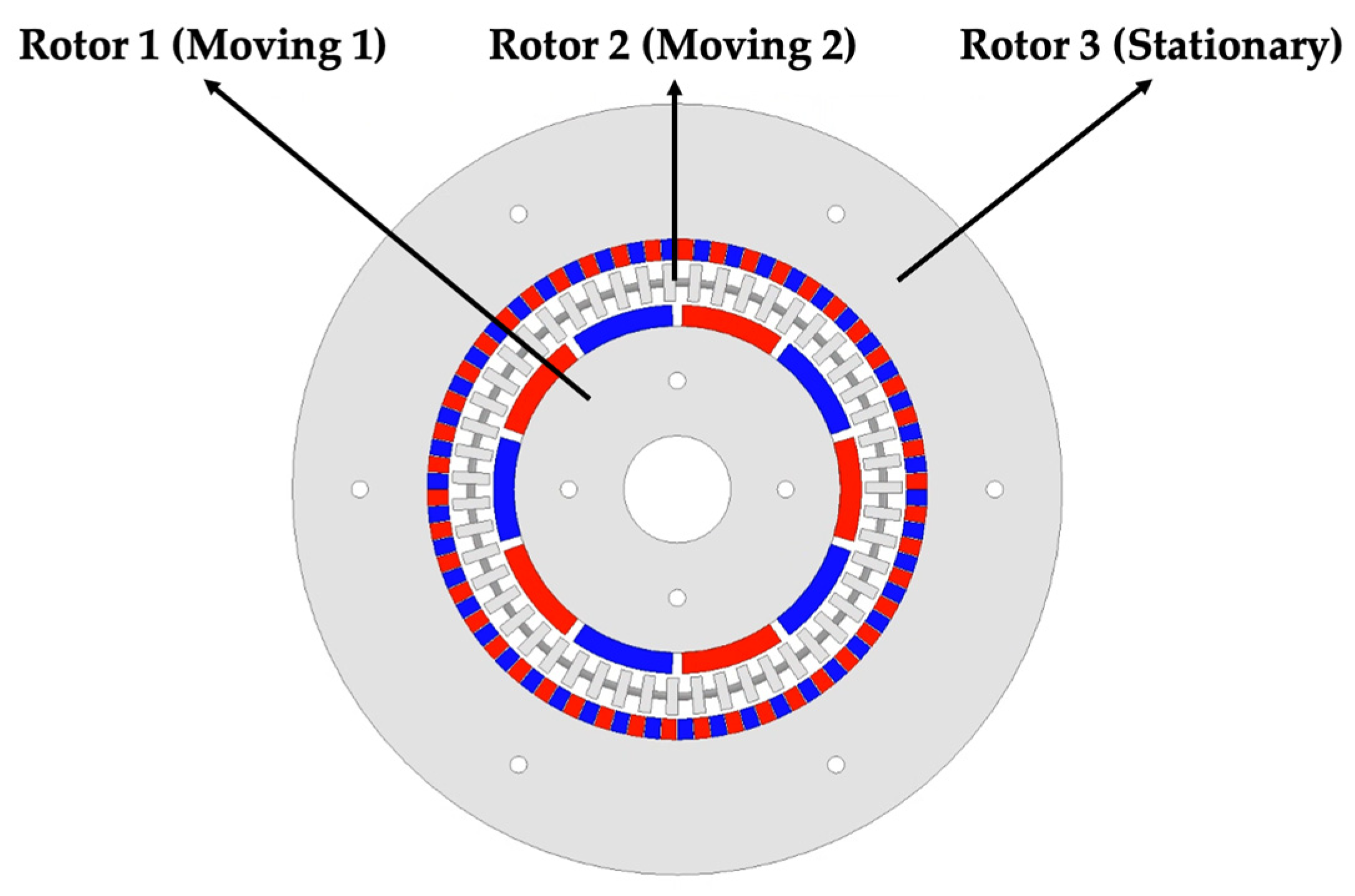
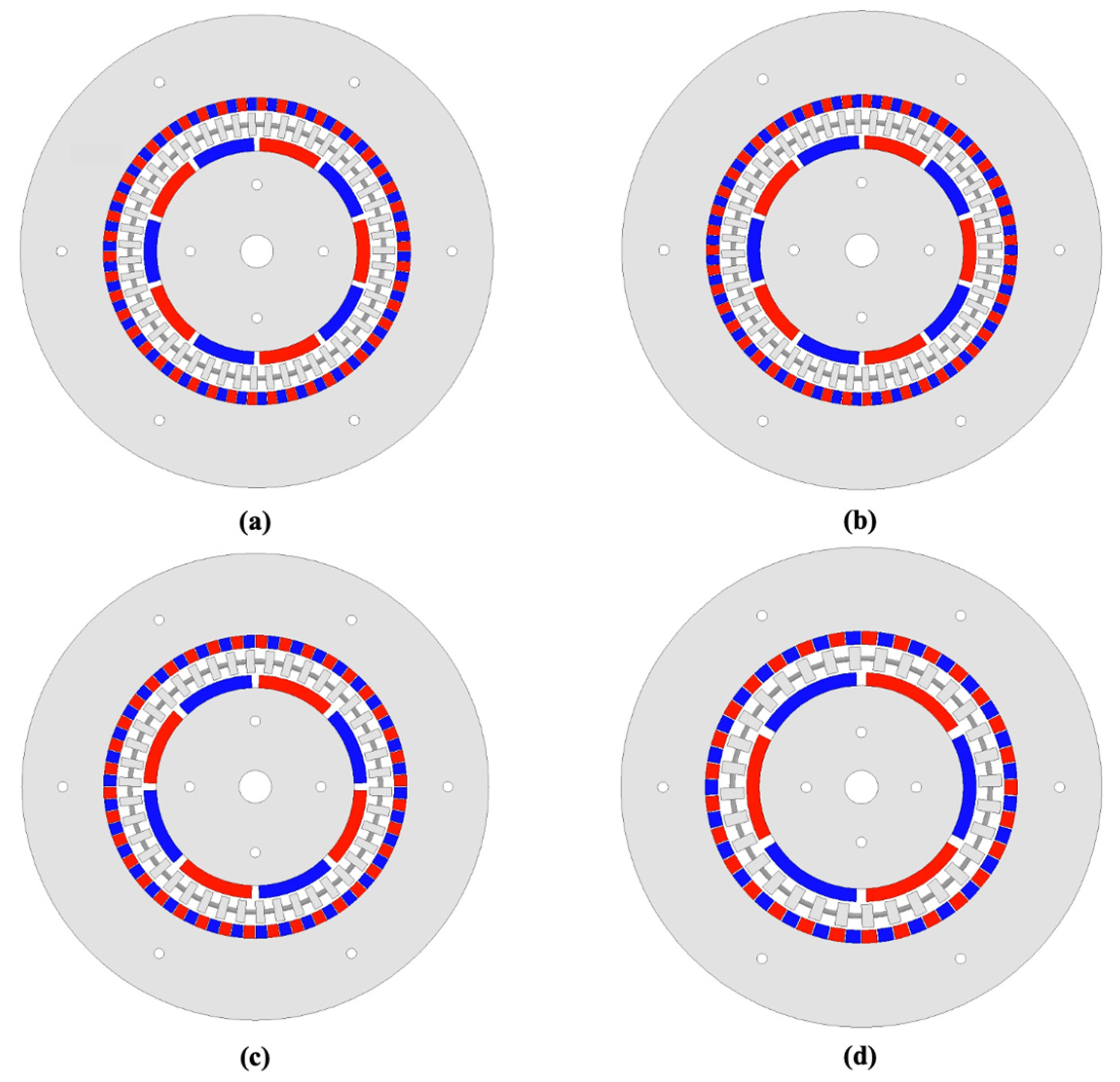
Section 2 describes the initial CMG design, including the four pole-pair combinations, and presents the preliminary electromagnetic analysis.
Section 3 outlines the optimal design procedure, including sampling strategies, sensitivity analysis, surrogate modeling, and the genetic algorithm–based optimization process.
Section 4 presents the multiphysics validation results, including electromagnetic, thermal, demagnetization, and structural analyses.
Section 5 discusses the results and provides a comparative discussion of the proposed CMG design in relation to previously published studies.
Section 6 concludes the paper and outlines future research directions.
3. CMG Optimization
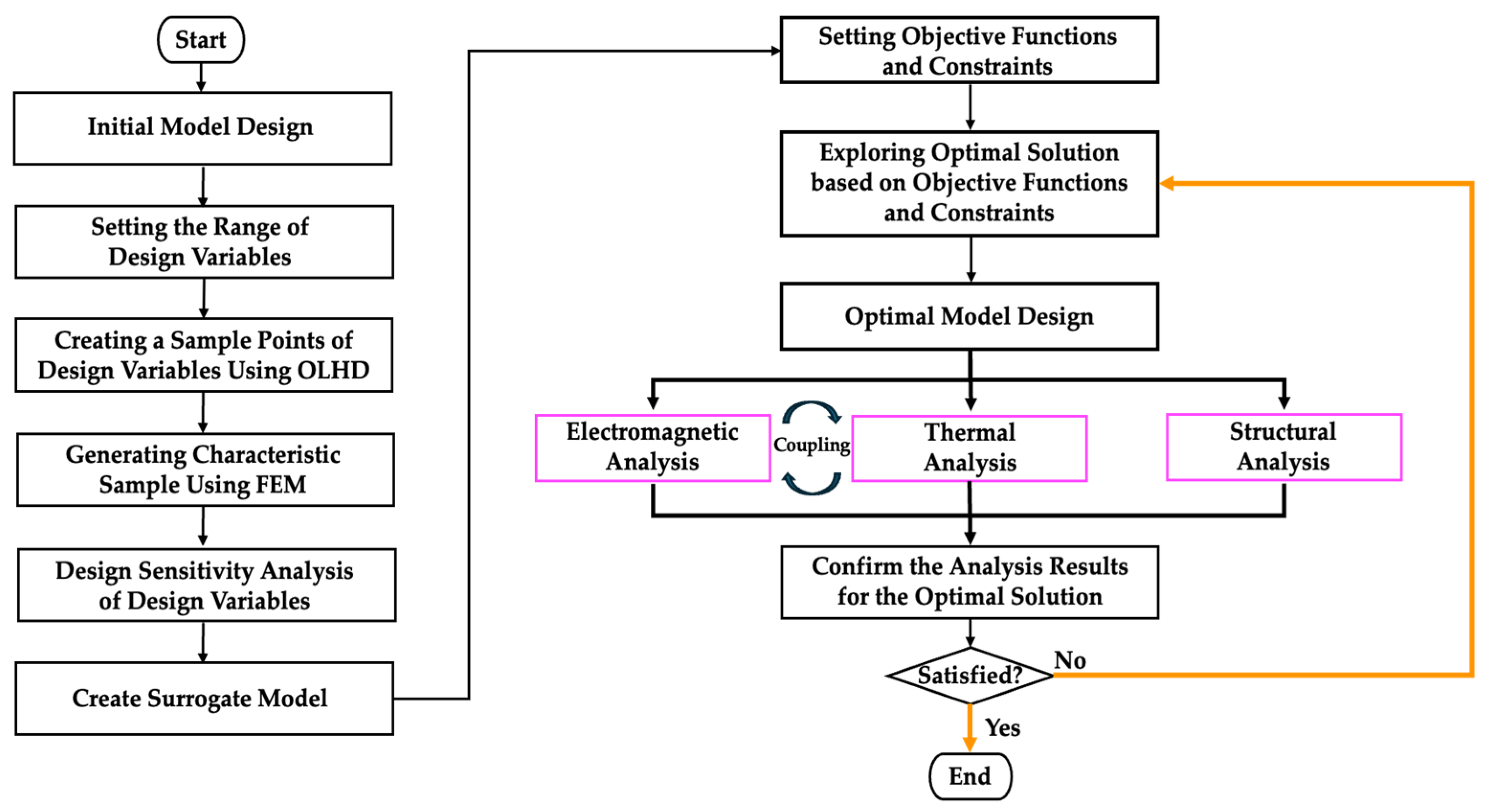
To enhance the torque density of the CMG, an optimal design procedure was established to determine the optimal values of key design variables within a constrained design space. The four CMG configurations developed in
Section 2—including the initial model and three additional pole-pair combinations—were each subjected to the same optimal design procedure to enable a consistent and comparative assessment. The overall optimal design process employed in this study is illustrated in
Figure 3.
The optimal design process begins with the initial CMG design, followed by the selection of appropriate design variables and the specification of their feasible ranges. Sampling points within these ranges were generated using OLHD, a DOE technique that provides superior space-filling properties. Each sampling point was evaluated using three-dimensional FEM to obtain electromagnetic performance data, while a design sensitivity analysis was conducted in parallel to quantify the influence of each design variable on key output characteristics. Based on these analyses, the objective function and design constraints for the optimal design problem were defined.
To reduce the computational burden associated with repeated FEM simulations, surrogate models were constructed using the sampled FEM data to approximate the input–output behavior of the CMG. Among the surrogate candidates, the model demonstrating the highest prediction accuracy was selected. This surrogate model was then employed to determine the optimal design solution that satisfies both the objective function and the imposed constraints. The resulting optimal design variables were subsequently applied to construct the optimized CMG model.
Finally, comprehensive multiphysics validation—including electromagnetic, thermal, and structural analyses—was performed to verify the reliability and feasibility of the optimized design. If the validation results did not satisfy the prescribed performance criteria, the optimal design loop was repeated until convergence was achieved. Once all criteria were met, the optimal design procedure was concluded.
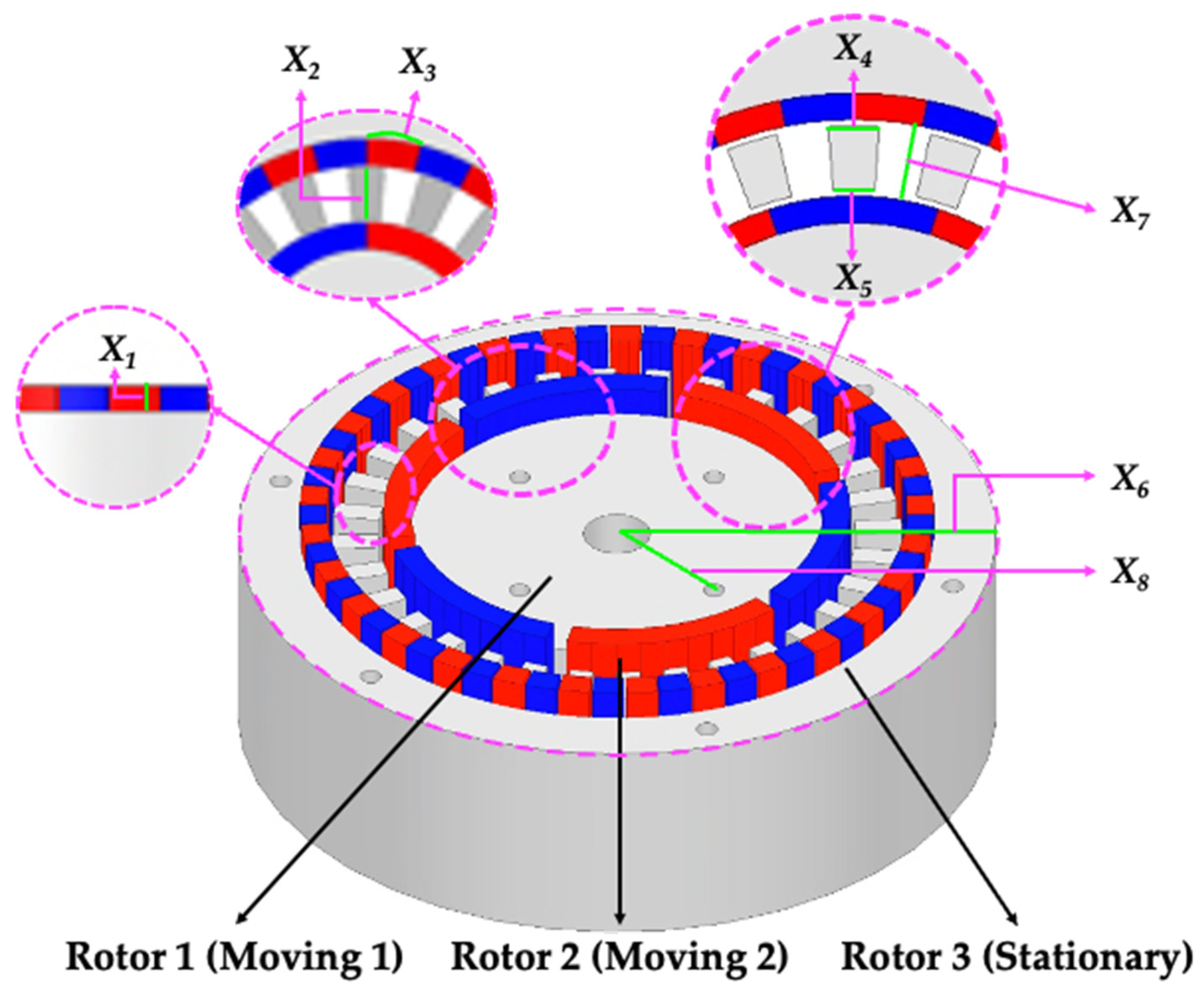
Selecting appropriate design variables is essential, as these parameters strongly influence both the electromagnetic and mechanical behavior of the CMG. In this study, eight adjustable design variables were selected with the objective of maximizing torque density while maintaining sufficient average output torque.
The eight design variables considered in this optimal design are illustrated in
Figure 4 and defined as follows:
X1: overhang length, X2: pole piece length, X3: PM electrical degree, X4: arc angle of the outer pole piece, and X5: arc angle of the inner pole piece, X6: outer radius, X7: air gap, X8: hole position of the rotor 1.
First, CMGs inherently exhibit significant axial flux leakage. Previous studies have shown that incorporating an overhang structure can mitigate axial leakage and increase output torque. Accordingly, the overhang length was selected as one of the optimal design variables.
Second, the geometry of the modulation pole pieces plays a critical role in determining the torque characteristics of a CMG. In addition, the air-gap length around Rotor 2 directly influences magnetic coupling and torque production. Therefore, the pole-piece length, pole-piece arc angles, and air-gap length were included as optimal design variables.
Third, the arc angle of the permanent magnet (PM) affects torque performance. However, increasing PM volume to enhance torque also increases mass and material cost. To maintain constant PM usage while improving electromagnetic characteristics, the electrical arc angle of the PM was selected as an optimal design variable.
Fourth, CMGs typically incorporate openings in the rotor or housing for mounting or mechanical protection. These openings modify the magnetic flux paths and can influence torque generation. Consequently, the hole position on Rotor 1 was included as an optimal design variable to evaluate its impact on electromagnetic behavior.
Finally, maximizing torque density requires minimizing unnecessary volume. Reducing the outer radius decreases the overall size of the CMG and directly enhances torque density. Thus, the outer radius was also selected as an optimal design variable.
For effective optimal design, appropriate ranges must be defined for all design variables to prevent magnetic saturation under the intended operating conditions. The initial values and allowable ranges for the eight design variables considered in this study are summarized in
Table 4.
Specifically, the overhang length was varied from 0 to 30 mm, while the pole-piece length was defined within the range of 4–12 mm. The PM arc angle , the outer pole-piece arc angle , and the inner pole-piece arc angle were all specified in electrical degrees and allowed to vary from 100° to 180°. The outer radius was constrained to the range of 70–90 mm, and the air-gap length was set between 0.5 and 1.0 mm. Finally, the hole position of Rotor 1, represented by , was defined within the range of 17–33.5 mm.
3.1. Sampling and Design Sensitivity Analysis
To maximize the torque density of the CMG, the optimal design process was carried out using the eight design variables identified in the previous subsection. Conducting an optimal design solely through repeated FEM simulations is computationally demanding and becomes impractical for high-dimensional design problems. Therefore, reducing computational cost while maintaining predictive reliability is essential in optimal design [
39]. To address this challenge, surrogate modeling techniques were employed due to their high computational efficiency and suitability for engineering design applications.
Sampling points for surrogate-model construction were generated using OLHD, a DOE method that maximizes the minimum distance between sampling points and provides excellent space-filling characteristics within the design domain. The number of sampling points required for surrogate-model construction was estimated using the empirical guideline given in Equation (5), which has been widely adopted in response surface–based surrogate modeling studies [
40]. In this equation,
denotes the number of required minimum sampling points, and
represents the number of design variables. In this study
is 8.
Using Equation (5), the minimum required number of sampling points for eight design variables was calculated to be 67.5. To enhance the accuracy and robustness of the surrogate models, a substantially larger number of sampling points was employed in this study. Specifically, 150 OLHD points—more than twice the minimum requirement—were used for surrogate-model construction. Using the 150 generated sampling points, all four CMG models were evaluated using 3D FEM to obtain the corresponding electromagnetic performance datasets. The sampling results are summarized in
Table 5. Among the four candidates, the CMG model with a gear ratio of 1:10.66 exhibited the highest average torque of 42.23 Nm and the highest torque density of 72.53 Nm/L. These results indicate that, within the investigated design space, higher gear ratios tend to yield improved torque performance. Accordingly, the 1:10.66 CMG model, which showed the most favorable sampled performance, was selected as the primary target for the subsequent optimal design procedure.
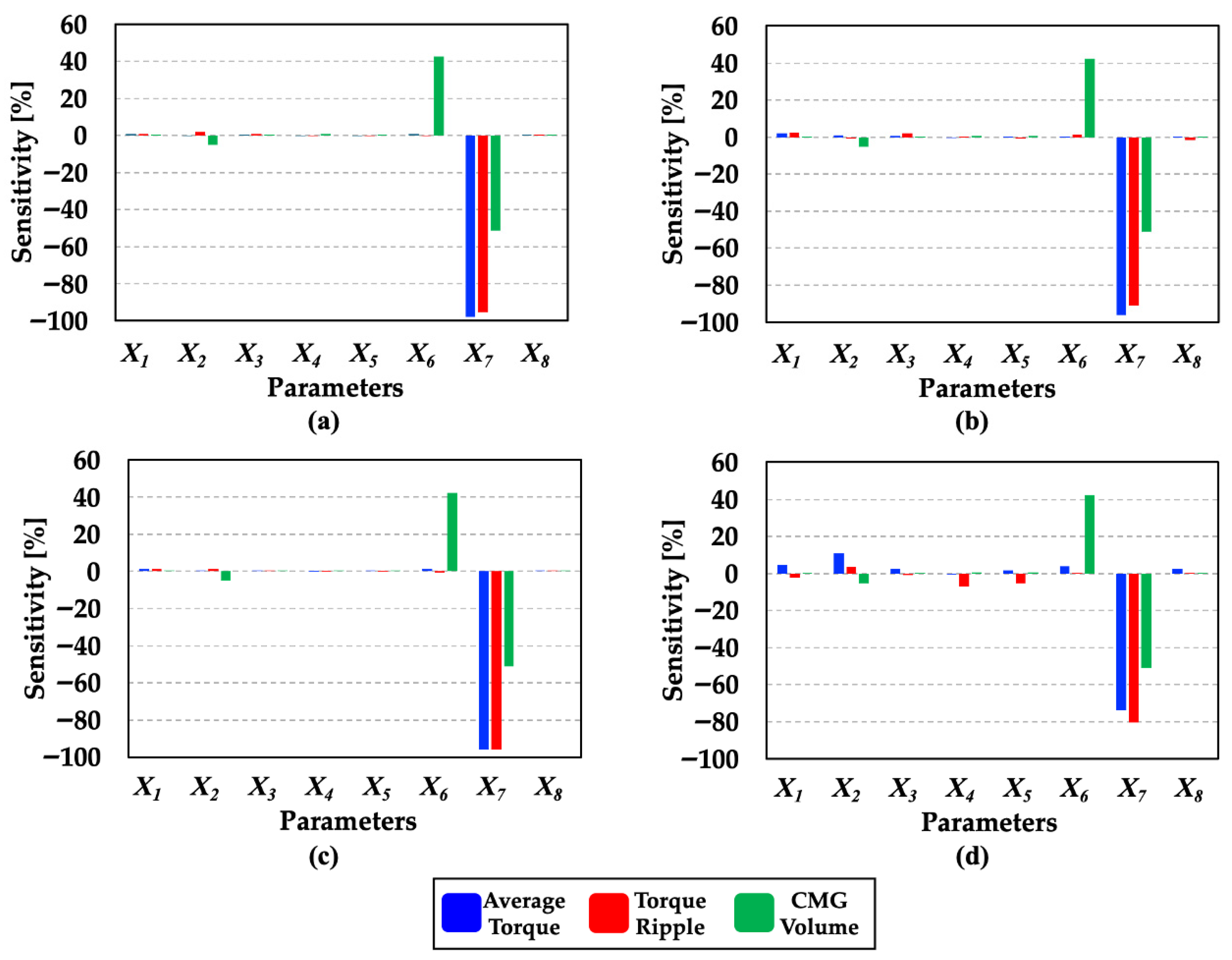
Using the sampled data, a Design Sensitivity Analysis (DSA) was conducted to quantify the influence of each design variable on the output characteristics of the CMG. The DSA results for the four CMG configurations are presented in
Figure 5.
Among all design variables, (outer radius) exhibited the highest sensitivity, accounting for more than 40% of the total influence in all four CMG models. This result indicates that the outer radius has a dominant effect on the overall CMG volume and, consequently, on torque density.
In addition, for the target CMG model selected for the subsequent optimal design, the variables (overhang length) and (pole-piece length) contributed approximately 4.8% and 10.9%, respectively, to the variation in average torque. These findings confirm that both variables play an important role in determining CMG performance and should therefore be treated as key parameters in the optimal design process.
3.2. Optimal Design
Using the 150 sampling points generated in the previous subsection, the optimal design procedure was carried out by constructing surrogate models based on the sampled FEM data. Five surrogate modeling techniques were employed to approximate the relationships between the design variables and the corresponding performance outputs: Kriging (KRG), multilayer perceptron (MLP), ensemble of decision trees (EDT), polynomial regression (PRG), and radial basis function regression (RBF).
Because surrogate models are introduced to significantly reduce computational cost compared with direct FEM-based evaluations, their prediction accuracy directly affects the reliability of the optimal design results. Therefore, a quantitative assessment of surrogate model accuracy is essential prior to their use in the optimal design stage.
The prediction accuracy of the surrogate models was evaluated using the root-mean-square error (RMSE), defined in Equation (6) [
41,
42]. A total of 150 design points were generated using the OLHD method. Among these, 90% of the data (135 points) were used for surrogate model training, while the remaining 10% (15 points) were randomly selected as independent test points for validation. RMSE quantifies the average deviation between predicted and actual values by computing the square root of the mean squared difference. In Equation (6),
n denotes the number of test points,
represents the actual FEM results, and
denotes the corresponding predictions obtained from the surrogate model.
A lower RMSE value indicates better predictive performance. Accordingly, the surrogate model yielding the lowest RMSE was selected as the most suitable model for use in the subsequent optimal design procedure. RMSE values were evaluated for three key performance metrics—average torque, torque ripple, and CMG volume—to ensure that the selected surrogate model provided consistent accuracy across all critical outputs. The RMSE results obtained for each surrogate model and each pole-pair configuration are summarized in
Table 6. Because the RMSE values are reported in the physical units of the corresponding performance metrics, they should be interpreted with respect to each individual metric rather than through direct numerical comparison across different performance variables.
In this study, the Kriging model was adopted as the surrogate model for the optimal design procedure based on a comparative evaluation of multiple surrogate modeling approaches. The Kriging model employs an interpolation-based framework and provides not only the predicted mean response but also the predictive variance, enabling explicit quantification of model uncertainty. Owing to its high data efficiency and strong capability to capture nonlinear responses with a limited number of training samples, Kriging has been widely applied in FEM-based optimal design problems [
42].
Furthermore, the variance-minimization property of Kriging makes it particularly suitable for the present CMG optimization problem, in which pronounced nonlinear behavior and numerical noise are observed due to complex magnetic interactions and 3D FEM discretization effects [
43].
Although the objective function in this study assigns equal weights to average torque and volume to enhance torque density, the selection of the surrogate model was guided by the distinct characteristics of the corresponding response variables. Average torque exhibits pronounced nonlinearity and high sensitivity to the design variables, whereas the volume is primarily governed by geometric parameters and shows a comparatively smooth and near-linear response. As indicated by the RMSE results summarized in
Table 6, the Kriging model achieved the lowest prediction error for the average torque response, which represents the more nonlinear and optimal-design-sensitive objective in this study. For problems involving complex and nonlinear input–output relationships, surrogate models with flexible covariance structures, such as the Kriging model, have been shown to outperform simpler polynomial-based approaches in terms of predictive accuracy and robustness [
44].
The objective function and design constraints used for the optimal design are defined in Equations (7) and (8). Because the primary goal of this study is to enhance the torque density of the CMG, the optimal design problem was formulated to maximize the average torque while simultaneously minimizing the model volume. Owing to the multi-objective nature of the problem, equal weighting factors were assigned to the two objectives, as both directly contribute to improving torque density. The design constraints were derived from the initial 3D FEM results listed in
Table 3 to ensure that the resulting optimized design remains within an acceptable torque-characteristic range while achieving improved performance.
Specifically, for the selected CMG model with a gear ratio of 1:10.66, the optimal design was required to exceed the initial average torque of 42.164 Nm while constraining the torque ripple to be lower than 2.072 Nm.
To enable a fair comparison of optimal design performance, all four CMG models were subjected to the same optimal design conditions. The initial values of the design variables for each model were derived from their respective baseline configurations. Using the objective function and design constraints defined in Equations (7) and (8), a genetic algorithm (GA) was employed to identify the optimal set of design variables.
GA is well suited for multi-objective optimal design problems encountered in electrical machine applications, as it efficiently explores high-dimensional design spaces while accommodating nonlinear constraints. When combined with surrogate modeling, GA substantially reduces the computational burden associated with repeated FEM evaluations and facilitates the identification of reliable optimal solutions [
45].
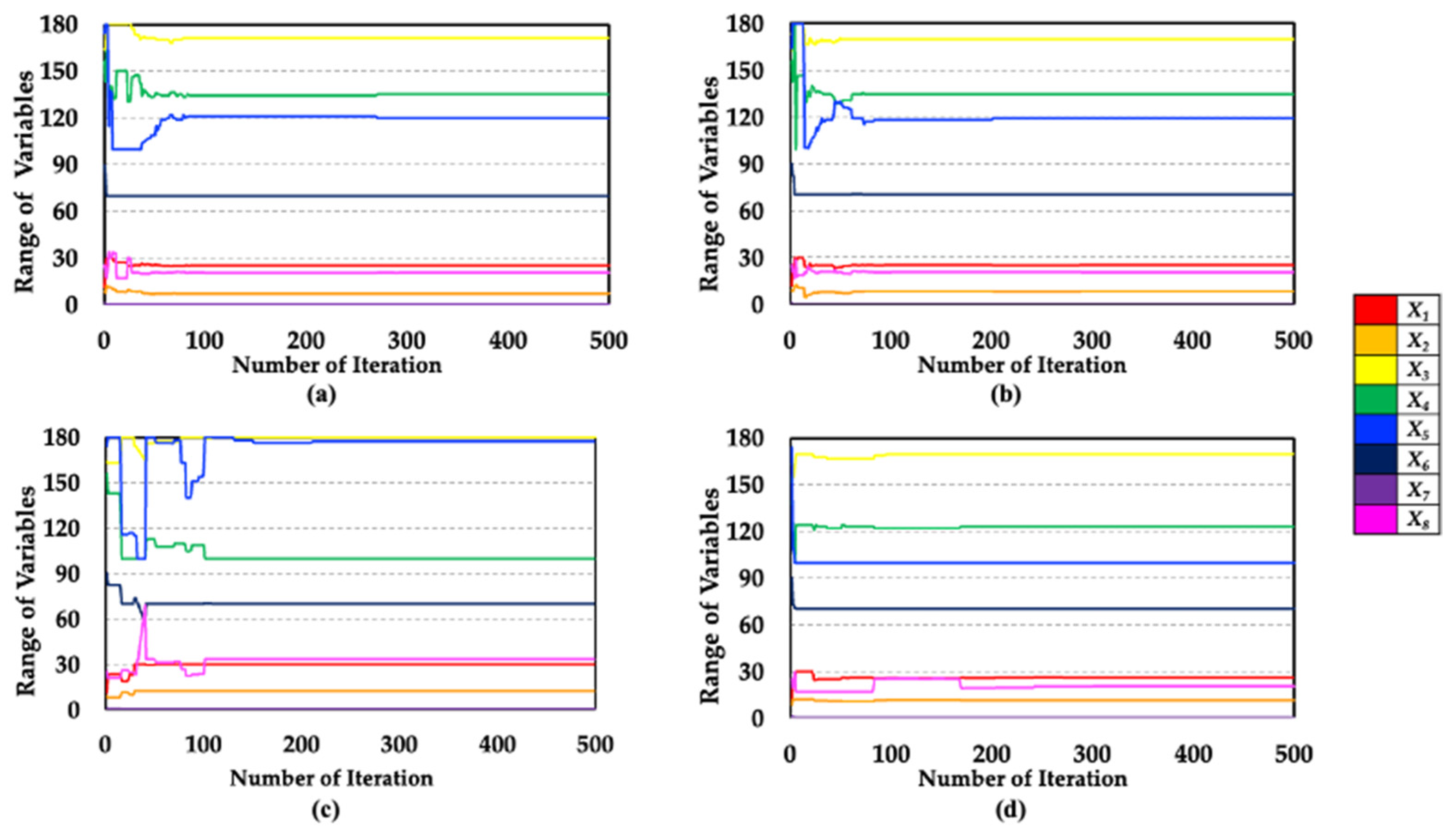
For each of the four CMG configurations, the GA was executed for 500 iterations to ensure convergence toward a near-global optimum. The convergence behavior of the design variables during the optimal design process is illustrated in
Figure 6.
The optimal design solutions obtained using the GA-based procedure are summarized in
Table 7. Consistent with the results of the design sensitivity analysis, the outer radius
, which exhibited the highest sensitivity, converged to 70 mm for all four CMG models. This reduction from the initial value reflects the volume-minimization objective and confirms that decreasing the outer radius is essential for improving torque density.
All four CMG models satisfied the imposed design constraints on average torque and torque ripple. Among the evaluated configurations, the CMG model with a gear ratio of 1:10.66, which was selected as the target for optimal design, showed the best overall performance. In particular, the optimized 1:10.66 model achieved an average torque of 65.09 Nm, a torque ripple of 2.07 Nm, and a volume of 897,503.09 mm3, corresponding to the highest torque output among the four optimally designed CMG models.
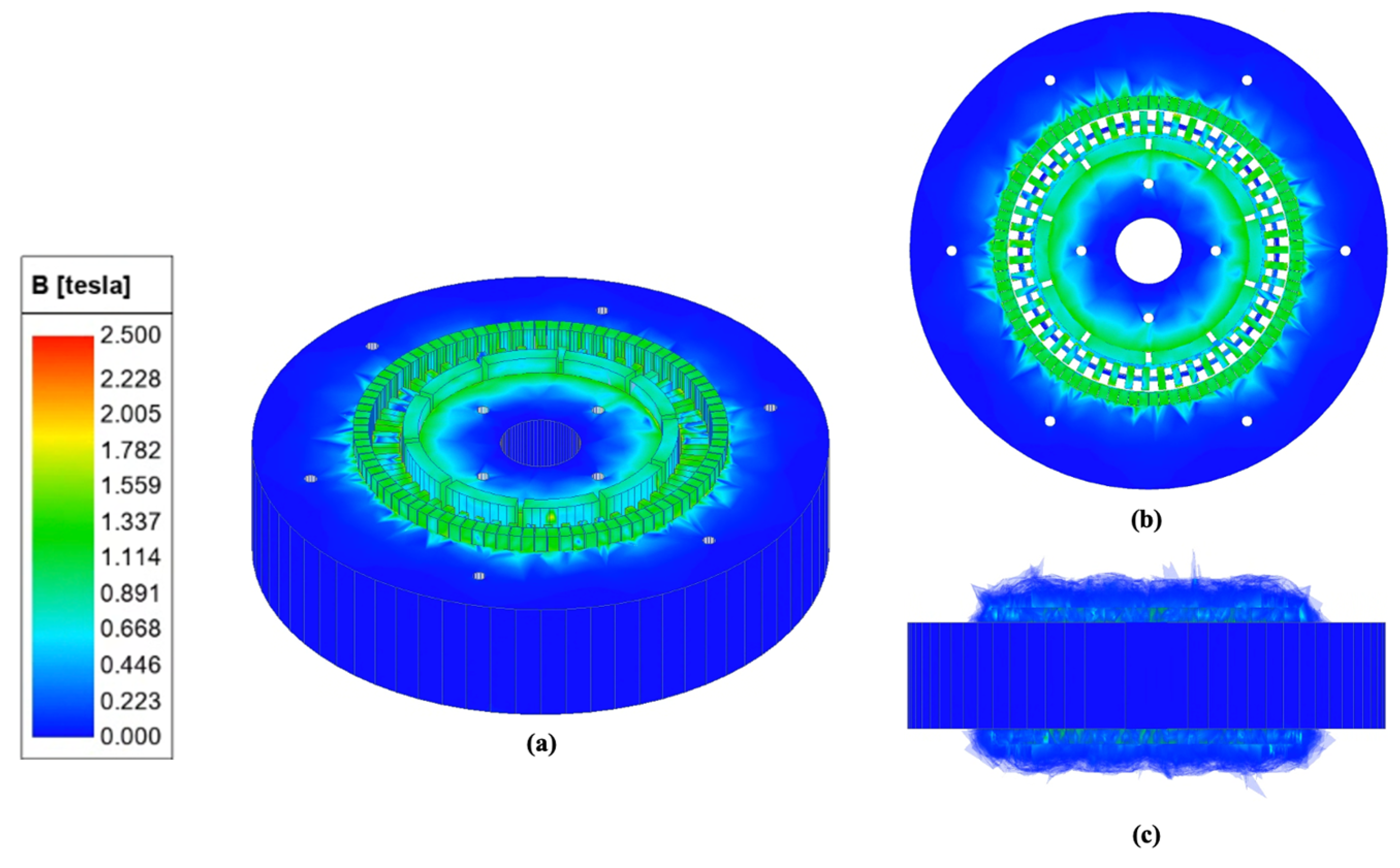
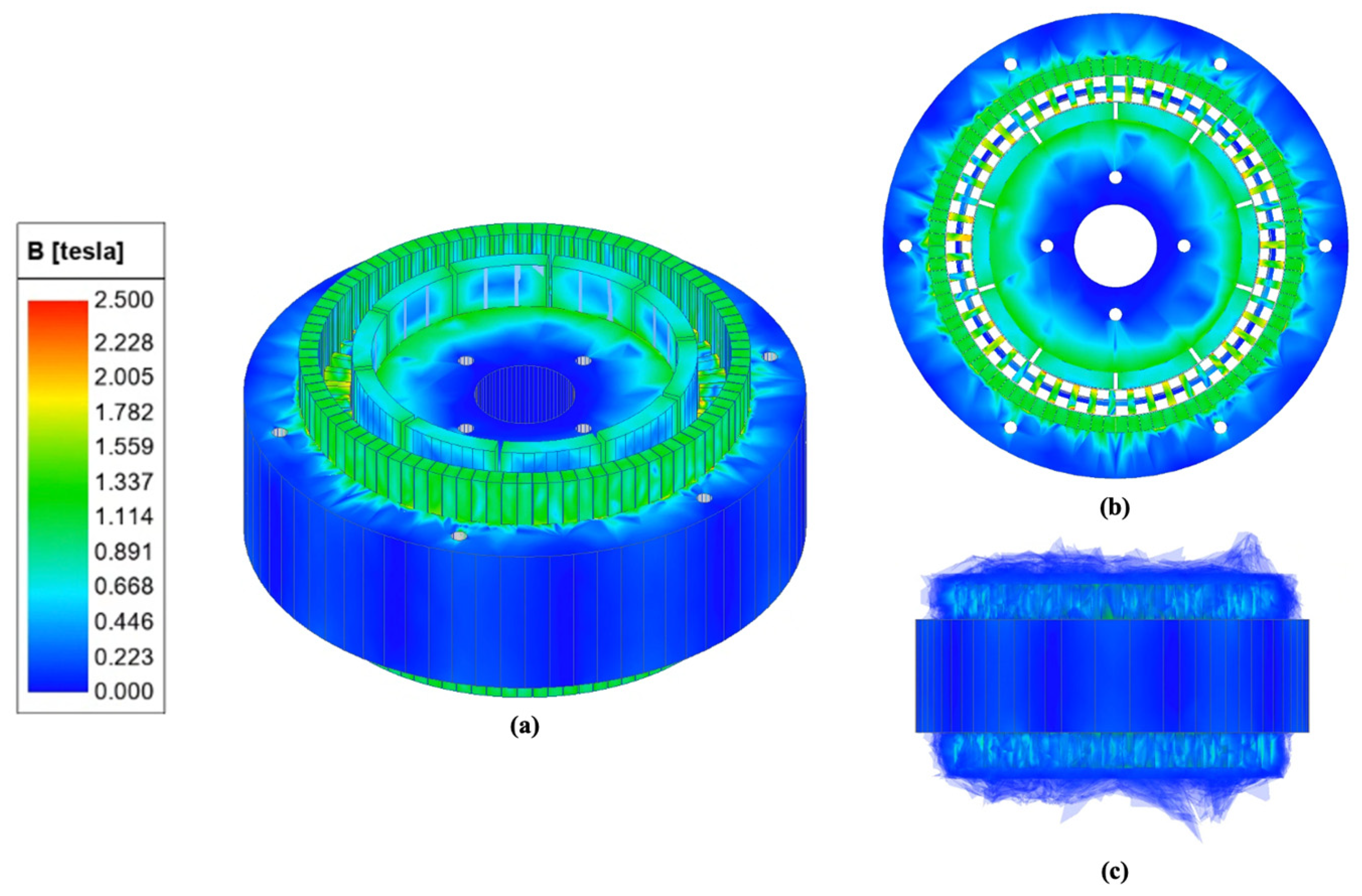
The magnetic flux density distributions of the initial and optimized CMG models are shown in
Figure 7 and
Figure 8, respectively. The overall flux distributions are presented in the isometric views in
Figure 7a and
Figure 8a. The top views in
Figure 7b and
Figure 8b emphasize the radial flux paths and clearly illustrate the dimensional differences between the two designs. As shown in these figures, the outer radius
was reduced by 20 mm in the optimized design compared with the initial model. This reduction removes unnecessary iron volume in Rotor 3 and results in a significant decrease in the overall CMG volume.
The front views in
Figure 7c and
Figure 8c reveal the axial flux leakage, which cannot be accurately evaluated using 2D FEM. The 3D FEM results indicate a noticeable reduction in axial flux leakage in the optimized model. In addition, the electrical arc angle of the permanent magnets differs by approximately 6° between the initial and optimized designs, leading to a more concentrated magnetic flux distribution in the optimized structure.
Compared with the initial model, the optimized design exhibits a more compact and concentrated flux distribution within the core region. Localized peak flux-density values are observed near geometric discontinuities; however, these are a natural consequence of flux concentration and localized field intensification associated with volume reduction and torque-density enhancement, rather than indicators of physically unrealistic magnetic saturation.
To ensure physically meaningful evaluation, the magnetic flux density distributions were visualized by limiting the color scale to the range of 0–2.5 T during 3D FEM post-processing. This range corresponds to the physically relevant saturation level of the employed ferromagnetic core material. As a result, localized peak values exceeding this range may appear near sharp edges or geometric discontinuities. It should be noted, however, that such localized peaks do not represent effective magnetic loading, but are instead recognized as numerical singularities inherent to finite-element discretization. Since performance evaluation relies on spatially distributed flux-density levels within the bulk core region, these non-representative local peaks were excluded from the magnetic flux density assessment.
4. Multiphysics Validation
To ensure the reliability and technical validity of the optimal design, comprehensive multiphysics validation was performed on the CMG model constructed using the optimal design variables. During operation, electromagnetic energy-conversion devices inevitably generate losses, such as core loss and copper loss, which lead to temperature rise. Elevated temperatures can degrade the magnetic properties of permanent magnets and ferromagnetic materials, thereby affecting overall performance. Consequently, thermal analysis in conjunction with electromagnetic analysis is essential for accurate performance validation.
To account for temperature-dependent magnetic degradation, an electromagnetic–thermal coupled analysis was conducted. In addition, a demagnetization analysis was performed to evaluate the robustness of the permanent magnets under elevated temperature. Finally, structural analysis was carried out to verify the mechanical integrity of the CMG under operating torque conditions.
In this study, the optimized CMG design was evaluated using the following procedures:
- (1)
comparative three-dimensional FEM electromagnetic analysis;
- (2)
fast Fourier transform (FFT) analysis of the air-gap flux density;
- (3)
electromagnetic–thermal coupled analysis;
- (4)
demagnetization analysis; and
- (5)
structural analysis.
These combined analyses provide comprehensive multiphysics validation for the optimized CMG design. The use of three-dimensional multiphysics FEM effectively compensates for the absence of an experimental prototype by capturing complex three-dimensional phenomena. In particular, this approach accounts for nonlinear interactions among electromagnetic losses, temperature-induced magnetic degradation, and structural responses, which are critical for validating the feasibility of the proposed overhang structure.
4.1. Electromagnetic Analysis
The first stage of the multiphysics validation focused on evaluating the electromagnetic performance of the optimized designs. Using the optimal design variables, three-dimensional FEM simulations were performed for all four CMG configurations to allow direct comparison. Rotor 1 was operated at a fixed rated speed of 1000 rpm, while the rated speeds of the remaining rotors were determined using Equation (4). To ensure sufficient numerical accuracy, each CMG model was discretized into approximately 300,000 finite elements.
The electromagnetic validation results for the four optimized configurations are summarized in
Table 8. All models exhibited substantial improvements in torque density compared with the initial FEM results presented in
Table 3.
Among the four configurations, the optimized CMG model with a gear ratio of 1:10.66 exhibited the highest overall performance. The average torque increased to 65.75 Nm, representing an improvement of approximately 55% compared with the initial design. In addition, the torque ripple factor decreased to 4.57%, corresponding to a reduction of about 0.34%. Most notably, the torque density increased to 117.14 Nm/L, which represents a significant enhancement of approximately 162.51% relative to the initial design. These results confirm that reducing the outer radius , identified as the most volume-sensitive design variable, effectively decreased the CMG volume and played a dominant role in improving torque density.
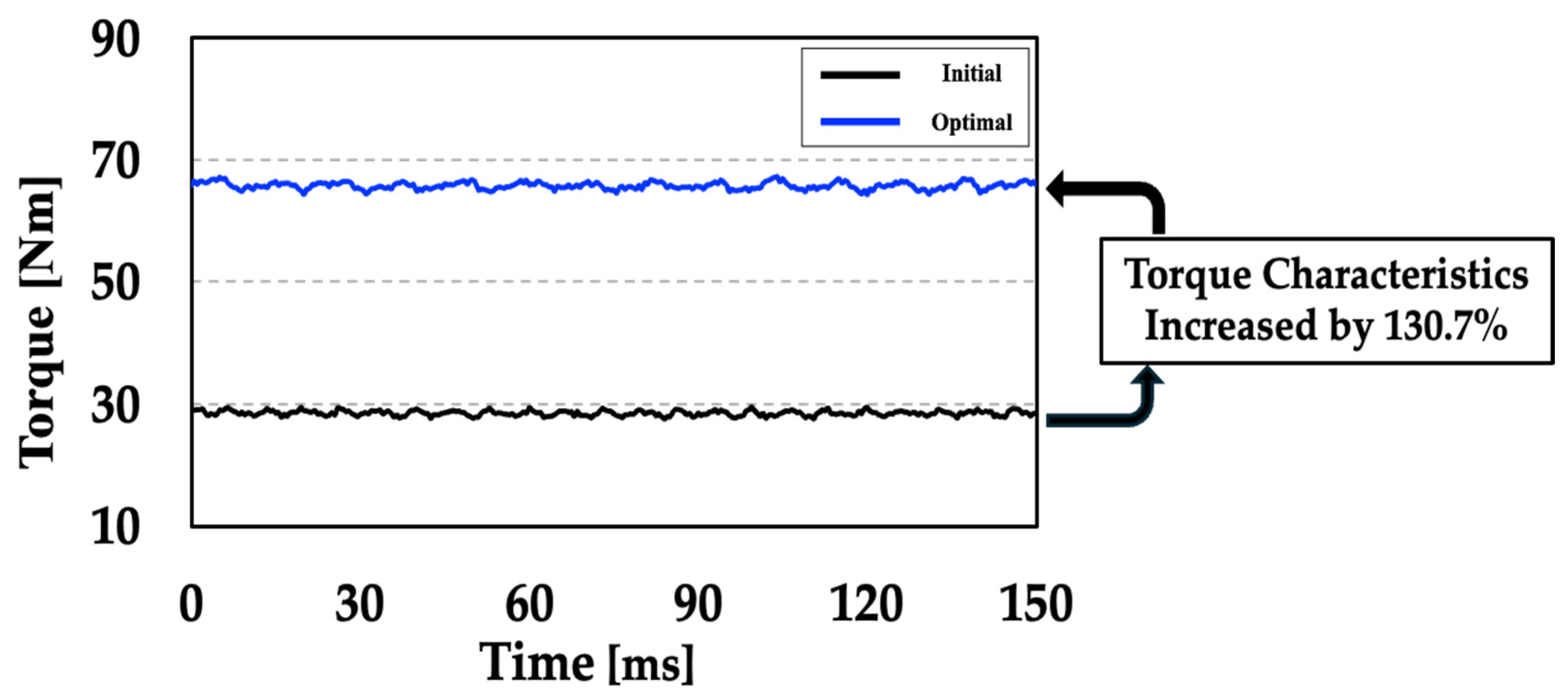
To further compare the torque characteristics of the initial and optimal models, electromagnetic simulations were conducted under identical operating conditions. The resulting torque–time waveforms are shown in
Figure 9. The initial model produced an average torque of 28.49 Nm, whereas the optimal model achieved a substantially higher average torque of 65.75 Nm, corresponding to an improvement of approximately 130.76%.
Design sensitivity analysis revealed that overhang length is the most influential variable affecting the average torque. Increasing the overhang length reduced axial leakage flux, leading to a significant enhancement in torque output compared with the initial design. Furthermore, the torque ripple factor was reduced by approximately 2.06%, confirming that the optimized CMG design provides not only higher torque output but also improved torque stability.
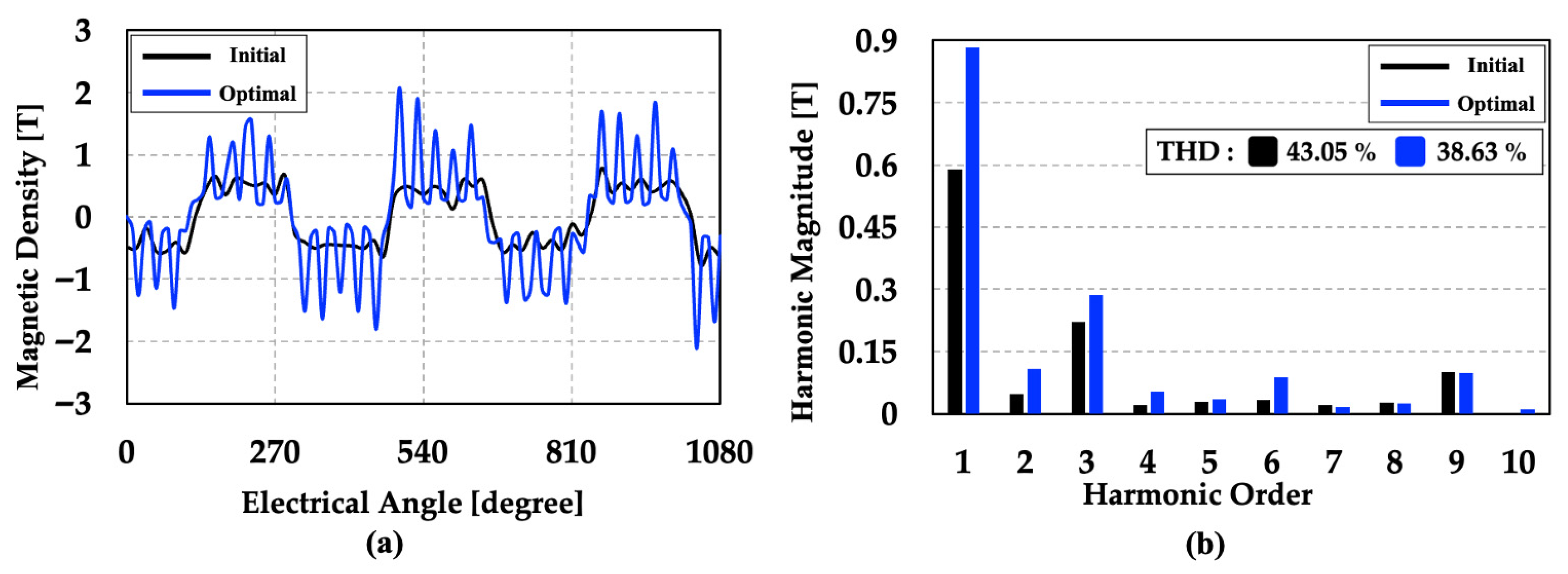
To evaluate the effect of the optimal design on the harmonic characteristics of the CMG, the frequency components of the air-gap magnetic flux density were analyzed for both the initial and optimized models using total harmonic distortion (THD). The comparison results are presented in
Figure 10.
Figure 10a shows the air-gap magnetic flux density waveforms, while
Figure 10b presents the corresponding FFT spectra expressed in absolute amplitudes.
As observed in
Figure 10a, the optimized model exhibits a higher peak flux density than the initial model. This increase in absolute amplitude is a natural physical consequence of the flux-concentration strategy adopted in the optimal design process to maximize torque density. Accordingly, priority was given to enhancing the fundamental harmonic component, which plays the dominant role in torque production, as confirmed in
Figure 10b.
The FFT results indicate that the fundamental component accounts for 53.08% of the total spectrum in the initial model and 54.57% in the optimized model. In terms of absolute amplitude, the fundamental component increased by 49.78% after applying the optimal design. Although the absolute amplitudes of some harmonic components also increased, the growth rate of the fundamental component was significantly higher. Specifically, while the fundamental component increased by 49.78%, the 3rd- and 5th-order harmonics increased by 29.39% and 20.79%, respectively, whereas the 7th- and 9th-order harmonics decreased in magnitude.
Consequently, when the harmonic content is evaluated relative to the fundamental component, the total harmonic distortion (THD)—defined as the ratio of the combined harmonic components to the fundamental component—decreased from 43.05% in the initial model to 38.63% in the optimized model, corresponding to a reduction of 4.42%. These results confirm that the optimized CMG design exhibits a more dominant fundamental component and reduced magnetic flux distortion.
Overall, despite the increase in the absolute amplitudes of certain harmonic components, the harmonic analysis demonstrates an improvement in waveform quality. This indicates that the optimized CMG design effectively concentrates the increased magnetic energy into the fundamental component, thereby achieving enhanced torque density.
4.2. Electromagnetic–Thermal Coupling Analysis
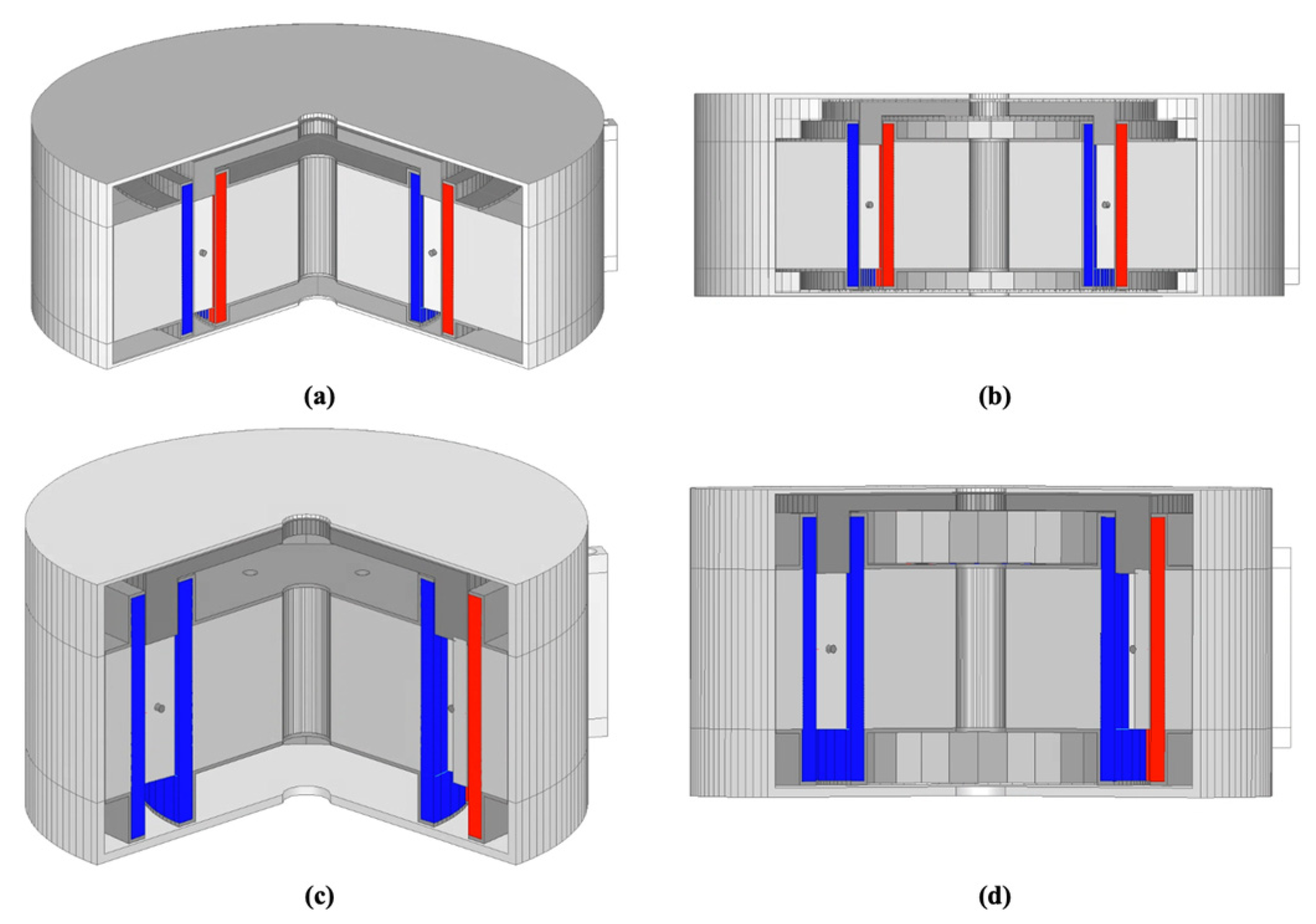
During operation, the temperature of the CMG increases due to electromagnetic losses, including eddy current losses and magnetic core losses generated in the conductive structural components. Since the CMG does not incorporate armature windings, copper loss was not considered in this analysis. The resulting temperature rise may degrade the magnetic properties of the permanent magnets and ferromagnetic materials, thereby affecting the overall performance of the device. Accordingly, it is necessary to evaluate not only the electromagnetic characteristics but also the thermal behavior of the CMG. In this study, electromagnetic and thermal analyses were integrated through a coupled simulation framework. The loss components considered include hysteresis loss and classical eddy current loss in the ferromagnetic materials, which were calculated using a FEM-based loss model. To represent realistic thermal conditions and ensure structural consistency, the cap and housing structures required for practical CMG fabrication were applied to both the initial and optimized models. The geometries of the two models used for the electromagnetic–thermal coupled analysis are shown in
Figure 11.
To evaluate both the electromagnetic and thermal characteristics of the structurally reinforced CMG, an electromagnetic–thermal coupled analysis was performed using a two-way coupling approach between ANSYS Maxwell and Icepak (v2025 R2). In this framework, the electromagnetic losses calculated in Maxwell were transferred to Icepak to perform thermal analysis. The resulting temperature distribution obtained from Icepak was then fed back into Maxwell, where temperature-dependent material properties were updated iteratively [
46,
47]. Through this two-way coupling process, the mutual interactions between the electromagnetic fields and thermal behavior were fully captured, enabling accurate prediction of both heat distribution and magnetic flux characteristics.
The electromagnetic analysis results of the two CMG models, obtained from three-dimensional FEM, are summarized in
Table 9. For the initial model, the inclusion of the cap and housing resulted in a reduction in average torque and an increase in the ripple factor compared with the configuration without these structures. In contrast, for the optimized model, the average torque increased after the cap and housing were added, showing an improvement of approximately 0.31 Nm. Torque density was not evaluated in this comparison because the inclusion of the cap and housing increases the overall CMG volume, making torque-density comparison inappropriate in this context.
In this study, multiphysics simulations were performed in which the electromagnetic losses calculated using ANSYS Maxwell were transferred to Icepak to conduct a 600 s electromagnetic–thermal coupled analysis. This analysis investigates the temperature evolution of the CMG in the absence of active cooling.
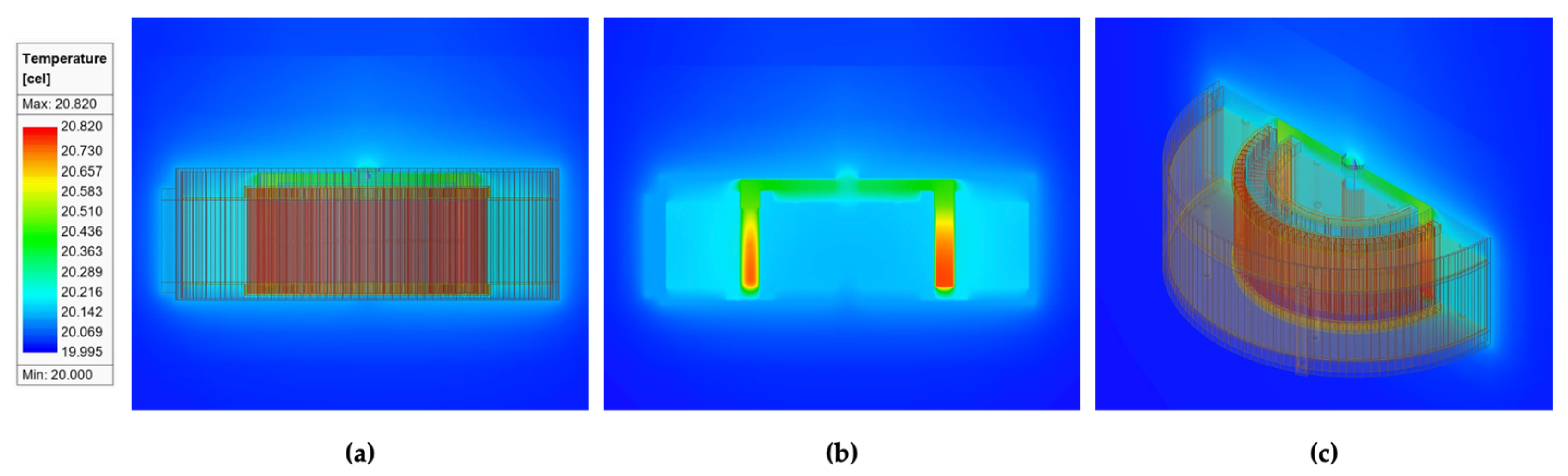
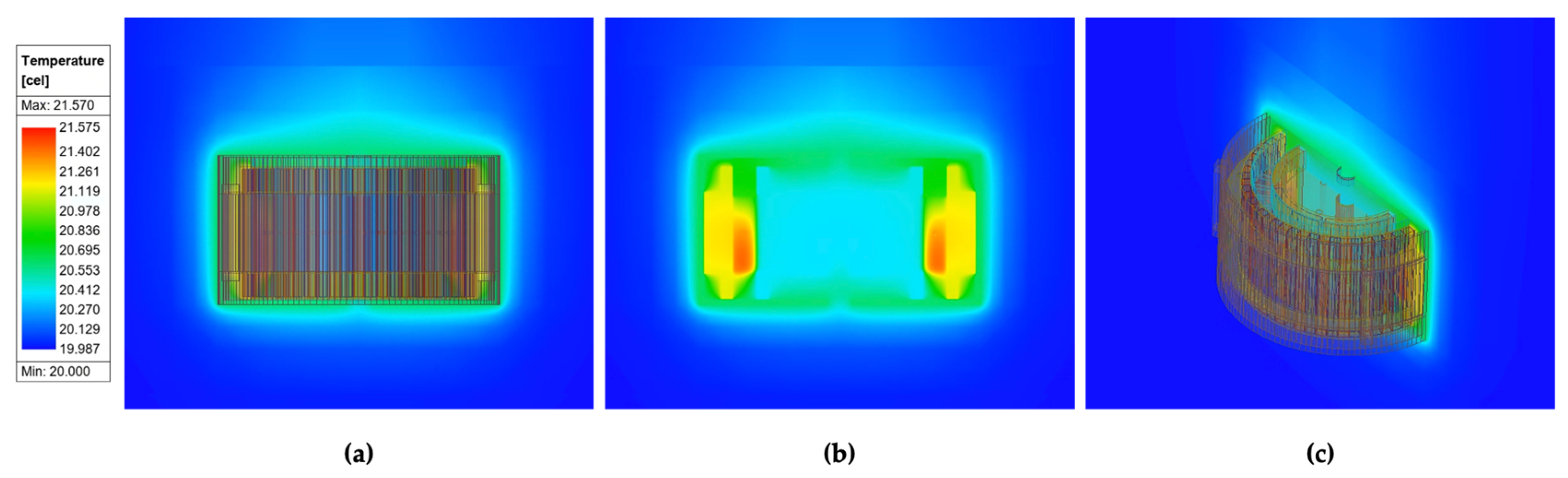
Figure 12 and
Figure 13 present the transient temperature distributions of the initial and optimized CMG models at the end of the simulation (
s). The simulation duration was intentionally selected to capture the transient thermal response under rated operating conditions, rather than the steady-state temperature distribution.
In each figure, subfigure (a) presents a front view with a semi-transparent rendering of the CMG geometry to visualize the internal temperature distribution. Subfigure (b) shows the corresponding thermal field alone from the same viewing direction, with the CMG geometry removed for clarity. Subfigure (c) provides an isometric view illustrating both the temperature distribution and the three-dimensional CMG structure.
In electrical machinery, the thermal time constant is typically much longer than the electromagnetic time scale and reaching steady-state thermal equilibrium therefore requires a significantly longer simulation time. For this reason, finite-duration transient thermal analysis is widely adopted to evaluate temperature evolution and to compare the thermal behavior of different designs in a computationally efficient manner [
48,
49]. Accordingly, the 10 min analysis period employed in this study is sufficient to capture the dominant temperature-rise characteristics of the CMG.
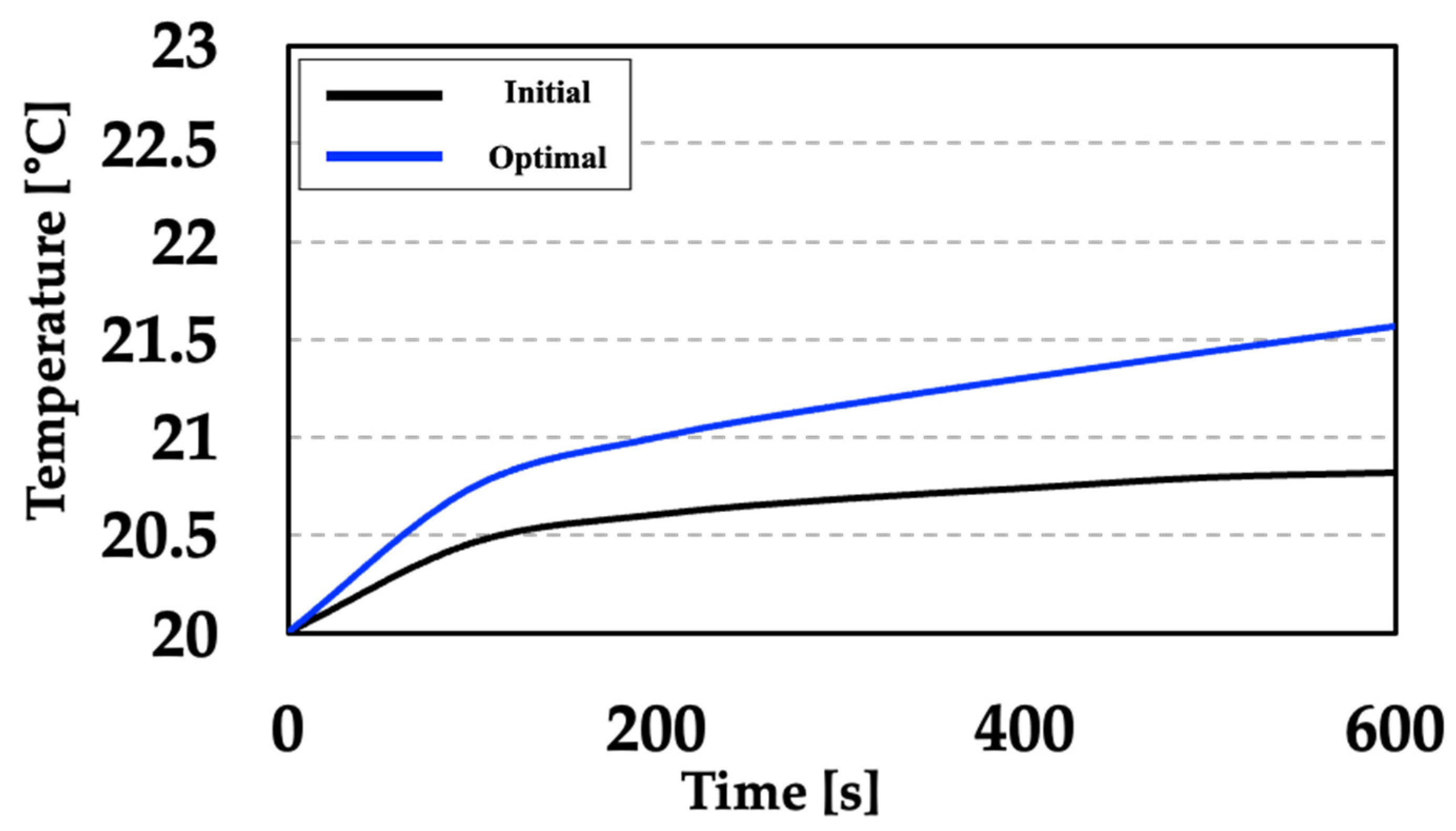
As the initial condition for the thermal analysis, an ambient temperature of 20 °C was applied to both models. For the initial model, the maximum temperature rise observed during the 10 min simulation was 0.82 °C. Under the same operating and boundary conditions, the optimized model exhibited a higher maximum temperature increase of 1.57 °C compared to the initial model. These results indicate that, under the considered operating conditions, both models experience only minor temperature elevation, and no significant thermal issues are expected.
To further illustrate the transient thermal behavior of the CMG, the time evolution of the maximum temperature rise over the 10 min simulation interval is compared for the initial and optimized models. The corresponding temperature evolution curves are presented in
Figure 14. Plotting both curves on the same axis highlights differences in thermal response and enables direct visual comparison of the transient thermal trends.
In the optimized model, a higher temperature rise is observed compared to the initial model due to volume reduction, increased torque density, and magnetic flux concentration. Nevertheless, the maximum temperature reached at the end of the simulation (21.57 °C) remains well below the thermal degradation limits of the employed materials. Specifically, the maximum operating temperature of the permanent magnet used in this study (Arnold N35UH) is approximately 180 °C, while the allowable temperature limit of commonly used Class F insulation is 155 °C. These results confirm that the observed temperature rise remains within a sufficiently safe operating range.
Moreover, the stable thermal response provides physical cross-validation of the electromagnetic analysis. If unrealistically high magnetic saturation had occurred, a sharp increase in iron losses would have resulted in a rapid and excessive temperature rise. However, the absence of such thermal behavior indicates that the magnetic flux density within the core remains within a physically realistic range. Consequently, the coupled electromagnetic–thermal analysis confirms the electromagnetic and thermal reliability of the optimized CMG design.
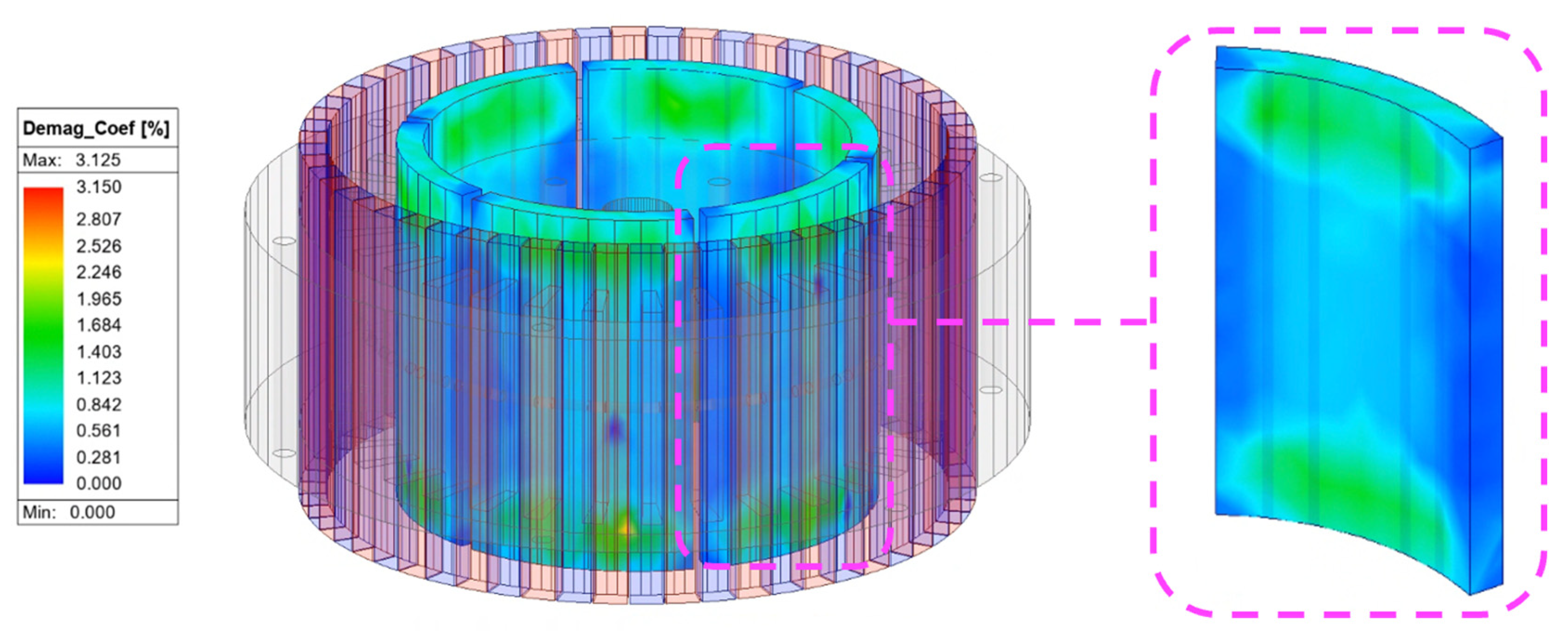
Based on the electromagnetic–thermal coupled analysis, no noticeable thermal issues were observed under nominal operating conditions. Nevertheless, to conservatively assess the long-term reliability and thermal robustness of the permanent magnets, an additional demagnetization analysis was conducted under a more severe condition in which the CMG was exposed to a fixed temperature of 150 °C. The resulting demagnetization characteristics are presented in
Figure 15.
The demagnetization factor was calculated using Equation (9), where a value closer to 100% indicates a higher degree of demagnetization:
Here, denotes the initial remanent flux density, and represents the remanent flux density retained by the magnet after exposure to the specified thermal condition.
As shown in
Figure 15, the maximum demagnetization factor was 3.125%, which lies within an acceptable range when compared with previously reported results obtained under similar temperature conditions [
36]. These results indicate that the proposed optimal CMG design, which employs a permanent-magnet protrusion to reduce leakage flux, maintains sufficient magnetic integrity and limits performance degradation even under elevated thermal conditions. This confirms the thermal stability and reliability of the optimized CMG design.
4.3. Structural Analysis
A structural analysis was performed to verify the mechanical robustness of the optimally designed CMG, whose geometry was modified to enhance torque density. Under external loads, the CMG may experience deformation, resulting in internal stress that can degrade performance or reduce operational durability. If the induced stress exceeds the material yield strength, permanent structural damage may occur. Therefore, it is essential to ensure that the stress levels remain below the yield limits of the constituent materials under rated operating conditions [
50]. Because the proposed CMG employs an overhang structure in which the permanent magnets protrude beyond the core surface, this geometry may be more susceptible to mechanical deformation. For this reason, a detailed structural evaluation was conducted.
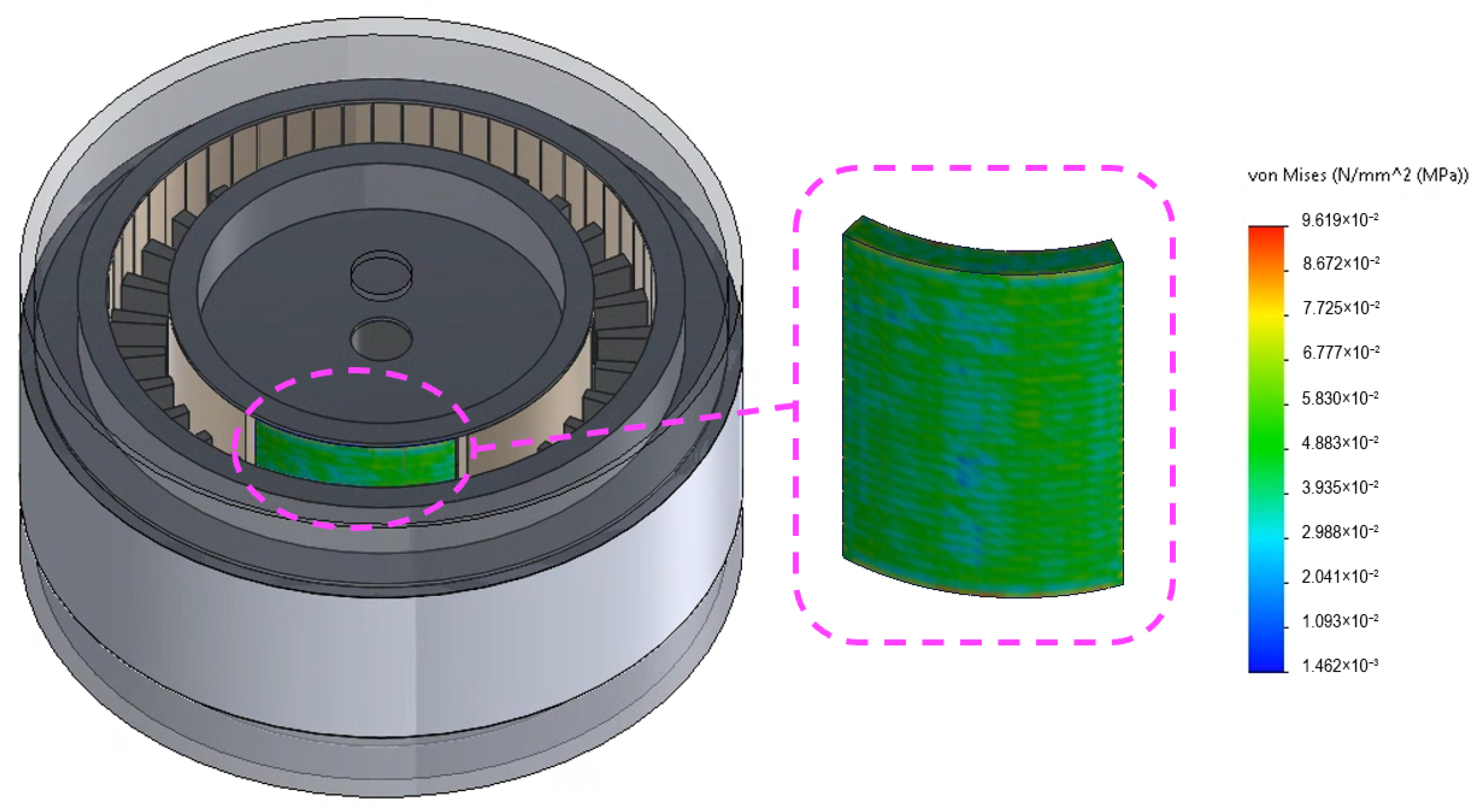
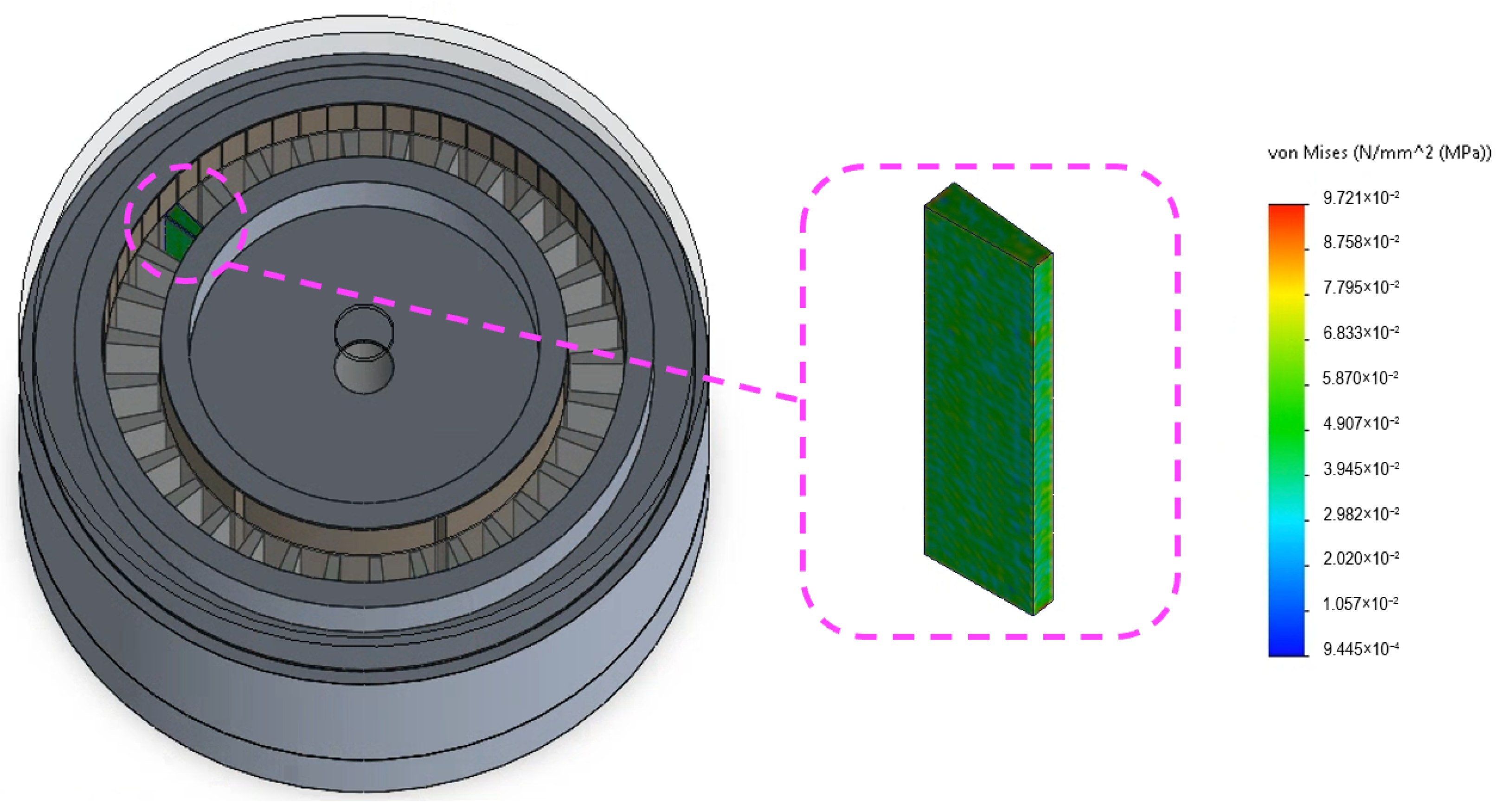
The structural analysis results for the optimized CMG model are presented in
Figure 16 and
Figure 17.
Figure 16 shows the von Mises stress distribution in the permanent magnet region, while
Figure 17 illustrates the corresponding stress distribution in the ferromagnetic core. The analysis was performed under the rated operating condition of 1000 rpm for Rotor 1. The permanent magnets were modeled using NdFeB (Arnold N35UH), which has a yield strength corresponding to a von Mises stress of 85 MPa. The computed von Mises stress in the permanent magnets remained well below this limit, confirming structural stability. Similarly, the core was modeled using JFE Steel 20JNEH1500, which has a yield strength corresponding to a von Mises stress of 374 MPa. The von Mises stress in the core also remained far below the yield threshold.
Quantitatively, the maximum von Mises stresses observed in the permanent magnets and the core were 0.0961 MPa and 0.0972 MPa, respectively. Both values are several orders of magnitude lower than the corresponding material yield strengths, demonstrating that the optimized CMG model maintains sufficient structural integrity under the specified operating conditions. These results analytically confirm that, although the permanent magnets protrude from the core due to the overhang structure, the CMG retains adequate mechanical robustness.
5. Discussion
Overall, the proposed optimal design significantly enhances the torque density of the CMG while maintaining thermal and mechanical robustness. To place the optimized performance in a broader context, the present CMG design is compared qualitatively and quantitatively with representative magnetic gear optimization studies reported in the literature. It should be noted that direct numerical comparisons are inherently limited because the reference designs were developed under different operating conditions, material properties, and geometric constraints. Nevertheless, meaningful insights can be obtained by examining relative performance trends.
For example, surrogate-based multi-objective optimal design of flux-focusing Halbach coaxial magnetic gears reported in [
9] achieved a high volumetric torque density (VTD) of 411 Nm/L. In addition, parametric optimal design of axial magnetic gears with Halbach arrays in [
51] improved the torque density from 78.1 Nm/L to 93.3 Nm/L, corresponding to a 19% increase.
In this context, the proposed high non-integer gear-ratio CMG with an overhang structure achieves a torque density of 117.14 Nm/L, which is approximately 23.84 Nm/L higher than the optimized result reported in [
51]. Although the absolute VTD reported in [
9] is higher owing to the specific flux-focusing topology, the proposed CMG design demonstrates a substantially larger relative improvement. Specifically, the torque density increased by 162.51% compared with the initial design, which significantly exceeds the improvement rates reported in [
9] and [
51]. This result highlights that the overhang-based CMG configuration provides an effective and robust platform for achieving substantial torque-density enhancement, despite the increased analytical complexity associated with three-dimensional multiphysics behavior.
A quantitative comparison of torque density and improvement rates between the proposed optimal design and the reference studies is summarized in
Table 10.