

A Soft-Pneumatic Actuator Array for Tactile Stimulation in Preterm Infants
 , ,
, ,  and
and
Abstract
1. Introduction
2. Materials and Methods
2.1. Design Specifications of the SPAA
2.1.1. Actuation Modality
2.1.2. Geometry and Contact Area
2.1.3. Force Target and Control Variables
2.1.4. Preload and Attachment
2.1.5. Thermal and Material Considerations
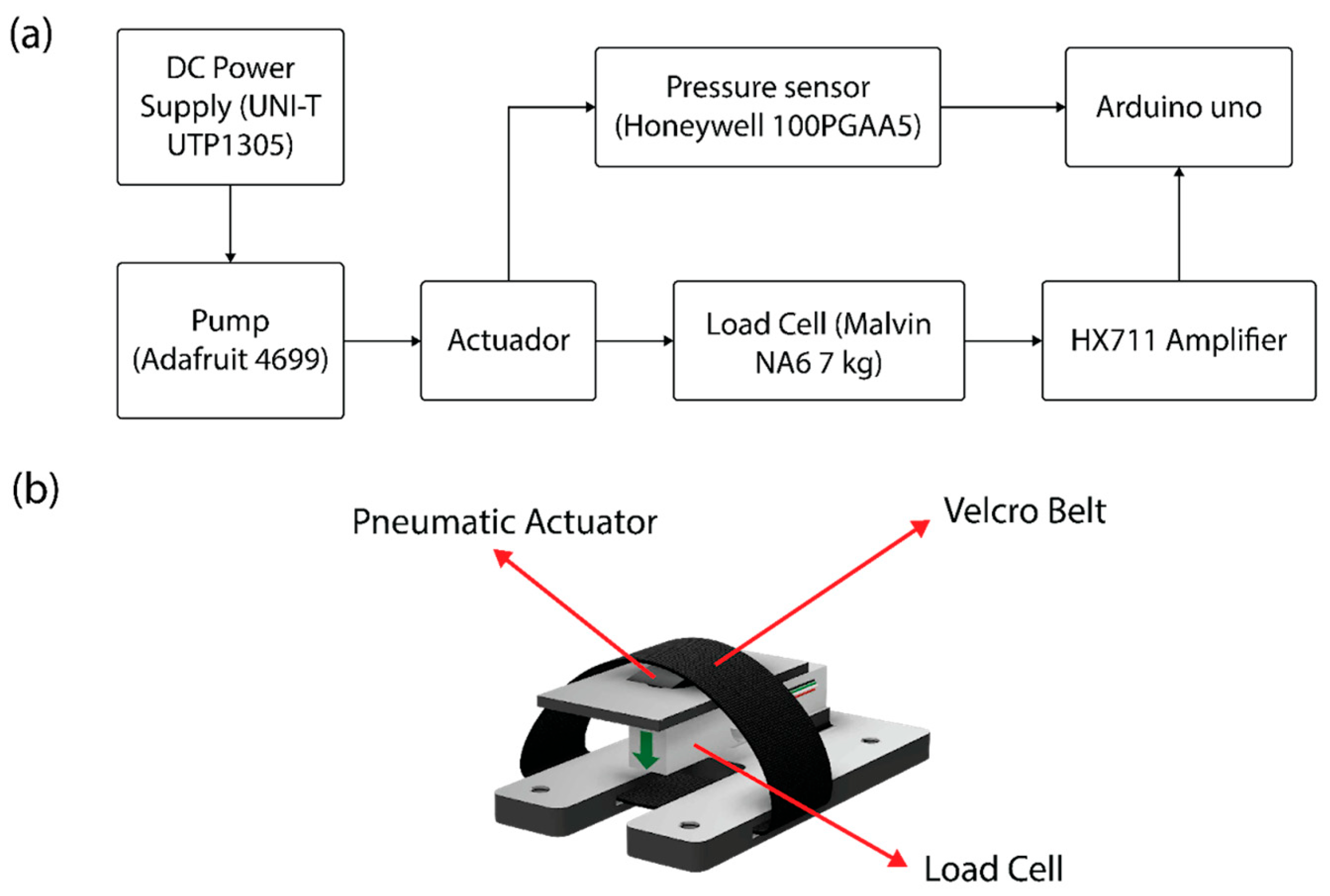
2.1.6. Sensing
2.2. SPAA Design
2.3. SPAA Manufacturing
2.4. Actuator Sequencing
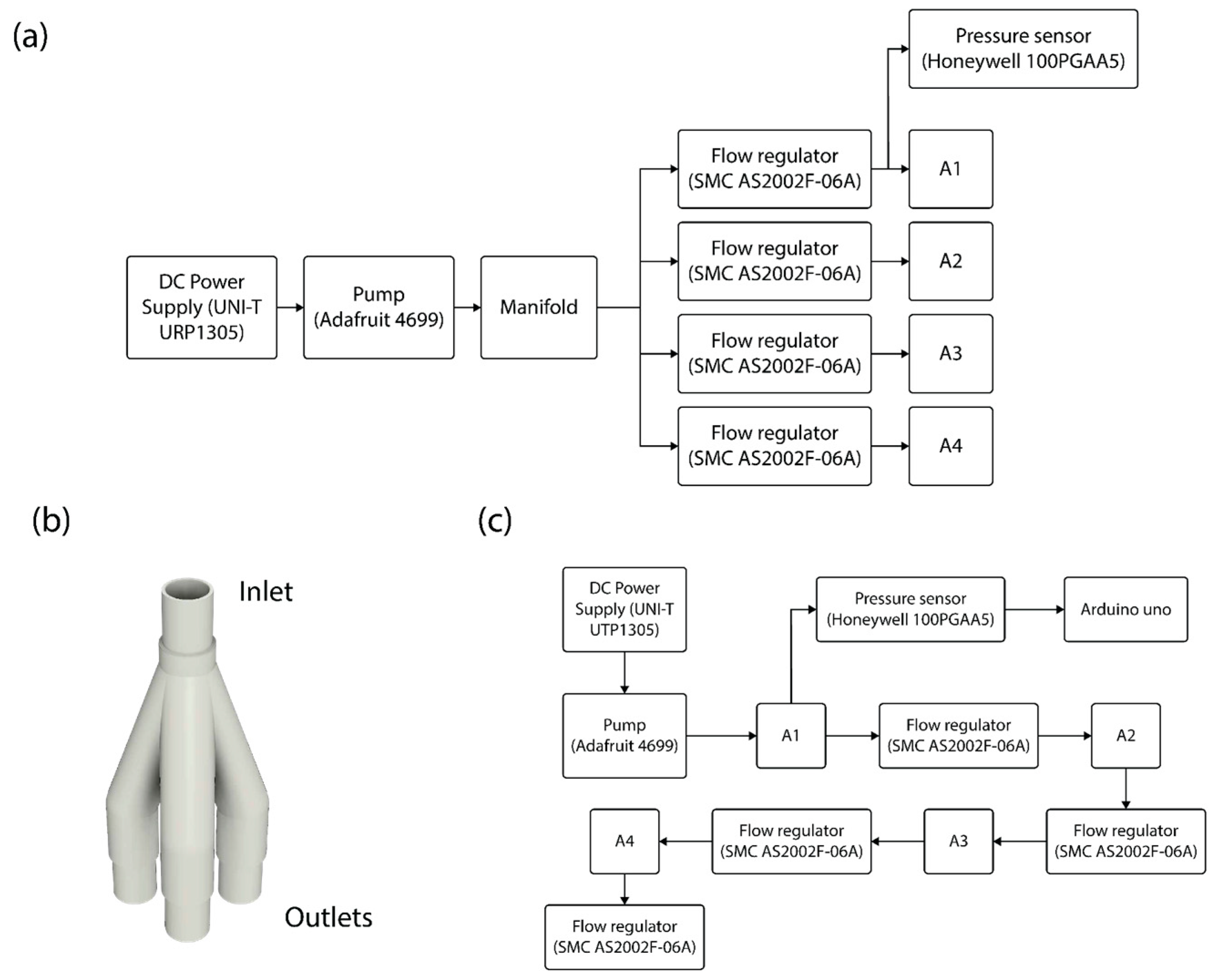
2.5. Manifold
2.6. Pressure Control System
- Electrical Regulation: A programmable DC power supply is utilized to set limits on the pump’s input voltage (V). The DC power supply voltage was set to 2.0 V and is a step function with two states, 0 V and 2 V. This acts as a coarse control mechanism to establish the baseline hydraulic power and ensure the system operates within safe pressure limits.
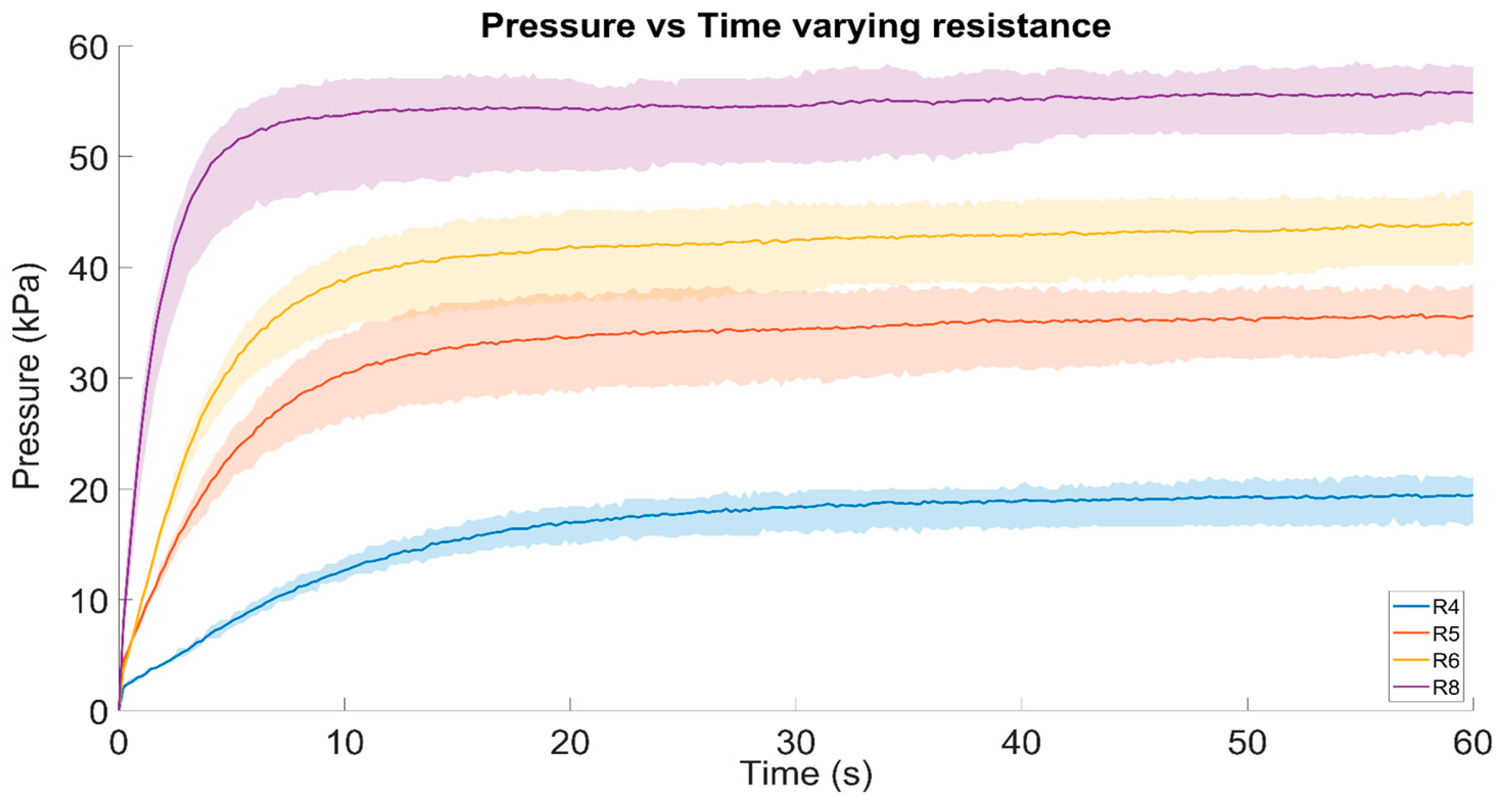
- Mechanical Flow Control: Fine-tuning of the stagnation pressure is performed using manual in-line speed controllers (SMC AS2002F-06A). These variable throttle valves are adjusted manually to restrict the flow rate downstream of the pump. By altering the valve opening, hydraulic resistance is modified to achieve the precise target pressure required for each test case.
3. Experimental Tests and Results
3.1. Experimental Setup
3.2. Actuator Characterization
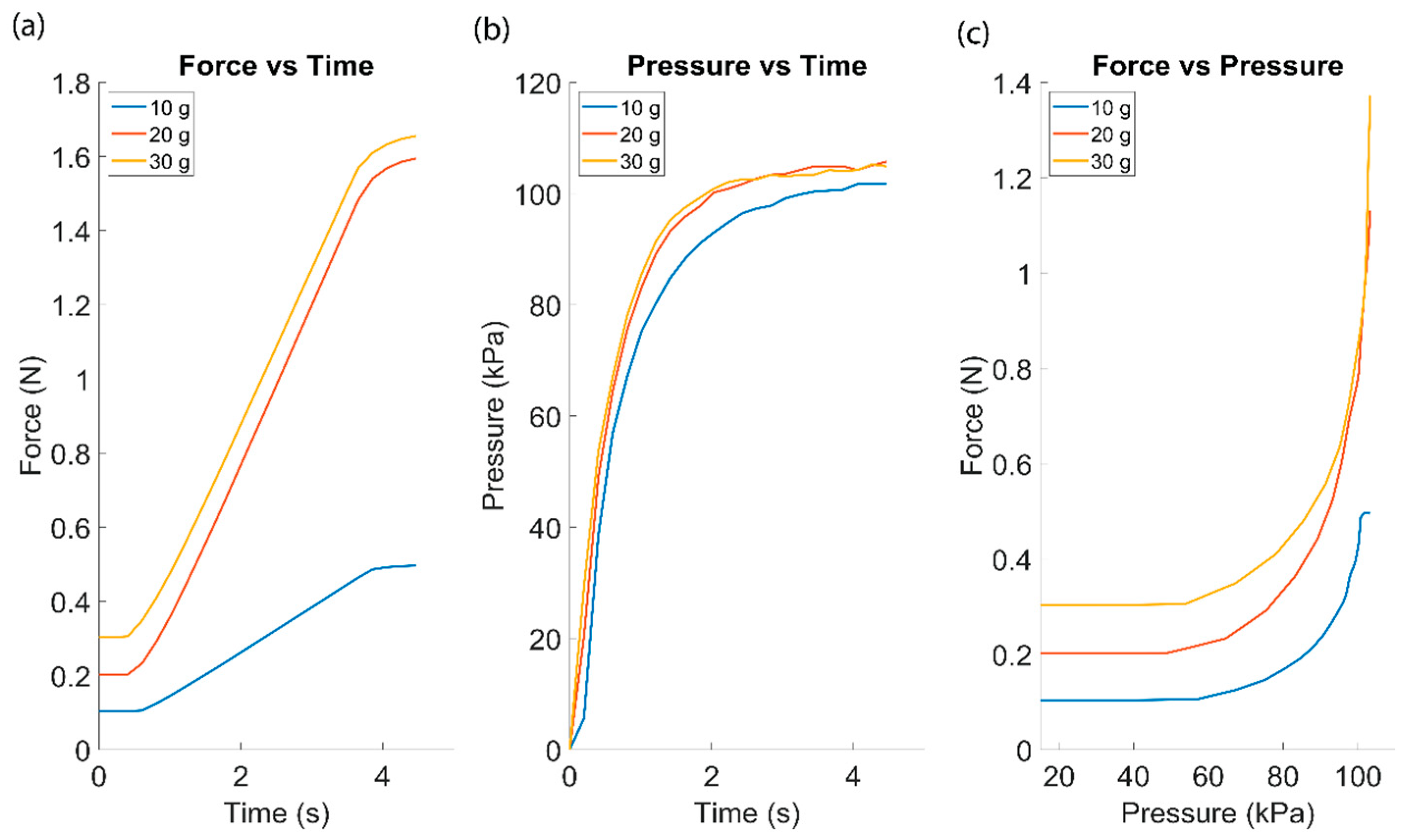
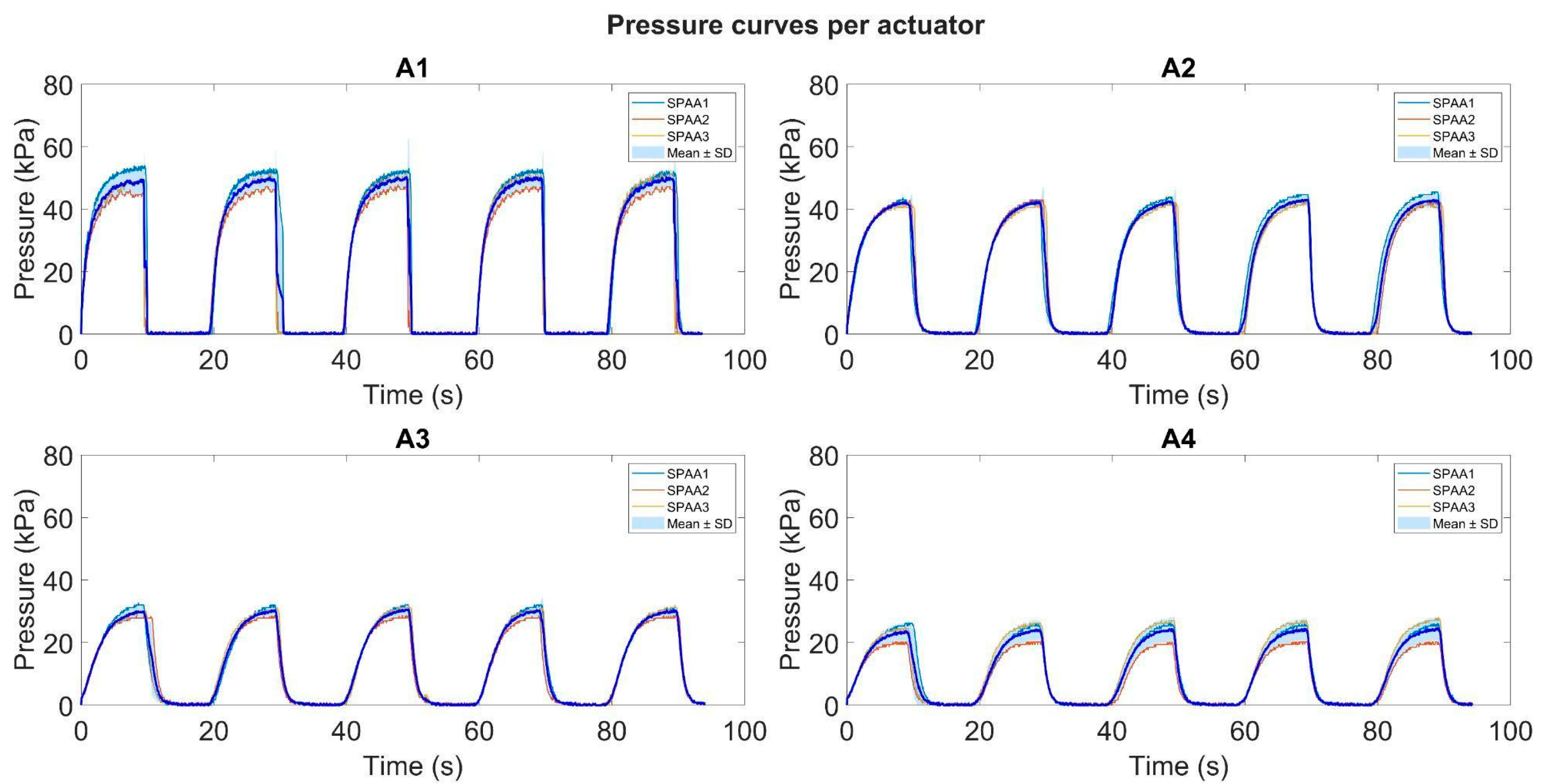
3.2.1. Characterization Curves
3.2.2. Actuator Pressure According to Speed Controller Position
3.3. SPAA Pneumatic Network
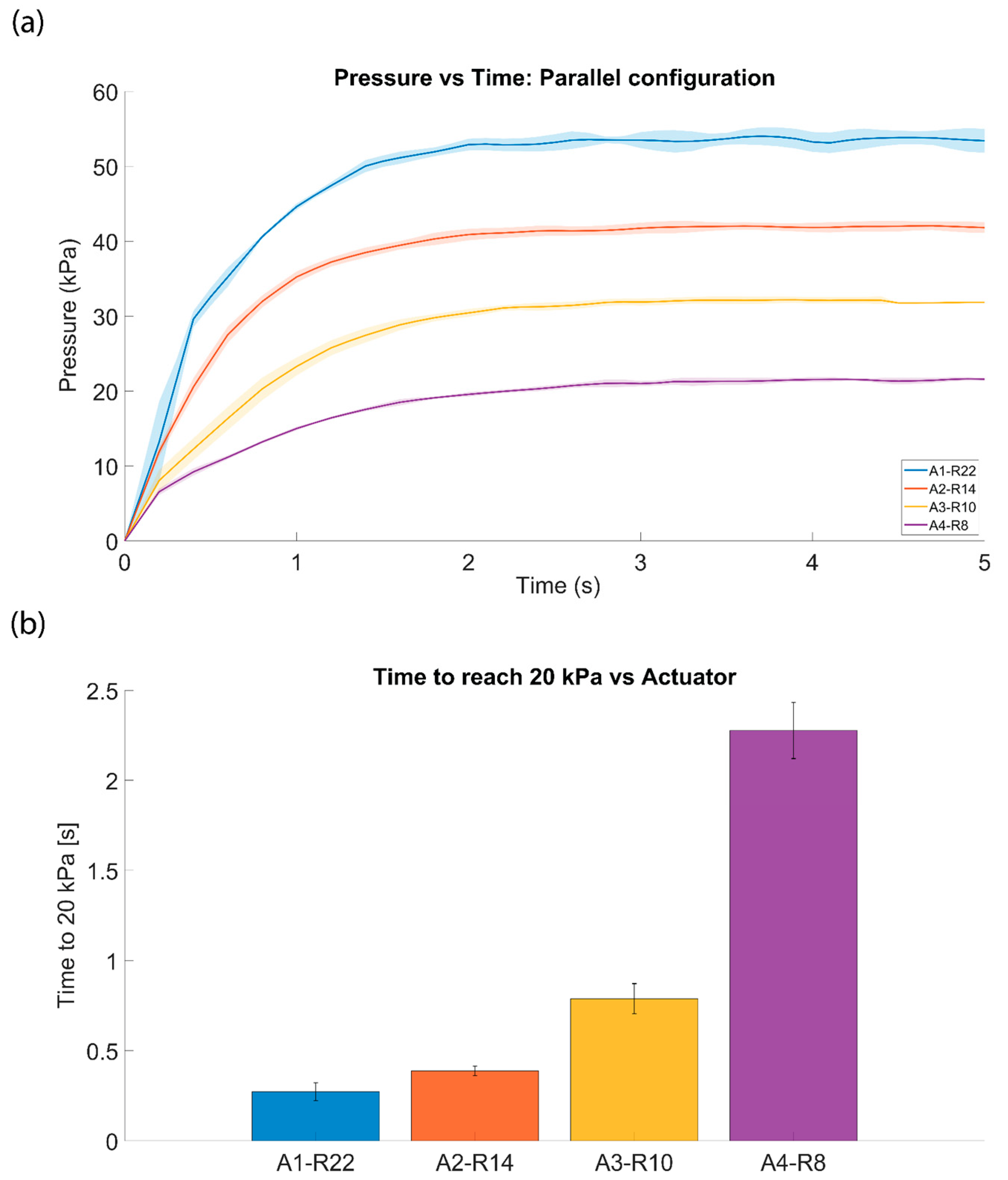
3.3.1. Parallel Setup
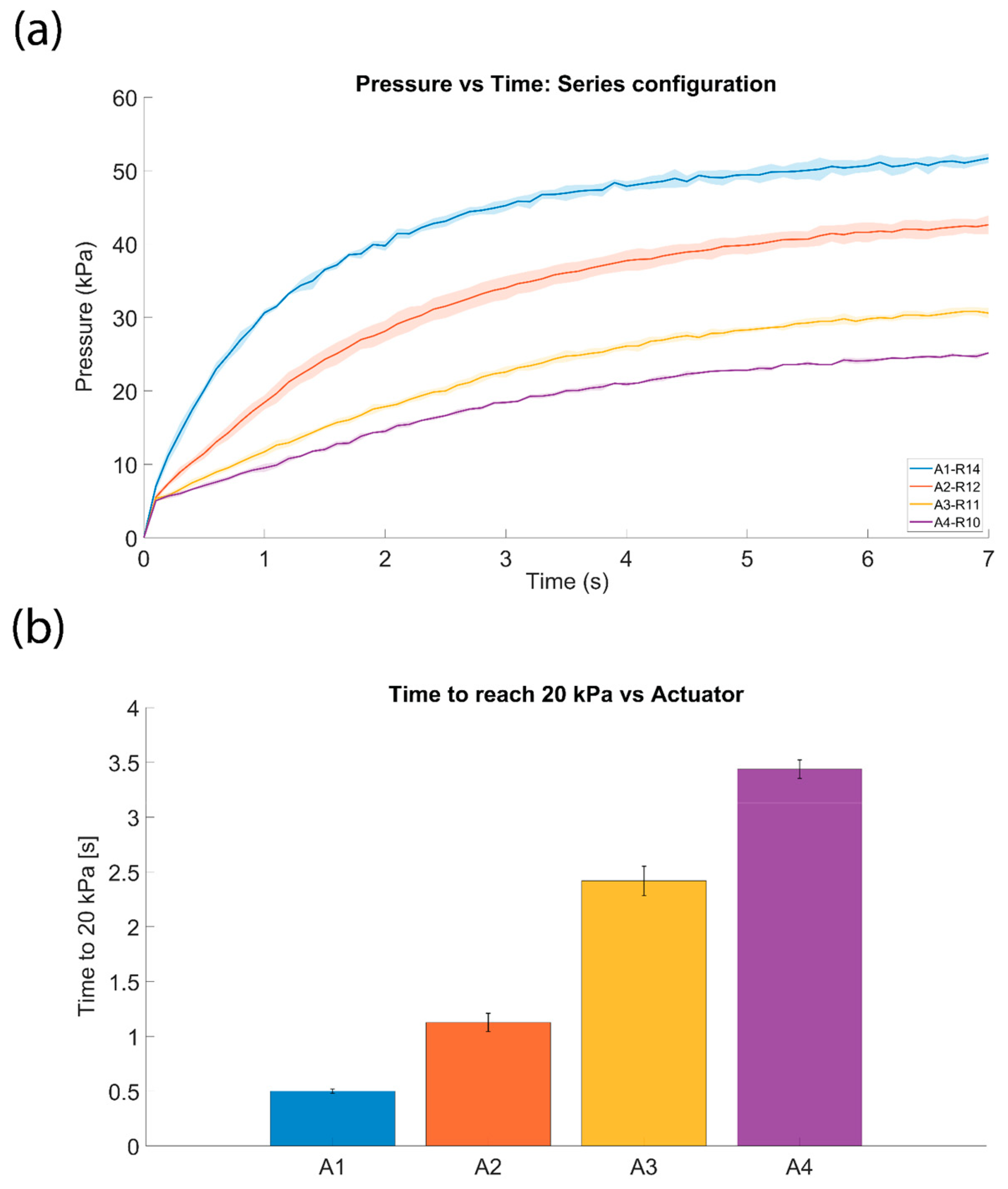
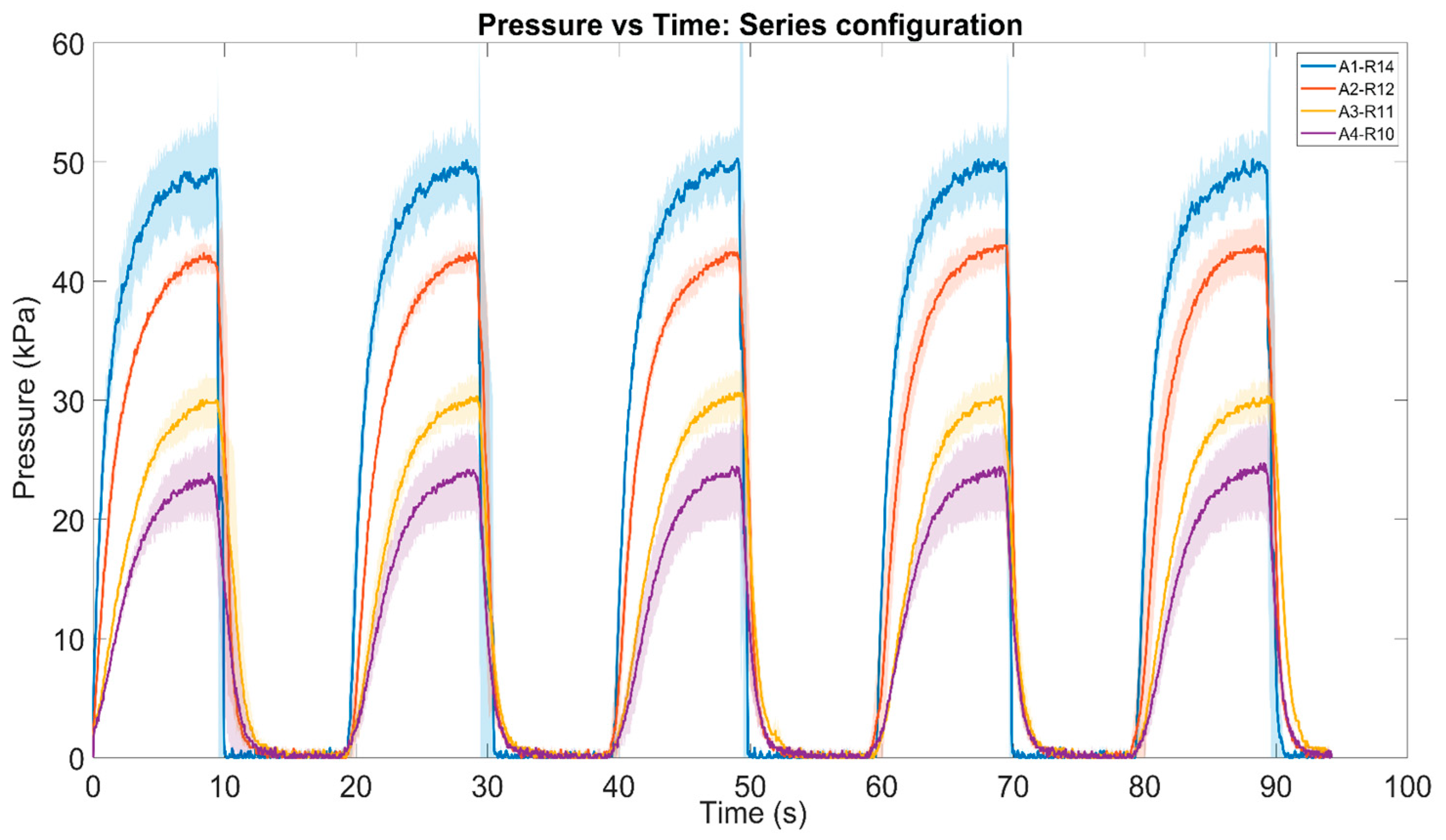
3.3.2. Series Setup
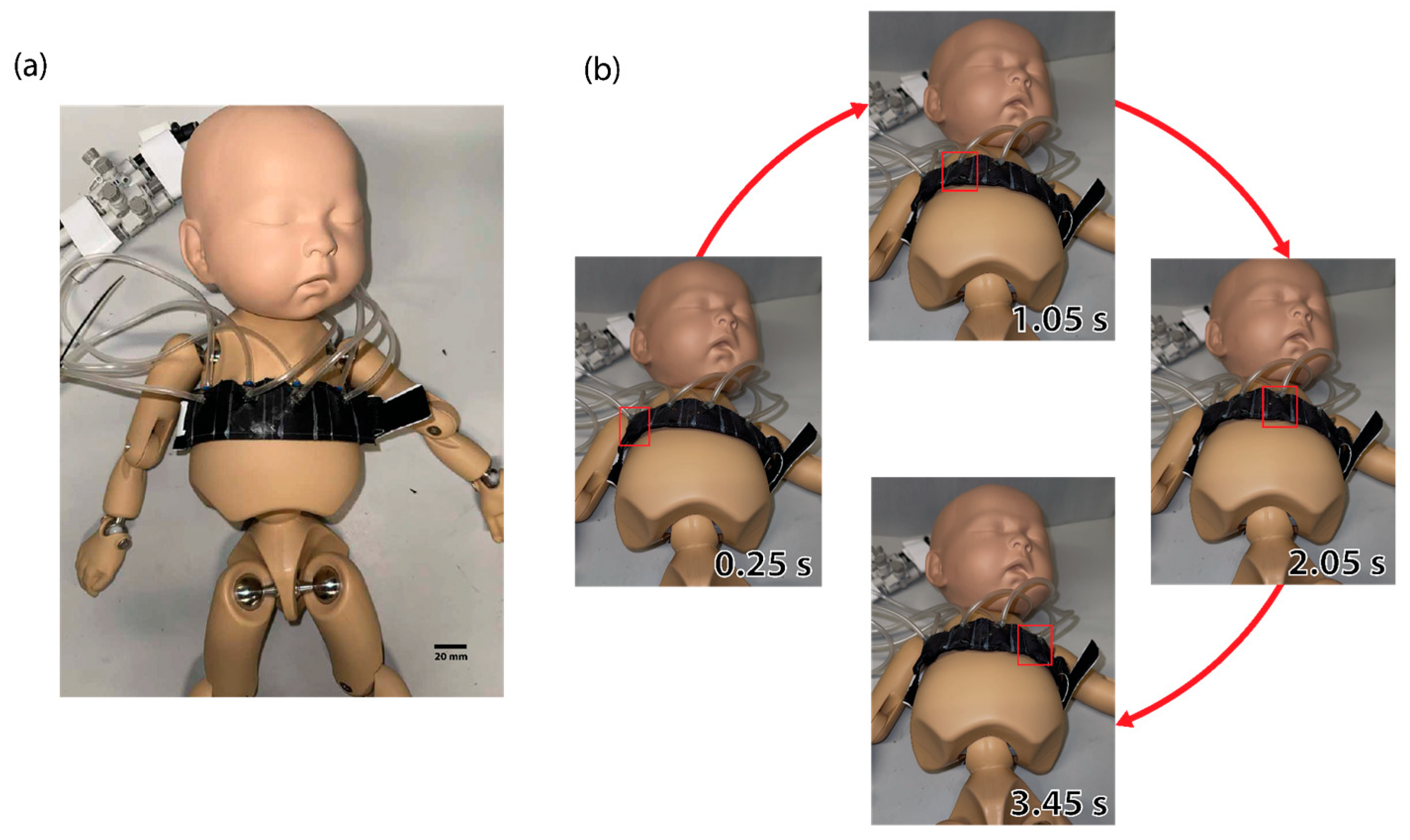
3.4. Demonstration of Sequential Activation
4. Discussion
5. Conclusions
Supplementary Materials
Author Contributions
Funding
Data Availability Statement
Conflicts of Interest
Abbreviations
| SPAA | Soft pneumatic actuator array |
| NICU | Neonatal intensive care unit |
| TPU | Thermoplastic polyurethane |
| CT | C-tactile |
| PLA | Polylactic acid |
| SD | Standard deviation |
| IV | Intravenous |
| DC | Direct current |
Appendix A
- Pneumatic and Electronics Architecture
- Sensing, Mechanical Mounting, and Calibration
- Data Acquisition and Logging
References
- Chawanpaiboon, S.; Vogel, J.P.; Moller, A.-B.; Lumbiganon, P.; Petzold, M.; Hogan, D.; Landoulsi, S.; Jampathong, N.; Kongwattanakul, K.; Laopaiboon, M.; et al. Global, regional, and national estimates of levels of preterm birth in 2014: A systematic review and modelling analysis. Lancet Glob. Health 2019, 7, e37–e46. [Google Scholar] [CrossRef] [PubMed]
- Grunau, R.E. Neonatal Pain in Very Preterm Infants: Long-Term Effects on Brain, Neurodevelopment and Pain Reactivity. Rambam Maimonides Med. J. 2013, 4, e0025. Available online: https://www.rmmj.org.il/issues/18/Articles/345 (accessed on 11 December 2025).
- Montirosso, R.; Provenzi, L.; Calciolari, G.; Borgatti, R.; NEO-ACQUA Study Group. Measuring maternal stress and perceived support in 25 Italian NICUs. Acta Paediatr. 2012, 101, 136–142. [Google Scholar] [CrossRef]
- Diego, M.A.; Field, T.; Hernandez-Reif, M.; Deeds, O.; Ascencio, A.; Begert, G. Preterm infant massage elicits consistent increases in vagal activity and gastric motility that are associated with greater weight gain. Acta Paediatr. 2007, 96, 1588–1591. [Google Scholar] [CrossRef]
- Field, T. Massage therapy research review. Complement. Ther. Clin. Pract. 2016, 24, 19–31. [Google Scholar] [CrossRef] [PubMed]
- Weerakul, J.; Apiraknapanon, Y.; Sanjaiban, M.; Intasen, S.; Tipsuwan, S.; Bhumipraphat, M. The Effects of Infant Massage Therapy on Preterm Neonatal Outcomes: A Clinical Trial. Int. J. Pediatr. 2025, 2025, 2451284. [Google Scholar] [CrossRef]
- Manzotti, A.; Cerritelli, F.; Monzani, E.; Savioli, L.; Esteves, J.E.; Lista, G.; Lombardi, E.; La Rocca, S.; Biasi, P.; Galli, M.; et al. Dynamic touch induces autonomic changes in preterm infants as measured by changes in heart rate variability. Brain Res. 2023, 1799, 148169. [Google Scholar] [CrossRef] [PubMed]
- La Rosa, V.L.; Geraci, A.; Iacono, A.; Commodari, E. Affective Touch in Preterm Infant Development: Neurobiological Mechanisms and Implications for Child–Caregiver Attachment and Neonatal Care. Children 2024, 11, 1407. [Google Scholar] [CrossRef]
- Rus, D.; Tolley, M.T. Design, fabrication and control of soft robots. Nature 2015, 521, 467–475. [Google Scholar] [CrossRef]
- Whitesides, G.M. Soft Robotics. Angew. Chem. Int. Ed. 2018, 57, 4258–4273. [Google Scholar] [CrossRef]
- Zheng, C.Y.; Wang, K.-J.; Wairagkar, M.; von Mohr, M.; Lintunen, E.; Fotopoulou, A. Simulating the psychological and neural effects of affective touch with soft robotics: An experimental study. Front. Robot. AI 2024, 11, 1419262. [Google Scholar] [CrossRef]
- Jumet, B.; Zook, Z.A.; Yousaf, A.; Rajappan, A.; Xu, D.; Yap, T.F.; Fino, N.; Liu, Z.; O’mAlley, M.K.; Preston, D.J. Fluidically programmed wearable haptic textiles. Device 2023, 1, 100059. [Google Scholar] [CrossRef]
- Gao, R.Z.; Mai, V.N.T.; Levinski, N.; Kormylo, J.M.; Murdock, R.W.; Dickerson, C.R.; Ren, C.L. A novel air microfluidics-enabled soft robotic sleeve: Toward realizing innovative lymphedema treatment. Biomicrofluidics 2022, 16, 034101. [Google Scholar] [CrossRef]
- Suarez, E.; Huaroto, J.J.; Reymundo, A.A.; Holland, D.; Walsh, C.; Vela, E. A Soft Pneumatic Fabric-Polymer Actuator for Wearable Biomedical Devices: Proof of Concept for Lymphedema Treatment. In Proceedings of the 2018 IEEE International Conference on Robotics and Automation (ICRA), Brisbane, QLD, Australia, 21–25 May 2018; pp. 5452–5458. Available online: https://ieeexplore.ieee.org/document/8460790 (accessed on 4 December 2025).
- Lee, P.S.; Gao, R.Z.; Colpitts, A.; Murdock, R.W.; Dittmer, D.; Schirm, A.; Tung, J.Y.; Ren, C.L. Air microfluidics-enabled soft robotic transtibial prosthesis socket liner toward dynamic management of residual limb contact pressure and volume fluctuation. Biomicrofluidics 2022, 16, 034107. [Google Scholar] [CrossRef]
- Preston, D.J.; Jiang, H.J.; Sanchez, V.; Rothemund, P.; Rawson, J.; Nemitz, M.P.; Lee, W.-K.; Suo, Z.; Walsh, C.J.; Whitesides, G.M. A soft ring oscillator. Sci. Robot. 2019, 4, eaaw5496. [Google Scholar] [CrossRef] [PubMed]
- van Laake, L.C.; de Vries, J.; Kani, S.M.; Overvelde, J.T.B. A fluidic relaxation oscillator for reprogrammable sequential actuation in soft robots. Matter 2022, 5, 2898–2917. [Google Scholar] [CrossRef]
- Electronics-Free Pneumatic Circuits for Controlling Soft-Legged Robots|Science Robotics. Available online: https://www.science.org/doi/10.1126/scirobotics.aay2627 (accessed on 4 December 2025).
- Huaroto, J.J.; Ticllacuri, V.; Suarez, E.; Ccorahua, R.; Vela, E.A. A Soft Pneumatic Haptic Actuator Mechanically Programmed for Providing Mechanotactile Feedback. MRS Adv. 2019, 4, 1131–1136. [Google Scholar] [CrossRef]
- Holsti, L.; MacLean, K.; Oberlander, T.; Synnes, A.; Brant, R. Calmer: A robot for managing acute pain effectively in preterm infants in the neonatal intensive care unit. Pain Rep. 2019, 4, e727. [Google Scholar] [CrossRef]
- U.S. Food and Drug Administration. De Novo Classification Request for Prapela SVS. Evaluation of Automatic Class III Designation—De Novo Request; Report No.: DEN180053; FDA: Silver Spring, MD, USA, 2019. [Google Scholar]
- Cramer, S.J.E.; Dekker, J.; van de Stadt, H.J.F.; Hooper, S.B.; Pas, A.B.T. Development of the Breathing Operator for BaBY (BOBBY): An automated tactile stimulation device to facilitate breathing in preterm infants. BMJ Innov. 2025, bmjinnov-2024-001263. [Google Scholar] [CrossRef]
- Culbertson, H.; Nunez, C.M.; Israr, A.; Lau, F.; Abnousi, F.; Okamura, A.M. A social haptic device to create continuous lateral motion using sequential normal indentation. In Proceedings of the 2018 IEEE Haptics Symposium (HAPTICS), San Francisco, CA, USA, 25–28 March 2018; pp. 32–39. Available online: https://ieeexplore.ieee.org/document/8357149 (accessed on 4 December 2025).
- Nunez, C.M.; Huerta, B.N.; Okamura, A.M.; Culbertson, H. Investigating Social Haptic Illusions for Tactile Stroking (SHIFTS). arXiv 2020, arXiv:2003.00954. Available online: https://arxiv.org/abs/2003.00954v1 (accessed on 4 December 2025).
- Israr, A.; Poupyrev, I. Tactile brush: Drawing on skin with a tactile grid display. In Proceedings of the SIGCHI Conference on Human Factors in Computing Systems (CHI ’11), Vancouver, BC, Canada, 7–12 May 2011; Association for Computing Machinery: New York, NY, USA, 2011; pp. 2019–2028. [Google Scholar] [CrossRef]
- Blankenburg, F.; Ruff, C.C.; Deichmann, R.; Rees, G.; Driver, J. The Cutaneous Rabbit Illusion Affects Human Primary Sensory Cortex Somatotopically. PLoS Biol. 2006, 4, e69. [Google Scholar] [CrossRef]
- Manzotti, A.; Cerritelli, F.; Esteves, J.E.; Lista, G.; Lombardi, E.; La Rocca, S.; Gallace, A.; McGlone, F.P.; Walker, S.C. Dynamic touch reduces physiological arousal in preterm infants: A role for c-tactile afferents? Dev. Cogn. Neurosci. 2019, 39, 100703. [Google Scholar] [CrossRef]
- Álvarez, M.J.; Fernández, D.; Gómez-Salgado, J.; Rodríguez-González, D.; Rosón, M.; Lapeña, S. The effects of massage therapy in hospitalized preterm neonates: A systematic review. Int. J. Nurs. Stud. 2017, 69, 119–136. [Google Scholar] [CrossRef]
- Field, T. Infant Massage Therapy Research Review. Clin. Res. Pediatr. 2018, 1, 1–9. [Google Scholar] [CrossRef]
- Hosseinpour, M.; Davari, H.; Nazem, M.; Ha, D. The normal position of the umbilicus in the newborn: An aid to improving the cosmetic result in exomphalos major. J. Indian Assoc. Pediatr. Surg. 2006, 11, 133–135. [Google Scholar] [CrossRef]
- Onal, E.; Turan, O.; Karabulut, R.; Hirfanoglu, I.; Turkyilmaz, C.; Sonmez, K.; Türkyılmaz, Z.; Kapısız, A.; Basaklar, A.C. Where should the normal position of the umbilicus be in the neonate? Eur. J. Pediatr. Surg. 2010, 20, 339–340. [Google Scholar] [CrossRef]
- Sivan, Y.; Merlob, P.; Reisner, S.H. Sternum length, torso length, and internipple distance in newborn infants. Pediatrics 1983, 72, 523–525. [Google Scholar] [CrossRef]
- Quinn, J.-A.; Munoz, F.M.; Gonik, B.; Frau, L.; Cutland, C.; Mallett-Moore, T.; Kissou, A.; Wittke, F.; Das, M.; Nunes, T.; et al. Preterm birth: Case definition & guidelines for data collection, analysis, and presentation of immunisation safety data. Vaccine 2016, 34, 6047–6056. [Google Scholar] [CrossRef] [PubMed]
- BilGin, B.S.; Uygur, Ö.; Terek, D.; Köroğlu, Ö.A.; Yalaz, M.; Akisü, M.; Çoğulu, Ö.; Kültürsay, N. Reference values of anthropometric measurements in healthy late preterm and term infants. Turk. J. Med. Sci. 2018, 48, 862–872. [Google Scholar] [CrossRef] [PubMed]
- Al-Samarrai, A. Evaluation of internipple distance, sternum length and torso length as a screening test in newborn infants: Growth in Salahaddin General Hospital. Tikrit J. Pharm. Sci. 2019, 13, 1–8. [Google Scholar]
- Madar, J.; Roehr, C.C.; Ainsworth, S.; Ersdal, H.; Morley, C.; Rüdiger, M.; Skåre, C.; Szczapa, T.; Pas, A.T.; Trevisanuto, D.; et al. European Resuscitation Council Guidelines 2021: Newborn resuscitation and support of transition of infants at birth. Resuscitation 2021, 161, 291–326. [Google Scholar] [CrossRef]
- Mayhew, K.J.; Lawrence, S.L.; Squires, J.E.; Harrison, D. Elevated Sound Levels in the Neonatal Intensive Care Unit: What Is Causing the Problem? Adv. Neonatal Care 2022, 22, E207–E216. [Google Scholar] [CrossRef] [PubMed]
- Association for the Advancement of Medical Instrumentation (AAMI). Biological evaluation of medical devices—Part 1: Evaluation and testing within a risk management process. In ANSI/AAMI/ISO 10993-1:2018; Biological Evaluation of Medical Devices—Part 1: Evaluation and Testing Within a Risk Management Process; AAMI: Arlington, VA, USA, 2020; Available online: http://array.aami.org/doi/10.2345/9781570207556.ch1 (accessed on 7 December 2025).
- Nan Ya Plastics Corporation. TPU Film Miscellaneous. 2018. Available online: https://www.nanya-plastics-mall.com/pdf/TPU_en.pdf (accessed on 7 December 2025).
- V00 Series—NIBP Cuff by Shenzhen Vistar Medical Company|MedicalExpo. Available online: https://www.medicalexpo.com/prod/shenzhen-vistar-medical-company/product-123484-1119637.html (accessed on 7 December 2025).
- Drotman, D.; Jadhav, S.; Karimi, M.; de Zonia, P.; Tolley, M.T. 3D printed soft actuators for a legged robot capable of navigating unstructured terrain. In Proceedings of the 2017 IEEE International Conference on Robotics and Automation (ICRA), Singapore, 29 May–3 June 2017; IEEE: Singapore, 2017; pp. 5532–5538. Available online: https://ieeexplore.ieee.org/document/7989652/ (accessed on 10 November 2025).



| Cohort | Gestational Age (Weeks) | Chest Circumference in cm (50th Percentile) [33] | Calculated Anterior Arc (cm) |
|---|---|---|---|
| Late Preterm | 35–36 | 30 | 15 |
| Term | 37–42 | 33 | 16.5 |
| Actuator | Parallel Configuration | Series Configuration | ||
|---|---|---|---|---|
| Time to 20 kPa (s) | STD | Time to 20 kPa (s) | STD | |
| A1 | 0.27 | 0.049 | 0.555 | 0.036 |
| A2 | 0.38 | 0.026 | 0.962 | 0.037 |
| A3 | 0.78 | 0.084 | 2.216 | 0.168 |
| A4 | 2.27 | 0.156 | 3.438 | 0.084 |
Disclaimer/Publisher’s Note: The statements, opinions and data contained in all publications are solely those of the individual author(s) and contributor(s) and not of MDPI and/or the editor(s). MDPI and/or the editor(s) disclaim responsibility for any injury to people or property resulting from any ideas, methods, instructions or products referred to in the content. |
© 2026 by the authors. Licensee MDPI, Basel, Switzerland. This article is an open access article distributed under the terms and conditions of the Creative Commons Attribution (CC BY) license.
Share and Cite
Huemura Okumura, F.D.; Tuesta Pereda, S.; Tavakoli, M.; Vela, E.A. A Soft-Pneumatic Actuator Array for Tactile Stimulation in Preterm Infants. Actuators 2026, 15, 31. https://doi.org/10.3390/act15010031
Huemura Okumura FD, Tuesta Pereda S, Tavakoli M, Vela EA. A Soft-Pneumatic Actuator Array for Tactile Stimulation in Preterm Infants. Actuators. 2026; 15(1):31. https://doi.org/10.3390/act15010031
Chicago/Turabian StyleHuemura Okumura, Franco Daiji, Sebastian Tuesta Pereda, Mahdi Tavakoli, and Emir A. Vela. 2026. "A Soft-Pneumatic Actuator Array for Tactile Stimulation in Preterm Infants" Actuators 15, no. 1: 31. https://doi.org/10.3390/act15010031
APA StyleHuemura Okumura, F. D., Tuesta Pereda, S., Tavakoli, M., & Vela, E. A. (2026). A Soft-Pneumatic Actuator Array for Tactile Stimulation in Preterm Infants. Actuators, 15(1), 31. https://doi.org/10.3390/act15010031