1. Introduction
Globally, population aging has emerged as an irreversible trend in social development. Projections indicate that by 2050, the proportion of individuals aged 65 and above in high-income countries and regions across Asia and the Asia–Pacific will nearly double, while the population aged 80 and over is expected to triple between 2020 and 2050. In low- and middle-income countries within the Asia–Pacific region, the proportions of those aged over 65 and over 80 are anticipated to increase by factors of approximately 2.5 and 3, respectively [
1]. As such, global population aging represents one of the most pressing medical and societal challenges of our time [
2]. Among the elderly, the incidence of stroke and other cerebrovascular diseases is particularly high. Stroke survivors frequently suffer from severe complications, including hemiplegia, gait instability, and even paraplegia, highlighting the urgent need for effective rehabilitation interventions. Lower limb rehabilitation exoskeleton robots have emerged as advanced assistive technologies designed to mimic the biomechanics of the human lower limb, thereby facilitating the recovery of motor functions and enhancing muscular strength in patients undergoing rehabilitation [
3,
4]. Compared to conventional physical therapy, exoskeleton robots offer the ability to precisely monitor gait and movement patterns, substantially improving rehabilitation outcomes and optimizing the allocation of therapeutic resources [
5,
6,
7,
8]. However, in practical applications, factors such as mechanical vibrations, electromagnetic interference, and environmental noise can lead to malfunctions in critical sensing components, such as angle sensors and angular velocity sensors. These sensor faults may result in inaccurate measurements, degrade overall system performance, and potentially pose safety risks to patients [
9,
10]. Therefore, the investigation of fault detection and diagnosis methods for lower limb rehabilitation exoskeleton robot systems holds significant scientific and practical value.
The sliding mode observer is a class of observers capable of estimating system states by introducing a sliding surface. One of its key advantages lies in its ability to maintain the convergence of state estimation errors even in the presence of external disturbances and system faults [
11,
12]. This is achieved by incorporating nonlinear discontinuous switching terms into the observer design, which drive the estimation error to slide along the defined sliding surface and converge asymptotically to zero [
13,
14,
15,
16]. Owing to its robustness, sliding mode observer-based fault reconstruction methods have attracted extensive research attention [
17,
18]. For instance, Pinto, H. [
19] proposed a time-shift method for actuator fault reconstruction in output-delay systems and applied it to sampled output scenarios. To address the challenges of realizing sliding mode control under delay uncertainties while mitigating chattering, a novel high-gain sliding mode observer was developed in the work of Dimassi, H. [
20]. This observer was designed for nonlinear systems affected by both actuator and sensor faults, enabling reliable fault estimation and reconstruction. Furthermore, Ming, L. [
21] investigated fault estimation and sensor fault-tolerant control in nonlinear stochastic systems with simultaneous input and output disturbances. A generalized sliding mode framework was proposed to accurately estimate system states, fault vectors, and disturbance signals. Nevertheless, a known limitation of conventional sliding mode observers is the chattering phenomenon caused by the discontinuous switching terms. Compared to first-order sliding mode observers, high-order sliding mode observers exhibit enhanced robustness against external disturbances and are effective in mitigating chattering effects [
22,
23]. For example, Gianmario, R. [
24] designed a distributed adaptive double-layer super-twisting sliding mode observer scheme to isolate, reconstruct, and suppress disturbances and communication attacks in power grid systems involving generator and load nodes. In Wang, T. [
25], an high-order sliding mode observer with adaptive gain based on motor speed was proposed to address the issue that conventional high-speed sliding mode control may fail to achieve finite-time convergence at high speeds. To further improve tracking accuracy and suppress chattering, a modified non-singular terminal sliding mode control strategy was introduced, along with a novel high-order sliding mode observer (NHSMO) for effective sensor fault reconstruction.
External interference can significantly impact the accuracy of sensor fault reconstruction. Therefore, accounting for the influence of such disturbances is essential in achieving reliable fault reconstruction in lower limb rehabilitation exoskeleton robot. To address this, effective disturbance suppression strategies must be employed. As noted in the work of She, J. [
26], the Equivalent Input Disturbance (EID) suppression method offers a robust solution. This approach does not require prior knowledge of the disturbance characteristics or their inverse models, which makes it highly adaptable and widely applicable in various systems [
27,
28]. For example, Wang, H. [
29] proposed an improved parameter optimization strategy for repetitive control systems, which effectively suppresses aperiodic disturbances and achieves high-precision tracking of periodic reference signals by leveraging EID compensation. Similarly, an EID-based method utilizing a Romberg observer was developed in the work of Mei, Q. [
30] to mitigate the impact of unknown disturbances on system performance, with specific application to current sensor fault reconstruction in permanent magnet synchronous motors. To enhance the accuracy and efficiency of disturbance estimation in this study, an improved sliding mode observer is adopted. This observer is designed to minimize the adverse effects of unknown external disturbances, thereby improving the reliability and performance of the fault reconstruction process.
This paper proposes a novel method for suppressing disturbances and reconstructing sensor faults in lower limb rehabilitation exoskeleton robots. In systems where faults and disturbances are coupled, an EID approach based on an improved sliding mode observer is first employed to approximately decouple and isolate the fault and disturbance components from the measured output, thereby achieving effective disturbance attenuation. Subsequently, an NHSMO is proposed, capable of accurately reconstructing sensor faults. The proposed approach demonstrates strong capability in both mitigating time-varying disturbances and achieving high-precision fault reconstruction. Simulation and experimental results validate the effectiveness and robustness of the proposed method under various operating conditions. The main contributions of this work can be summarized as follows:
- (1)
Given the interaction and coupling between disturbances and sensor faults within the system, this paper proposes an innovative EID-based method utilizing an improved sliding mode observer, which effectively mitigates the impact of disturbances on fault reconstruction.
- (2)
An NHSMO is proposed, which not only ensures the rapid convergence of state estimation errors within a finite time but also significantly enhances the system’s tracking accuracy while suppressing chattering.
- (3)
Using a lower limb rehabilitation exoskeleton robot experimental platform, this study, for the first time, verifies the proposed sensor fault reconstruction method in a real lower limb rehabilitation exoskeleton robot system.
2. Modeling
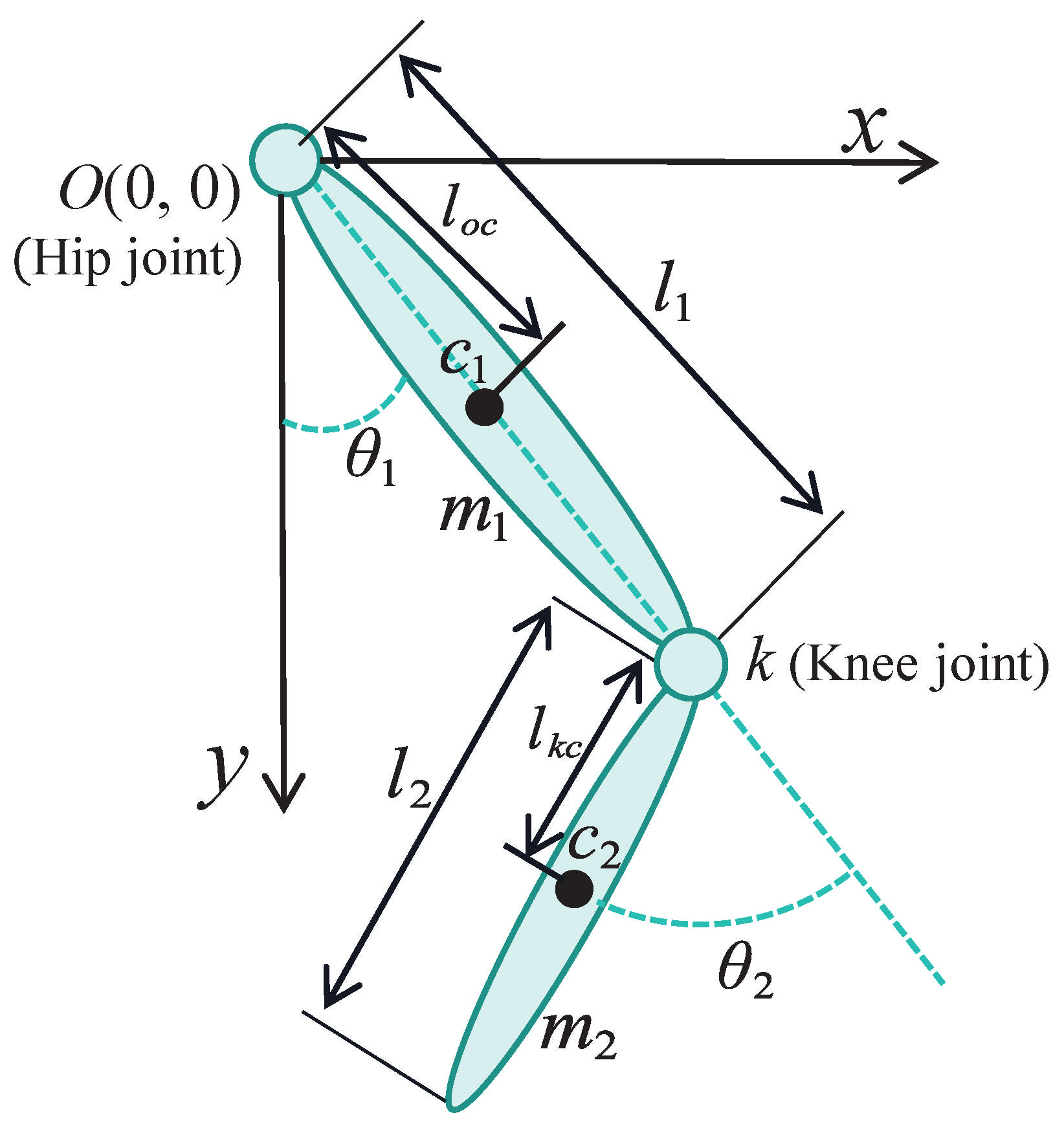
A generalized coordinate system for the lower limb rehabilitation exoskeleton robot system was established, taking the hip joint as the reference point. To facilitate analysis, the motion of a single leg was abstracted into a simplified two-link model. Based on observations of lower limb kinematics during walking, the hip and knee joints were modeled as active joints, whereas the ankle joint was considered passive. The schematic representation of the lower limb rehabilitation exoskeleton robot’s single leg is illustrated in
Figure 1.
In the above figure, and denote the lengths of the thigh and calf segments, respectively; and represent the masses of the thigh and calf segments, respectively; denotes the distance from the hip joint to the centroid of the thigh segment ; denotes the distance from the knee joint to the centroid of the calf segment ; and and represent the angular displacements of the hip and knee joints, respectively.
Let the coordinates of the thigh centroid
and the calf centroid
in the generalized coordinate system be denoted as
and
, respectively. Based on the schematic shown in
Figure 1, the expressions for the centroid positions are derived as follows:
The Lagrangian function, derived from the total kinetic energy and total potential energy of the lower limb rehabilitation exoskeleton robot system, is analyzed. The Lagrange function has the following form:
where
,
, and
represent the total mechanical energy, total kinetic energy, and total potential energy of a single leg of the lower limb rehabilitation exoskeleton robot, respectively.
The total kinetic energy
of the hip and knee joints is obtained using the kinetic energy equations for translational and rotational motion:
where
and
represent the moments of inertia of the thigh and calf, respectively.
The specific form of the total potential energy
of the lower limb rehabilitation exoskeleton robot is as follows:
The Lagrange formula is as follows:
where
is the joint moment.
Substitute Equation (
2) into Equation (
5) to obtain
After solving the above equations, the following kinetic equations are obtained:
where
is the angular position vector;
is the joint torque vector;
represents the mass matrix, which is symmetric and positive definite;
represents the Coriolis and centrifugal force matrix;
represents the gravity matrix;
is the external disturbance vector; and
is the disturbance distribution matrix.
The specific forms of the mass matrix, Coriolis and centrifugal force matrix, and gravity matrix can be derived using Equations (
6) and (
7) as follows:
where
Rewriting the dynamic equation as a state space equation is convenient for the design of the observer, and considering the sensor failure in the system, the state space equation is derived as follows:
where
represents the state variable vector;
represents the input vector;
represents the output vector;
is the sensor fault vector; and
is the fault distribution matrix.
, where
I is the identity matrix;
;
;
.
Lemma 1. Let X and Y be vectors or matrices with appropriate dimensions, then for any positive number ε, Assumption 1. There exist known constants and such that and .
Assumption 2. Both and are measurable, meaning that the output matrix C is the identity matrix, i.e., .
Remark 1. In real-world lower limb rehabilitation exoskeleton robot products, as well as the experimental platform used in this study, the joint motors are typically equipped with built-in encoders, enabling the measurement of joint rotation angles and angular velocities. Therefore, Assumption 2 is valid. Based on this assumption, is controllable and is observable in the system (12), thereby satisfying the necessary conditions for designing a sliding mode observer. 3. EID-Based Disturbance Suppression
This section introduces the configuration for suppressing external disturbances based on EID, the design method of improved sliding mode observer, and a low-pass filter to estimate EID.
For system (
12), a new state
is defined so that
. Definition:
;
;
;
;
;
;
.
Therefore, the augmented system with the new state variable
is
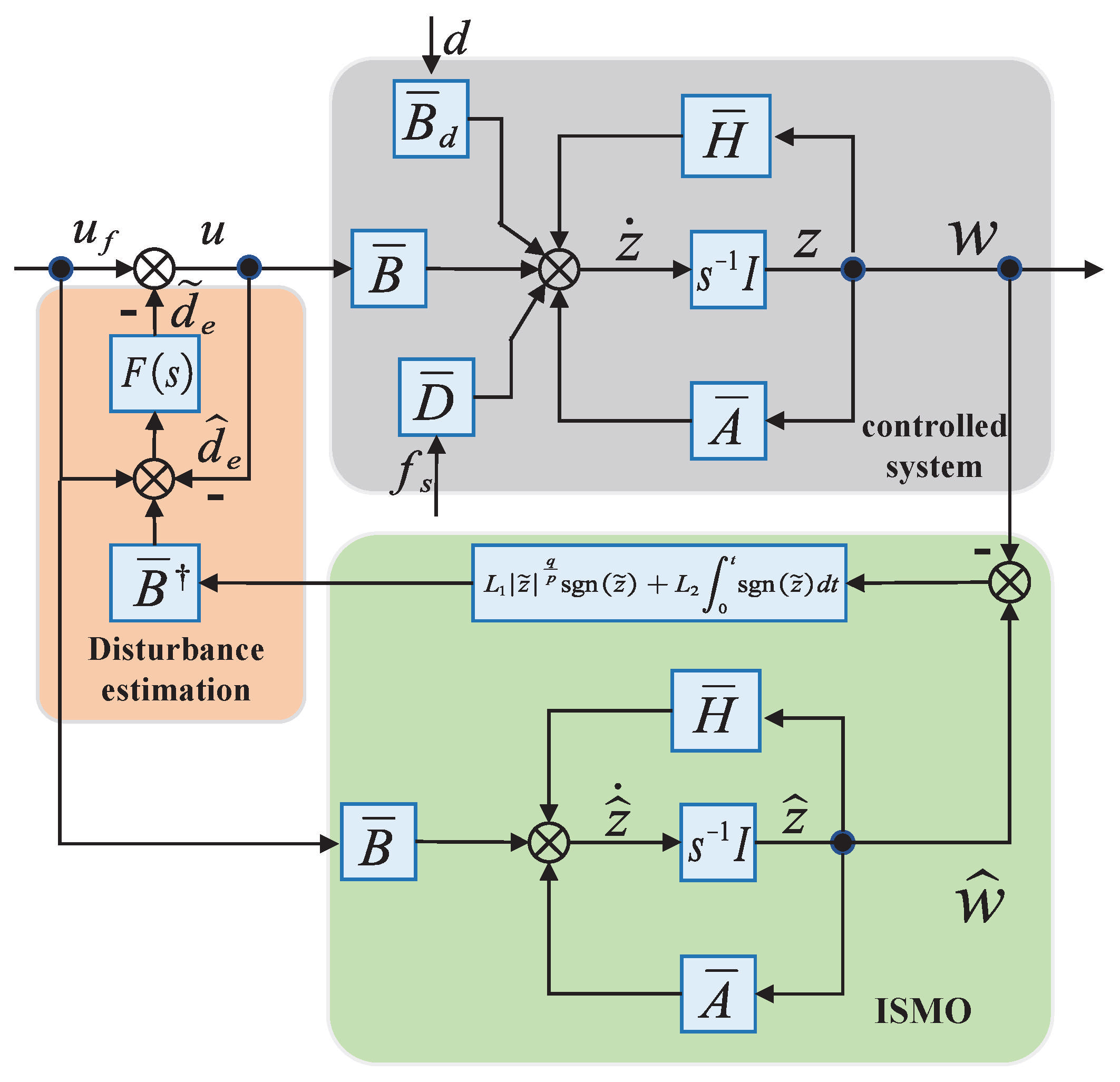
Figure 2 shows the structure of the external disturbance system based on EID, which consists of the controlled system, STSMO, and a disturbance estimator. In this figure,
represents the EID of
d, with its effect on the output being equivalent to that of the actual disturbance. The system model based on EID is
The design of the improved sliding mode observer for EID estimation is presented as follows:
where
and
are both positive gains;
q and
p are positive odd numbers that satisfy
;
is the estimated value of
z;
is the estimated value of
; and
is the input.
Based on Equations (
15) and (
16), the estimation error equation for state estimation is obtained as follows:
where
represents the state estimation error.
The stability analysis and parameter design using the Lyapunov function are as follows.
Lemma 2. Design an appropriate gain , so that where ξ, , and are small positive constants. The state estimation error will converge to a neighborhood of the origin: where η is a small positive constant.
Substitute
into Equation (
12) to obtain
which introduces the variable
, assuming that
Substituting Equation (
21) into Equation (
20), we obtain
Then, according to Equation (
22) and Equation (
16), there are
where
is the pseudo-inverse of
B.
Then, a filtered interference estimate
is obtained through a low-pass filter
. The filtered interference estimate
is
where
and
are Laplace transforms of
and
, respectively.
satisfies
where
is the highest angular frequency required for EID estimation.
5. Simulation and Experimental Validation
In this section, the effectiveness of the proposed methods is validated in the context of passive rehabilitation training using the lower limb rehabilitation exoskeleton robot system. The validation process involves the suppression of disturbances via the EID approach in the presence of sensor faults, followed by the reconstruction of the faulty sensor signals. The parameters of the lower limb rehabilitation exoskeleton robot system utilized in the experiments are listed in
Table 1.
The gait trajectory expression of hip joint and knee joint is as follows:
where
= 3.884 and
= 3.863 are the frequencies of the gait trajectories.
5.1. Simulation Results
In the simulation verification, the parameters for the improved sliding mode observer are configured as follows: , , , and . For the NHSMO, the parameters are set to , , , , , and . Finally, the parameters for the STSMO are chosen as and .
In the simulation, two cases were considered: Case 1: without applying the EID method; Case 2: with the EID method applied. By comparing these two cases, the performance of sensor fault reconstruction is evaluated under conditions with and without EID.
The design for time-varying disturbances is as follows:
Since the highest angular frequency in Equation (
42) is 1 rad/s, and
T = 0.01s is set, the low-pass filter is
The fault distribution matrix is
, and the sensor faults are
where the expressions of
,
,
, and
are as follows:
5.1.1. Case 1: Without Applying the EID Method
Case 1: In the simulation, both sensor faults and disturbances are present, and the sensor fault reconstruction is performed without applying EID to suppress the disturbances.
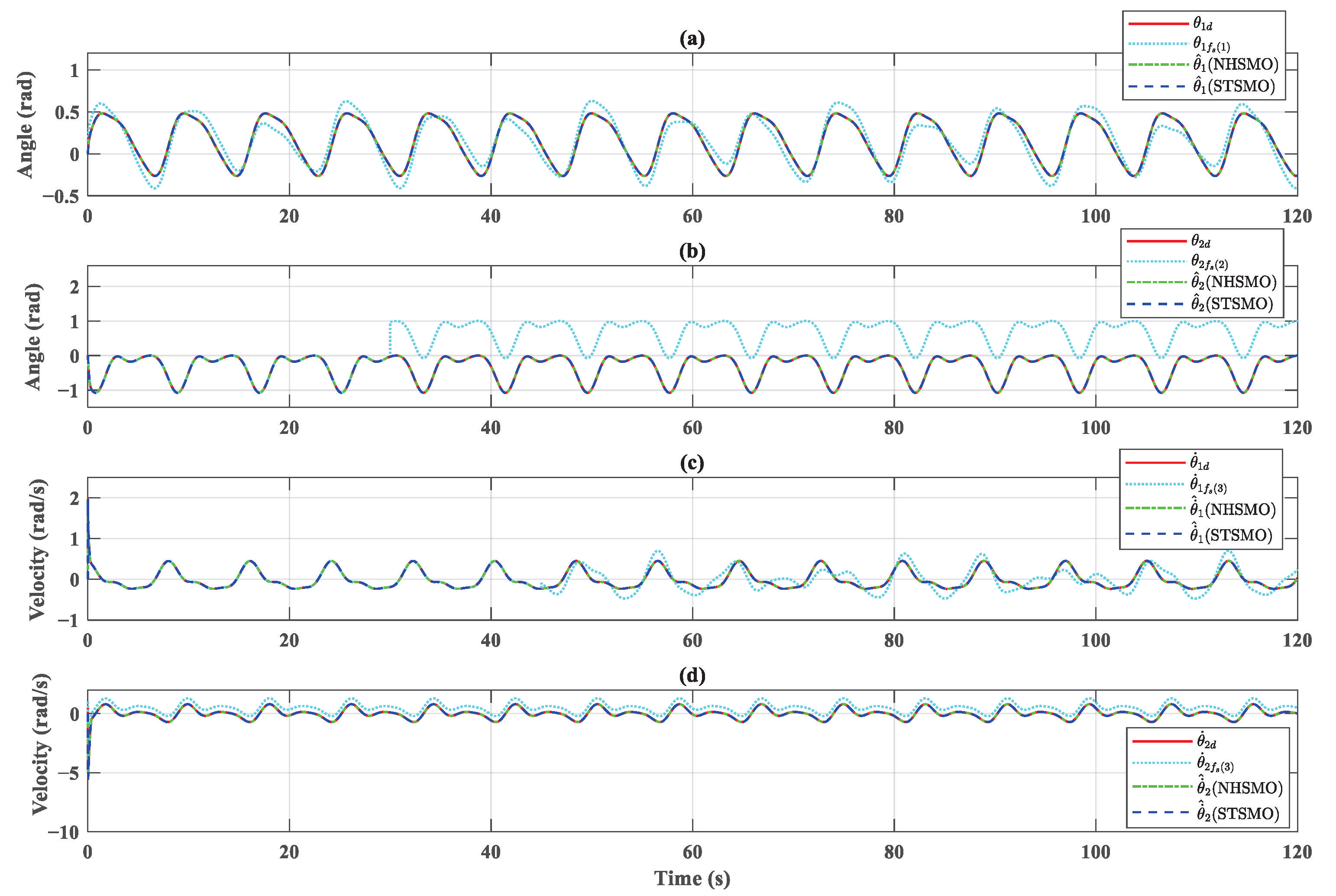
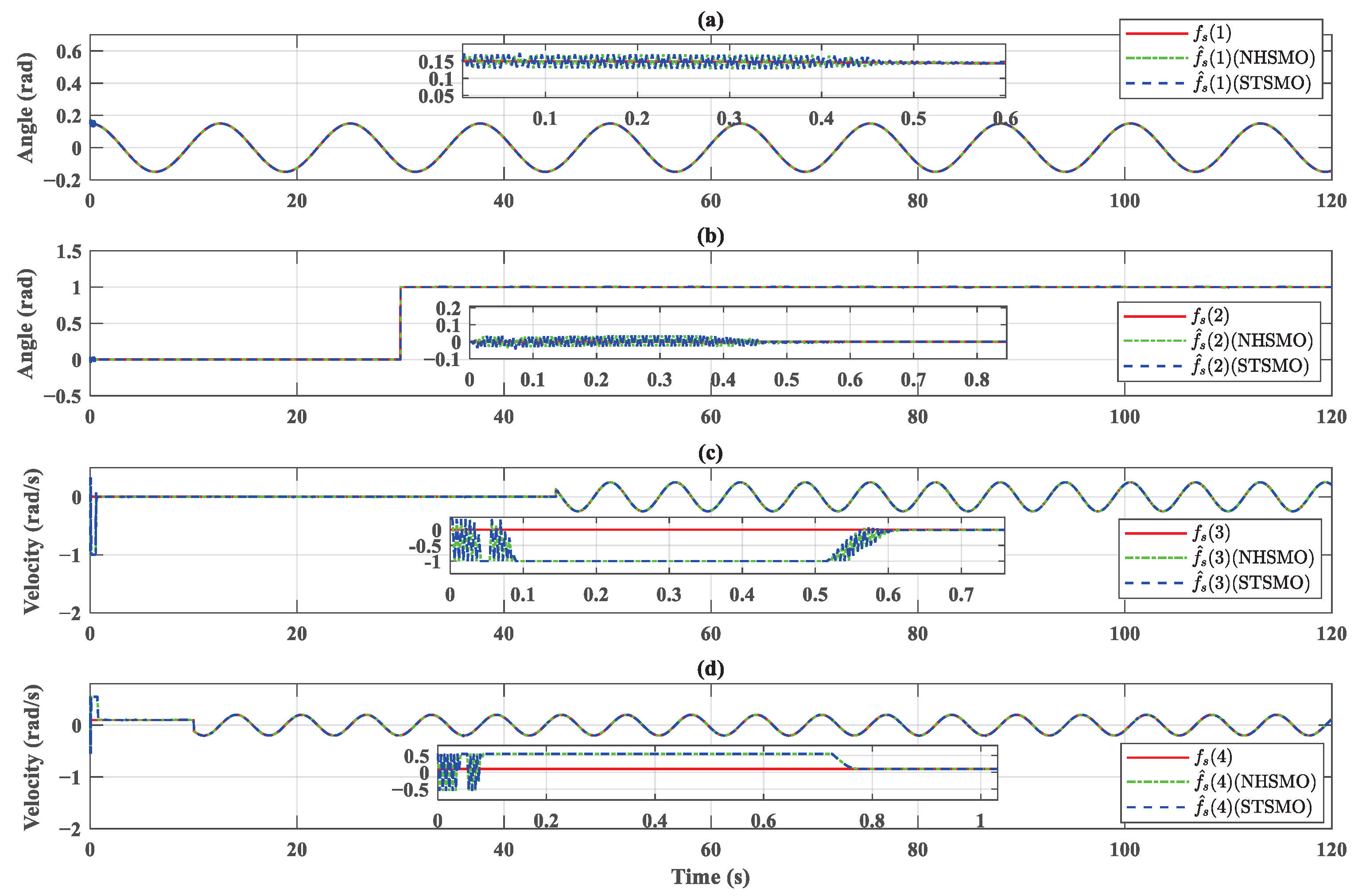
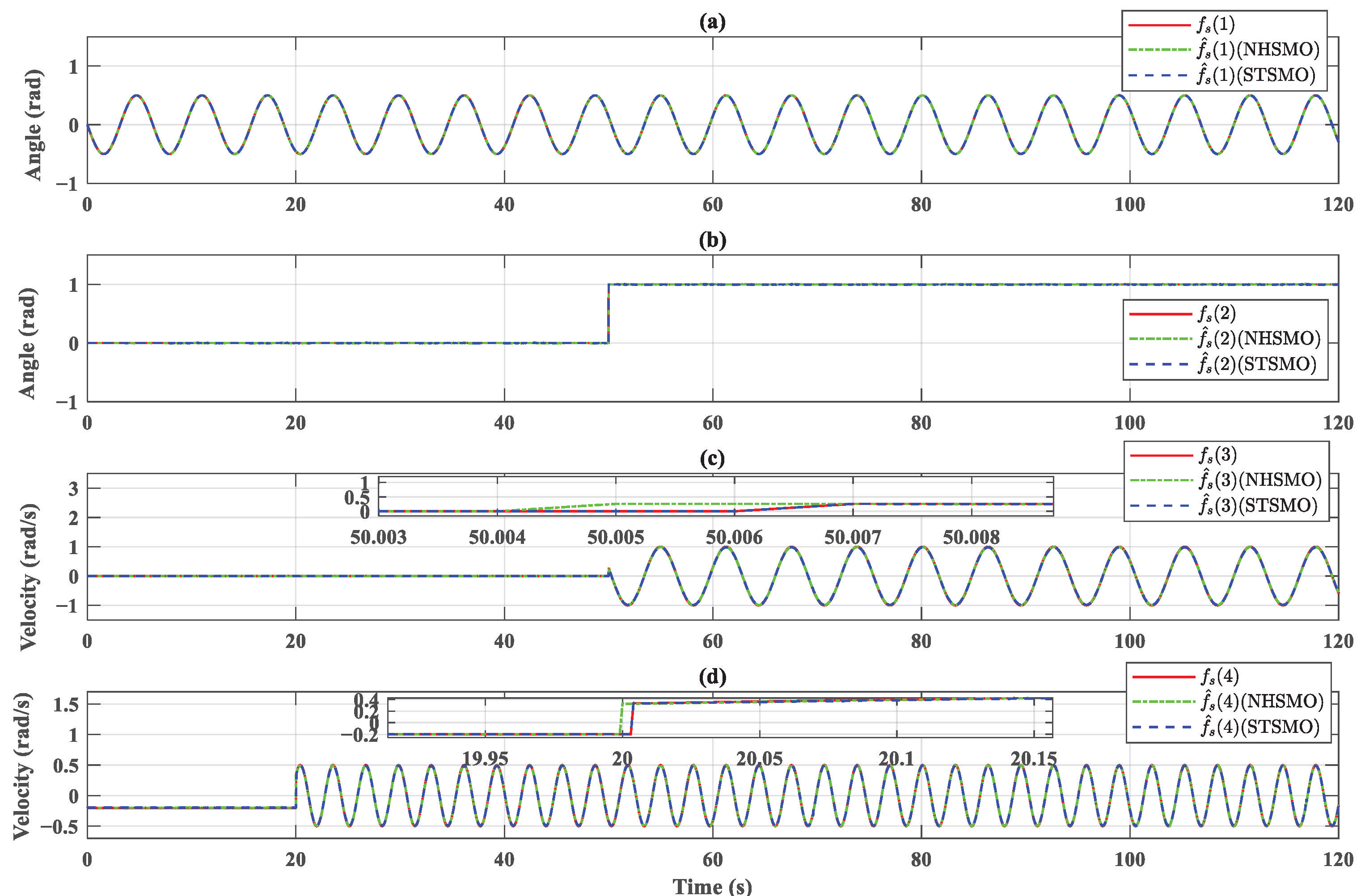
Figure 3 illustrates the expected gait trajectory
, the measured output during sensor failure
, and the state estimates obtained using NHSMO and STSMO. It is evident that the measured output
deviates significantly from the expected gait trajectory
. However, despite sensor failures and external disturbances, both NHSMO and STSMO are able to estimate the state with high accuracy and speed.
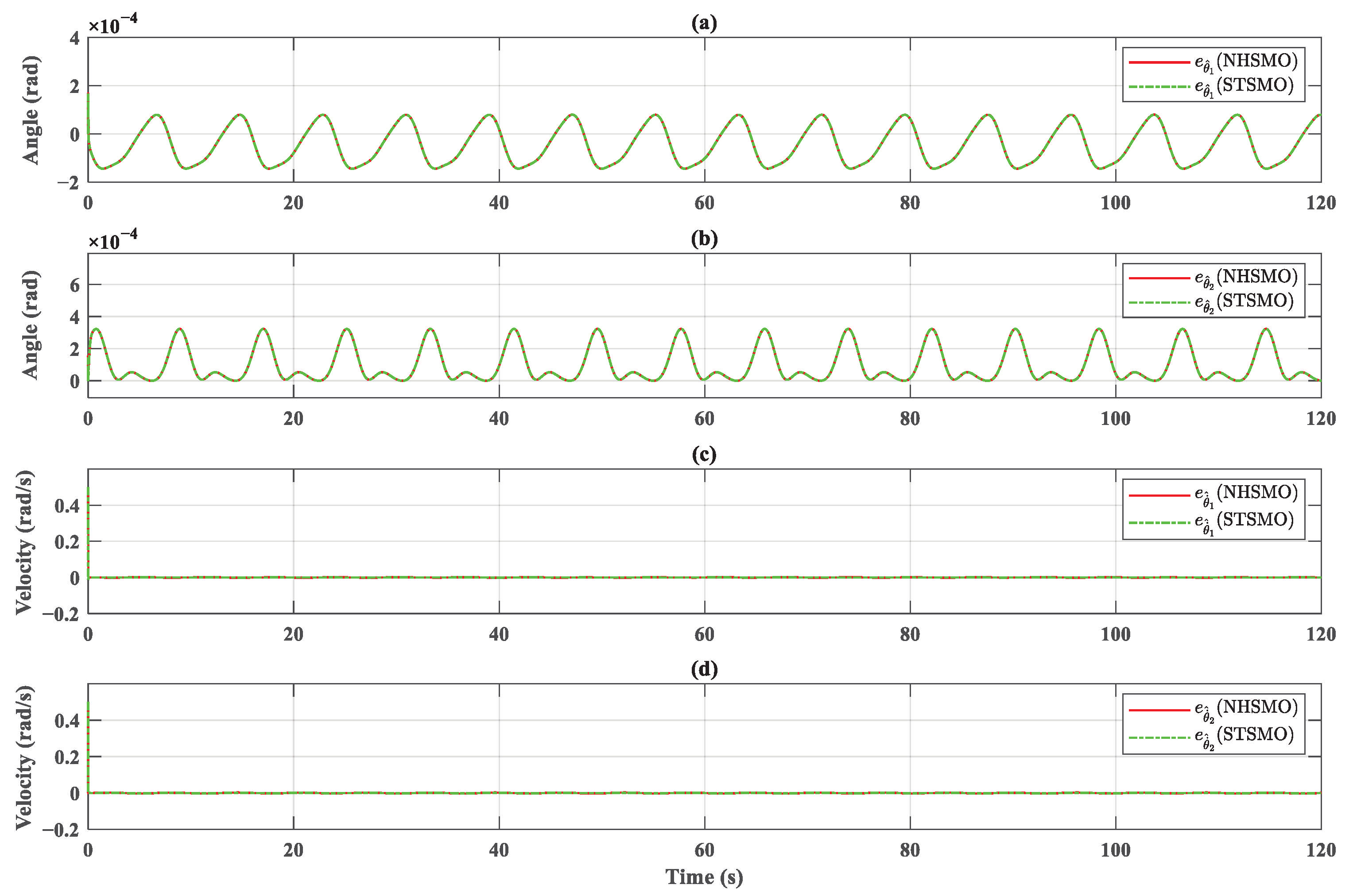
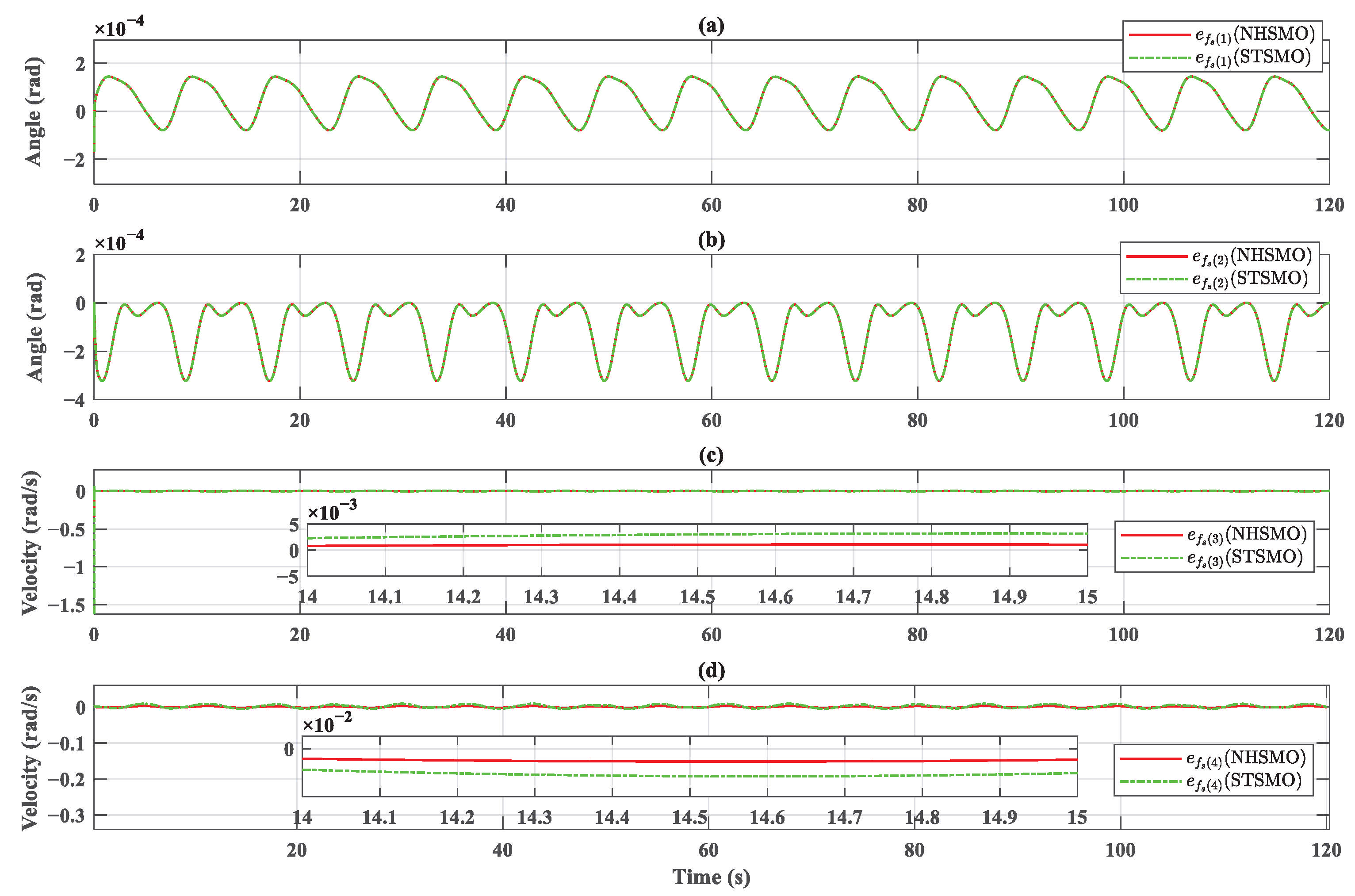
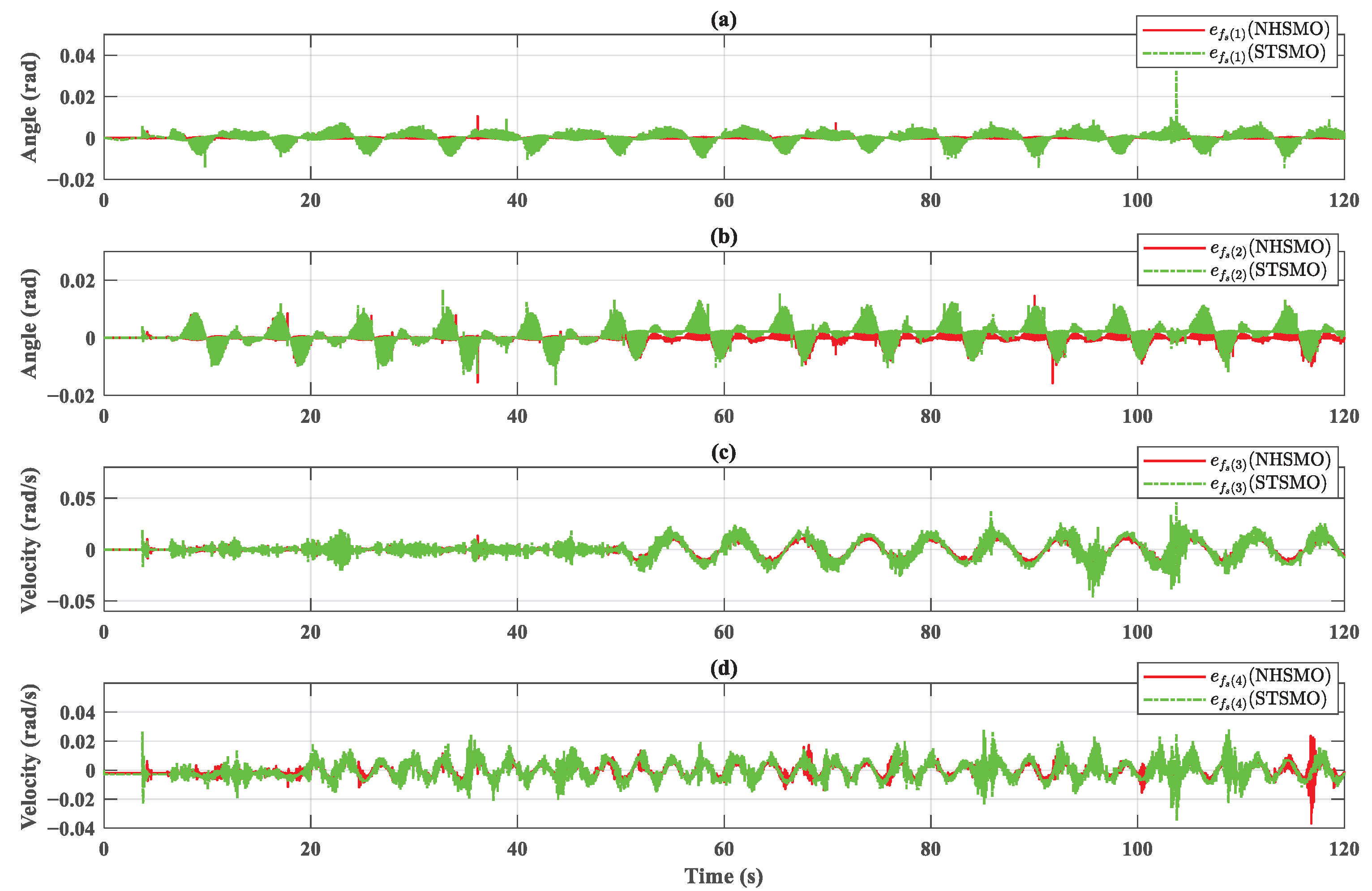
Figure 4 presents the state estimation errors for both NHSMO and STSMO, showing that NHSMO achieves higher estimation accuracy compared to STSMO.
Table 2 compares the root mean square errors (RMSEs) of the state estimates for NHSMO and STSMO. By comparing the RMSEs, the jitter amplitude of the estimation error curves of NHSMO and STSMO is analyzed. NHSMO shows a smaller RMSE for both angle and angular velocity estimation compared to STSMO, indicating that NHSMO has a stronger chattering suppression effect than STSMO.
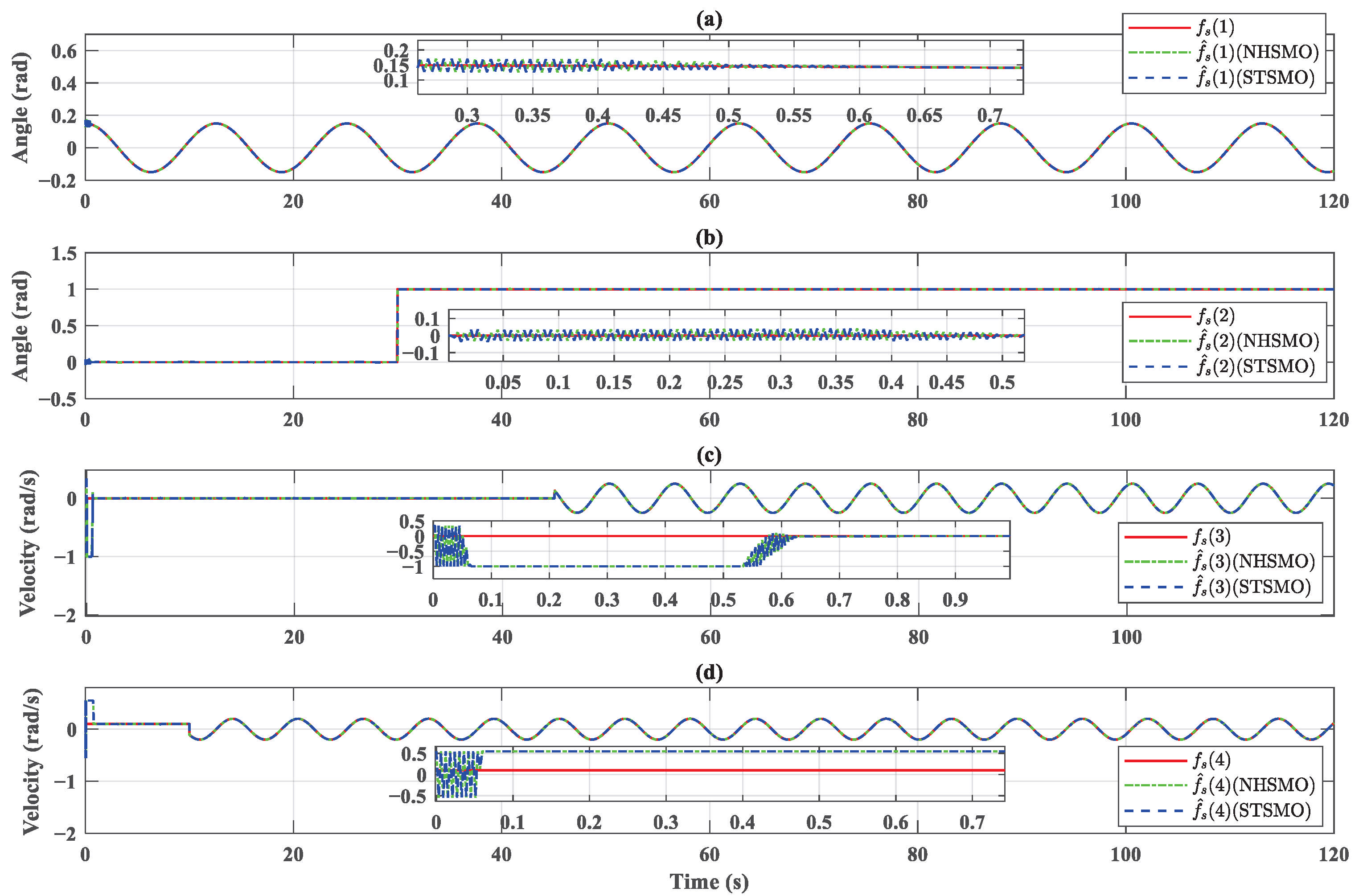
Figure 5 shows the results of the sensor fault reconstruction values
, which indicate relatively accurate sensor fault reconstruction. It also demonstrates that NHSMO has a faster convergence speed than STSMO. Specifically, the convergence time for
and
in NHSMO is approximately 0.01s, while in STSMO, the convergence times for
and
are about 0.02s and 0.03s, respectively. Meanwhile,
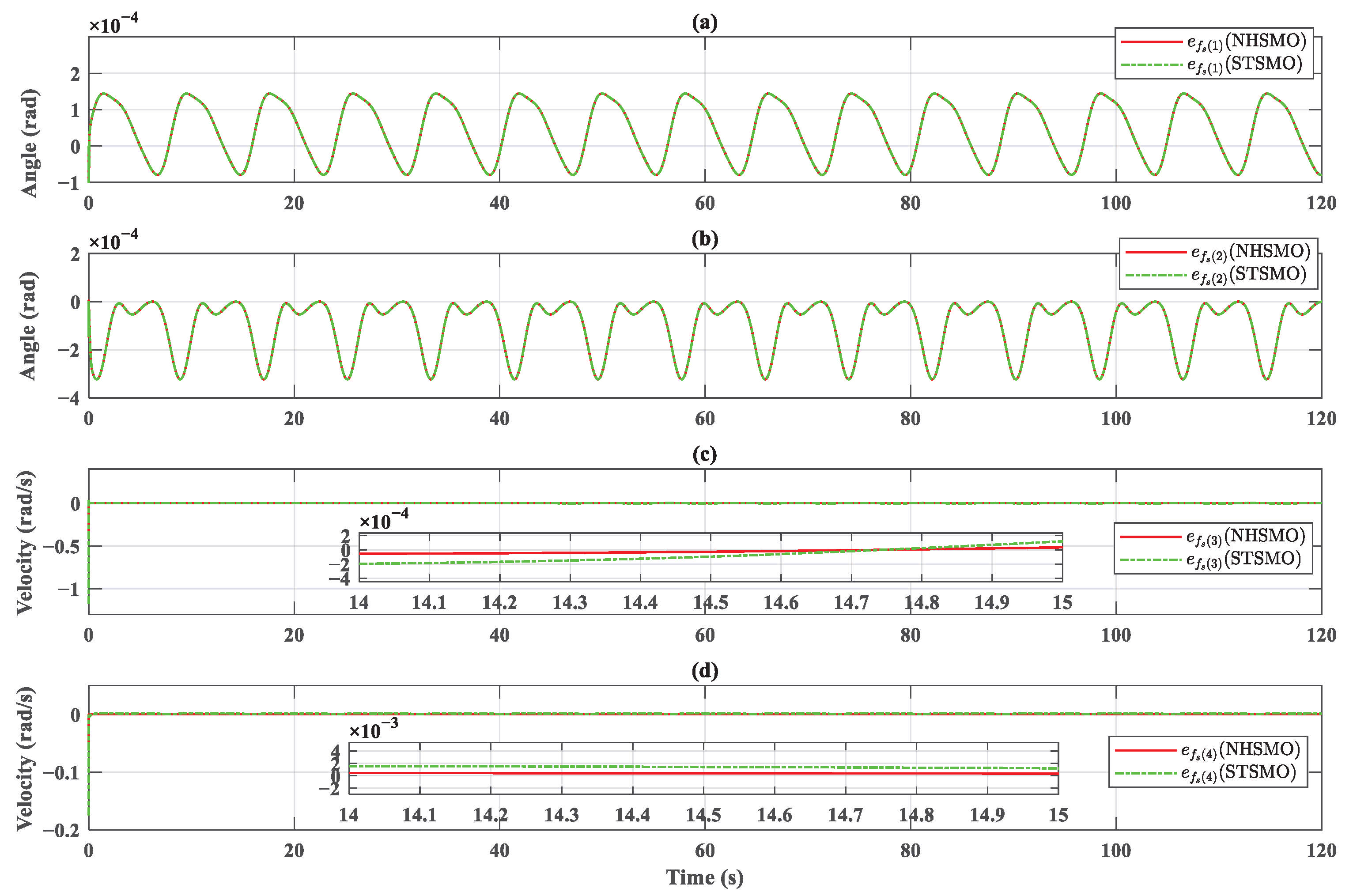
Figure 6 presents the sensor fault reconstruction error
, showing that NHSMO achieves a higher convergence accuracy than STSMO. By combining the results from
Figure 5 and
Figure 6, it is clear that NHSMO outperforms STSMO in both convergence speed and accuracy.
5.1.2. Case 2: With the EID Method Being Applied
Case 2: Reconstruction of sensor faults in the simulation under the condition of using EID to suppress disturbances.
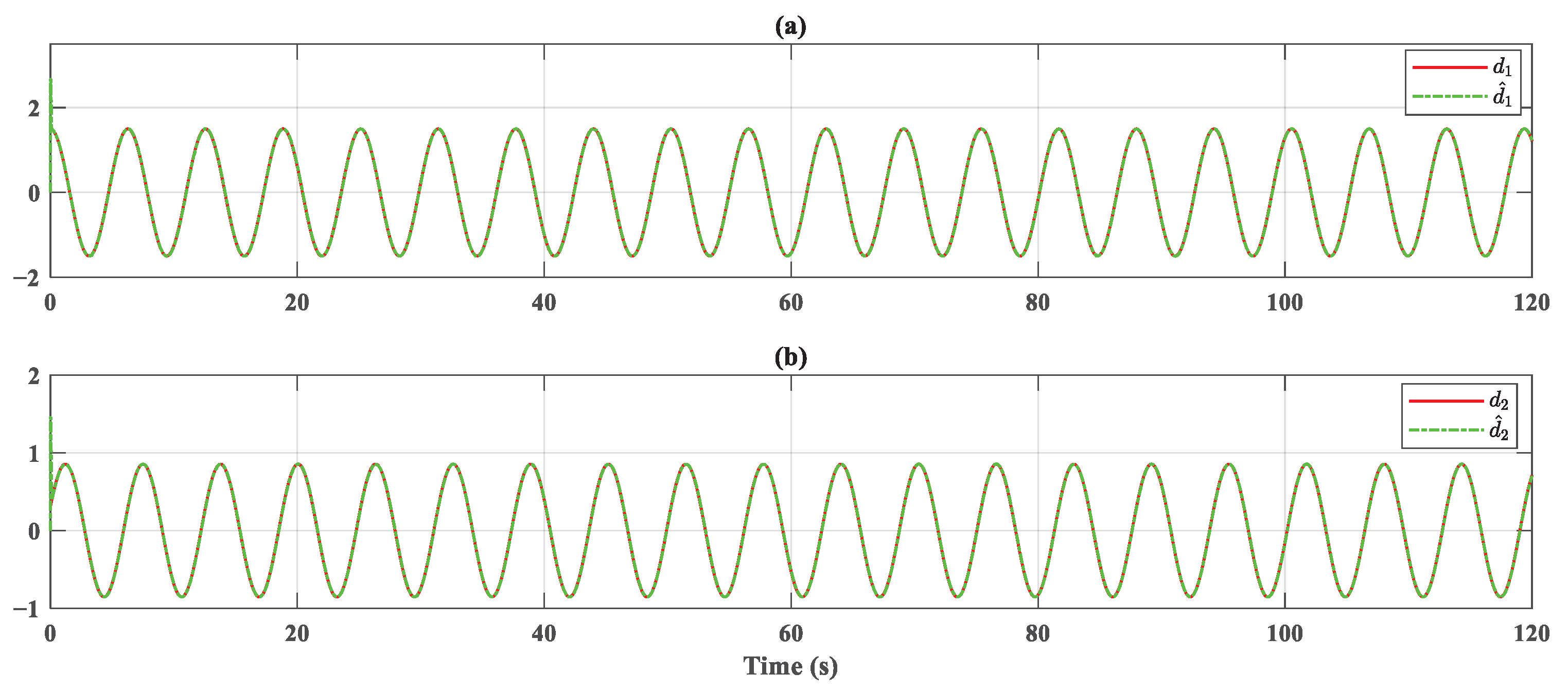
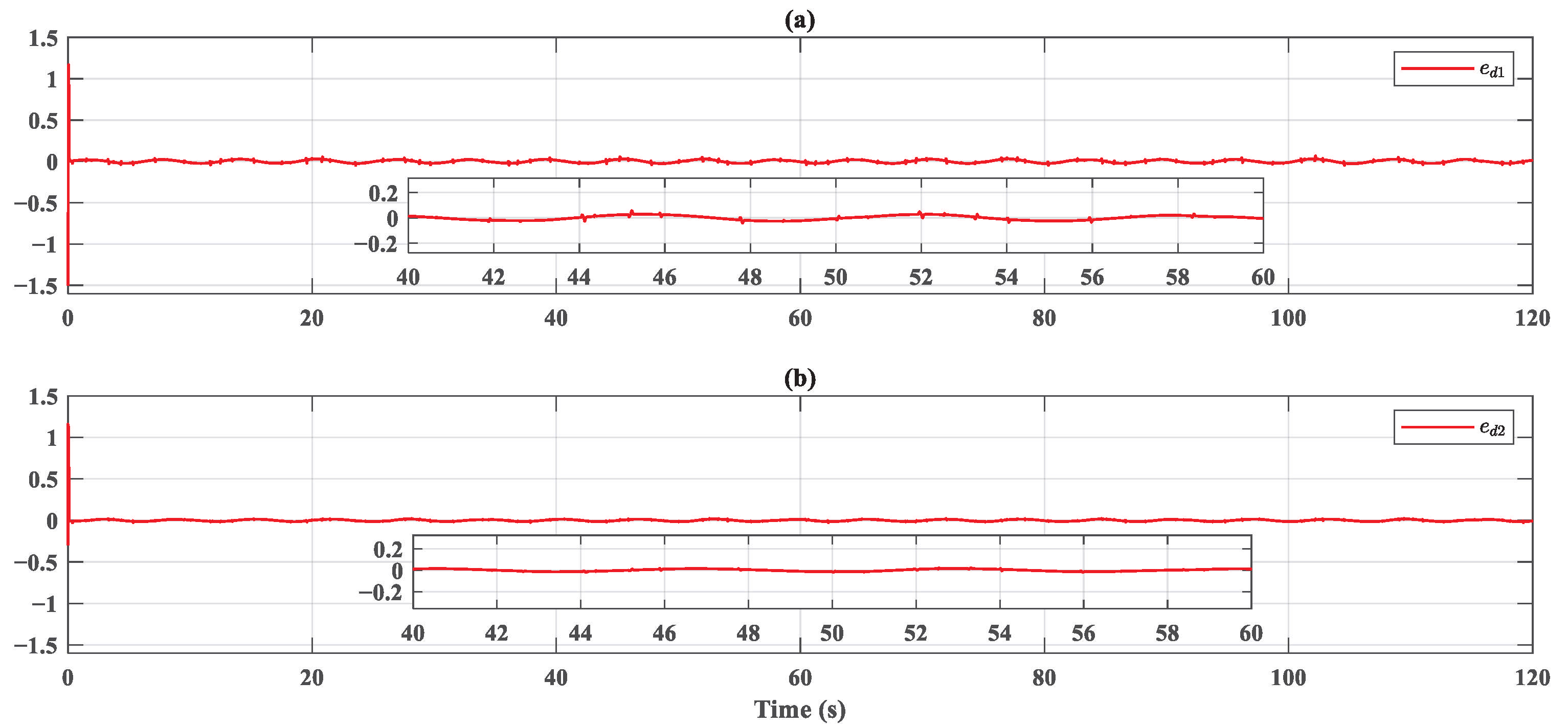
Figure 7 and
Figure 8 show the disturbance estimates based on improved sliding mode observer and the corresponding disturbance estimation errors, respectively. It can be observed that the disturbances are accurately estimated by improved sliding mode observer, and the disturbance estimation errors rapidly converge to zero with very small values.
Figure 9 and
Figure 10 show that NHSMO has shorter convergence times for
and
compared to STSMO, and also exhibits smaller convergence errors. Comparing
Figure 10 with
Figure 6, the error for
decreases from approximately 0.01 rad/s to 0.004 rad/s, and the error for
decreases from approximately 0.025 rad/s to 0.0004 rad/s. This indicates that the disturbance suppression method based on EID is more effective than the method without EID in reducing the impact of disturbances on fault reconstruction, resulting in more accurate fault reconstruction values.
A comparison of the fault reconstruction accuracy under the two simulation cases is presented.
Table 3 and
Table 4 provide a quantitative comparison of the fault reconstruction accuracy of NHSMO and STSMO under both conditions. From
Table 3, it can be observed that, under the same disturbances and faults, the RMSE of fault reconstruction for NHSMO with EID is smaller than that without EID, indicating the effectiveness of EID. Comparing
Table 3 and
Table 4, it can be seen that NHSMO achieves higher fault reconstruction accuracy than STSMO in both cases.
5.2. Experimental Results
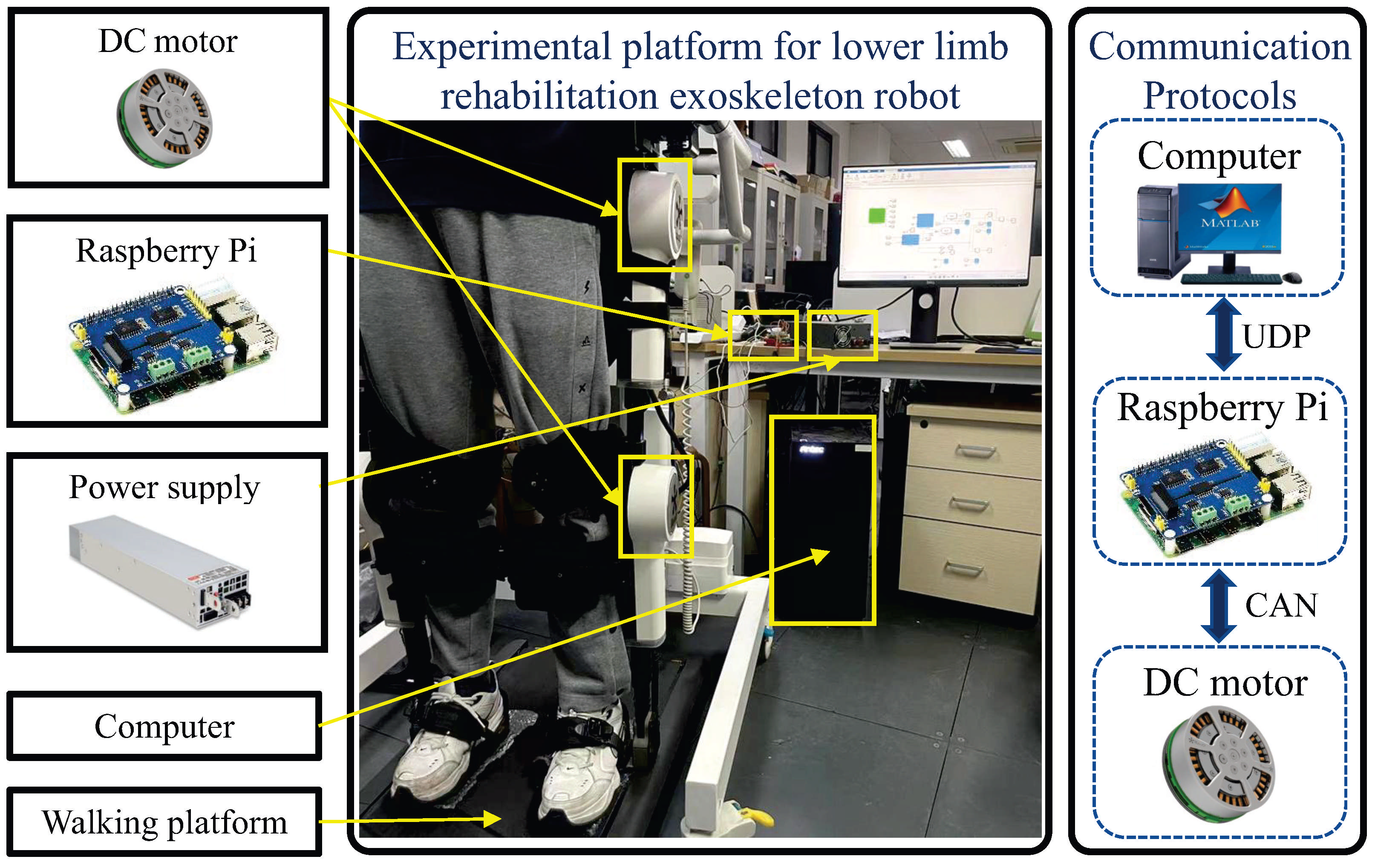
The experimental platform of the lower limb rehabilitation exoskeleton robot system is shown in
Figure 11, and it adopts both UDP and CAN communication protocols. The platform mainly consisted of the exoskeleton mechanical structure, joint-actuated DC motors, a Raspberry Pi 4B development board, a DC power supply, a computer, and a walking platform. The computer ran the proposed control algorithm in MATLAB/Simulink and served as the central control unit of the system. Control signals computed by the computer were transmitted via the UDP bus to the Raspberry Pi 4B, and then forwarded via the CAN bus to the joint motors to generate the corresponding torques. At the same time, the joint motors sent real-time sensor data, including joint angles and angular velocities, to the Raspberry Pi 4B through the CAN bus. The Raspberry Pi 4B then transmitted these data back to the computer via the UDP bus, thus forming a complete closed-loop control system.
The experimental subject is a 25-year-old male with a height of 1.82 m and a weight of 73 kg. During passive rehabilitation training, the subject was fully actuated by the lower limb exoskeleton and does not voluntarily apply force.
In the experimental verification, the parameters for the improved sliding mode observer were set as follows: , , , and . For the NHSMO, the parameters were configured as , , , , , and . Finally, the parameters for the STSMO were chosen as and .
In the experiment, two cases were considered. Case 3: without applying the EID method. Case 4: with the EID method applied. By comparing these two scenarios, the performance of sensor fault reconstruction under conditions with and without EID was evaluated.
The low-pass filter is chosen to be consistent with Equation (
43). The fault distribution matrix is
, and the sensor faults are
where the expressions of
,
,
, and
are as follows:
5.2.1. Case 3: Without Applying the EID Method
Case 3: In the experiment, both sensor faults and disturbances are present, and sensor fault reconstruction is performed without using EID for disturbance suppression.
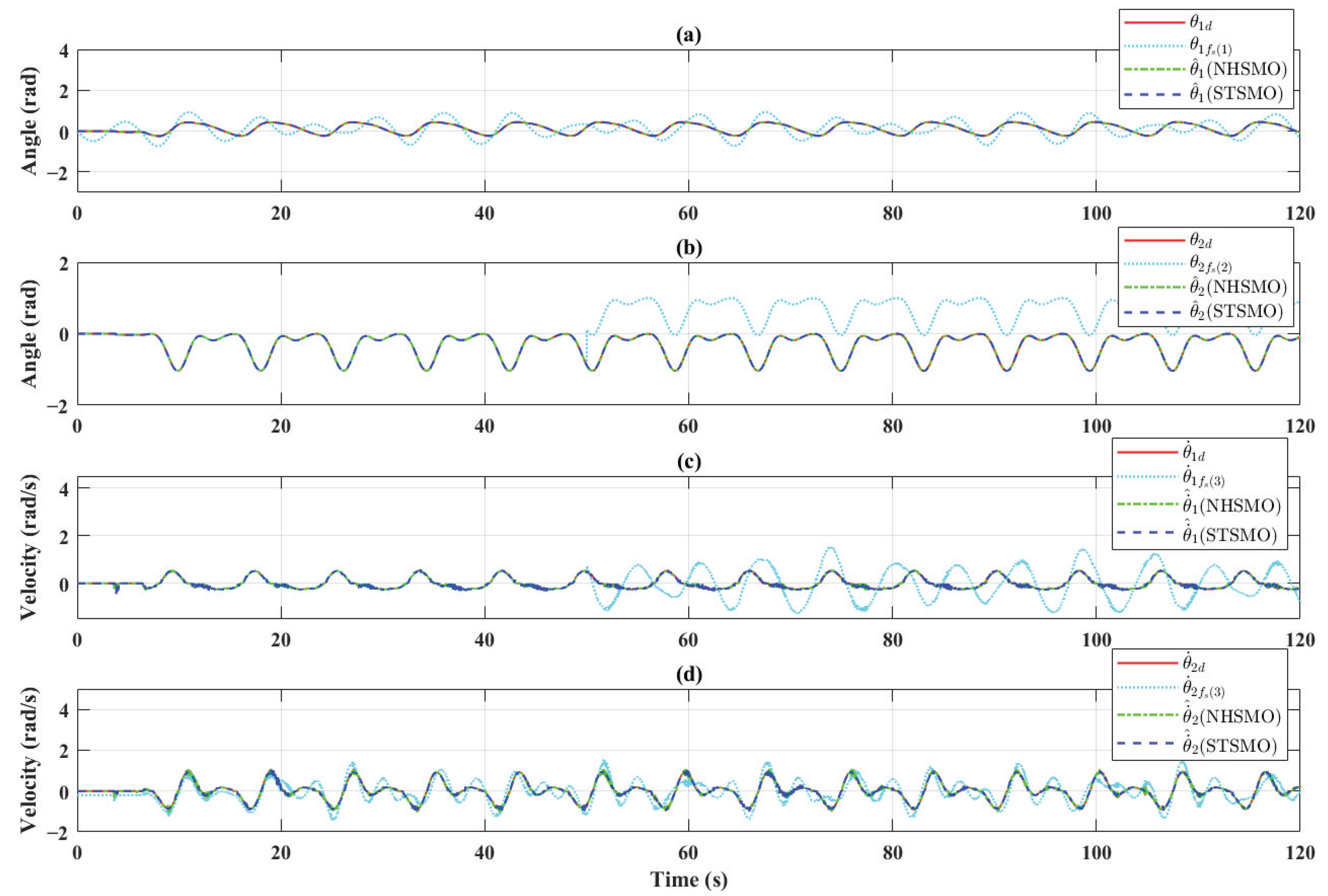
Figure 12 shows the measured output
and the state estimation of the expected gait trajectory
under sensor failure conditions. The measured
exhibits a clear deviation from the expected
due to the sensor fault. However, both NHSMO and STSMO can still accurately and rapidly estimate the state, demonstrating the strong robustness of NHSMO.
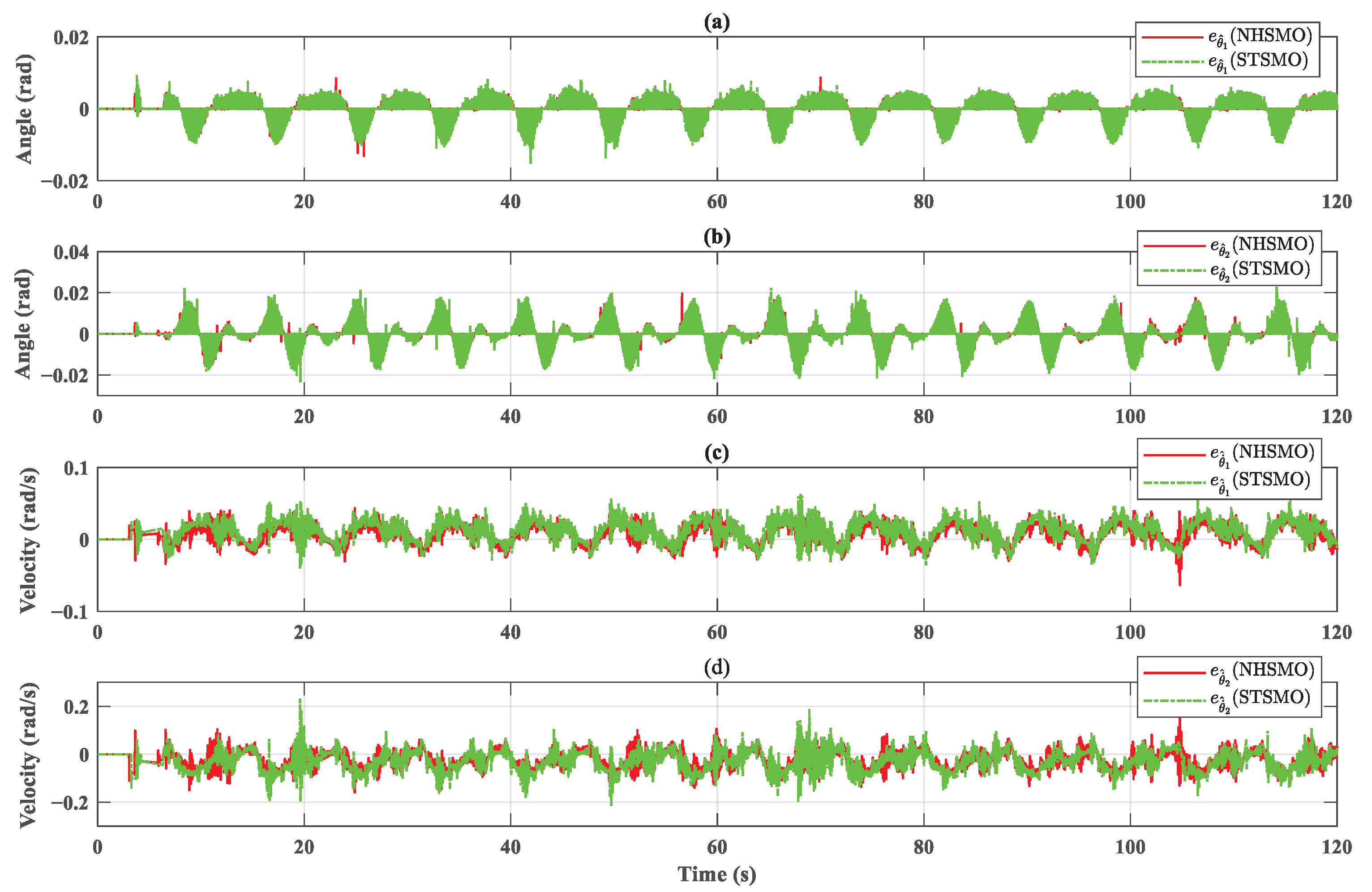
Figure 13 illustrates the state estimation errors of NHSMO and STSMO, showing that NHSMO achieves higher estimation accuracy than STSMO and exhibits superior chattering suppression performance.
Table 5 compares the RMSE of state estimation between NHSMO and STSMO. By analyzing the RMSE values, the oscillation amplitude in the estimation error curves is compared, showing that NHSMO has lower RMSE values for both angular position and angular velocity estimation than STSMO. This result indicates that NHSMO exhibits stronger chattering suppression capability compared to STSMO.
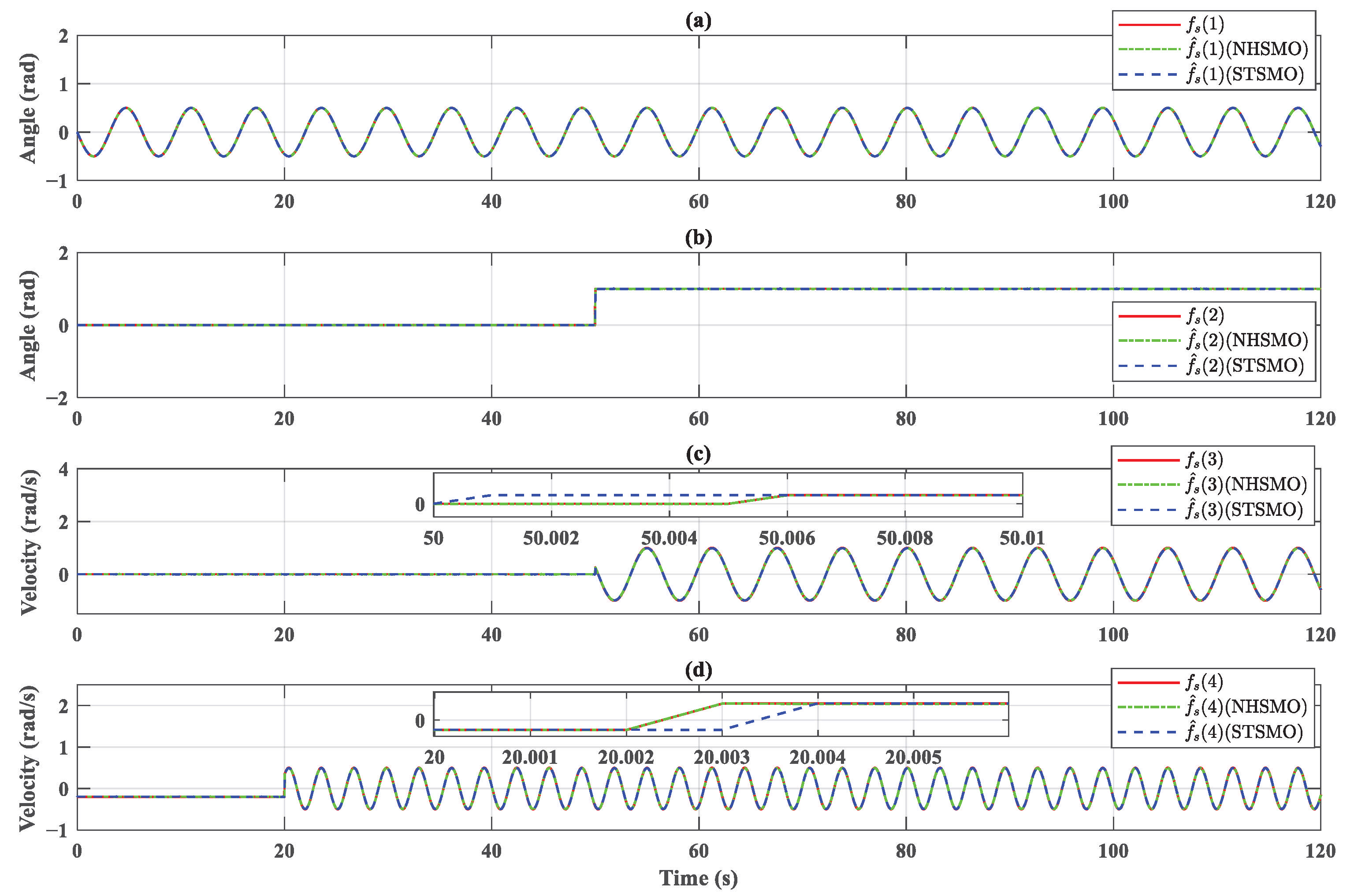
Figure 14 presents the experimental results of the reconstructed sensor fault
. The sensor fault is accurately reconstructed, and NHSMO exhibits a significantly faster convergence speed compared to STSMO.
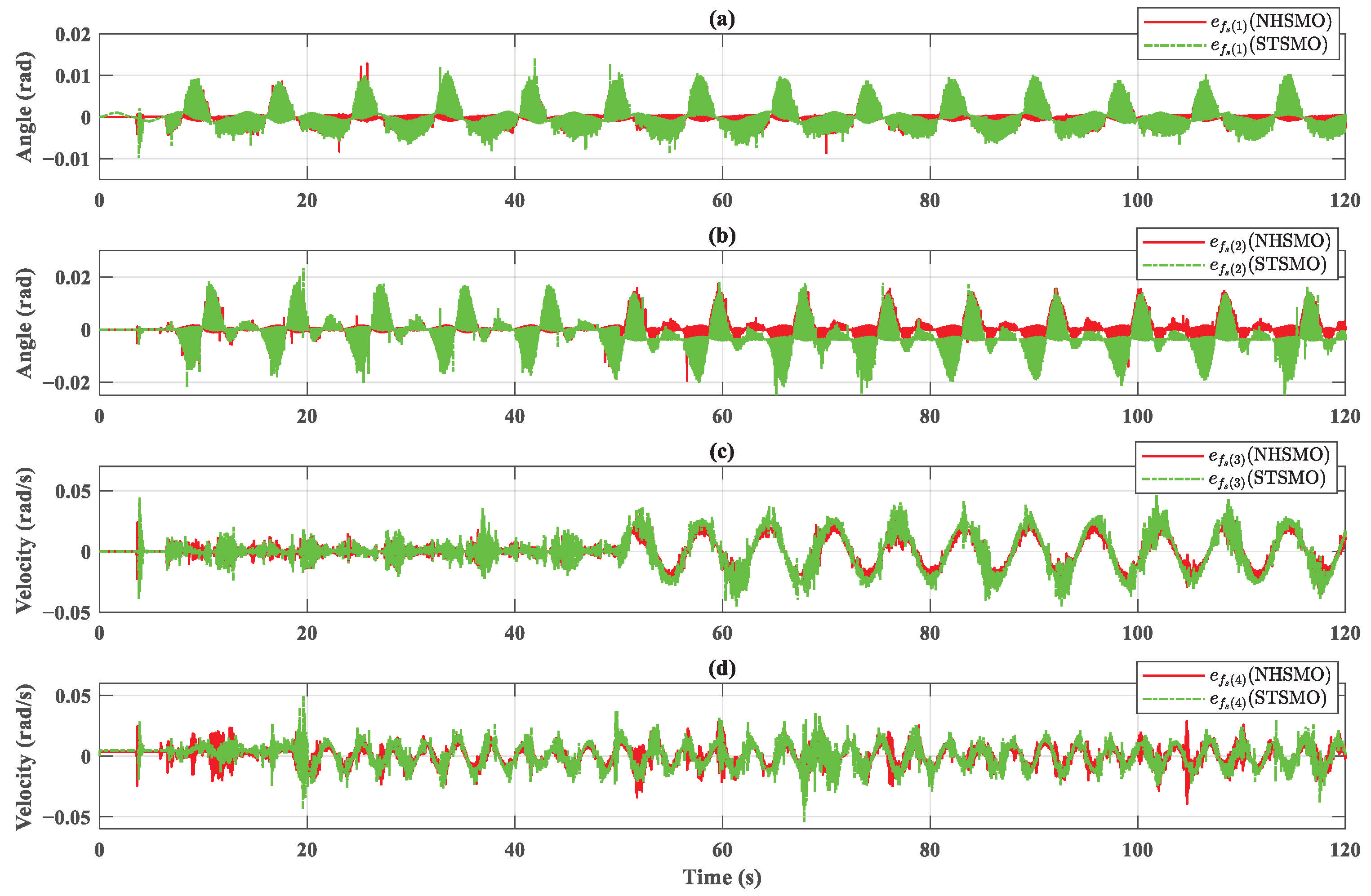
Figure 15 shows the experimental results of the sensor fault reconstruction error, where the overall error of NHSMO is smaller than that of STSMO. Additionally, the fault reconstruction error curve of NHSMO is smoother than that of STSMO, demonstrating superior chattering suppression. In summary, NHSMO outperforms STSMO in terms of both convergence speed and chattering suppression.
5.2.2. Case 4: With the EID Method Applied
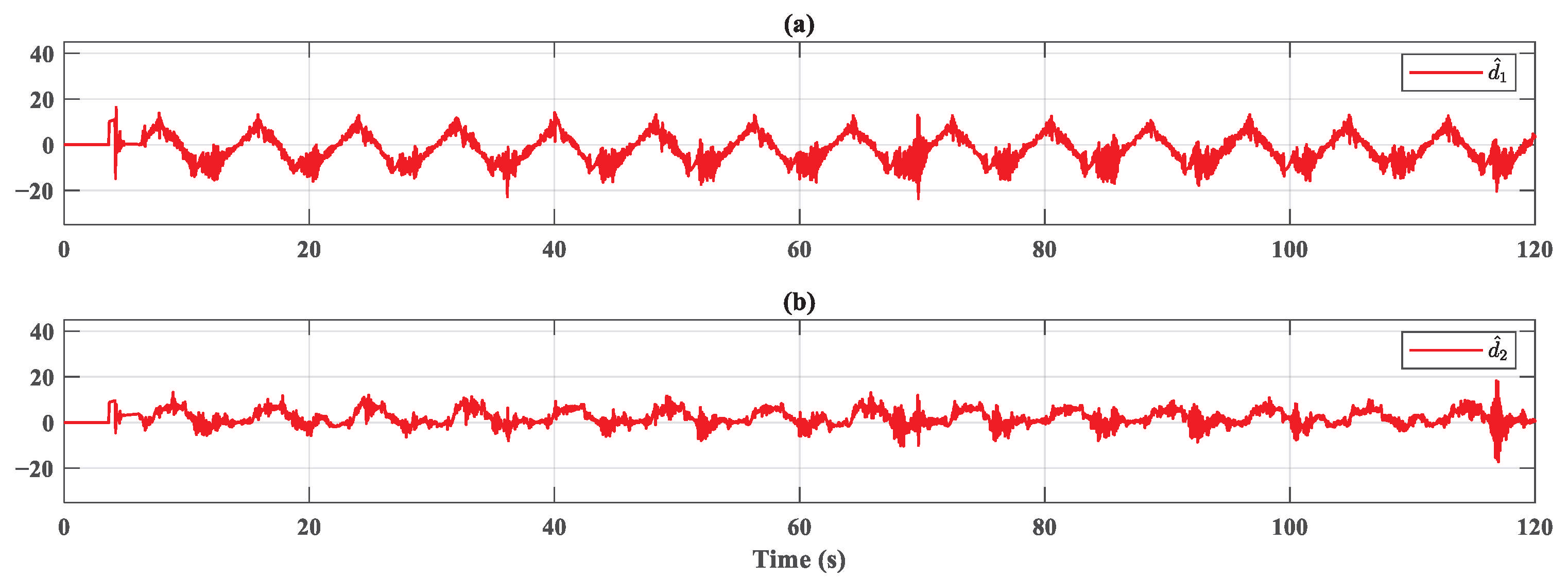
Case 4: Sensor fault reconstruction in the experiment with EID applied for disturbance suppression. Under the condition of sensor fault reconstruction with EID-based disturbance suppression, disturbances are always present and unknown. As observed from
Figure 16, improved sliding mode observer effectively estimates the equivalent disturbance.
Figure 17 and
Figure 18 further illustrate the effectiveness of EID in disturbance suppression. Both figures demonstrate that the two sliding mode observers can accurately reconstruct sensor faults, with NHSMO exhibiting superior chattering suppression and higher estimation accuracy compared to STSMO. Additionally, the fault reconstruction error values
in
Figure 18 are lower than those in
Figure 15, indicating that sensor fault reconstruction based on EID is more precise than reconstruction without EID.
A comparison of fault reconstruction accuracy under two experimental conditions is conducted.
Table 6 and
Table 7 compare the accuracy of NHSMO and STSMO in fault reconstruction under both conditions. As shown in
Table 6, under identical disturbance and fault conditions, the RMSE of fault reconstruction using EID-based NHSMO is smaller than that without EID, demonstrating the effectiveness of EID. Furthermore, a comparison between
Table 6 and
Table 7 indicates that NHSMO achieves higher fault reconstruction accuracy than STSMO in both cases.
6. Conclusions
This paper investigates the sensor fault reconstruction problem in lower limb rehabilitation exoskeleton robots under the presence of disturbances. An equivalent input disturbance method based on an improved sliding mode observer is proposed, which suppresses external disturbances and reduces their impact on the sensor fault reconstruction accuracy. The equivalent input disturbance is estimated through the improved sliding mode observer. After mitigating the impact of interference on fault reconstruction, a novel high-order sliding mode observer is designed to accurately reconstruct the sensor fault. This observer offers faster convergence speed and higher estimation accuracy, enabling precise fault reconstruction. Finally, the proposed equivalent input disturbance method’s effectiveness in suppressing disturbances and the novel high-order sliding mode observer’s efficacy and superiority in sensor fault reconstruction are validated through both simulation and experimental platforms on a lower limb rehabilitation exoskeleton robot.
As patients regain certain levels of mobility and develop a desire to walk independently, human–robot interaction will become one of the key research directions for lower limb rehabilitation exoskeleton robots. The method proposed in this paper is currently applicable in the early stages of rehabilitation, where the lower limb rehabilitation exoskeleton assists patients in gait tracking training while simultaneously identifying and reconstructing sensor faults to ensure patient safety. In future work, to more precisely capture the interaction between the patient and the robot, real-time data on human–robot interaction forces will be obtained through technologies such as force sensors and electromyography. Based on this, the method will be applied to the compliant motion control of lower limb rehabilitation exoskeleton robots, ensuring that the robot can operate stably in complex and changing environments, maximizing patient safety and comfort.