Article

Research on the Five-Axis Support-Free Additive Manufacturing Method for Overhanging Parts

1
Guangxi Key Laboratory of Special Engineering Equipment and Control, Guilin University of Aerospace Technology, Guilin 541004, China
2
College of Mechanical and Control Engineering, Guilin University of Technology, Guilin 541006, China
3
Key Laboratory of Special Engineering Equipment Design and Intelligent Driving Technology, Education Department of Guangxi Zhuang Autonomous Region, Guilin University of Aerospace Technology, Guilin 541004, China
4
School of Mechanical and Electrical Engineering, Guilin University of Electronic Technology, Guilin 541004, China
*
Author to whom correspondence should be addressed.
Actuators 2025, 14(2), 99; https://doi.org/10.3390/act14020099
Submission received: 21 January 2025 / Revised: 14 February 2025 / Accepted: 15 February 2025 / Published: 19 February 2025
(This article belongs to the Section Actuators for Manufacturing Systems)

Abstract

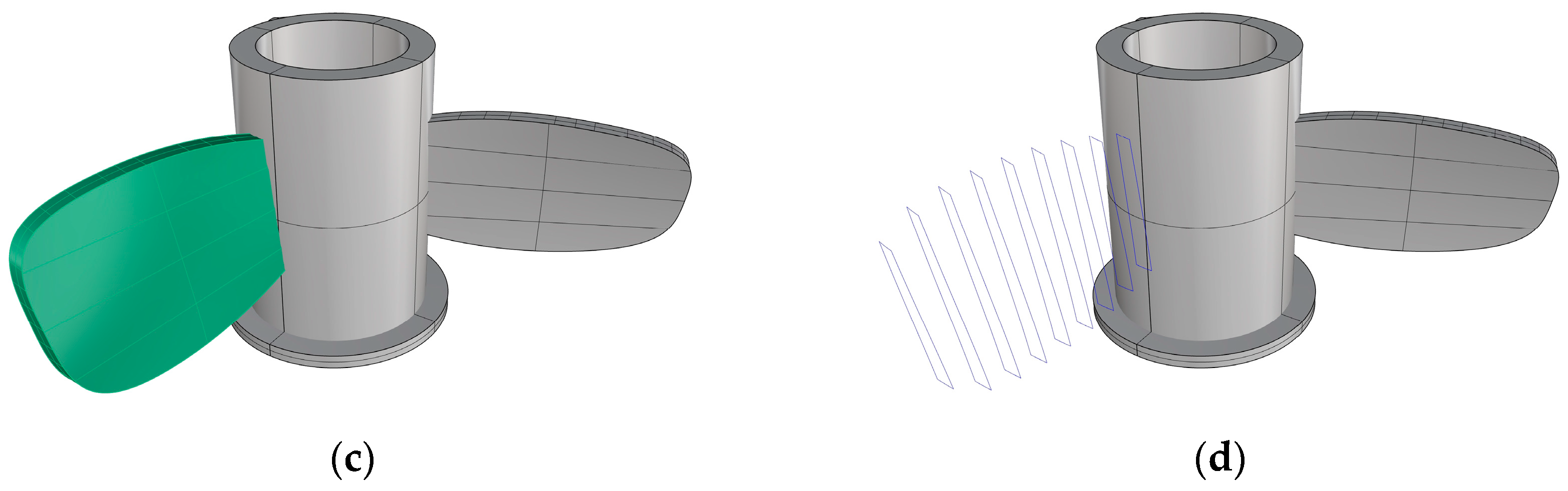
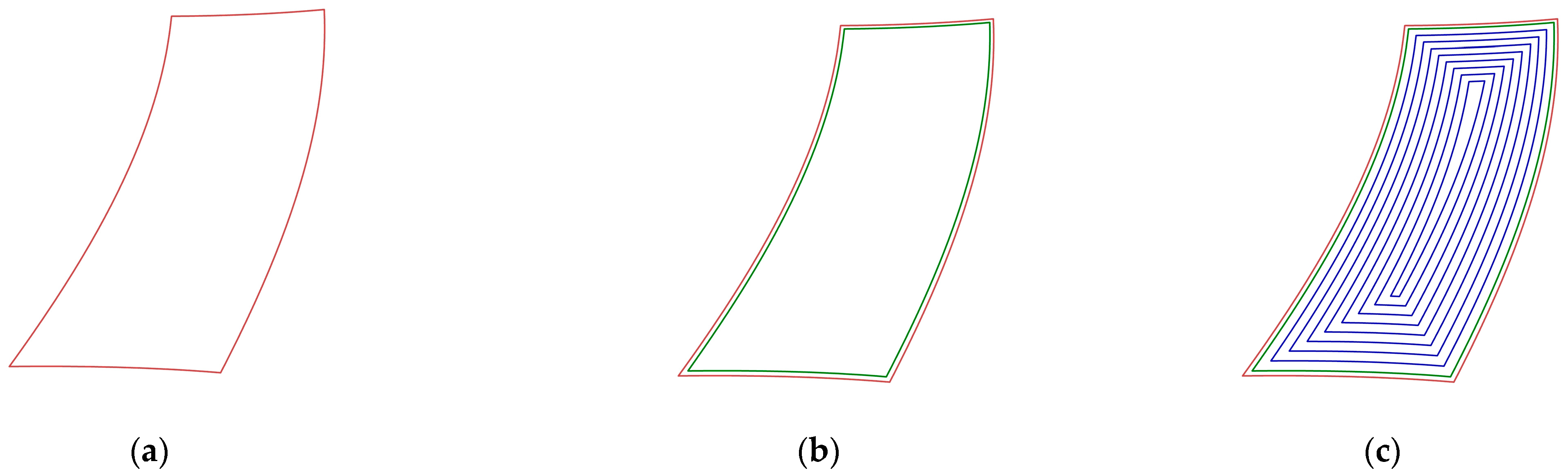
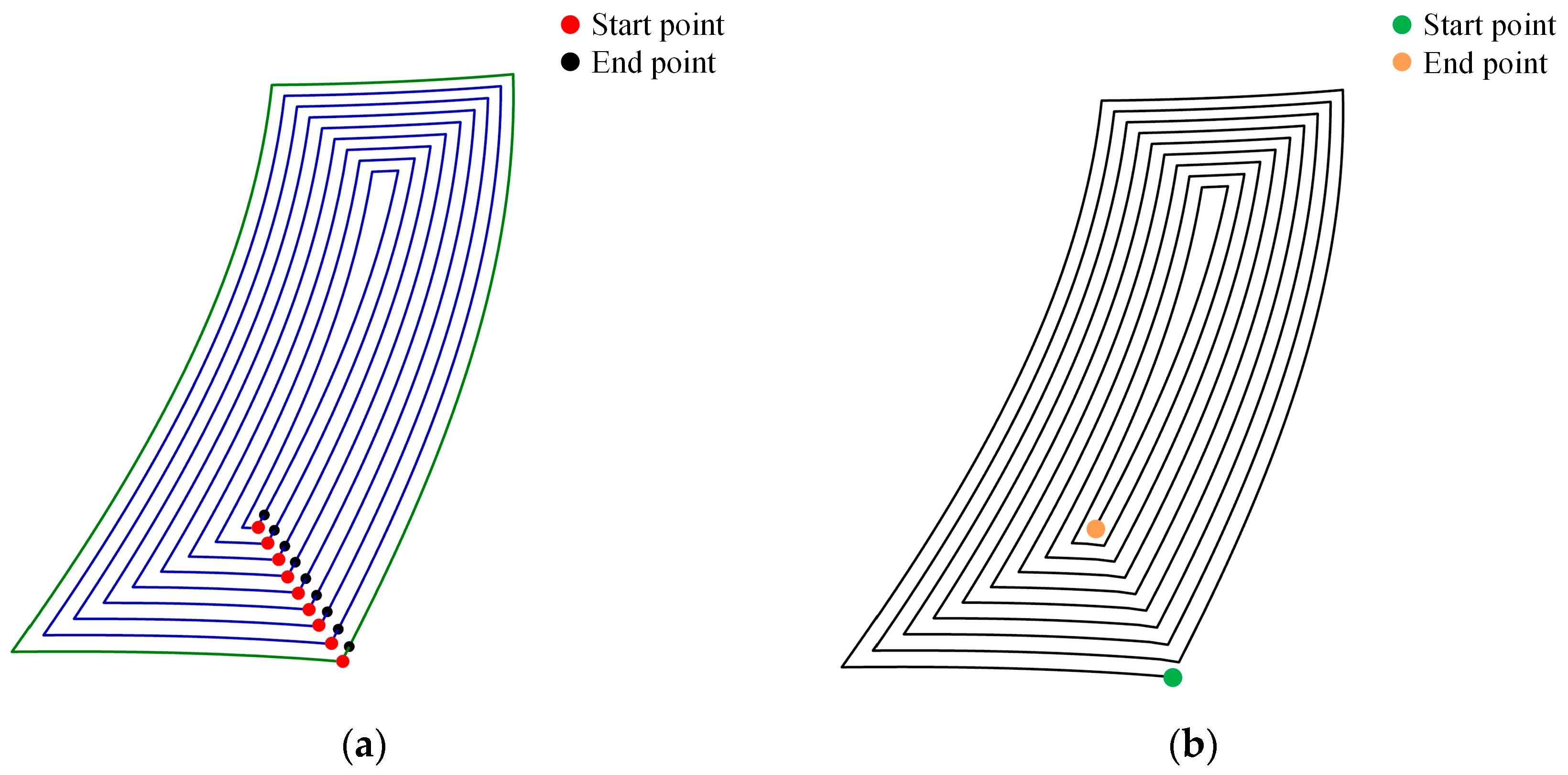
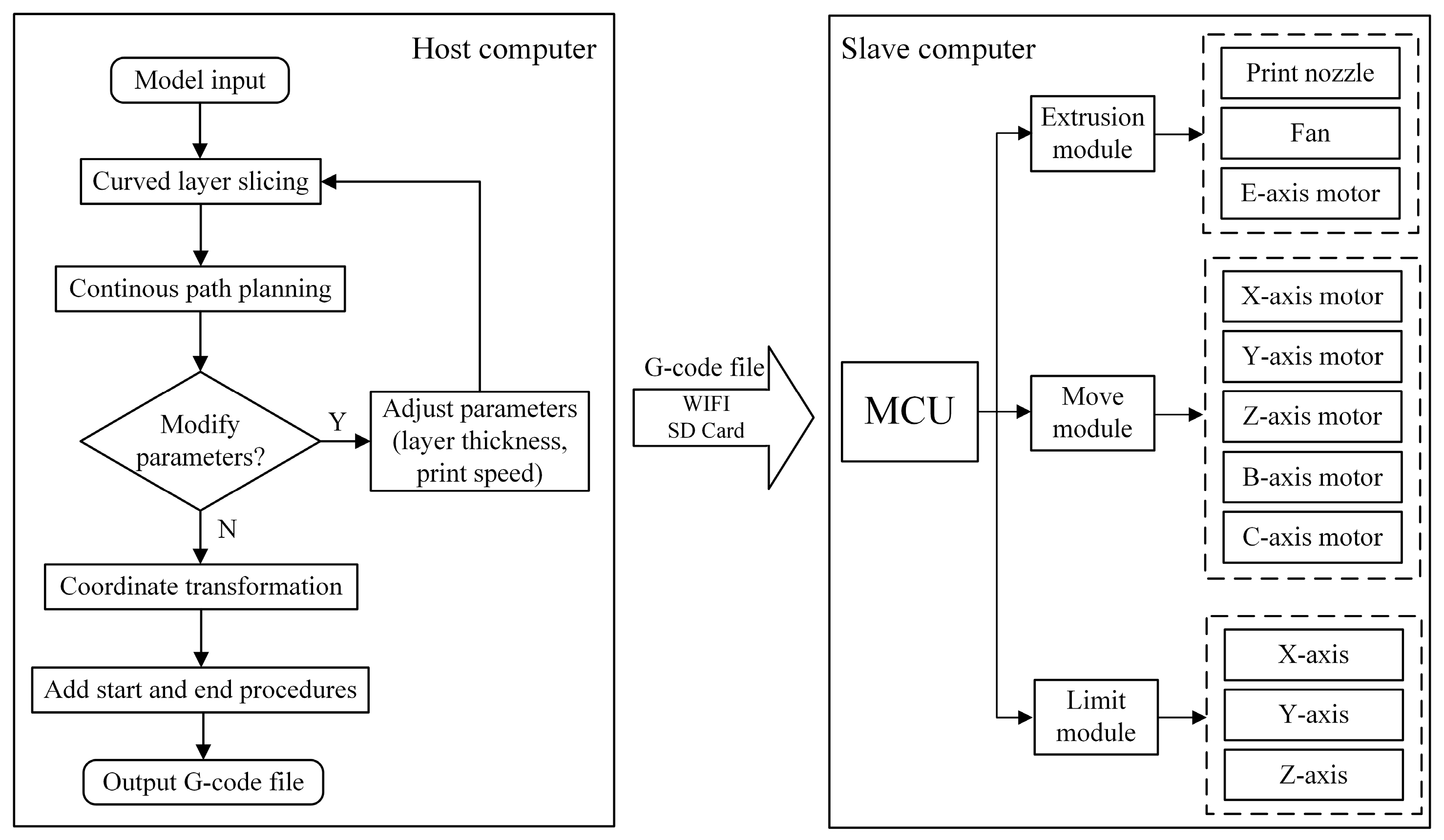
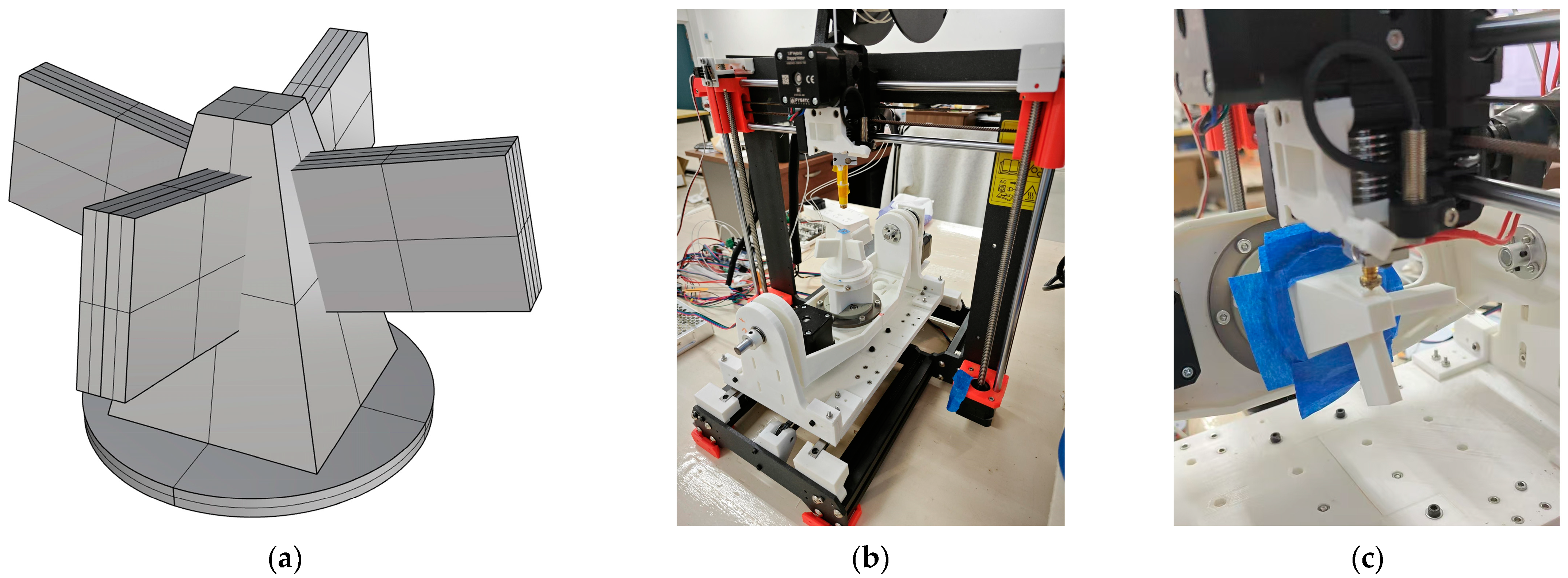
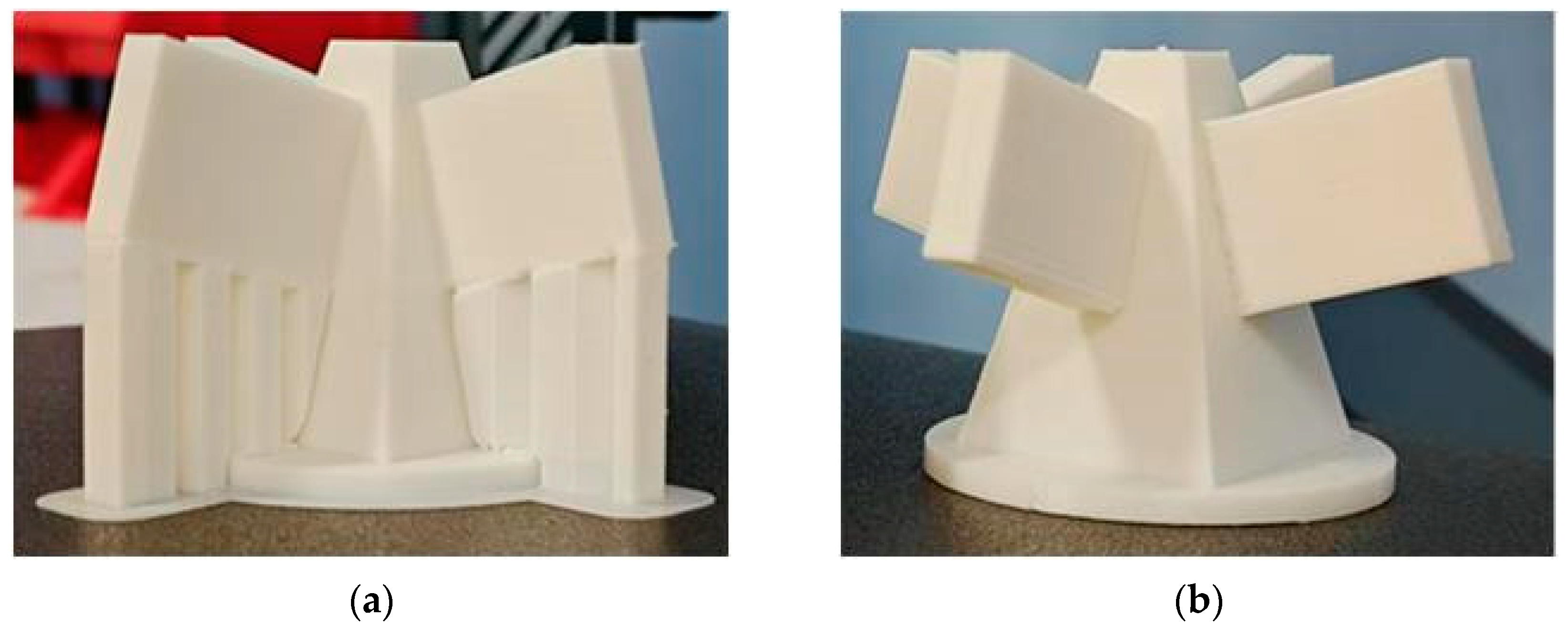
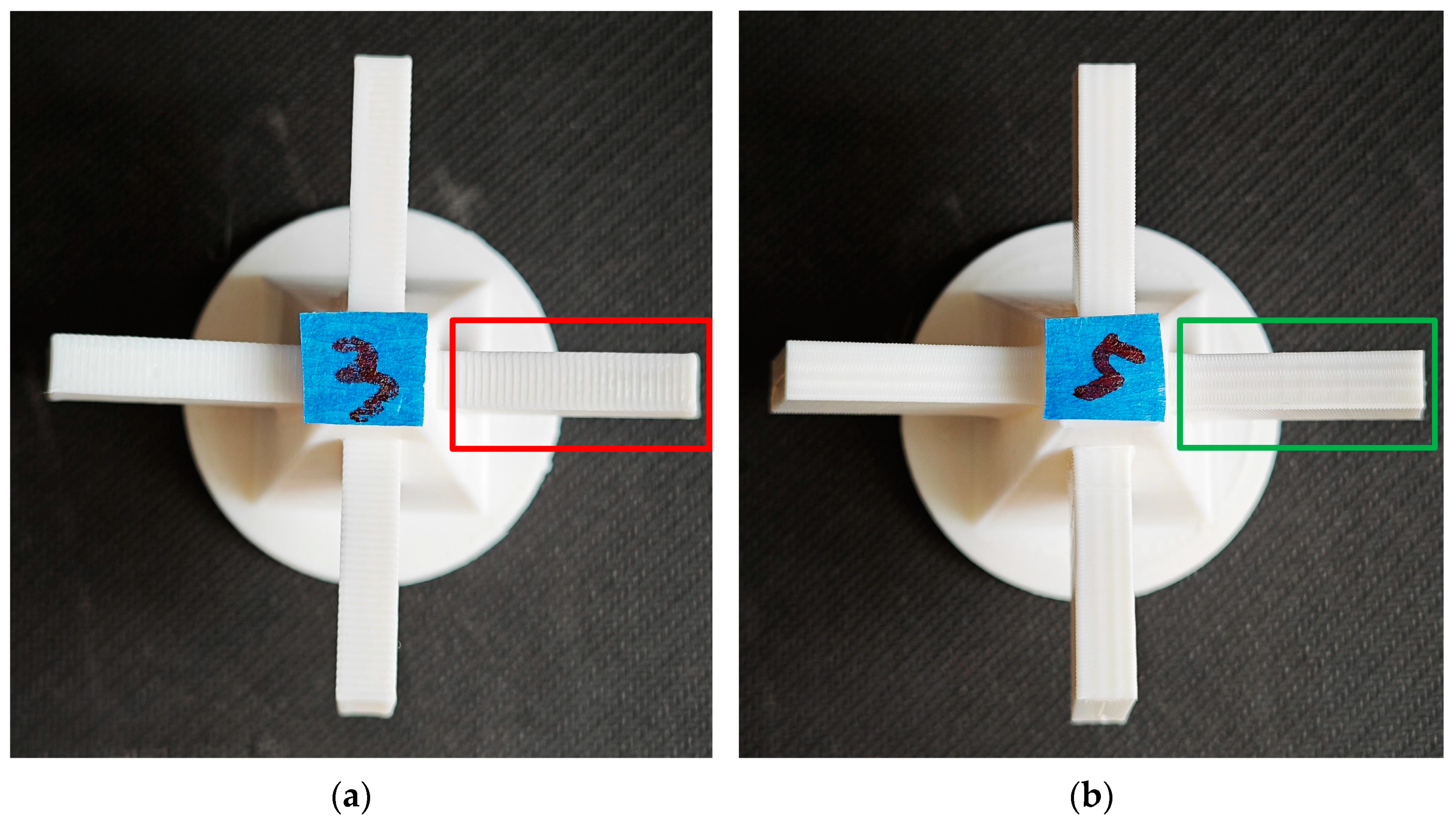
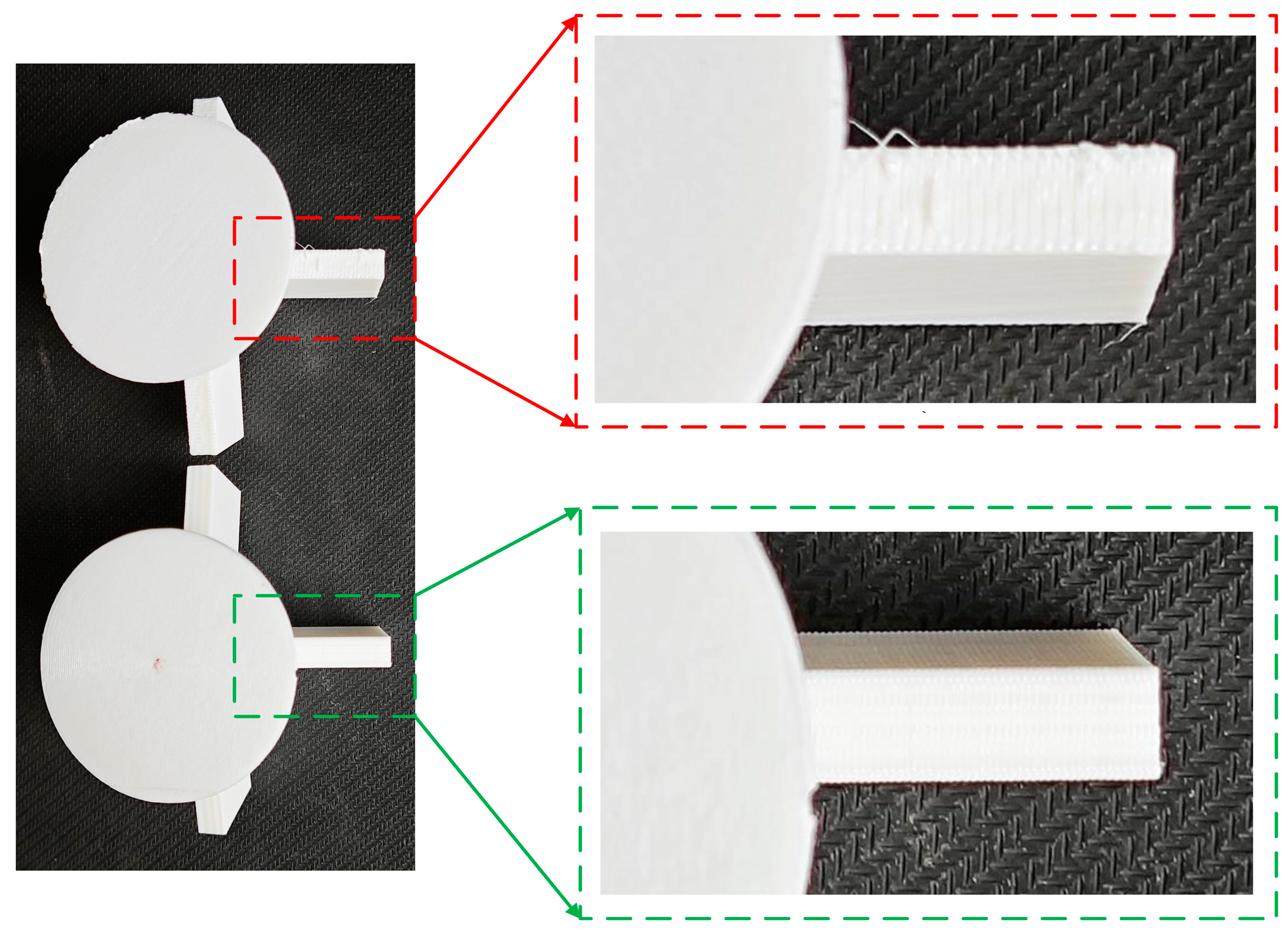
When printing overhanging parts with traditional additive manufacturing (AM) equipment, it is necessary to add support structures under the overhanging structure. The process of printing support structures not only wastes materials, but also increases the manufacturing time. Therefore, in order to reduce or eliminate the need for support structures when printing parts with overhanging structures, such as propellers, a five-axis support-free printing method for overhanging parts is proposed for one of the most commonly used processes involving AM technology: fused deposition modeling (FDM). By offsetting the surface of the basic part, the offset surface is intersected with the model to be printed to obtain the spatial surface-layered curve. The contour offset method for the spatial curve is used to obtain the printing path, and continuous path planning is performed on it. While the presented method is targeted specifically at this ideal overhanging part, physical experiments on five-axis FDM equipment are performed. Compared with the traditional three-axis AM method, the time taken to print parts using this support-free five-axis AM method is shortened by 13.76–26.93%, and the printing material required is reduced by 17.24–29.29%. The experimental results show that this method realizes support-free printing of overhanging parts with the five-axis AM equipment, which not only saves materials and time consumed during part of the printing, but also improves the surface quality of the parts.
Keywords: additive manufacturing; overhanging parts; support free; five axis; continuous path planning additive manufacturing; overhanging parts; support free; five axis; continuous path planning