1. Introduction
Suspension systems, as a core subsystem in vehicle dynamics, directly impact the vehicle’s dynamic performances [
1,
2]. Active suspension systems utilize actuators to generate control forces that maintain optimal dynamic tire loads, enhancing handling stability and steering precision. These systems also improve ride comfort and operational stability while enabling dynamic coupling control between sprung and unsprung masses across various operating conditions, establishing active suspensions as a critical direction in modern automotive technology development [
3]. Among the various implementation approaches for active suspensions, the Active Suspension Electro-Hydraulic Servo Actuator (ASEHSA) has become a key actuation component due to its benefits of large output force, rapid response, and high power density [
4,
5,
6,
7].
The fundamental electro-hydraulic servo actuator represents a typically nonlinear, time-variant, and strongly coupled system. Dynamic errors primarily stem from unmodeled dynamics, parameter variations, external load disturbances, and notable time delay characteristics. Among these, the intrinsic time delay is particularly significant. Time delay not only introduces phase lag and elevates tracking inaccuracy, more critically, reduces system stability and may even induce instability and oscillatory behavior [
8,
9,
10,
11,
12]. This has emerged as a primary constraint on further advances in control performance.
The performance of an active suspension system, which maintains vehicle stability by absorbing road excitations through EHSA-controlled motion, is fundamentally determined by the latter’s dynamic response speed and control accuracy [
13]. However, in practical control implementations, factors such as computational latency and signal transmission delays introduce time delays [
14,
15]. These issues can readily lead to a mismatch between the controller commands and the actual motion of the actuator, thereby significantly degrading the control accuracy and system stability of the suspension system. Furthermore, certain difficult to model dynamic characteristics of the ASEHSA system, such as the nonlinear friction between the piston and cylinder and the time-varying orifice flow characteristics of the servo valve, further complicate the design of traditional controllers [
16,
17]. Therefore, achieving high-precision position tracking for the ASEHSA under complex disturbance conditions has become a central challenge requiring urgent resolution in active suspension control [
18].
To enhance performance, various advanced model-based control strategies have been developed, including Active Disturbance Rejection Control (ADRC) [
19,
20,
21], Model Predictive Control (MPC) [
22,
23], and Linear Quadratic Regulator (LQR) [
13,
24,
25]. These approaches generally depend on precise system models for control law design. While these techniques can achieve theoretically satisfactory outcomes, their effectiveness heavily relies on an accurate mathematical representation of the controlled plant. Developing precise models for electro-hydraulic servo systems remains particularly difficult, and any model inaccuracies can lead to substantial performance deterioration of the controller, compromising robustness [
4]. As an emerging control strategy that is fundamentally driven by the expected goals of the controlled system and actual output, Model-Free Adaptive Control (MFAC) does not depend on a precise mathematical formula of the actual system and exhibits powerful adaptability, which makes it a highly attractive solution [
26,
27]. Its control law, built upon the online estimation of a “pseudo partial derivative”, is notable for a simple structure, low computational burden, and exceptional robustness, presenting considerable promise for applications in nonlinear system control [
28,
29]. However, traditional model-free control strategies still exhibit certain limitations in handling system time delays and data disturbances: on one hand, these methods often employ explicit compensation mechanisms for system time delays, which can easily increase computational complexity and have limited compensation accuracy; On the other hand, the design of the control law often does not fully consider the dynamic characteristics of the tracking error, making it difficult to achieve an ideal balance between overshoot and settling time, thus affecting dynamic response performance [
30].
Traditional model-free control strategies are widely adopted due to their simple structure and ease of engineering implementation [
30,
31,
32,
33]. Nevertheless, when dealing with the system’s strong nonlinearities and time delays, their fixed controller structures and parameters typically cannot maintain optimal performance across all operating conditions, resulting in limited effectiveness in suppressing dynamic errors. The progress of intelligent optimization algorithms has unlocked fresh potential for the calibration of controller parameters. In recent times, control strategies built upon intelligent optimization algorithms have attracted considerable interest in research on suspension systems [
5,
34,
35]. Zhang et al. optimized a fuzzy PID controller by incorporating the Genetic Algorithm (GA), thereby markedly enhancing the driving comfort of air suspension systems [
36]. Li et al. designed a double-pendulum active suspension system and optimized a fuzzy PID controller via Particle Swarm Optimization (PSO), showcasing efficient suppression of road disturbances [
34]. Dangor et al. proposed a PID control method via the Differential Evolution (DE) algorithm, and the results indicated that the active suspension system adopting this strategy attained better performance in contrast to those utilizing PID controls optimized by PSO and GA [
37]. The PSO algorithm is widely used due to its straightforward structure and effectiveness in addressing optimization challenges in multi-dimensional nonlinear systems [
38]. Nevertheless, the traditional PSO algorithm employs a fixed inertia weight and lacks the ability to modify boundary optimization values, making it susceptible to local or boundary optima when tackling complex optimization tasks [
39,
40]. Therefore, it is crucial to refine the PSO algorithm so as to boost its optimization capability.
Tackling these shortcomings, this paper focuses on researching high-performance position tracking control of the ASEHSA under conditions of system time delays. The main contributions are as follows:
(1) A 1/4 active suspension system model was developed using AMESim 2021, and the state equations for the servo-valve-controlled hydraulic cylinder were formulated. This study defined the theoretical relationships among key ASEHSA parameters, such as hydraulic cylinder piston displacement and velocity, rodless and rod chamber pressures, and servo valve spool displacement and velocity.
(2) Under the MFAC framework, the time delay treatment method was redesigned by converting the explicit time delay expression into an implicit form. Additionally, a Model-Free Adaptive Control with Dynamic Error Differentiation (DE-MFAC) controller was designed via performance criterion optimization. This approach effectively reduces system response attenuation, achieves a dynamic balance between settling time and overshoot, and avoids the need to build a specific system model.
(3) Through Simulink 2023b—AMESim 2021 co-simulation, the effectiveness of the Improved Particle Swarm Optimization (IPSO) algorithm in tuning the EHSA’s DE-MFAC controller parameters was verified under time delay conditions of 0.05 s and 0.02 s. This research provides a credible reference for the engineering implementation of the proposed method in ASEHSA and analogous industrial process control systems.
2. Modeling of the Active Suspension Electro-Hydraulic Servo Actuation System
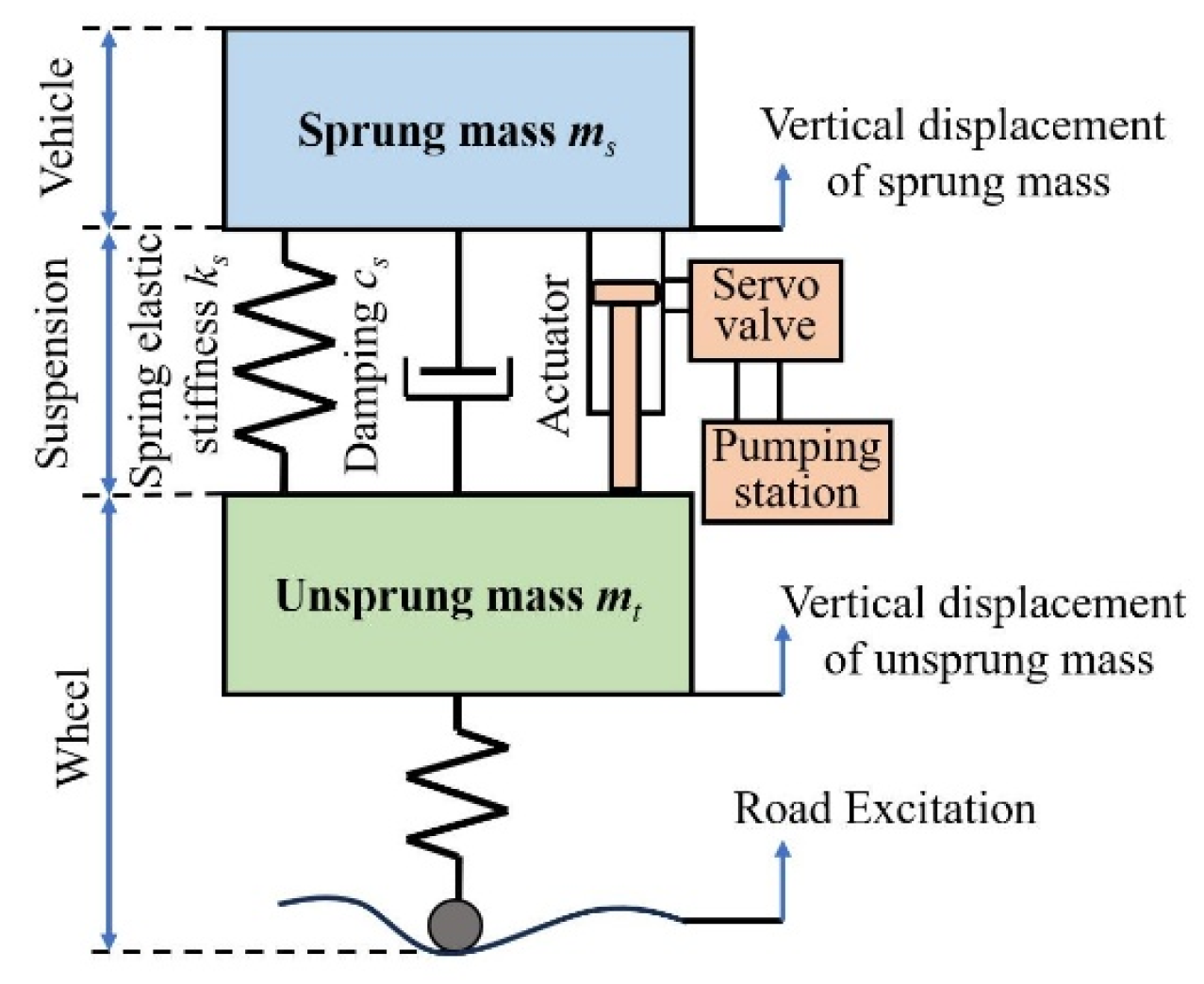
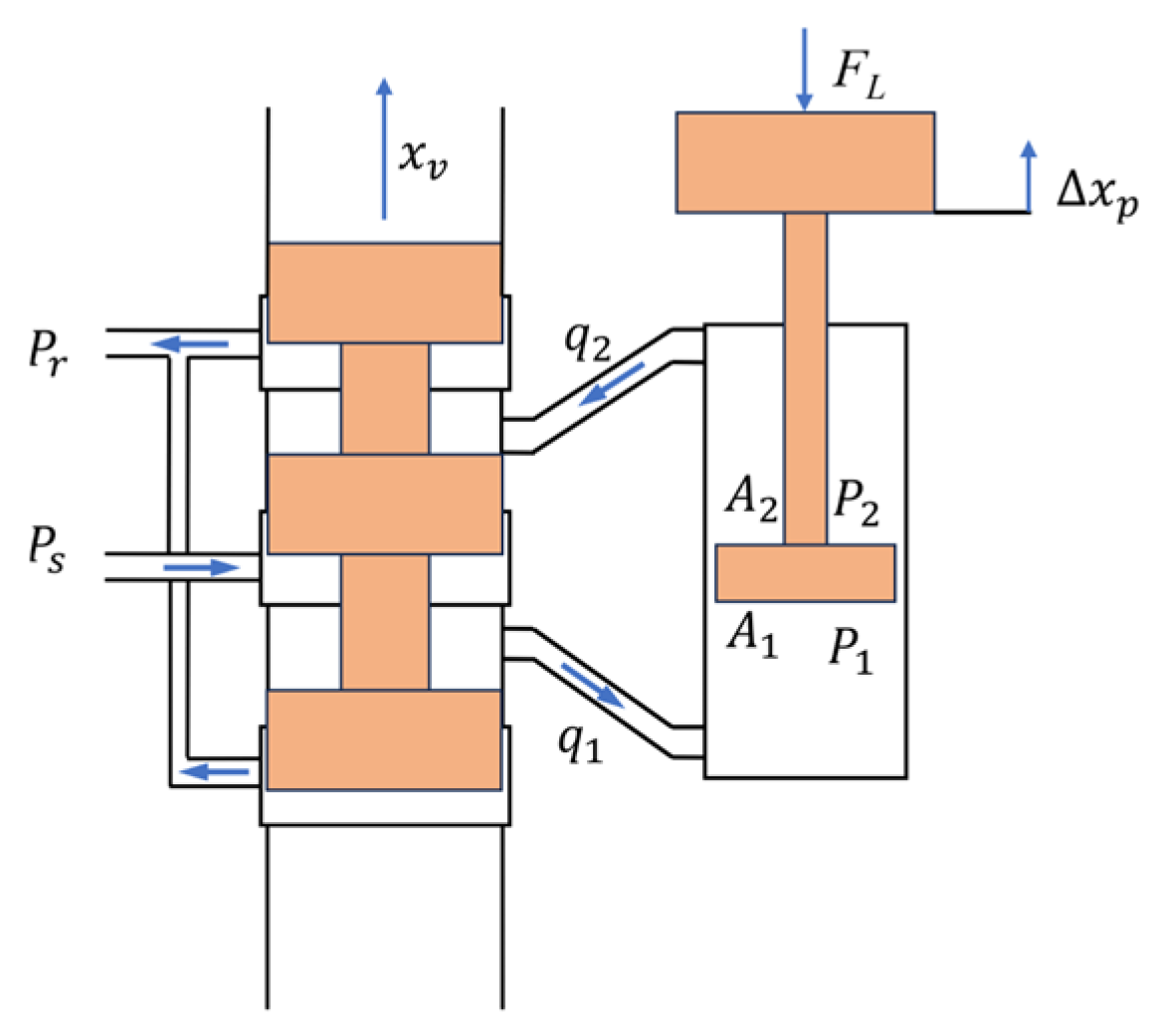
Figure 1 depicts a conventional quarter-vehicle active suspension system, with the electro-hydraulic servo actuator installed between the sprung and unsprung masses. This actuator typically uses a three-position four-way servo valve combined with an asymmetric hydraulic cylinder. Its fundamental operating principle is shown in
Figure 2. During the working process, the servo valve obtains electrical control signals, causing the spool to generate corresponding displacement and thus guiding hydraulic fluid into the rod chamber and rodless chamber of the hydraulic cylinder, respectively. By adjusting the fluid pressure in both chambers, a required pressure difference is generated, which drives the hydraulic cylinder’s piston rod to produce axial linear displacement. This enables precise piston position control, ultimately achieving actuator output motion.
In this research, the servo valve is modeled as a second-order system, with its dynamic characteristics expressed by the following equation:
where
is the spool position of the servo-valve (the spool displacement of the servo valve),
denotes the input electrical signal to the servo valve;
is the proportional gain of the servo-valve (Servo Valve Gain);
is the natural frequency of the servo valve,
is the damping ratio of the servo valve.
Flow Rates at the Servo Valve Inlet and Outlet:
denotes the system supply pressure, and
stands for the system return pressure;
and
indicate the pressures in the rodless chamber and rod chamber, respectively;
represents the flow coefficient of the servo valve,
denotes the area gradient of the servo valve spool;
stands for the density of the hydraulic oil.
The flow rates of the rod chamber
and rodless chamber
of the hydraulic cylinder are, respectively, as follows:
,
respectively denote the effective areas of the hydraulic cylinder’s rodless chamber and rod chamber;
signifies the change rate of the hydraulic cylinder’s piston displacement;
and
denote the internal and external leakage coefficients of the hydraulic cylinder, respectively;
is the effective bulk modulus,
and
: (If travel limits are considered, the volumes can be bounded by their values near the extreme positions).
where
and
denote the initial volumes of the rodless chamber and rod chamber, respectively. Since the ASEHSA works vertically to support the vehicle body weight, the force balance equation is formulated as:
where
is the combined mass of the vehicle body and the piston,
is the viscous damping coefficient,
is the friction force,
is the gravitational acceleration,
is the external load force. In the quarter-vehicle active suspension system, the spring and damping forces between the sprung mass and unsprung mass, are considered components of the external load force
, the external load force
is given by:
where
is the spring stiffness,
is the damping coefficient,
is the external load force.
The piston displacement, piston velocity, pressure in the rodless chamber, pressure in the rod chamber, servo valve spool displacement, and servo valve spool velocity of the hydraulic cylinder are selected as the state variables:
,
,
,
,
,
. Based on Equations (1) to (6), the state-space equations for the servo-valve-controlled hydraulic cylinder system are formulated as follows:
Among them,
.
3. Control Algorithm Design
3.1. System Model with Time Delay
Given a desired output trajectory
, The control objective is to determine the relevant input electrical signal for the servo valve, which guarantees that the tracking error between the system output and the desired trajectory asymptotically converges to zero as time elapses. As per Equation (10), the electro-hydraulic servo actuation system belongs to the class of conventional single-input single-output nonlinear systems. Taking into account the delay characteristics of the control signal, Equation (10) may be expressed as the subsequent discrete-time nonlinear time delay system:
In this equation,
y(
k) and
u(
k) represent the output and input of the electro-hydraulic servo actuation system at the
k-th time step, while
denotes the system’s time delay constant. The system demonstrates an input time delay
, meaning the control signal
u(
k) applied at time step
k only becomes effective at time step
after actuator processing. This control signal lag relative to system output may negatively impact closed-loop system stability.
The electro-hydraulic servo actuation system operates under the following assumptions:
Assumption 1. Other than at finite time points, the nonlinear system function
exhibits continuous partial derivatives with regard to the system input signal .
Assumption 2. Aside from finite time points, the system fulfills the generalized Lipschitz conditions
, and ; Thus, the following inequality holds true:
Among them, is constant. Note 1: For electro-hydraulic servo actuation systems, these two assumptions are reasonable. Assumption 1 serves as a common prerequisite for controller design in typical nonlinear systems. Assumption 2 sets a constraint on the boundedness of the system’s input and output. In practical engineering systems, the input electrical signal to the servo valve remains constrained within a specific range, and the corresponding servo valve spool displacement is physically limited, ensuring the hydraulic cylinder’s actuation output remains bounded. Therefore, for systems satisfying these assumptions, the following lemma can be established:
Theorem 1. For a nonlinear system that meets Assumptions 1 and 2, and under the condition that , there exists a time-varying parameter referred to as the pseudo partial derivative (PPD) denoted by allowing the nonlinear system to be transformed into the following Compact Form Dynamic Linearization (CFDL) data model:where is bounded for all . Based on Theorem 1, the electro-hydraulic servo system may be transformed into a dynamically linearized form. Nevertheless, an analysis of Equation (13) shows that time delay remains in this linearized system. To resolve this, given that the system time delay
is known or observable with a defined maximum value. A discrete time delay
predictor can be incorporated to equivalently transform the original nonlinear system with input delay into a dynamically linearized system featuring an implicitly represented delay element. Defining
as the predicted state at time
based on measurements up to time delay
, we obtain:
where
is the predicted value of the variation
. The predicted state
can then be expressed as:
Combining Equations (13)–(15) yields:
As expressed in Equation (16), the equivalent dynamically linearized system contains no time delay parameters . Thus, the controller may be formulated on the basis of this equivalent system, which implies the control system can be constructed utilizing the predicted state.
3.2. Basic Model-Free Adaptive Controller
In the standard MFAC algorithm, the following control performance index is employed:
By incorporating Equation (15) into the performance criterion 16, calculating its partial derivative with respect to
, and equating the result to zero, the following control law is derived:
where
is the step size factor,
is the weighting factor;
is the desired output signal, the tracking error is defined as
.
Equation (16) shows that in practical control processes,
serves as a time-varying parameter, rendering it difficult to ascertain its exact value. Thus, the following cost function for pseudo partial derivative (PPD) estimation is proposed:
where
is the estimated value of
,
is a weighting coefficient. Based on the optimization condition
, the following estimation algorithm for the time-varying parameter can be derived:
Simultaneously, to improve the tracking performance of the PPD estimation algorithm for time-varying parameters, the following PPD reset mechanism is implemented:
where
represents the step-size coefficient,
is a vanishingly small positive constant,
denotes the initial value of
. Equations (19)–(21) establish the conventional CFDL-MFAC control framework, creating a closed-loop system that achieves dynamic linearization and adaptive control without relying on an explicit plant mathematical model.
3.3. Dynamic Error-Improved Model-Free Adaptive Controller
Actuator constraints, system inertia, and time-lag effects in electro-hydraulic servo systems exacerbate the intrinsic trade-off between response speed and overshoot in the CFDL-MFAC control strategy. Specifically, although larger control parameters
can improve system response speed to some degree, they substantially raise overshoot and extend settling time. In contrast, smaller parameters hinder the system’s ability to promptly follow the reference output, resulting in degraded control performance. To resolve this problem, this paper introduces a DE-MFAC strategy that alleviates this conflict by incorporating the effect of tracking error rate change, thus increasing MFAC structure flexibility. The revised control performance criterion is defined as:
where
serves as a weighting coefficient to modulate the impact of tracking error variation rate. When
, the control performance criterion Equation (22) becomes equivalent to the conventional criterion Equation (17). Following analogous derivation steps as in traditional MFAC by substituting Equation (16) into criterion Equation (22) and solving the partial derivative with respect to
set to zero, the DE-MFAC control law is derived as:
Note 2: The DE-MFAC method depends solely on the real-time input-output (I/O) data of the controlled system, with no requirement for any dynamic modeling information. Moreover, through dynamic linearization and data-driven equivalent strategy, it accomplishes adaptive regulation of nonlinear systems.
3.4. Improved Particle Swarm Optimization Algorithm (IPSO)
Electro-hydraulic servo actuation system performance primarily depends on controller parameter tuning. In practical engineering, parameter configuration generally relies on accumulated expertise and experimental calibration. Additionally, practical control systems face constraints from controller computational capacity and data communication timing fluctuations, frequently resulting in time delay variations in system control output signals. Varying time delays necessitate distinct controller parameters to attain optimal performance, substantially restricting control effectiveness and algorithm portability across platforms in practical engineering applications. Current approaches dependent solely on empirical parameter adjustment prove inefficient and lack clear performance evaluation standards, rendering them difficult to implement in real systems with time-varying parameters or dynamic operating conditions.
The PSO algorithm, as an efficient iterative optimization technique, quickly identifies parameter combinations that achieve near-optimal controller performance by minimizing an objective function. In controller parameter adjustment, the objective function acts as a control performance evaluation metric, so its design directly influences parameter optimization effectiveness and practical applicability. However, when addressing optimization challenges involving complex structures, the standard PSO algorithm frequently fails to balance global exploration and local exploitation effectively, leading to inadequate convergence and a predisposition toward local optima. Enhancing its optimization performance requires corresponding algorithmic improvements to address these limitations.
3.4.1. Objective Function
In controller parameter optimization, the objective function constitutes the fundamental quantitative basis for assessing system control performance. A properly formulated objective function should comprehensively and precisely capture the system’s dynamic response characteristics, incorporating essential indicators such as response speed, stability performance, and tracking accuracy. For the position tracking control objective of electro-hydraulic servo actuators, and considering both time delay disturbances and the absence of standardized traditional parameter tuning methods, this research employs the Integral of Absolute Error (IAE) as the core objective function for the Improved IPSO algorithm to optimize controller parameters. The IAE effectively quantifies the cumulative deviation between system output and target trajectory. Lower IAE values correspond to superior tracking precision and enhanced disturbance rejection capability. This metric is mathematically defined as the time integral of absolute system error, expressed as follows:
where
denotes the difference between the desired signal and the output signal, i.e.,
.
As an integral-based performance measure, IAE comprehensively captures the cumulative error during the system’s complete dynamic response process, delivering a global assessment of both error magnitude and duration. This characteristic aligns well with control system requirements for high dynamic and steady-state precision. Moreover, IAE inherently penalizes overshoot and oscillatory behavior since deviations from the setpoint in either direction increase its value, naturally guiding parameter optimization toward smoother responses with reduced overshoot.
In computational implementation, IAE demonstrates excellent simplicity. Its formulation requires no differential operations, maintains a straightforward structure, and imposes minimal computational load. This enables efficient fitness evaluation during PSO iterations, substantially improving overall optimization efficiency.
3.4.2. Traditional Particle Swarm Optimization Algorithm
Within a D-dimensional target search space, a population (or swarm) of
n particles is defined. The position of the
i-th particle is denoted as
and its velocity as
. Each particle stores its own historical best position, known as the personal best
and has access to the swarm’s overall historical best position, known as the global best
. The velocity and position of each particle are updated according to the following equations:
Here, the parameters are: and denote the velocity and position, respectively, of particle in dimension at iteration ; is the inertia weight; and are non-negative learning factors (typically valued at 2); and , are random numbers uniformly distributed in [0,1].
Within the PSO algorithm, the boundaries of the feasible region for particle velocities and positions need to be predefined. If a particle breaches these predefined constraints during the iterative process, the boundary values are adopted as constraint limits. Subsequently, the current positions of the particles are fed into the objective function to update each particle’s personal best solution, the global best solution of the current population, and their corresponding fitness values.
The algorithm performs optimization by iteratively executing the update rules defined in Equations (25) and (26) and terminates when either the maximum number of iterations is reached or other convergence criteria are met. Upon termination, the algorithm outputs the obtained global best solution and its corresponding fitness value, thereby concluding the process. The pseudocode of the traditional PSO algorithm can be found in
Appendix A.1 (Algorithm A1).
3.4.3. Improvement Strategies for Particle Swarm Optimization Algorithm
In the traditional PSO algorithm, the inertia weight
is typically maintained as a constant. Research by Shi Y. et al. indicates that the inertia weight plays a critical role in balancing the global exploration and local exploitation capabilities of particles: a larger
enhances global exploration by allowing particles to traverse wider regions of the search space, while a smaller
strengthens local exploitation, thereby improving convergence accuracy. To achieve a more effective balance between the global exploration and local exploitation phases, this study proposes the following adaptive inertia weight update strategy:
where
denotes the maximum iterations,
the current iteration, and
,
the upper and lower bounds of the inertia weight. The proposed adjustment strategy progresses through three sequential stages: during the initial phase (
),
is fixed at
to promote global exploration; In the transitional phase (
), it nonlinearly decreases to
to shift the focus towards local exploitation; Finally, in the last phase (
), it remains at
to intensify local search and enable high-precision convergence near the optimum.
In the iterative process of the PSO algorithm, a particle may transgress the preestablished constraint bounds in one or more dimensions. The traditional PSO algorithm typically adopts a boundary absorption method, compulsorily resetting out-of-bounds positions to the corresponding boundary values. However, this method tends to reduce population diversity during early iterations, compromising the algorithm’s global search efficiency and potentially trapping the search in locally optimal or boundary-constrained solutions. To address these drawbacks, this study introduces a random reflection wall strategy for managing particle boundary violations: when a particle’s position in any dimension exceeds the boundary, it is not simply clamped to the boundary but is instead randomly redirected back into the feasible region. This mechanism helps preserve population diversity, prevents premature clustering of particles near boundaries, and strengthens the algorithm’s capacity to escape local optima. The specific strategy is defined as follows:
where
and
represent the upper and lower bounds of the
-th dimension for each particle, respectively, and
denotes a random number uniformly distributed in the interval [0,1]. If a particle exceeds the boundary of the feasible search region during the optimization process, it is reflected back into the feasible space. The reflection distance is proportional to the extent of boundary violation and incorporates a stochastic component. To prevent the particle from crossing directly to the opposite boundary after reflection, the velocity component in the corresponding dimension is reversed as part of the reflection strategy. The pseudocode of IPSO algorithm can be found in
Appendix A.2 (Algorithm A2).
3.5. Improving Particle Swarm Optimization with Multiple Coefficients in DE-MFAC
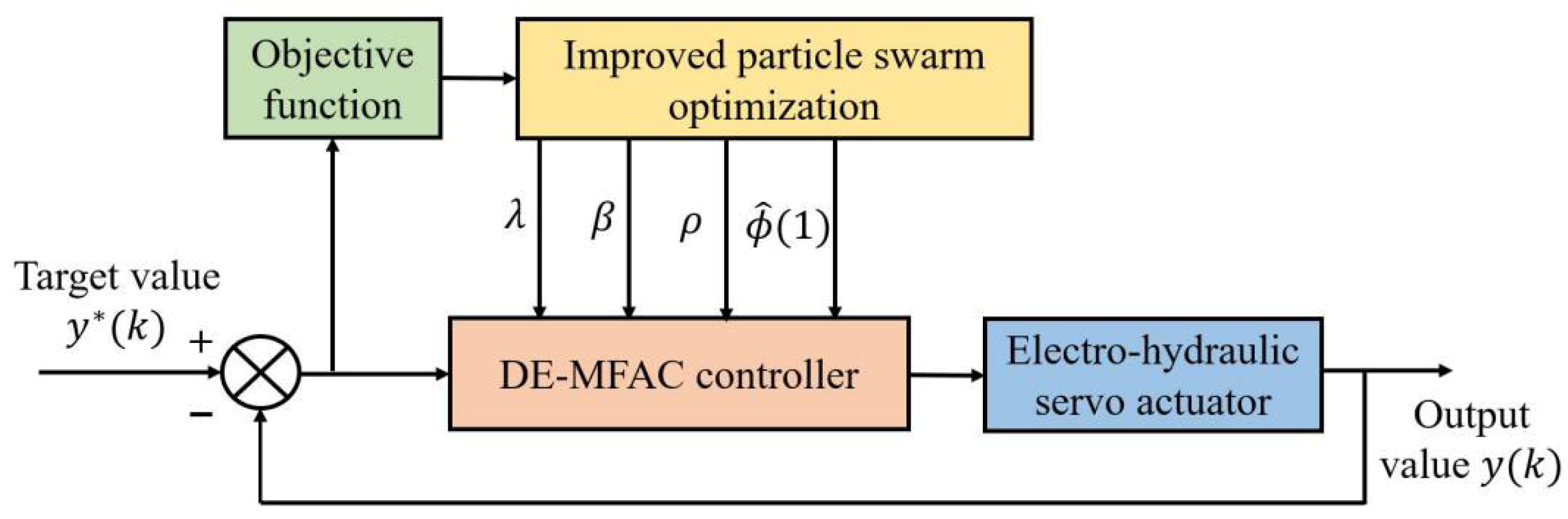
Figure 3 illustrates the parameter optimization mechanism for the DE-MFAC controller in the electro-hydraulic servo actuator adopting the IPSO algorithm. In this configuration, the deviation of the actual output signal from the desired signal serves as the input for the objective function, specifically
. The IPSO method is then applied to iteratively find the controller parameter set that minimizes the objective function value, thereby deriving the optimal controller parameters for system performance. To ensure a scientific and efficient optimization process, a systematic parameter sensitivity analysis was conducted prior to the iterative optimization. Within the feasible range of each tunable parameter (
,
,
,
,
,
) values were uniformly sampled. By varying only one parameter at a time while keeping others fixed, the influence of each parameter on system performance was quantitatively assessed using the Integral Absolute Error (IAE) as the metric. This analysis revealed that parameters
,
,
, and
have a substantially greater impact on the system output compared to others. Therefore, to balance optimization effectiveness with computational efficiency, these four parameters were selected as the optimization variables for the IPSO algorithm.
The primary procedures for optimizing the DE-MFAC controller via the IPSO algorithm are as follows:
Step 1: Set the algorithm control parameters
A 4-dimensional target search space is constructed using the coefficients , , , The position of the i-th particle is denoted as and its velocity as ,The four dimensions correspond to , , , , respectively, with the position constraints set as follows , , , , The velocity constraints are uniformly set to the range . Set the swarm size to , the maximum number of iterations to , the maximum and minimum inertia weights to . The tunable parameters of the PID controller are the proportional gain , the integral gain , and the derivative gain ; The tunable parameters of the Model-Free Adaptive Control (MFAC) include the step-size factor , the weighting coefficient , and the initial value of the pseudo partial derivative . The parameter search space is determined through multiple experiments to ensure coverage of potential optimal values while avoiding unreasonable areas, thereby improving optimization efficiency and reliability of results.
Step 2: Construct the Fitness Function
The fitness function assesses the quality of each particle’s position within the swarm. In this work, the fitness function is explicitly defined as the objective function .
Step 3: Particle Initialization
At the initialization phase of the algorithm, the position and velocity of each particle in the swarm are randomly allocated initially. Subsequently, the fitness value of each particle is calculated. Based on the obtained fitness values, the personal best position of each particle is determined, and the global best position of the whole swarm is then confirmed.
Step 4: Iterative Optimization Search
Calculate the inertia weight via Equation (27), then derive the velocity and position of all particles through Equations (25) and (26). For particles out of bounds, adjust their positions and velocities in accordance with Equation (28). The fitness values of all particles are evaluated, followed by updates to each particle’s personal best position and the swarm’s global best position.
Step 5: Output the Optimal Solution
Repeat Step 4 until the iteration count exceeds the maximum . The optimal particle position is then identified and output, concluding the algorithm.
4. Analysis of Simulation Results
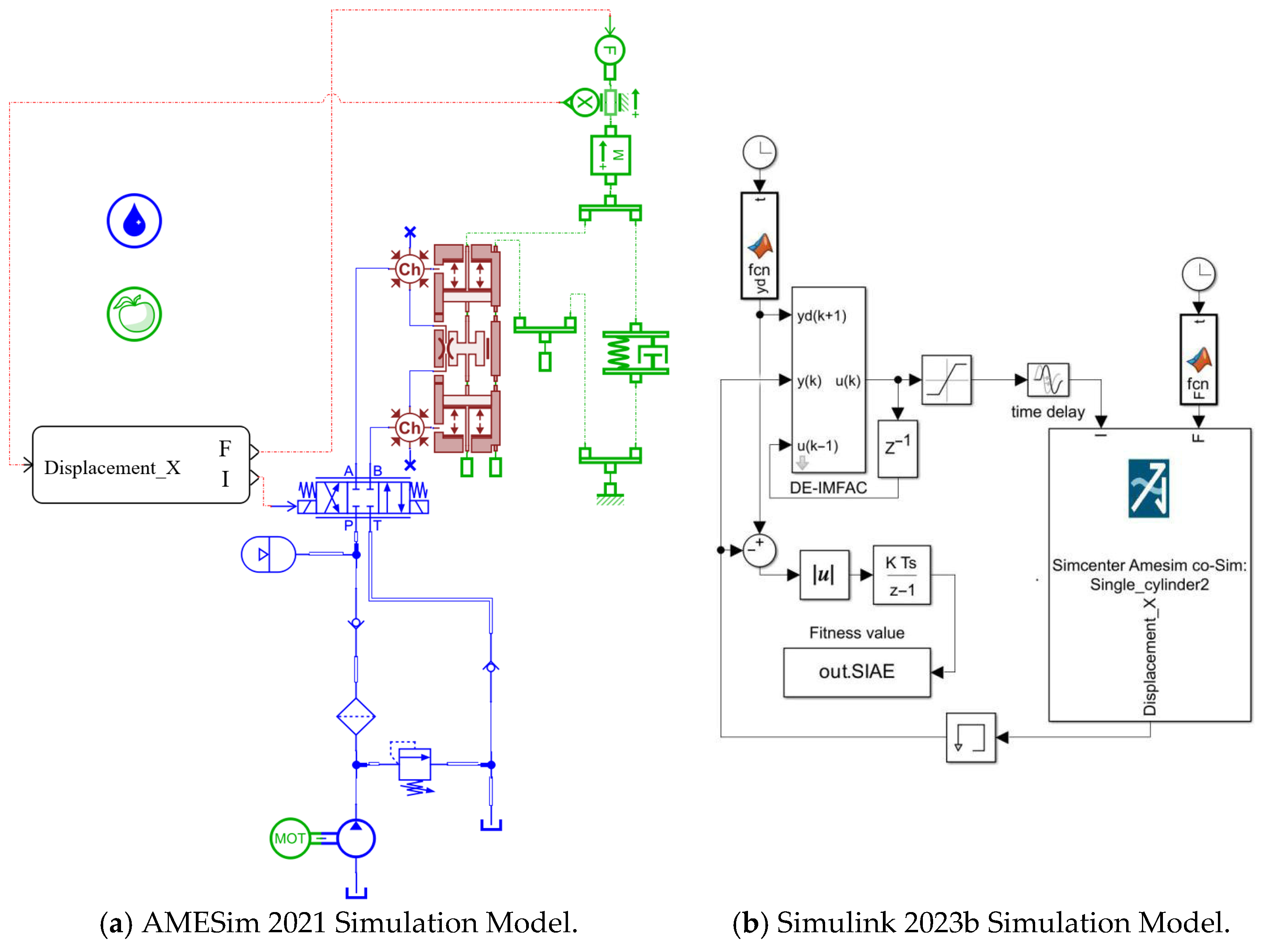
This study assesses the control performance of the presented DE-MFAC controller in an electro-hydraulic servo actuation system via a co-simulation method combining MATLAB-Simulink 2023b and AMESim 2021. The architecture of the co-simulation model is illustrated in
Figure 4. The controller implementation utilizes Simulink 2023b’s discrete solver with a sampling time of 0.0001 s. The electro-hydraulic servo actuation system is constructed in AMESim 2021, with detailed parameter settings listed in
Table 1. To approximate real operating conditions, the wheel and vehicle body load are equivalently modeled as an external load force applied to the suspension actuator. The load force is configured as
, while the combined mass of the vehicle body and piston is set to
. The system time delay constants are specified as
and
respectively. For comprehensive performance assessment of the DE-MFAC controller and to prevent single-test-signal bias, this investigation employs a composite reference signal integrating square and sinusoidal waveforms as the desired output
, thus enabling examination of the controller’s response characteristics under varied dynamic excitations.
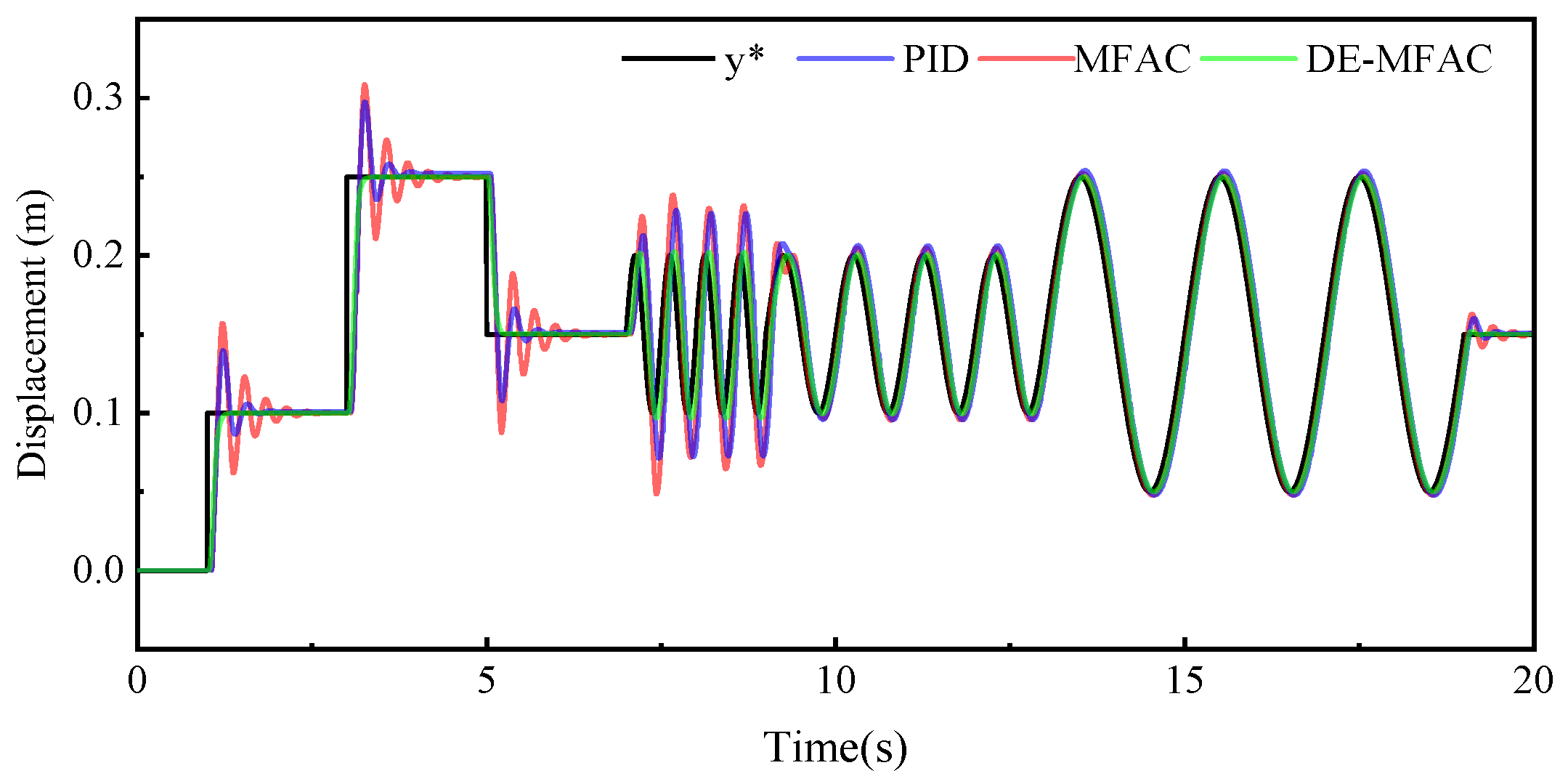
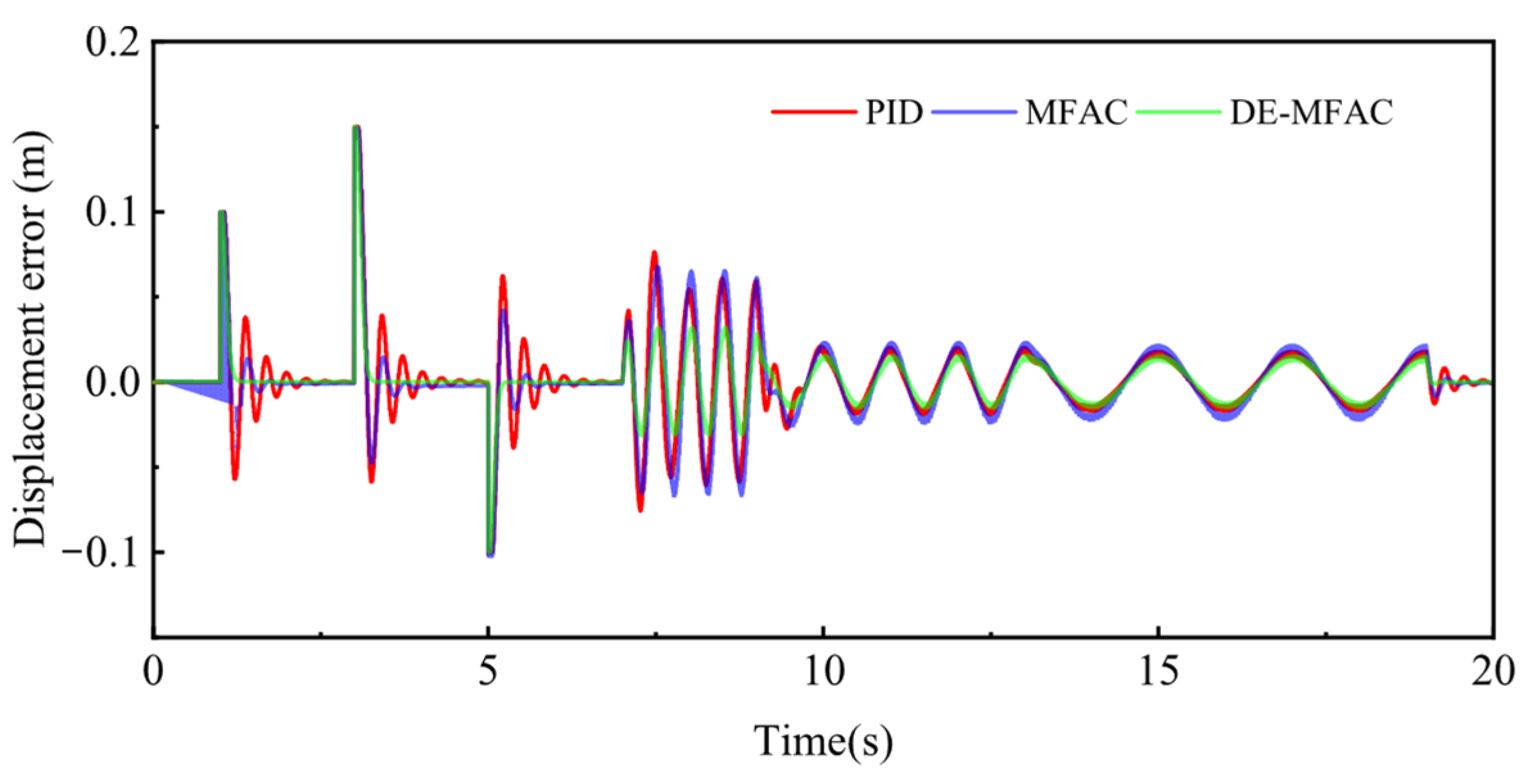
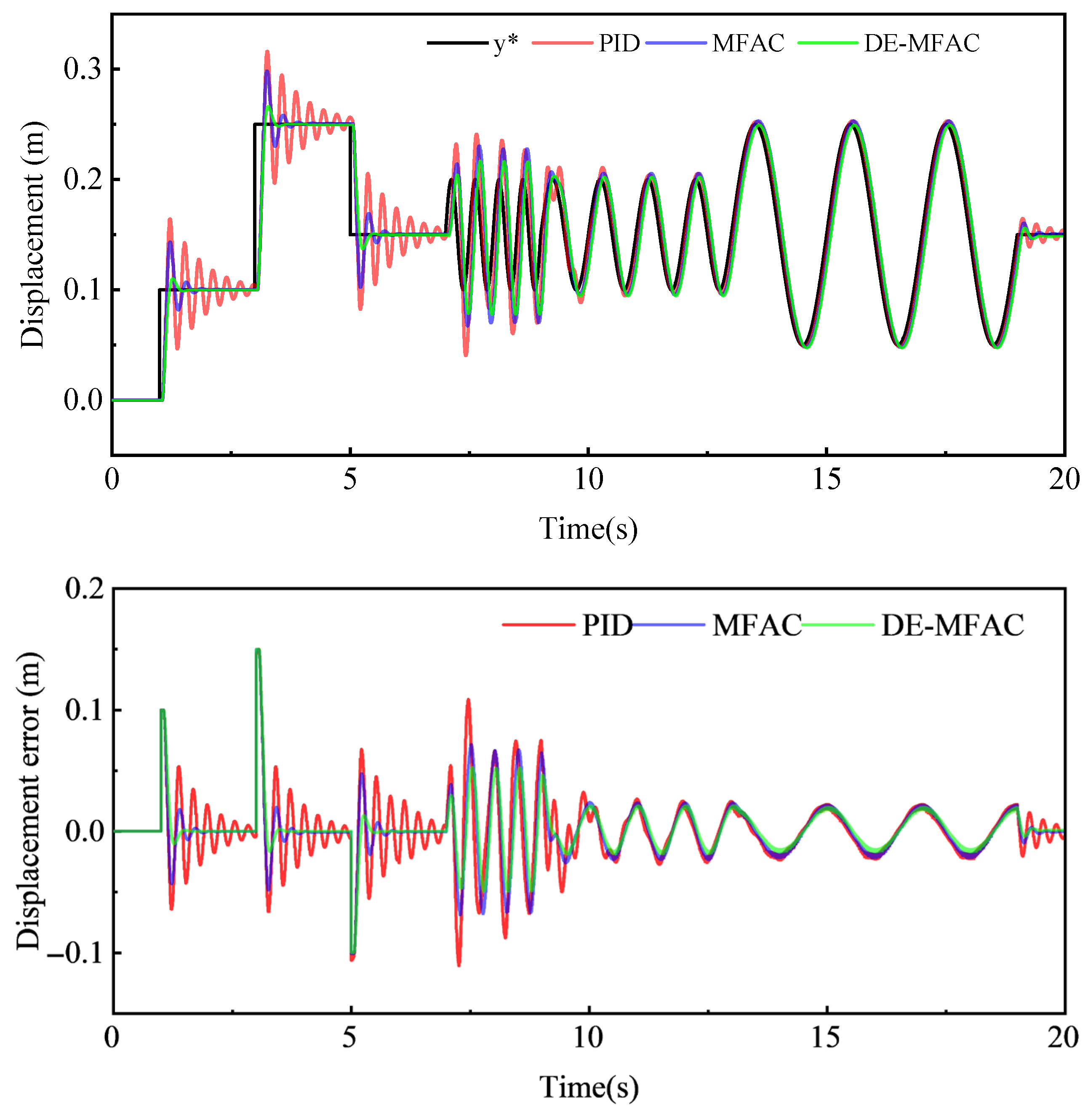
This study adopted PID control, MFAC, and DE-MFAC controllers to conduct simulations of position control for the active suspension electro-hydraulic servo actuator with time delays of 0.05 s and 0.02 s.
Figure 5 and
Figure 6 present the reference signal tracking results under 0.02 s and 0.05 s delays, respectively. The findings reveal that all three controllers allow the actuator to track the reference signal under both delay conditions, though the DE-MFAC controller exhibits substantially smaller tracking errors. For the quantitative assessment of control performance, the Integral of Absolute Error (IAE) is formulated as:
Within the defined reference output signal, the time intervals 0–3 s, 3–5 s, and 19–20 s correspond to ascending step signals, while the 5–7 s interval represents a descending step signal. For step signal tracking control, overshoot and settling time serve as standard metrics for evaluating control performance. The simulation results in
Figure 5 and
Figure 6 reveal that across different step signals, The DE-MFAC controller exhibits notably superior performance in both overshoot and settling time in comparison with both the IPSO-optimized PID controller and the MFAC controller. This confirms that DE-MFAC possesses superior dynamic control characteristics.
The reference output signal comprises 0.25 Hz (7–9 s), 0.5 Hz (9–13 s), and 1 Hz (13–19 s) sinusoidal waveforms, concluding with a 1 s step signal (19–20 s). As illustrated in
Figure 5 and
Figure 6, simulation results confirm that the DE-MFAC controller delivers superior control performance and higher tracking precision in contrast to both the PID and MFAC controllers, while simultaneously reducing the lag effect induced by system time delays on control output.
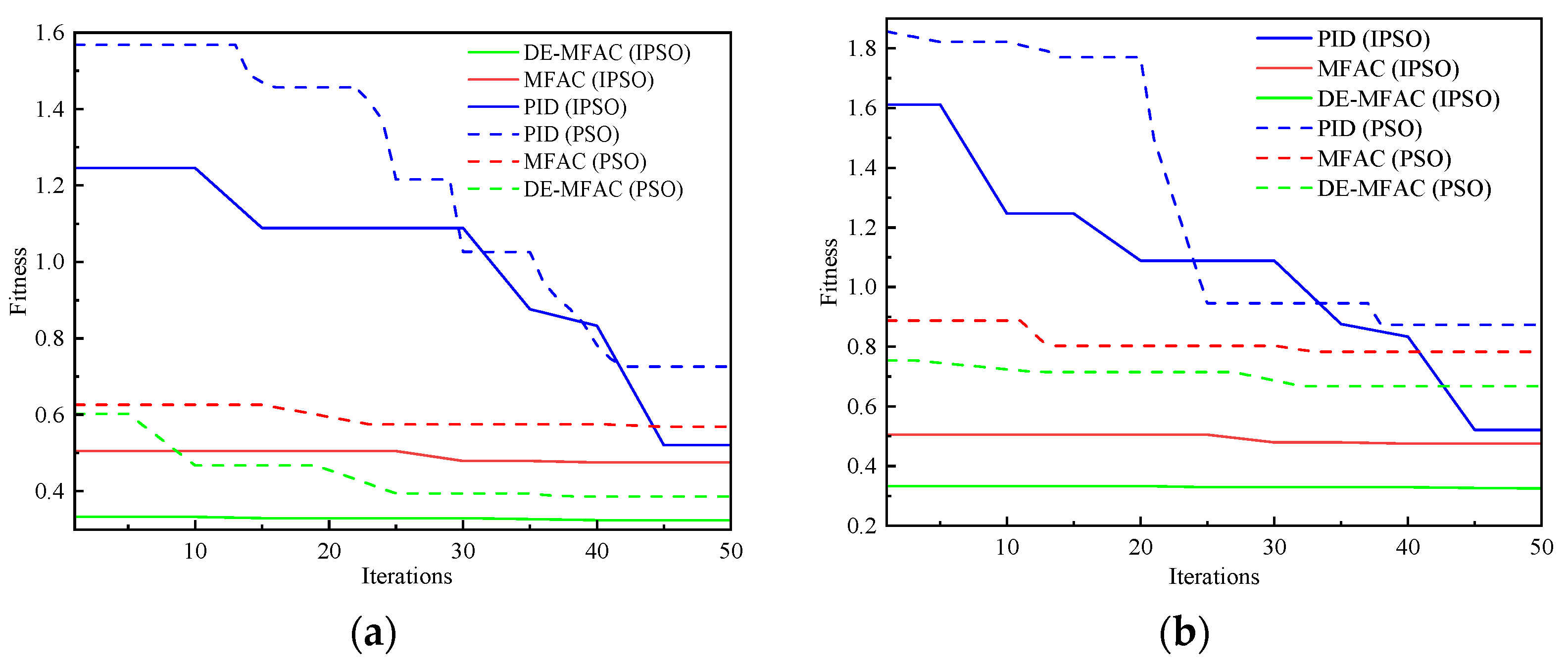
Figure 7a,b illustrate the fitness function values of the particle swarm when the IPSO algorithm is employed to optimize the traditional PID controller, the fundamental MFAC, and the dynamic error-enhanced MFAC under the time delays of 0.02 s and 0.05 s, respectively. The findings indicate that under varying time delays, the DE-MFAC curve reaches a stable state sooner, and its final steady-state fitness value is notably reduced compared to those of MFAC and PID. Moreover, the DE-MFAC response curve displays minimal overshoot, rapid settling, and is virtually oscillation-free. In addition, under the same controller, the final fitness value optimized by IPSO is significantly lower than that of PSO. This indicates that the IPSO algorithm has superior optimization capabilities compared to the PSO algorithm.
5. Conclusions
To address the limitations in control performance resulting from system time delays and nonlinear unmodeled dynamics in the Active Suspension Electro-Hydraulic Servo Actuator (ASEHSA), this study presents a DE-MFAC controller that incorporates Dynamic Error Differentiation (DE) and an implicit time delay handling mechanism into the Model-Free Adaptive Control (MFAC) framework. Meanwhile, by optimizing the inertia weight adjustment mechanism and the boundary search strategy, an Improved Particle Swarm Optimization (IPSO) algorithm is proposed, which effectively overcomes the limitation of the traditional Particle Swarm Optimization (PSO) prone to converging to local or boundary optima. Multi-parameter tuning for the DE-MFAC controller is achieved via this IPSO algorithm. This integrated method not only markedly mitigates the adverse impact of unmodeled dynamics and system time delays on control performance but also eliminates the dependence of traditional control strategies on modeling precision.
In this study, a 1/4 active suspension electro-hydraulic servo actuation system model is built via AMESim 2021. A composite signal composed of square waves and sine waves acts as the desired output. Under two typical time delay scenarios (0.02 s and 0.05 s), to reduce subjective bias in parameter selection and ensure the fairness of comparison, the proposed IPSO algorithm is adopted for the unified parameter optimization of three controllers: PID, MFAC, and DE-MFAC, following which Simulink 2023b—AMESim 2021 co-simulation is carried out to verify the effectiveness. The results indicate that all three IPSO-optimized controllers are capable of effectively achieving position tracking of the ASEHSA, with the DE-MFAC controller delivering the optimal performance, presenting significant advantages in reducing tracking errors and balancing settling time with overshoot. This fully verifies the effectiveness of the proposed control strategy, the time delay handling mechanism, and the IPSO algorithm.
Future research will validate the method on a physical ASEHSA platform, assess its robustness under diverse operating conditions and hardware configurations, and broaden its application to other nonlinear time delay industrial systems.




 ,
,