Article

An Adaptive Preload Device for High-Speed Motorized Spindles for Teaching and Scientific Research


School of Mechanical Engineering, Hebei University of Science and Technology, Shijiazhuang 050018, China
*
Author to whom correspondence should be addressed.
Actuators 2025, 14(12), 591; https://doi.org/10.3390/act14120591 (registering DOI)
Submission received: 27 October 2025 / Revised: 25 November 2025 / Accepted: 2 December 2025 / Published: 3 December 2025
(This article belongs to the Section High Torque/Power Density Actuators)

Abstract

This study focuses on an experimental device for the adaptive adjustment of the preload of high-speed motorized spindles. Firstly, based on Hirano’s criterion, the optimal preload for bearings at different rotational speeds was determined, and an adaptive preload adjustment mechanism was developed, with its accuracy experimentally validated. Secondly, the optimal lubrication conditions were obtained by a single-factor experiment. Then, the vibration characteristics under different preload conditions were explored, and the axial displacement variations were analyzed across a range of rotational speeds. Finally, the temperature rise in the bearings with the speed at the constant preload force and the optimal preload force were compared. The results demonstrated that the adaptive preload adjustment device outperformed the constant preload application. In teaching practice, this study enhanced students’ systematic understanding of the adaptive preload adjustment process in motorized spindles, promoted the integration of theoretical knowledge with practical application, and strengthened their learning interest. In addition, this device can provide experimental equipment for studying the performance of high-speed motorized spindles and bearings in scientific research.

1. Introduction

High-speed motorized spindles, as core components of CNC machine tools, are pivotal in the advancement of modern manufacturing technology [1,2]. The preload of the motorized spindle is one of the key factors affecting its performance [3,4]. The preload can reduce the clearance between the rolling element and the rings’ raceways of the bearing, so as to suppress the vibration of the motorized spindle under high-speed rotation and the relative sliding between the rolling element and the rings [5]. However, in the principal teaching, such as Mechanical Product Design and Comprehensive Practice in Mechanical Engineering, it is found that students have difficulty in understanding the interactions between the parts of the motorized spindle and cannot fully grasp the importance of the adjustment of the preload for the high-performance work of the motorized spindle. In terms of scientific research, most studies focus on the performance of bearing–rotor systems under constant preload force, neglecting the influence of preload force on the performance of motorized spindles under different operating conditions. In fact, excessive preload will aggravate the friction between the rolling element and the rings, and then increase the friction torque, which may eventually lead to a reduction in bearing life and even the failure of the motorized spindle [6]. Insufficient preload can still cause vibration in the equipment, reducing its stability [7]. Preload for a bearing system plays a vital role in minimizing vibrations and ensuring operational stability [8]. Therefore, the research on an adaptive preload motorized spindle not only conforms to the development trend of CNC machine tools but also reduces production costs and resource waste.
Scholars have conducted extensive research on the intelligent adjustment and compact development of preload force in motorized spindles. For example, Razban [9] and Kim [10] successively proposed and improved the centrifugal force preload mechanism and eccentric preload mechanism. However, both mechanisms have high noise problems, and the variation law of preload force is not ideal; it is only applicable to a certain speed range. Hu [11] developed an external piezoelectric brake preload mechanism, which has the advantages of fast response speed, strong practical control ability, and reduced internal temperature rise. On the other hand, the device extends the overall length of the motorized spindle and reduces the stiffness of the structure. Meanwhile, these designs are not entirely suitable for practical teaching and can not better suit for conducting scientific research activities.
To address this, a kind of motorized spindle with adaptive preload for practical teaching and scientific research is studied, which makes it easy for students to master the principle and process of promoting the high-performance operation of motorized spindles by adjusting the preload, further enriching experimental pedagogy and providing experimental equipment in scientific research. This study first designs an adaptive preload device capable of adjusting to varying spindle speeds, with experimental validation of its preload application accuracy. Second, the optimal lubrication conditions for bearing operation are determined, and the vibration characteristics of the motorized spindle under different preload forces are investigated. Finally, the causal relationship between preload forces and axial displacement is systematically explored, and the temperature rise comparisons between constant preload force and adaptive preload force configurations are analyzed. The application of adaptive preload motorized spindles in pedagogical teaching and scientific research is discussed to enhance student understanding of dynamic preload mechanisms.

2. Design of Adaptive Preload Motorized Spindle

2.1. Motorized Spindle and Preload Device

The structural diagram of the designed adaptive preload motorized spindle as an experimentation device is illustrated in Figure 1. The front and rear bearings of the motorized spindle are 7003 angular contact ceramic ball bearings with an initial contact angle of 15°, which are lubricated via an oil–air lubrication system. The material of the inner and outer rings of the bearing is GCr15, the material of the ball is Si3N4 engineering ceramic, and the material of the cage is PEEK. The inner ring of the bearing is interference fit with the spindle and fastened with a locking nut. The preload adjustment device is located at the end of the motorized spindle. During the operation of the motorized spindle, the preload force is adjusted in real time by the preload device, the front bearing group is fixed, and the outer ring of the rear bearing group moves slightly along the axial direction under the action of the preload device.
The adaptive preload device primarily consists of an adjusting motor, coupling, lead screw, lead screw nut, push rod, pressure disc, and pressure spring, as well as the preload disc, preload spring, linear bearing, rear bearing housing, and other parts of the original preload mechanism (see Figure 1). It also includes some force sensors, temperature sensors, position sensors, etc. The motor is directly connected to the end of the lead screw via the coupling, while the push rod is linked to the lead screw nut and the pressure disc. The push rod and pressure disc assembly are thread-connected and locked up. One end of the pressure spring is embedded in the rear bearing housing, opposite to the preload spring. The other end is connected to the pressure disc. In addition to providing the function of sealing and connection, the front-end cover also restricts the travel of the lead screw nut to prevent the nut from traveling to the point of exceeding the length of the lead screw.

2.2. Preload Theory for Motorized Spindle

When machining different components, the motorized spindle adjusts its rotational speed based on material properties and machining accuracy requirements. During high-speed operation, rolling elements experience centrifugal forces:
F c = 1 2 m d m ω m 2 ,
where m is the mass of a single rolling element, dm is the pitch diameter, and ωm is the orbital angular velocity of the rolling elements.
Under centrifugal forces, rolling elements are pressed against the outer raceway, which reduces frictional traction between the inner raceway and rolling elements, leading to skidding of the inner ring relative to the rolling elements. To prevent bearing skidding, preload forces must be applied to ensure stable operation. Hirano [12] proposed an empirical skidding criterion (referred to as Hirano’s criterion) for angular contact ball bearings under axial loads. The skidding coefficient S is used to evaluate skidding risk, and skidding can be avoided if the following condition is satisfied [13]:
Q a F c > 10 ,
where Qa is the axial component of the normal contact force Qi between the rolling element and inner ring:
Q a = Q i sin α i ,
where αi denotes the contact angle between the rolling element and the inner ring.
Substituting Equation (3) into Equation (2) yields the following:
S = 2 Q i sin α i m d m ω m 2 > 10 ,
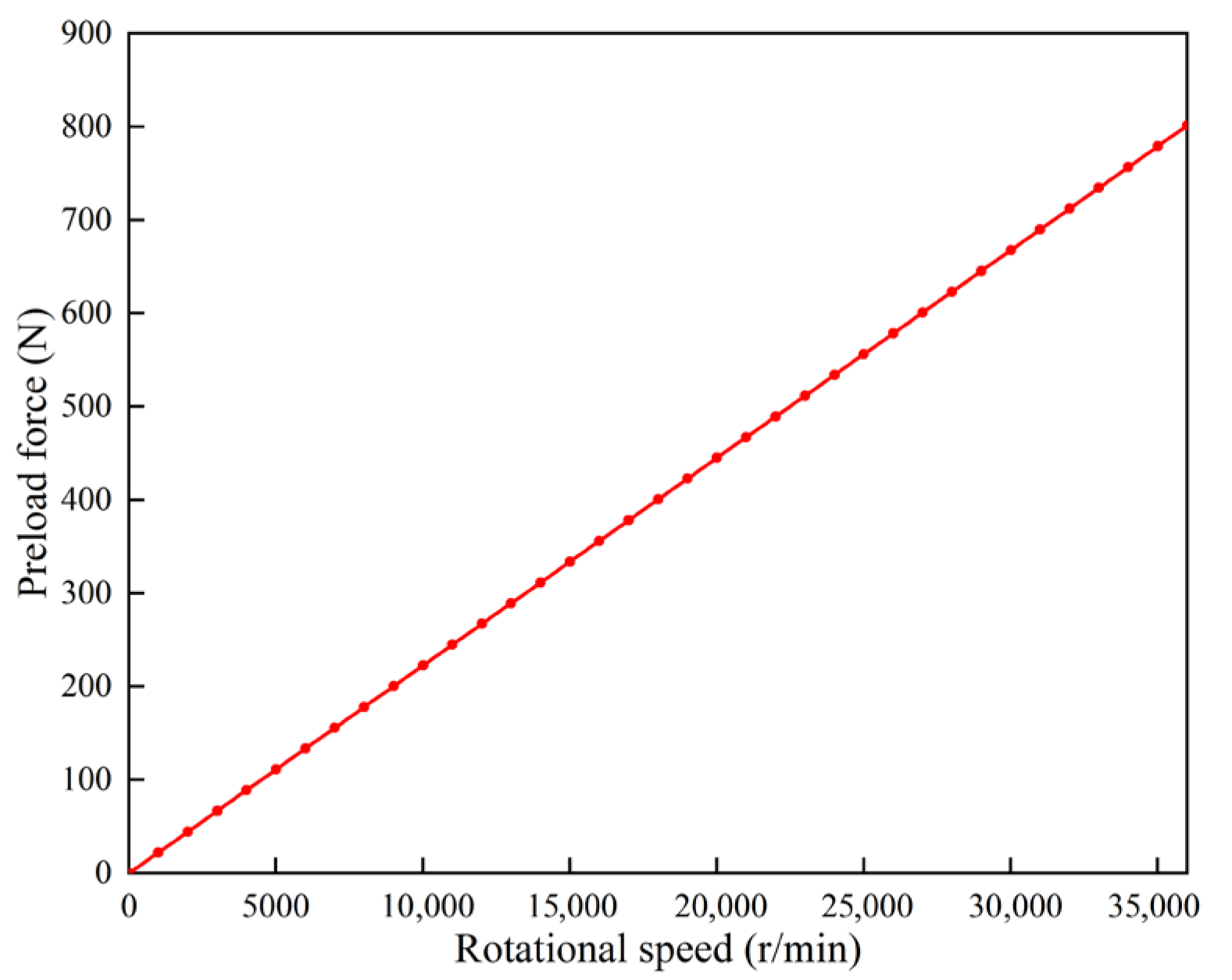
The relationship between rotational speed and optimal preload force determined by Hirano’s criterion is drawn in Figure 2. Within the speed range of 0–36,000 r/min, the preload adjustment device achieves a controllable preload range of 0–801 N.
When subjected to axial loads Fa, the working contact angle of the bearing can be determined using the following formula [5]:
F a Z K n ( B D W ) 1.5 = sin α ( cos α 0 cos α 1 ) ,
where Kn is the load-deformation constant with the unit of N/m1.5, α is the actual contact angle with axial load, α0 is the initial contact angle, Z is the number of rolling elements, DW is the diameter of the rolling element with the unit of m, B = fi + fo + 1, fi denotes the inner raceway curvature radius coefficient, and fo denotes the outer raceway curvature radius coefficient.
The contact deformation δ at any position between the rolling elements and raceways after loading is expressed as follows:
δ = B D W ( cos α 0 cos α 1 ) ,
The detailed derivation process of the axial deformation δ caused by the axial force Fa acting on the bearing is referred to in Ref. [5].
The preload force can be adjusted by the following formula:
F = p K 1 Δ L n K 2 Δ x
where F denotes the adjustment preload force, p and n are the number of preload springs and pressure springs, K1 and K2 are the stiffness coefficients of the preload spring and pressure spring, ΔL indicates the initial compression displacement of preload springs, and Δx indicates the relative displacement of pressure springs.
Using these equations, the optimal preload force for bearings at different rotational speeds and the corresponding axial displacement of the spindle can be derived.

2.3. Principle of Adaptive Adjustment for Preload Force

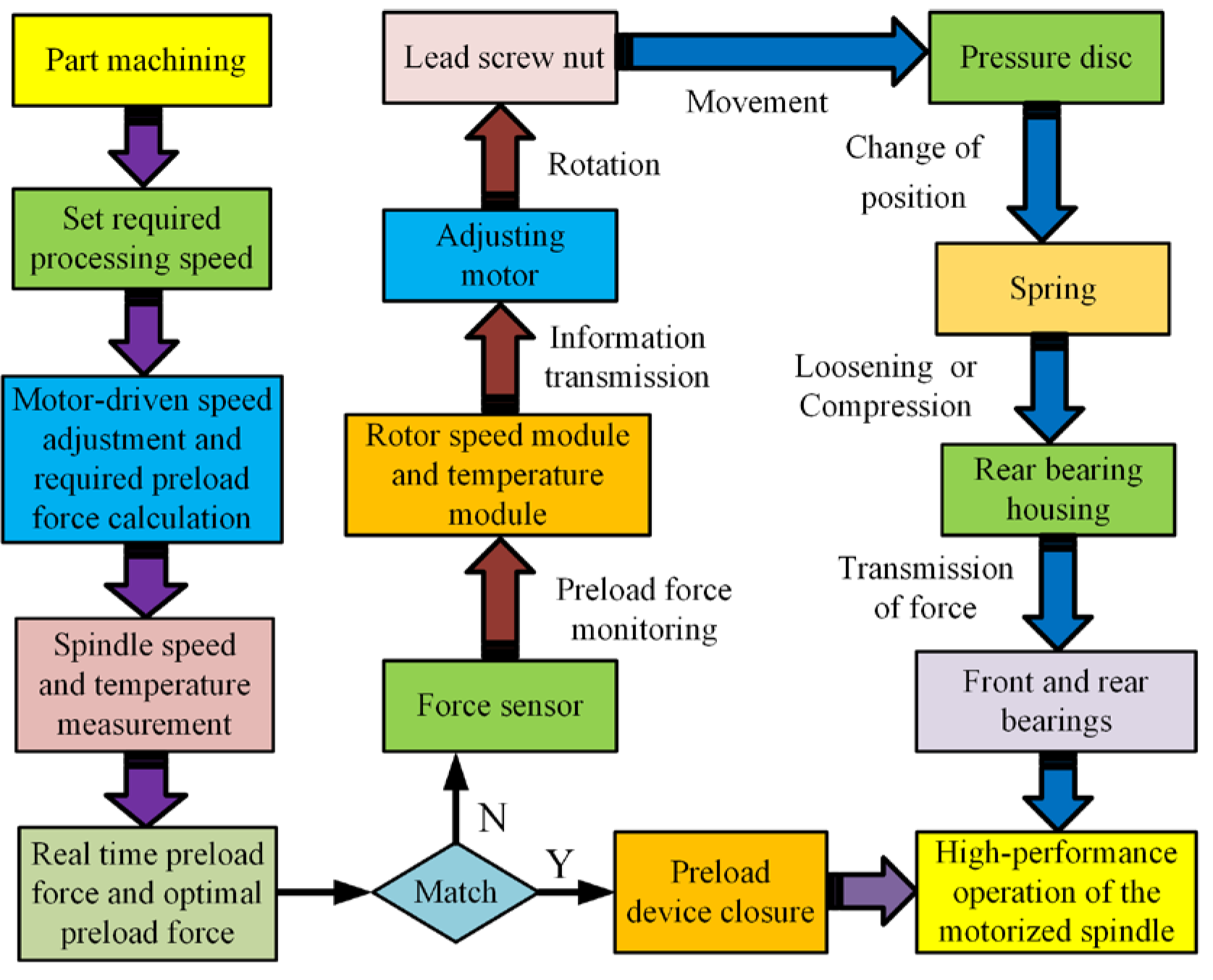
This device can determine the adjustment speed of the motor, calculate the optimal preload force required, and automatically drive the adjustment motor to adjust the preload force to the optimal value according to the set motorized spindle speed required for part processing, so that the motorized spindle can work in the best performance state. The specific adjustment process of adaptive preload force is demonstrated in Figure 3.
Before processing the parts, the required motorized spindle speed is set first. Then, the speed of the preload force adjustment motor and the value of the required preload force are calculated. Afterwards, real-time spindle speed and bearing temperature will be collected, and the current required preload will be calculated in real time. Finally, in order to have the real-time adjustment strategy, the proximity between the real-time preload force and the required preload force will be obtained. In this way, when the spindle speed reaches the set value, the preload force can be quickly adjusted to reach the optimal value.
When the preload force needs to be adjusted, the preload device first monitors (real-time monitor) the preload force through a force sensor, and at the same time collects the current status of the motorized spindle in real time (including spindle speed and bearing temperature) and calculates the required preload force. Afterwards, the compatibility of current speed, bearing temperature, and preload force is analyzed. If the current preload force matches the required preload force, which is the optimal preload force, the preload device will close and not operate, and the performance of the motorized spindle will be optimal at this time. If the preload force does not reach the optimal state, convert the adjustment preload force into motor speed and pressure disc position information (the distance that the nut needs to move) and transmit them to the adjusting motor. Then, the adjusting motor rotates to drive the lead screw to move linearly, the push rod transmits the force to the pressure disc, and then the pressure disc loosens or compresses the pressure spring. The force change is transmitted to the rear bearing through the bearing housing and the linear bearing, so as to adjust the force of the preload spring. Under the combined action of the pressure spring and the preload spring, the rear bearing housing undergoes slight displacement, changing the clearances of the front and rear bearing groups of the motorized spindle, achieving the ideal preload force. Thus, the adjustment of the optimal preload force of the bearings in the motorized spindle system is achieved. If the speed of the motorized spindle changes or the temperature of the bearing changes to a certain extent, the required optimal preload force will change, and the current preload force is no longer the required optimal preload force. The preload device will repeat the above actions and adaptively adjust the preload force again to the optimal value of the current working state.

3. Verification and Results Analysis

3.1. Calibration of Preload Device

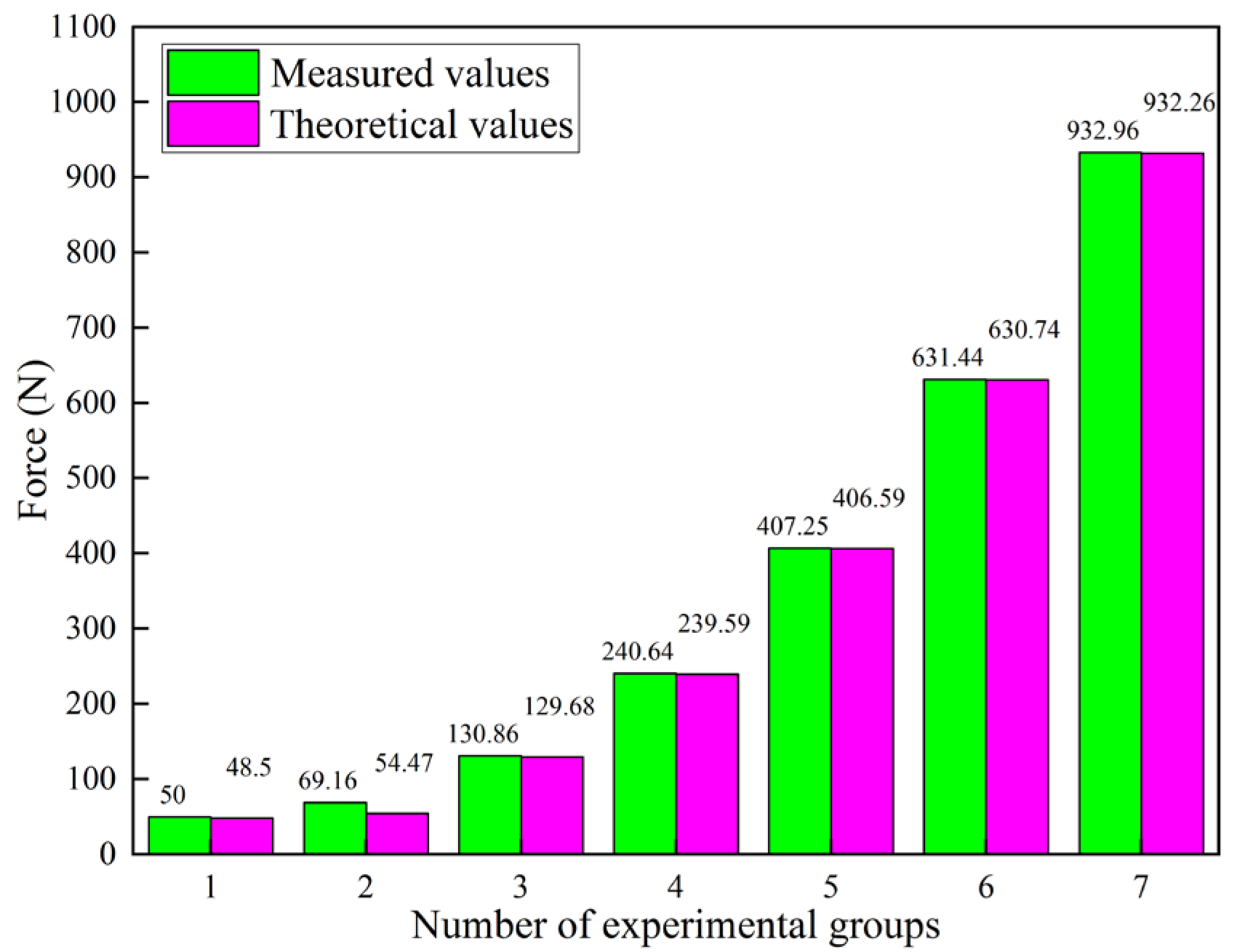
To calibrate the preload device, first, a multimeter was used to measure the resistance of the pressure sensor installed between the spring and spring retaining ring. Second, the measured resistance values were converted to pressure values using a pre-established calibration curve. Finally, the experimental pressure values were compared with theoretically calculated preload forces to validate the device’s precision. Seven force levels were tested for comparison, with the results shown in Figure 4.
As shown in Figure 4, among the seven preload device groups, the first group exhibited the highest deviation between measured and theoretical values, with an error of 1.5 N. This discrepancy is attributed to unaccounted frictional effects, such as transverse bearing movement. Nevertheless, the error remains within acceptable limits to satisfy control accuracy requirements.

3.2. Experimental Objective

Our objective is to investigate radial vibration, axial displacement, and temperature rise variations in bearings of high-speed motorized spindles under different preload forces, enabling students to identify key factors influencing bearing preload, deeply understand the adjustment process of adaptive preload force of motorized spindle at different speeds, cultivate students’ rationality in designing experimental plans, and enhance practical skills.
Improper lubrication parameter settings can compromise the advantages of oil–air lubrication, causing the bearings to operate under conditions resembling oil mist lubrication or severe lubrication deficiency due to insufficient oil supply, which may result in abnormal vibration of the motorized spindle. Different viscosities of the lubricant will affect the friction and lubrication of bearings, resulting in a change in temperature and thermal deformation, which will affect the preload force and vibration of bearings. Therefore, it is essential to determine the optimal lubrication conditions.
Vibration and temperature variation are the critical metrics for evaluating spindle performance, reflecting its design and manufacturing level. Vibration acceleration, vibration amplitude, or displacement can affect the dynamic performance of the motorized spindle, while excessive internal temperature can induce severe thermal deformation in the spindle and bearings. Therefore, radial vibration acceleration, axial displacement, and temperature are used to evaluate the impact of different operating conditions on the performance of the motorized spindle.

3.3. Experimental Procedure

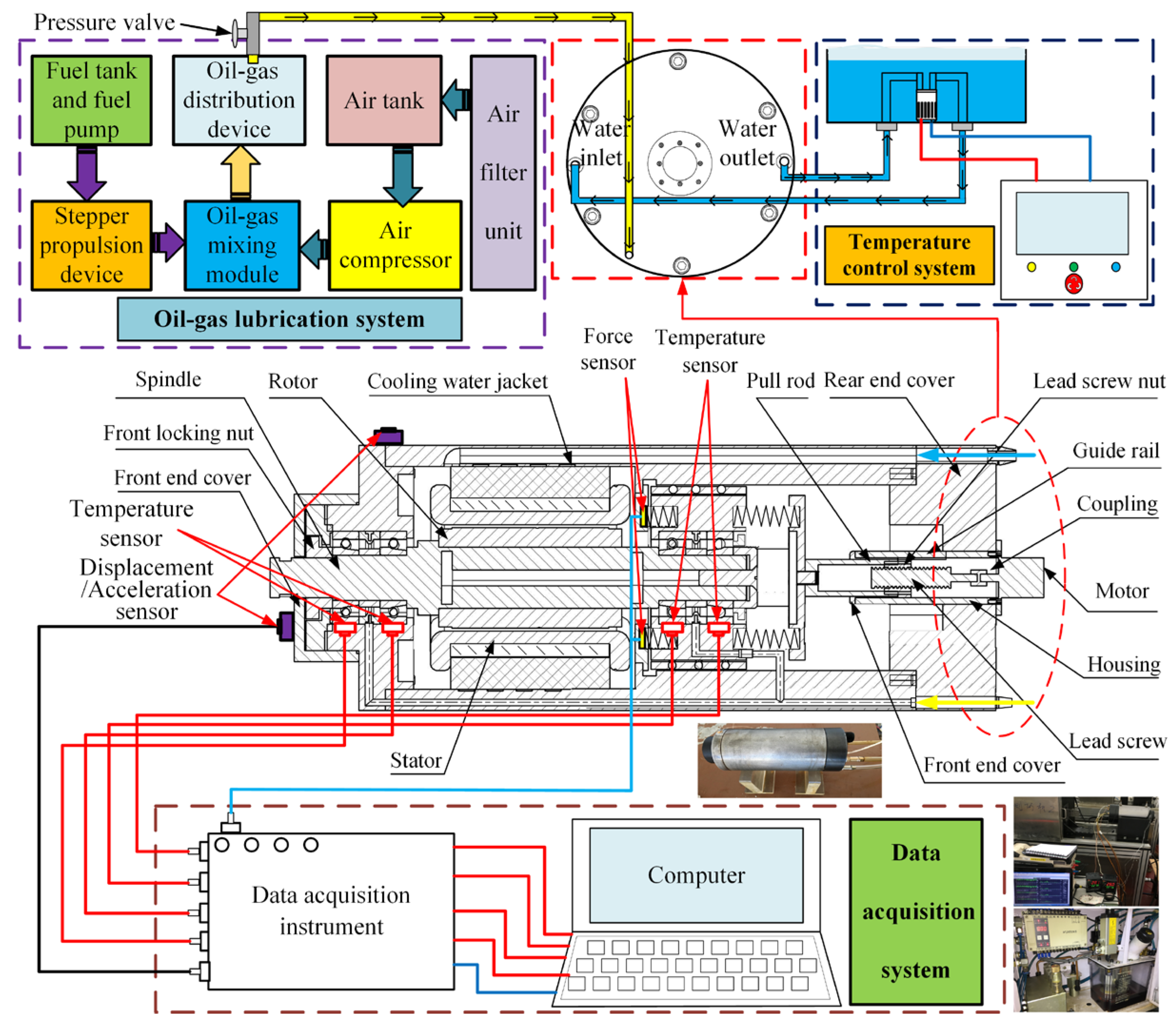
The experimental scheme is arranged as shown in Figure 5. The experimental equipment includes a designed motorized spindle, oil–gas lubrication system, temperature control system (cooling system), and data acquisition system. The oil–gas lubrication system is used to control lubrication parameters, including single oil supply quantity, oil supply interval time, lubricant viscosity, and air pressure. The temperature control system is used to cool the motorized spindle. The data acquisition system is used to collect experimental data and visualize the data.
The adaptive preload force experiment of high-speed motorized spindle mainly includes five parts: (a) Set a constant temperature experimental environment; (b) arrange sensors; (c) set initial operating conditions; (d) collect bearing response data under different working conditions; and (e) record and process experimental data.
(a) Experimental environment setup. Activate laboratory air conditioning to stabilize the ambient temperature at 20 °C. Set water tank temperature to 20 °C, air compressor pressure to 0.30 MPa, and inlet air/water temperatures to 20 °C with a flow rate of 0.32 m3/h. The lubricant oil grades selected include L-AN 15, 22, 32, 46, 68, and 100. By mixing with different ratios, lubricants of different viscosities can be obtained.
(b) Sensor configuration. For temperature sensors, deploy K-type thermocouples with probe tips to measure bearing temperatures. Install PT1000 platinum resistance temperature sensors in the front and rear bearing housing. For displacement sensors, use AEC-55 series eddy current displacement sensors. Secure the PU-03A miniature probe to a bracket and align it perpendicular to the spindle end face using an adjustment knob. Ensure a distance less than or equal to 1 mm from the probe to the measured surface for accurate position signal measurement. For the acceleration sensor, the type of the acceleration sensor is CA-YD-1182, and it is installed radially on the side of the motorized spindle by means of magnetic attraction.
(c) Initial operating conditions. To minimize wear and protect the motorized spindle, a stepwise acceleration method was adopted to increase the spindle speed from 0 to 36,000 r/min over a 50 min duration. From 0 to 35,000 r/min, the speed was increased by 5000 r/min every 5 min, and the increased speed was maintained for 1 min. The speed increased from 35,000 r/min to 36,000 r/min in 1 min, and a speed of 36,000 r/min was maintained for 1 min. Data acquisition commenced only after spindle speed stabilization. Temperature sampling was configured at 20 s intervals. For displacement measurement, calibration parameters were set in the displacement testing software, and calibration accuracy was verified by ensuring consistency between displayed distance variations and physical adjustments. The preload force was set to 200 N, 500 N, 1000 N, and an adaptive preload force. Five sets of variables for each factor were set up to test the four factors of single oil supply quantity, oil supply interval time, air pressure, and lubricant viscosity, as shown in Table 1. For lubricant viscosity, the lubricant of L-AN 15 is selected as a viscosity of 15 cSt; the lubricants of L-AN 22 and L-AN 32 are mixed by a volume ratio of 1:4 to obtain a lubricant with a viscosity of 30 cSt; the lubricant with the viscosity of 50 cSt is obtained by mixing the lubricants of L-AN 46 and L-AN 68 in a volume ratio of 9:2; the lubricant with the viscosity of 60 cSt is obtained by mixing the lubricants of L-AN 46 and L-AN 68 in a volume ratio of 1:1.75; the lubricant with the viscosity of 70 cSt is obtained by mixing the lubricants of L-AN 68 and L-AN 100 in a volume ratio of 15:1. For each preload and lubrication parameter, a total of 20 experiments were conducted.
(d) Data acquisition. By changing the oil supply quantity, oil supply interval time, air pressure, and lubricant viscosity, the temperature values of the front and rear bearings were collected every 20 s, and the displacement of the rear bearing was also recorded. For temperature data, collect front/rear bearing outer ring temperatures via Siemens testing machine channels; calculate and obtain the average value. For displacement data, acquire signals using the USB3200N signal acquisition card and a displacement test platform. The way to obtain acceleration data is similar to that of displacement data.
(e) Experimental data recording and processing. Record the temperature of the front and rear bearings of the motorized spindle, the vibration acceleration, displacement, and the lubrication parameters that change each time during oil–air lubrication. Calculate the axial displacement using Equations (5) and (6) and draw the relationship diagram between axial displacement and preload force, as well as the diagram of the influence of different lubrication conditions and preload force on the temperature of the front and rear bearings.

3.4. Results Analysis

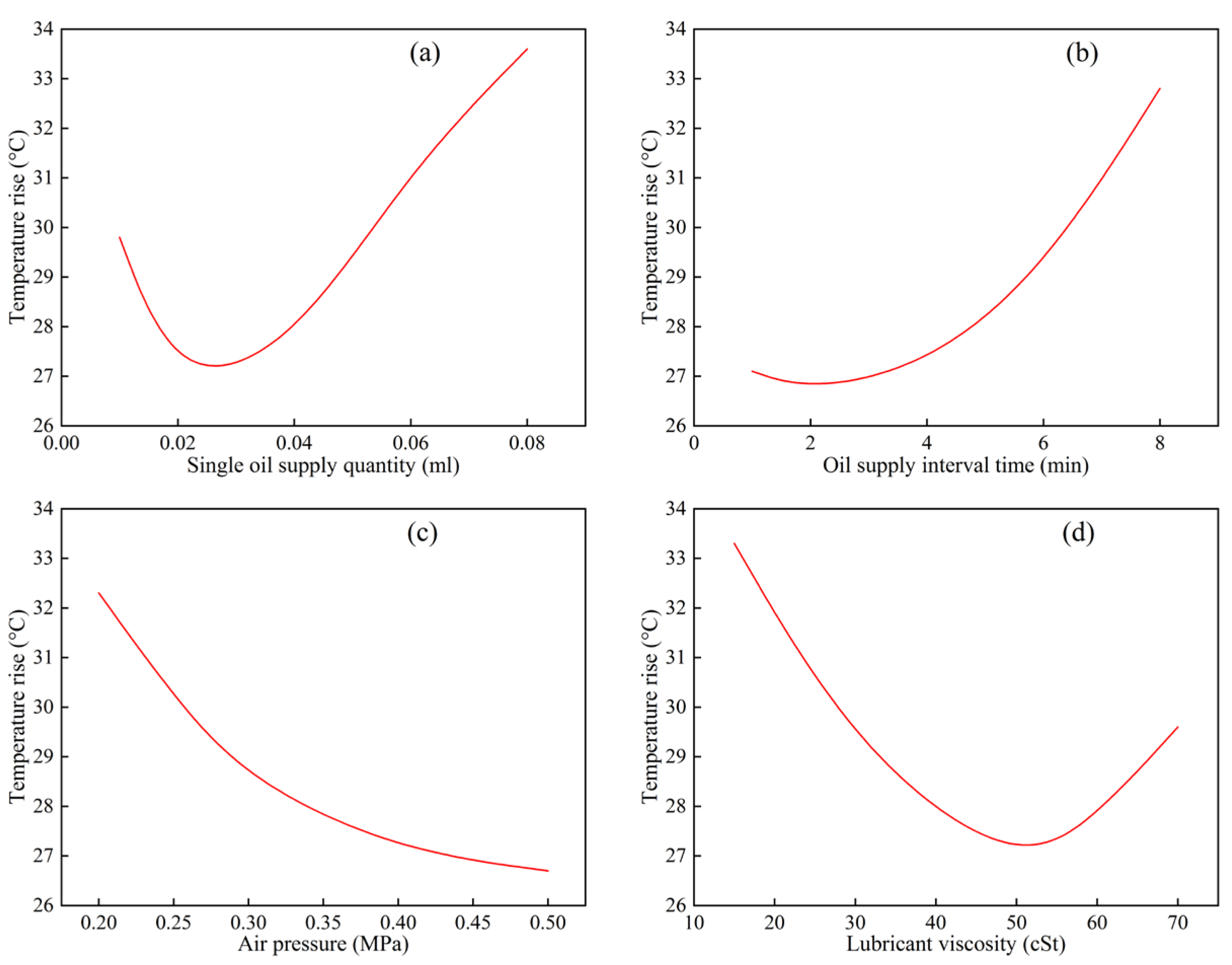
Before analyzing the effect of preload force on the temperature rise in bearings at different speeds of the motorized spindle, it is necessary to determine the optimal lubrication conditions. At a spindle speed of 12,000 r/min, the effect of lubrication factors on the temperature rise in the bearings based on a single-factor experiment in Table 1 is shown in Figure 6.
As shown in Figure 6a, the temperature first decreases and then increases with the increase in the single oil supply quantity. When the single oil supply quantity is less than 0.04 mL, the temperature of the front bearing of the spindle is less than 30 °C. There is a minimum temperature value when the single oil supply is around 0.02 mL. As shown in Figure 6b, the temperature first slightly decreases with the increase in oil supply interval time, and then gradually increases. Within a certain range, increasing the oil supply interval time can reduce the temperature of the spindle bearing. There is a minimum temperature value when the oil supply interval time is near 2 min. As shown in Figure 6c, the temperature decreases with the increase in air pressure. The high air pressure can effectively reduce the temperature of the spindle bearing. As shown in Figure 6d, the temperature first decreases and then increases with the increase in lubricant viscosity. The optimal lubrication conditions can be determined from the experimental lubrication parameters based on the method of minimizing the temperature rise in the bearing through a single lubrication parameter experiment. Therefore, the optimal lubrication conditions are determined as a single oil supply quantity of 0.02 mL, an oil supply interval time of 2 min, an air pressure of 0.5 MPa, and a lubricant viscosity of 50 cSt. The performance of the motorized spindle is studied under this lubrication condition.
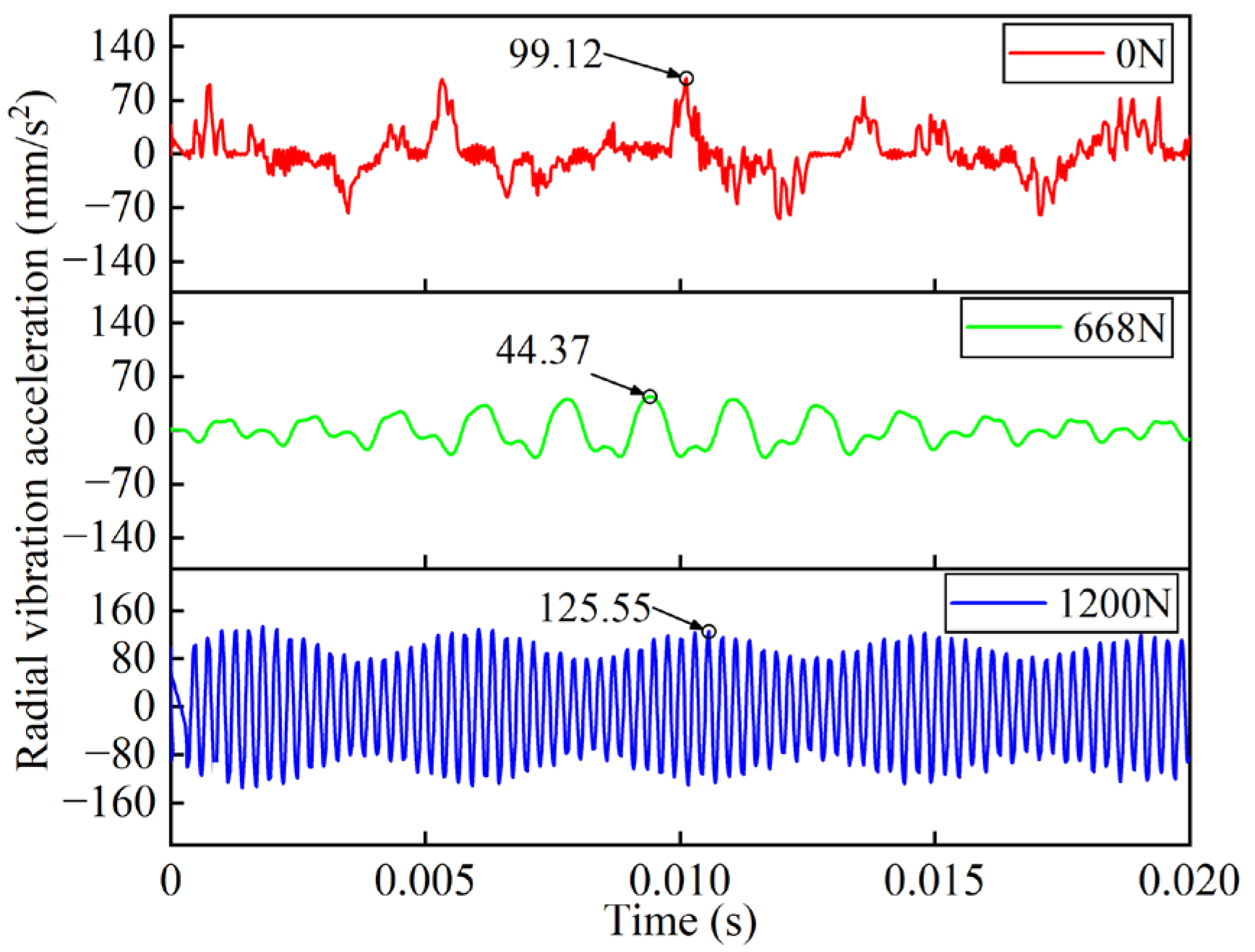
To thoroughly investigate the influence of axial preload on the performance of the motorized spindle, vibration experiments varying only the preload force were conducted under identical rotational speed and lubrication conditions. Taking the operational condition of 30,000 r/min as an example, three preload conditions of zero preload 0 N, optimal preload 668 N, and excessive preload 1200 N were set. The variations in radial vibration acceleration of the motorized spindle were observed. The vibration acceleration results under the three preload conditions are shown in Figure 7.
As shown in Figure 7, under the zero-preload condition, the vibration acceleration exhibits significant unstable fluctuations with a peak value of 99.12 mm/s2. Under the optimal preload condition, the acceleration waveform remains stable, showing a low peak value of 44.37 mm/s2. In contrast, under the excessive preload condition, the vibration acceleration increases significantly, reaching a peak value of 124.55 mm/s2. An excessively small preload force cannot suppress the clearance between bearing components caused by the centrifugal force of the rolling elements at high speeds. This results in a reduction of the bearing stiffness and a rocking of the rolling elements between the raceways, increasing the vibration of the bearing and the motorized spindle [14]. An excessively large preload force leads to severe friction between the rolling elements and raceways, even causing elastic–plastic deformation, consequently exacerbating the vibration of the motorized spindle. Applying a preload force that matches the rotational speed can eliminate the clearance between the rolling elements and raceways during bearing operation without introducing excessive friction, ultimately reducing the vibration of the motorized spindle.
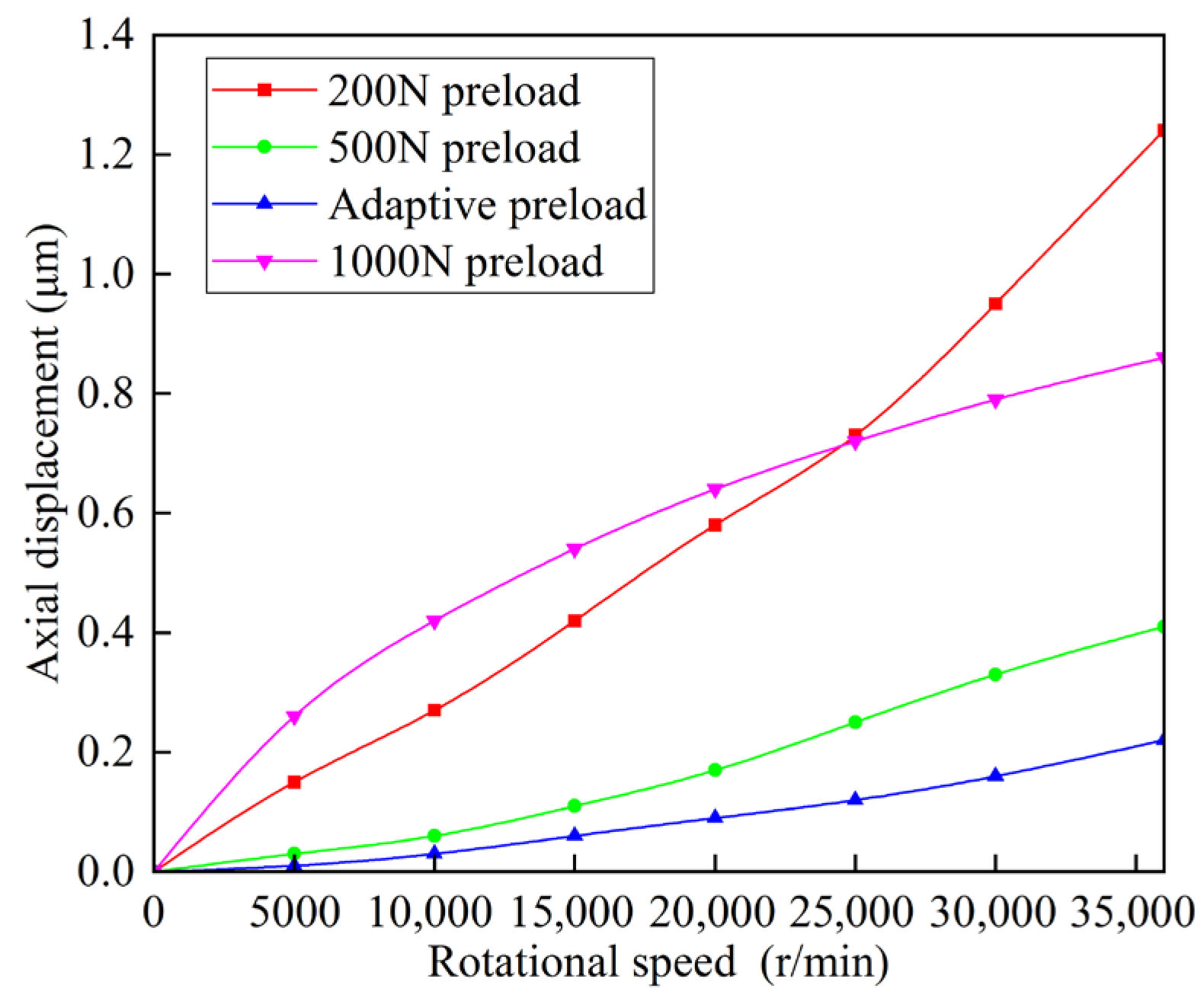
Under the determined optimal lubrication conditions, the axial displacement variations in the bearings with the rotational speed at different preload conditions are reported in Figure 8.
As shown in Figure 8, the axial displacement of the bearings increases with the rotational speed of the motorized spindle. At high speeds, great preload forces are required to maintain stable bearing operation. The results demonstrate that increasing the preload force can enhance the stiffness of the bearings and reduce the vibration amplitude at the spindle tip [15], and the designed adaptive preload device effectively reduces axial displacement during spindle operation, with a maximum displacement of 0.22 μm.
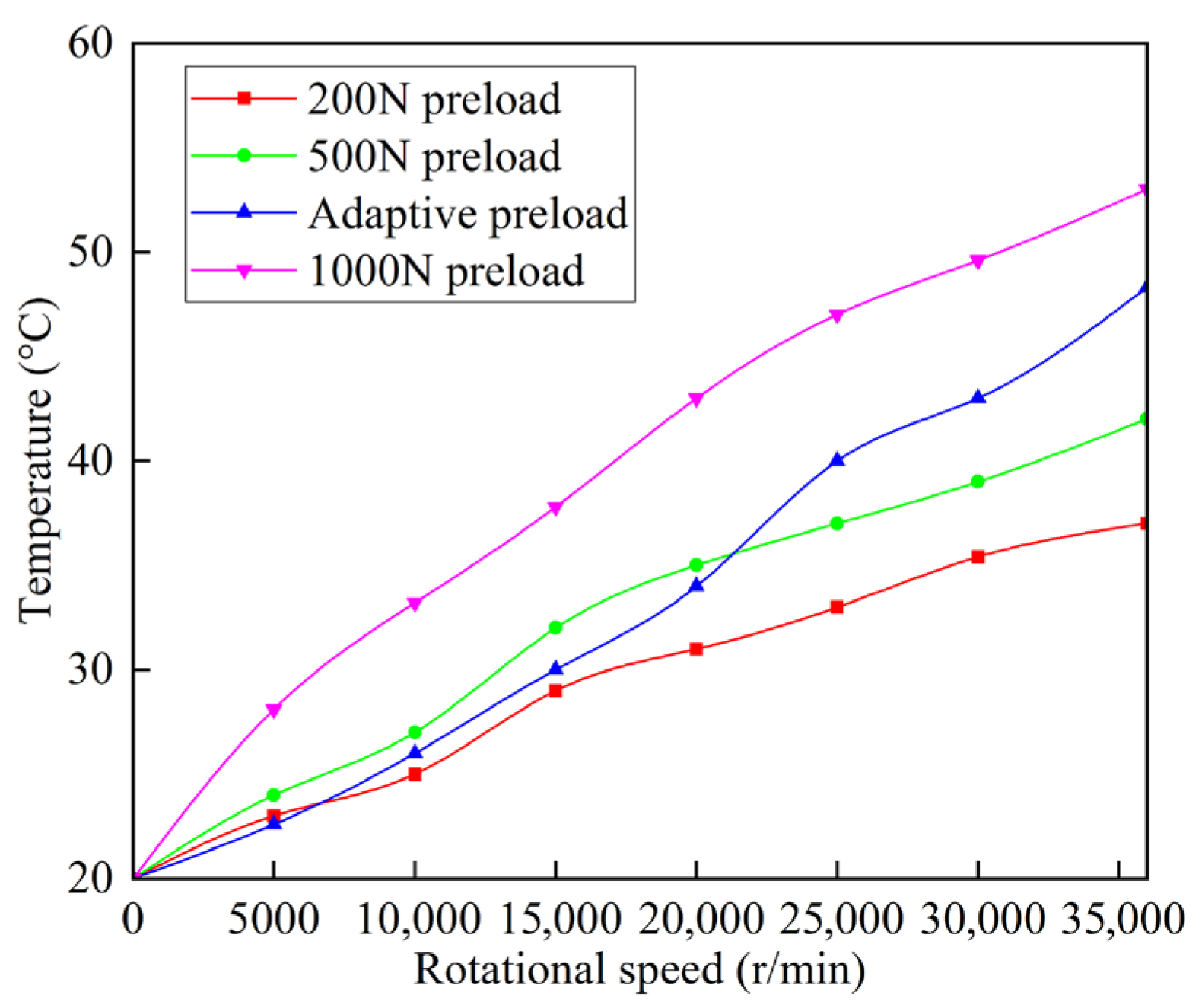
Four distinct preload configurations with 200 N, 500 N, 1000 N, and adaptive preload were tested at different speeds to investigate temperature variations in the rear-bearing outer rings. The results are presented in Figure 9.
As shown in Figure 9, temperature increases with spindle speed across all configurations. At low speeds (0–5000 r/min), the sliding velocity between rolling elements and raceways is small, resulting in low frictional heat generation, so the temperature rise change is not significant and is negligible. However, at high speeds (5000–36,000 r/min), centrifugal forces of rolling elements also increase, intensifying the contact pressure between rolling elements and the outer raceway. This leads to an increase in frictional force and a sharp rise in temperature [16,17].
Comparative analysis reveals that the adaptive preload device outperforms constant preload forces of 500 N and 1000 N within a rotational speed of 0–5000 r/min. In the range of 5000–36,000 r/min for rotational speed, the adaptive configuration demonstrates superior performance compared to the 1000 N constant preload. Although constant preloads of 200 N and 500 N exhibit lower temperature rise than the adaptive device at high speeds, skidding analysis based on Hirano’s criterion confirms that bearings under these constant preloads experience skidding. Therefore, when holistically evaluating skidding prevention, axial displacement control, and temperature rise mitigation, the adaptive preload device proves more advantageous than fixed preload applications.

4. Application in Teaching and Scientific Research

This preload device can be used to study the performance of motorized spindles and bearings and the preload mechanism in scientific research, and it can be applied in practical teaching, such as mechanical product design and comprehensive practice of mechanical engineering.
In theoretical courses such as Mechanical Product Design and Comprehensive Practice in Mechanical Engineering, as well as practical training sessions, students deepen their knowledge and skills in this field by studying the design process of the high-speed motorized spindle adaptive preload adjustment device and analyzing the spindle’s operational states post-adjustment. Through this pedagogical approach, students can understand the design requirements for a preload device, master key factors affecting preload magnitude, analyze vibration dynamics and temperature variation after preload adjustments, and prioritize practical considerations, such as safety protocols.
During the experiment, the students realized the importance of experimental preparation conditions and sensor calibration to measurement accuracy by arranging temperature, displacement, and pressure sensors on the motorized spindle. The control variable method is applied to collect all kinds of sensor data, which cultivates students’ scientific thinking methods and rigorous thinking logic. The students autonomously adjust the preload forces, record the data, and then analyze the optimal preload range in combination with Hirano’s criterion, so that students gain hands-on experience in performance optimization. Combined with the initial variable conditions and the experimental results analyzed by the software, students can deeply understand that the increase in the speed of the bearing inner ring will lead to the increase in the centrifugal force of the rolling element, and then the preload device will adjust the preload to increase the contact force between the rolling element and the inner ring, so as to avoid the skidding of bearing. The experiment promotes the practice of students’ theoretical knowledge and enhances students’ interest in learning.
In the autumn semester of 2024 for Comprehensive Practice in Mechanical Engineering, a total of 32 students conducted the experimental project. From initial setup (laboratory environment, spindle configuration, and data acquisition systems) to experimental data collection and causal analysis of observed phenomena, this process enables students to comprehensively understand the influence mechanisms of rotational speed on the preload forces required for optimal performance of spindles in teaching. Through the experimental report, related questions for examination, and questionnaires, the writing quality of students’ practice report content was significantly improved, from an average of 72 points in 2023 to an average of 83 points in 2024. The experiment has improved the accuracy rate on “motorized spindle energy conversion and bearing preload” related assessment questions by 23% (from 62% to 85%), indicating its effectiveness in bridging theoretical concepts with practical engineering challenges. In addition, the questionnaire also shows the students’ high recognition of the implementation of the experimental project.
On the other hand, the adaptive preload device provides experimental equipment for researchers, especially suitable for studying the dynamic performance of high-speed motorized spindles and the dynamic characteristics of bearings under different working conditions. For example, studying the effects of bearing lubrication parameters, radial stiffness, and preload methods on preload force, the effects of radial and axial loads on the dynamic and acoustic characteristics of motorized spindle bearings, and the effects of temperature changes and cooling on the dynamic characteristics of motorized spindles, were some of the topics covered, as well as the built-in axial load and radial load application device of motorized spindle to promote the development of high-speed motorized spindles in the direction of modularization, intelligence, and precision. The device can also expand the study of the influence of preload force on the vibration and sound radiation characteristics of bearing rotor systems [18], as well as the influence of different preload forces on the operating state of bearing rotor systems under various working conditions, in order to determine the optimal preload force.
Furthermore, the device facilitates the investigation of the vibration characteristics of motorized spindles under the coupled influence of thermal and mechanical loads [19]. The temperature field, which varies with different preload levels and rotational speeds, induces corresponding thermal deformations. These deformations alter boundary conditions and stiffness, thereby further complicating the nonlinear dynamic response. By simultaneously measuring vibration, displacement, and temperature while controlling key parameters such as lubrication conditions, this device provides critical support for revealing potential thermo-mechanical coupling mechanisms in high-speed motorized spindle systems.

5. Conclusions

This study designed an experimental device for adaptive preload adjustment in high-speed motorized spindles, focusing on the optimal preload force and the influence of different preload forces on the performance of the motorized spindle in varying rotational speed requirements during the machining of different components. Accurate application of optimal preload force ranging from 0 to 801 N is determined within the rotational speed range of 0–36,000 r/min. The optimal lubrication conditions that single oil supply quantity of 0.02 mL, oil supply interval time of 2 min, air pressure of 0.5 MPa, and lubricant viscosity of 50 cSt were identified to minimize bearing temperature rise. The vibration characteristics of the motorized spindle are evaluated at a speed of 30,000 r/min under three preload conditions. The results show that the optimal preload force of 668 N significantly reduced the peak value of vibration acceleration to 44.37 mm/s2 compared to both zero and excessive preload conditions. Furthermore, the adaptive preload device effectively limits the axial displacement to a maximum of 0.22 μm. A comparison of the temperature rise performance under three constant preload forces and the adaptive preload demonstrates that the adaptive preload forces have superiority in preventing bearing skidding. The developed preload device ensures that the spindle maintains optimal preload conditions across all operational speeds of 0–36,000 r/min. In addition, the device proves highly valuable in both teaching and scientific research, which enables a comprehensive understanding of the preload mechanism for students and provides a multifunctional platform for further study of the dynamic performance of motorized spindles.

Author Contributions

Conceptualization, H.Y. and T.S.; methodology, H.Y.; validation, Z.Z. and J.Z.; formal analysis, G.W.; investigation, G.W. and J.Z.; resources, H.Y. and T.S.; data curation, H.Y. and G.W.; writing—original draft preparation, Z.Z., G.W., and J.Z.; writing—review and editing, H.Y. and T.S.; visualization, H.Y. and Z.Z.; supervision, T.S.; project administration, H.Y.; funding acquisition, H.Y., G.W., and J.Z. All authors have read and agreed to the published version of the manuscript.

Funding

The authors gratefully acknowledge the financial support from Research and Practice on Education Teaching Reform of Hebei University of Science and Technology (2024–ZD03), Hebei Province Innovation and Entrepreneurship Course (Specialized Innovation Integration Course) (2025cxkc062), Research and Practice on Innovation and Entrepreneurship Education Teaching Reform in Higher Education Institutions of Hebei Province (2023cxcy088 and 2025cxcy087), and the Collaborative Education Project of Industry University Research by the Ministry of Education (2410314936 and 2412030712).

Institutional Review Board Statement

Not applicable.

Informed Consent Statement

Not applicable.

Data Availability Statement

The data presented in this study are available in the article.

Conflicts of Interest

The authors declare no conflicts of interest.

References

  1. Dai, Y.; Tao, X.S.; Li, Z.L.; Zhan, S.Q.; Li, Y.; Gao, Y.H. A review of key technologies for high-speed motorized spindles of CNC machine tools. Machines 2022, 10, 145. [Google Scholar] [CrossRef]
  2. Tian, S.L.; Chen, X.A.; He, Y.; Chen, T.C.; Li, P.M. A dynamic loading system for high-speed motorized spindle with magnetorheological fluid. J. Intel. Mat. Syst. Str. 2018, 29, 2754–2765. [Google Scholar] [CrossRef]
  3. Choi, C.H.; Lee, C.M. A variable preload device using liquid pressure for machine tools spindles. Int. J. Precis. Eng. Man. 2012, 13, 1009–1012. [Google Scholar] [CrossRef]
  4. Dai, Y.; Yu, B.L.; Tao, X.S.; Wang, X.; He, S.; Wang, G. Thermal displacement prediction of variable preload motorized spindles based on speed reduction experiments and IABC-BP optimization models. Case Stud. Therm. Eng. 2024, 53, 103941. [Google Scholar] [CrossRef]
  5. Xu, K.P.; Wang, B.; Zhao, Z.X.; Zhao, F.; Kong, X.X.; Wen, B.C. The influence of rolling bearing parameters on the nonlinear dynamic response and cutting stability of high-speed spindle systems. Mech. Syst. Sig. Process. 2020, 136, 106448. [Google Scholar] [CrossRef]
  6. Hao, J.; Li, C.Y.; Song, W.J.; Yao, Z.H.; Miao, H.H.; Xu, M.T.; Gong, X.X.; Lu, H.; Liu, Z.D. Thermal-mechanical dynamic interaction in high-speed motorized spindle considering nonlinear vibration. Int. J. Mech. Sci. 2023, 240, 107959. [Google Scholar] [CrossRef]
  7. Fang, B.; Wan, S.K.; Zhang, J.H.; Yan, K.; Hong, J. A comprehensive study of the effect of thermal deformation on the dynamic characteristics of the high-speed spindle unit with various preload forces. Mech. Mach. Theory 2024, 203, 105820. [Google Scholar] [CrossRef]
  8. He, P.P.; Gao, F.; Li, Y.; Wu, W.W.; Zhang, D.Y. Research on optimization of spindle bearing preload based on the efficiency coefficient method. Ind. Lubr. Tribol. 2020, 73, 335–341. [Google Scholar] [CrossRef]
  9. Razban, M.; Movahhedy, M.R. A speed-dependent variable preload system for high speed spindles. Precis. Eng. 2015, 40, 182–188. [Google Scholar] [CrossRef]
  10. Kim, D.H.; Lee, C.M. Development of an automatic variable preload device using uniformly distributed eccentric mass for a high-speed spindle. Int. J. Precis. Eng. Man. 2017, 18, 1419–1423. [Google Scholar] [CrossRef]
  11. Hu, G.F.; Zhang, D.W.; Gao, W.G.; Chen, Y.; Liu, T.; Tian, Y.L. Study on variable pressure/position preload spindle-bearing system by using piezoelectric actuators under close-loop control. Int. J. Mach. Tool. Manu. 2018, 125, 68–88. [Google Scholar] [CrossRef]
  12. Hirano, F. Motion of a ball in angular-contact ball bearing. ASLE Trans. 1965, 8, 425–434. [Google Scholar] [CrossRef]
  13. Oktaviana, L.; Tong, V.C.; Hong, S.W. Skidding analysis of angular contact ball bearing subjected to radial load and angular misalignment. J. Mech. Sci. Technol. 2019, 33, 837–845. [Google Scholar] [CrossRef]
  14. Xing, S.Y.; Ma, J.; Liu, A.X.; Niu, S.Q.; Hu, B.B. The analysis of the bearing fit effect on spindle rotor system vibration. Acad. J. Sci. Technol. 2023, 4, 171–173. [Google Scholar] [CrossRef]
  15. Turek, P. Spindle bearing preload control using NI MyRIO. Appl. Sci. 2024, 14, 11579. [Google Scholar] [CrossRef]
  16. Tian, J.X.; Wu, Y.H.; Sun, J.; Xia, Z.X.; Ren, K.X.; Wang, H.; Li, S.H.; Yao, J.M. Thermal dynamic exploration of full-ceramic ball bearings under the self-lubrication condition. Lubricants 2022, 10, 213. [Google Scholar] [CrossRef]
  17. Lei, J.T.; Su, B.; Zhang, S.L.; Yang, H.S.; Cui, Y.C. Dynamics-based thermal analysis of high-speed angular contact ball bearings with under-race lubrication. Machines 2023, 11, 691. [Google Scholar] [CrossRef]
  18. Yan, H.P.; Wu, Y.H.; Li, S.H.; Zhang, L.X.; Zhang, K. The effect of factors on the radiation noise of high-speed full ceramic angular contact ball bearings. Shock Vib. 2018, 2018, 1645878. [Google Scholar] [CrossRef]
  19. Li, J.P.; Xu, T.; Dai, Y.; Chen, T.; Fang, Y.; Zhang, Q.; Zhang, S.J. Thermal characteristics analysis of machine tool spindle with adjustable bearing preload. J Braz. Soc. Mech. Sci. Eng. 2024, 46, 314. [Google Scholar] [CrossRef]
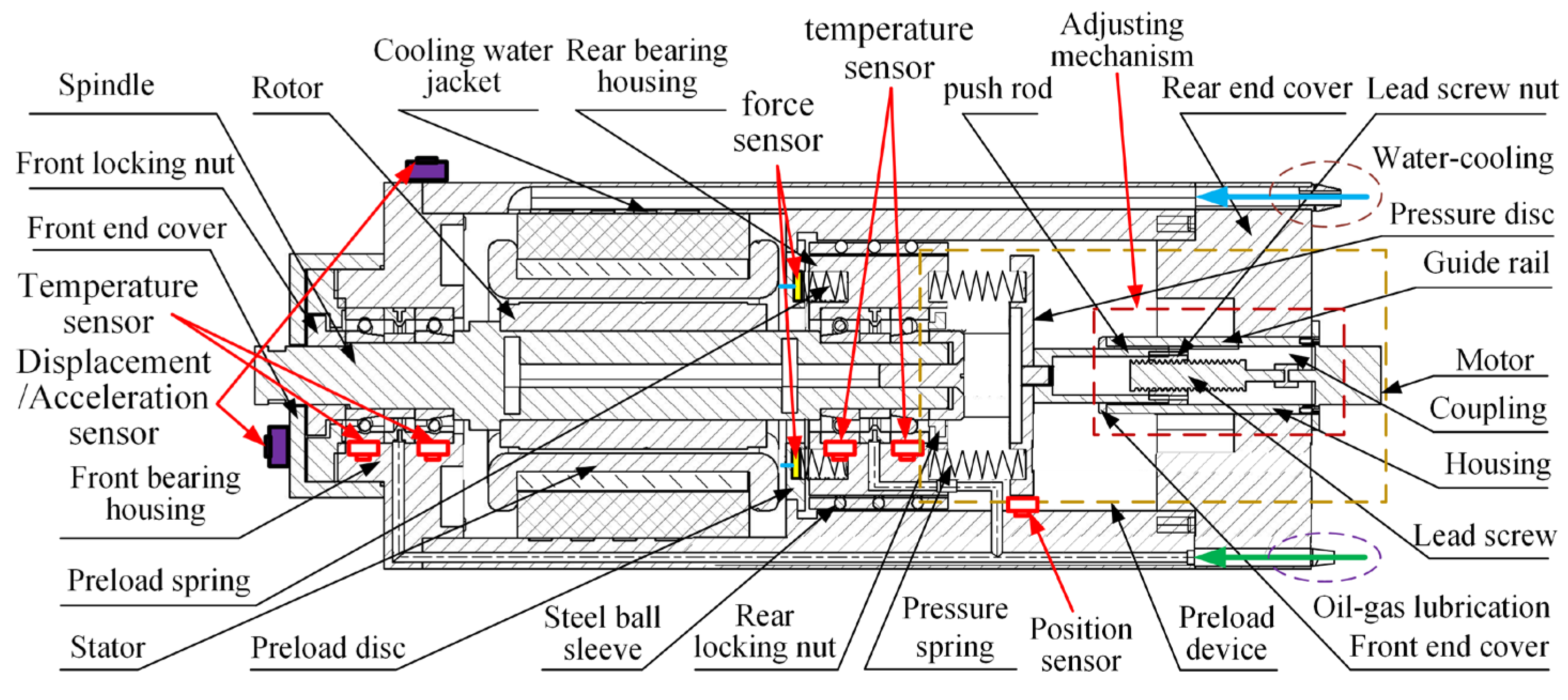
Figure 1. Structural diagram of motorized spindle with adaptive preload device.
Actuators 14 00591 g001
Figure 2. Relationship between optimal preload force and rotational speed.
Actuators 14 00591 g002
Figure 3. Workflow chart of preload device.
Actuators 14 00591 g003
Figure 4. Comparison of measured and theoretical values for preload force.
Actuators 14 00591 g004
Figure 5. Experimental scheme.
Actuators 14 00591 g005
Figure 6. Influence of lubrication factors on temperature. (a) Oil supply interval time of 2 min, air pressure of 0.5 MPa, and lubricant viscosity of 50 cSt; (b) single oil supply quantity of 0.02 mL, air pressure of 0.5 MPa, and lubricant viscosity of 50 cSt; (c) single oil supply quantity of 0.02 mL, oil supply interval time of 2 min, and lubricant viscosity of 50 cSt; (d) single oil supply quantity of 0.02 mL, oil supply interval time of 2 min, and air pressure of 0.5 MPa.
Actuators 14 00591 g006
Figure 7. Variation curves of radial vibration acceleration of the motorized spindle.
Actuators 14 00591 g007
Figure 8. Axial displacement of the bearings with the speed at different preloads.
Actuators 14 00591 g008
Figure 9. Temperature rise in the bearings with the speed at different preloads.
Actuators 14 00591 g009
Table 1. Lubrication parameter variables.
NumberSingle Oil Supply Quantity (mL)Oil Supply Interval Time (min)Air Pressure (MPa)Lubricant Viscosity (cSt)
10.0110.2015
20.0220.2530
30.0440.3050
40.0660.4060
50.0880.5070
Disclaimer/Publisher’s Note: The statements, opinions and data contained in all publications are solely those of the individual author(s) and contributor(s) and not of MDPI and/or the editor(s). MDPI and/or the editor(s) disclaim responsibility for any injury to people or property resulting from any ideas, methods, instructions or products referred to in the content.