Article

Soft MRE Gripper: Preliminary Study

1
Faculty of Mechanical Engineering and Robotics, AGH University of Krakow, al. Adama Mickiewicza, 30-059 Kraków, Poland
2
Faculty of Electrical and Computer Engineering, Cracow University of Technology, ul. Warszawska 24, 31-155 Kraków, Poland
*
Author to whom correspondence should be addressed.
Actuators 2025, 14(12), 585; https://doi.org/10.3390/act14120585 (registering DOI)
Submission received: 3 October 2025 / Revised: 8 November 2025 / Accepted: 26 November 2025 / Published: 2 December 2025

Abstract

Soft robotics focuses on the imitation of the work of living organisms and mostly utilizes soft deformable materials for actuation or object manipulation tasks. Soft robots or grippers can be used for tasks which are beyond the reach of conventional rigid body ones. Recently, soft flexible robotic grippers have attracted research and engineering interest. A variety of materials and actuation technologies incl. magnetorheological (MR) materials have been used for developing grippers for grasping and object manipulation purposes. In this proof-of-concept study, the authors propose a magnetorheological elastomer (MRE) based gripper concept that deforms when subjected to magnetic field, thus adapting to objects of various shapes and sizes. With the prototype, a reduction in the closing area by a factor of four was achieved. To realize the assumed goals, a prototype of the gripper was designed, built, and tested, and its behaviour was evaluated, focusing on its adaptability and identification of the opening/closing current levels. Moreover, a contactless CV (computer vision)-based method was developed for the purpose of assessment of the prototype’s operation. The experiments involved the handling of cylindrical and cubic objects, respectively. The experimental results indicate that the operation is repeatable, and with no visible degradation of the flexible casing.

1. Introduction

To begin with, robotic end-effectors provide robots with the capability to interact with the environment. They give robots particular functions without which they would be useless in any working environment. End-effectors are often referred to as End-Of-Arm-Tooling (EOAT). Various types of robotic end effectors include tools, magnets, clamps, grippers, and the like. Grippers have given robots the abilities similar to human hands. In general, grippers are used in applications that require, e.g., lifting, touching, manipulating, grabbing, etc. Material handling, assembly, component transfer, loading, etc., can be managed by means of capable (pneumatic, mechanical, hydraulic, electrical, magnetic) robotic grippers. Therefore, a soft gripper whose actions are driven by applying an external stimuli of sufficient strength belongs to a category of specific EOATs. In comparison with conventional rigid body grippers, the soft grippers allow to reduce the robotic system’s complexity, minimize the risk of damaging the objects, allow to emulate the work of living organisms, are capable of accommodating a variety of shapes while maintaining the same or a similar level of control as the conventional EOATs [1,2]. The former is possible without any need to change the tooling in case a different object class must be handled than it was designed for [3].
A variety of smart material or conventional technologies can be used for the task, namely, smart memory alloys (SMAs) [4,5], pneumatics [6,7], electroactive elastomers (EAPs) [8,9], magnetorheological elastomers (MREs) [10,11], and magnetorheological fluids (MRFs) [12]. Often, several technologies can be employed to develop a hybrid gripper device. For instance, MREs and MRFs can be used in hybrid grippers, e.g., to adjust the friction force at the contact surface with the grasped object (MREs) [13] or to adapt the grip to the shape of the object (MRFs) [14]. By principle, Shintake et al. [15] categorize soft grippers into three technologies, enabling grasping by (a) actuation, (b) controlled stiffness, and (c) controlled adhesion. There exist challenges related to the need for miniaturization, robustness, speed, sensing, control, and durability.
Briefly, MRFs are suspensions of micron-sized soft magnetic particles in a non-conductive carrier oil. For comparison, MREs feature a soft polymer matrix with embedded micron-sized soft or hard ferromagnetic Fe particles [16]. It is their ability to react to the external (magnetic) stimuli that links the two material technologies. The range of materials suitable for the polymer matrix includes hydrogels, silicones, and acrylate-based polymers. A brief review of the ferromagnetic materials reveals the use of cobalt, iron, nickel, iron oxides, and cobalt ferrites, as well as alloys of neodymium, iron, and boron [17]. Also, gallium-based liquid metal alloys or graphite have been used as fillers within the elastomers to build on their sensing capabilities [18,19,20]. MREs can be manufactured using a variety of methods and techniques, namely, solution mixing, electrospinning, molding, thermoforming, and 3D printing, thus facilitating the fabrication of complex shapes and geometries (one important feature in the robotic context) [17,21]. Historically, MRFs have been mostly used in vibration-damping applications, such as in semi-active vehicle chassis systems [22] or high-quality optical finishing [23]. At the same time, no commercial application of MREs has been proven to the same extent as the MRF-based vibration control systems for passenger vehicles. While smart fluids have found their use in semi-active automotive suspension systems [22], their solid counterparts have not yet been commercialized to the same extent. However, they have been researched in various application areas, e.g., vibration control applications [24], medicine, or soft robotics [25]. Both MR material types are capable of changing their physical properties (storage modulus, loss modulus) under the influence of external magnetic fields [26]. One unique feature of the MREs is their ability to deform radially or linearly following the change in the magnetization pattern [27], which differentiates them from the other smart material technologies.
Recent data indicate that there is a growing interest in the use of magnetoactive materials in soft robotics. Still, the use of such materials in soft robotics has not been researched to the same extent as their electric (electroactive) counterparts. However, numerous studies involving MR/MRE prototypes have emerged over the years [28,29,30,31]. In fact, the number of published studies is impressive, as indicated in the recent reviews [17,32,33,34,35]. Soft robotics-related papers highlighting the use of MRF/MRE grippers have contributed to approximately 20 percent studies on the above mentioned topic [32].
In general, soft grippers that rely on the MR materials can be split into three categories based on their operating principles: (a) magnetic field based modulation of the material’s storage and/or loss modulus, (b) magnetic field derived deformation, and (c) adhesive force change [25,36]. Regardless the category they represent, magnetizing the material by an external (uniform, non-uniform, uni-axial, multi-axial) magnetic field is common in controlling the material properties [33]. The concept that is revealed in this paper represents the second category of the MR grippers.
Utilizing the controllable property change of MRE materials can facilitate the design of a soft gripper. The material is relatively easy to manufacture, controllable and its deformation scale is large. Next, enhancing the magnetic field can lead to either an increase [37] or a decrease [38] in the grip force. Both approaches have their advantages. With the former it is possible to provide a stronger grip, whereas the latter approach provides a grip in the absence of magnetic field. Another fairly comomon feature of MR grippers is the simultaneous use of multiple smart materials. This is advantageous in terms of simultaneously changing several parameters of these materials under the influence of a stimulus. An example of this approach is the simultaneous use of MRE and MRF in constructing a gripper as in [39,40]. Then, applying a magnetic field allows for simultaneous influence on both MREs and MRFs, providing additional benefits.
As already mentioned, the concept that is pursued in this study follows the magnetic field derived deformation path. The category characterizes good accuracy and stability of the gripping process, not to mention reversibility and fast response [36]. Briefly, this study is organized as follows. Section 1 contains the introductory background material. Next, Section 2 highlights the soft gripper’s operating principle and dimensions. Moreover, Section 3 includes the description of the rig developed for testing the gripper, and Section 4 reveals the obtained results throughout the course of the experiments. Finally, Section 5 contains a summary of this study as well as a discussion.

2. MRE Gripper

The MRE gripper’s CAD model is illustrated in Figure 1a. The concept incorporates the solenoid (4), upper housing (2), lower housing (5), and the elastic and deformable MRE cover (1). As the elastic cover is made of the MRE material sample, its shape is subject to changes while in the presence of magnetic field induced by the current in the solenoid. The coil (3) is wound around the solenoid core. The MRE material is isotropic. The material was manufactured in-house by the authors. A CIP carbonyl iron powder with the average particle size of 5 μ m was the key ingredient, and the base silicon material was EcoFlex 00-10; the digits in the base material’s name denote its Shore hardness level. The CIP particles were thoroughly mixed, poured into a 3D-printed PLA mould, and then seasoned. The CIP Fe vol. in the manufactured MRE sample was 30%. Figure 1b shows the B-H magnetisation curve of the MRE material measured using the vibrating sample magnetometer (VSM) 7407 by Lake Shore Cryotronics, Inc., Westerville, OH, USA.
As shown in Figure 1c, the cover was cast into a circular flexible shape with the regular hexagonal aperture in the center. As the cover’s material is ferromagnetic, it is expected to be attracted towards the solenoid’s core surface while it is being powered by the resulting force. The attraction of the material towards the core causes the aperture to close. The illustration shows diagonals of a circle circumscribed about the hexagon d c 1 , d c 2 , d c 3 (gripper’s diagonals). When fully open, the hexagonal aperture dimensions are d c 1 = 56 mm, d c 2 = 56 mm, d c 3 = 58 mm. That translates into the off-state (no magnetic field applied) aperture area equal to A 0 2084   mm 2 . The remaining solenoid dimensions are as follows: outer diameter—100 mm, coil window outer diameter—84 mm, coil window inner diameter—46 mm, core outer diameter—46 mm, height—40 mm, MRE cover active height—25 mm (see Figure 1c). The cover’s wall thickness is 2.5 mm. The differences are due to the imperfections of the cast mould.
Supplying the current to the coil results in inducing the magnetic flux in the solenoid’s structure as seen in Figure 1d. The resistance of the coil is appr. 15 Ω , and the number of coil turns is N = 1000 . Observations of the computed flux density distribution map and flux lines show that the flux well penetrates the cover appr. up to two thirds of the cover’s height. The magnetostatic model was developed using the software tool FEMM 4.2. At the coil current level of 3 A, the calculated averaged flux density in the MRE sample is appr. 0.14 T (inline with the experimental results revealed in the sections below). The resulting force will then pull or attract the deformable MRE cover towards the centerline and in the direction of the solenoid’s core, thus closing the aperture. At the same time, analysing the map in Figure 1d allows us to draw conclusions. First, there occurs a flux leakage between the poles bypassing the MRE sample. Second, the flux density variation in the radial direction (measured 1 mm above the core surface) is significant.
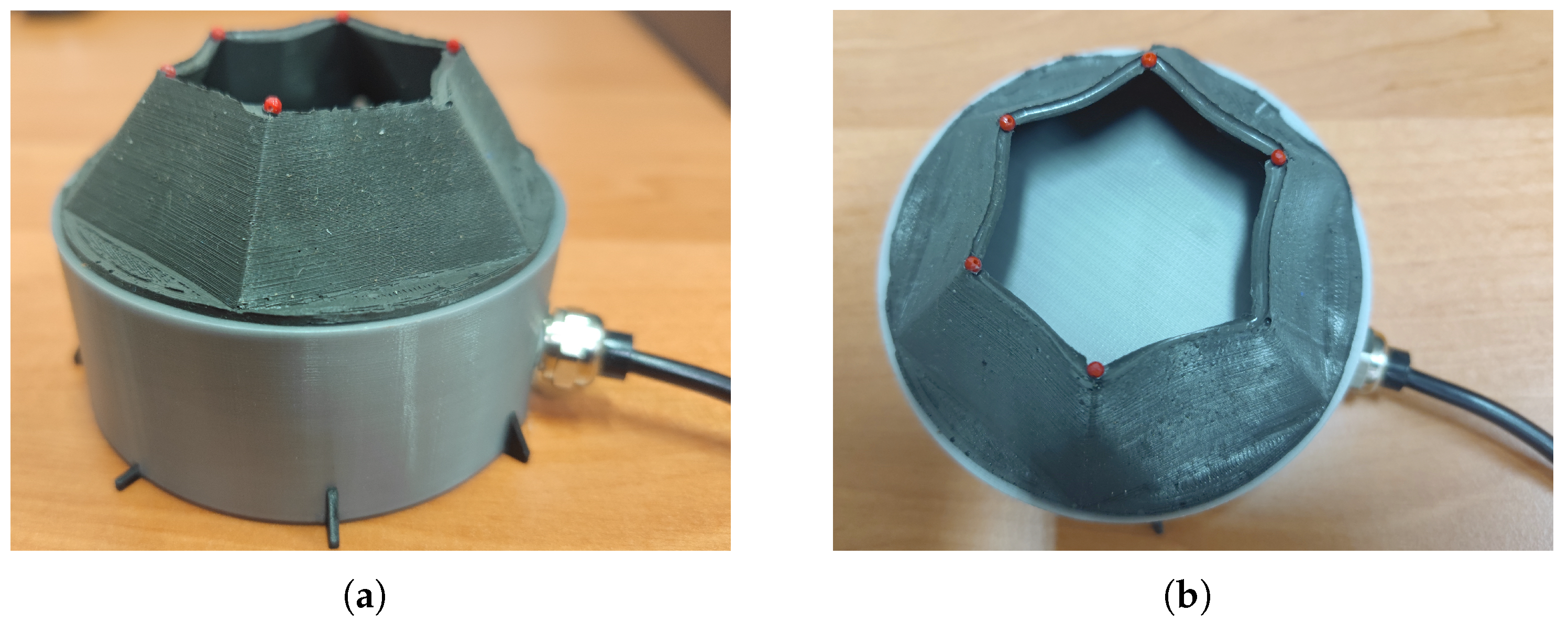
Finally, the assembled prototype can be observed in Figure 2. As seen in the image, the MRE cover’s walls are slightly concave so that when the cover is driven downwards by the field-induced force they are always deformed towards the center and the surface of the core. The presence of the reinforced vertical edges actually reinforces the grip, which was the key reason why they are present in this MRE concept.

3. Test Rig, Setup and Inputs

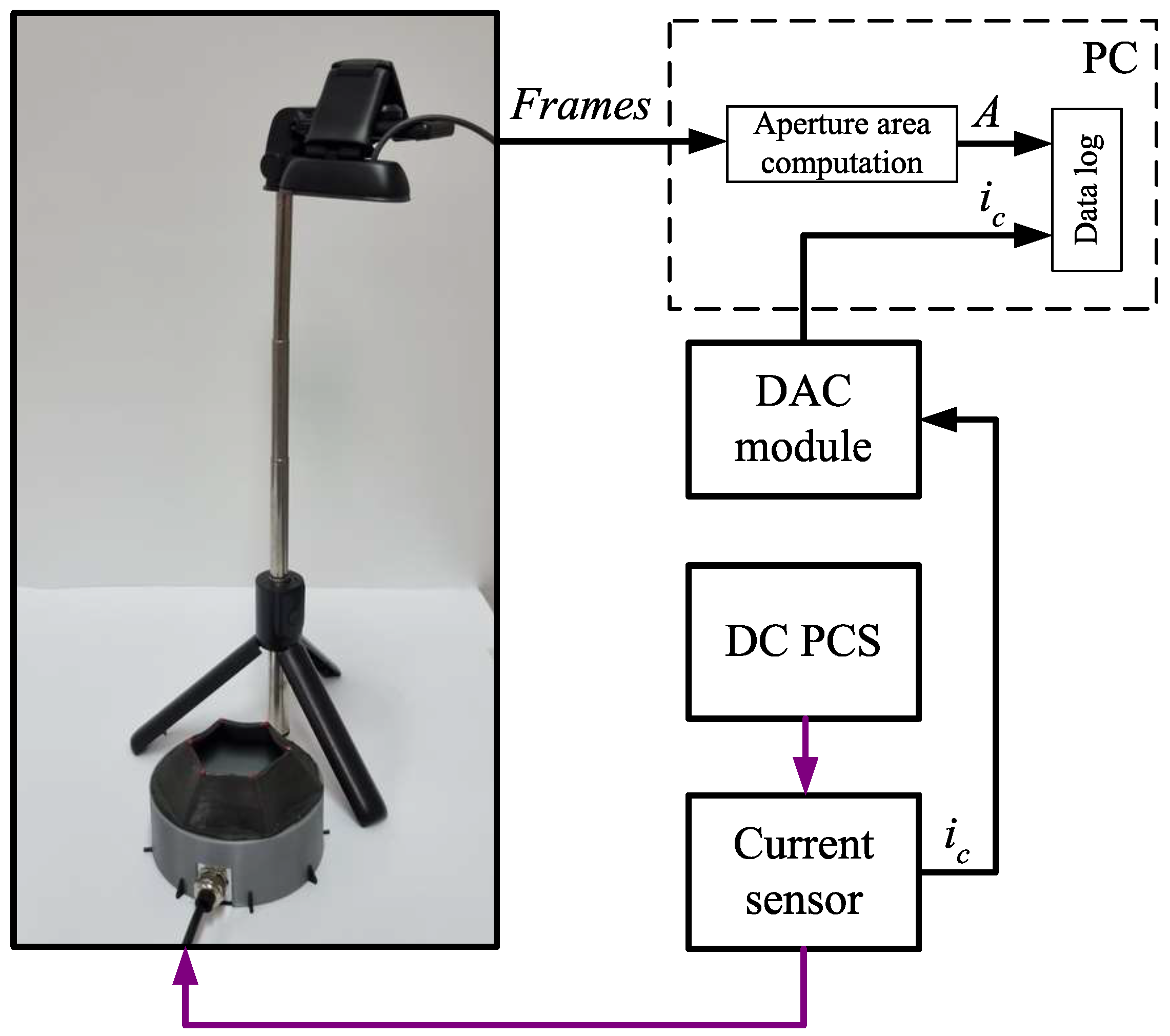
The purpose of the experiments was to evaluate the behaviour of the gripper while handling objects of various shapes and size. To accomplish that, a dedicated test rig was designed and assembled. The test setup and data processing diagram are shown in Figure 3. It involved the MRE gripper positioned on a table with the camera facing down and on a tripod. As is shown, a DC programmable power supply (PCS) was used for powering the solenoid’s coil. The current i c ( t ) was measured using the FLUKE i30 current probe. The probe signal was sent to the analog input of an Advantech USB-4716 USB I/O DAC module. The changes in the induced magnetic flux density in the electromagnet circuit (as induced by the coil current changes) were recorded using the BELL-5180 magnetometer) and stored in a PC workstation’s mass memory via the Advantech I/O module. Throughout the measurements, the flux probe was located between the MRE cover and the plastic surface on the core. The transverse probe was used for measuring the flux density above the core ( B z ). Determining the optimum location of the probe was based on 2D-axisymmetric magnetostatic finite-element model simulations (see Figure 1c). Based on the obtained numerical results, the probe’s stem was located above the outer core and below the deformable cover.
The behavior of the gripper (tracking of the hexagonal aperture area variation with time) by means of the magnetic field induced was recorded by the camera simultaneously with the prescribed current excitation. That enabled a quantitative assessment of the gripper’s operation in a contactless and non-invasive manner.
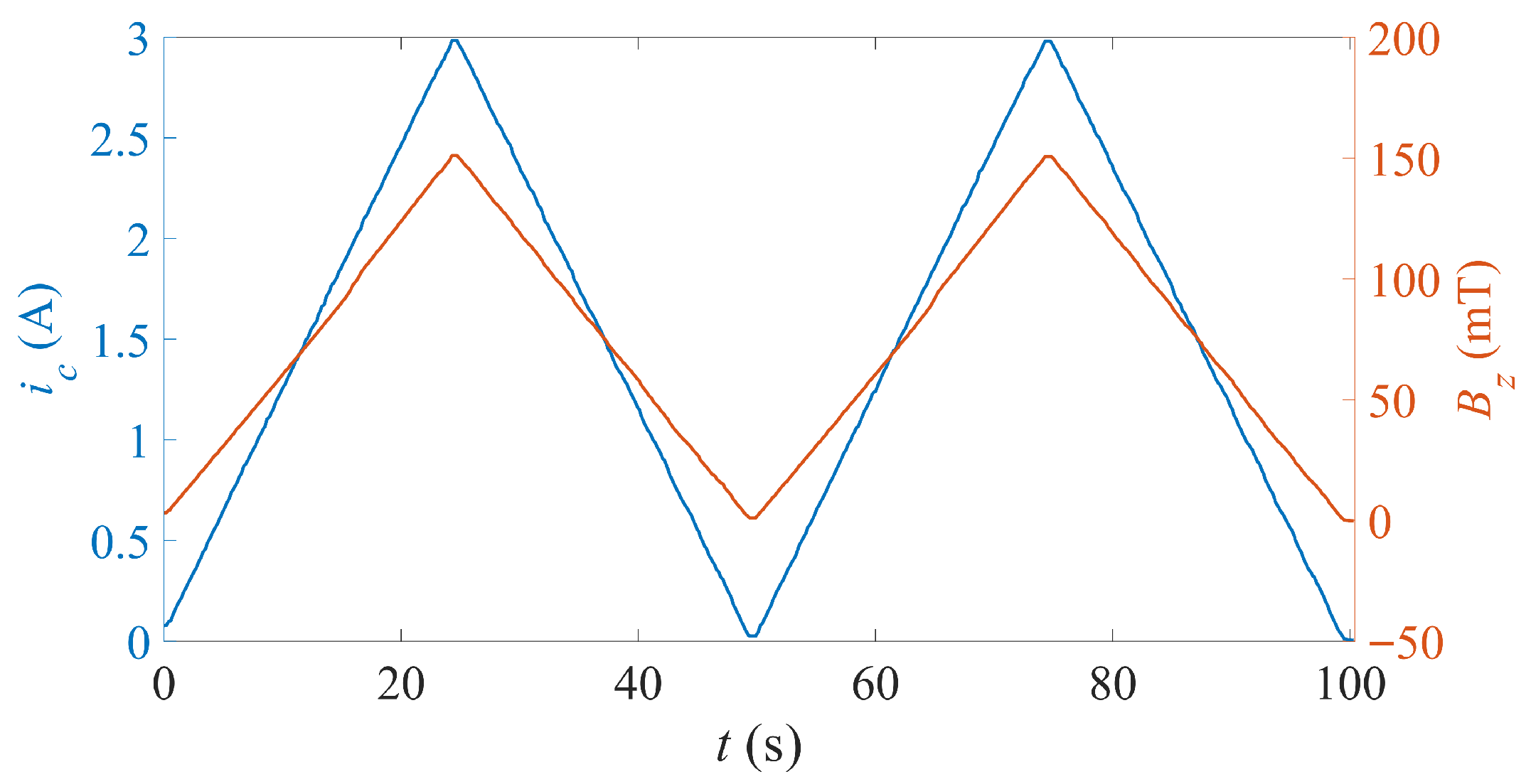
Briefly, the solenoid was excited by applying a periodic current waveform to the coil terminals. Exemplary time histories of the measured triangular coil current i c ( t ) and the flux density B z ( t ) are highlighted in Figure 4. The authors carried out preliminary measurements of the two quantities to examine the relationship between the current and the flux density. The cycle time of the input signal was 50 s, and its amplitude was 3 A.
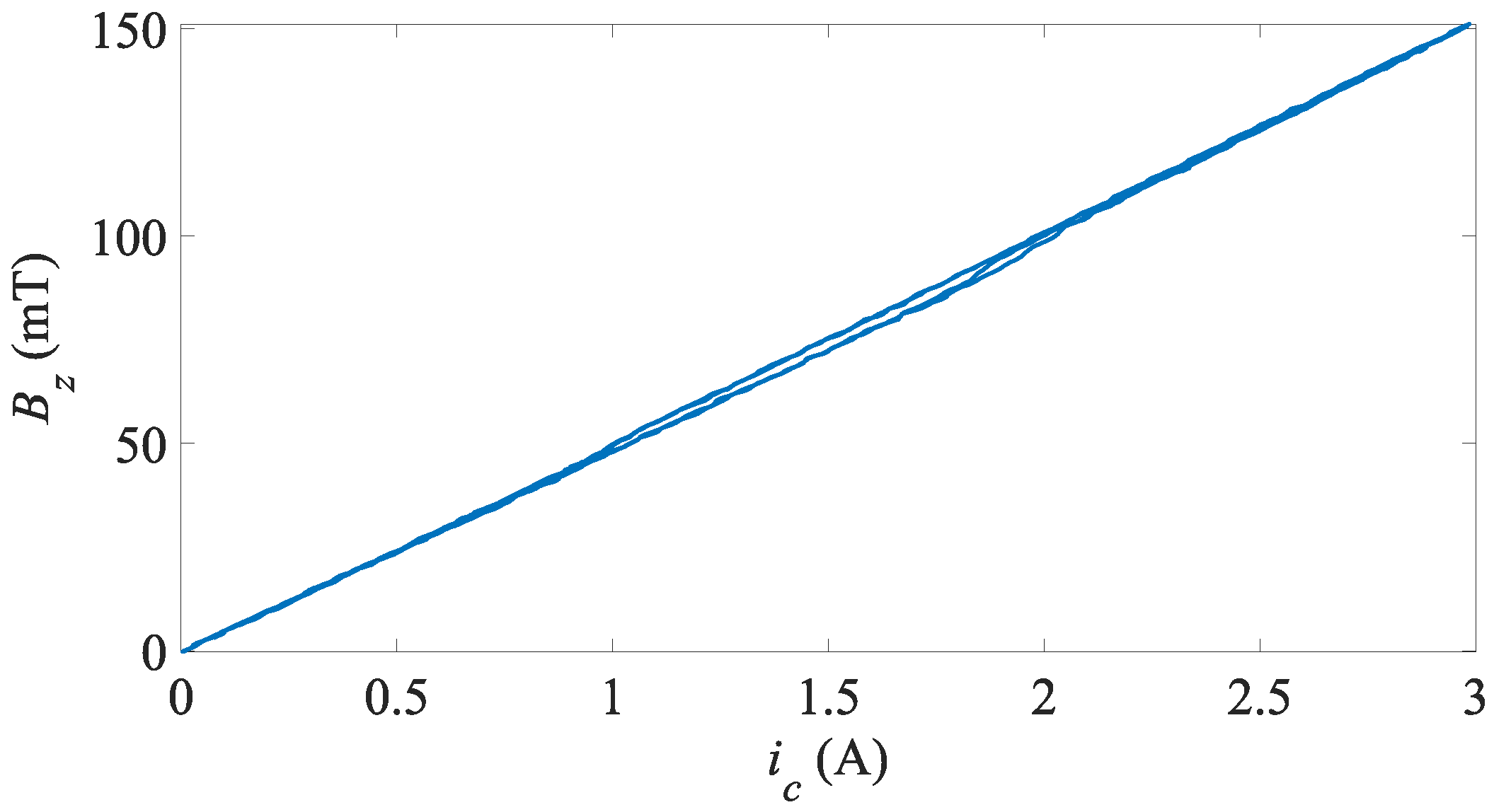
Note that the current variation from 0 to 3 A results in a linear relationship between the current and the flux density. The plot shown in Figure 5 shows no signs of magnetic saturation. The hysteresis width around 0 A is negligibly small. Therefore, it was assumed that the magnetic density–coil current relationship is linear, and it can be expressed quantitatively by means of the simple gain k = 51.6 mT/A. Therefore, in all the subsequent measurements, only the coil current was measured directly, and the flux density was calculated by multiplying the measured current values by the flux density gain k.
The testing programme was split into two series. With the first one, the MRE concept was tested without any objects simply to assess its free-state operation and to test the developed contactless method for assessing the aperture area variation with time. The second test series involved gripping objects of different shapes and dimensions, i.e., cylinders and cubes.

4. Results

The experimental results are presented in the subsections that follow below.

4.1. Free (No Load) State

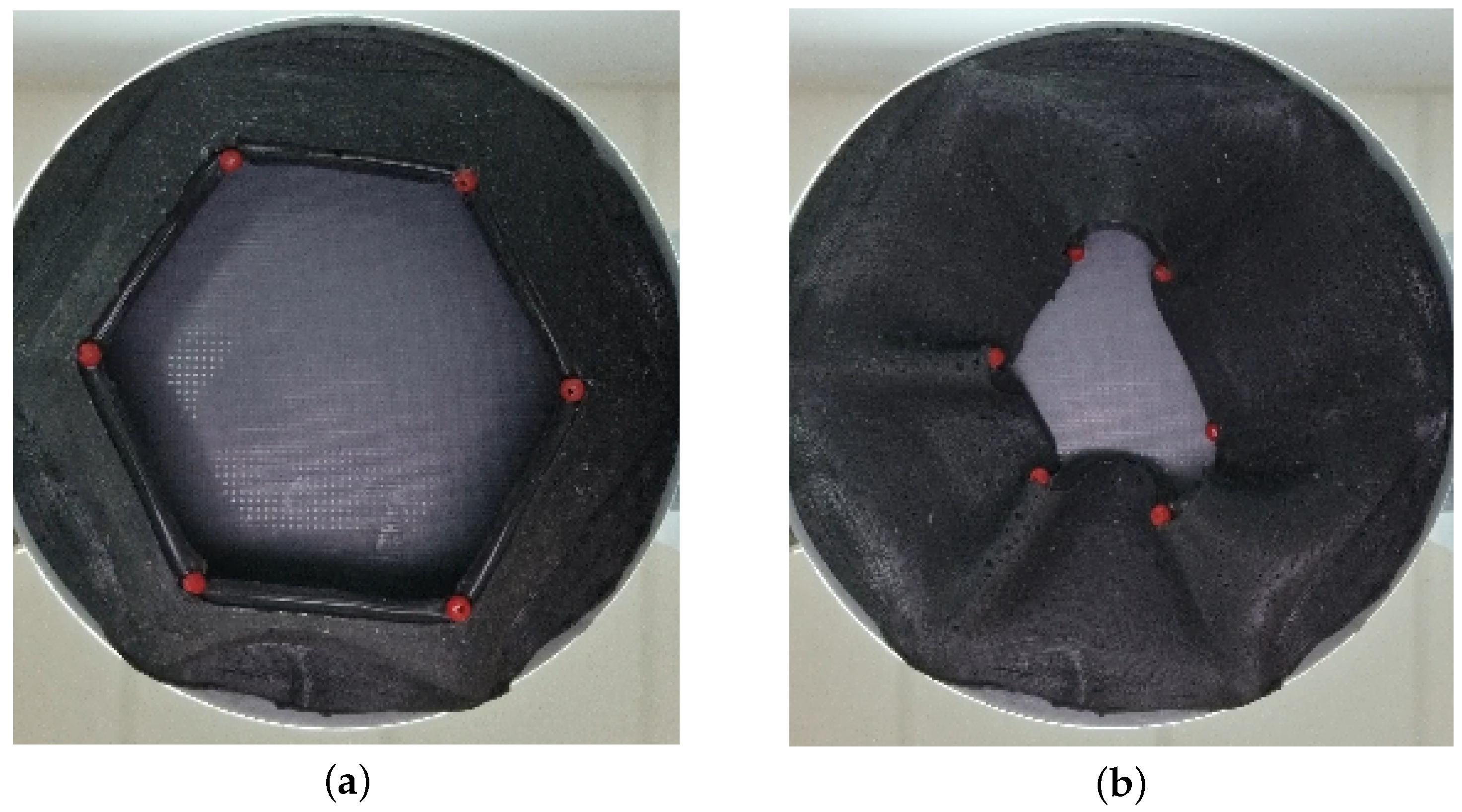
The first series of the experiments involved handling the gripper with no objects (free-state). Figure 6 highlights the aperture when fully opened (a) and fully closed (b), respectively. The illustration shows 6 red markers at the corners of the hexagonal aperture. The current locations of the markers are extracted from computer vision (video) data for the purpose of calculating the aperture area.
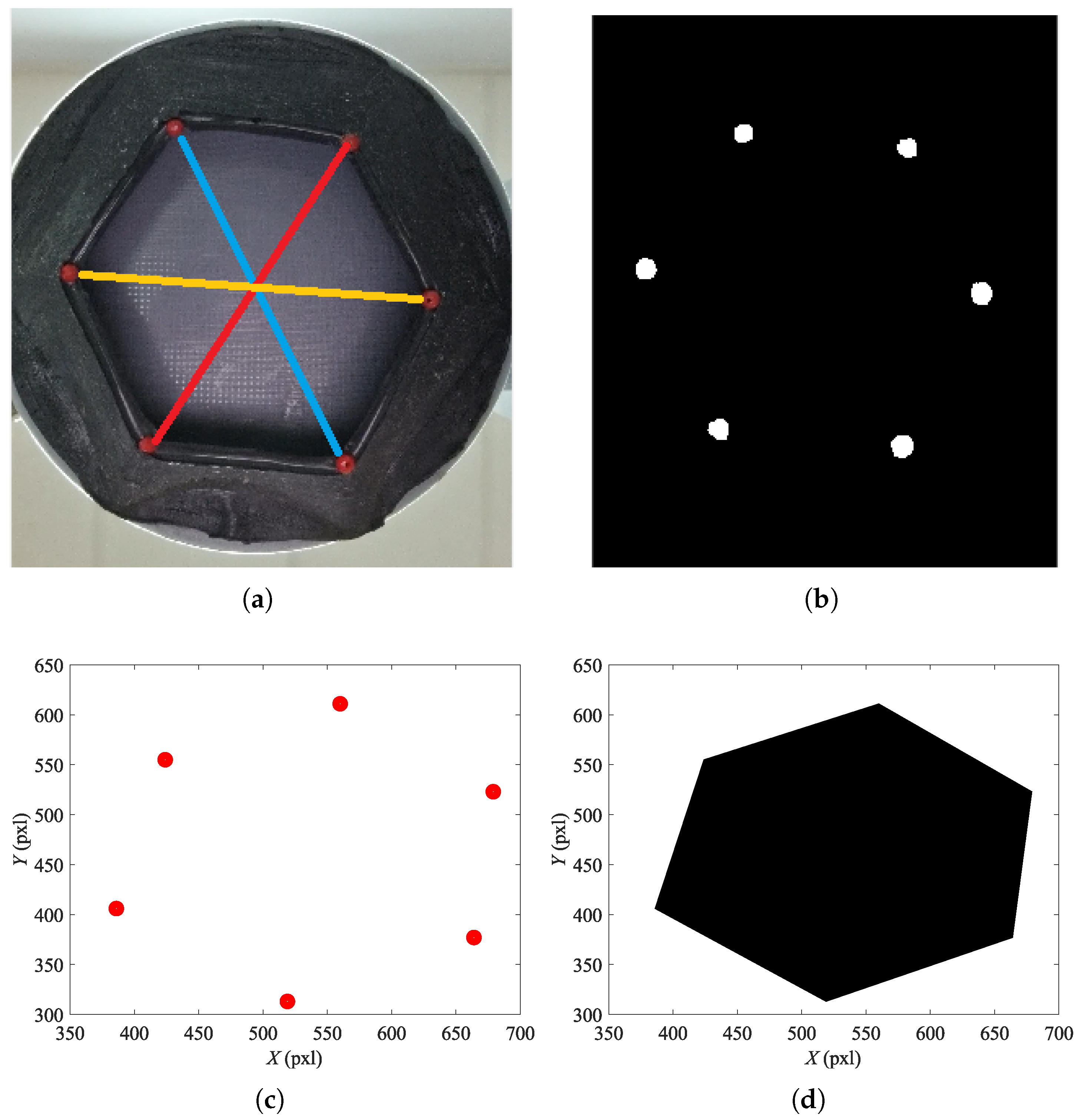
The location of the red markers varies while in operation. The diagonals ( d c 1 , d c 2 , d c 3 ) are plotted between the opposite vertices (markers). The length of each diagonal can be measured (see Figure 7a). The diagonal lengths will differ slightly due to minor discrepancies in the shape of the aperture or deviations from the ideal hexagonal shape. In the absence of magnetic field, the diagonal lengths are 56, 56, and 58 mm, respectively. Clearly, the length of each diagonal will vary with the magnetic field applied as the MRE cover becomes attracted towards the core.
To extract the marker coordinates, the Image Processing Toolbox module (MATLAB R2024a) computing environment was used in real-time. That allowed for the detection and the acquisition of the coordinates of the six markers (see Figure 7b) by means of the Blob Analysis framework. The framework can be used for the detection and analysis of the pixels X w , Y w ( w [ 1 ; 6 ] ) corresponding to the registered markers (see Figure 7c). The marker coordinates are expressed as pixel coordinates of the original image frame. It is, therefore, necessary to scale them to generally accepted system of measures/units. Based on the acquired marker coordinates and the scale coefficient k p x l , it is possible to calculate the diagonals d c 1 , d c 2 , d c 3 according to the formula:
d c i = k p x l X w X j 2 + Y w Y j 2 , i = 1 , 2 , 3
where w, j-indices of the opposite markers. By tracking the length of each diagonal, it is then possible to assess the gripper’s performance while operating. An elegant alternative is the assessment of the gripper’s performance using the calculated aperture area in real-time. To accomplish this goal, a procedure for calculating the aperture area (the hexagonal shape illustrated in Figure 7d)) based on the image coordinates X w , Y w can be devised as follows:
A = 1 2 k p x l 2 w = 1 5 X w Y w + 1 + X 6 Y 1 w = 1 5 X w + 1 Y w X 1 Y 6
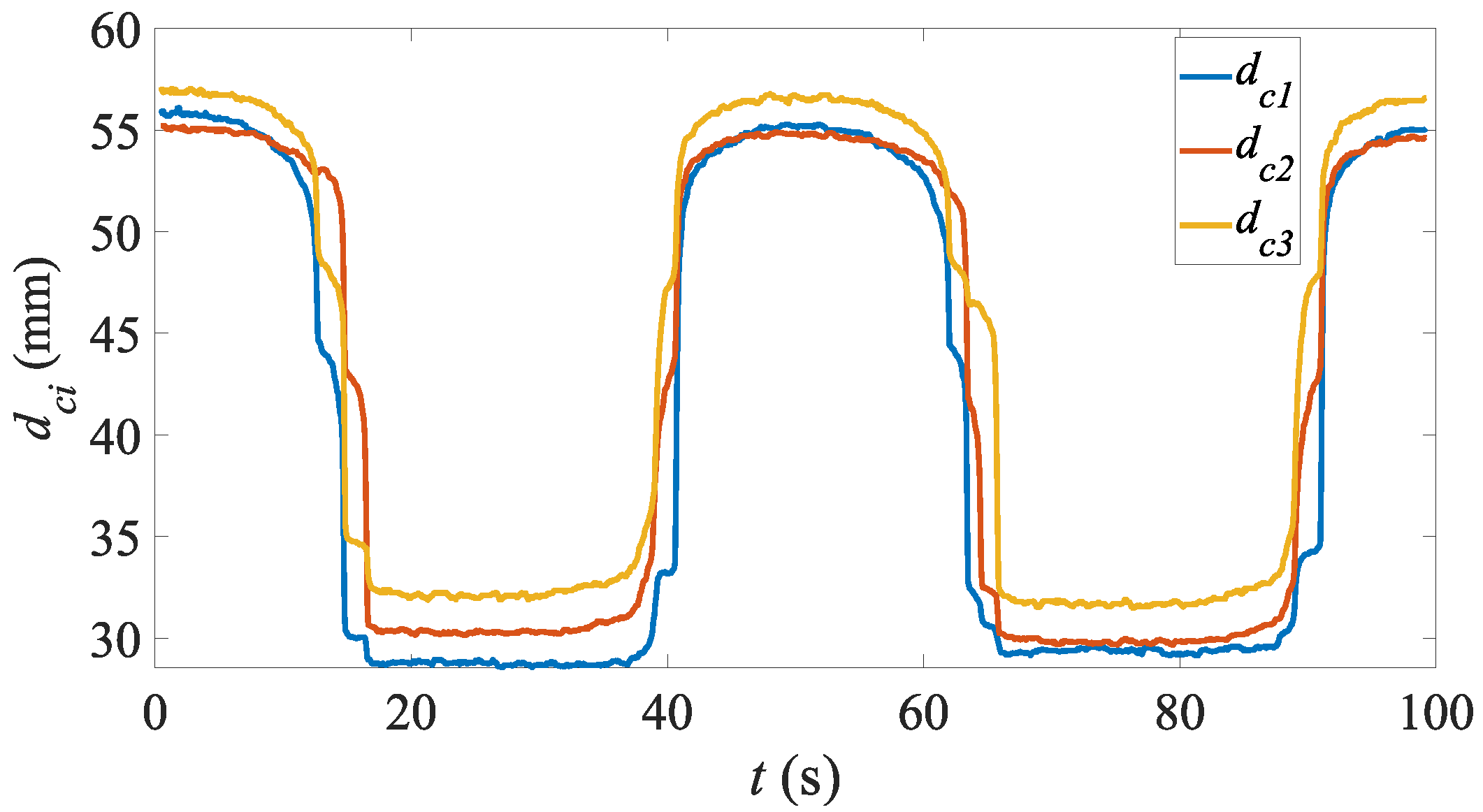
Variations of the diagonals d c 1 , d c 2 , d c 3 when subjected to magnetic field (current) excitations are shown in Figure 8. The highlighted behaviour corresponds to the triangular waveform presented in Figure 4. As illustrated, increasing the current level results in the reduction in the diagonals’ length. It is also worth noting that the diagonals are not equal—the gripper is not completely axially symmetrical.
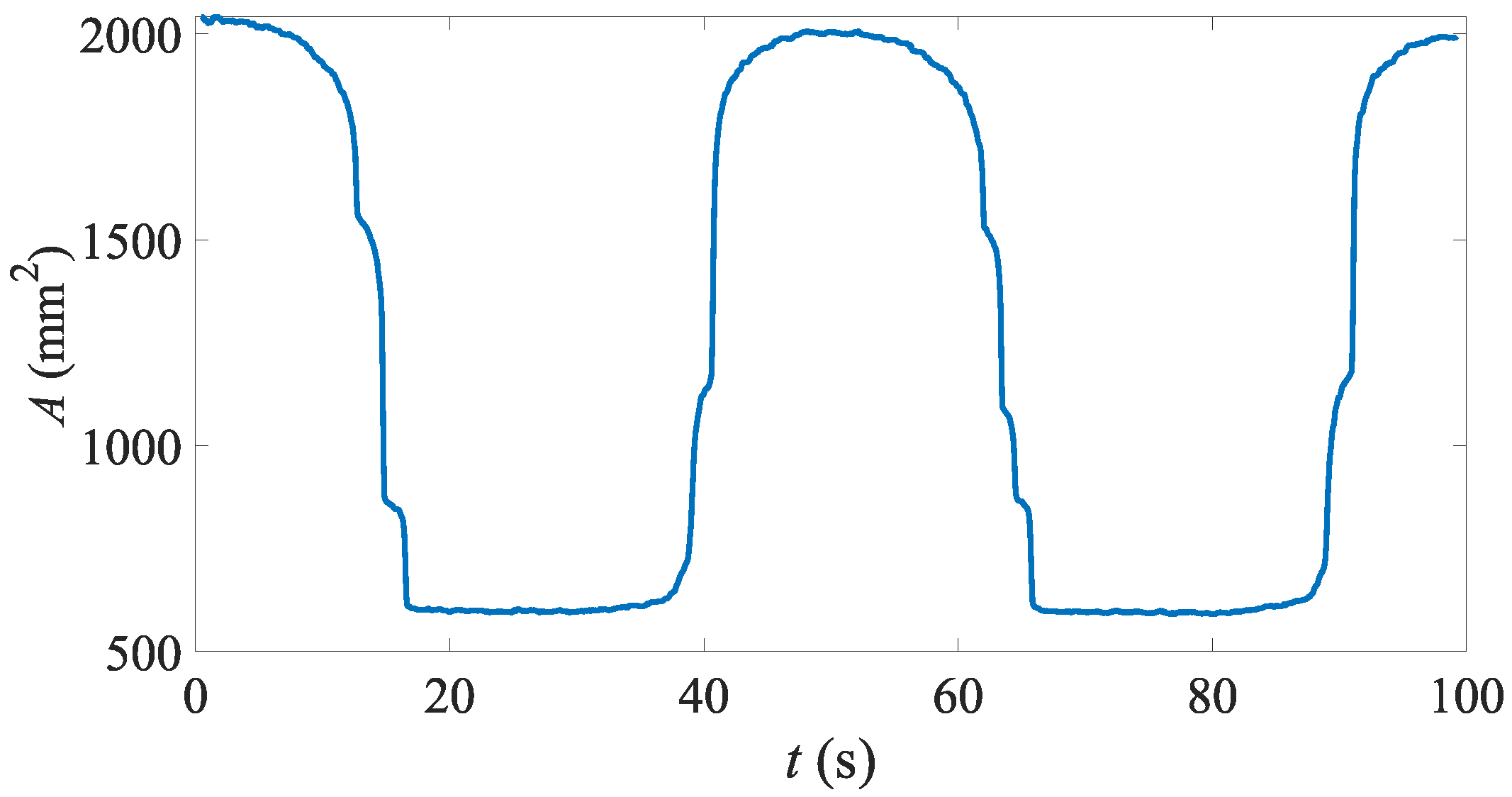
Observations of the data in Figure 8 imply that the assessment of the gripper’s performance based on the diagonals is not sufficient. This can be accomplished by evaluating and tracking the aperture area during the operation of the gripper, as highlighted in Figure 7. The aperture area is reduced by a factor of 4 (see Figure 9), and it is repeatable without any visible degradation of its performance.
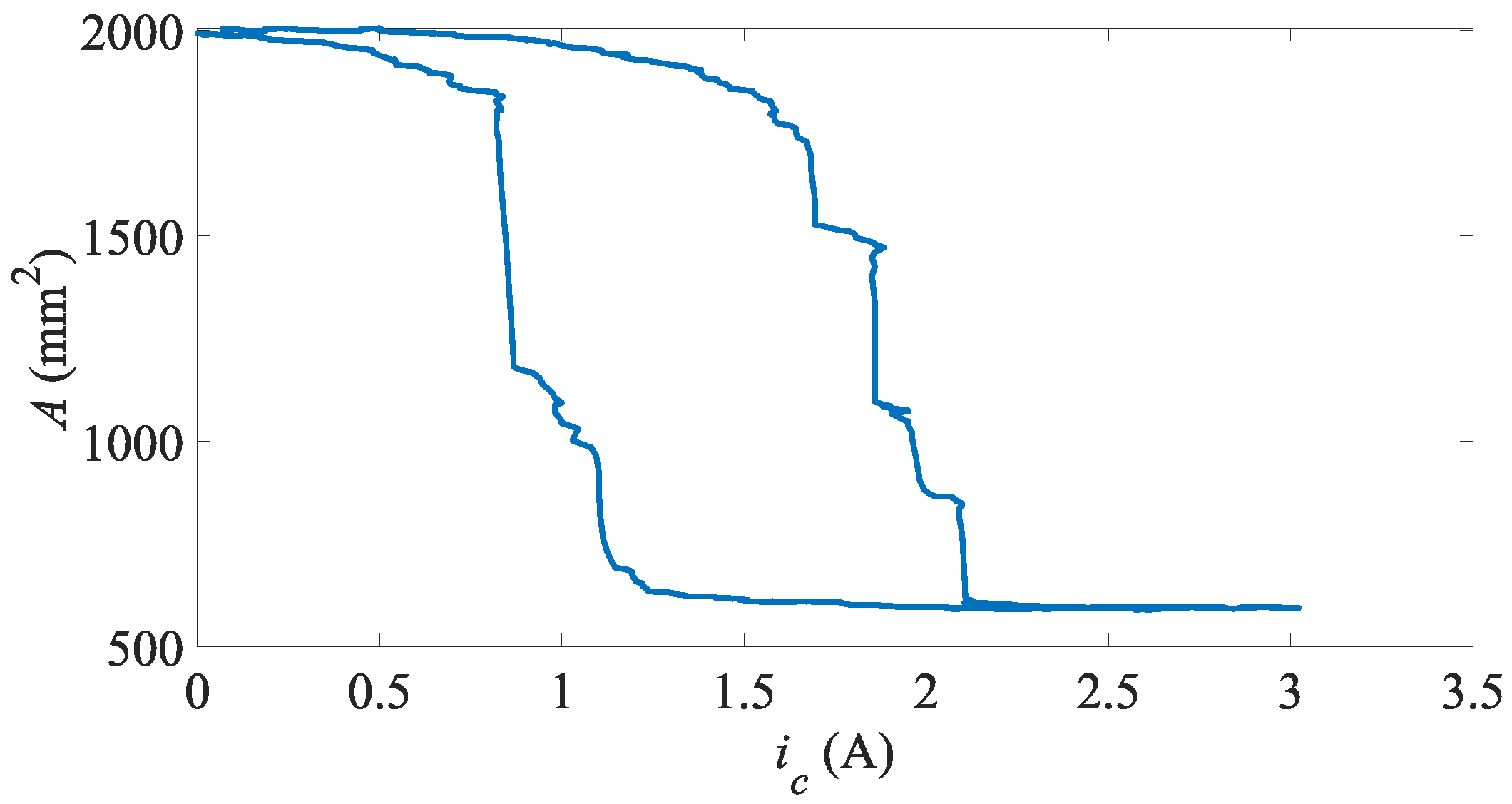
The A- I c time history in Figure 10 shows a visible hysteresis in positive/negative current change directions or when closing and opening the gripper. It is evident that the opening/closing current levels are indeed distinct. In the presented example, the closing current is equal to 2.2 A, and the opening current is 1 A. It implies that, in order to close the gripper, it is necessary to apply a current of 2.2 A to the coil. For comparison, maintaining it in the closed condition requires a current that is lower than 2.2 A but higher than 1 A.
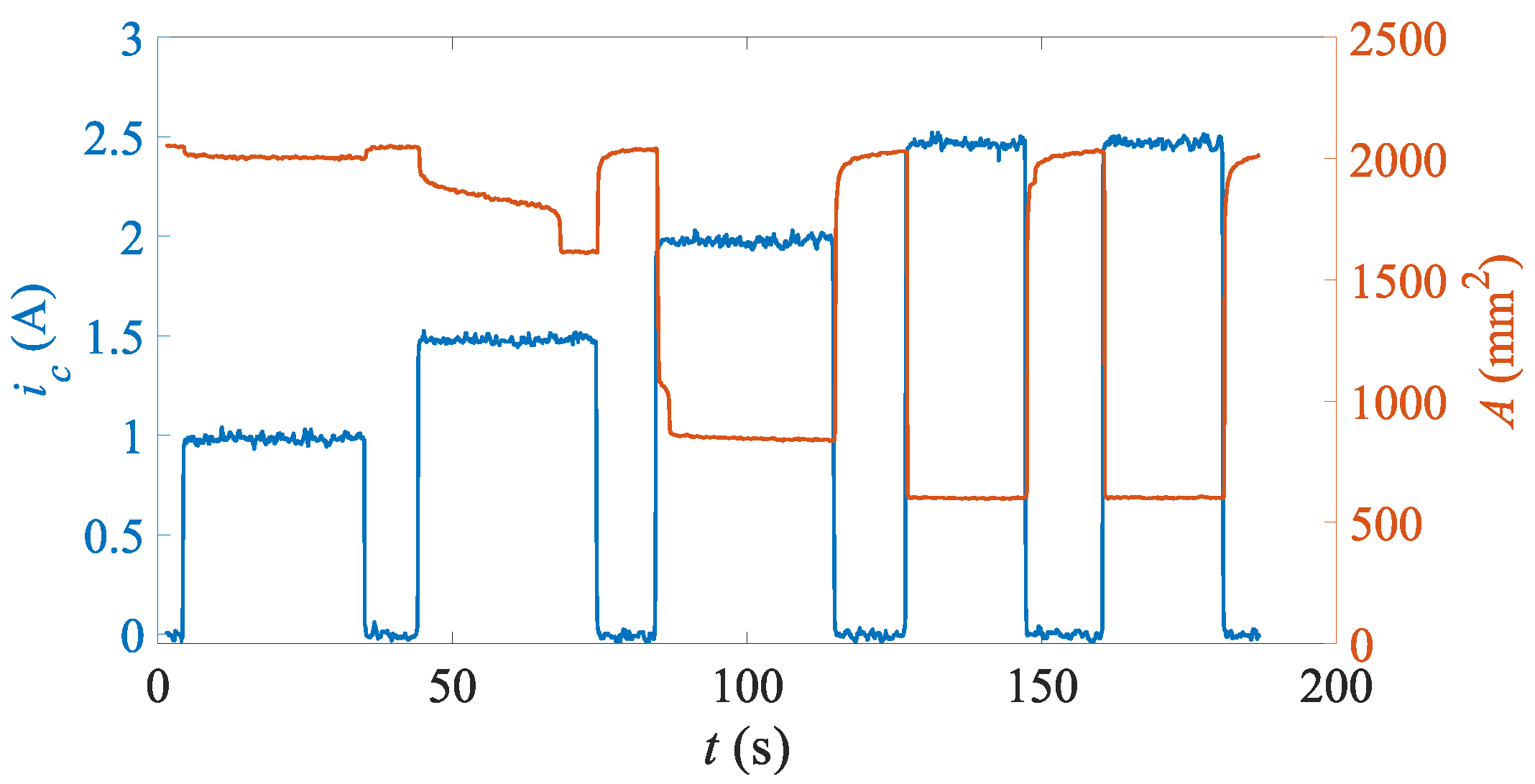
Next, a series of transient tests was performed to examine the behaviour of the gripper when subjected to current step inputs. The time history of the acquired aperture area is highlighted in Figure 11. As observed, the step waveform was designed in such a way to result in a series of pulses of increasing amplitude.
Based on the analysis of the obtained data, it is evident that that gripper starts closing at the current level of appr. 2 A. The response time T was then estimated as follows:
A = A 0 A 1 1 e t T , i c A = A 0 + A 1 e t T , i c
where A 0 —aperture area when fully opened, A 1 —aperture area change, and T—time constant. The arrows show the current increase/decrease direction. The results are summarized in Table 1. A delay of 0.25 s should be accounted for. At the current level of 1 A (first pulse), there was no reaction of the gripper. Increasing the current input amplitude up to 2 A (second pulse) results in a slow closing action of the aperture as manifested by the time constant T. Subsequent pulses of larger amplitudes had a positive effect on the response time, i.e., it was significantly reduced. Minor inflation of the time constant at the two largest current levels is likely due to aperture area estimation errors. To summarize, on–off and off–on response times are distinct.

4.2. Cylindrical Objects

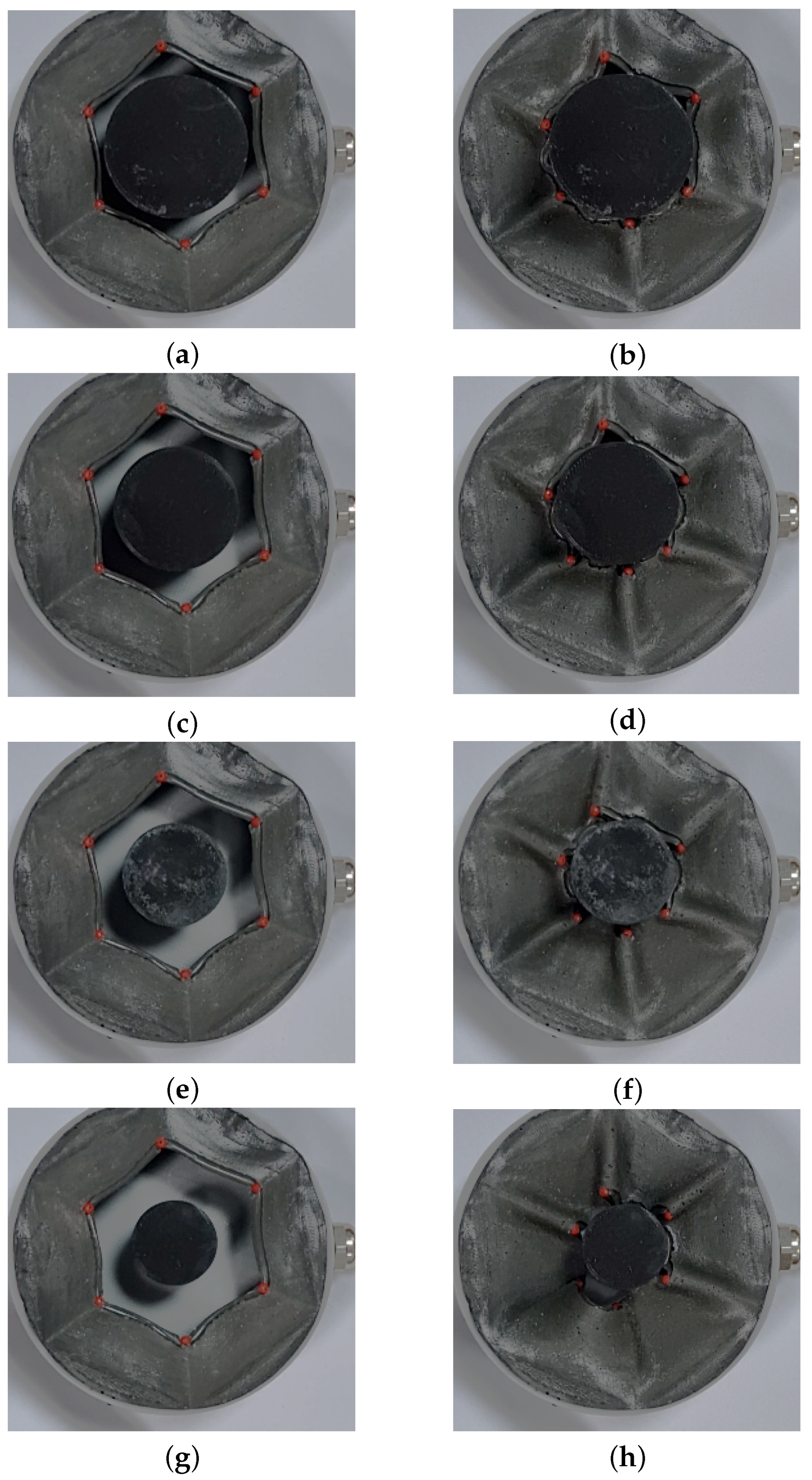
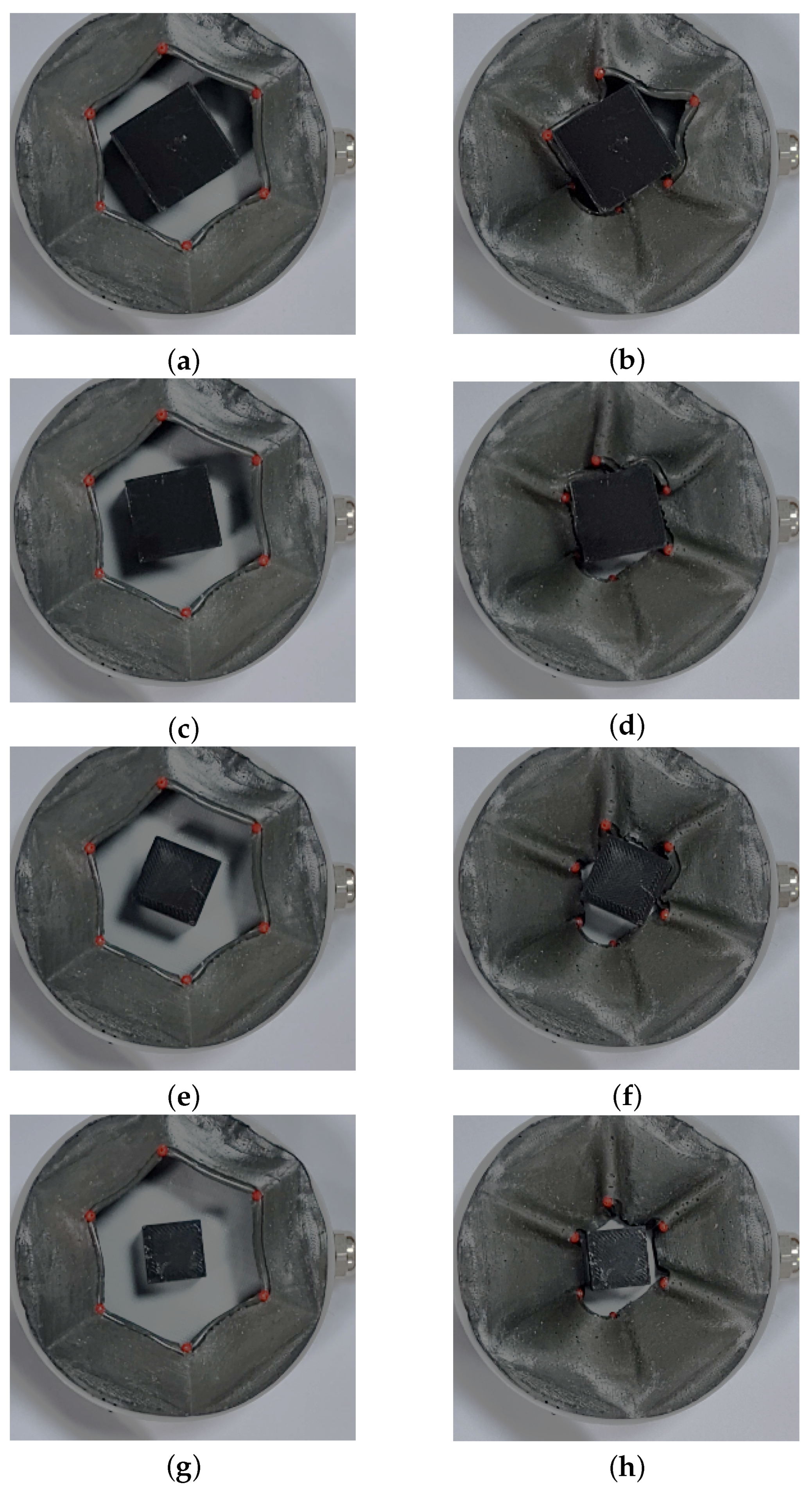
This section reveals the results of the experiment series involving the handling of cylindrical objects. The tested objects were four 3D printed cylinders of equal height and different diameters: D p = { 40 , 35 , 30 , 25 } (as shown in Figure 12). As in the previous section, the gripper’s performance was evaluated based on the observations of the aperture area A.
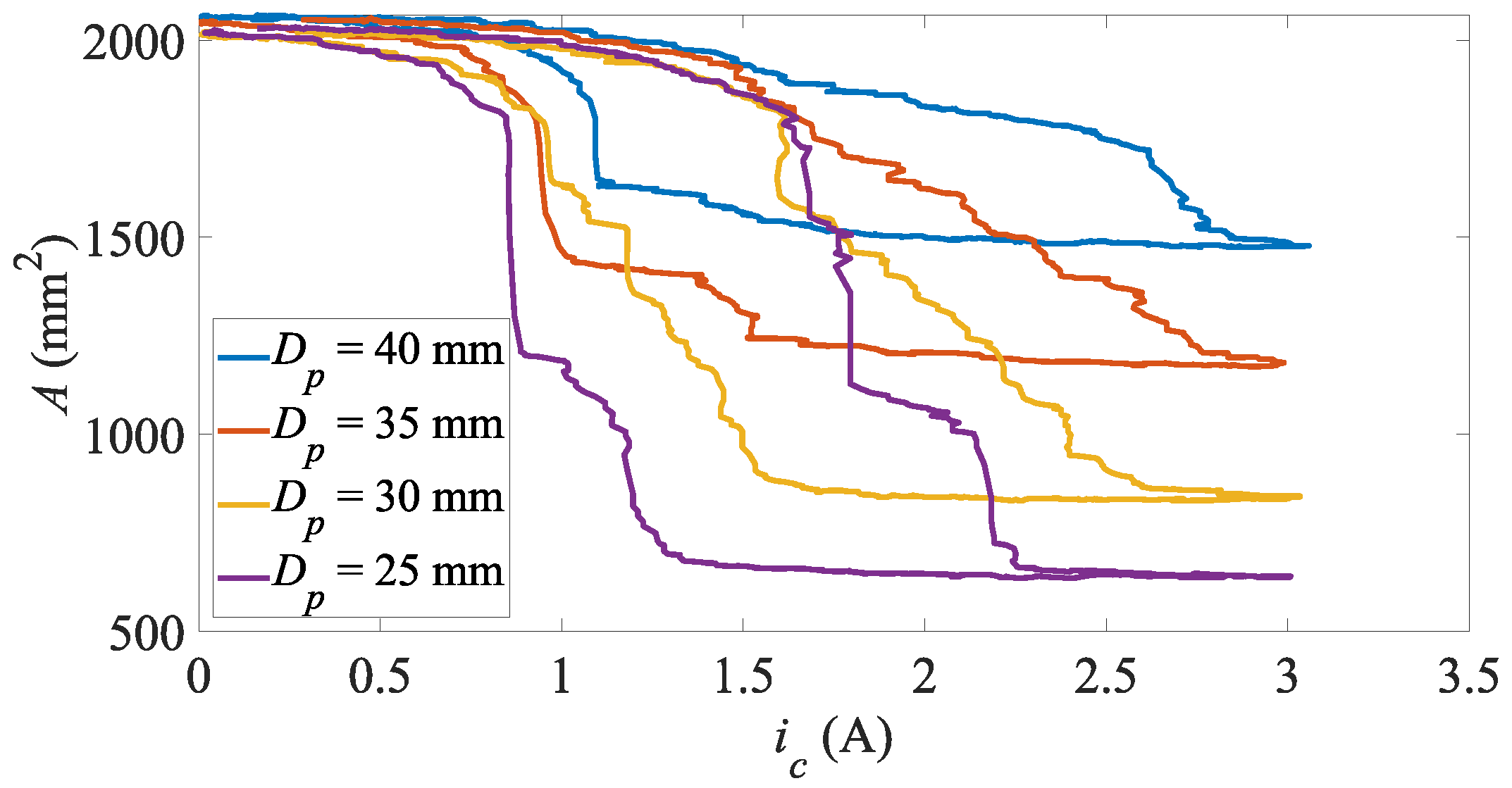
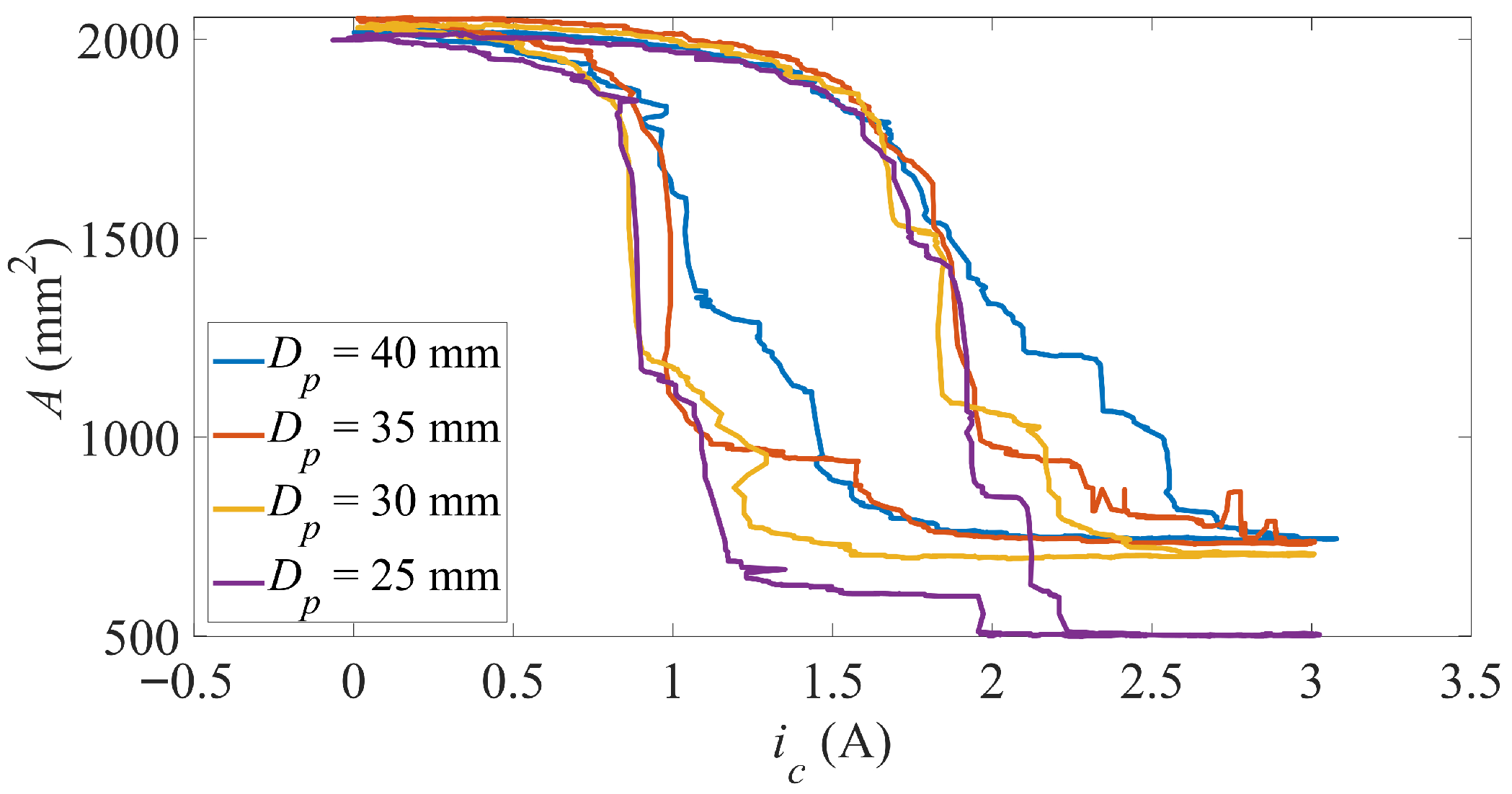
The tests involving the cylinders were carried out using the current input waveform as already described. The results are presented in Figure 13 as plots of the aperture area vs the exciting current. It can be seen that the aperture area in the closed state (grip) depends on the size of the grasped object.
With the largest cylinder ( D p = 40 mm), the current at which the object is fully captured (closing current) is equal to appr. 2.8 A. As the object diameter decreases, the current gradually decreases to appr. 2.2 A for the smallest object ( D p = 25 mm). The opening current (at which the objects were released) was equal to 1 A regardless of the cylinder size.

4.3. Cubic Objects

The second series of the experiments involving objects concerned cubes. As in the above-mentioned scenario, the authors used four 3D-printed cubes; the diagonals of the cubes were D p = { 40 , 35 , 30 , 25 } mm (see Figure 14).
Similarly, the solenoid’s current excitation was a periodic triangular waveform of the amplitude equal to 3 A. The waveform’s cycle time was 50 s. The results are presented in Figure 15 for the respective objects. Again, it can be observed that closing/opening current levels vary with the tested cube size. The observation coincides with the results obtained above.
The results showed that the closing current decreases with decreasing diameter D p of the object being grasped.
Similarly to the case of cylindrical objects, it was observed that the closing current decreases with decreasing diameter D p of the object. In the case of the largest cube the closing current is equal to 2.6 A and 2.3 A for the smaller one ( D p = 30 mm), respectively. The smallest cube ( D p = 25 mm) could not be grasped. The opening current is approximately equal to 1 A regardless of the cube size.

5. Summary

The core purpose of the research conducted by the authors was to examine the feasibility of a simple MRE soft gripper. The gripper’s action is driven by magnetic field induced in the solenoid. The gripper becomes deformed in the presence of the induced magnetic field, thus allowing for manipulating objects of various shapes and dimensions, namely, cylinders and cubes. With the gripper, a reduction in the closing area by a factor of four was achieved. In this study, the authors present the results of an experimental study to assess the behaviour of the manufactured prototype. To enable a quantitative assessement, a computer vision based (contactless) method was used for measuring the changes in the gripper’s aperture area over time.
The results of the tests have showed that the gripper’s operation is consistent and repeatable (at least during the tests conducted by the authors). This is indicated by the observations of the closing/opening current levels on the cycle-to-cycle basis. The closing current was found to vary with the size of the object being grasped. Moreover, the observations of the test data reveal the presence of a wide hysteresis loop when representing the gripper’s operation in the aperture area vs coil current plane. The hysteresis is likely due to the viscoelastic properties of the material. As the range of current excitation frequencies was limited at this stage, it was not possible to determine if the loop’s width depends on the current change rate. Moreover, there are issues grasping the smallest cubic object which determines the operating range of the prototype.
Finally, one major issue is the high energy consumption of the gripper. Therefore, the future work will focus on minimizing the gripper’s power draw, and optimizing the solenoid’s structure and the elastic cover shape. It is also worth noting that the (contactless) method for measuring the aperture area based on computer vision data can be used in the gripper’s planned automated control system.

Author Contributions

Conceptualization, D.G. and J.G.; methodology, D.G.; software, D.G.; validation, D.G., J.G. and B.S.; formal analysis, D.G.; investigation, D.G.; resources, D.G. and J.G.; data curation, D.G.; writing—original draft preparation, D.G., J.G., B.S. and P.O.; writing—review and editing, D.G., J.G., B.S. and P.O. All authors have read and agreed to the published version of the manuscript.

Funding

This research received no external funding.

Data Availability Statement

The data generated during the experiments can be made available upon request.

Conflicts of Interest

The authors declare no conflicts of interest.

References

  1. Rus, D.; Tolley, M.T. Design, fabrication and control of soft robots. Nature 2015, 521, 467–475. [Google Scholar] [CrossRef] [PubMed]
  2. Zaidi, S.; Maselli, M.; Laschi, C.; Cianchetti, M. Actuation Technologies for Soft Robot Grippers and Manipulators: A Review. Curr. Robot. Rep. 2021, 2, 355–369. [Google Scholar] [CrossRef]
  3. Pettersson, A.; Davis, S.; Gray, J.O.; Dodd, T.J.; Ohlsson, T. Design of a magnetorheological robot gripper for handling of delicate food products with varying shapes. J. Food Eng. 2010, 98, 332–338. [Google Scholar] [CrossRef]
  4. Lee, J.H.; Chung, Y.S.; Rodrigue, H. Long Shape Memory Alloy Tendon-based Soft Robotic Actuators and Implementation as a Soft Gripper. Sci. Rep. 2019, 9, 11251. [Google Scholar] [CrossRef]
  5. Rodrigue, H.; Wang, W.; Kim, D.R.; Ahn, S.H. Curved shape memory alloy-based soft actuators and application to soft gripper. Compos. Struct. 2017, 176, 398–406. [Google Scholar] [CrossRef]
  6. Ye, Y.; Cheng, P.; Yan, B.; Lu, Y.; Wu, C. Design of a Novel Soft Pneumatic Gripper with Variable Gripping Size and Mode. J. Intell. Robot. Syst. Theory Appl. 2022, 106, 1–15. [Google Scholar] [CrossRef]
  7. Kim, D.; Baek, S.R.; Kim, M.S.; Park, C.Y.; Lee, I.H. Design and manufacturing process of pneumatic soft gripper for additive manufacturing. Sens. Actuators A Phys. 2024, 370, 115218. [Google Scholar] [CrossRef]
  8. Dou, X.; Chen, Z.; Ren, F.; He, L.; Chen, J.; Yin, L.J.; Luo, Y.; Dang, Z.M.; Mao, J. Dielectric Elastomer Network with Large Side Groups Achieves Large Electroactive Deformation for Soft Robotic Grippers. Adv. Funct. Mater. 2024, 34, 2407049. [Google Scholar] [CrossRef]
  9. Pourazadi, S.; Bui, H.; Menon, C. Investigation on a soft grasping gripper based on dielectric elastomer actuators. Smart Mater. Struct. 2019, 28, 035009. [Google Scholar] [CrossRef]
  10. Bernat, J.; Czopek, P.; Superczynska, P.; Gajewski, P.; Marcinkowska, A. The Construction of a Soft Gripper Based on Magnetorheological Elastomer with Permanent Magnet. J. Intell. Mater. Sys. 2025. [Google Scholar] [CrossRef]
  11. Li, X.; Zhang, Z.; Sun, M.; Wu, H.; Zhou, Y.; Wu, H.; Jiang, S. A magneto-active soft gripper with adaptive and controllable motion. Smart Mater. Struct. 2021, 30, 015024. [Google Scholar] [CrossRef]
  12. Koivikko, A.; Drotlef, D.M.; Sitti, M.; Sariola, V. Magnetically switchable soft suction grippers. Extrem. Mech. Lett. 2021, 44, 101263. [Google Scholar] [CrossRef]
  13. Park, J.E.; Shin, H.N.; Park, J.; Suh, J.; Kim, Y.K. Friction variable rubber pad using magnetorheological elastomer for robot grippers. J. Intell. Mater. Syst. Struct. 2023, 34, 292–302. [Google Scholar] [CrossRef]
  14. Białek, M.; Jędryczka, C.; Milecki, A. Investigation of Thermoplastic Polyurethane Finger Cushion with Magnetorheological Fluid for Soft-Rigid Gripper. Energies 2021, 14, 6541. [Google Scholar] [CrossRef]
  15. Shintake, J.; Cacucciolo, V.; Floreano, D.; Shea, H. Soft robotic grippers. Adv. Mater. 2018, 30, 1707035. [Google Scholar] [CrossRef] [PubMed]
  16. Koo, J.H.; Dawson, A.; Kim, Y.K.; Kim, K.S. Experimental investigation of magneto-rheological based elastomers based on hard magnetic fillers. In Proceedings of the 21st International Conference on Adaptive Structures and Technologies 2010, ICAST 2010, State College, PA, USA, 4–6 October 2010; pp. 319–325. [Google Scholar]
  17. Yarali, E.; Baniasadi, M.; Zolfagharian, A.; Chavoshi, M.; Arefi, F.; Hossain, M.; Bastola, A.; Ansari, M.; Foyouzat, A.; Dabbagh, A.; et al. Magneto-/electro-responsive polymers toward manufacturing, characterization, and biomedical/soft robotic applications. Appl. Mater. Today 2022, 26, 101306. [Google Scholar] [CrossRef]
  18. Wang, X.; Gordaninejad, F.; Calgar, M.; Liu, Y.; Sutrisno, J.; Fuchs, A. Sensing Behavior of Magnetorheological Elastomers. J. Mech. Des. 2009, 131, 091004. [Google Scholar] [CrossRef]
  19. Nasir, N.A.M.; Nazmi, N.; Nordin, N.A.; Mazlan, S.A.; Rahman, M.A.A. An overview of graphite utilization in magnetorheological materials. In AIP Conference Proceedings; AIP Publishing LLC: Melville, NY, USA, 2024; Volume 3124, p. 080007. [Google Scholar]
  20. Yun, G.; Tang, S.Y.; Sun, S.; Yuan, D.; Zhao, Q.; Deng, L.; Yan, S.; Du, H.; Dickey, M.D.; Li, W. Liquid metal-filled magnetorheological elastomer with positive piezoconductivity. Nat. Commun. 2019, 10, 1300. [Google Scholar] [CrossRef]
  21. Blanco, K.; Navas, E.; Emmi, L.; Fernandez, R. Manufacturing of 3D printed soft grippers: A review. IEEE Access 2024, 12, 30434–30451. [Google Scholar] [CrossRef]
  22. Wang, Z.; Liu, C.; Zheng, X.; Zhao, L.; Qiu, Y. Advancements in Semi-Active Automotive Suspension Systems with Magnetorheological Dampers: A Review. Appl. Sci. 2024, 14, 7866. [Google Scholar] [CrossRef]
  23. Kordonski, W.I.; Jacobs, S.D. Magnetorheological finishing. Int. J. Mod. Phys. B 1996, 10, 2837–2848. [Google Scholar] [CrossRef]
  24. Deng, Z.; Dapino, M.J. Review of magnetostrictive materials for structural vibration control. Smart Mater. Struct. 2018, 27, 113001. [Google Scholar] [CrossRef]
  25. Cramer, J.; Cramer, M.; Demeester, E.; Kellens, K. Exploring the potential of magnetorheology in robotic grippers. Procedia CIRP 2018, 76, 127–132. [Google Scholar] [CrossRef]
  26. Ahamed, R.; Choi, S.B.; Ferdaus, M.M. A state of art on magneto-rheological materials and their potential applications. J. Intell. Mater. Syst. Struct. 2018, 29, 2051–2095. [Google Scholar] [CrossRef]
  27. Böse, H.; Gerlach, T.; Ehrlich, J. Magnetorheological elastomers—An underestimated class of soft actuator materials. J. Intell. Mater. Syst. Struct. 2021, 32, 1550–1564. [Google Scholar] [CrossRef]
  28. Li, Y.; Li, J.; Li, W.; Du, H. A state-of-the-art review on magnetorheological elastomer devices. Smart Mater. Struct. 2014, 23, 123001. [Google Scholar] [CrossRef]
  29. Kumar, J.S.; Paul, P.S.; Raghunathan, G.; Alex, D.G. A review of challenges and solutions in the preparation and use of magnetorheological fluids. Int. J. Mech. Mater. Eng. 2019, 14, 13. [Google Scholar] [CrossRef]
  30. Lim, B.; Yoon, J. High-Load Capable Soft Tactile Sensors: Incorporating Magnetorheological Elastomer for Accurate Contact Detection and Classification of Asymmetric Mechanical Components. Adv. Intell. Syst. 2025, 7, 2400275. [Google Scholar] [CrossRef]
  31. Wang, D.; Zhao, C.; Yang, J.; Lai, S.; Wang, X.; Gong, X. Enhanced Mechanical-Magnetic Coupling and Bioinspired Structural Design of Magnetorheological Elastomers. Adv. Funct. Mater. 2025, 35, 2419111. [Google Scholar] [CrossRef]
  32. Wang, L.; Liu, X.; Xu, H.; Huang, Q.; Jian, Y.; Lu, H.; Zou, X.; Shen, T. Recent advances in magnetorheological materials and applications in robots and medical devices. J. Polym. Eng. 2025, 45, 723–733. [Google Scholar] [CrossRef]
  33. Chung, H.J.; Parsons, A.M.; Zheng, L. Magnetically controlled soft robotics utilizing elastomers and gels in actuation: A review. Adv. Intell. Syst. 2021, 3, 2000186. [Google Scholar] [CrossRef]
  34. Bernat, J.; Gajewski, P.; Kołota, J.; Marcinkowska, A. Review of soft actuators controlled with electrical stimuli: IPMC, DEAP, and MRE. Appl. Sci. 2023, 13, 1651. [Google Scholar] [CrossRef]
  35. van Vilsteren, S.J.; Yarmand, H.; Ghodrat, S. Review of magnetic shape memory polymers and magnetic soft materials. Magnetochemistry 2021, 7, 123. [Google Scholar] [CrossRef]
  36. Xu, M.; Liu, Y.; Li, J.; Xu, F.; Huang, X.; Yue, X. Review of Flexible Robotic Grippers, with a Focus on Grippers Based on Magnetorheological Materials. Materials 2024, 17, 4858. [Google Scholar] [CrossRef]
  37. Guan, R.; Zheng, H.; Liu, Q.; Ou, K.; sen Li, D.; Fan, J.; Fu, Q.; Sun, Y. DIW 3D printing of hybrid magnetorheological materials for application in soft robotic grippers. Compos. Sci. Technol. 2022, 223, 109409. [Google Scholar] [CrossRef]
  38. Bernat, J.; Gajewski, P.; Kapela, R.; Marcinkowska, A.; Superczyńska, P. Design, Fabrication and Analysis of Magnetorheological Soft Gripper. Sensors 2022, 22, 2757. [Google Scholar] [CrossRef] [PubMed]
  39. Choi, Y.T.; Hartzell, C.M.; Leps, T.; Wereley, N.M. Gripping characteristics of an electromagnetically activated magnetorheological fluid-based gripper. AIP Adv. 2018, 8, 056701. [Google Scholar] [CrossRef]
  40. Hartzell, C.M.; Choi, Y.T.; Wereley, N.M.; Leps, T.J. Performance of a magnetorheological fluid-based robotic end effector. Smart Mater. Struct. 2019, 28, 035030. [Google Scholar] [CrossRef]
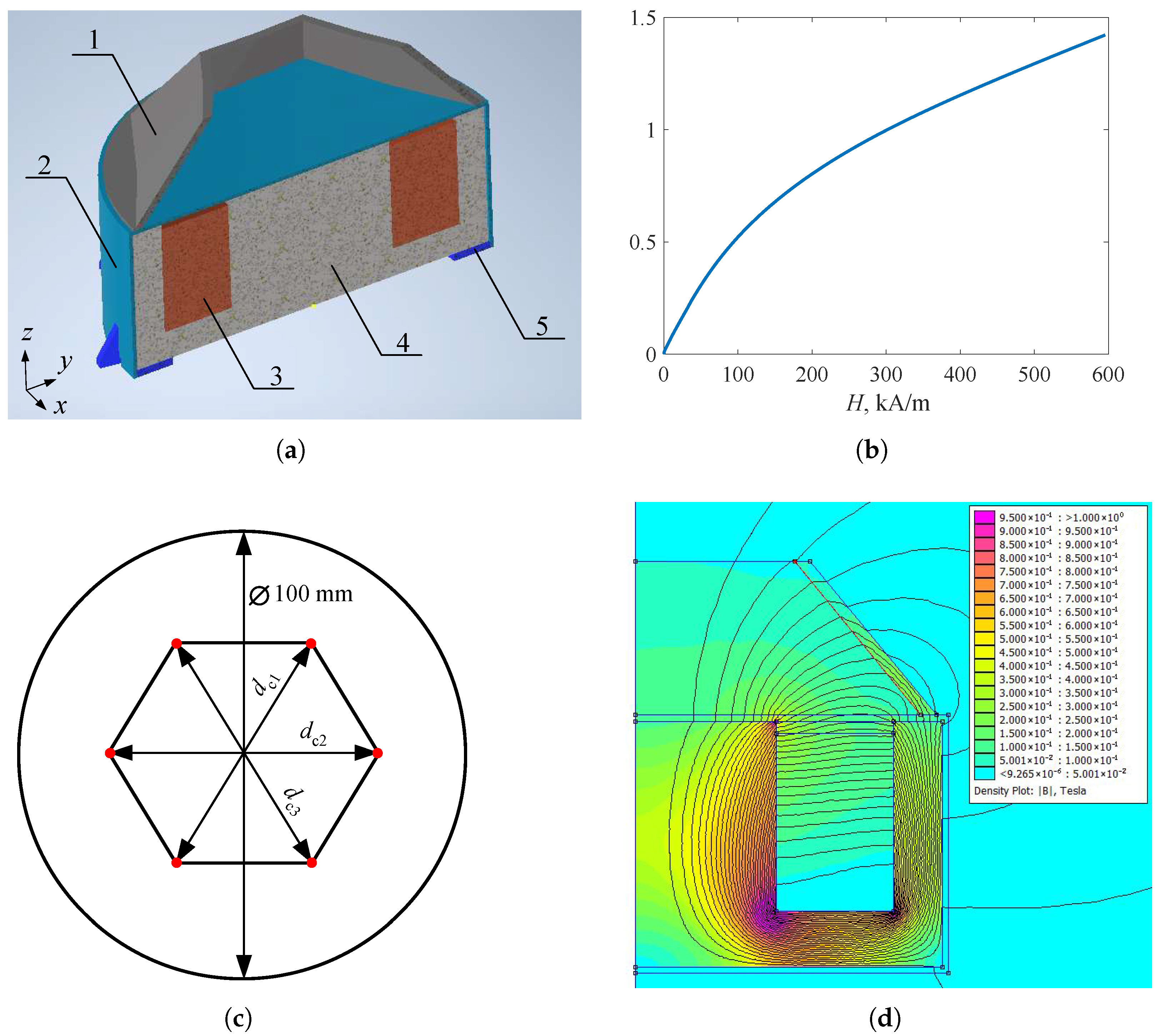
Figure 1. Soft MRE gripper concept: (a) CAD model, (b) base dimensions, (c) B-H curve of the MRE sample, (d) FE model—flux density map— I = 3 A.
Actuators 14 00585 g001
Figure 2. Soft MRE gripper prototype (fully opened): (a) side view, (b) top view.
Actuators 14 00585 g002
Figure 3. Test fixture and data processing diagram.
Actuators 14 00585 g003
Figure 4. Exemplary time histories of the test coil i c current and the flux density B z .
Actuators 14 00585 g004
Figure 5. Flux density vs input coil current: B z - i c .
Actuators 14 00585 g005
Figure 6. MRE grippe’s aperture: (a) opened, (b) closed.
Actuators 14 00585 g006
Figure 7. Acquisition of the aperture area: (a) detection of the diagonals, (b) marker positions, (c) locations of the markers, (d) hexagon (aperture) imaging.
Actuators 14 00585 g007
Figure 8. Variation of the diagonals with time.
Actuators 14 00585 g008
Figure 9. Time history of the recorded aperture area.
Actuators 14 00585 g009
Figure 10. Aperture area variation vs coil current: A- i c .
Actuators 14 00585 g010
Figure 11. Aperture area vs. time—step input.
Actuators 14 00585 g011
Figure 12. Handling of cylindrical objects: (a) D p = 40 mm—fully opened, (b) D p = 40 mm—fully closed, (c) D p = 35 mm—fully opened, (d) D p = 35 mm—fully closed, (e) D p = 30 mm—fully opened, (f) D p = 30 mm—fully closed, (g) D p = 25 mm—fully opened, (h) D p = 25 mm—fully closed.
Actuators 14 00585 g012
Figure 13. Cylindrical objects: aperture area vs coil current—A- i c .
Actuators 14 00585 g013
Figure 14. Handling of cubic objects: (a) D p = 40 mm—fully opened, (b) D p = 40 mm—fully closed, (c) D p = 35 mm—fully opened, (d) D p = 35 mm—fully closed, (e) D p = 30 mm—fully opened, (f) D p = 30 mm—fully closed, (g) D p = 25 mm—fully opened, (h) D p = 25 mm—fully closed.
Actuators 14 00585 g014
Figure 15. Cubic objects: aperture area vs coil current—A- i c .
Actuators 14 00585 g015
Table 1. Estimated response times T of the gripper subjected to step excitation inputs; I c —coil current pulse amplitude.
I c A 0 , mm 2 A 1 , mm 2 T, s
0 1 A2060562.106
1 0 A2046−510.469
0 1.5 A19631505.975
1.5 0 A2028−4440.183
0 2 A198111290.456
2 0 A2006−13100.212
0 2.4 A203714360.0105
2.4 0 A2011−15190.147
0 2.8 A207914750.0157
2.8 0 A2041−16230.191
Disclaimer/Publisher’s Note: The statements, opinions and data contained in all publications are solely those of the individual author(s) and contributor(s) and not of MDPI and/or the editor(s). MDPI and/or the editor(s) disclaim responsibility for any injury to people or property resulting from any ideas, methods, instructions or products referred to in the content.