
Article

A New Dual Steering System in a Compact Tractor

by
Giorgio Paolo Massarotti
1,*,
German Filippini
2,
Gustavo Raush Alviach
1,
Pedro Javier Gamez-Montero
3,* and
Esteban Codina Macia
1
1
Department of Fluid Mechanics, CATMech-LABSON, Universitat Politecnica de Catalunya, Colom 11, 08222 Terrassa, Spain
2
Escuela de Ingeniería Mecánica, Facultad de Ciencias exactas, Ingeniería y Agrimensura, Universidad Nacional de Rosario, Rosario S2000CGK, Argentina
3
Department of Fluid Mechanics, Universitat Politecnica de Catalunya, Campus Terrassa, Colom 7, 08222 Terrassa, Spain
*
Authors to whom correspondence should be addressed.
Actuators 2025, 14(1), 35; https://doi.org/10.3390/act14010035
Submission received: 27 November 2024 / Revised: 9 January 2025 / Accepted: 14 January 2025 / Published: 17 January 2025
(This article belongs to the Special Issue Integrated Intelligent Vehicle Dynamics and Control)

Abstract

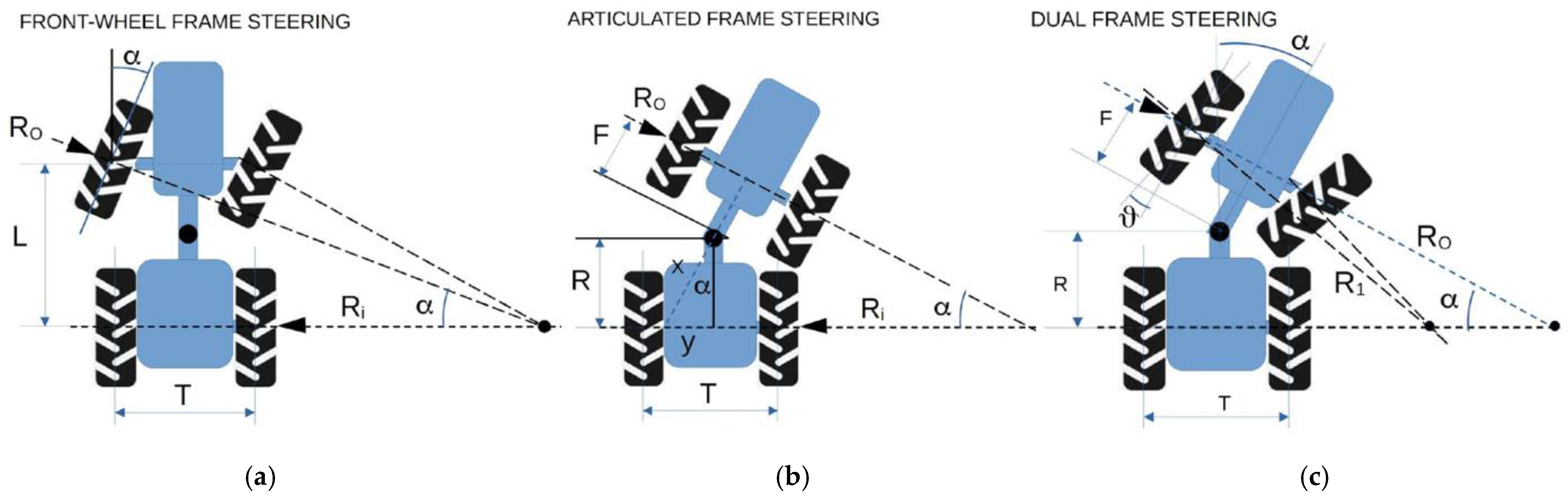
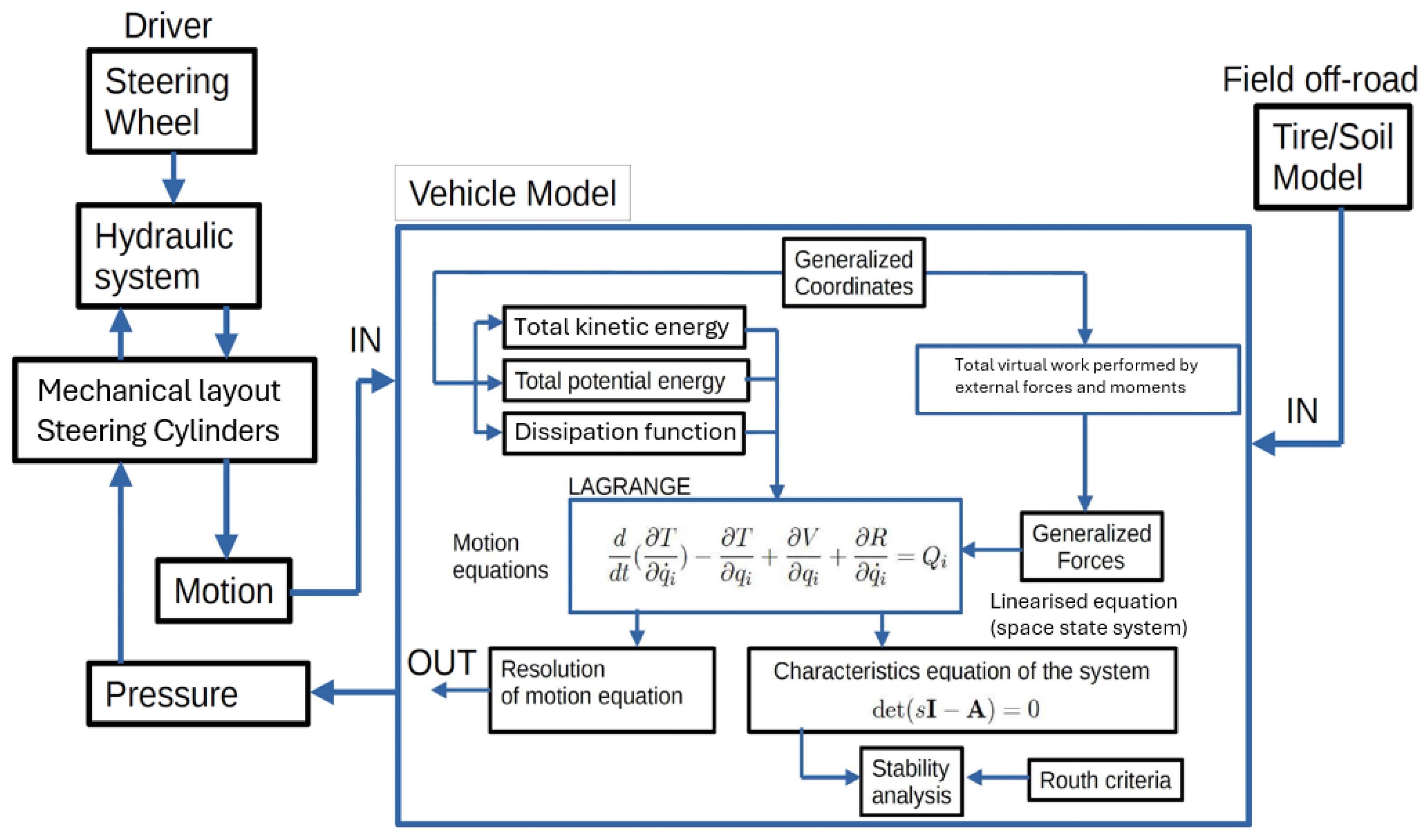
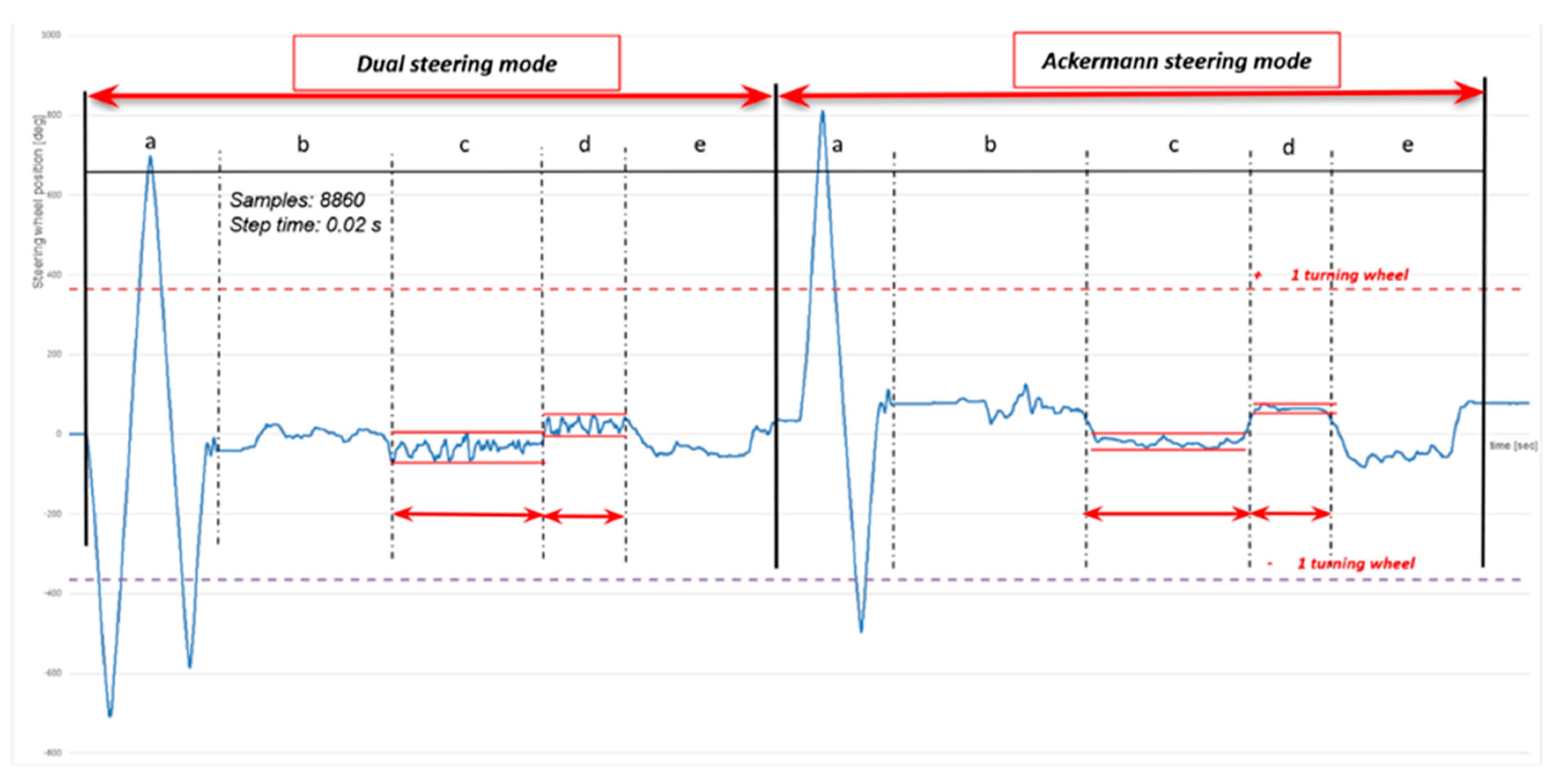
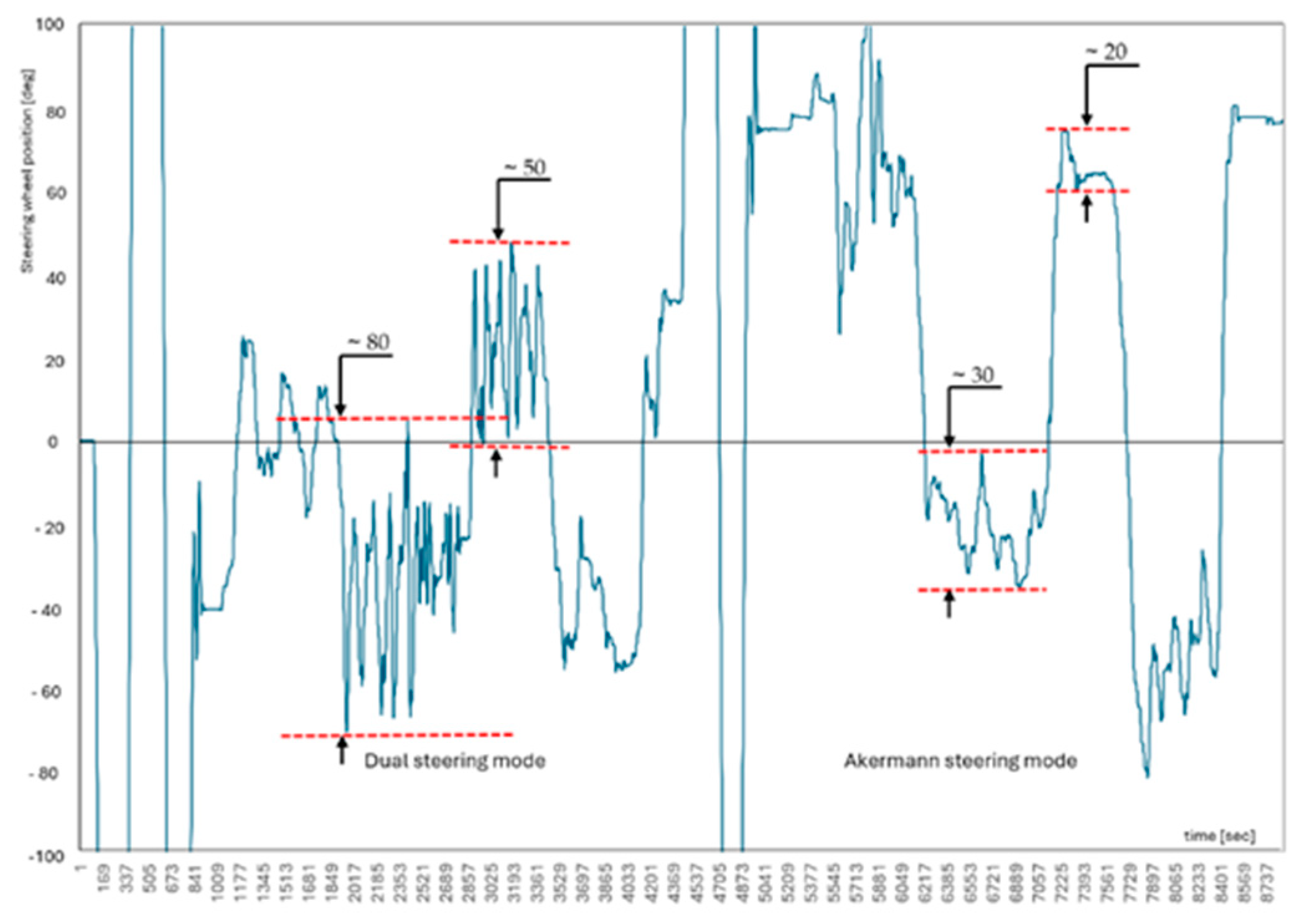
To achieve optimal controllability in a dual steering tractor (a four-wheel, iso-diametric tractor equipped with a dual-hydraulic steering system), this study proposes a coordinated approach that combines experimental testing (using a special agricultural tractor) with numerical analysis of the entire vehicle, developed in Bond Graph-3D. For certain crops, a dual steering vehicle is used to meet the needs of professionals who require easy maneuverability in narrow spaces and/or reduced steering time. This study aims to explore the reasons behind the need for dual steering tractors, highlighting the advantages and disadvantages of these two different configurations and ultimately focusing on the combined benefits of both. Based on an extensive review of the literature and drawing from previous studies, this paper analyzes aspects such as the variation in noise levels (or comfort level) experienced at the steering wheel when switching from Ackermann steering to a dual steering system. After outlining the theoretical methodology used to describe the model, both experimental and numerical analyses of a vineyard tractor in operation are presented. The goal of this work is to provide guidance on design methods and, through the Bond Graph-3D model, suggest the best control algorithms to minimize steering noise and enhance driving comfort. This research aims to pave the way for future control strategies in electrohydraulic steering systems.
Keywords: dual steering; compact tractor; hydraulic system; Ackermann steering; articulated steering; Bond Graph-3D dual steering; compact tractor; hydraulic system; Ackermann steering; articulated steering; Bond Graph-3D