1. Introduction
Orthohantaviruses are enveloped, negative-sense RNA viruses belonging to the family
Hantaviridae, order
Bunyavirales, and represent a genetically and ecologically diverse group of zoonotic pathogens transmitted to humans primarily through inhalation of aerosols contaminated with excreta from infected rodent reservoir hosts [
1,
2,
3]. More than 40 viral species have been identified to date, of which approximately a dozen are recognized as pathogenic in humans. These species differ substantially in their geographic distribution, reservoir hosts, clinical phenotype, and virulence. The principal clinically relevant orthohantaviruses, together with their reservoirs, geographic range, associated syndromes, and approximate case fatality rates, are summarised in
Table 1.
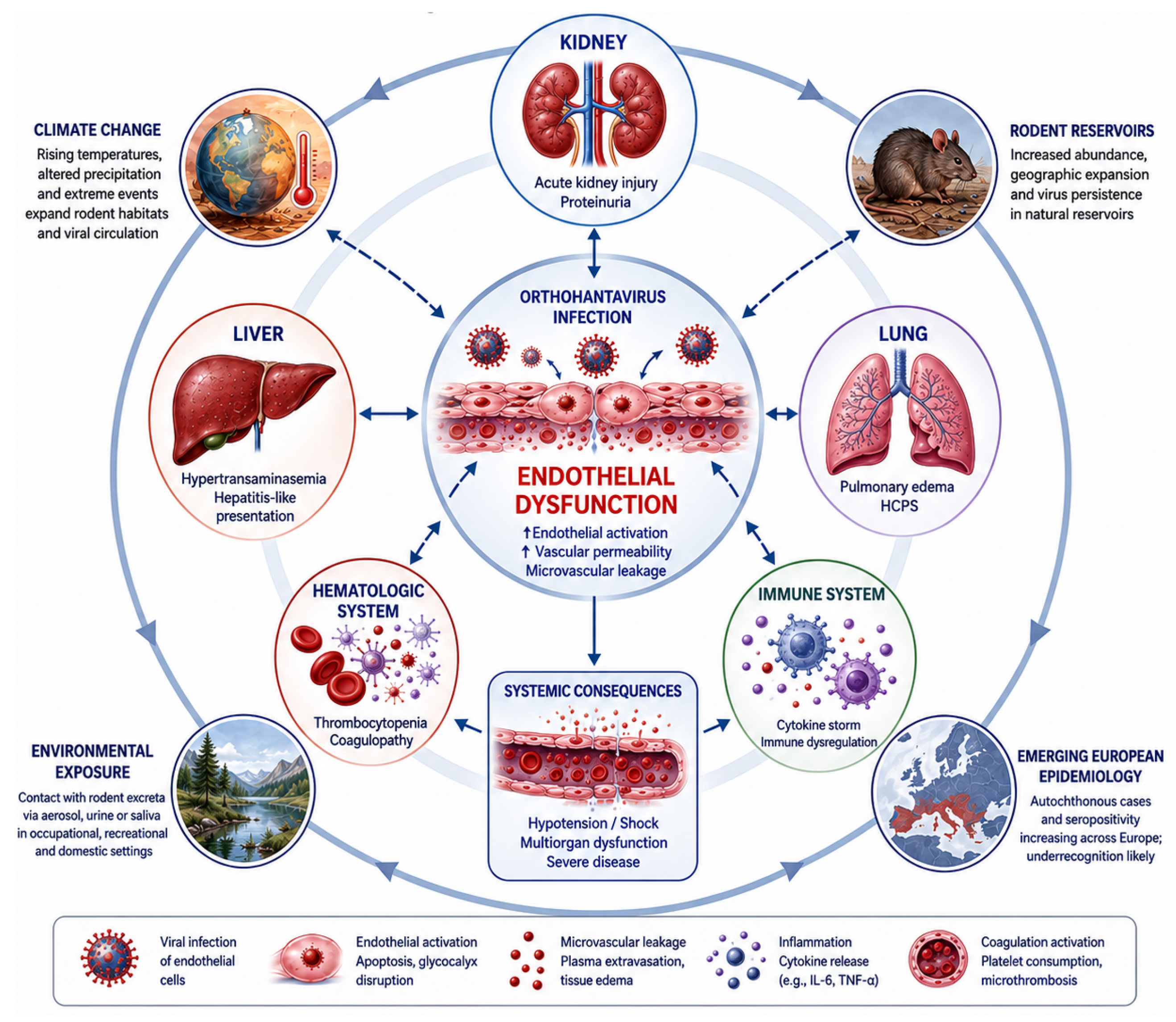
However, over the past ten to fifteen years, a growing body of evidence has challenged this binary classification, suggesting that the clinical spectrum of orthohantavirus disease is considerably broader and more heterogeneous than initially recognized. Beyond the classical renal and pulmonary manifestations, these infections may involve multiple organ systems through mechanisms largely driven by endothelial dysfunction, immune activation, and microvascular leakage [
1,
3,
27].
The vascular endothelium represents a central target of orthohantavirus infection. Viral tropism for endothelial cells contributes to increased capillary permeability, dysregulated inflammatory signaling, and widespread tissue involvement without overt cytopathic destruction [
1,
28]. This distinctive feature, i.e., functional impairment without massive cell lysis, is fundamental to understanding why orthohantavirus infections can present with diverse and overlapping clinical pictures, often mimicking other systemic febrile illnesses. This endothelial-centered pathogenesis likely explains the heterogeneity of clinical manifestations reported across different hantavirus species, viral genotypes, and geographic settings. Recent experimental studies have further highlighted the role of pericyte infection, innate immune evasion, and species-specific host responses in shaping disease severity and organ involvement [
29,
30,
31,
32,
33,
34,
35]. For instance, Andes virus infection of pericytes has been shown to enhance endothelial permeability, suggesting that the microvascular unit as a whole, not just endothelial cells, contributes to disease pathogenesis [
29].
Although renal impairment (ranging from mild proteinuria to acute kidney injury requiring dialysis) and pulmonary edema (ranging from mild interstitial infiltrates to fulminant respiratory failure) remain the most recognized hallmarks of severe disease, hepatic abnormalities are increasingly being reported in both endemic and non-endemic settings. Mild to moderate elevations in aminotransferases, particularly aspartate aminotransferase (AST) and alanine aminotransferase (ALT), are not uncommon during acute infection, and in some patients the clinical presentation may resemble acute viral hepatitis or other febrile hepatotropic syndromes [
3,
36,
37]. In a subset of cases, hypertransaminasemia may be accompanied by jaundice, right upper quadrant discomfort, hepatomegaly, or even mild coagulopathy, further blurring the distinction between hantavirus disease and primary hepatitis. This aspect remains underappreciated in routine clinical practice, particularly outside reference centers familiar with hantavirus epidemiology.
The possibility of hepatic involvement is clinically relevant for several interconnected reasons. First, patients presenting with fever, hypertransaminasemia, thrombocytopenia, and nonspecific systemic symptoms (such as myalgia, headache, nausea, vomiting, and abdominal pain) are frequently investigated for dengue, leptospirosis, malaria, typhoid fever, or classical hepatotropic viruses (hepatitis A, B, C, E, Epstein–Barr virus, cytomegalovirus) before orthohantavirus infection is considered [
36,
38,
39]. This diagnostic tunnel vision can lead to unnecessary testing, delayed supportive care, and missed opportunities for early monitoring of complications such as capillary leakage, shock, or acute kidney injury. Second, the expanding geographic distribution of rodent reservoirs, climate-associated ecological changes, deforestation, agricultural intensification, and increasing international mobility may contribute to diagnostic delays in areas traditionally considered non-endemic or low-incidence [
40,
41]. Even in Europe, where several hantavirus species (e.g., Puumala, Dobrava, Seoul, Tula) circulate, underdiagnosis is common, and seroprevalence studies often reveal higher exposure rates than clinically reported cases. Third, growing recognition of atypical and severe systemic phenotypes suggests that liver involvement may reflect broader endothelial and immune dysregulation rather than isolated hepatocellular injury [
1,
3,
42]. In this context, the degree of hypertransaminasemia might serve as a surrogate marker of systemic inflammatory burden and vascular dysfunction, potentially correlating with disease severity and prognosis.
Several recent studies have also explored biomarkers associated with disease severity, including inflammatory cytokines (such as IL-6, TNF-
, and IL-10), neutrophil-to-lymphocyte ratio (NLR), coagulation abnormalities (prolonged prothrombin time, elevated D-dimer, thrombocytopenia), and markers of endothelial activation (soluble thrombomodulin, vascular cell adhesion molecule-1, angiopoietin-2) [
43,
44,
45,
46,
47]. These findings reinforce the concept of orthohantavirus infection as a systemic inflammatory vascular disease with heterogeneous organ involvement, where the pattern of organ dysfunction depends on a complex interplay between viral strain, host genetic background, immune response, and possibly environmental factors. In parallel, advances in experimental models, including human endothelial cell cultures, pericyte co-culture systems, and small animal models, have improved understanding of viral-host interactions, including mechanisms of immune escape (e.g., interference with interferon signaling), endothelial barrier disruption (e.g., Vascular Endothelial Growth Factor (VEGF) sensitization, Src kinase activation), and extrapulmonary manifestations [
30,
31,
32,
33,
34,
35].
Importantly, the recognition of hepatic involvement is not merely an academic exercise. From a practical standpoint, identifying orthohantavirus infection in a patient presenting with a hepatitis-like syndrome can prevent invasive diagnostic procedures (such as liver biopsy), avoid unnecessary antiviral or immunosuppressive therapies, and guide appropriate supportive management, including fluid balance monitoring, avoidance of nephrotoxic drugs, early recognition of capillary leakage, and timely referral to specialized care if renal or respiratory complications ensue. Furthermore, accurate diagnosis has public health implications, including case reporting, epidemiological surveillance, and, in the case of Andes virus, contact tracing due to documented person-to-person transmission [
48].
In this work, we discuss the emerging evidence supporting hepatic involvement during orthohantavirus infection, with particular attention to hepatitis-like presentations, underlying pathogenic mechanisms, differential diagnostic challenges, and potential clinical implications. We also highlight the need for increased awareness among infectious disease specialists, hepatologists, emergency physicians, and intensivists, particularly when evaluating patients with acute febrile illness and unexplained liver enzyme abnormalities, especially in the presence of thrombocytopenia or epidemiological clues suggesting rodent exposure. Specifically, we first examine the expanding multisystem spectrum of orthohantavirus disease, with emphasis on its nature as a systemic endothelial disorder (
Section 2). We then focus on hepatic involvement, its clinical manifestations, proposed pathogenic mechanisms, and immunopathogenesis (
Section 3), before addressing the differential diagnostic challenges posed by overlap with dengue, leptospirosis, and classical viral hepatitis (
Section 4). Biomarkers of severity and prognostic models (
Section 5), as well as public health implications including ecological drivers and underreporting (
Section 7), are discussed in the concluding sections (
Section 8).
3. Hepatic Involvement in Orthohantavirus Infection
Although hepatic manifestations are not traditionally considered among the defining features of orthohantavirus disease, abnormalities in liver function tests have been repeatedly documented in patients with both hemorrhagic fever with renal syndrome and hantavirus cardiopulmonary syndrome [
3,
27,
36]. In most cases, liver involvement appears mild to moderate in severity and is characterized by transient elevations in aminotransferases, particularly aspartate aminotransferase and alanine aminotransferase. However, accumulating evidence suggests that hepatic abnormalities may occasionally represent a clinically relevant component of disease presentation rather than an incidental laboratory finding. Understanding the full spectrum of hepatic involvement is essential for improving diagnostic accuracy and avoiding misclassification, especially in patients presenting with fever and jaundice or unexplained hypertransaminasemia.
3.1. Clinical Evidence of Hepatic Involvement
Several studies have described hepatitis-like syndromes occurring during acute orthohantavirus infection. Historical observations from Europe and Asia reported elevated liver enzymes in patients with confirmed hantavirus infection, sometimes associated with jaundice, systemic inflammatory symptoms, and diagnostic suspicion of acute viral hepatitis [
36,
37]. In a study conducted in Spain, Lledó and colleagues identified serological evidence of hantavirus infection among patients presenting with pneumonia, renal disease, and hepatitis, suggesting that hepatic involvement may be more frequent than previously recognized [
37]. Similar observations were reported in patients with unexplained hypertransaminasemia, further supporting the possibility that orthohantavirus infection may occasionally enter the differential diagnosis of acute hepatitis syndromes [
36].
The mechanisms underlying hepatic injury remain incompletely understood. Nevertheless, the systemic endothelial dysfunction that characterizes orthohantavirus infection likely contributes substantially to liver involvement. The hepatic microcirculation is particularly vulnerable to inflammatory and vascular perturbations, and increased endothelial permeability may promote sinusoidal dysfunction, tissue edema, and secondary hepatocellular injury [
1,
3]. Unlike classical hepatotropic viruses such as hepatitis A, B, C, or E, however, current evidence does not support a predominant direct cytopathic effect within hepatocytes. Instead, liver abnormalities appear to reflect broader systemic inflammatory and vascular processes that secondarily affect the liver.
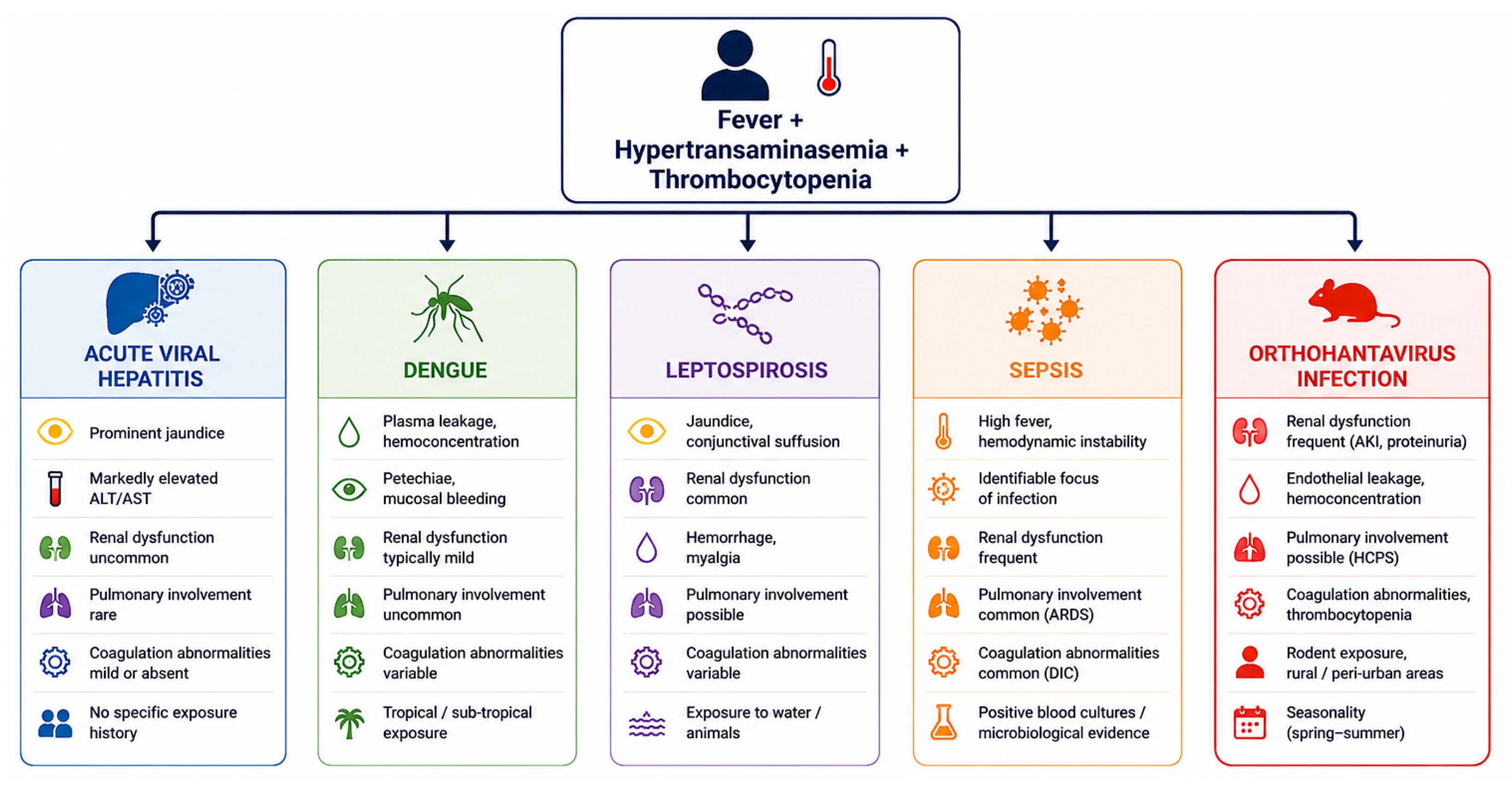
Clinical overlap with other tropical and febrile illnesses may further obscure recognition of hepatic manifestations associated with orthohantavirus infection. Patients frequently present with fever, malaise, thrombocytopenia, elevated transaminases, and gastrointestinal symptoms, a constellation that may initially suggest dengue, leptospirosis, or acute viral hepatitis rather than hantavirus disease [
36,
38,
39]. This diagnostic challenge may be particularly relevant in areas where clinicians are less familiar with orthohantavirus epidemiology, as well as in non-endemic regions where the disease is not routinely considered.
Recent studies have reinforced this concern, as summarized in
Table 3. Ekanayake and colleagues identified probable hantavirus infections among patients initially evaluated for suspected dengue infection in Sri Lanka, highlighting the potential for clinical misclassification in both endemic and emerging settings [
39]. Similarly, overlap between hantavirus infection and leptospirosis has been increasingly recognized due to shared clinical and laboratory features, including thrombocytopenia, acute kidney injury, inflammatory activation, and hepatic abnormalities [
38]. In both scenarios, the presence of hypertransaminasemia may misdirect diagnostic efforts toward more common hepatotropic or tropical infections, delaying appropriate management.
The degree of hepatic involvement may also correlate with overall disease severity. Severe systemic phenotypes characterized by extensive endothelial injury, coagulation abnormalities, and cytokine dysregulation may present with more pronounced liver dysfunction as part of a broader multiorgan process [
3,
42,
50]. In critically ill patients, hepatic abnormalities may therefore represent an indirect marker of systemic inflammatory burden and vascular dysfunction rather than isolated hepatic disease. Conversely, mild hypertransaminasemia may occur even in the absence of overt renal or pulmonary failure, suggesting that liver enzyme elevation can be an early or even dominant feature in some patients.
Importantly, the available literature likely underestimates the true prevalence of hepatic involvement during orthohantavirus infection. Many studies primarily focus on renal or cardiopulmonary outcomes, while liver enzyme abnormalities are often reported only as secondary findings or are not systematically collected. In addition, mild elevations in transaminases may remain clinically overlooked in the context of severe renal failure or respiratory compromise, where clinical attention is naturally directed toward life-threatening organ dysfunction. Consequently, the hepatotropic potential of orthohantavirus infection remains insufficiently characterized and probably underrecognized in routine clinical practice, particularly outside specialized reference centers.
3.2. Mechanisms of Hepatic Injury
The mechanisms responsible for hepatic involvement during orthohantavirus infection are likely multifactorial and remain only partially understood. Current evidence suggests that liver abnormalities primarily reflect systemic endothelial dysfunction, immune-mediated inflammation, and microvascular injury rather than direct hepatocellular viral cytotoxicity [
1,
3,
28]. This conceptual framework is essential for distinguishing orthohantavirus-associated hepatitis from classical viral hepatitis and for guiding appropriate clinical management.
A central pathogenic feature of orthohantavirus infection is the disruption of endothelial barrier integrity. Following infection, endothelial cells undergo profound functional alterations characterized by increased vascular permeability, dysregulated inflammatory signaling, and enhanced sensitivity to permeability mediators such as vascular endothelial growth factor [
1,
28]. Gavrilovskaya and colleagues demonstrated that hantaviruses sensitize endothelial cells to VEGF-induced hyperpermeability, while angiopoietin-1 and sphingosine-1-phosphate may exert protective effects on endothelial stability [
28]. These findings support the concept that capillary leakage is a core mechanism underlying systemic organ involvement, including the liver.
Within the liver, endothelial dysfunction may specifically affect the sinusoidal microvasculature, leading to altered hepatic perfusion, inflammatory cell recruitment, and secondary hepatocellular stress. The hepatic sinusoidal network is highly specialized and tightly regulated, with fenestrated endothelial cells that facilitate the exchange of nutrients, waste products, and immune cells between the blood and hepatocytes. Even modest disturbances in sinusoidal vascular permeability may therefore contribute to biochemical evidence of liver injury. In this context, elevated aminotransferases may represent the hepatic expression of a broader endothelial inflammatory syndrome rather than isolated viral hepatitis.
Immune activation appears to play an equally important role in hepatic injury. Severe orthohantavirus disease is characterized by robust cytokine responses involving IL-6, tumor necrosis factor-alpha, interferon signaling pathways, and multiple other inflammatory mediators associated with vascular dysfunction [
31,
32,
42]. Recent work by Maleki and colleagues demonstrated that IL-6 trans-signaling contributes directly to endothelial barrier dysfunction in hantavirus-infected cells and correlates with disease severity in HFRS patients [
42]. These findings are particularly relevant because excessive cytokine activation may amplify hepatic inflammation indirectly through systemic immune dysregulation, even in the absence of direct viral infection of hepatocytes.
Innate immune responses and antiviral signaling pathways further contribute to disease heterogeneity. Orthohantaviruses have evolved several mechanisms capable of modulating host innate immunity, thereby influencing endothelial activation and inflammatory responses [
30,
31,
32,
35]. Viral interference with interferon pathways, altered cytokine production, and host-specific immune interactions may partly explain why some patients develop mild self-limited illness with only minimal transaminase elevation, whereas others progress to severe systemic disease with marked hepatic involvement and multiorgan failure [
30,
31,
32,
35].
Recent experimental studies have also highlighted the importance of non-endothelial vascular cells in disease pathogenesis. Infection of pericytes by Andes virus has been shown to enhance endothelial permeability and inflammatory dysregulation, suggesting that vascular barrier dysfunction involves coordinated alterations across multiple cellular compartments [
29]. Within the liver, pericyte-like cells known as hepatic stellate cells may play analogous roles in sinusoidal regulation, although this has not yet been directly investigated in the context of hantavirus infection. Nevertheless, this observation further reinforces the concept of orthohantavirus infection as a diffuse vascular inflammatory disorder with secondary organ manifestations.
Differences between Old World and New World hantaviruses may additionally influence patterns of organ involvement, including the liver. Jeyachandran and colleagues recently demonstrated distinct cellular tropisms between hantavirus species, with divergent interactions involving respiratory epithelial cells, endothelial cells, and immune pathways [
44]. Such biological variability may partly account for differences in clinical phenotype, disease severity, and extrapulmonary manifestations observed across geographic regions, although systematic comparisons of hepatic involvement between viral species remain limited.
Coagulation abnormalities likely represent another relevant contributor to hepatic injury. Thrombocytopenia, endothelial activation, platelet dysfunction, and altered coagulation pathways are common findings during acute infection [
3,
43,
46]. In severe cases, microvascular injury and systemic inflammatory coagulopathy may exacerbate tissue hypoperfusion and organ dysfunction, including within the liver. Emerging biomarkers such as soluble thrombomodulin further support the role of endothelial damage in severe disease phenotypes [
47]. The liver, as a highly vascular organ with a low flow sinusoidal system, may be particularly susceptible to these microvascular insults.
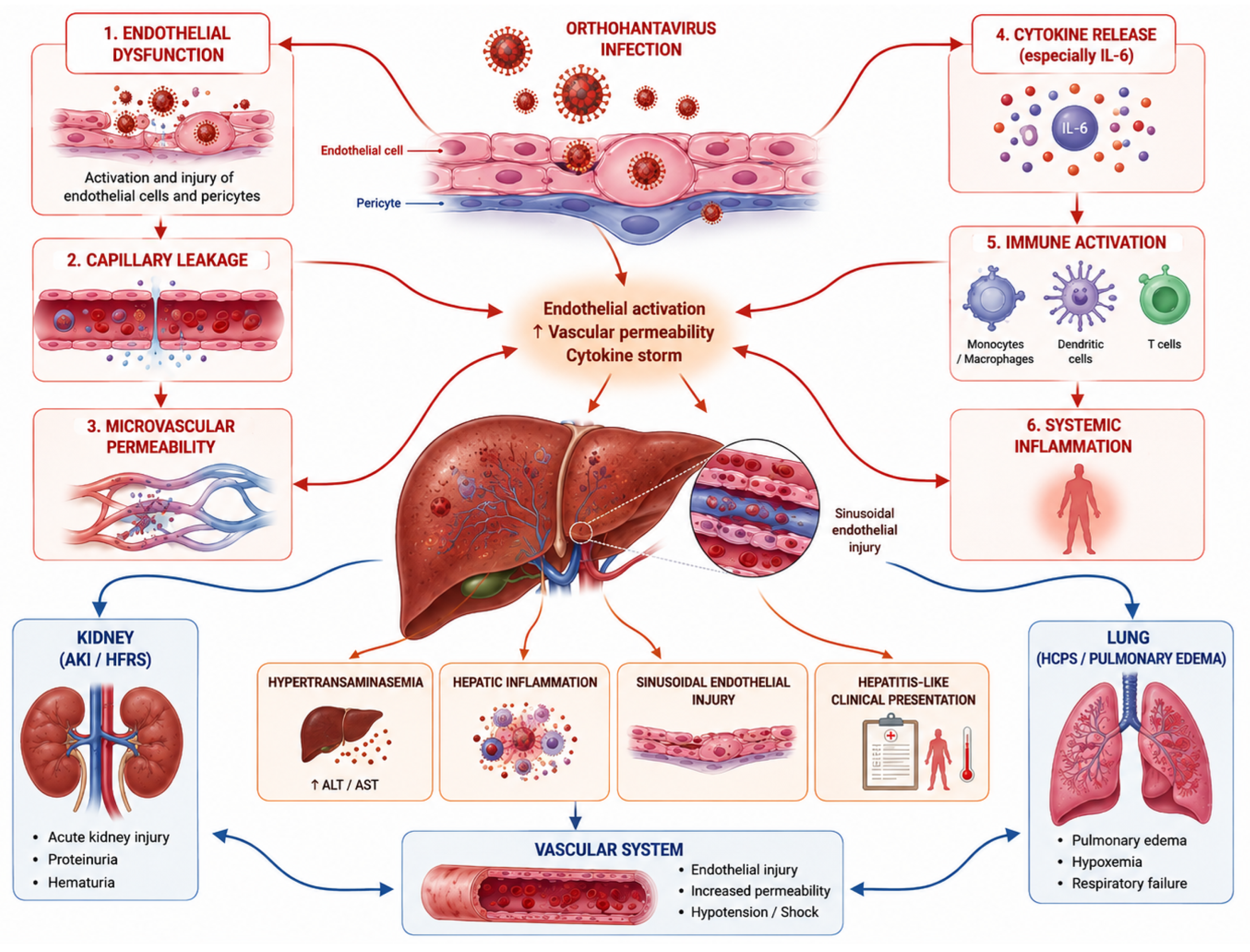
Overall, available evidence suggests that hepatic involvement during orthohantavirus infection should not be interpreted as classical hepatotropic viral injury. Instead, it appears to represent a secondary manifestation of widespread endothelial dysfunction, immune activation, and systemic inflammatory vascular disease. The proposed pathways contributing to liver injury during orthohantavirus infection are summarized in
Figure 2, which illustrates the interplay between endothelial infection, cytokine release, sinusoidal injury, and hepatocellular stress.
3.3. Immunopathogenesis of Hepatic Involvement
The marked clinical heterogeneity observed in orthohantavirus infection suggests that disease severity depends not only on viral characteristics but also on the nature and intensity of host immune responses. Increasing evidence indicates that dysregulated antiviral immunity, rather than uncontrolled viral replication alone, plays a major role in the development of endothelial dysfunction and multiorgan injury, including hepatic involvement [
1,
3,
31,
32]. Understanding these immunopathogenetic mechanisms is essential for explaining why some patients develop hepatitis-like presentations while others do not.
Unlike many highly cytopathic viruses, orthohantaviruses can persist within endothelial cells while initially avoiding robust innate immune activation [
1,
30,
31]. Experimental studies have shown that several hantavirus species interfere with interferon-mediated antiviral pathways, thereby facilitating early viral dissemination and modulating downstream inflammatory responses [
30,
31,
32]. Klimaj and colleagues recently demonstrated that Seoul orthohantavirus can evade innate immune activation within reservoir endothelial cells, highlighting the importance of host-specific antiviral interactions in viral persistence and pathogenicity [
30]. This evasion strategy may allow the virus to establish infection without triggering immediate immune clearance, creating a window during which endothelial dysfunction can develop progressively.
The host inflammatory response appears to represent a double-edged sword. While antiviral immunity is essential for viral clearance, excessive immune activation may contribute directly to vascular injury and tissue dysfunction. Elevated concentrations of pro-inflammatory cytokines, chemokines, and endothelial activation markers have consistently been associated with severe disease phenotypes [
3,
42,
43,
44]. In particular, IL-6 signaling has emerged as a potentially important mediator linking immune activation to endothelial barrier disruption [
42]. In the liver, excessive cytokine exposure can amplify sinusoidal inflammation, recruit activated leukocytes, and contribute to hepatocellular stress even without direct viral infection of hepatocytes.
Innate immune dysregulation may also influence organ-specific manifestations. Altered interferon signaling, aberrant cytokine production, and excessive leukocyte activation can amplify endothelial permeability and inflammatory tissue damage across multiple organs, including the liver [
31,
32]. This mechanism may partly explain why some patients present with predominantly renal or pulmonary involvement, whereas others develop broader systemic manifestations characterized by hepatic abnormalities, gastrointestinal symptoms, or multiorgan dysfunction. Genetic polymorphisms in innate immune pathways may influence these patterns, although this remains an area of active investigation.
Host-specific immune responses likely contribute to the differing pathogenic profiles observed between Old World and New World hantaviruses. Experimental models suggest that viral species differ in cellular tropism, immune activation patterns, and interactions with endothelial and epithelial barriers [
33,
35]. Jeyachandran and colleagues recently demonstrated differential tissue tropisms between Old and New World hantaviruses, findings that may help explain variations in disease severity and organ involvement across geographic regions [
35]. Whether these differences extend to hepatic tropism or the propensity to cause hepatitis-like presentations remains unknown and warrants further study.
Pericytes have also emerged as potential contributors to immune-mediated vascular injury. Beyond their structural role in microvascular stability, pericytes participate actively in inflammatory signaling and endothelial regulation. Infection of pericytes by Andes virus has been associated with enhanced endothelial permeability, suggesting that vascular dysfunction results from coordinated interactions between multiple cellular components of the microvascular environment [
29]. In the liver, the sinusoidal microvasculature lacks classical pericytes but contains hepatic stellate cells, which share some functional characteristics. Whether hepatic stellate cells are susceptible to orthohantavirus infection or contribute to liver injury through similar mechanisms is an intriguing question for future research.
Another important aspect involves the balance between protective and pathogenic immune responses. Excessive activation of antiviral pathways may promote endothelial damage through release of inflammatory mediators, platelet activation, and coagulation abnormalities. Conversely, insufficient antiviral control may permit prolonged viral persistence and sustained inflammatory activation, leading to chronic or relapsing symptoms. This dynamic interaction may partly account for the unpredictable clinical course observed in some patients, including progression from mild febrile illness to severe systemic disease with hepatic involvement within a relatively short timeframe [
3].
Importantly, many of these immunopathogenic mechanisms overlap with pathways implicated in other viral hemorrhagic and systemic inflammatory syndromes, including severe dengue, leptospirosis, and sepsis. The resulting clinical picture may therefore resemble severe dengue, leptospirosis, sepsis, or acute viral hepatitis accompanied by systemic inflammatory response and capillary leakage. Recognizing these overlapping mechanisms is essential for improving diagnostic suspicion and understanding the broader multisystem nature of orthohantavirus disease, particularly in patients presenting with fever, thrombocytopenia, and hypertransaminasemia.
5. Biomarkers and Prognostic Implications
The clinical course of orthohantavirus infection is highly heterogeneous, ranging from mild self-limited disease to fulminant syndromes characterized by shock, respiratory failure, severe acute kidney injury, coagulopathy, and multiorgan dysfunction [
3,
50,
51]. This wide variability in outcomes has stimulated growing interest in identifying biomarkers capable of predicting disease progression and supporting early risk stratification. Such tools are particularly valuable because the transition from nonspecific prodromal symptoms to life-threatening organ failure can occur rapidly, often within hours. In the context of hepatic involvement, biomarkers may also provide indirect insight into the mechanisms underlying hypertransaminasemia and help distinguish orthohantavirus-associated liver injury from other causes of acute hepatitis.
5.1. Biomarkers of Disease Severity
Among the most consistently reported abnormalities are hematological and inflammatory alterations reflecting endothelial injury and immune activation. Thrombocytopenia remains one of the hallmark laboratory findings and is frequently associated with disease severity, vascular leakage, and systemic inflammation [
2,
43,
46]. The degree of platelet reduction often correlates with the intensity of capillary leakage and may serve as an early warning sign of progressing disease. In parallel, leukocyte abnormalities and elevated inflammatory indices may reflect the intensity of host immune dysregulation during acute infection, although these findings are less specific than thrombocytopenia.
Recent studies have highlighted the potential prognostic value of the neutrophil-to- lymphocyte ratio (NLR), a simple and widely available marker of systemic inflammation. Nusshag and colleagues demonstrated that an elevated NLR correlates with markers of severe disease during acute hantavirus infection, suggesting that dysregulated innate immune responses contribute substantially to clinical deterioration [
45]. Because this ratio is rapidly obtainable from a routine complete blood count, it may represent a pragmatic tool for early bedside assessment, particularly in resource-limited settings where more sophisticated biomarkers are unavailable. An increasing NLR over serial measurements may signal worsening inflammation and impending clinical deterioration.
Coagulation abnormalities also appear closely linked to disease severity. Chen and colleagues reported that alterations in coagulation parameters, together with inflammatory and biochemical markers, correlate with prognosis in patients with hemorrhagic fever with renal syndrome [
46]. These findings are biologically plausible given the central role of endothelial dysfunction and capillary leakage in hantavirus pathogenesis. The interaction between endothelial activation, platelet consumption, and inflammatory signaling likely contributes to the characteristic hemorrhagic manifestations observed in severe cases. Prolonged prothrombin time, elevated D-dimer, and fibrin degradation products may all signal progressive microvascular injury and increased risk of bleeding complications.
Additional biomarkers associated with endothelial injury have recently emerged as promising prognostic indicators. Wei and colleagues identified soluble thrombomodulin as a potential marker for risk stratification and outcome prediction in hemorrhagic fever with renal syndrome [
47]. Thrombomodulin is a transmembrane protein expressed on the surface of endothelial cells; it is released into the circulation during endothelial damage. Elevated circulating levels of soluble thrombomodulin may therefore reflect the extent of vascular injury and microcirculatory dysfunction. Similarly, studies evaluating biomarkers in Puumala virus infection have demonstrated associations between markers of endothelial permeability, such as angiopoietin-2 and vascular endothelial growth factor, and clinical severity [
30,
43]. These endothelial-derived markers may prove particularly useful in identifying patients at risk of progressing to severe disease before overt organ failure develops.
Cytokine dysregulation represents another central component of severe orthohantavirus disease. Maleki and colleagues showed that IL-6 trans-signaling contributes to cytokine secretion and endothelial barrier dysfunction in hantavirus-infected cells and correlates with disease severity [
42]. Elevated IL-6 levels have been consistently associated with more severe clinical phenotypes, including greater capillary leakage, more pronounced thrombocytopenia, and higher rates of multiorgan involvement. These findings reinforce the concept that severe manifestations are driven not only by viral replication itself but also by an exaggerated host inflammatory response capable of amplifying vascular permeability and tissue injury. Other pro-inflammatory cytokines, including TNF-
and IL-1
, have also been implicated, although IL-6 appears to be the most consistently associated with poor outcomes.
Interestingly, many of these biomarkers are not organ-specific and instead reflect a broader systemic endothelial syndrome. This may partly explain why patients can develop simultaneous renal, pulmonary, hepatic, and hematological abnormalities despite heterogeneous clinical phenotypes. A patient with marked elevation of soluble thrombomodulin and IL-6, for example, is likely to have more extensive endothelial dysfunction and consequently a higher risk of multiorgan involvement, including the liver. In the context of hepatic involvement, inflammatory and endothelial biomarkers may therefore provide indirect insight into the mechanisms underlying hypertransaminasemia, even when liver biopsy or dedicated hepatic imaging is not performed.
Although several candidate biomarkers appear promising, current evidence remains limited by heterogeneity in study design, viral species, geographic distribution, and disease definitions. What holds true for Puumala virus in Scandinavia may not fully apply to Hantaan virus in Asia or Andes virus in South America. Standardized validation across diverse cohorts will therefore be necessary before these markers can be routinely incorporated into clinical algorithms. Nevertheless, the increasing identification of prognostic indicators represents an important step toward earlier recognition of severe disease and more individualized patient monitoring. Several laboratory abnormalities have now been consistently associated with disease severity and adverse outcomes in both HFRS and HCPS, providing a foundation for future risk stratification approaches.
5.2. Prognostic Models and Risk Stratification
Beyond isolated biomarkers, increasing efforts have focused on the development of integrated prognostic models capable of identifying patients at higher risk of severe disease progression. This need is clinically relevant because deterioration in orthohantavirus infection may occur rapidly, often after an initially nonspecific prodromal phase characterized by fever, malaise, gastrointestinal symptoms, or mild laboratory abnormalities [
2,
3]. A patient who appears stable on admission may decompensate within hours, underscoring the value of tools that can identify those requiring closer monitoring or transfer to a higher level of care.
Recent studies have proposed multivariable approaches combining inflammatory, hematological, renal, and coagulation parameters to improve early risk assessment. Ma and colleagues developed the EASTAR model, a prognostic nomogram derived from a multicenter retrospective cohort of patients with hemorrhagic fever with renal syndrome [
52]. The model incorporated routine clinical and laboratory variables, including age, platelet count, white blood cell count, creatinine level, and coagulation parameters, to predict severe disease progression and demonstrated encouraging discriminatory performance. Although external validation in independent cohorts remains necessary, this approach reflects the broader trend toward structured risk stratification in hantavirus-associated disease. The EASTAR model is particularly attractive because it relies on widely available laboratory tests, making it applicable even in resource-constrained settings.
Similarly, Wang and colleagues recently proposed a novel critical risk stratification scale for patients with Hantaan virus infection, integrating laboratory and clinical indicators associated with adverse outcomes [
49]. Their scale incorporated variables such as shock, neurological involvement, bleeding manifestations, and laboratory markers of organ dysfunction. These efforts are particularly important in settings where access to advanced intensive care support may be limited and where early identification of high-risk patients could facilitate timely transfer to tertiary centers, thereby potentially reducing mortality.
Several studies suggest that markers reflecting endothelial dysfunction, inflammatory activation, and coagulation abnormalities are among the strongest predictors of severe outcomes [
28,
29,
43,
44,
45,
46,
47]. This observation is coherent with the current understanding of hantavirus pathogenesis, in which vascular instability and dysregulated host responses represent central drivers of organ injury. Elevated inflammatory cytokines, thrombocytopenia, leukocyte alterations, and endothelial biomarkers such as soluble thrombomodulin may therefore collectively identify patients with a more aggressive systemic phenotype. The combination of multiple abnormal biomarkers likely confers greater prognostic value than any single marker alone.
Importantly, prognostic patterns may differ between Old World and New World hantaviruses, and risk stratification tools must account for these differences. While hemorrhagic fever with renal syndrome is classically associated with renal involvement and capillary leakage, New World hantaviruses frequently produce rapidly progressive cardiopulmonary syndromes characterized by respiratory failure and shock [
3,
51]. Tortosa and colleagues, in a recent systematic review and meta-analysis, identified several prognostic factors associated with mortality in New World hantavirus infections, emphasizing the importance of early hemodynamic instability and severe pulmonary involvement as predictors of poor outcome [
51]. In contrast, for Old World hantaviruses, renal failure severity and coagulation abnormalities may be more prominent prognostic indicators.
The growing recognition of atypical and extrapulmonary manifestations further complicates prognostic evaluation. Patients presenting predominantly with hepatic abnormalities, gastrointestinal symptoms, or nonspecific inflammatory syndromes may initially appear clinically stable despite underlying endothelial dysfunction already being active. Under these circumstances, reliance exclusively on classical renal or pulmonary indicators could underestimate disease severity during the early stages of infection. A patient with fever, marked hypertransaminasemia, and mild thrombocytopenia but normal creatinine and oxygen saturation might be discharged home if evaluated only through a traditional lens, yet this same patient could evolve toward renal failure or pulmonary edema within days. Integrated prognostic models that incorporate inflammatory and endothelial biomarkers, regardless of the dominant organ involved, may help identify such patients earlier.
From a practical perspective, risk stratification tools may also help optimize resource allocation and determine the appropriate intensity of monitoring. Patients with severe thrombocytopenia (platelet count below 50,000 per microliter), rapidly increasing inflammatory markers (such as C-reactive protein or NLR), evidence of capillary leakage (hemoconcentration, hypoalbuminemia), coagulation abnormalities (prolonged prothrombin time, elevated D-dimer), or evolving organ dysfunction may benefit from closer hemodynamic surveillance and earlier multidisciplinary management involving infectious disease specialists, intensivists, nephrologists, and hepatologists. In contrast, patients with mild thrombocytopenia, normal renal function, and only modest transaminase elevation may be candidates for outpatient monitoring if adequate follow-up can be assured.
Despite recent advances, prognostic modeling in orthohantavirus infection remains an evolving field. Most available studies are retrospective, geographically heterogeneous, and frequently limited to specific viral species or regional outbreaks. The EASTAR model, for example, was developed primarily from patients with HFRS in China and may not directly generalize to Puumala virus infections in Europe or Andes virus infections in South America. Larger international cohorts and standardized clinical definitions will be necessary to improve generalizability and clarify whether existing models can be applied across different hantavirus syndromes. Prospective validation studies are urgently needed.
Nevertheless, the emergence of validated prognostic approaches represents an important development in the clinical management of orthohantavirus infection. As awareness of atypical disease manifestations, including hepatitis-like presentations, continues to increase, integrated models combining biomarkers, endothelial dysfunction parameters, and systemic inflammatory indicators may become increasingly valuable for recognizing severe disease before irreversible organ injury develops. Key biomarkers and prognostic indicators associated with severe disease are summarized in
Table 3, which provides a practical overview of the most promising markers and their clinical significance.
8. Conclusions
Orthohantavirus infection should no longer be viewed exclusively as a renal or cardiopulmonary disease. The accumulating body of evidence reviewed in this work indicates that hepatic involvement represents a relatively common, yet frequently underrecognized, component of the multisystem clinical spectrum of hantavirus disease. In a substantial subset of patients, liver abnormalities may dominate the initial presentation, closely mimicking acute viral hepatitis and thereby complicating early diagnosis. This diagnostic challenge is not merely academic; it has direct consequences for patient management, including delays in appropriate supportive care, unnecessary diagnostic procedures, and missed opportunities for early monitoring of potentially life-threatening complications such as capillary leakage, shock, and acute kidney injury.
The pathogenic mechanisms underlying hepatic injury in orthohantavirus infection differ fundamentally from those of classical hepatotropic viral hepatitis. Current evidence strongly supports a model in which liver abnormalities arise secondarily to systemic endothelial dysfunction, immune-mediated inflammation, and microvascular leakage, rather than from direct cytopathic infection of hepatocytes. The hepatic sinusoidal endothelium, with its unique fenestrated architecture and high permeability, appears particularly vulnerable to the vascular dysregulation that characterizes severe hantavirus disease. Within this framework, elevated aminotransferases may be best understood as a hepatic expression of a broader systemic inflammatory vascular syndrome, rather than as evidence of isolated liver disease. This conceptual shift has important implications for clinical management: interventions directed at supporting endothelial integrity, modulating excessive inflammation, and preventing organ failure are likely to be more beneficial than hepatocidal antiviral strategies.
From a diagnostic perspective, several practical considerations emerge. Clinicians evaluating patients with acute febrile illness, thrombocytopenia, and unexplained hypertransaminasemia, particularly in the absence of an obvious alternative diagnosis, should maintain a low threshold for considering orthohantavirus infection. Epidemiological clues such as rodent exposure, rural or occupational activities, and compatible seasonality or geographic location should be actively sought, although their absence should not exclude the diagnosis, especially in the setting of imported cases or emerging transmission patterns. The differential diagnosis should include dengue, leptospirosis, sepsis, drug-induced liver injury, and autoimmune hepatitis, but orthohantavirus infection deserves a place on this list, even in regions traditionally considered non-endemic. Routine laboratory markers such as thrombocytopenia, elevated neutrophil-to-lymphocyte ratio, and coagulation abnormalities may provide supportive evidence, while specific serological or molecular testing (IgM, IgG, RT-PCR) should be pursued when clinical suspicion is moderate to high.
The public health and epidemiological implications of underrecognizing orthohantavirus infection are substantial. The true burden of disease is almost certainly higher than reported figures suggest, due to a combination of mild or subclinical infections, atypical presentations that evade classical case definitions, and limited diagnostic capacity in many regions. Climate change, land-use modification, and increasing human–wildlife interface are likely to expand the geographic range and intensity of transmission, bringing orthohantaviruses into areas where clinicians have little familiarity with these infections. The recent documentation of person-to-person transmission for Andes virus further complicates the epidemiological landscape and underscores the need for rapid diagnostic recognition during outbreak situations. A broader, more flexible approach to surveillance, one that incorporates syndromic case definitions inclusive of hepatic presentations, integrates ecological and climate data, and leverages One Health principles, will be essential for tracking and responding to the evolving epidemiology of orthohantavirus disease.
Several important knowledge gaps remain and should guide future research efforts. First, prospective studies are needed to better define the true prevalence, spectrum, and natural history of hepatic involvement in orthohantavirus infection across different viral species and geographic settings. Such studies should systematically collect liver function tests, imaging data, and, where feasible, histopathological or non-invasive biomarkers of liver injury (e.g., transient elastography, serum fibrosis markers) to characterize the pattern and severity of hepatic damage. Second, the precise mechanisms linking endothelial dysfunction to hepatocellular injury remain incompletely understood; experimental models incorporating hepatic sinusoidal endothelium, hepatic stellate cells, and hepatocyte cultures could help elucidate whether direct or indirect mechanisms predominate. Third, the prognostic significance of hypertransaminasemia, whether it independently predicts worse outcomes or merely serves as a marker of systemic inflammation, should be clarified through multivariable analyses in large, well-characterized cohorts. Fourth, validation of existing prognostic models (such as EASTAR) and emerging biomarkers (such as soluble thrombomodulin and IL-6 trans-signaling) in diverse patient populations and across different orthohantavirus species is urgently needed before these tools can be widely adopted in clinical practice. Finally, therapeutic studies exploring immunomodulatory approaches, including blockade of IL-6 trans-signaling, modulation of endothelial permeability pathways, or targeted support of endothelial integrity, should consider hepatic outcomes as part of their endpoint assessments.
In conclusion, orthohantavirus infection is a systemic endothelial disorder with heterogeneous organ involvement, and the liver is more frequently affected than traditionally appreciated. Recognizing the hepatitis-like presentations of hantavirus disease is not a niche concern for specialists in zoonotic infections; it is a practical clinical skill with direct implications for diagnostic accuracy, patient safety, and public health surveillance. Increased awareness among hepatologists, infectious disease specialists, emergency physicians, and intensivists, coupled with improved diagnostic algorithms and prognostic tools, can reduce underdiagnosis, prevent unnecessary interventions, and improve outcomes for patients with this important and evolving group of infections.




 ,
,